Accademia Gallery in Florence (2026): tickets, prices & hours
The Accademia Gallery (Galleria dell'Accademia di Firenze) is one of the most important tourist attractions in Florence. It draws a massive number of visitors who crowd in to admire the famous statue of David (the statue located in Piazza della Signoria is just a replica). In addition to this masterpiece, the museum houses many other works of art, including six other sculptures created by Michelangelo.
Accademia Gallery Tickets
You can buy tickets directly from the ticket office or online. If you book online, a €4 per person reservation fee will be added to the price.
Our recommendation is to book your tickets online well in advance of your visit. The Accademia Gallery is one of the most visited museums in Florence - the queues are long, and tickets sell out fast.
Tickets Purchased on-site
Tickets bought on-site at the Accademia Gallery ticket office are priced as follows:
- Adults: €20
- Youth 18-25 years: €2
- Under 18: Free
Combined tickets:
- Accademia Gallery + Bargello Museum: €26 (valid for 48 hours)
- Musei del Bargello combined ticket: €38 (valid for 72 hours; it includes access to the Accademia Gallery, Bargello Museum, Medici Chapels, Palazzo Davanzati, Orsanmichele, and Casa Martelli)
Note: We must warn you that finding tickets on-site can be quite difficult. Wait times in line are long, and the probability of finding available tickets for the same day is quite low.
Tickets Booked Online
The safest option is to buy your tickets online through the official website. Make your reservation as early as possible - there is very little chance of finding tickets for the Accademia Gallery a week (or even longer) before your planned visit.
The price for tickets booked online (including the reservation fee) is:
- Adults: €24
- Youth 18-25 years: €6
- Under 18: €4
Combined Tickets:
- Accademia Gallery + Bargello Museum: €30 (valid for 48 hours)
- Musei del Bargello combined ticket: €42 (valid for 72 hours; it includes access to the Accademia Gallery, Bargello Museum, Medici Chapels, Palazzo Davanzati, Orsanmichele, and Casa Martelli)
Tickets purchased online cannot be modified or canceled.
If you can't find any tickets left on the official website, try checking travel experience platforms like GetYourGuide, Tiqets, Viator, or Musement. In some cases, these tickets might cost a few euros more, but you have a much better chance of finding available slots.
Another great option for exploring the Accademia Gallery is to book a guided tour, which will help you place the artwork into context, giving you a much deeper understanding of what you're seeing.
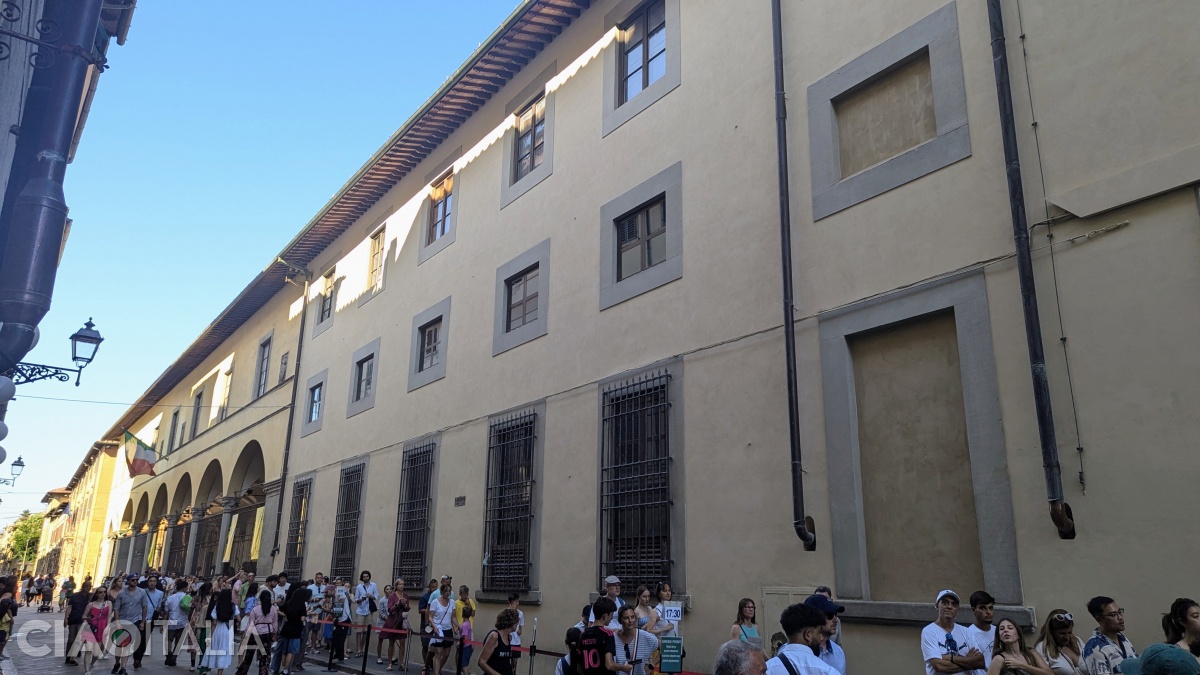
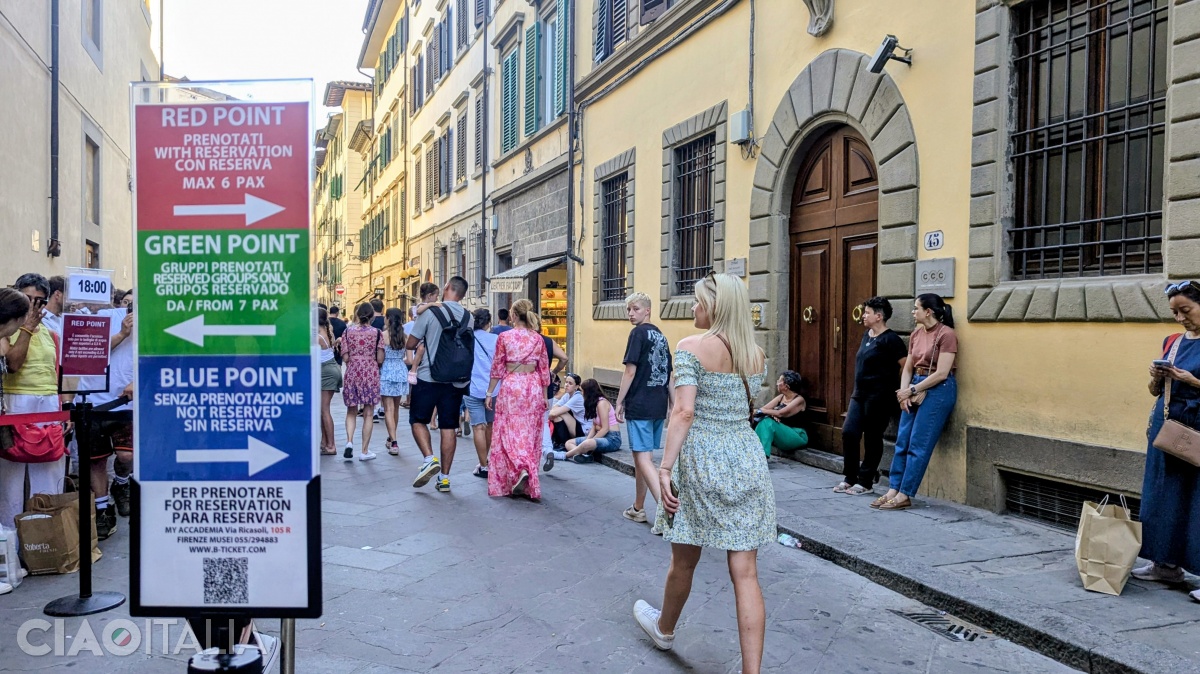
We highly recommend arriving at the Accademia Gallery at least 15 minutes before your reserved time slot. Even with online tickets in hand, the entry lines can still get pretty long!
Free Admission Days
On certain days of the year, entry to the Accademia Gallery is completely free. These days include:
- The first Sunday of every month, as part of the Domenica al museo ("Sunday at the Museum") initiative
- April 25 (Liberation Day)
- June 2 (Republic Day)
- November 4 (National Unity and Armed Forces Day)
Reservations cannot be made for free admission days. To get in, you will have to wait in the incredibly long lines that form at the entrance.
Additionally, on March 8 (International Women's Day), entry is free for all women.
Opening Hours
The Accademia Gallery in Florence has the following open hours:
- Monday: Closed
- Tuesday to Sunday: 8:15 AM - 6:50 PM
Last entry is at 6:20 PM, and closing procedures begin at 6:40 PM.
The Accademia Gallery is closed on December 25th and January 1st.
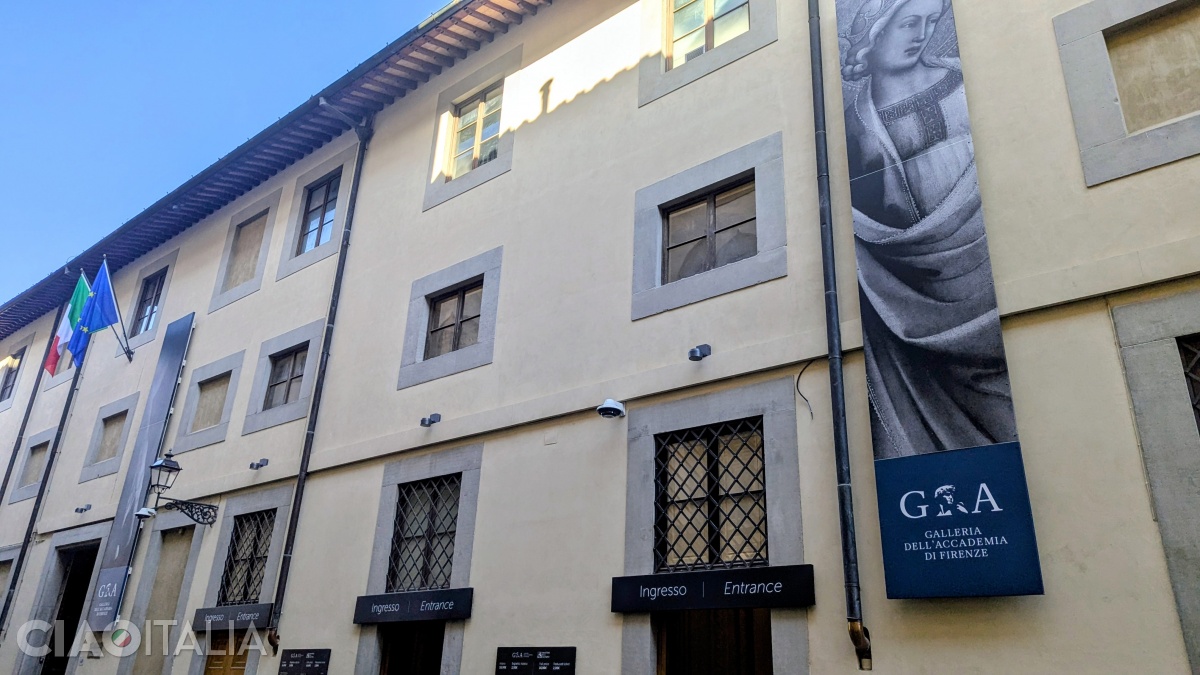
The Accademia Gallery is located at Via Ricasoli No. 58/60, very close to the San Marco Church. We recommend taking advantage of this proximity to visit the former San Marco Monastery as well. This is where Savonarola once lived (you can even visit his cell) and where you will find the stunning frescoes of Fra Angelico.
Visitor Rules & Regulations
- There is a metal detector security check at the entrance. Scissors, knives, or any other dangerous metal objects are strictly prohibited.
- Large bags, backpacks, and luggage exceeding 40x30x18 cm are not allowed inside, nor are motorcycle or bicycle helmets. The Accademia Gallery does not have a cloakroom or luggage storage service.
- Food and drinks are strictly prohibited inside the museum. The only exception is bottled water, provided the bottle is no larger than 0.5 liters.
- Pets are not allowed, with the exception of certified guide dogs for the visually impaired.
- Children under the age of 12 must be accompanied by an adult.
- Mobile phones must be turned off or switched to silent mode.
- Smoking is completely prohibited throughout the premises.
- Taking photos is permitted, but you cannot use flash, selfie sticks, or tripods.
- Touching any of the artwork is strictly forbidden.
Visiting the Accademia Gallery
A visit to the Accademia Gallery will take you about 1 to 2 hours, depending on your interest in art. The gallery displays paintings, sculptures, and musical instruments, with the largest portion of the collection dedicated to paintings.
The visitor route spans two levels. To help you navigate more easily, we suggest downloading the museum map beforehand.
A Brief History
The origins of the Accademia Gallery date back to 1784, when Pietro Leopoldo, Grand Duke of Tuscany, transformed the old Academy of the Arts of Drawing (founded in 1563 by Cosimo I de' Medici) into the Academy of Fine Arts. The new institution was housed within the former San Niccolò di Cafaggio monastery and the old San Matteo Hospital. A gallery was set up next to it to display a collection of sculptures and paintings, which were meant to aid the artistic training and education of the Academy's students.
Over time, the Accademia Gallery grew richer with artworks sourced from Florentine churches and monasteries that were suppressed under the orders of Pietro Leopoldo in 1786, and later by Napoleon in 1810. However, the defining moment for the Gallery's future fame came in 1873, when Michelangelo's iconic statue of David was moved here from Piazza della Signoria.
Hall of the Colossus (Sala del Colosso)
The Hall of the Colossus (Sala del Colosso) is the very first room you will step into upon entering the Accademia Gallery. Its name comes from a plaster model of an ancient statue of the Dioscuri, which was exhibited here until the early 20th century.
Today, the center of the hall features the plaster model created by Giambologna in the 16th century for his masterpiece, "The Rape of the Sabine Women", the final marble version of which stands in the Loggia dei Lanzi in Piazza della Signoria.
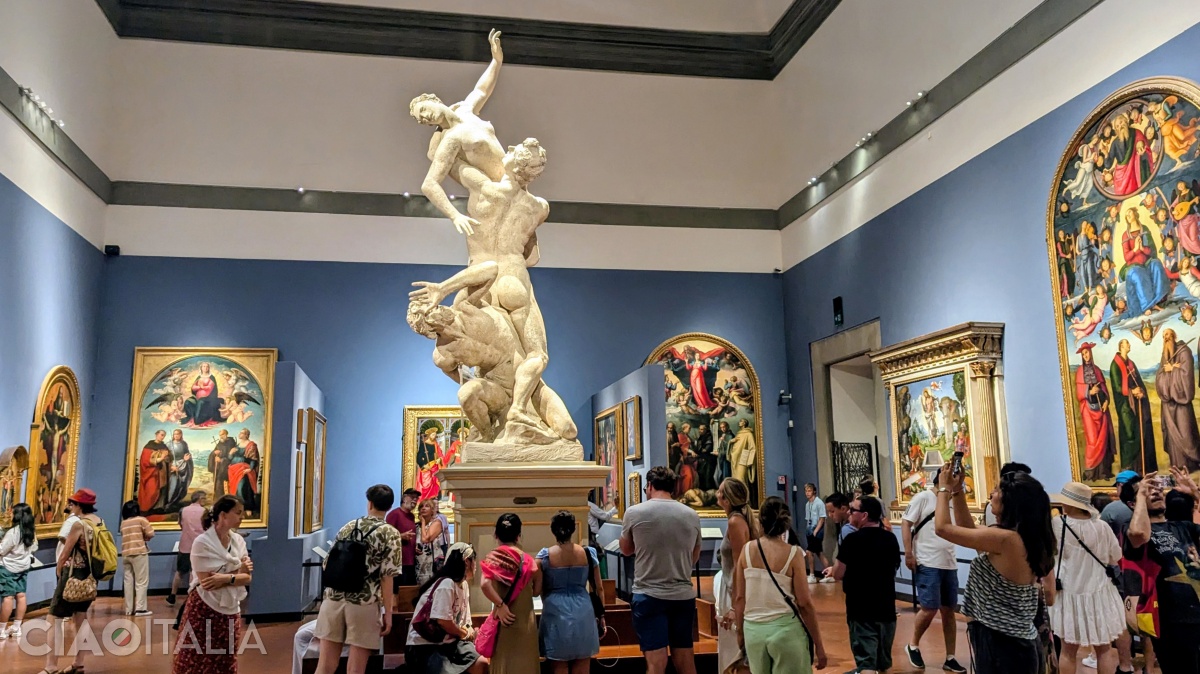
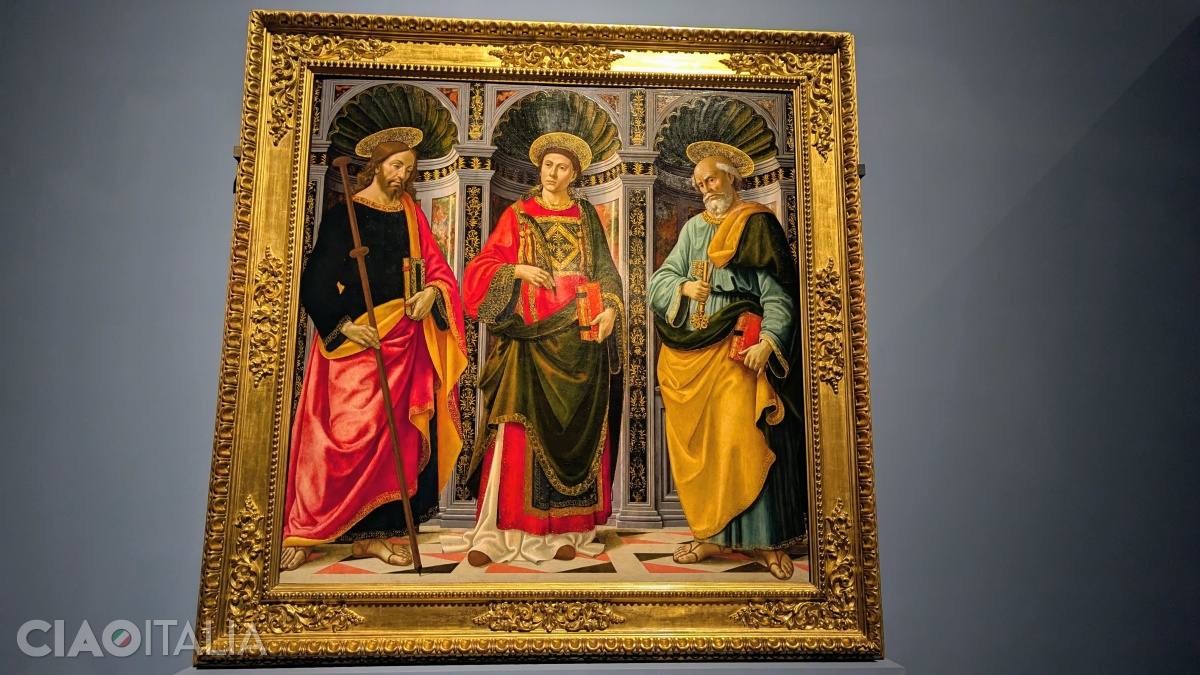
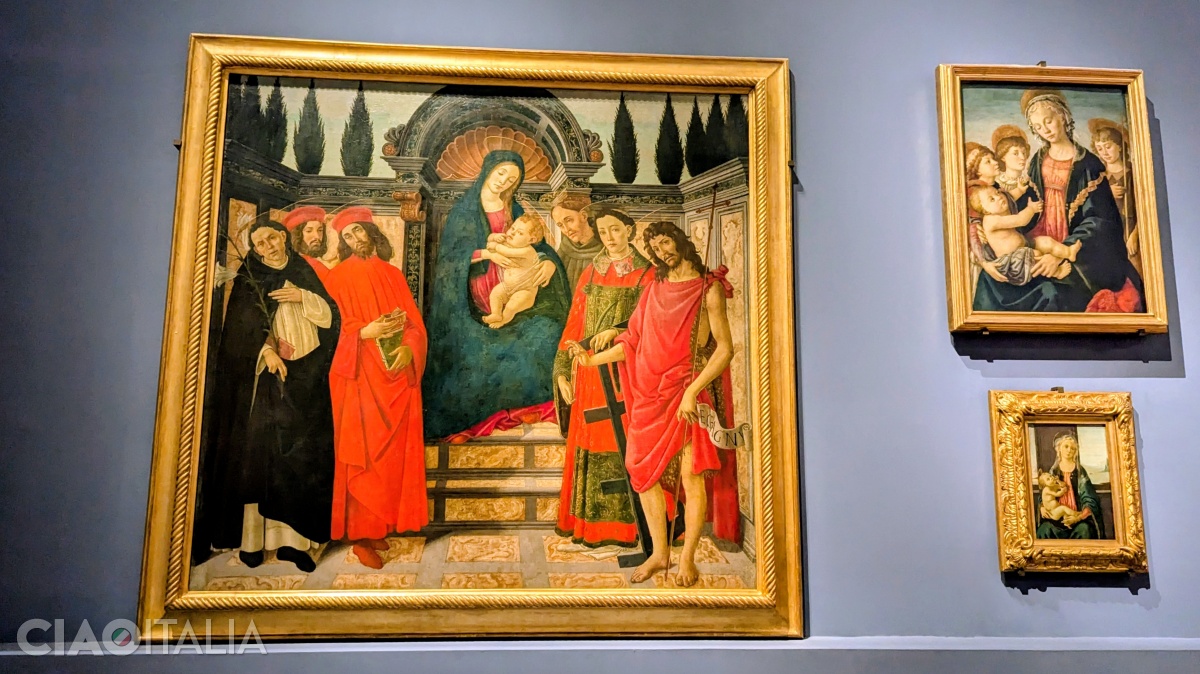
On the walls, you will find several religious-themed paintings dating from the 15th and early 16th centuries, sourced from local churches and monasteries. Among the artists, the most famous names include Botticelli, Ghirlandaio (in whose workshop a young Michelangelo was an apprentice), Perugino, Filippino Lippi, and Paolo Uccello.
Hall of the Prisoners (Galleria dei Prigioni)
Moving to the left from the Hall of the Colossus, you will reach the Hall of the Prisoners (Galleria dei Prigioni). It takes its name from the statues Michelangelo sculpted for the tomb of Pope Julius II, located in the Basilica of San Pietro in Vincoli in Rome. Four of these (unfinished) can be found here in the Accademia Gallery, while the other two (the only completed ones) are on display at the Louvre Museum in Paris.
Michelangelo's initial design from 1505 was far more ambitious, planning to decorate the tomb with 16 to 20 statues. Over the years, the artist gradually reduced their number until finally, in the 1542 blueprint, he abandoned the idea completely.
In 1564, following Michelangelo's death, his nephew donated the four statues currently in Florence to Grand Duke Cosimo I de' Medici, who used them to decorate the Buontalenti Grotto in the Boboli Gardens. The sculptures were eventually brought to the Accademia Gallery in 1908.
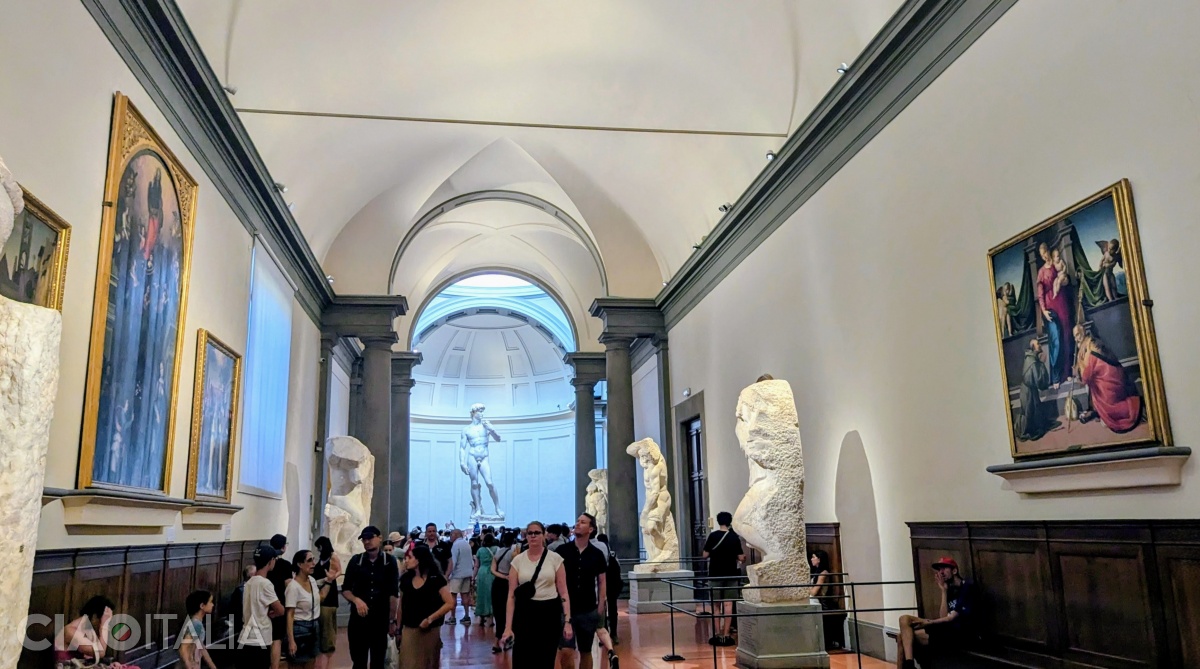
Sculpted between 1516 and 1534, the four statues depict four captives: "The Awakening Slave", "The Young Slave", "The Bearded Slave", and "The Atlas". Because they were left unfinished, and due to Michelangelo's distinct technique, the sculptures give you the striking impression that the prisoners are actively fighting to break free from the grip of the marble.
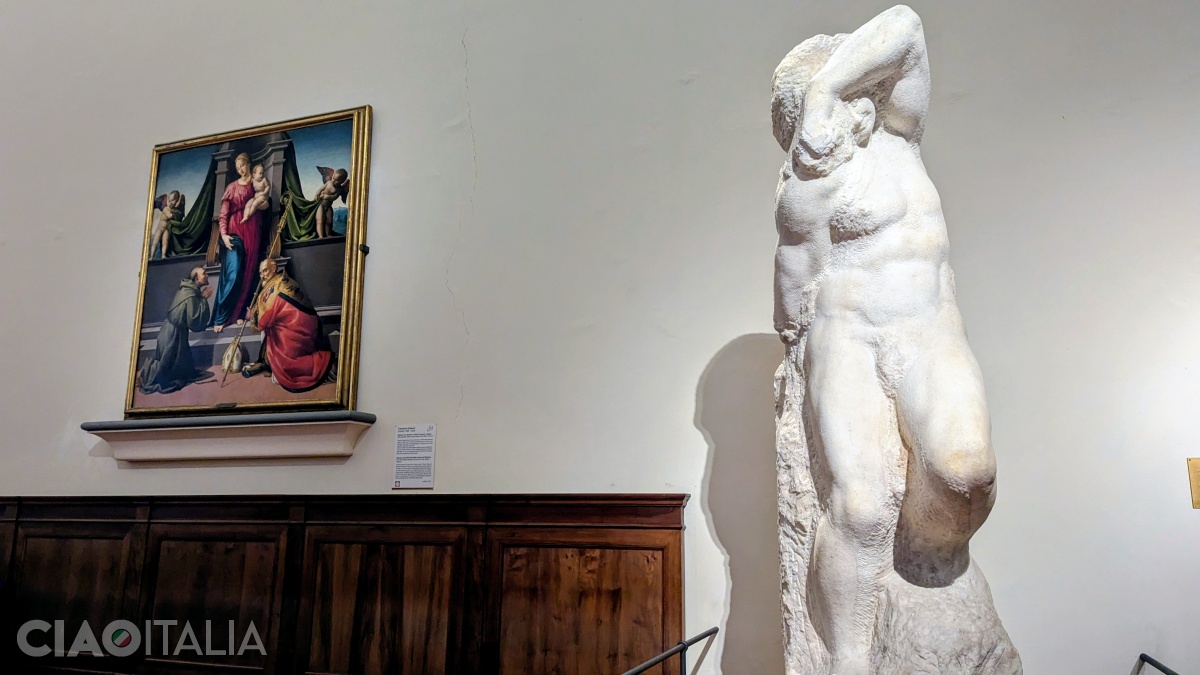
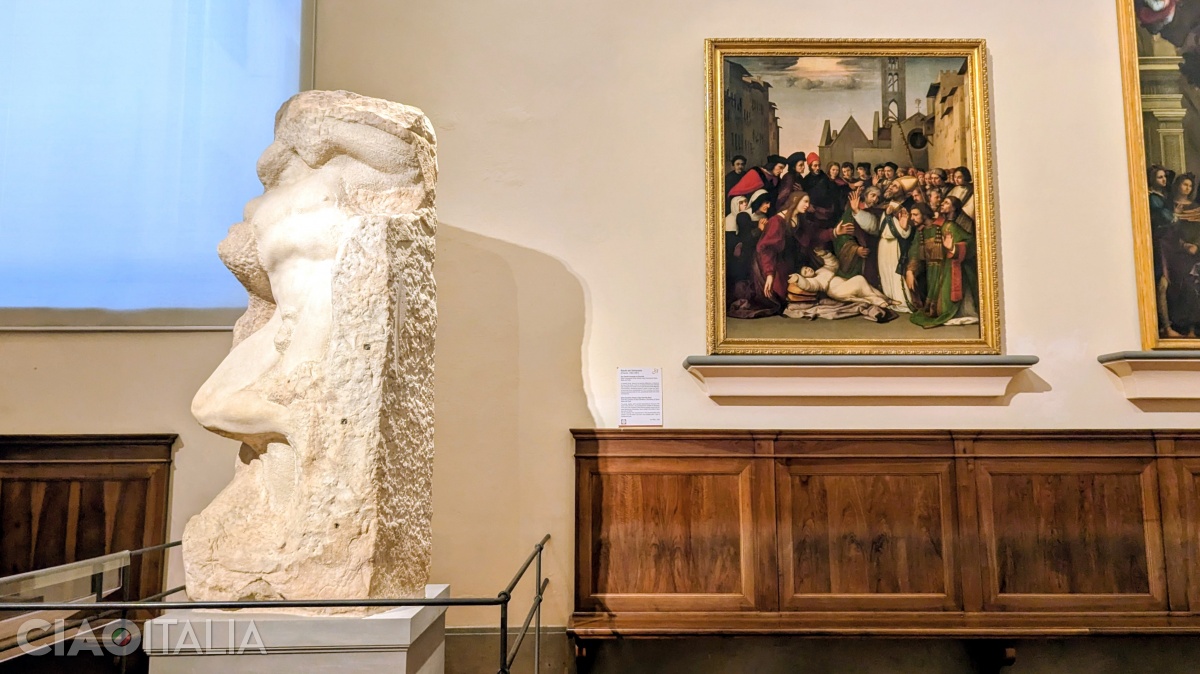
In addition to the four "prisoners", this hall houses two other works by Michelangelo: St. Matthew and the Palestrina Pietà.
The sculpture of St. Matthew, located on the right-hand wall between "The Young Slave" and "The Bearded Slave", was commissioned from Michelangelo in 1503 as part of a group of 12 statues meant to decorate the Florence Cathedral. However, this project was also left unfinished, and the statue was abandoned until 1834, when it was finally brought to the Accademia Gallery.
The Palestrina Pietà sculptural group, displayed on the right wall just before the statue of David, is not mentioned in historical documents, but most art historians attribute it to Michelangelo. The sculpture, which depicts the Virgin Mary and St. John supporting the body of Jesus, was kept in the Church of Santa Rosalia in the town of Palestrina (near Rome) until 1939.
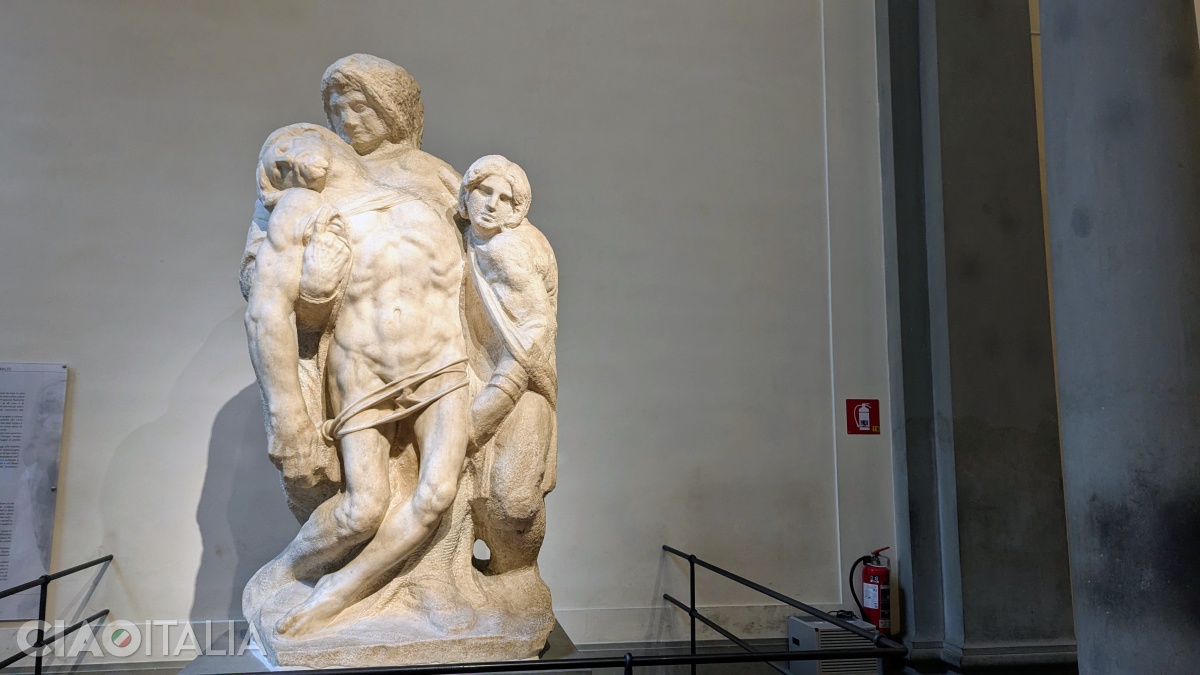
The Hall of the Prisoners also features several paintings by Ghirlandaio, Fra Bartolomeo, and Andrea del Sarto.
The Tribune of David (Tribuna del David)
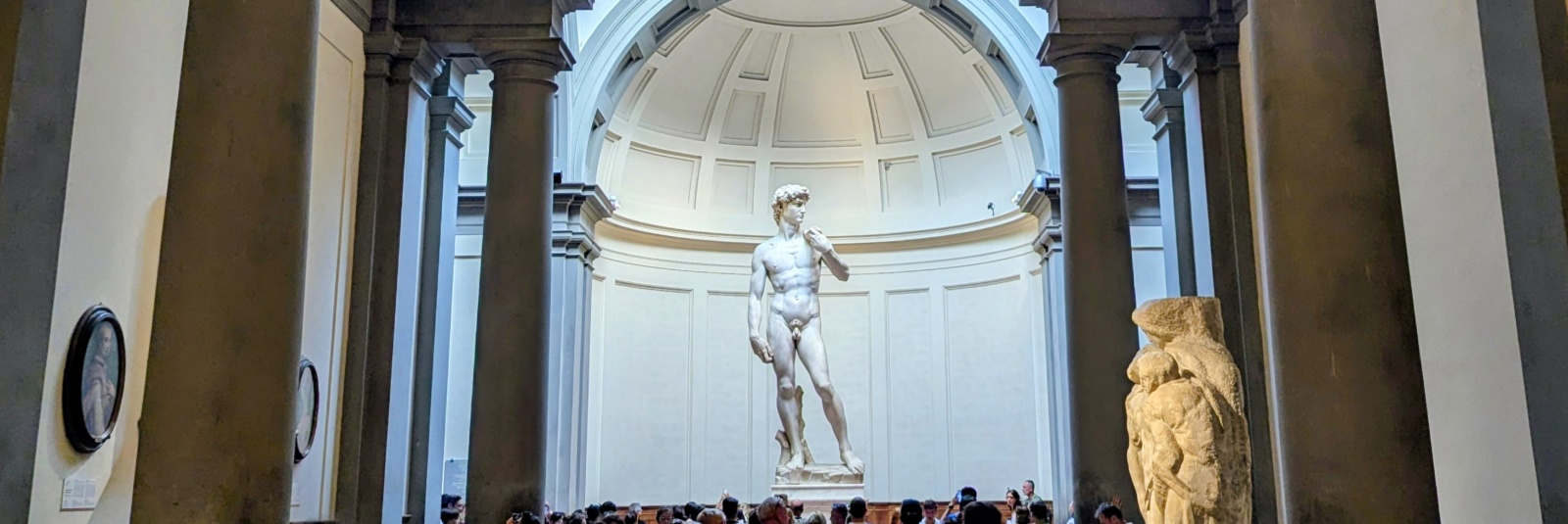
At the very end of the Hall of the Prisoners - right where you will notice the biggest crowds - stands the Tribune of David (Tribuna del David). In 1873, the statue of David was moved from Piazza della Signoria to the Accademia Gallery to protect it from weather damage. In 1910, a replica was installed in its original spot in the square. You can also find another copy of the statue over in Piazzale Michelangelo.
The construction of the tribune was entrusted to architect Emilio De Fabris and took nine long years to complete. Until it was ready, Michelangelo's masterpiece was housed inside a wooden crate. It wasn't until 1882 that the statue of David was finally placed where you can see it today.
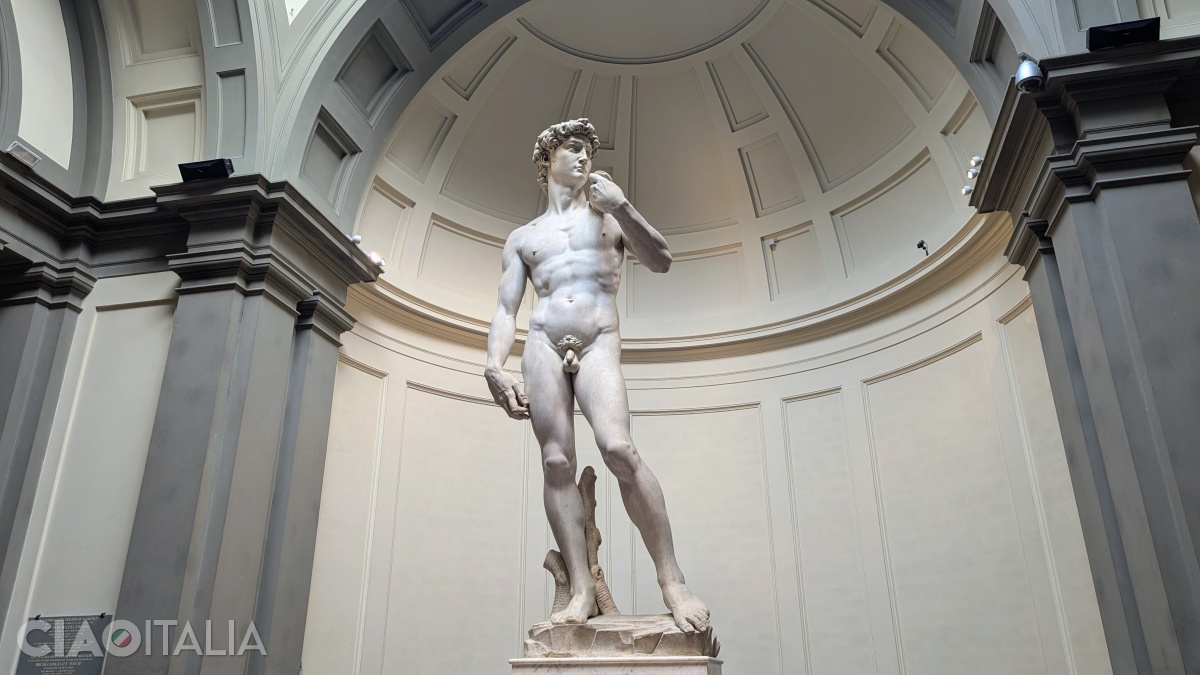
Without a doubt, David is Europe's most famous Renaissance sculpture and the primary reason tourists choose to visit the Accademia Gallery.
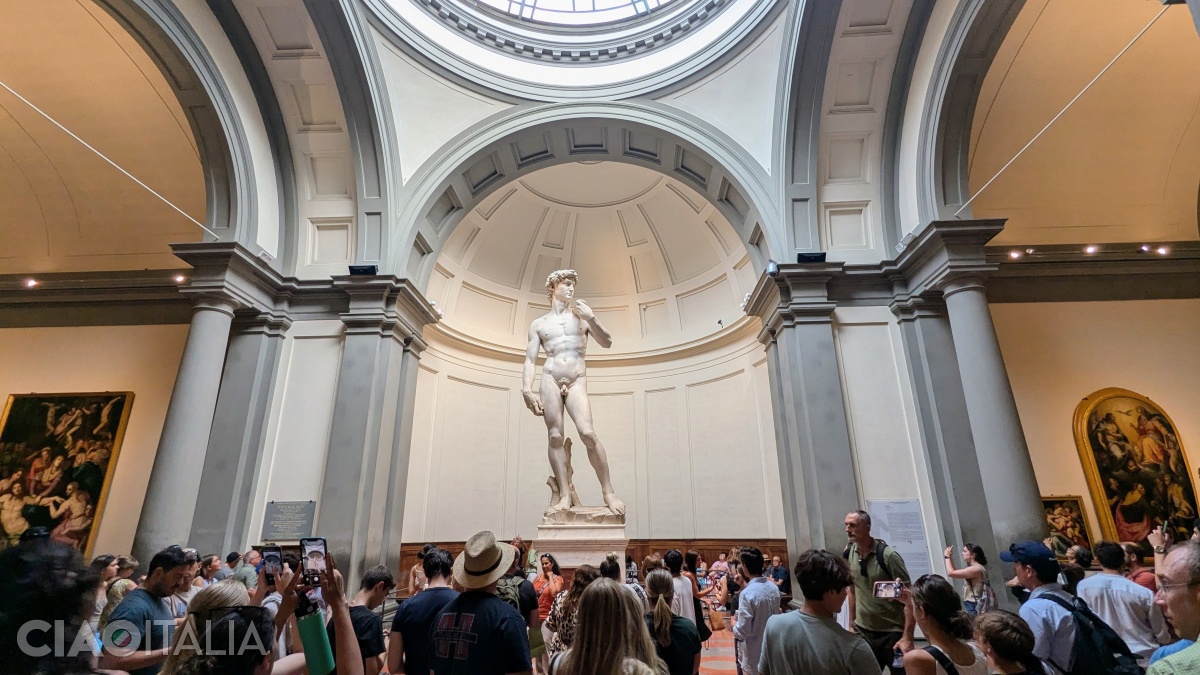
The statue was commissioned in 1501, when Michelangelo was just 26 years old, by the Opera del Duomo - the institution that managed the Florence Cathedral. The sculpture was originally meant to decorate one of the cathedral's high buttresses. For the project, Michelangelo was given a massive block of marble that had been quarried some 40 years earlier from the hills of Tuscany. Two other artists had previously attempted to carve it but eventually gave up - the block was far too tall and narrow, and the marble itself was fragile and riddled with cracks.
However, none of these obstacles stopped Michelangelo from creating what would become one of the most renowned sculptures in the world. Contrary to traditional depictions of the time, which showed David after his victory standing next to Goliath's severed head, the artist chose to capture him in the moment of intense concentration right before throwing the stone. Like all of his masterpieces, the sculpture is layered with meaning - Michelangelo never created art that was just beautiful for the sake of it.
Standing over 5 meters tall, the statue was sculpted entirely from that single block of marble. It was completed three years later, in 1504, and displayed in Piazza della Signoria so that everyone could admire it. Its success was so overwhelming that the authorities decided not to place it on the cathedral after all, choosing instead to leave it permanently right there in front of Palazzo Vecchio. Piazza della Signoria, which symbolized the city's civil and political power, was the perfect stage for it. Michelangelo's David flawlessly embodied republican Florence, which had recently freed itself from the dominance of the Medici family and possessed the strength to resist any enemy.
Looking closely at David, you might notice that the statue's proportions are far from anatomically ideal - the head seems a bit too large for the body, the arms appear slightly elongated, and the hands are oversized compared to the arms. Keep in mind, though, that the statue was originally intended to be positioned high up on the Duomo, meaning it would be viewed from way down below and at quite a distance. Michelangelo didn't make a mistake; he knew exactly what he was doing and calculated everything perfectly so that the sculpture would look flawless from the perspective of someone looking up at the cathedral.
The Plaster Cast Gallery (Gipsoteca)
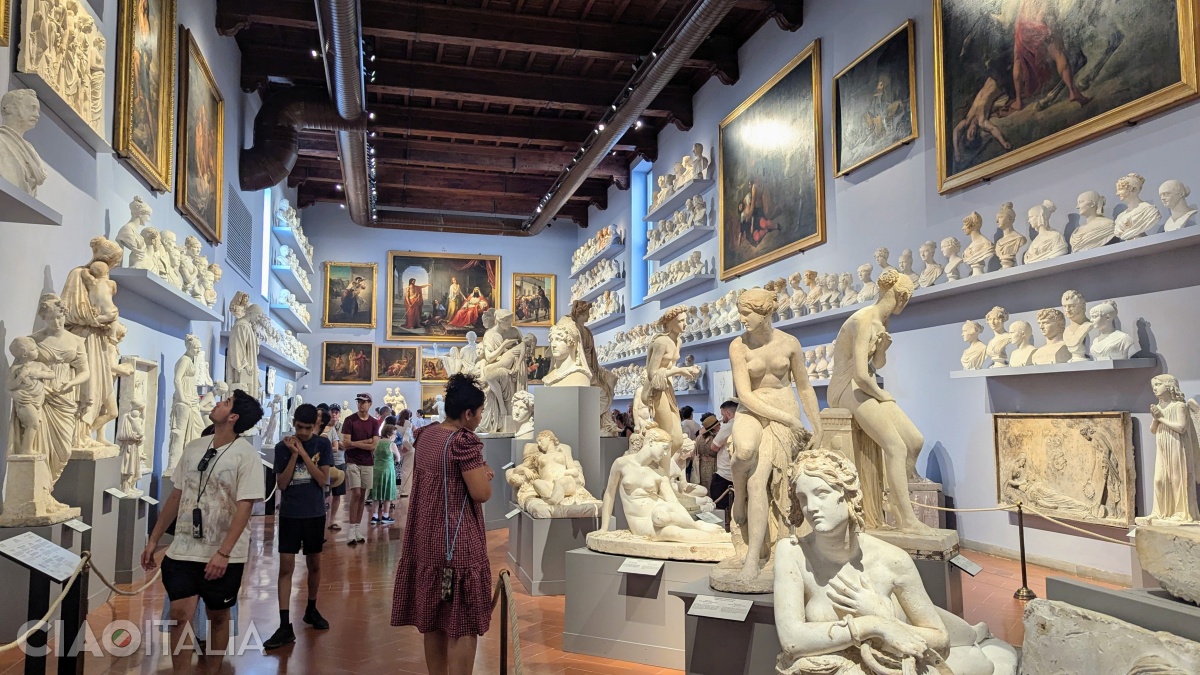
Walking to the left of the statue of David, you will reach a room called the Gipsoteca, which displays a large collection of plaster casts alongside several paintings. This hall was remodeled a few years ago with the intention of recreating the authentic atmosphere of a 19th-century sculptor's studio.
13th and 14th-Century Paintings
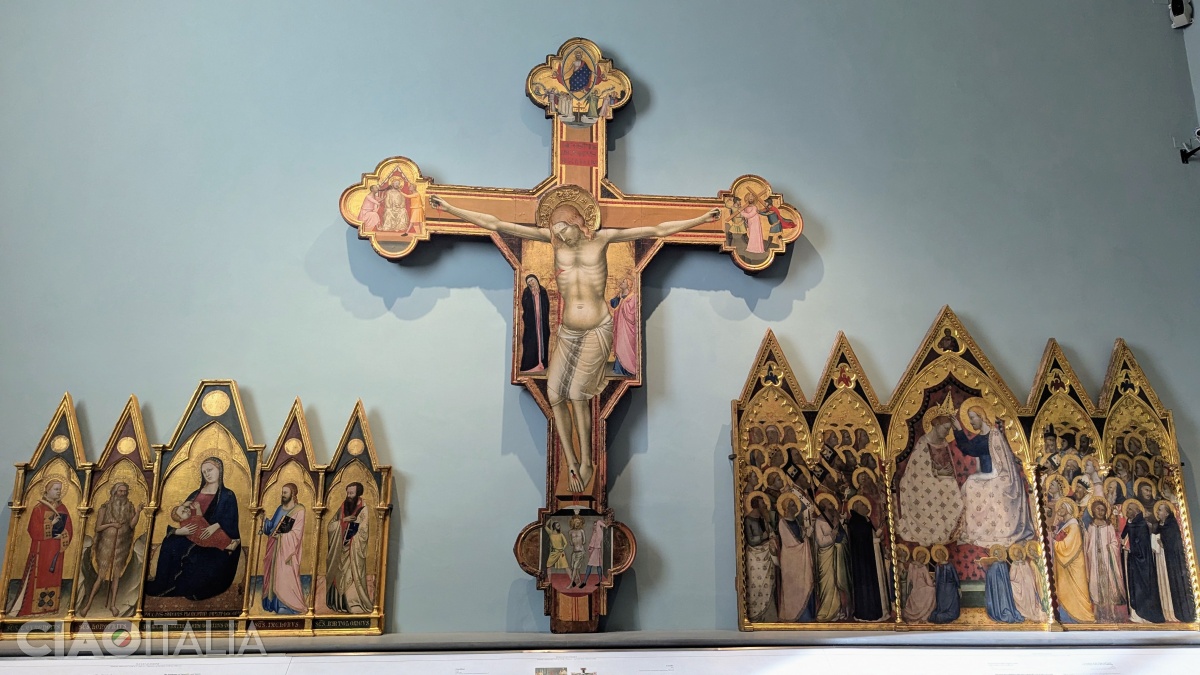
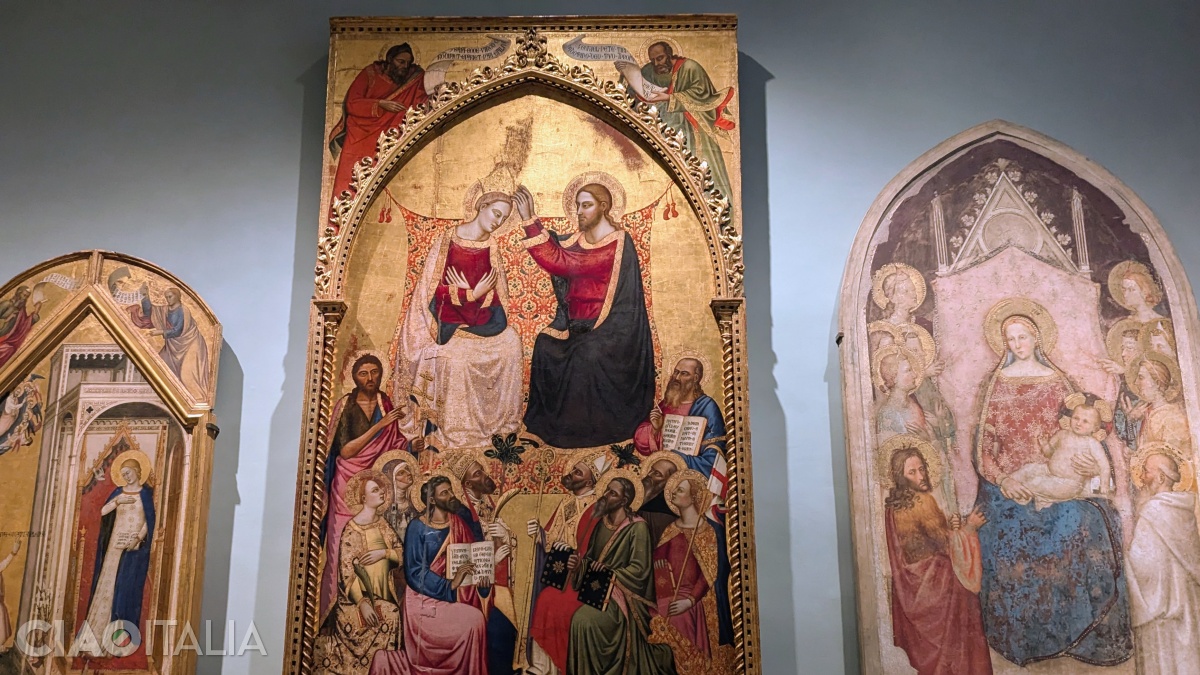
Between the statue of David and the Gipsoteca, you will find three small rooms displaying works by painters from the 13th and 14th centuries. These are the oldest pieces of art in the Accademia Gallery, sourced from churches and monasteries in Florence and other regions across Tuscany.
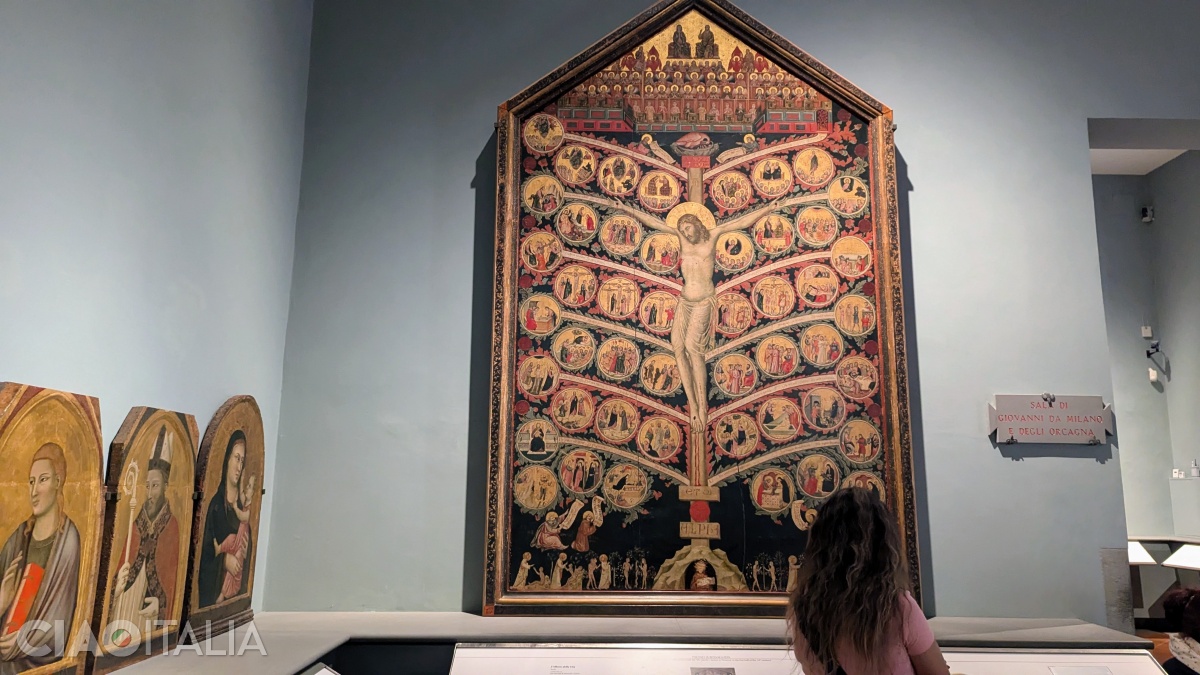
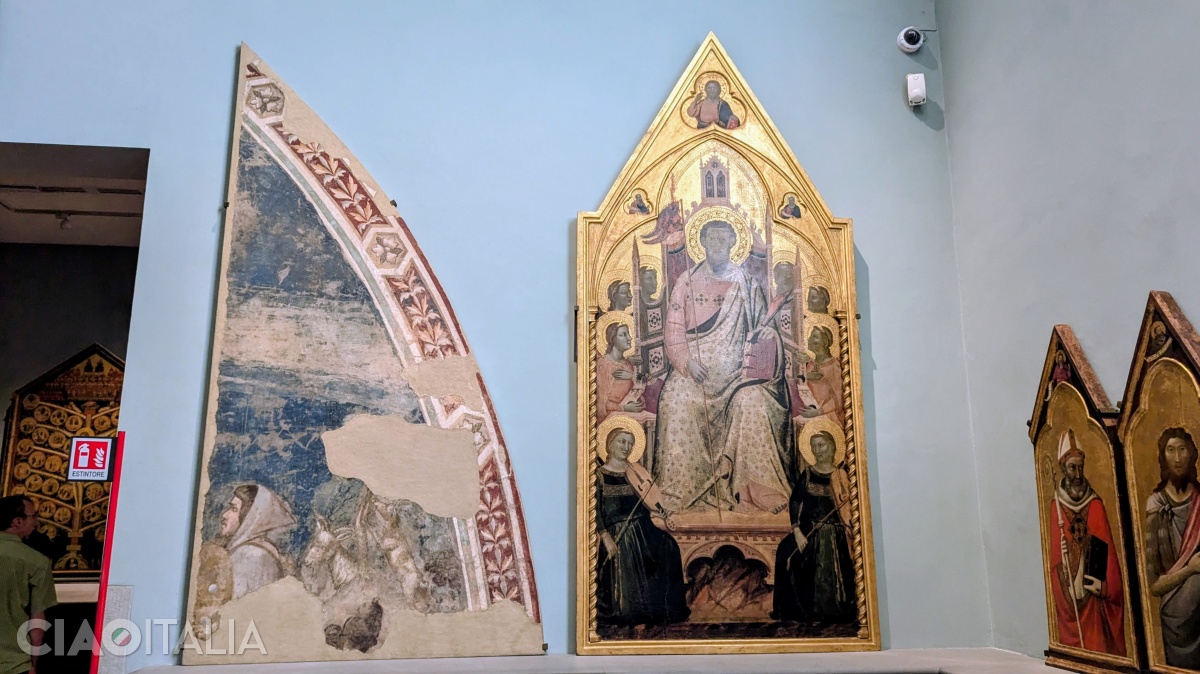
The first room is dedicated to paintings from the 13th and early 14th centuries (pre-Giotto), the second showcases works by Giotto and his followers, while the third spotlights Giovanni da Milano and the Orcagna brothers.
Musical Instruments
In the section dedicated to music, also located on the ground floor of the Accademia Gallery to the right of the Hall of the Colossus, you'll find a display of musical instruments sourced from the private collections of the Dukes of Tuscany. Among them is the only viola in the world made by Antonio Stradivari that remains completely in its original, unaltered condition, as well as more unusual instruments like the serpent - a wind instrument used in the 18th century as a bass accompaniment for sacred and military music.
15th-Century Paintings
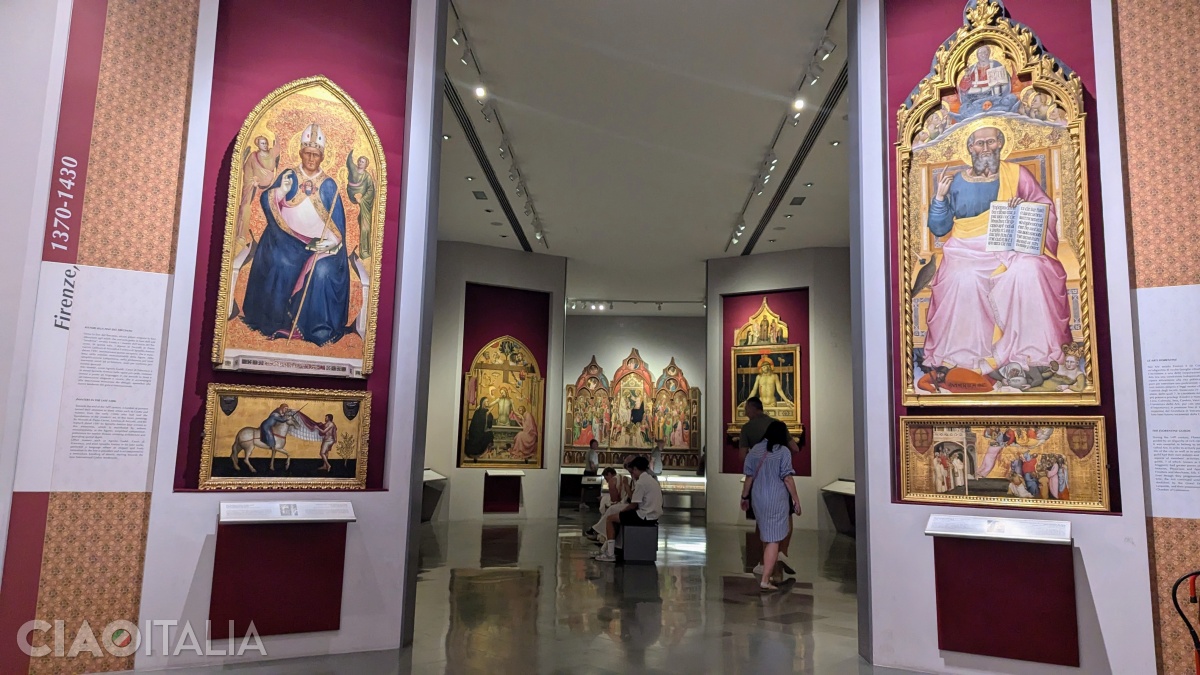
Your visit to the Accademia Gallery concludes with three rooms on the first floor. These are dedicated to Lorenzo Monaco and the Late Gothic style of the 15th century, and they also include notable artworks from outside of Italy.