The Beaches of Tropea
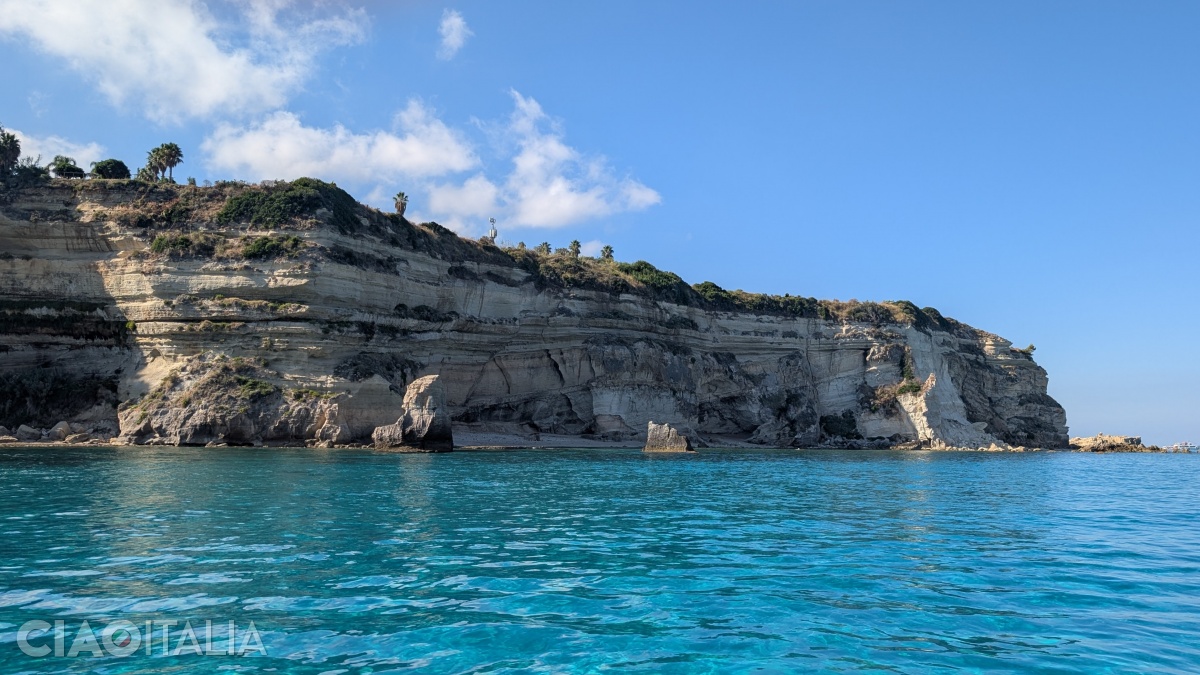
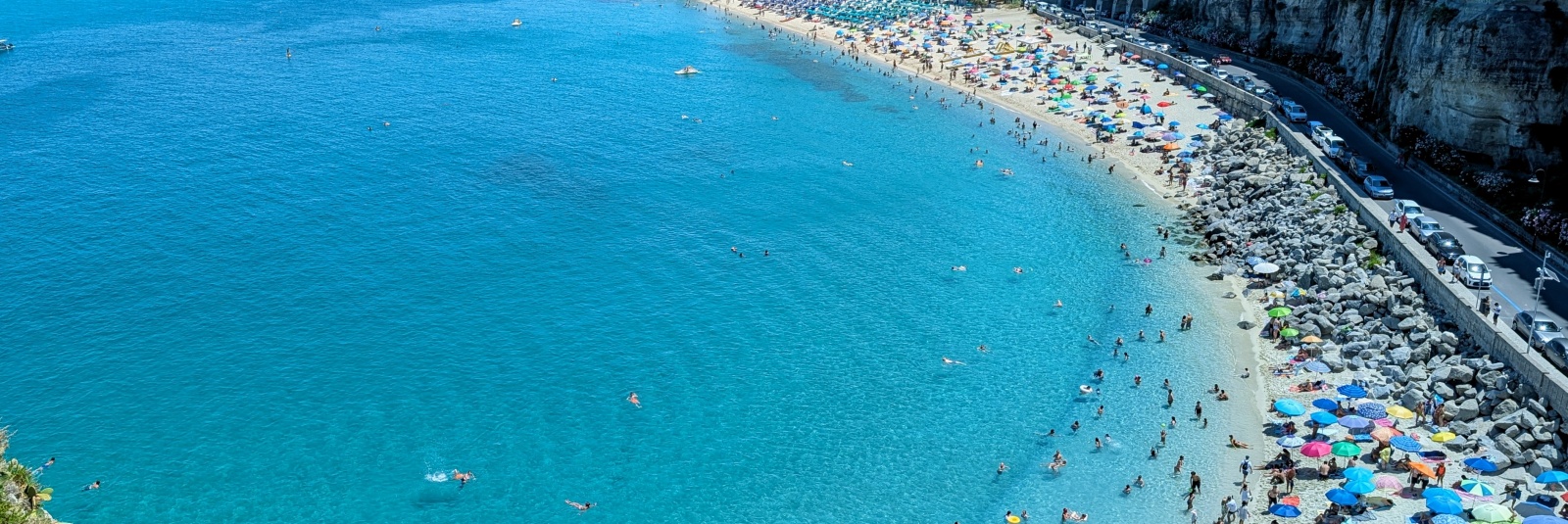
Tropea, also nicknamed "the Pearl of Calabria", boasts some of the most beautiful beaches in Italy, several of which have been awarded the Blue Flag. Along its 4 kilometers of Tyrrhenian Sea coastline, sandy beaches alternate with rocky areas, forming one of the most spectacular stretches of the so-called Costa degli Dei ("Coast of the Gods").
To get from Tropea's main town, perched high on the cliffside, down to the beaches, you'll need to tackle a fair few steps. The main staircases lead down from behind the Duomo (Discesa Belisario), near Largo Galluppi, from Largo Villetta, and beside the Convento La Sanità. A bit further south from the center, another staircase descends to the sea from the parking area near the cemetery. In other words, unless you find accommodation right at one of the few beachfront hotels or apartments by the marina, expect to leave your Tropea vacation in incredible shape! On the bright side, the cliff-top views over the sea are more than worth the extra legwork.
You can also drive down to the beach. There are several parking spots along the seafront road (Via Lungomare), as well as a few larger paid parking lots at either end of the resort. However, parking near the water - both free and paid - is quite limited and fills up fast.
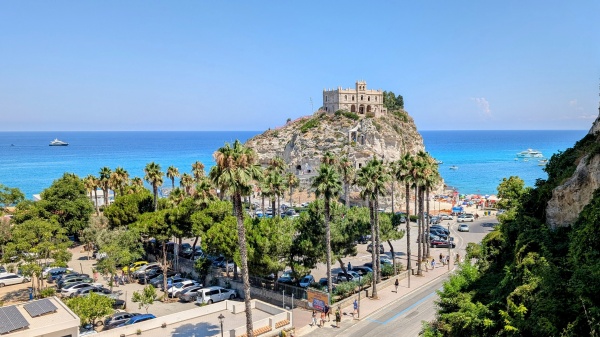
Below, you'll find the main beaches in Tropea, divided according to their position relative to the Sanctuary of Santa Maria dell'Isola (see also the article on Tropea's tourist attractions). We start with those located to the right of the cliff (as you face the sea) and then continue with those on the left.
Mare Piccolo Beach
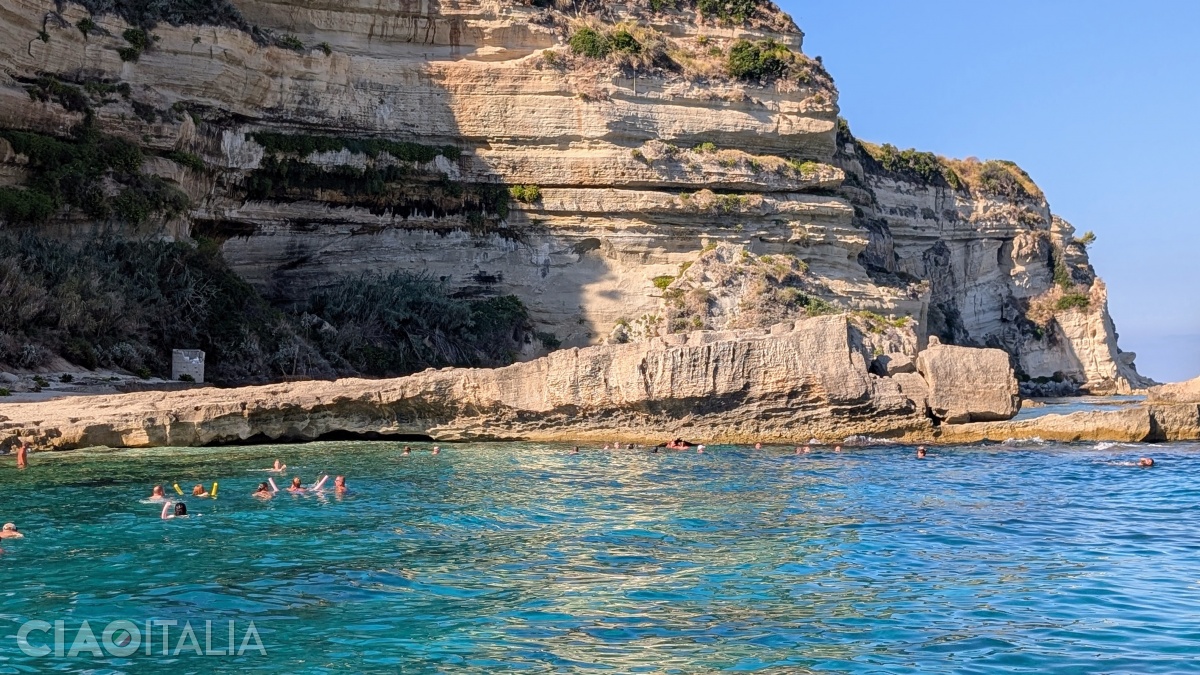
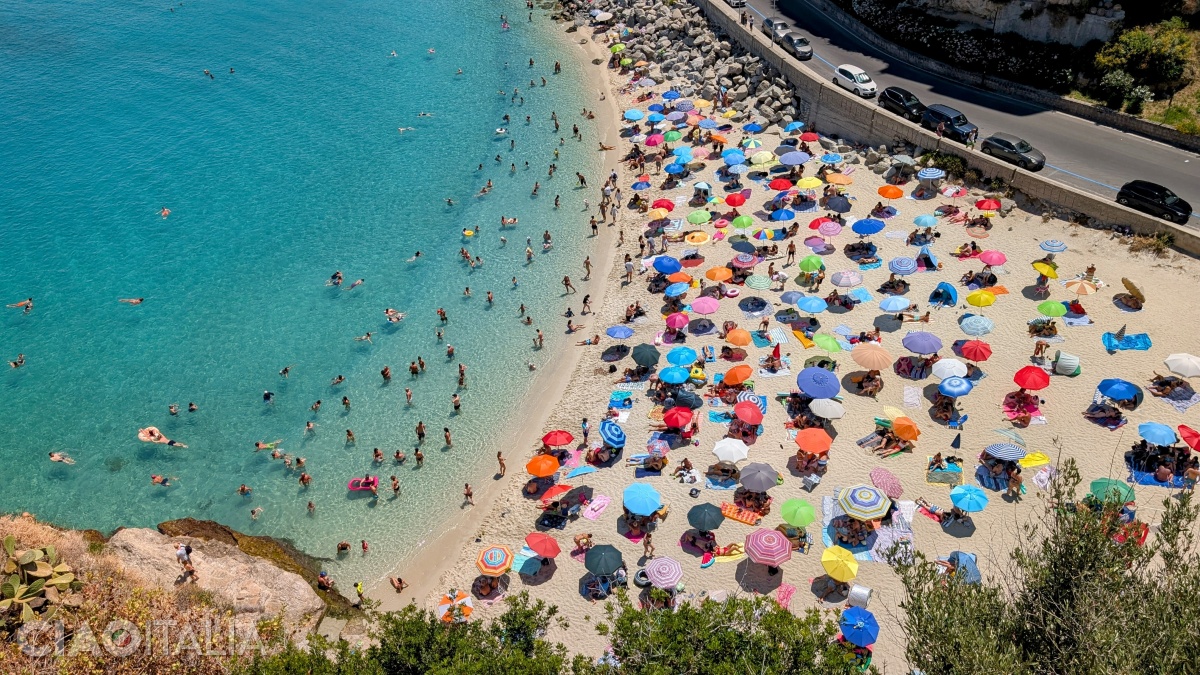
Mare Piccolo Beach (Spiaggia Mare Piccolo), called Mare Picciulu in the local dialect, is considered by many to be the most beautiful beach in Tropea. It is positioned in a small bay, between the promontory where the houses of the historic center are perched and the cliff dominated by the Sanctuary of Santa Maria dell'Isola.
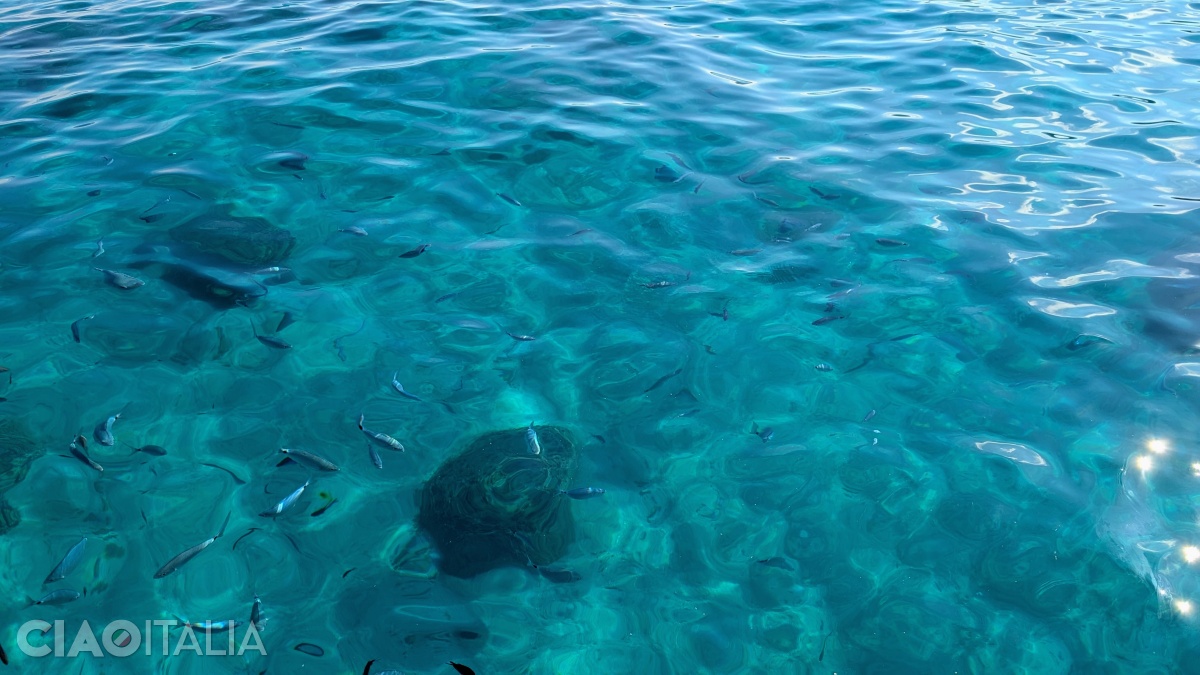
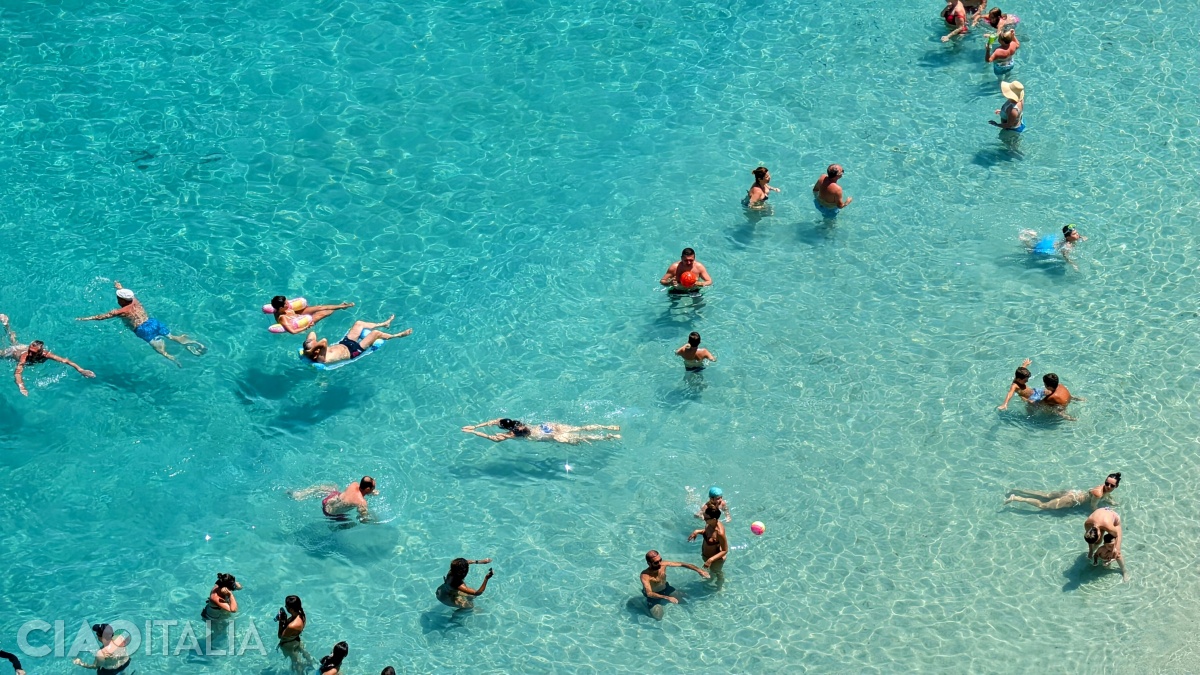
The beach is not very large, is unorganised, and free of charge. It has fine white sand and incredibly clear, calm turquoise waters that evoke the Caribbean Sea and give you a feeling of floating. It is also a perfect spot for snorkeling enthusiasts, thanks to the richness of the marine life.
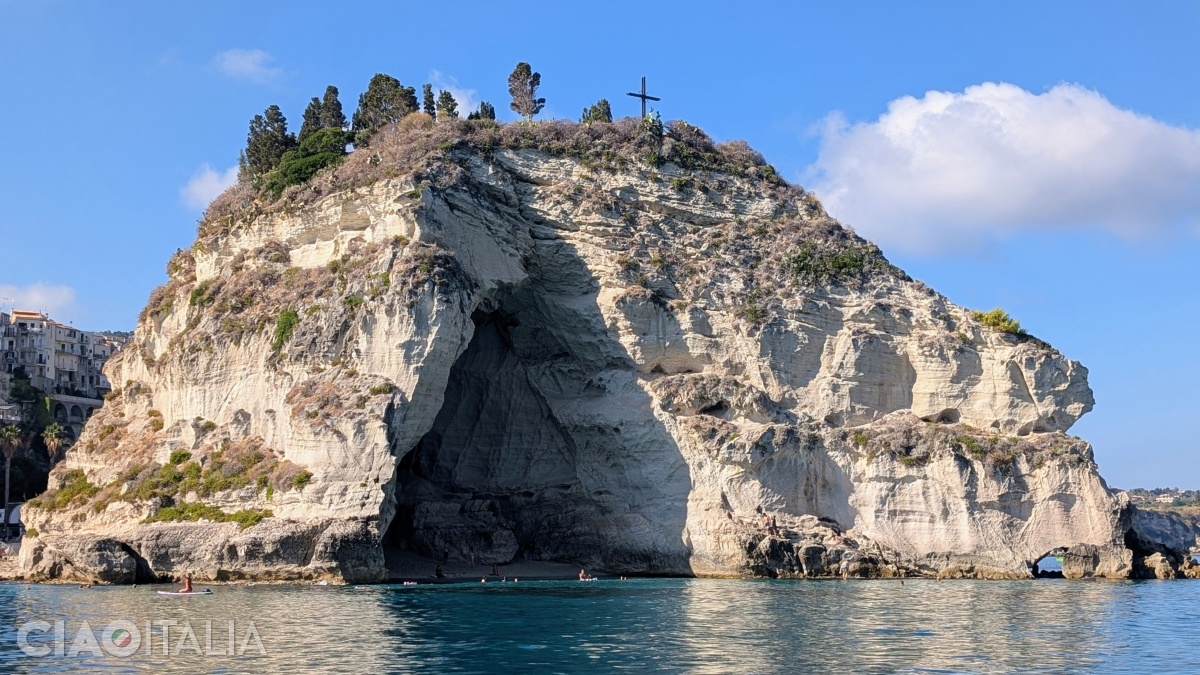
At the base of the cliff on which the Santa Maria dell'Isola church stands, facing the sea, is the Grotta del Palombaro, a natural cave that also hides a small sandy beach, accessible by swimming or by boat. The name palombaro translates as "diver", but it seems the name actually comes from the large number of pigeons, called palumbi in the local dialect, that nest there. According to another theory, the cave's name comes from the daring jumps that young people take from the cliffs, puffing out their chests with air (a pettu i palumbu). It has also been nicknamed Grotta degli Innamorati ("Lovers' Cave").
During the season, Mare Piccolo Beach becomes crowded.
La Rotonda Beach
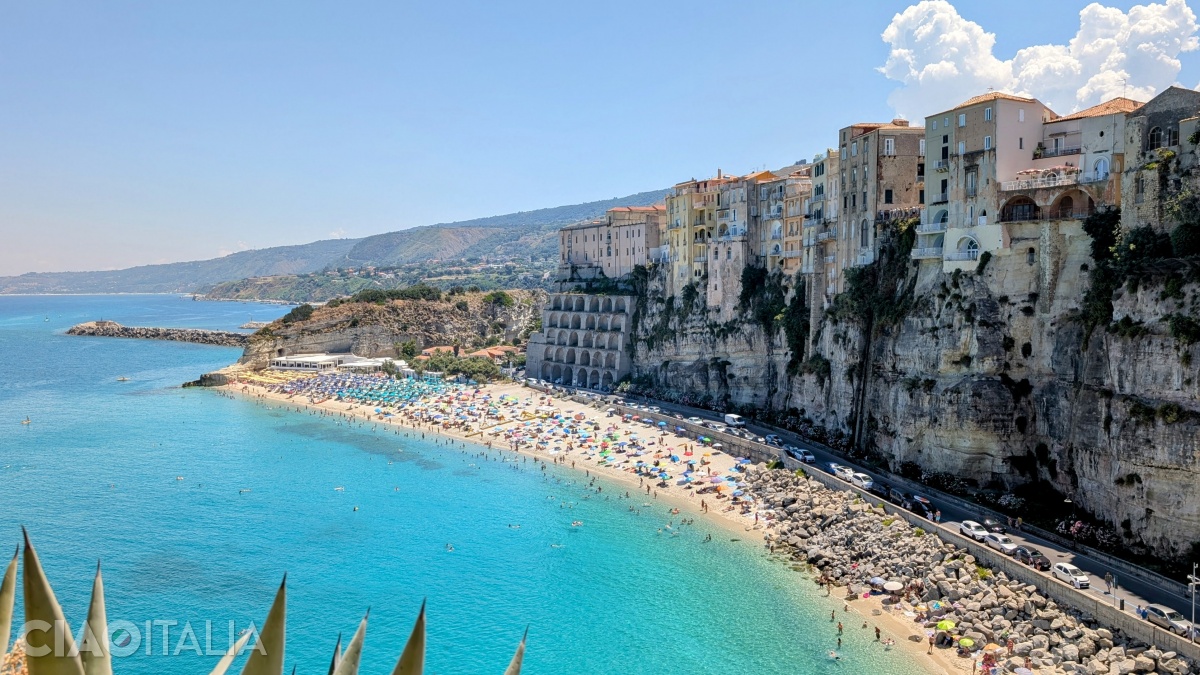
La Rotonda Beach (Spiaggia della Rotonda) is located just past Mare Piccolo Beach, to the left as you look at Tropea from the sea. It is separated from Mare Piccolo by a pile of rocks and lies at the foot of the promontory on which the old town is built.
The name La Rotonda is connected to the more recent history of the area: in the late 1950s, when Tropea began to develop as a tourist resort, one of the first summer establishments, called Lido San Leonardo, was built here. It featured a circular dance floor, whose memory has been preserved in the beach's name to this day.
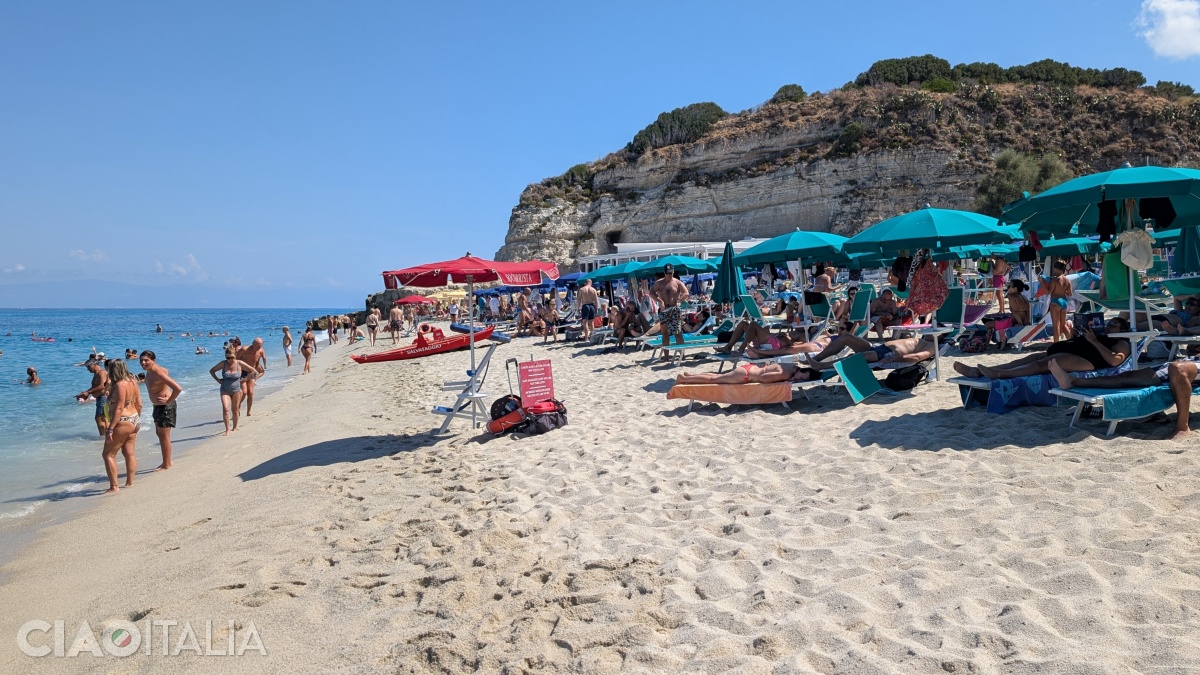
The beach is fairly large and popular with both locals and tourists. In addition to the free area (which makes up most of the beach), there is also an organized section near the San Leonardo cliff: Lido Le Roccette, with paid sunbeds and umbrellas, a bar, and a restaurant. Right next to it are Le Roccette Mare Beach Hotel, Le Roccette San Leonardo, and Le Roccette Club, which offer accommodation. In fact, you will sometimes see La Rotonda Beach referred to as La Roccette Beach.
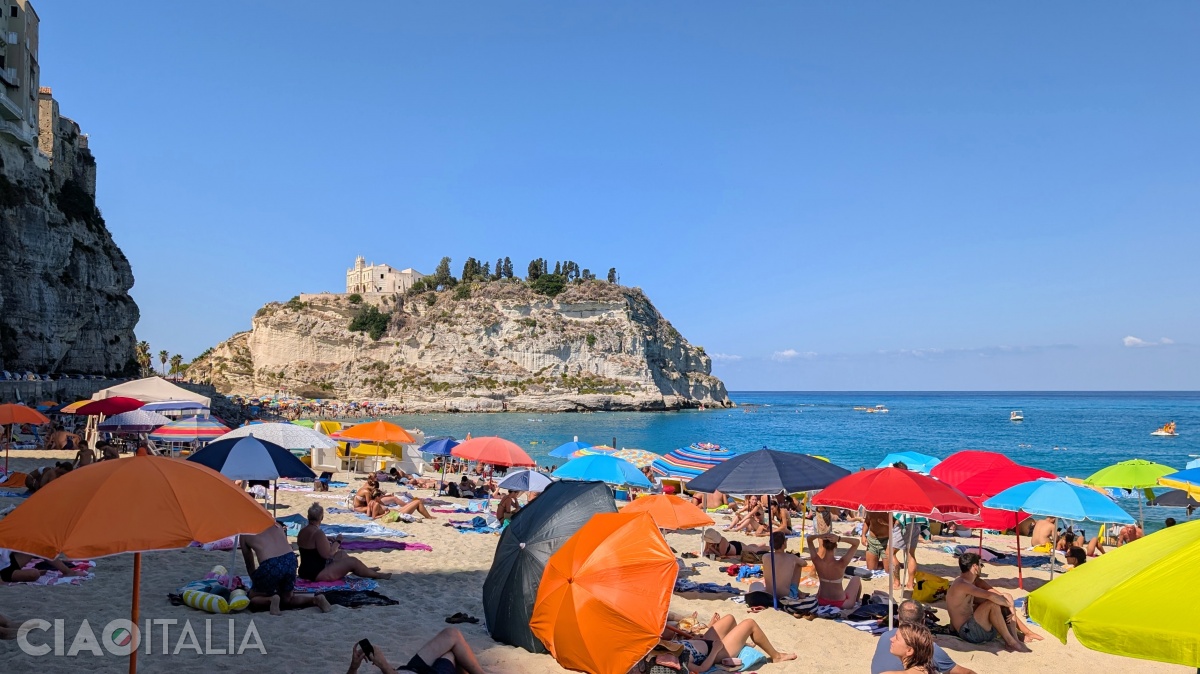
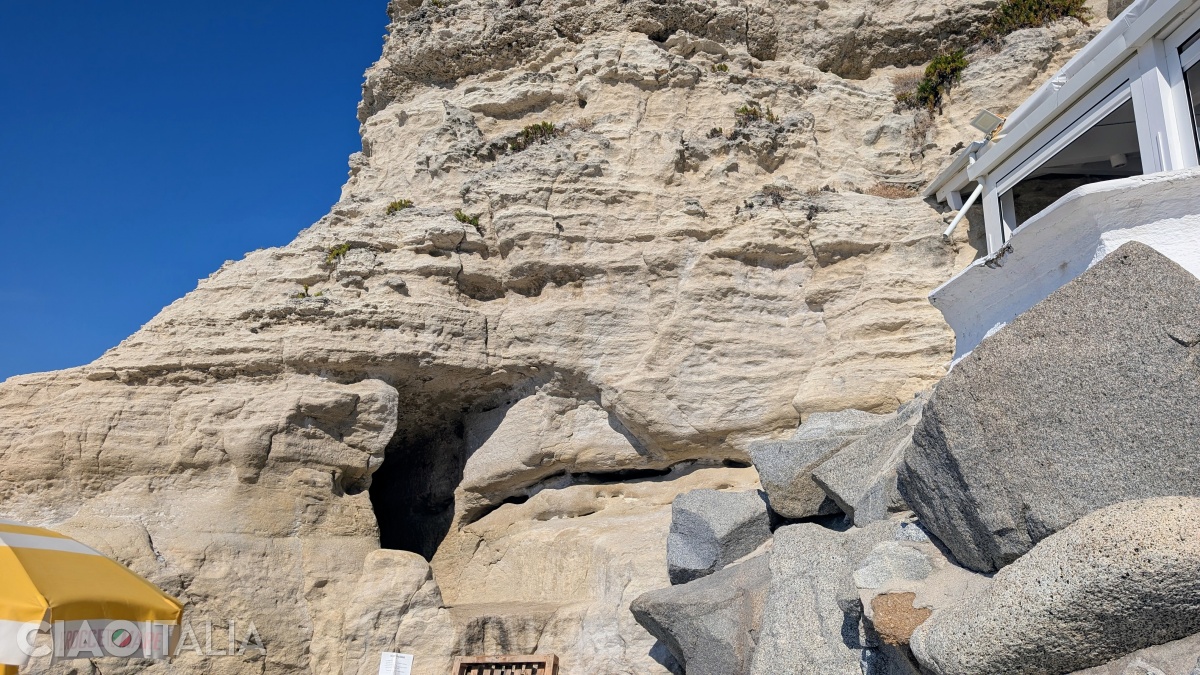
In the San Leonardo cliff, at the northern end of the private beach, there is a man-made cave shaped over time by the sea. Descending a few steps, you'll reach a kind of pool connected to the sea. Its name is Grotta di San Leonardo ("St. Leonard’s Cave") and in antiquity it was used for cultivating shellfish. It is also called Grotta delle Sirene ("Siren's Cave"), due to a legend about sirens that once inhabited it.
Cannone Beach
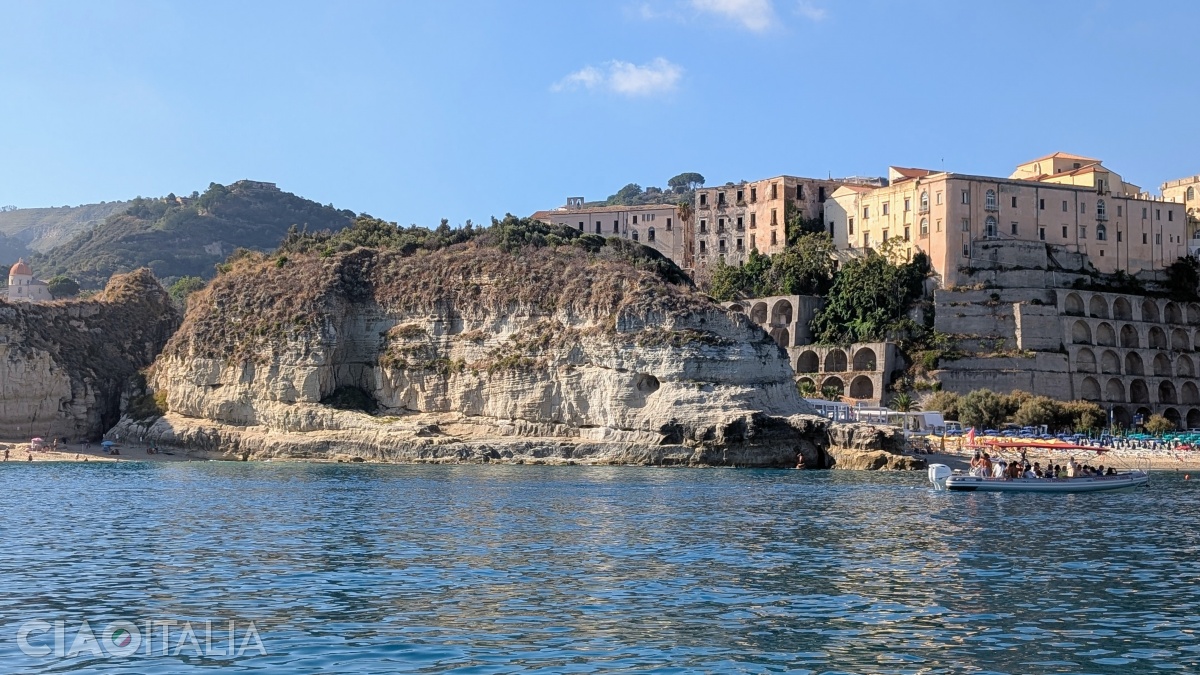
Continuing north, beyond the San Leonardo cliff, you'll find another small and lesser-known beach called Spiaggia del Cannone (in the local dialect, du Cannuni). It is hidden behind the marina, from where boat trips are organized to Capo Vaticano (another beautiful beach in Calabria) and the Aeolian Islands.
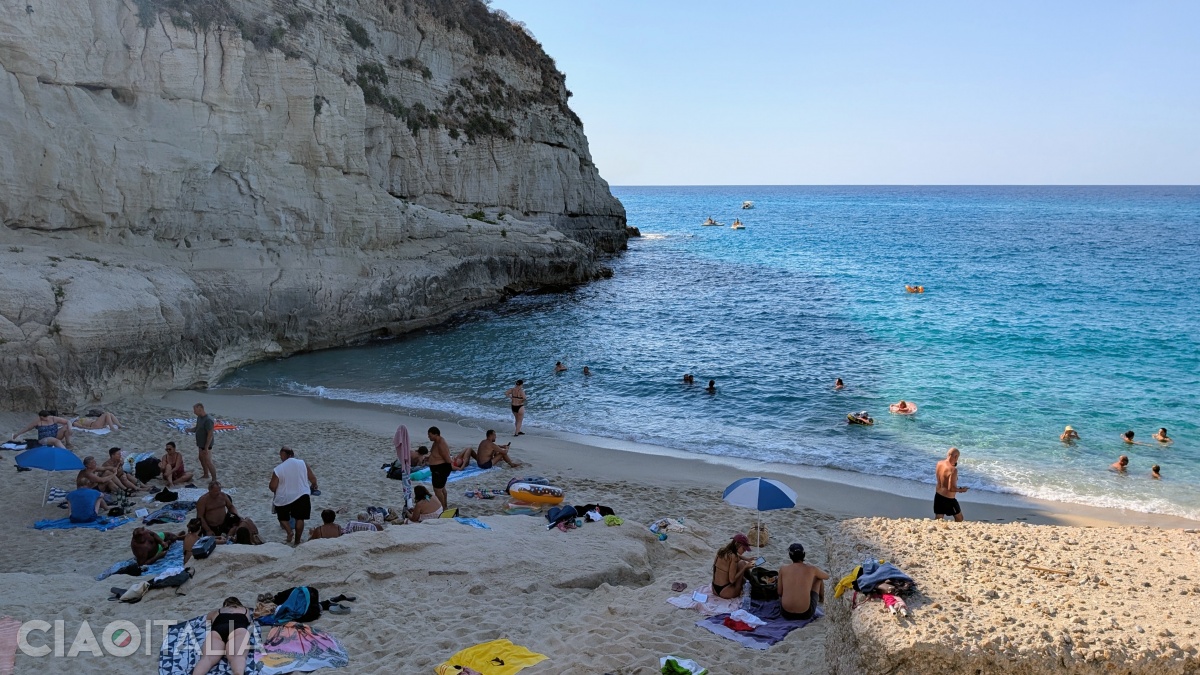
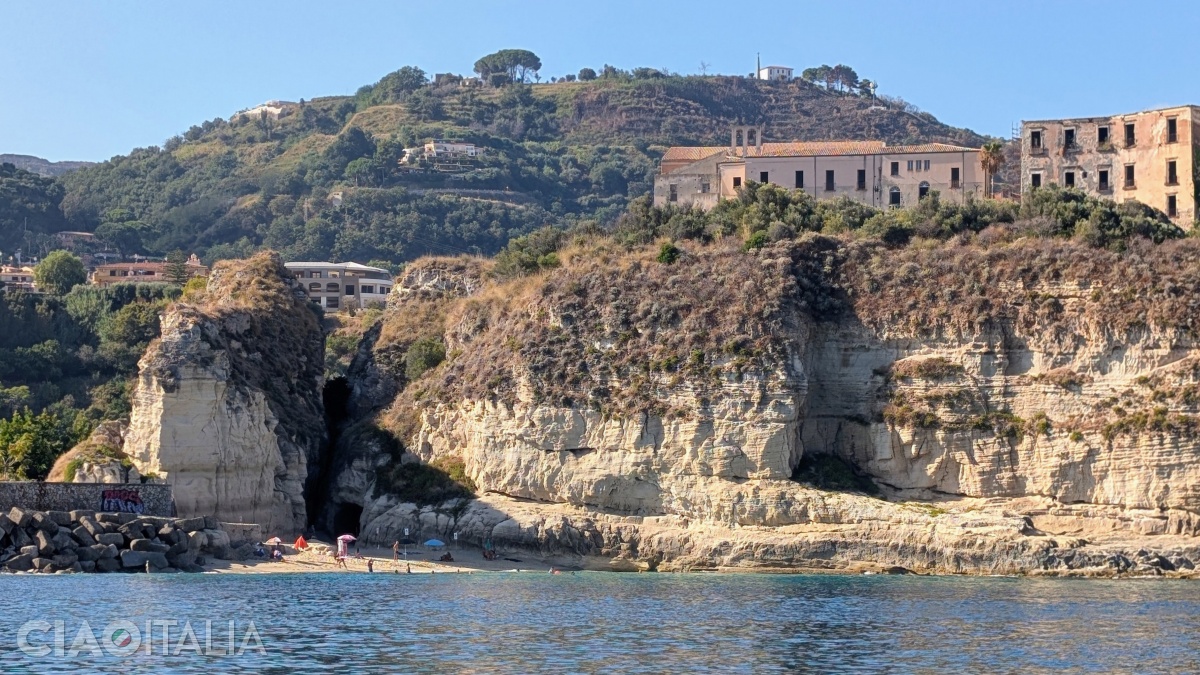
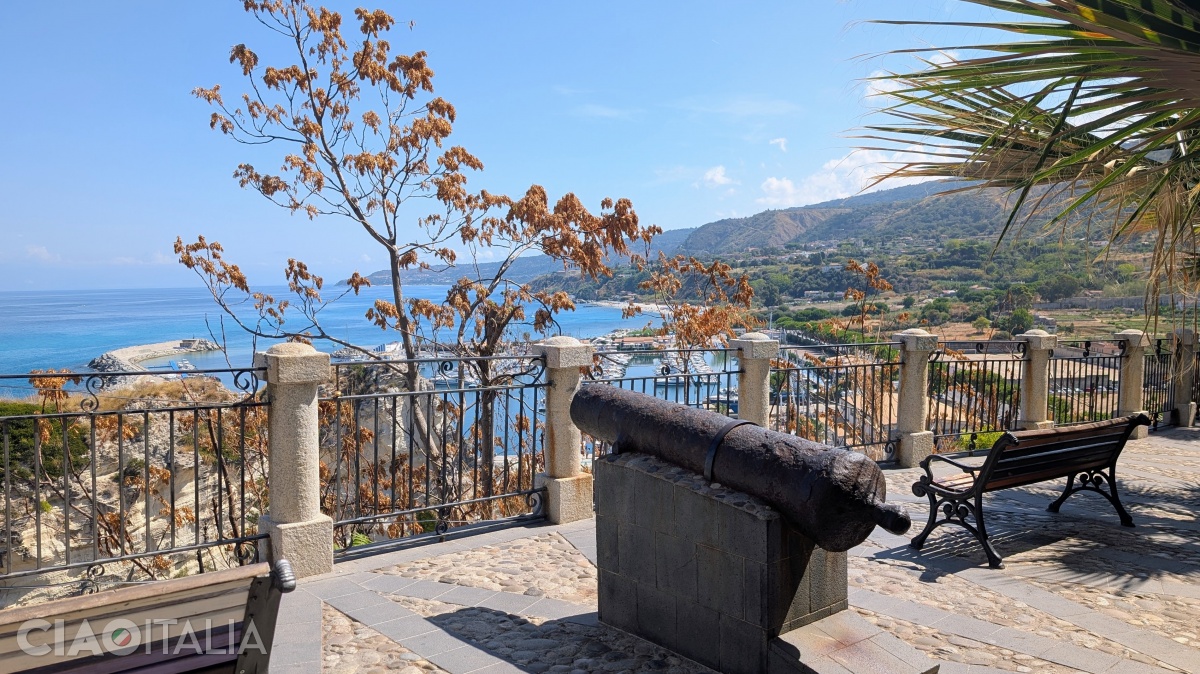
Its name (which translates as "Cannon Beach") comes from the fact that a 17th-century cannon was discovered in its waters, now placed at the Largo Galluppi viewpoint.
The beach is unorganised, with coarser sand and pebbles, and the cliffs provide natural shade for much of the day. Despite its proximity to the port, its waters remain clean.
'A Linguata Beach
Now let's move on to the beaches in Tropea located on the side opposite the Sanctuary of Santa Maria dell'Isola (to the left, if you stand with your back to the town).
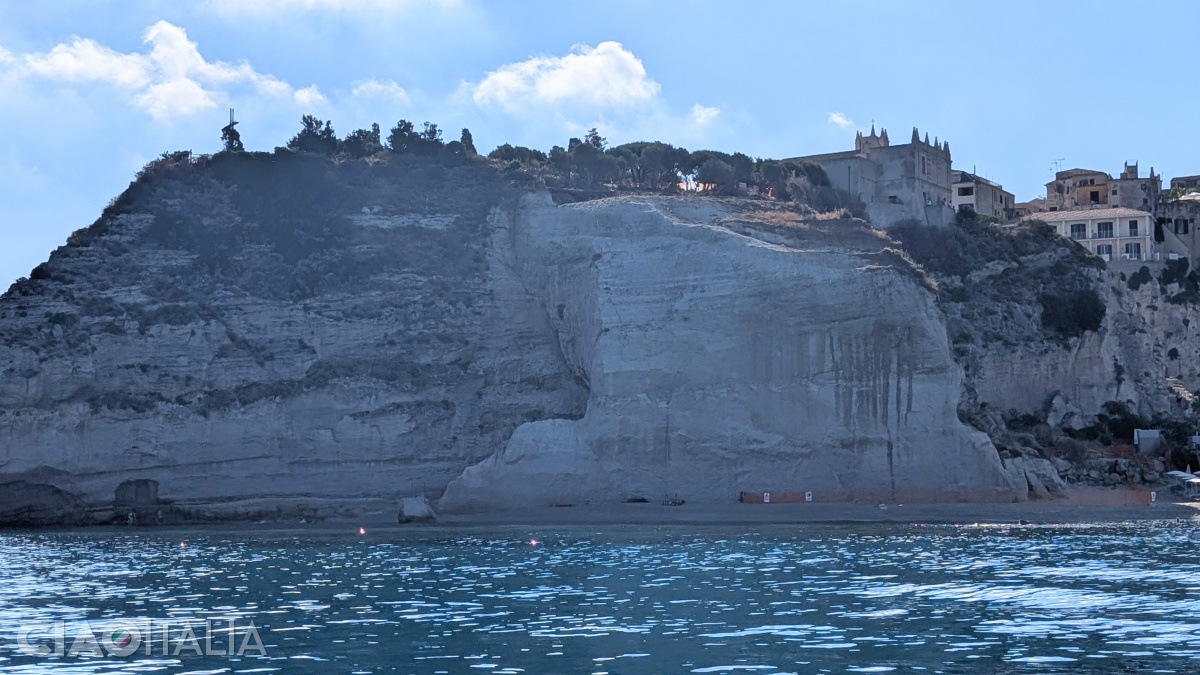
On the seaside edge of the cliff where the church stands is a narrow, white-sand beach called 'A Linguata, named for its elongated, tongue-like shape.
Mare Grande Beach
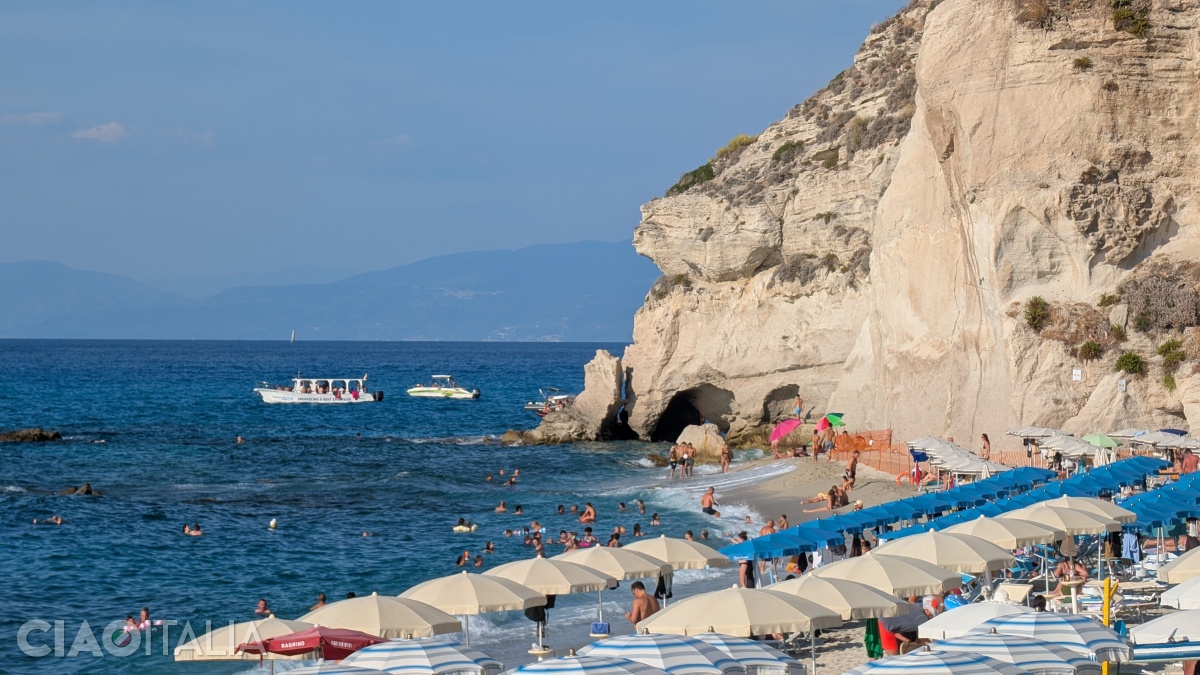
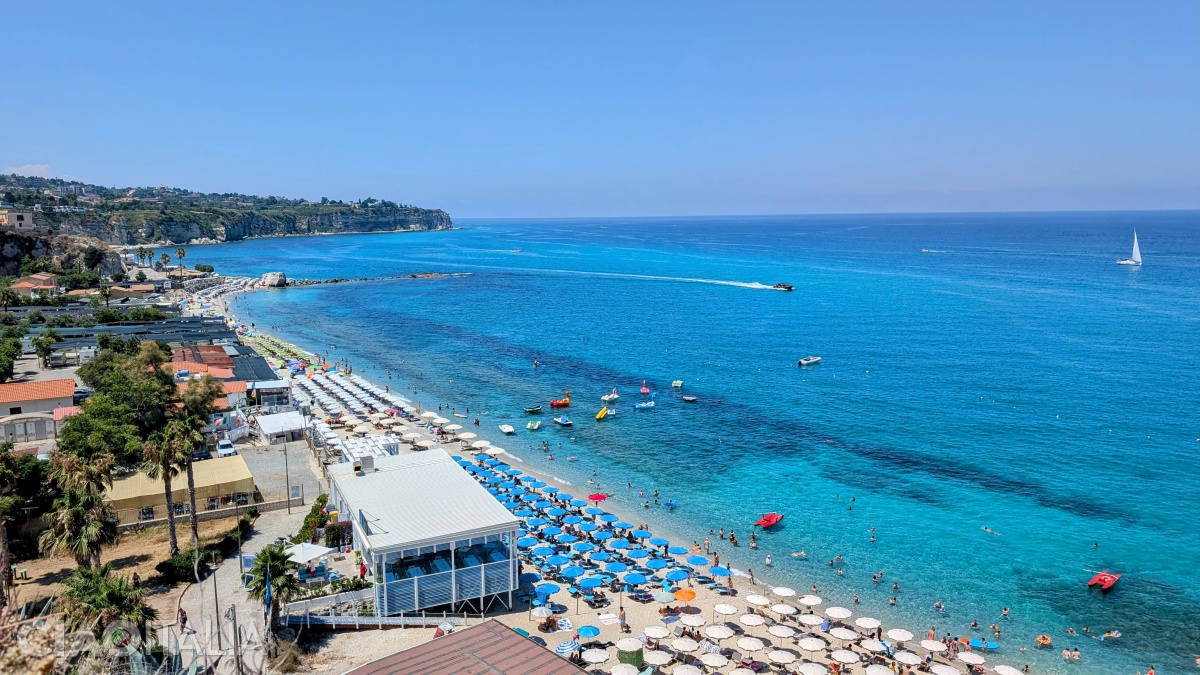
To the left of the cliff stretches Mare Grande Beach (called Mari Randi in the Calabrian dialect), which extends all the way to the breakwater beneath Convento della Sanità. As its name suggests, it is a large beach (it used to be even bigger) with slightly coarser sand.
Here you'll find many lidos (private and organized beach areas), restaurants, a few guesthouses, and campgrounds (see also the article on accommodation in Tropea).
Convento Beach
Beyond Mare Grande Beach, past the breakwater, is Spiaggia del Convento ("Convent Beach"), named after the monastery (in Italian, convento) above it, Convento la Sanità dei Frati Minori. On Google Maps, it is incorrectly marked near Mare Piccolo Beach, with which it is often confused due to its proximity to the Santa Maria dell'Isola Church.
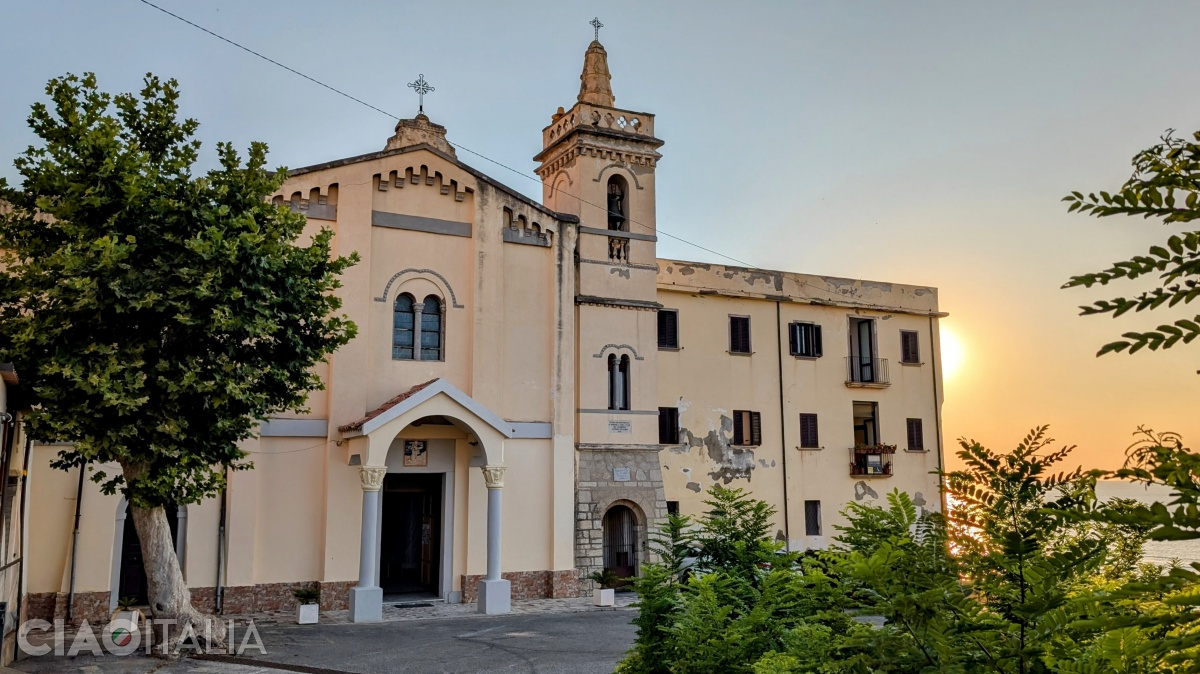
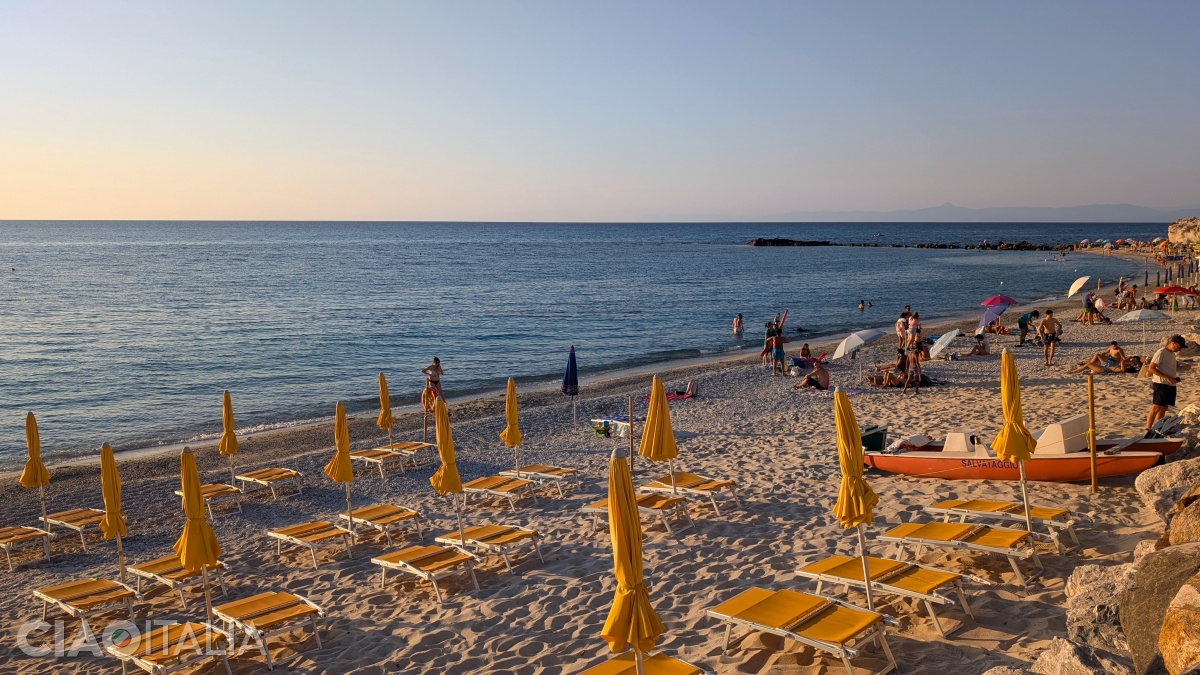
Convento Beach stretches south toward Rocca Nettuno and features many organized beach areas and a few hotels.
Occhiali Beach
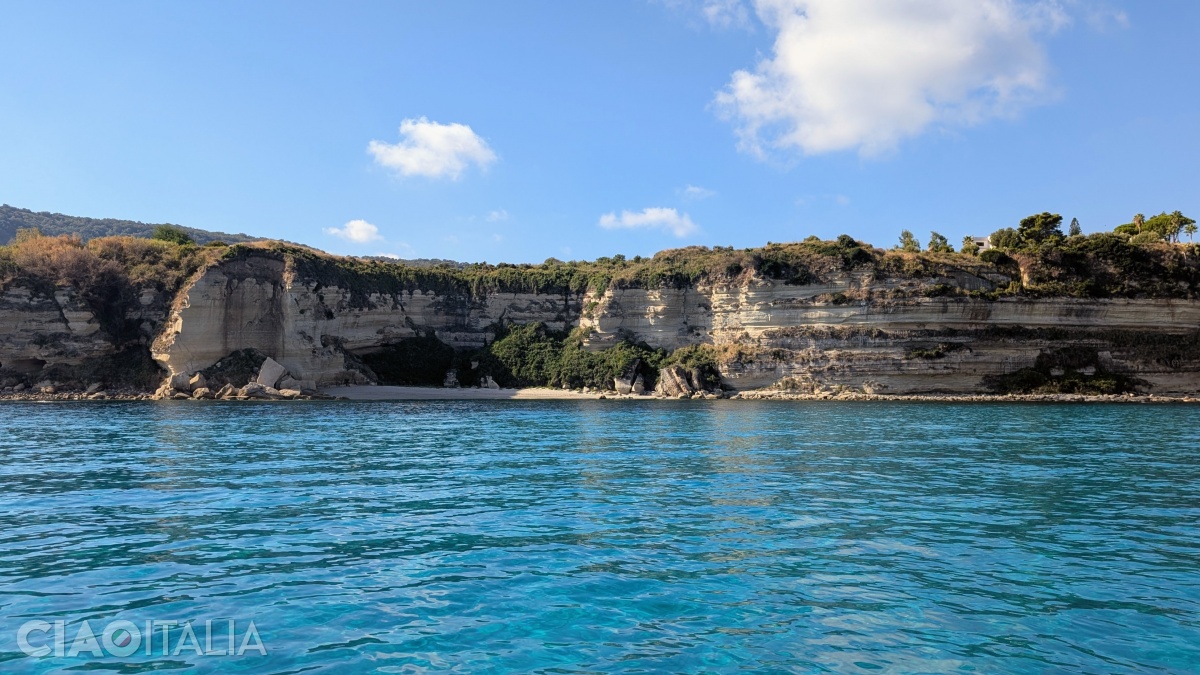
A bit further out, about a 30-minute walk from Tropea's historic center, lies a quiet, lesser-known spot: Occhiali Beach. Its name - which translates to "The Eyeglasses" - comes from two rock cavities that, when viewed from the sea, look just like a pair of glasses.
To reach this beach, you'll need to descend a flight of stone-carved steps and navigate a stretch of rocky terrain.
Petri i Mulinu Beach
A bit further along lies another beach that is a regular stop for boat tours departing from Tropea: Petri i Mulinu Beach. Its name comes from the Calabrian dialect and translates to "the millstones", referencing the era when this spot served as a granite quarry for extracting and crafting millstones used in the region's many oil presses.
Carved into the cliff adjacent to the beach is a small cave spanning about 5 m², known as Grotta Bianca or Grotta dello Scheletro. It features two entrances - one from the beach and another directly from the water. The name Grotta Bianca ("White Cave") is inspired by the fine white sand covering its floor. Its alternative name, Grotta dello Scheletro ("Skeleton Cave"), comes from the unique interplay of light inside, which casts an eerie, bone-white glow over your skin. Back in the 19th century, these sheltered waters were even home to Monachus monachus Mediterranean monk seals.
Just beyond the beach, heading toward Riaci, stands a rock formation known as Scoglio del Sapone ("Soap Rock").