The Colosseum: Facts and History of Rome's Most Iconic Landmark
The Colosseum is the most famous monument in Rome and one of the most important tourist attractions in Italy and the entire world. A symbol of the Eternal City, it was inscribed into the UNESCO World Heritage. Along with the Roman Forum, the Palatine Hill, and the Imperial Fora, it is part of the Colosseum Archaeological Park (if you plan on visiting, you will find the article about the Colosseum's opening hours and tickets useful).
The History of the Colosseum
Who Built the Colosseum and When?
The construction of the Colosseum began in 72 AD (though some sources suggest 70 AD), by order of Emperor Vespasian, who desired a monument to celebrate his military victories in the Middle East. The chosen site was a marshy area where an artificial lake once stood, next to the Domus Aurea ("Golden House"), the former imperial residence of Nero in the center of Rome, near the Roman Forum and Palatine Hill.
However, at the time of Vespasian's death in 79 AD, the Colosseum was not finished. The construction was completed by Titus, Vespasian's son, in the year 80 AD. The inaugural celebrations, featuring games and spectacles, lasted for 100 days, and during the opening ceremonies, 5,000 wild animals were killed.
The Name of the Colosseum
The original name of the monument was the Flavian Amphitheatre (Amphitheatrum Flavianum), because the emperors who built it belonged to the Flavian dynasty.
In the Middle Ages, it began to be known as the Colosseo (Colosseum), apparently due to the enormous gilded bronze statue of Nero (Colossus Neronis - the Colossus of Nero) that stood nearly 30 meters tall near the monument. The statue was eventually destroyed; today, only the site where it once stood, located in the vicinity of the Colosseum, remains visible.
According to another theory, the name Colosseum derives from the fact that it was built on a site where an ancient temple to the goddess Isis (Collis Isei) once stood.
There is also a legend regarding the monument's current name: it is said to have been built on the site of a pagan temple where the devil was worshipped, and where, at the end of the ceremony, priests would ask the followers: Colis Eum? ("Do you worship him?").
Regardless of where the name originated, today everyone knows it as the Colosseum.
Why Was the Colosseum Built?
The Colosseum was built to host public spectacles, offered free of charge to the people by the emperors. In other words, panem et circenses ("bread and circuses") - free food and entertainment - were provided to increase the emperor's fame and popularity while preventing discontent and potential revolts among the citizens.
The shows lasted for hours and included bloody gladiator fights (munera), battles between animals, or between humans and wild animals, many of which were brought from Africa (animal hunts were called venationes). There were also public executions, theatrical performances, and even... naval battles (naumachia).
Organizing a naval battle took approximately 7 hours, during which the arena was filled with water through a system of wells and internal pipes. However, these naval battles were not particularly successful with the public, so the performances were quickly abandoned.
Executions, which were turned into true spectacles, usually took place at midday. The condemned were killed either by being burned at the stake, by crucifixion, by the sword, or by wild animals.
The Architecture of the Colosseum
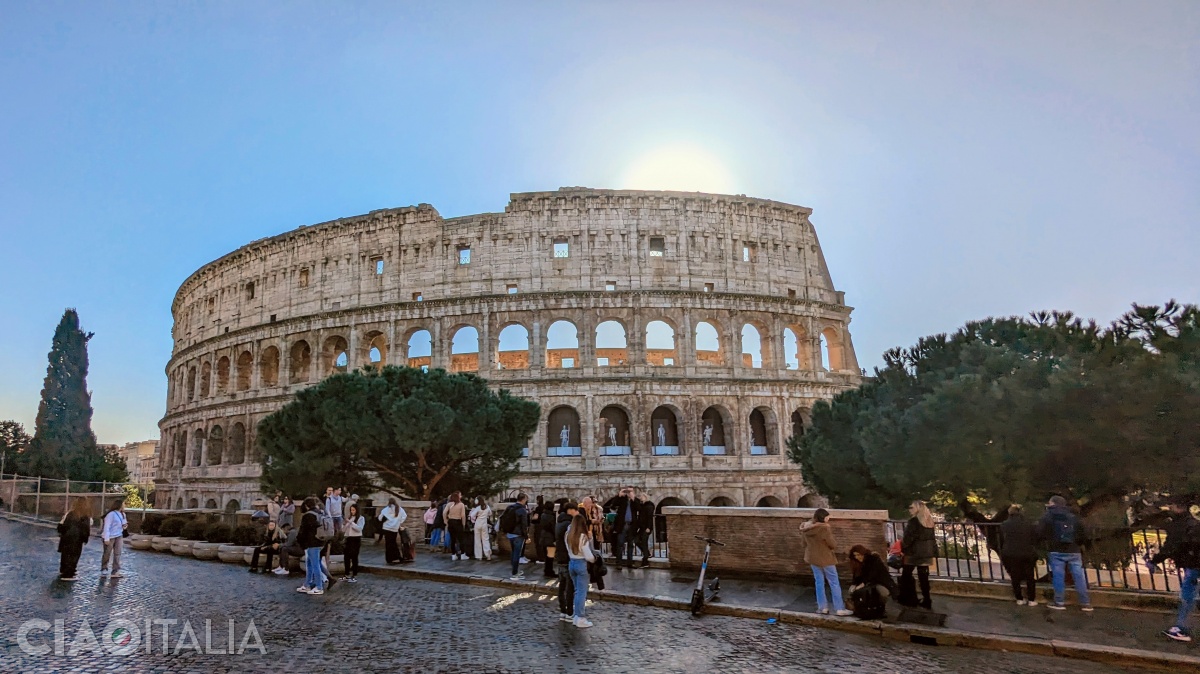
Contrary to appearances, the Colosseum is not round but oval-shaped, a design chosen to accommodate the largest possible number of people.
The exterior structure consists of four levels, the first three of which feature 80 open arches framed by decorative semi-columns. The architectural style of the columns changes from one level to the next: Tuscan (a simplified Doric style), Ionic, Corinthian, and finally Composite on the top floor. Within the arches of the second and third levels stood hundreds of statues, larger than life-size, representing deities, heroes, and legendary or historical figures from Rome's past.
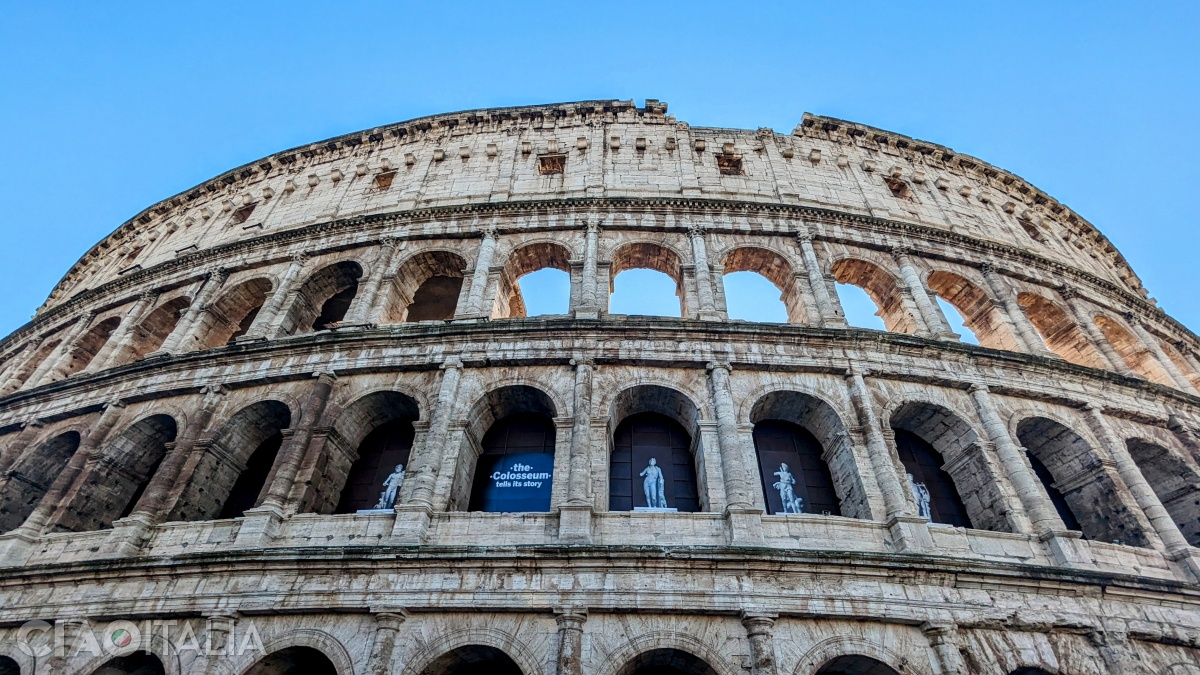
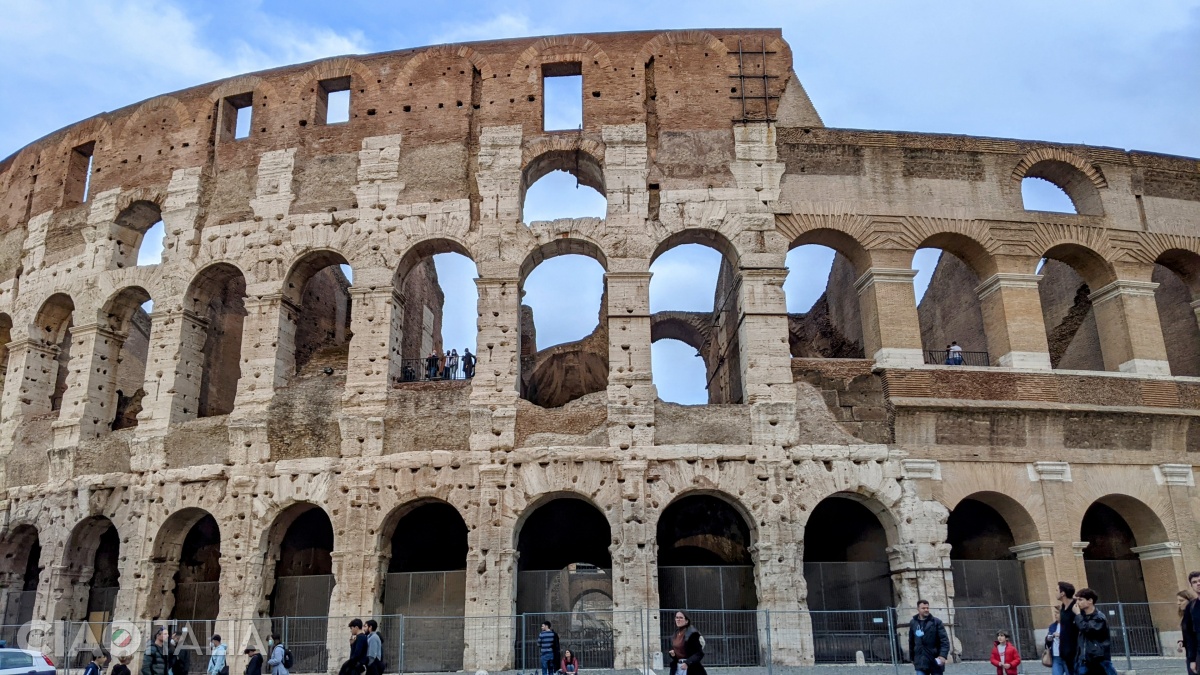
An immense quantity of building material (tuff, bricks, and travertine) was used to raise the walls. To transport over one hundred thousand cubic meters of travertine from the quarries in Tivoli - a town located about 30 km away - a road approximately 6 meters wide was specially constructed. Hundreds of iron clamps were used to fix the stone slabs to the exterior walls; the total weight of these metal fasteners has been estimated at 500 tons.
Most of the holes you see today in the exterior walls of the Colosseum are most likely due to these very metal clamps that the Romans used during construction. Once the travertine slabs covering the monument were removed, the metal elements were left exposed, and the iron - a precious material in those times - was stolen to be melted down and repurposed.
There is also a legend suggesting that the holes were made by barbarian tribes to fill them with gunpowder and destroy the Colosseum. This is highly unlikely, considering that gunpowder did not exist in those times.
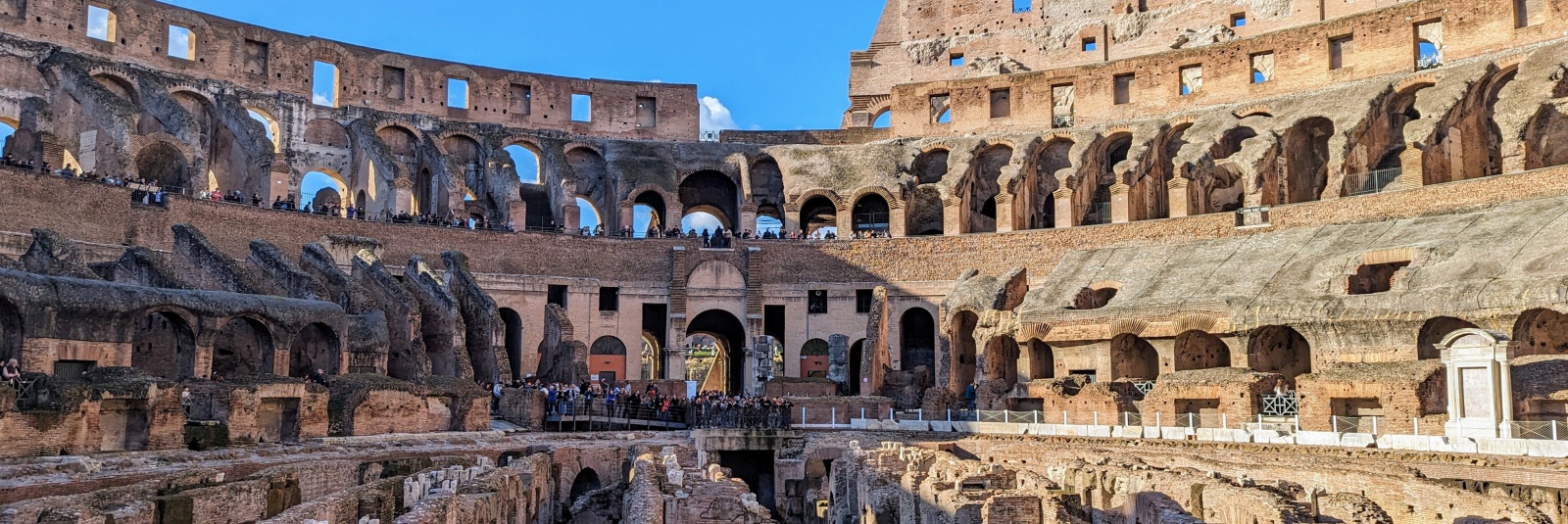
The arena, equipped with a drainage system, was originally covered with wooden flooring topped with sand. It is no coincidence that the Latin word for sand is actually arena - a term that has since been used to define venues where spectacles take place. The sand served a practical purpose: it prevented gladiators from slipping while simultaneously absorbing the blood that flowed in abundance and masking unpleasant odors.
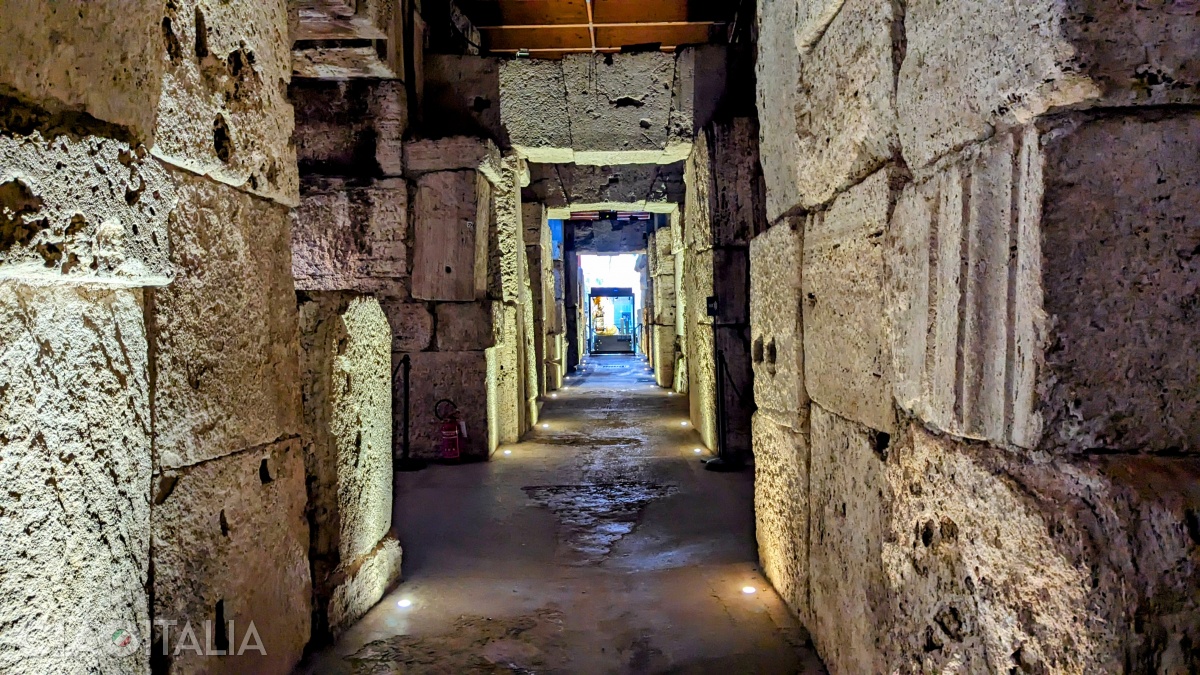
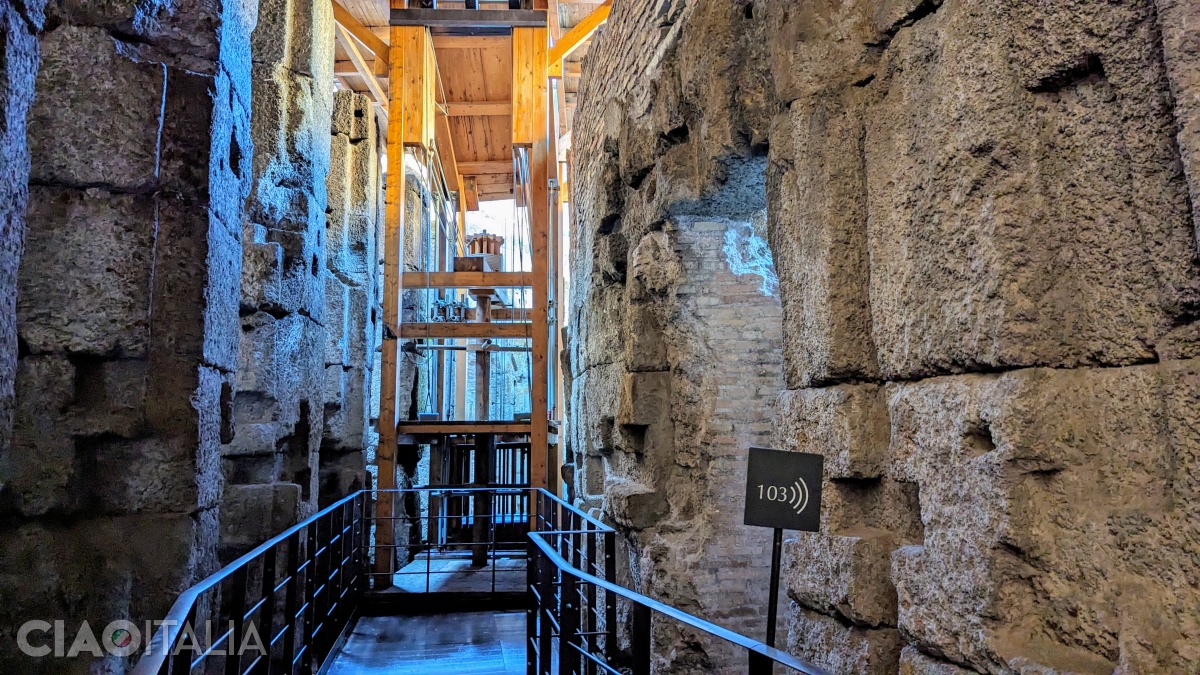
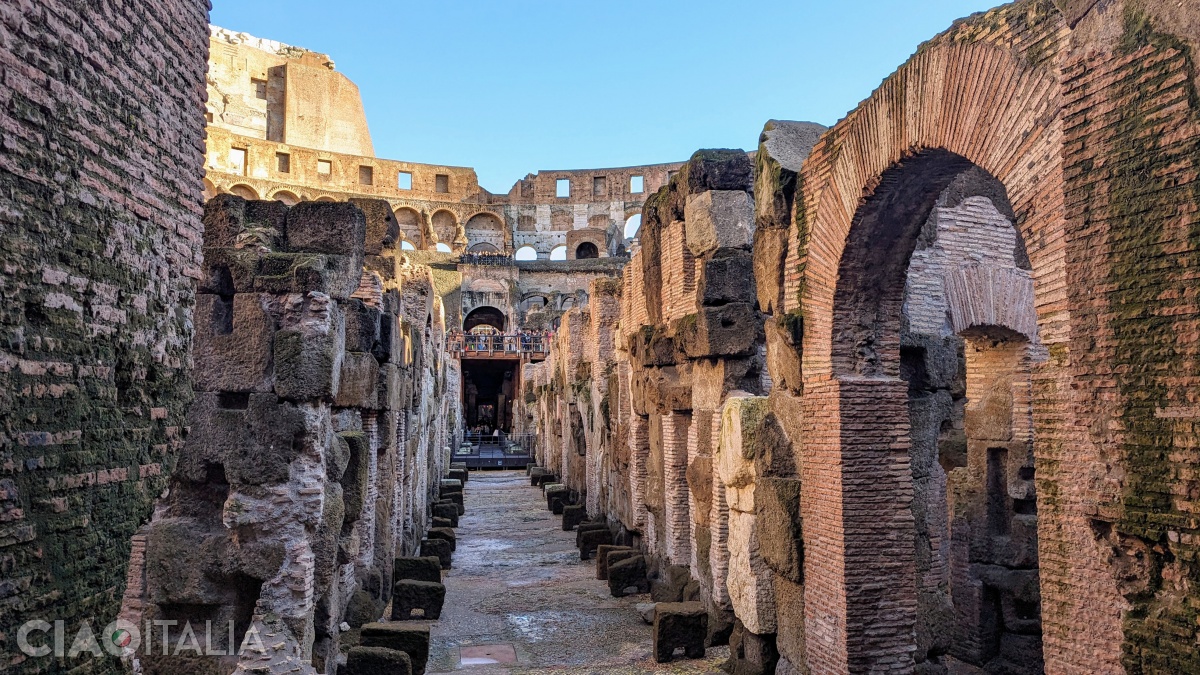
Six meters below the arena lay two additional levels, comprising a complex network of tunnels, stairs, and underground rooms called the hypogeum (a word derived from Greek meaning "underground"). This was where the gladiators stayed, along with cages for the condemned and wild animals. The hypogeum also contained training areas for gladiators, storage rooms, and other spaces. Using a sophisticated system of pulleys and elevators, animal cages and various stage sets for the performances were hoisted directly into the arena.
The underground part of the arena was only discovered in the 19th century and was fully excavated in 1938-1939.
A retractable roof, designed to protect spectators from the sun, was secured using 240 wooden pillars anchored to the top section of the Colosseum. It was made of 80 large, triangular pieces of fabric. Because sailcloth was used initially, the roof was named the velarium. Later, they switched to linen, which was lighter. The spreading of the canvases was carried out by a team of sailors from the military fleet at Misenum, who maneuvered them using 320 ropes. A large circular opening remained in the center, similar to the one at the Pantheon.
A reconstruction of the Colosseum can help you better understand the monument's layout.
How Were the Spectacles Conducted at the Colosseum?
Everyone could participate in the spectacles at the Colosseum for free. Each family had a sort of access pass made of bone, inscribed with their seat number and the specific sector for entry. Above the northern arches, you can still see the Roman numerals that indicated the sectors, which in ancient times were painted red to be visible from a distance.
Spectators entered through 76 arches at the base of the Colosseum, passed through internal corridors (ambulacri), and reached the various sectors of the amphitheater through access gates. These gates were called vomitaria, because they allowed a large number of people to enter or exit in a very short amount of time. It is said that 50,000 people could exit the Colosseum within 5 to 10 minutes.
The emperor and other important people entered through two specific entrances (north and south) located at the ends of the amphitheater's short axis. Unlike the entrances reserved for the general public, these did not have numbers above the exterior arches. The other two entrances (west and east), at the ends of the long axis, led directly into the arena and were used by those performing in the shows.
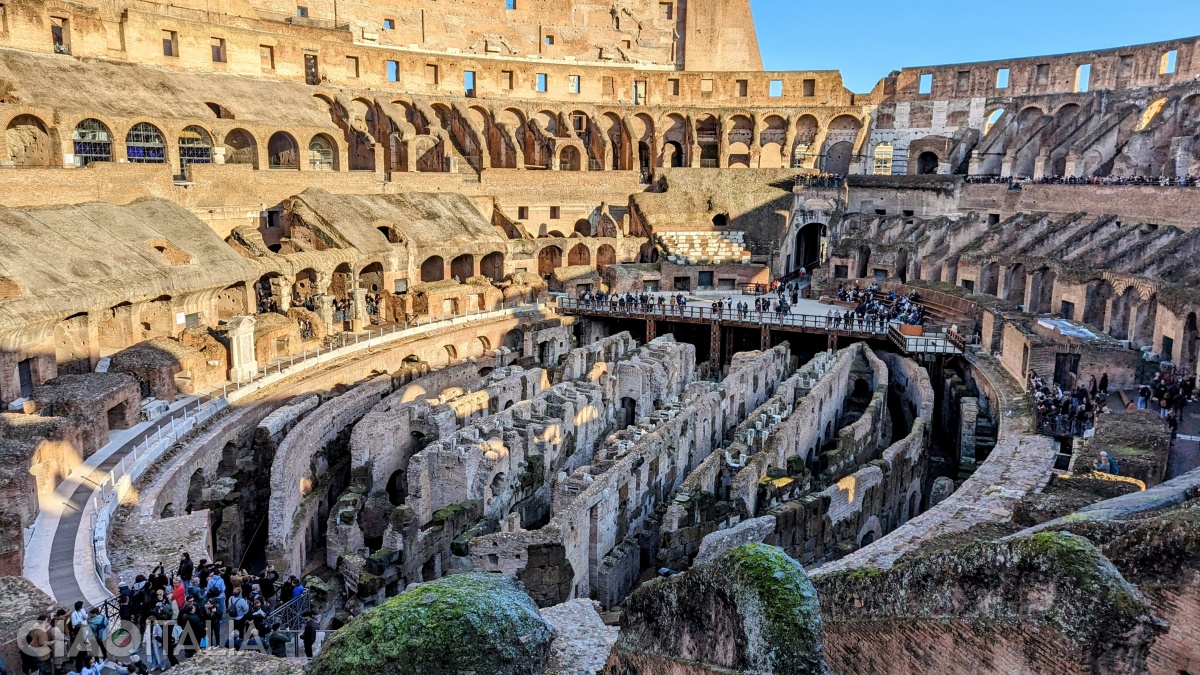
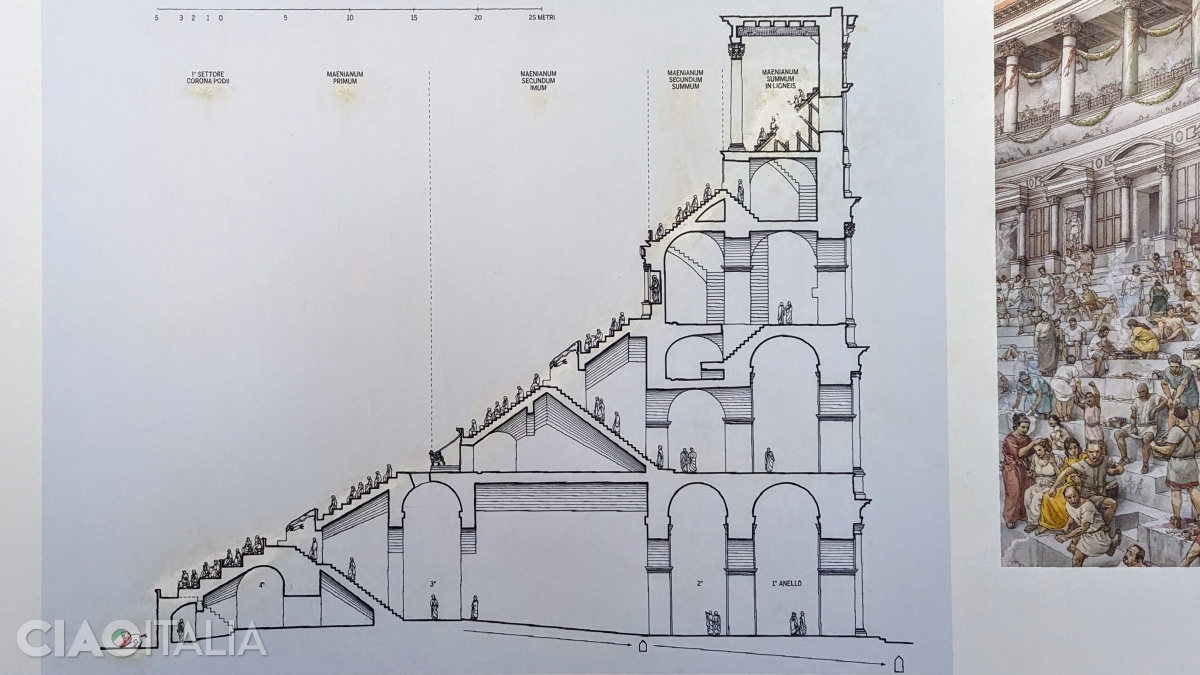
The amphitheater's seating tiers were organized in a specific order based on social class - the wealthier and more important you were, the closer you sat to the arena.
- The section closest to the arena was called the podium and was reserved for senators, magistrates, priests, and Vestal Virgins. The Imperial Box was also located here, at the southern entrance on the short axis, near one of the Colosseum's secret exits. In case of danger, the emperor could escape through a gallery leading directly to the palace.
- The rows above the podium were called maenianum primum and were intended for members of the equestrian order.
- This was followed by maenianum secundum, divided into two sections: the imum (for wealthy citizens such as craftsmen, merchants, and public guests) and summum (for the poorest citizens, where women had a dedicated sector to avoid "promiscuity").
- The rows at the top, furthest from the arena and with the poorest visibility, were called maeniamum summum in legneis and were also intended for the plebeians.
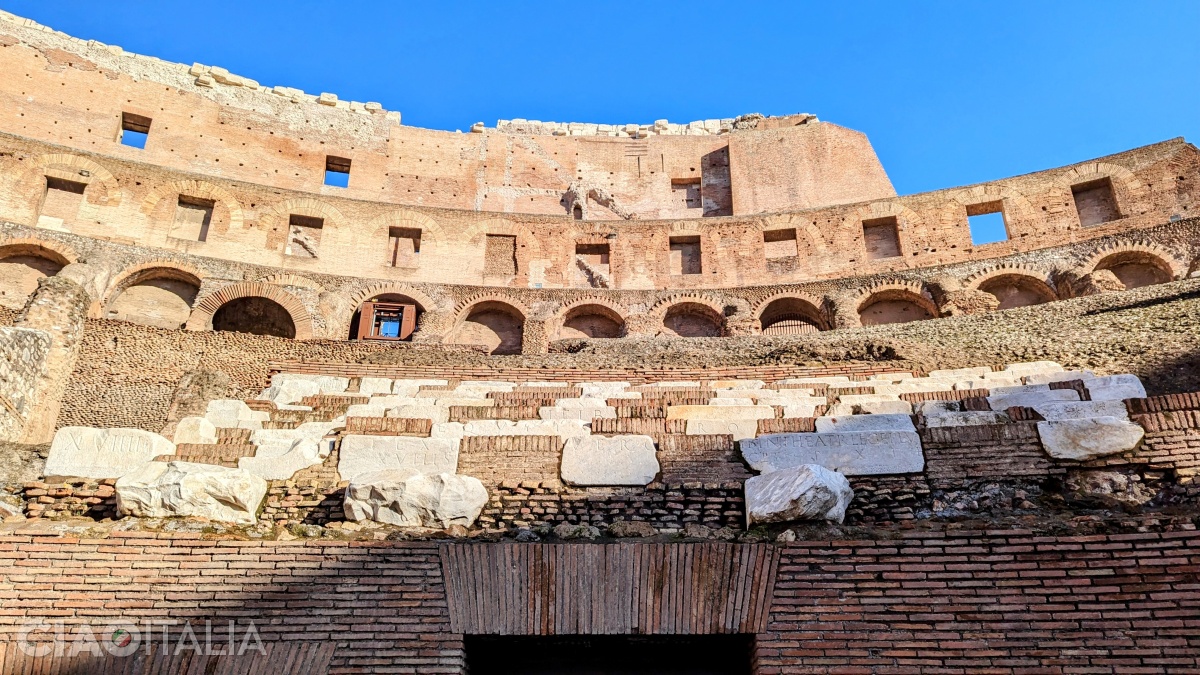
The tiers on which the senators sat were made of marble (a few marble steps can still be seen today), while the others were made of brick, and the rows at the very top were made of wood.
Each senator had a reserved seat with his name inscribed upon it. These inscriptions were changed when they died or when they ceased to be senators. The names you can still read today belong to the last senators who attended the spectacles before the amphitheater was abandoned.
To sit comfortably, spectators would bring cushions from home to place on the stone steps.
The two entrances to the arena were located at the ends of the long axis. The western entrance (facing the Roman Forum) was connected via an underground corridor to the Ludus Magnus - the most prominent gladiator school - and was known as the Porta Triumphalis ("Triumphal Gate") or Porta della Vita ("Gate of Life"). This was the gate through which the gladiators entered at the beginning of the spectacle and through which those who remained alive exited at the end.
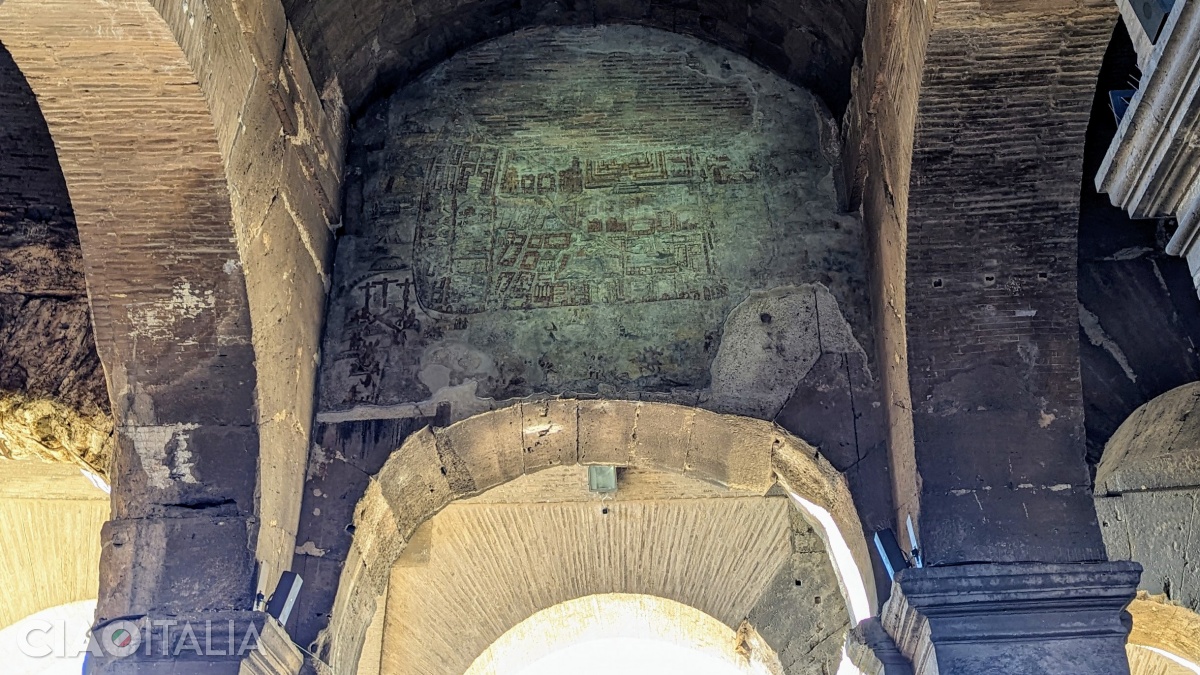
On the rear arch of this gate, there is a recently restored painting of the city of Jerusalem viewed from above, dating back to the 17th century.
Exotic animals of massive size were brought in through the eastern gate (even giraffes were brought into the Colosseum), and the bodies of dead gladiators were carried out through it at the end. It is no coincidence that the gate was named Porta Libitinaria (after Venus Libitina, the goddess of funerals) or Porta della Morte ("Gate of Death").
The arena did not host just one show, but several at the same time. In the morning, animal fights (venationes) took place; at midday, public executions of the condemned were carried out; and in the afternoon, the gladiator duels - the most highly regarded and anticipated by the public - took place.
The fights ended in blood and the delirious screams of the spectators. It is estimated that approximately 500,000 people and one million animals of all kinds (including deer, gazelles, leopards, giraffes, lions, elephants, bears, bulls, crocodiles, and many others) died inside the Colosseum over time. It is known, for example, that Emperor Commodus entertained himself by decapitating ostriches with his sword. The use of exotic animals in the major amphitheaters of the Roman Empire even led to the extinction of certain species, especially since many animals did not survive the long journeys by sea or land.
Gladiators, whose name derives from the weapon they used - a short sword called a gladius - were popular figures in ancient Rome and enjoyed fame similar to today's music or sports stars. They usually came from the ranks of slaves, prisoners, and those condemned to death, but also from among free men. Some became so famous that their names appeared in various inscriptions; they could participate in banquets or save enough money to buy back their freedom. They were seen as symbols of virility and courage, and it was believed that their blood (which became a trade commodity) could cure diseases such as epilepsy or impotence and bring fertility.
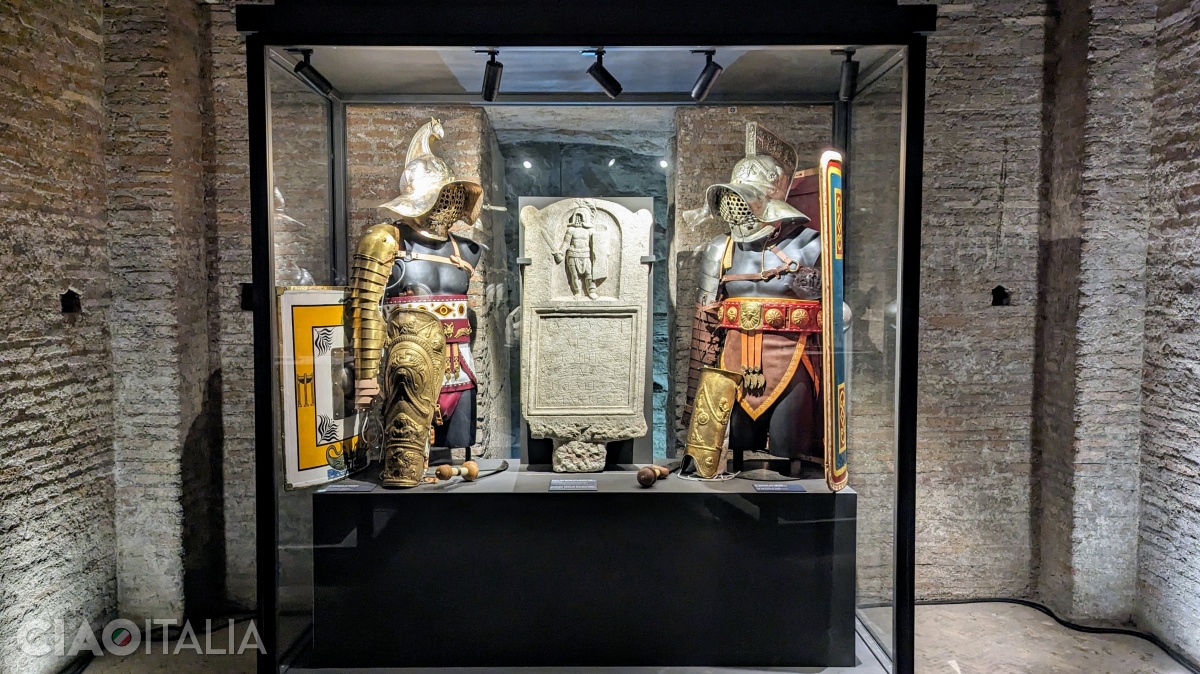
The idea that gladiators greeted the emperor upon entering the arena by shouting Ave Caesare, morituri te salutant ("Hail Caesar, those who are about to die salute you") is merely a myth. In fact, this occurred only once, during the reign of Claudius, before the performance of a naval battle. The emperor responded with a non-committal "Maybe", which the gladiators interpreted as an order granting them their freedom, leading them to refuse to fight. Claudius had to issue another order, and only armed soldiers managed to convince the gladiators to return to the arena.
Since the gladiators were the main characters of the spectacles in the Colosseum, the amphitheater was directly connected to the Ludus Magnus, the largest gladiatorial school.
Let us not forget that Trajan celebrated the conquest of Dacia in 107 AD with 123 days of contests, in which 10,000 gladiators and 11,000 animals participated.
The Decline of the Colosseum
The decline of the Colosseum began with the banning of the spectacles. The last gladiator fights took place in 437 AD, being banned starting in 438 AD, and the final animal hunts occurred in 523 AD.
The Colosseum lost its former glory and was abandoned, being used over time as a cemetery, fortress, residence, and even a stone quarry.
In the Middle Ages, the Colosseum was associated with grim legends and superstitions centered around sorcerers, ghosts, and evil spirits. It was said to be one of the seven gates of hell or that the souls of slain gladiators haunted the site at night, unable to find peace. This is hardly surprising - part of the Colosseum was used as a burial ground, and occult enthusiasts would go there at night to seek herbs and remains for preparing magic potions.
In the 13th century, the Frangipane family built their residence inside it. Even though that palace was eventually demolished, other dwellings, workshops, and animal shelters were added over time.
Although the monument had long been used as a quarry, the devastation became systematic during the Renaissance. The Colosseum was mercilessly pillaged for stone and marble, which was used as construction material for many churches, palaces, and bridges in Rome. A few examples include Palazzo della Cancelleria (which houses one of the Leonardo da Vinci exhibitions in Rome), Palazzo Venezia, Palazzo Farnese, Palazzo Barberini, and even St. Peter's Basilica in the Vatican.
Abandoned, the monument was reclaimed by nature. Its romantic image caught the attention of artists and botanists alike, who began to study the wild flora of the Colosseum. The first botanical treatise appeared in 1643. Since then, over 300 species of rare and exotic plants have been classified and studied.
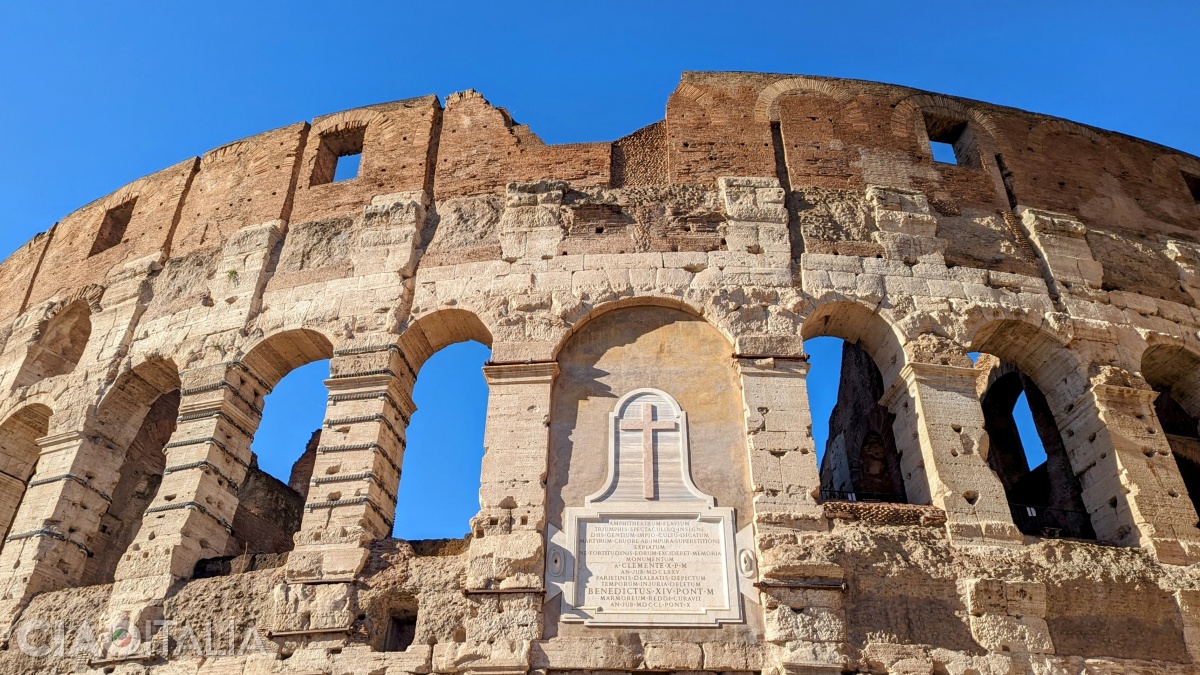
The destruction only stopped in 1744, when Pope Benedict XIV prohibited the theft of materials from the Colosseum. In 1749, he declared it a sacred site and included it in the Via Crucis (Way of the Cross) procession on Good Friday, in memory of the presumed Christian martyrs killed there. The procession still begins at the Colosseum to this day; however, despite this tradition, no evidence has yet been found to prove that the amphitheater was actually a scene of Christian martyrdom.
Archaeological excavations aimed at restoring the amphitheater's former beauty began in the 19th century.
The Colosseum in Figures:
- Construction date: 72-80 AD
- Colosseum dimensions: 188 m long, 156 m wide, 48 m high (of its original 52 m)
- Perimeter: 527 m
- Surface area: 24,000 sqm
- Arena dimensions: 76 m long, 46 m wide
- Capacity: 50,000 spectators (some sources mention as many as 70,000-80,000)
- Construction materials: approximately 100,000 cubic meters of travertine and 500 tons of iron were used for the exterior alone.
Fascinating Facts about the Colosseum
- The Colosseum is the most famous, visited, and photographed tourist attraction in Italy.
- It is the largest Roman amphitheater ever built. What you see today represents only one-third of the original monument, making it difficult to imagine its former grandeur! Following it on the list are the Arena di Verona and the Amphitheater of Capua.
- The Colosseum is one of the New Seven Wonders of the World (not of the Ancient World, as is sometimes mistakenly mentioned). It was selected by public vote in a referendum organized by the New Open World Corporation, which began in 2000 during the Sydney Olympics and concluded in 2007.
- A famous 8th-century prophecy by the English monk the Venerable Bede stated: "As long as the Colosseum stands, Rome shall stand; when the Colosseum falls, Rome shall fall; when Rome falls, the world shall end".
- During the Fascist period, a project was proposed to transform the Colosseum into a luxury hotel.
- The Colosseum has been used as a filming location for many movies. However, Gladiator was not one of them (the arena scenes were filmed on a massive set in Malta).
- Since 2002, the Colosseum has been featured on the 5-cent coins issued by the Italian Republic.