The Neapolis Archaeological Park in Syracuse
The Neapolis Archaeological Park, located about 2.5 km from the island of Ortigia (roughly a 30-minute walk), is one of the most significant tourist attractions in Syracuse. A visit inside means exploring the ancient past of one of Sicily's most beautiful towns.
The archaeological park covers an area of 240,000 sqm and includes some of the most important Greek and Roman ruins in Italy.
Ticket Prices
The entrance ticket prices for the Neapolis Archaeological Park are:
- Adults: €14 (exhibition access included)
- EU citizens 18-25 years old (valid up to and including your 25th birthday): €7
- Under 18: Free
If you wish to visit both the Neapolis Archaeological Park and the Paolo Orsi Archaeological Museum, combined tickets are available at the following rates:
- Adults: €19 (exhibition access included)
- EU citizens 18-25 years old (valid up to and including your 25th birthday): €9.5
- Under 18: Free
You can book tickets online on TicketOne.
Opening Hours
The opening hours for the Neapolis Archaeological Park in Syracuse are:
September 1 - September 30, 2026:
- Monday-Sunday: 8:30 AM - 7:40 PM
The ticket office closes 1 hour and 40 minutes before the park's closing time.
Tips for Your Visit
Here are a few tips that we hope will be useful:
- Head to the individual visitors' ticket office (at the park entrance, on the left). Avoid the group ticket office located near the souvenir shops.
- If you see a long queue at the entrance, you can buy tickets online from the official distributor for a small booking fee. Note: This does not apply to visitors under 18, who must still wait in line at the physical ticket office to pick up their free entry pass with a valid ID.
- Wear comfortable walking shoes, as you will be doing a lot of walking. If visiting during the summer, bring a hat, plenty of water, and sunglasses.
- Unfortunately, there are very few signs or explanatory plaques inside the site. To get the most out of your visit, research the history beforehand, book a guided tour, or rent an audio guide (though be aware that the map points don't always align perfectly with the audio tracks).
- If you choose to rent an audio guide, be prepared to leave your ID as a deposit; you will get it back at the end of your visit.
- We suggest starting with the quarries (Latomie), moving on to the Greek Theatre and the Altar of Hieron II, and finishing your visit at the Roman Amphitheatre.
- It's best to avoid the on-site toilets if possible. They are often crowded, poorly maintained, and frequently lack soap or toilet paper.
- Since this is a massive archaeological site requiring constant upkeep, expect some areas to be under restoration or temporarily closed to the public.
- Keep in mind that the use of drones is prohibited.
Visiting Neapolis Archaeological Park
The archaeological park comprises the northern part of the ancient Neapolis district, one of the five districts (Ortigia, Neapolis, Akradina, Tyche, and Epipoli) that made up Syracuse in the Greco-Roman era.
In the 5th century BC, Syracuse became the capital of a kingdom spanning several territories in eastern Sicily. This was a period of great prosperity and development, during which new neighborhoods and monuments emerged. At the heart of this expansion was Neapolis; it served not only the needs of a growing population but was also designed to showcase the immense power of Syracuse. To achieve this, several imposing monuments were constructed.
The archaeological site can be divided into two main sections: to the north is the stone quarry area (Latomie), used both for limestone extraction and as a prison, and to the south, spreads the area where the major monuments were developed.
Latomia del Paradiso
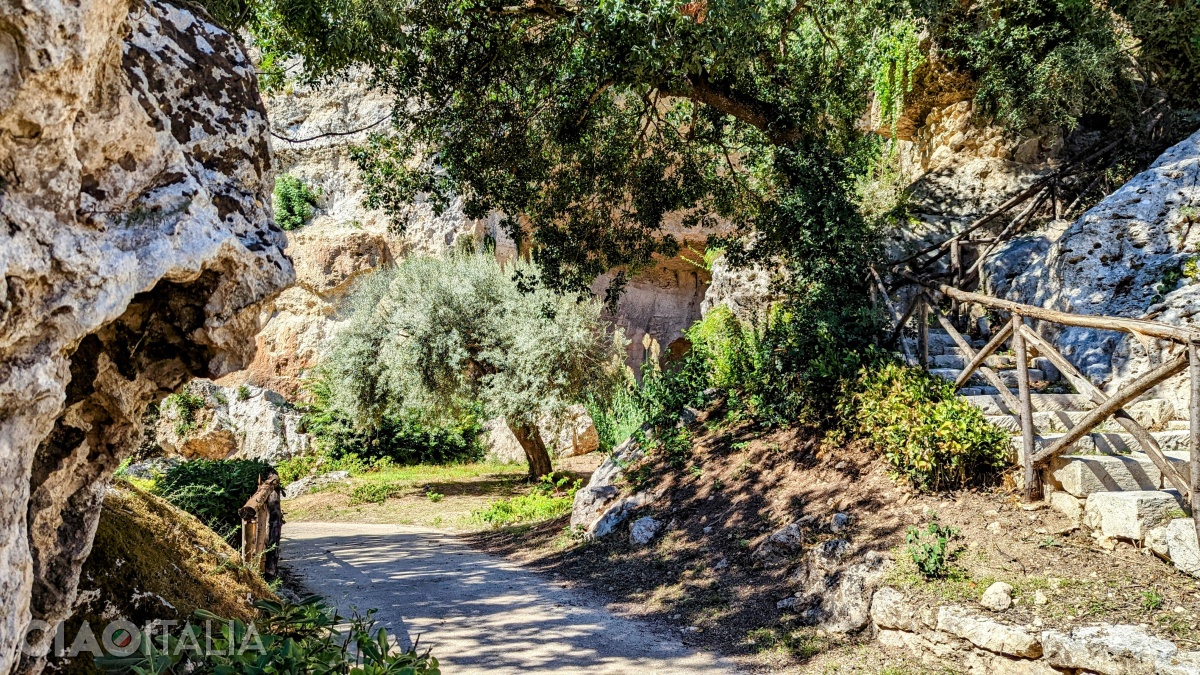
Latomia del Paradiso is a quarry used in antiquity for the extraction of limestone. It takes its name ("The Quarry of Paradise") from the lush surrounding vegetation, dominated by cypresses, palm trees, lemon and orange trees, pomegranates, ficus, cedars, olive trees, and cacti.
The valley in which it sits is actually an artificial one, excavated by the brute force of thousands of prisoners who were forced into slavery. The quarry also served as their prison. It is said that in 413 BC, 7,000 Athenian prisoners perished here.
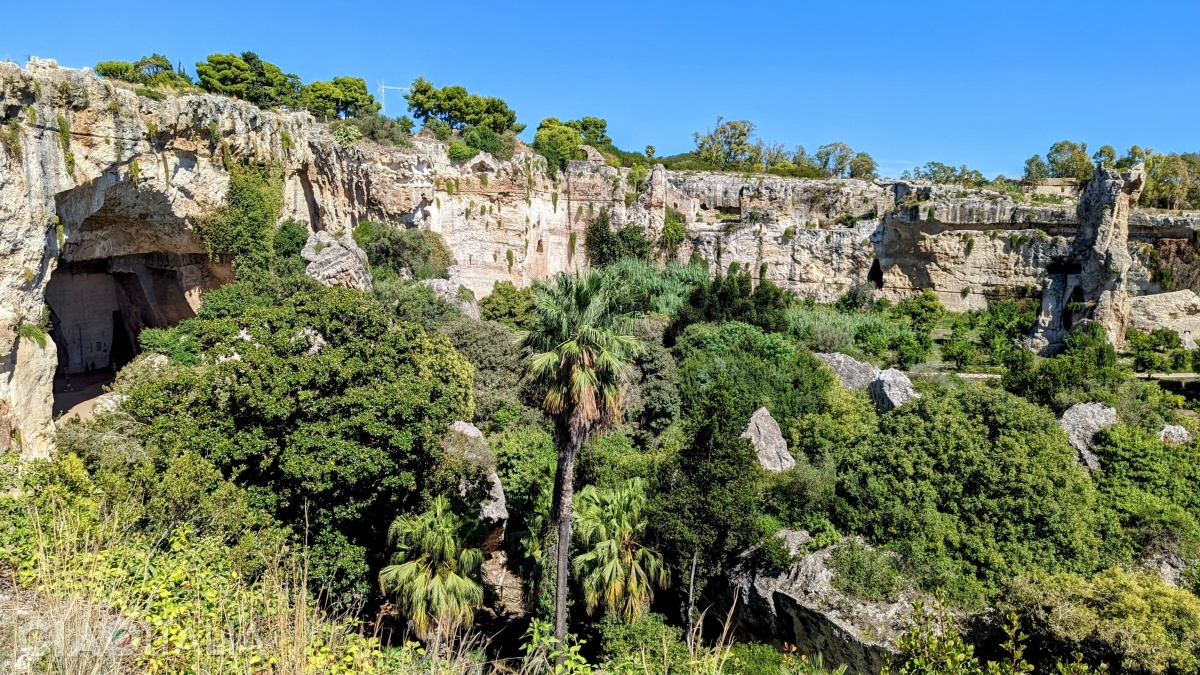
Within the massive cliffs in this part of the archaeological park, several caves open up - these too were excavated by human hands. Among them are those known as "the Ear of Dionysius", "the Rope-makers' Grotto", and "the Saltpeter Grotto".
Orecchio di Dionisio
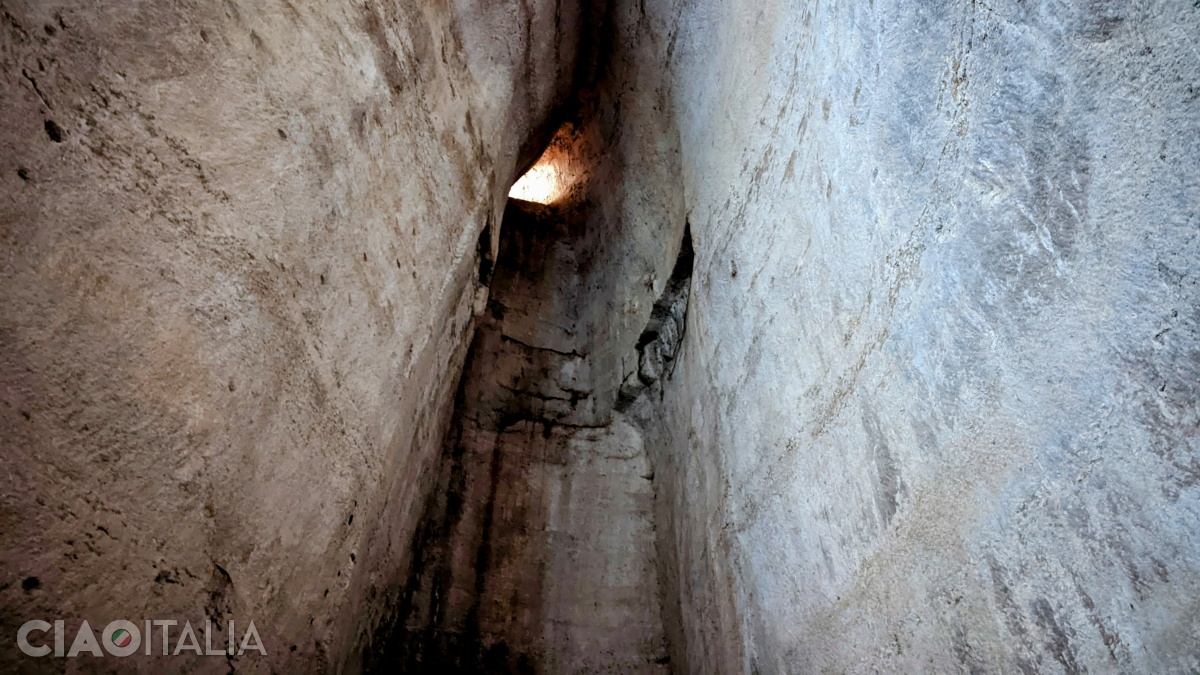
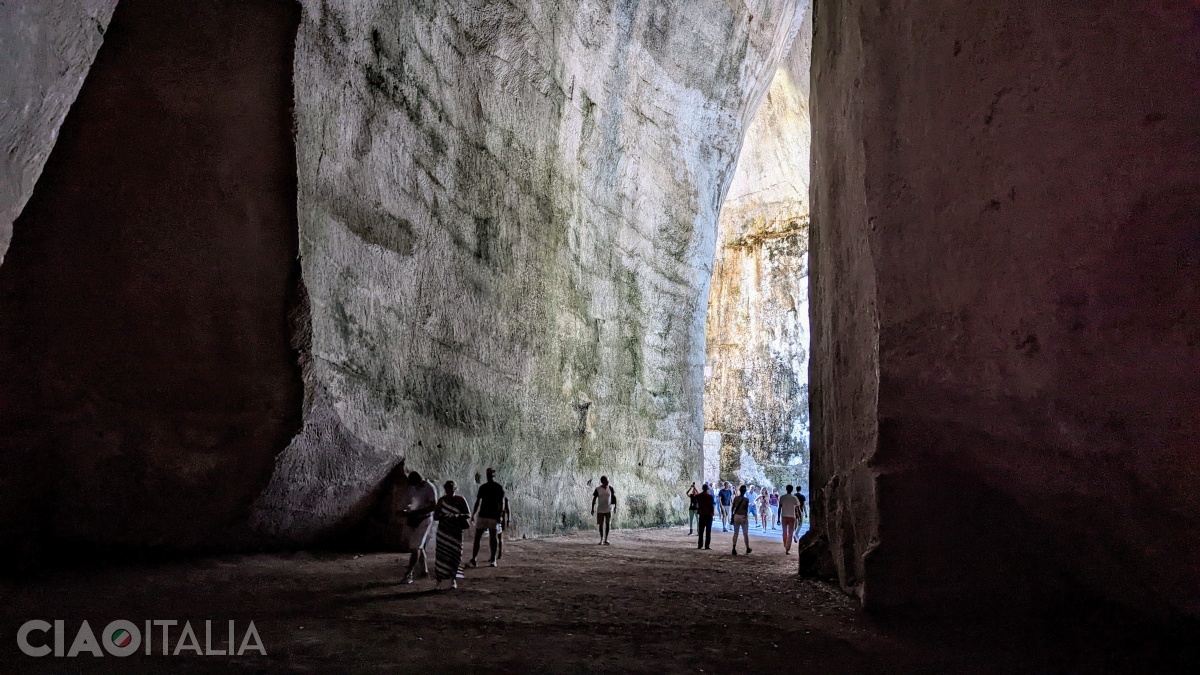
Orecchio di Dionisio ("The Ear of Dionysius") is located at one end of the quarry. It is a grotto approximately 23 meters high and 60 meters deep, whose "S" shape is reminiscent of an earlobe. It possesses extraordinary acoustics, which is why it has also been nicknamed la grotta che parla ("the speaking cave").
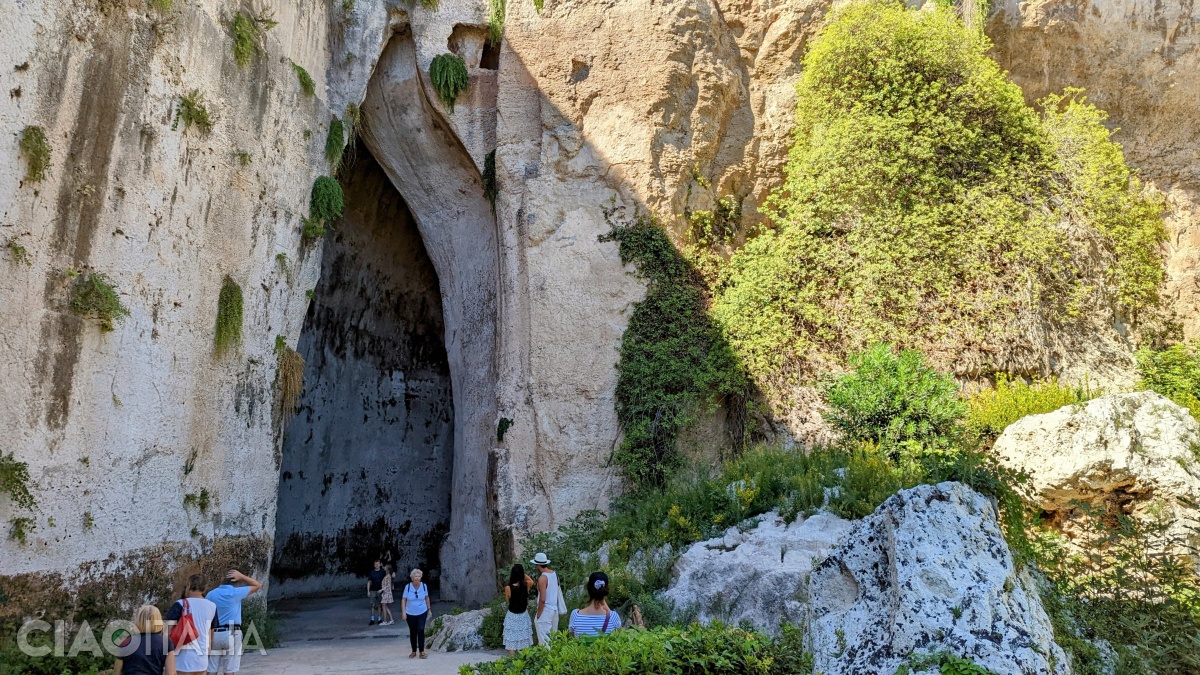
The strange name was given in 1608 by the famous painter Caravaggio. He recounted the legend that Dionysius the Tyrant, the ruler of Syracuse, was well aware of the grotto's acoustic properties and used to imprison his enemies inside. A small opening in the rock allowed him to eavesdrop on their plots, thus uncovering and sentencing to death anyone who threatened his reign.
Grotta dei Cordari
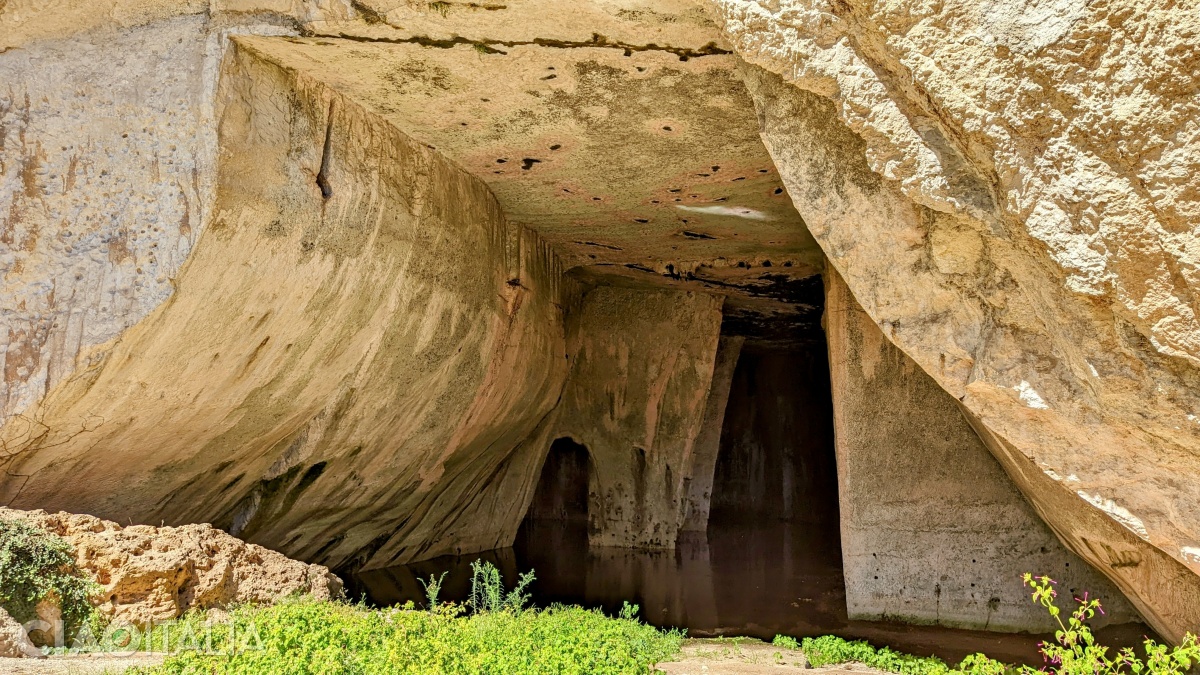
The Grotta dei Cordari is another cave excavated within the Latomia del Paradiso during the Greek period. It consists of several chambers with walls featuring polychrome hues.
The name translates to "the Rope-makers' Grotto". For a long time - from the 17th century until 1984 - it was used as a workspace by rope-makers. The humidity inside the cave provided strength and elasticity to the hemp, preventing it from breaking while it was being twisted.
Grotta del Salnitro
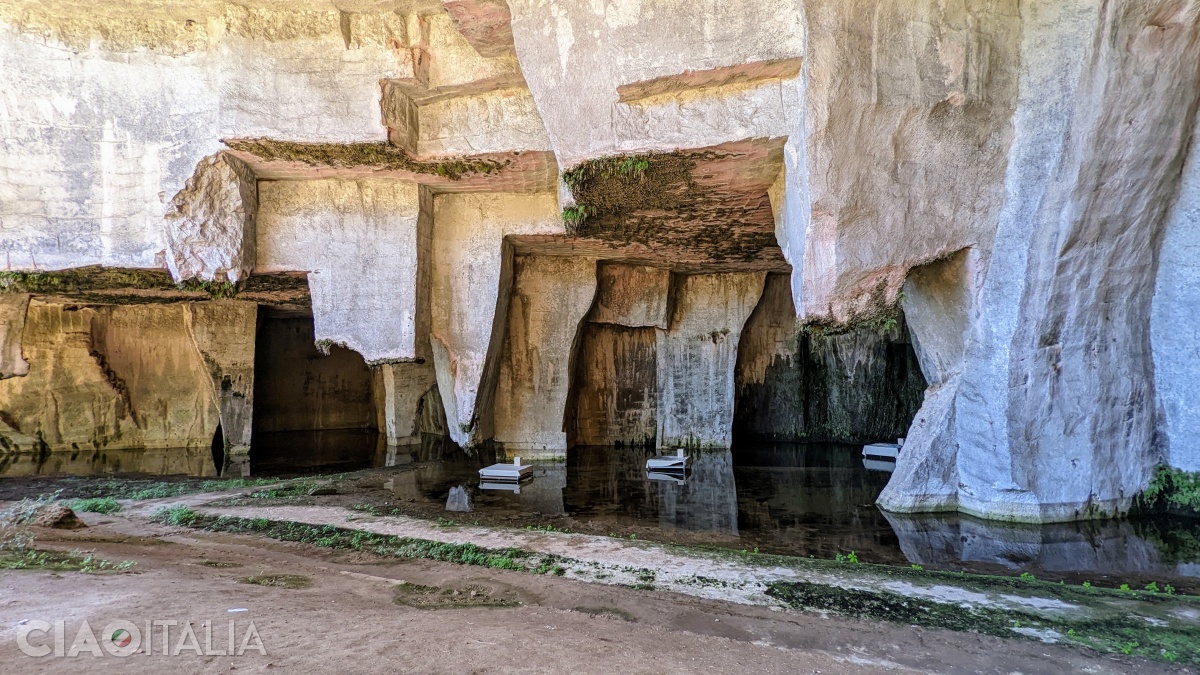
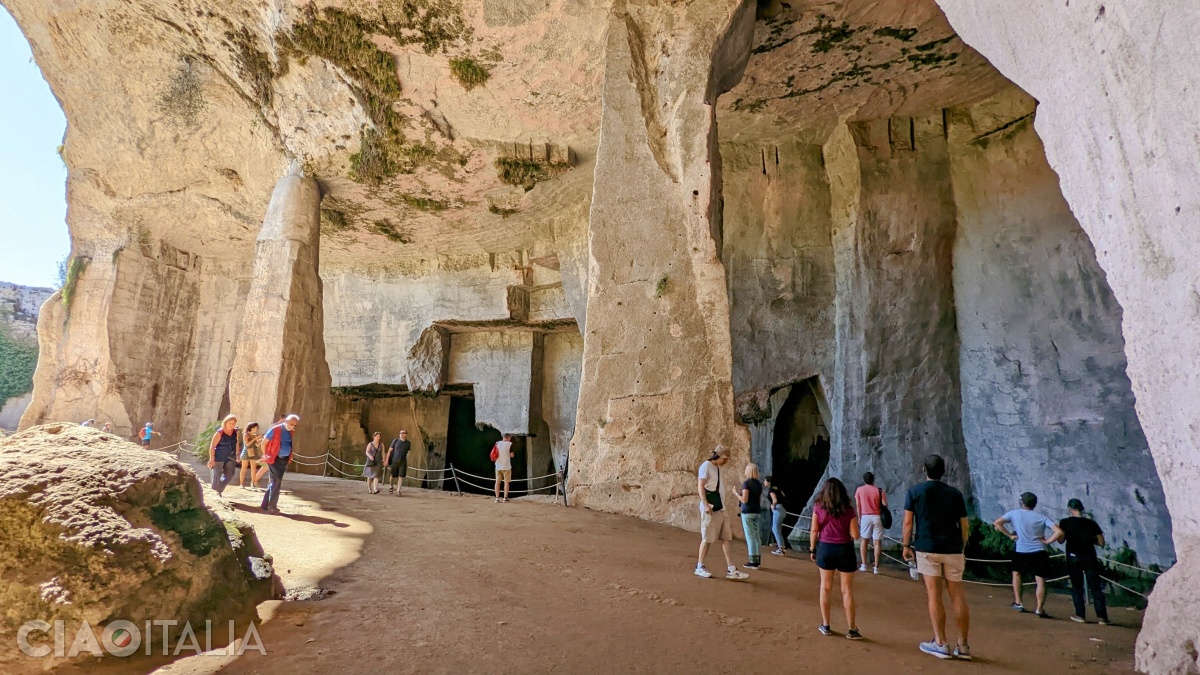
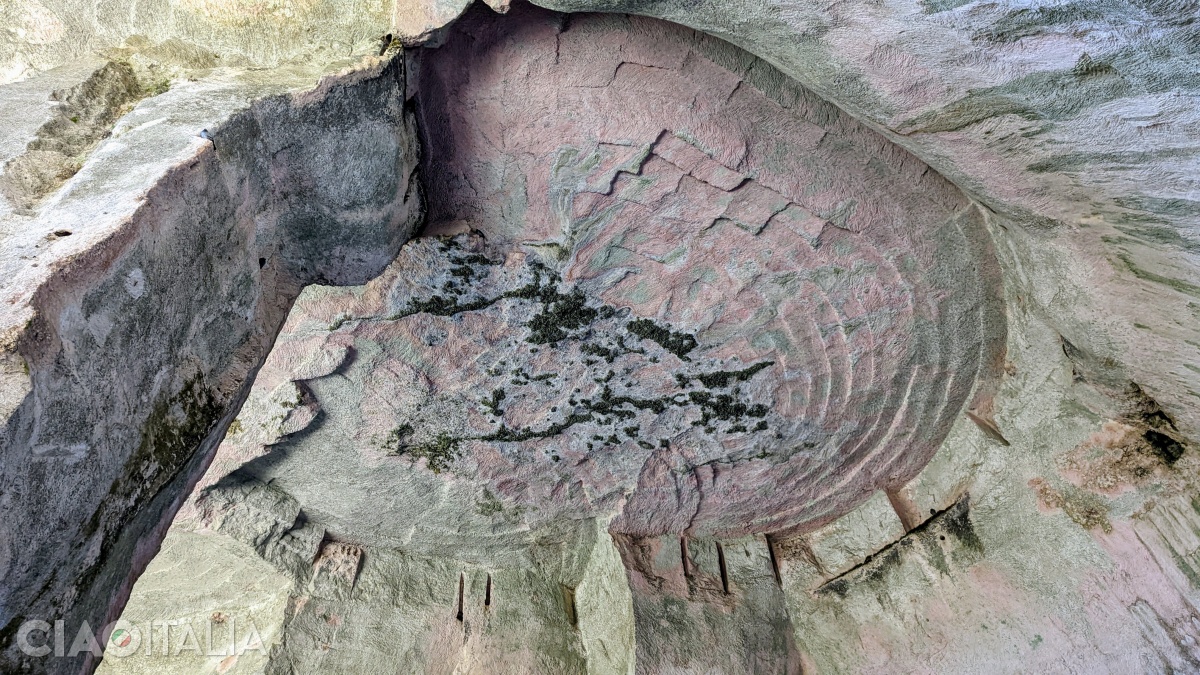
The name Grotta del Salnitro ("the Saltpeter Grotto") derives from the processing of saltpeter, a mineral salt deposit found on the damp walls of the cave.
The Tomb of Archimedes
In a more remote area near other quarries (Latomie dell'Intagliatella and Latomie di Santa Venera), there are several burial chambers carved into the rock. One of them, topped by a triangular pediment, has been named Tomba di Archimede ("the Tomb of Archimedes").
Despite its name, this is not the final resting place of the great scholar born in Syracuse. Archaeological excavations carried out in the 20th century indicated that the tomb is of a later date, originating from the Roman era.
This specific area is not always open to the public, but you can view it from outside the archaeological park by walking a short distance up the street that passes in front of the entrance (Viale Teracati).
The location of Archimedes' actual tomb has yet to be discovered and currently remains a matter of speculation. However, just a few minutes away from the Neapolis Archaeological Park, you can visit Tecnoparco Archimede, where you can see reconstructions of some of the famous scholar's most incredible inventions.
The Greek Theatre
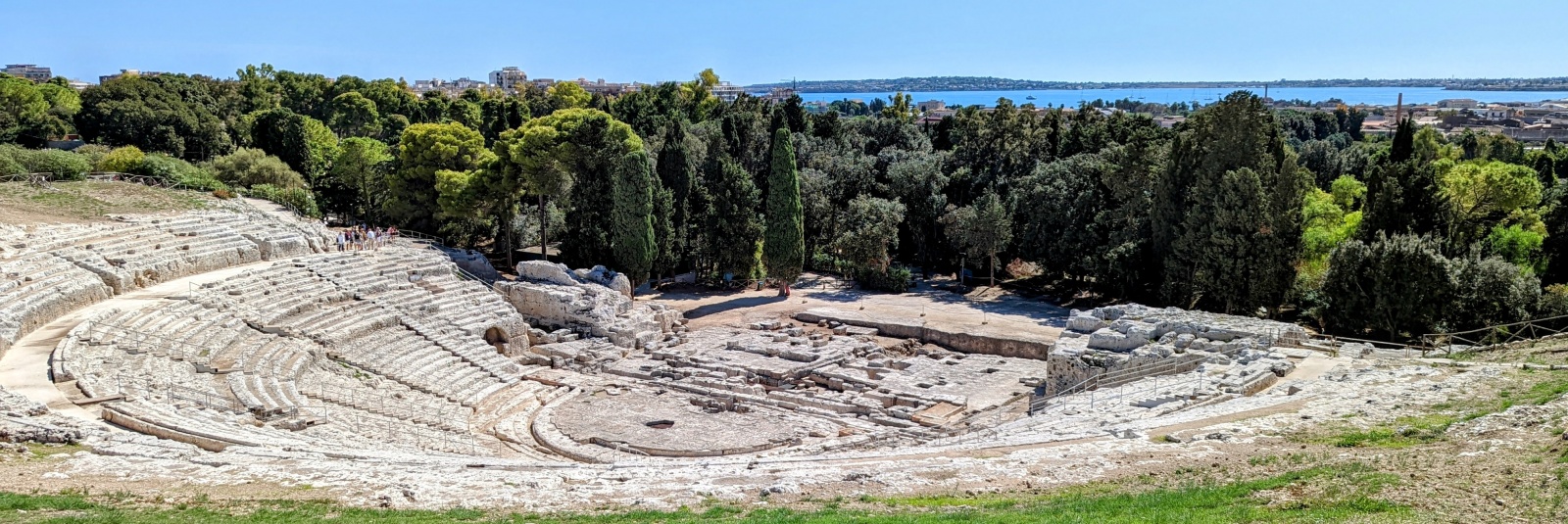
The Greek Theatre (Teatro Greco) is the main monument in the Neapolis Archaeological Park. It was built in the 5th century BC by the famous architect Damokopos, under the orders of the tyrant Gelon.
It is the oldest ancient theatre in Sicily (the second oldest is the Ancient Theatre of Taormina) and the most complete one preserved to this day. In 476 BC, Aeschylus' plays were performed on its stage.
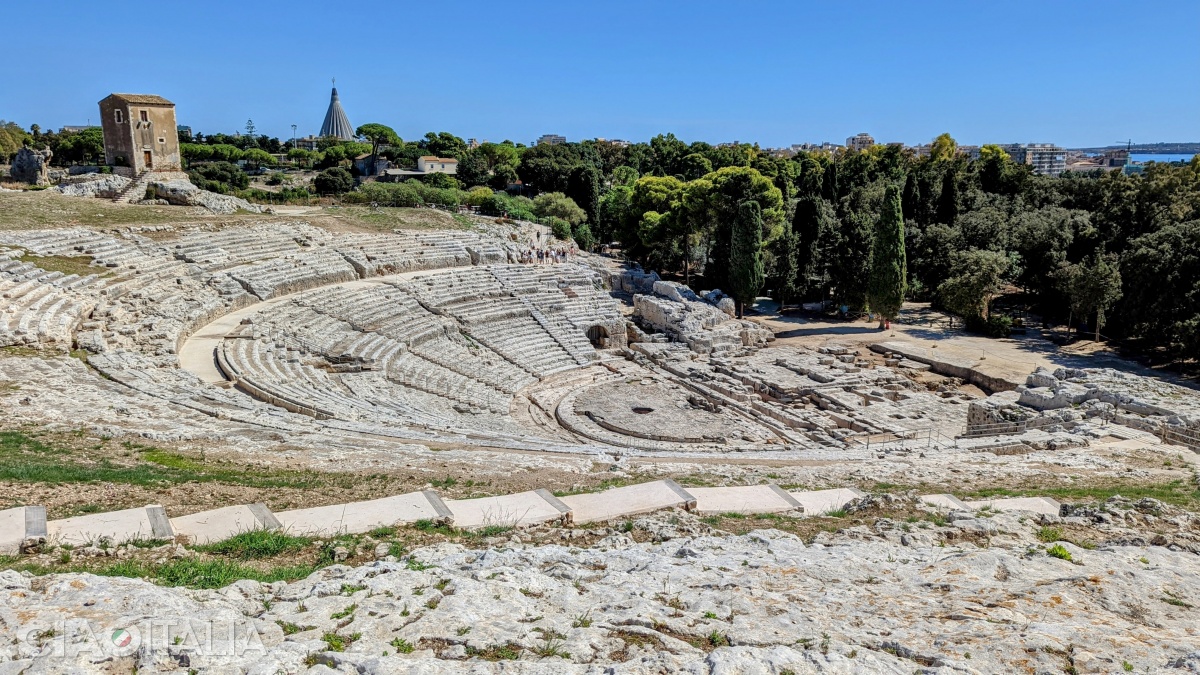
The current appearance dates from the 3rd century BC, when the theatre was rebuilt during the reign of Hieron II. The auditorium (cavea), carved into the stone of the Temenite hill, had a diameter of 138.6m, 67 rows of steps, and a capacity of approximately 15,000 seats, making it one of the largest in Ancient Greece.
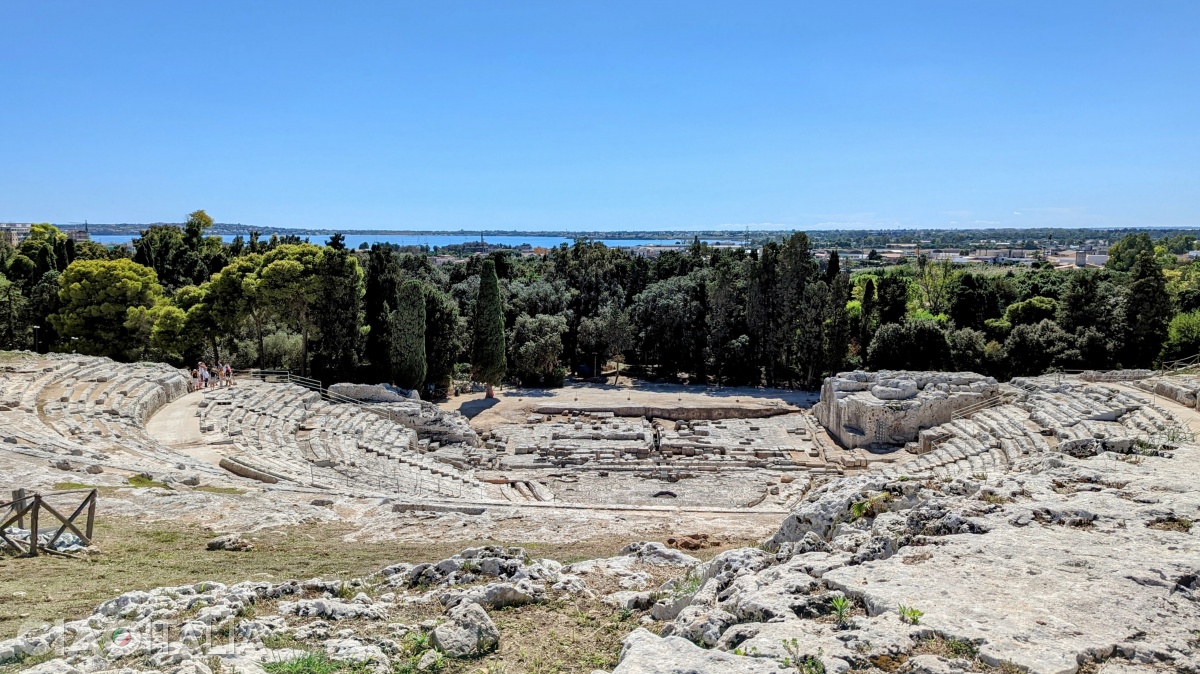
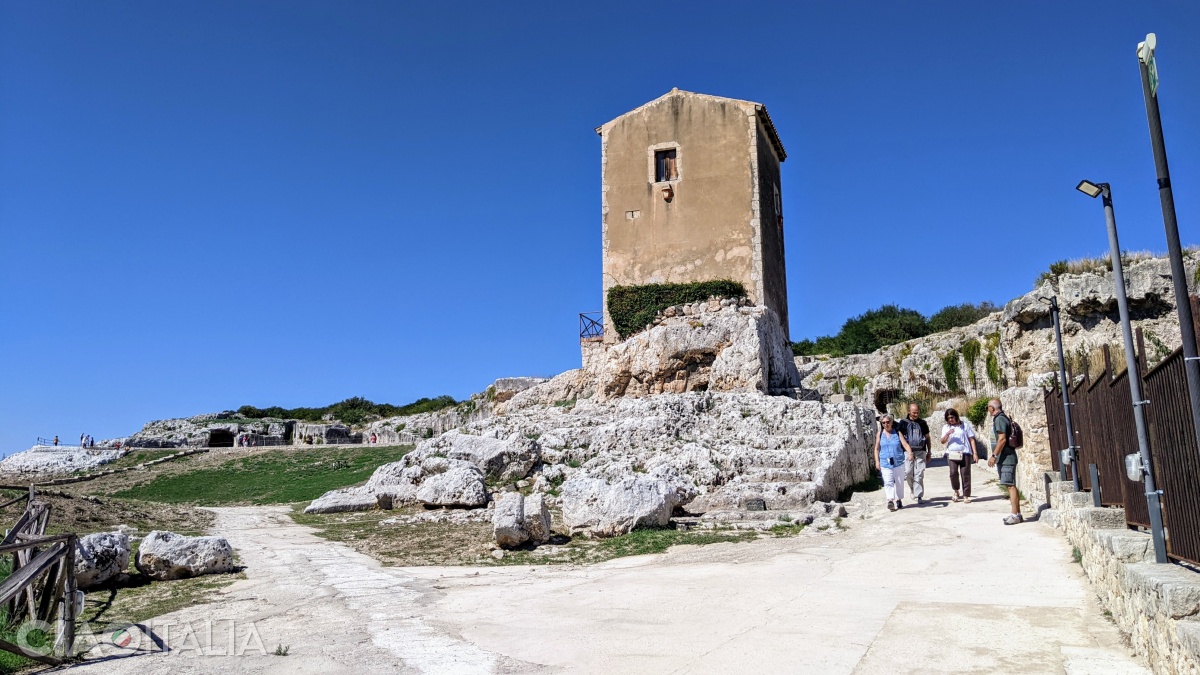
Following the path that climbs the hill, you will reach the upper part of the theatre, which offers a beautiful panorama of the sea. The house located toward the left side is an 18th-century mill.
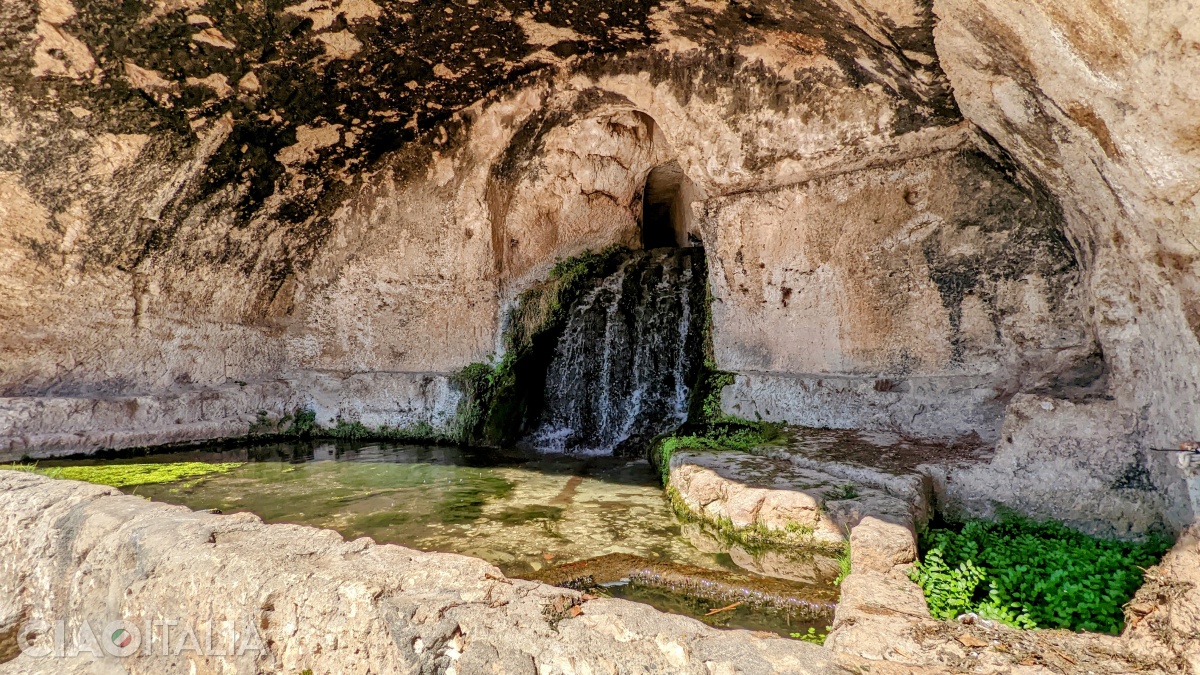
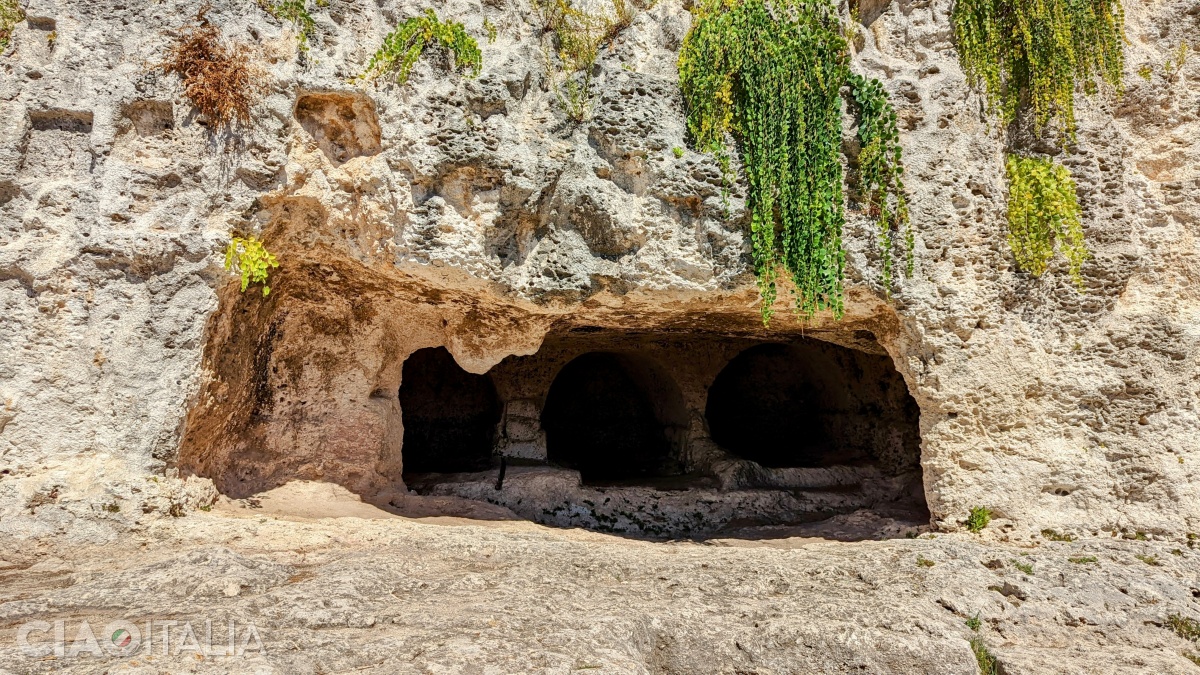
The Grotta del Ninfeo ("the Nymphaeum Grotto") is also located here. It is a monumental fountain into which water from a large aqueduct once flowed. It was part of the Mouseion complex, the headquarters of the actors' guild. The niches carved into the surrounding rock date back to the Christian era and were intended for tombs.
During the spring and summer, the Greek Theatre hosts classical performances of Greek tragedies and comedies. Unfortunately, this means the monument is covered with a wooden protective structure, which prevents visitors from seeing the original stone tiers.
If you are interested in attending one of these performances, you can purchase tickets from the website of the INDA Foundation (Istituto Nazionale Dramma Antico), which organizes them.
Via dei Sepolcri
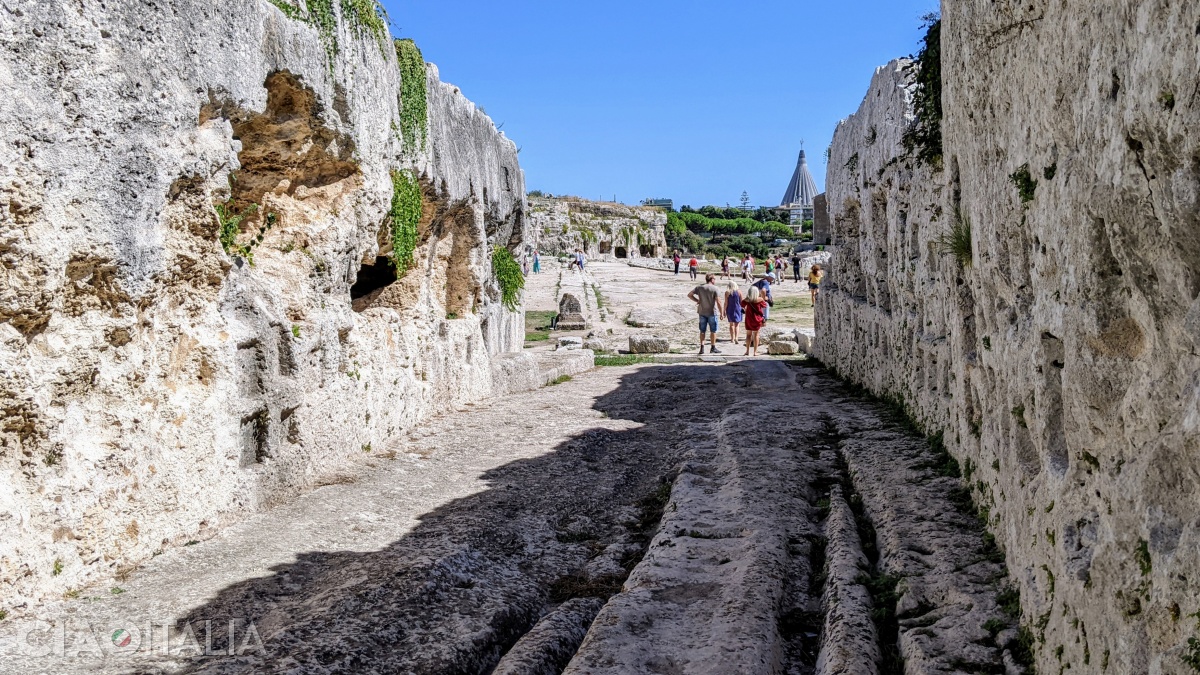
Nearby, you will find the Via dei Sepolcri ("Street of the Tombs"). This is a road approximately 150 meters long, flanked by stone walls into which votive altars are carved. These were linked to the cult of heroes, a practice that required the participation of the entire community.
Ara di Ierone II
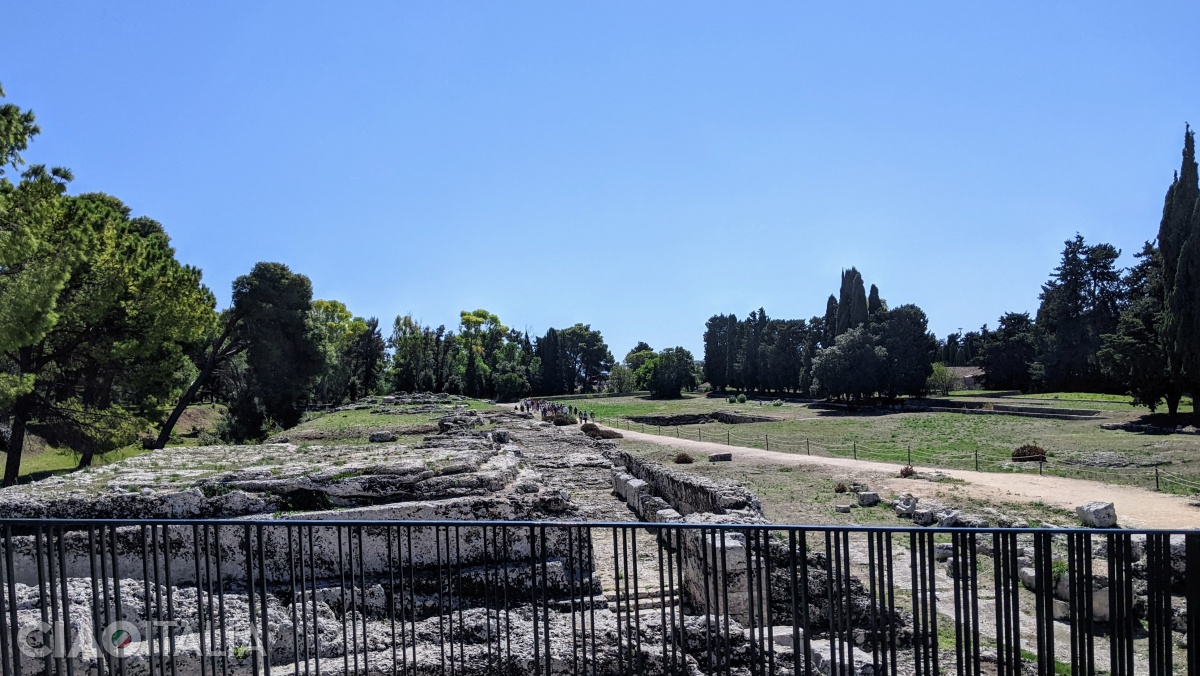
The Ara di Ierone II translates to "the Altar of Hieron II". It is a massive limestone platform built in the 3rd century BC at the request of Hieron II, the Tyrant of Syracuse. It served as an altar for the city's public sacrifices and was dedicated to the god Zeus Eleutherios. With the help of this god (eleutheria means "freedom" in Greek), the people of Syracuse had successfully driven out the tyrant Thrasybulus. It is said that during the annual ceremonies held to commemorate this event, 450 bulls were sacrificed on the altar in a single day.
The structure measures 198 meters long and 23 meters wide, making it the largest known altar in the Greek world. Today, only the base and a few access steps remain. Much of the altar was destroyed in the 16th century by the Spanish, who repurposed the stone to build fortifications.
During the summer, the altar area is used as a venue for various performances and concerts.
The Roman Amphitheatre
The oval-shaped Roman Amphitheatre is the largest of its kind in Sicily and one of the largest in the world. Its dimensions are only slightly smaller than those of the famous Verona Arena. Built in either the 1st or 2nd century BC under the reign of Augustus or Septimius Severus (historians have yet to reach a consensus on this), it is the "newest" major monument in the Neapolis Archaeological Park.
Unfortunately, only a small portion of the amphitheater remains visible today. The systemic theft of construction materials between the 13th and 16th centuries significantly reduced its structure.
The amphitheatre was used for gladiatorial combat and battles with wild animals. The corridors through which they entered the arena, as well as the lower sections of the seating tiers, are still preserved. These tiers were originally covered in marble slabs, and in some places, you can still see the names of the owners carved into the stone.