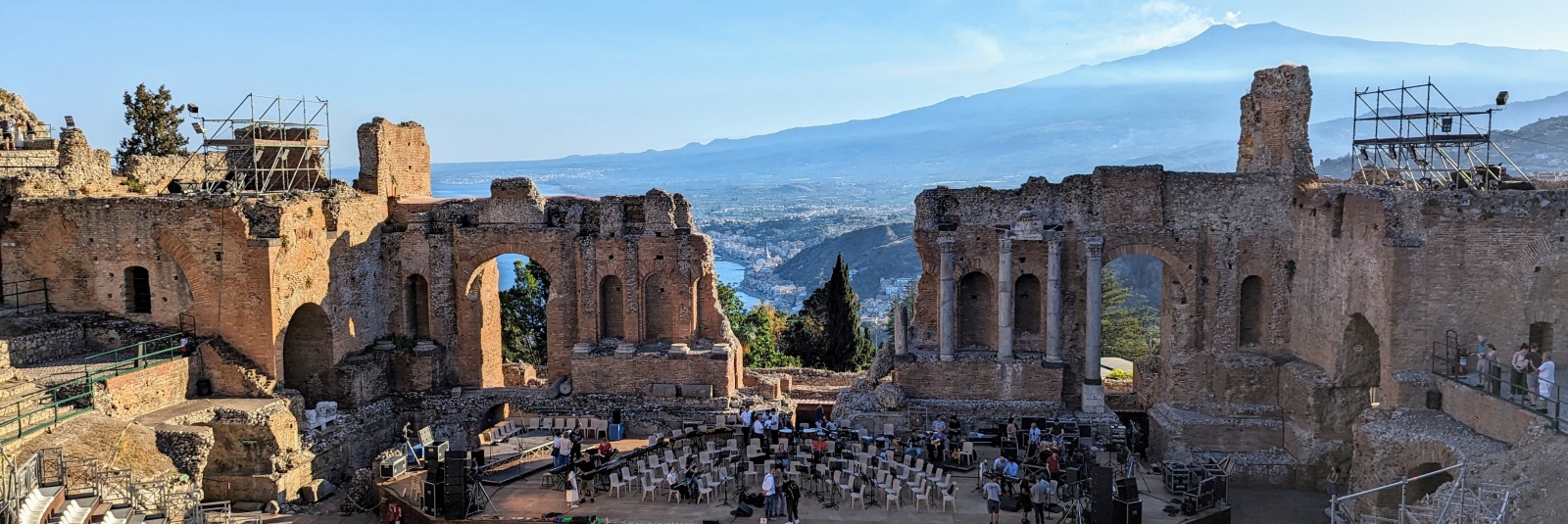
The Ancient Theatre of Taormina
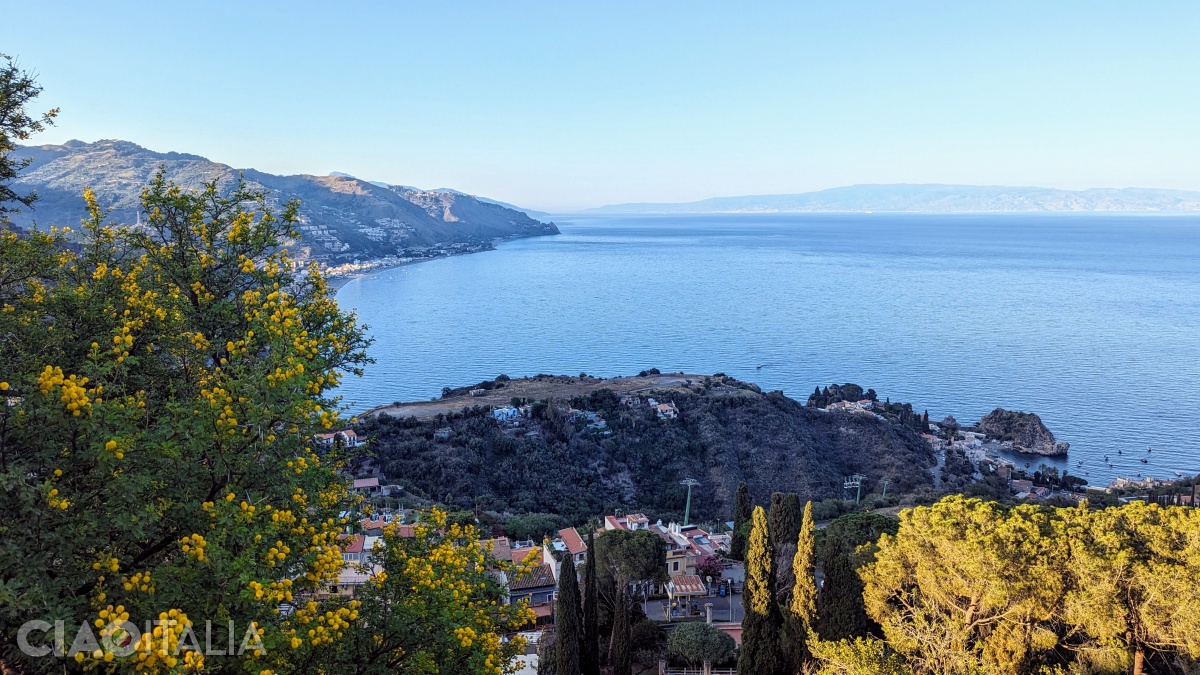
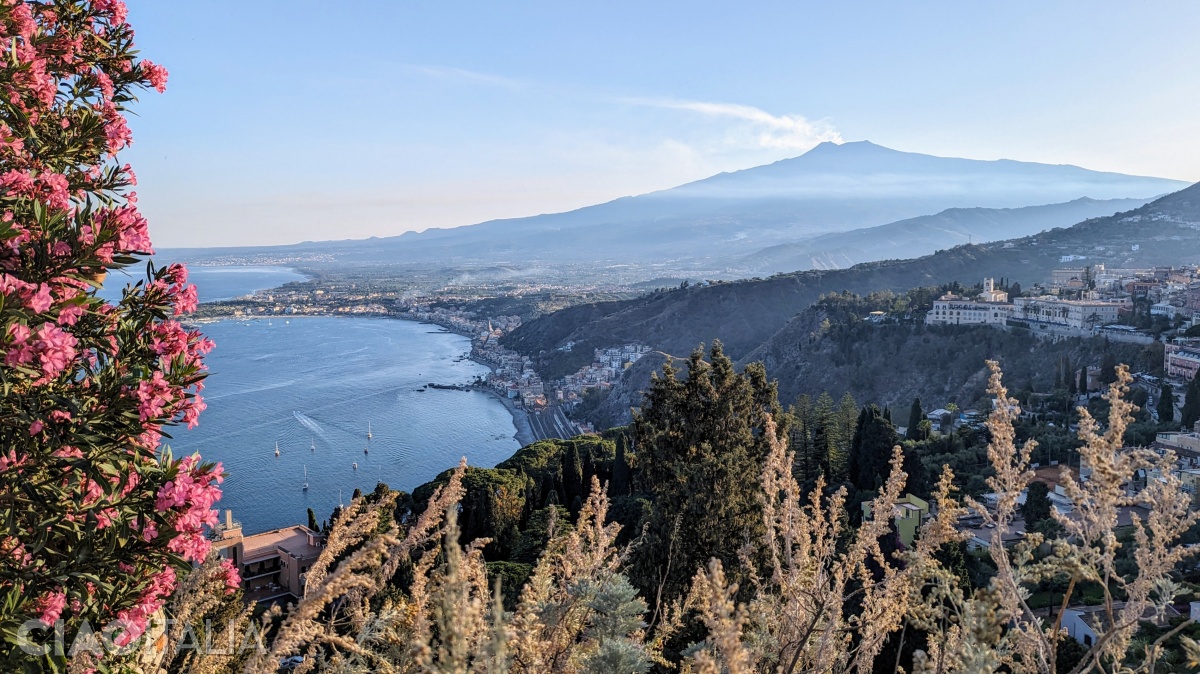
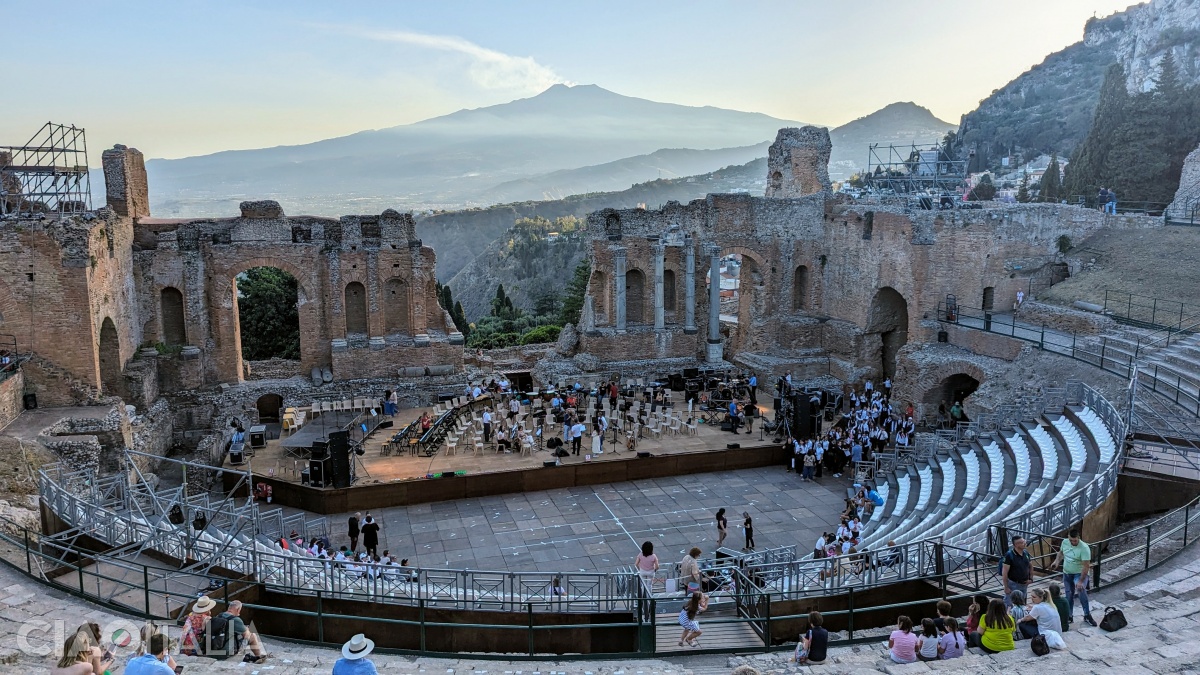
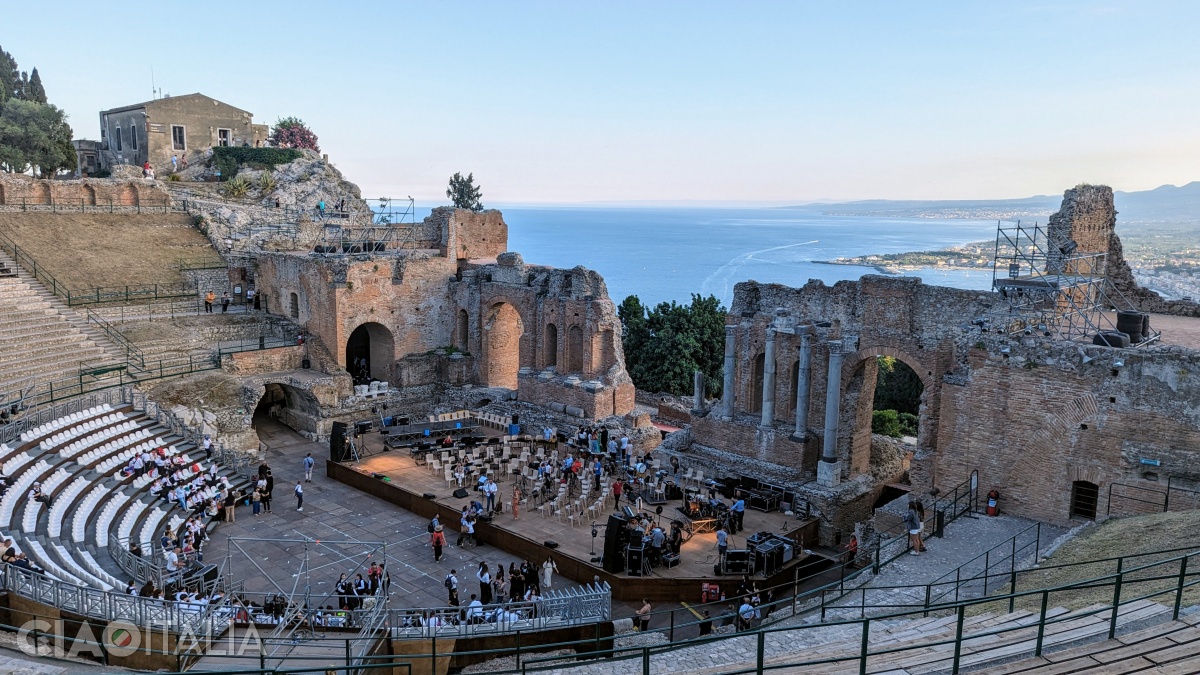
The Ancient Theatre (Teatro antico), also known as the Greek Theatre (Teatro greco di Taormina), is the most important tourist attraction in Taormina. Situated high up on the crest of a hill, it offers a superb view of the Ionian Sea coast as far as the Strait of Messina, which separates Sicily from Calabria, and of Mount Etna.
Administratively, the Ancient Theatre of Taormina is included in the Naxos and Taormina Archaeological Park).
Ticket Prices
In 2026, the ticket prices for visiting the Ancient Theatre of Taormina are:
- Adults: €14
- EU citizens between 18 and 25 years old: €7
- Children under 18: Free
Most of the time, there is a queue at the ticket office (and plenty of sun). Skip-the-line tickets can be purchased online from Aditus Culture, the website accredited to sell them. For the reservation, you will have to choose an entry time.
Skip-the-line tickets allow you to skip only the normal queue for buying tickets; however, you will have to wait in a short queue to pass through the security check.
Every first Sunday of the month, entry to the Greek Theatre of Taormina is free.
Opening Hours
The opening hours for the Ancient Theatre of Taormina are as follows:
September 16 - September 30, 2026:
- Monday-Sunday, 9:00 AM - 6:45 PM
October 1 - October 15, 2026:
- Monday-Sunday, 9:00 AM - 6:15 PM
October 16 - October 30, 2026:
- Monday-Sunday, 9:00 AM - 5:45 PM
Last entry is 45 minutes before closing (or until 11:00 PM on days with extended hours).
History of the Theatre
The Greek theatre of Taormina is the second oldest ancient theatre in Sicily, after the theatre in Syracuse. It was built in the 3rd century BC at the request of Philistis, the wife of Hieron II, the tyrant of Syracuse. Her name is engraved on some of the steps.
In the 2nd century AD, during the Roman period, the theatre was partially rebuilt using brick. The Romans adorned it with statues, columns of grey granite, and white marble.
Moving away from the staging of musical or dramatic performances (as was the case during the Greek era), the theatre began to host gladiator fights, wild animal hunts, and naval battles (naumachia). To adapt it to this new function, the Romans expanded the orchestra area - where musicians stood during the Greek era - transforming it into an arena and adding an underground corridor for the entrance of gladiators and animals.
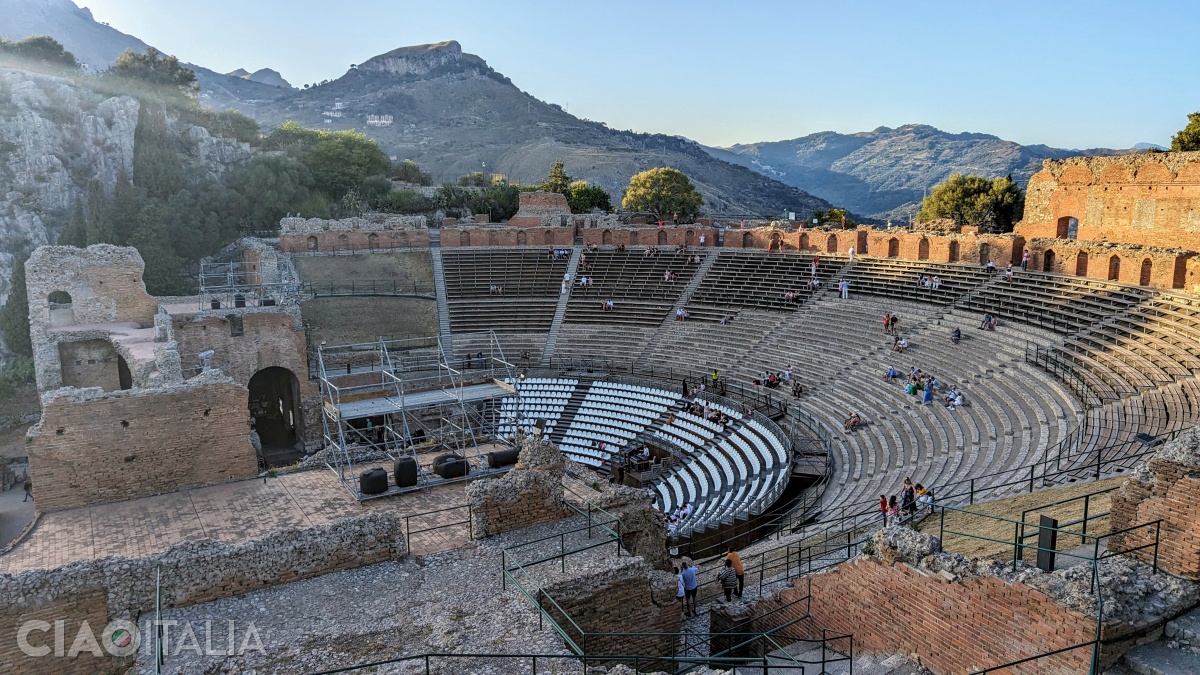
After the fall of the Western Roman Empire, the ancient theatre was abandoned. In the Middle Ages, parts of it were transformed into dwellings.
With the growing interest of artists and writers in traveling to Italy, starting in the 18th century, the theatre once again became a place of interest.
Goethe, who visited the theatre in 1787, wrote: "If one sits at the highest point occupied by the ancient spectators, one must admit that probably never has a theatre audience seen such a spectacle before them. On the right side, castles rise from the rocks below; further on, beneath us, stretches the city, and even if the buildings are of a recent era, they certainly occupy the same place where others stood in ancient times. In front of us, the entire mountain massif of Etna; to the left, a shoreline as far as Catania, or rather, as far as Syracuse; and the vast picture is closed by the colossal smoking volcano which, in the sweetness of the sky, appears more distant and gentler and inspires no fear."
In the 19th century, the theater underwent a (rather controversial) restoration aimed at returning it to its original form. Later, in 1955, it was restored once again.
Structure
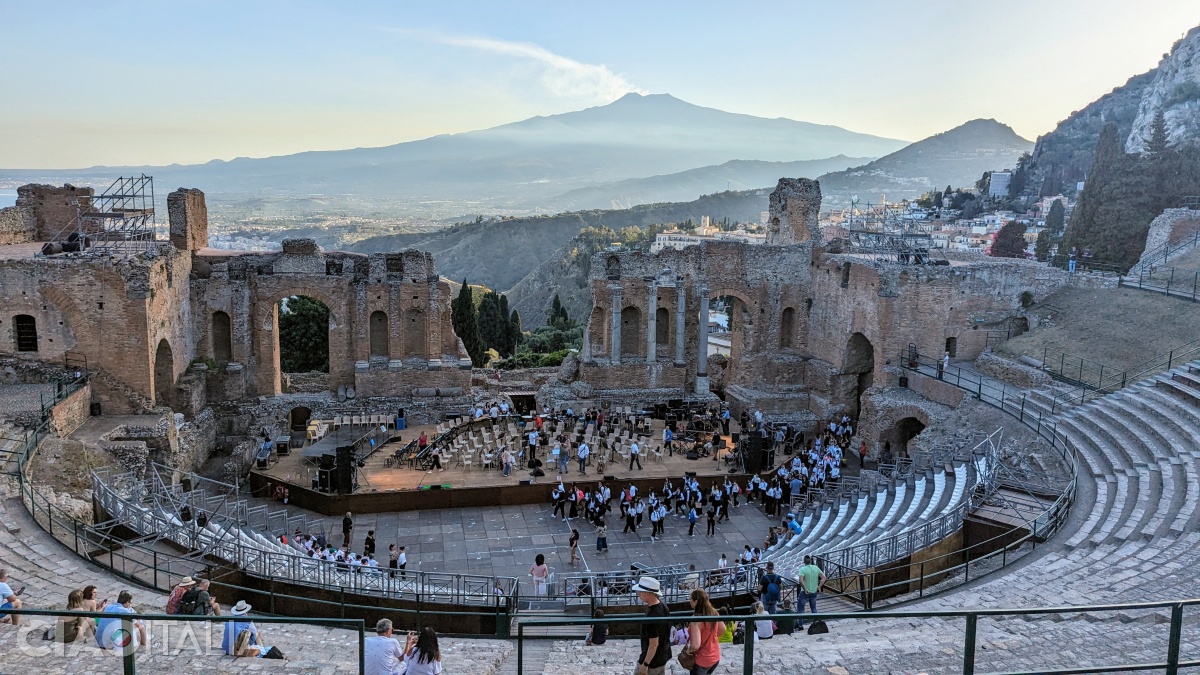
The ancient theatre of Taormina is composed of the stage, the orchestra, and the cavea.
The Stage
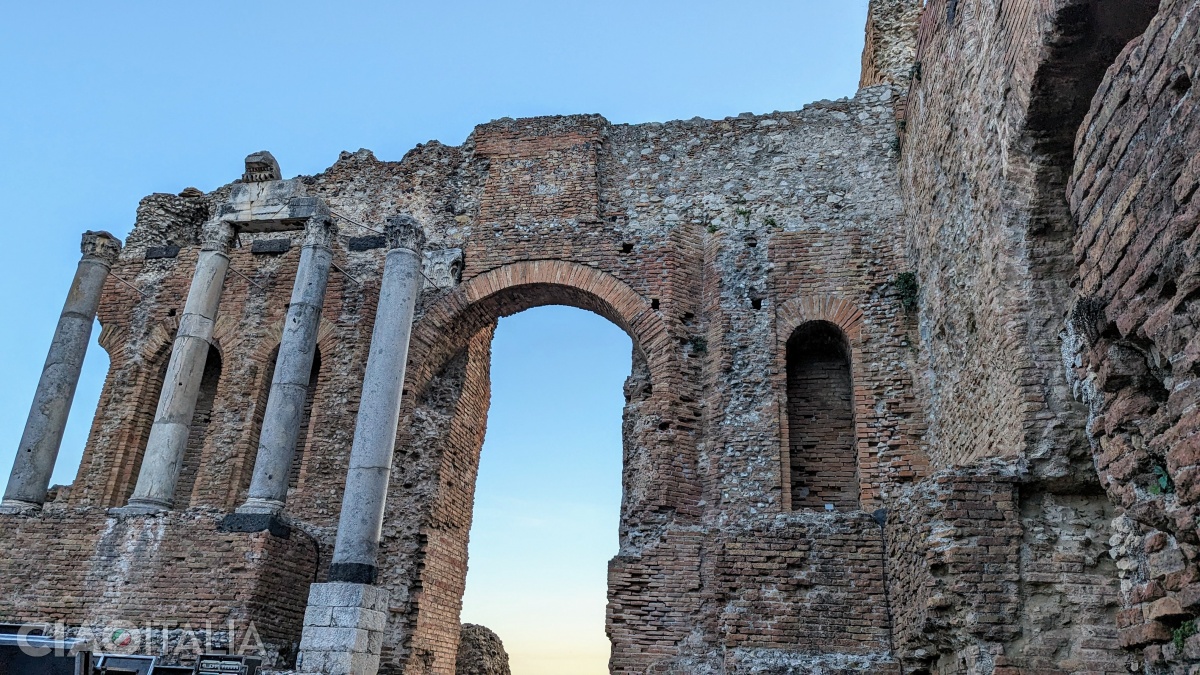
The stage features two large arch-shaped openings called hospitalia. The third, the regia (royal gate), which was located in the center, no longer exists as it has collapsed. Between these openings were columns and niches, once decorated with statues and clad in marble.
The columns were added during the Roman era. It is believed they were transported by sea to Villagonia (the area where the Taormina train station is located today) and then hauled to the theater by crowds of slaves using ropes. The columns were arranged in two rows: a row of nine columns, placed in groups of three, and a second row consisting of sixteen shorter columns, positioned at equal distances.
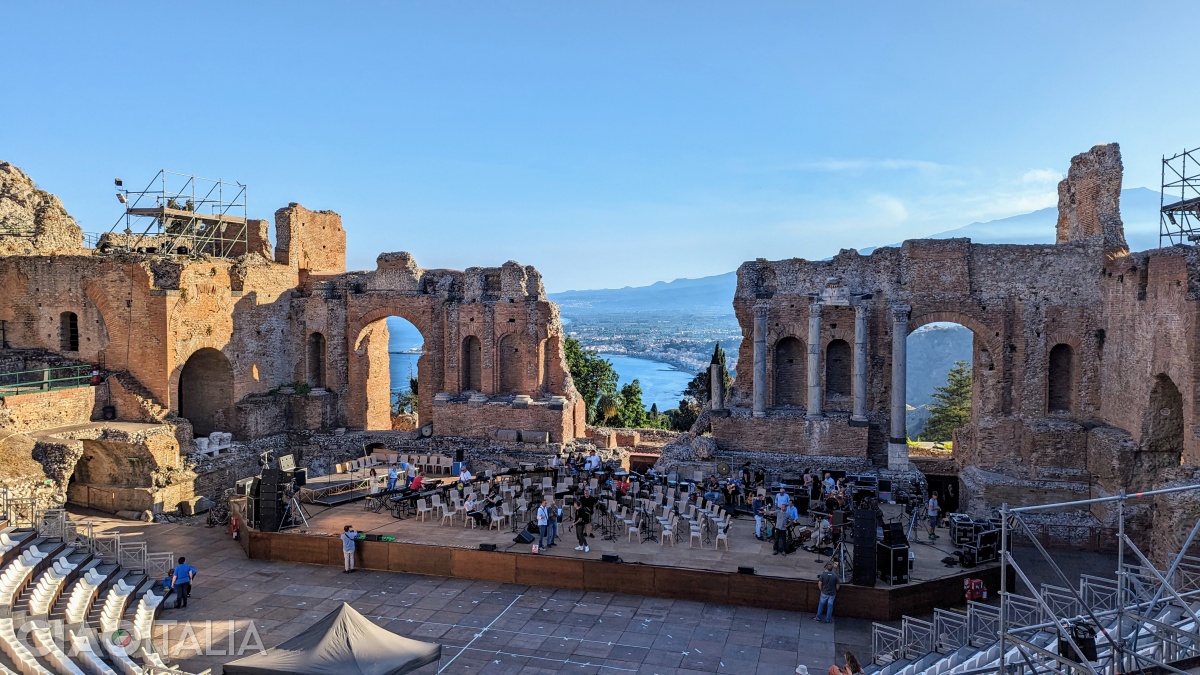
In the Middle Ages, during the theatre's period of abandonment, most of the columns were taken (along with the marble and decorations) and used to adorn palaces and churches, including the Cathedral of Taormina. During the 19th-century restoration, architect Francesco Severio Cavallari repositioned four Corinthian-style columns and six column bases in the theatre.
On either side of the stage are two rooms called parascaenia, where actors changed their clothes, preparing for the performance.
The Orchestra
The orchestra is the lowest part of the theatre - the semicircular space located between the stage and the seating tiers. In the Greek period, this was where the chorus or musicians who accompanied the tragedies or comedies stood.
Cavea
The cavea (the auditorium) - the part of the theatre where the tiers for spectators are located, is entirely carved into the hard rock of Mount Tauro. It has five horizontal sections and a diameter of 109m, being divided into 9 sectors by 8 staircases.
Most likely, seats were distributed according to social status, so the first rows, with the best visibility, were reserved for wealthy and powerful people. During performances, cushions were placed on the steps for more comfort.
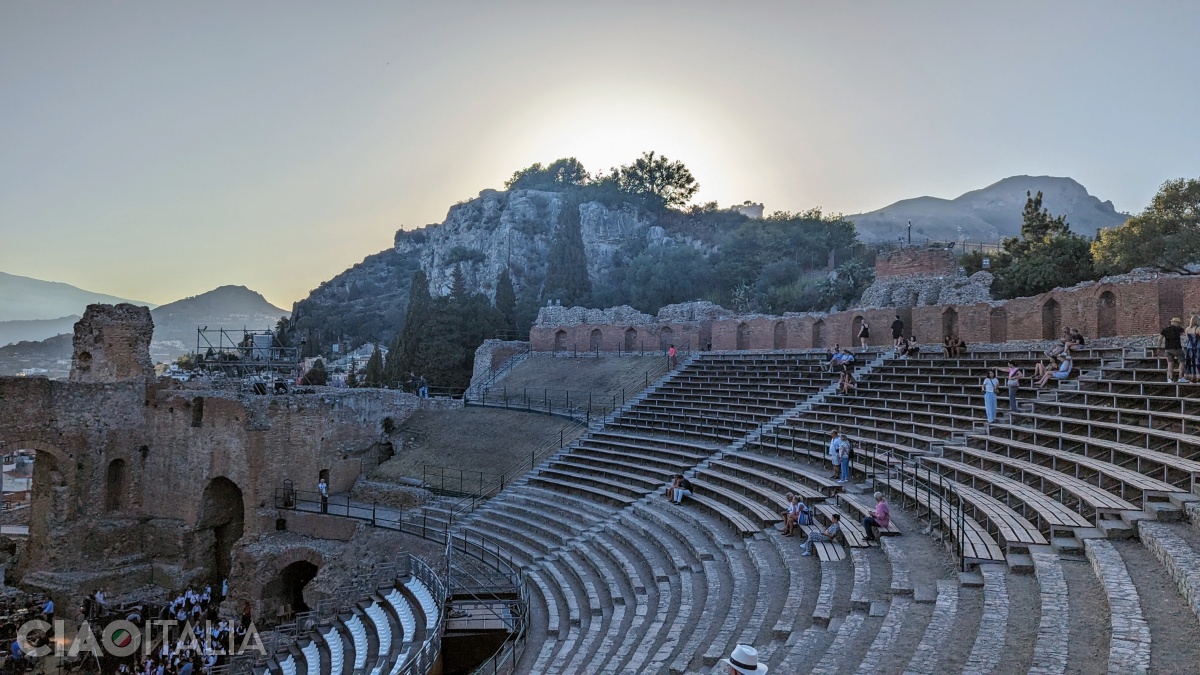
It is estimated that the theatre had a capacity of about 10,000 spectators. Today, it can accommodate only 4,500.
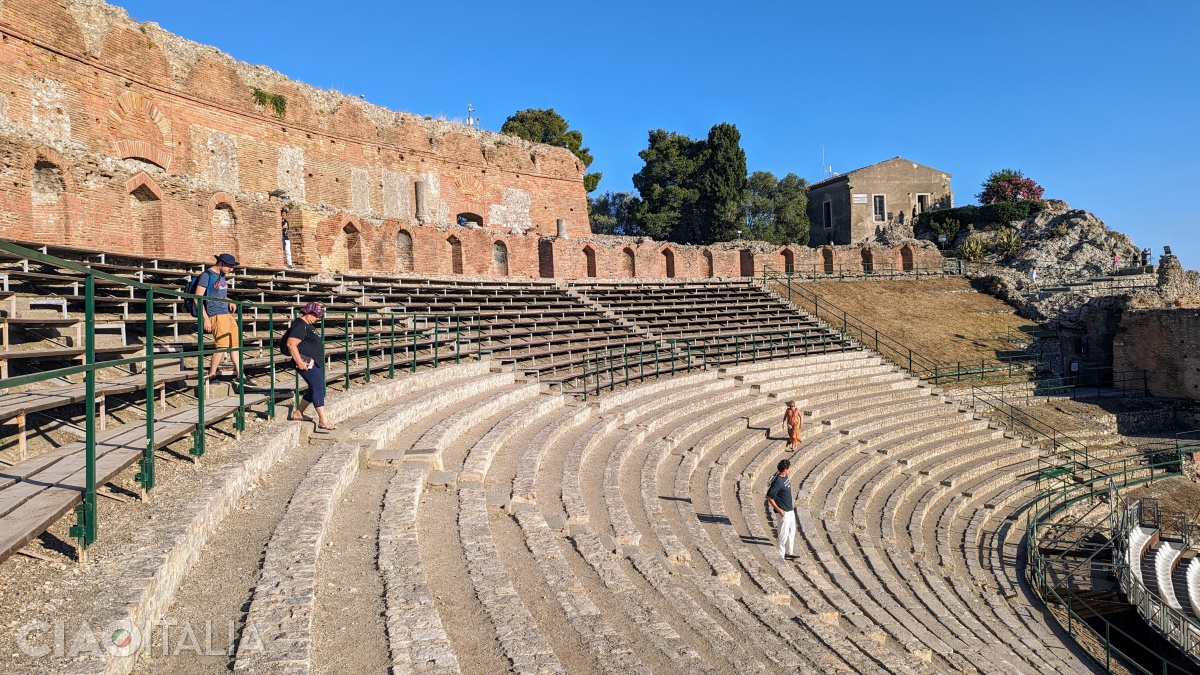
Beyond the cavea, in the upper part of the tiers, stands a double brick portico, in the wall of which 36 niches open, where statues were likely once located.
The Antiquarium Archaeological Museum
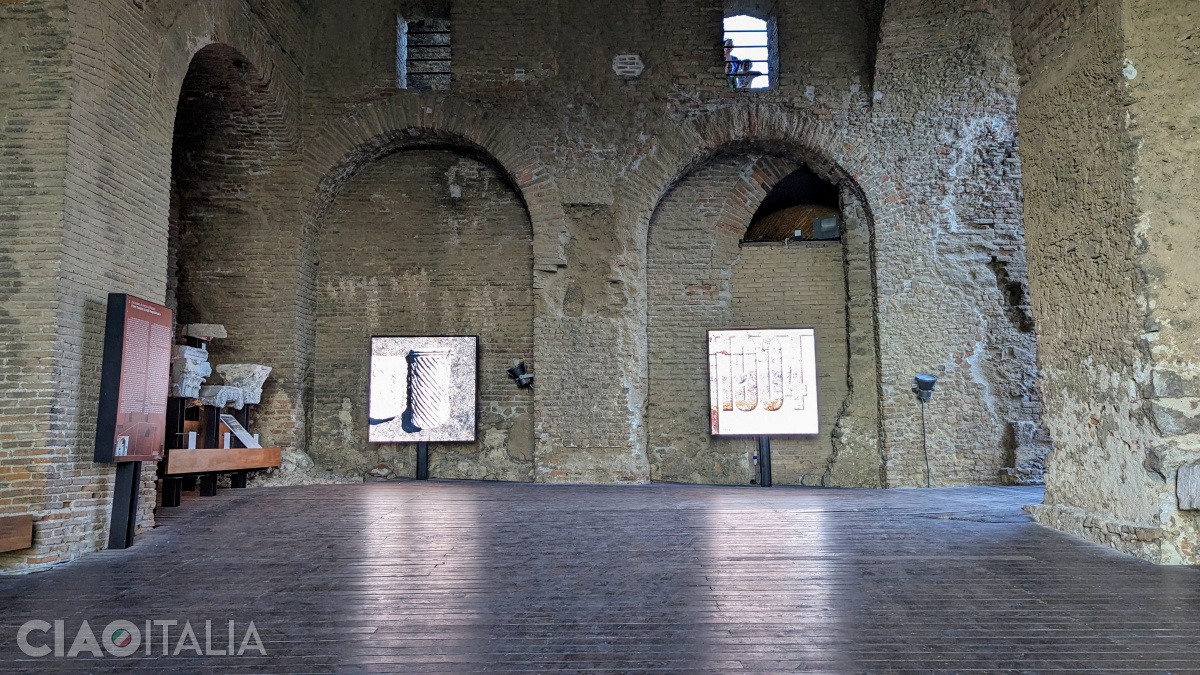
To the left of the theatre is a small archaeological museum, which has been operating since the 19th century in the Casina degli Inglesi (the place where the English used to meet). It houses an important epigraphic collection, including Greek inscriptions of a public nature (such as financial statements or the tablets of the Strategoi and Gymnasiarchoi, dating from the 2nd-1st centuries BC).
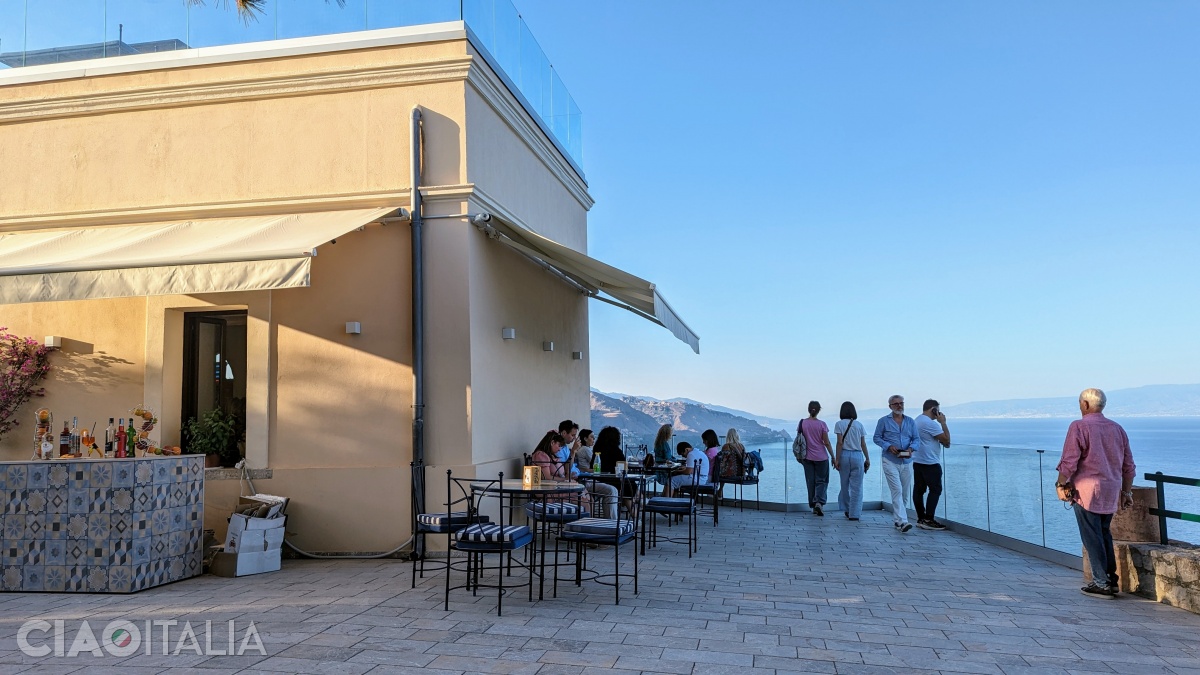
Caffetteria Belvedere
Inside the archaeological site, you will also find the Belvedere Café, where you can take a break for a brioche with granita (see also the article on Sicilian food), enjoying the wonderful view from above.
Performances
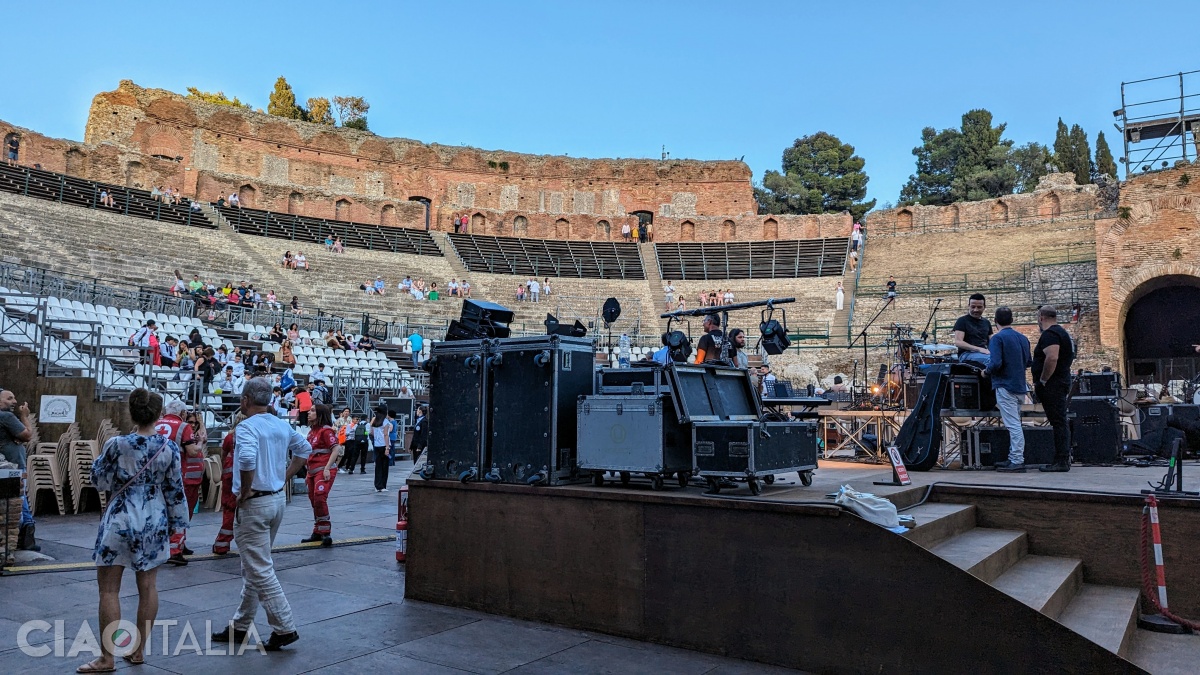
With extraordinary acoustics, the Ancient Theatre of Taormina is still used today for theatre or opera performances, concerts by famous artists, or festivals such as the Taormina Film Festival or Taormina Arte.
Several scenes from Woody Allen's film Mighty Aphrodite were filmed inside the theatre.