13 Things to See in Taormina
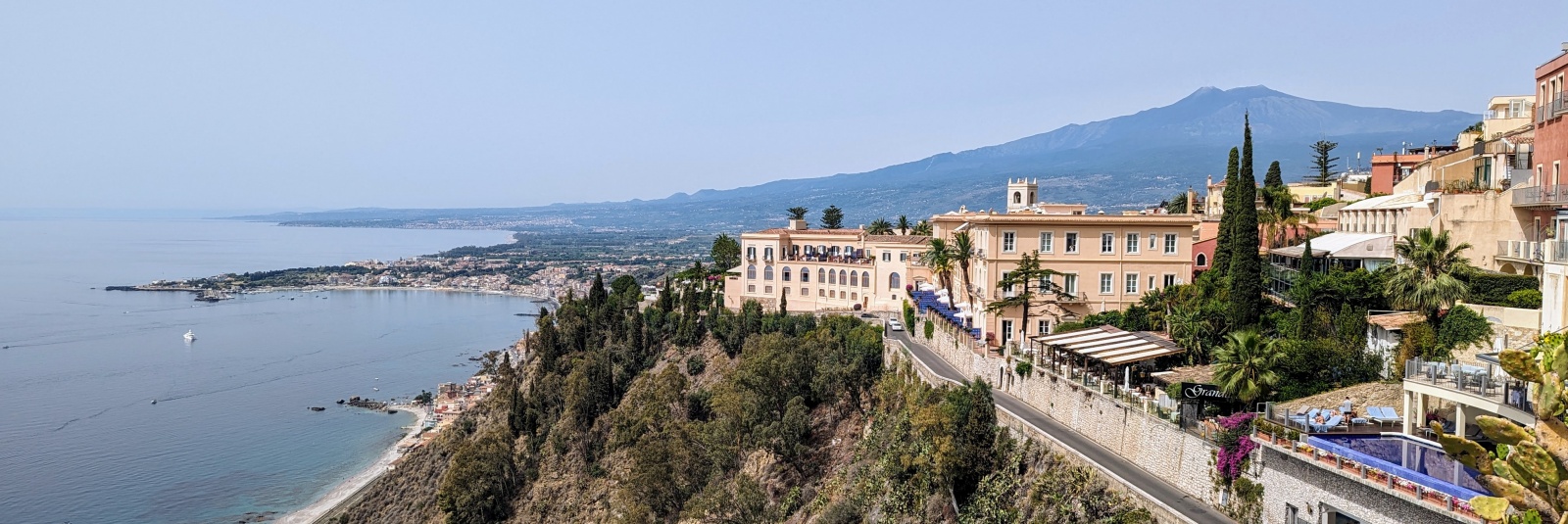
Taormina does not have as many tourist sights as other destinations, but the town itself is so beautiful that it's an attraction in its own right.
To discover most of the sights in Taormina, a single day is enough to stroll through the center and take the cable car down to the sea at Isola Bella. However, we highly recommend staying at least two days so you can truly soak in the stunning scenery and take a few day trips nearby. If you're planning a longer stay and want to explore more of Sicily, it's worth looking into renting a car from Catania Airport (just keep in mind that parking in Taormina is located on the outskirts of town).
Like all famous destinations, Taormina can get very crowded, especially during the summer. The best time to visit is late May, early June, or in the autumn months of September and October.
1. Corso Umberto I
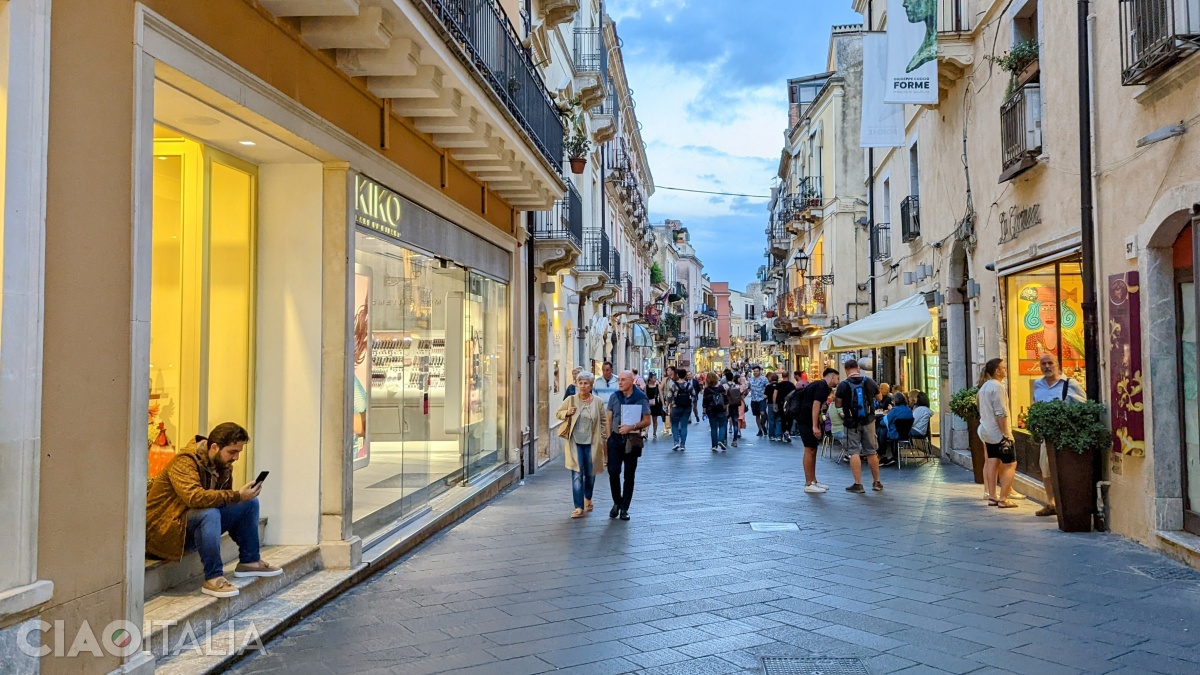
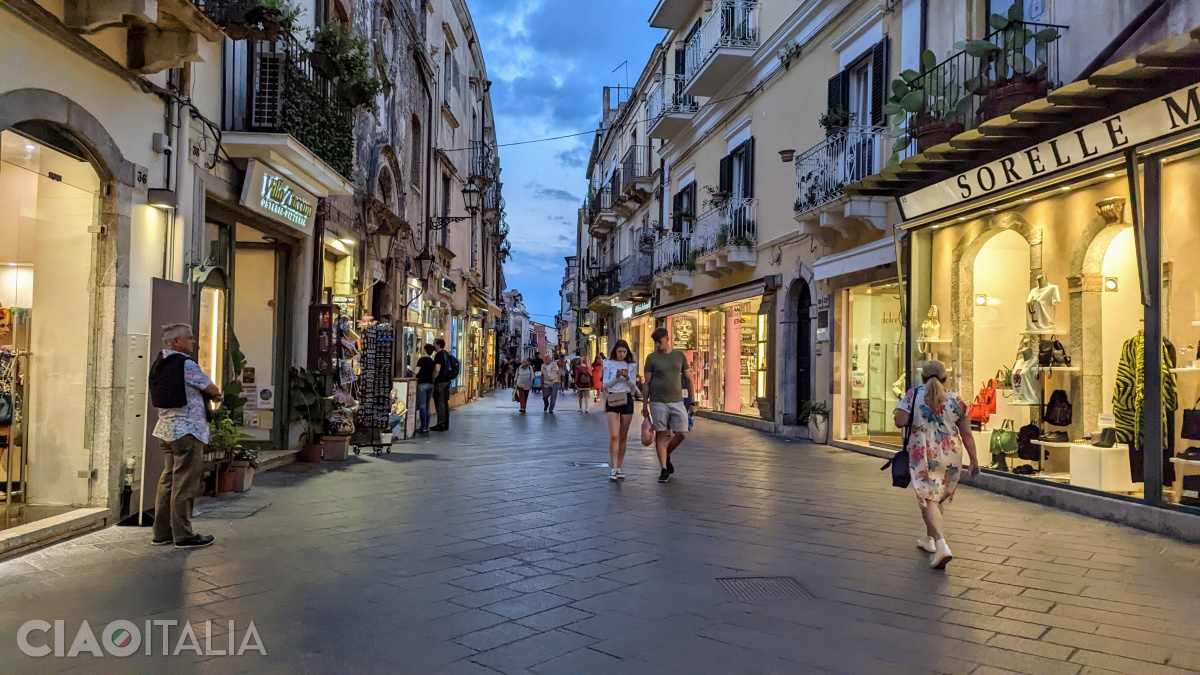
The first tourist attraction we recommend in Taormina is actually a street. It is the main pedestrian street which, along its 800-meter span, cuts through the historic center from one end to the other, crossing the most beautiful squares. Walking along Corso Umberto I, you will feel the pulse of the city and understand why Taormina has been a favorite holiday destination for hundreds of years. Lined along its path are beautiful buildings, churches, panoramic viewpoints, corners filled with colorful flowers, luxury brand boutiques, souvenirs and handicrafts, cafes, gelaterias, and hotels where famous figures have stayed.
If you want to stay in Taormina and treat yourself by staying right in the center, we recommend Hotel Victoria, where Oscar Wilde once stayed. Of course, those who prefer luxury can choose Hotel San Domenico Palace, renowned for the celebrities who have passed through its doors over time (including King Edward VIII, Audrey Hepburn, Elizabeth Taylor, Sophia Loren, and again, Oscar Wilde) and, more recently, for being the filming location for the second season of the series White Lotus.
The street's name commemorates Umberto I of Savoy, who reigned as King of Italy from 1878 to 1900. Bordered by Porta Messina to the north and Porta Catania to the south, the street was in ancient times a part of Via Valeria, the road built in the 1st century BC to connect Messina to Catania. During the Roman era, Via Valeria crossed through the city before descending toward the sea.
2. Porta Messina
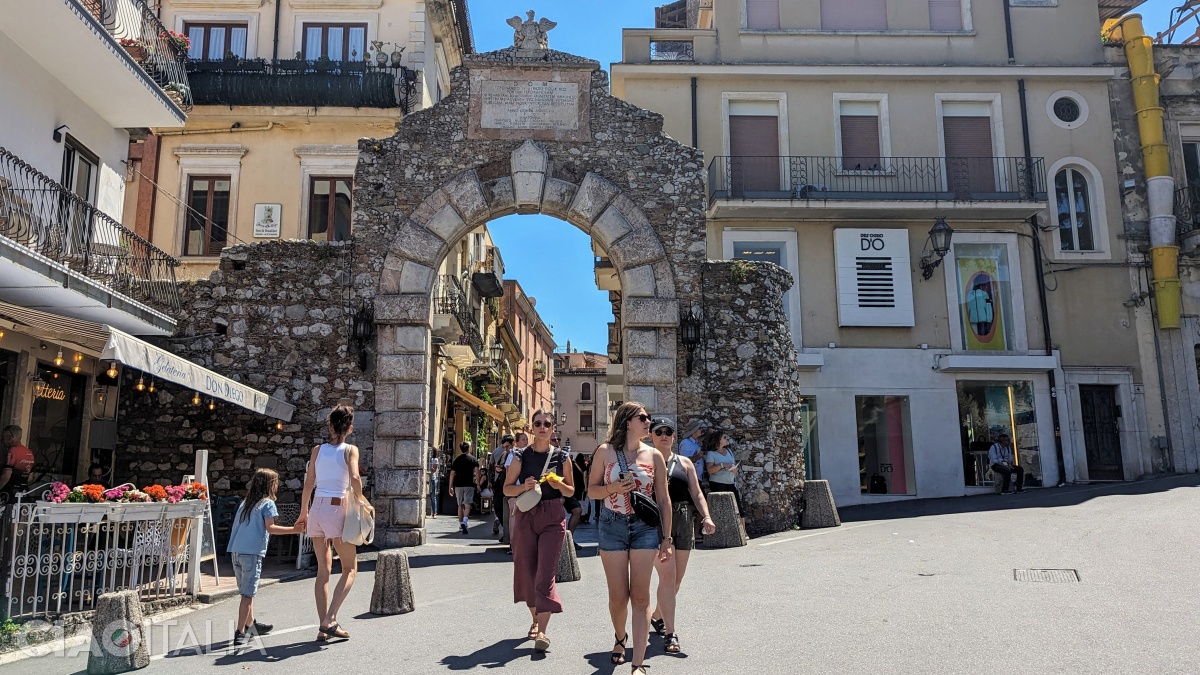
Porta Messina marks the northern end of Via Umberto I, standing in an area where the Greeks and Romans most likely built the first defensive walls of ancient Taormina.
The current appearance of the gate dates back to 1808, when it was inaugurated by Ferdinand IV of Bourbon and named, in his honor, Porta Ferdinandea. The plaque at the top of the gate commemorates this day. With the unification of Italy in 1860, the name was changed to Porta Messina.
3. Porta Catania
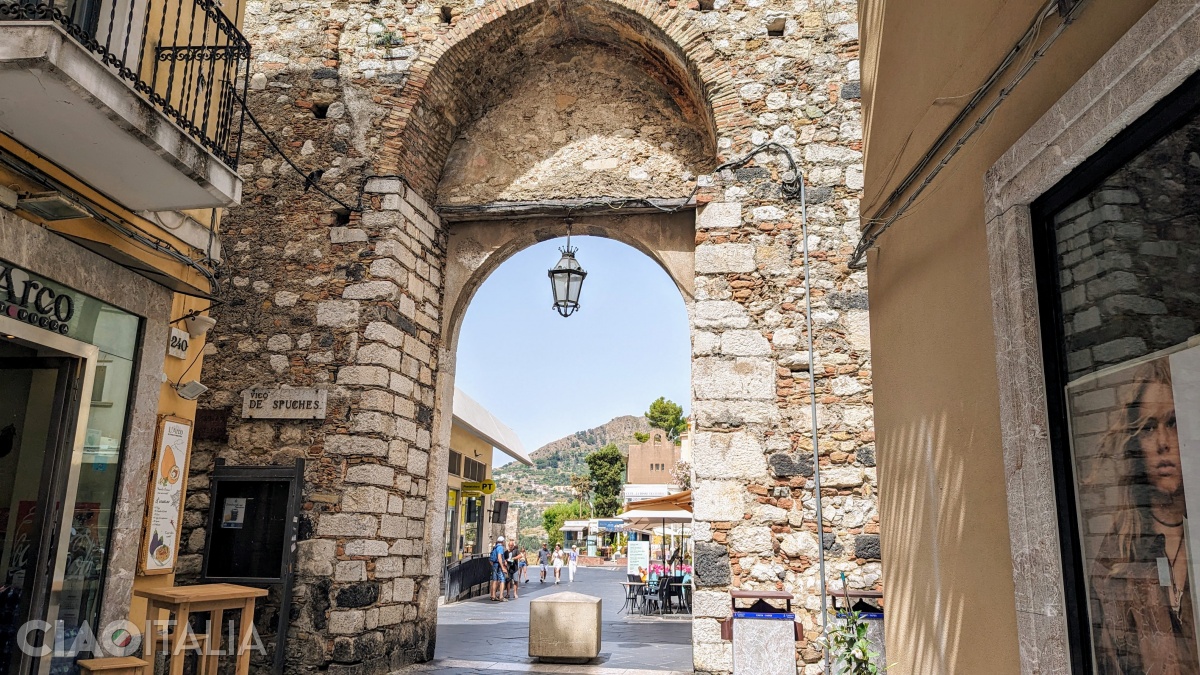
Located at the other end of Via Umberto I, Porta Catania, as its name suggests, once marked the road from Taormina toward Catania. It was built during the Norman period in the 12th century, along with the city's second ring of fortification walls.
The gate is also known as Porta del Tocco ("Gate of the Bell Toll"), because public meetings were held in the adjacent small square. These meetings, announced by the tolling of bells (tocchi) at 1:00 PM, also acquired the name tocchi, and Porta del Tocco actually designated the "Meeting Gate".
The last major reconstruction dates back to 1440, a year that appears on the plaque above the archway. This plaque features the city's coat of arms and the emblem of the Aragonese dynasty, framed by a distinctive border of black volcanic stone.
4. Piazza IX Aprile
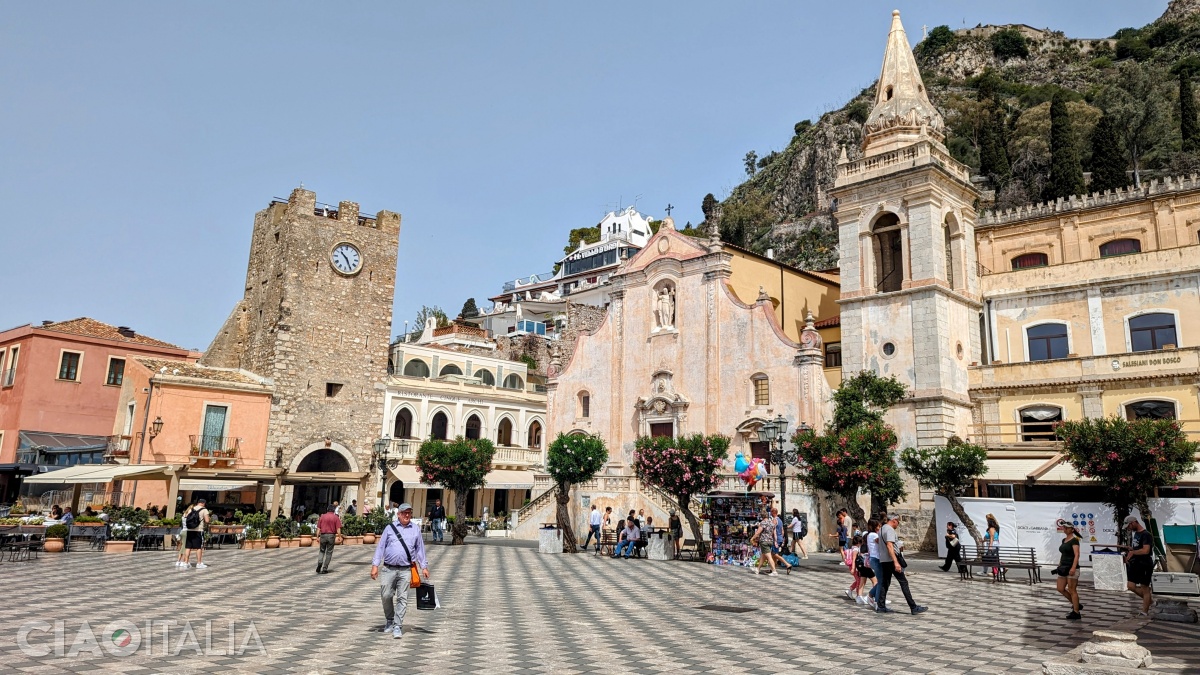
About halfway between Porta Messina and Porta Catania lies Piazza IX Aprile. Elegant and featuring a superb panoramic view, it is the most beautiful (and most photographed) square in Taormina, being one of the city's main tourist attractions.
Its original name was Piazza Sant'Agostino, after the church of the same name that occupies part of the square. On April 9, 1860, news spread among those gathered in the cathedral that Giuseppe Garibaldi had landed at Marsala to liberate Sicily from Bourbon rule. Even though the landing actually took place a month later, on May 9, the residents named the square "April 9" after the date they first heard the rumor.
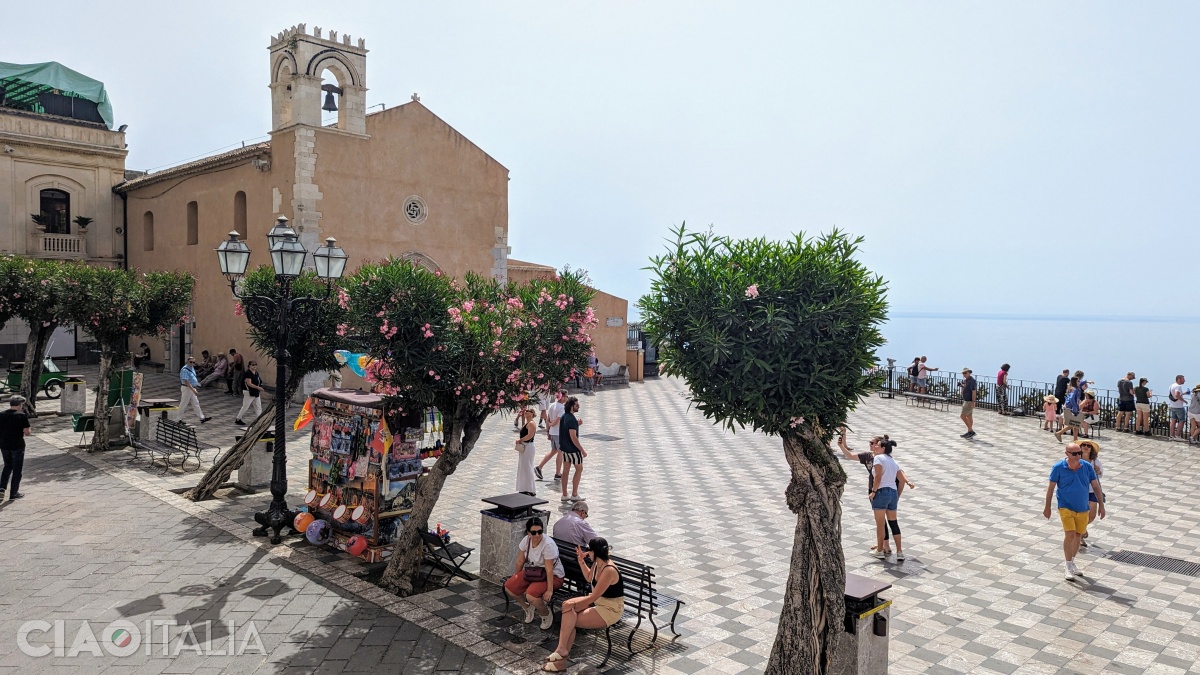
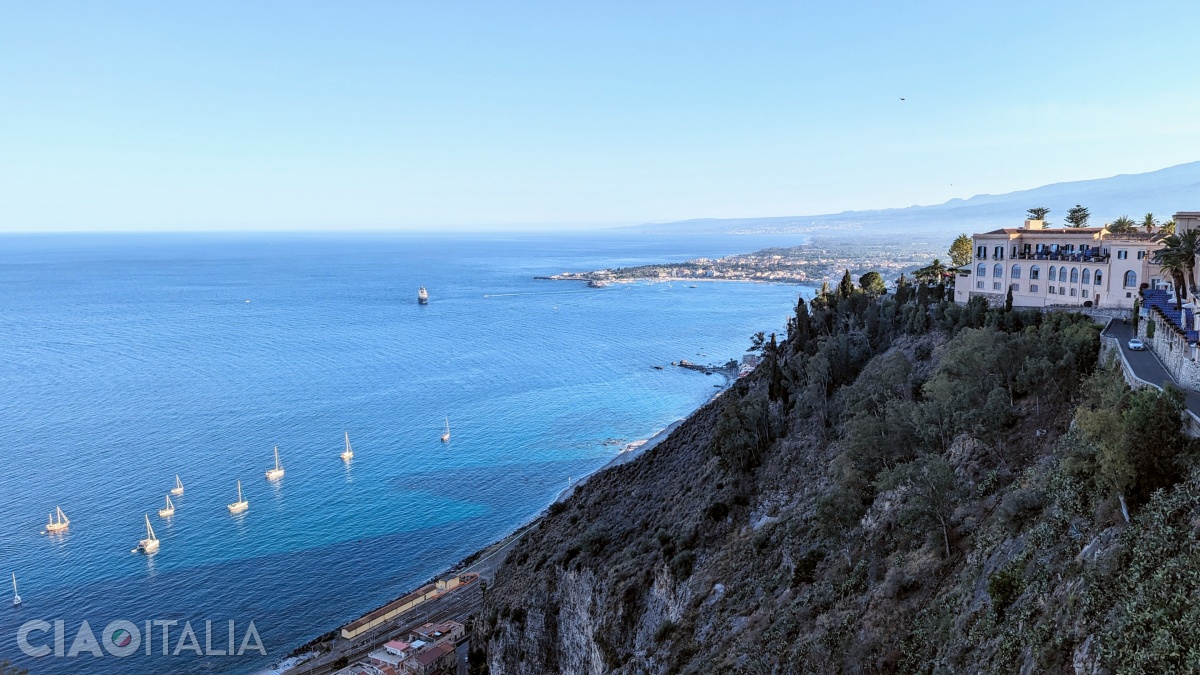
Next to the terrace where you can admire the view of the Gulf of Naxos, Mount Etna, and the hill where the Ancient Theatre is located, stands the Church of Sant'Agostino, which originally gave the square its name. It was built in the 15th century and today serves as the seat of the Municipal Library, which occasionally organizes various exhibitions.
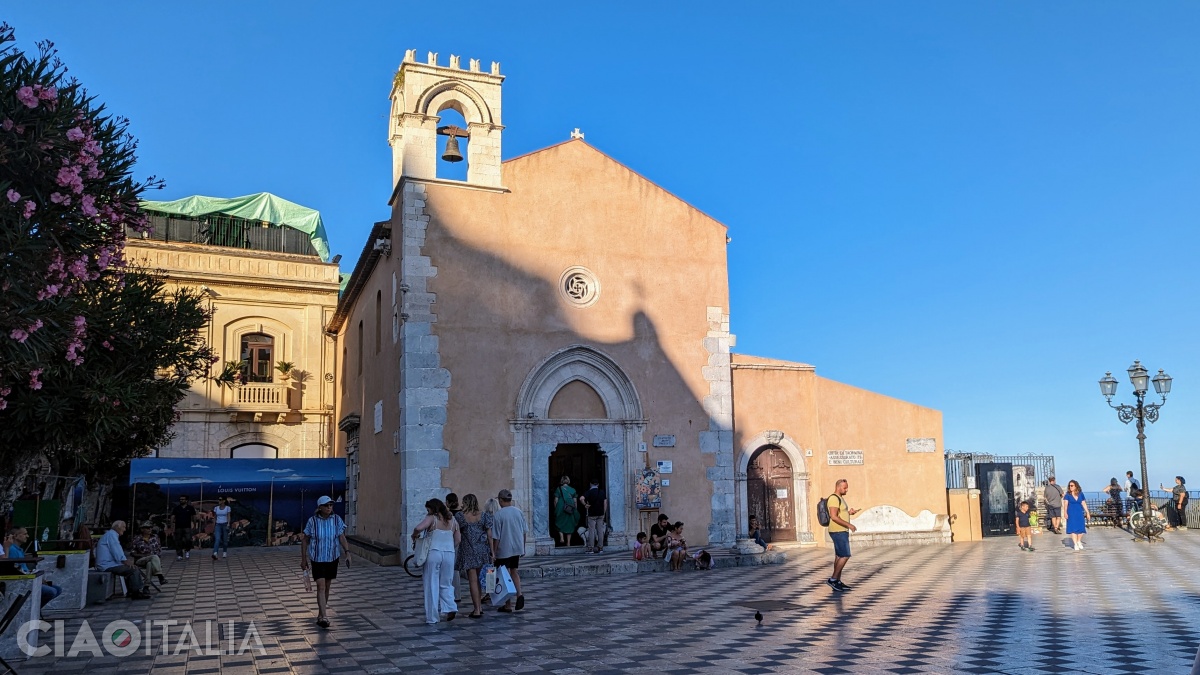
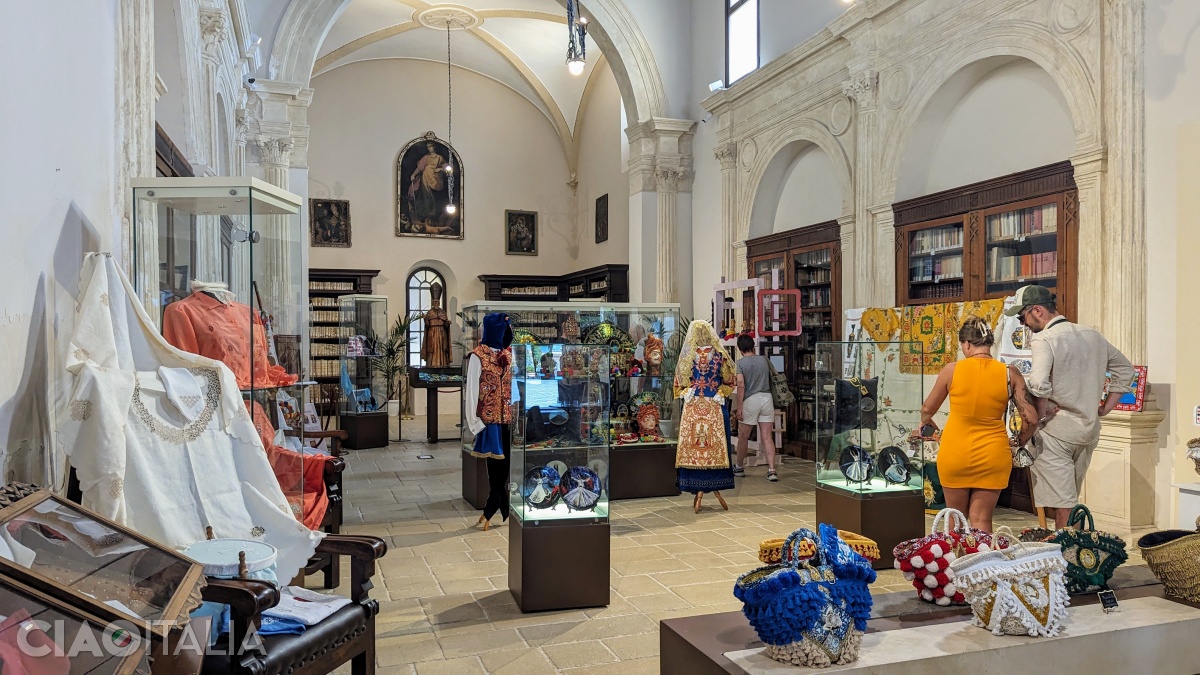
On the mountain side, the square is bordered by another church, San Giuseppe ("St. Joseph"), built in the 17th century in Baroque style.
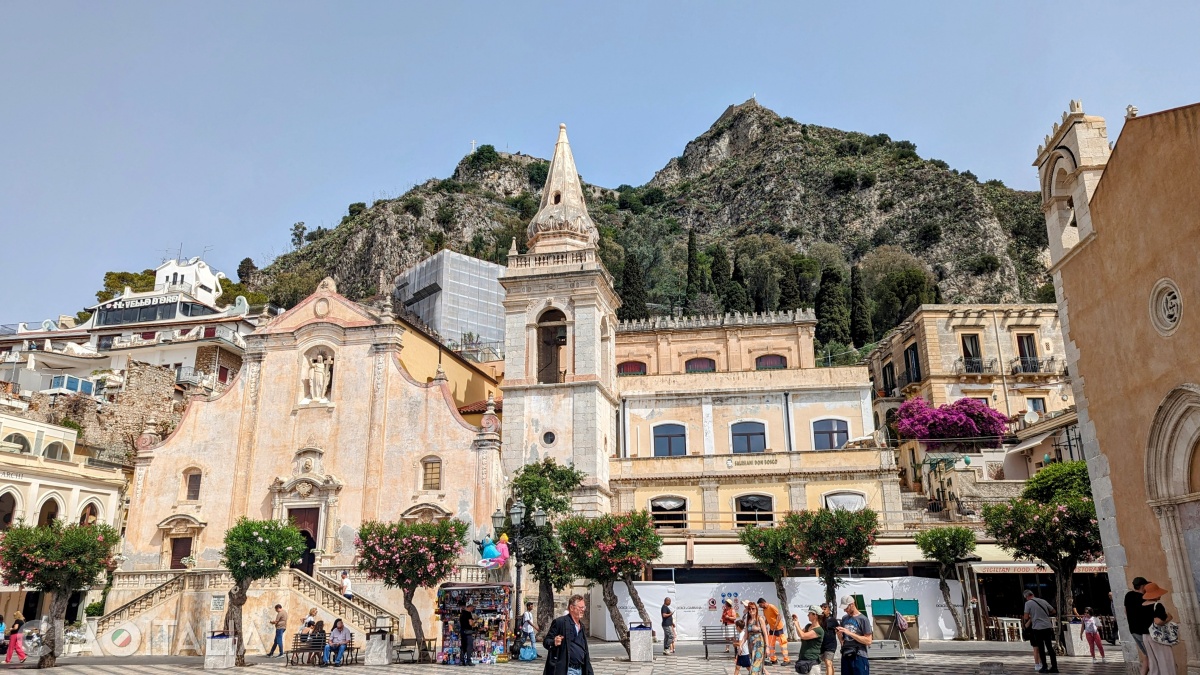
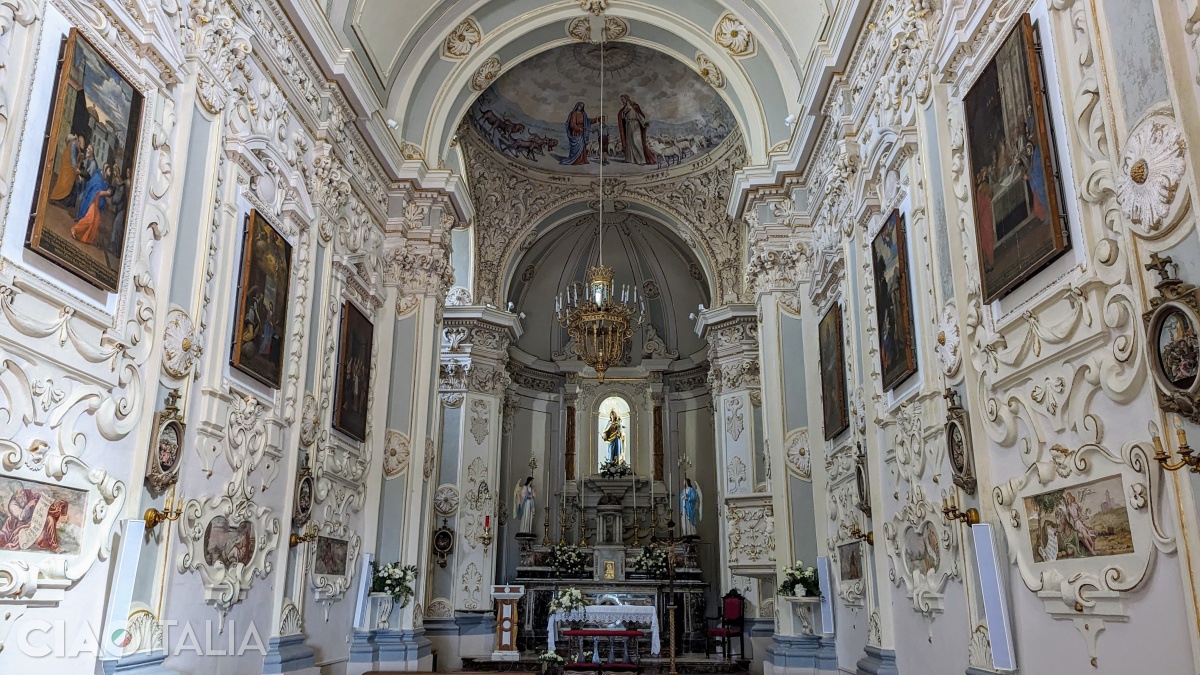
To the left of San Giuseppe Church rises the Clock Tower (Torre dell'Orologio), also called Porta di mezzo ("Middle Gate"). It was built in the 12th century and rebuilt several times. The clock was added in 1679 when the tower was reconstructed after being almost completely destroyed three years earlier by the French troops of Louis XIV.
The bells in the tower toll only on July 9, when San Pancrazio, the patron saint of the city, is celebrated, and on the day the mayor of Taormina is elected.
The tower marks the entrance to Borgo Medievale, one of the oldest neighborhoods in the town.
5. Piazza del Duomo
Between the Clock Tower and Porta Catania lies Piazza del Duomo ("Cathedral Square").
In the center of the square stands the fountain called Quattro fontane ("Four Fountains"). It was built in 1635 in the Baroque style. The statue at the top represents the city's emblem: a centaur with a female body, wearing a crown and holding a scepter in the right hand and a globe in the left - symbols of power. Engraved on the rim of the basin supporting the statue are the names of the four city administrators who commissioned the construction. At the four corners of the fountain rise four columns topped with small sea horses, from whose mouths water once flowed.
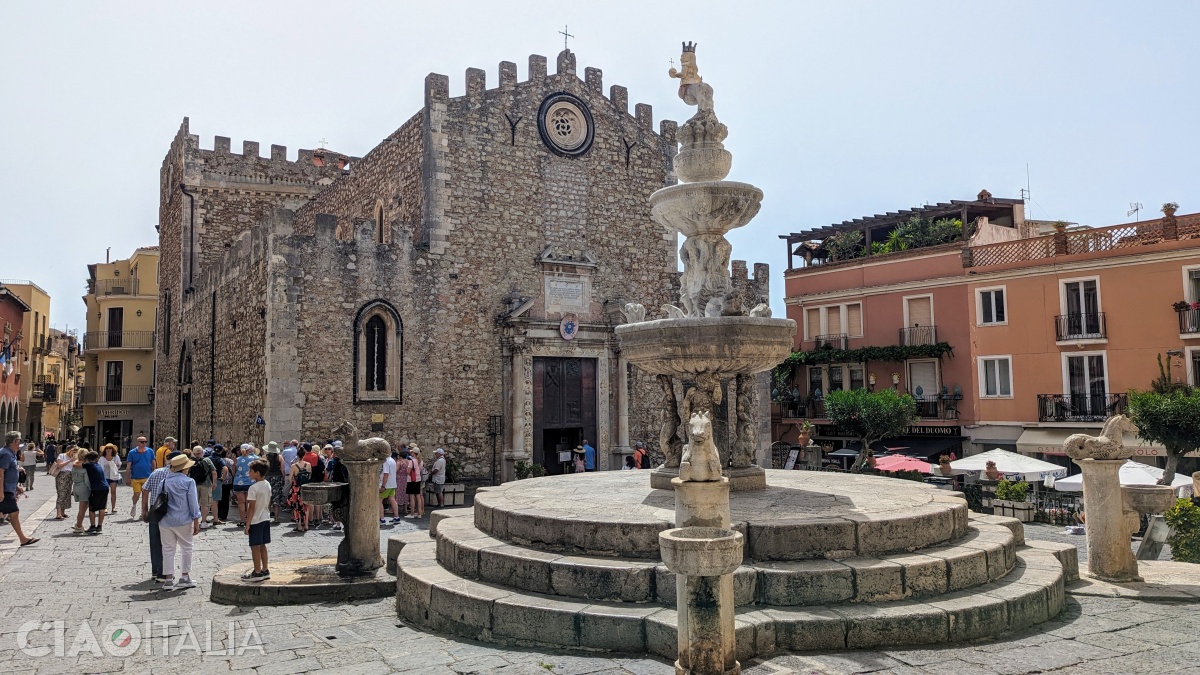
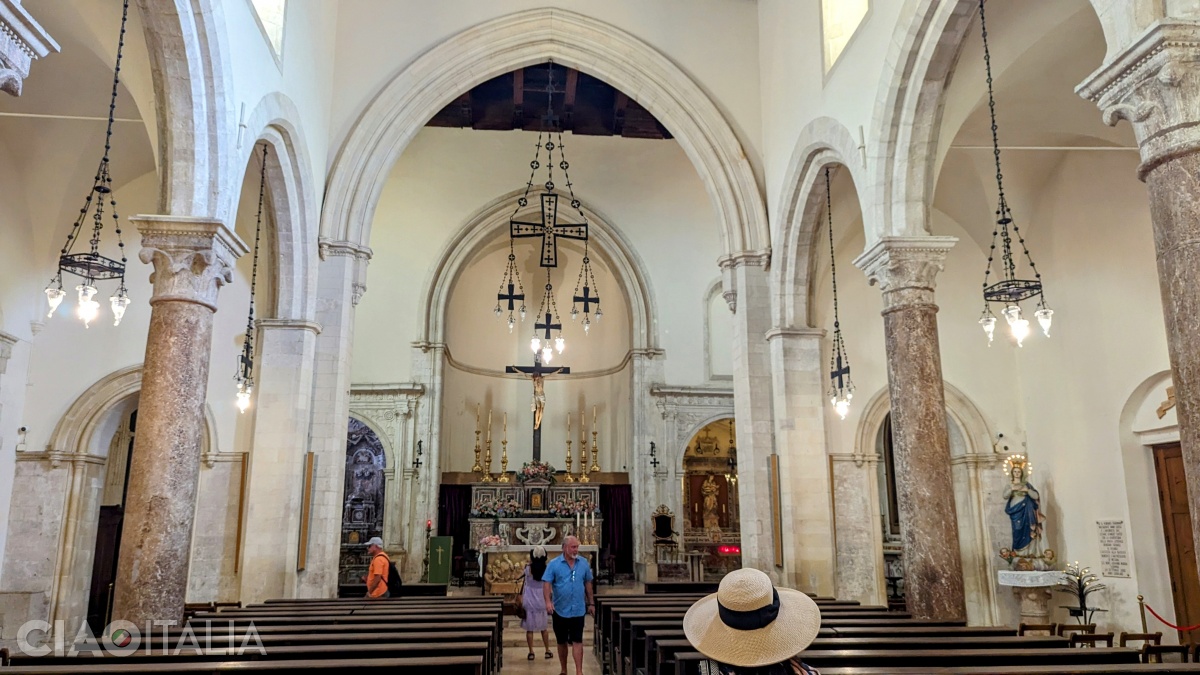
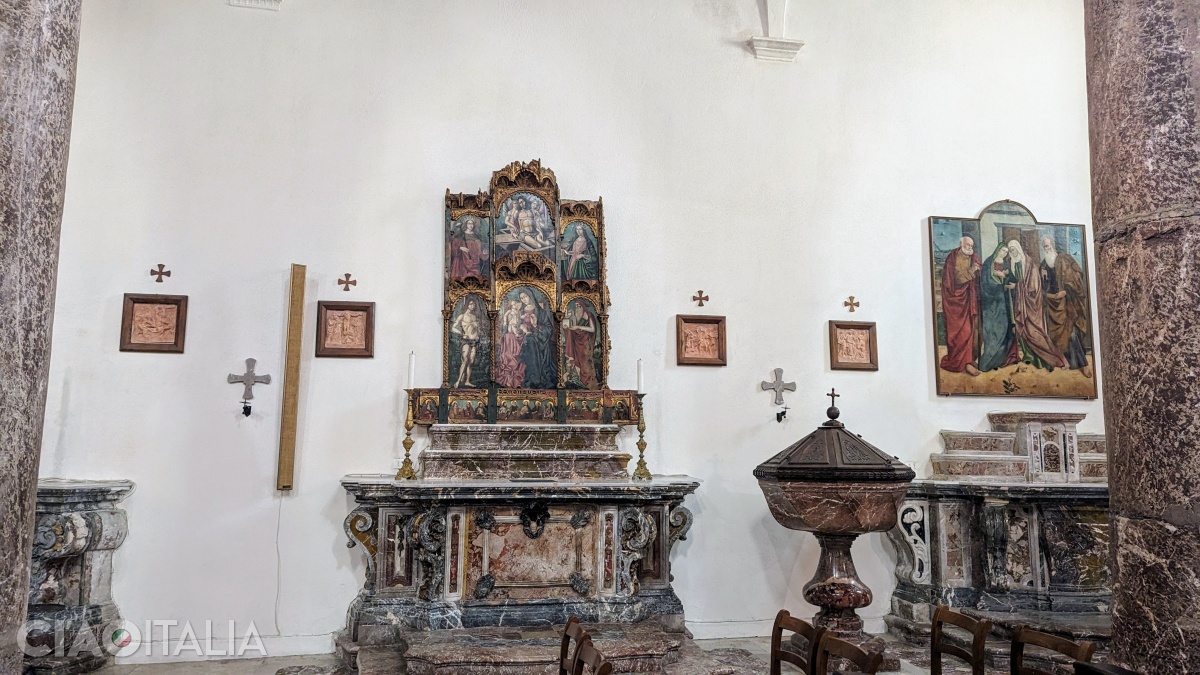
The Cathedral (Duomo of Taormina), which gives the square its name, was built around 1400 on the ruins of an older church and is dedicated to Saint Nicholas of Bari. Due to its architecture, it has also been called the "fortified cathedral". Over time, it has undergone several renovations. The main portal dates from 1636, and the side ones from the 15th and 16th centuries. The interior is divided into three naves by six pink marble columns, which may have come from the ancient theatre. The polyptych altar created by Antonello de Saliba in the 16th century is highly valuable.
Located opposite the cathedral, Bar Billy & Billy was a meeting place in past centuries for artists such as Alexandre Dumas fils, Robert Faulkner, Tennessee Williams, Johannes Brahms, Oscar Wilde, Guy de Maupassant, and Richard Wagner.
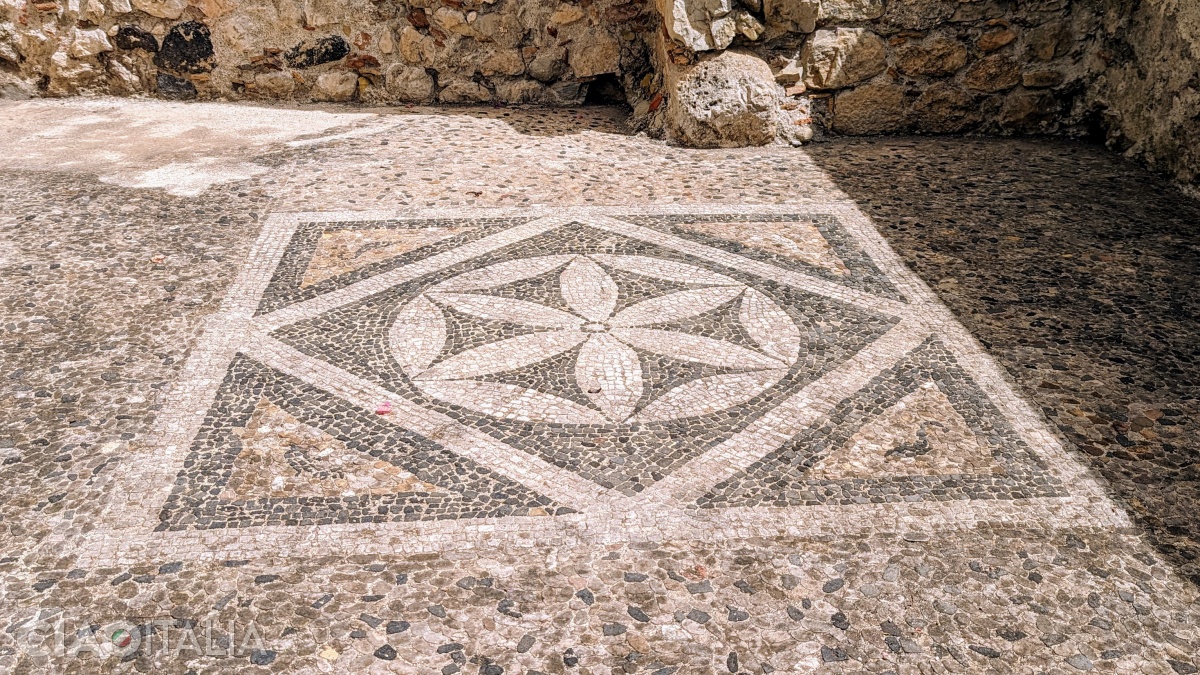
Climbing the steps near the fountain, you will reach a Hellenistic mosaic from the 2nd century BC. It was part of the courtyard pavement of a private residence.
Near Piazza del Duomo lies Palazzo Ciampoli. Built in 1412 in the Catalan Gothic style, it was once the residence of the Ciampoli family, whose coat of arms can still be seen above the entrance portal. In 1926, the Hotel Palazzo Vecchio was constructed within the palace gardens; its architecture is reminiscent of the Palazzo della Signoria in Florence. Palazzo Ciampoli is typically open to the public only when hosting exhibitions or other special events.
6. The Ancient Theatre
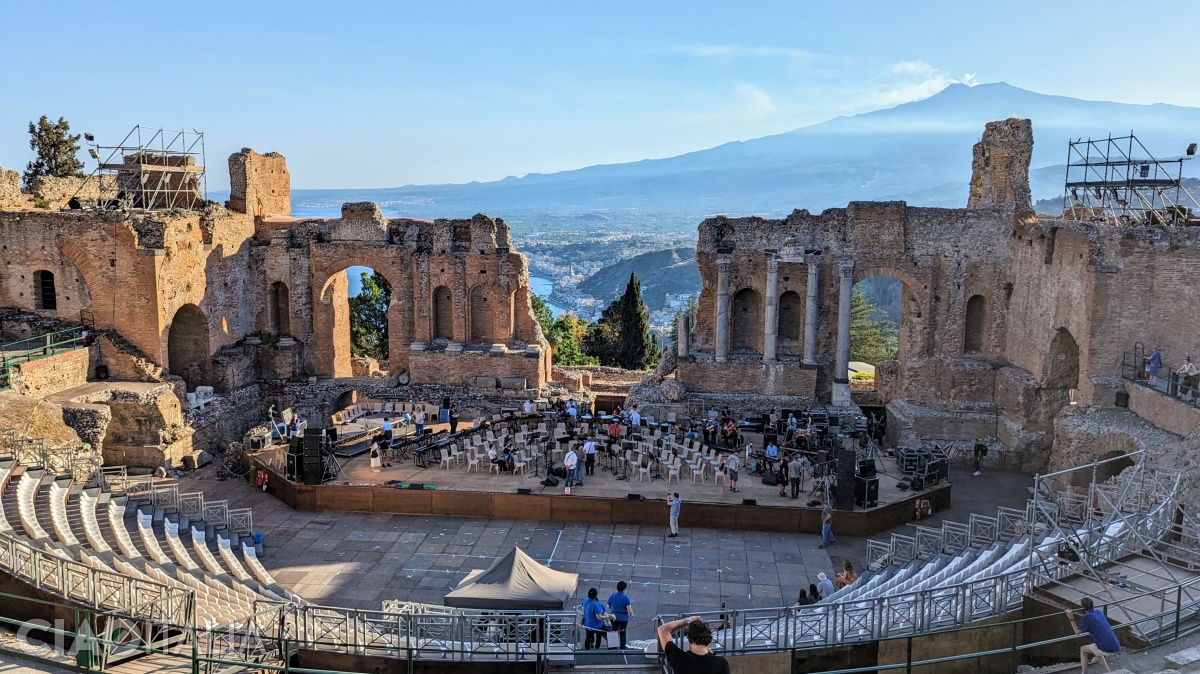
The Ancient Theatre is among the most important tourist attractions in Taormina. Situated on a hilltop near Porta Messina, it is the second oldest theater in Sicily, after the Greek theater in Syracuse. It was originally built in the 3rd century BC by the Greeks and later reconstructed in the 2nd century AD during the Roman period. The view from the archaeological site is magnificent, stretching north toward the Strait of Messina and Calabria, and south toward Giardini Naxos and Mount Etna. Concerts and performances are still regularly held on the Ancient Theatre's stage today.
Ancient Theatre of Taormina
Opening Hours:
September 16 - September 30, 2026:
- Monday-Sunday, 9:00 AM - 6:45 PM
October 1 - October 15, 2026:
- Monday-Sunday, 9:00 AM - 6:15 PM
October 16 - October 30, 2026:
- Monday-Sunday, 9:00 AM - 5:45 PM
Last entry is 45 minutes before closing (or until 11:00 PM on days with extended hours).
Ticket Prices:
- Adults: €14
- EU citizens between 18 and 25 years old: €7
- Children under 18: Free
7. Villa Comunale Park
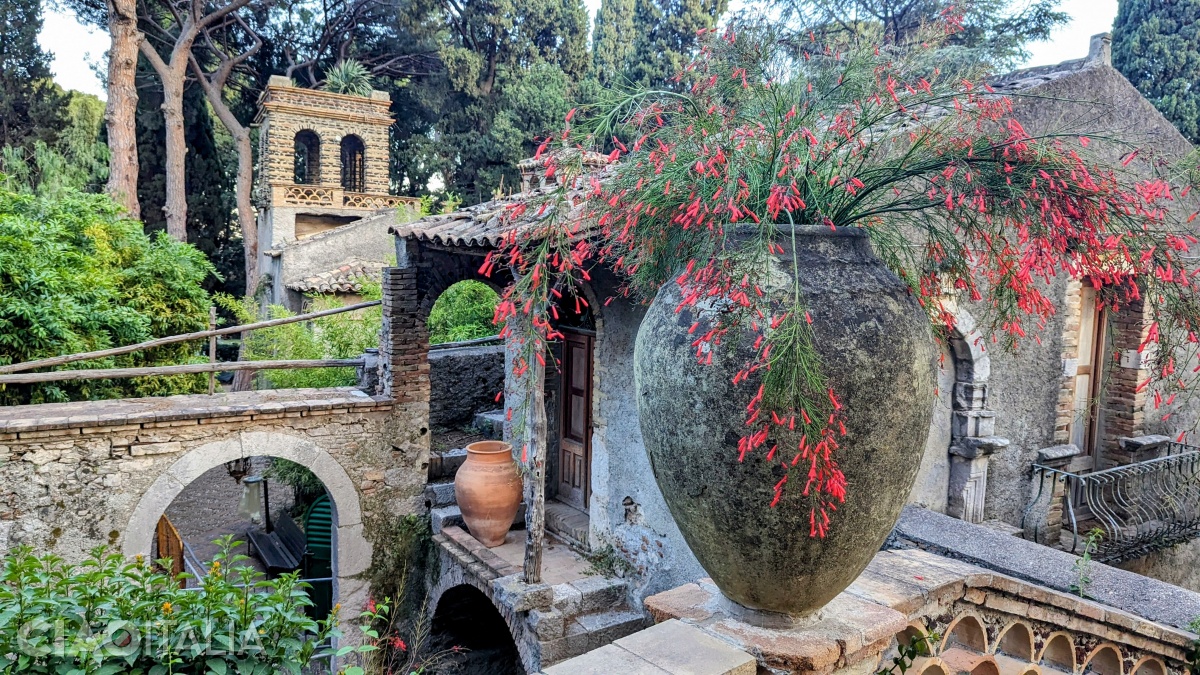
Villa Comunale of Taormina is the public garden, named Florence Trevelyan Park after its creator. It is an oasis of greenery, with palm trees, cypresses, olive trees, magnolias, and hibiscus and bougainvillea flowers. It also boasts a panoramic walkway, where you can enjoy one of the most beautiful views in the city.
Villa Comunale in Taormina
Opening Hours:
June 1-October 25, 2026:
- Monday-Sunday: 8:00 AM - 12:00 AM
Ticket Prices:
- Free
8. Isola Bella
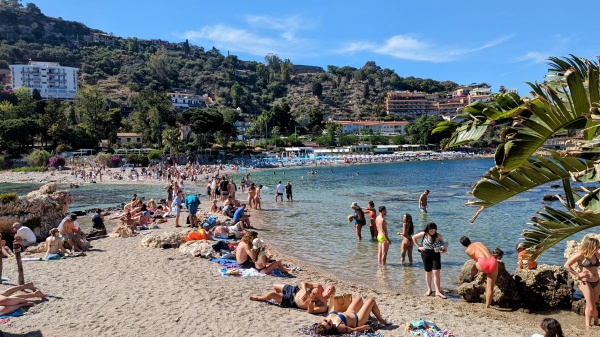
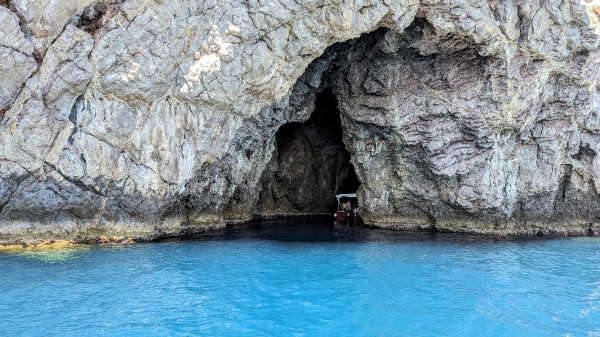
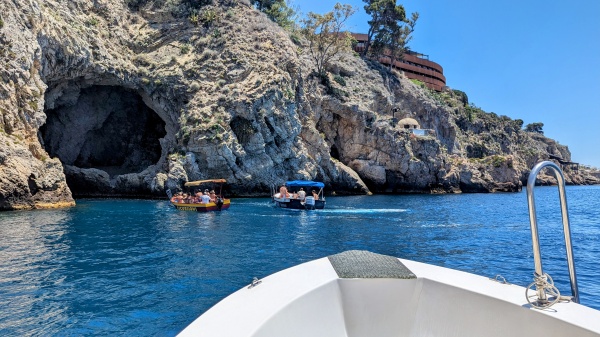
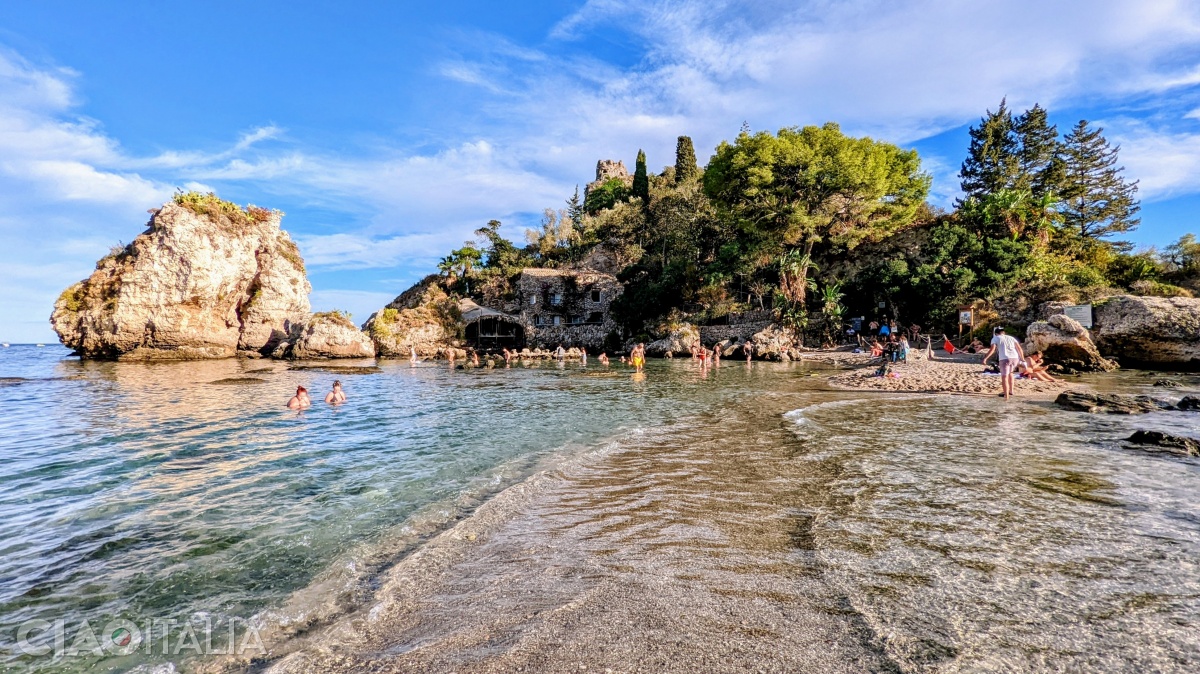
Isola Bella is probably the best-known tourist attraction in Taormina. Separated from the shore by an isthmus of land, which may or may not be covered by water depending on the tide level, the island is surrounded by a charming landscape, sitting in the middle of incredibly clear waters with limestone cliffs hiding caves. At Isola Bella, you can sunbathe (there are both free and organized beaches), visit the island, or discover its surroundings through boat trips.
Isola Bella
Opening Hours (for visiting the island):
September 16 - September 30, 2026:
- Monday-Sunday: 9:00 AM - 6:45 PM (ticket office closes at 6:00 PM)
October 1 - October 15, 2026:
- Monday-Sunday: 9:00 AM - 6:15 PM (ticket office closes at 5:30 PM)
October 16 - October 31, 2026:
- Monday-Sunday: 9:00 AM - 5:45 PM (ticket office closes at 5:00 PM)
November 1 - December 31, 2026: Closed
Ticket Prices:
- Adults: €6
- EU citizens aged 18 to 25: €3
- Children under 18: Free
9. The Taormina Cable Car
A cable car managed by ASM (Azienda Servizi Municipalizzati) connects the elevated historic center of Taormina to the seaside below. Thanks to the 170-meter difference in altitude, the few minutes of travel over a distance of about 700 meters offer beautiful views of the city and the Ionian Sea.
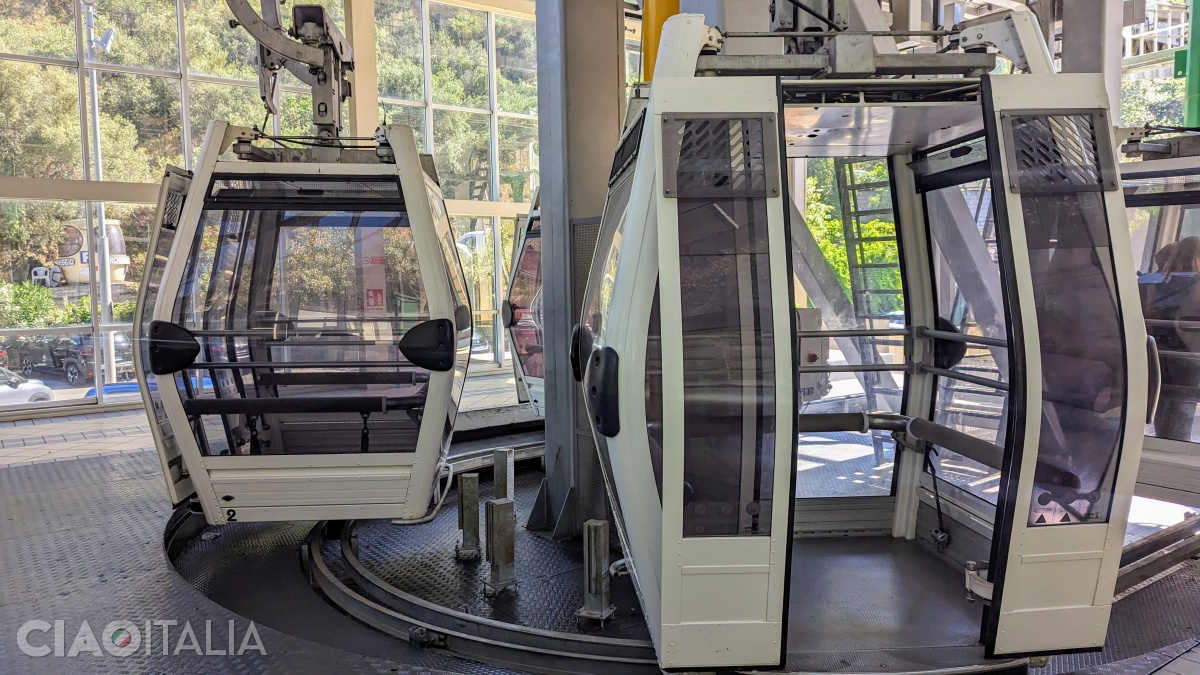
The Taormina cable car was built in 1928 and has been renovated several times over the years.
The upper station (at an altitude of 197 meters) is located on Via Luigi Pirandello, just 200 meters from Porta Messina. The lower station is Mazzarò (at an altitude of 26 meters), situated just a few hundred meters from Isola Bella. The cable car runs every 15 minutes.
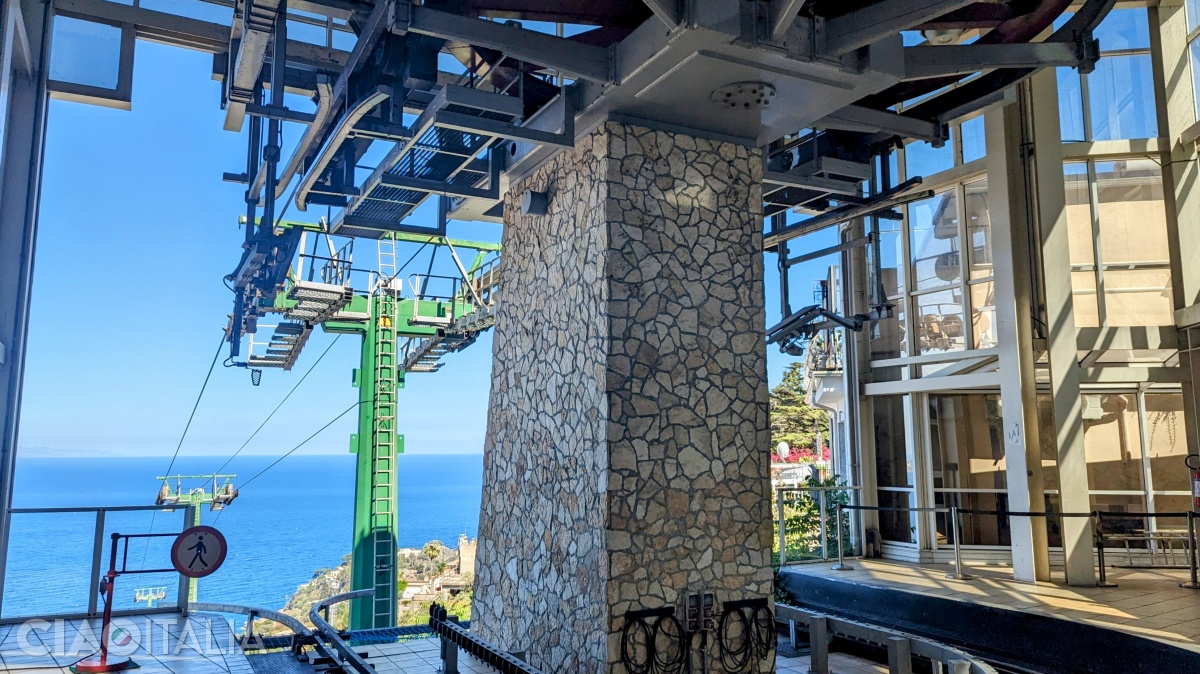
Taormina Cable Car
Opening Hours:
- Monday-Sunday: 8:00 AM - 1:30 AM
Ticket Prices:
- One way: €6
- Round trip: €10
- 1-day pass: €20
- 1-week pass: €85
Children over 1 meter in height pay the full fare.
10. Madonna della Rocca Church
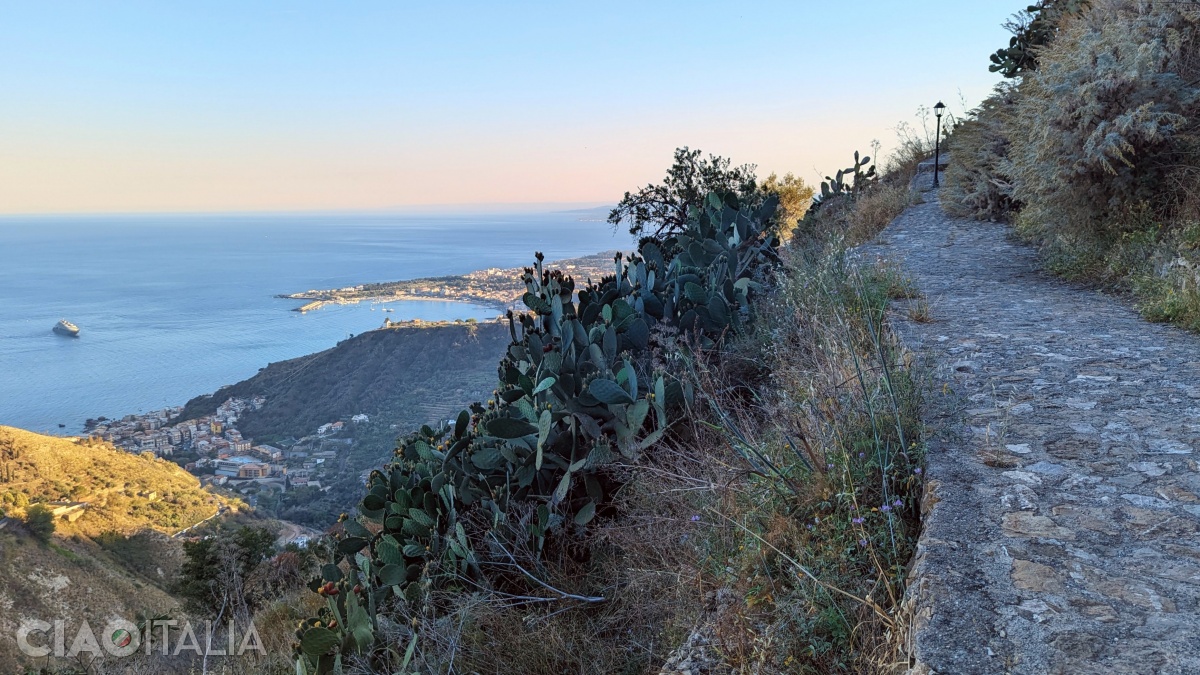
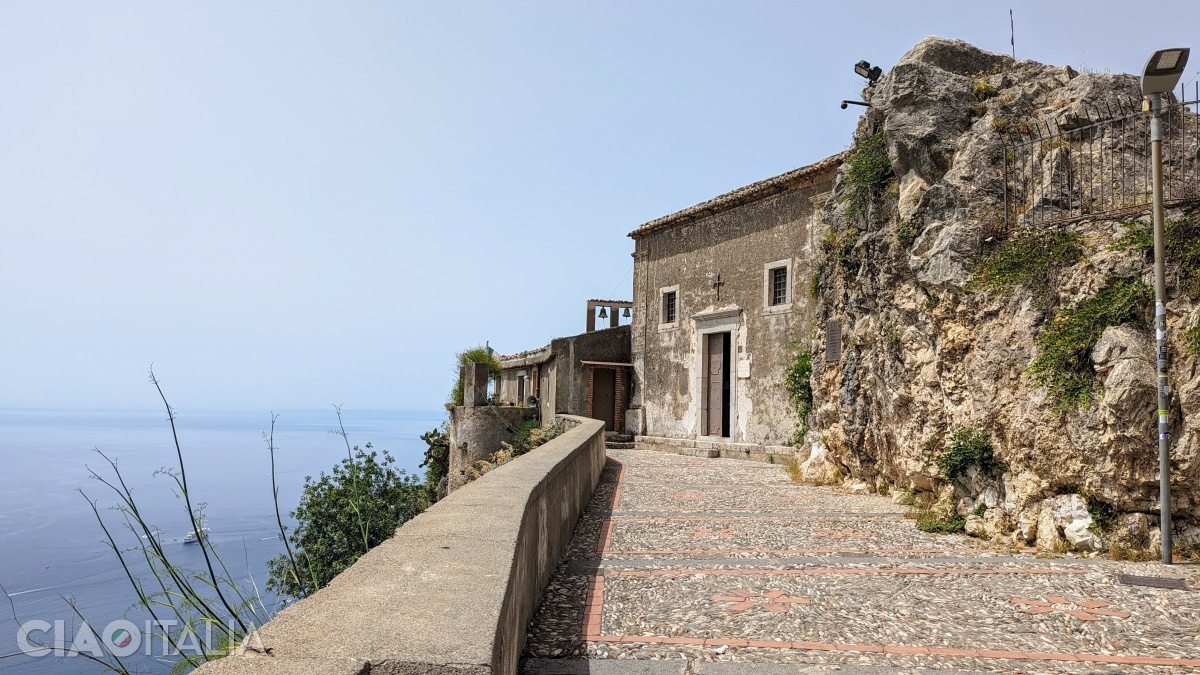
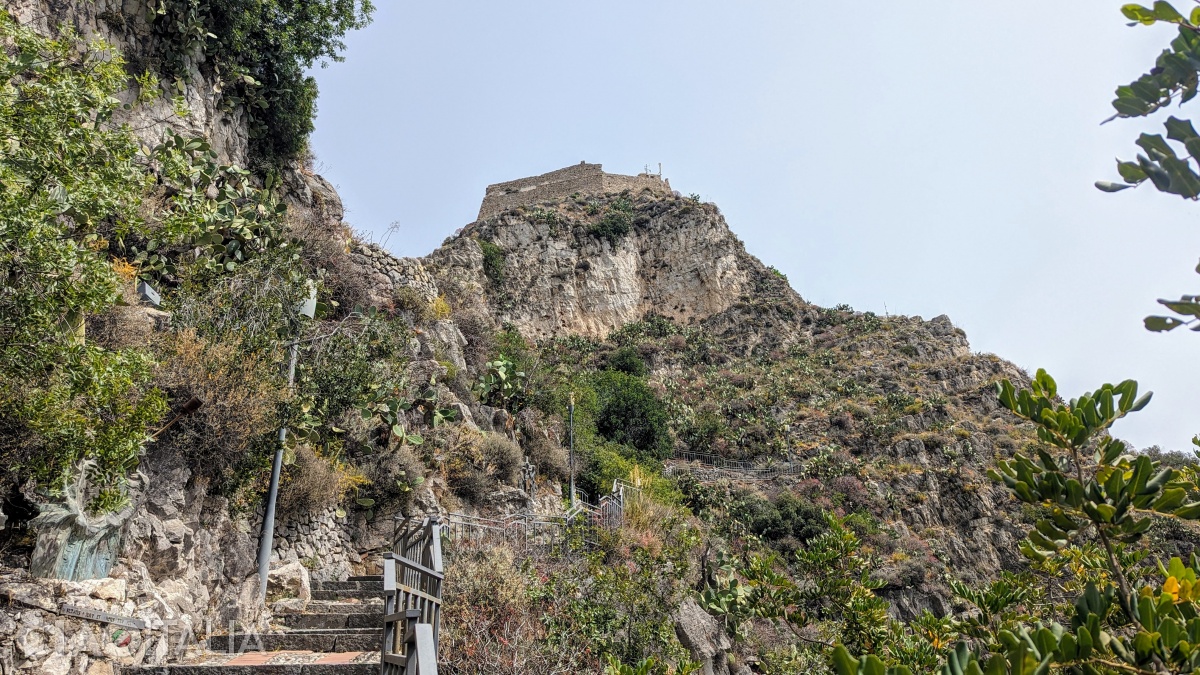
Madonna della Rocca ("Our Lady of the Rock") is a small church carved directly into the rock around the year 1640. It is situated at a high elevation and can be reached by car or bus; however, there is also a trail you can take on foot. This path begins in Taormina and winds up the mountainside, consisting of over 500 steps. The route (marked as Salita Castello on maps) starts from Via Circonvallazione, roughly in the middle section. To get there, you can head up from Corso Umberto I via Vicolo Stretto and then turn right until you see the signs for the castle and the Via Crucis.
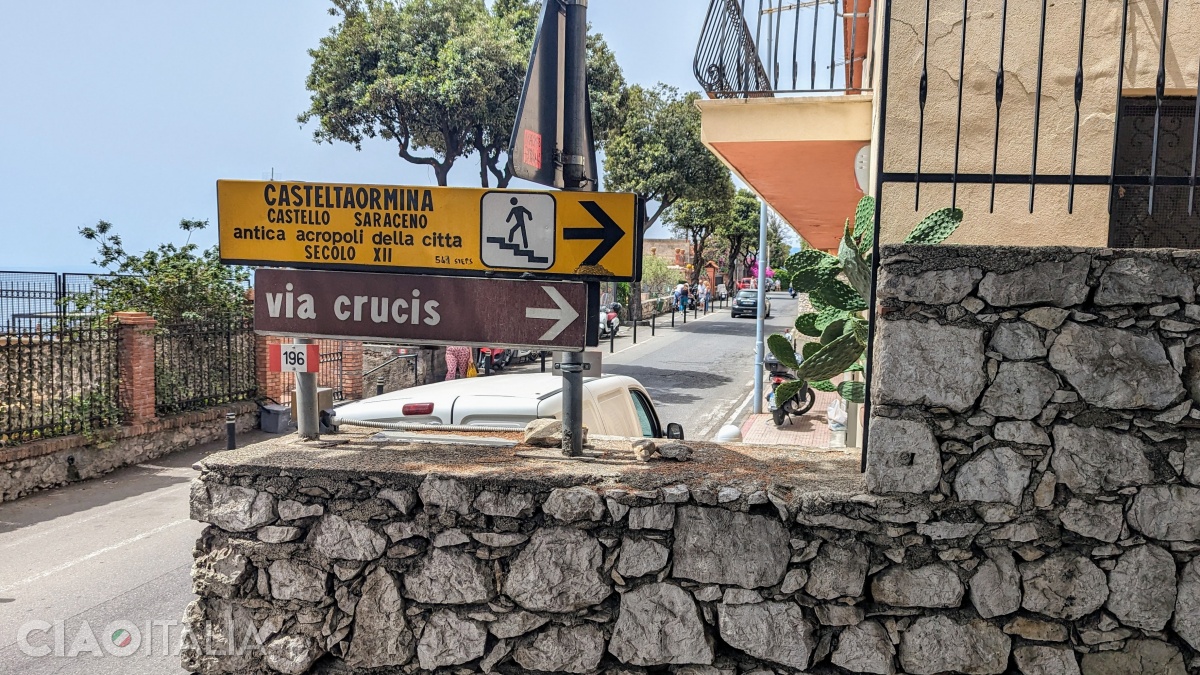
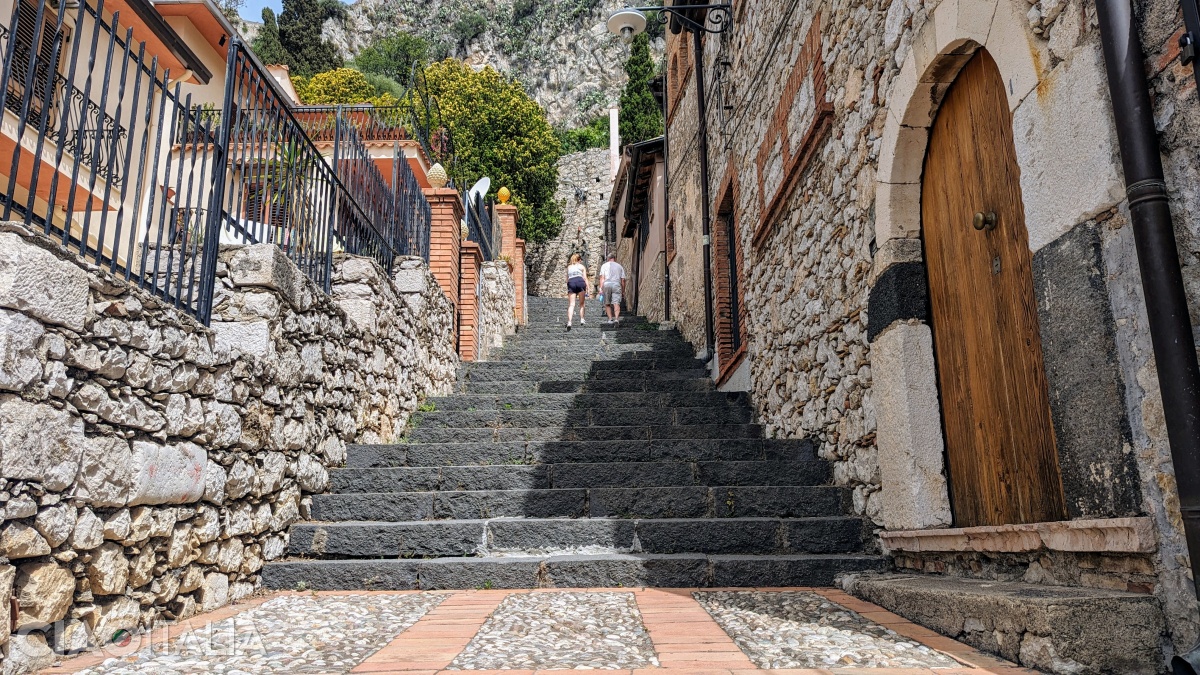
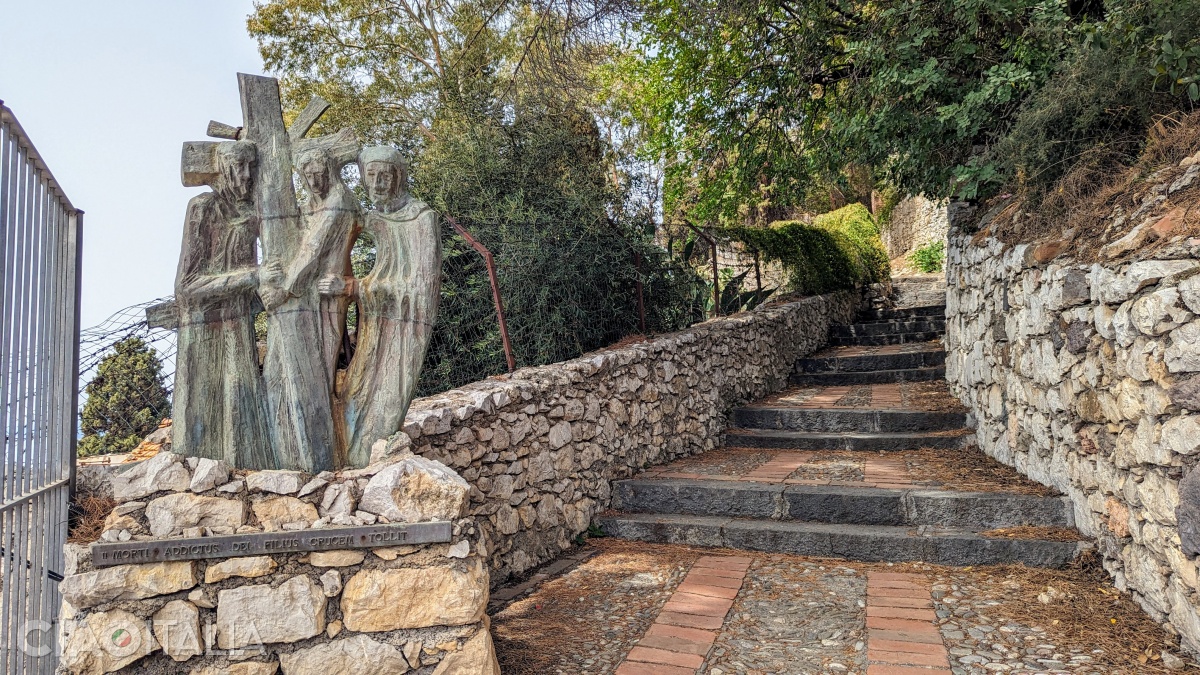
The walk doesn't take very long (about 20-30 minutes), but it can be exhausting if done in the scorching heat of the sun. It is a Via Crucis ("Way of the Cross") route, along which you will find 14 sculptures commemorating the Stations of the Cross and Christ's journey toward the crucifixion.
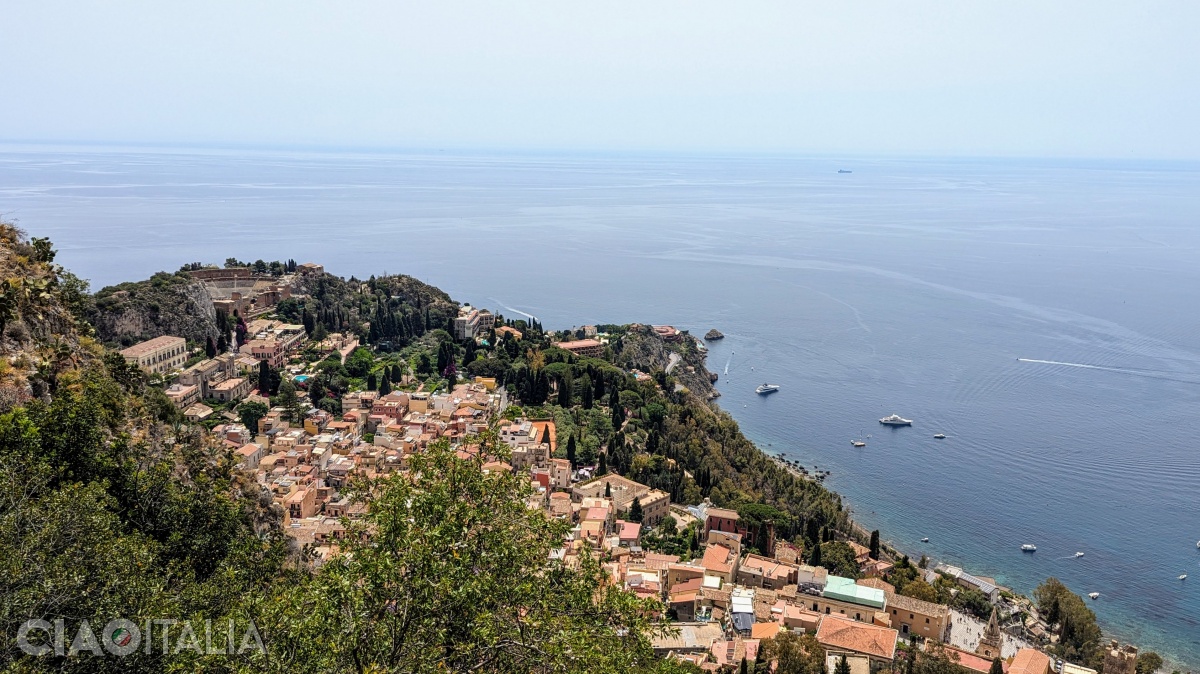
From Madonna della Rocca, as well as along the trail itself, you are treated to superb views of the city and the Ancient Theatre.
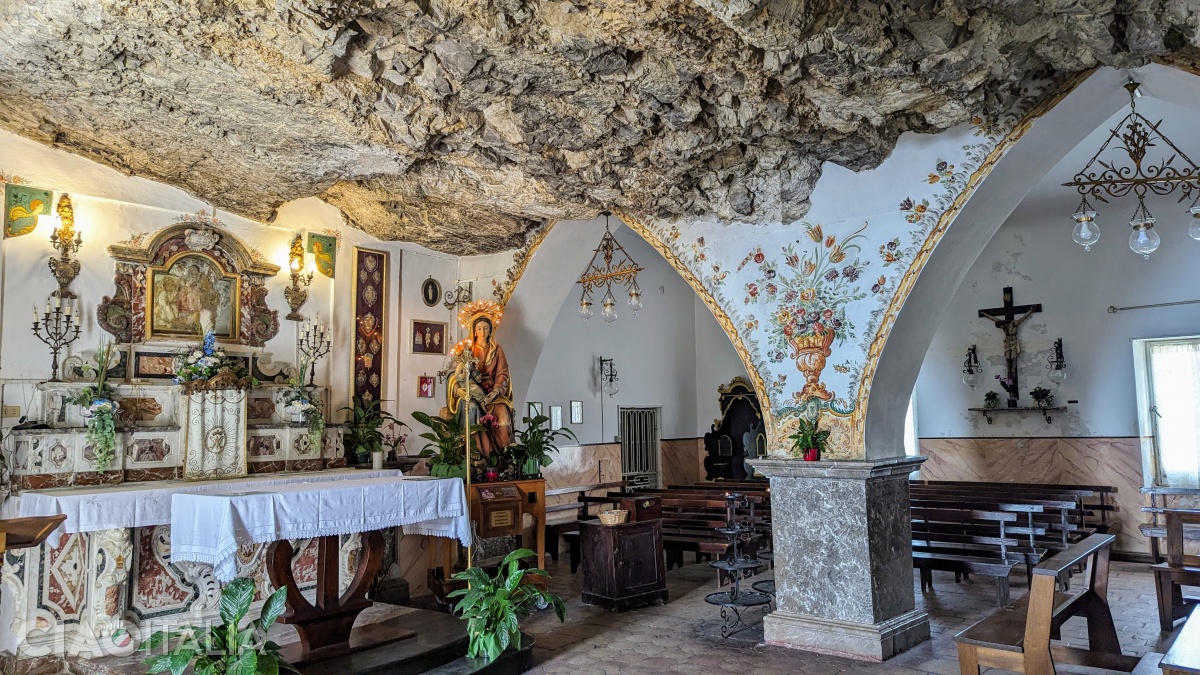
The church also has a legend. It is said that a child from the village of Mola, above Taormina, was grazing his flock on the mountain when a storm forced him to seek refuge, along with his sheep, in a nearby cave. During the storm and lightning, when he was terrified and almost losing heart, a young woman dressed in blue clothes appeared before him, calmed him, and assured him that the sun would soon appear. Not long after, the storm stopped and the sky cleared. His parents, worried about their son's fate, had gone to look for him and found him peaceful in the middle of the sheep. The boy told the story, and those who came to see the place noticed that a figure resembling the Virgin remained imprinted on the rock. Right there, a small church was built, taking the name Madonna della Rocca.
11. Taormina Castle
If you have reached the Madonna della Rocca Church, you have only a little further to climb to the castle.
Taormina Castle is also known as the Castello saraceno ("Saracen Castle"). It rises to an altitude of about 397m on Monte Tauro.
In antiquity, it was likely the site of an acropolis, situated in a strategic position to monitor the connecting roads between Catania and Messina. The first fortification was built in the Byzantine era, being one of the defensive outposts in the war against the Arabs. In the 10th century, they conquered and rebuilt the castle (hence the name Castello saraceno), and in 1079 the castle was conquered by the Normans.
Book Tickets for Taormina Castle
Castle of Taormina
Opening Hours:
May 1 - October 31, 2026:
- Monday-Sunday: 10:00 AM - 8:00 PM
The ticket office closes 30 minutes before.
Ticket Prices:
- Adults: €10
- 18-25 years: €5
- Under 18: Free
12. Palazzo Corvaja
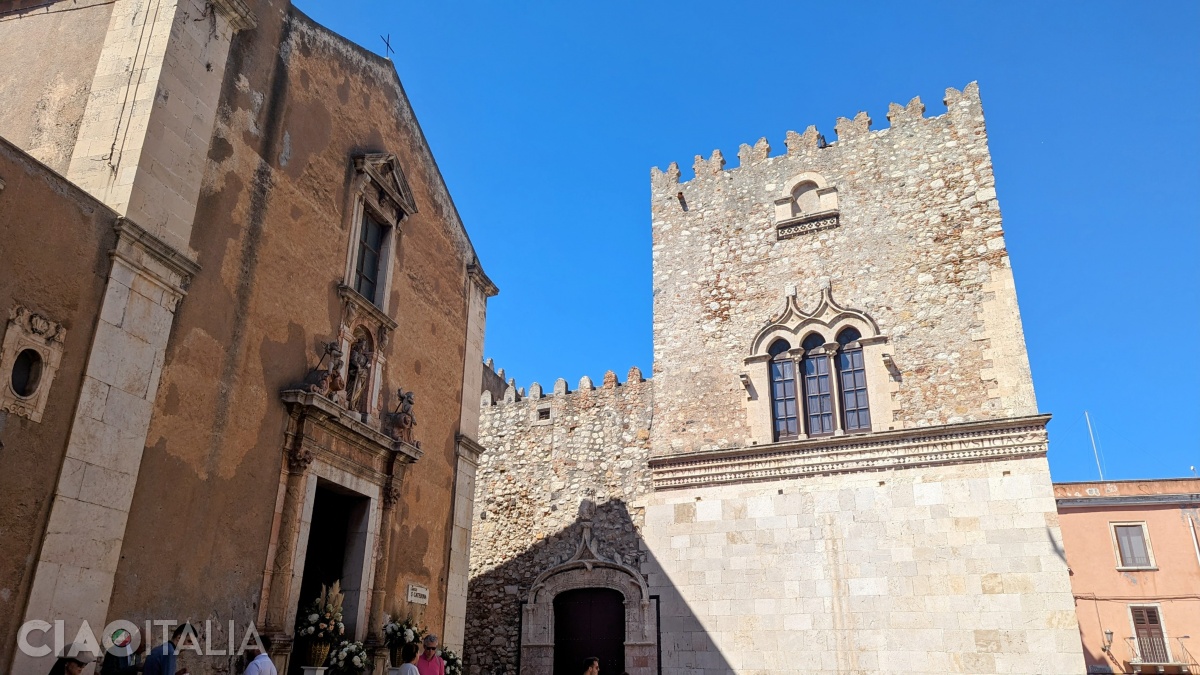
Located near Porta Messina, next to Santa Caterina Church, Palazzo Corvaja is one of the historic landmarks in Taormina. Its construction began in the 11th century during Arab rule, and in the 14th and 15th centuries it was enlarged, taking on its current appearance.
In 1411, the palace was the seat of the first Parliament of Sicily. Later, it became the residence of the important Corvaja family, in whose ownership it remained from 1538 until 1945.
After a period of restoration, Palazzo Corvaja was reopened as an exhibition center.
13. Castelmola
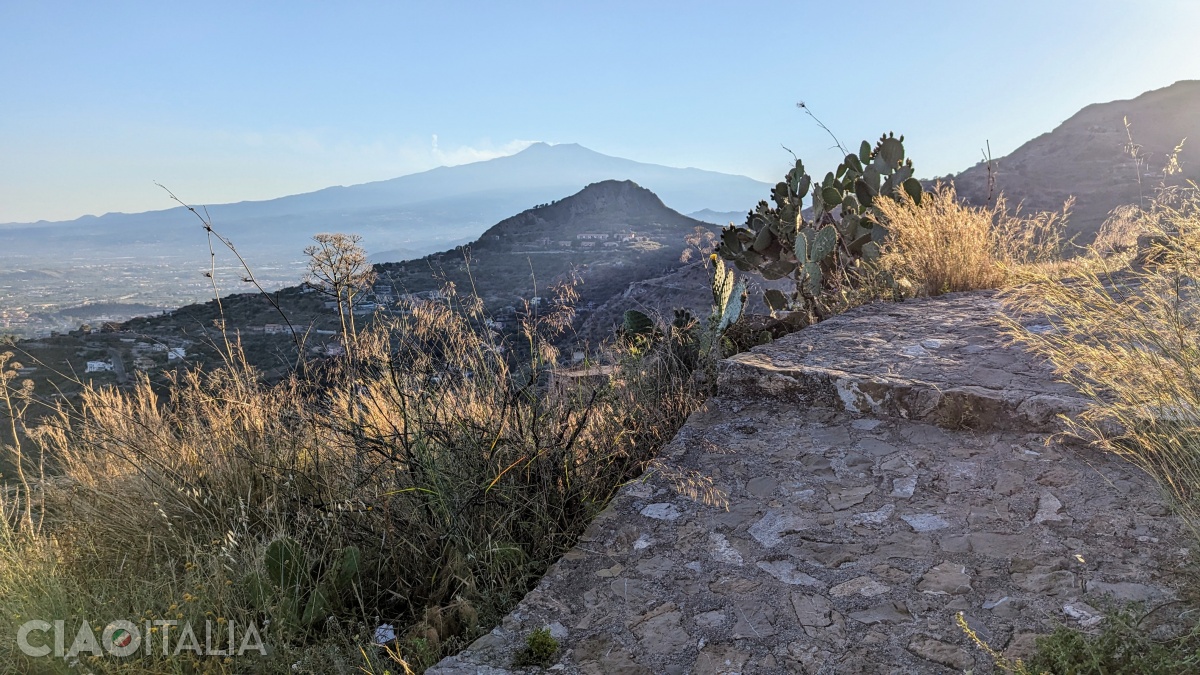
Castelmola is a charming medieval village located about 5 km from Taormina. The hiking trail connecting the two towns, known as il Sentiero dei Saraceni ("The Path of the Saracens"), is well worth adding to your list of local tourist attractions. Taking about 45 minutes to complete, the path climbs a slope covered in prickly pear cacti (giving it the name Piano delle Ficare), offering superb views of Mount Etna and the Bay of Naxos. Once you reach the top in Castelmola, reward yourself with a small glass of vino alla mandorla - a sweet wine flavored with almonds that is a specialty of this village (see also our article: What to Eat and Drink in Sicily).