Boat Trip to the Grotta Azzurra ("Blue Grotto") in Taormina
Grotta Azzurra ("The Blue Grotto") in Taormina is located inside the Isola Bella Marine Park, about 300m away from the beach, near Cape Sant'Andrea. It is not quite as spectacular as the Grotta Azzurra in Capri, but it boasts transparent waters of an intense color and can be one of the top tourist attractions to visit in Taormina.
Grotta Azzurra can only be reached by sea. Most tours are organized from Giardini Naxos, a resort located next to Taormina, where there is a small port from which boats depart daily. Some boat trips are also sold directly on the beach near Isola Bella (there is no port there, so you will have to step into the water to reach the boat).
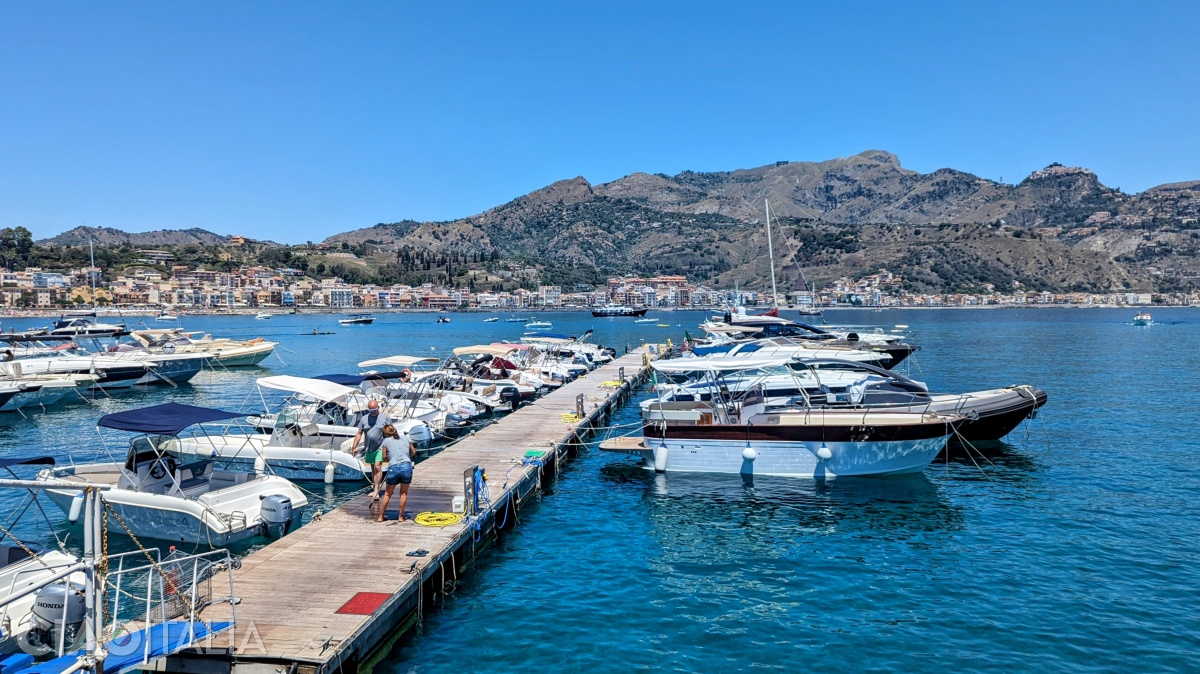
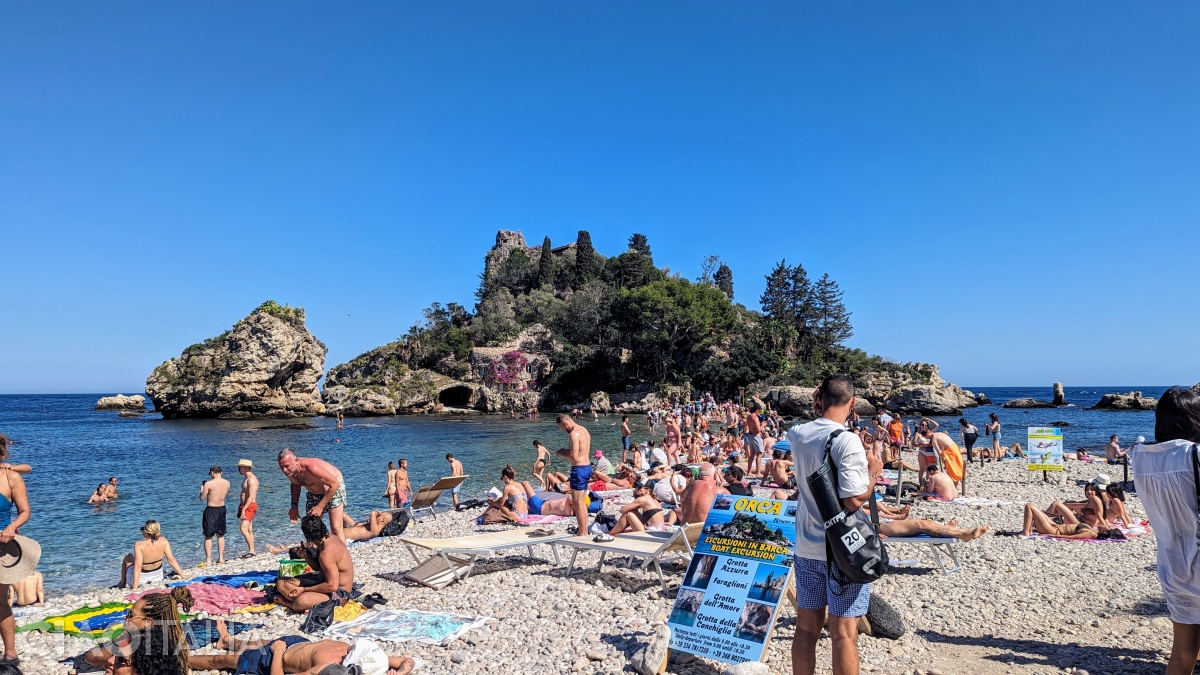
Tours from Giardini Naxos generally last about 2 hours and cost around €40-50 per person. They take place during the morning and afternoon and include guidance in several languages. Even if many promote a potential encounter with dolphins, be aware that dolphins are seen quite rarely, but this does not make the experience any less interesting.
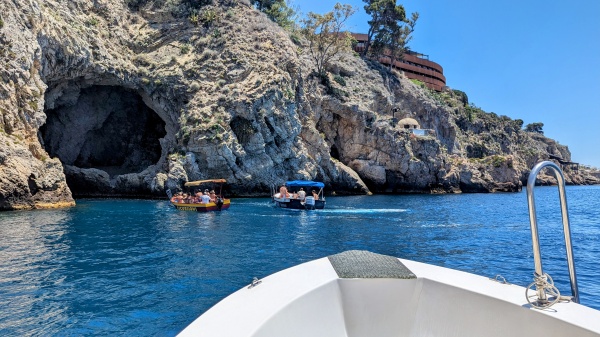
Excursions aren't just about visiting the Blue Grotto. The small boat will take you through the Bay of Naxos, the Isola Bella Marine Park, and the Bay of Mazzarò. You will be able to admire the beauty of the Sicilian coast from the sea, from a different perspective, with the impressive Mount Etna as a backdrop. Usually, during the trip, you will be offered a glass of prosecco or vino alla mandorla (a sweet wine flavored with almonds) and a snack (local almond biscuits, fruit, or arancini - see also the article What to Eat and Drink in Sicily).
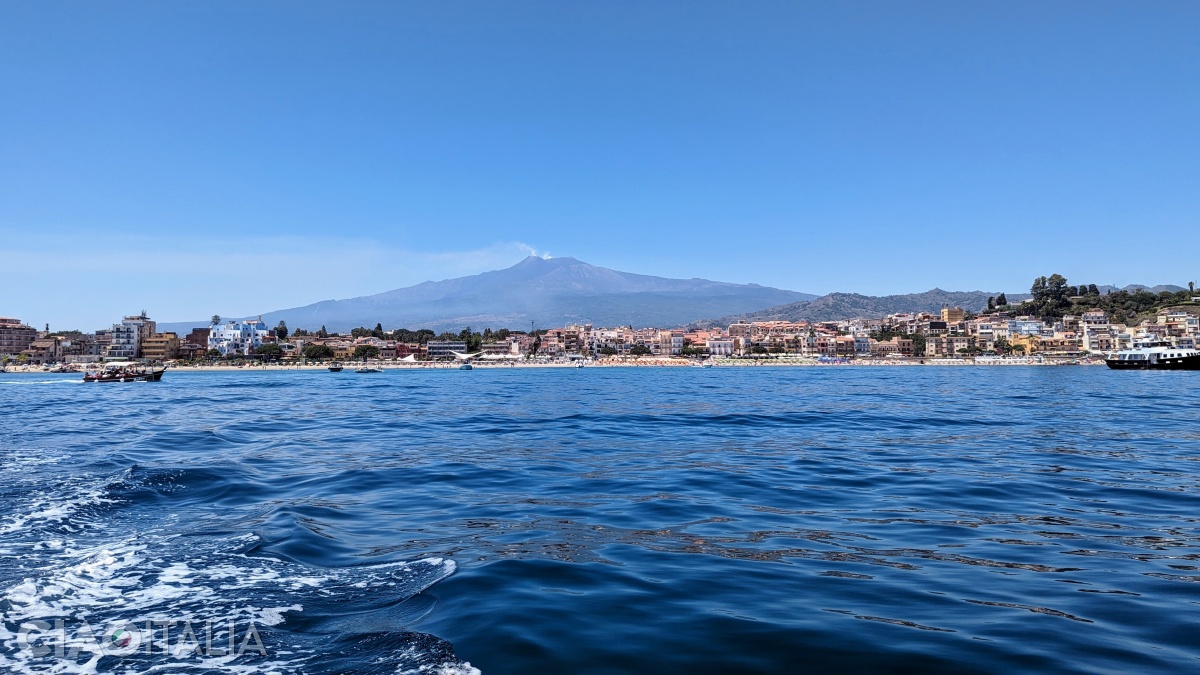
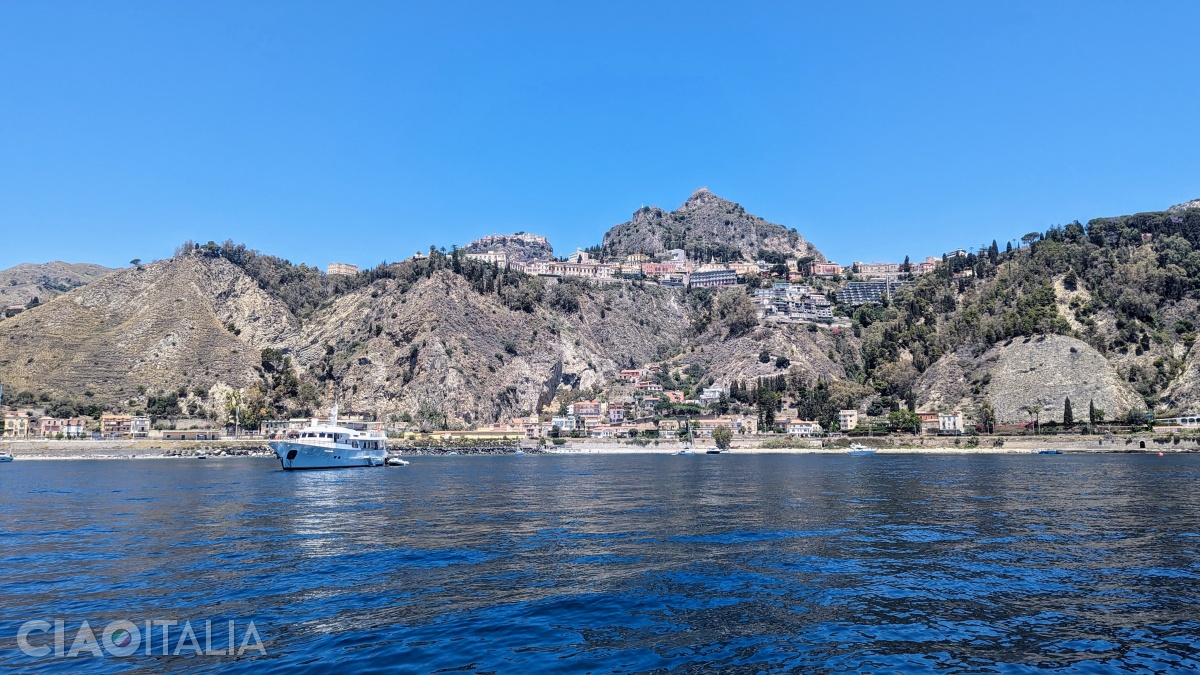
During the tour, you will also see other grottos hidden in the coastal cliffs. The best known are Grotta dell'Amore ("The Grotto of Love"), Grotta delle Sirene ("The Grotto of the Sirens"), Grotta dello Smeraldo ("The Emerald Grotto"), or Grotta del Corallo ("The Coral Grotto"). Swimming stops are usually made in the Isola Bella Marine Park or in the Bay of Mazzarò.
Grotta dell’Amore (or Grotta degli Innamorati) is located on the southern slope of the promontory that forms Cape Taormina. The name ("Grotto of Love" or "Grotto of Lovers") comes from its shape (if you look at it from a certain angle, it resembles a heart), but also from a local legend. It is said that two lovers, whose relationship was not approved by their families, took refuge in this grotto to live freely. When they were caught, they preferred to kill themselves by jumping off the rocks rather than live apart. The wall of about one meter, which separates the grotto from the sea, seems specifically made to protect pairs of lovers from prying eyes. The grotto, about 25m deep, was also used by fishermen as a shelter. It is also called Grotta del Giorno ("Grotto of the Day"), probably because it is illuminated by the sun's rays.
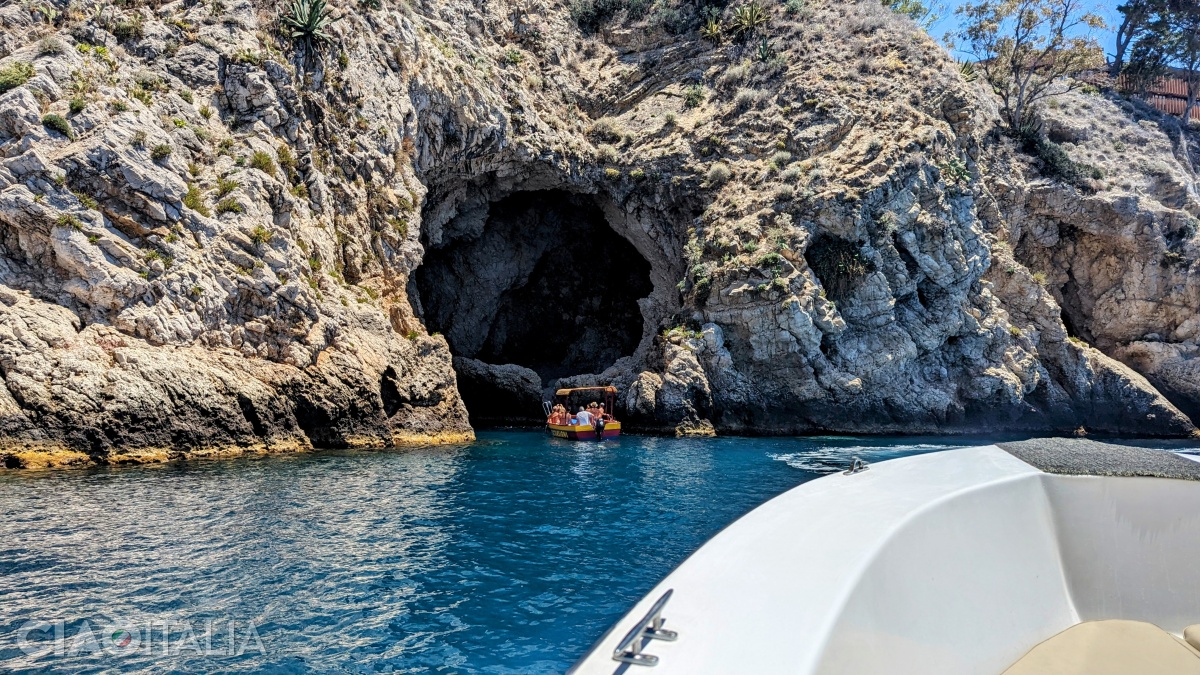
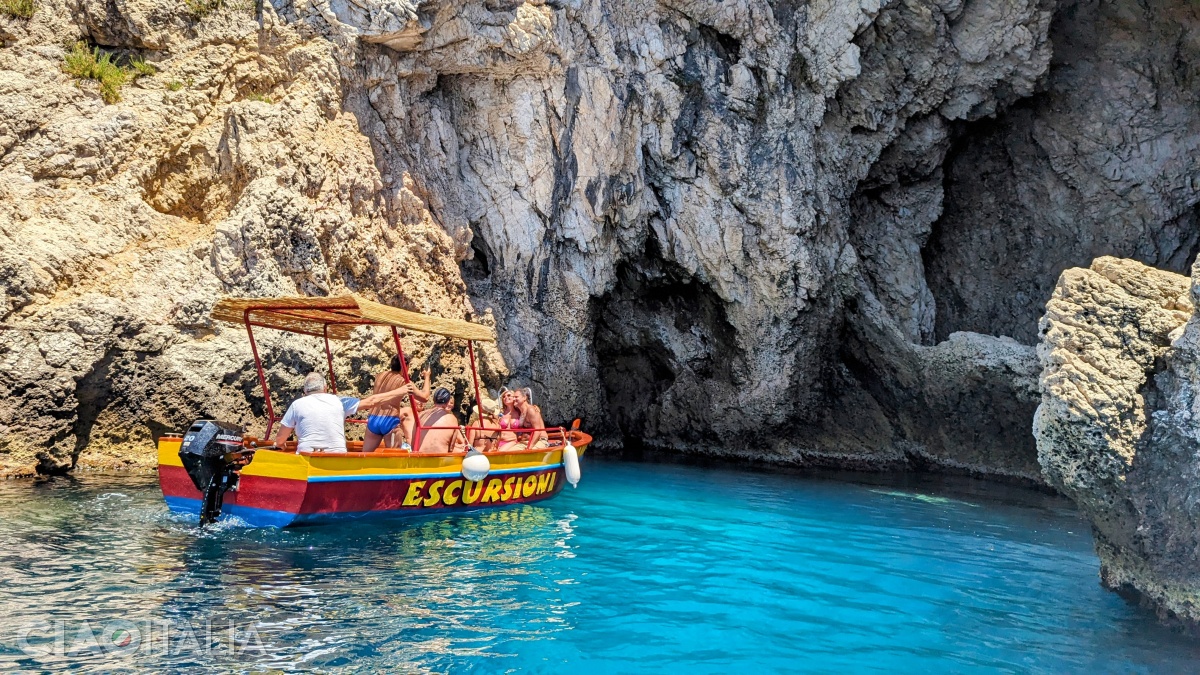
Immediately after passing Grotta dell'Amore, you can see a German bunker remaining from World War II. After it, right on the promontory, is UNAHOTELS Capotaormina (one of the most sought-after hotels in Taormina, with superb views), which has its restaurant, bars, and infinity pool on this side of the cliff, accessible by an elevator through the rock (see also the article Where to Stay in Taormina).
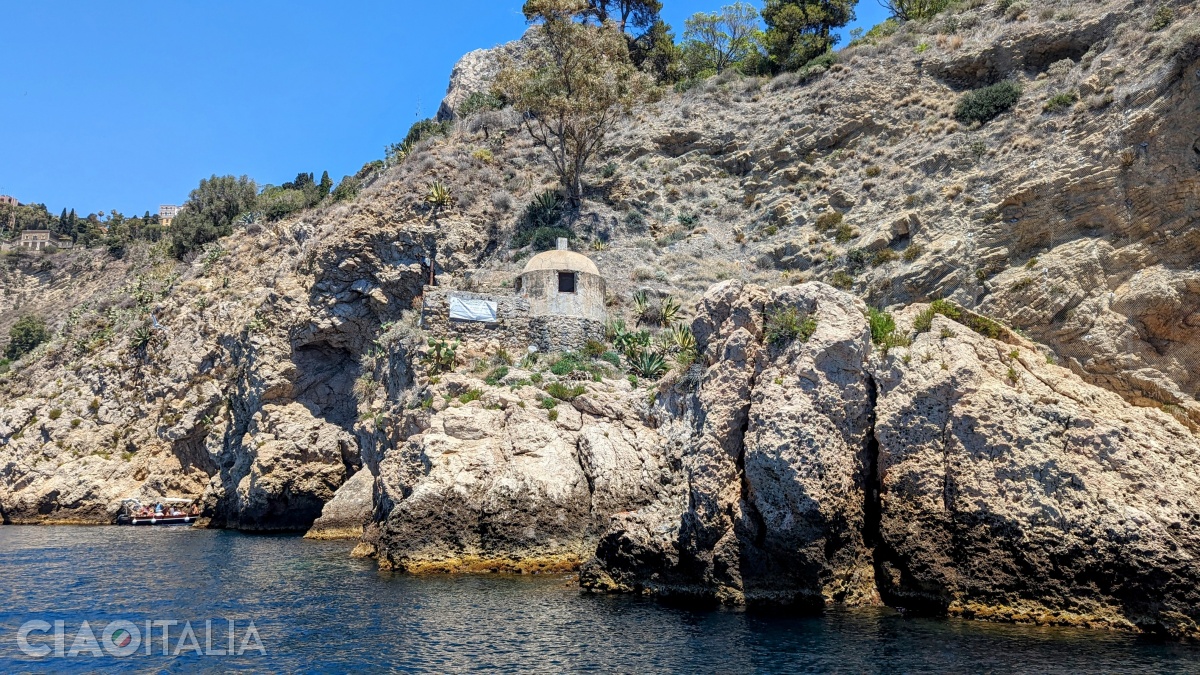
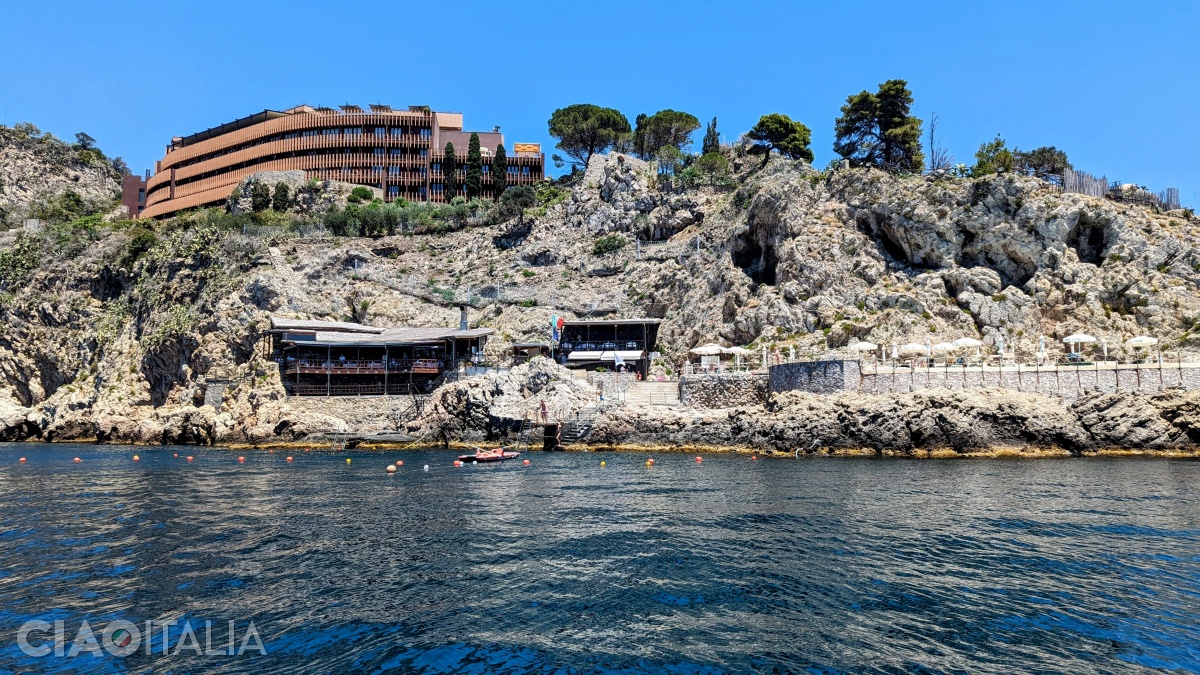
At the end of the promontory rises a rock called Scoglio della Croce, named after the cross placed at its peak. This is also a diving spot, known as Relitto delle colonne ("Wreck of the Columns"). Under the water, at a depth of 26m, lies the wreck of a Roman ship that ran aground 2,000 years ago. The ship was transporting marble columns from African provinces, columns that were likely intended for the construction of a large temple in the surroundings of Taormina.
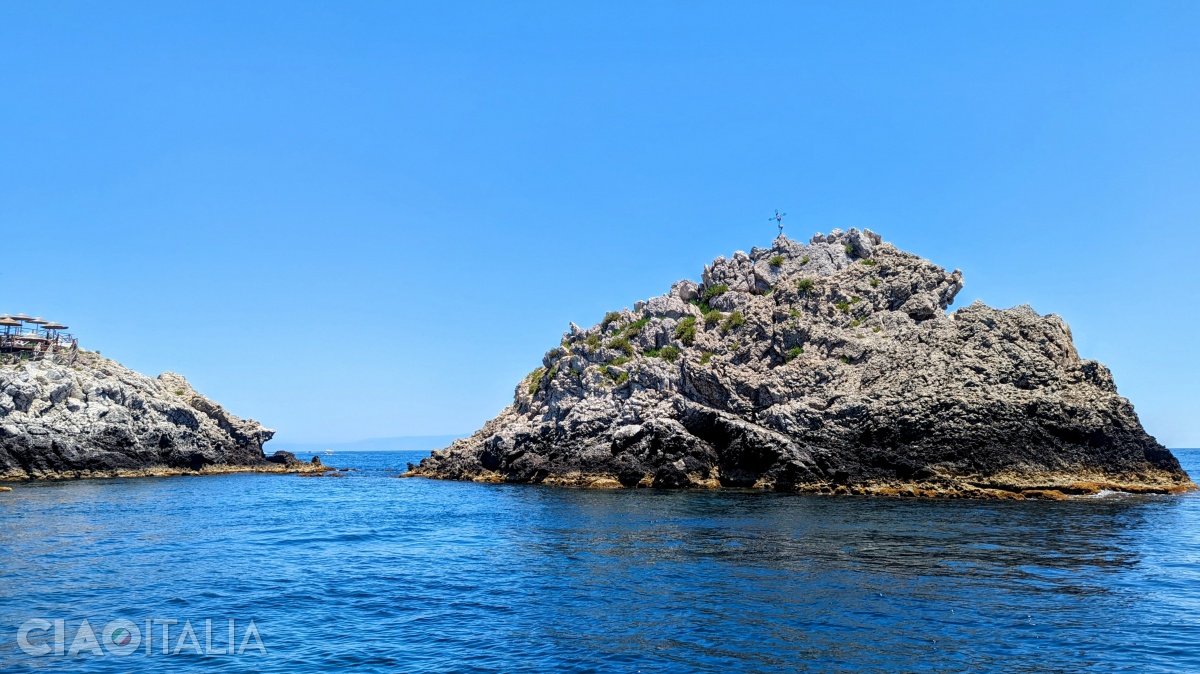
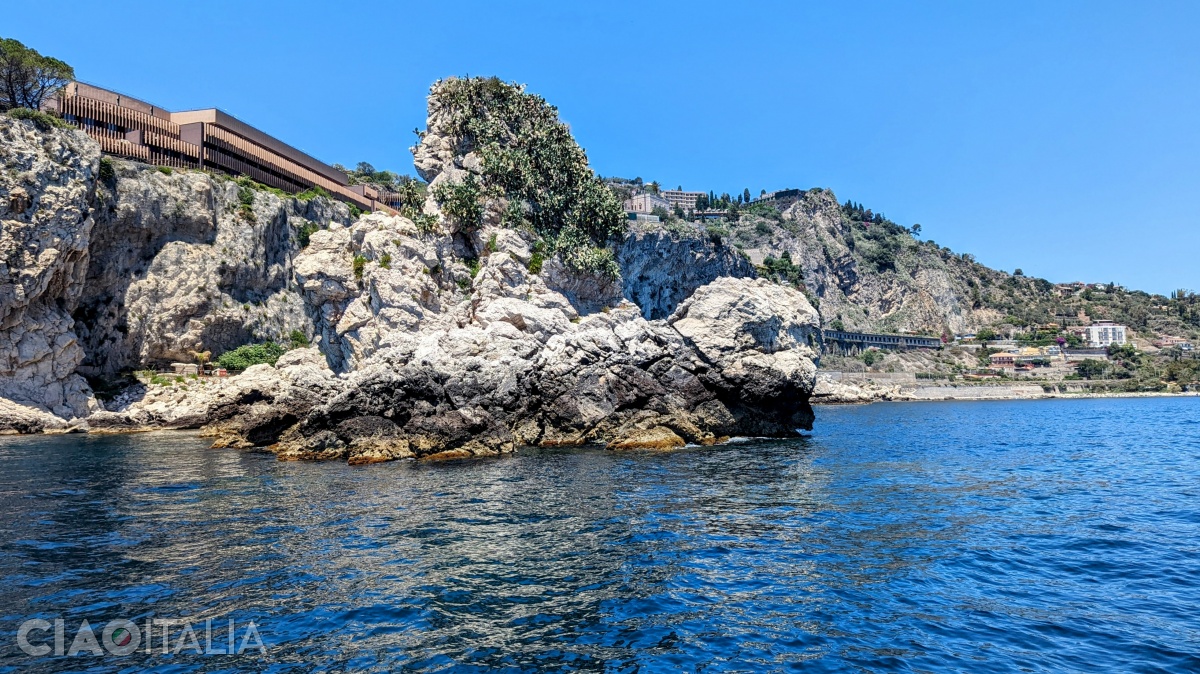
On the other side of the strip of land that forms Cape Taormina, you will spot the hotel's private beach. In front of it is the rock called Scoglio del Fico d'India, named after the prickly pear cacti that cover its upper part. It is also nicknamed Faraione di Taormina, in reference to the famous Faraglioni rocks in Capri.
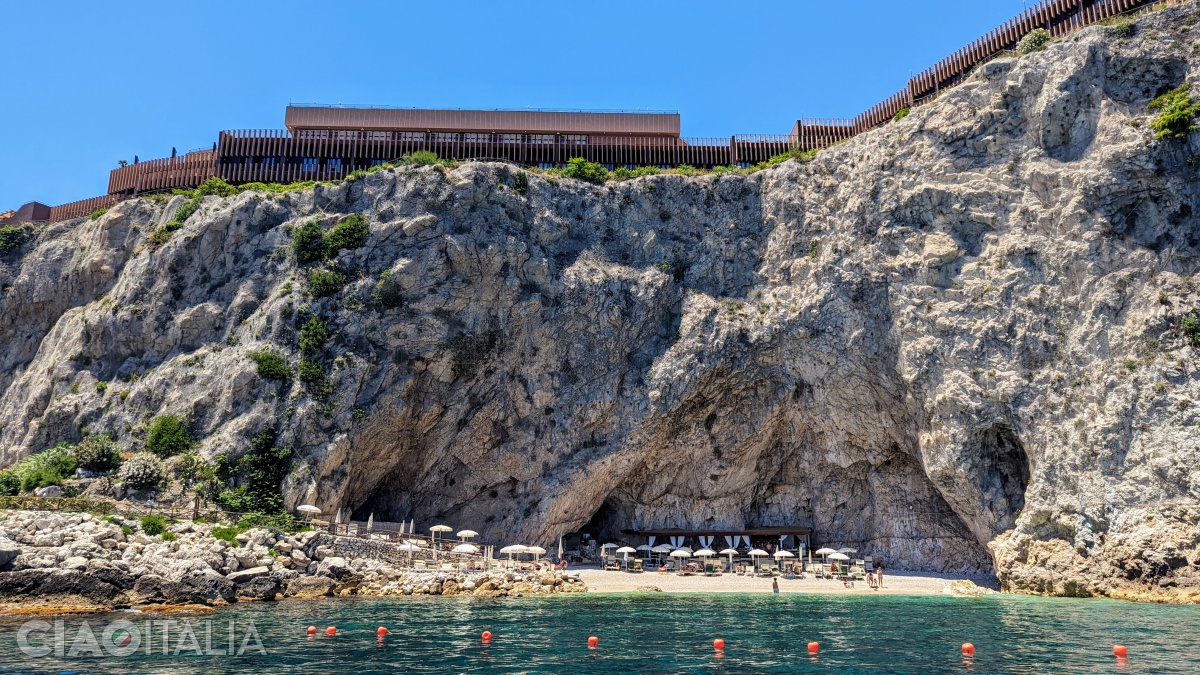
Nearby is Grotta delle Sirene ("the Grotto of the Sirens"), a smaller grotto.
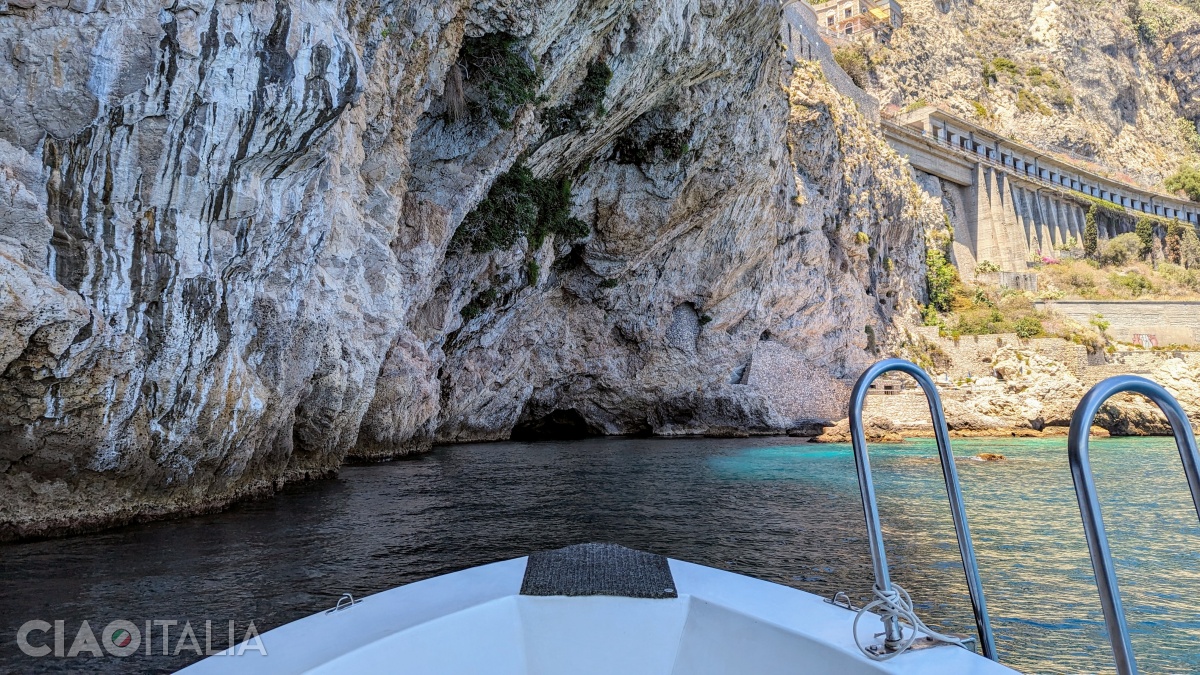
Crossing the bay, you can admire the beauty of the landscape and the waters surrounding Isola Bella.
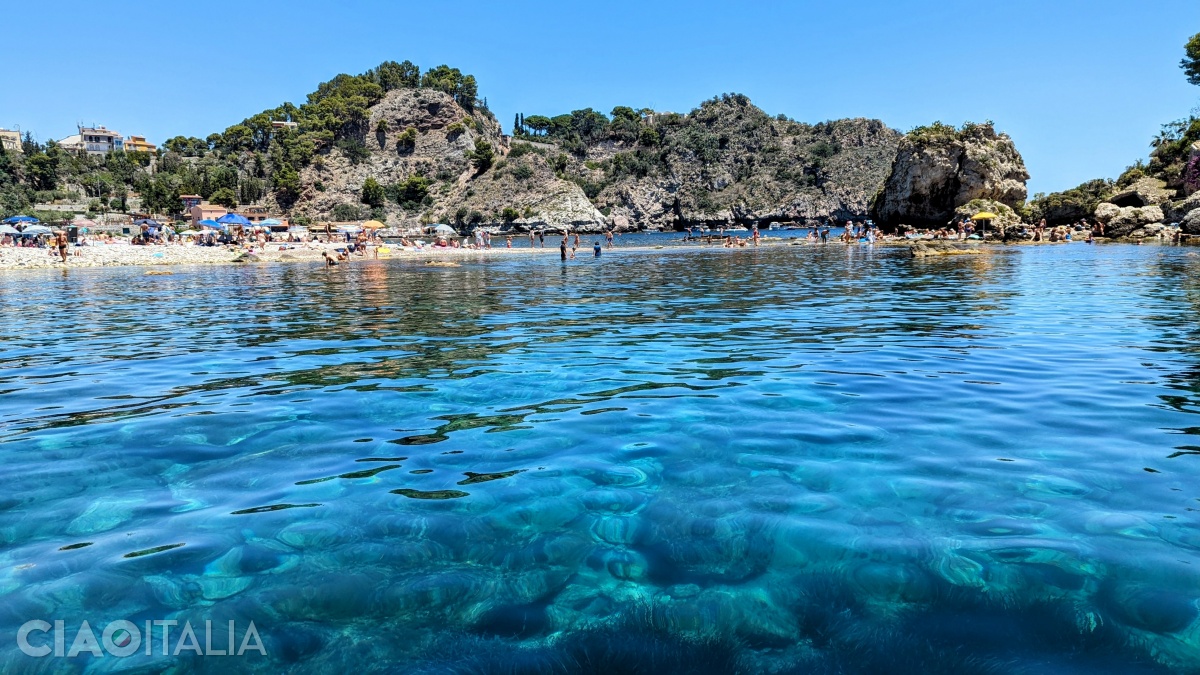
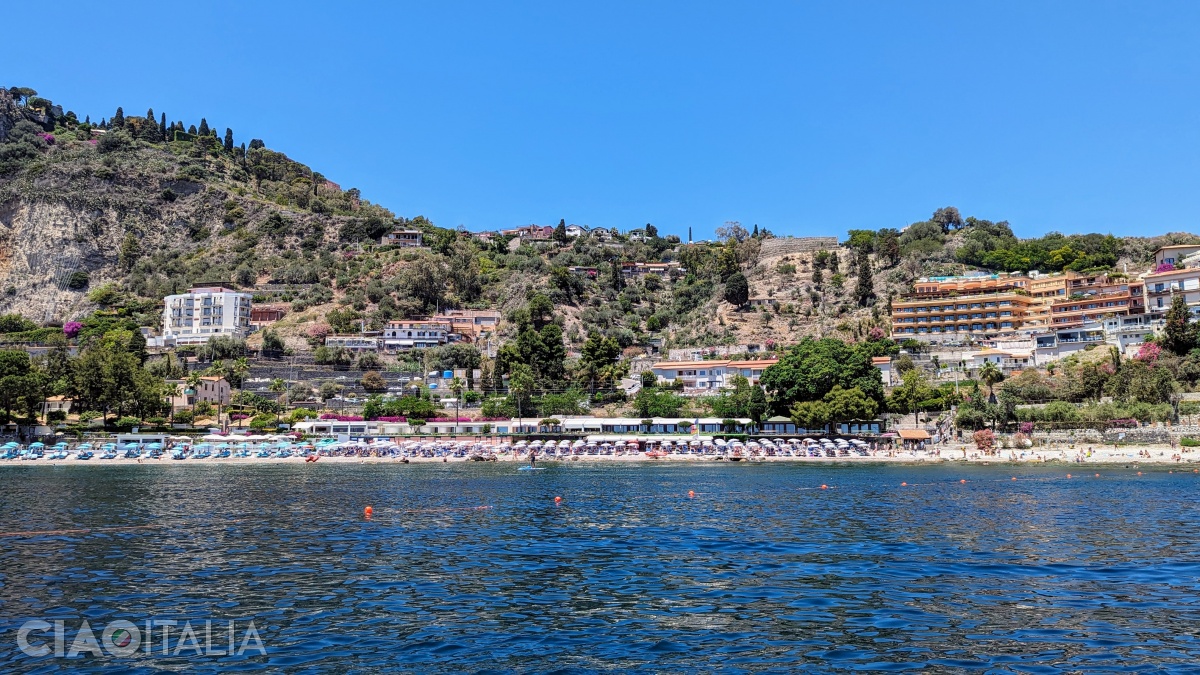
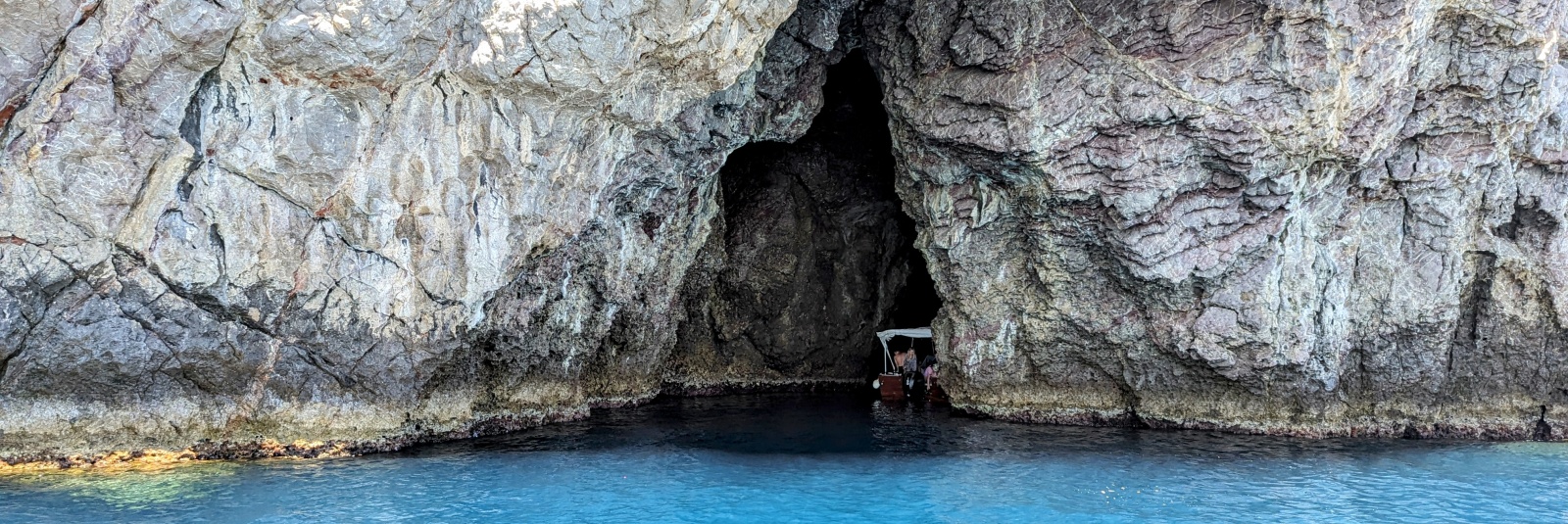
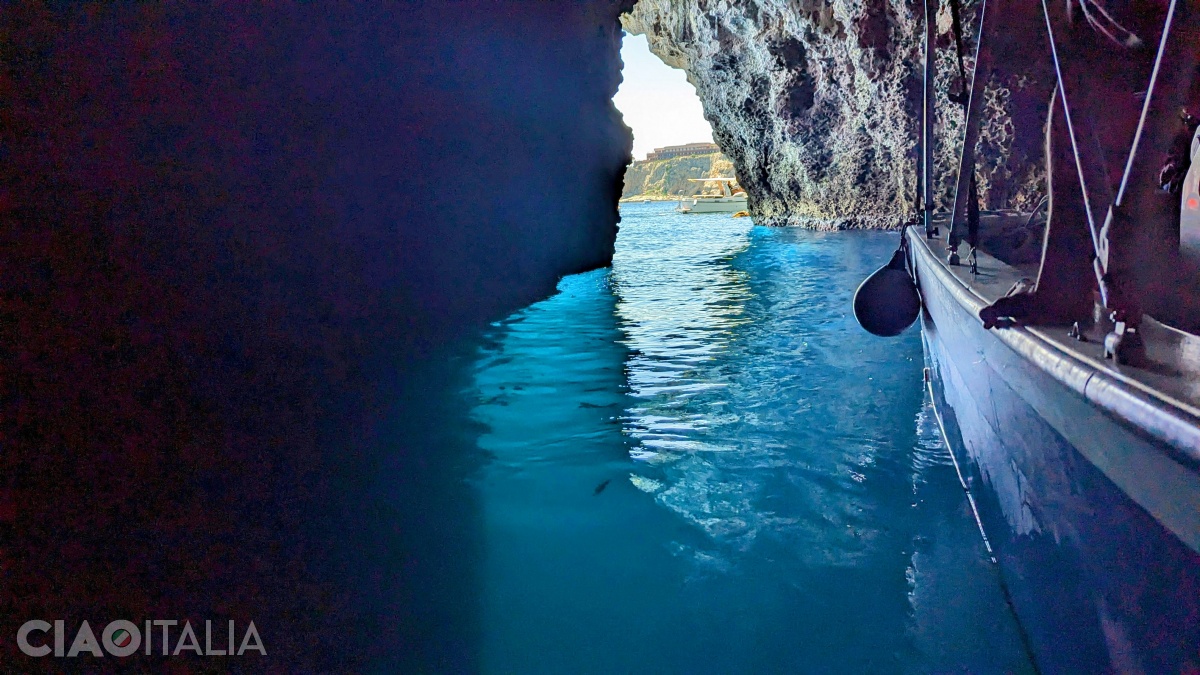
On the other side of the bay, near Cape Sant'Andrea ("Saint Andrew"), lies the famous Grotta Azzurra ("the Blue Grotto"). It takes its name from the intense blue color the water acquires in contact with the sun's rays, creating an almost surreal atmosphere. The tones vary depending on the time of day - the color can shift from blue to shades of turquoise and emerald green.
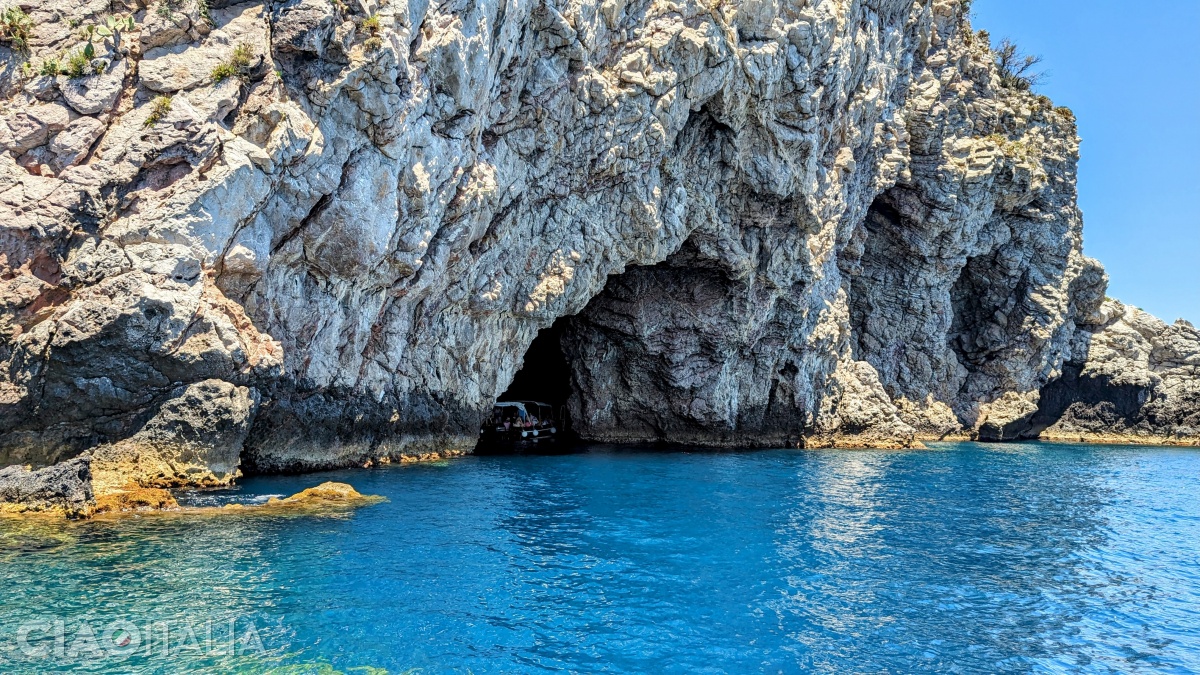
Grotta Azzurra is about 30m deep, about 12m high, and has a maximum width of 10m. The seabed, which you can see through the transparency of the water, is found at 18m.
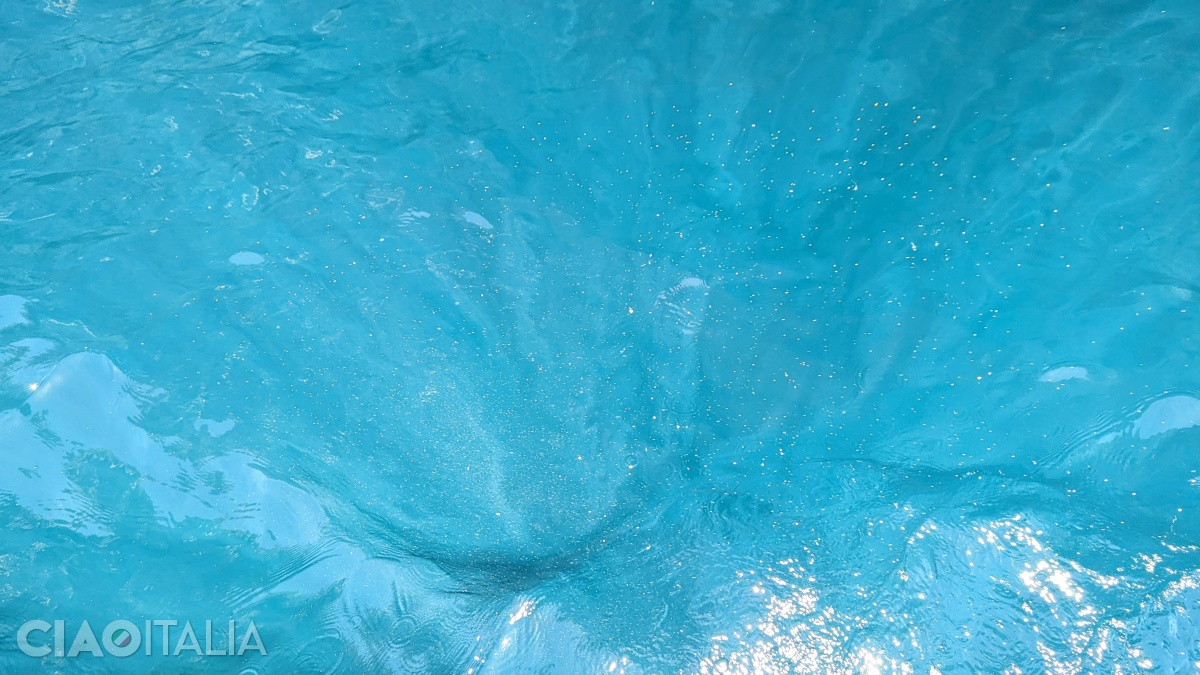
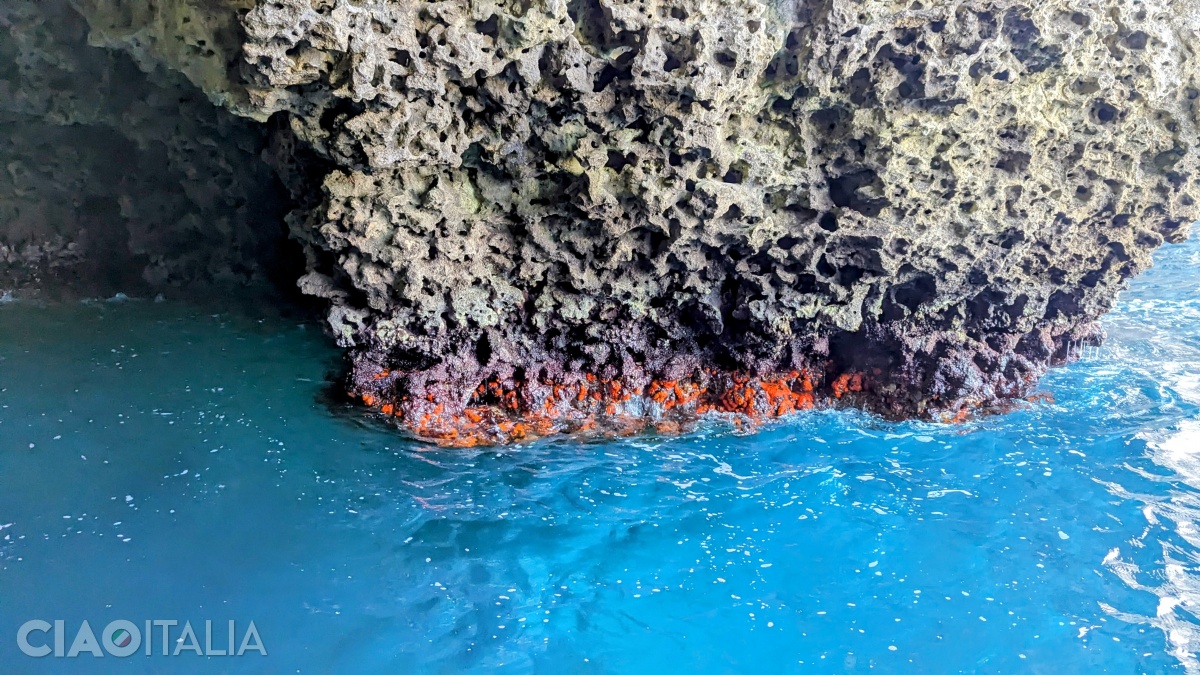
The rocks, covered with red corals, give rise to ruby reflections. The grotto is populated by sea urchins and starfish, as well as various species of fish, including moray eels.
Like any famous place, Grotta Azzurra is surrounded by legends. It is said to have been the meeting place of sea nymphs, whose songs can still be heard on full moon nights, or that it was an ideal hiding place for pirates and smugglers. Some say a treasure is hidden in the cave.
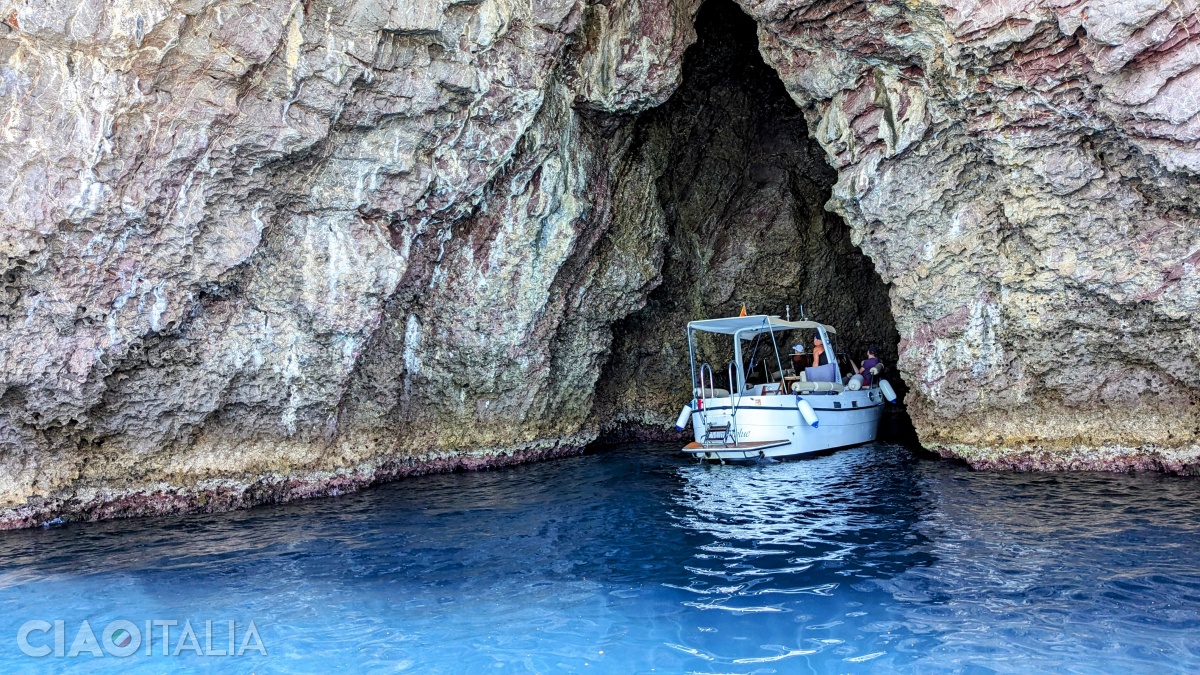
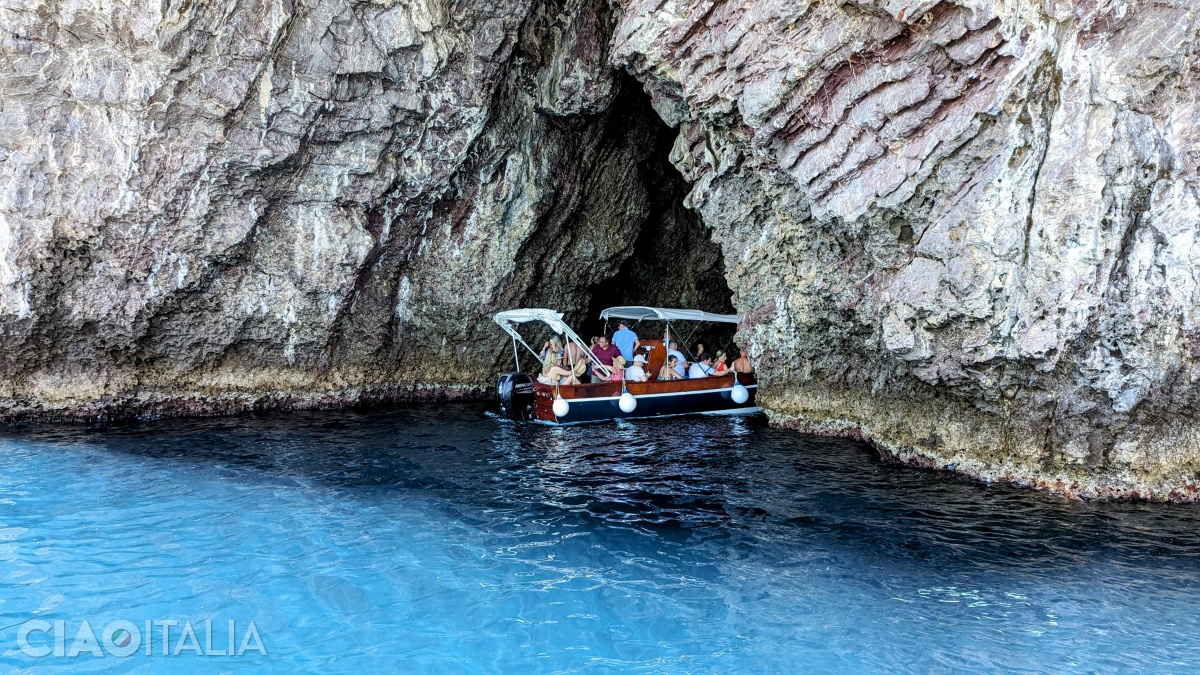
The visit inside the Blue Grotto (note! the visit is not always possible) lasts only a few minutes, enough time to take a few photos and admire the color and transparency of the water.
Another experience is to visit the Blue Grotto by booking a semi-submarine tour. Through its windows, you can admire the marine flora and fauna, and the boat gives you the option to stay both on deck and in the section below sea level.
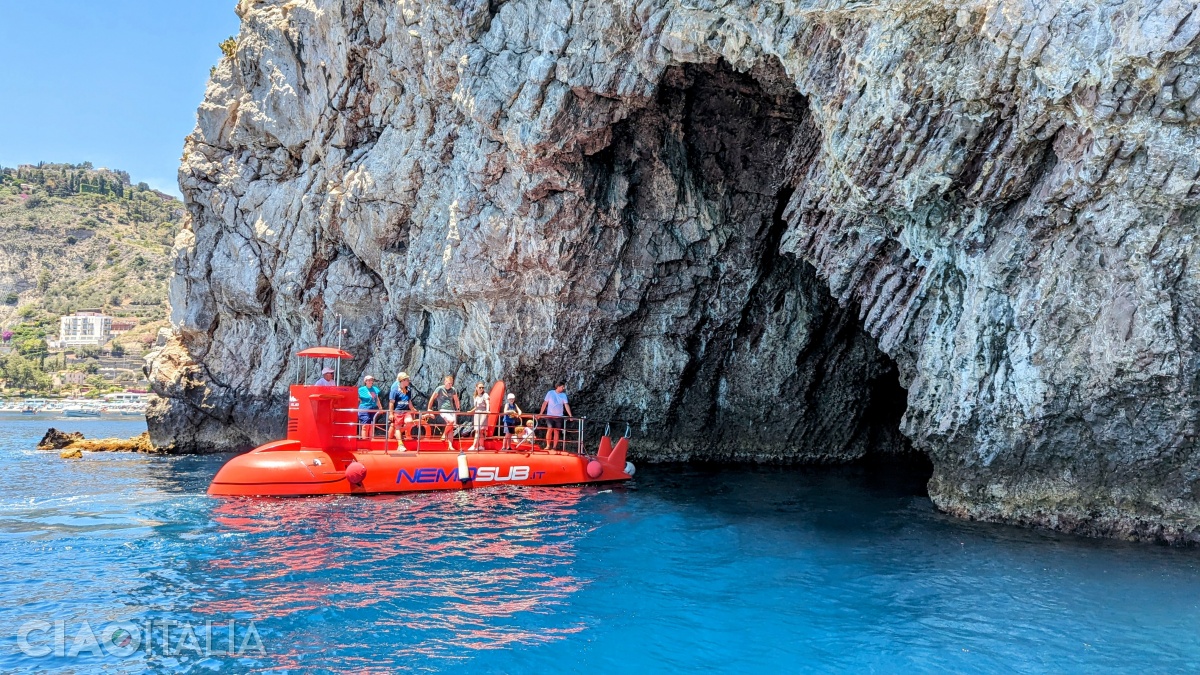
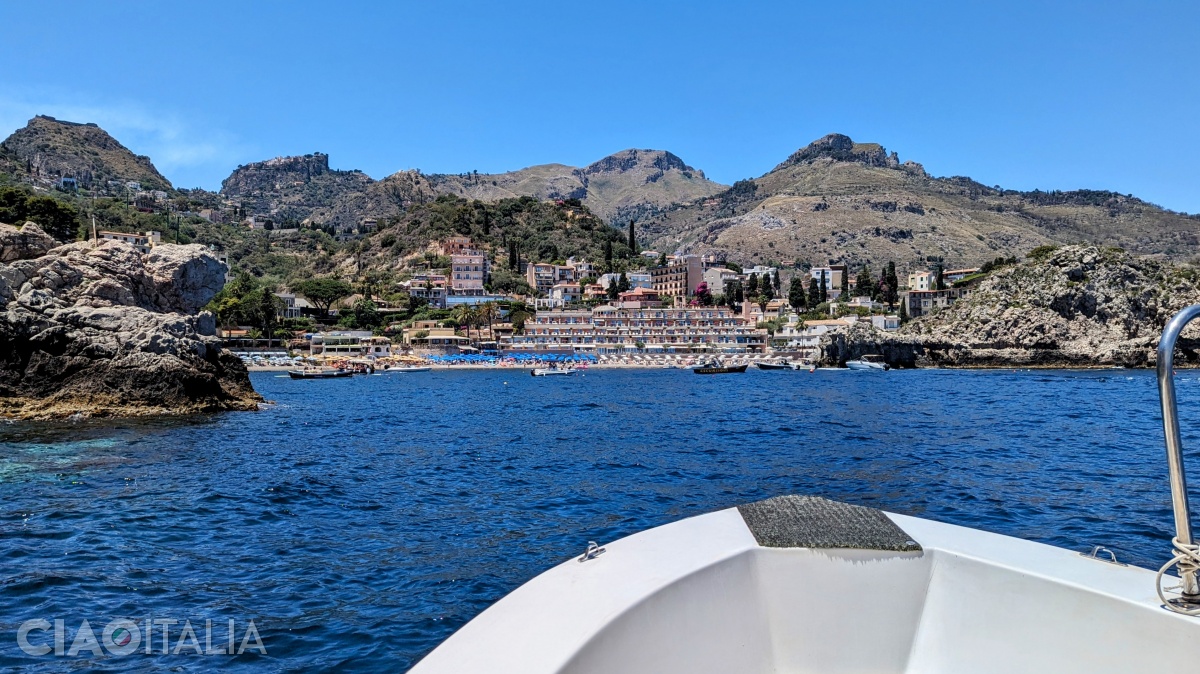
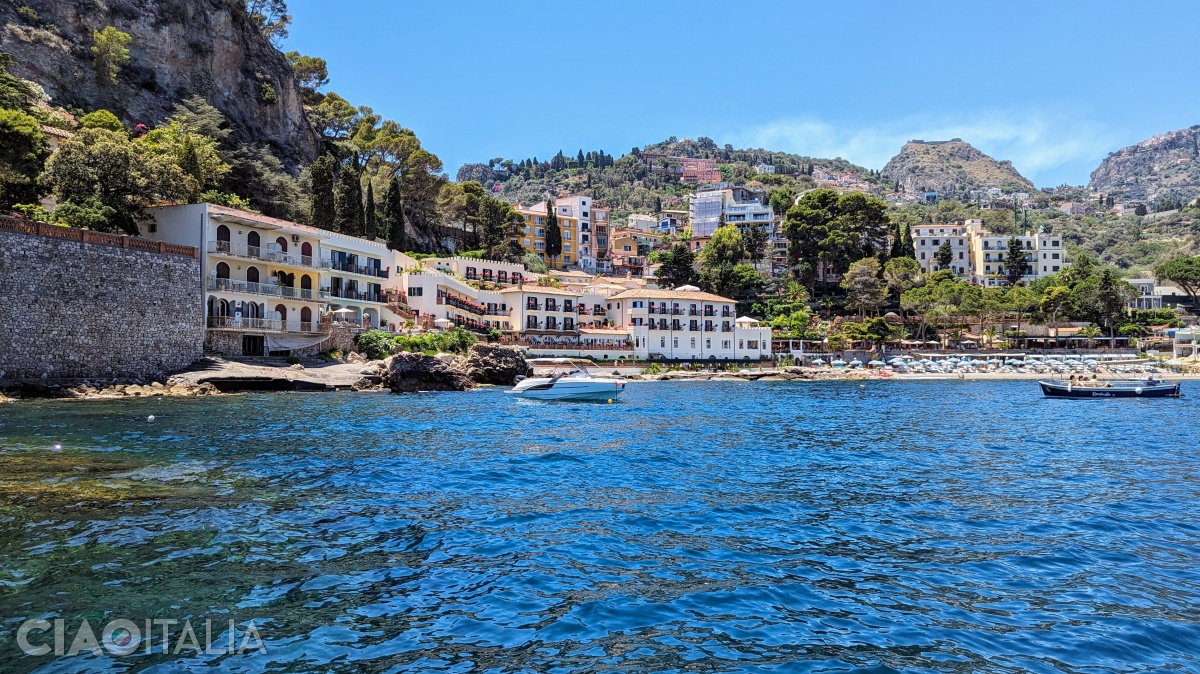
Most excursions continue toward Grotta del Corallo and the Bay of Mazzarò, where one of the most appreciated beaches in Taormina is located. Toward the ends of the bay are several luxurious hotels: Belmond Villa Sant'Andrea, Mazzarò Sea Palace, and Atlantis Bay.
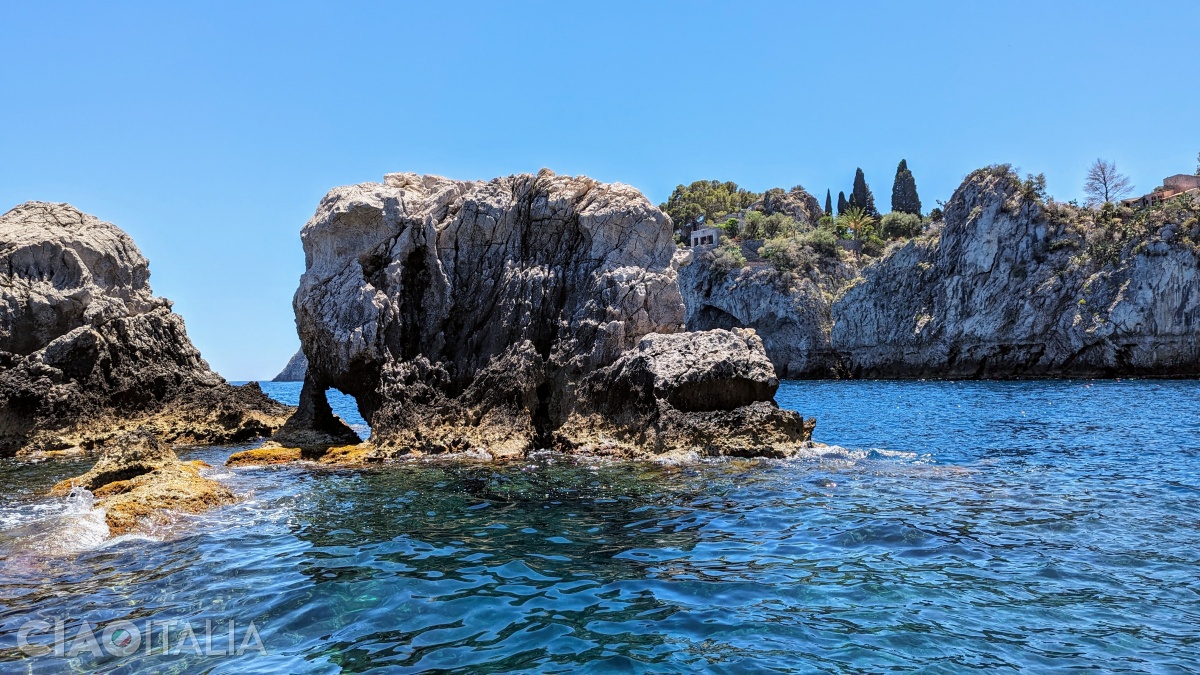
In the same area, nearby, there is a rock that fishermen call Scoglio dell'Elefante ("Elephant Rock") because of its shape.
A few final tips:
- Don't forget your swimsuit, sunglasses, and sun hat. Bring a bottle of water with you as well.
- If the tour doesn't already include it, bring your snorkeling gear to discover the beauty of the deep sea.
- If you choose an excursion departing from Giardini Naxos, try to arrive about 30 minutes before the scheduled time. There are many boats in the port, and it can prove difficult to find the departure point for your booked trip.