Visiting Mount Etna - Everything You Need to Know
Mount Etna is one of the most famous volcanoes in the world. It is also the highest active volcano in Europe - latest research shows that, following recent eruptions, it has reached an altitude of 3,403 meters. Located in the eastern part of Sicily, the mountain is visible from many vantage points, including from the air, whether you are landing at Catania or Palermo airport.
Etna is one of the symbols of Sicily and is a World Heritage site, being one of the island's seven UNESCO tourist attractions. Sicilians affectionately refer to the mountain as "Mama Etna", and the conical shape of arancini in the immediate surrounding area (see the article on Sicilian food) is inspired by the shape of the volcano. Etna's eruptions are common, closely monitored, and offer a true spectacle. Occasionally, they can lead to the temporary closure of Catania airport and the redirection of flights to Palermo.
Visiting Mount Etna is an experience in itself - one that would be a shame to miss if you are on holiday in Sicily. Up to a certain altitude, the mountain is accessible to everyone, and you can even reach some craters by car. The summit craters are accessible only to those with a good level of physical fitness. Access to the top is permitted only in the company of local guides and depends on the level of volcanic activity at that time.
How to Get to Mount Etna?
A visit to the volcano is usually made from either the Etna South or Etna North side (though there are also mountain huts and trekking trails on the eastern and western slopes).
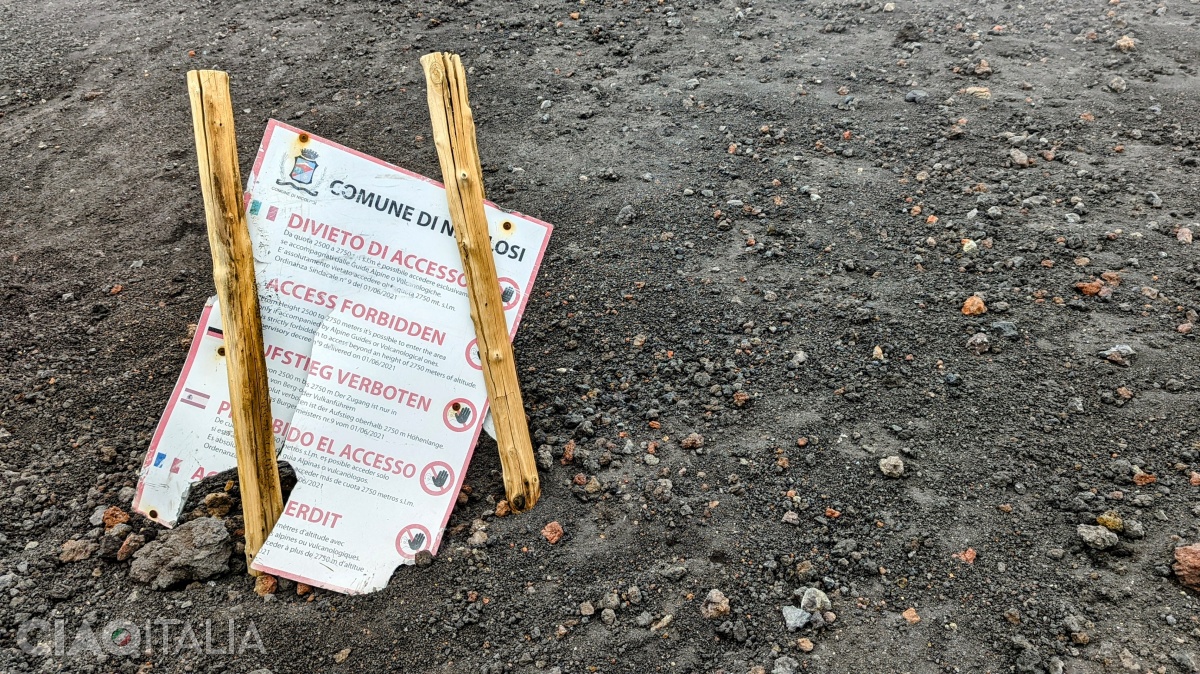
Before planning your visit, it is very important to know that the maximum altitude you can reach on your own, the maximum altitude you can reach accompanied by an authorized guide, as well as access to the summit craters, are established by local ordinances. These are based on recommendations from the Civil Protection and the National Institute of Geophysics and Volcanology.
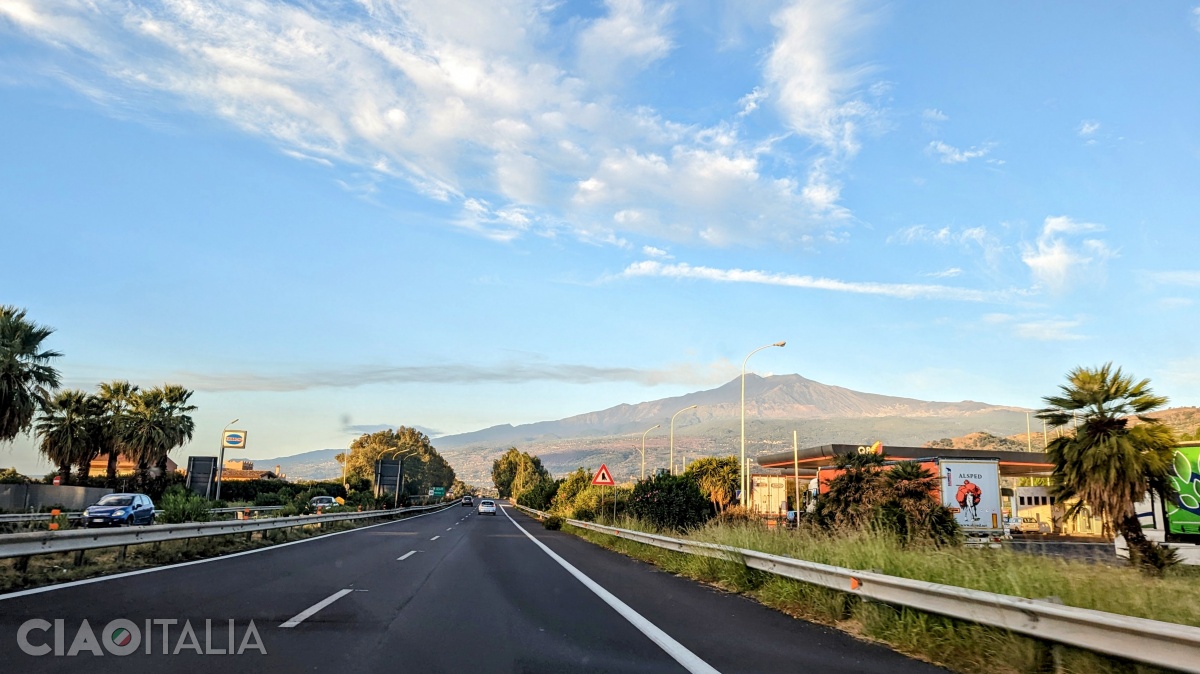
Etna is an active volcano - it is common to see a plume of smoke rising from its craters. Its activity is carefully and permanently monitored to avoid any danger. It is worth noting that the maximum altitude limits for tourists can differ between Etna North and Etna South.
Visiting the upper zones of Etna can only be done in the company of a specialized guide; failing to do so puts you at risk of a hefty fine. During certain periods, access to the summit craters may be prohibited. For example, you might be allowed to reach an altitude of 2,800 - 2,900 meters but be forbidden from climbing any higher.
To easily visit Sicily's tourist attractions (given the island's large size), the ideal option is to rent a car. Important Note: According to local laws, between November 15 and April 15, drivers traveling on the slopes of Etna must have winter tires or carry snow chains (inspections are frequent, and fines are issued). You can find more details in our article on tips for renting a car in Sicily.
If you don't have a car at your disposal, you can use public transport, though keep in mind that travel times will be longer.
The most popular and convenient starting point for Etna treks is Rifugio Sapienza, situated on the Etna South slope at an altitude of about 1,900 meters. This is where the cable car departure station is located. You can reach Rifugio Sapienza most easily from the Catania and Taormina areas, which serve as the hub for most organized excursions and tours to the volcano.
How to Get to Mount Etna from Catania?
Catania is the only city that has a direct public transport link to Mount Etna.
The buses traveling to the volcano are operated by Azienda Siciliana Trasporti. Buses depart every day at 8:15 AM from the Central Station (Piazza Giovanni XXIII) and arrive at Rifugio Sapienza at 10:15 AM, stopping in Nicolosi along the way. A round-trip ticket costs €6.6 and can be purchased from the ticket office or directly on the bus. The bus returns from the refuge to Catania at 4:30 PM, which gives you approximately 6 hours for your visit.
If you prefer not to worry about transport logistics, you can also book an organized excursion to Etna departing directly from Catania.
Book Mount Etna Tour from Catania
How to Get to Mount Etna from Taormina?
There are no direct public transport links from Taormina to Rifugio Sapienza. To get there using public transit, you will first need to travel from Taormina to Catania and then take the bus to Etna from the central station (as mentioned previously).
Alternatively, a more convenient option is to book an organized excursion to Etna departing directly from Taormina.
Book Mount Etna Tour from Taormina
How to Get to Mount Etna from Palermo?
To reach Mount Etna from Palermo using public transport, you must first travel to Catania.
The bus journey takes approximately 4 hours, while the train takes about 5 hours. Given that the buses from Catania to Rifugio Sapienza depart early in the morning, a same-day round trip from Palermo is not possible. You will either need to stay overnight in Catania or book an organized tour directly from Palermo to Etna (though you should expect to spend a significant amount of time traveling and very little time at the destination itself).
Book Mount Etna Tour from Palermo
The Circumetnea Railway Line
The Circumetnea is a narrow-gauge railway that departs from Catania (Stazione Borgo) and reaches Riposto, located just south of Giardini Naxos and Taormina. It is a historic railway line, built at the end of the 19th century. As the name suggests, the Circumetnea makes an almost complete circuit around Mount Etna.
Covering a distance of 110 km, the train traverses the picturesque landscapes and villages nestled at the foot of Etna, passing through the pistachio plantations of Bronte and the medieval town of Randazzo.
How to Visit Mount Etna?
Visiting Mount Etna is most commonly done from the southern and northern sides, though trekking trails and mountain huts also exist to the east and west.
Etna South
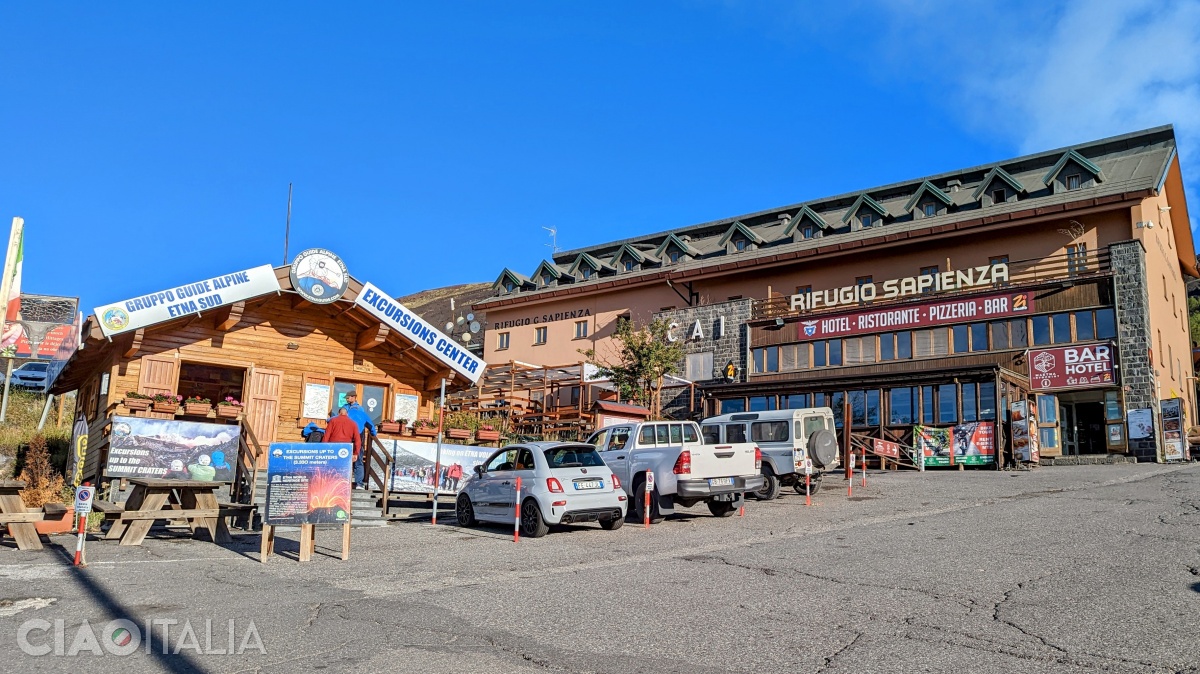
The starting point for excursions on the southern side of Etna is Rifugio Sapienza, located at an altitude of 1,900 meters.
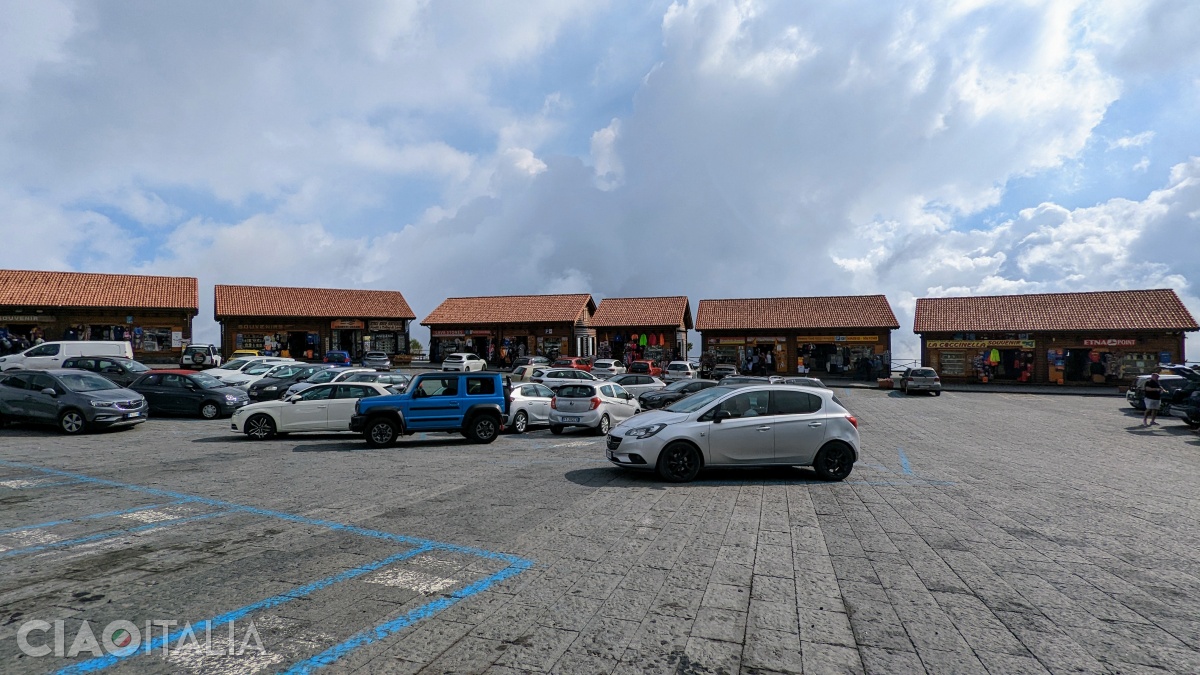
In the area surrounding the refuge (Piazzale Rifugio Sapienza), you will find parking, bars, restaurants, and shops selling souvenirs and maps of the volcano. This is also where the cable car departure station and the alpine guides' headquarters are located.
The parking fee at Refugio Sapienza is
- €2 per hour
- €5 for a half-day
- €10 for a full day
Also in the area of the refuge, you will find a pyramidal structure that marks the 15th meridian east.
From Rifugio Sapienza, you have several options for visiting Mount Etna and its craters, which are likely the main attraction. After all, it's not every day that you get the chance to see a volcano - especially an active one.
Mount Etna Cable Car
The cable car is located slightly above the level of the restaurants and souvenir shops and ascends from the station at Rifugio Sapienza (1,923 m) to the upper station at an altitude of 2,500 m. At the top, you will also find a restaurant and a souvenir shop (where small, free tastings are usually offered upon your return from a trek).
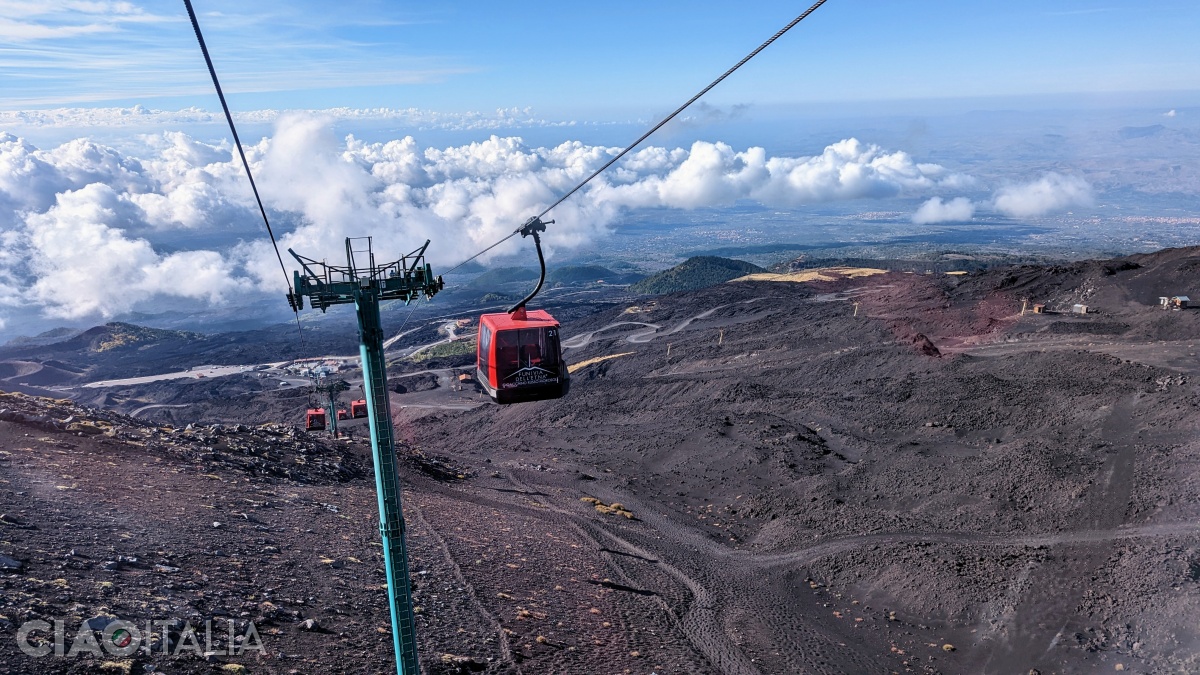
The cable car opening hours are from 8:30 AM to 4:45 PM for the last descent. Please note that these hours are subject to change depending on weather conditions.
The price for an Etna cable car ticket is:
- Adult: €54 (round-trip)
- Children 5-10 years: €31 (round-trip)
- Children under 5: Free
The company that operates the cable car (Funivia dell'Etna) also offers guided tours using 4x4 vehicles.
The tour rates are:
- Adults: €82
- Children 5-10 years: €51
- Children under 5: Free
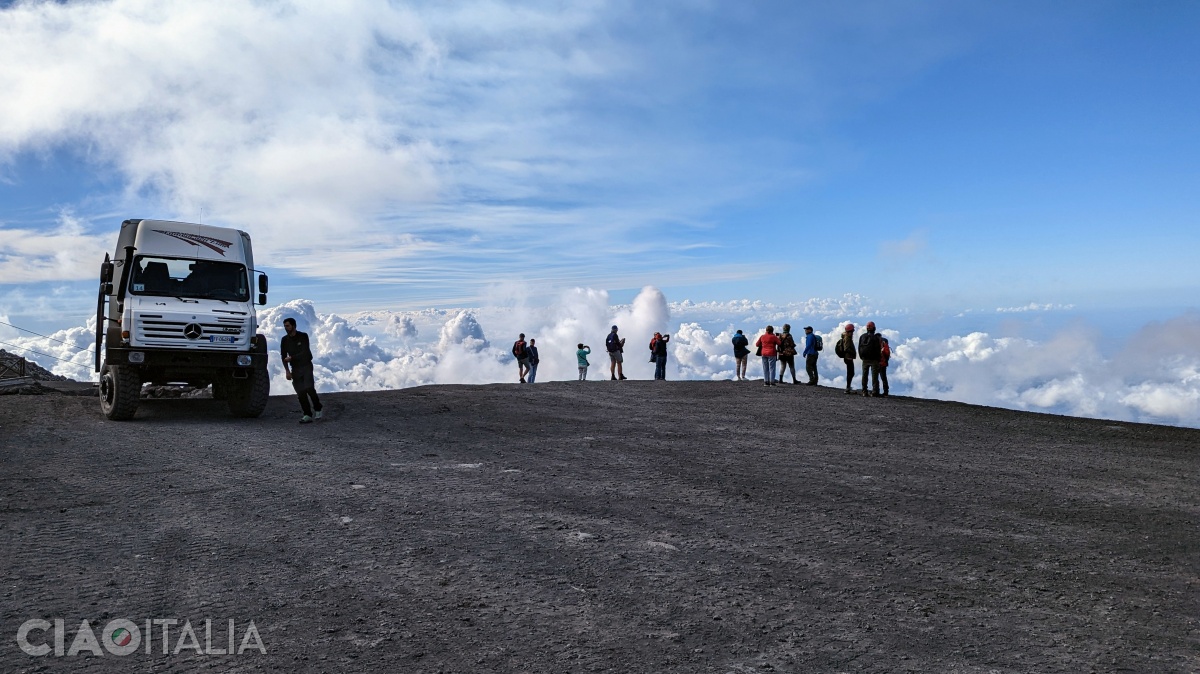
This rate includes the cable car ticket, transportation from the upper cable car station to higher zones via 4x4 minibuses, and an alpine guide. While these tours do not reach the summit craters, the experience is highly recommended for those who may not be able to complete the hiking trails but still wish to reach higher altitudes on Mount Etna.
Book Mount Etna 4x4 Guided Tour
The Silvestri Craters
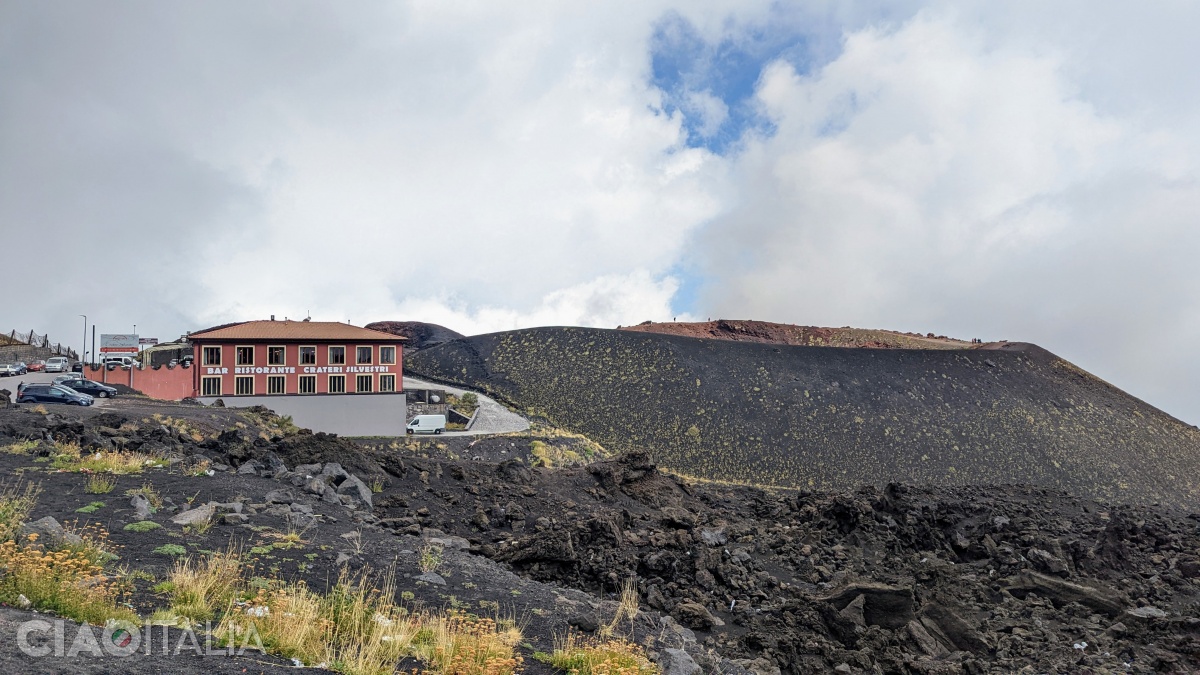
The Silvestri Craters are the most easily accessible and, therefore, the most frequently visited. They are located about 600 meters before reaching Rifugio Sapienza, situated on both sides of the road (there is also a restaurant and paid parking here). As of October 2, 2025, a visiting fee of €5 has been introduced. Access is possible between 8:30 AM and 5:00 PM.
A visit to these craters can be done on your own (a tour guide is not mandatory). It is especially recommended for those who have limited time but still want to visit Etna and experience walking along the rim of a crater.
The Silvestri Craters consist of five inactive volcanic craters (divided into Lower and Upper Craters) located on the southern slope of the mountain toward Nicolosi. They were formed during eruptions that lasted 173 days in 1892 and are situated at altitudes between 1,800 and 2,025 meters.
The most easily accessible is the South Crater, located to the left of the road (as you head toward Rifugio Sapienza). It requires only an easy walk.
The North Crater is located on the right side of the road; reaching it involves a short climb up a trail.
The Silvestri Craters can be visited by anyone, regardless of physical fitness level, and do not strictly require specialized mountain gear.
The Side Craters
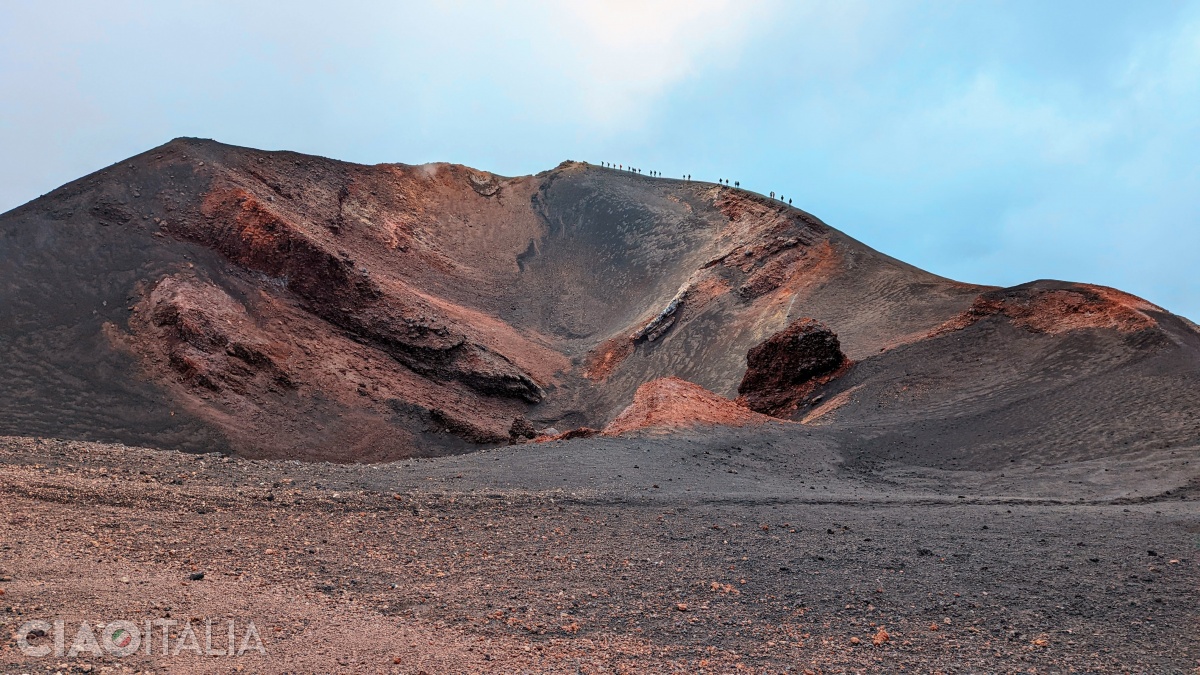
Side craters (lateral craters) are those located on the slopes of Etna at various altitudes. Some of these (for example Montagnola, Cratere del Laghetto-Escrivà, or Cisternazza) are relatively easy to reach by taking the cable car and then continuing with a 4x4 minibus or a short hike.
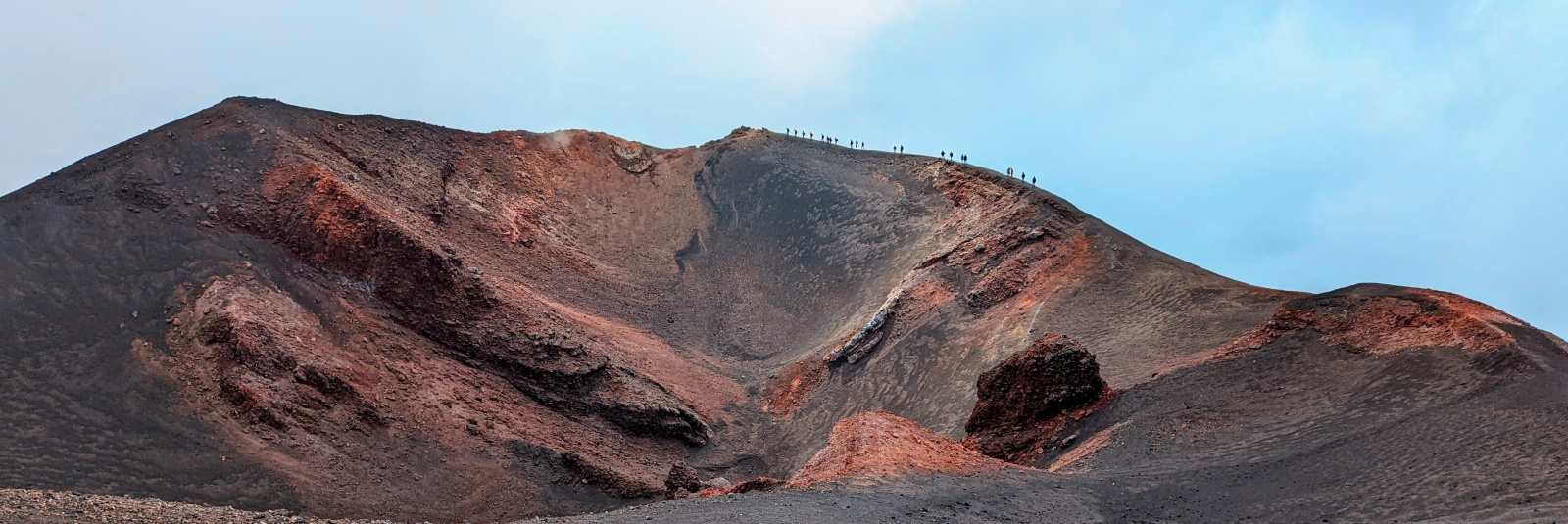
The craters in the upper zones are still active, and you can often feel the warmth of the stones and the smell of sulfur. Before venturing out on your own, check the maximum altitude permitted for access without a guide. Depending on volcanic activity, access to certain high-altitude craters (such as the Barbagallo Craters, which sit above 2,900 meters) may be restricted to authorized guided tours only.
The price of these tours is around €110 per person. The price typically includes the cable car ticket, a trek with an alpine guide, and a safety helmet (which is mandatory). Some operators also offer free rental of mountain gear, such as hiking boots, jackets, and trekking poles.
The Summit Craters
The summit craters are located in the uppermost zone, at altitudes of approximately 3,300 meters. These are the most spectacular and active parts of the volcano; consequently, they are not always accessible and remain under continuous monitoring. A visit to the central craters can only be done by joining an organized excursion with an authorized guide. Always check the current access conditions - sometimes, access to the summit craters is strictly prohibited.
The upper craters are the South-East Crater, the North-East Crater, and the Central Crater (which consists of Voragine and Bocca Nuova).
Reaching the summit craters requires good physical condition and appropriate clothing. The typical route involves: cable car from Rifugio Sapienza up to 2,500 m, off-road vehicles from there up to 2,900 m, and a steep ascent of about 2 km with a 400 m elevation gain.The descent back to the cable car station is usually done on foot.
Etna North
The most popular access point for visiting the volcano from the north is Rifugio Piano Provenzana, located at an altitude of 1,800 meters. This side is generally less crowded during the summer but becomes very busy in winter, as it is home to Etna's most important ski center.
At Rifugio Piano Provenzana, you will find a restaurant with a bar, souvenir shops, and a paid parking lot (€3 per day).
From here, you can see the remains of the lateral eruption of October 2002, which destroyed Piano Provenzana.
Various tours of Etna North are organized from Piano Provenzana. Most excursions reach the Etna Observatory, located at an altitude of 2,800 meters, but there are also treks to the central craters. These are more challenging and are intended for those in good physical shape.
Mount Etna Tours
Tours to Mount Etna typically depart from the cities of Catania and Taormina (though tours from Palermo also exist). Many organized tours start directly from Rifugio Sapienza (Etna South) or Piano Provenzana (Etna North), which you will need to reach on your own.
These tours usually last half a day or a full day, depending on the route and the sites included - extinct or active craters, lava fields, villages destroyed by eruptions, caves and canyons formed in lava, the Valle del Bove caldera, etc. Most Etna South tours include visits to the Silvestri Craters and various lateral craters. Guides generally provide explanations in multiple languages.
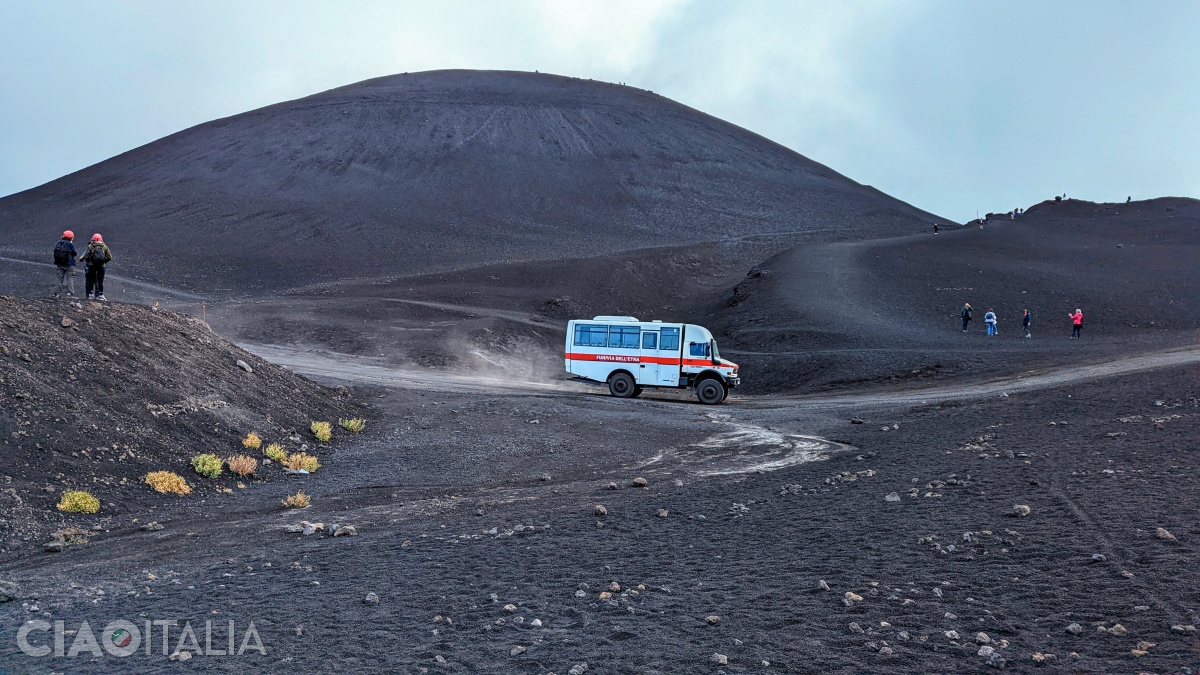
Organized excursions offer several advantages:
- Cable car queues can be very long, especially during peak season; many tours include tickets in the price, allowing you to bypass the wait.
- You won't have to worry about organizing the route yourself.
- Professional guides help you better understand the volcano's history and geology.
- The only way to reach Etna's summit craters (when permitted) is accompanied by an authorized guide.
- Having an expert guide ensures maximum safety. After all, Etna remains an active volcano.
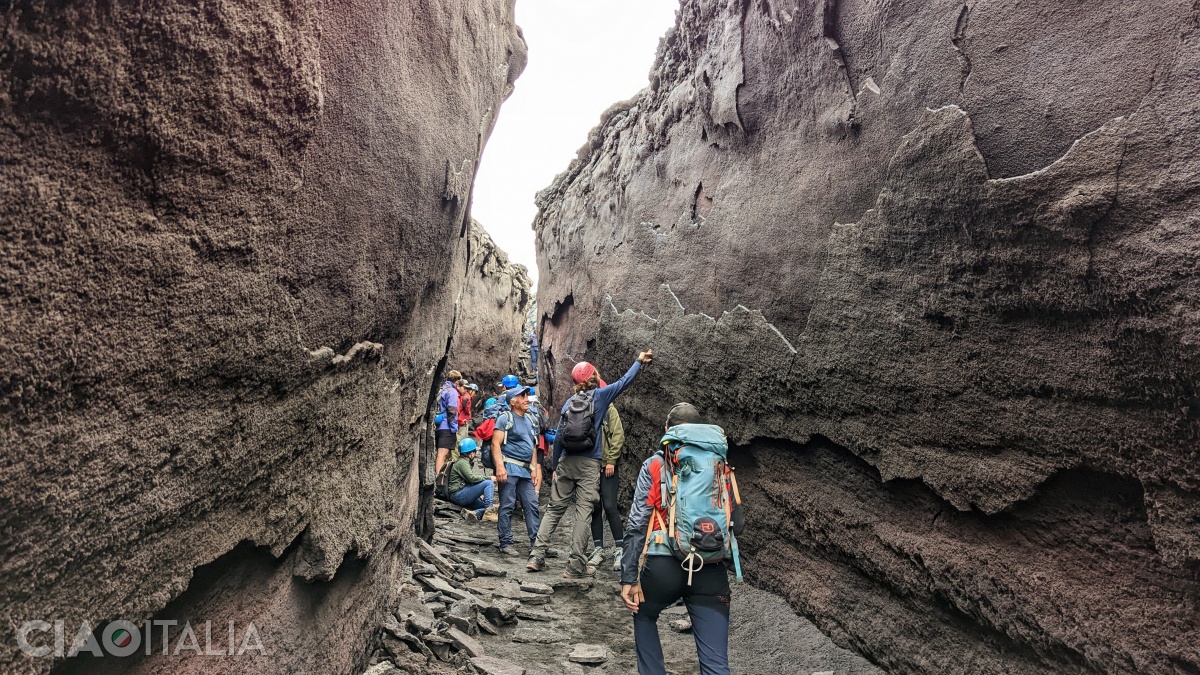
A few tips:
- If you aren't used to mountain hiking, avoid trekking-heavy tours. Instead, opt for tours that utilize the cable car and 4x4 vehicles.
- Do not head to Etna without proper equipment. If you don't have your own, you can rent gear from local shops or choose a tour that includes equipment rental.
- Always check the weather on Etna for the day of your trip.
- It is important to know that access to the summit craters (even with a guide) is not always allowed. This depends entirely on volcanic activity at that specific time.
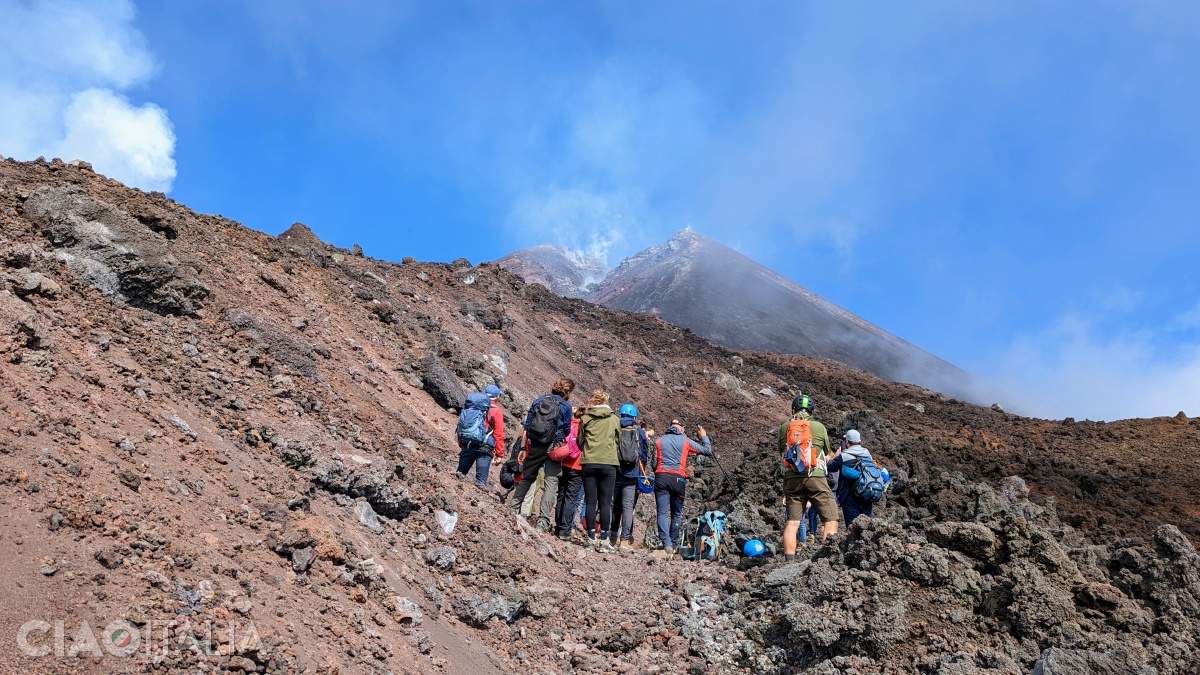
How to Visit Etna on Your Own
You can also climb Mount Etna on your own, up to the maximum altitude permitted at that time for tourists not accompanied by an authorized alpine guide.
On Etna South, those without a high fitness level can simply visit the Silvestri Craters, or they can take the cable car up to 2,500 m. From there, 4x4 minibuses are available to head even higher (provided that solo access to altitudes above 2,500 m is currently allowed).
If you are an experienced hiker with the right gear, you can also hike from the lower cable car station (around 1,900 m) to the upper station (2,500 m). The trek takes about 1.5 hours. From 2,500 m - if access is permitted - you can continue toward Cisternazza and the Valle del Bove viewpoint.
Important advice:
- Before heading out on your own tour of Etna's trails, make sure you are well-informed about the route, local weather conditions, and the maximum altitude currently allowed without a guide.
- Wear appropriate equipment and ensure you have plenty of water and a reliable map, as many trails are not well-marked.
- Do not venture into isolated areas without a mobile signal.
- Keep an emergency number handy. On Etna, the weather can shift unexpectedly, and it is very easy to get lost when visibility drops.
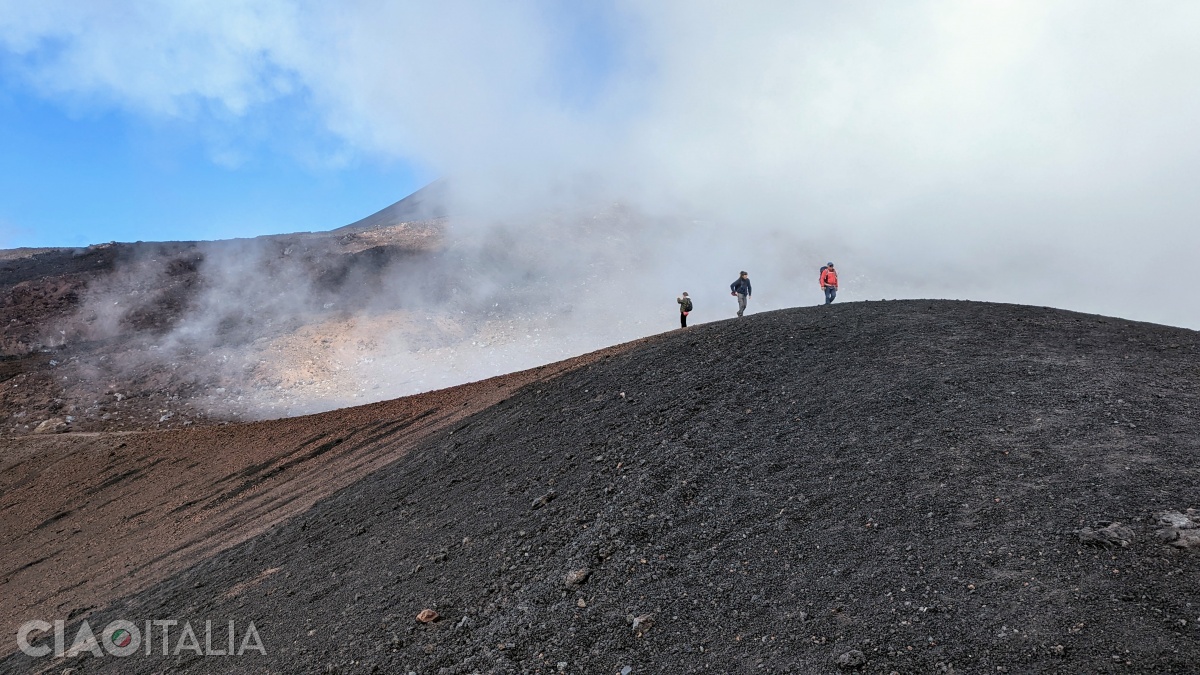
When to Visit Mount Etna?
In theory, Etna can be visited throughout the year. Being an active volcano, however, the maximum altitude to which you can climb is established by the competent authorities, depending on the level of volcanic activity at that time.
The summer months see the highest volume of visitors. For a quieter experience, the less crowded months are May, September, and October.
If you plan to climb the volcano, it is ideal to arrive at Rifugio Sapienza or Piano Provenzana early in the morning. Alternatively, arriving in the afternoon allows you to witness the colors of the sunset; in fact, there are specific sunset tours that focus on this experience.
How to Dress for Mount Etna?
Even if you plan to visit Mount Etna during the hottest summer months, remember that it is a high-altitude mountain. It can be very windy on the volcano, and temperatures drop significantly as you climb. Even if it is over 30°C down at the coast, it might be only 10°C on Etna, with temperatures decreasing further toward the summit.
You can check the current conditions in real-time via webcams installed at various points around the volcano.
Do not head to Etna without hiking boots (preferably closed-toe and high-top if you want to avoid constantly stopping to shake out volcanic pebbles and sand), comfortable long pants, a windbreaker, a hat or cap, sunglasses, and sunscreen. It is best to wear multiple layers so you can easily adapt to changing weather conditions. Don't forget to bring water and some food (though these can also be purchased at the restaurants and bars located at the mountain huts).
If your tour takes place in winter, you will need much more serious gear suitable for climbs to 2,500-3,000 m, including a warm hat and gloves.
If you didn't bring the right equipment, you can rent gear from the shops at Rifugio Sapienza or directly from the cable car station.
A tip: avoid wearing contact lenses when climbing Etna; the volcanic sand and dust can easily get trapped underneath them and cause irritation.
Interesting Facts and Highlights about Mount Etna
With its lunar landscapes and a profile that rises majestically over the surrounding region, Etna has fascinated locals and travelers alike throughout history. Its name likely originates from the ancient Greek word aitho, meaning "I burn". Sicilians have called it Mungibeddu or Mongibello (from the Latin mons and Arabic jebel - both meaning "mountain") or simply 'A Muntagna.
Here are a few intriguing facts about Etna:
- Etna covers an area of 1,265 sq km and has a base perimeter of approximately 135 km.
- Mount Etna is one of the world's most iconic and closely monitored volcanoes; its eruptions have been documented for at least 2,700 years.
- Its longest recorded eruption lasted 10 years - from 1614 to 1624.
- The most destructive eruption of the modern era occurred in 1669. It lasted several months and generated 600 million cubic meters of lava. The flow reached Catania but, remarkably, caused no fatalities.
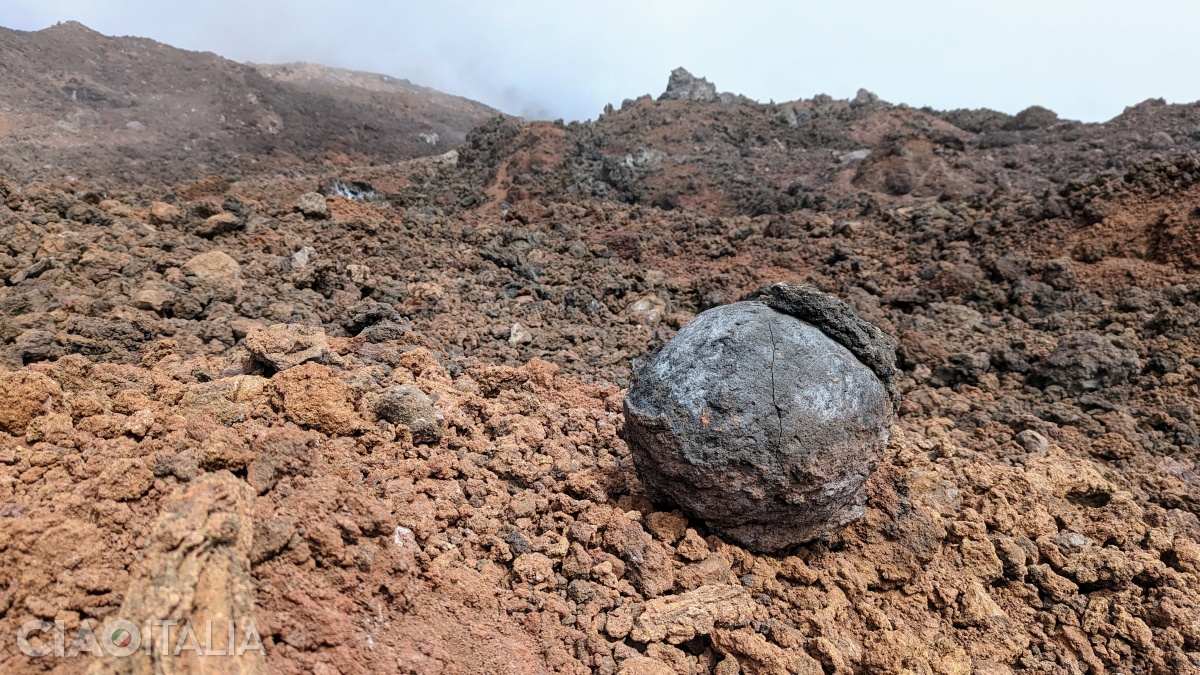
- The landscape - defined by craters, canyons, fissures, cones, caves, and lava flows - is in a state of constant transformation. Repeated eruptions don't just change the scenery; they alter the maximum altitude. After the 2021 eruptions, the volcano's height rose to 3,357m at the Southeast Crater. Most recently, measurements following the summer 2024 eruptions showed that Etna reached a height of 3,403m at the Voragine crater.
- Etna is one of the most accessible active volcanoes in the world. It is only an hour's drive from Catania or Taormina, and many of its craters can be reached by car, cable car, or off-road vehicles.
- Mount Etna is crossed by the 15° East longitude meridian. This meridian determines Central European Time (one hour ahead of Greenwich) and is actually known as the Meridiano dell'Etna.
- The mountain is part of the Parco dell'Etna, a protected natural area.
- The territory surrounding the volcano is among the most fertile in Sicily. The slopes are home to vineyards (many tours include wine tastings), citrus groves, olive trees, walnuts, chestnuts, and various other fruits and vegetables.
- The volcano's ecosystems include unique species of flora and fauna.
- During the winter, you can actually ski on the slopes of Etna, with ski lifts available on both the North and South sides. Snow typically persists on the upper sections for several months a year.