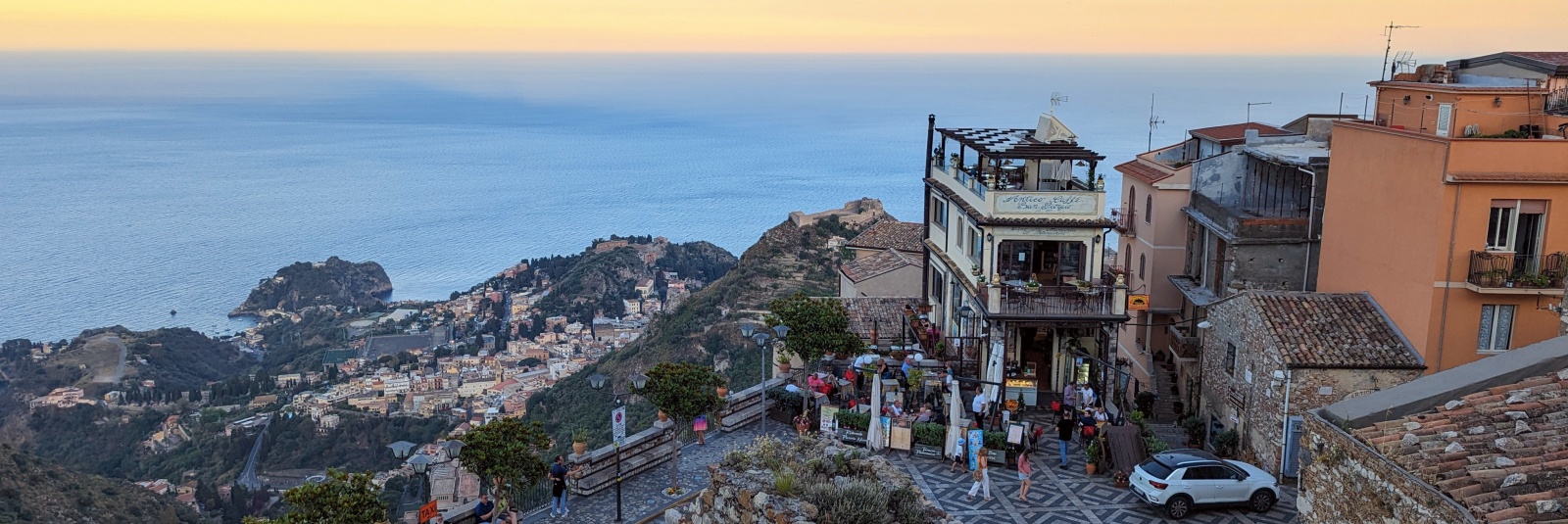
Castelmola, the Panoramic Village above Taormina
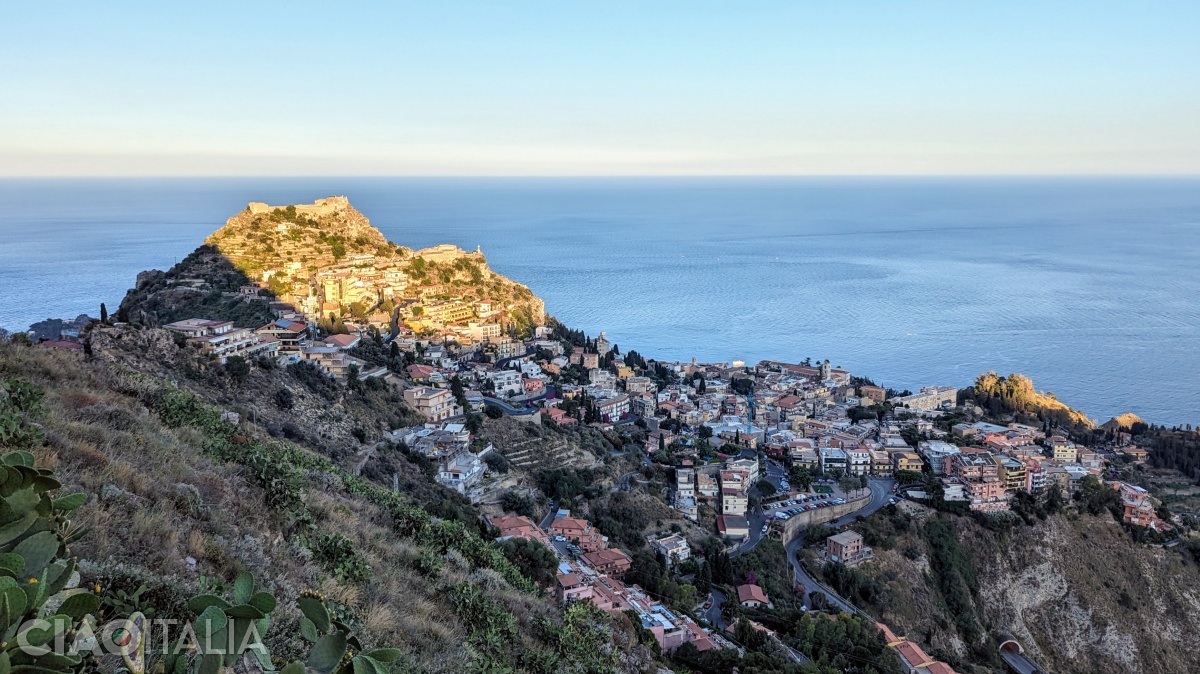
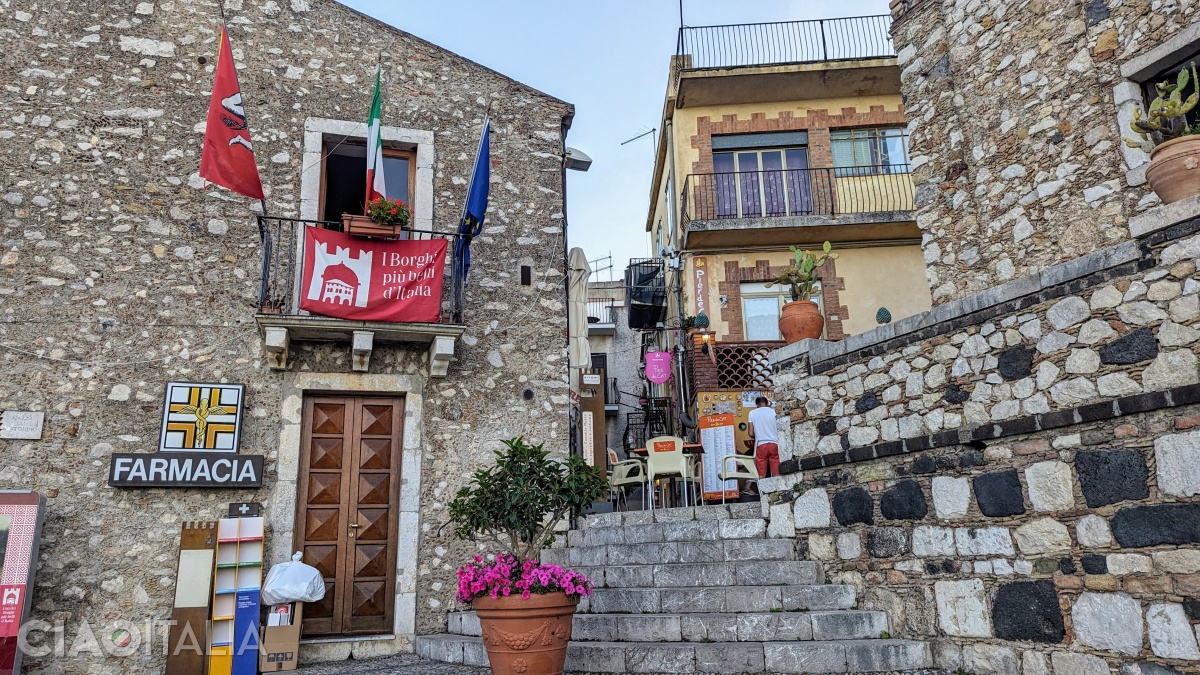
Situated above Taormina at an altitude of over 500m, Castelmola is a small medieval village with about 1,000 inhabitants, filled with picturesque corners and small squares offering spectacular panoramic views. It is included on the list of I Borghi più belli d'Italia ("The Most Beautiful Villages of Italy").
How to Get from Taormina to Castelmola?
Castelmola is located about 5km away from Taormina by car. If you go on foot, the distance is reduced to 2-2.5 km, depending on the route chosen.
By Car
The most convenient option is to go from Taormina to Castelmola by car. Of course, this applies if during your holiday in Sicily you plan to visit several tourist attractions, in which case it makes sense to rent a car (see also our tips for renting a car in Sicily).
The driving distance between Taormina (Porta Messina) and Castelmola is about 5 km along a winding road. You will need to park the car at the entrance to the village.
By Bus
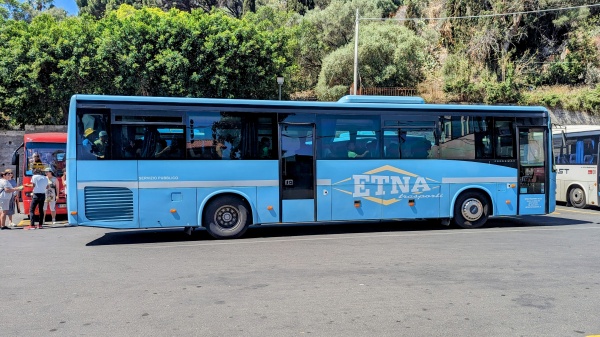
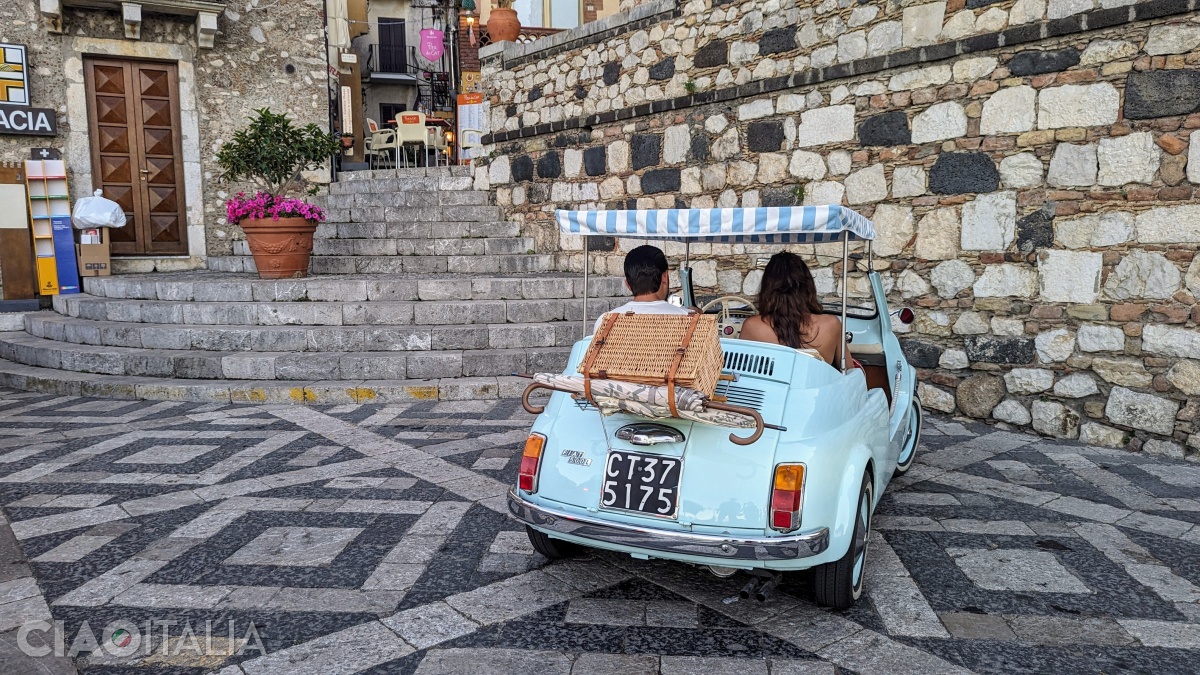
Another option is to use the local buses operated by the companies Interbus or Etna Trasporti. Buses depart from the Taormina bus station and cover the distance to Castelmola in about 15 minutes, stopping at Porta Mola and Piazza Sant'Antonio.
On Foot
The most tiring way, but also the one that gifts you the most beautiful views, is to go from Taormina to Castelmola on foot via one of the two routes. If you are not a big fan of hiking, you can do the walk on the way back, going downhill. During the summer, it is wise to have water, a hat, and sunglasses with you.
Sentiero dei Saraceni
The most famous trekking route connecting Taormina to Castelmola is called il Sentiero dei Saraceni ("The Path of the Saracens"). It is the old connecting path between the two settlements, created over centuries by the frequent travels of horses and transport mules.
The route takes about 45 minutes (from Porta Catania or Taormina's Duomo Square to the Church of San Biagio in Castelmola), including breaks for rest and photos. The path is not difficult (though it is uphill), and most of it is paved with steps. Only a small section consists of dirt and gravel.
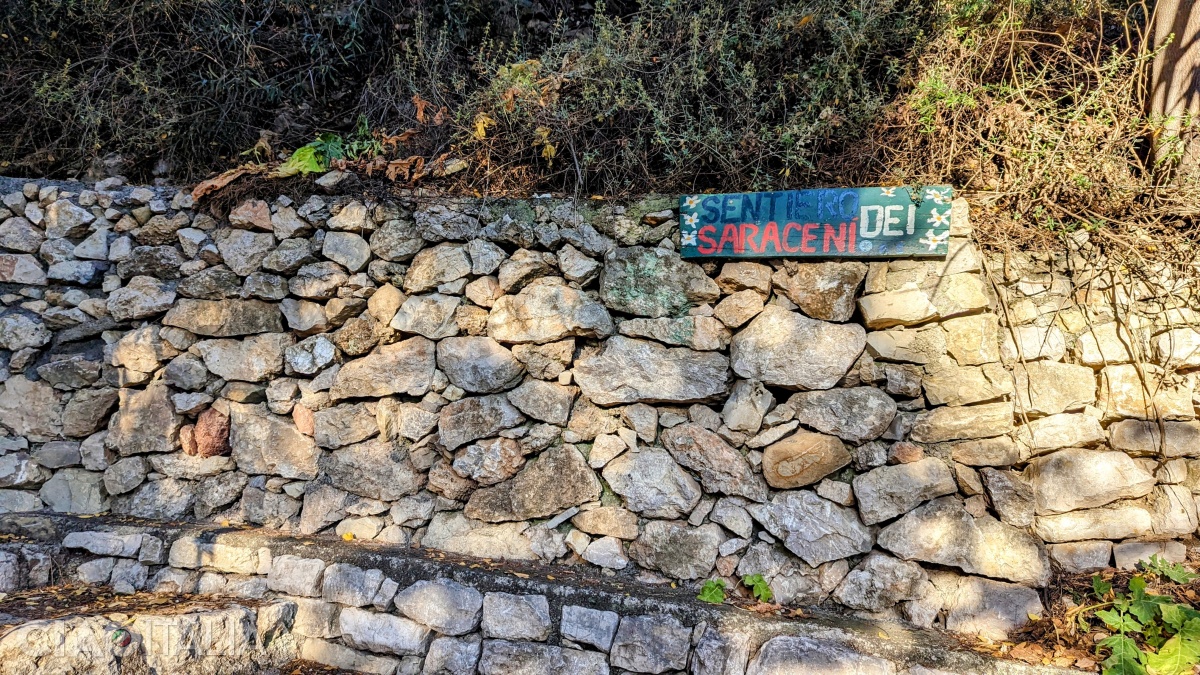
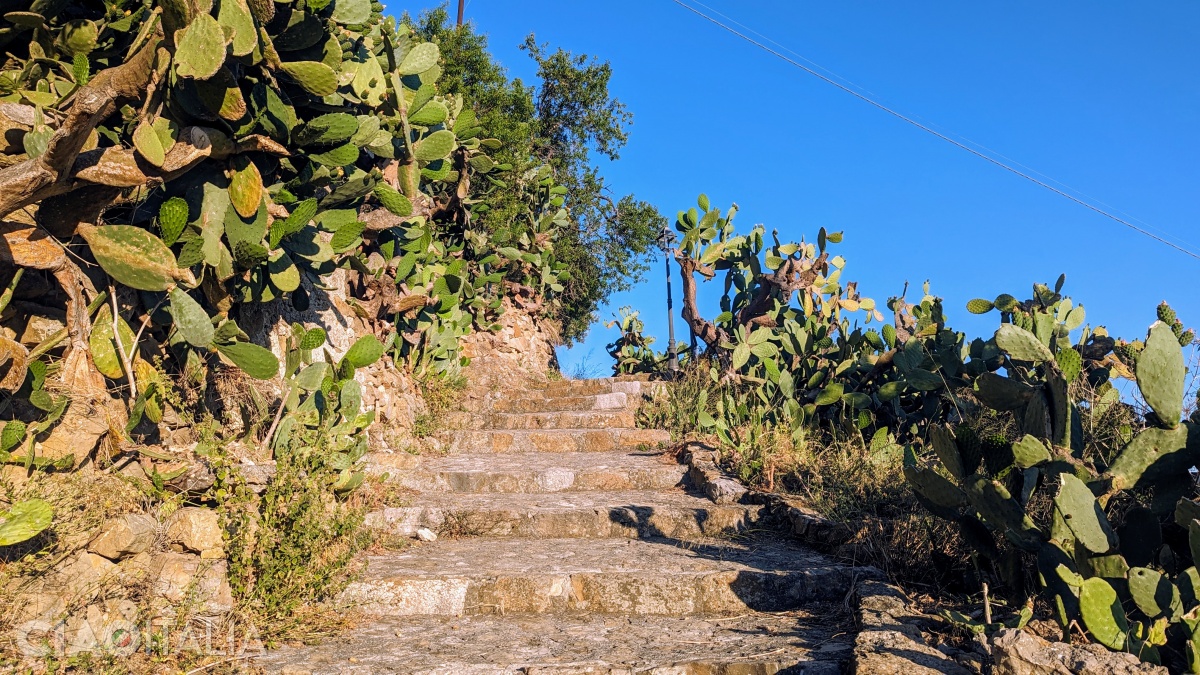
Part of the journey is spent climbing through the streets and stairs of Taormina until you reach Via dei Saraceni. From this street, a path with stone steps branches off to the right, marked by a Sentiero dei Saraceni sign.
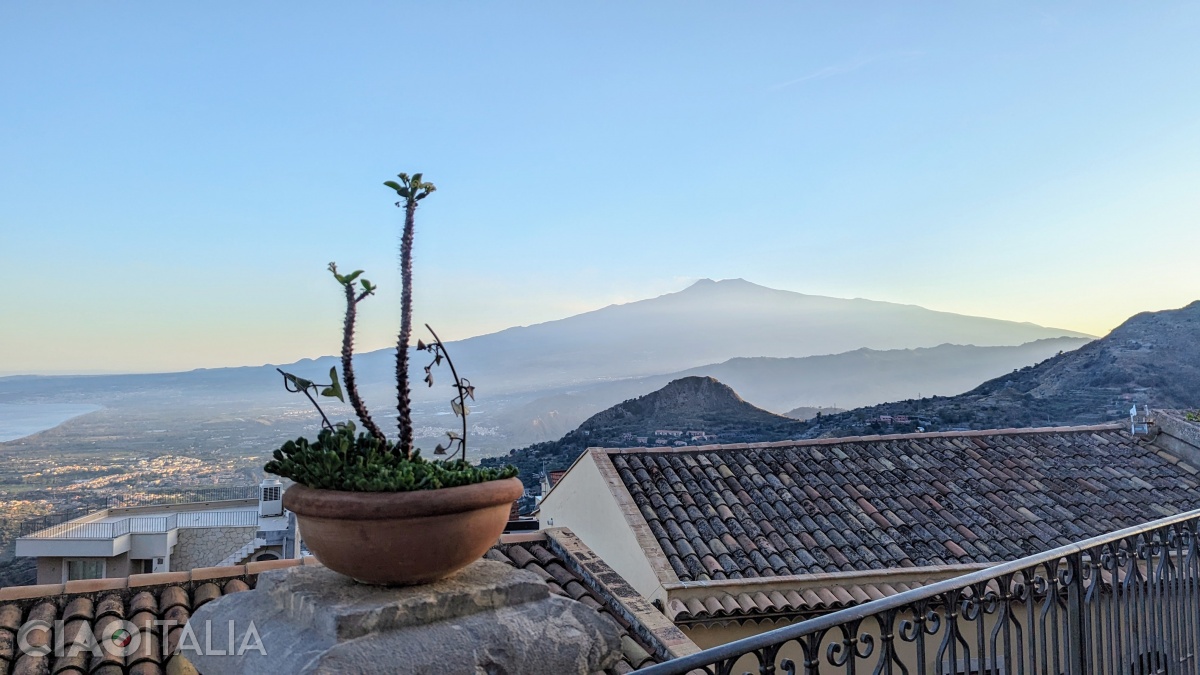
The path climbs among olive trees and prickly pear cacti (Ficus Indica), until it becomes panoramic and the view opens wide toward the coast south of Taormina, down to the Bay of Naxos, while the majestic image of Mount Etna accompanies you ahead.
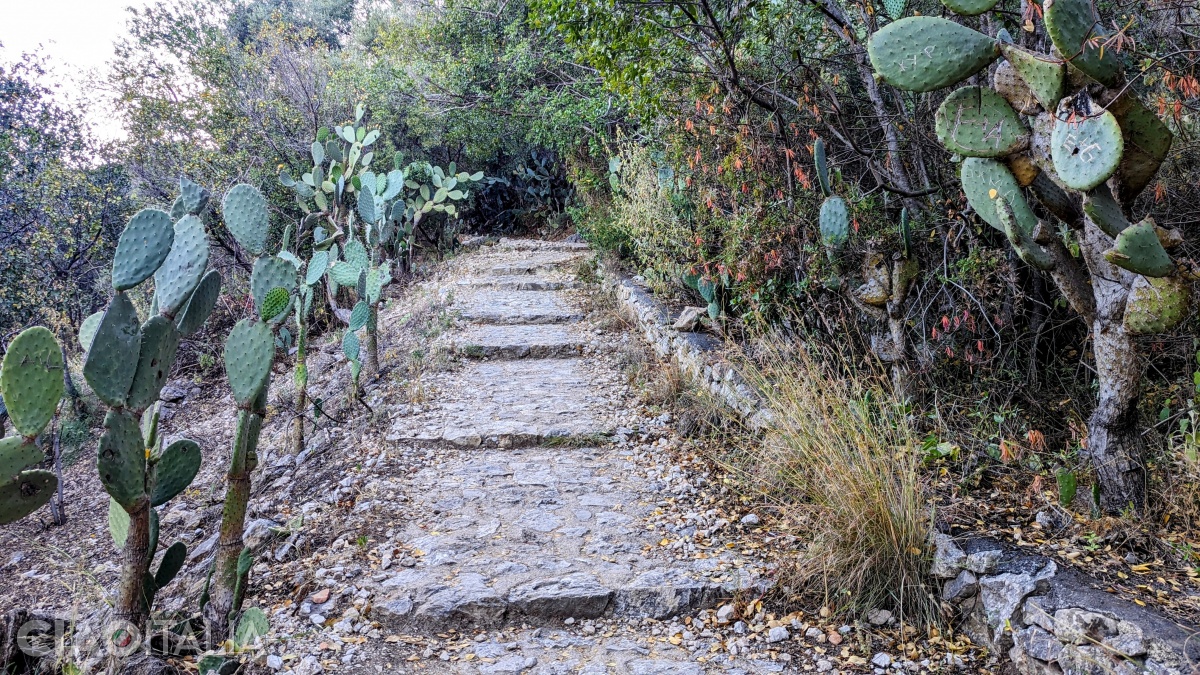
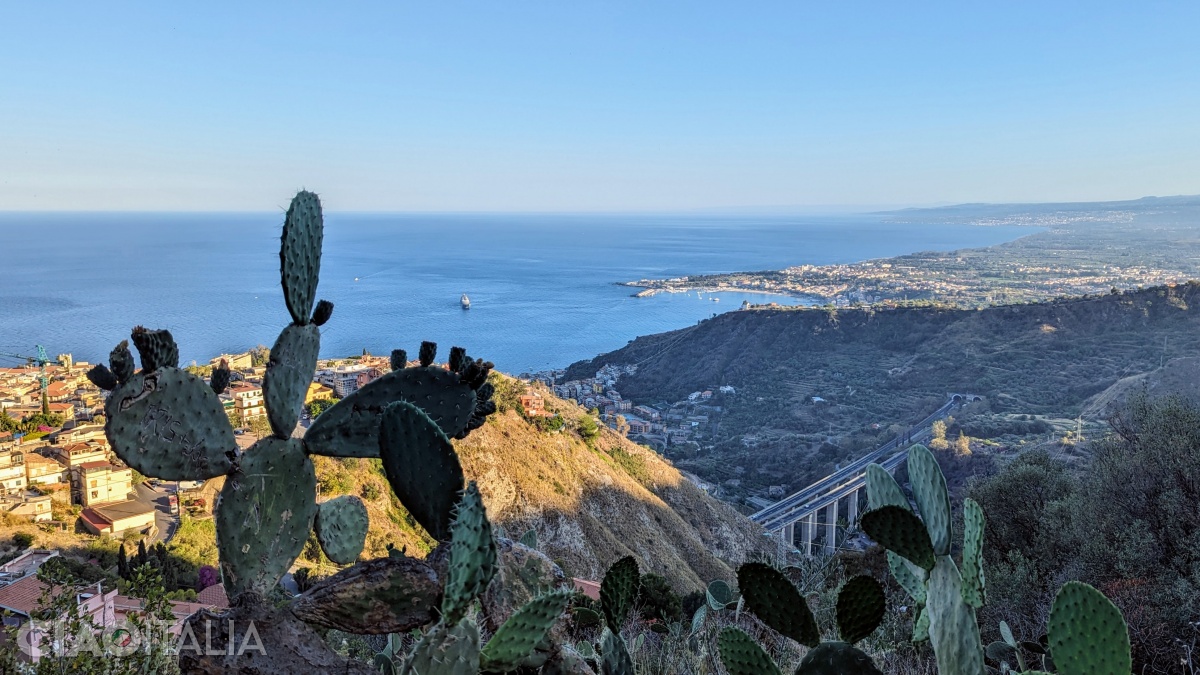
On either side of the path, the cacti become increasingly dense. The place is known as il Piano delle ficare ("The Plateau of Cacti", from the Italian name fico d'India - "Indian fig"). In ancient times, this was the site of the ancient settlement of Myle, founded in the 8th century BC by the Sicels, the ancient inhabitants of Sicily. Myle was conquered in 392 BC by Dionysius, the tyrant of Syracuse. His successor, Andromachus, erected new fortifications and built water cisterns (three of these, built in 367 BC, can still be seen today).
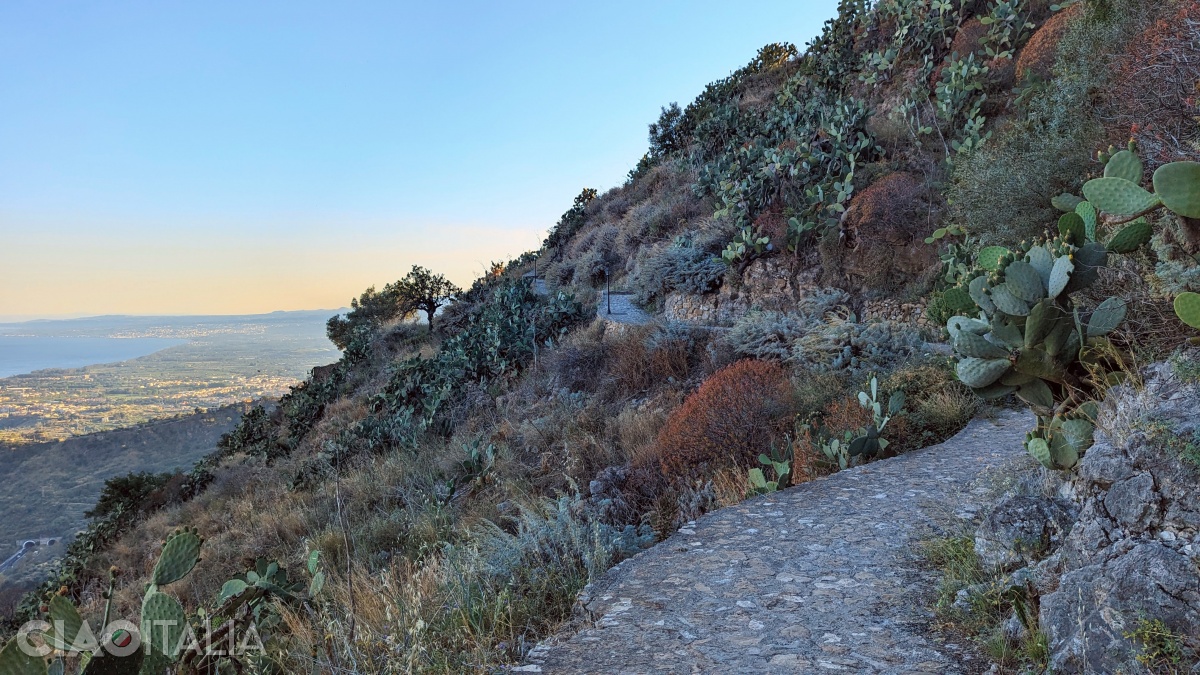
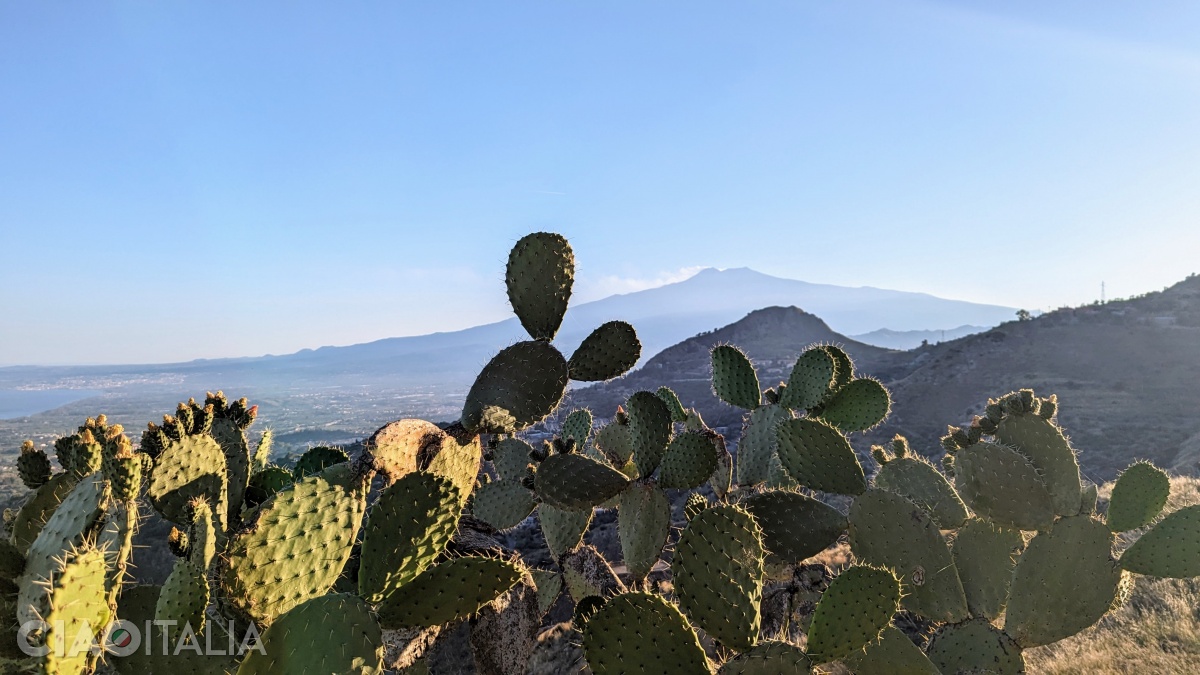
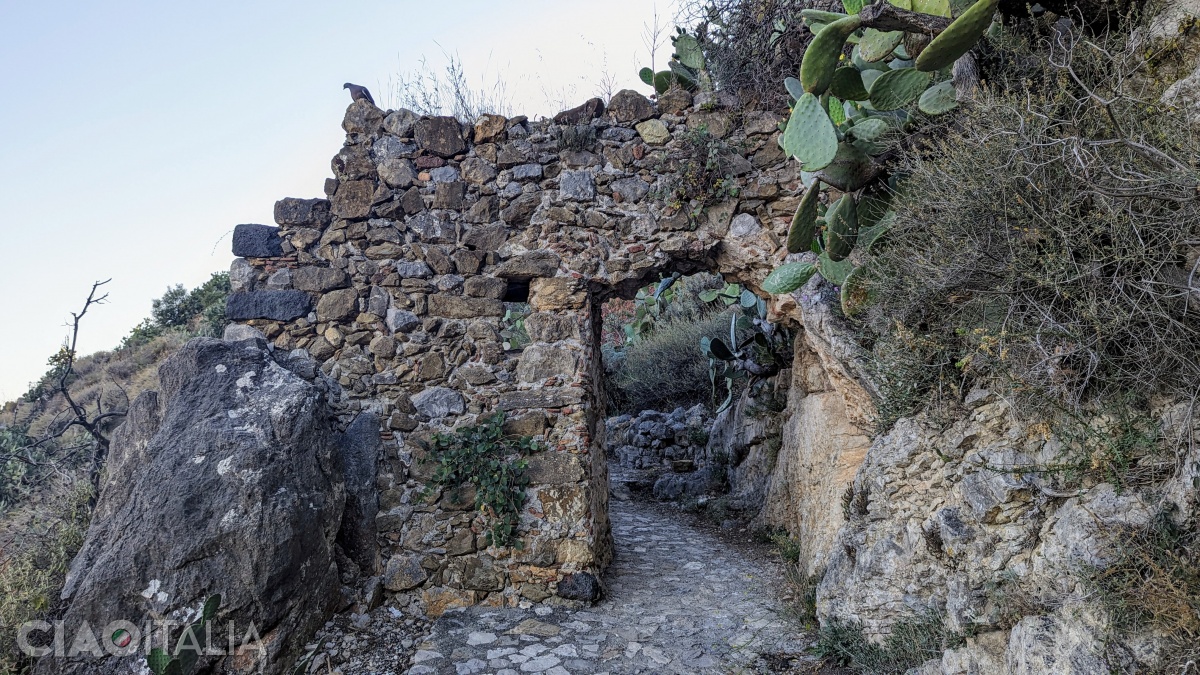
At one point, you will pass through a gate remaining within a fragment of a wall. This is Porta dei Saraceni ("Gate of the Saracens"), the ancient entrance to Castelmola, considered the only monument to have resisted the Saracen attack. In the year 902, the Saracens of Ibrahim II breached the fortifications and devastated the Myle settlement. The gate through which they exited, heading toward Taormina to besiege it as well, has been known ever since as Porta dei Saraceni.
Arab rule lasted until 1078, when it was replaced by Norman rule, and Roger II, King of Sicily, built a new settlement, this time around the castle - the site of today's village. The new name of Mola dates back to this period.
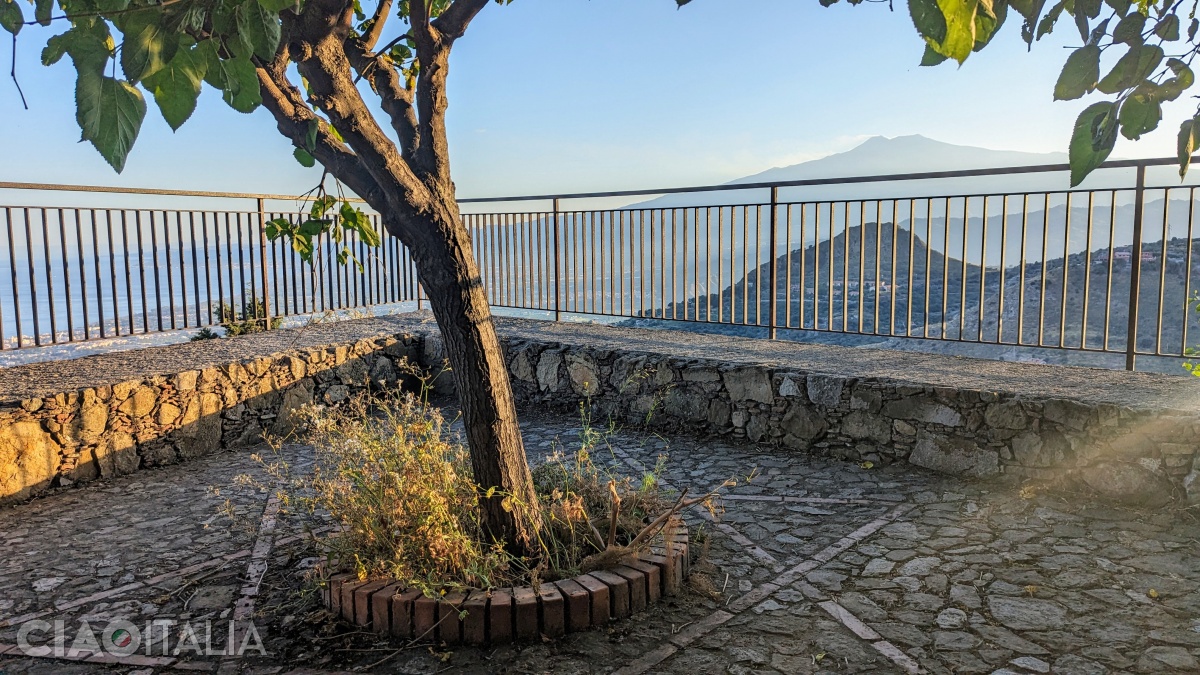
After the final set of steps, you will find yourself in the panoramic square where the Church of San Biagio stands - the first church ever built in Castelmola.
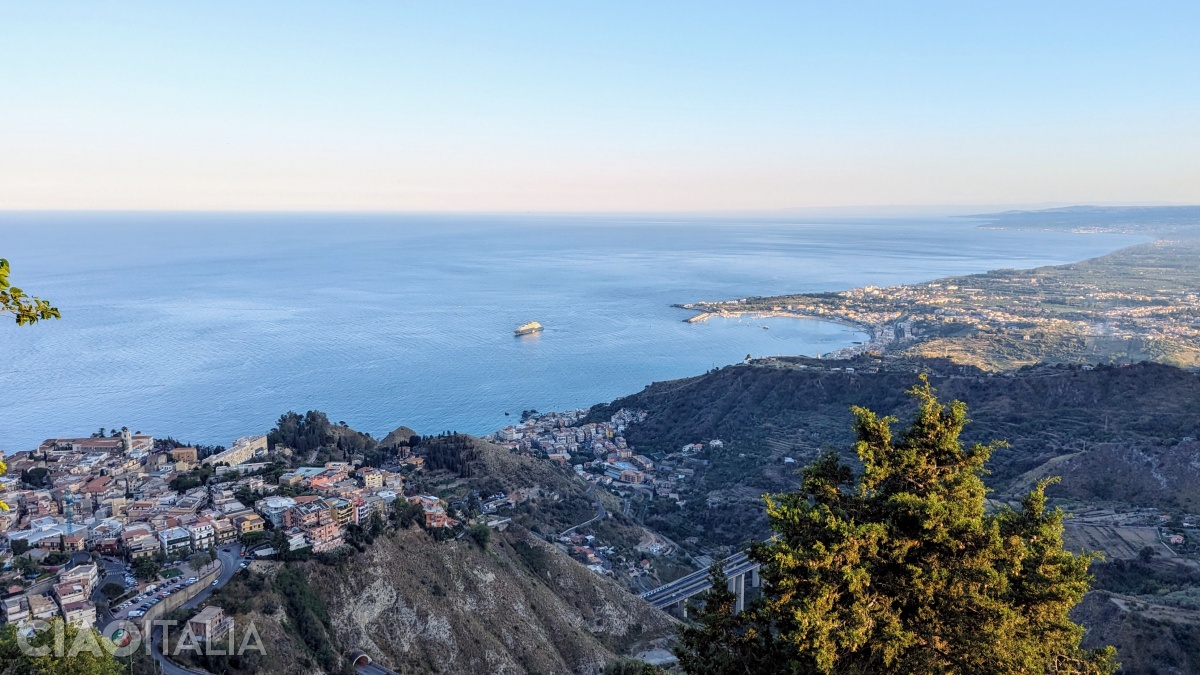
A bit higher up is Belvedere Cannone, built on the remains of the old fortification walls where the southern entrance gate was located. The name cannone ("the cannon"), which the neighborhood on this edge of the village also bears, comes from a 17th-century Spanish cannon found near this spot, which likely served to defend the gate. Today, the cannon is on display at the castle at the other entrance to the village.
Via Cuculunazzo
The alternative route from Taormina to Castelmola follows Via Rotabile Castelmola and Via Cuculunazzo, through narrow streets and stairs, finally reaching Piazza Sant'Antonio.
What to See in Castelmola?
Despite the urban planning changes that occurred at the beginning of the 20th century, Castelmola keeps its fascination and medieval character intact.
To visit Castelmola, you will need about two hours. However, we recommend that you don't rush; stroll through the narrow, labyrinthine streets, through the squares with panoramic views, browse the shops with local products, and even have a meal here. Castelmola has some very good restaurants with reasonable prices. Don't forget to try vino alla mandorla for dessert - the local sweet wine flavored with almonds, which is prepared in the homes of all the locals.
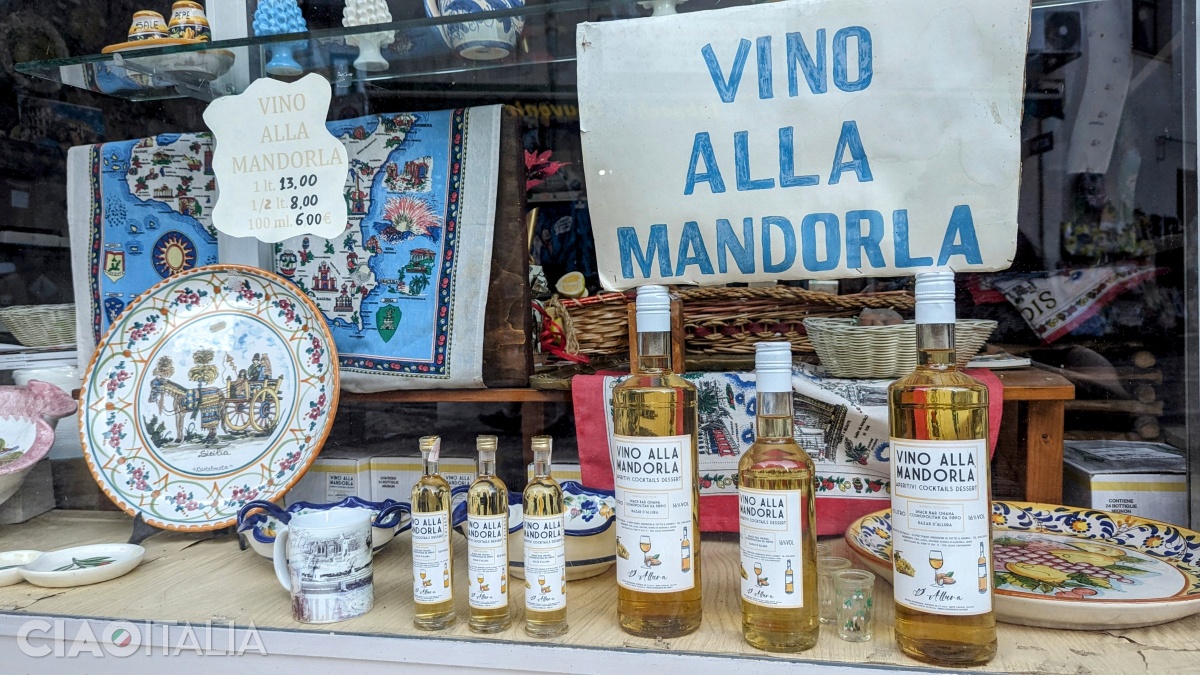
A recommendation: plan your visit to Castelmola so that you are there at sunset. You will be treated to some truly spectacular views.
And a curiosity: in the opinion of an Italian journalist, the famous and controversial novel written by D.H. Lawrence in 1928, "Lady Chatterley's Lover", may have had its starting point during the writer's stay in Taormina. The novel was allegedly inspired by the intimate connection that was born between his wife and a 24-year-old man from Castelmola, whose occupation was leading transport mules and who served as the model for the gamekeeper character.
The Madonna della Scala Icon
If you arrive in Castelmola by car, after leaving it in one of the public parking lots at the edge of the village, the first sight you will likely see on the right side is an icon housed in a small grotto carved into the roadside wall and protected by an iron fence. This is Madonna della Scala ("Our Lady of the Stairs"), an oil painting that was originally located in the rock at the foot of the castle, just before Porta di Mola. In the 1960s, after the construction of the road - which totally changed access to the town - the icon was placed in a man-made grotto in the same spot, at the center of a marble altar.
Piazza Sant'Antonio
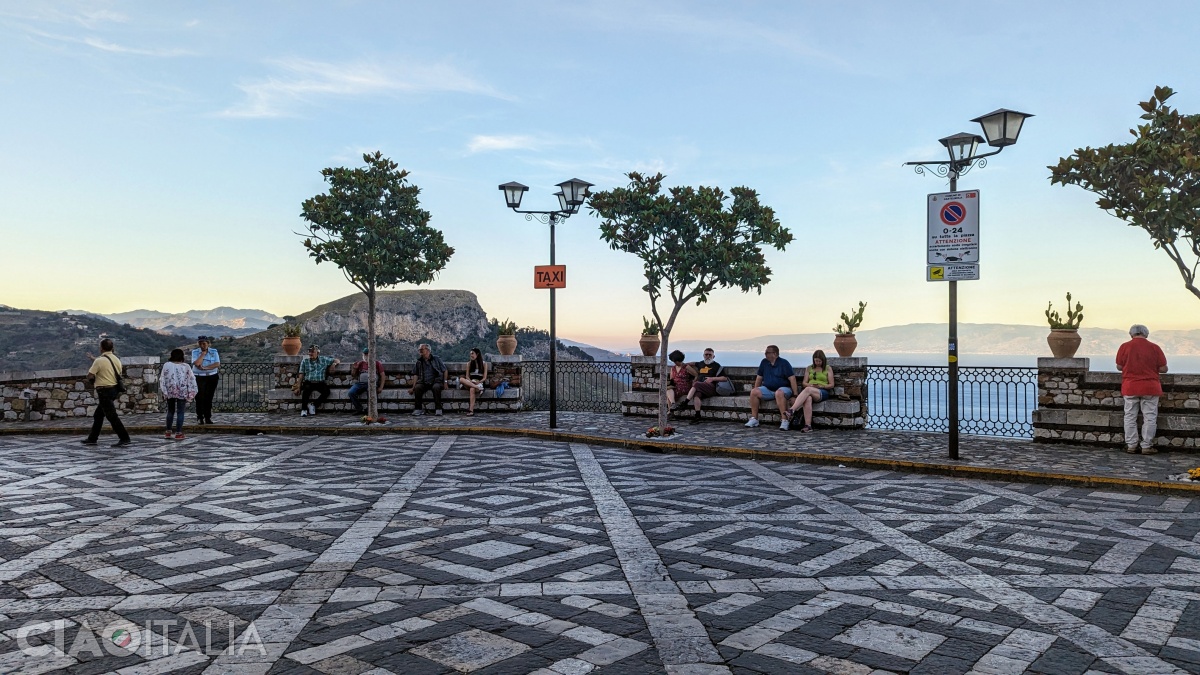
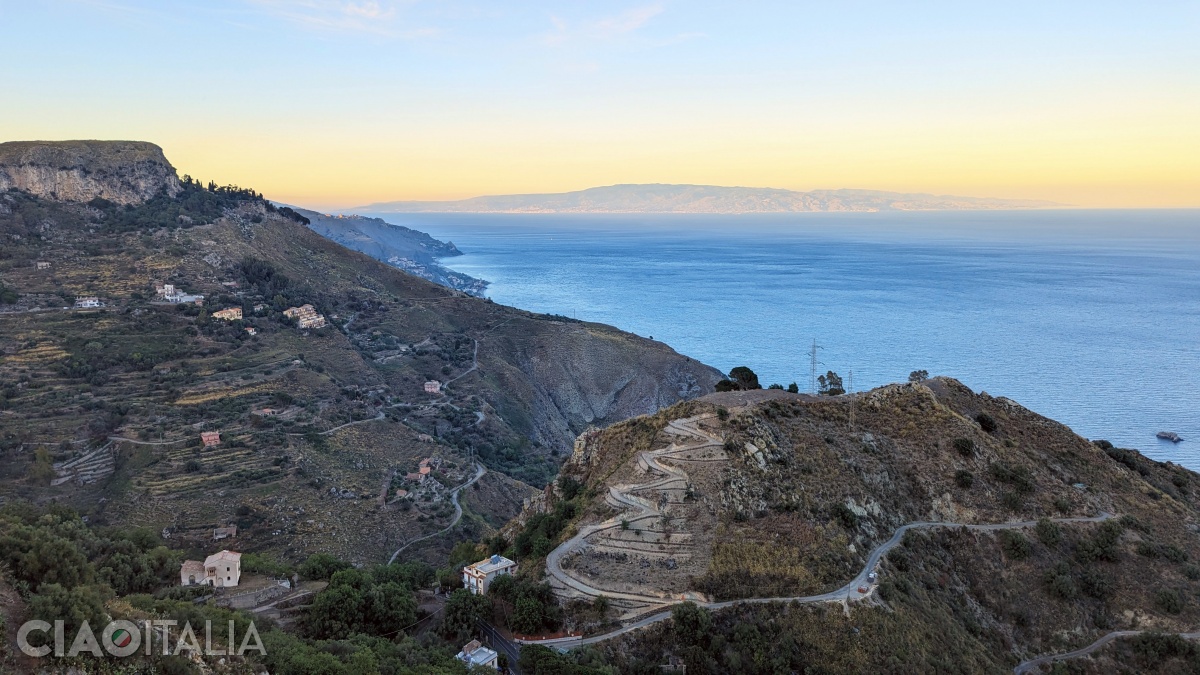
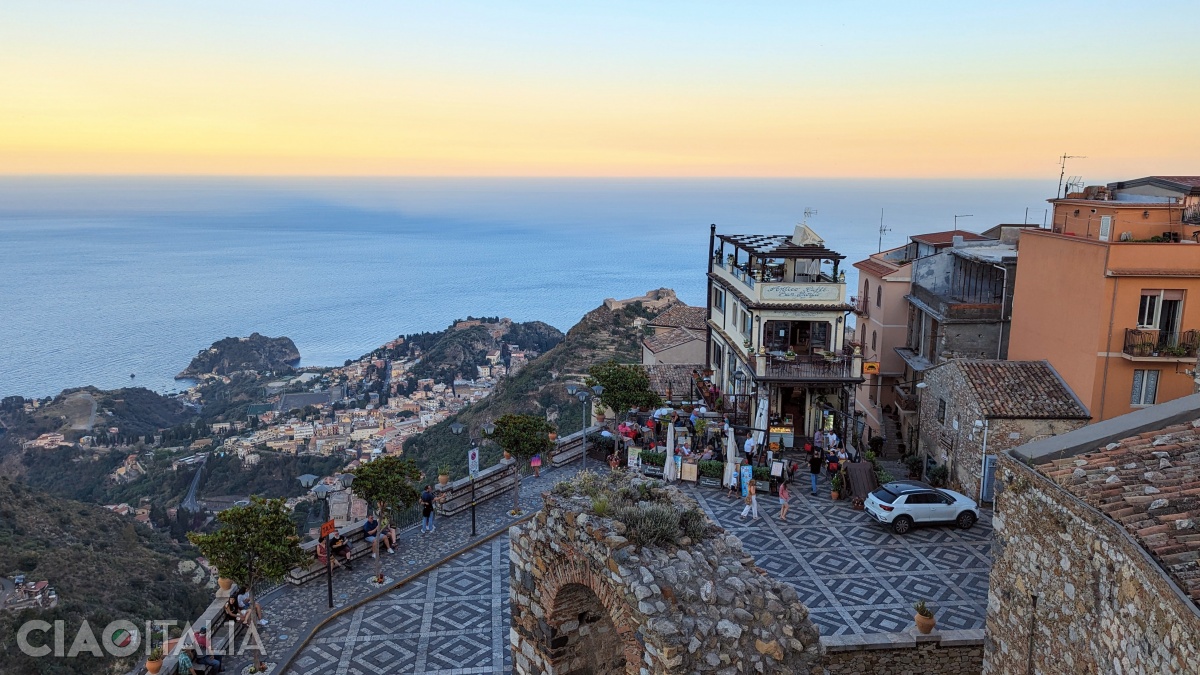
Slightly higher up is Piazza Sant'Antonio. Built in 1954, it is rightly nicknamed il Belvedere di Castelmola. It offers a wonderful panorama toward the city of Taormina and the Ionian Sea coast, as far as Messina and beyond the strait to the mainland toward Calabria. In its mosaic pavement with geometric patterns, dark volcanic rock contrasts with white stone. Along the edges, small trees and limestone benches invite you to sit and enjoy the beauty of the place.
Antico Caffè San Giorgio
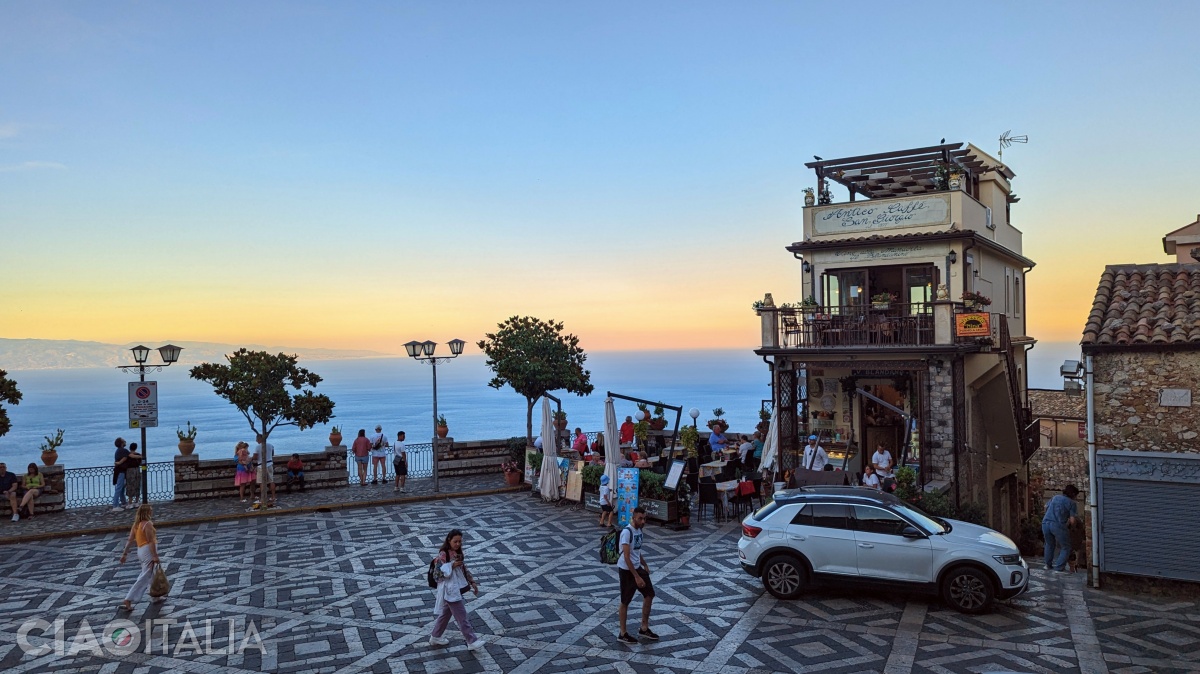
The building with a second floor and terrace dominating one side of the square is Antico Caffè San Giorgio. It is a historic establishment that has been operating in Castelmola since 1907 and bears the name of Saint George, the town's protector. It was founded by Don Vincenzo Blandano, the man who invented the famous vino alla mandorla. The wine is called il Blandanino and is made from grapes of the zibibbo variety (see also the article What to Eat and Drink in Sicily), flavored with bitter almonds and various herbs.
Famous figures have sat at the bar's tables, such as Winston Churchill, Pope John Paul II (then a cardinal), Guglielmo Marconi, Henry Ford, John Rockefeller, and many others. Their signatures can be found in the Libro dei Centomila autografi ("The Book of One Hundred Thousand Autographs"), as Don Vincenzo Blandano used to ask every celebrity who visited his establishment for a signature - a habit continued by his descendants.
Church of San Giorgio
Behind the café, across the square, is the small Church of San Giorgio, built around 1450. Its distinctive architectural element is the bell tower. Above it rise four pyramid-shaped peaks, each supporting a stone ball. The wooden statue of Saint George is kept in the church. Every year on April 23rd, the statue is taken out and carried in a procession through the streets. Behind the church, a spiral metal staircase leads to another panoramic terrace overlooking Taormina.
The Ancient Arch
Opposite the San Giorgio bar, on one side of the square, stands a stone arch. It is believed to have been built around the year 900, incorporating Greco-Roman construction elements.
From the medieval period until the 20th century, the arch was located immediately next to Porta di Mola (the castle entrance), which constituted the main access to the town. During the construction of the square, the arch became isolated and was placed atop a few limestone steps.
Church of Sant'Antonio
Right next to the arch is the former Church of Sant'Antonio (which gives the square its name), built in the 15th century and transformed into an Auditorium in the second half of the 20th century. Conferences and events are organized here, and civil weddings are performed. Looking closely at the facade, you will notice to the left the traces of the old bell tower, which was once separate from the church before being incorporated into it.
The Castle
Climbing up to the left of the Auditorium, you will soon reach Castello di Mola, the ancient fortification once used for defense. A dreamlike view awaits you at the top - at an elevation of 530m, the highest point in town - to reward your effort.
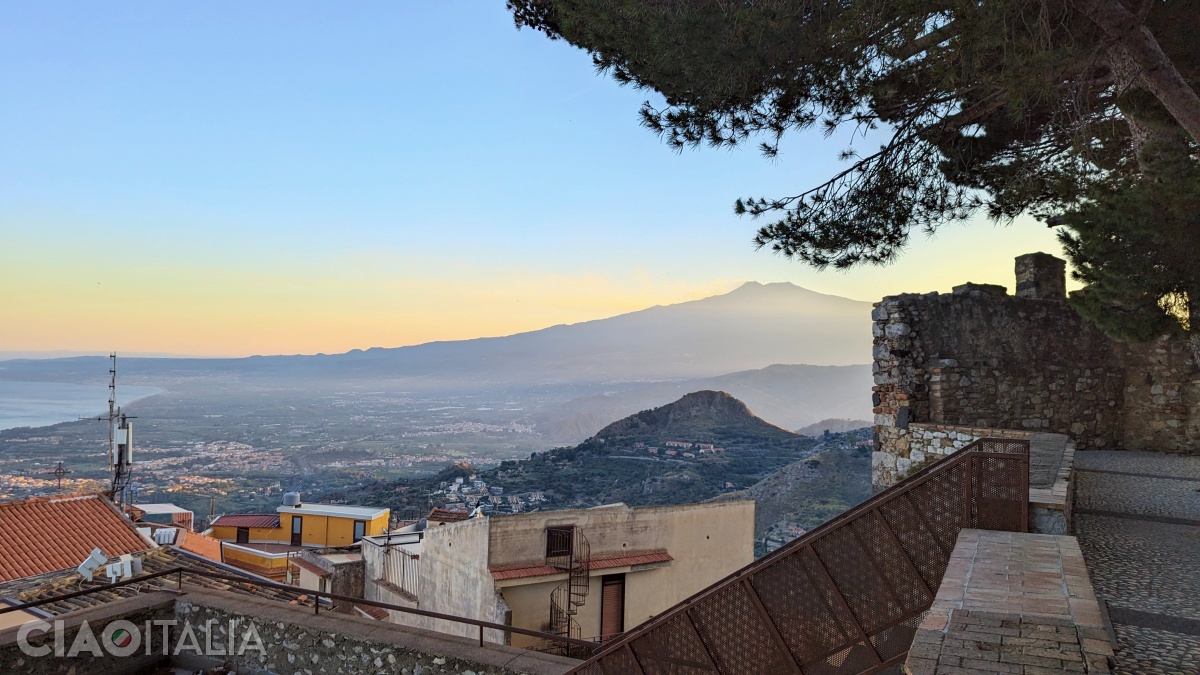
Only the powerful walls from the Norman period remain of the old castle. Documents are scarce, and the exact period of its construction cannot be determined with certainty, though some historians date it back to the Roman era.
What is known for sure is a 10th-century inscription engraved on a marble slab embedded in the facade of the Castelmola Cathedral bell tower: "This castle was built under Constantine, patrician and strategos of Sicily." This has led to the conclusion that it refers to Constantine Caramalo, the last strategos of Taormina, who lived in the 9th century.
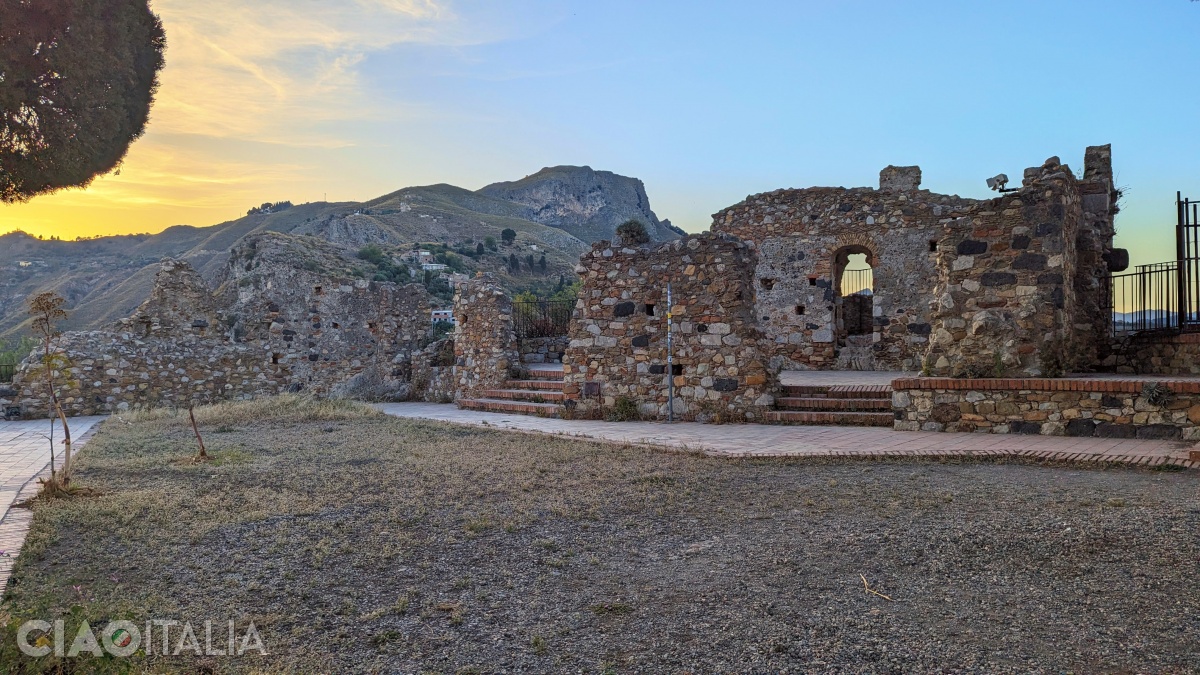
The castle, surrounded by strong walls since 1334, was part of an entire fortification system comprising several defensive fortresses. Its function was also favored by its high position, from which the castle in Taormina on Monte Tauro could be very easily monitored. Until the 16th century, Castello di Mola was also used as a prison for prisoners of war.
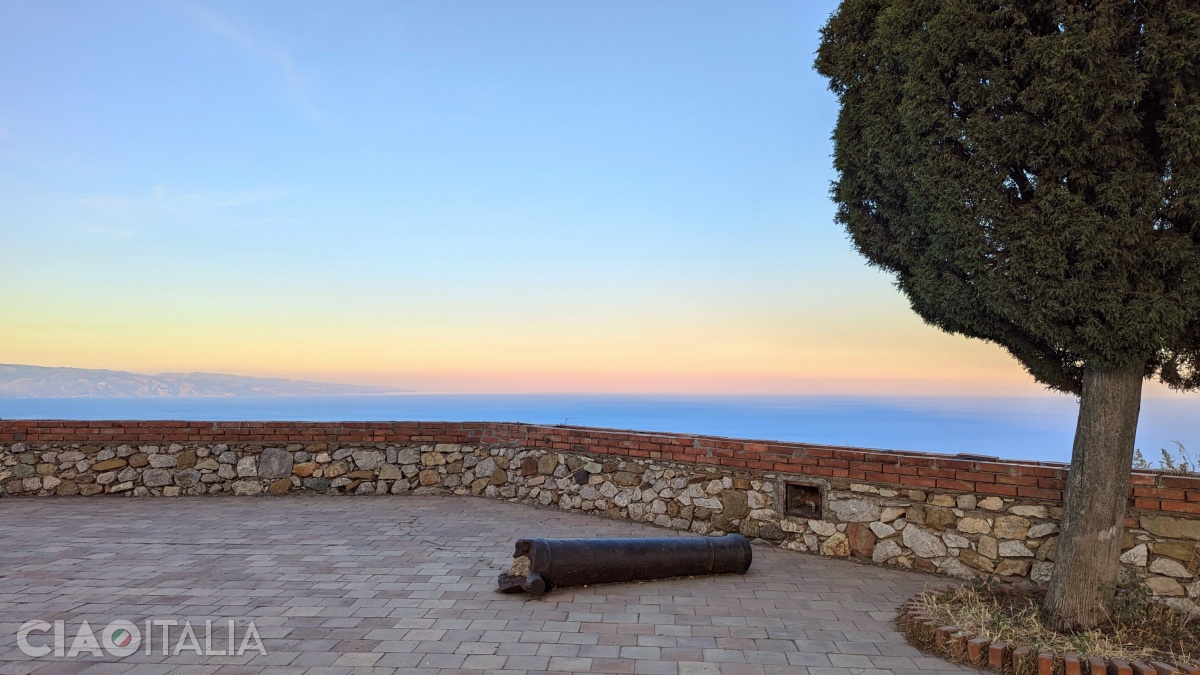
Porta di Mola was placed along the access staircase. Once, it stood at the end of a staircase carved into the hard rock and was the main entrance to the town. The medieval appearance disappeared in the 20th century during municipal works to rebuild the access to Castelmola. Above, on the archway of the gate, the village emblem is engraved: a castle with three towers and the inscription Castello Fedele a Sua Maestà - Anno 1578 ("Castle Faithful to His Majesty - Year 1578”).
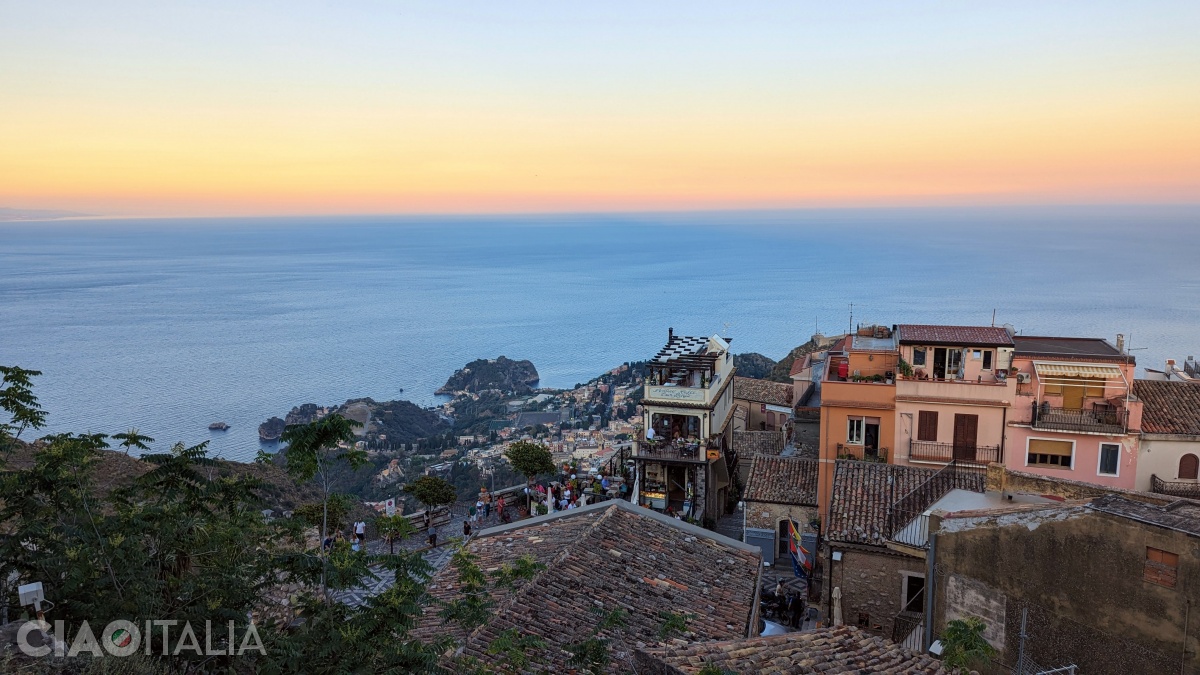
Via Alcide de Gasperi
Via Alcide de Gasperi is the main street in Castelmola. Along it, you will find souvenir shops, bars, restaurants, hotels, and guesthouses.
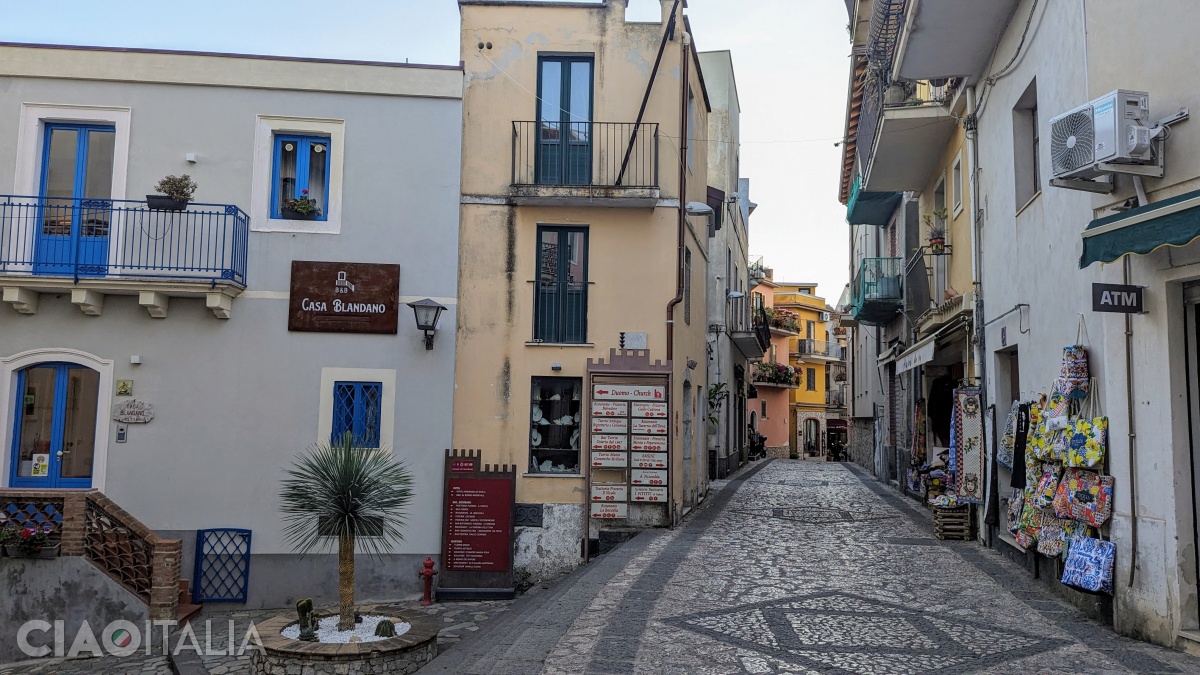
Piazza Chiesa Madre
Wandering further, you will reach Piazza Chiesa Madre, where you will find the Duomo of Castelmola, the Municipal Library (which served as the village's first elementary school from 1920 to 1956), and Bar Turrisi.
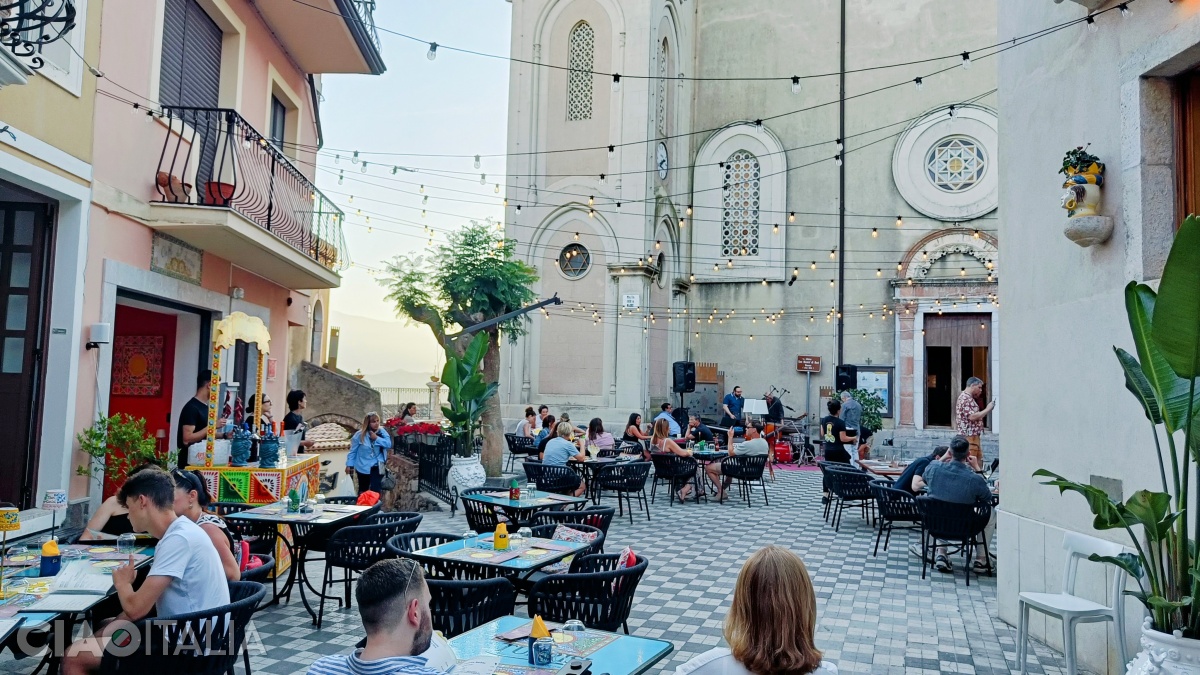
Beyond the church lies another panoramic terrace, perfect for photographing Mount Etna and the Bay of Naxos from above.
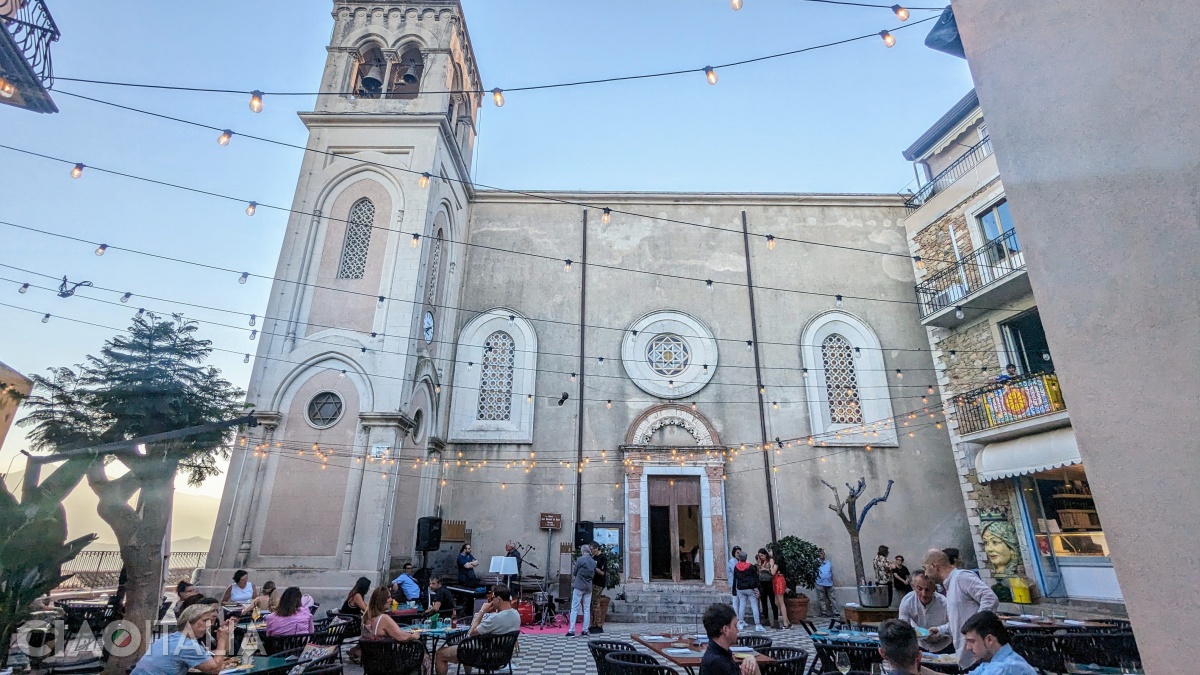
The Duomo of Castelmola
Occupying one side of the square, the Duomo of Castelmola is dedicated to Saint Nicholas of Bari. It was built between 1934 and 1935 on the site where the cathedral called Chiesa Madre (hence the square's name) had stood since the 16th century. Only a few elements from the original church were preserved, including the side portal and the choir arch.
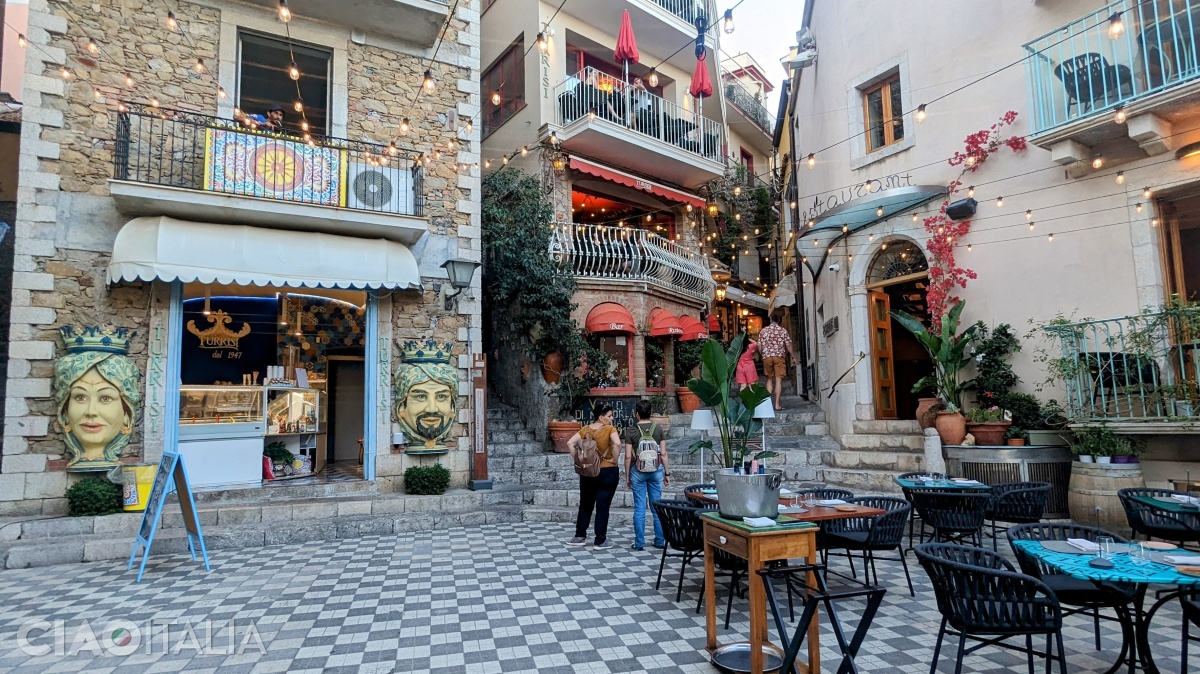
Bar Turrisi
Returning to the small square, don't miss a visit to the famous Bar Turrisi. Founded in 1947, it is considered one of the quirkiest bars in the world. Inside, the furniture and decor, as well as the products, have a phallic theme, symbolizing fertility and virility, but also protection against evil. If you have been to Pompeii, for example, you know that the Romans used to place representations of phalluses at the entrances of houses to ward off evil spirits. Here too, you can drink vino alla mandorla, promoted as an "elixir of love" and served, naturally, in a phallic-shaped glass.
Church of San Biagio
Descending a bit, you will reach the Church of San Biagio, which is the first one you will encounter if you plan to climb up on foot via the Sentiero dei Saraceni. Set against a rocky slope covered in cacti, San Biagio was the first church built in Castelmola after the arrival of St. Pancras in Taormina in 40 AD to Christianize the local population. The latest restoration brought to light, behind the altar, the remains of an 18th-century fresco depicting the Madonna and Child and San Biagio.
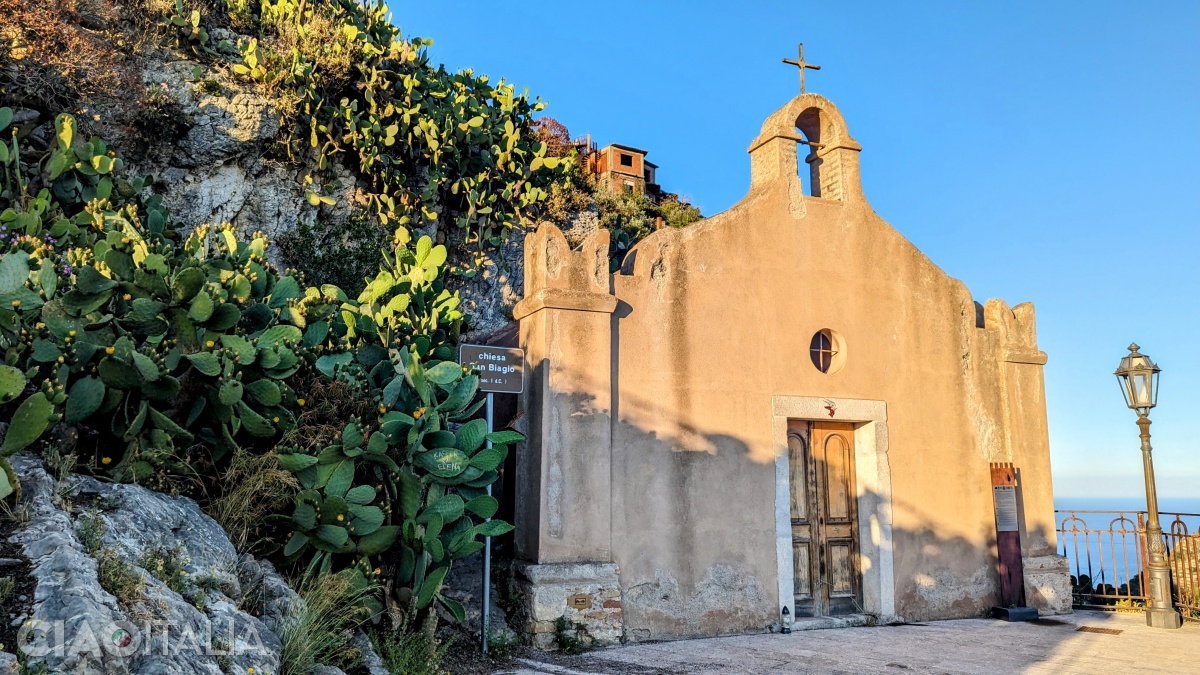
The small square in front of the church offers (yet another) spectacular panorama toward Taormina, Giardini Naxos, and Mount Etna.