21 Things to See in Syracuse (Including Ortigia)
Most tourist attractions in Syracuse (Siracusa) are concentrated in two distinct areas: Ortigia Island (which is a part of Syracuse and NOT a separate city) and the Neapolis Archaeological Park. Stretching between them is the modern city, which is unfortunately not very attractive, as it was rebuilt following the bombings of World War II.
Since 2005, Syracuse has been included in the UNESCO World Heritage list. The motivation was based on the sites dating from the Greek and Roman periods, as well as the remains from later eras, which testify to the troubled history of Sicily.
You can visit Syracuse in a single day, but if you want to see most of the tourist attractions and fully enjoy one of Sicily's most beautiful cities, we recommend spending two days here.
Ortigia Island
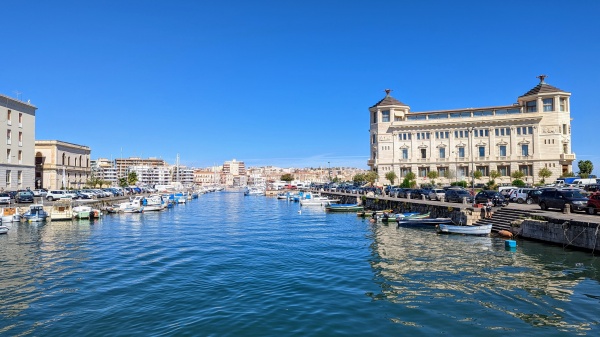
Ortigia is the historical center of Syracuse, the place where the Greeks founded their colony in the 8th century BC. It is a small island in the Ionian Sea that concentrates the old city's attractions within an area only 1 km long and 500-600 m wide. It is connected to the mainland by two small parallel bridges, Ponte Umbertino and Ponte Santa Lucia. Ortigia is a labyrinth of picturesque narrow streets with medieval and, especially, Baroque buildings resulting from the reconstruction after the 1693 earthquake - the same earthquake that destroyed Catania.
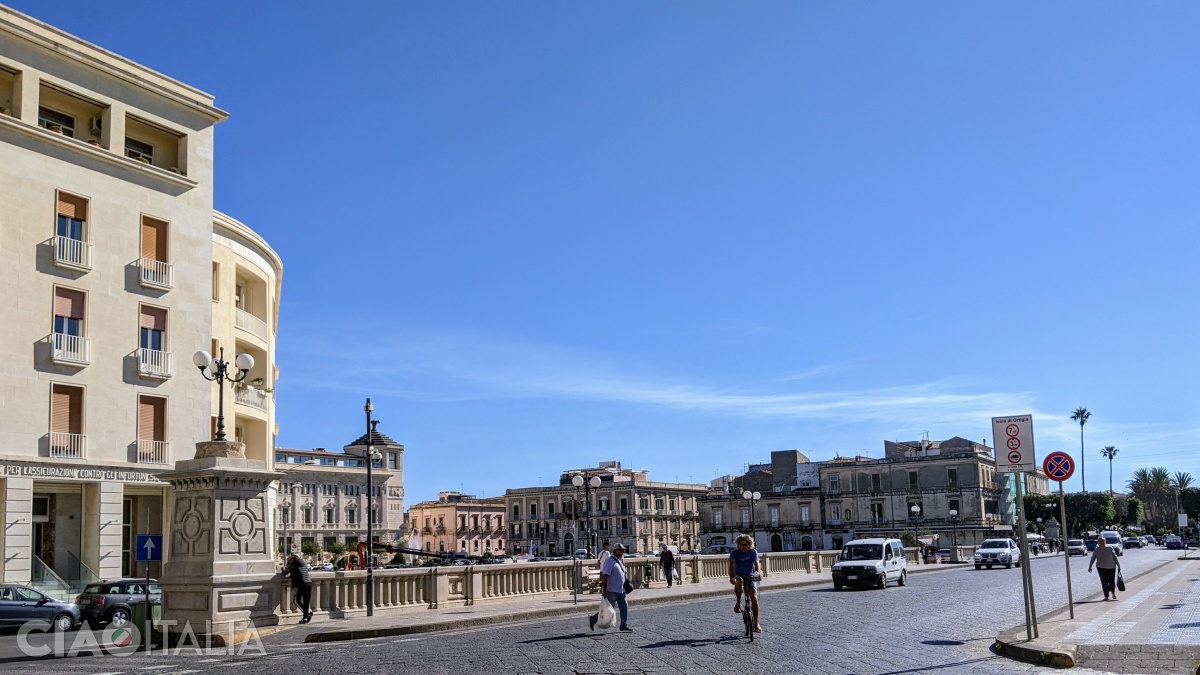
If you don't have much time but still want to discover the main sites, you can visit Ortigia with a guided tour that will take you to the primary points of interest.
1. The Statue of Archimedes
Right at the entrance, between the two bridges connecting Ortigia to the mainland, the statue of Archimedes stands on a small islet. Born in Syracuse in 287 BC, Archimedes was one of the greatest scholars of antiquity. His most famous discovery was made in a bathtub: any body submerged in a liquid is pushed upward by a force equal to the weight of the volume of water displaced.
Archimedes died, killed by a soldier, during the Roman siege of Syracuse in 212 or 211 BC. Over time, the location of his tomb was forgotten. What is called "Archimedes' tomb" today in the Neapolis Archaeological Park is merely a funerary chamber dating from a later era.
The 2.6 meters tall bronze statue was created in 2016 by local sculptor Pietro Marchese and Virginia Rossello, an architect from Genoa. Archimedes is depicted standing, looking at the sea and holding a mirror. This is a reference to the famous mirror system he used to focus sunlight to set fire to the Roman ships threatening Syracuse.
The pedestal on which the statue stands, illuminated in the evening, symbolizes another invention: the famous geometric game Stomachion, in which 14 parts can be arranged in different ways to form a square.
You can admire reconstructions of Archimedes' inventions and discoveries by visiting Tecnoparco Archimede, located in the modern city.
Buy Tecnoparco Archimede Ticket
2. The Temple of Apollo
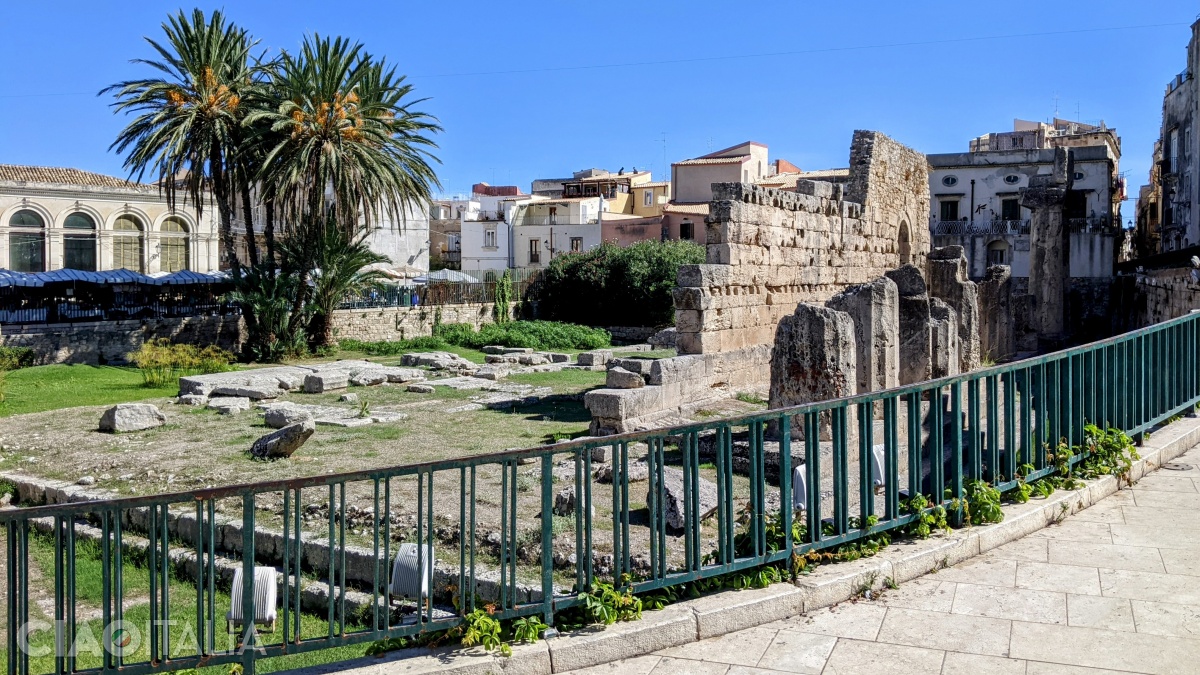
Moving toward Ortigia, right in the square in front of the bridge, you will find the ruins of the Temple of Apollo (Tempio di Apollo). Built at the beginning of the 6th century BC, it is the oldest Doric temple in Sicily and probably the first stone one built by Greek colonists. An inscription preserved on the first step shows that the temple was built by Kleomedes, son of Knidieias, and is dedicated to the god Apollo.
Unfortunately, after the 1693 earthquake, which destroyed much of the city, only two columns and parts of the walls remain standing. One can only imagine the impression it must have made on a visitor just entering Ortigia to see a temple measuring 58x24 m, with two rows of six monolithic columns on the facade and seventeen columns on the sides.
The temple, which was functional during the Greek and Roman periods, later underwent all sorts of transformations. During the Byzantine period, it became a basilica, and during the Arab period, it was a mosque, only to become a Christian church again during the Norman period. The gate visible today in the higher southern wall, which was the entrance to the church, dates from that time.
In 1561, as part of Charles V's plan to fortify Sicily, the church was demolished, and barracks were built on the temple ruins. A new church was erected in the 17th century and then demolished again in the 18th century. It wasn't until the 1940s that archaeological research took place and the newer structures were demolished, resurfacing the ancient ruins.
The Temple of Apollo can only be seen from the outside, free of charge.
3. Ortigia Market (Mercato di Ortigia)
Near the Temple of Apollo lies the building of the old Ortigia market (Antico Mercato di Ortigia). It was built by the City Council between 1899 and 1900, on the site where the city's Spanish walls previously stood. The market operated in this location until the 1980s; since then, the old building has only hosted fairs and events. Recently, all sorts of stalls selling poor-quality goods have begun to appear in front of it.
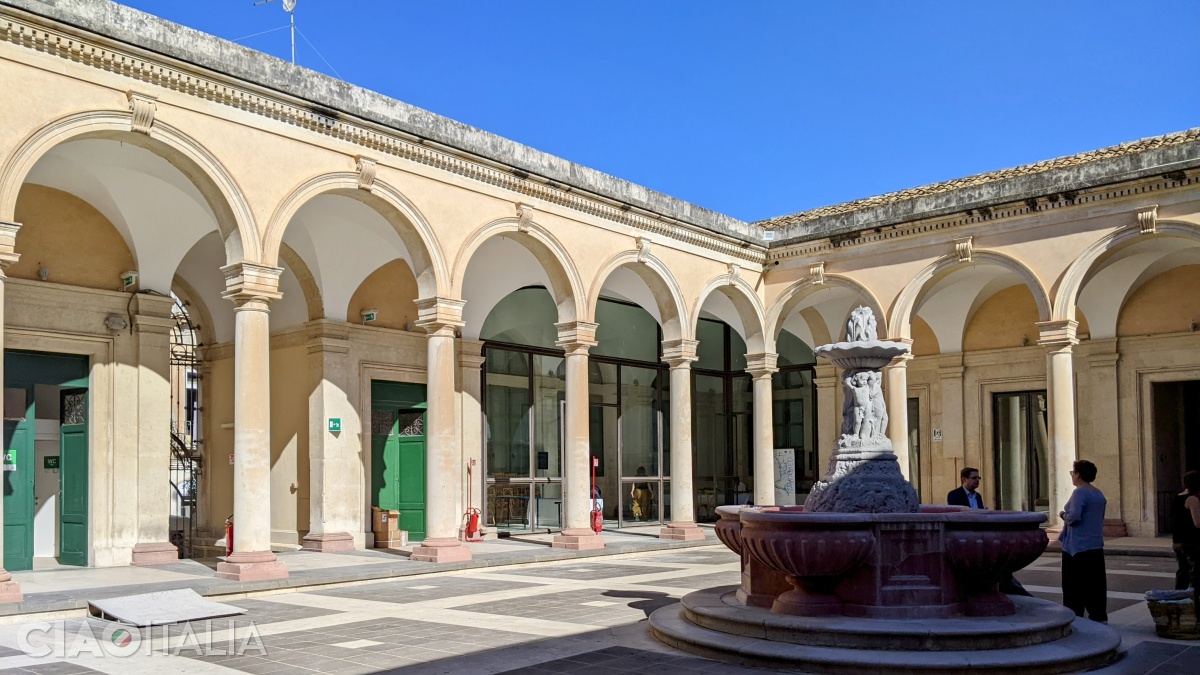
Starting in the 1980s, commercial activities were moved a bit further down. If you want to take a tour through the market before continuing your visit to the tourist attractions, head toward via Emanuele de Benedictis.
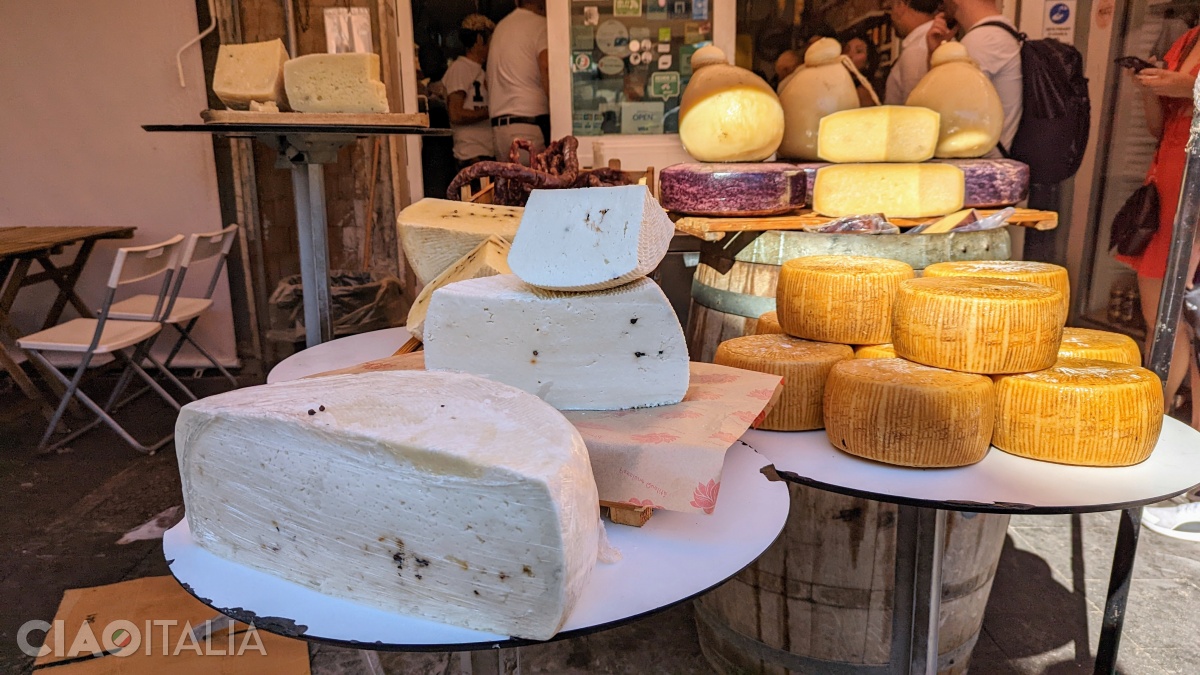
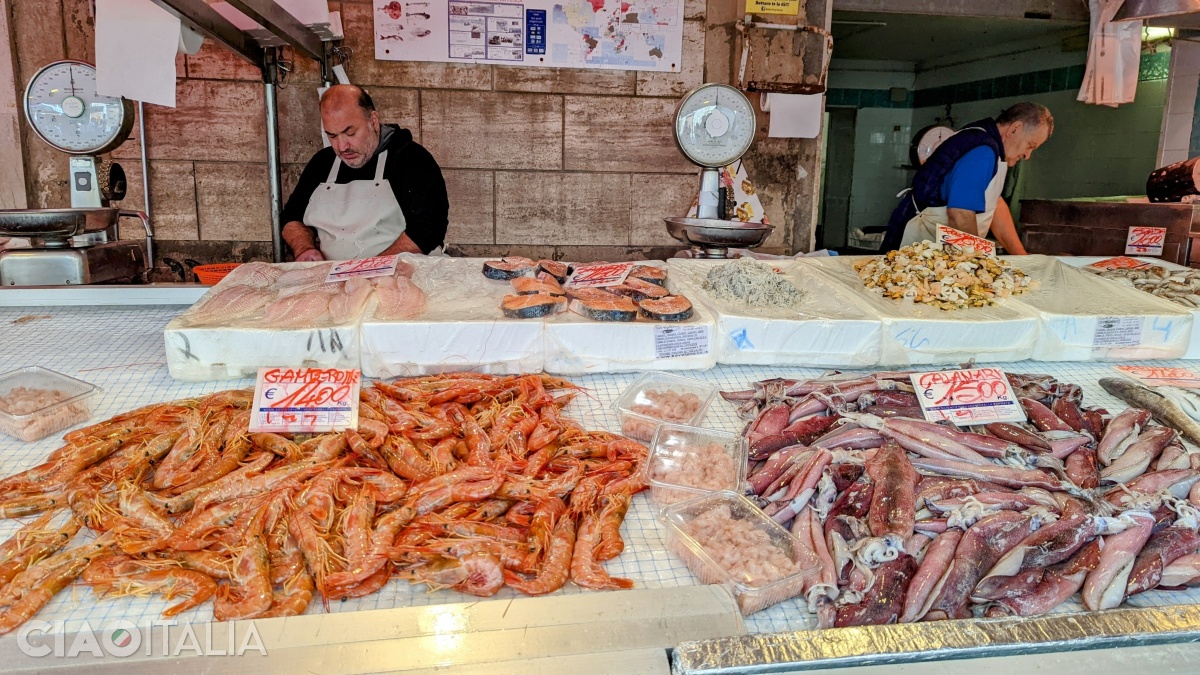
The Ortigia Market (Mercato di Ortigia) is a crowded and colorful place where vendors shout out their products, just like in the fish market in Catania. Immerse yourself in the atmosphere, admire the fresh fruits and vegetables, different species of fish, variety of cheeses, and artisanal products. Do not hesitate to taste them - this is also part of the travel experience (for more information, see also our article on Sicilian food).
The Ortigia Market takes place Monday through Saturday, from morning until around lunchtime.
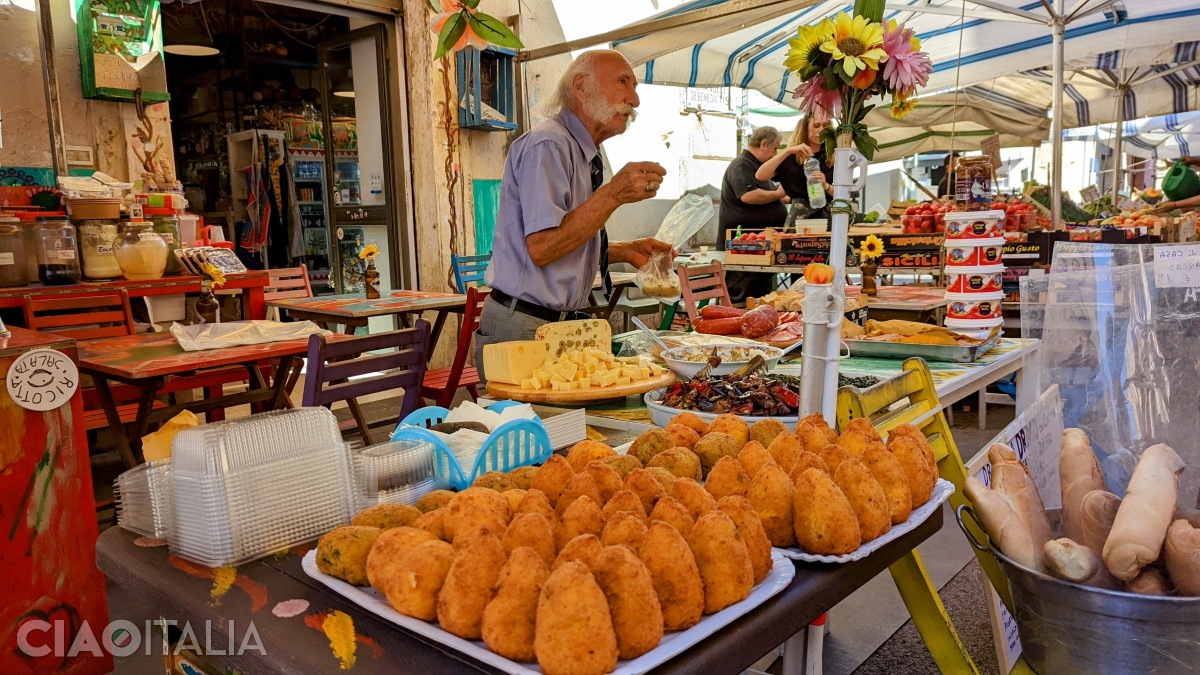
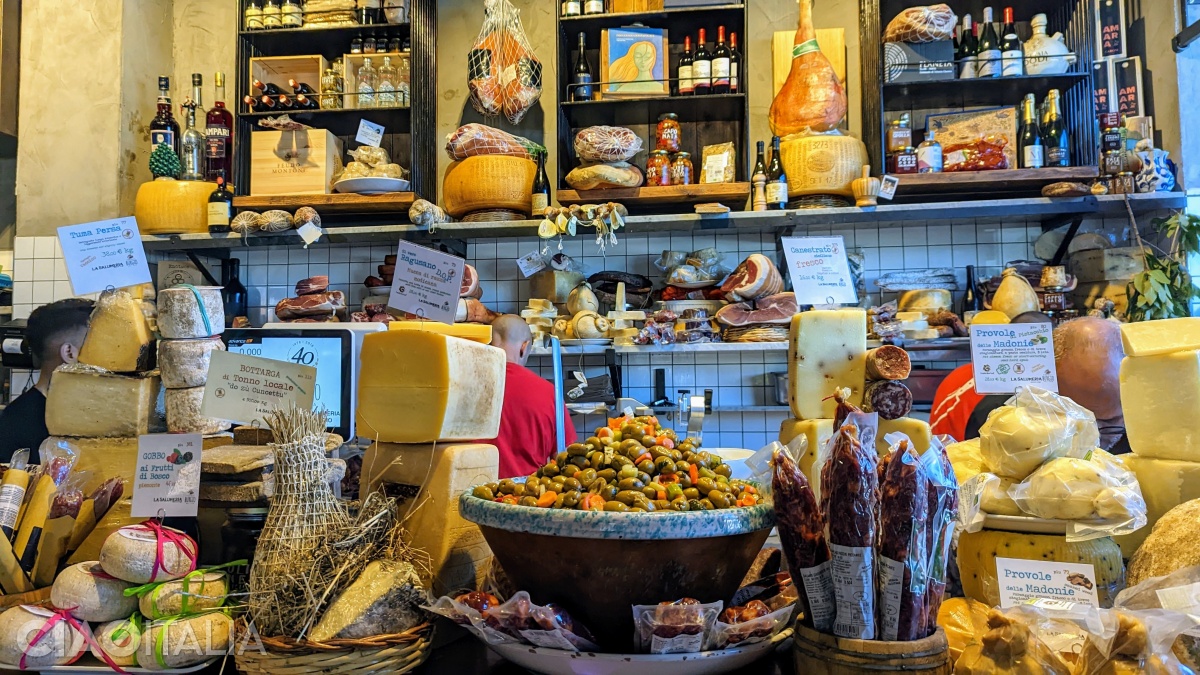
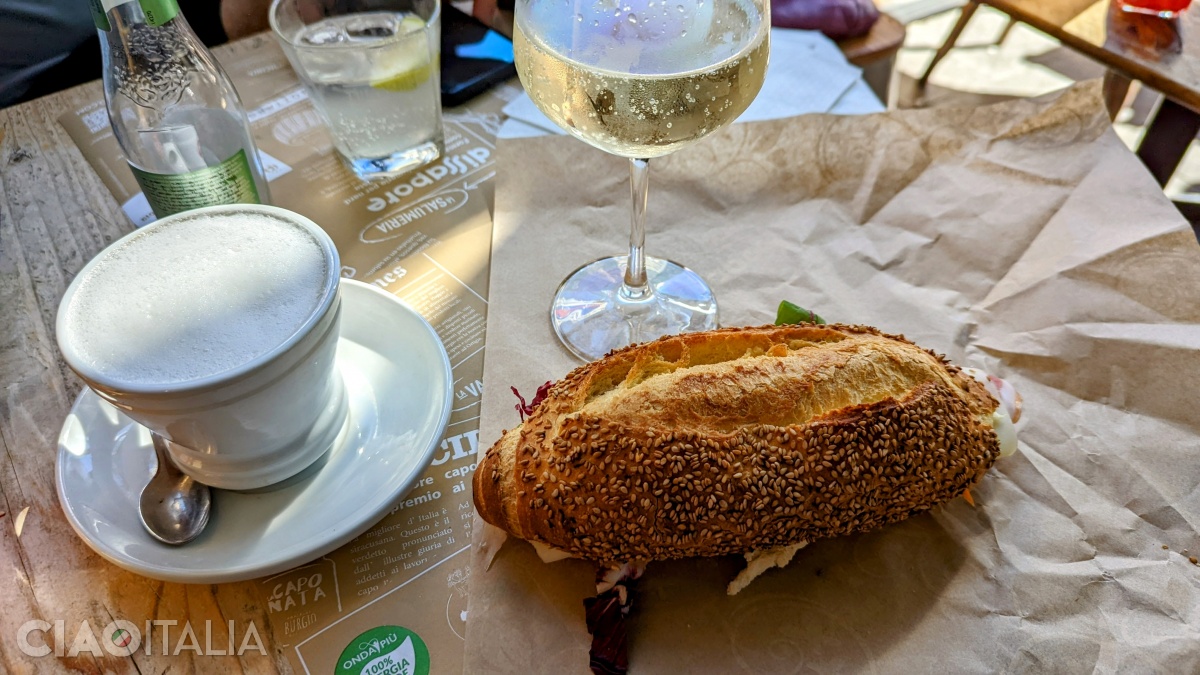
We recommend stopping for a sandwich in the market at Caseificio Borderi, which has the reputation of preparing the best sandwiches in Ortigia using fresh, local ingredients. Another equally famous place is Salumeria Fratelli Burgio. You can also buy various food products from their shop.
4. Piazza Archimede
Walking from the Temple of Apollo along Corso Matteotti, a street lined with shops, you will arrive directly in the heart of Ortigia, at Piazza Archimede. The square was built in 1878 and is another place in Syracuse dedicated to the memory of the great Greek scholar.
In its center, you can admire the Fontana di Diana (Fountain of Diana). Although it looks older, somewhat reminiscent of the Baroque style, the fountain was created in 1906 by sculptor Giulio Moschetti. He wanted to depict the legend of the nymph Arethusa, which explained the presence of freshwater springs in Syracuse just meters from the sea. In the center of the fountain, you can see Diana (the Roman name for the goddess Artemis, protector of Ortigia), with her bow and a hunting dog. At her feet is the nymph Arethusa, represented at the moment the goddess transforms her into a spring to save her from Alpheus, who is to the right of Diana. Inside the fountain are four tritons, depicted riding horses and sea monsters.
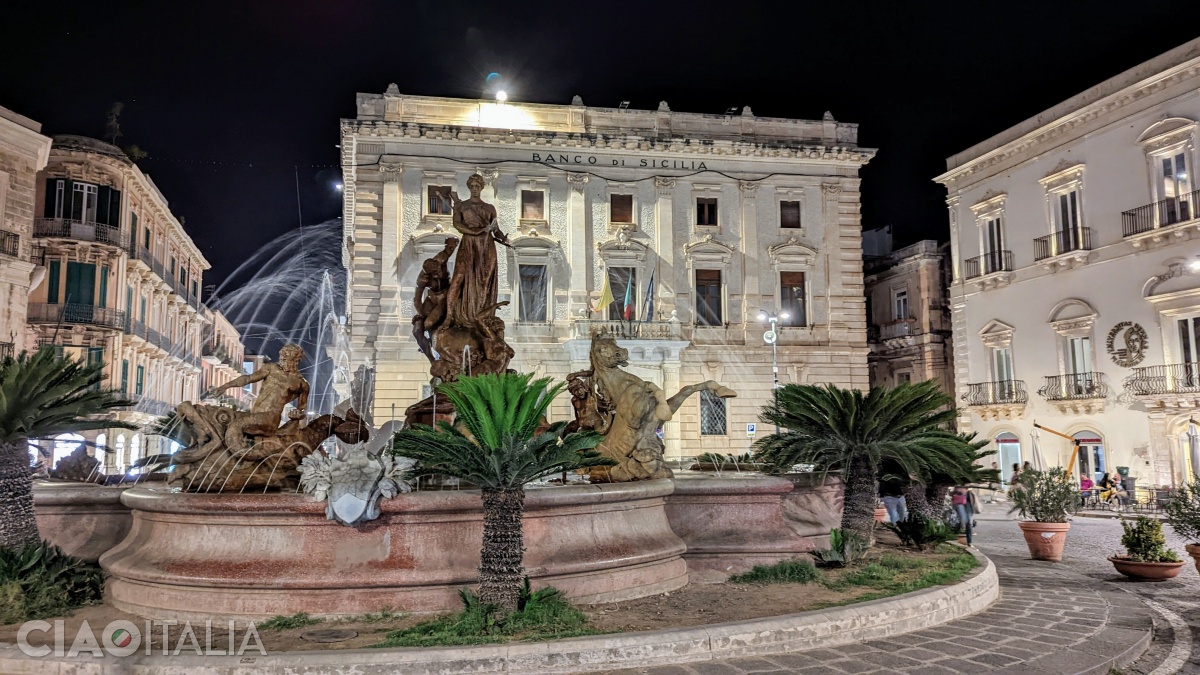
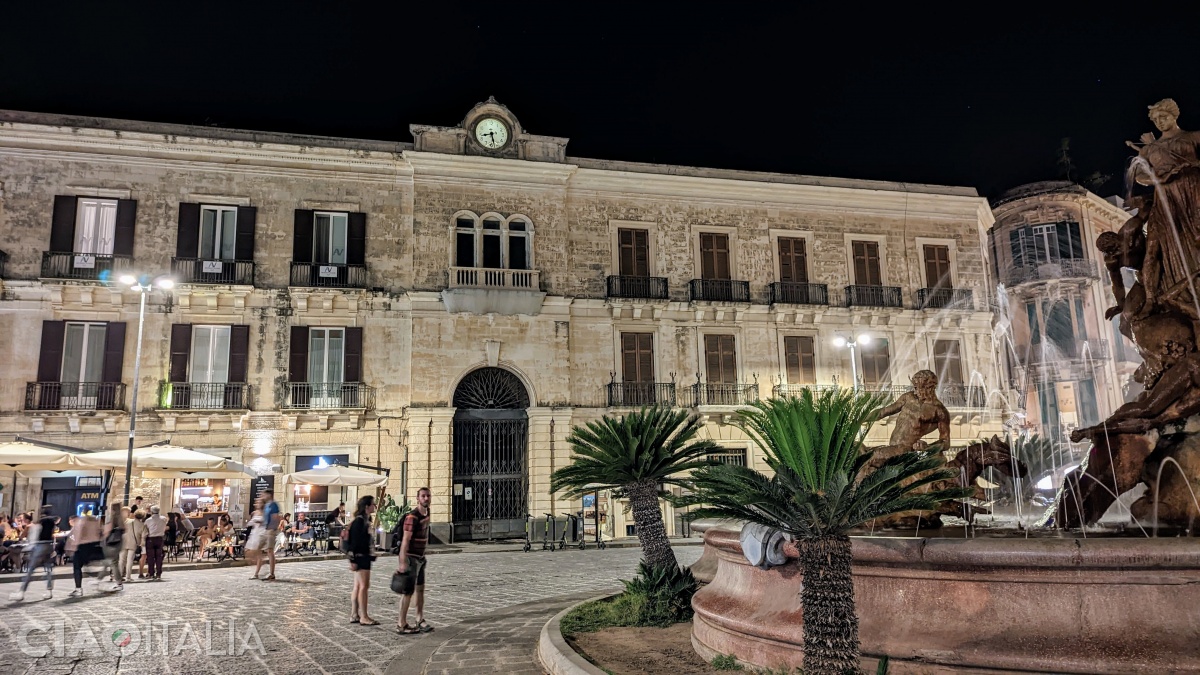
Piazza Archimede is surrounded by palaces dating from different periods, which today house several institutions. On the side behind the fountain is Palazzo del Banco di Sicilia (Palace of the Bank of Sicily), built in 1928. To its right is Palazzo Pupillo, built in the 18th century. Next (on the side opposite the Bank of Sicily Palace) is Palazzo Gargallo, built in the 17th century and rebuilt at the end of the 19th century. Beside it is Palazzo Lanza-Bucceri. On the next side of the square is Palazzo della Banca d'Italia (Palace of the Bank of Italy), also known as Palazzo dell'Orologio (The Clock Palace). It was built in the 15th century and rebuilt later, with the clock on the facade added in 1882.
Very close to Piazza Archimede is Palazzo Montalto, an example of the Gothic style called "Chiaramonte". This style spread in Sicily during the rule of the Chiaramonte family and is characterized by zigzag stone decorations. The palace was built in the 14th century at the request of the noblewoman Macciotta Mergulense, as indicated by the inscription above the portal. In the 15th century, it was donated by the Queen of Aragon to the Montalto family. In 1837, it was transformed into a hospital for cholera patients, and then into a convent for the Figlie della Carità order.
5. Piazza del Duomo
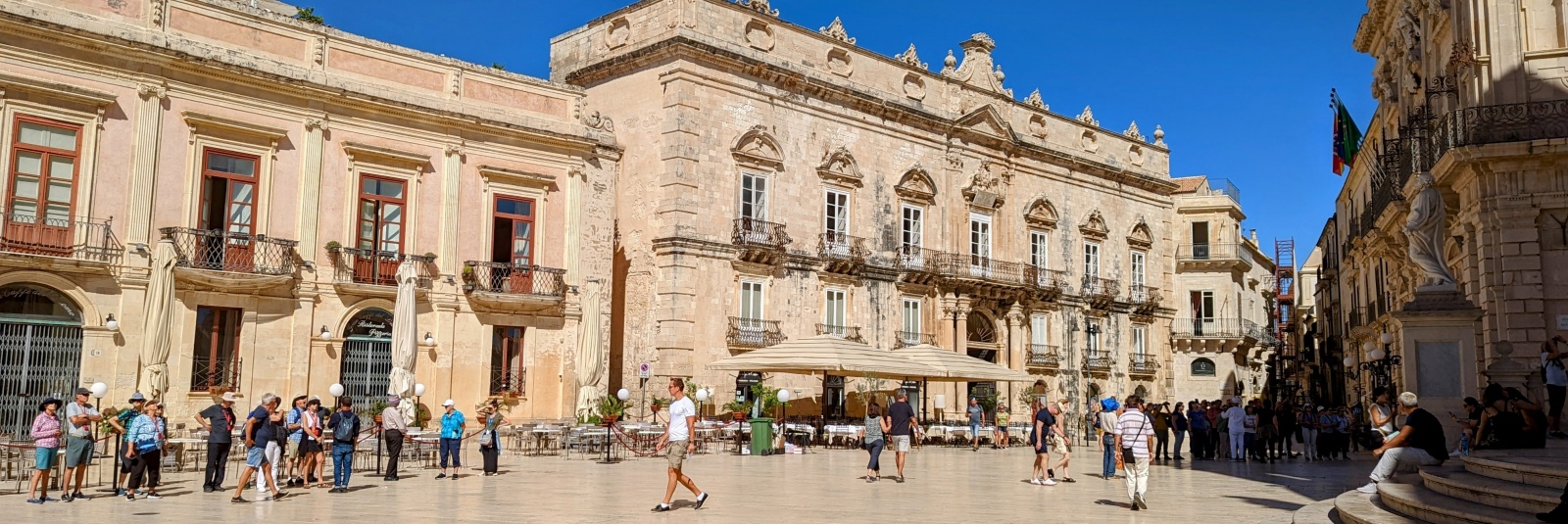
Not far away lies Piazza del Duomo, the heart of Ortigia. It is one of the most beautiful, spacious, and luminous squares in Sicily, lined with bars, cafes, and Baroque buildings crafted from local limestone.
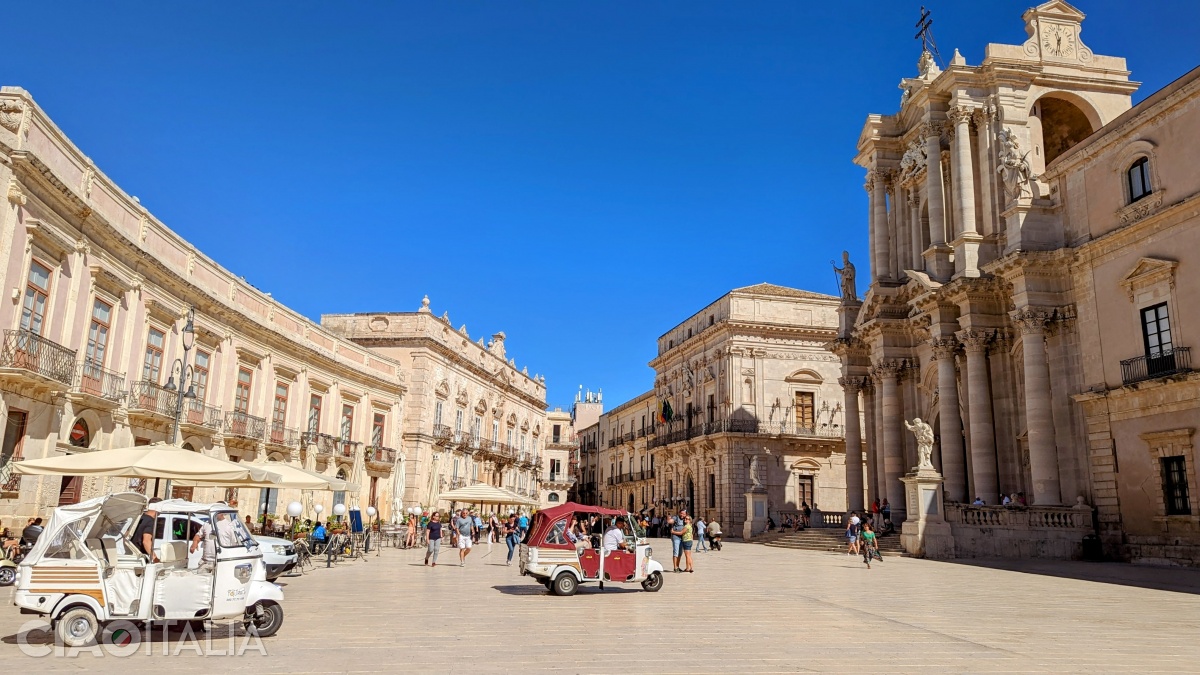
On one of its corners stands Palazzo Beneventano del Bosco. Originally built in the 15th century for the Arezzo family, the palace was bought in 1778 by Baron Guglielmo Beneventano and renovated by Sicilian architect Luciano Alì, becoming the most representative Baroque building in Ortigia. On the main facade, above the central balcony, is a Latin inscription commemorating the 1806 visit of Ferdinand I of Bourbon, King of the Two Sicilies. Admiral Nelson was also hosted in the same palace a few years earlier, in 1798. Above, in relief, is the Beneventano family crest. The inner courtyard is paved with a mosaic of black and white pebbles.
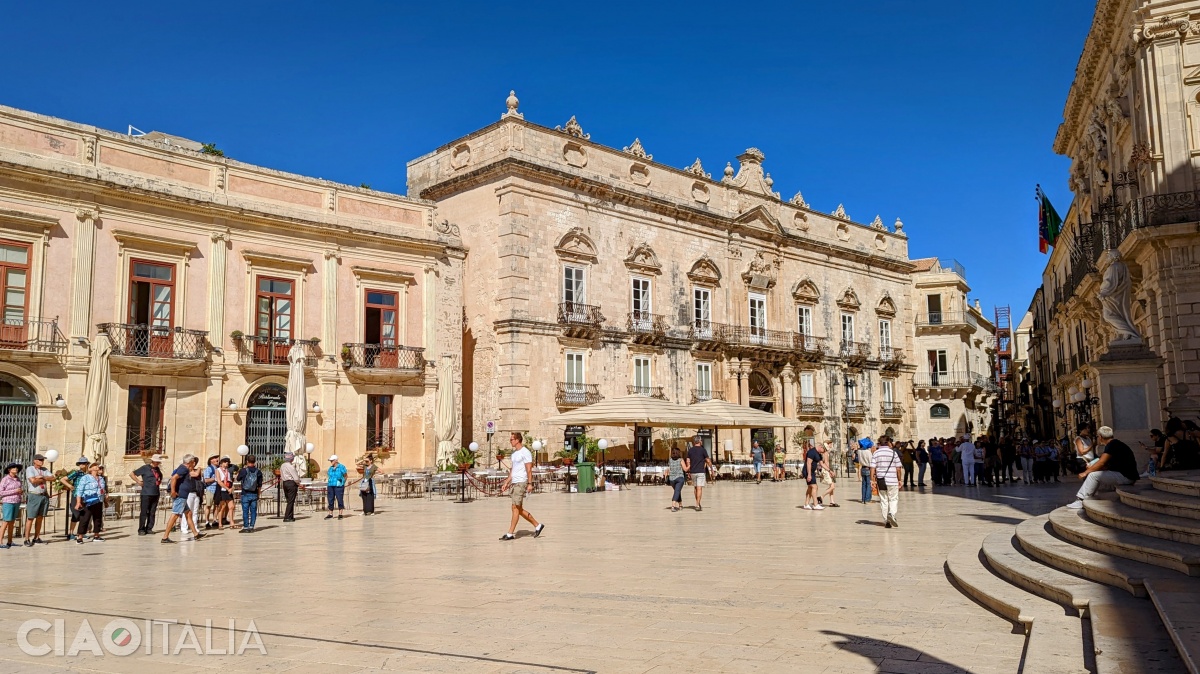
On another side of the square, toward Via Minerva, is the City Hall, housed in Palazzo Vermexio, also called Palazzo del Senato. The palace was built in the first half of the 17th century by Giovanni Vermexio to house the seat of the City Senate. The Spanish-born architect, nicknamed Lucertola ("The Lizard"), left his signature on the left corner of the cornice: a small lizard carved in stone.
In the palace's underground, archaeologist Paolo Orsi discovered in 1910 the remains of an Ionic temple from the 6th century BC dedicated to the goddess Artemis, the protector of Syracuse. The ruins are showcased in the Artemision Museum. The museum's access pavilion is modern, built on the site of the San Sebastianello Church, which was demolished in the 1960s.
The most important building in the square is the Cathedral of Syracuse (which you can read about below). To its right is the Archiepiscopal Palace (Palazzo Arcivescovile), built in the 17th century. The palace has a beautiful terrace garden and houses the Alagoniana Library, with 13th-century manuscripts.
On the opposite side of the square from the City Hall are the Church of Santa Lucia alla Badia, dedicated to the saint who is the patron of Syracuse, and Palazzo Borgia del Casale, both dating from the 18th century.
Also in Piazza Duomo, a hypogeum (Ipogeo di Piazza Duomo) was discovered in 1869, consisting of several underground galleries and passages that served as an air-raid shelter during World War II.
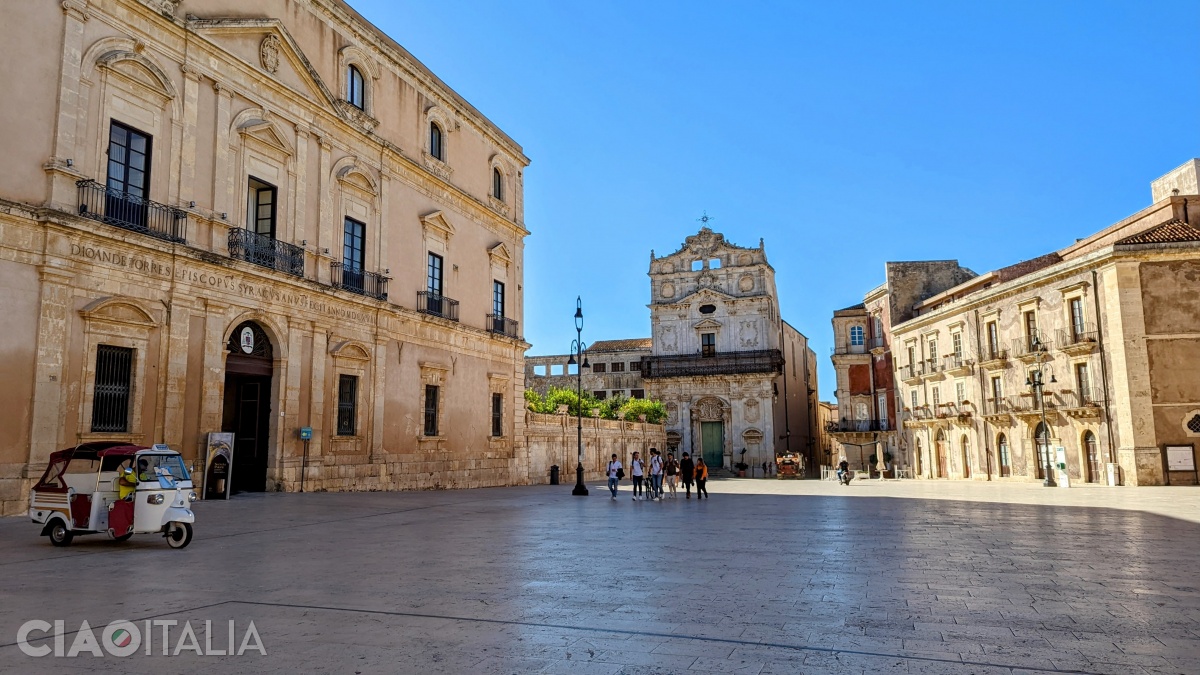
6. The Cathedral of Syracuse
The Cathedral of Syracuse (Duomo di Siracusa) is composed of overlapping layers of history. Archaeological research has shown that a temple erected by the Sicels (the population in eastern Sicily before the arrival of the Greeks) existed on this site. Over it, in the 5th century BC - around the same time the Temple of Concord in Agrigento was being erected - the Greeks built a temple dedicated to the goddess Athena (who became Minerva in the Roman era) to celebrate Syracuse's victory over Carthage.
Much later, in the 7th century AD, the Duomo, the Christian cathedral of Syracuse dedicated to the Nativity of the Virgin (Cattedrale della Natività di Maria Santissima), was built over the temple. After the Arab conquest in 878, the cathedral was transformed into a mosque. It resumed its role as a Christian church in 1093 with the arrival of the Normans.
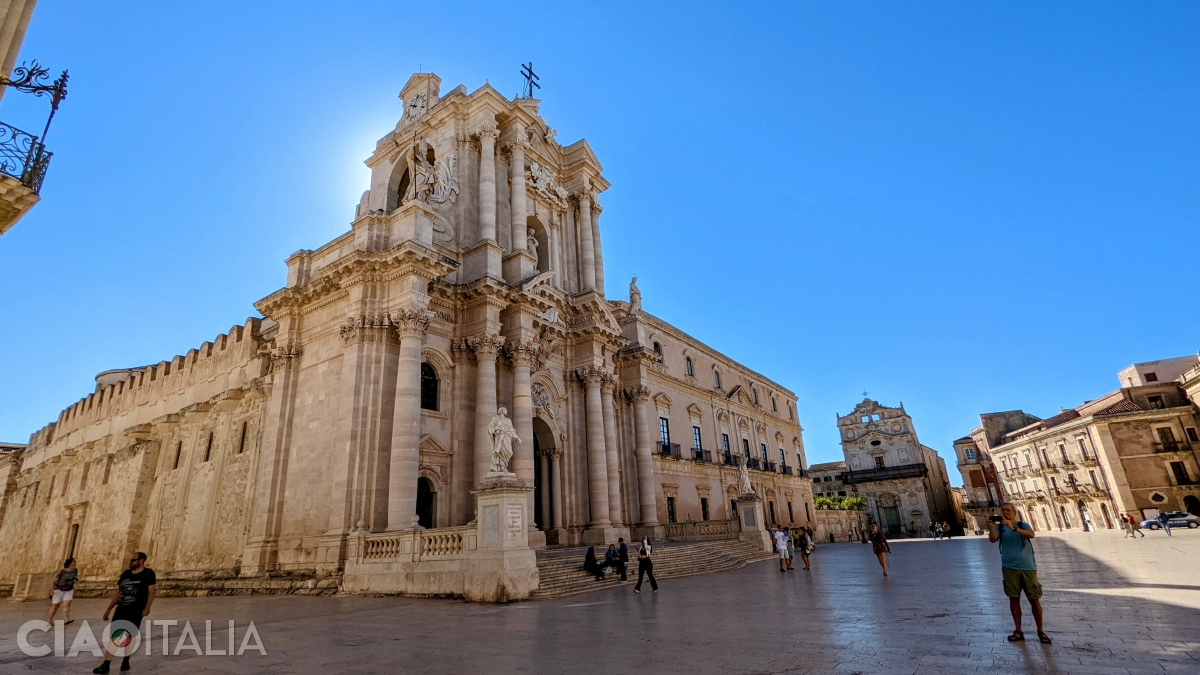
Before entering the church, take a look at the Cathedral from the outside. If you look from Via Minerva, you will surely notice the enormous Greek columns that once belonged to the Temple of Athena, incorporated into the current church.
The facade, destroyed by the 1693 earthquake, was rebuilt in the first half of the 18th century in Baroque and Rococo style by architect Andrea Palma. The statues decorating it date from the same period and were made by Ignazio Marabitti (a sculptor who also worked for the Cathedral of Monreale). The statues framing the access steps to the cathedral represent St. Peter (on the left) and St. Paul (on the right). Above, atop the columns, rise the statues of St. Marcian (left) and St. Lucy (right), the two martyrs of Syracuse. Between them, in a niche, is a statue of the Virgin Mary.
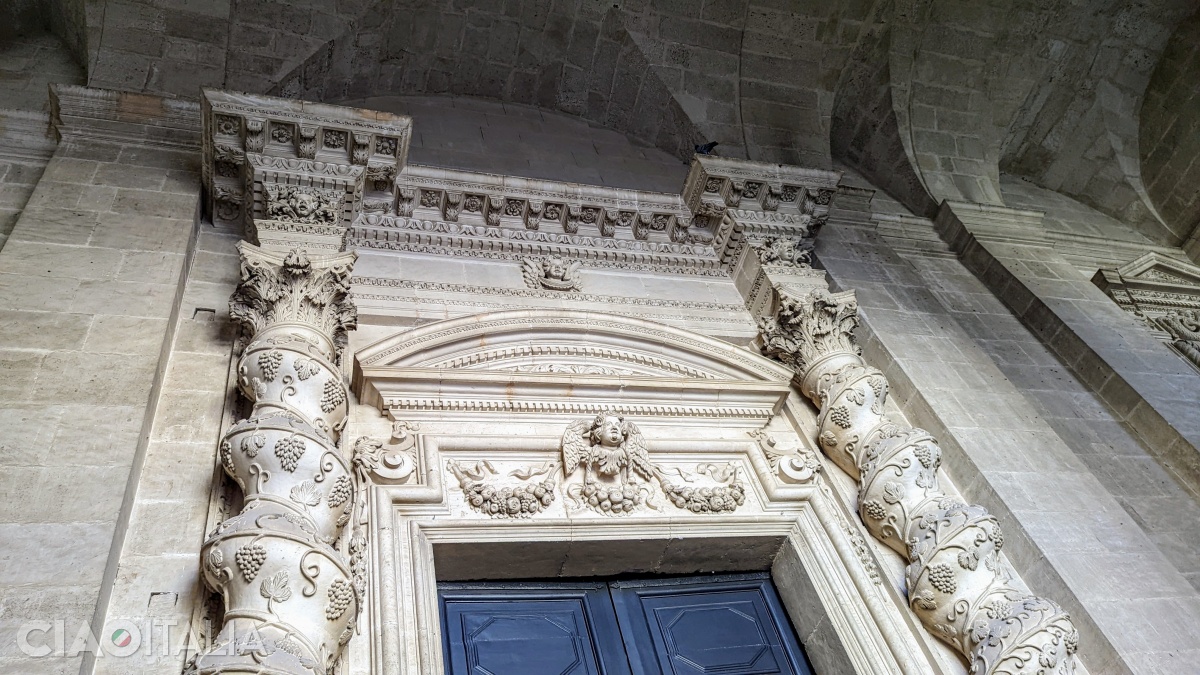
After climbing the stairs, you will reach the narthex of the Cathedral. Before stepping inside, observe the central portal, framed by two twisted columns richly decorated with grape clusters.
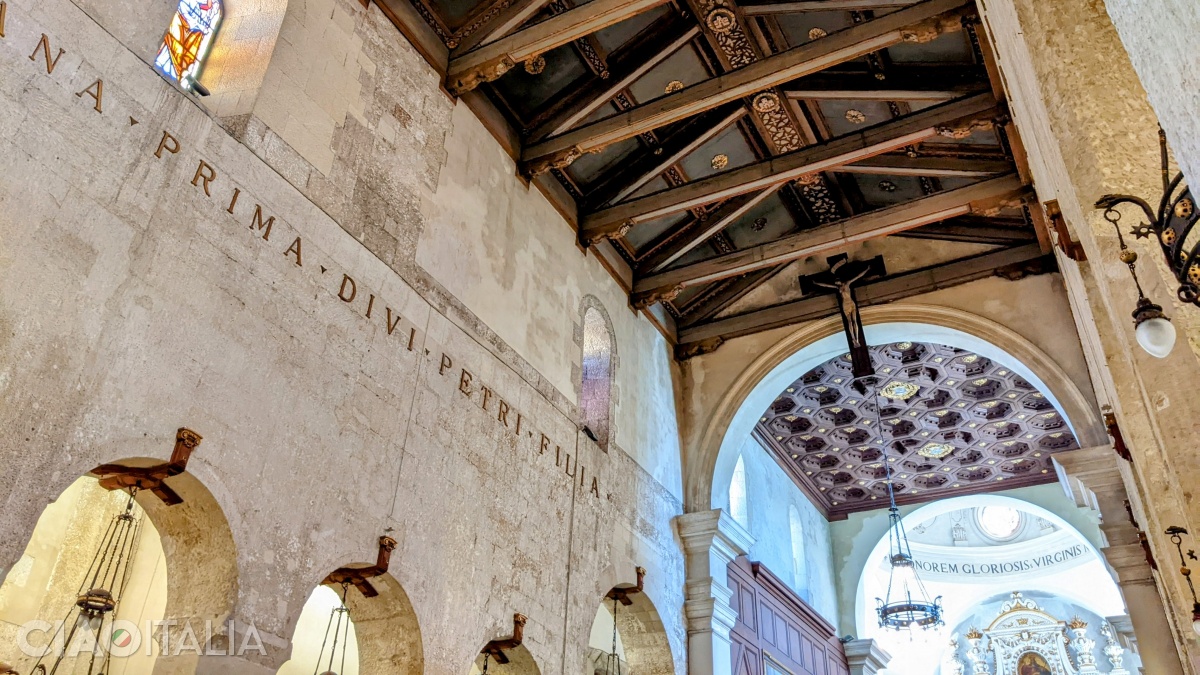
The interior is sober, divided into three naves by two rows of massive stone columns. Wrought-iron chandeliers, the work of master Alessandro Mazzucotelli from Lombardy, hang from the arches between the columns.
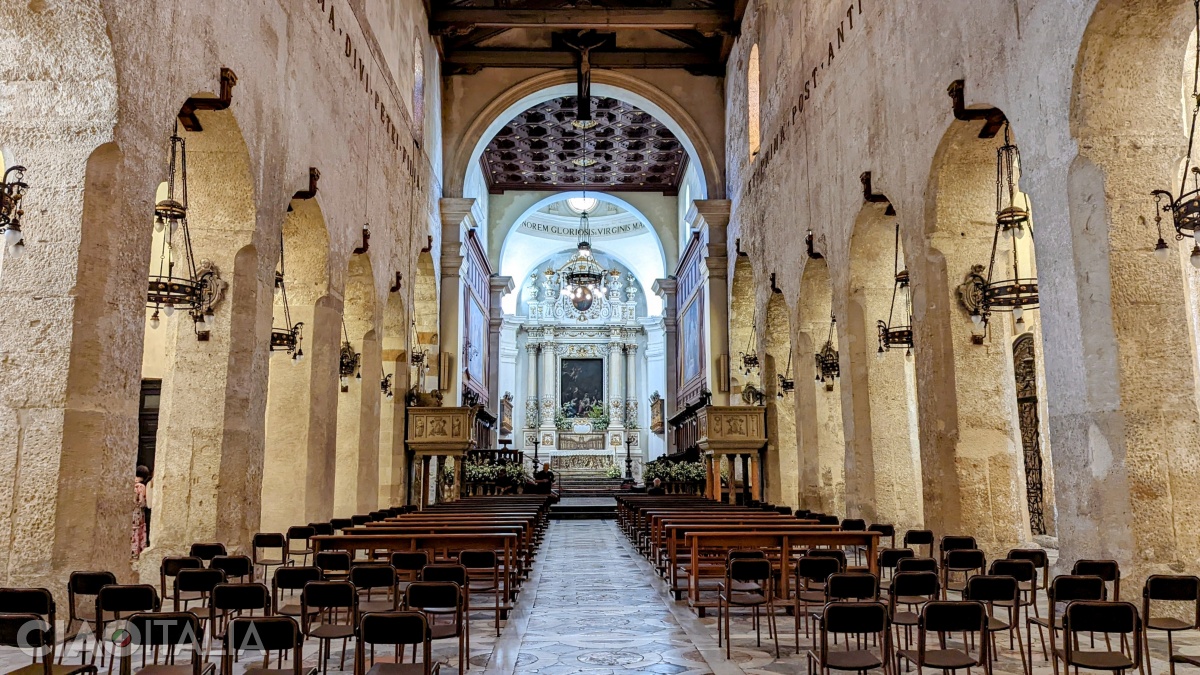
Look up at the ceiling - it is made of wood and dates from the 16th century. In the 17th century, the crests of noble families from Syracuse were added. Below the upper windows, on both sides of the central nave, you can read a Latin inscription: Ecclesia Syracusana, prima divi Petri filia et prima post Antiochenam Christo dicata ("The Church of Syracuse is the first daughter of Saint Peter and the second after the church of Antioch dedicated to Christ"). These are the words of Pope Leo X, who in 1517 recognized the church in Syracuse as the first church in the West.
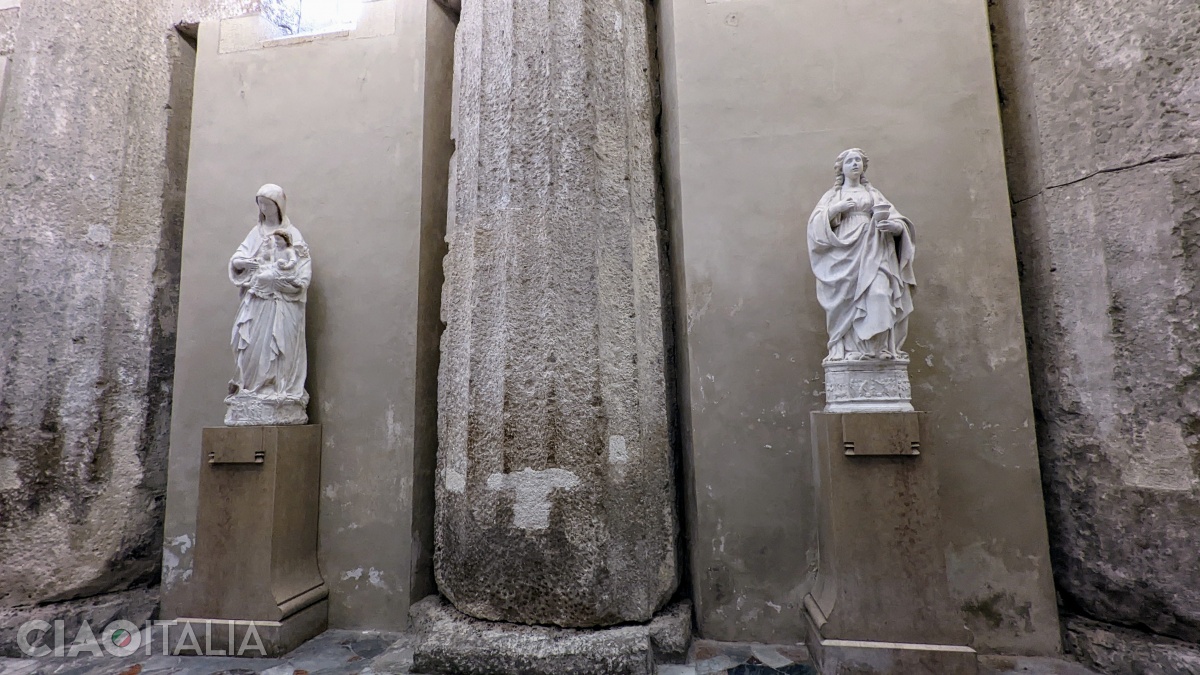
In the left nave, placed on pedestals, are three statues from the 15th and 16th centuries: St. Catherine of Alexandria, St. Lucy, and the Virgin Mary. At the end of the nave is the Madonna della Neve ("Madonna of the Snow") Chapel, with a statue of the Virgin created in 1512 by Antonello Gagini.
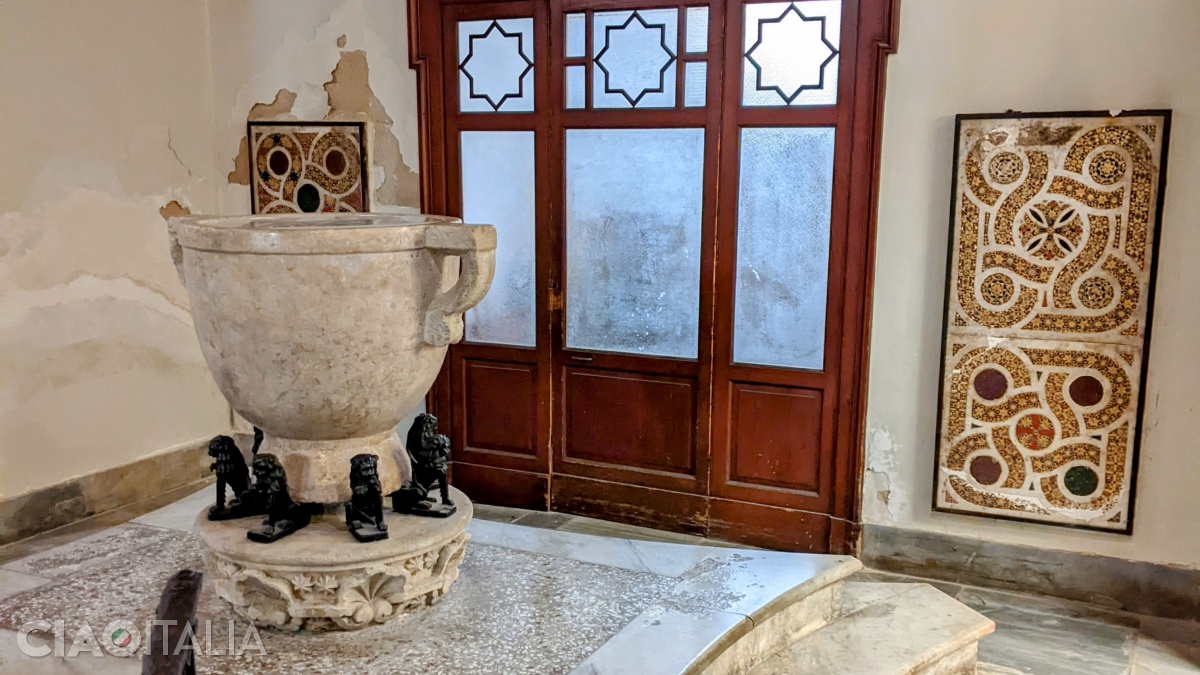
Several chapels open into the right nave. In the first, called the Battistero ("Baptistery"), located just to the right of the church entrance, is a marble censer consisting of a Hellenistic-era basin (4th-3rd century BC) supported by seven bronze lions dating from the 13th century.
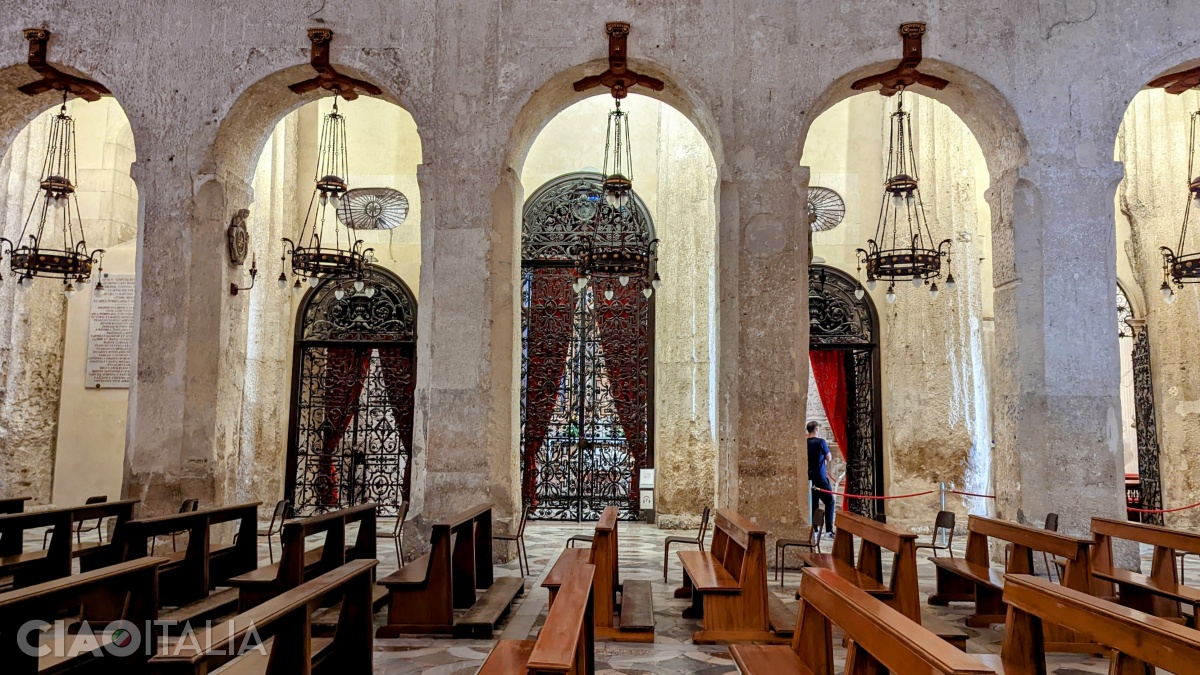
Following in order are the Chapel of Saint Lucy, the Chapel of the Blessed Sacrament, and at the end of the nave, the Chapel of the Crucifix.
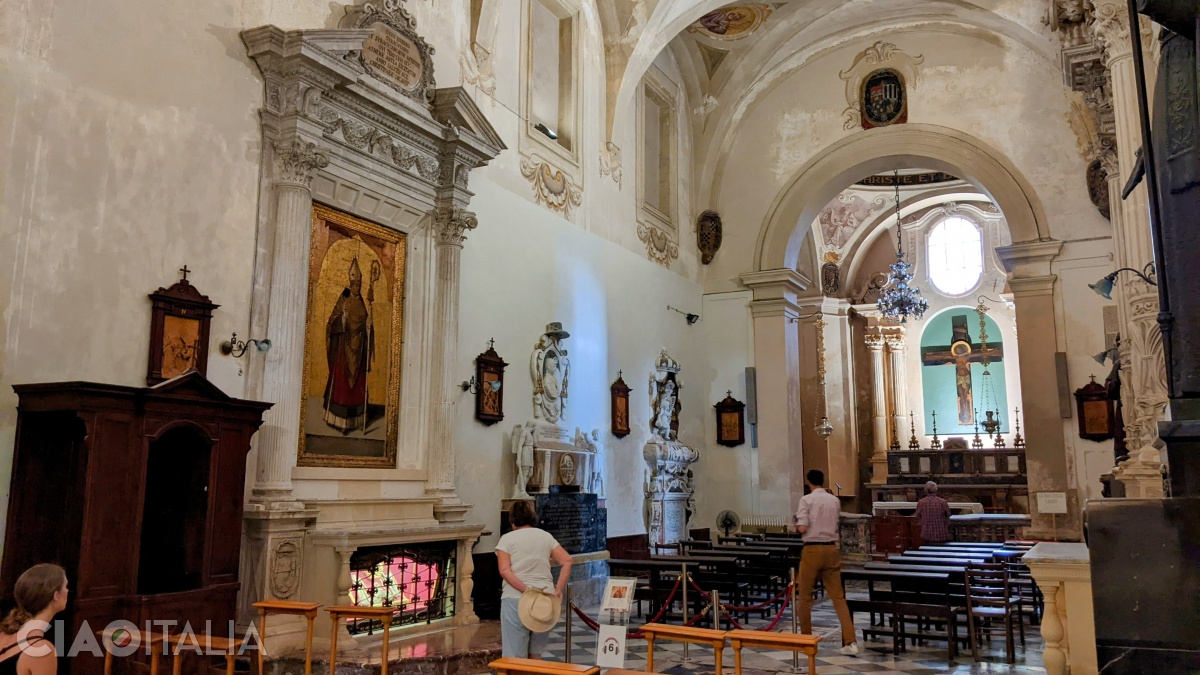
The Cathedral of Syracuse
Opening Hours:
May 1 - September 30, 2026:
- Monday-Saturday: 9:00 AM - 6:30 PM
- Sunday: Closed
October 1 - December 31, 2026:
- Monday-Saturday: 9:00 AM - 5:30 PM
- Sunday: Closed
- December 8, 11, 12, 13 and 25, 2026: Closed
Ticket Prices:
- Adults: €2
- Children under 10: Free
7. Fountain of Aretusa
Fonte Aretusa is the most famous fountain in Ortigia. It is actually a body of water surrounded by a semicircular basin, sourced from a freshwater spring located next to the sea. Fish swim in the water, and plenty of Egyptian papyrus plants grow naturally. The presence of freshwater sources was one of the advantages that led to the inhabitation of Ortigia since ancient times.
According to legend, this spring is Arethusa herself, one of Artemis's favorite nymphs. Fleeing from the god Alpheus, who had fallen madly in love with her, Arethusa reached Syracuse. There she asked the goddess for help, who transformed her into a spring. In turn, Alpheus transformed into a river and crossed the Ionian Sea to unite with the waters of the one he loved. In antiquity, it was said that if you threw a cup into the Alpheus River in Greece, it would surface in the sea waters near Syracuse. The legend also symbolizes Syracuse's links with Greece, where the first colonists came from.
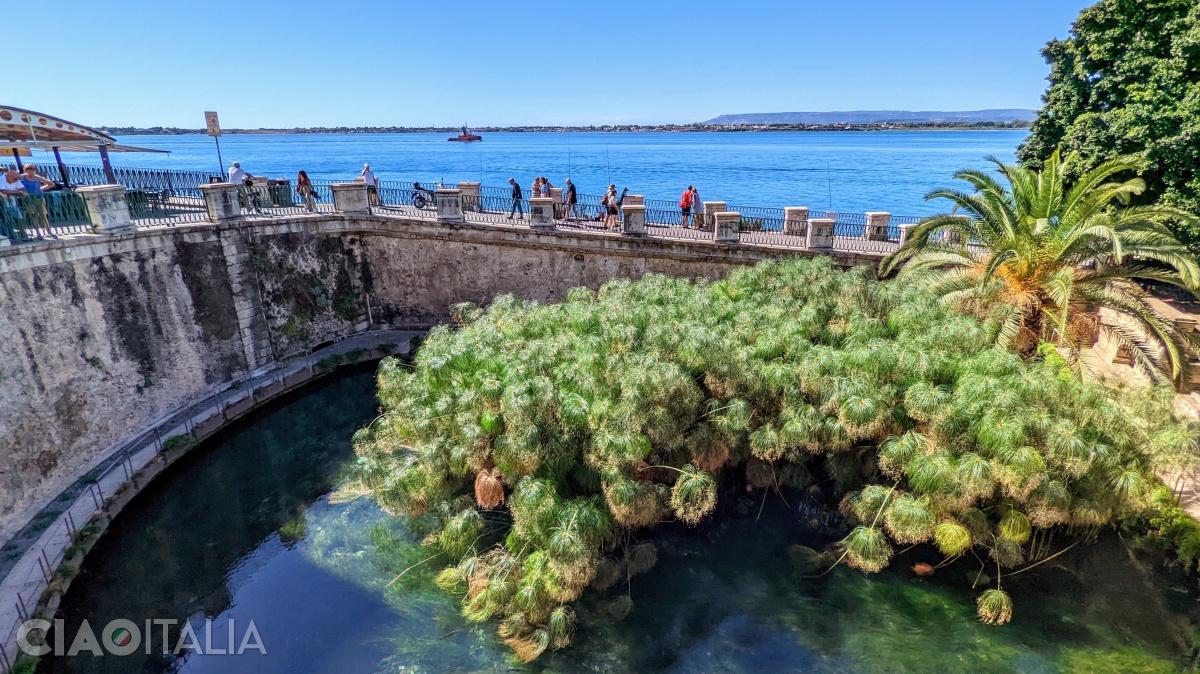
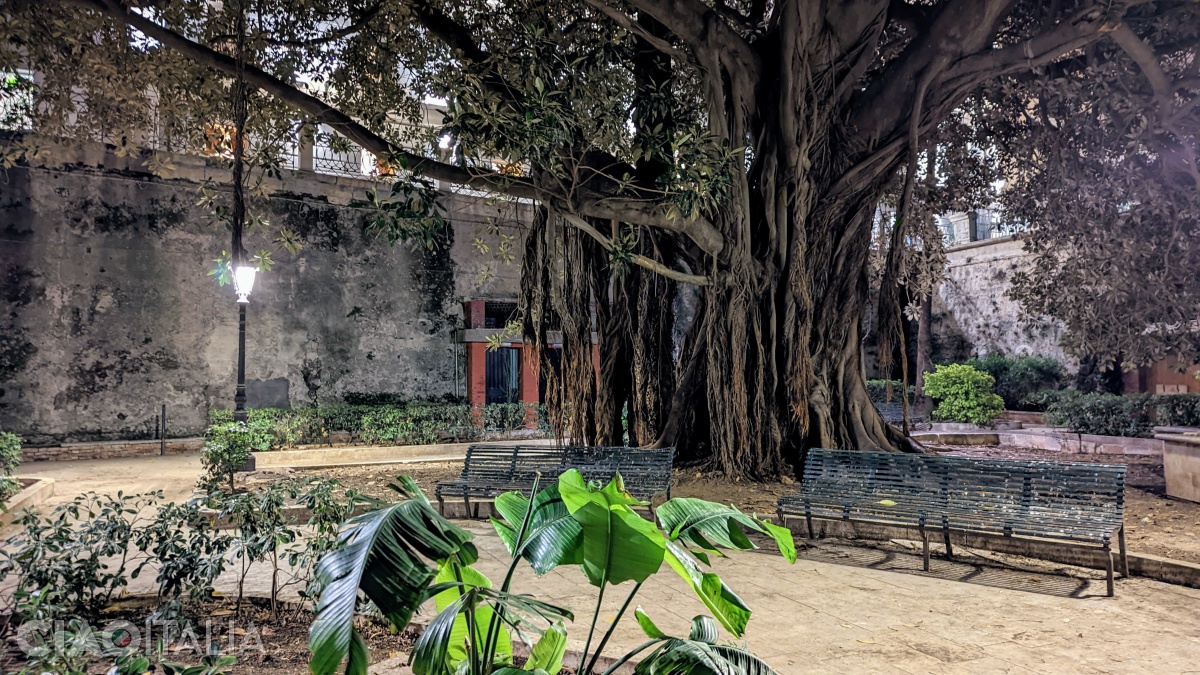
Next to the fountain, in the lower right part as you face the sea, there is also a small park (Giardino Aretusa) with impressively sized ficus trees.
8. Lungomare Alfeo
From Fonte Aretusa begins Lungomare Alfeo, one of the most beautiful promenades in Ortigia. During the evening, people go out for a walk or sit at bars to enjoy an aperitivo and take in the sunset view.
9. Maniace Castle
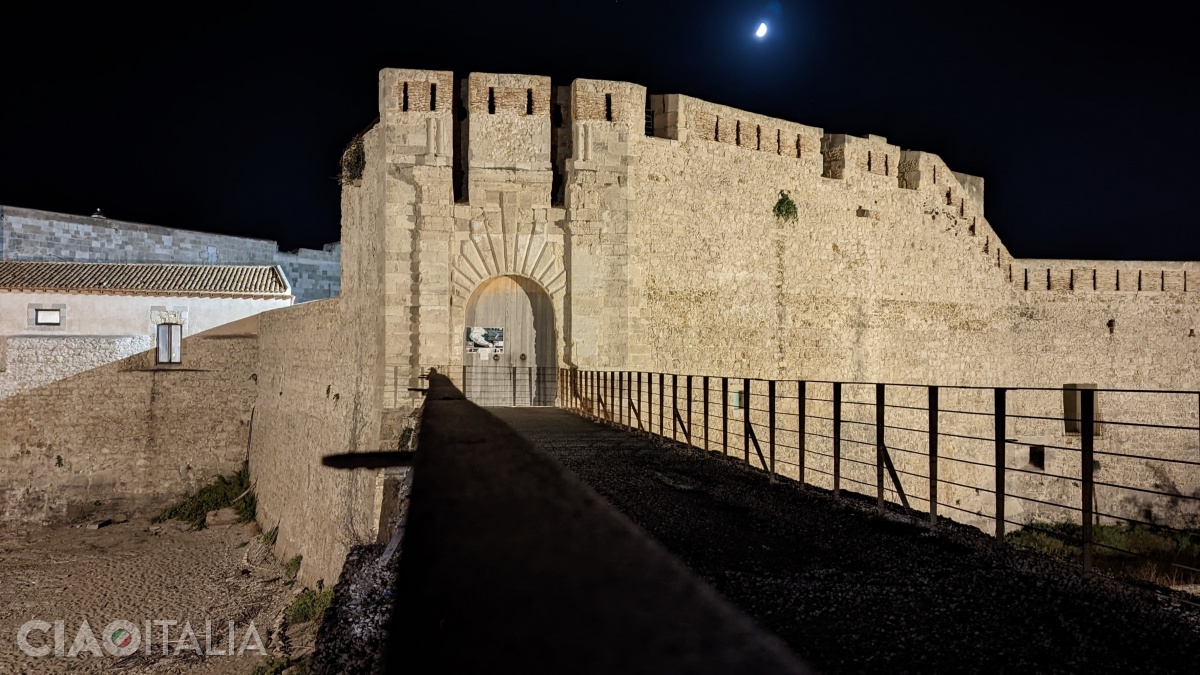
Not far from where Lungomare Alfeo ends, at the southernmost tip of Ortigia Island, rises Maniace Castle (Castello Maniace). It was built in the 13th century by Emperor Frederick II to protect the city of Syracuse. Its position was perfect for monitoring movements at sea. The castle was built in just 8 years, between 1232 and 1240. It took its name from the Byzantine general George Maniakes, who recaptured Syracuse from the Arabs in 1038. In this castle, Frederick II signed the decree establishing the University of Naples. Over time, kings, queens, and other important figures were received here. Starting in the 16th century, the castle took on an increasingly military role.
The castle can be visited, and tickets are purchased on-site (usually there is no queue).
Maniace Castle
Opening Hours:
September 15 - September 30, 2026:
- Sunday-Monday: 8:30 AM - 1:00 PM
- Tuesday-Saturday: 8:30 AM - 6:30 PM
The ticket office closes 45 minutes before.
Ticket Prices:
- Adults: €6
- EU citizens 18-25 years old (up to the day of their 25th birthday, inclusive): €3
- Under 18: Free
10. Palazzo Bellomo Gallery
If you are an art lover, visit the Palazzo Bellomo Gallery, housed in a beautiful 18th-century palace whose core dates back to the 13th century.
The gallery includes works covering nearly 1,000 years - from the Byzantine era to the 18th century, most of them coming from churches and monasteries. The most famous work exhibited in the museum is "The Annunciation" by the painter Antonello da Messina.
Galleria Palazzo Bellomo
Opening Hours:
- Monday: closed
- Tuesday: 9:00 AM - 1:00 PM
- Wednesday: 2:00 PM - 7:00 PM
- Thursday-Sunday: 9:00 AM - 1:00 PM
The ticket office closes 30 minutes before.
Ticket Prices:
- Adults: €10
- EU citizens 18-25 years old (up to the day of their 25th birthday, inclusive): €5
- Under 18: Free
11. Lungomare d'Ortigia and Lungomare di Levante
On the opposite side from Lungomare Alfeo is another beautiful promenade: Lungomare d'Ortigia. Along it, you will find steps leading down to the sea toward Cala Rossa beach.
Proceeding toward the end near the mainland, you will soon reach Lungomare di Levante. Small rocky beaches are also hidden here.
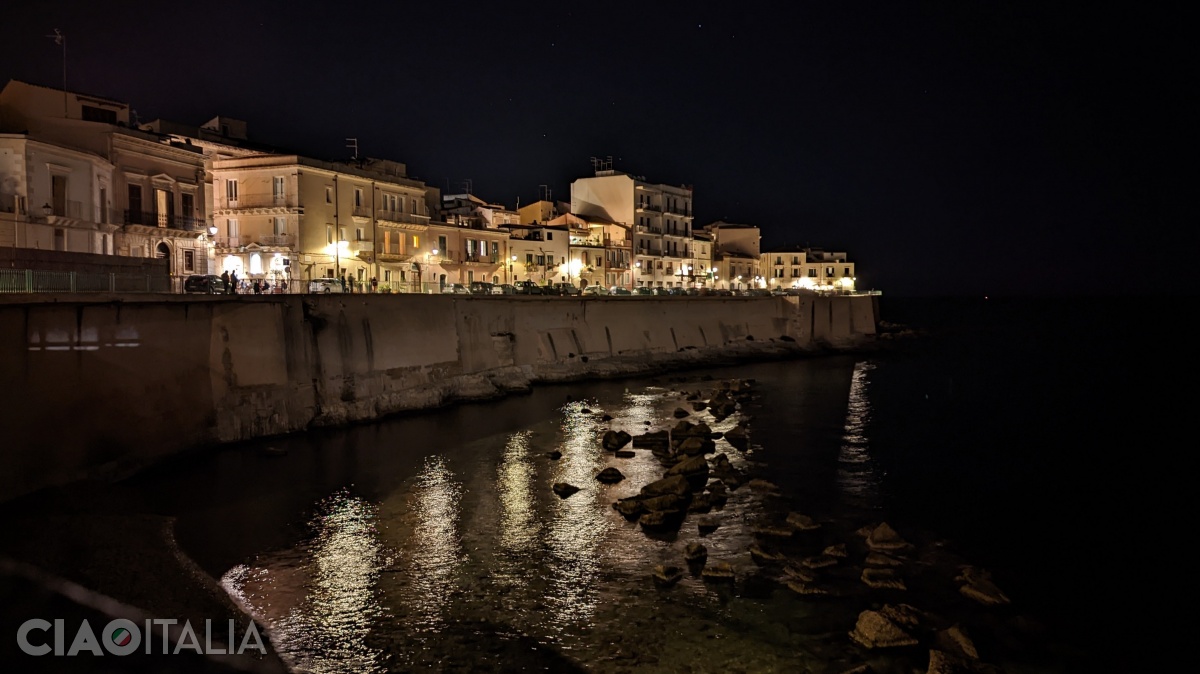
12. Papyrus Museum
It might seem strange, but there is a Papyrus Museum in Ortigia. Its presence is not accidental, being linked to the existence in Syracuse, on the Ciane River, of the only place in Europe where papyrus grows naturally. Because of this, papyrus paper began to be produced in the city again at the end of the 18th century.
The Papyrus Museum (Museo del Papiro) was founded by Corrado Basile and Anna di Natale in 1987 in the spaces of a former monastery. Today, museums from all over the world entrust specialists with papyri for restoration.
Papyrus Museum
Opening Hours:
- Monday: closed
- Tuesday-Sunday: 10:00 AM - 2:00 PM
Ticket Prices:
- Adults: €6
- 6-17 years: €4
- Children under 6: Free
13. Archimedes and Leonardo Museum
The Archimedes and Leonardo Museum is also housed in a former 19th-century monastery. The museum exhibits 60 interactive models, handmade from cedar wood, of the works of the two great inventors. The models were created with scientific consultancy provided by the Artesmechanicae group from Florence.
Archimedes and Leonardo Museum
Opening Hours:
- Monday-Sunday: 10:30 AM - 7:00 PM
Ticket Prices:
- Adults: €8
- Reduced: €6.5
14. Puppet Museum
The tradition of puppet theater emerged in Sicily at the beginning of the 19th century and is today inscribed on the UNESCO Intangible Heritage list. In Ortigia, Syracuse, the small Museo Aretuseo dei Pupi was established - the first of its kind in Italy dedicated to this theme. Puppet shows are also organized there several times a week.
Museo dei Pupi
Opening Hours:
- July 1 - September 30, 2026: 11:00 AM - 1:00 PM, 4:00 PM - 8:00 PM
- October 1 - November 14, 2026: 11:00 AM - 1:00 PM, 3:00 PM - 7:00 PM
- December 26 - December 31, 2026: 3:00 PM - 7:00 PM
- January 1 - January 6, 2027: 3:00 PM - 7:00 PM
Ticket Prices:
- Adults: €3
- Children 3-12 years: €2
- Children under 3: Free
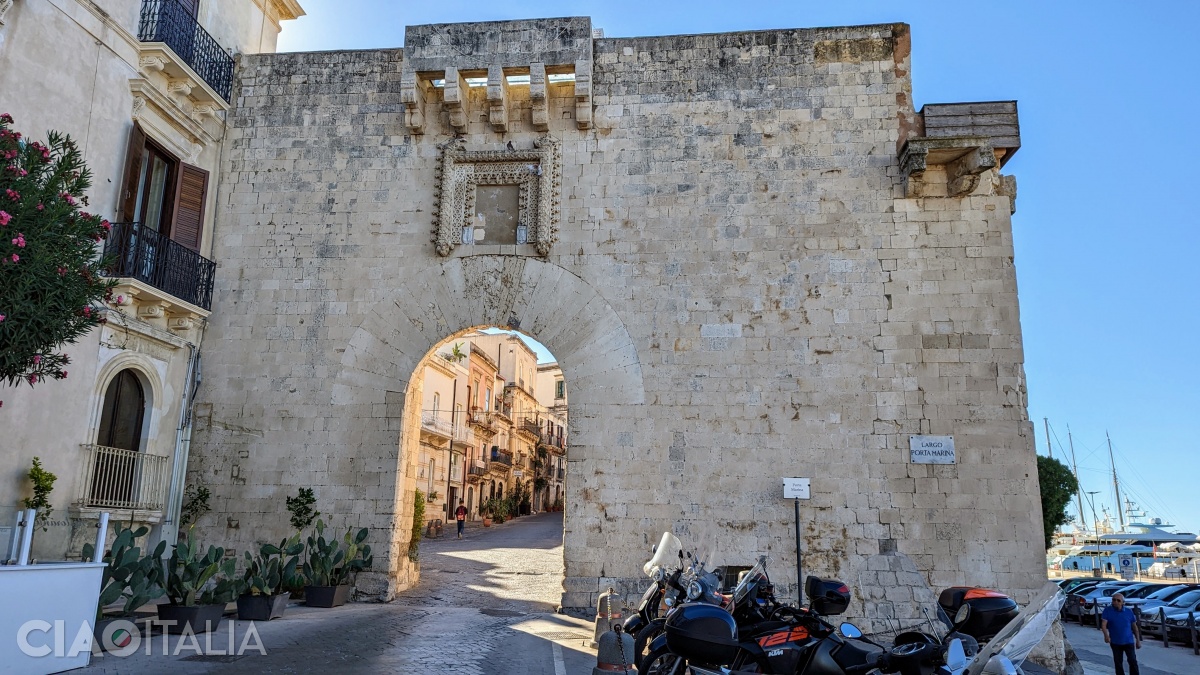
15. Porta Marina
Porta Marina was built in the 16th century, during the Spanish period, over the remains of an ancient Greek gate. It is the only one of the city's gates that has been preserved and allowed access from the port to the fortified city. Above the arch, in a frame beautifully adorned with carved decorations, a coat of arms was once located.
16. Giudecca District and Jewish Baths
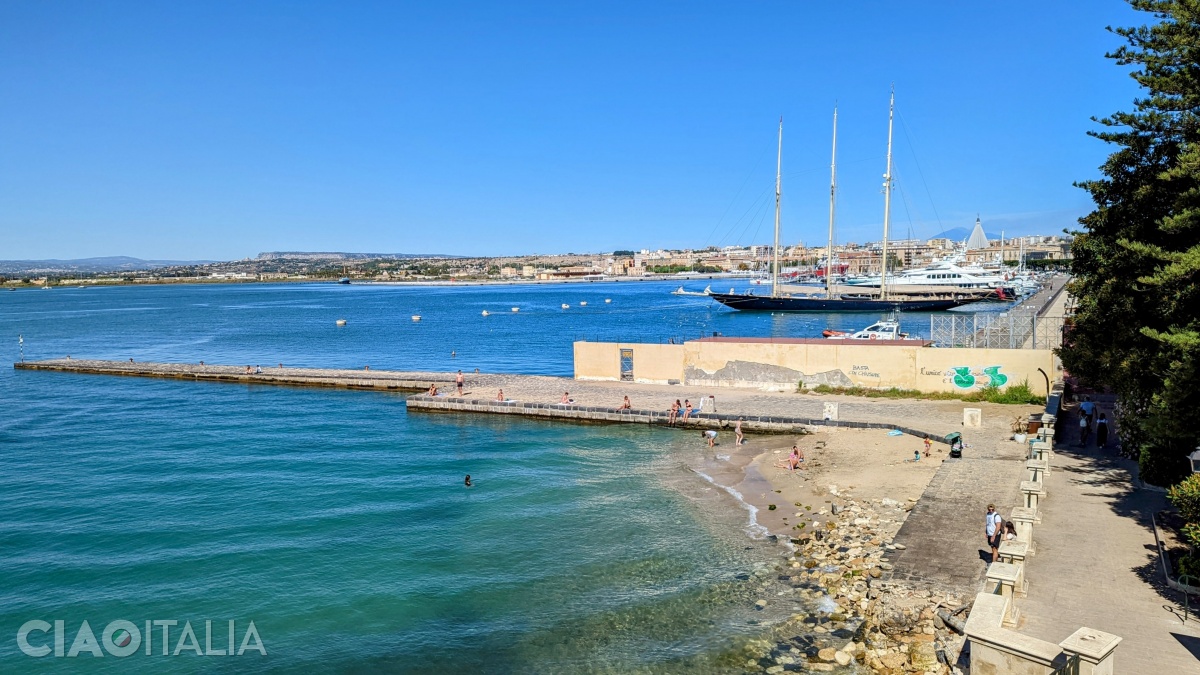
Giudecca is the former Jewish quarter of Ortigia, bounded by Via della Giudecca, Via della Maestranza, Via Alagona, and Via Larga.
In the underground of the Hotel Alla Giudecca, 18 m below ground, the former miqweh Jewish baths are preserved, used for purification from sins. They probably date from the 6th century and are among the oldest and best-preserved in Europe.
Jewish Baths
Opening Hours:
- Monday-Sunday: 10:00 AM - 1:00 PM, 3:00 - 6:00 PM (guided tours every 30 minutes)
Ticket Prices:
- €7
17. Neapolis Archaeological Park
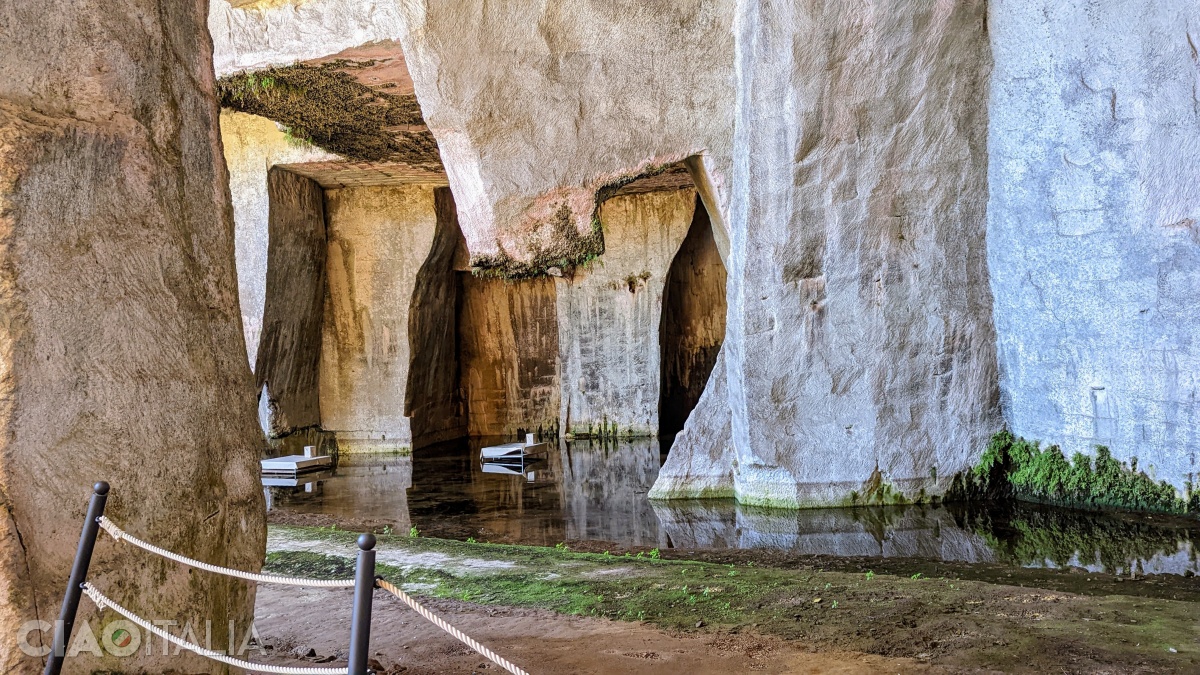
The Neapolis Archaeological Park, located about 2.5 km from Ortigia, is one of the most important archaeological sites in the world. It includes Greek and Roman monuments situated in the northern part of the ancient Neapolis district (which, alongside Ortigia, was one of the five original districts of the city).
Do not miss the Latomie del Paradiso, the ancient limestone quarries now surrounded by lush vegetation. Within them, several grottoes open up, such as the Orecchio di Dionisio (Ear of Dionysius) - legend says the tyrant of Syracuse used its extraordinary acoustic properties to spy on his slaves. There is also the Grotta dei Cordari (Rope Makers' Grotto), where ropes were crafted until around 1984 because the cave's humidity helped maintain the fibers' elasticity, and the Grotta del Salnitro (Saltpeter Grotto), named for the nitre deposits on its walls.
The Greek Theater, built in the 5th century BC, is the oldest ancient theater in Sicily (followed in age by the Ancient Theatre of Taormina).
Neapolis Archaeological Park
Opening Hours:
September 1 - September 30, 2026:
- Monday-Sunday: 8:30 AM - 7:40 PM
The ticket office closes one hour and 40 minutes before.
Ticket Prices:
- Adults: €14; online tickets on TicketOne
- EU citizens 18-25 years old (up to the day of their 25th birthday, inclusive): €7
- Under 18: Free
Neapolis Archaeological Park + Paolo Orsi Archaeological Museum Combined Tickets:
- Adults: €19
- EU citizens 18-25 years old (up to the day of their 25th birthday, inclusive): €9.5
- Under 18: Free
18. Paolo Orsi Archaeological Museum
A 10-minute walk from the Neapolis Archaeological Park is the Paolo Orsi Archaeological Museum. Its collection presents the history of eastern Sicily, with an emphasis on the history of Syracuse and objects discovered during archaeological excavations.
Paolo Orsi Archaeological Museum
Opening Hours:
- Monday: closed
- Tuesday-Saturday: 9:00 AM - 7:00 PM
- Sunday: 9:00 AM - 1:45 PM
The ticket office closes one hour before.
Ticket Prices:
- Adults: €10
- EU citizens 18-25 years old (up to the day of their 25th birthday, inclusive): €5
- Under 18: Free
Neapolis Archaeological Park + Paolo Orsi Archaeological Museum Combined Tickets:
- Adults: €19
- EU citizens 18-25 years old (up to the day of their 25th birthday, inclusive): €9.5
- Under 18: Free
19. Sanctuary of the Madonna delle Lacrime
A few minutes from the Archaeological Museum is the Santuario della Madonna delle Lacrime ("Sanctuary of Our Lady of Tears"), a modern and quite controversial church. So controversial that the construction work started in 1966 was delayed until 1994. Many called it "a reinforced concrete monster", despite the idea of the architects behind the project, who wanted to symbolize the ascension of people toward God. The church was built to house a statue that miraculously began to weep in 1953. It is the largest church in Syracuse, capable of hosting up to 11,000 people.
20. San Giovanni Catacombs
Near the Archaeological Museum, in the underground of the Basilica of San Giovanni Evangelista ("St. John the Evangelist"), are the Catacombs of San Giovanni (Catacombe di San Giovanni).
The San Giovanni Catacombs are a labyrinth of passages and galleries carved into the rock, housing the tombs and sarcophagi of the first Christians of Syracuse. The catacombs date back to the 4th century AD, when they were designed to follow the route of an ancient Greek aqueduct.
Catacombs of San Giovanni
Opening Hours:
September 1 - October 31, 2026:
- Monday-Sunday: 9:30 AM - 12:30 PM, 2:30 PM - 5:30 PM
Ticket Prices:
Guided visit, with VR experience:
- Adults: €12
- Children 6-15 years: €9
- Children under 6: Free
21. Basilica of Santa Lucia al Sepolcro and Caravaggio's Painting
Syracuse houses one of the masterpieces by the famous painter Caravaggio: "The Burial of Saint Lucy" (Seppellimento di Santa Lucia). The painting was created in 1608 specifically for the Basilica of Santa Lucia al Sepolcro. This is where the work is currently located, even though many sources erroneously point to the Church of Santa Lucia alla Badia (located in Piazza del Duomo in Ortigia, where the painting was kept until 2020).
So, if you want to admire Caravaggio's painting, head toward the Basilica of Santa Lucia al Sepolcro.
After being sentenced to death in Rome, Caravaggio was constantly on the run. From Naples, he went to Malta, but his rebellious nature meant trouble followed him there as well. He was arrested, escaped from prison, and sought refuge in Syracuse. Here, he received a commission from the City Senate to create an altarpiece depicting the burial of Saint Lucy. He completed it in just two months, and by December 13, 1608 - in time for the saint's feast day - the painting was already displayed on the altar (among the faces of the faithful witnessing the burial, the painter included his own self-portrait). Caravaggio continued his flight, moving on to Messina and then Palermo. He died in 1610 on his way back to Rome, having set out after receiving news that he had been pardoned by the Pope.
St. Lucy is the patron saint of Syracuse. She was a Christian martyr who died in 304 AD, during the Diocletianic Persecutions, at the young age of just 21. Every year on December 13th, the city holds major celebrations dedicated to her memory, similar to those held in honor of St. Agatha in Catania.
In Western iconography, St. Lucy is usually depicted holding a tray or a cup containing her eyes. While there are no historical documents confirming that her eyes were actually removed, because of her name (luce means "light"), she has always been considered the protector of those with eye conditions.
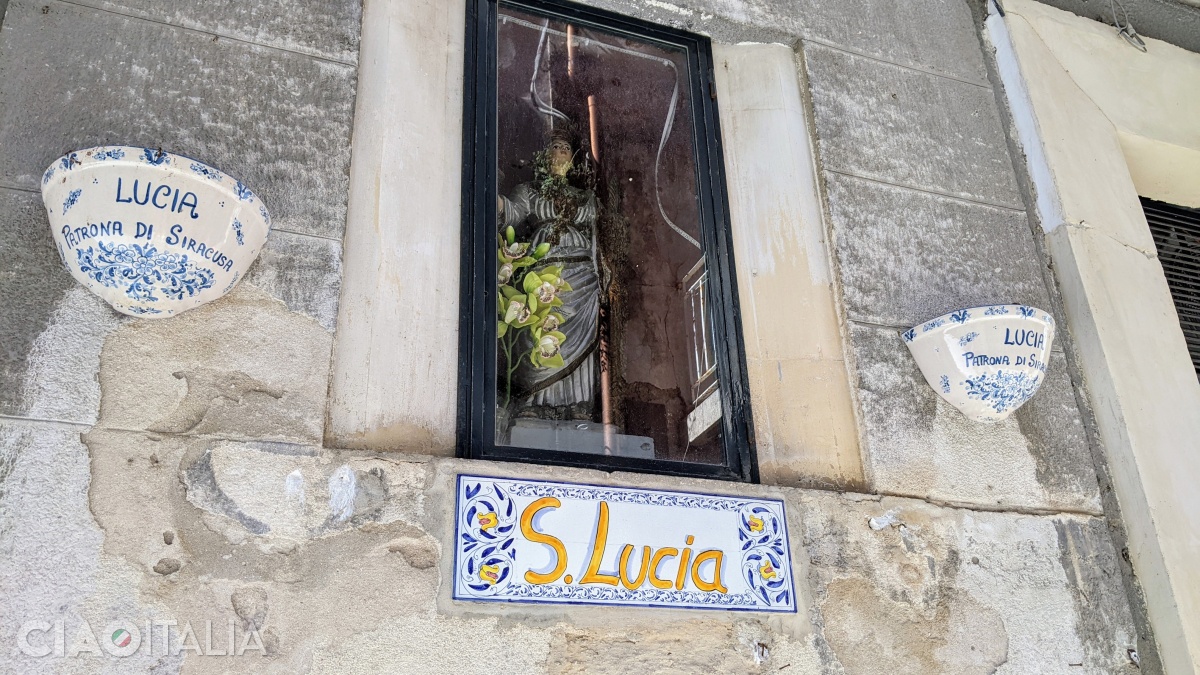
Although the Basilica di Santa Lucia al Sepolcro in Syracuse is the primary place of worship for Saint Lucy, her relics are actually located in Venice, in the Church of San Geremia and Lucia situated on the Grand Canal. Following the Arab occupation, the residents of Syracuse hid the saint's body in the catacombs that have since borne her name (Catacombe di Santa Lucia, which still exist today near the church and can be visited). From there, the relics were taken to Constantinople, and later seized by the Venetians as spoils of war.
Basilica of Santa Lucia al Sepolcro
Opening Hours:
Basilica:
- Monday-Wednesday, Friday-Sunday: 9:00 AM - 12:45 PM, 3:30 PM - 7:00 PM
- Tuesday: 11:00 AM - 12:45 PM, 3:30 PM - 7:00 PM
Catacombs:
September 1 - October 31, 2026:
- Monday-Saturday:
- 9:30 AM - 12:30 PM, 2:30 PM - 5:30 PM
- Sunday: closed
Ticket Prices:
Basilica:
- Free
- To illuminate the painting, a coin must be inserted into the machine.
Catacombs (guided tour):
- Adults: €10
- 6-15 years: €7
- Under 6: Free