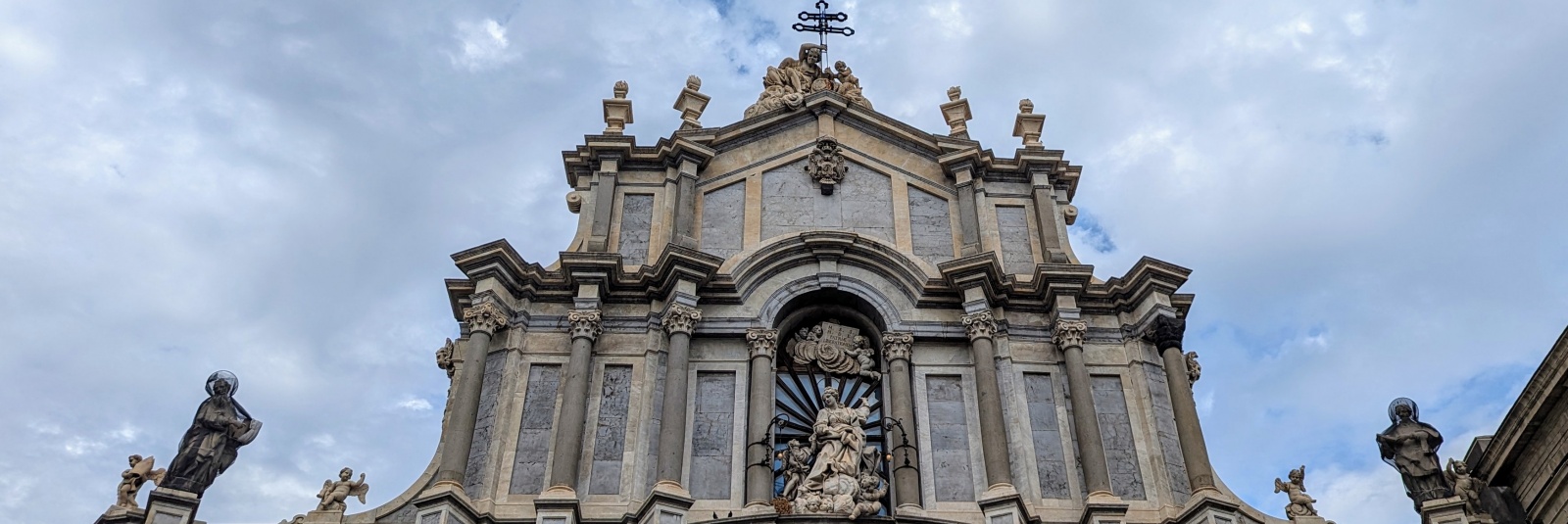
Saint Agatha Cathedral in Catania
Catania Cathedral, also known as the Cathedral of Saint Agatha (Basilica Cattedrale Sant'Agata), is the most important church in the city and one of the most visited tourist attractions in Catania. It is located in Piazza del Duomo, facing the Fontana dell'Elefante.
Tickets and Visiting Hours
Catania Cathedral can be visited during the following hours:
- April-October: 9:00 AM - 9:00 PM
- November-March: 9:00 AM - 6:00 PM
The price of a ticket is €12 and includes the Cathedral, the Achillian Baths (the former Roman baths, located underground, to the right of the church) and the Diocesan Museum.
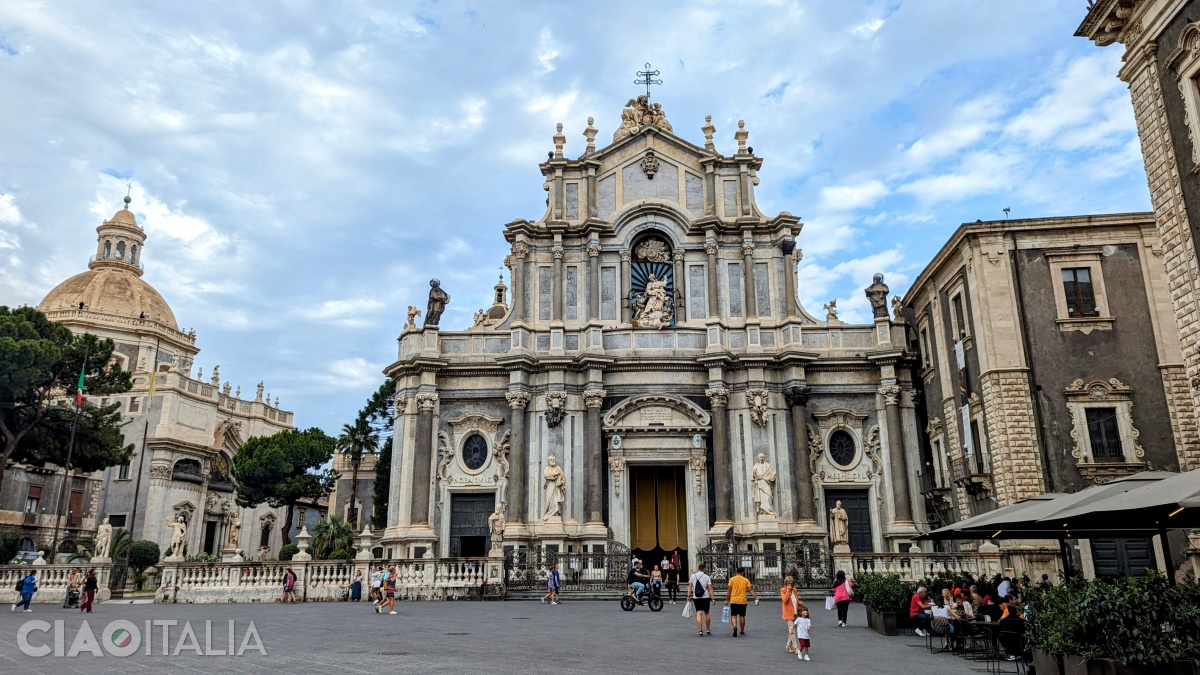
You can also visit the Cathedral of Sant'Agata with a guided tour, which also includes a visit to the Terme Achilliane.
Saint Agatha
Saint Agatha, the patron saint of Catania, is deeply loved by the locals, who affectionately call her a santuzza ("the little saint").
Agatha was born into a noble and wealthy family from Sicily. She lived in the 3rd century and died a martyr at around the age of 20. It is said that at the end of the year 250, the Roman proconsul Quinziano ordered all Christians in Catania to publicly renounce their faith. Agatha and her family fled to Palermo, but the consul pursued them and forced them to return. The gate through which Agatha left Palermo is still called Porta Sant'Agata today.
Unable to convince the young woman to give up Christianity, Quinziano imprisoned her and subjected her to torture. Agatha was whipped, bound with ropes, and stretched until her joints and ankles were dislocated, and her breasts were torn off with pincers. For this reason, in most Western European paintings, Saint Agatha is depicted carrying her breasts on a platter. According to tradition, during the night she was visited by Saint Peter, who miraculously healed her wounds. The torment continued, however, as she was subjected to torture with burning coals. Finally, on the night of February 5, 251, she died in the cell where she was imprisoned.
The memory of the saint is very much alive in Catania, where even some pastry products bear her name (minnuzze di Sant'Agata - in dialect, "Saint Agatha's little breasts", or olivette di Sant'Agata - "Saint Agatha's little olives").
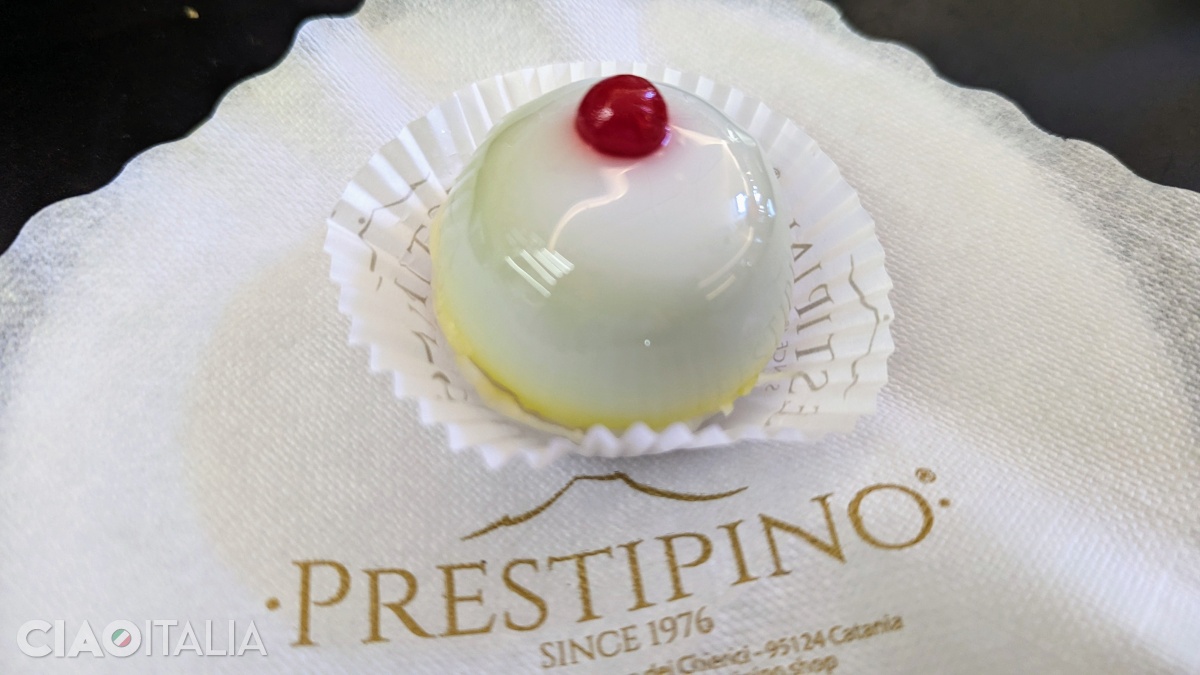
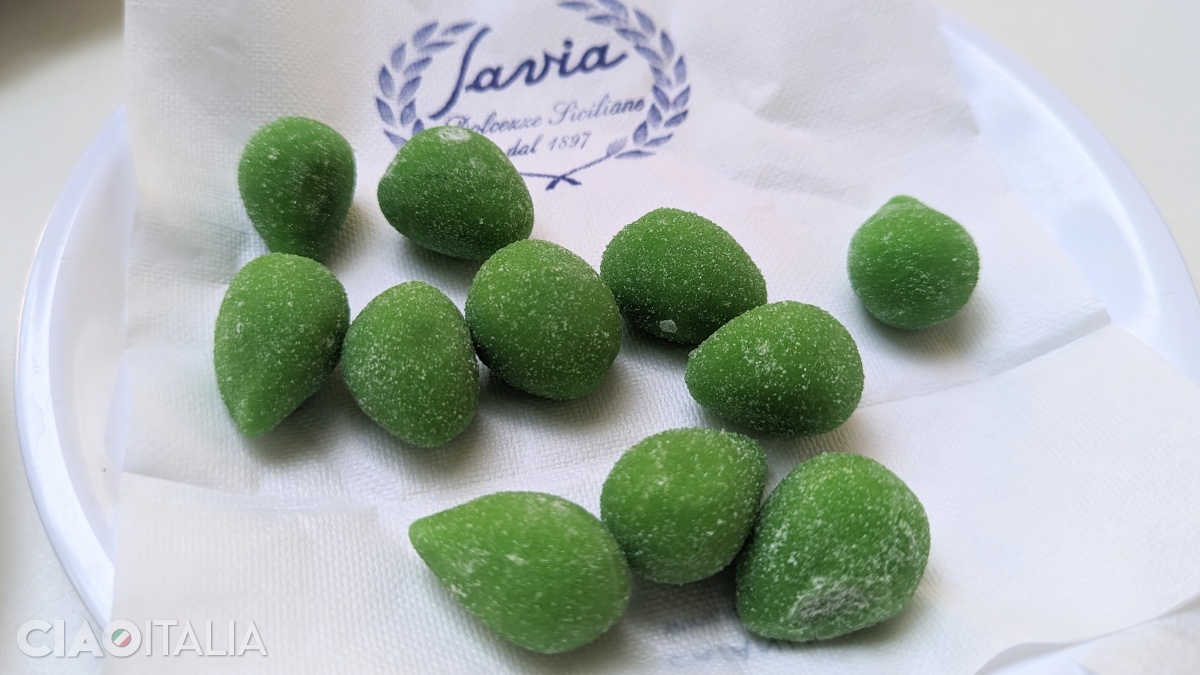
Her feast, held every year on February 3, 4, and 5, is one of the most impressive religious celebrations in Italy. During these days, crowds fill the streets and squares of the city, and enormous votive candles (le candelore), which can weigh up to 900 kg, are carried on the backs of the faithful. The candles, representing the city's guilds, are richly decorated, resembling baroque monuments with statues of saints and scenes from the life of Saint Agatha.
The Exterior
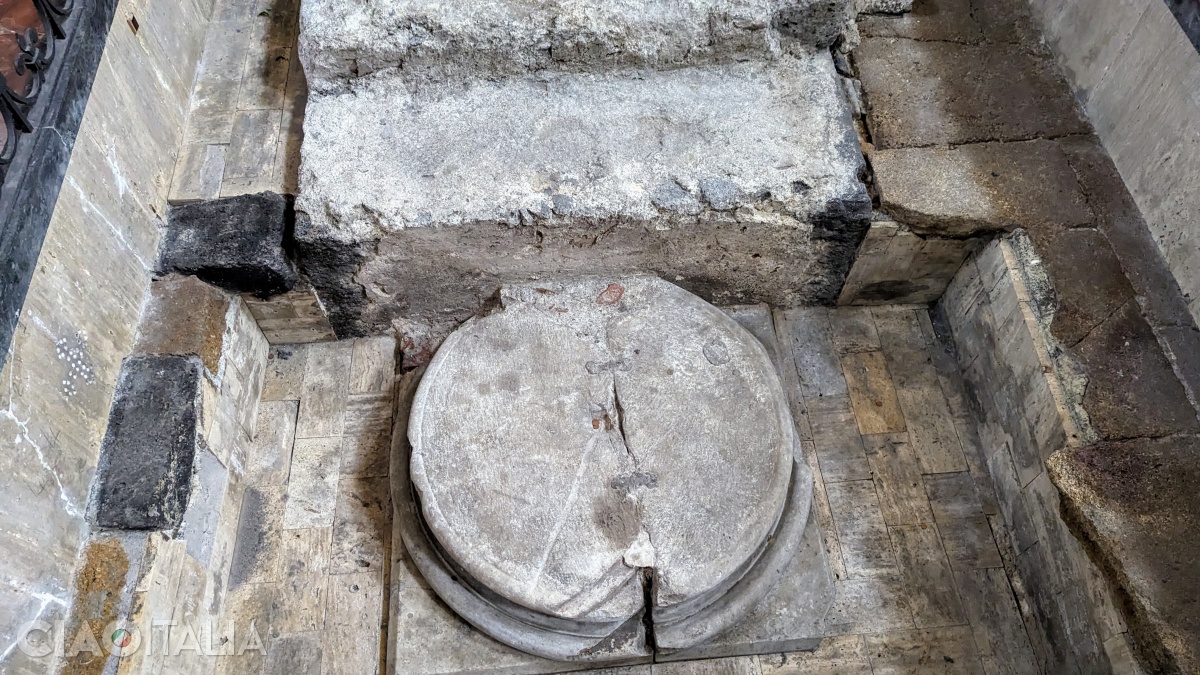
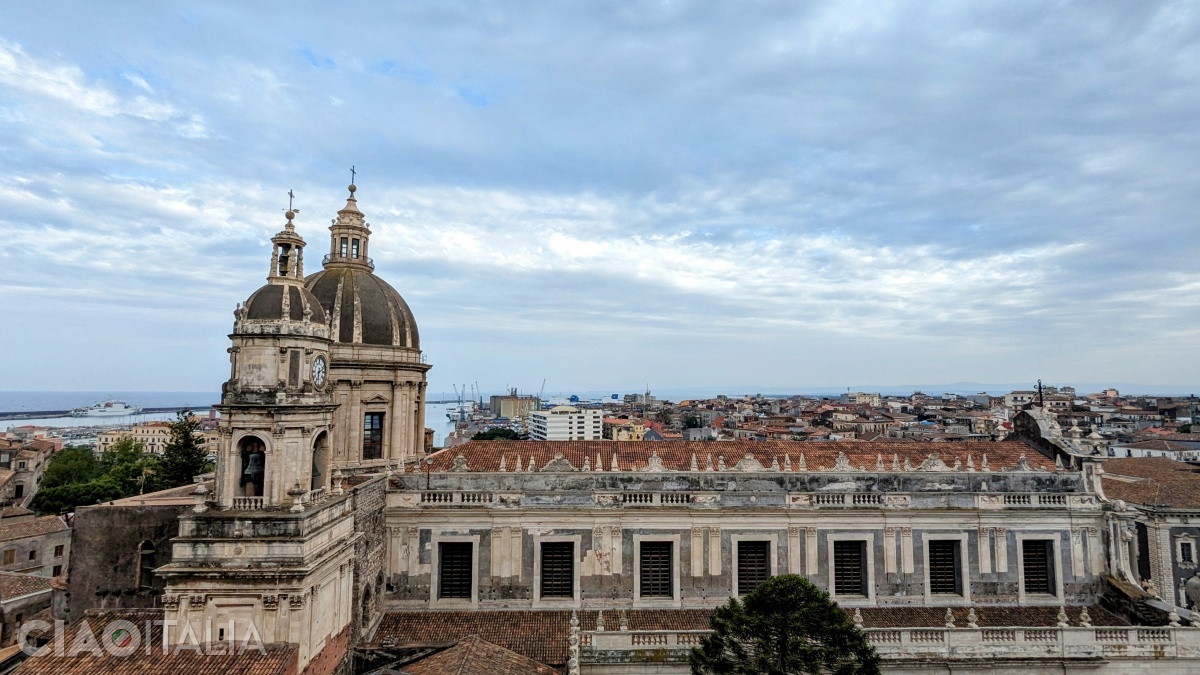
Of the original cathedral, built at the end of the 11th century on the ruins of Roman baths, only the apse remains today. The earthquake of 1693 destroyed almost entirely the church and caused the collapse of the bell tower, claiming hundreds of lives.
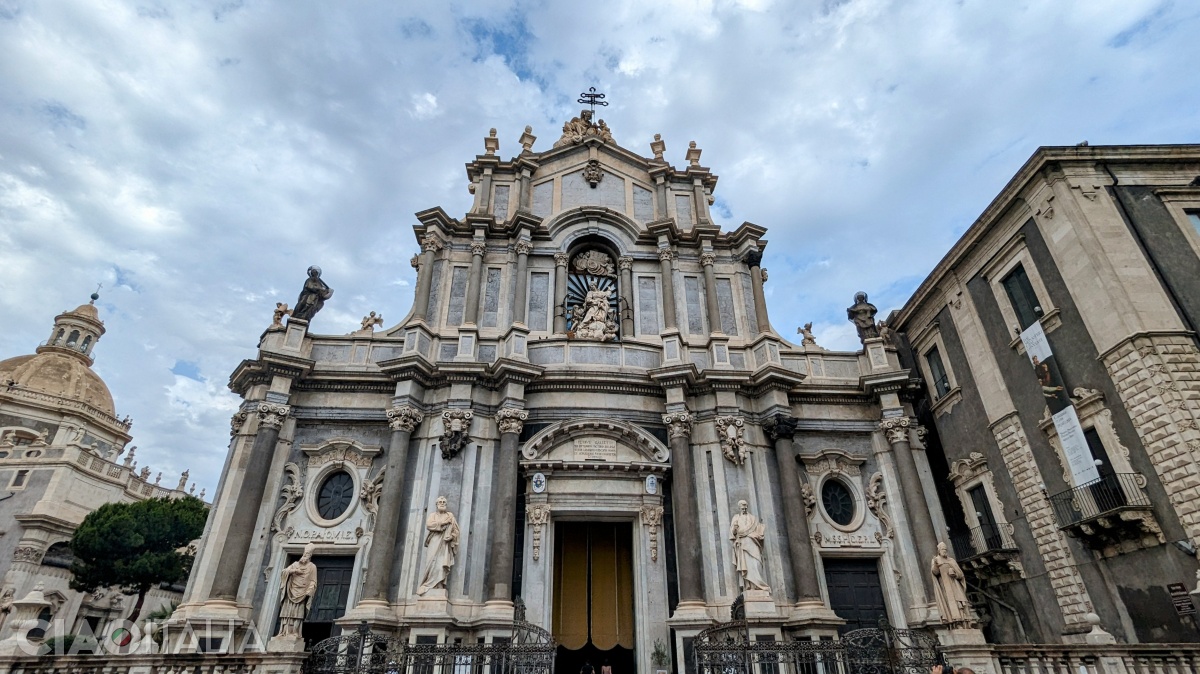
Reconstruction took place between 1734 and 1761. The façade was designed by the architect Vaccarini, made of Carrara marble, and the six granite columns on the first tier likely come from the Roman theater. The statue in the center of the second tier, above the main entrance, represents Saint Agatha, while the lower statues on the sides depict Saints Peter and Paul.
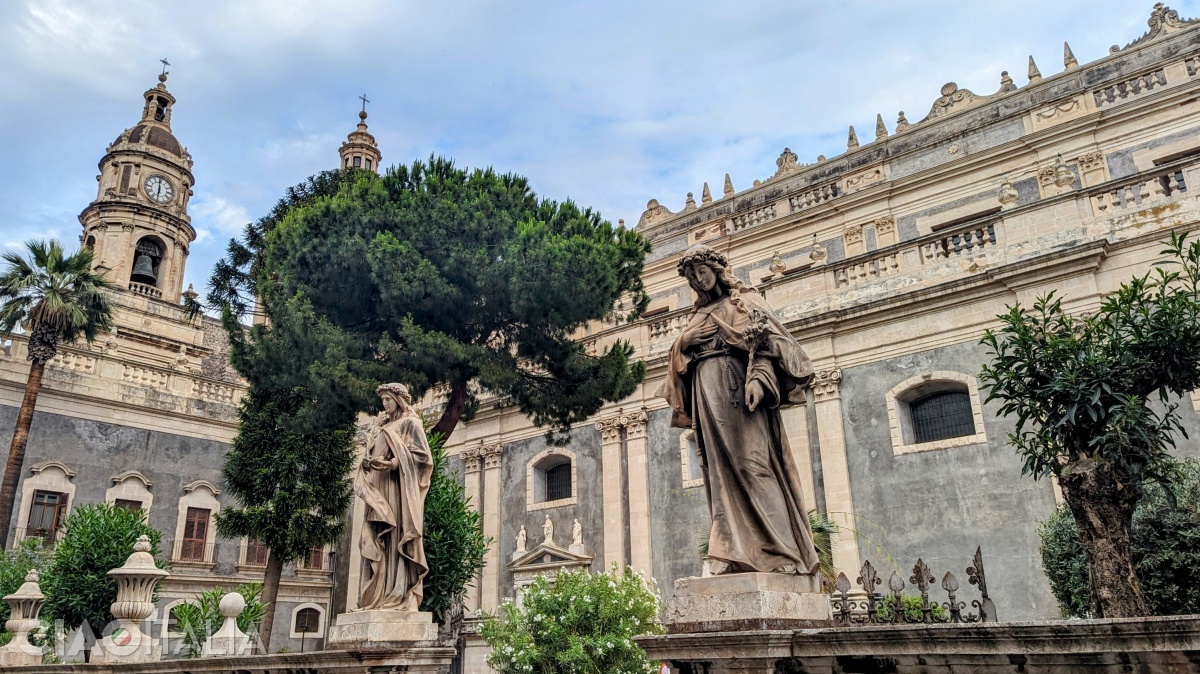
The fence surrounding the cathedral is also decorated with statues, and on the left side there is a small garden with tall trees where you can take a walk to find shade from the sun.
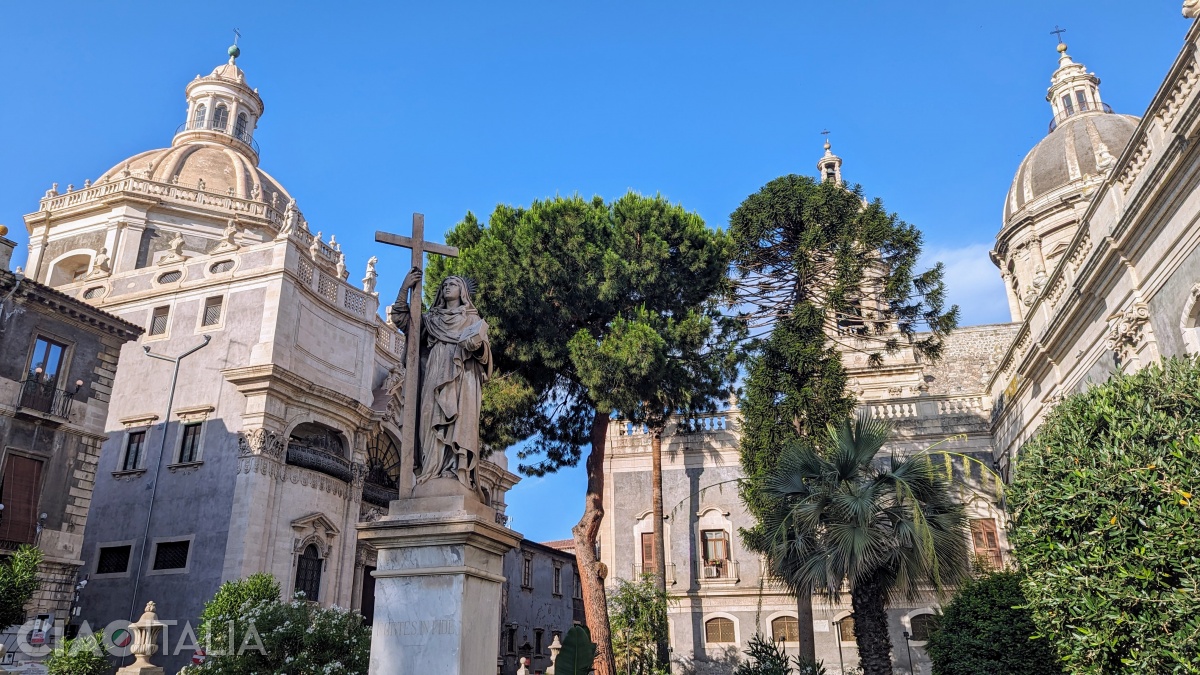
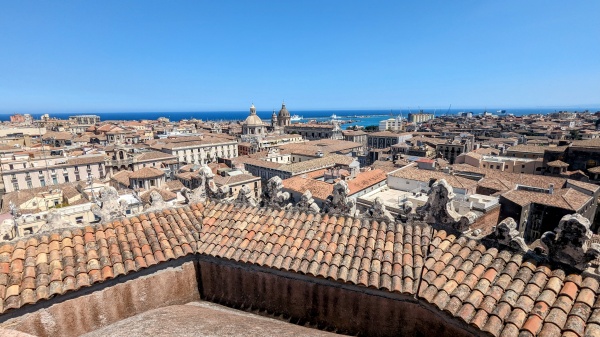
Opposite the garden is the Badia di Sant’Agata - the church of the former monastery, whose dome you can climb to admire the cathedral from above.
The Interior
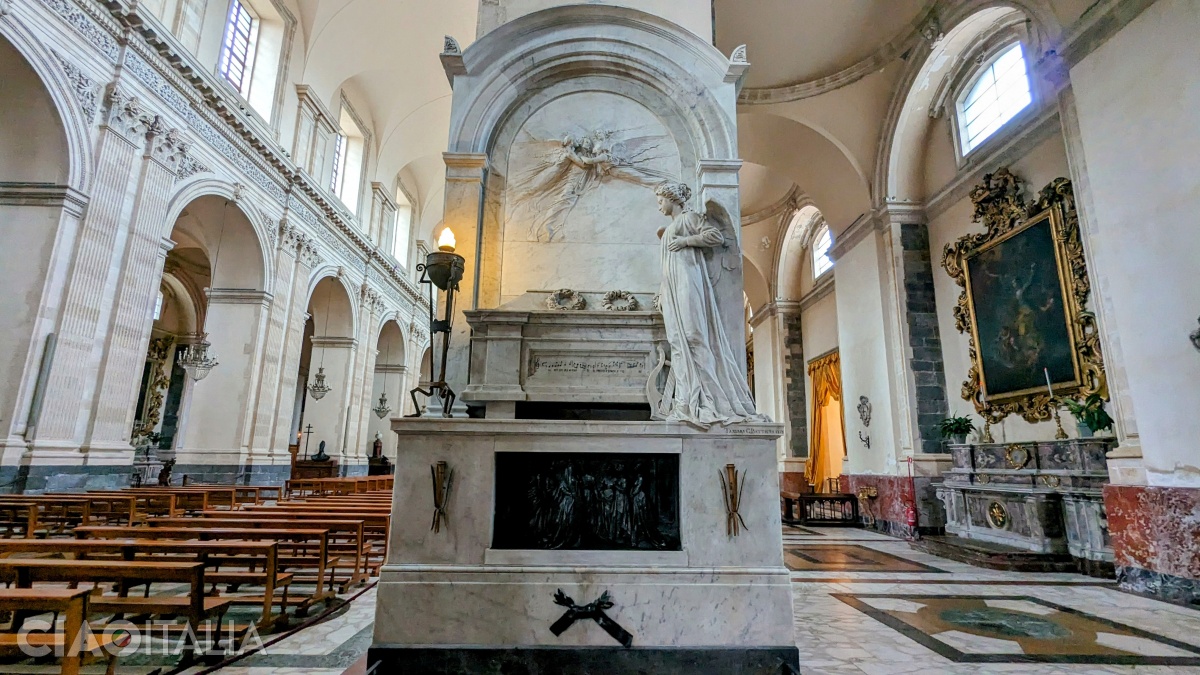
Inside, at the base of a column on the right side, is the tomb of the composer Vincenzo Bellini, author of the famous opera "Norma", from which, it is believed, the pasta dish a la Norma also takes its name (for details, see the article on Sicilian food). Bellini died in Paris at a very young age - he had not yet reached 34. He was initially buried in Père-Lachaise Cemetery, but his remains were brought back to his hometown in 1876. The sculptures adorning the tomb are made of Carrara marble and bronze, and the inscription features the beginning of an aria from the opera La Sonnambula.
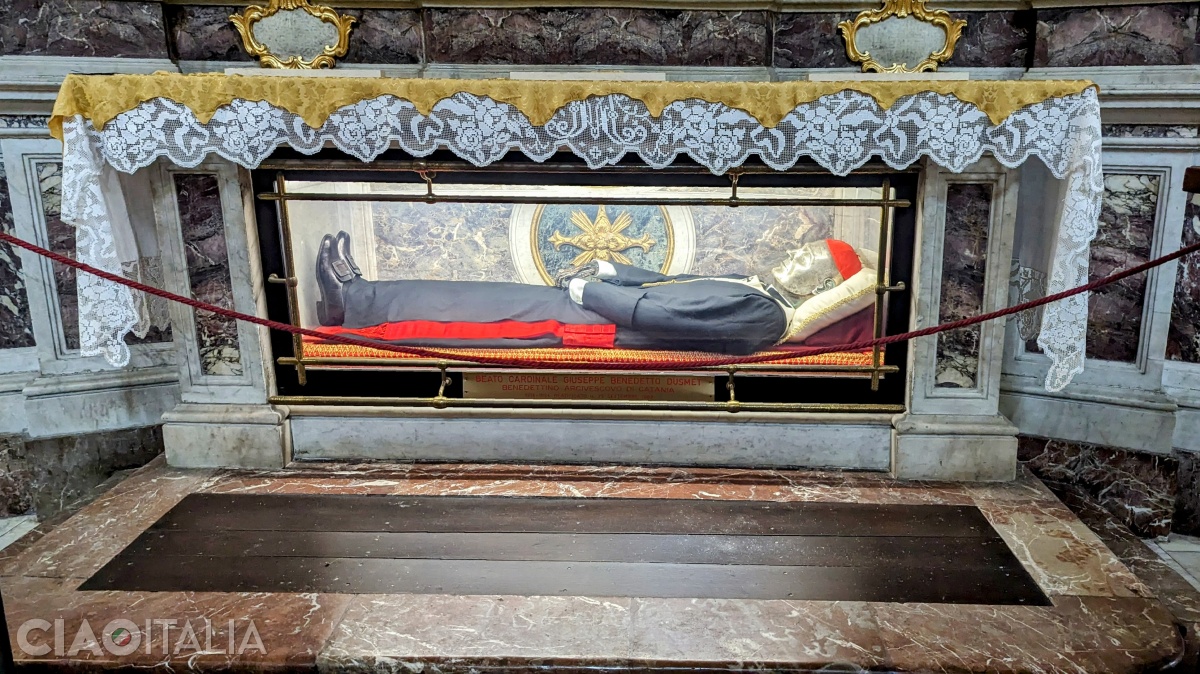
Further ahead, in the altar dedicated to Maria Corredentrice, lies Cardinal Giuseppe Benedetto Dusmet, who died in 1894 and was canonized more than 100 years later. He is deeply loved by the locals, who call him l'angelo della carità ("the angel of charity"). In 1886, during a terrible eruption of Mount Etna, the cardinal led the procession of Saint Agatha's veil, and after several days of prayer, the lava flow stopped. The veil of the saint has always been considered miraculous by the people of Catania. It is said that the first miracle occurred exactly one year after Agatha's death, halting the lava that threatened to destroy the city.
Continuing along the same side, you will reach the beautifully decorated Chapel of Saint Agatha, which houses the saint's relics.
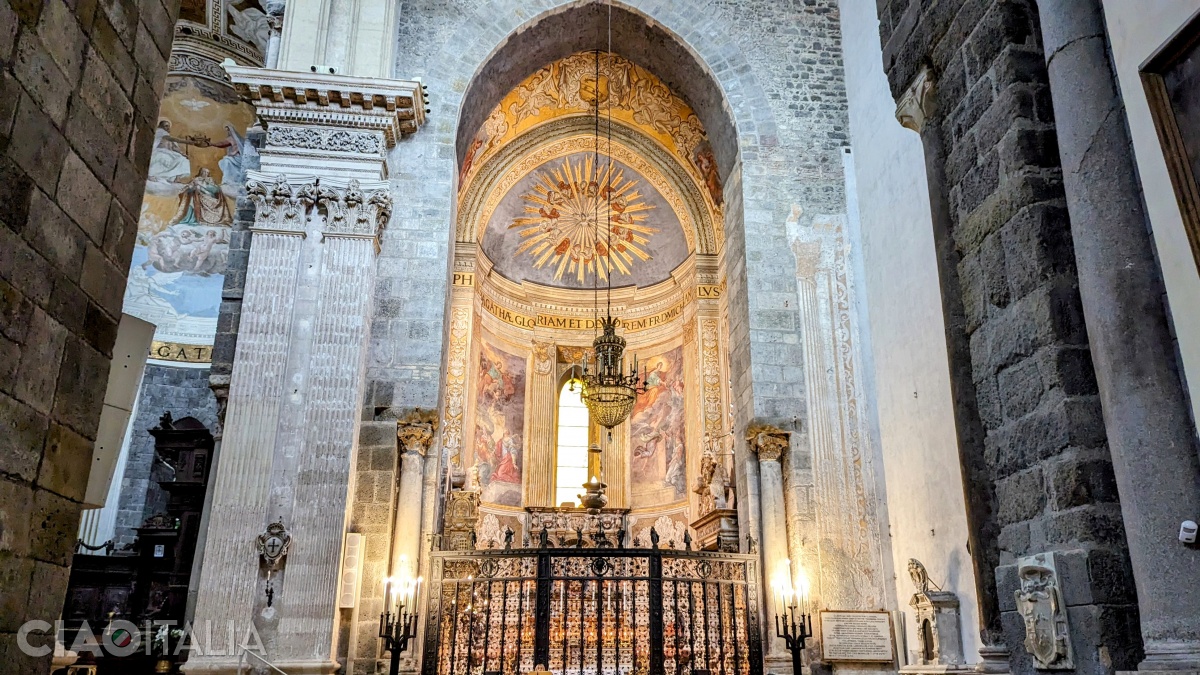
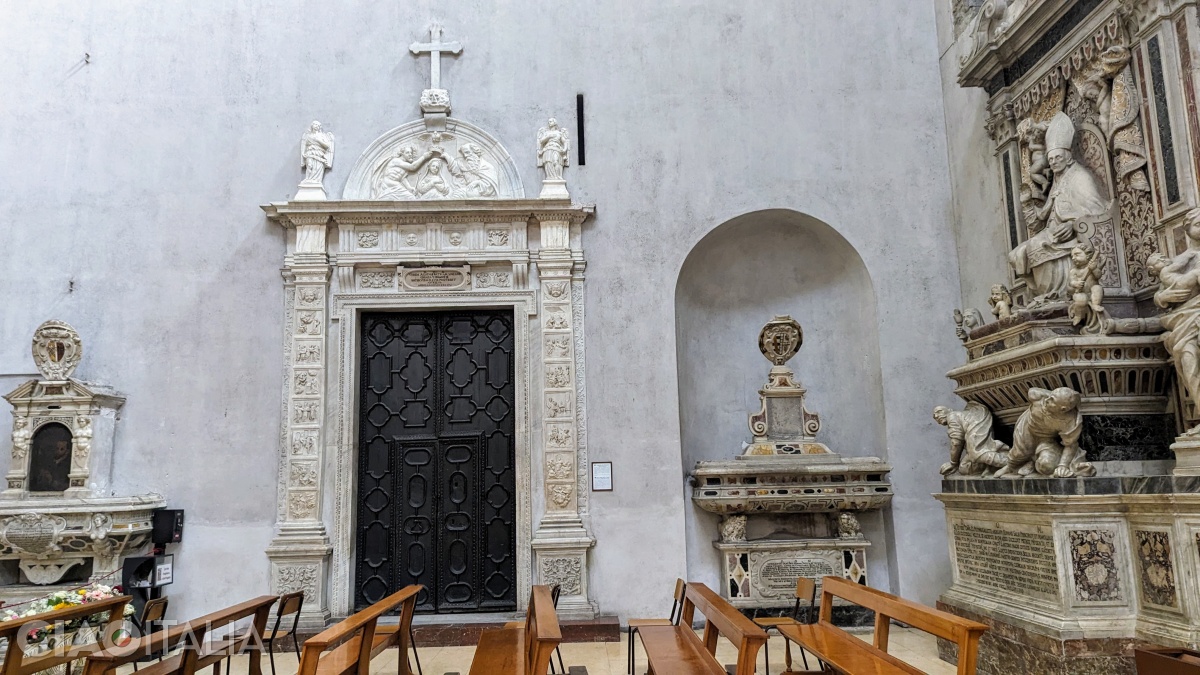
To the right is the Cappella della Vergine ("Chapel of the Virgin"). The entrance is through a beautiful marble portal, created in 1545. The lunette bas-relief depicts the "Coronation of the Virgin". Inside the chapel are the sarcophagi of some of the kings of Sicily.
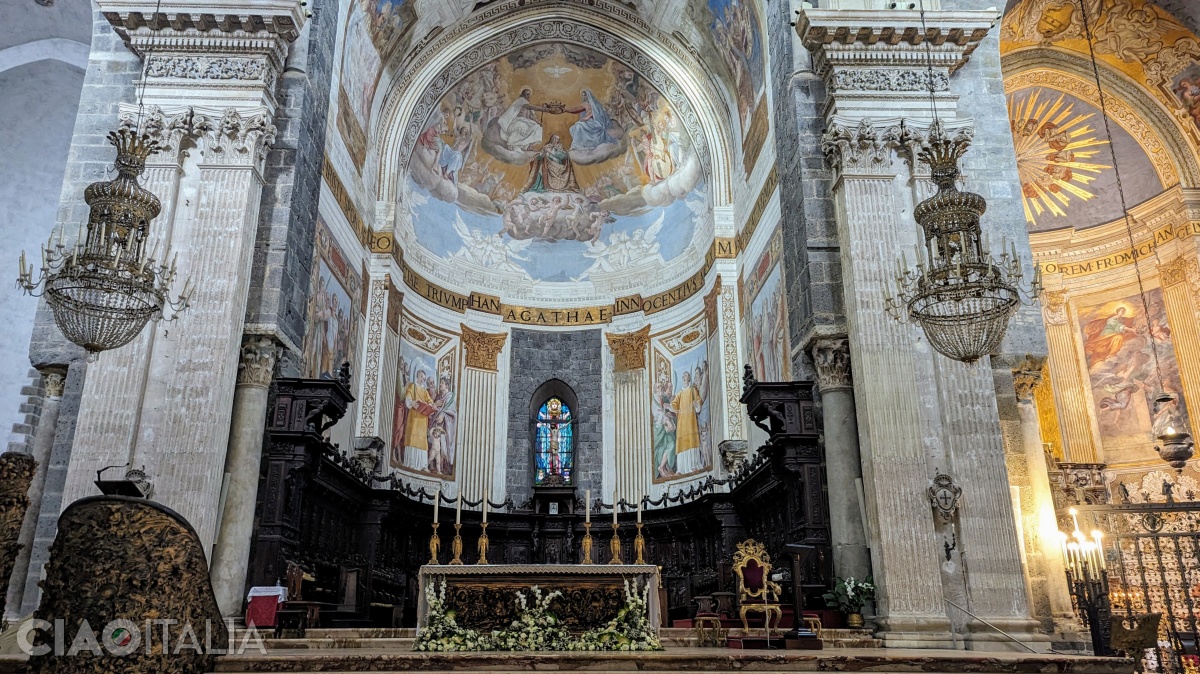
The main altar was painted in the 17th century by Giovanni Battista Corradini from Rome. The frescoes depict the patron saints of Catania: Berillus, Eulphe, Stephen, and Agatha.