Piazza del Duomo in Catania
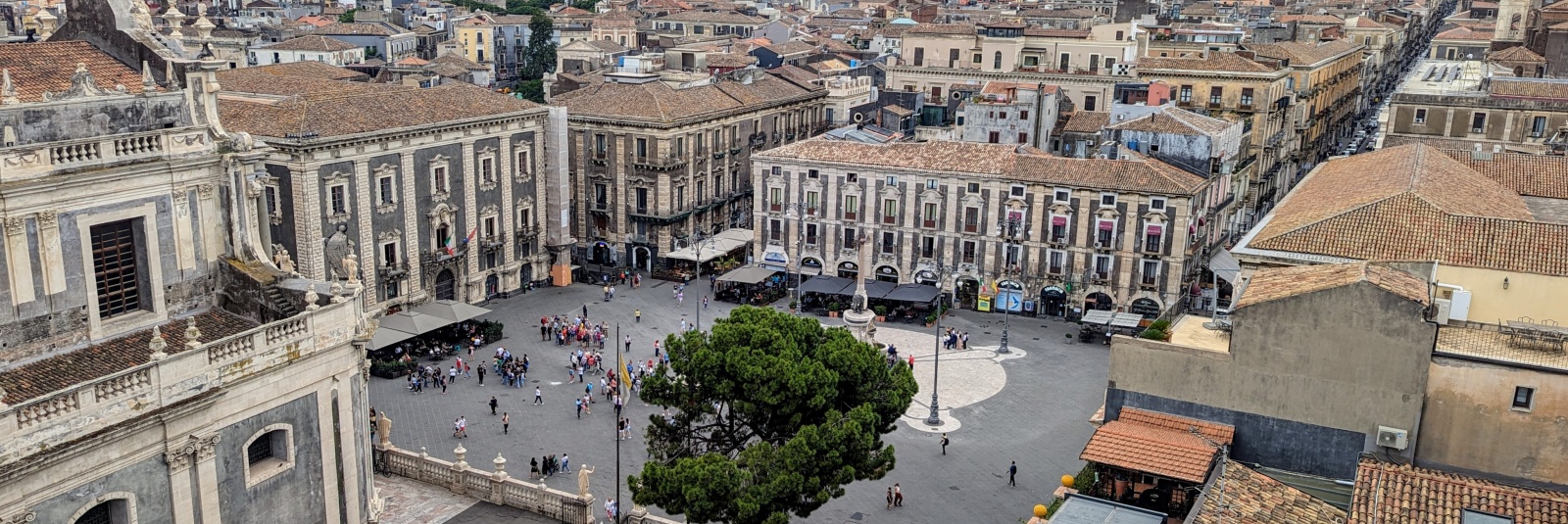
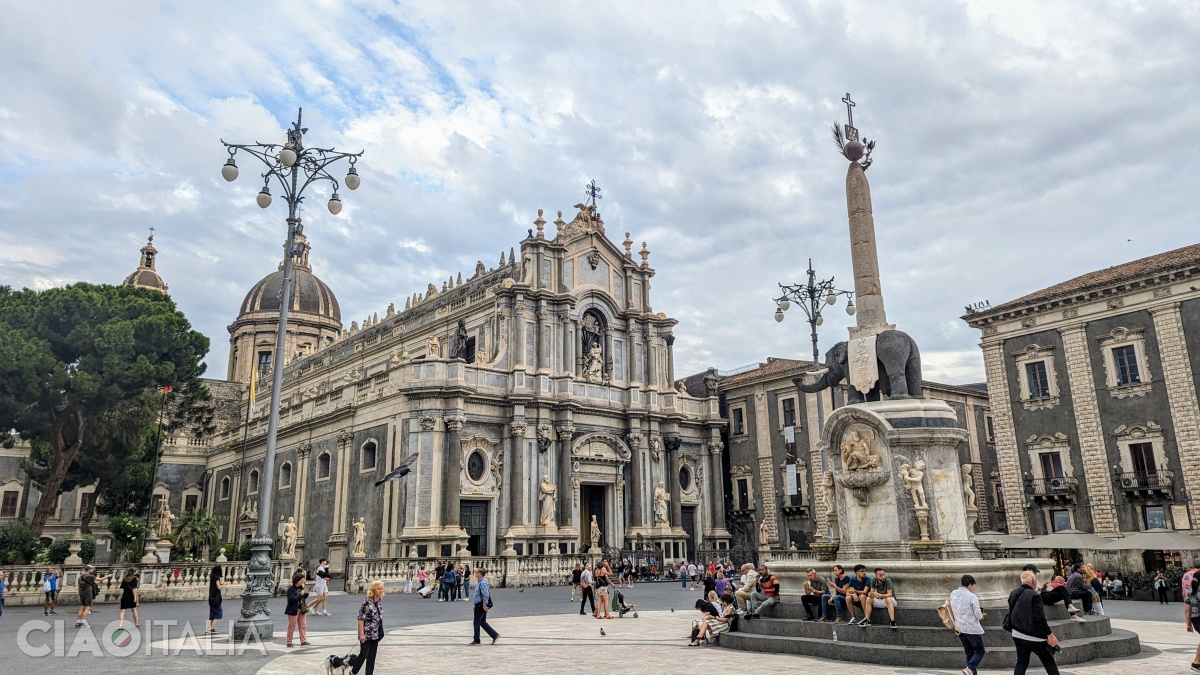
Piazza del Duomo (Cathedral Square) is the first place you should stop when taking a tour of Catania's tourist attractions.
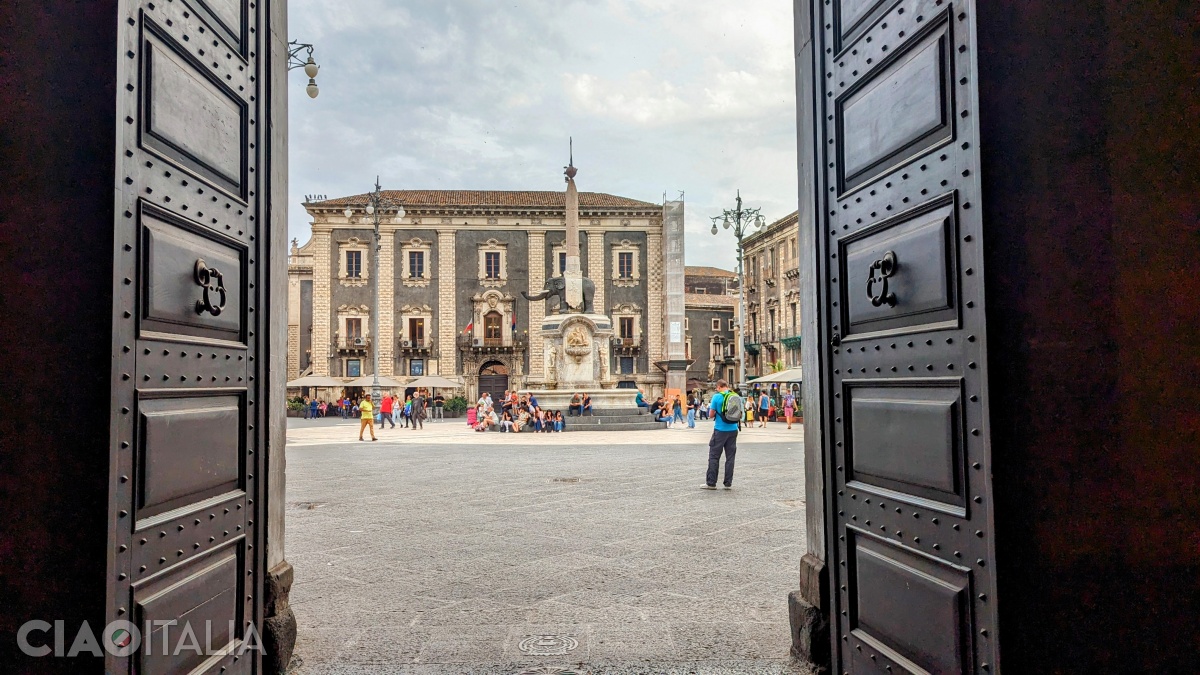
Surrounded by Baroque-style buildings made of dark gray volcanic stone, contrasting with the white Carrara marble used for decorations, Piazza del Duomo brings together the symbols of both religious power (the Cathedral of Sant'Agata) and civil power (the Palazzo degli Elefanti, which houses the City Hall) in Catania.
Fontana dell'Elefante
In the center of the square rises the Fontana dell'Elefante ("Elephant Fountain"), decorated with an unusual statue made of black basalt, depicting an elephant supporting an Egyptian obelisk. It reminded us of Bernini's elephant sculpture in Rome, in front of the church of Santa Maria sopra Minerva. You'll come across this elephant all over the city - in architectural decorations, in street pavements, on posters, and even on the official coat of arms. It is the symbol of Catania, and locals call it u' Liotru. According to tradition, the name comes from Eliodoro, a nobleman from Catania who unsuccessfully tried to become bishop and eventually chose to become a magician. It is said that Eliodoro created the elephant, on whose back he used to travel to Constantinople.
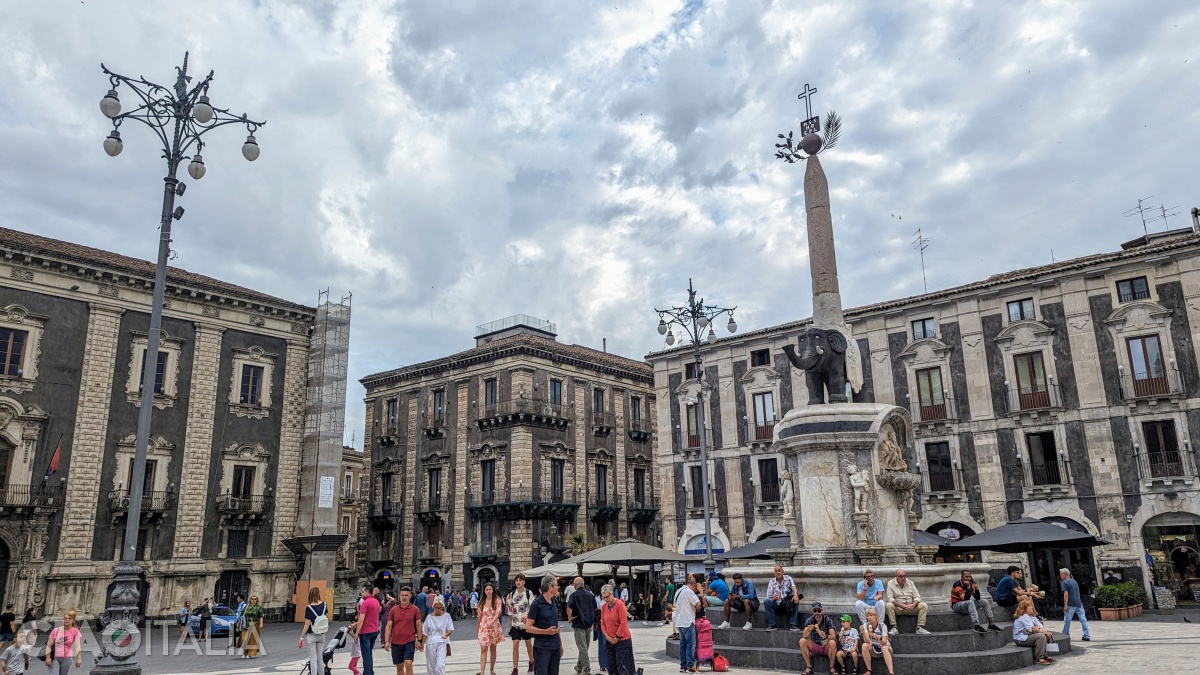
The statue is surrounded by an aura of mystery - some believe it magically protects the city from the eruptions of the capricious Mount Etna, while others say it recalls a religion lost in the mists of time. According to one legend, when the city was founded, the elephant drove away dangerous wild animals from the area. During the Muslim occupation, Catania was even known as "the city of the elephant".
The Fontana dell'Elefante was built in 1737 by the architect Giovanni Battista Vaccarini from Palermo, who also designed other buildings in the square. The bas-reliefs on the sides of the marble pedestal symbolize the two rivers of Catania: Amenano and Simeto. The origin of the elephant statue is unknown, but the eyes and tusks made of white limestone were added by Vaccarini during the restoration following the 1693 earthquake.
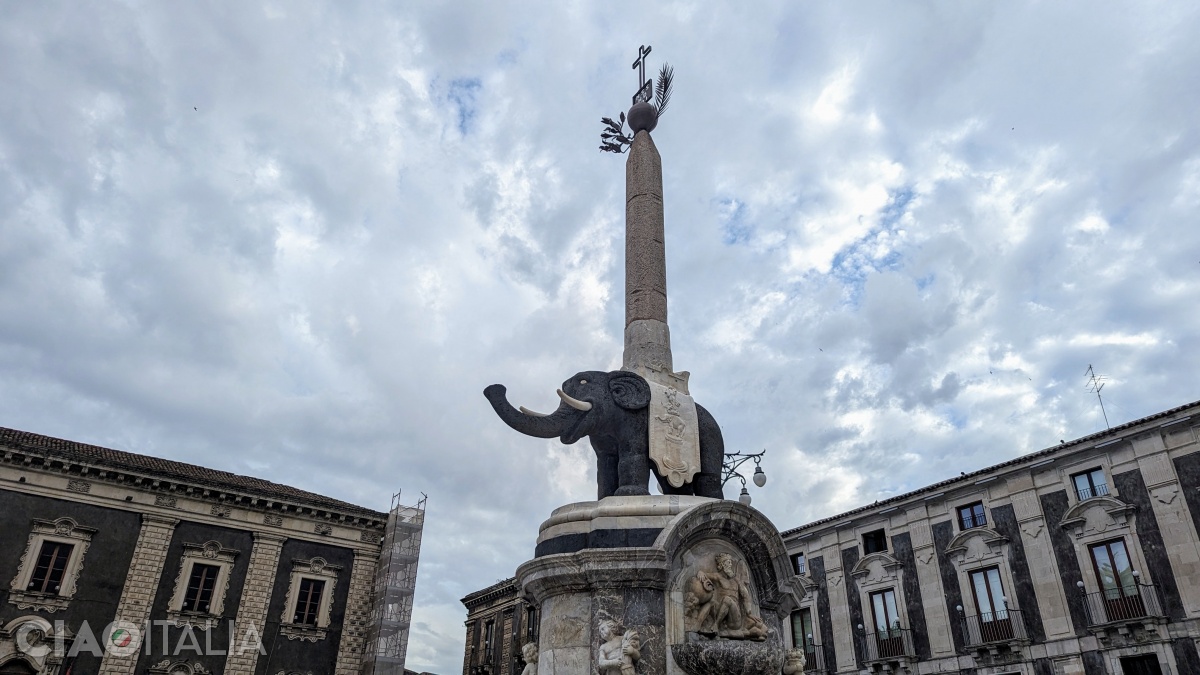
At the top of the granite obelisk, which is over 3 meters high, there is a globe and a cross. On either side are carved a palm leaf (symbolizing martyrdom) and several lily stems (symbolizing purity), referring to Saint Agatha. The inscription between the globe and the cross bears the letters M.S.S.H.D.E.P.L. (Mente sana e sincera, per l'onore di Dio e per la liberazione della sua patria - "A healthy and sincere mind, in honor of God and for the liberation of his homeland").
Sant'Agata Cathedral
The building that dominates Piazza del Duomo is the Cathedral of Saint Agatha - Catania's Duomo, from which the square takes its name. It is the most important and the most beloved church in the city.
It was built in Baroque style between 1734 and 1761, on the site of an 11th-century church that was destroyed by the devastating earthquake of 1693, which caused most of the city’s buildings to collapse.
Inside are the relics of Saint Agatha, the city's patron saint, and the tomb of composer Vincenzo Bellini, author of the opera "Norma", from which pasta alla Norma, one of the famous Sicilian dishes, is said to have taken its name.
Sant'Agata Cathedral
Opening Hours:
- April-October: 9:00 AM - 9:00 PM
- November-March: 9:00 AM - 6:00 PM
Ticket Prices:
- €12 (includes the Cathedral, the Achillian Baths and the Diocesan Museum)
Terme Achilliane
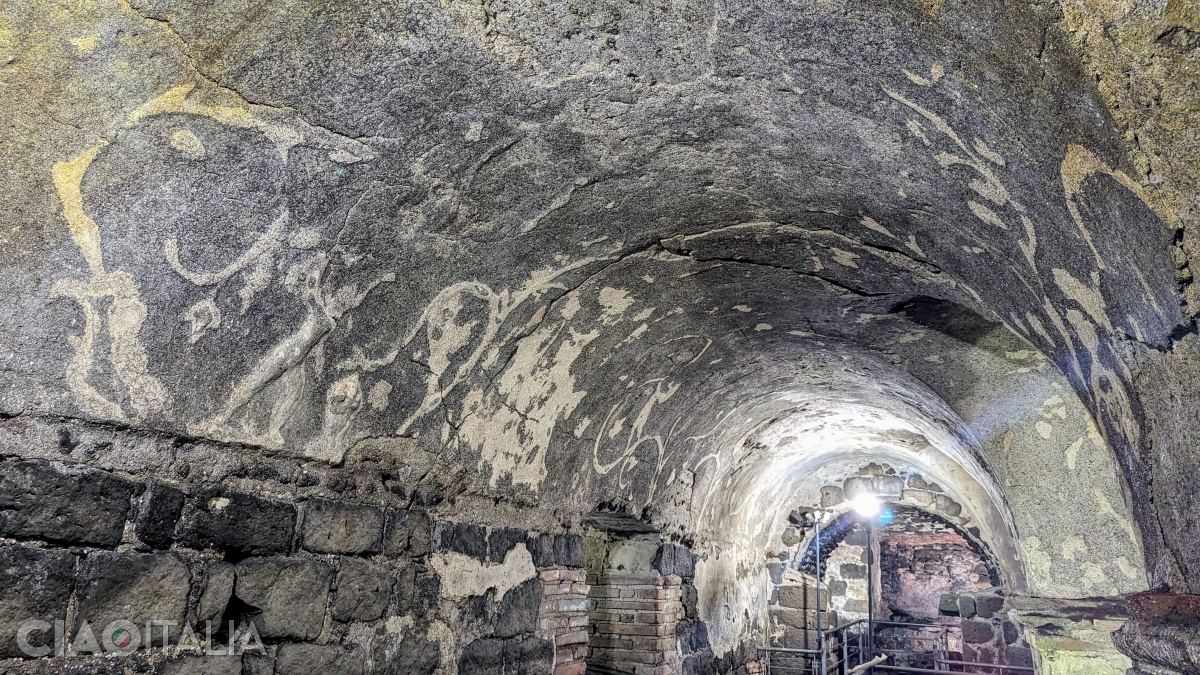
To the right of the Cathedral of Sant'Agata, right in the church courtyard, is the entrance to the Roman Baths (Terme Achilliane), located underground beneath Piazza del Duomo. The baths date back to the 4th-5th centuries. To visit them, you descend into a vaulted corridor that leads to the central hall, supported by four large pillars.
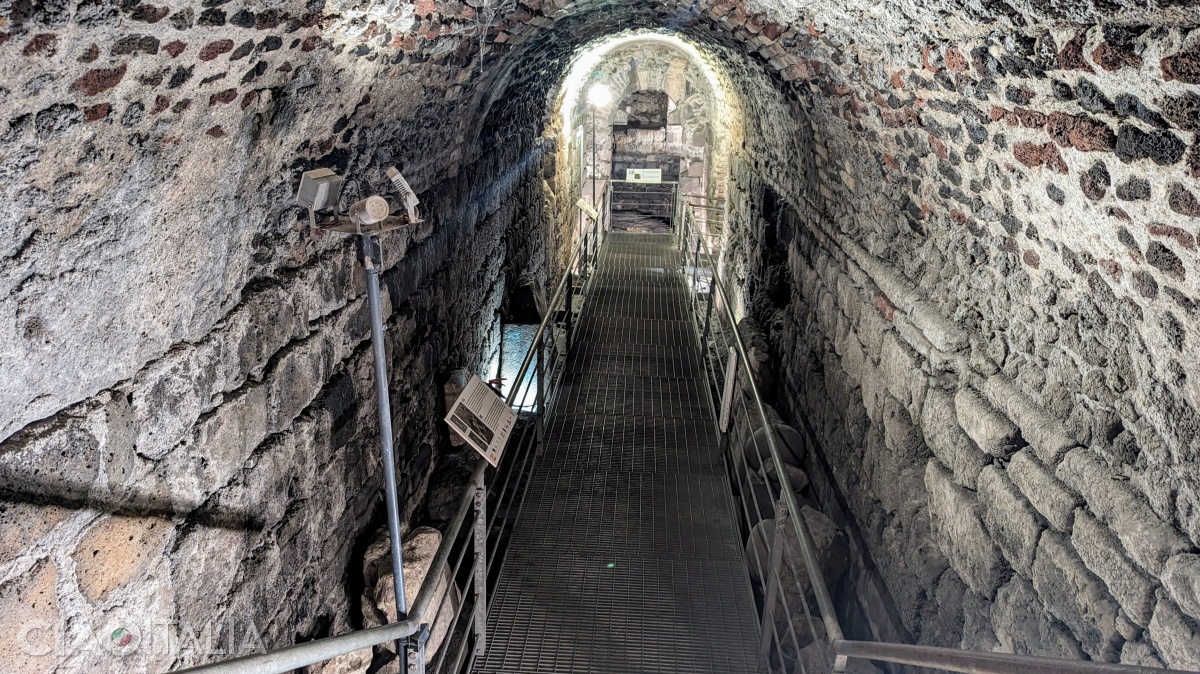
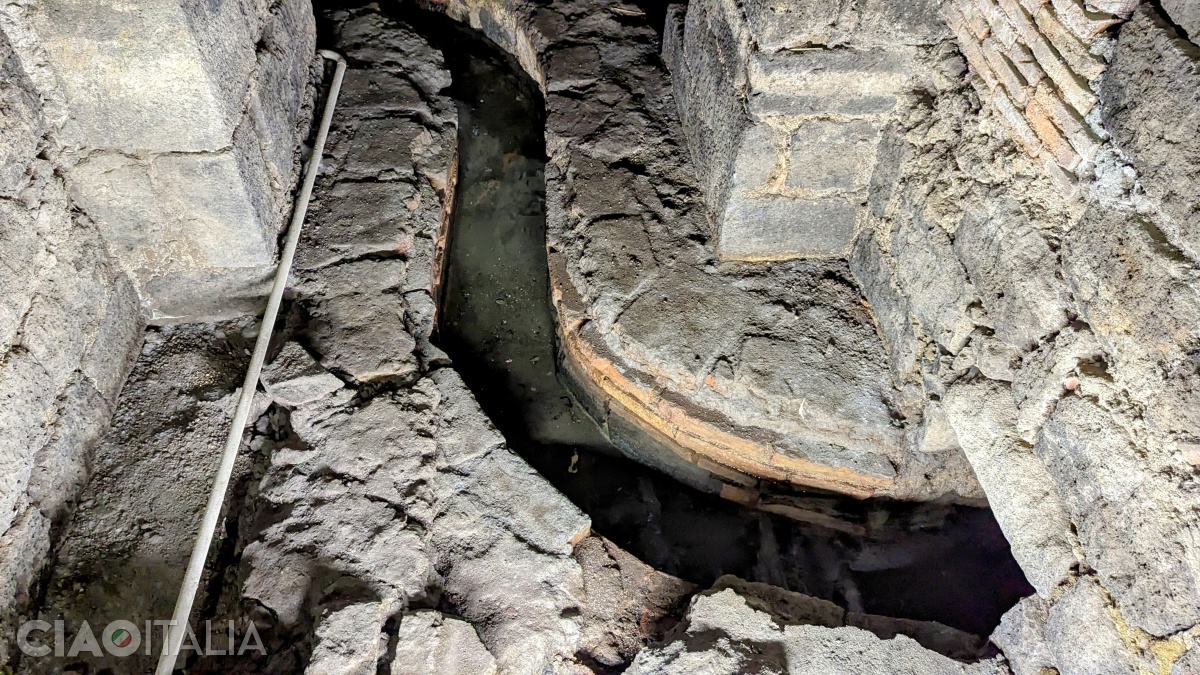
In the center of the hall is a square basin, which was once lined with marble and connected to a channel that brought in water.
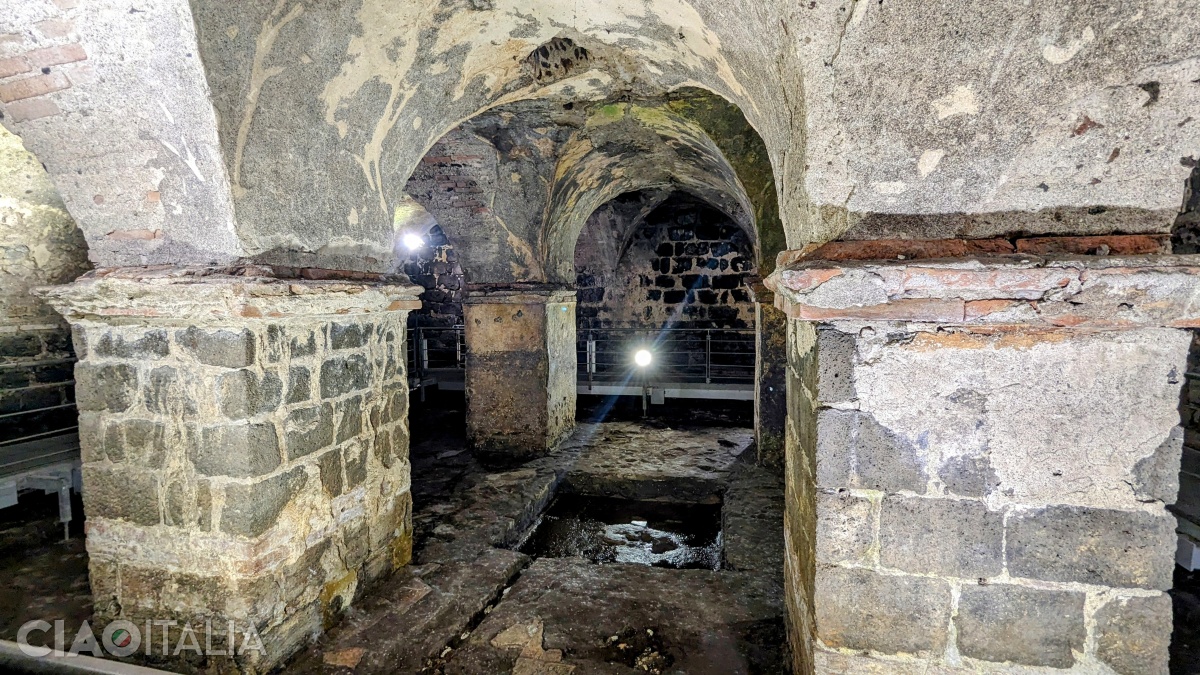
The walls still bear traces of the rich stucco decorations from the Roman era: clusters of grapes, vine leaves, and cherubs.
Terme Achilliane
Opening Hours:
- April-October: 9:00 AM - 9:00 PM
- November-March: 9:00 AM - 6:00 PM
Ticket Prices:
- €12 (includes the Cathedral, the Achillian Baths and the Diocesan Museum)
Palazzo del Seminario dei Chierici
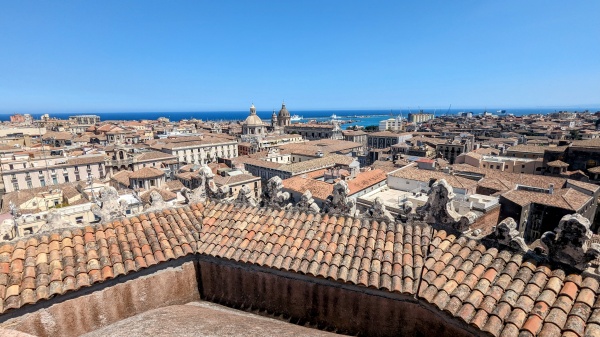
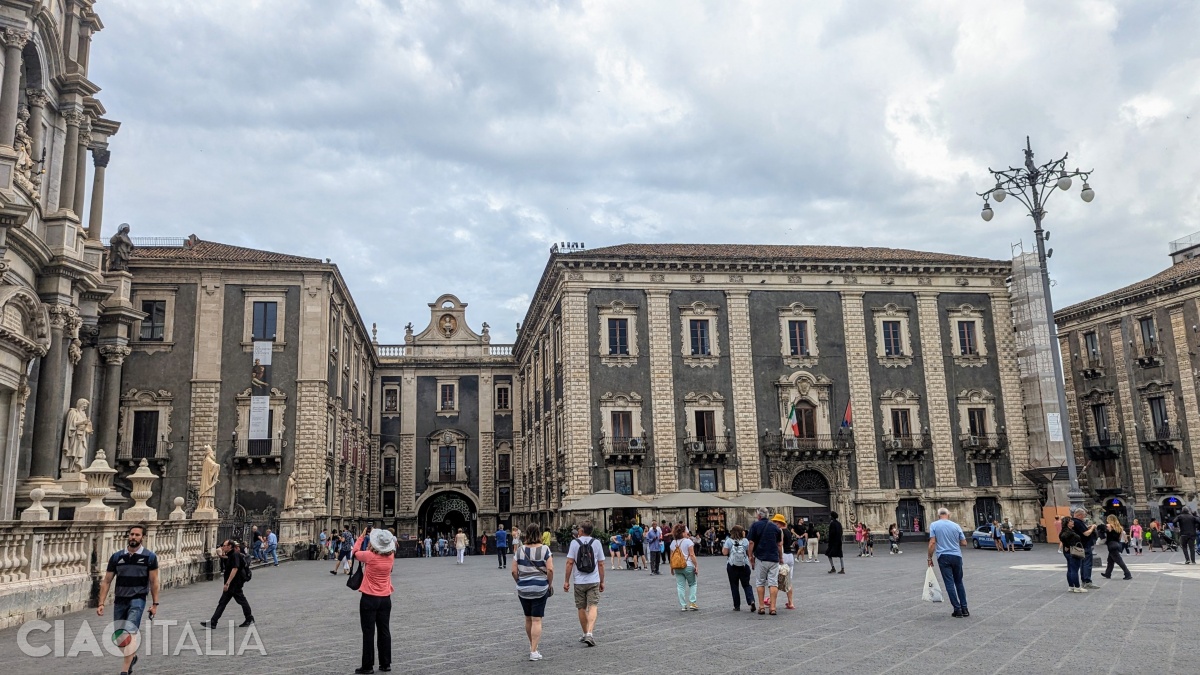
Attached to the cathedral on the right is the Palazzo del Seminario dei Chierici, which houses the Museo Diocesano (Diocesan Museum). The museum displays church furnishings and artifacts and features a panoramic terrace from which you can admire Piazza del Duomo, Via Etnea, and Mount Etna in the background.
Museo Diecesano
Opening Hours:
- April-October: 9:00 AM - 9:00 PM
- November-March: 9:00 AM - 6:00 PM
Ticket Prices:
- €12 (includes the Cathedral, the Achillian Baths and the Diocesan Museum)
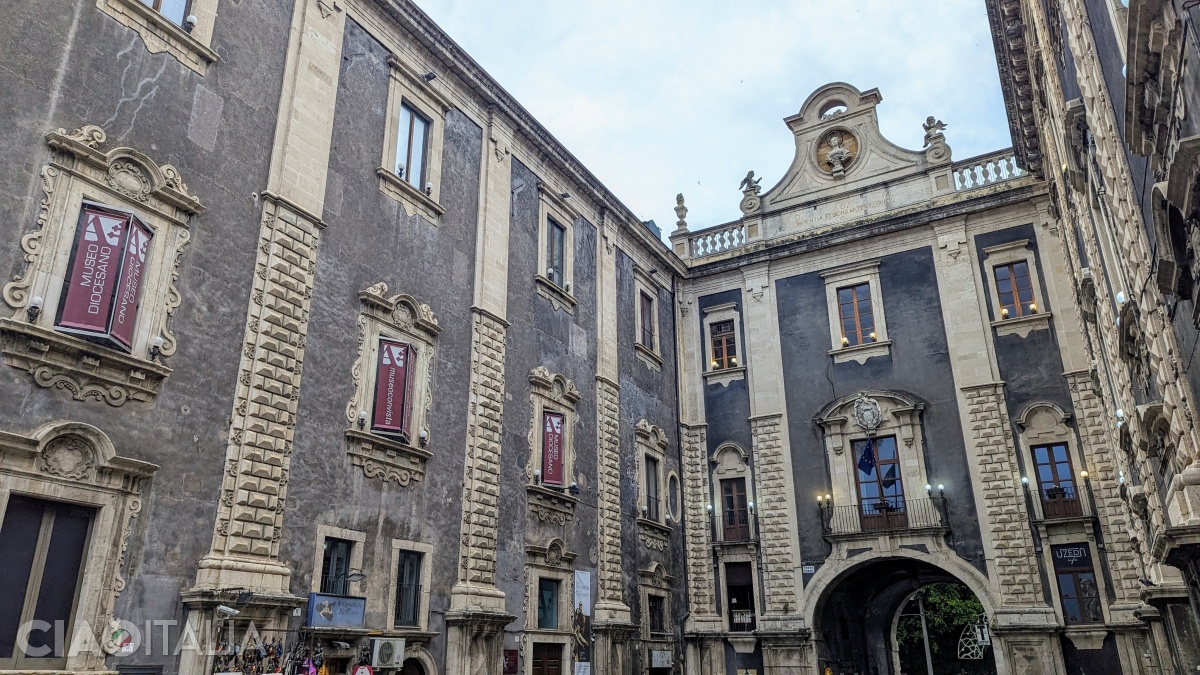
Between the two wings of the building opens a passage called Porta Uzeda, which leads to a small park named Villa Giovanni Pacini. The gate was built in 1695 to connect Via Etnea with the port area. It takes its name from Juan Francisco Pacheco Téllez-Girón, Duke of Uzeda and Viceroy of Sicily between 1689 and 1696. The upper part above the gate were built in the 18th century at the request of Bishop Salvatore Ventimiglia, whose coat of arms can be seen on the first window above. At the top, where the terrace is located, stands the bust of Saint Agatha.
Palazzo Pardo
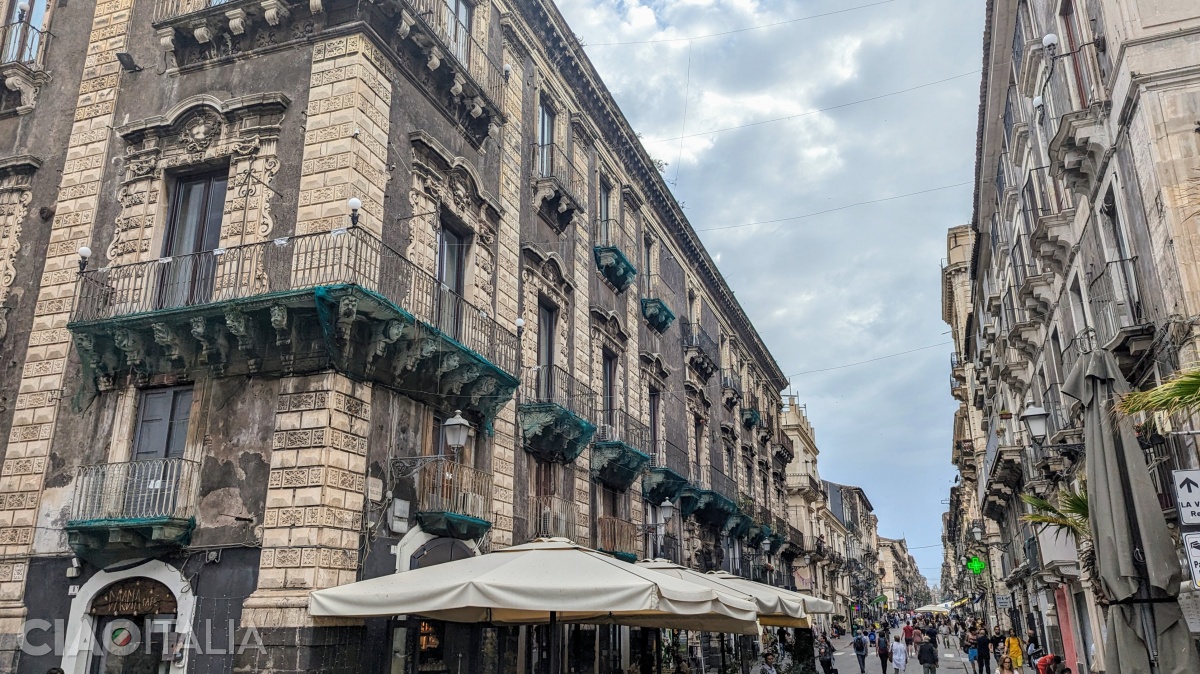
On the corner of the square facing Via Garibaldi stands the recently restored Palazzo Pardo. It was built in 1694 and was one of the first palaces rebuilt after the 1693 earthquake. It was designed by Alonzo di Benedetto, apparently the only architect from Catania who survived the earthquake, and who was later commissioned to design other palaces around Piazza del Duomo.
Palazzo Pardo was the residence of the Sammartino Pardo di Ramondetta family, one of the wealthiest and most influential noble families in Catania, probably of Spanish origin.
At the end of the 18th century, the building housed the city’s first hotel, which hosted, among others, Giuseppe Garibaldi.
When you look at the palace, notice the different mascarons (ornamental human faces) supporting the corner balcony facing the square.
Fontana dell'Amenano
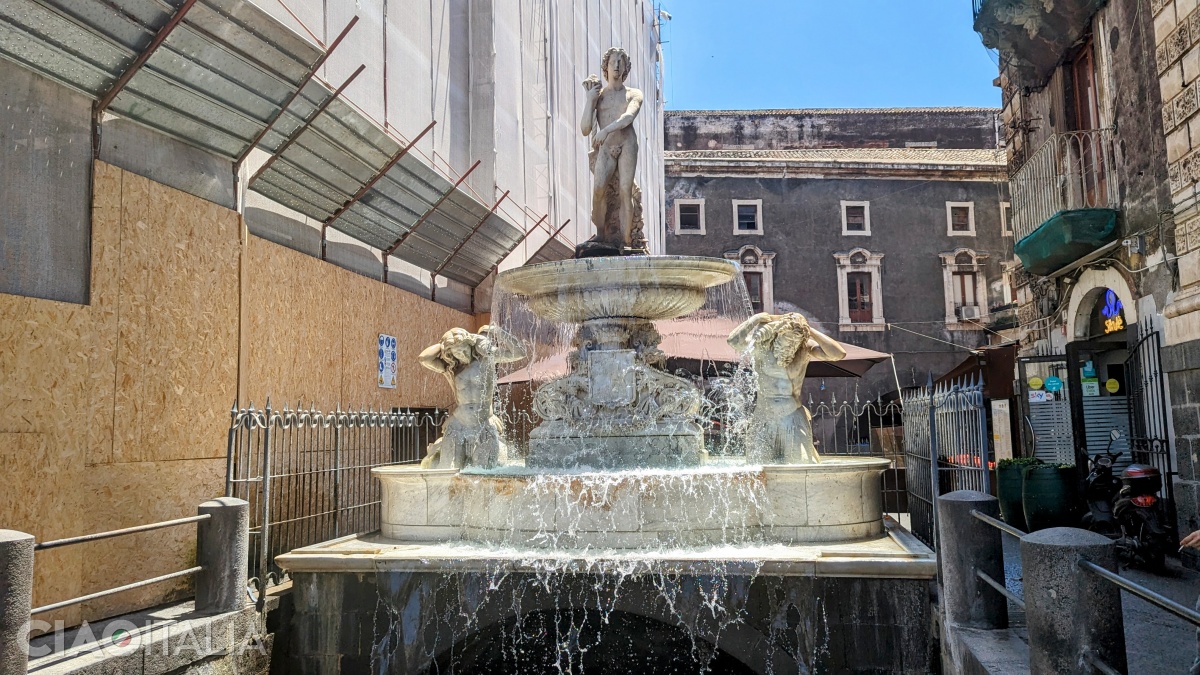
Between Palazzo Pardo and Palazzo dei Chierici stands the Fontana dell'Amenano. Its name translates as "Fountain of the Amenano", with Amenano being the river that once flowed through Catania but, over time, was covered. Today, it runs mostly beneath the city, remaining visible only in a few places at the surface.
The fountain was created in 1867 by Tito Angelini, a sculptor from Naples. The statue of the young man adorning it represents the personification of the Amenano River. At his feet are two tritons.
The water cascades down several levels until it resembles a fine sheet, which led the people of Catania to call it acqua a linzolu ("sheet water"). According to another theory, the fountain earned this nickname because, in the past, women from Catania used to wash their clothes here.
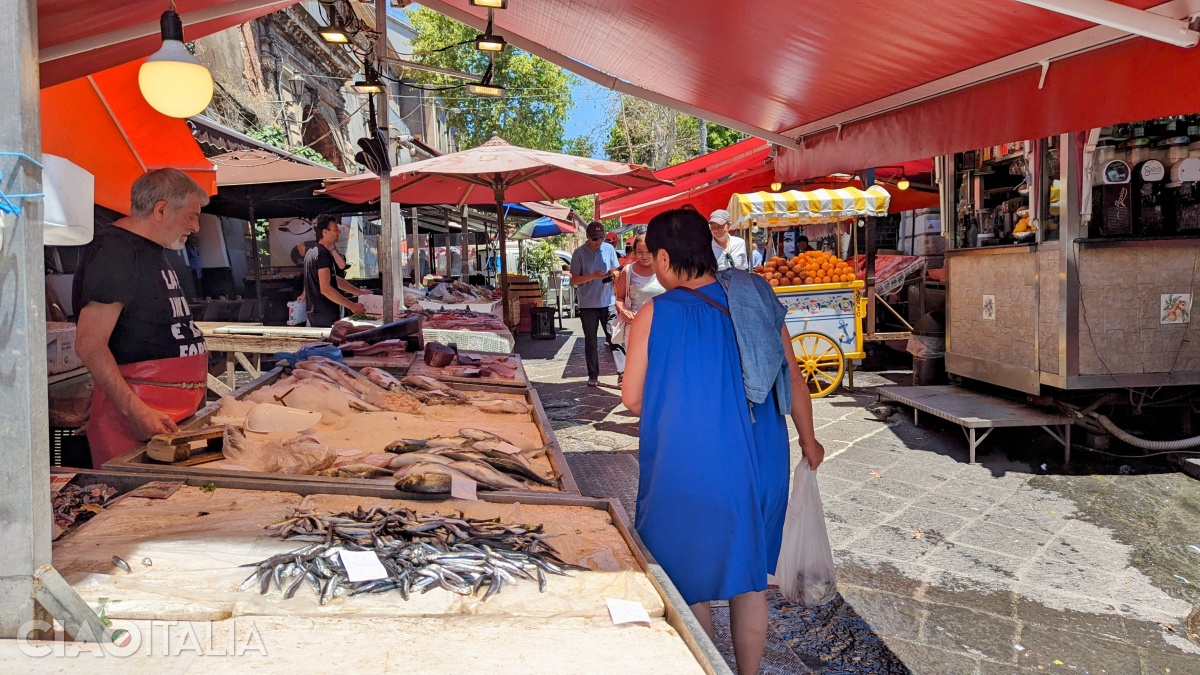
Behind the fountain begins La Pescheria, Catania’s fish market - one of the most famous traditional markets in Italy.
Palazzo degli Elefanti
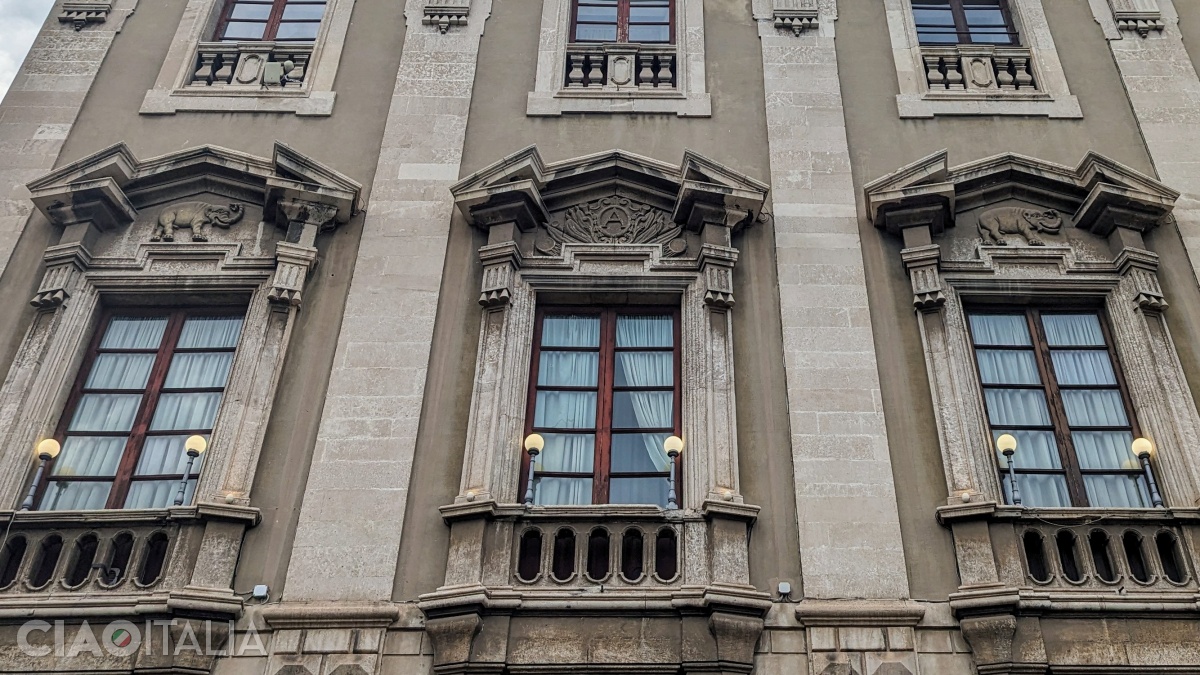
Across from Palazzo dei Chierici and the Fontana dell'Amenano, to the left as you face the cathedral, is the City Hall. The building is also known as Palazzo Senatorio or Palazzo degli Elefanti ("Palace of the Elephants"). A closer look at the façade reveals the reason for this name: on the first floor, the window pediments are decorated with elephant reliefs. Between them is the letter "A", the initial of Saint Agatha's name.
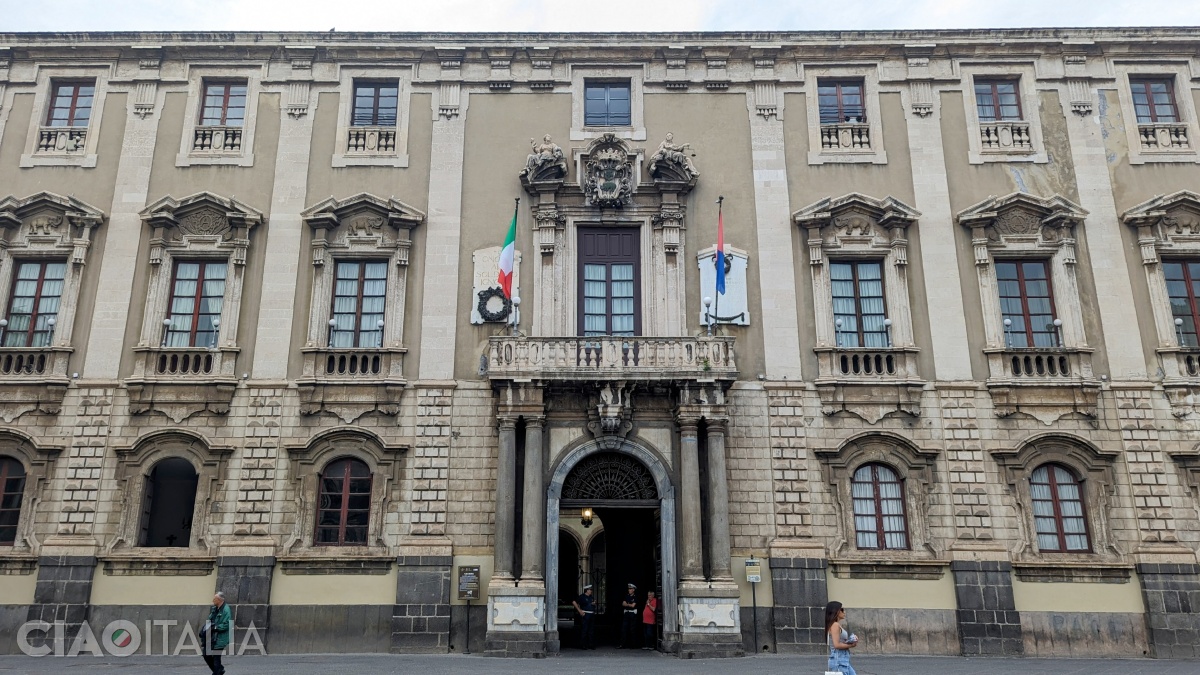
It took nearly a century to build Palazzo degli Elefanti - from 1696 to 1780 - which is why the building's style is more eclectic, blending Baroque with Neoclassical elements.
Head toward the main entrance. In the passage leading to the inner courtyard, you can admire the two 18th-century carriages of the Senate. They are used for the parade held in February during the city's festivities in honor of Saint Agatha. On those same days, the authorities of Catania watch the fireworks from the balcony overlooking the square.
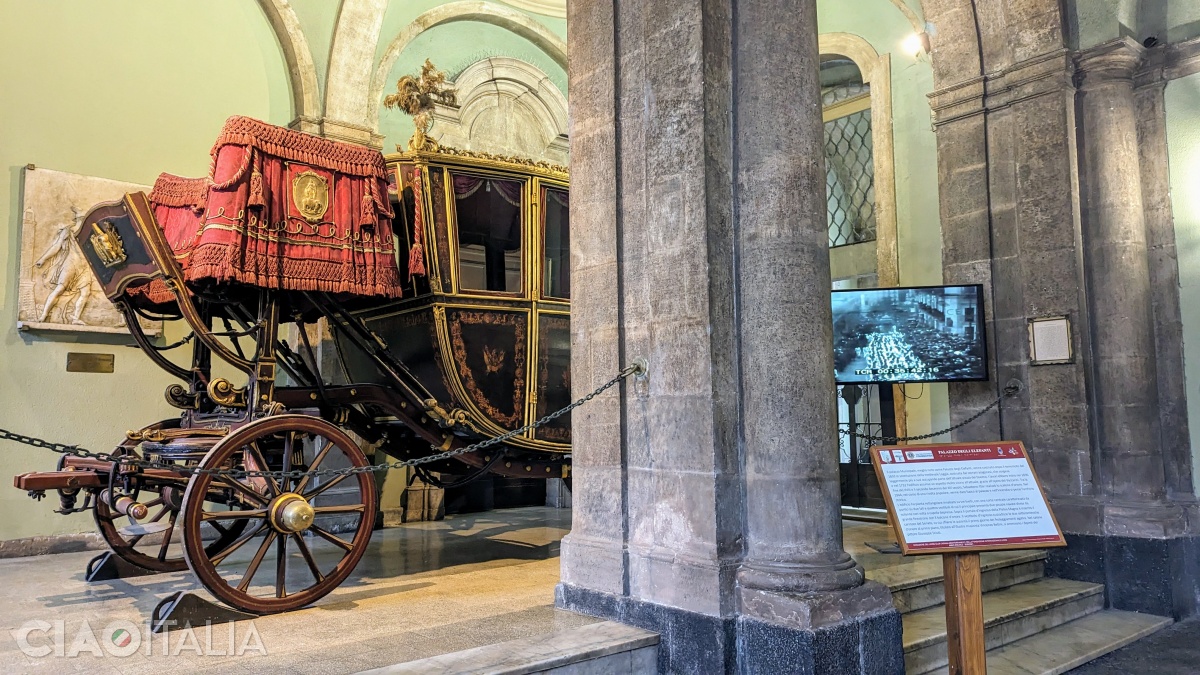
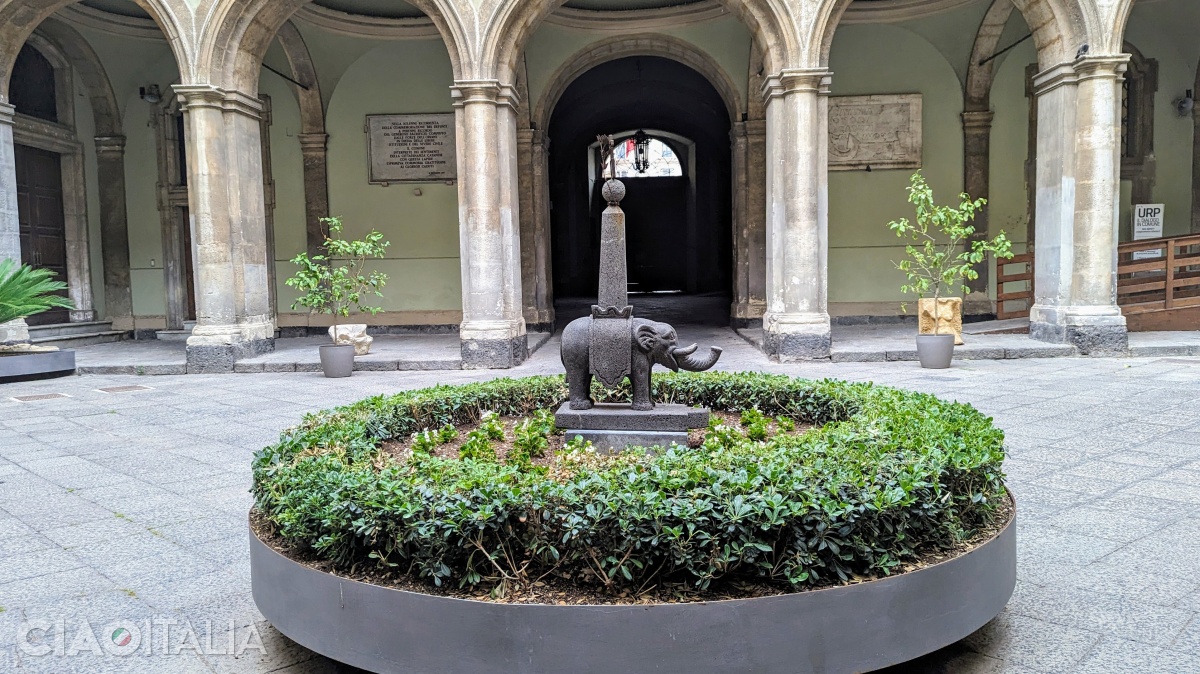
In the inner courtyard, you will find a smaller version of the elephant that decorates the fountain in Piazza del Duomo.