Grand Canal, Venice's Main "Street"
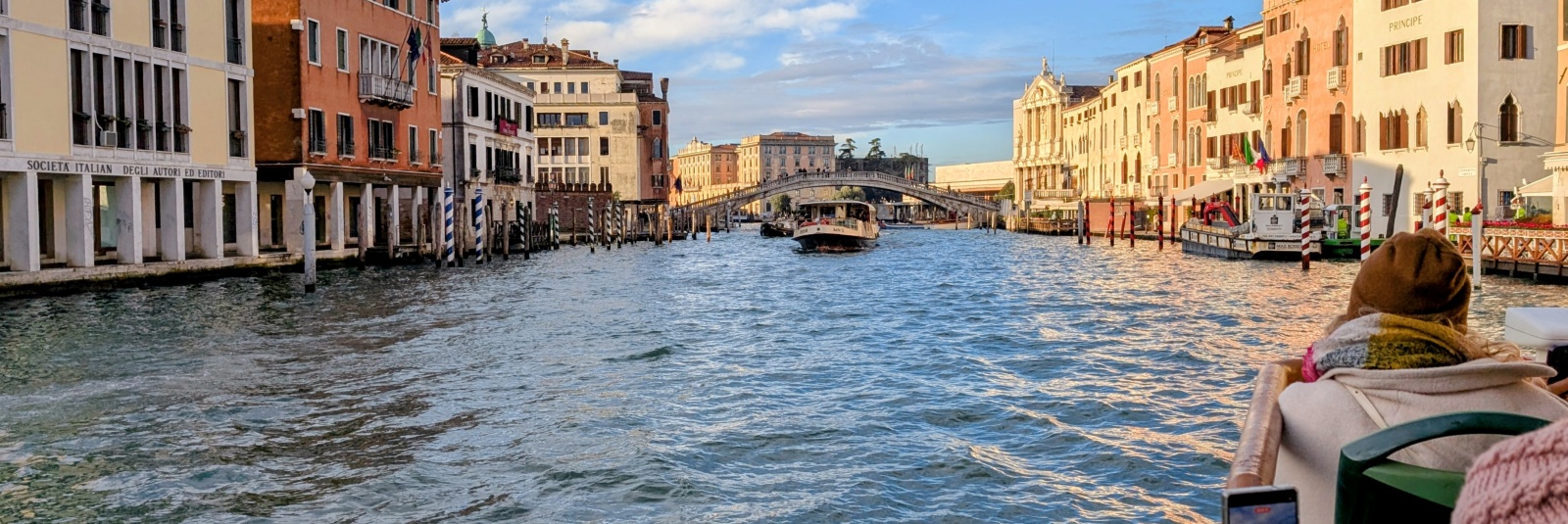
The Grand Canal ("The Great Canal", or Canalazzo, as the Venetians call it) is Venice's main waterway and one of the most beautiful and unique "streets" (aquatic ones, admittedly) in the world. The canal, which follows a reverse S-shaped path, crosses the city over a length of 3.8 km, between the Ponte della Libertà and the San Marco Basin. The Grand Canal has a maximum depth of about 5 m and an average width of 50 m (69 m at its widest part and 36 m at its narrowest). Lining its banks are some of Venice's most beautiful and opulent palaces and churches, built between the 12th and 18th centuries by the city's wealthiest families.
A ride on the Grand Canal is one of the best ways to get acquainted with the city, especially when you are on your first city break in Venice.
Warning! Swimming in the Grand Canal is strictly forbidden. In addition to hefty fines, you are also endangering your life (see also the article What Not to Do in Venice).
How to Travel on the Grand Canal
By Water Bus (Vaporetto)
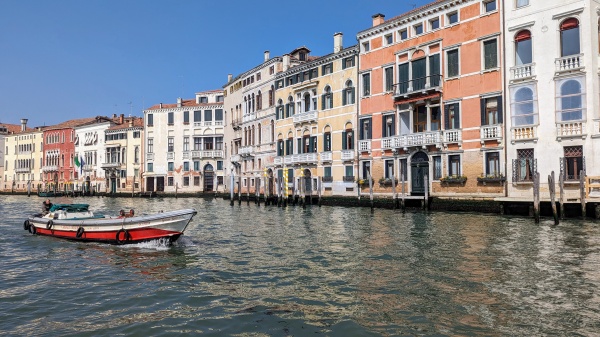
The Grand Canal is constantly traversed by a multitude of vessels of all kinds - from the classic vaporetti to motorboats loaded with all sorts of goods, water taxis, and, of course, the famous gondolas.
The simplest and cheapest (if it can be called that) way to travel along the Grand Canal is by using the ACTV water buses. If you just want a ride, a single ticket is enough. It costs €9.5 and is valid for 75 minutes. Lines 1 and 2 of the ACTV company operate along the Grand Canal (see also the article on transport in Venice). If you want to get to several places quickly or intend to visit some of the islands of the Venetian lagoon (such as Murano, Burano, or Torcello), it is more cost-effective to purchase one-day or multi-day passes.
By Gondola
Another way to enjoy the canal's scenery directly from the water is a gondola ride. It is a different experience, with higher rates. The official fare is €90 per gondola during the day, and €110 at night (a gondola can accommodate a maximum of 5 people). There are also organized tours available where you can share a gondola with other people.
Crossing with a Gondola Traghetto
Due to the fairly large distance between the bridges that cross it, it can be difficult to quickly get from one side of the Grand Canal to the other on foot. For these water crossings, historical boats called gondole traghetto or traghetti da parada are used. For tourists, the cost of a single crossing is €2.
What to See on the Grand Canal
To see the Grand Canal from one end to the other, we suggest you board a vaporetto at the Piazzale Roma station and get off at San Marco. The journey will take between 30 and 45 minutes, depending on which water bus you take (Line 1 or Line 2).
Grand Canal Between Piazzale Roma and Ponte degli Scalzi
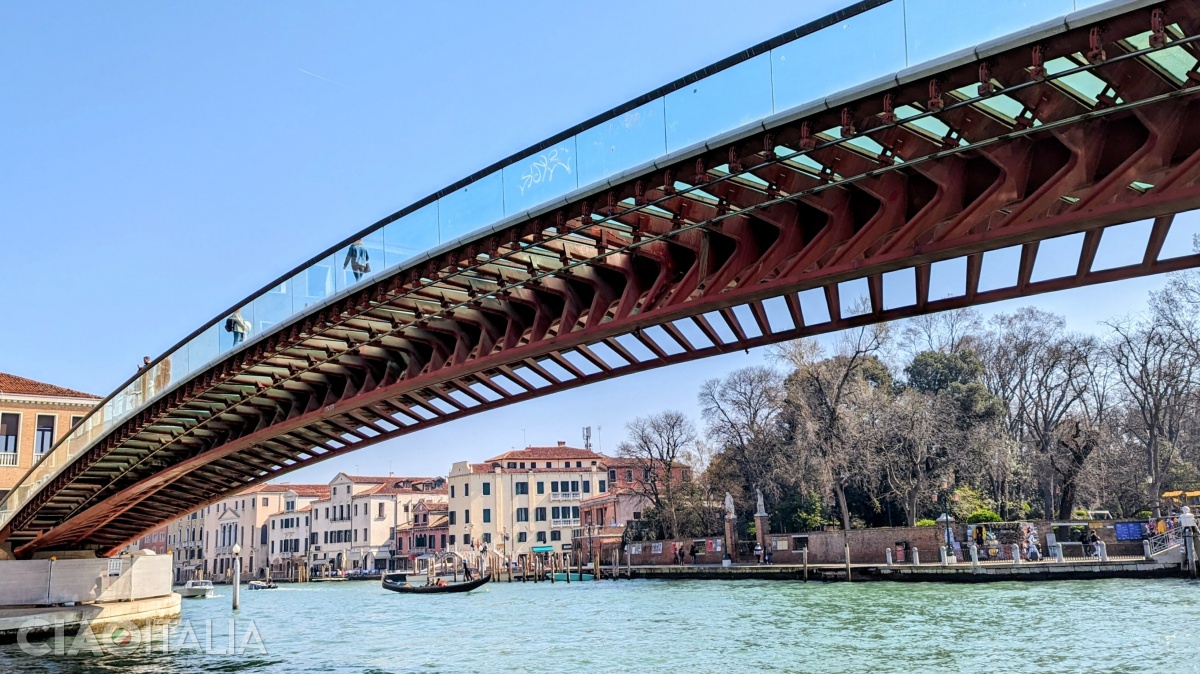
Immediately after the water bus departs, you will pass under Ponte della Costituzione. Built in 2008 by the famous Spanish architect Calatrava, it is the newest of the four bridges on the Grand Canal and the only one dating from the modern era.
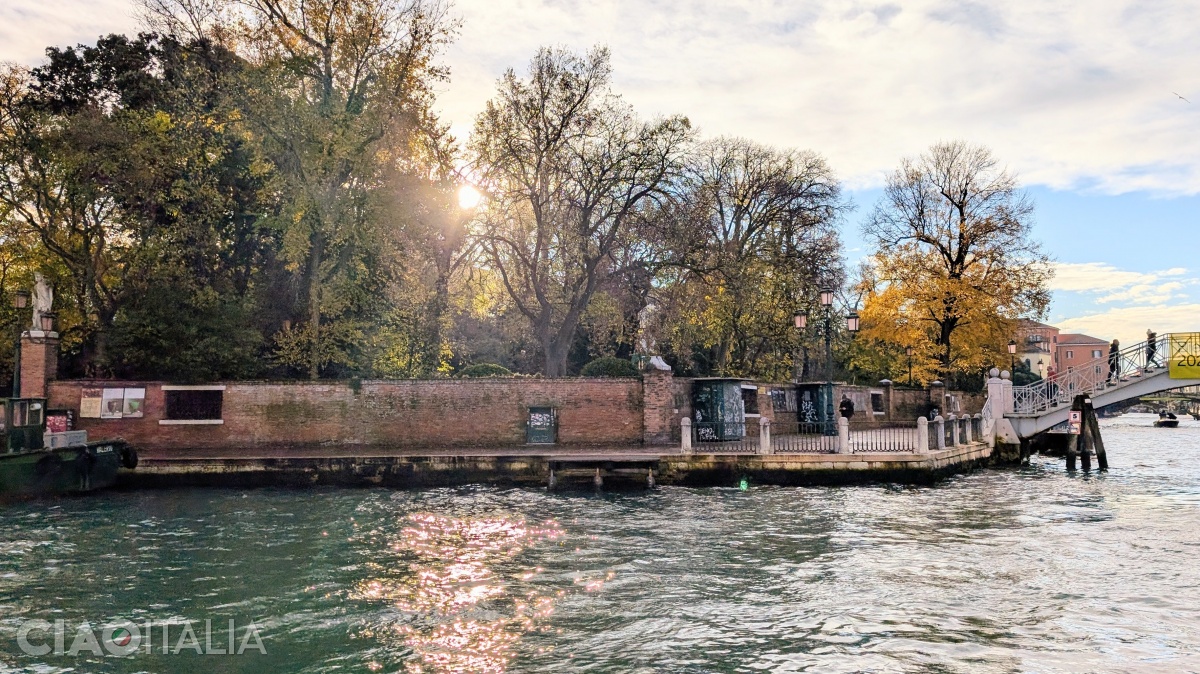
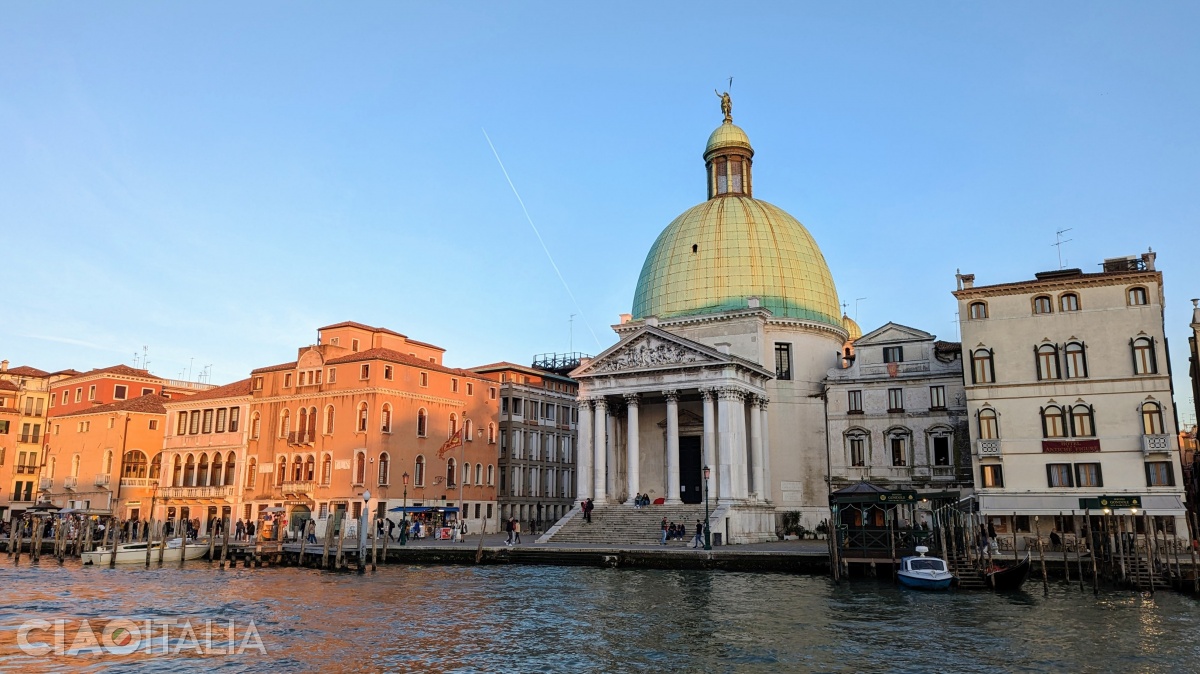
On the right side, you will leave behind the Papadopoli Gardens, surrounded by walls, and a few minutes later, you will spot, also on the right, the Church of San Simeon Piccolo, built in the first half of the 18th century. Standing at only 3 m tall, its bell tower (located at the back) is the lowest in Venice (for comparison, St. Mark's Campanile, the tallest in the city, is over 98 m high).
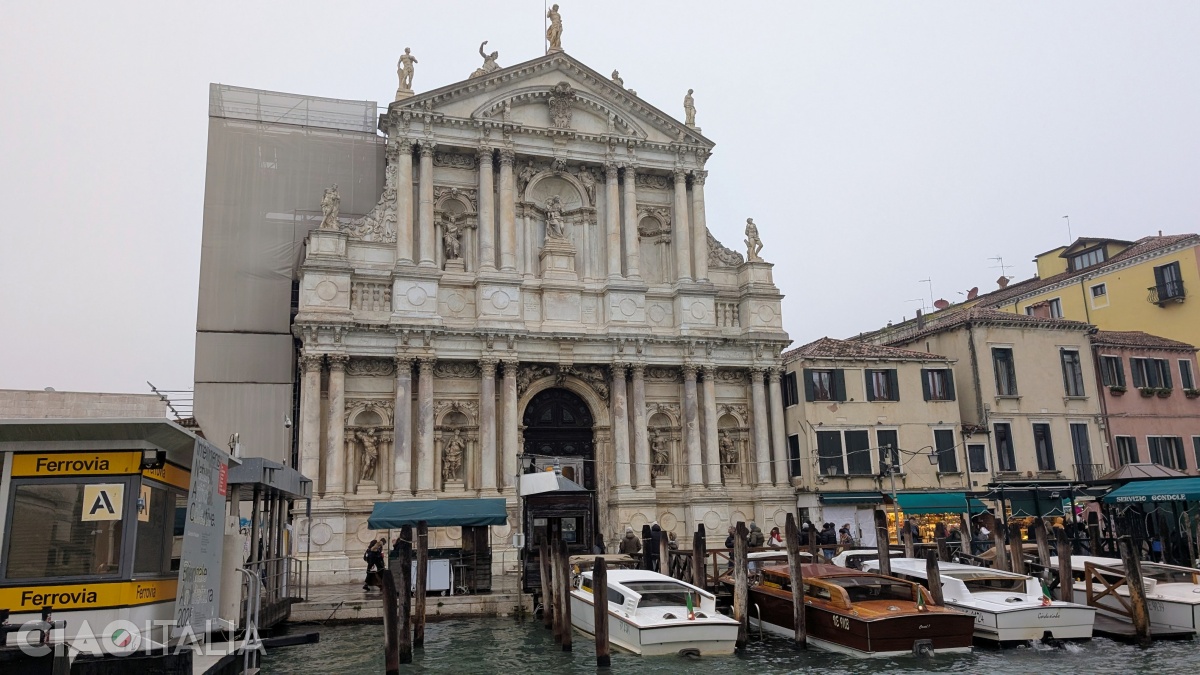
Across the way, on the left side, you will see the Santa Lucia Railway Station building, constructed in 1952. Immediately after the station is the Baroque church of Santa Maria di Nazareth, built in the 17th century by Baldassare Longhena, one of Venice's most important architects. It is more commonly known as Chiesa degli Scalzi ("Church of the Barefoot"), after the monastic order of the Discalced Carmelites, to which it belonged for several centuries. The bridge you are about to pass under shares the same name - Ponte degli Scalzi ("Bridge of the Barefoot"). It was the third bridge built over the Grand Canal, originally in 1858, but it was reconstructed in 1934 to allow taller vessels to pass beneath it.
Grand Canal Between Ponte degli Scalzi and Ponte di Rialto
The promenade that follows after Ponte degli Scalzi, on the right, is Riva de Biasio, whose name is linked to a macabre legend. Biasio was a butcher who prepared sguazzetto, a tender meat stew highly appreciated by Venetians and others - a 16th-century chronicle tells that people came by boat all the way from Mestre to taste it. However, when a customer found a small part of a finger on his plate, it was discovered that the owner was putting pieces of the flesh of children he used to kill into the food. Biagio was arrested immediately, dragged by a horse to prison, where his hands were cut off, and then he was beheaded between the columns in Piazza San Marco. His body was cut into four parts, which were hung on hooks in different parts of the city (one of these places was the San Canzian Bridge), and his house and shop were demolished.
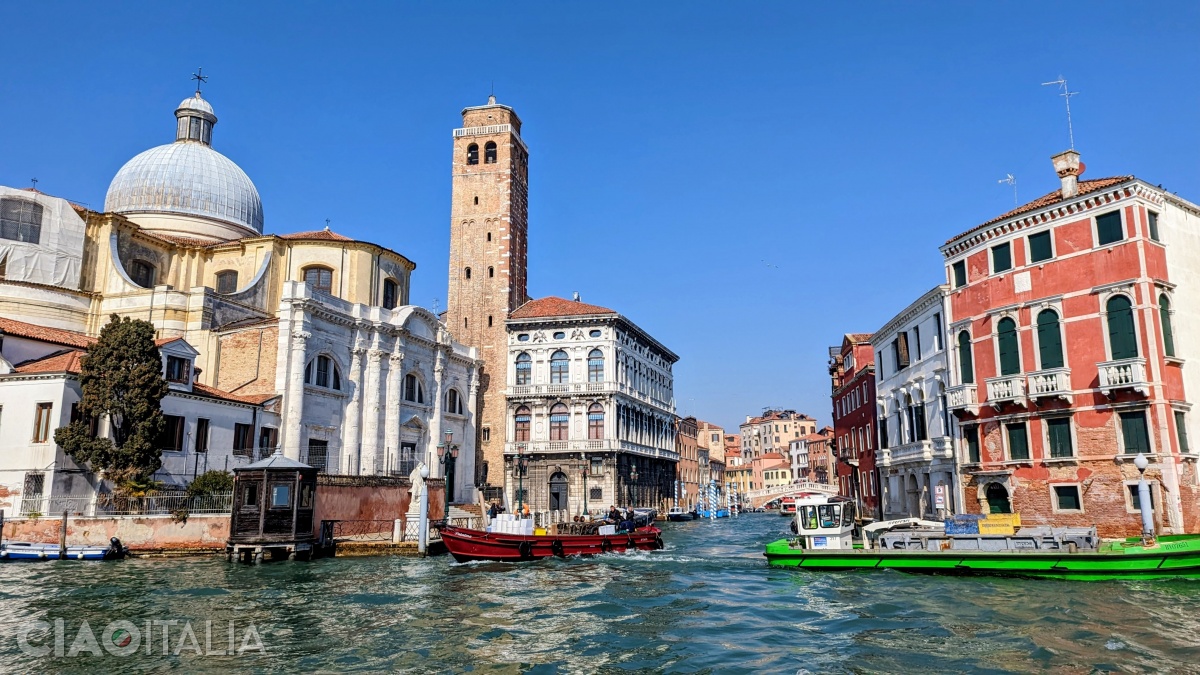
On the left corner, at the intersection with the Cannaregio canal, is the Church of Saints Jeremiah and Lucy (Chiesa dei Santi Geremia e Lucia), whose facade dates from 1870. The church is an important place of worship for Venetians because it houses the relics of Saint Lucy, a Christian martyr from Syracuse, killed at the beginning of the 4th century. The saint's body was taken by a Byzantine general from Sicily to Constantinople, and from there the relics were brought to Venice by Doge Enrico Dandolo during the Fourth Crusade in 1204. Until after the middle of the 19th century, the relics were kept in an old church dedicated to Saint Lucy, which was demolished to make way for the new railway station (that is why the station in Venice bears the name Santa Lucia). Then, they were moved to the nearby church dedicated to St. Jeremiah (which since then has also been given the name of Saint Lucy), which was expanded in 1863 with a chapel built with material from the demolished church.
Looking beyond the church toward the side canal, you will see, right at the base of the bell tower, Palazzo Labia. In the 18th century, this was the residence of one of the richest families in Venice, of Catalan origin. On September 3, 1951, during the Film Festival, the palace's splendid ballroom, painted by Tiepolo, hosted what was called at the time the "Party of the Century" - a masked ball attended by, among many other famous personalities, Salvador Dalí, Christian Dior, Pierre Cardin (who thus launched his career), Orson Welles, and Winston Churchill. Today, Palazzo Labia houses the Venetian branch of the Italian television station Rai.
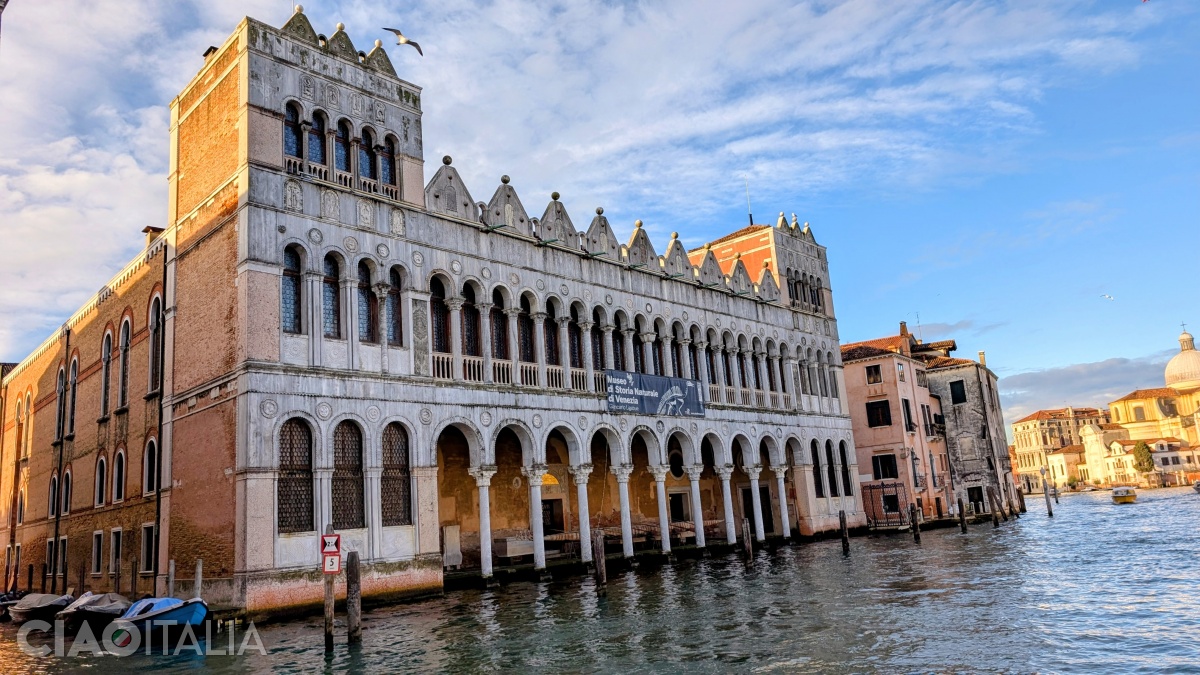
A bit further along, on the opposite bank of the Grand Canal, lies the Natural History Museum (a great option if you are visiting Venice with children). The building is known as Fondaco dei Turchi as it formerly served as the trading headquarters for merchants arriving from the Orient. Built in the 13th century in the Veneto-Byzantine style with numerous arches, its design occasionally brings to mind the architecture of the Doge's Palace.
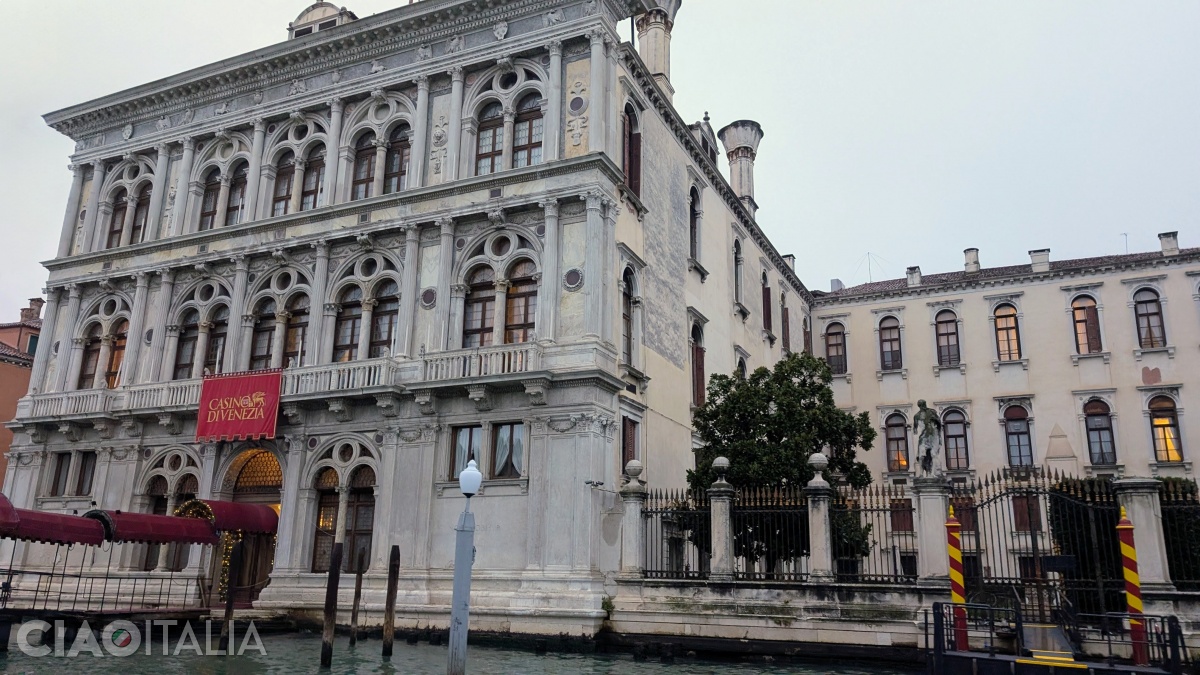
Right across the way is the Church of San Marcuola, rebuilt in the 18th century, but whose facade was never finished. Next to it stands Palazzo Vendramin-Calergi (1480), one of the most beautiful palaces on the Grand Canal, which today houses the Casinò di Venezia. It was in one of these apartments that the composer Richard Wagner passed away. You can visit a small museum dedicated to him for free, though a reservation is required (see the article Free Things to Do in Venice).
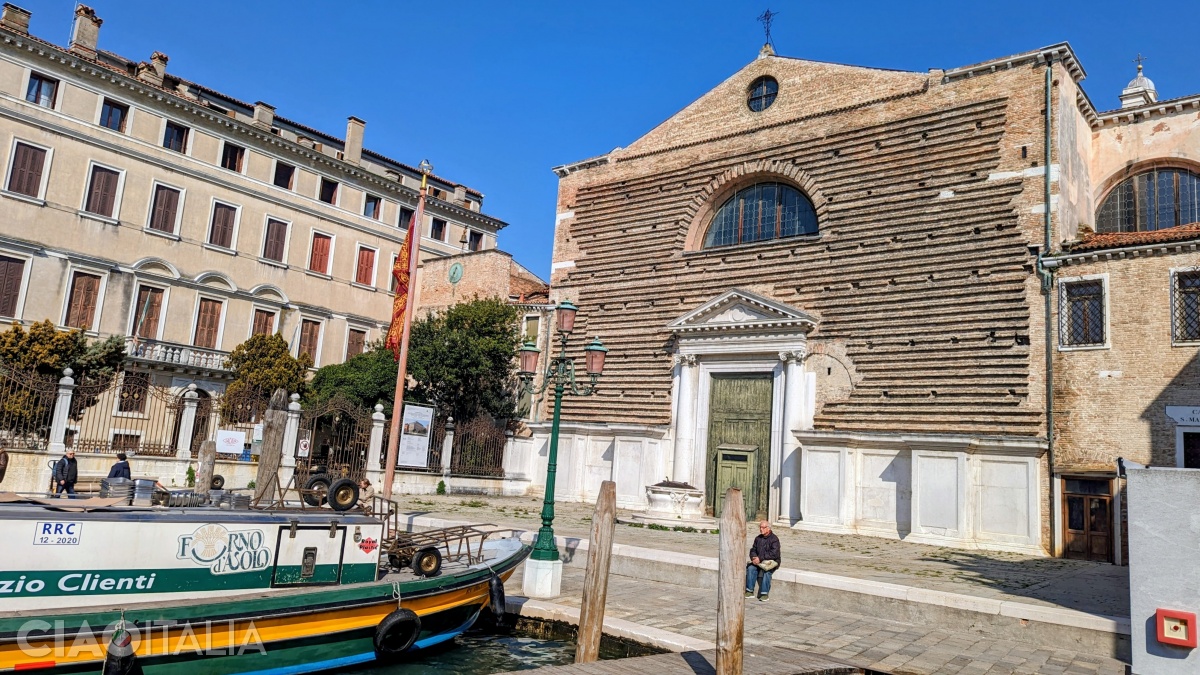
Turn your gaze once more to the right side of the canal. The exposed brick building following the Fondaco dei Turchi, accross the side canal, is the Fondaco del Megio (megio means "millet" in the Venetian dialect). In the 15th century, it was used as a grain warehouse for emergencies, such as famine or war. The lion bas-relief on the facade indicates that the building belonged to the Republic. Next is the Palazzo Belloni Battagia (17th century), which you will recognize by its two small obelisk-shaped turrets.
Also on the right side, after the Church of San Stae, with its early 18th-century white marble Baroque facade, you will see Ca' Pesaro, which today houses the Gallery of Modern Art and the Museum of Oriental Art (both can be visited with a single ticket). The palace was built in the 17th century by the architect Baldassare Longhena.
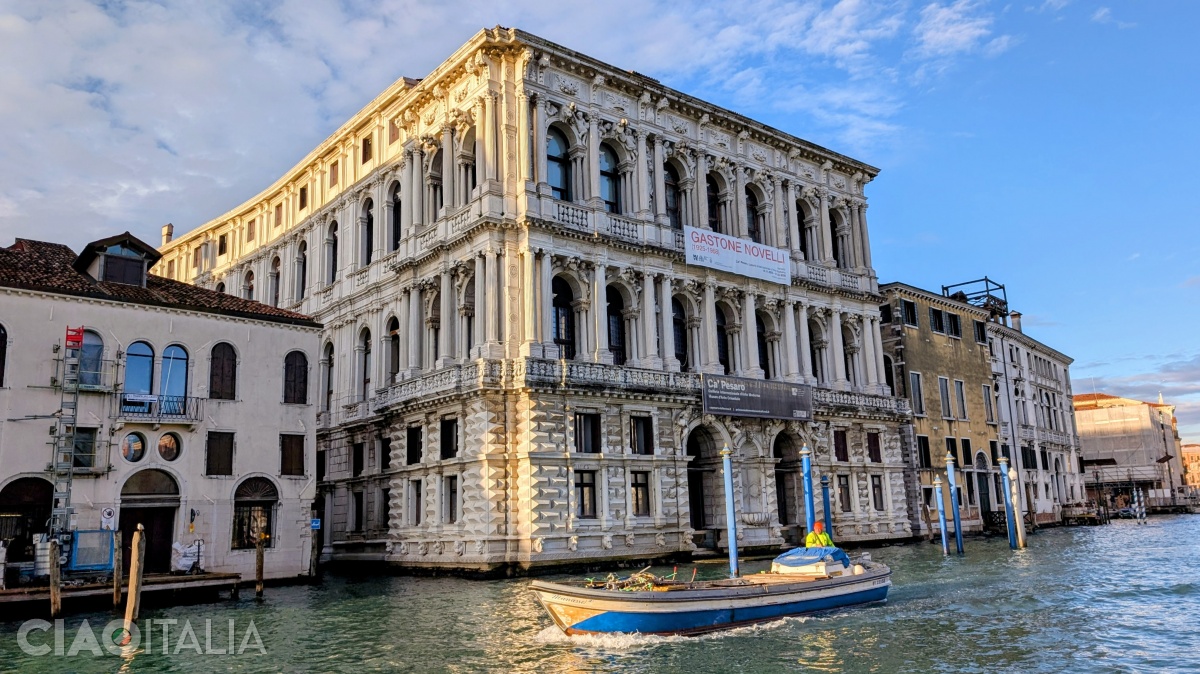
A few buildings further is Ca' Corner della Regina, a building taller than those around it, which is today the headquarters of the Prada Foundation. The current palace dates from the 18th century but takes its name from the fact that Caterina Cornaro, who became the Queen of Cyprus, was born on this site in 1454.
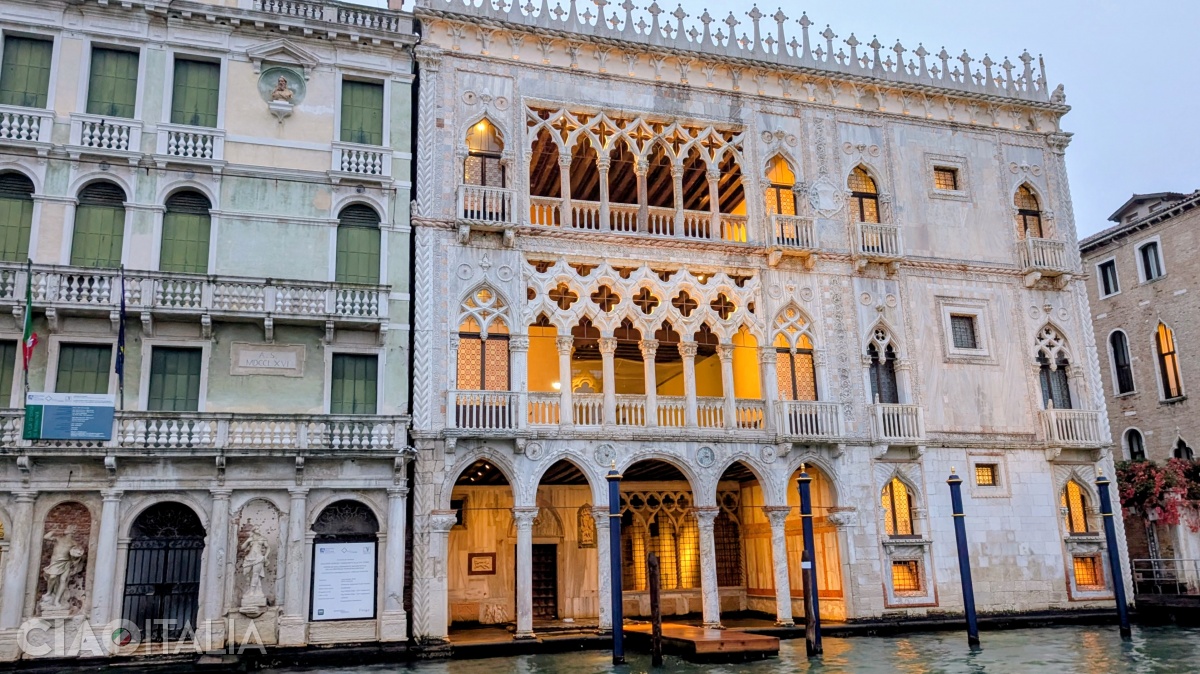
A little further, on the left, is the superb Ca' d'Oro palace, which once belonged to the Contarini family. Built in the elaborate Venetian Gothic style of the 15th century, it owes its name ("Golden House") to the gilded decorations that once adorned its marble facade. In the 19th century, the palace was gifted by a Russian prince to the ballerina Marie Taglioni (who also owned other palaces on the Grand Canal). The last owner, Giorgio Franchetti, left the palace as a legacy to Venice itself, so it currently houses the Galleria Franchetti, with artworks by Bellini, Carpaccio, and Titian.
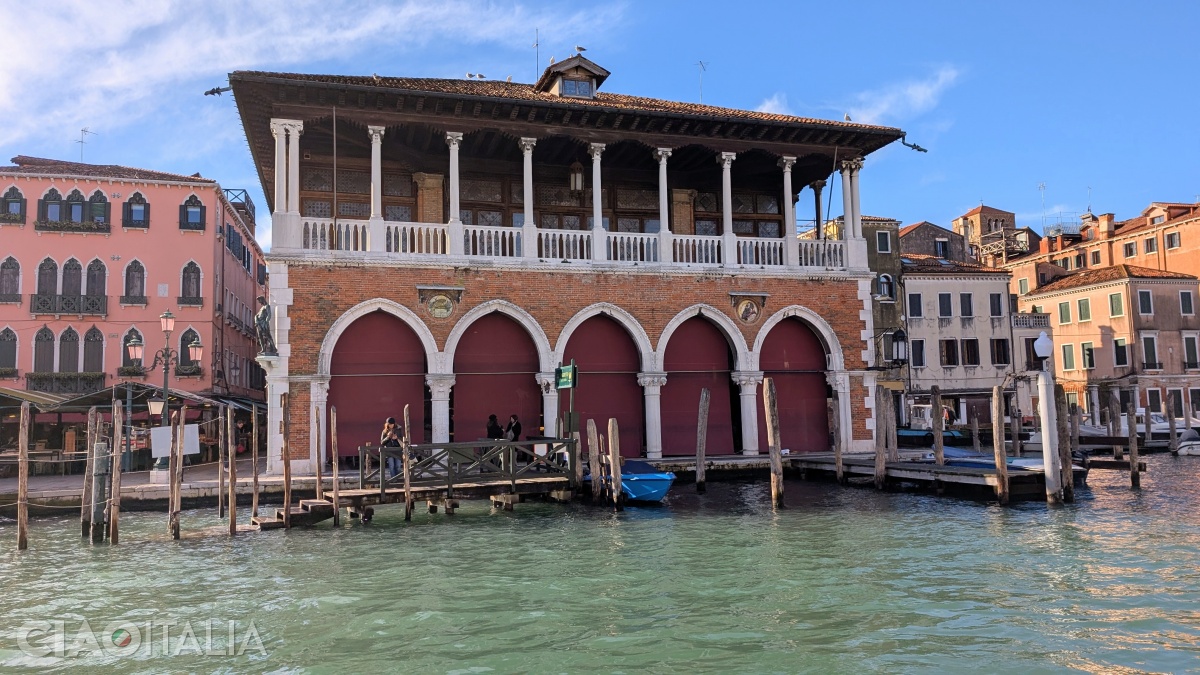
Across from Ca' d'Oro is the Pescaria, the neo-Gothic building of the fish market in Rialto.
Next, right before the bridge, is Palazzo dei Camerlenghi, built in 1525 as the seat of the state treasury. On the ground floor was a prison for those who did not pay their taxes, whose memory is preserved by the name of the street facing the canal: Fondamenta de la Preson. The palace - one of the few in Venice not attached to other buildings - now houses the Court of Auditors.
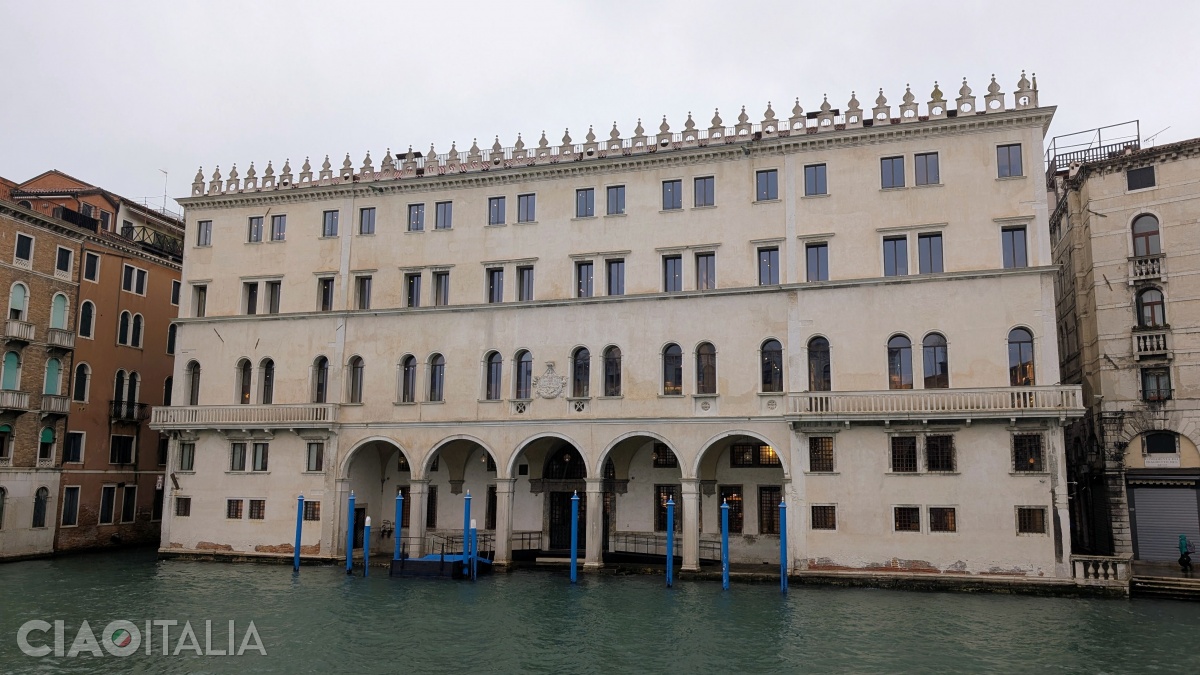
On the opposite side is Fondaco dei Tedeschi, where in the past German, Austrian, Hungarian, and northern European merchants had their offices and warehouses (in over 200 rooms). In the 20th century, for 70 years, Fondaco dei Tedeschi was the headquarters of the Italian Post. More recently, a luxury shopping center operated in the building, on whose terrace you could go up for free to enjoy the panorama of Venice. It closed its doors in the spring of 2025, and the building's future purpose is currently unknown.
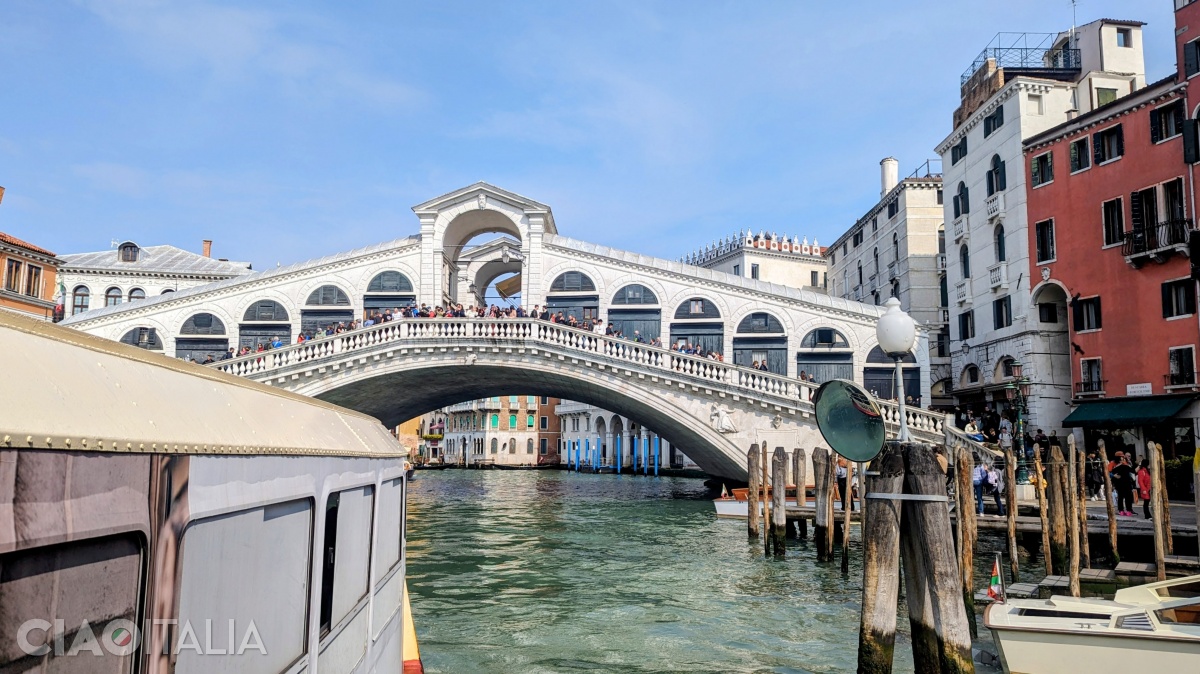
Immediately following is the Rialto Bridge, the most famous of Venice's bridges. It was the first bridge built over the Grand Canal in the 12th century, right in the area where the city was born. The bridge has been rebuilt several times, and its current appearance dates from 1591.
Grand Canal Between Ponte di Rialto and Ponte dell'Accademia
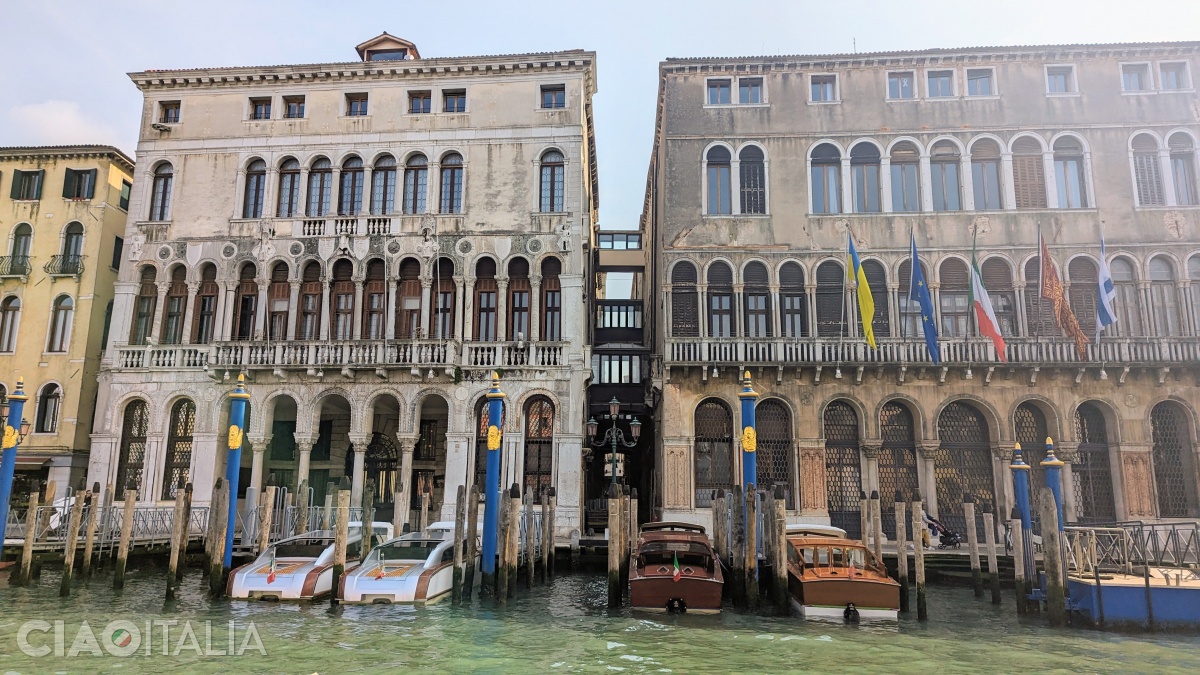
After you pass the Rialto station, you will see on the left side (called Riva del Carbon, because coal was unloaded here in the past) two adjacent 13th-century Byzantine palaces - Ca' Loredan and Ca' Farsetti, which today form the headquarters of the Venice City Hall. A little further on the same side is Palazzo Grimani, built in the 16th century.
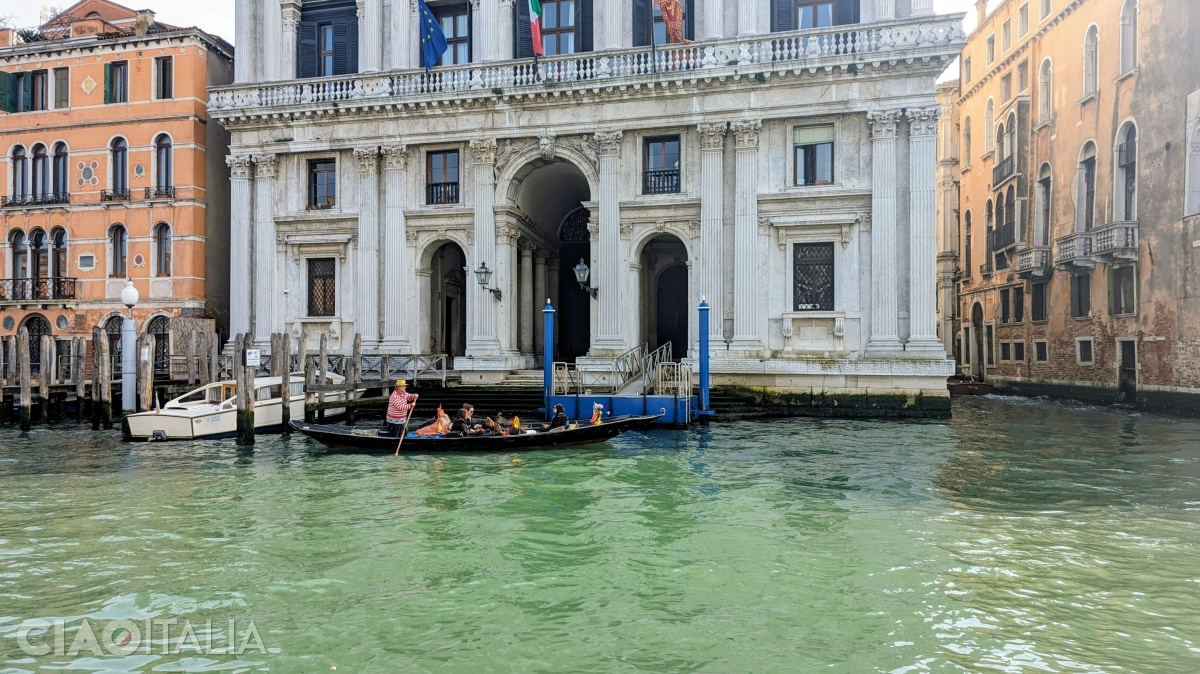
Across the way, after the San Silvestro station, is Palazzo Barzizza, built in the 12th-13th centuries and renovated around the 17th century.
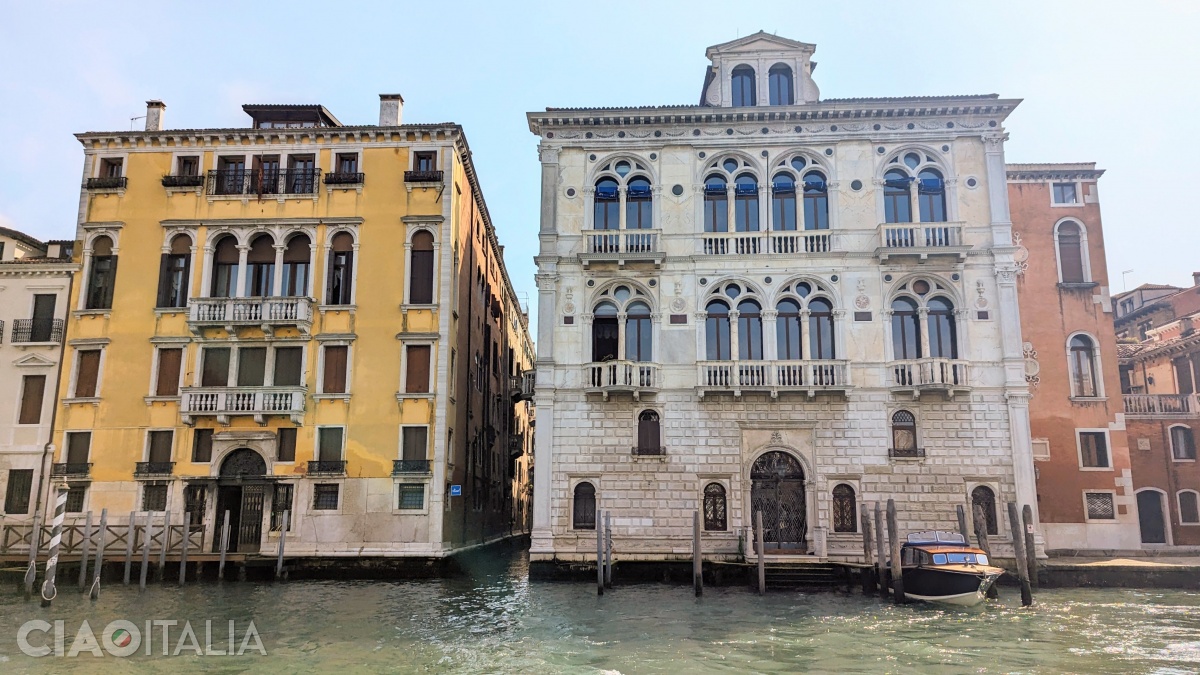
On the left bank, you will leave behind Palazzo Benzon, which belonged to Countess Marina Querini Benzon, an important personality of the 19th century, whose guests included the English poet Lord Byron. Immediately after this, before the Sant'Angelo station, is Palazzo Corner-Spinelli, another massive palace whose architecture reflects the transition from Venetian Gothic to Renaissance style.
On the right bank, beyond the Rio di San Polo canal, stands the 15th century Palazzo Pisani Moretta, distinguished by its vibrant salmon-pink hue.
On the left side, opposite the San Tomà station, is Palazzo Mocenigo (actually a complex made up of four palaces), where Lord Byron lived for a time. He resided there alongside several servants, his personal valet, and - as the story goes - a whole menagerie of animals. This was also the setting for the dramatic episode involving Margherita Cogni, one of his mistresses; upon being abandoned, she allegedly attacked him with a knife before throwing herself into the canal.
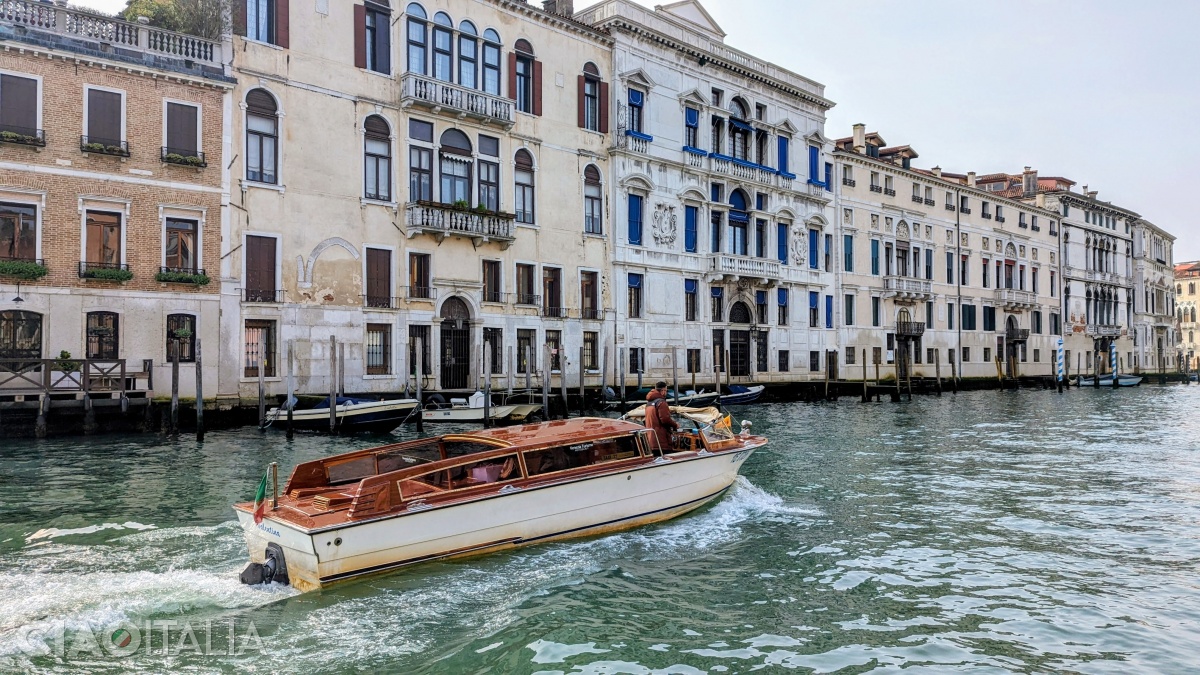
The Grand Canal then makes a sharp curve to the left (known as Volta del Canal), and on the right rises Ca' Foscari, a tall Gothic palace with an elegant 15th-century facade, which now houses the headquarters of Ca' Foscari University.
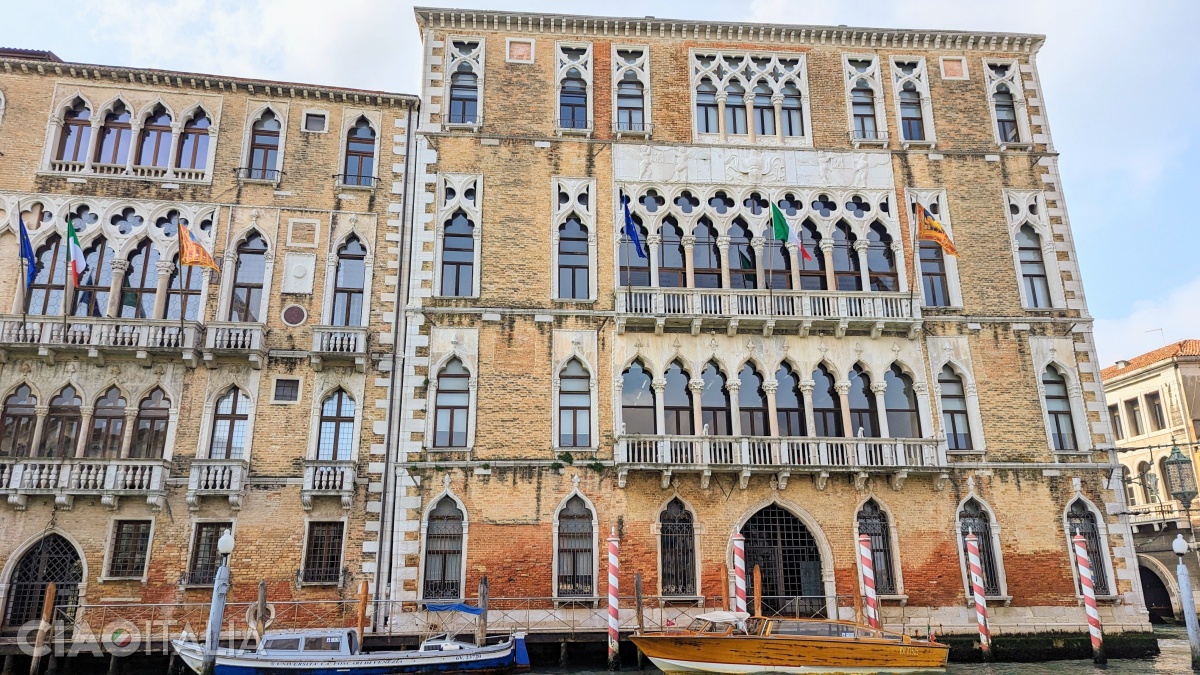
A little further, also on the right, is Ca' Rezzonico, which houses the Museo del Settecento Veneziano ("Museum of the 18th Century in Venice"). The palace was designed in the 17th century by the architect Baldassare Longhena but was completed almost a century later. In the 19th century, it was the last residence of the English poet Robert Browning, and in 1967, Elizabeth Taylor and Richard Burton danced in its ballroom.
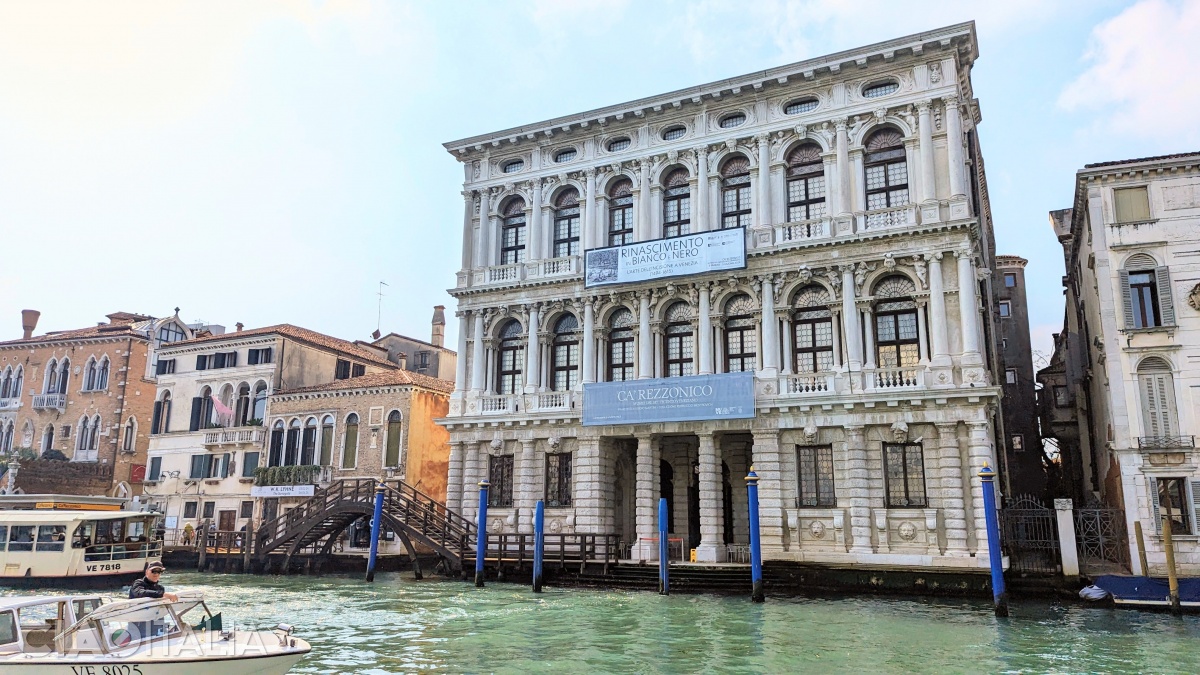
Opposite is Palazzo Grassi, the last palace built on the Grand Canal before the fall of the Republic. Inside, the Pinault Foundation often organizes modern and contemporary art exhibitions.
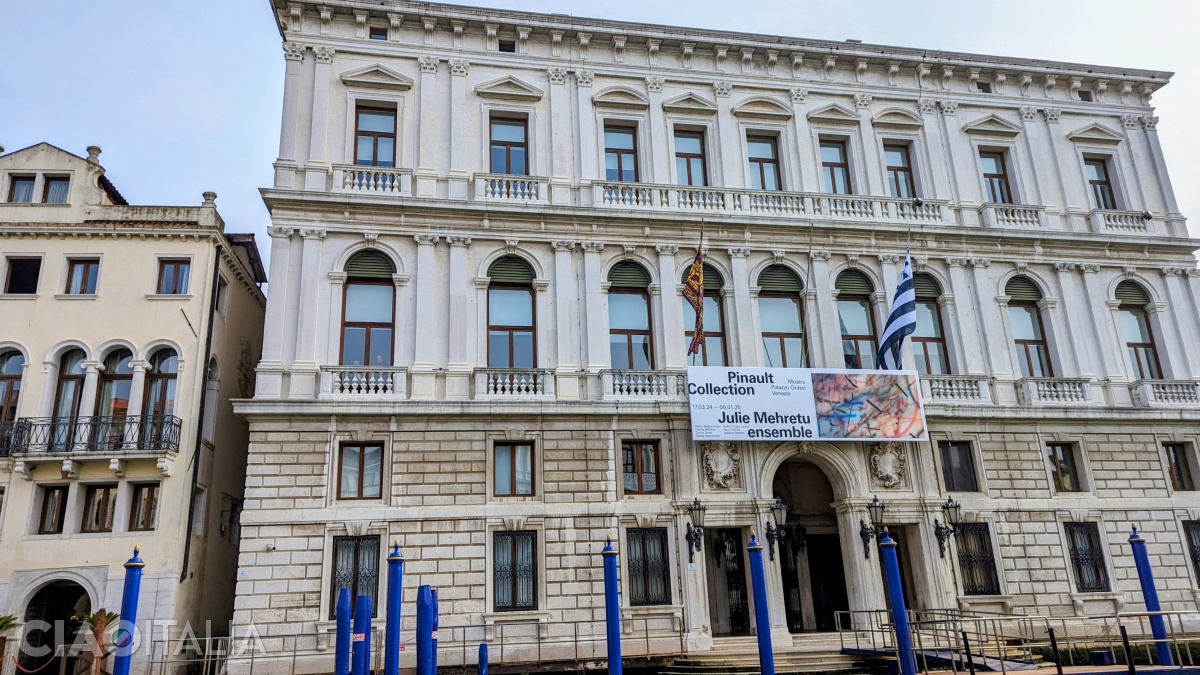
A little further on, before the bridge, stands Palazzo Falier (you can recognize it by the two covered side loggias). It is believed that Doge Marino Falier lived here; he was beheaded in 1355 after being accused of a coup d'état and treason. His portrait is the only one missing from the imposing Hall of the Great Council in the Doge's Palace, where a black shroud has been painted in its place.
Next is the Ponte dell'Accademia ("Academy Bridge"), the last bridge over the Grand Canal and chronologically the third to be built, in 1854. At its right end lie the Accademia Galleries, housed within a former monastic complex.
Grand Canal Between Ponte dell'Accademia and the San Marco Basin
Immediately after the bridge, on the left side, is Palazzo Cavalli-Franchetti (headquarters of the Venetian Institute for Sciences, Letters, and Arts). It dates from the end of the Gothic period and has a beautiful garden.
Next is Palazzo Barbaro, consisting of two buildings built in the 15th and 17th centuries. In 1885, it was bought by the Curtis family, wealthy Americans who held literary and artistic gatherings here. Their guests included the painter Claude Monet and the writer Henry James.
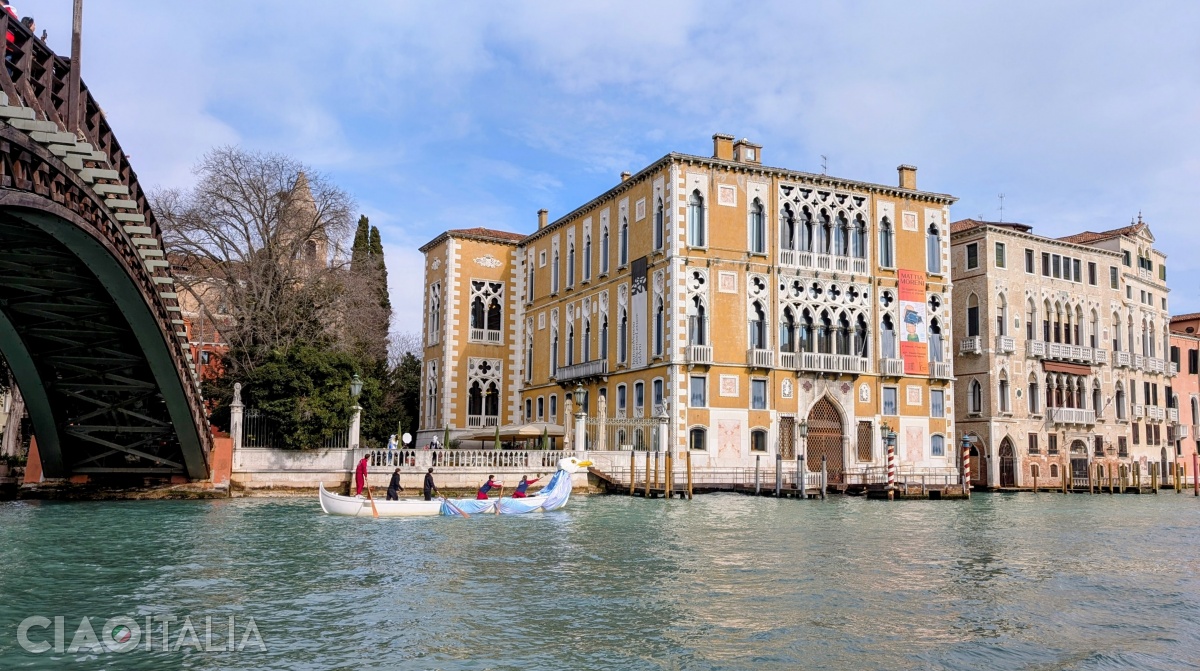
On the right, after the intersection with the Rio de S. Vio canal, is Palazzo Barbarigo, built in the 16th century. Its facade immediately catches your eye due to the Murano glass mosaics. These were added at the end of the 19th century by owners who had a glass factory and were inspired by the decoration of St. Mark's Basilica.
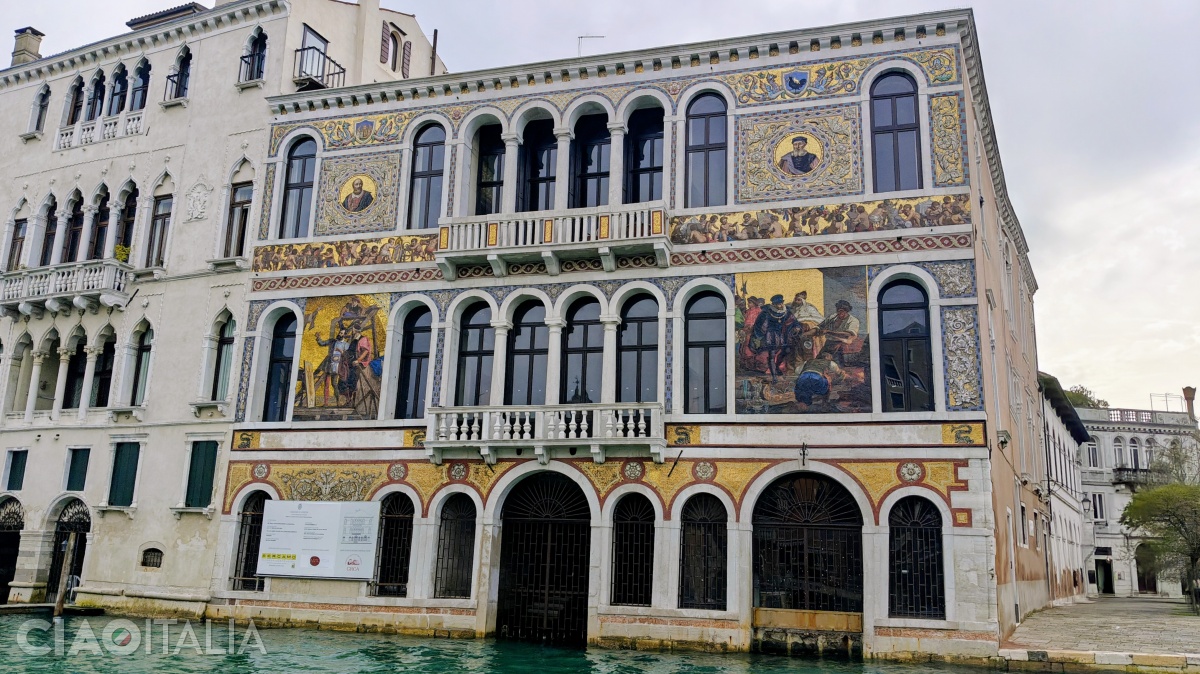
A little further down, on the same side, is the unfinished Palazzo Venier dei Leoni, home to the Peggy Guggenheim Collection modern art museum.
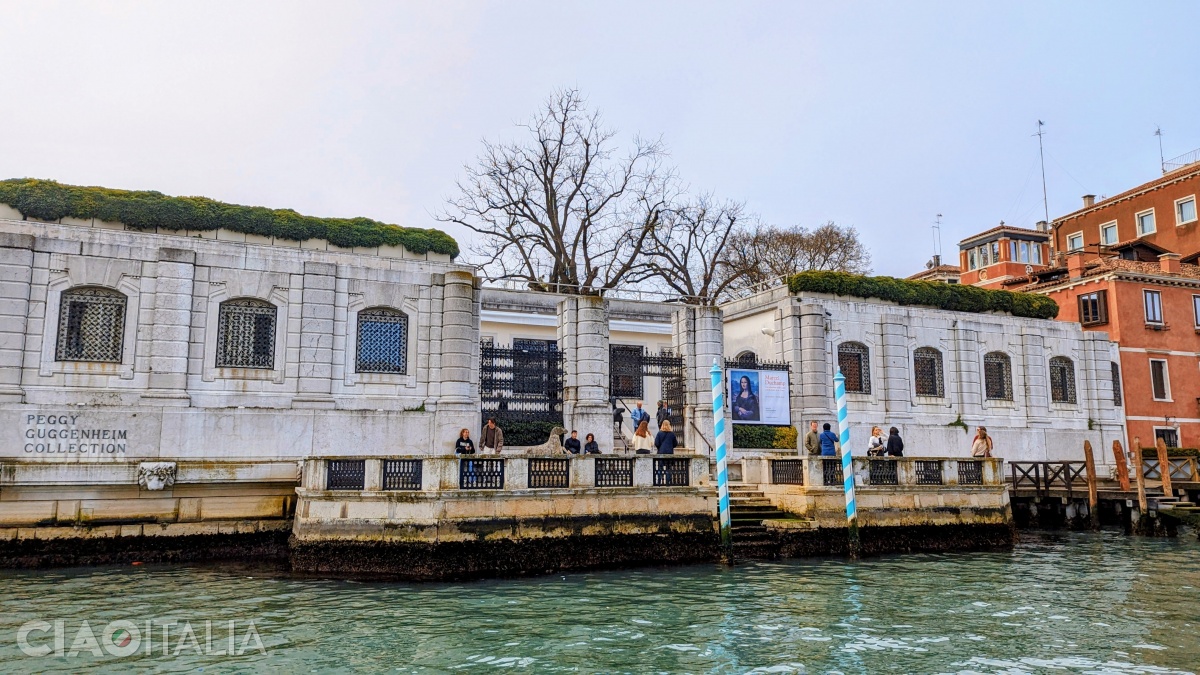
Across the way is Palazzo Corner, also nicknamed Ca' Granda, which has a three-arched portico on the lower level. Built in 1535, it was designed by the architect Sansovino for Jacopo Corner. During Austrian rule, it was the residence of the Imperial Lieutenancy, and today it houses the Prefecture of Venice.
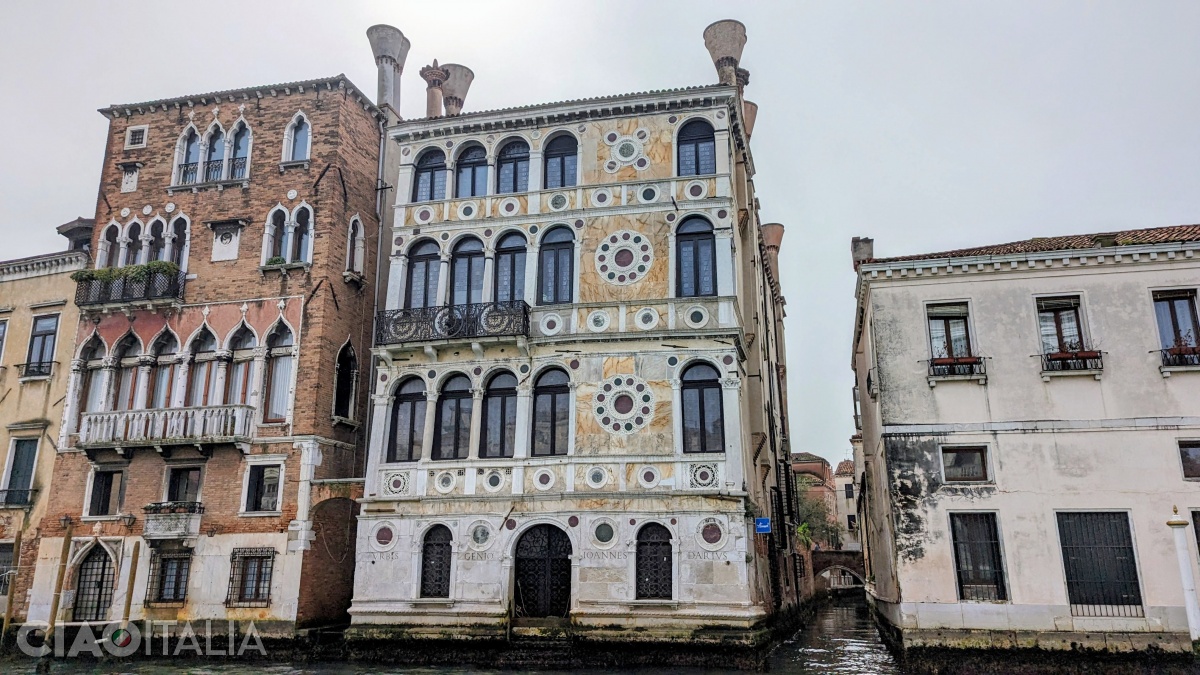
Immediately after the Peggy Guggenheim Museum, beyond the next side canal, is Ca' Dario - a slightly leaning palace with a facade decorated with colored marble, but with a terrifying reputation. It is believed that a curse causes all the building's owners to be followed by bankruptcy or to meet a violent death. The mysterious story begins with the man who commissioned the building's construction in the 15th century. Shortly after moving into the new home with his daughter and son-in-law, Giovanni Dario (Venice's ambassador to Constantinople), he lost his political influence and became impoverished, and his daughter died of a heart attack. Later, around the 17th century, Giacomo Barbaro, a descendant of the family who had also lived in the palace, was assassinated in Crete, where he was governor. The string of suspicious events continues with a wealthy Armenian diamond merchant who lost his entire fortune and died poor, and later, in the 19th century, with the suicide of an Englishman. Other 20th-century owners went through scandals, went bankrupt, or were assassinated, the last of them being industrialist Raul Gardini, who committed suicide. Some famous personalities were on the point of buying the palace but changed their minds - such as tenor Mario del Monaco, who had a serious car accident while on his way to visit the building, or director Woody Allen, who backed out after learning its terrible history.
Immediately next door is Palazzo Barbaro Wolkoff which, at the end of the 19th century, belonged to the Russian Count Alexander Wolkoff. In 1894, the famous Italian actress Eleonora Duse, with whom Wolkoff had a relationship, lived on the upper floor.
Beyond another side canal is Palazzo Salviati, whose facade was decorated with mosaic at the beginning of the 20th century. The palace was a showroom for the Salviati glass factory.
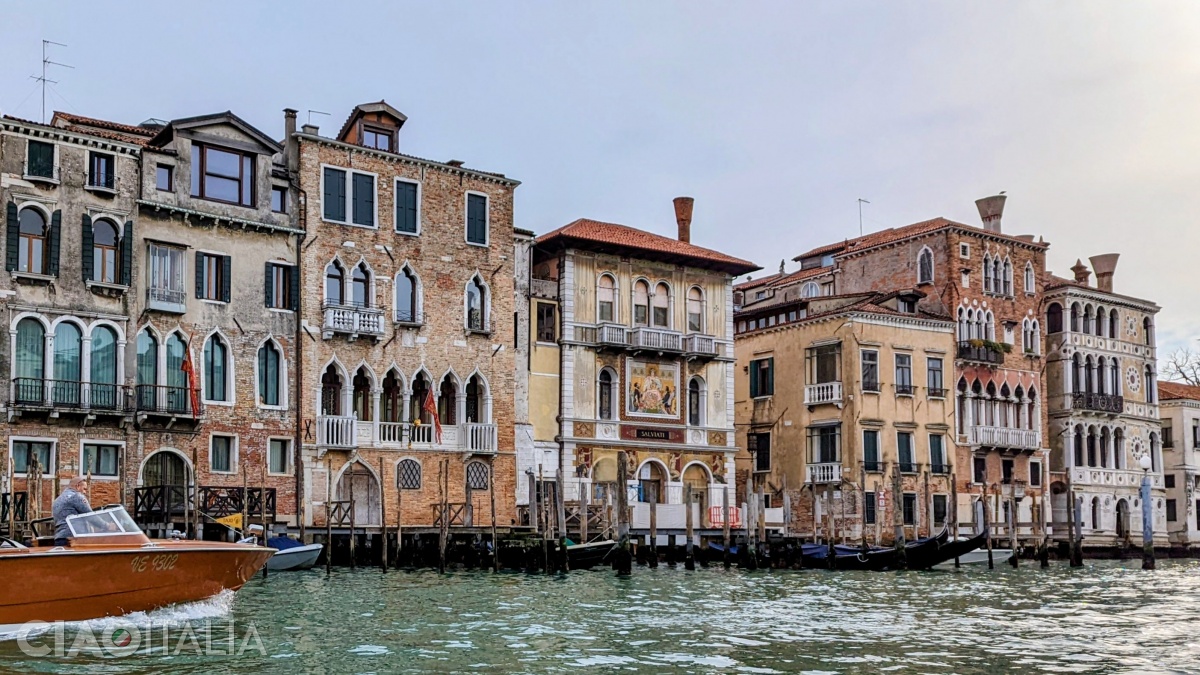
On the opposite side, after the Santa Maria del Giglio vaporetto station, rises Palazzo Pisani-Gritti from the 15th century, today The Gritti Palace Hotel, one of the most luxurious hotels in Venice.
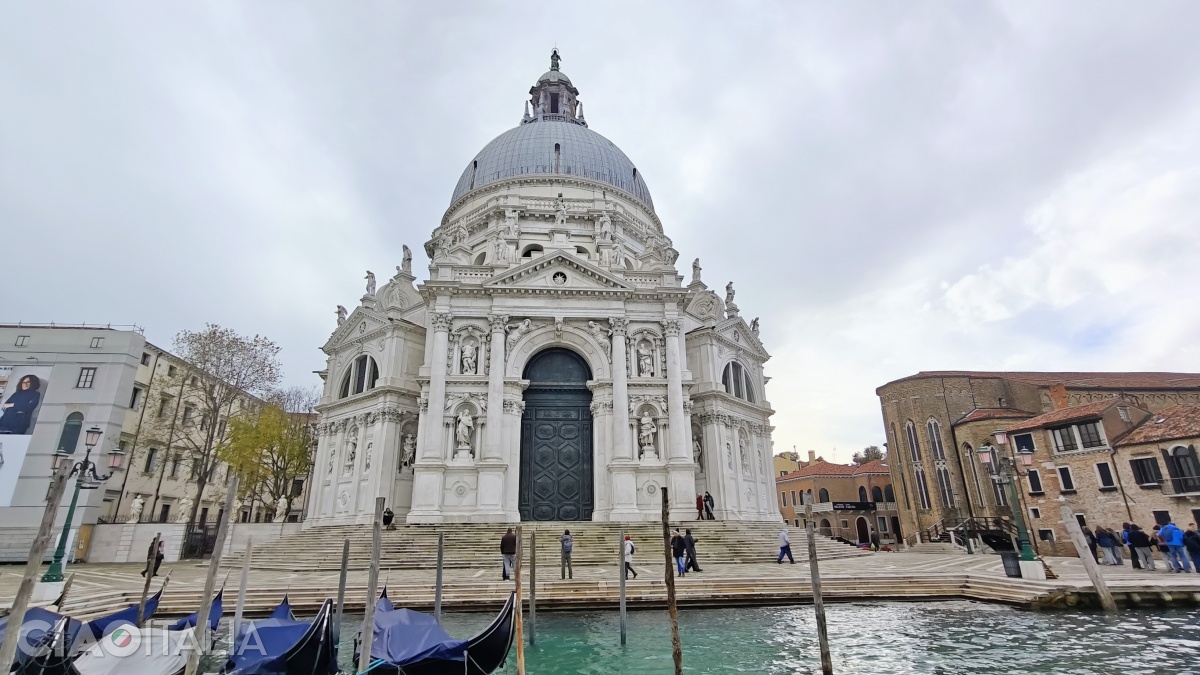
On the right, after the San Gregorio Monastery, rises the imposing Santa Maria della Salute Church, built in the 17th century as a thank-offering for the end of a plague epidemic.
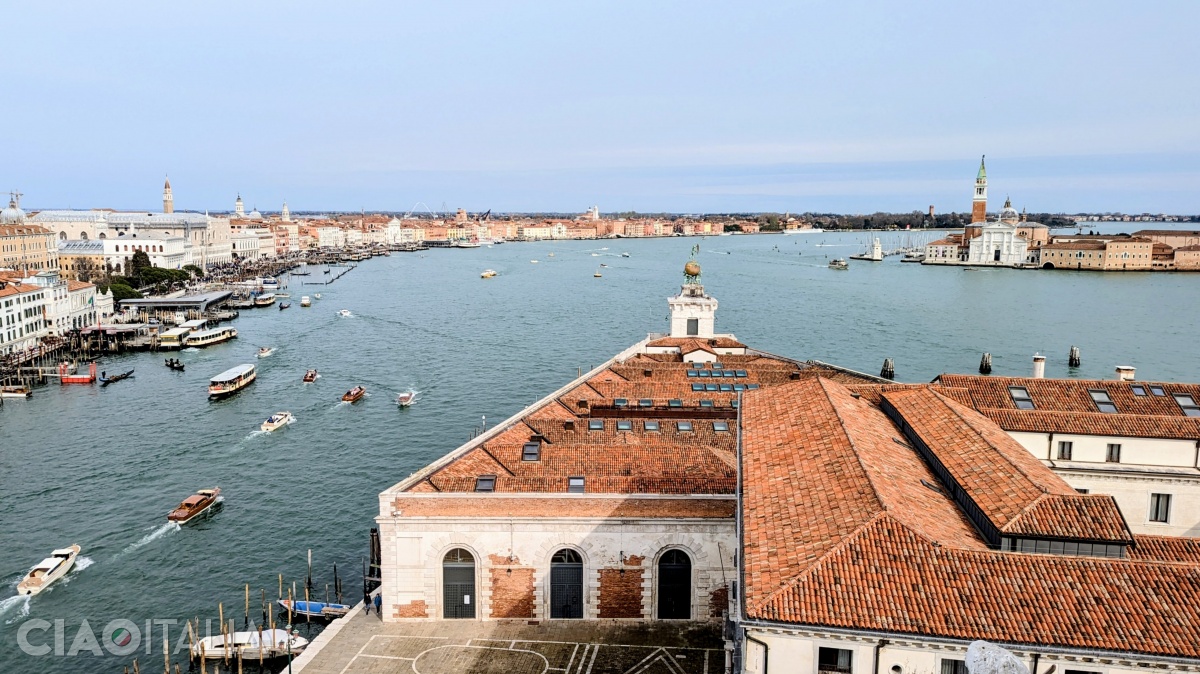
The right bank ends with Punta della Dogana (also called Punta della Salute or Punta da Mar), a triangular 17th-century structure flanked by the Grand Canal on one side and the Giudecca Canal on the other. Until the 1980s, goods arriving by sea were processed through customs here (hence the name, which translates to "Customs Point"). Atop the former customs building is the Palla della Fortuna, a golden sphere supported by two Atlantes, topped by a weather vane representing the goddess Fortuna. Currently, Punta della Dogana is part of the Pinault Collection and hosts temporary art exhibitions.
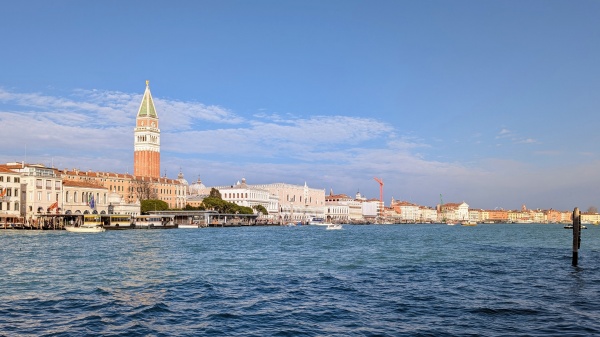
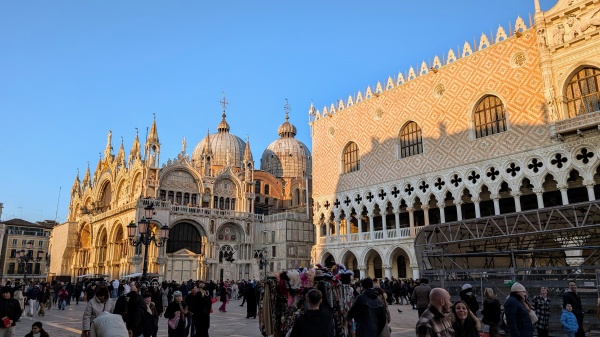
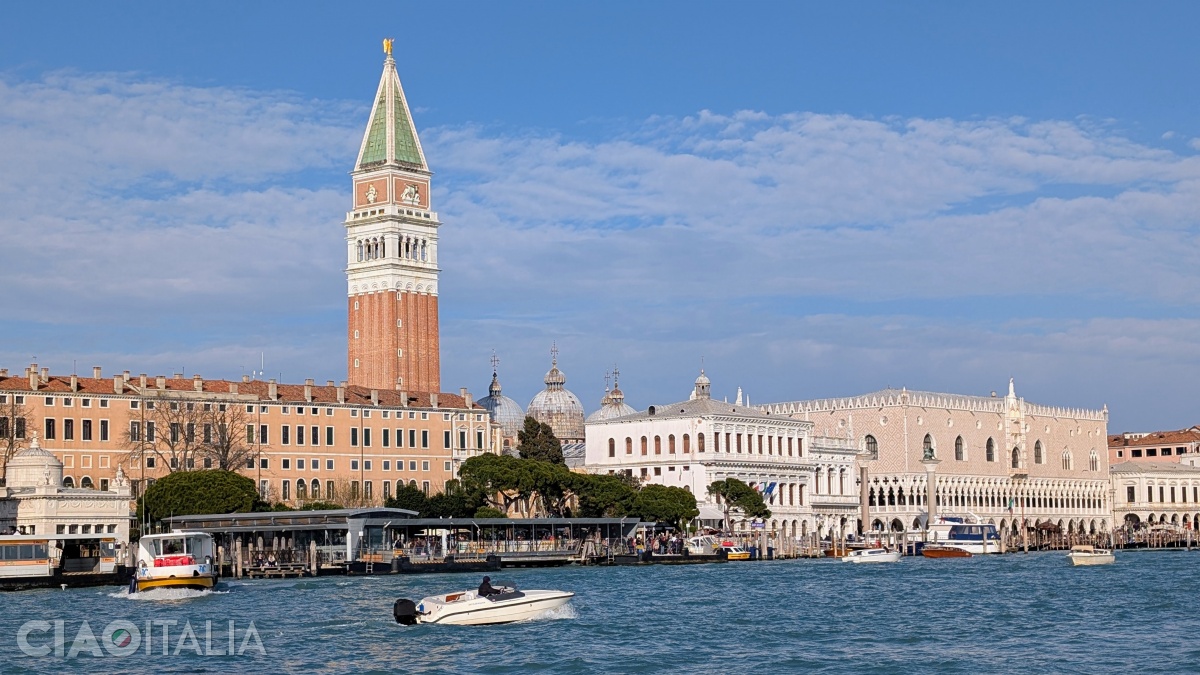
On the left is the San Marco pier, and if you don't get off at San Marco-Vallaresso, but at San Marco-San Zaccaria, you can also admire the Royal Gardens, the Campanile, Piazzetta San Marco, and the Doge's Palace from the vaporetto.
Shows on the Grand Canal
Regata Storica
Every year, on the first Sunday of September the Grand Canal hosts the Regata Storica ("Historical Regatta"), a traditional boat rowing competition first mentioned in a document dating back to 1274.
The competition officially opens with a spectacular parade of ceremonial boats, reconstructed according to historical drawings and engravings. Since the 1950s, this procession has reenacted the triumphal reception of Caterina Cornaro in 1489. A Venetian-born queen of Cyprus, she returned to the city after abdicating her throne and ceding the island to Venice.
The figures costumed as the Doge and Caterina Cornaro sit in a richly decorated four-oared gondola, called the Dogaressa. This is preceded by the Serenissima, a large 18-oared vessel carrying the city flags, the musicians, and the Capitano da Mar (the supreme commander of the fleet), and which actually opens the event. Following them are ten two-oared gondolas carrying figures embodying senators, magistrates, and ambassadors, along with eleven large eight-oared boats (bissone), each decorated in a characteristic Venetian style (Veneziana, Bizantina, Floreale, Rezzonico, Pescantina, Nepomucena, Querini, Cavalli, Nettuno, Cinese, Geografia). The procession is followed by about 60 more boats carrying participants dressed in period costume.
The procession departs from the Arsenale and continues toward the San Marco Basin, where it enters the Grand Canal. It travels the canal's entire length to the Ponte della Costituzione before turning back to the finish line, built in front of Ca' Foscari. This is where the actual rowing races - featuring various boat types and age categories - conclude.
Festa Veneziana sull’Acqua
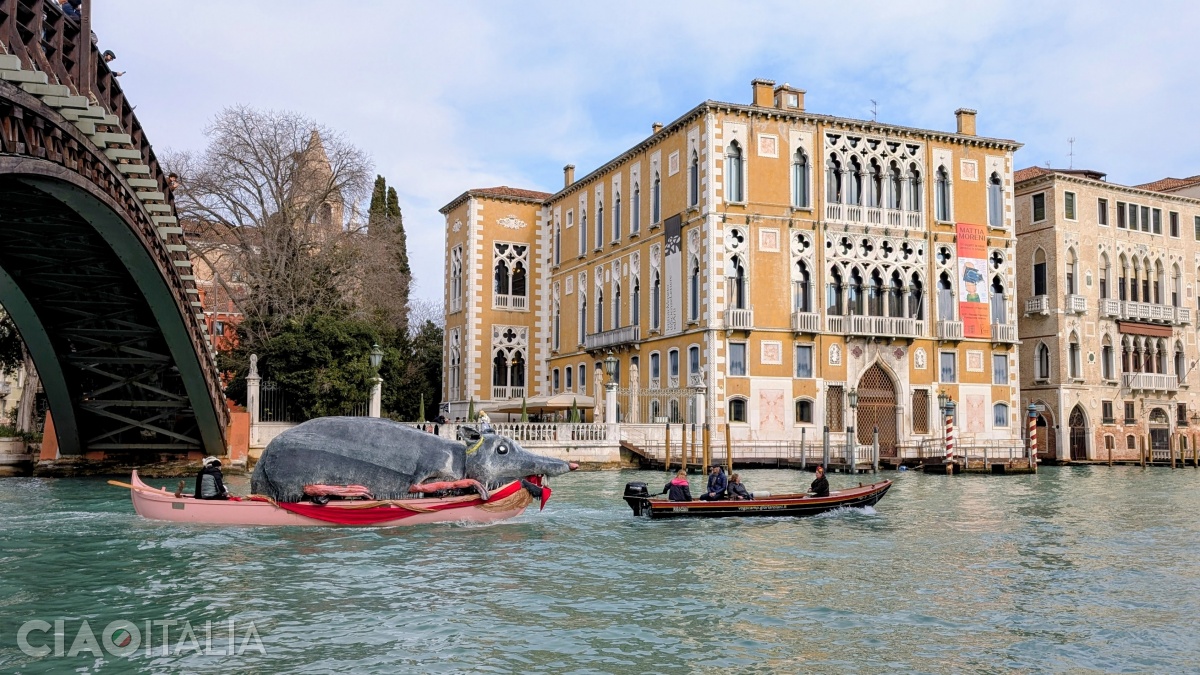
The Festa Veneziana sull’Acqua ("Venetian Festival on the Water") is an aquatic procession that opens the Venice Carnival. A parade of about a hundred boats led by masked figures departs from Punta della Dogana and heads toward the Rialto Bridge, where they put on a show full of colors, smoke, and confetti. At the head of the parade is the Pantegana, a seven-meter-long giant papier-mâché rat, a symbol of the popular festival.
Festa delle Marie
Also held during the Carnival is the Festa delle Marie ("Festival of the Marys"), a tradition established in the 10th century. One of the key stages of the event is the parade along the Grand Canal, from Santa Sofia to Piazza San Marco. This features a procession of gondolas carrying the twelve young women specifically chosen for the occasion.
Festa della Salute
On November 21st, during the Feast of the Presentation of the Virgin Mary in the Temple, Venice holds a major celebration centered around the Basilica di Santa Maria della Salute. This tradition dates back to 1630, commemorating the end of a devastating plague epidemic, and Venetians gather in great numbers to offer their thanks to the Virgin Mary. For this occasion, a temporary floating bridge (historically made of boats) is built across the Grand Canal, linking the San Marco district directly to the Church of the Madonna della Salute. The traditional Venetian dish for this holiday is castradina, made with cabbage and smoked mutton.