The Rialto Bridge in Venice and Its Story
The Rialto Bridge (Il Ponte di Rialto) is the oldest, most beautiful, and most famous of the bridges crossing the Grand Canal. It is also one of Venice's major tourist landmarks, where tourists crowd together in search of the ideal spot for photos.
History - When and Why Was the Rialto Bridge Built?
Rialto was the first of Venice's bridges, built in the area called Rivus altus, which translates to "high bank" (from which it takes its name). This was the area where the first Venetian colonists settled, laying the foundation for the later city.
The first bridge ever made was actually a pontoon bridge (a bridge of boats), built toward the end of the 12th century to provide access to the market that had moved nearby. According to some sources, this first bridge was called Quartarolo because those who wished to cross it had to pay a small coin equivalent to a quarter of a dinar, known as a quartarolo. According to other hypotheses, it bore the name Ponte della Moneta ("Bridge of the Coin") due to its proximity to the city's mint.
By the middle of the following century the growing commercial importance of the area made it necessary to build a wooden bridge supported by pillars. Its central part could be raised to allow taller vessels to pass. If you are curious to see what that wooden bridge looked like, you can glance at Carpaccio's painting called Miracolo della reliquia della Croce al ponte di Rialto ("The Miracle of the Relic of the Cross at the Rialto Bridge"), painted at the end of the 15th century and housed today in the Accademia Galleries in Venice. Later, the bridge took the name we know today: Ponte di Rialto.
By the mid-16th century, after the wooden bridge had burned down and collapsed several times, it was decided to rebuild the Rialto Bridge in stone, and a competition was organized. Among the participants, we find great names of the time: the architect Palladio from the city of Padua, and some even speak of Michelangelo or Sansovino, though no evidence of their participation was found. However, the competition was won in 1588 by a lesser-known architect with a seemingly predestined name: Antonio da Ponte (ponte translates to "bridge"), who had also performed some restoration work on the Doge's Palace (as a curiosity: a few decades later, his nephew would build the Bridge of Sighs). His project called for a bridge high enough for ships to pass underneath, but also less decorated and therefore less expensive - which was important in an era when Venice's money was being spent on battles against the Turks and on opening new maritime trade routes.
The new Rialto Bridge was completed in 1591. From then until 1854, when the Ponte dell'Accademia was built, the Rialto Bridge constituted the only link between the two banks of the Grand Canal.
The bridge's most recent restoration took place in 2017, with the work funded by the firm of Venetian entrepreneur Renzo Rosso, the owner of the Diesel brand.
Architecture
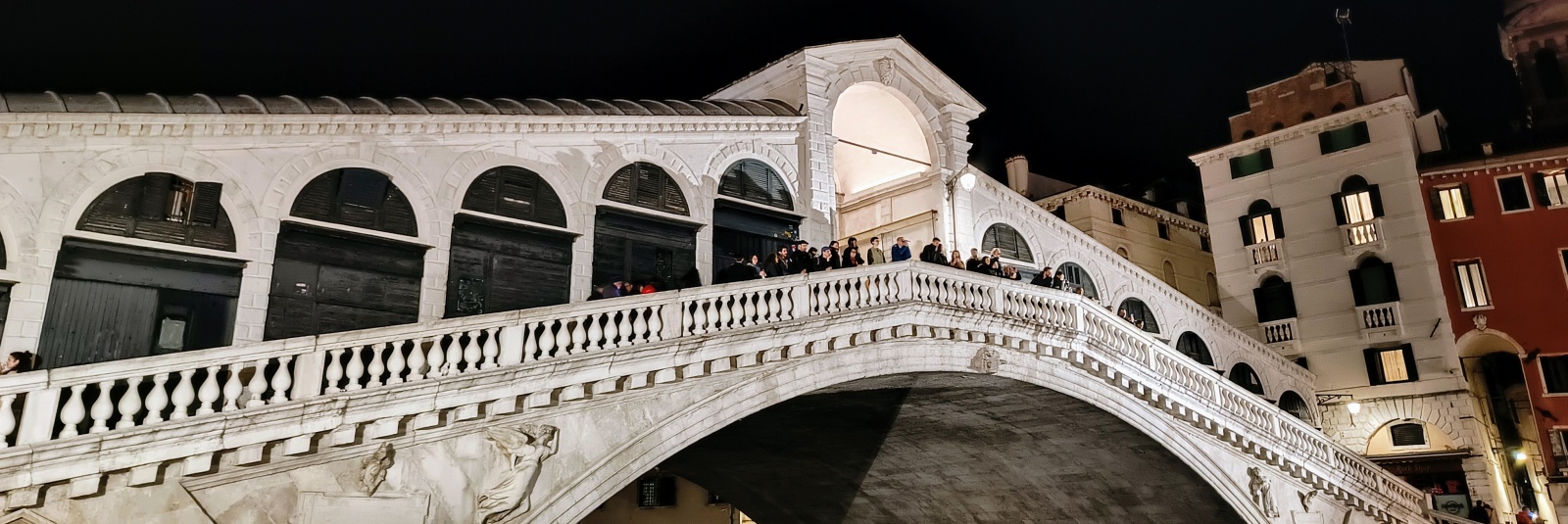
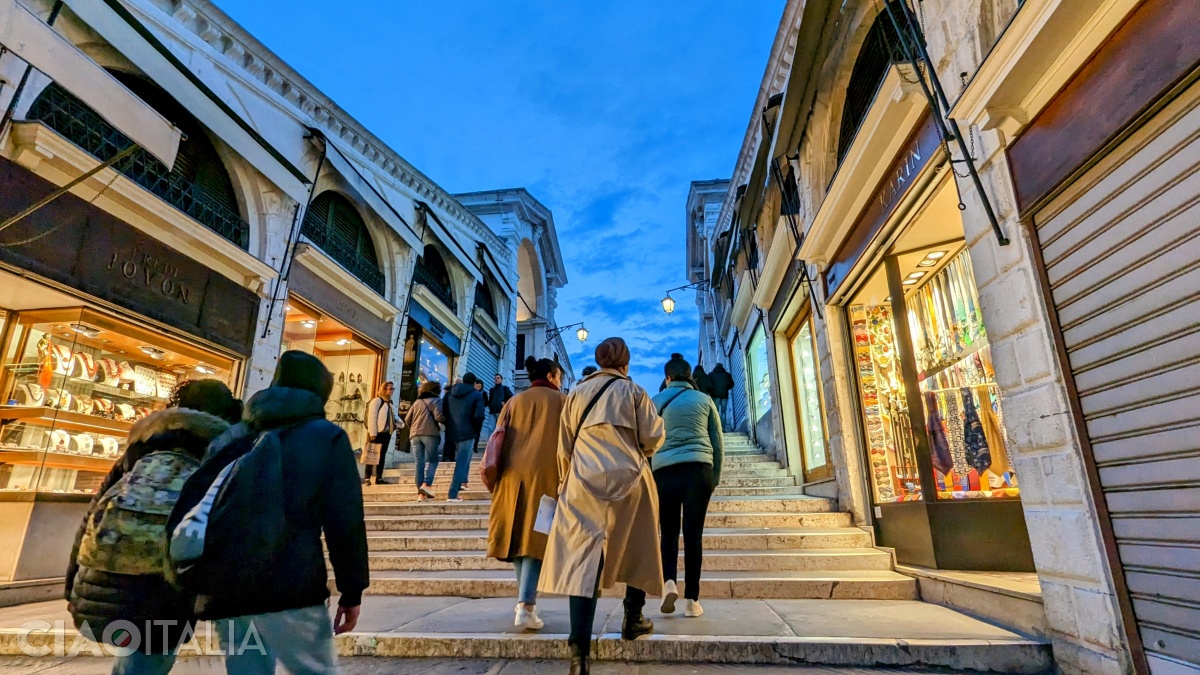
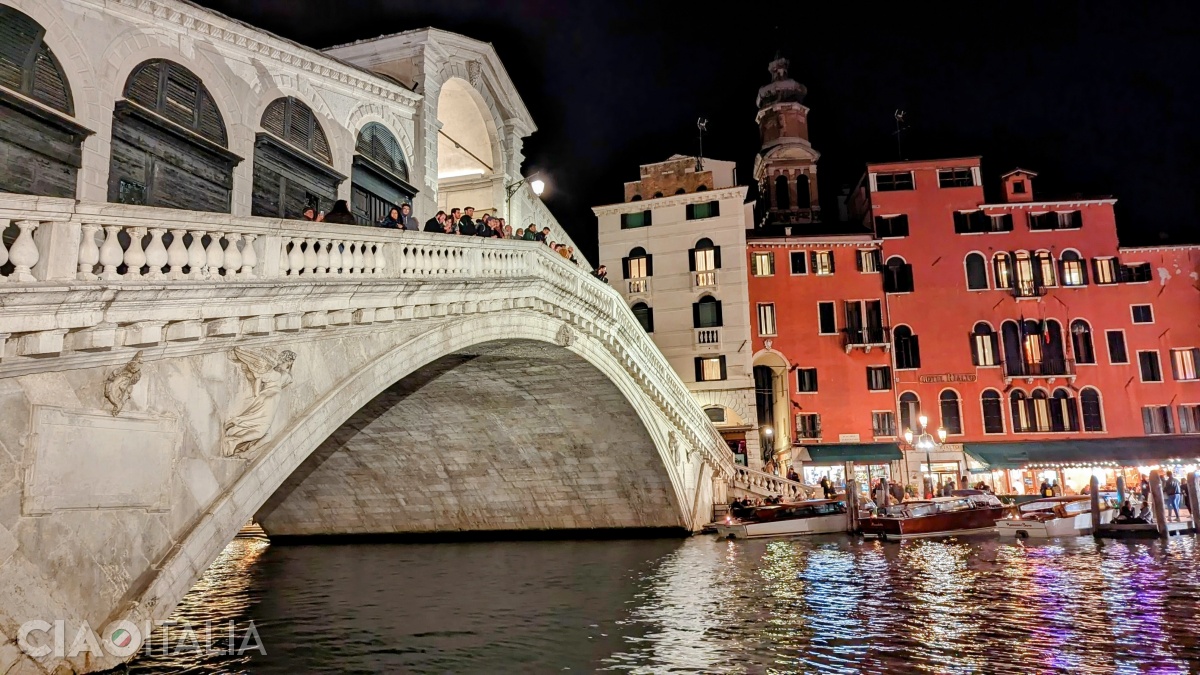
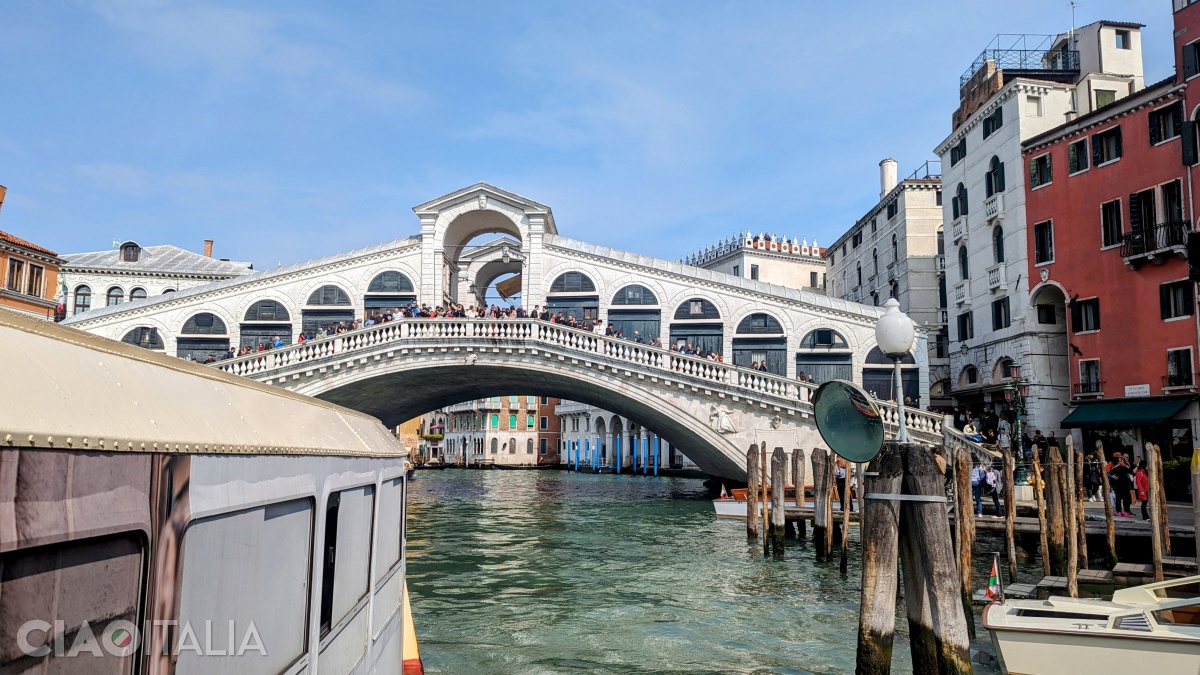
The Rialto Bridge has a high central arch and three pedestrian passages separated by two rows of covered arcades - 12 on each side of the bridge. Since its construction, 24 shops have been installed under these arcades, primarily belonging to goldsmiths and other jewelers. The original role of the side passages (where people crowd today to take photos of the Grand Canal) was to allow for the transport of goods and to facilitate movement.
The decorations are modest - a few bas-reliefs were placed only under the balustrades on both sides of the bridge.
On the south side are represented the Archangel Gabriel on the left, the Virgin Mary on the right, and the dove in the middle, above the main arch. This representation is directly linked to the legendary founding date of Venice, March 25, 421, on the Feast of the Annunciation.
On the north side are depicted the city's patron saints, St. Mark and St. Theodore, the same ones who appear on the two columns in St. Mark's Square.
The four pillars of the bridge bear the inscription: Pascale Ciconia Vene tiarum Duce (the name of the Doge at the time, Pasquale Cicogna) - anno Cristi MDXCI Vrbis conditae MCLXX (the year 1591, when the bridge was built, and 1,170 years since the founding of Venice) - curantibus Aloysio Georgio Proc. – M. Barbaro Eq. et Proc. - Jacobo Foscareno Eq. et Proc (the names of those who supervised the works).
Legends of the Rialto Bridge
As is often the case, legends stem from real events. In the case of the Rialto Bridge, they arise from the delays and postponements that extended the construction for too long, as well as the people's lack of faith that the bridge would stand the test of time.
As with the bridge on the island of Torcello, one of the legends features the devil, who is said to have repeatedly hindered construction. The devil supposedly allowed the architect Da Ponte to build the bridge only on the condition that he be offered the soul of the first being to cross it. Antonio accepted but, on the day of the inauguration, he released a rooster near the bridge so that it would be the first living creature to cross. Discovering the deception, the devil took his revenge by tricking the architect's pregnant wife into crossing the bridge to reach him. Thus, he claimed his reward, obtaining both her soul and that of the unborn child. It is said that on cold nights, the two spirits still wander the bridge, unable to find peace...
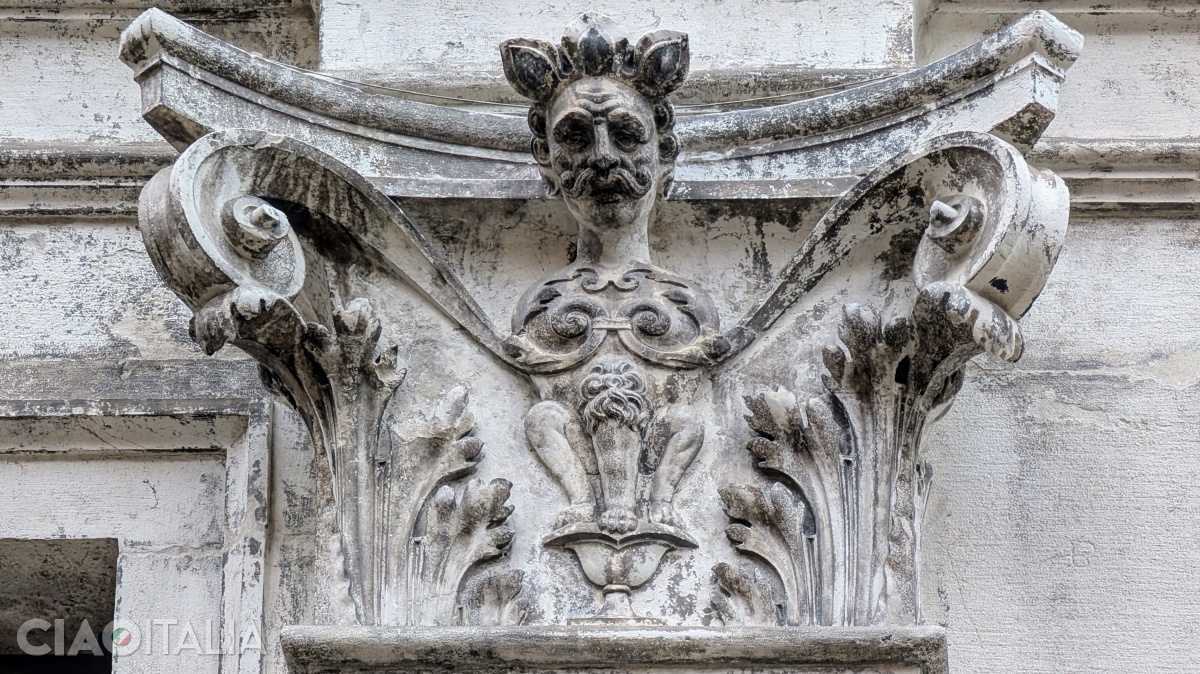
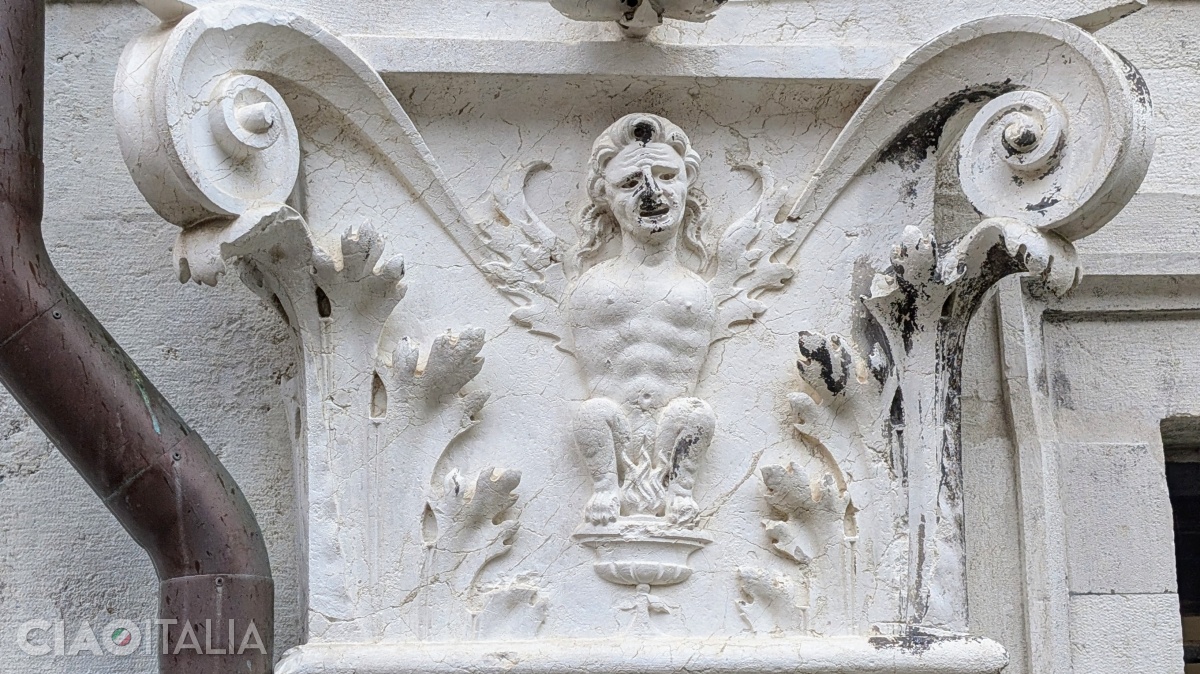
Another urban legend reflects the early public skepticism regarding the completion or stability of the bridge. It is said that while the Ponte di Rialto was being built, a man exclaimed that the bridge would be finished only when nails grew on his private parts, and a woman claimed she would set fire to her own private parts if the bridge remained standing. If you are curious, you can look for the two capitals that depict this popular tale - at the foot of the bridge, toward the Mercato di Rialto, sits the Palazzo dei Camerlenghi. Two of its column capitals feature these strange sculptures: a man with a "third limb" between his legs with clearly represented nails, and a woman who appears to be sitting on flames.
Beyond all these legends and the skepticism of some, the Rialto Bridge not only exists today, linking the San Marco district to the San Polo district, but it has also become one of the symbols of Venice.
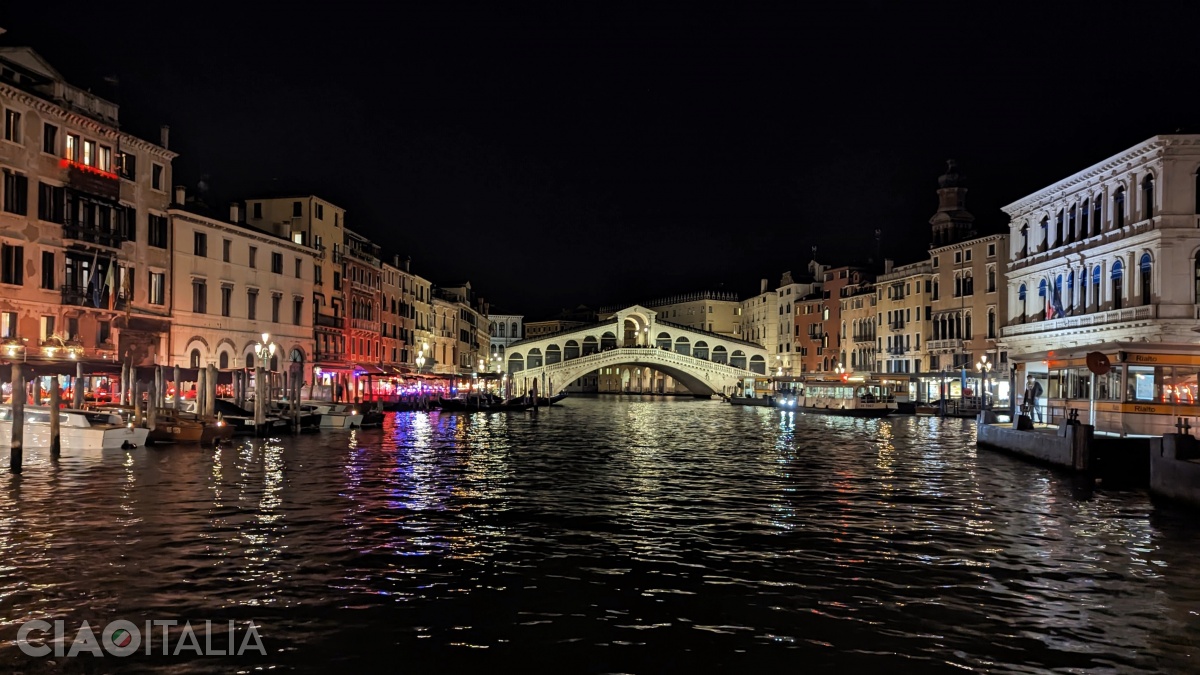
Even though it is usually full of people, it is worth crossing and stopping to admire the view it offers of the Grand Canal, with its continuous traffic of gondolas, boats, or vaporetti. The sunset bathes the landscape in warm colors, and at night, when the lights reflect in the canal waters, the atmosphere is magical!
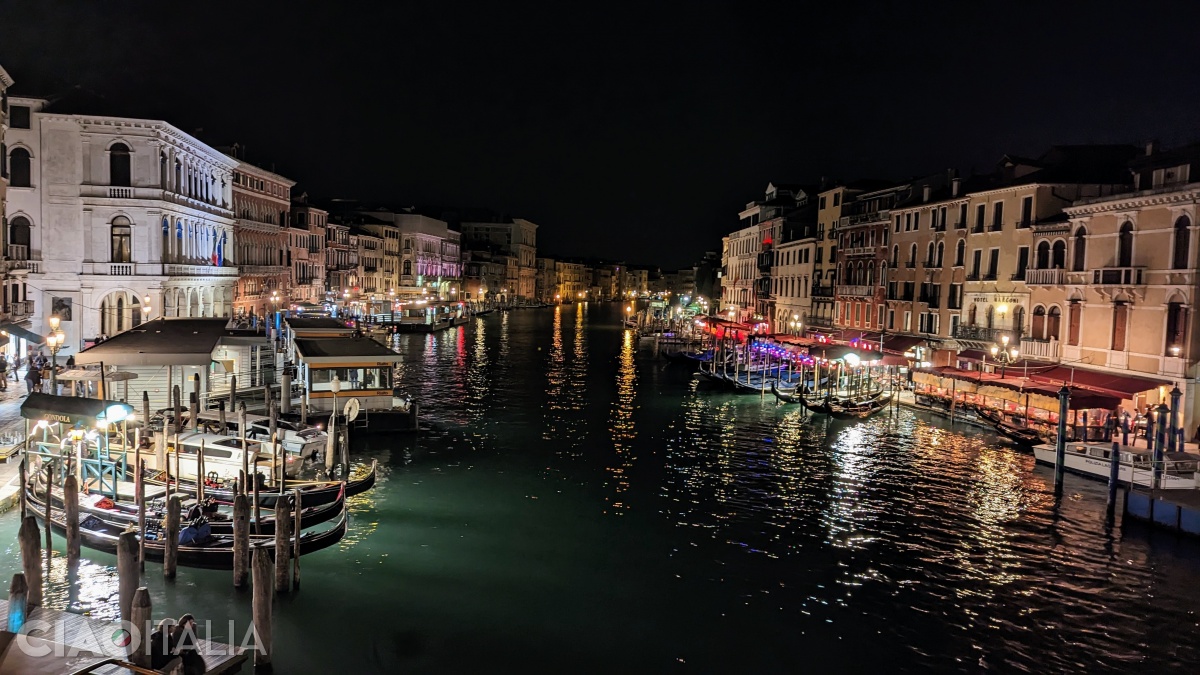
And a tip: beware of Chinese-made products sold at inflated prices in the shops on the Rialto Bridge. Also, restaurants near the bridge have high prices, mainly due to the view they offer and less because of the service (see also the article with travel tips for Venice).
The "Golden Head" near the Rialto Bridge
In the Rialto Bridge area, you can find one of Venice's many "secrets". On Salizzada Pio X (the street with stalls in the middle that continues from the bridge, on the side opposite Rialto Market), you will find the Testa d'oro ("The Golden Head"). To see it, you will have to look up and to the left as you come from the bridge. It is a gilded bronze sculpture of a human head with a laurel wreath, hanging from an iron element in front of a small window with wooden shutters. The head is actually the old emblem of the apothecary Alla Testa d'Oro ("At the Golden Head") and made the pharmacy easily recognizable in times when not many people could read.
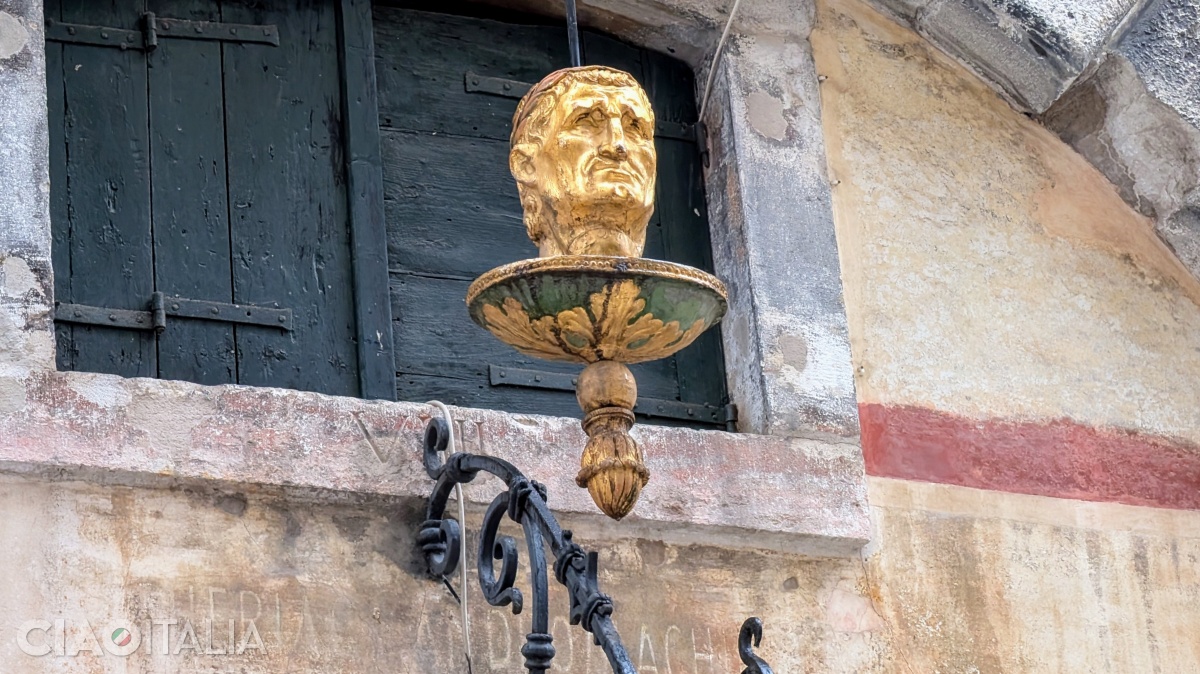
If you look closely at the wall below the window, you can catch a glimpse of a fragment of text. This refers to Theriaca Andromachi, a kind of universal panacea believed to cure all diseases, which was the specialty of this pharmacy starting in 1603. Unlike other apothecaries in Venice, who could only produce the remedy once a year, the Alla Testa d'Oro apothecary had permission to manufacture it three times a year, as it was considered the best in the city.
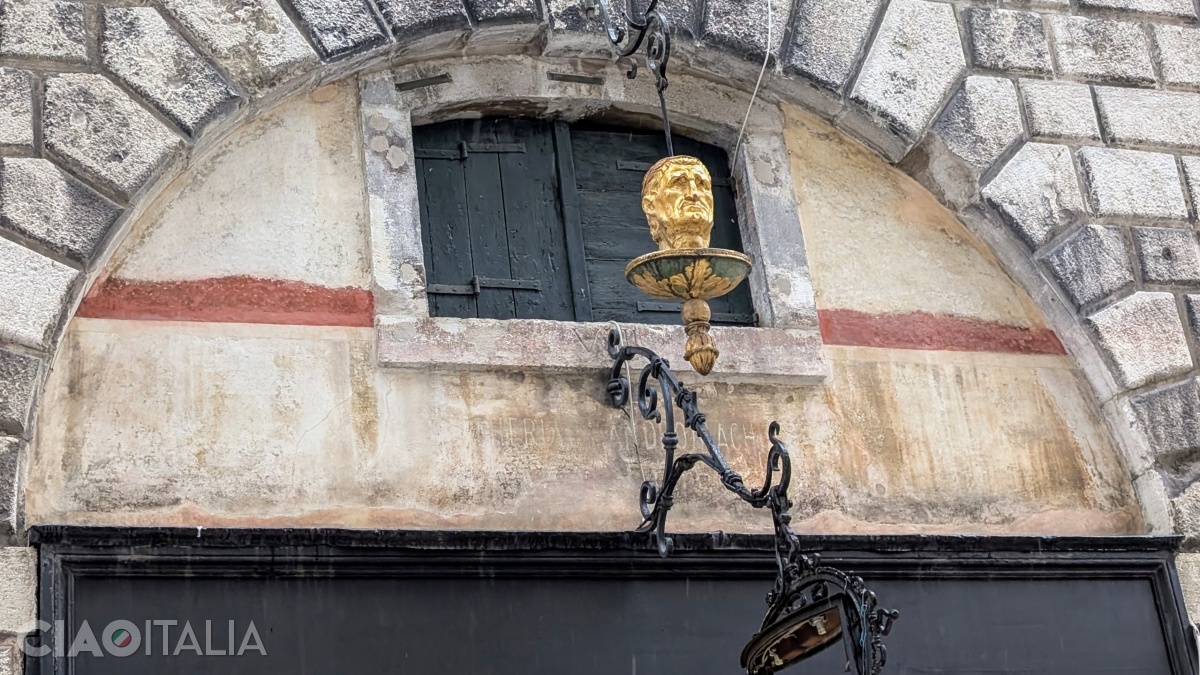
In the past, medicinal remedies produced in Venice were world-famous. They were made with the most exotic and expensive ingredients, which Venetian apothecaries could obtain at affordable prices due to the lagoon city's flourishing trade with the Orient. Thus, pharmacists became highly respected individuals whose profession was considered noble, and they could even marry women from the upper classes. The number of pharmacies in the city producing and selling their own remedies had grown so much (at one point reaching 90) that in 1616, the Venetian state passed a law regulating the distance between pharmacies, which had to be at least 35m.
Returning to the famous "miraculous" potion Theriaca Andromachi, legend has it that the first person to prepare it was Mithridates, King of Pontus, in 65 BC, inspired by the poem Ta Theriaca by a Greek physician who lived a century earlier. The recipe, which contained 46 ingredients, was supplemented by Andromachus, Nero's physician, with another 25 elements, later being adopted and adapted by other physicians until it spread to the major cities of Europe. The composition of the remedy will seem at least amusing today: ingredients included viper powder made from real vipers (thought to have the power to rejuvenate and tone the skin), opium, deer testicle powder, and the horn of a... unicorn (in reality, a narwhal). In the 17th century, Venice became renowned for the manufacture of this medicine, exporting it not only within Europe but also beyond. Fewer than half of the existing pharmacies in the city were authorized to produce it - most only once a year, and a few of them, including the Alla Testa d'Oro pharmacy, three times a year. Production was strictly controlled and regulated: all ingredients (including vipers kept in cages) had to be displayed to the public for at least three days, after which the pharmacists prepared the remedy directly in the street in large bronze cauldrons.
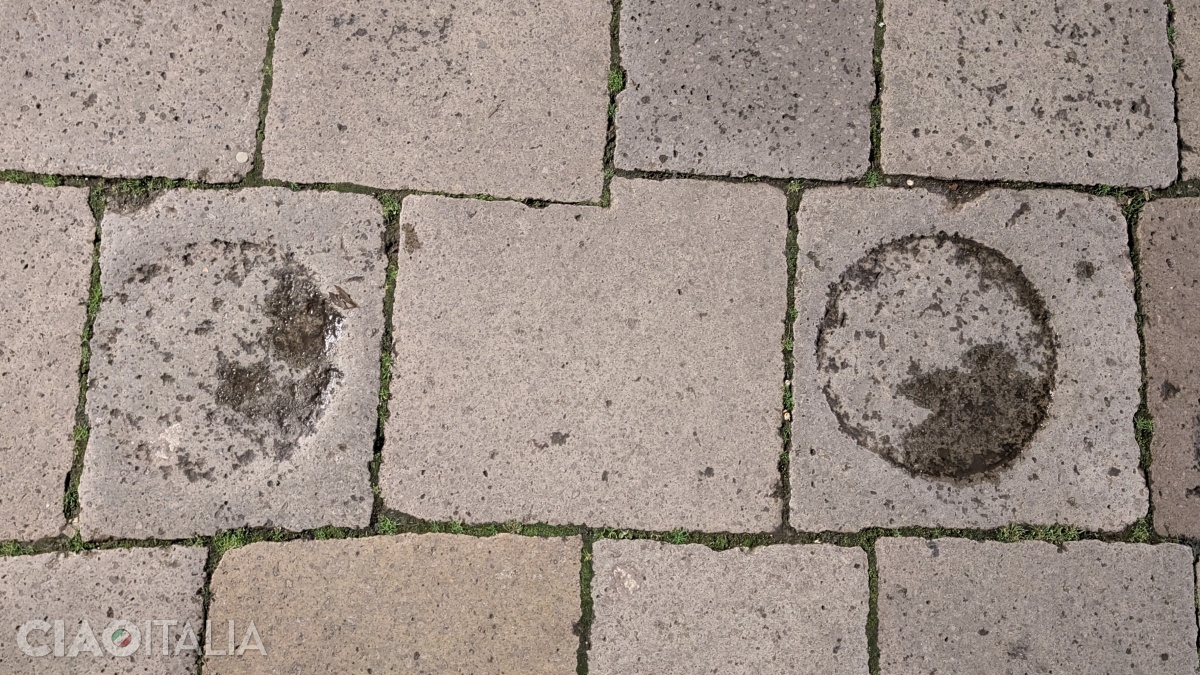
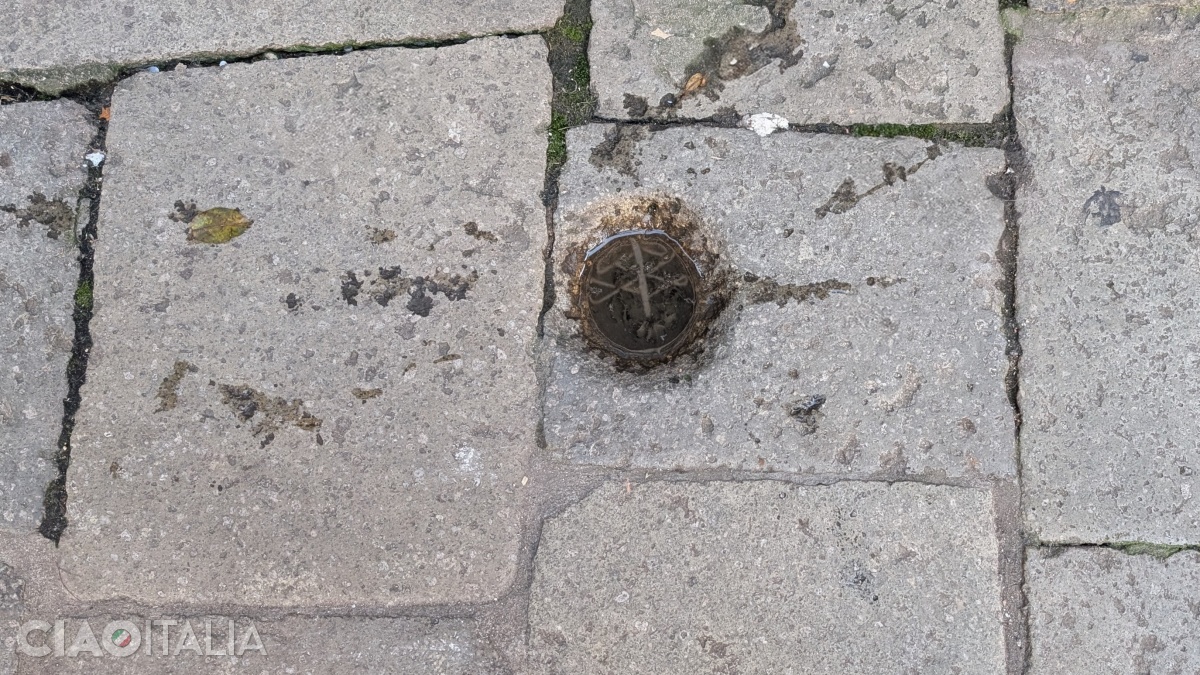
Theriaca disappeared in the 19th century, but traces of it are still preserved in Venice - one of them is this inscription found under the gilded head, the emblem of the old Alla Testa d'Oro pharmacy. If you are curious to see others, go to Campo Santo Stefano. There, in the pavement in front of the building at the intersection with Calle del Spezier, you can find some circular marks - the spot where the cauldrons used to prepare Theriaca once stood. And in front of the Alle Due Colonne pharmacy, also in the pavement, there is another hole where the vessel for crushing the ingredients was placed.