Torcello, the Venetian Island where Time Stood Still
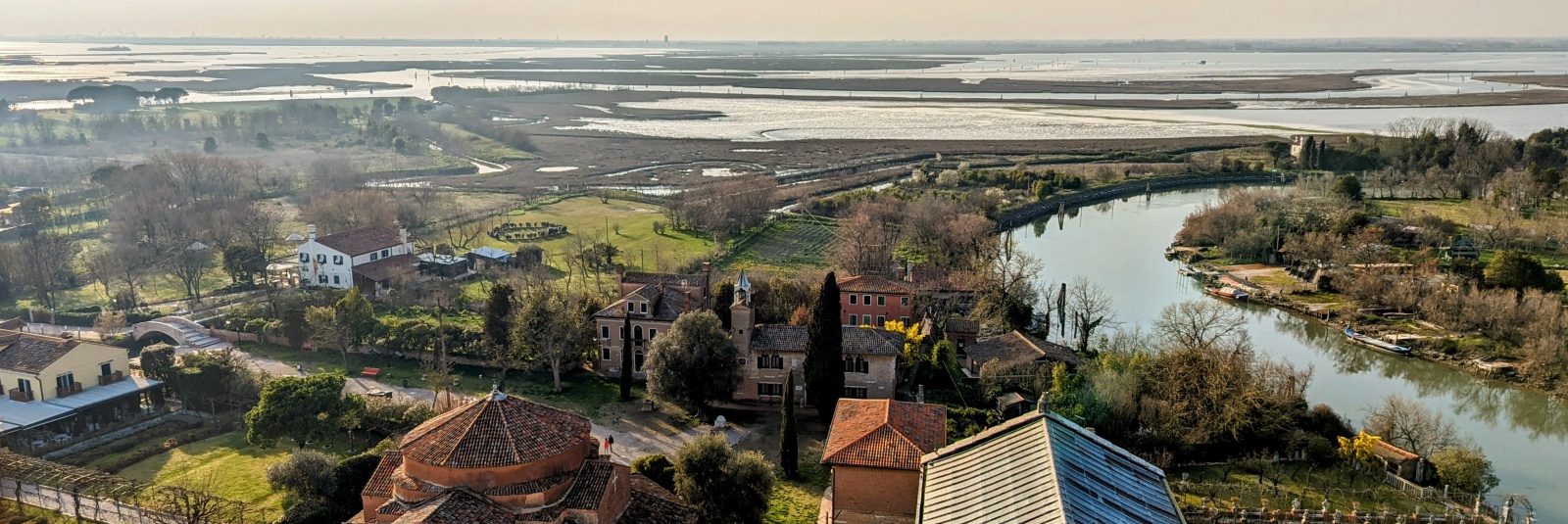
The island of Torcello has a predominantly rural character, with colonial-style houses and a pace of life quite different from that of Venice. It feels as though time has stood still in Torcello, and it is said that the most important tourist attraction here is the silence.
Compared to Murano and Burano, the island of Torcello has a much smaller surface area and population. Today it is inhabited by fewer than 20 residents, but over 1000 years ago it was the most populated island of the Venetian lagoon. Founded in the 5th century by the population of Altinum, who fled from barbarian invasions, it is considered the first inhabited island in the lagoon. For centuries, it was also the most flourishing settlement in the lagoon, with a population reaching tens of thousands. Benefiting from a protected and strategic position, Torcello developed primarily through trade, salt, and wool processing. It is no coincidence that around the 11th century, a superb cathedral was built, a fact that proves the island's wealth and importance at that time. It is also said that in Torcello there were, among many other buildings, about 100 churches. The decline began around the year 1400, along with the expansion of marshy areas, the increasing difficulty of navigation, and the worsening of epidemics. Residents began to move away, buildings fell into ruin, and their stones were used as construction material for new edifices in Venice or Murano.
Today, the island of Torcello lives only on tourism.
How to Get to Torcello from Venice?
The island of Torcello is located in the northeastern part of the Venetian lagoon.
To reach Torcello using public transport from Venice, you will need to take vaporetto line 12 from the Fondamente Nove station in the Cannaregio district (to get to Fondamente Nove, you can take vaporetto 4.2 or 5.2 from Piazzale Roma). The vaporetto will make stops at Murano Faro, Mazzorbo, and then Torcello. The travel time is about 40 minutes.
Another option is to take vaporetto no. 3 from Piazzale Roma to Murano Faro (about 25 minutes), and there change to line 12 (it will take another 30 minutes from Murano to Torcello).
Depending on the hour, some trips on line 12 do not stop at Torcello but go to Burano. In this case, you will have to take line 9 from Burano to Torcello. From Venice to Burano, it will take about 45 minutes, and then another 5 minutes from Burano to Torcello.
The price of a single trip is €9.5 (the ticket is valid for 75 minutes from validation), but there are also transport passes for 1 day (€25), 2 days (€35), 3 days (€45), or 7 days (€65).
The advantage of going on your own is that you can organize the trip yourself, staying on the island as long as you wish. The disadvantage: it is not always easy to manage public transport, and the boats are often so crowded that you cannot board the first one that arrives.
Buy ACTV Transport Ticket/ Pass
Another option is to book a tour to Murano, Burano, and Torcello (there are countless alternatives). The price of a tour is around €25-€30, about the same as a one-day transport pass. The advantage of these tours is that, for approximately the same amount, you won't have to worry about organization, and you will learn all sorts of information from the guide, though the time available to you will be limited.
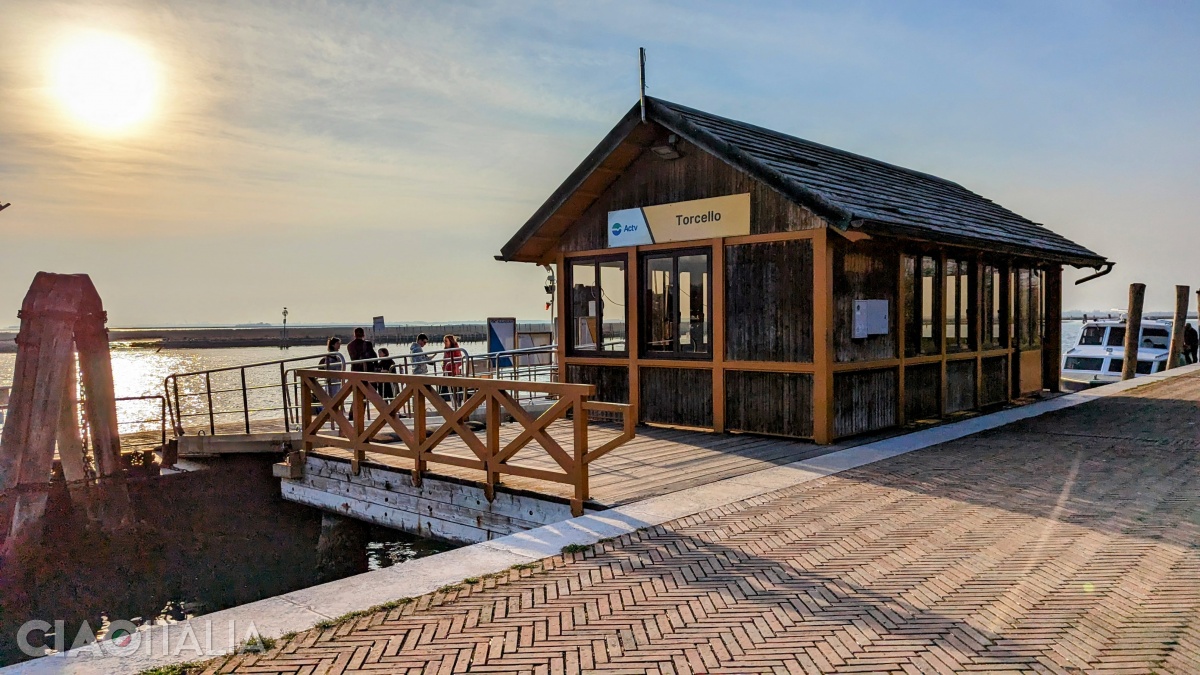
How Long Does It Take to Visit the Island of Torcello?
To take a walk along the only path in Torcello and return to the pier, you will need only 30-40 minutes.
If you want to visit the few sights on the island (which are also found along the path), you will need 2-3 hours.
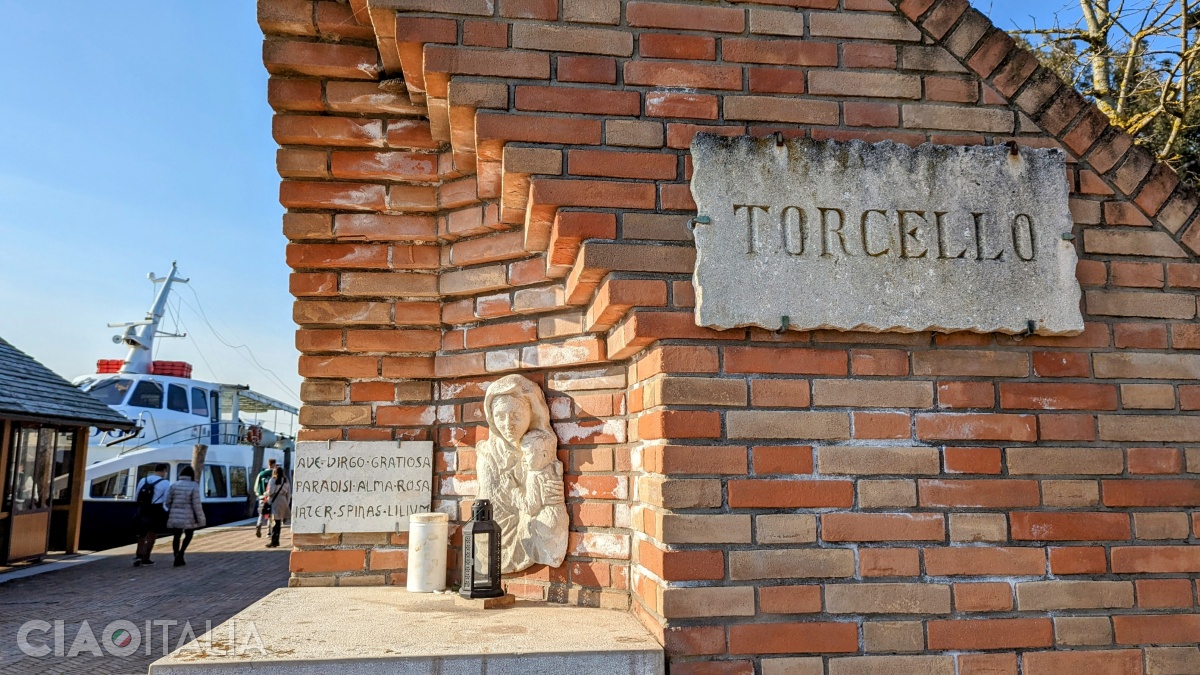
Things to See in Torcello
The Devil's Bridge
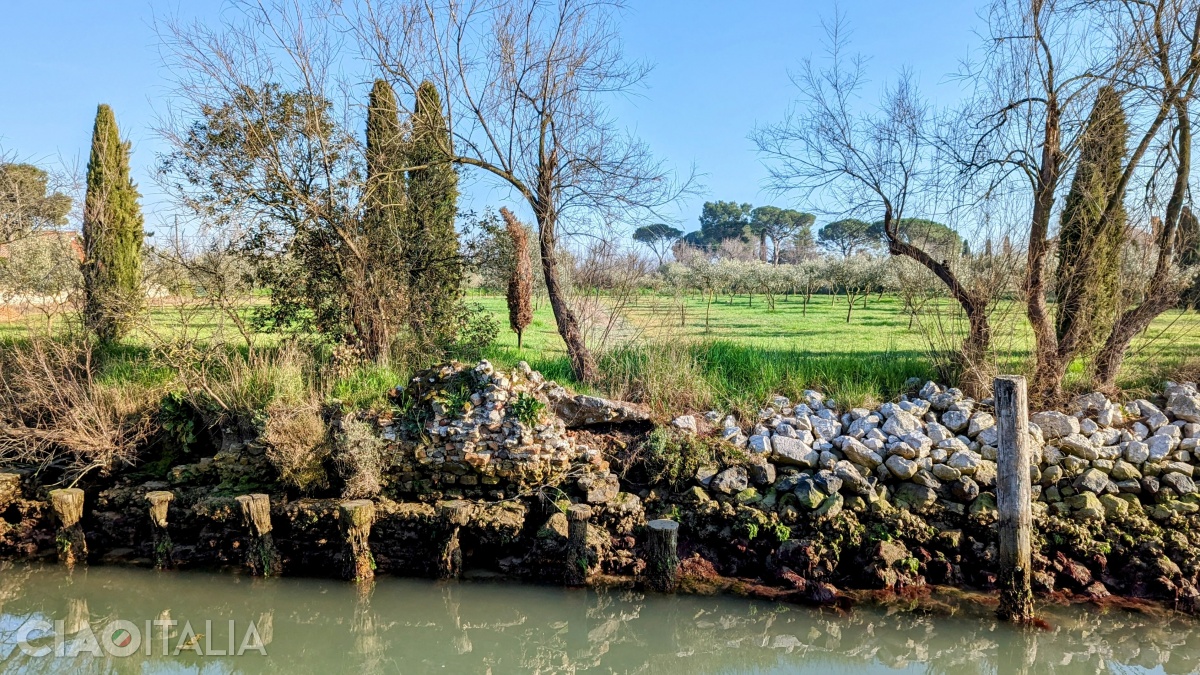
From the spot where the vaporetto drops you off, a paved path begins called Strada della Rosina, which is also the only street on the island. This leads you along the Maggiore canal, in about 10 minutes, through a landscape dominated by gardens and orchards, to the island's main square.
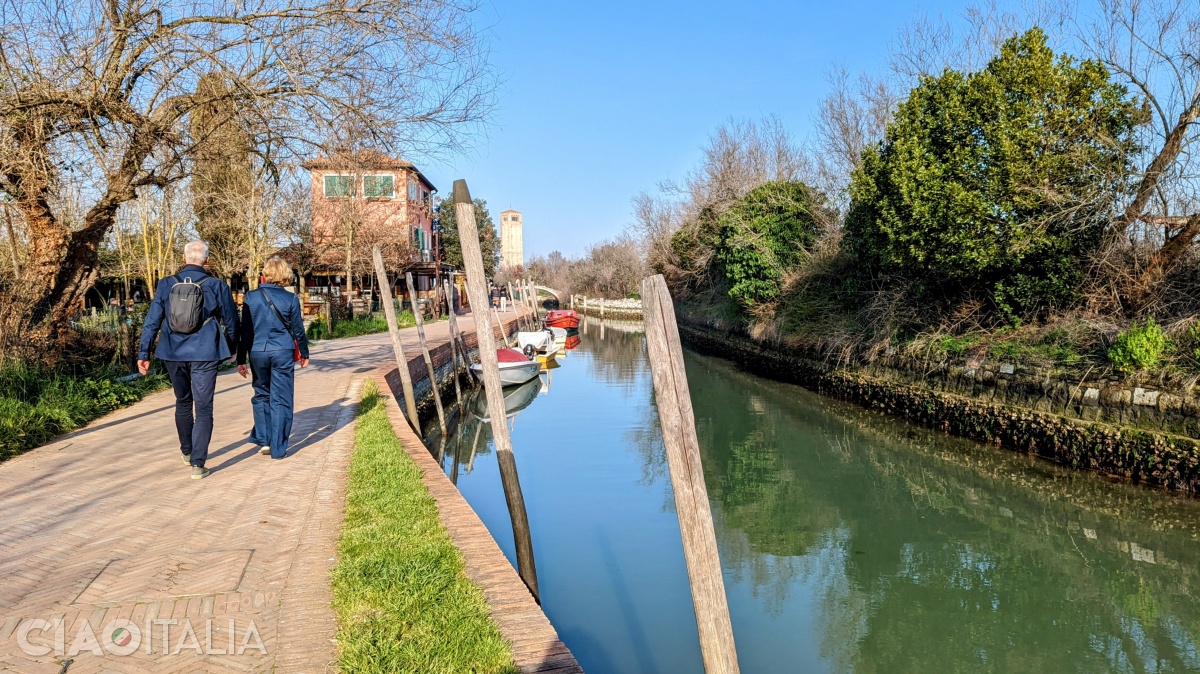
About halfway there, you will encounter an arched bridge without railings. This is il Ponte del Diavolo (the "Devil's Bridge"), a place surrounded by legends.
It is said that during the period when Venice was under Austrian rule, a girl fell in love with a foreign soldier. Her family did not agree with this relationship, so they arranged for the girl's lover to be killed. The young woman, desperate, turned to a witch, who met her right on this bridge in Torcello. Here, the witch invoked the devil, who restored the soldier's life, and the two young people fled together. In exchange for his work, the demon demanded that the soul of a dead child be brought to him on Christmas night for 7 years. A person who had witnessed this scene killed the witch to save the children, and so she could not keep her promise. Legend also says that every night on December 24th, the devil, turned into a black cat, waits in vain on the bridge for the promised souls.
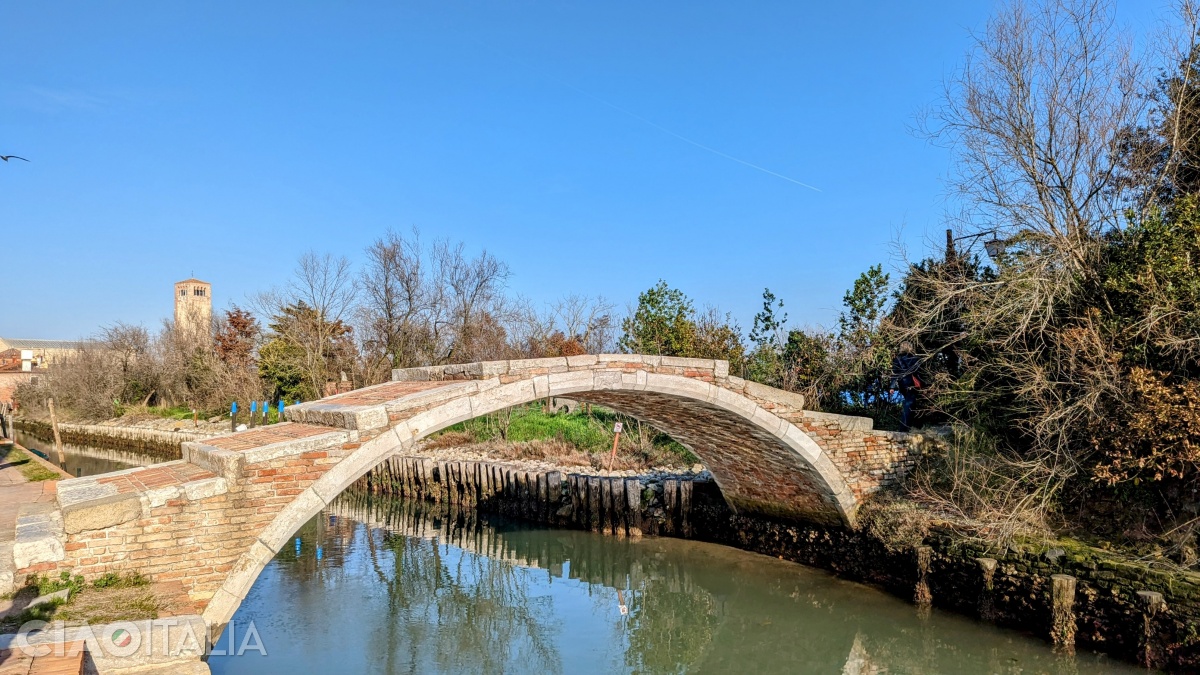
Another legend claims that the bridge was built in a single night by the devil to win a bet. The arrival of dawn prevented him from finishing his work, and so the bridge remained without railings.
Beyond the legend, the fact that the bridge has no railings indicates its age, as in the past, bridges were made without parapets (today, of all the bridges in Venice, only another one of this type still exists). The origin of the name is unknown, but according to some hypotheses, Diavoli might have been the name or nickname of a family on the island. The current bridge was built in the 15th century on the foundations of a structure two centuries older.
Locanda Cipriani
Continuing along the path, you will encounter a second bridge, called Ponte di Santa Maria. Once you have crossed it, you will reach a small square with a little fountain where, on the right side, you can see a building with the inscription Locanda Cipriani. It is a historic establishment whose beginnings date back to 1935 and which is still managed today by the same Cipriani family.
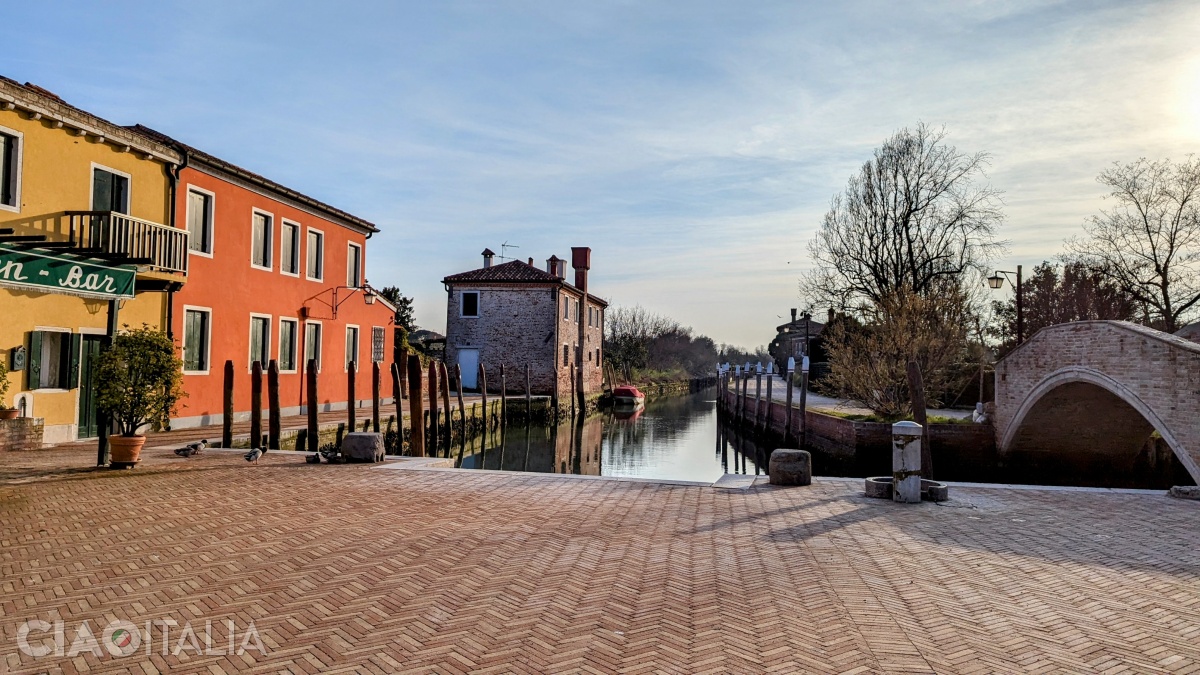
This is the place that hosted Ernest Hemingway in the autumn of 1948. When he saw the island of Torcello, Hemingway was fascinated and decided to spend the entire month of November here, going duck hunting, writing the novel "Across the River and into the Trees", or enjoying the local cuisine.
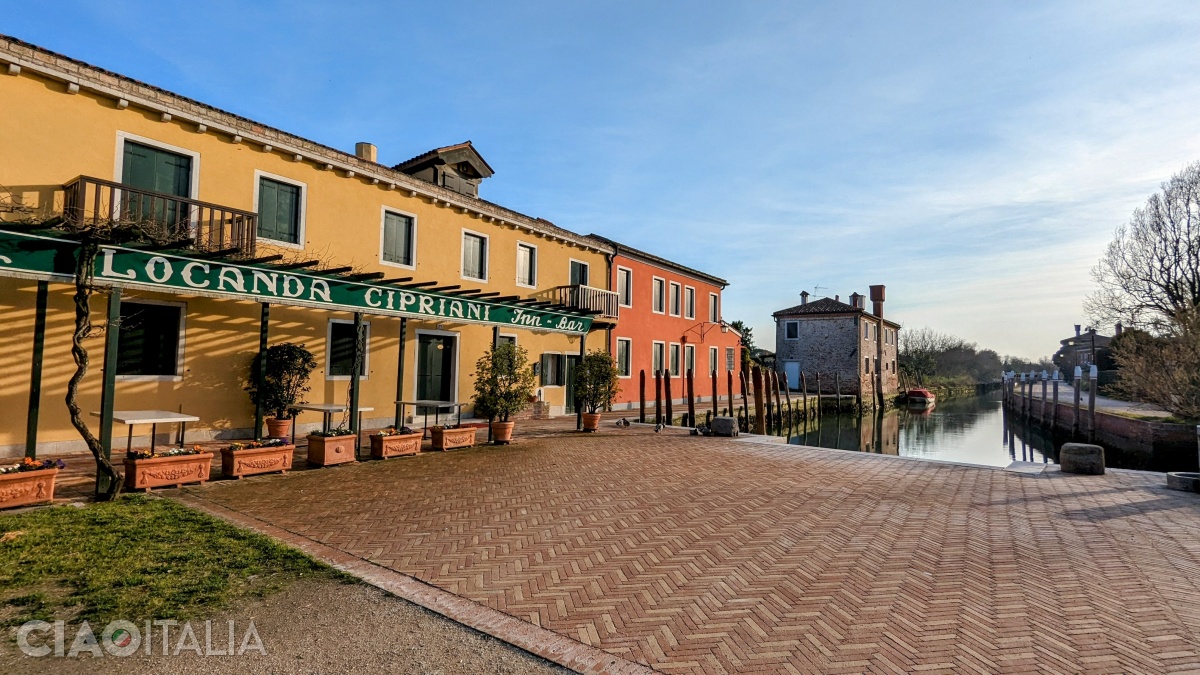
Locanda Cipriani boasts a long list of famous visitors: kings and queens, princes and princesses of Europe's royal houses, composers, singers, actors, directors, conductors, ambassadors, or heads of state.
Today, Locanda Cipriani has 5 rooms for rent and a historic restaurant famous for Venetian gastronomy.
Atilla's Throne
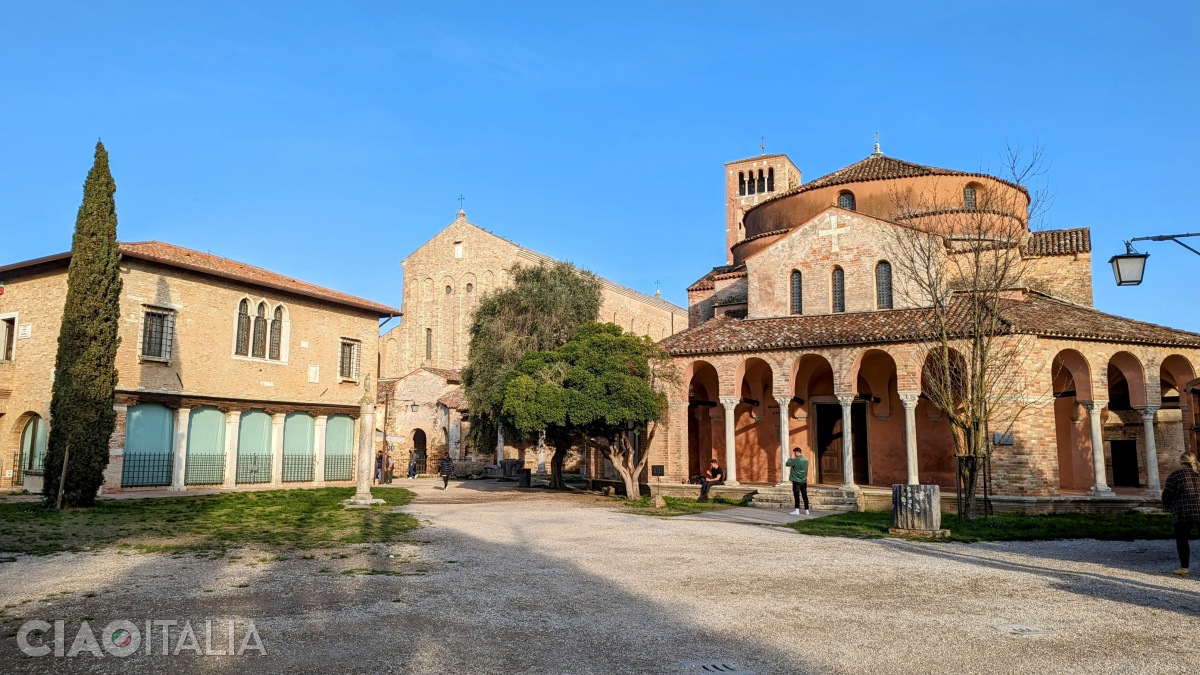
Moving forward on Fondamenta dei Borgognoni, you will reach the main square of the island, where there are a few souvenir stalls, a local museum, and two churches.
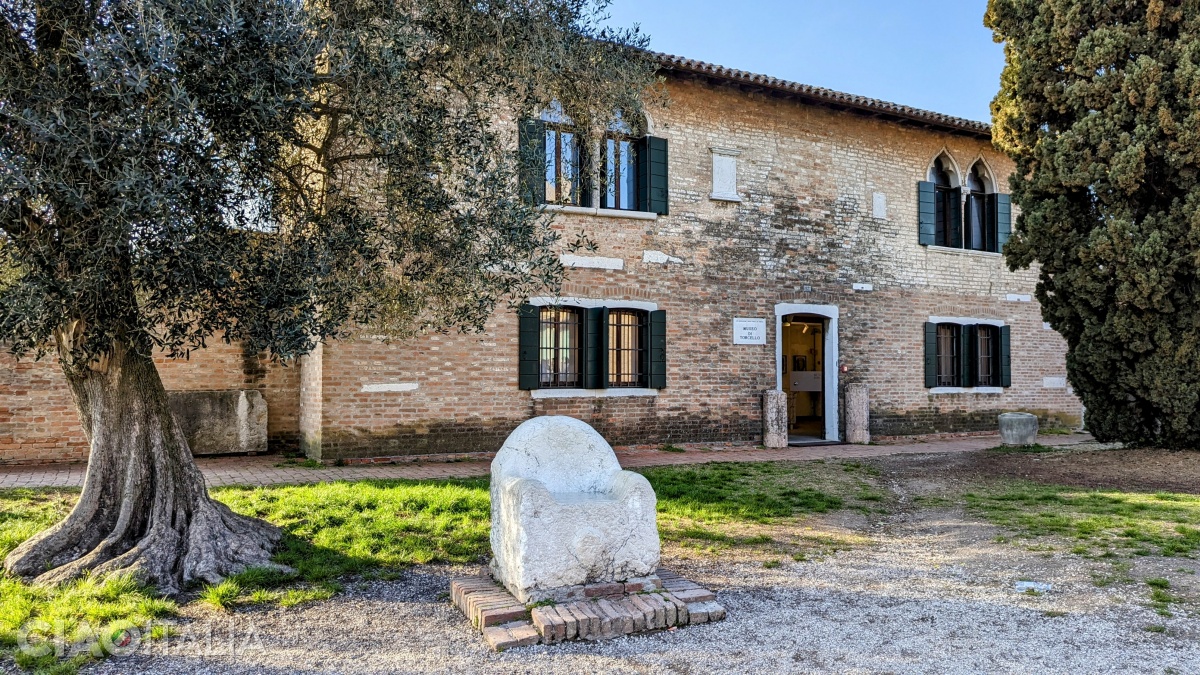
On the left side, you will see a marble throne, which is called "Attila's Throne". According to legend, this was the throne of the famous king of the Huns. Historical data shows, however, that Attila did not actually reach Torcello, and most likely the throne, dating from the 5th century AD when the first community was founded on the island, belonged to a local bishop or was even used by the governor during council meetings.
The Torcello Museum
Behind the throne is Palazzo del Consiglio ("The Council Palace"). The building was constructed around the 14th century and once housed the seat of the island's council. The purpose of the bell was not religious, but rather to call the island's inhabitants to the square when council decisions were to be announced. Today, the building houses the Torcello Museum, with various exhibits representative of the history of the island and the area.
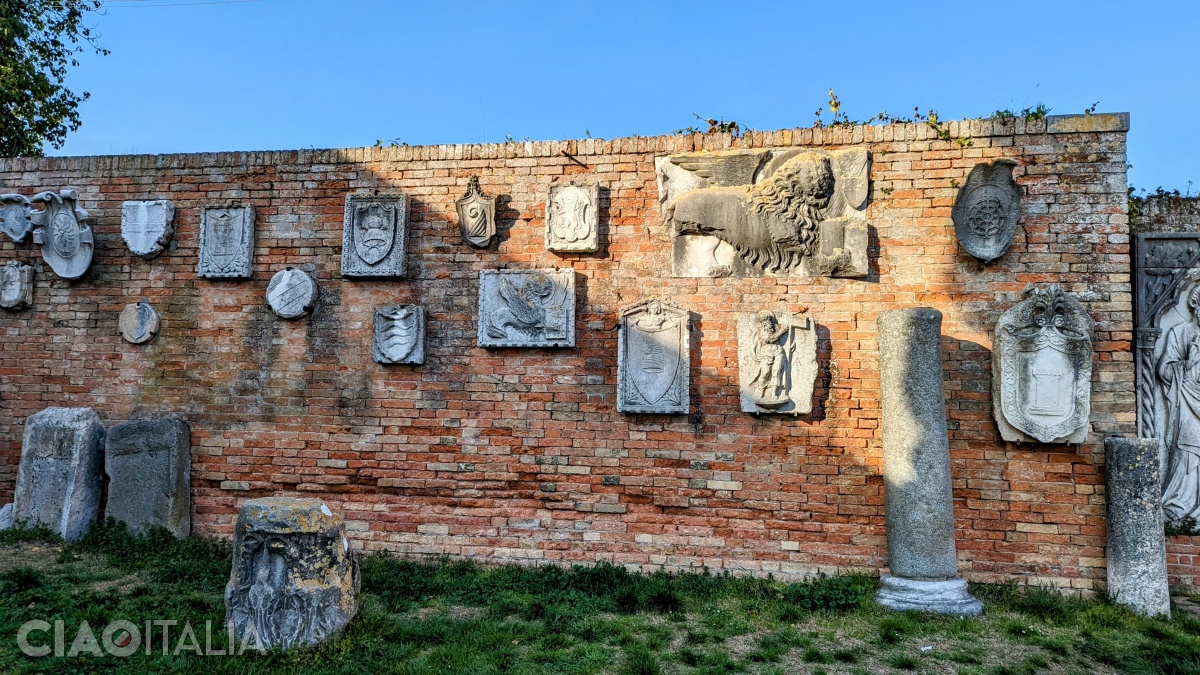
Also belonging to the museum is Palazzo dell'Archivio ("The Archive Palace"), a building originating in the 12th century, located on the adjacent side of the square.
Torcello Museum
Opening Hours:
April 1 - October 31, 2026:
- Monday: closed
- Tuesday-Sunday: 11:00 AM - 5:30 PM
Ticket Prices:
- Adult: €7
- Over 65: €3.5
- Students 15-25 years: €3.5
- Children 6-14 years: €3.5
- Children under 6: free
The Church of Santa Fosca
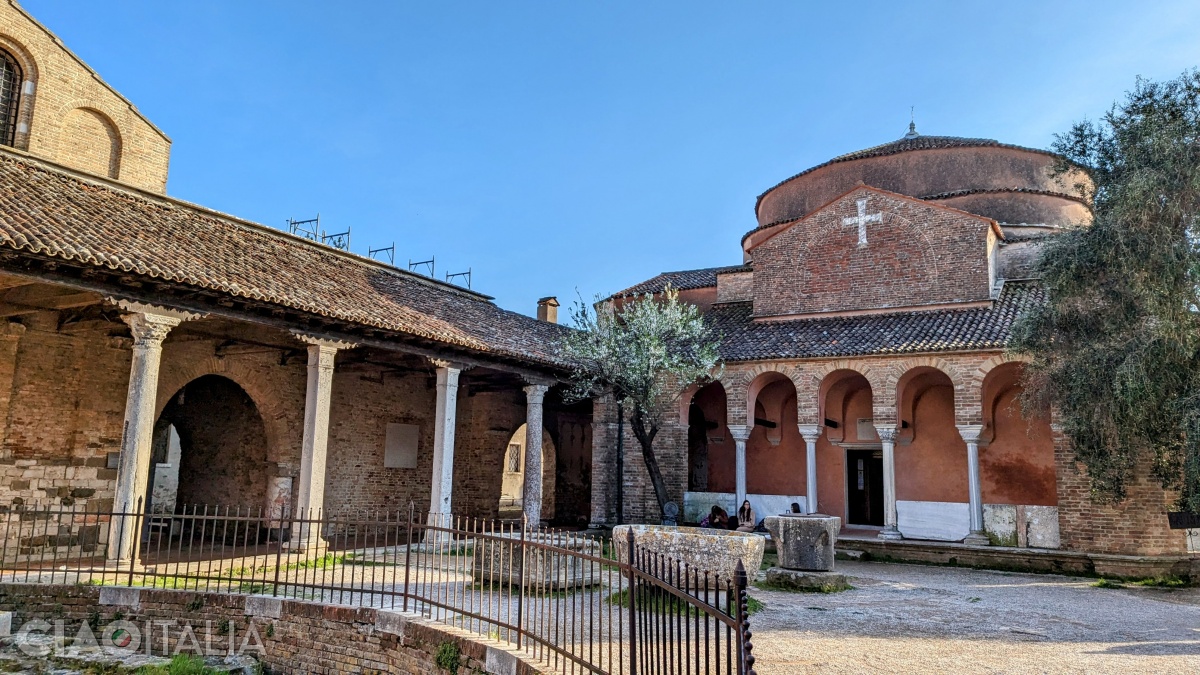
On the right side of the old square in Torcello, opposite Attila's Throne, lies the Church of Santa Fosca (Chiesa di Santa Fosca).
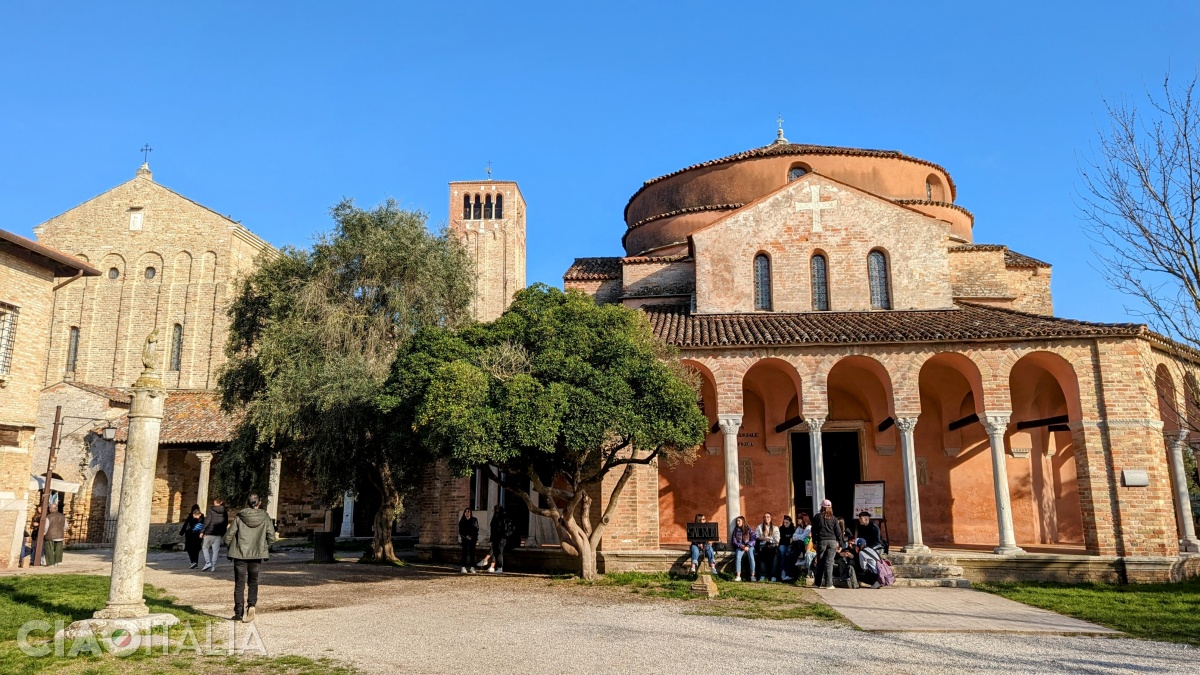
The church dates back to the 9th century, but its current form is due to work in the 12th century when it was rebuilt to house the relics of the holy martyrs Maura and Fosca, whose name it bears.
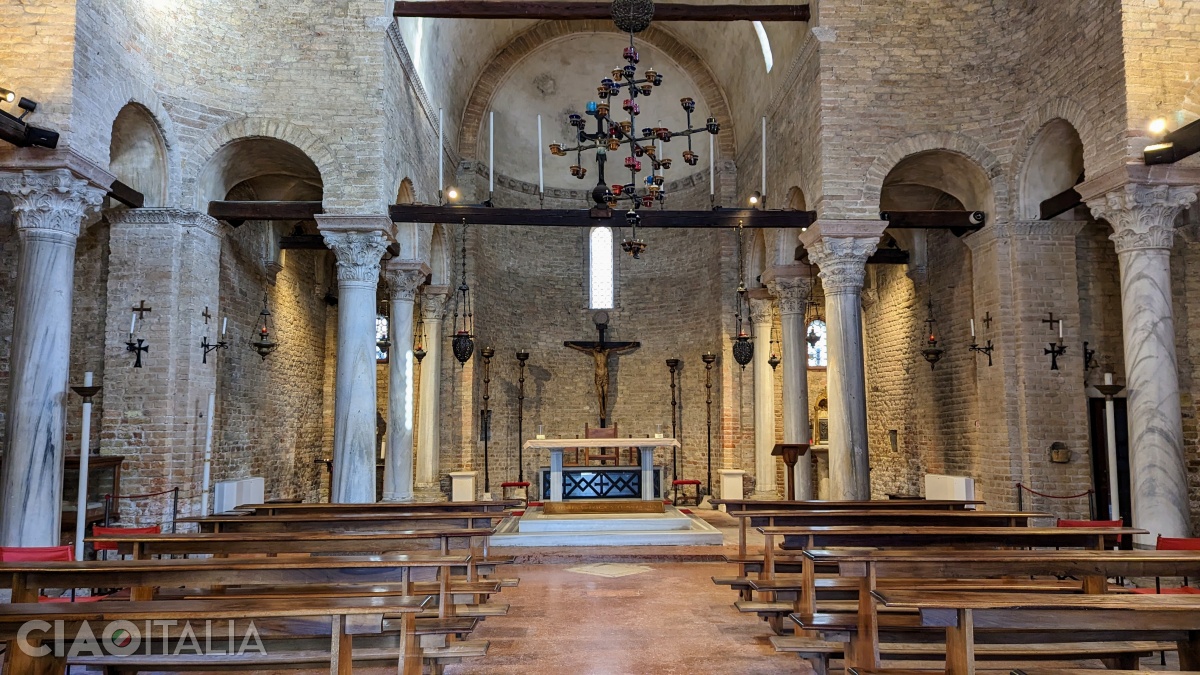
The Church of Santa Fosca is linked by a gallery to the Basilica of Santa Maria Assunta, which is located slightly further back, and it seems that originally it was a baptistery church.
Entry to the Church of Santa Fosca is free.
The Basilica of Santa Maria Assunta
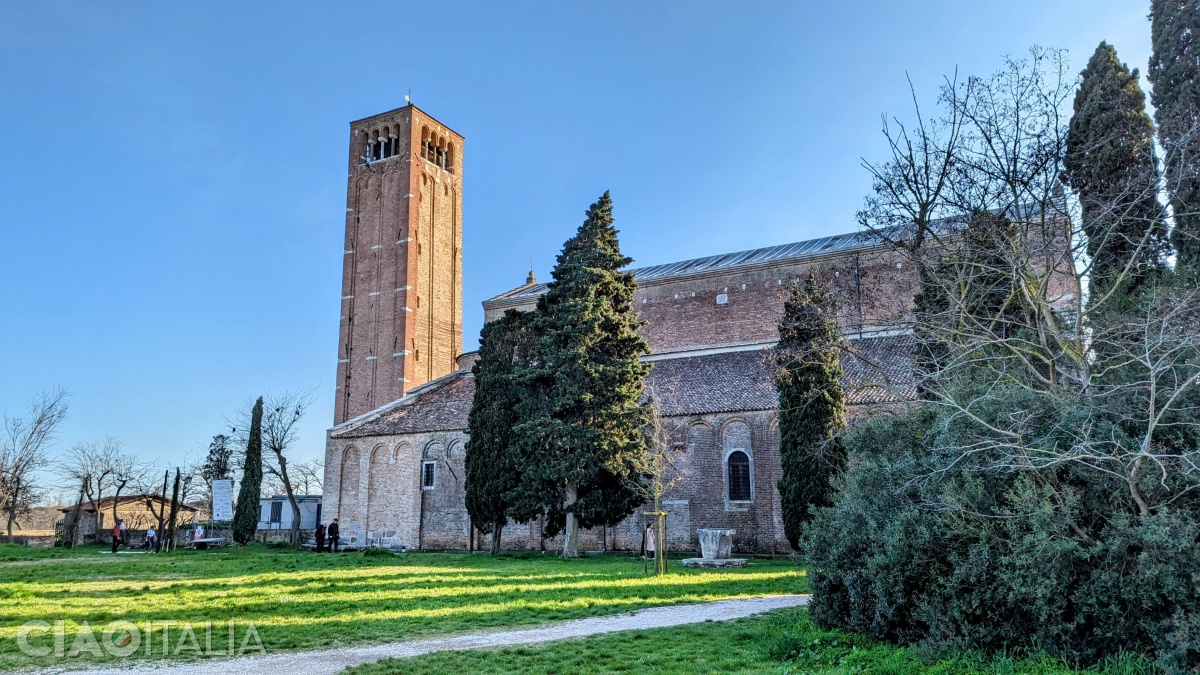
The Basilica of Santa Maria Assunta (Basilica di Santa Maria Assunta) is the most important landmark in Torcello and one of the oldest structures in the Venetian lagoon. It is a church with splendid mosaics and a tower that is worth climbing.
The basilica was built in 639, was expanded in the 9th century, and rebuilt at the beginning of the 11th century. It held the title of Cathedral until 1818, when the Diocese of Torcello was abolished.
Of the beautiful mosaics that covered it, the one on the wall opposite the altar remains, from the 12th-13th centuries, representing the "Last Judgment", as well as the floor mosaics from the 9th century.
The altar was rebuilt in 1923 and houses the body of St. Heliodorus, the first bishop of the city of Altinum.
Photos cannot be taken inside the basilica.
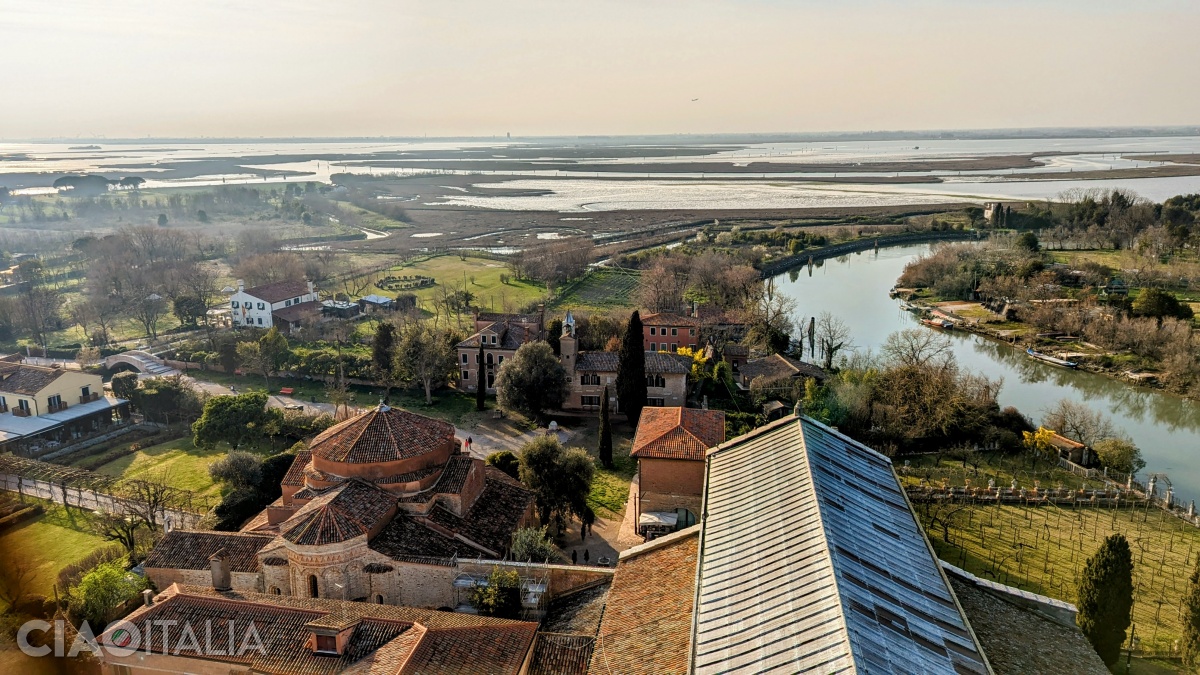
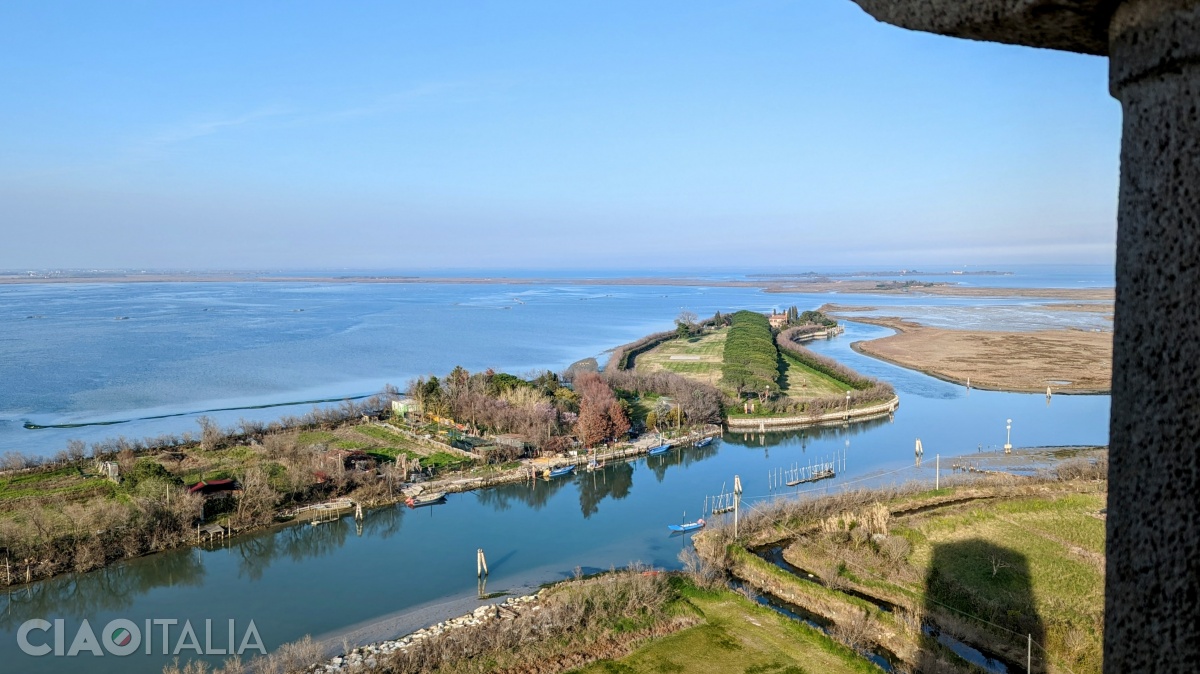
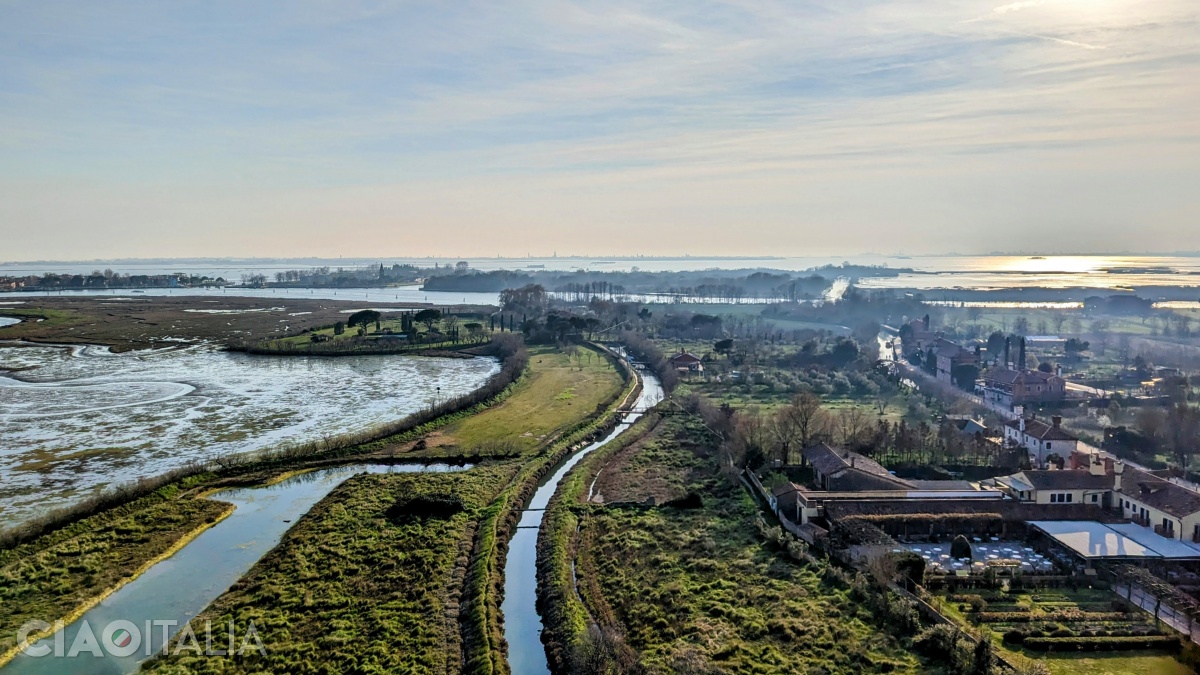
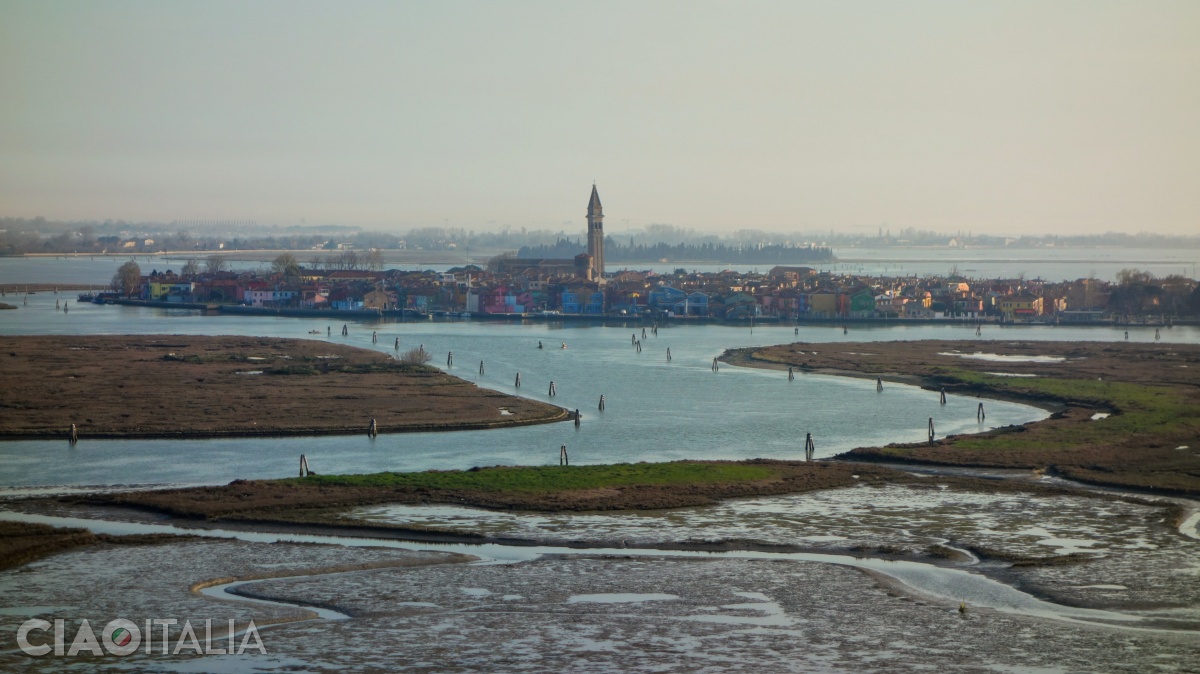
The bell tower is located behind the church and offers superb views over the lagoon.
The Basilica of Santa Maria Assunta
Opening Hours:
March 1 - October 31, 2026:
Basilica:
- Monday-Sunday: 10:30 AM - 6:00 PM
- last entry is at 5:30 PM
Tower:
- Monday-Sunday: 10:30 AM - 5:00 PM
- last entry is at 4:30 PM
November 1 - December 31, 2026:
Basilica:
- Monday-Sunday: 10:00 AM - 5:00 PM
- last entry is at 4:30 PM
- December 25, 2026 and January 1, 2027: closed
Tower:
- Monday-Sunday: 10:00 AM - 4:45 PM
- last entry is at 4:00 PM
- December 25, 2026 and January 1, 2027: closed
Ticket Prices:
Basilica of Santa Maria Assunta:
- Adult: €5
- Over 65: €4
- Children under 10: free
- free for the holders of St. Mark's Basilica tickets
Tower:
- Adult: €5
- Over 65: €4
- Children under 10: free
Combined tickets basilica + tower:
- Adult: €9
- Over 65: €8
- Children under 10: free
Andrich House-Museum
If you have more time to spend in Torcello, one final landmark could be the Andrich House-Museum, located further from the main points of interest, on the right side, on the way back to the pier.
Lucio Andrich was an artist who created sculptures, paintings, mosaics, and glass works. He lived and had his studio in this house, in the middle of nature. Today, his nephew organizes guided visits of about an hour, presenting his uncle's works.