St. Mark's Campanile (Campanile di San Marco) in Venice
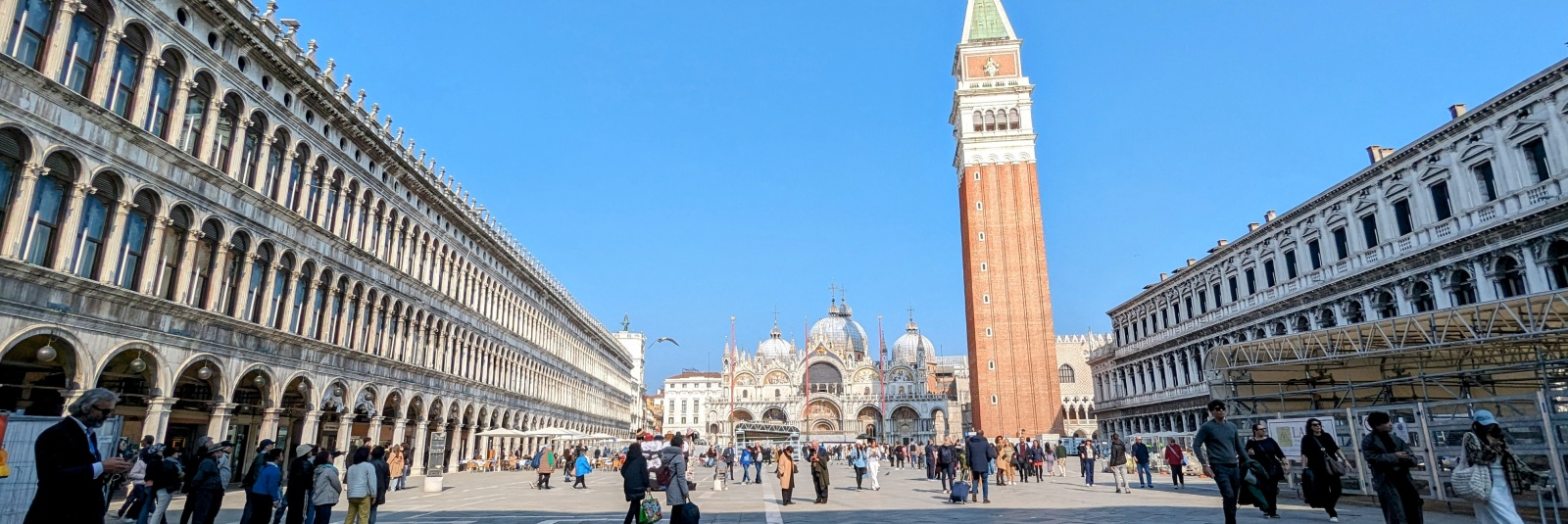
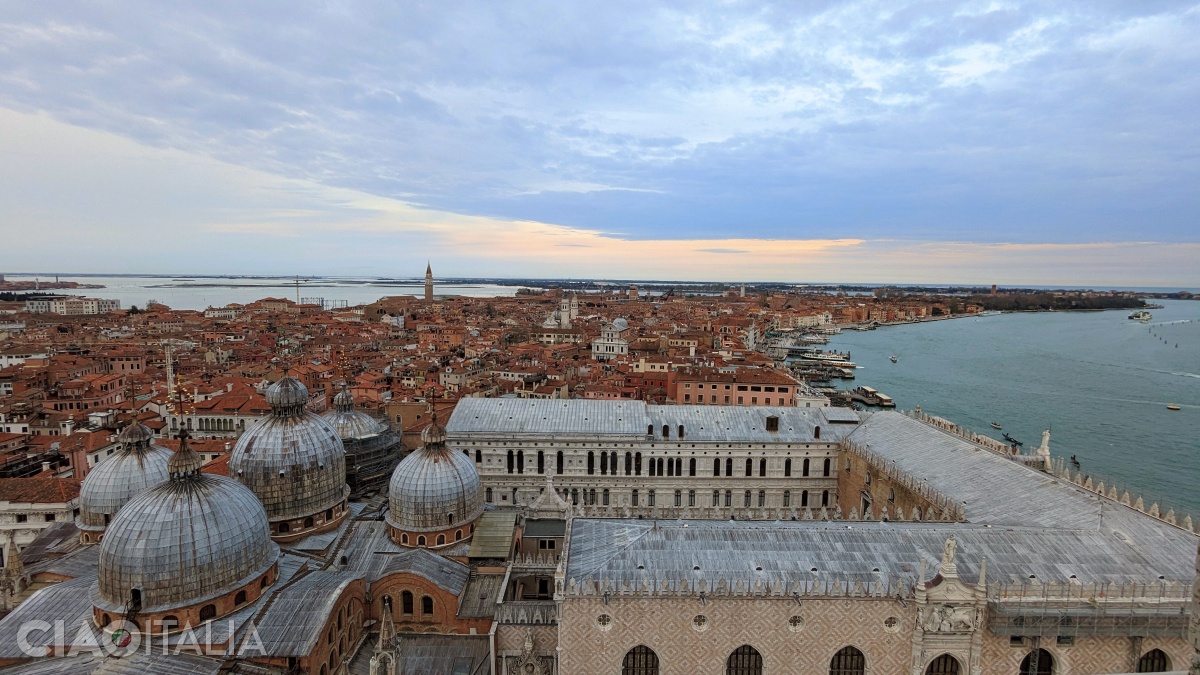
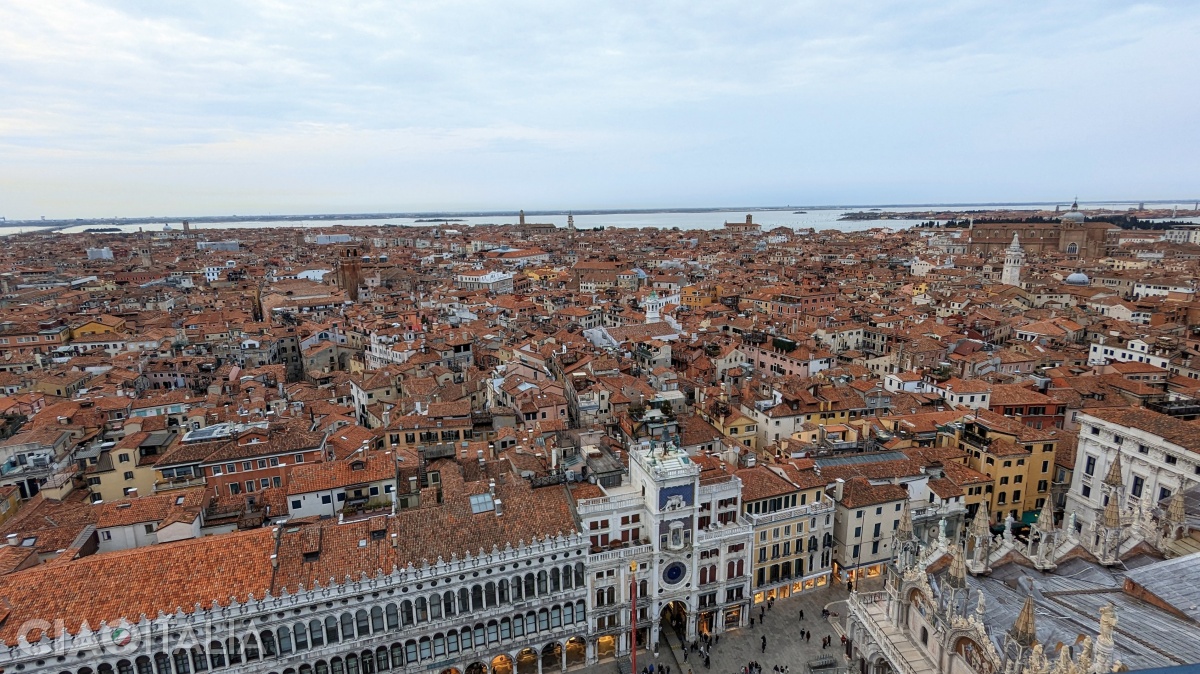
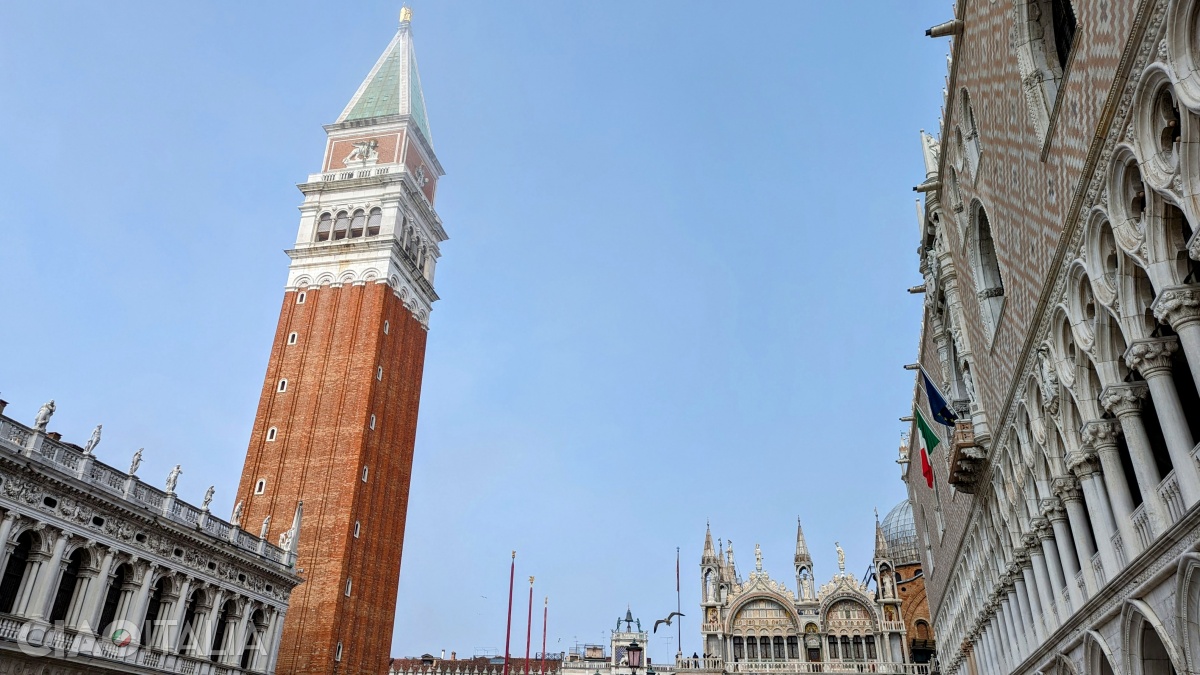
St. Mark's Campanile (Il Campanile di San Marco) is the bell tower of St. Mark's Basilica, located right next to it in the square of the same name. Venetians affectionately call it el Parón de casa, which means "The Master of the House" in the local dialect. The Campanile truly dominates the city - at 98.6 meters tall, it is the highest structure in Venice, offering one of the most beautiful views over the lagoon and the mainland Veneto region.
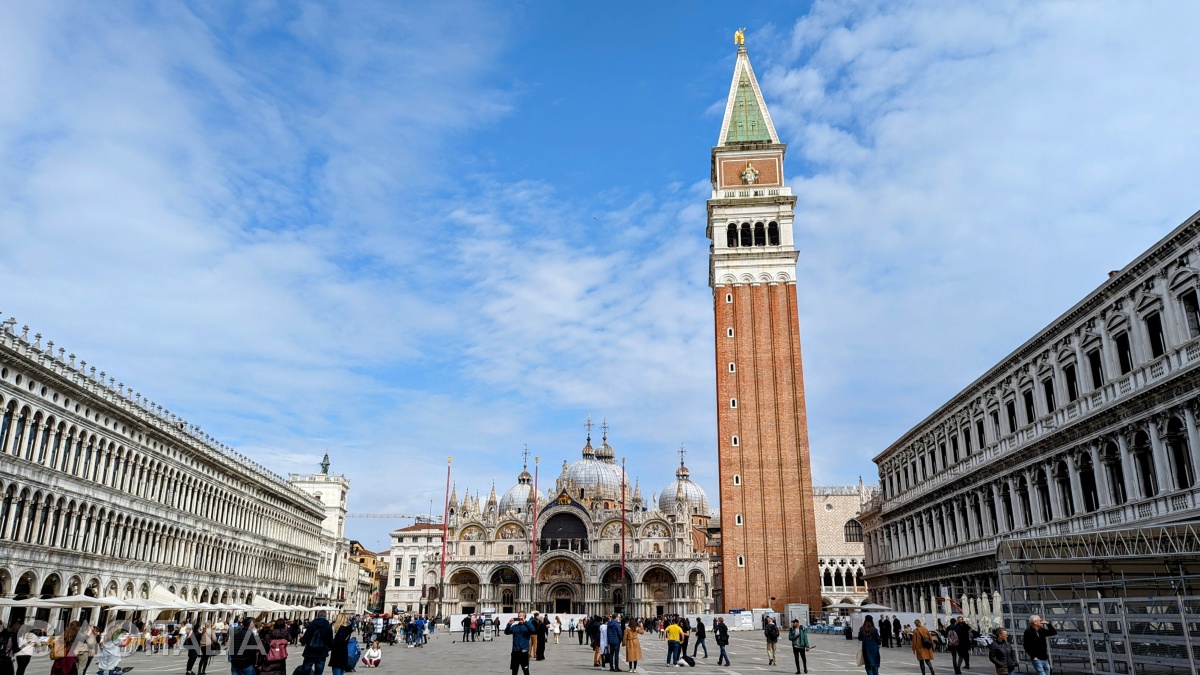
Climbing St. Mark's Campanile
The Campanile is open to visitors and stands as one of the most important attractions in Venice. Access is through the loggia facing the basilica. An elevator will take you in a matter of seconds up to the terrace at a height of 60m, where the city and the islands of the Venetian Lagoon reveal themselves in all their splendor. Nearby islands such as Giudecca and San Giorgio Maggiore are clearly visible, and it is said that on very clear days, you can see as far as the Dolomites.
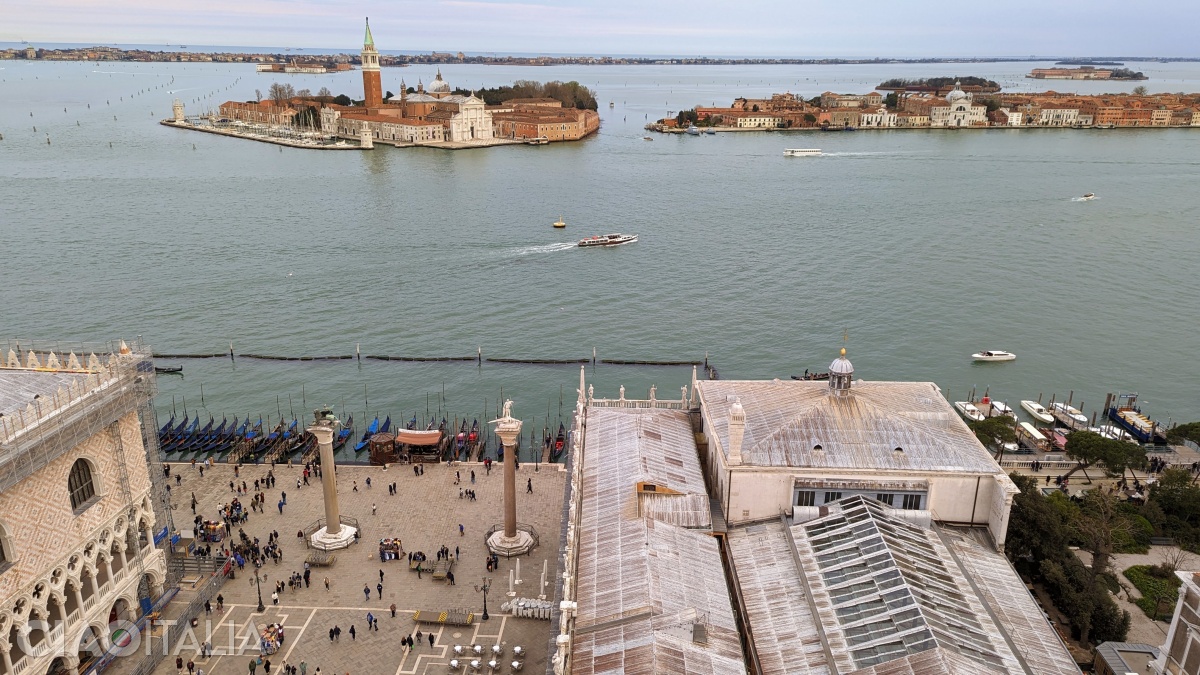
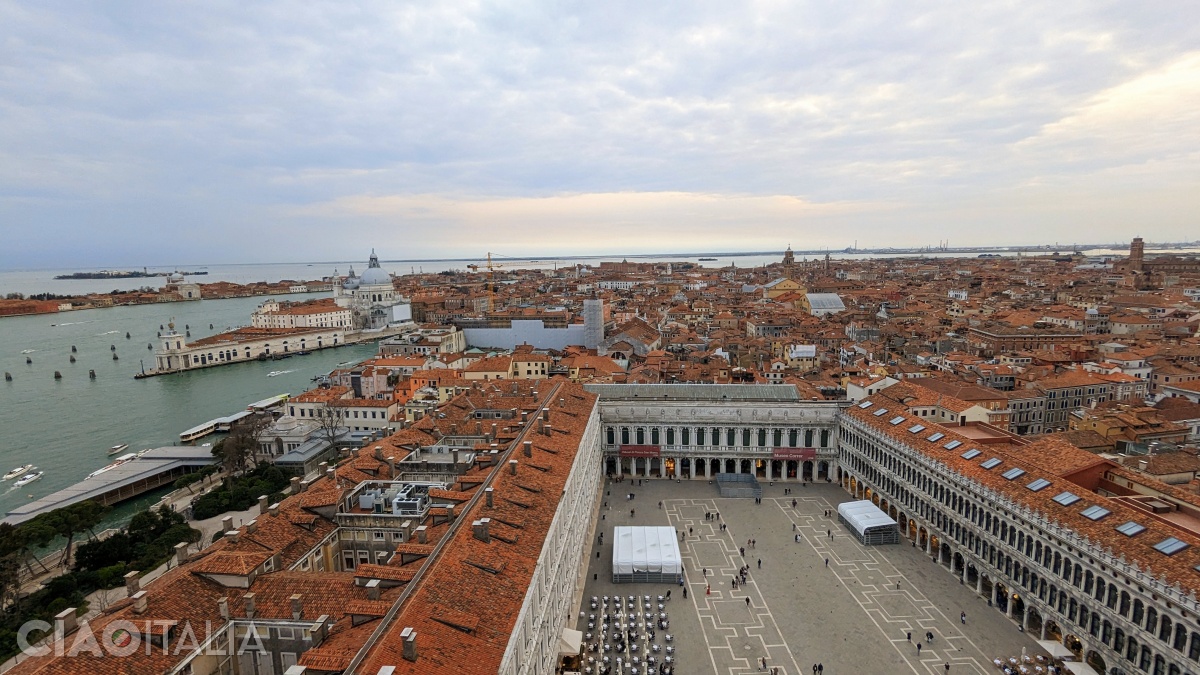
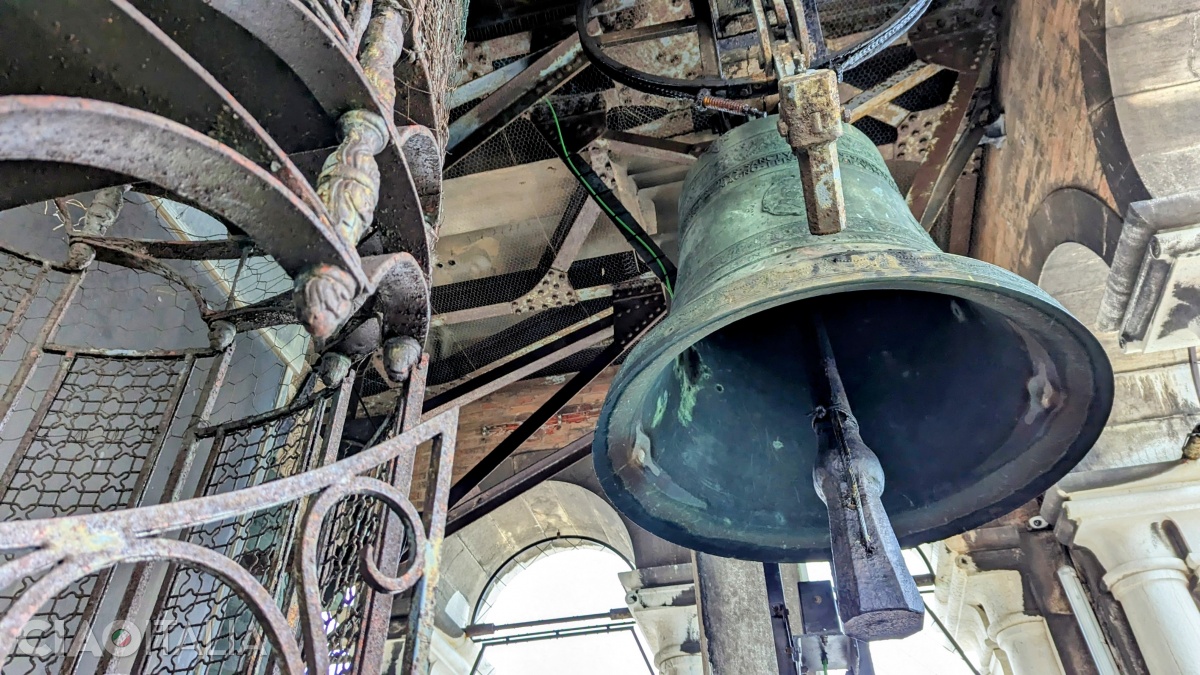
From here, you can also see the bells. Only the largest one is original; the others were replaced after they were destroyed during the bell tower's collapse in 1902.
Climbing the bell tower for "touristic" purposes is nothing new. In the past, the Signoria would invite guests to enjoy the view offered by the tower. However, they were naturally more cautious with foreigners, fearing they might use the vantage point to gather military intelligence on the city's strategic points.
Ticket Prices
Tickets for the ascent of St. Mark's Campanile are priced as follows:
- Adult: €15
- Over 65: €7.50
- Children under 10: free
The ascent is made exclusively by elevator.
Attention! Tickets can only be purchased online. You will need to create an account and select your date and time slot. You can purchase a maximum of 5 tickets. Tickets cannot be modified and are non-refundable.
You can also purchase tickets from sites like Tiqets, GetYourGuide, Viator, or Musement, where they are often included in packages featuring audioguides, various guided tours, or access to other attractions.
Tips:
- Don't be late! Entry is permitted 5 minutes before or after your reserved time slot.
- Do not bring backpacks or luggage exceeding 40x30x20 cm - access with these items is not permitted.
Opening Hours
The opening hours for St. Mark's Campanile are:
March 30 - October 31, 2026:
- Monday-Sunday: 9:30 AM - 9:15 PM
November 1 - December 30, 2026:
- Monday-Sunday: 9:30 AM - 7:15 PM
The last ascent is 30 minutes before closing.
In case of unfavorable weather conditions (e.g., days with strong winds, fog, or frost), the bell tower will close.
The Story of St. Mark's Campanile
The initial tower was built in the distant year 912. At that time, it served not only as the basilica's bell tower but also as a lighthouse for ships and a watchtower for the port, which back then occupied a good part of the Piazzetta San Marco located beneath the tower.
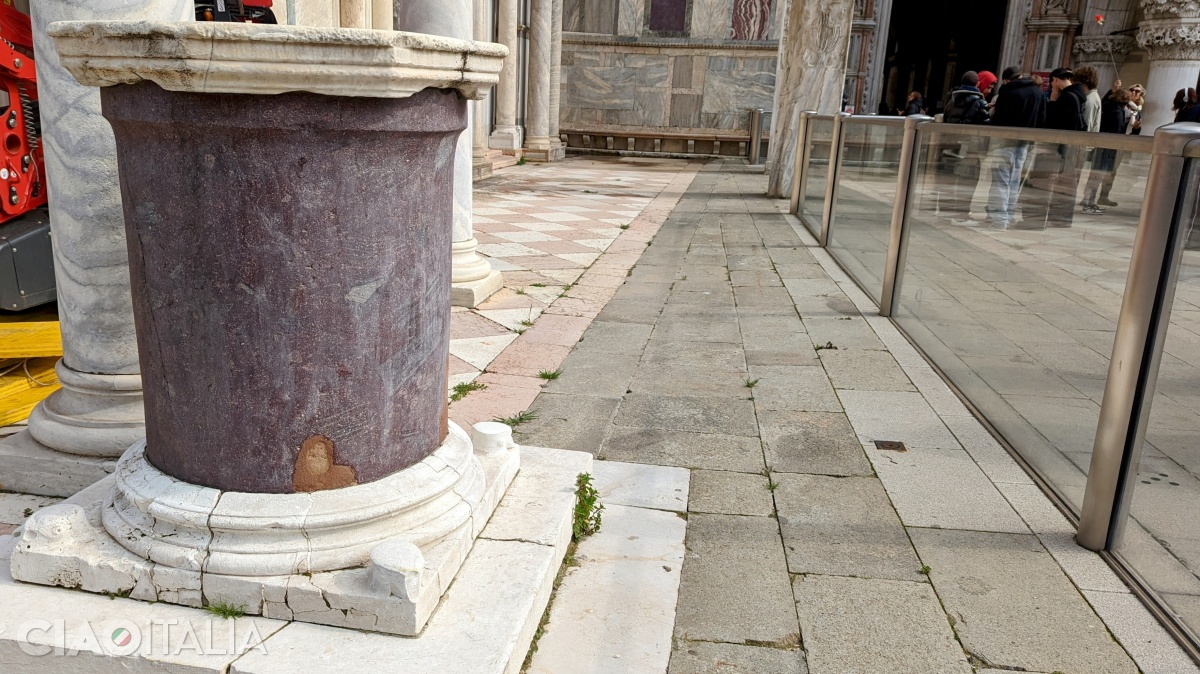
St. Mark's Campanile stood for nearly 1,000 years, increasingly deteriorated by atmospheric agents, saltwater, fires, and earthquakes. Finally, in 1902, it collapsed. Fortunately, the pietra del bando - a fragment of a column located at the corner of St. Mark's Basilica nearest the campanile - stopped much of the rubble that threatened to cause irreparable damage to the church.
Although there were no victims, the collapse of the tower, a symbol of Venice, was a tragedy for the city's residents. The authorities immediately promised to rebuild the campanile dov'era e com'era ("where it was and as it was"). On April 25, 1912, on the Feast of St. Mark - ten years after the collapse and one thousand years after the construction of the old tower - the new St. Mark's Campanile was inaugurated. The shape of the tower was identical to the old one, but it was lighter and had a more stable foundation. Two architects from Milan oversaw the reconstruction. One of them, Luca Beltrami, is also known for restoring the Castello Sforzesco and building Piazza della Scala in front of La Scala Theatre.
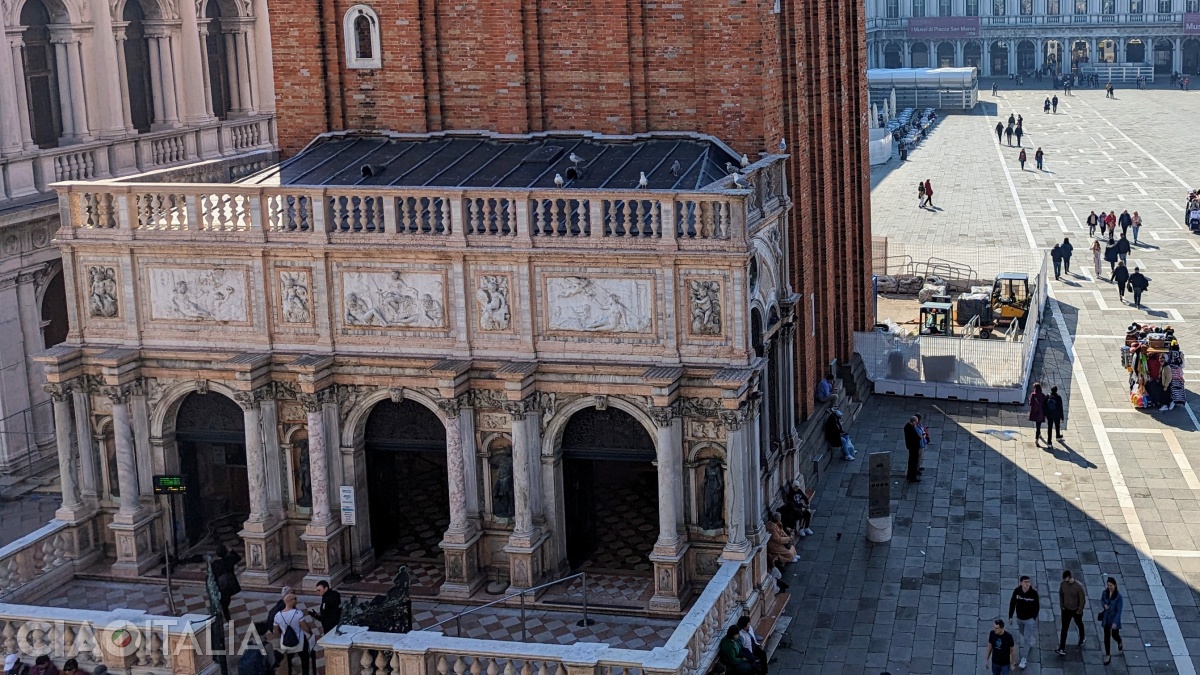
Along with the tower, the loggia at the base, which had been crushed by the collapse, was also rebuilt. Created in the 16th century, this beautiful marble loggia was the work of sculptor Jacopo Sansovino and is known as the Loggetta di Sansovino. The four statues between the arches represent Minerva, Mercury, Apollo, and Peace, while the bas-reliefs above depict the Island of Crete, Venice in the form of Justice, and the Island of Cyprus, crafted by sculptors from Sansovino's school. In the past, the loggia served as a guard post for soldiers from the Arsenal; today, it serves as the entrance to the tower's elevator.
In the medieval period, priests found guilty of immoral behavior were locked in wooden cages hanging from the tower, in full view of everyone, and left to starve.
In the 17th century, Galileo Galilei used St. Mark's Campanile for his astronomical observations. On August 21, 1609, Galilei presented his most famous invention, the telescope, to the Signoria.
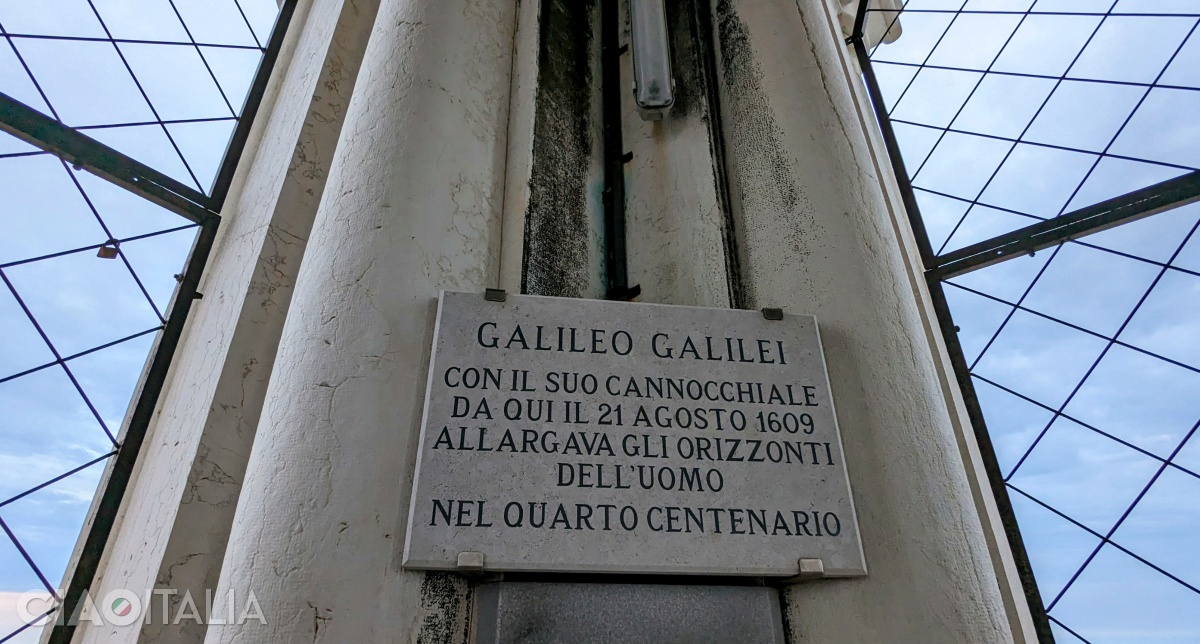
The tower's history is linked to a famous tradition: lo svolo dell'angelo ("The Flight of the Angel"), which took place during the Venice Carnival. A rope was tied between the terrace of the campanile and a boat anchored on the shore, and an acrobat would descend along it, balancing, while the Doge and members of the Signoria watched the spectacle from the Doge's Palace.
At the very top of St. Mark's Campanile stands a golden statue of the Archangel Gabriel. On the upper part of the facades, above the terrace housing the bells, the Lion of St. Mark and Justice (Giustizia) are depicted in dials.
A curiosity: in Venice, a glass of wine is called an ombra ("shadow"). The explanation for this strange term is tied to St. Mark's Campanile. In the past, there were various stalls at the base of the bell tower where one could eat or drink. The street vendors would move their stalls to follow the shadow of the tower so that the drinks would stay cool. "Let's go drink a shadow" actually derives from "Let's go drink a glass of wine in the shadow of the campanile" (see also the article What to Eat in Venice).
An urban legend: It is said that those who kiss in a gondola while passing under the Bridge of Sighs, at the exact moment the campanile bells ring, will be in love forever.