What to Eat in Venice?
It is said that the food in Venice is expensive and bad, but that's not really the case. To discover the true food specific to Venice, it is enough to move a little away from the very touristy and crowded areas, like St. Mark's Square, to look for small, unpretentious family restaurants or traditional osterias called bàcaro, and to walk through neighborhoods where there are more locals than tourists (we recommend trying the restaurants in the Cannaregio district). If you have traveled through the Veneto region before, you will notice that some traditional dishes are common to those in other cities of the area (as is normal), while others you will find only in Venice. Polenta (yes, you read that right), onions, and fish-based dishes hold a place of honor.
If you are passionate about food, you can participate in a guided tour of the Rialto market and a cooking class.
What to Eat in Venice?
Cicchetti
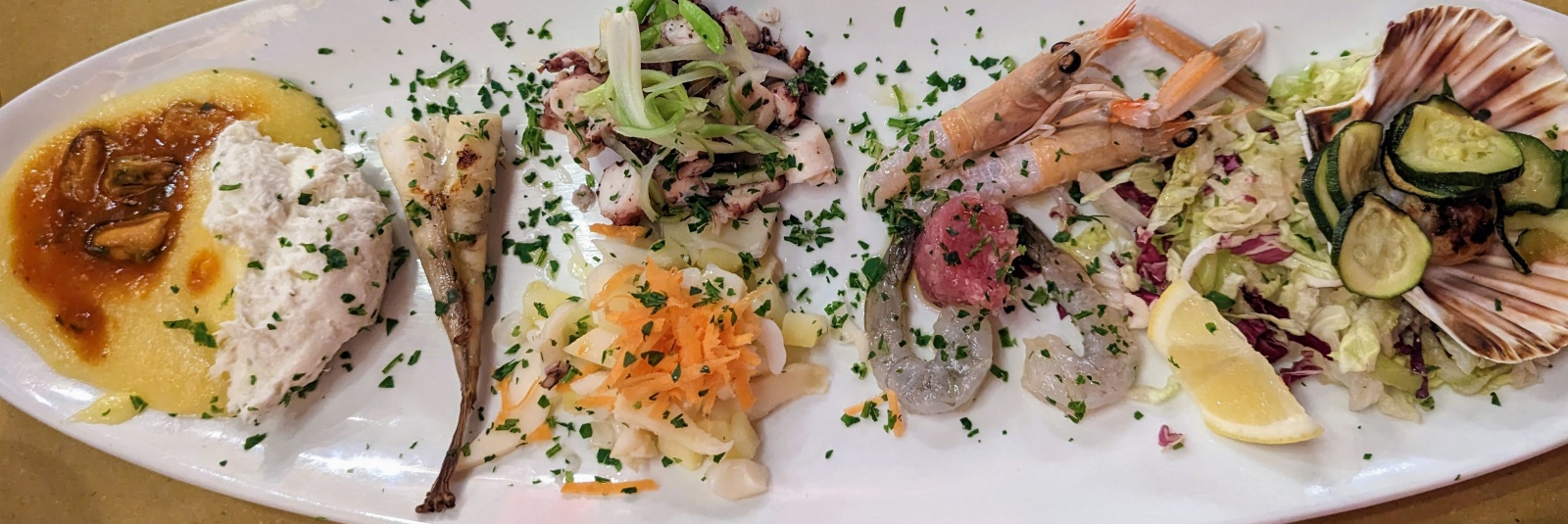
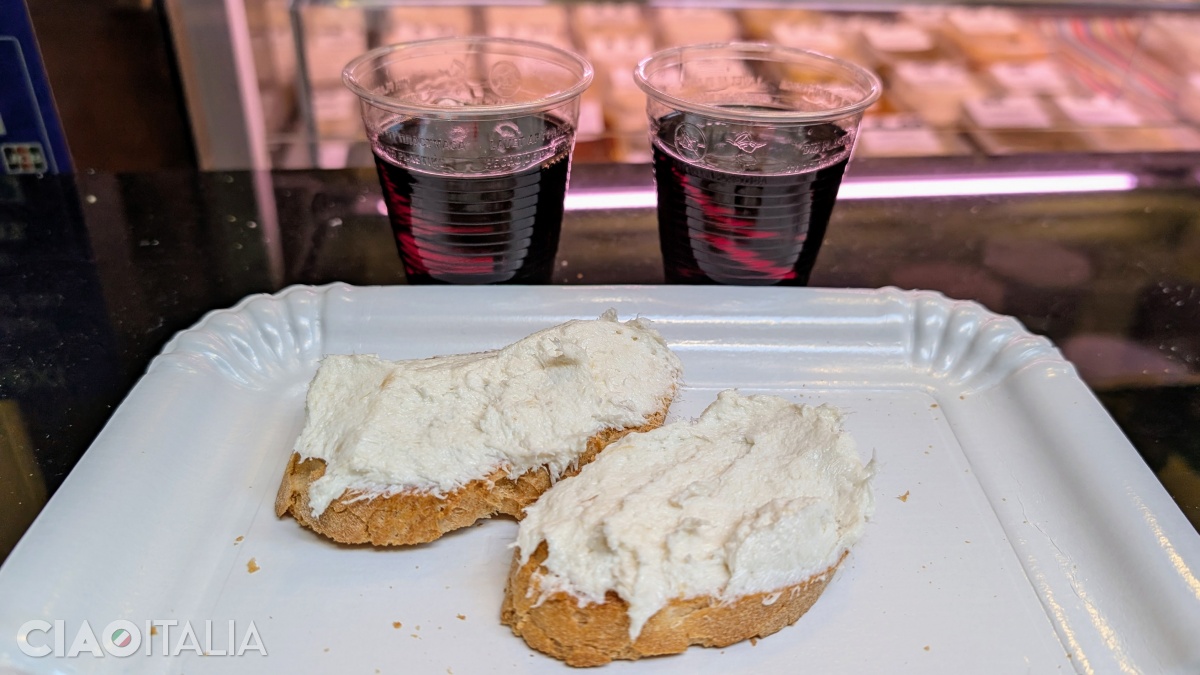
We start with cicchetti, delicious little snacks served on a slice of bread, which you will find all over Venice. The name apparently derives from the Latin term ciccus, which means "small amount". Cicchetti are an excellent way to have a first contact with Venetian food, as they are usually made with all sorts of traditional products or dishes, such as baccalà mantecato or sarde in saòr (which you can read about below).
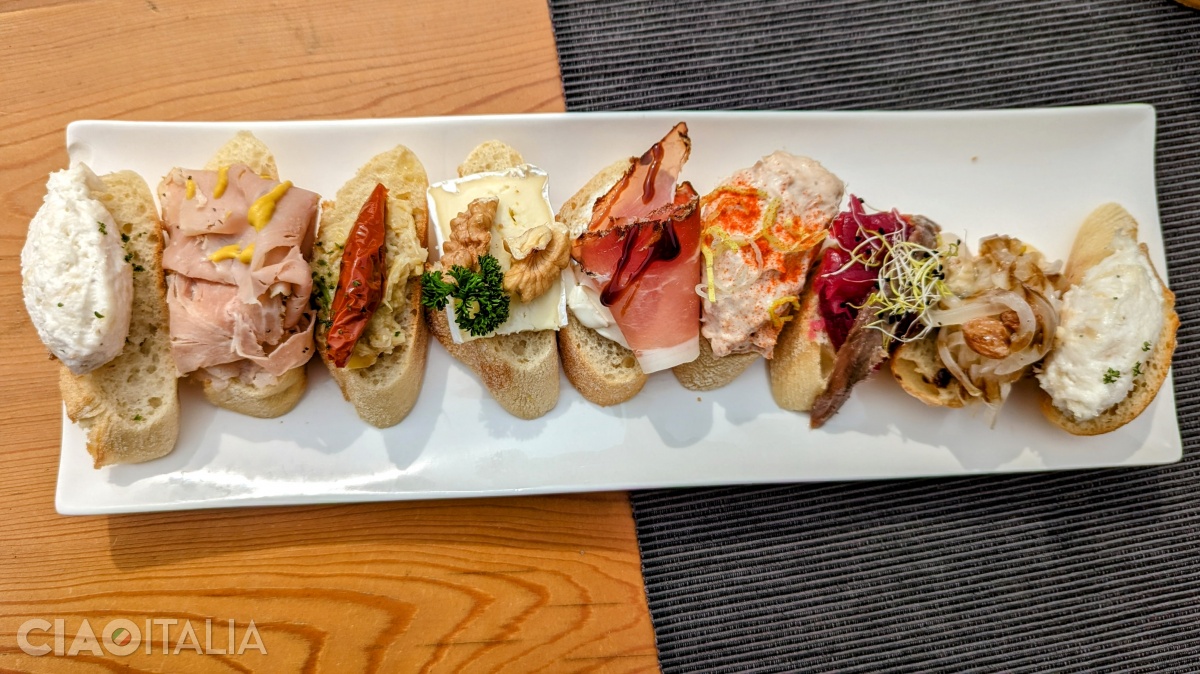
Cicchetti are the most representative element of the Venetian gastronomic tradition. They are sold in bars or small osterias called cicchetteria or bàcaro.
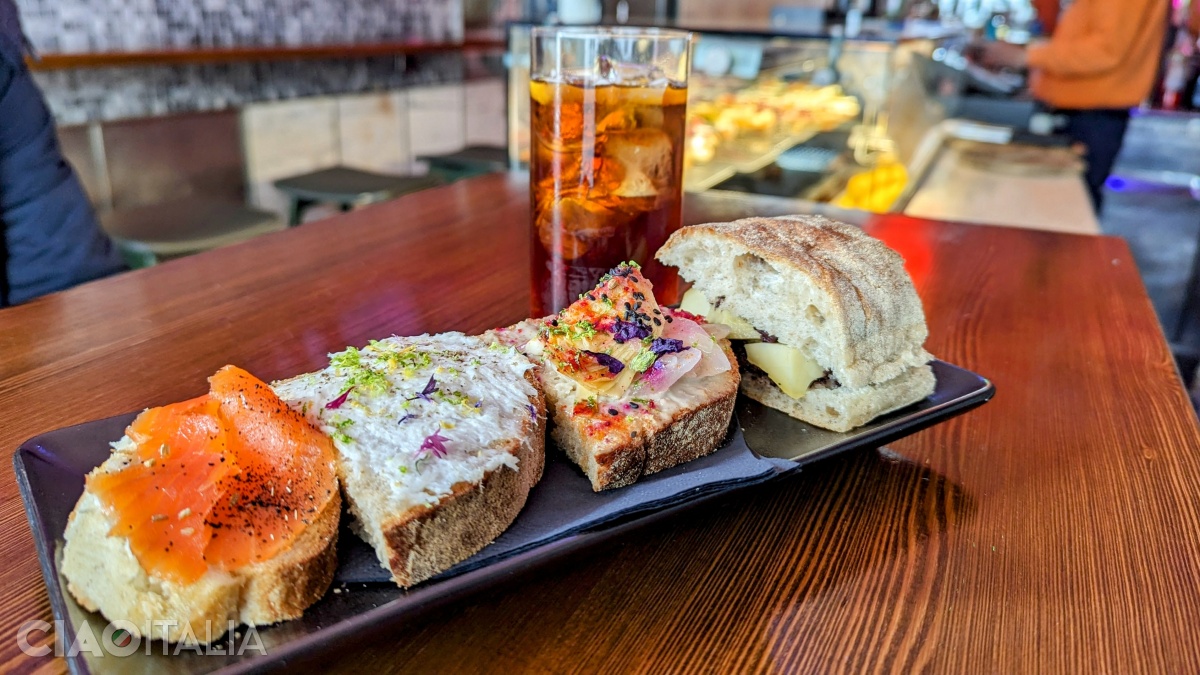
Because most places only have a few small tables (if those even exist), cicchetti are often eaten directly at the counter, standing up, or even outside, right on the street. They are often accompanied by a glass of wine or a spritz. For Venetians, going to this type of place means more than just eating and drinking: it represents a true socializing ritual that has been practiced for a long time.
In the past, merchants of the Venetian Republic used to celebrate the closing of a good deal with a glass of wine. To avoid drinking on an empty stomach, they accompanied it with a piece of bread topped with a little traditional food. That is how cicchetti snacks were born, so beloved by Venetians.

As for the places called bàcaro, their name might come either from Bacchus, the god of wine, or, according to another hypothesis, from the Venetian term bacarar, which means "to have fun, to celebrate something". Their tradition is old, as these were actually modest and cheap places frequented by those who didn't have much money. The first bàcaro to officially bear this name was Bàcaro Grande, opened in 1866 near the Rialto Bridge by a merchant who brought wines from Puglia.
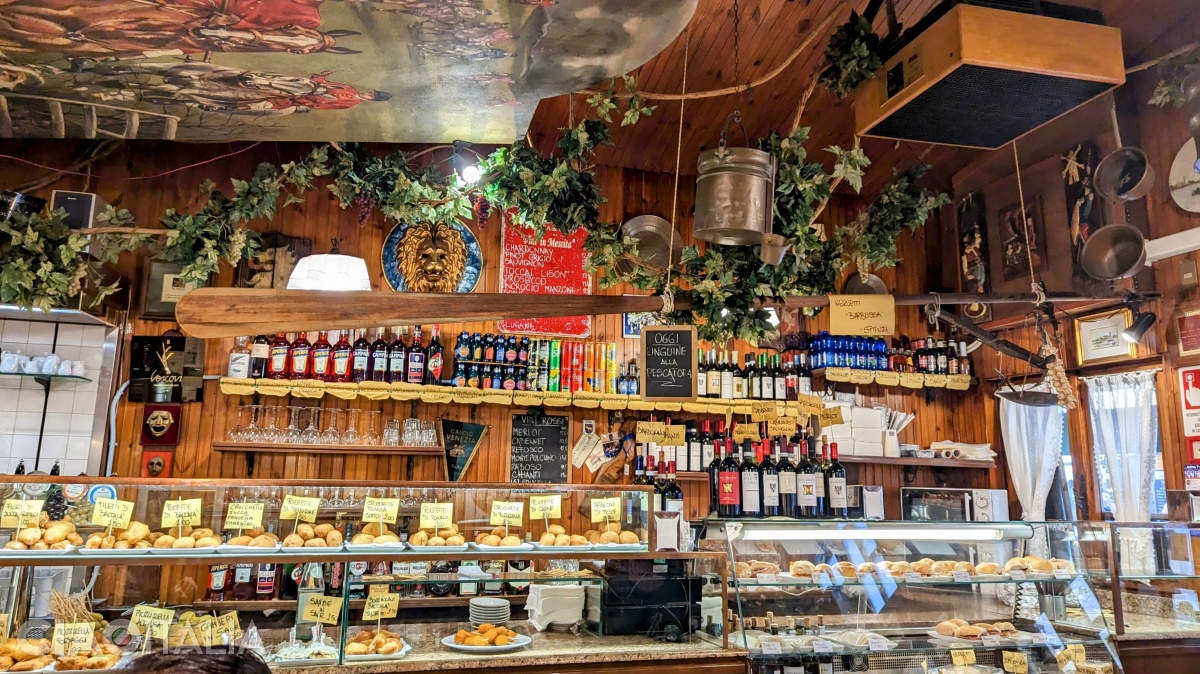
Cicchetterie and bàcari can be found all over Venice. Here are a few we recommend: Bacareto da Lele, Osteria al Squero, Arcicchetti Bakaro, Cantine del Vino già Schiavi, Cicchetteria venexiana da Luca e Fred, and Osteria al Portego. A bit more expensive, but very good, is also Ai Do Leoni, located right next to St. Mark's Basilica.

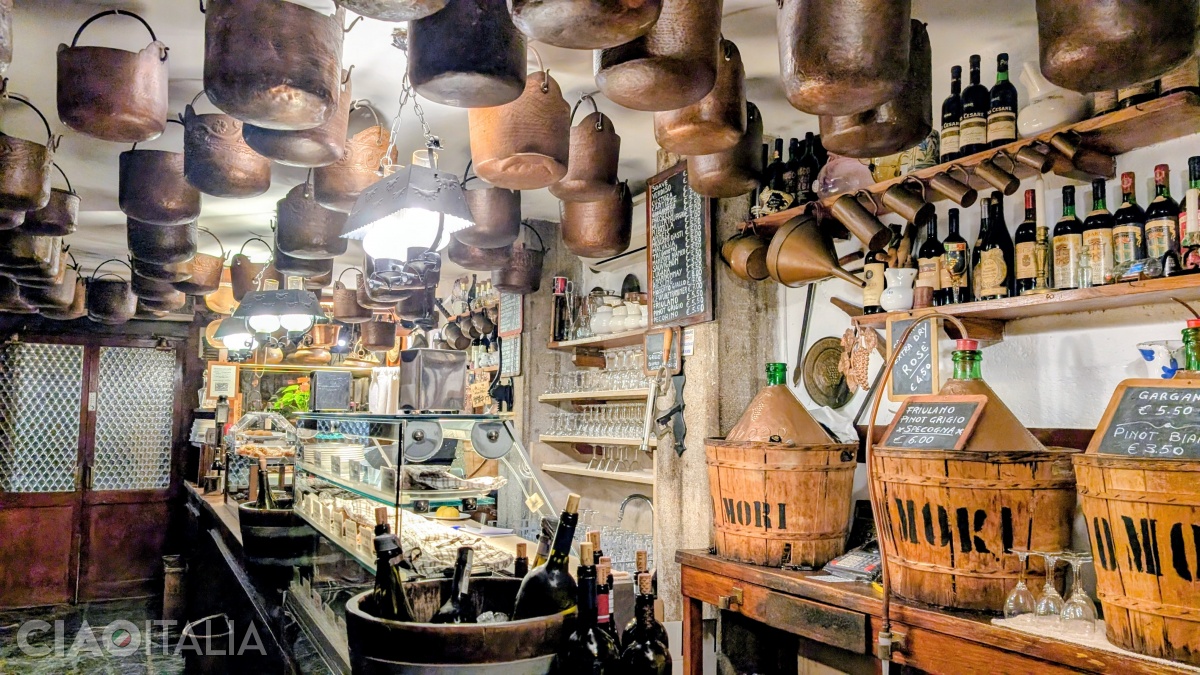
And if you want to eat in the oldest and most picturesque bàcaro in Venice, head towards the Rialto Market, next to which you will find Cantina Do Mori. Its history begins in 1462, when a wine cellar (hence the name cantina) operated in this space. In the 18th century, it counted among Casanova's favorite places (perhaps also due to the fact that it had two entrances, which allowed for a quick escape).
If you are interested in learning more about Venetian food, you can book a guided tour with cicchetti tastings.
Even if it isn't exactly a bàcaro, we also have to mention Rosticceria Gislon, which has been operating in Venice since 1938. Although it is located near the Rialto Bridge, it is very popular with locals, who praise it especially for its quality-to-price ratio. You will find here a wide variety of pre-prepared Venetian dishes. It is a simple place with few tables, perfect for a quick snack when you're taking a break from walking or sightseeing.
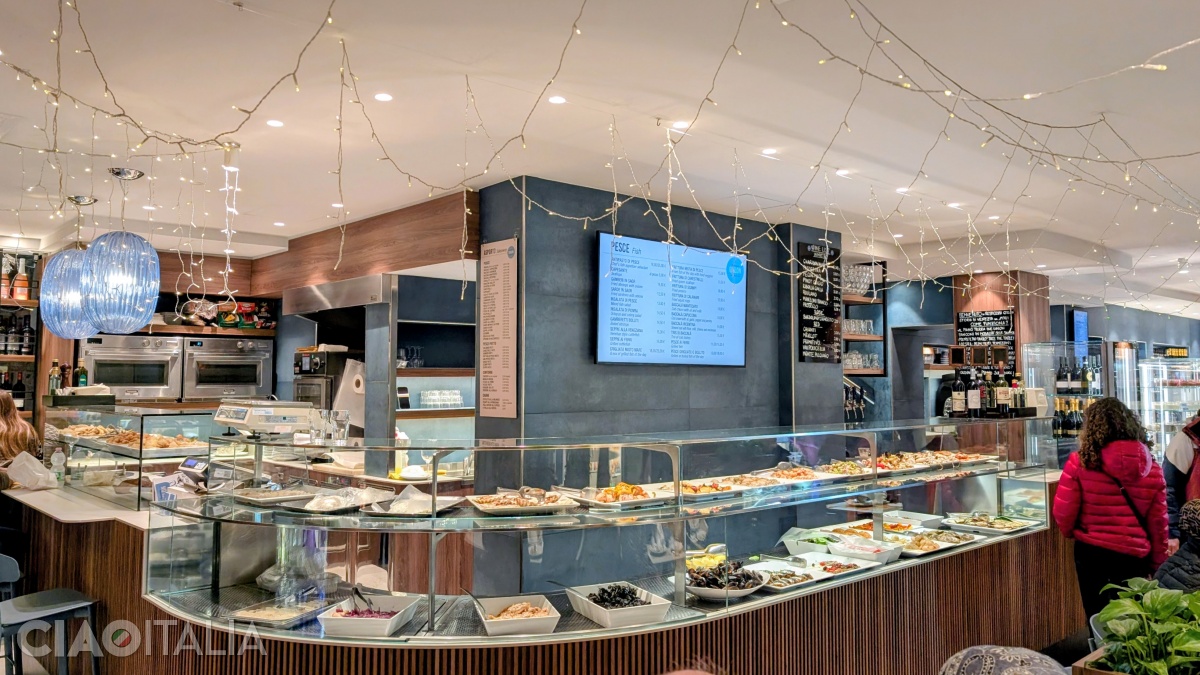
Scartosso
Scartosso is a paper cone full of freshly fried fish and seafood, which is usually sold on the street. In Venice, this has been customary since the 17th century.
Baccalà Mantecato
Baccalà mantecato is one of the traditional dishes of Venetian cuisine. Baccalà is cod, which started being brought from Norway to Venice around the 16th century. The fish is boiled in water with garlic, lemon, and bay leaves and then transformed with the help of oil into a cream, which is usually eaten as a snack, placed on slices of bread or polenta.
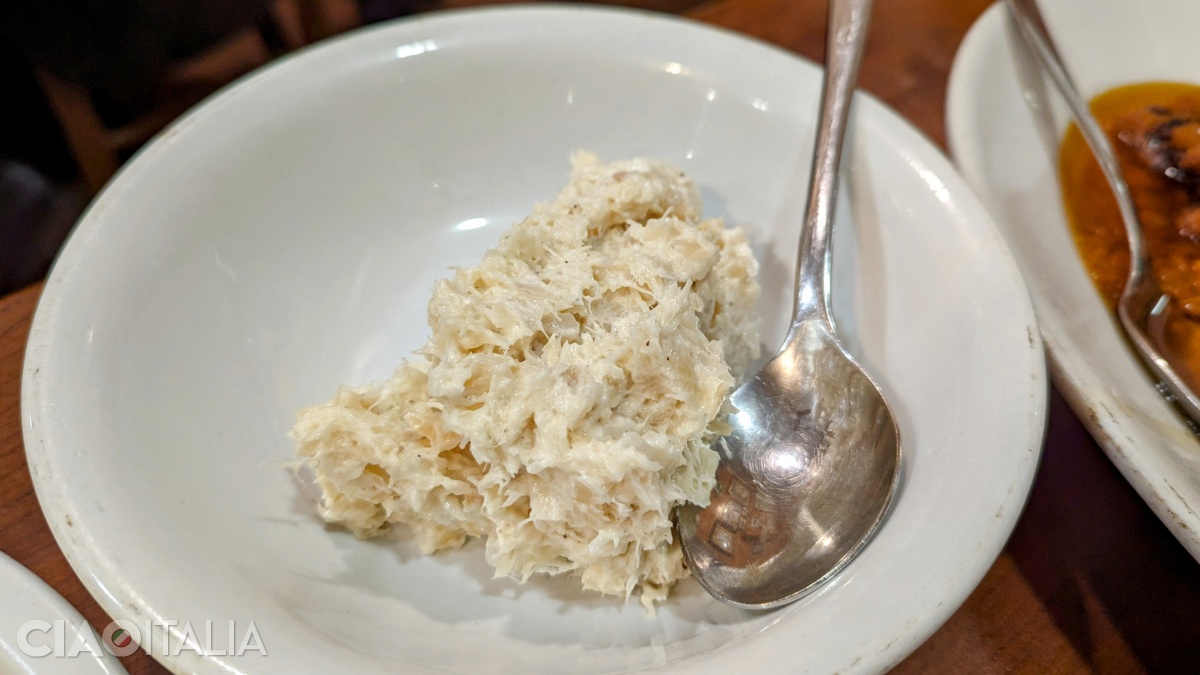
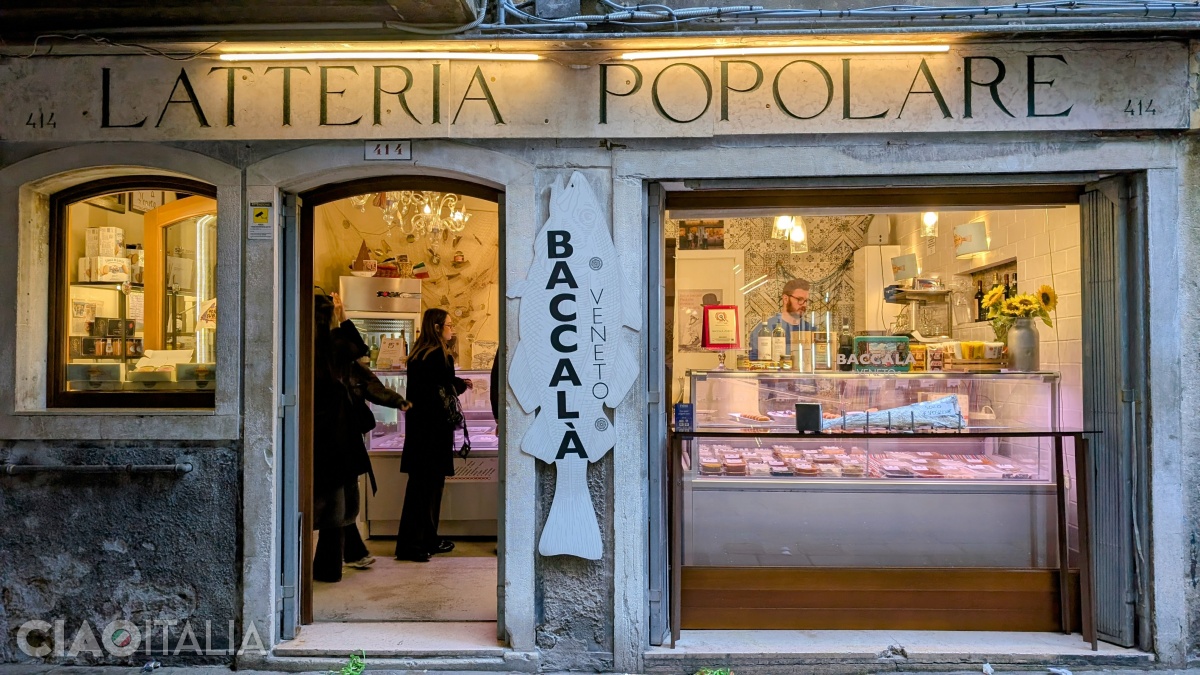
You can find baccalà mantecato both on restaurant menus as an antipasto (appetizer) and in the form of cicchetti. Many locals say (and we confirm) that the best baccalà mantecato in Venice is found in a small place called Baccalà Veneto, near the Rialto Market.
Sarde in Saòr
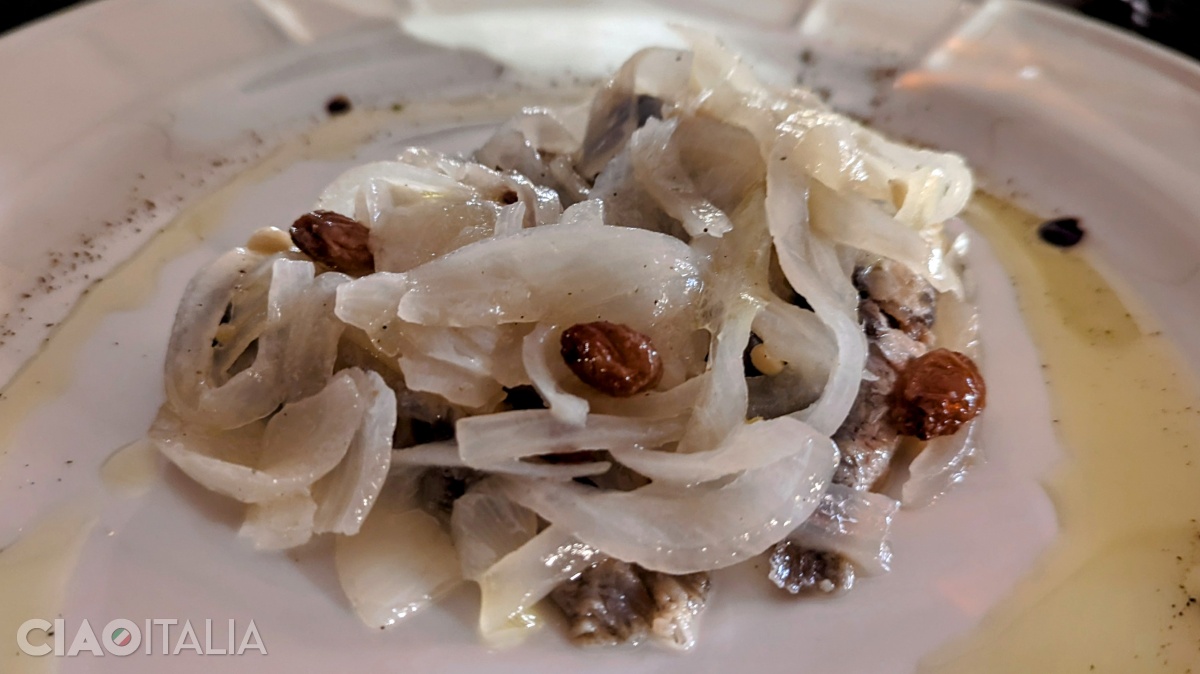
Sarde in saòr are another traditional Venetian snack. Sardines are marinated in saor, meaning a sweet-sour sauce made from sautéed onions (locals use onions from Chioggia, one of the islands of Venice), vinegar and, sometimes, pine nuts and raisins. It is a dish born from the need to preserve fish on boats for several days. It is even said that the sardines are better after being left to marinate for at least a day.
Bigoli in Salsa
We've already mentioned bigoli pasta in the article about the food in Padua. While they are typically served there with chicken or duck ragù, in Venice they are primarily prepared with a sardine and onion-based sauce.

Pasticcio di Pesce
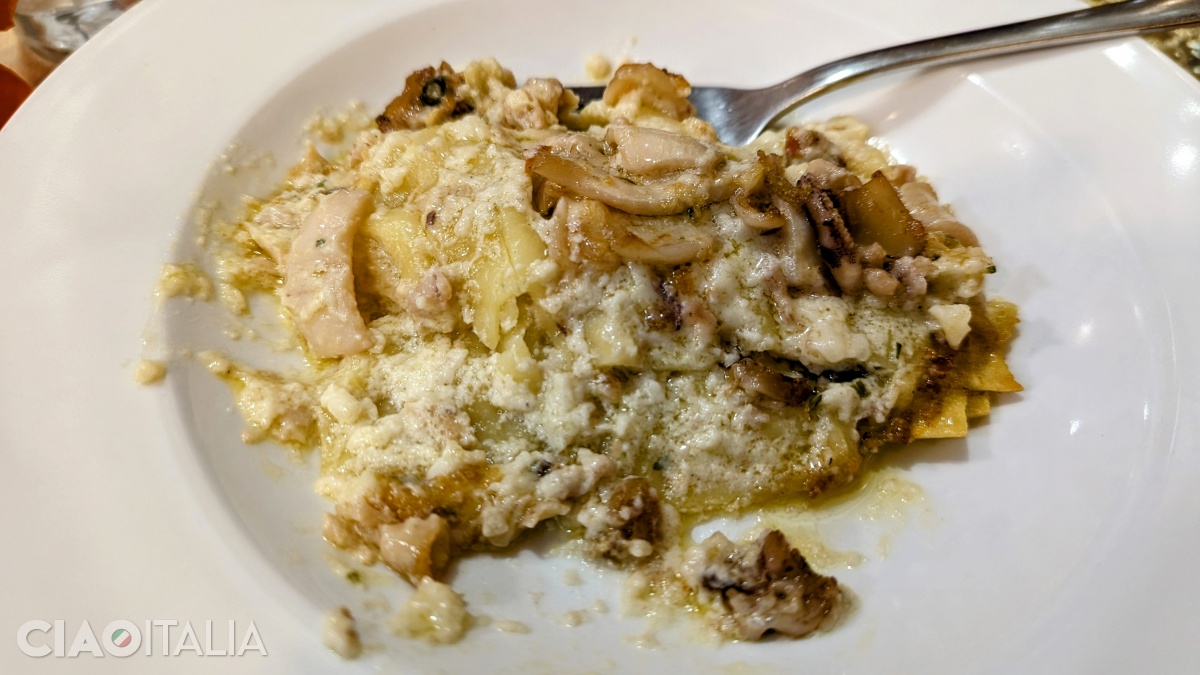
Pasticcio di pesce is fish lasagna. In Venice, it is prepared not only with fish but also with seafood.
Risotto di Gò
Risotto di gò is a dish characteristic especially of the island of Burano. It is a risotto prepared with a soup made from a not-very-handsome fish called ghiozzo (goby), which lives in the waters of the Venetian lagoon.
Moscardini in Umido
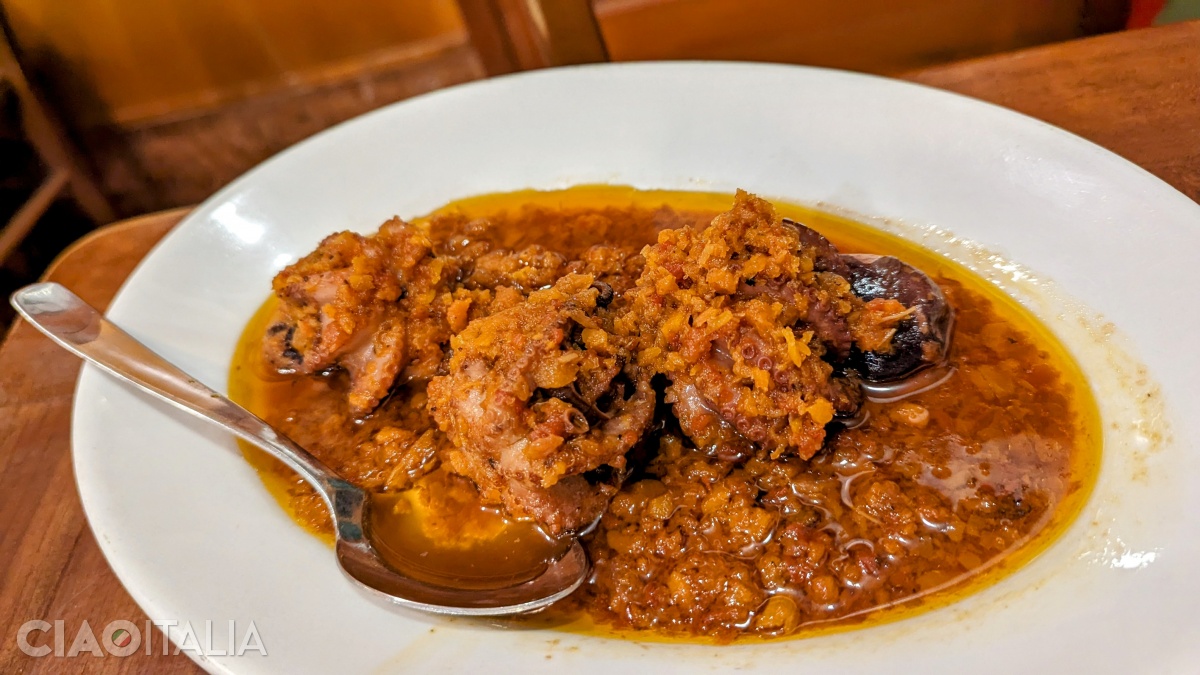
Moscardini in umido are baby octopuses, cooked with tomato sauce.
Risi e Bisi
Risi e bisi is another traditional Venetian recipe, prepared with rice (risi) and peas (bisi) and sought after especially during spring, when the peas are tender.
In the past, there was a tradition that on April 25th, for the Feast of St. Mark, risi e bisi was served at the Doge's Palace. However, it is quite probable that this dish derives from the Byzantine tradition, with which Venetians had come into contact through trade.
Fegato alla Veneziana
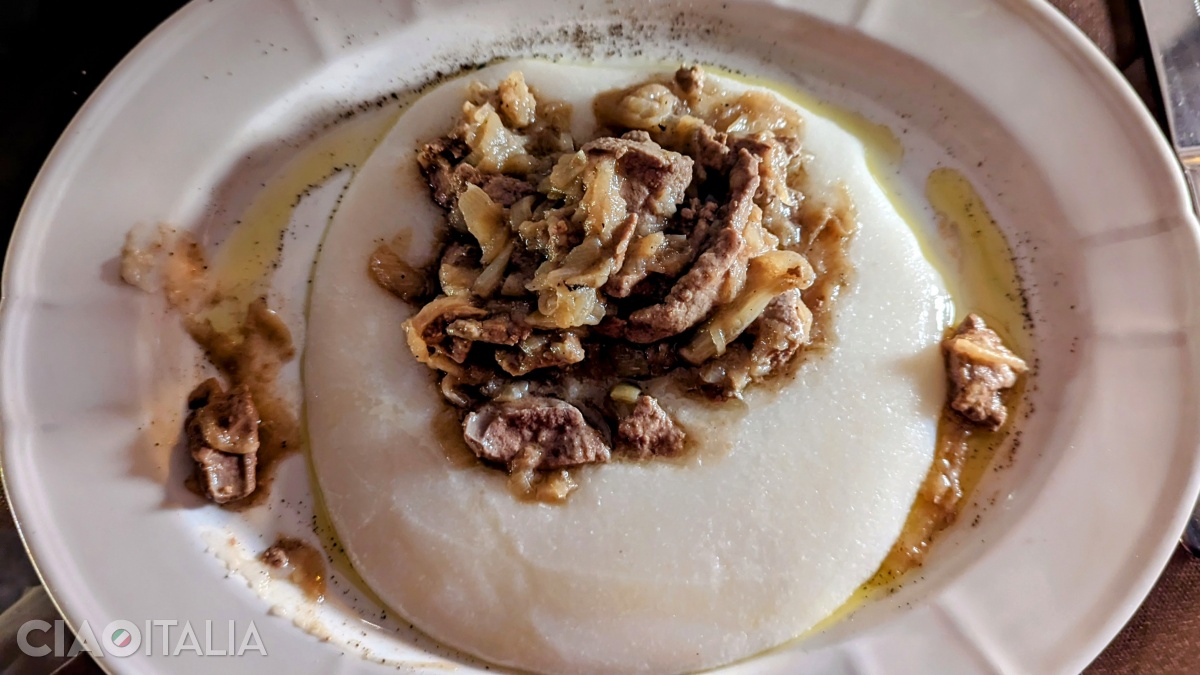
Veal liver Venetian style (fegato alla veneziana) is prepared with butter and caramelized onions and is usually accompanied by polenta.
Schie con la Polenta
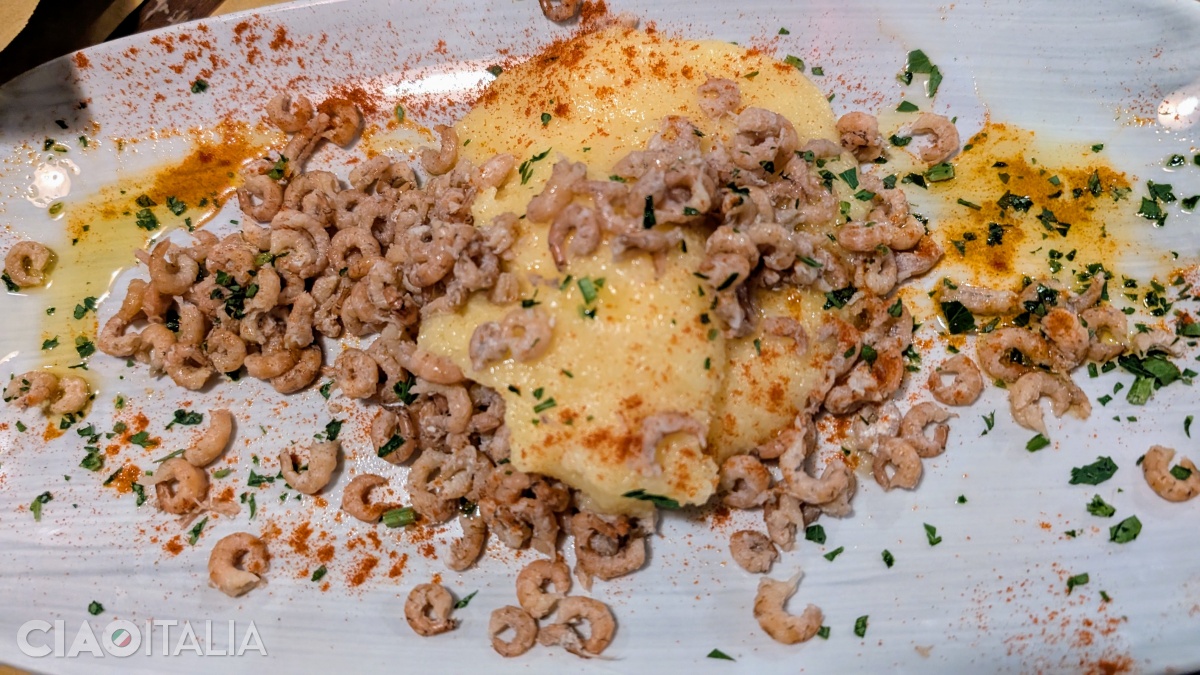
Also served with polenta are the small shrimps from the lagoon, called schie in the Venetian dialect.
Moeche
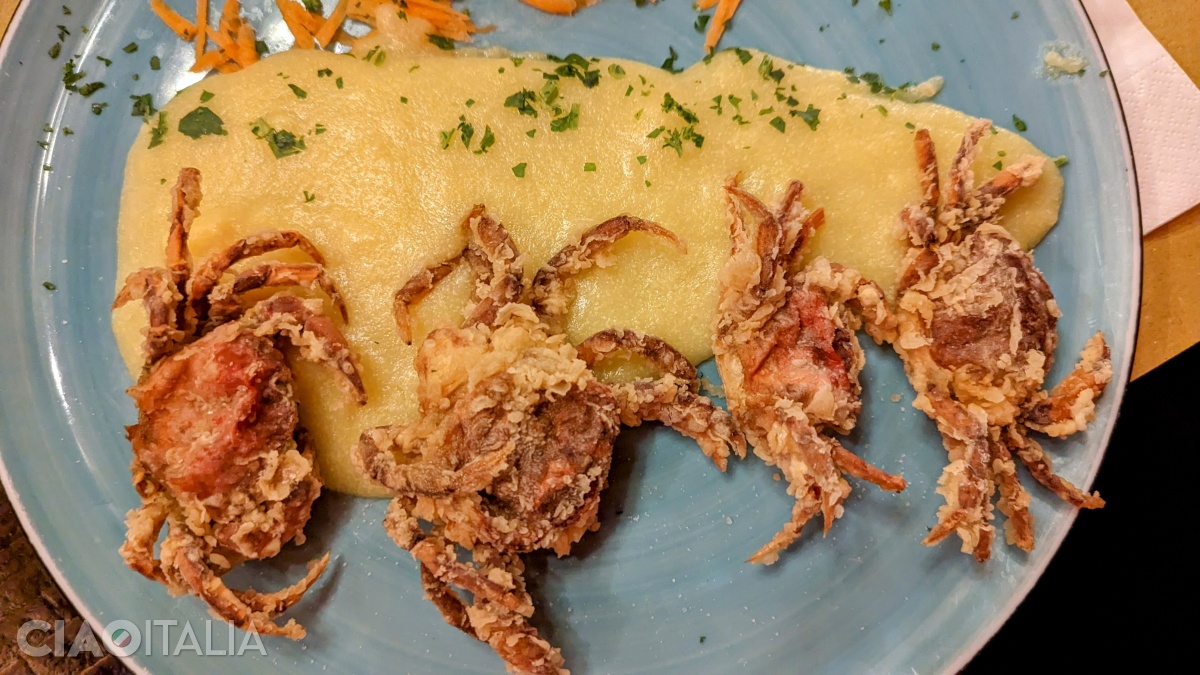
We stick with polenta... this time accompanied by moeche. Moeche are crabs from the lagoon, which are fished twice a year: during spring and autumn, when they change their shell. Because the new shell is still soft (molle in Italian), they were named mollecche or, for short, moeche.
Venetian tradition is not very gentle: often the crabs are thrown while still alive into a basin with milk and beaten egg yolks, to "fill them before being dusted in flour and fried.
Seppie in Nero con Polenta
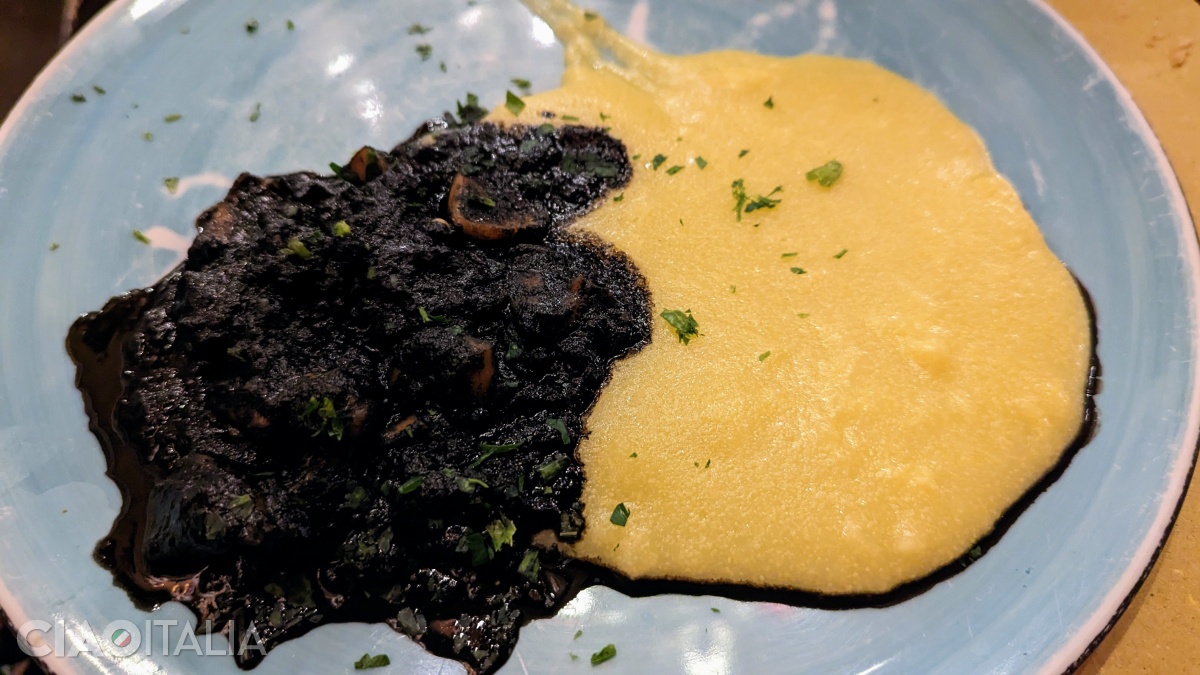
Maybe you have heard that around Venice people eat spaghetti and risotto with cuttlefish ink. Less known by tourists, however, are cuttlefish with polenta and ink, which are actually called seppie alla veneziana.
Venetian Sweets
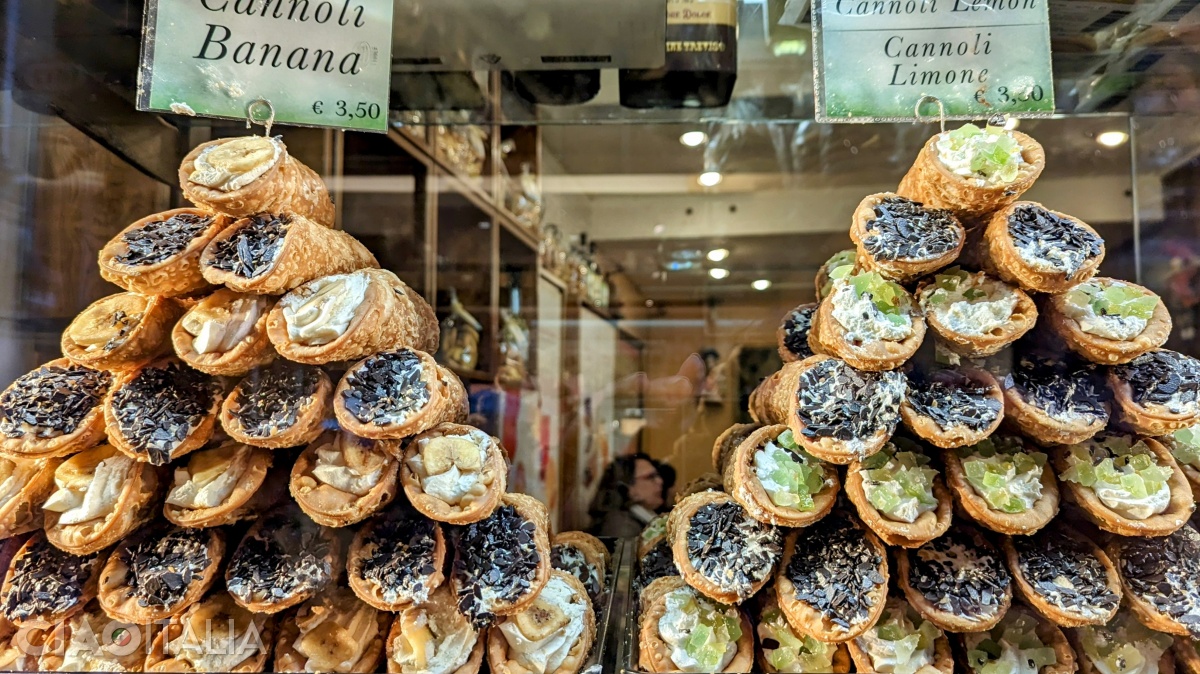
Even if the shop windows in Venice are full of cannoli, you probably know that these represent a typical dessert from Sicily (and in Venice, you can't even find the good, authentic ones). Typical Venetian sweets are actually biscuits, and this is because Venetians, being a seafaring people, needed food at sea that would keep for a long time.
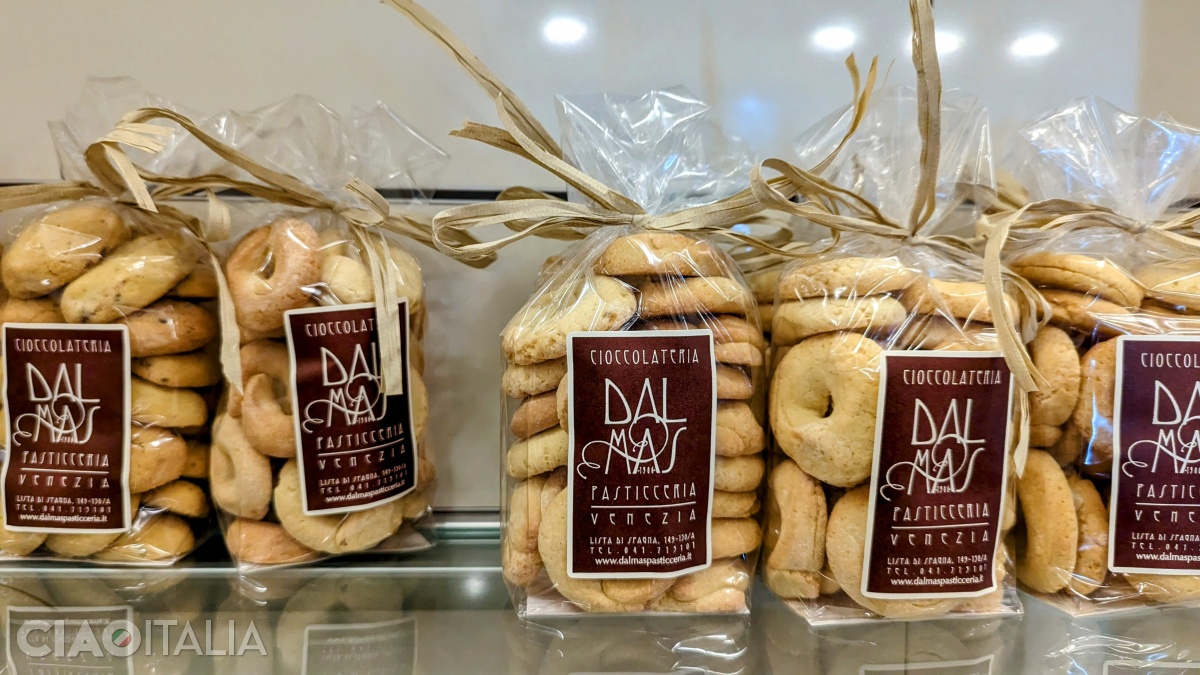
Venetian biscuits are of several types - baicoli, zaeti, busolai or esse - the last two types being traditional to the island of Burano, which is why they are also called buranelli.
Also a typical Venetian dessert are fritole (the Venetian dialect version of the Italian word frittelle), often called veneziane. These are doughnuts that were made for special occasions, such as the Carnival. Their tradition is very old - it seems that around 1300 there was even the trade of fritoleri - those who made doughnuts. There is the simple version, prepared only with raisins and pine nuts, but also doughnuts filled with zabaglione or whipped cream.
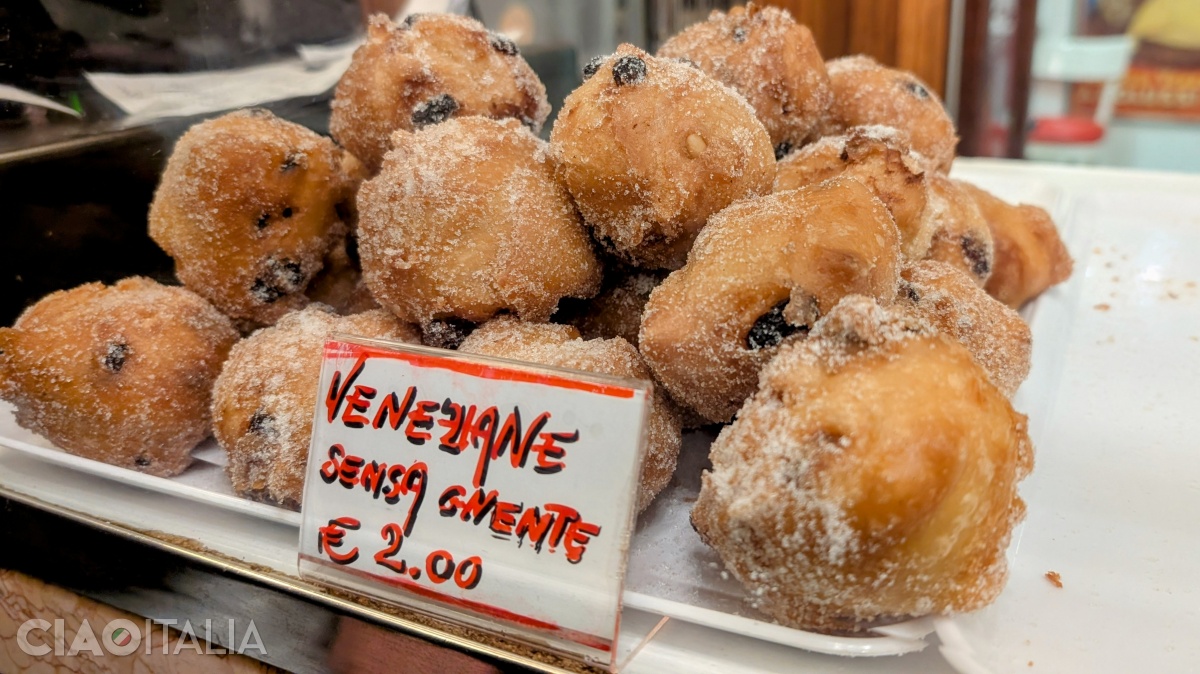
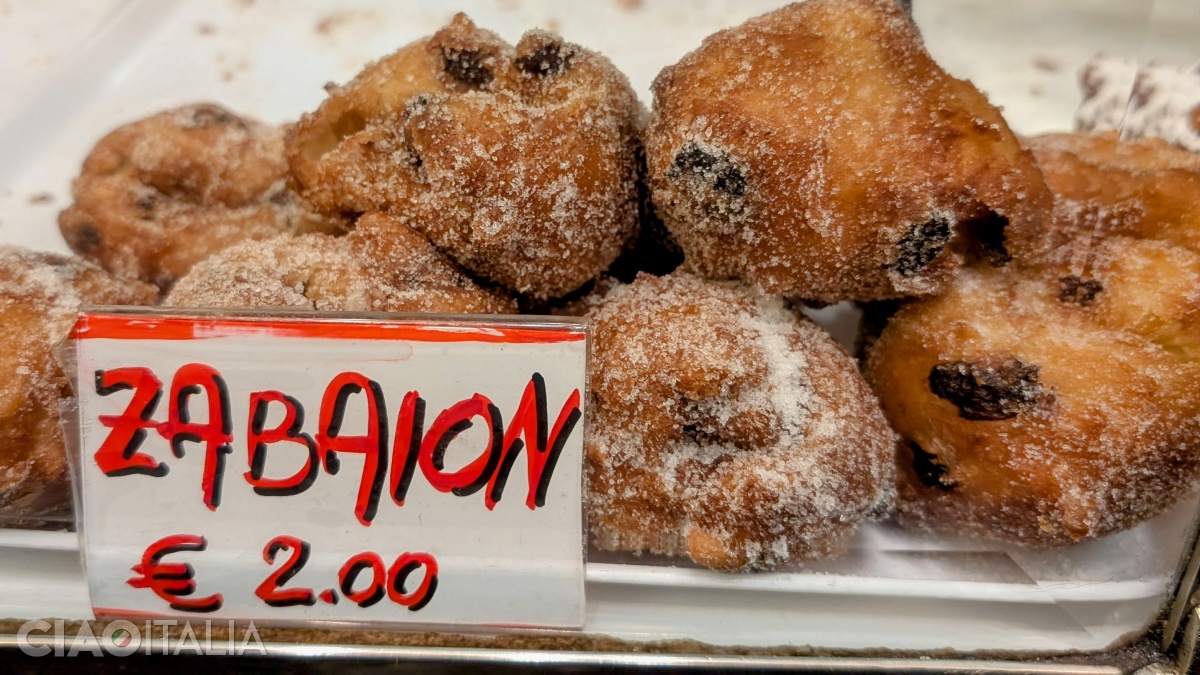
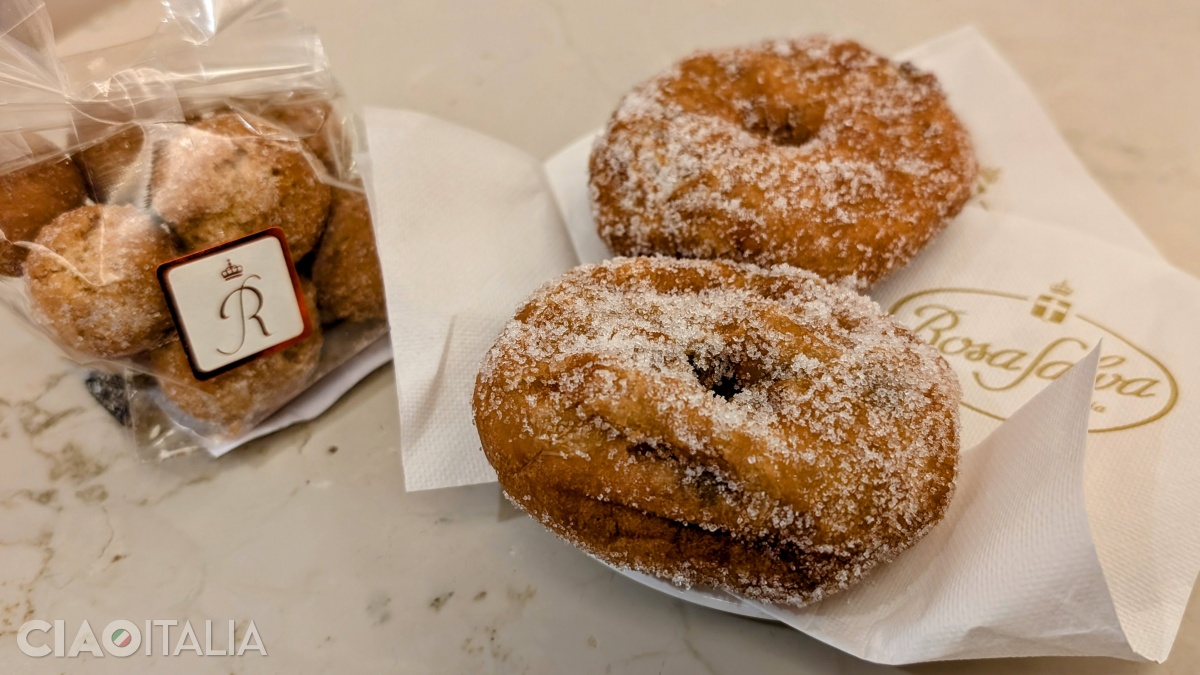
You will also encounter frittelle con il buco - doughnuts with a hole in the middle, which in the past were strung on a stick and sprinkled with sugar. These even appear in an 18th-century painting by Pietro Longhi, titled "The Doughnut Vendor" and exhibited at Casa Carlo Goldoni.
Other sweets that you will find especially during the Carnival period are mammalucchi (like a kind of fried dough bar), castagnole (like little balls), and galani (similar to "angel wings" pastries).
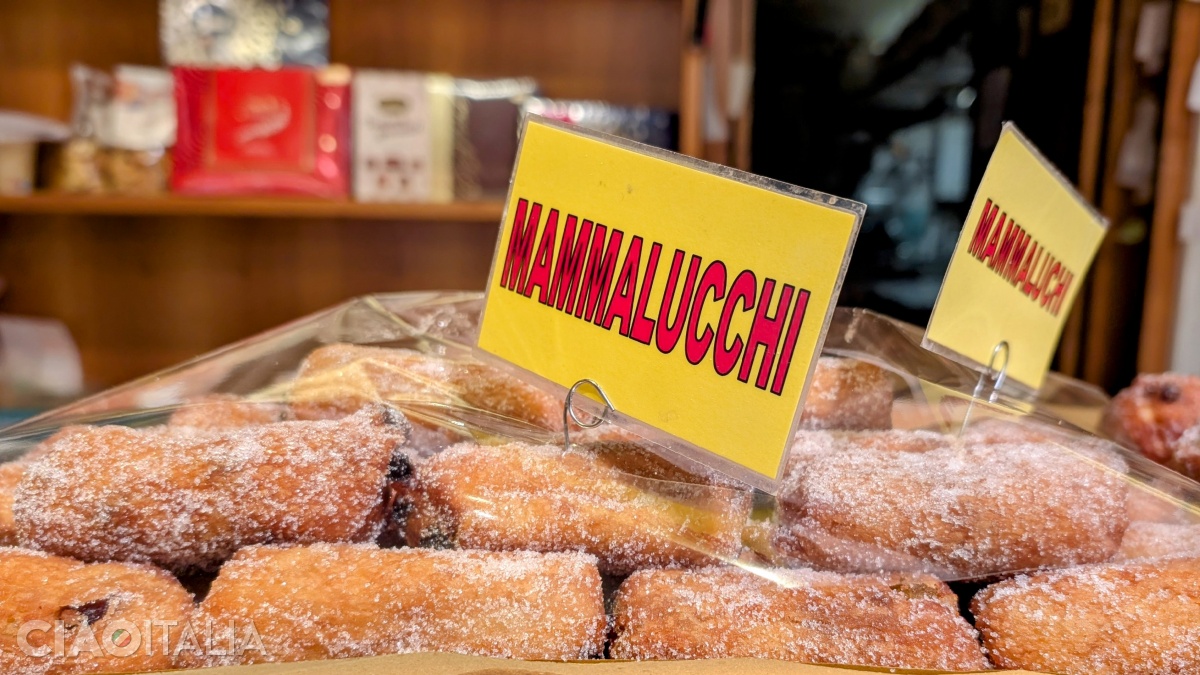
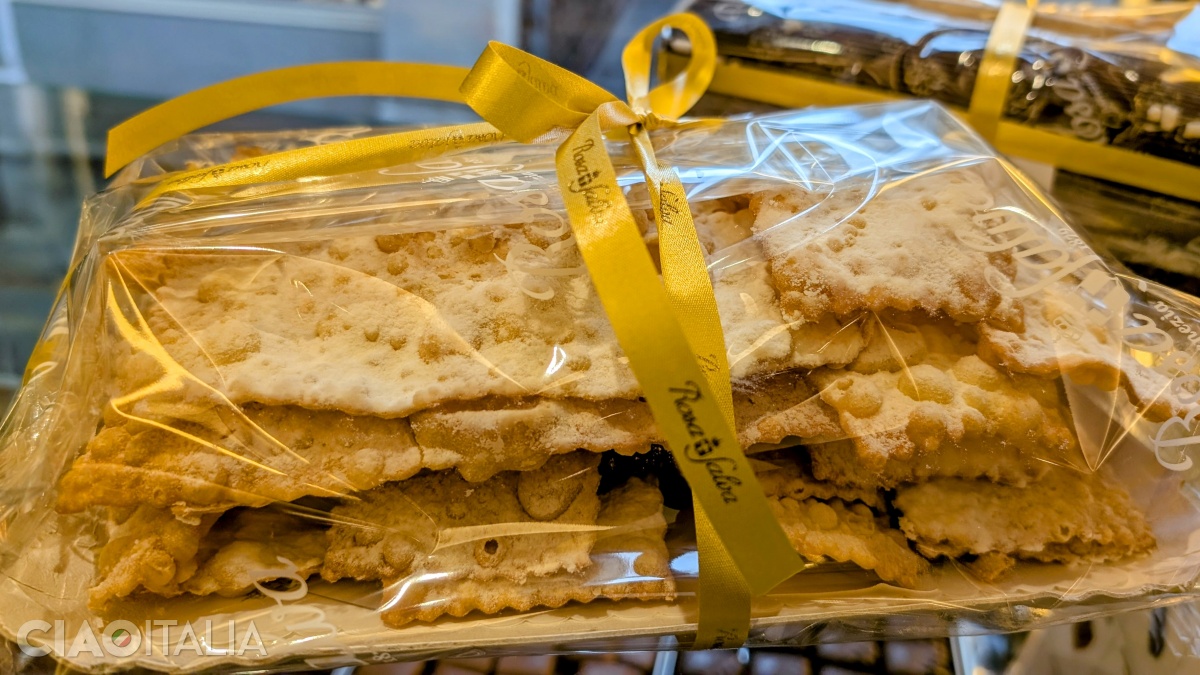
If you want to try Venetian sweets, we recommend buying them from small historic pastry shops: Pasticceria Rizzardini, Pasticceria Tonolo, Pasticceria Targa (especially for mammalucchi), Pasticceria Rosa Salva, Pasticceria Nobile or Pasticceria Dal Mas.
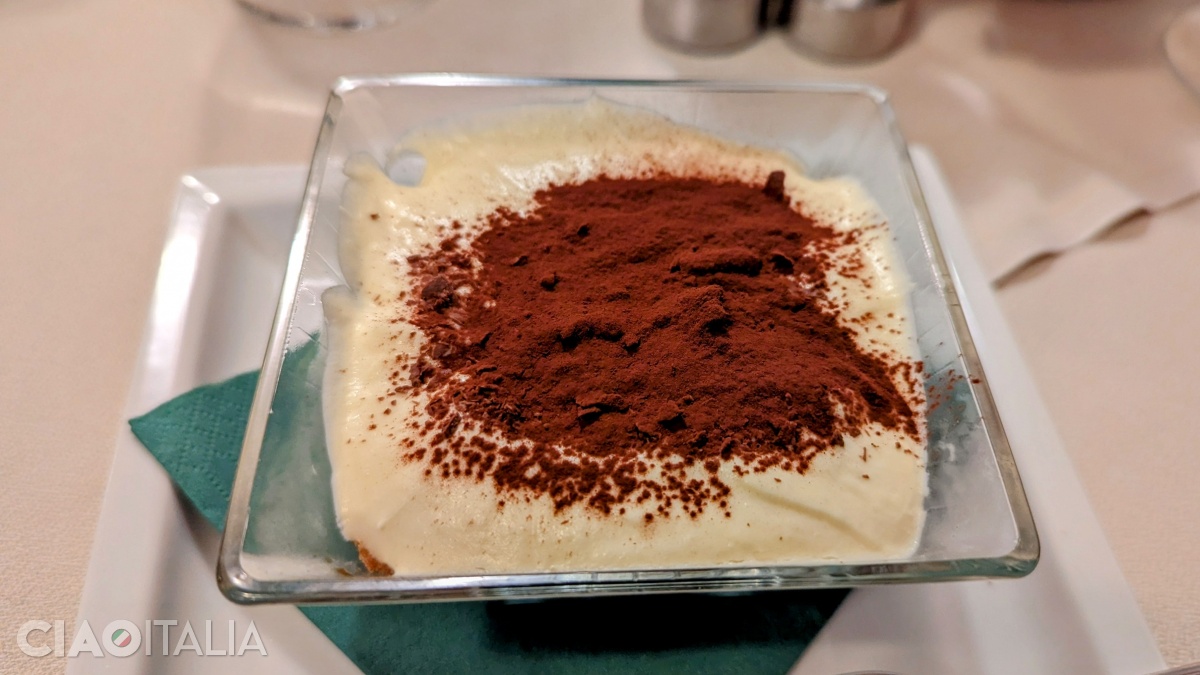
Pretty much everywhere in Venetian establishments you will also find a very good tiramisù, which is not surprising, considering the fact that tiramisù was born near Venice, in Treviso. Our favorite: the tiramisù at Trattoria Pontini.
What to Drink in Venice?
Spritz
The spritz is the most popular drink you will encounter in Venice. In fact, the original Italian spritz is the Venetian one (spritz veneziano), which appeared in the 1920s. It is made with Select (the bitter specific to Venice), prosecco, sparkling water and... an olive for decoration.
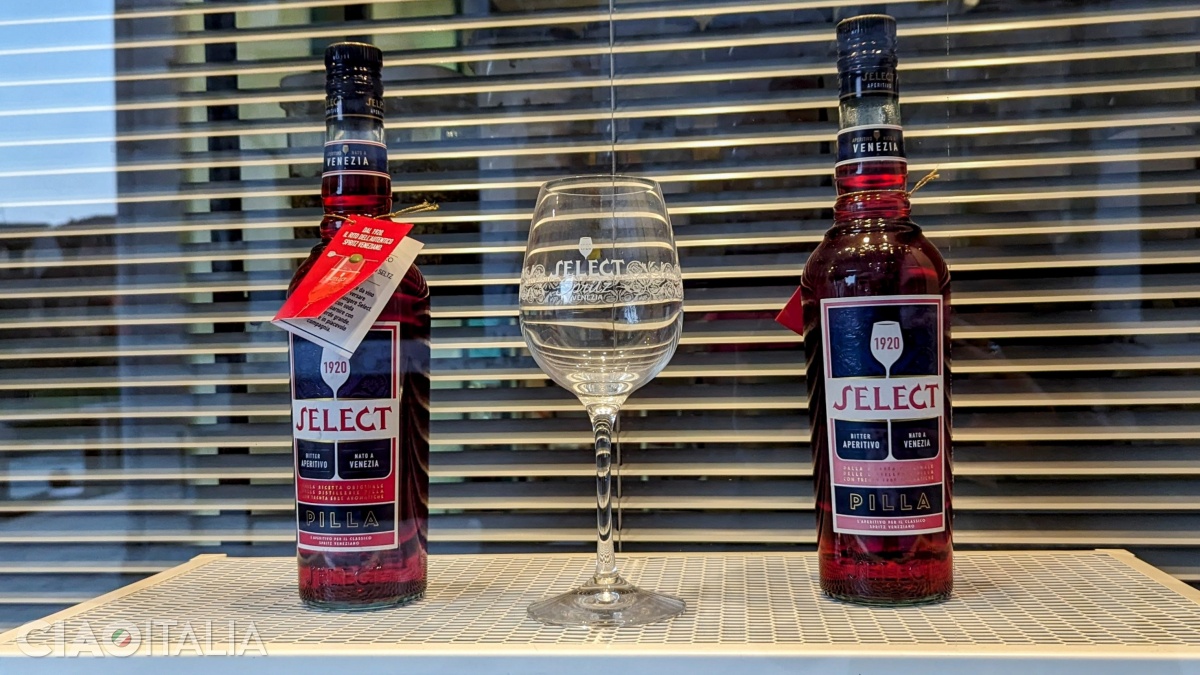
Besides Select spritz, you will also encounter Cynar spritz and Aperol spritz (let's not forget that both Aperol and the Cynar bitter, made from artichokes, were born not far away, in Padua), but also Campari spritz, invented in Milan.
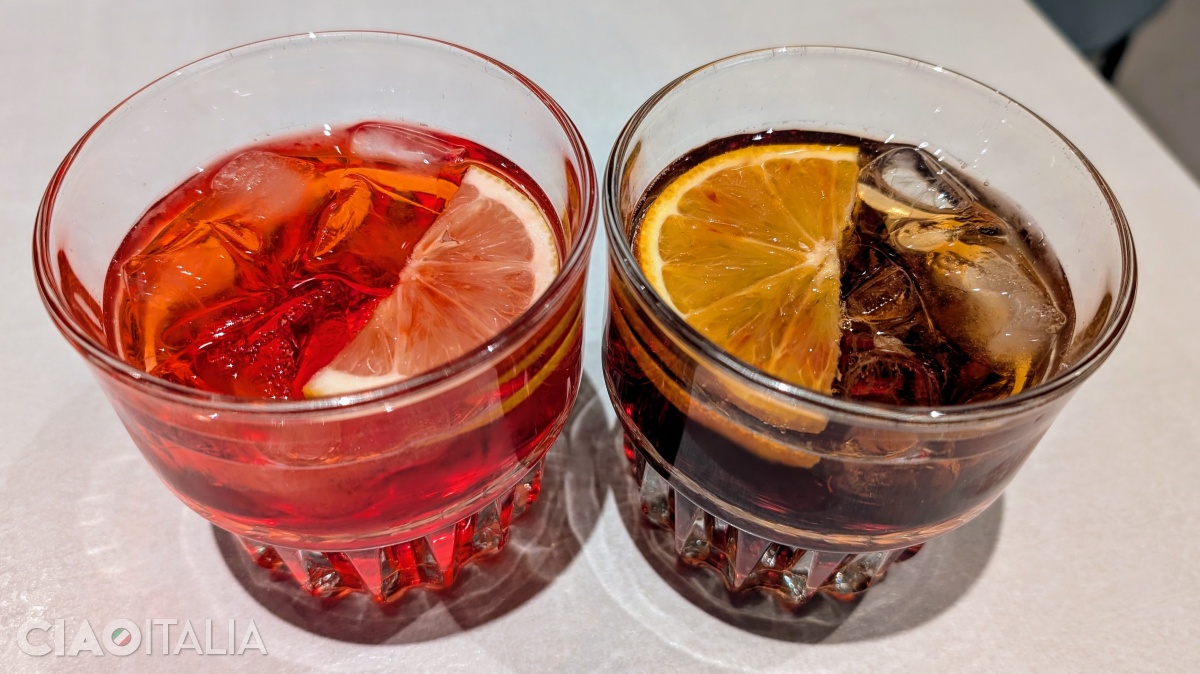
Spritz is drunk in bars and squares, usually in unpretentious glasses, most often accompanying cicchetti snacks.

Wine
In Venice, a glass of wine is called an ombra, meaning "shadow", a name you will see written in this very form on menus at bàcari or cicchetterie. The name comes from the fact that, in the past, itinerant merchants in St. Mark's Square moved their stalls following the shadow of the Campanile, so that the drinks would remain cool. Like the spritz, the ombra (which generally designates a table wine) accompanies cicchetti.
For lunch or dinner in restaurants, choose from the wine list the local ones, produced in the Veneto region, where some of the most well-known wines in Italy come from.
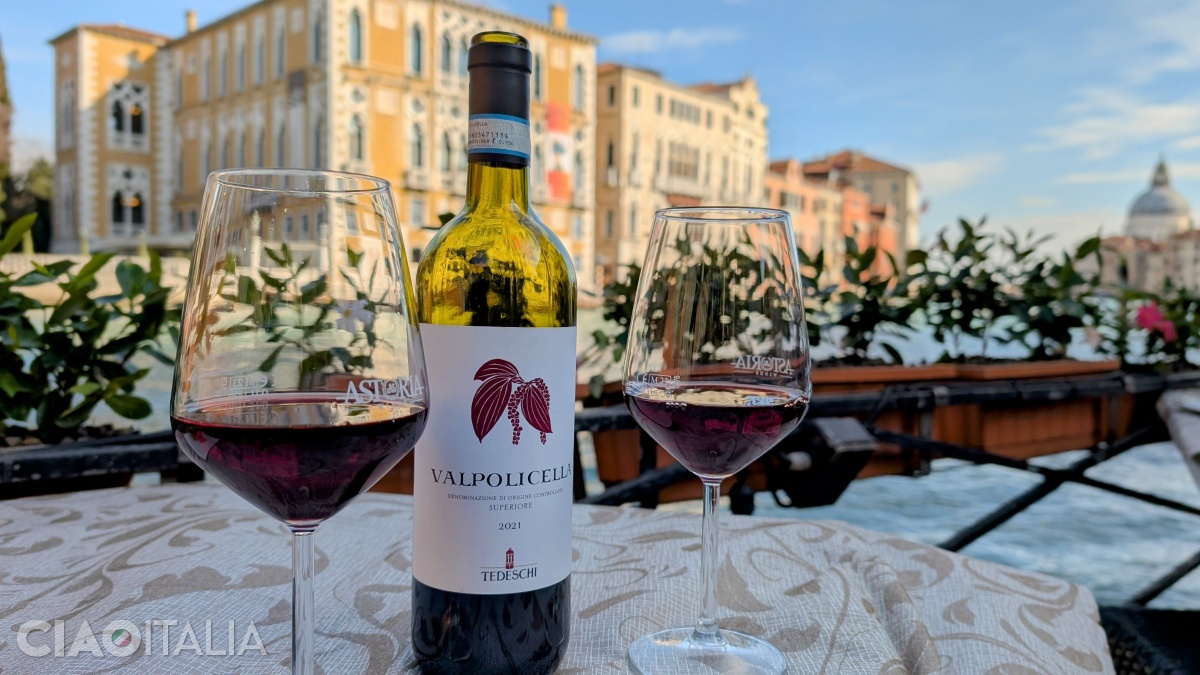
Not far from Treviso is a famous area where prosecco sparkling wine is produced (which, in Venetian trattorias, you often find on draft, by the carafe). The area, named Le Colline del Prosecco di Conegliano e Valdobbiadene, was relatively recently included in the UNESCO World Heritage list (if you have more time in Venice, you can discover this region with the help of an excursion).
Among local red wines, probably the most famous is Amarone della Valpolicella. If you prefer white wine, try Soave or Lugana wines, which are produced nearby, near Verona.
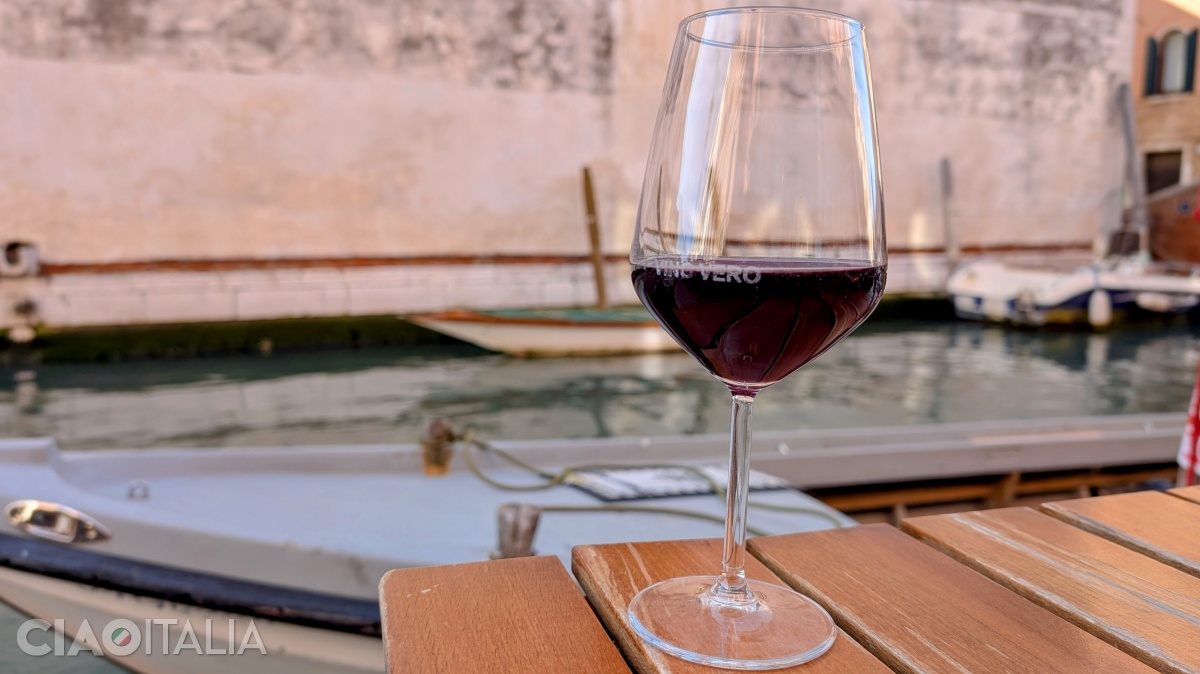
Vino Vero, with natural wines, Cantina Arnaldi, and Officina Ormesini are a few of the places in Venice where we recommend stopping for a snack and a good wine.
Cocktails
Several world-famous cocktails have their origin in Venice. Their creator was Giuseppe Cipriani, the founder of the historic, famous (and expensive) Harry's Bar, where personalities such as Hemingway (who was also a good friend of Cipriani), Aristotle Onassis, Charlie Chaplin, Maria Callas, Truman Capote, Orson Welles, or Peggy Guggenheim spent their time.
In 1948, Cipriani created the Bellini cocktail, with peach puree (only white ones) and prosecco. The idea came to him on the occasion of an exhibition dedicated to the painter Giovanni Bellini. It is said that the drink borrowed not only the artist's name but also the pink-purple color typical for his paintings (you can admire more of Giovanni Bellini's works in the Gallerie dell'Accademia).
A variation of the Bellini cocktail, invented by the same famous Giuseppe Cipriani, is the Rossini cocktail. This is made with strawberry puree and sparkling wine and is dedicated to the great Italian composer Gioacchino Rossini, born in Pesaro, in the Marche region.
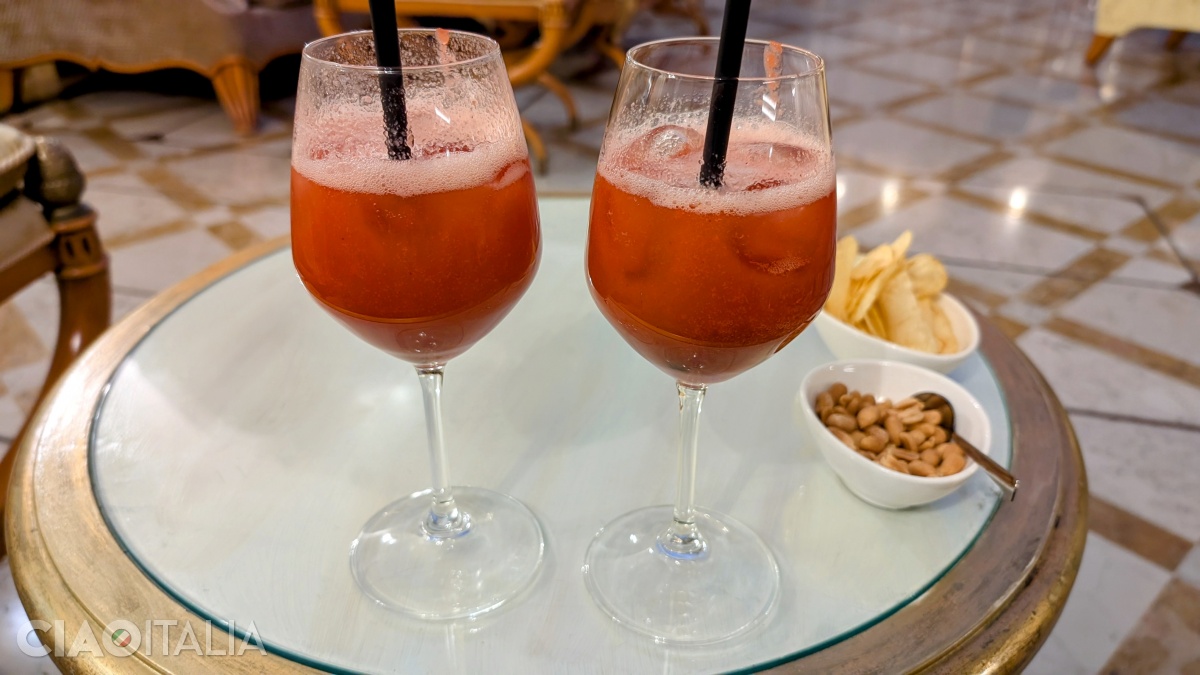
Another cocktail, with pomegranate juice and sparkling wine, bears the name Tintoretto, after the famous painter who carried out his work in Venice (if you want to admire his works, we advise you to visit the Scuola Grande di San Rocco and the Madonna dell'Orto Church).
A lesser-known cocktail, specific to the autumn season, is the Tiziano cocktail. Prepared with grape juice and prosecco, it takes the name of another famous Venetian painter (in the Basilica di Santa Maria dei Frari you can see Titian's most well-known painting).
Grappa
At the end of the meal, after coffee, Italians usually drink a digestif. In Venice, we recommend you try grappa (grape distillate) - especially the one from Poli, a historic distillery that has been operating since 1898 in the town of Bassano del Grappa, near Vicenza, but which also has a shop in Venice.
Coffee at Florian
Why coffee at Florian? Because Florian, the oldest café in Italy, is an institution in Venice and is intertwined with a good part of the city's history. True, prices are higher, and you will often find impressive queues of tourists at the door. Our tip? Go straight to the front and announce that you want to stand at the bar - this way, not only will you be able to enter and drink a coffee as Venetians actually do, but you will also pay much less than at a table (an espresso costs €3.5 if you order it at the bar and €7 if you order it at a table).

Hot Chocolate at Caffè Lavena
Caffè Lavena is another famous café in St. Mark's Square, located right across from Florian, in the porticoes of the Procuratie Vecchie. Almost as old as Florian, the café, founded in 1750, prides itself on having had the composer Richard Wagner among its regular customers.
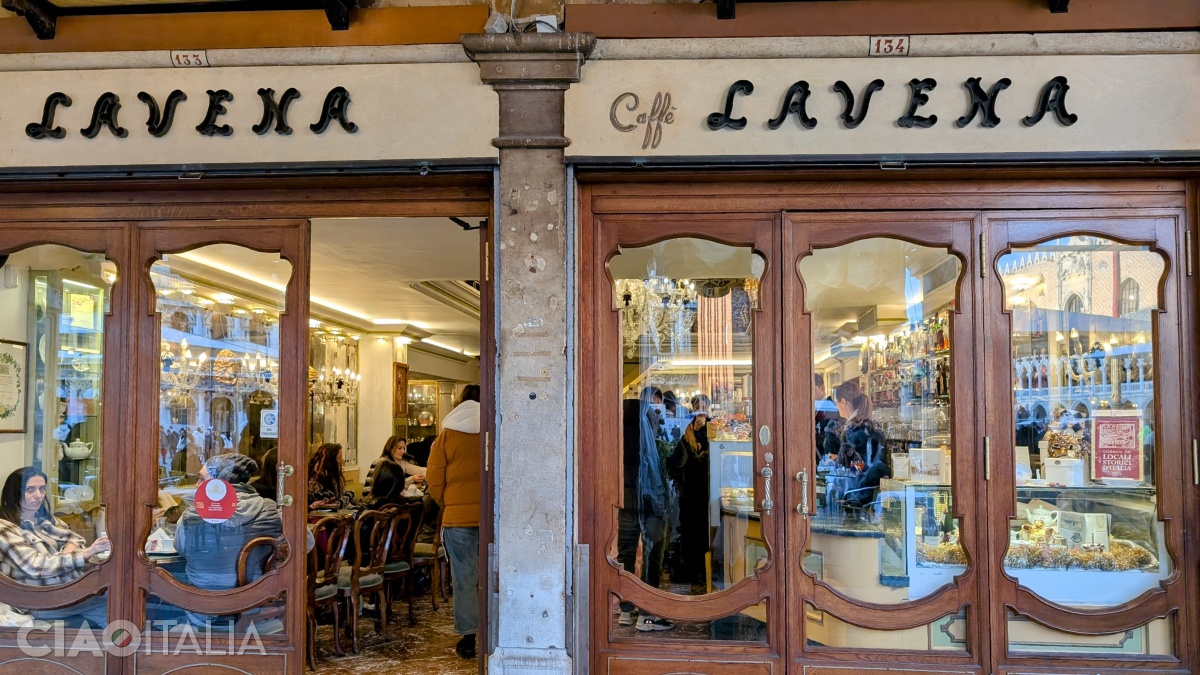
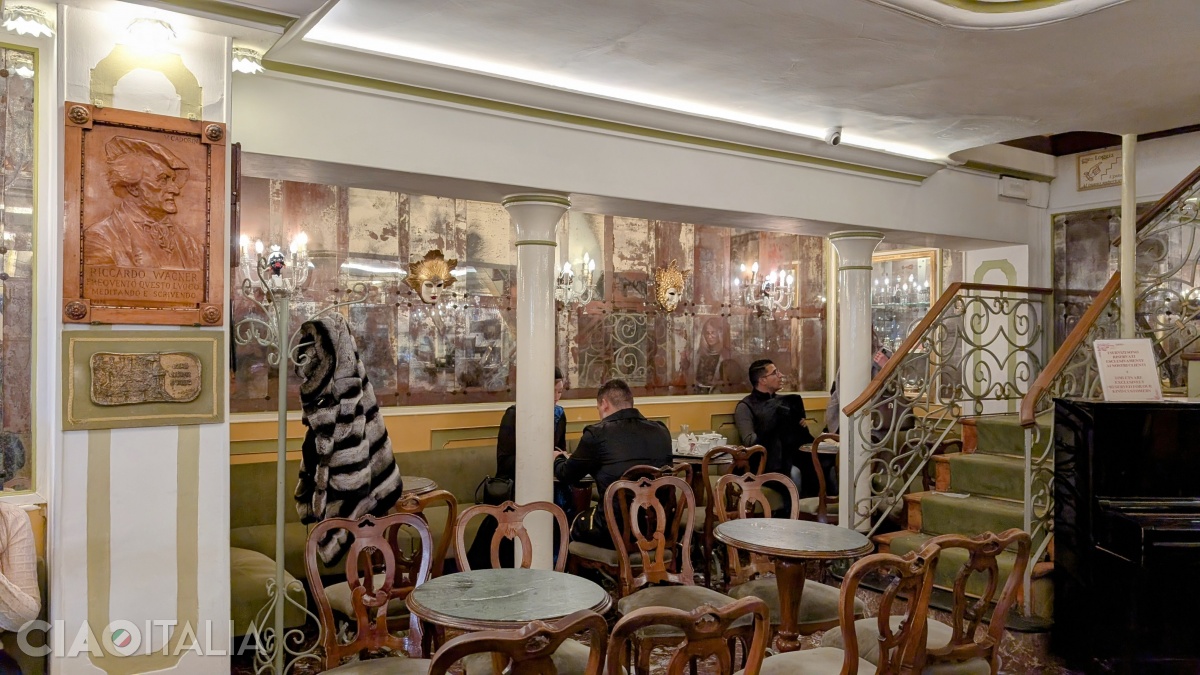
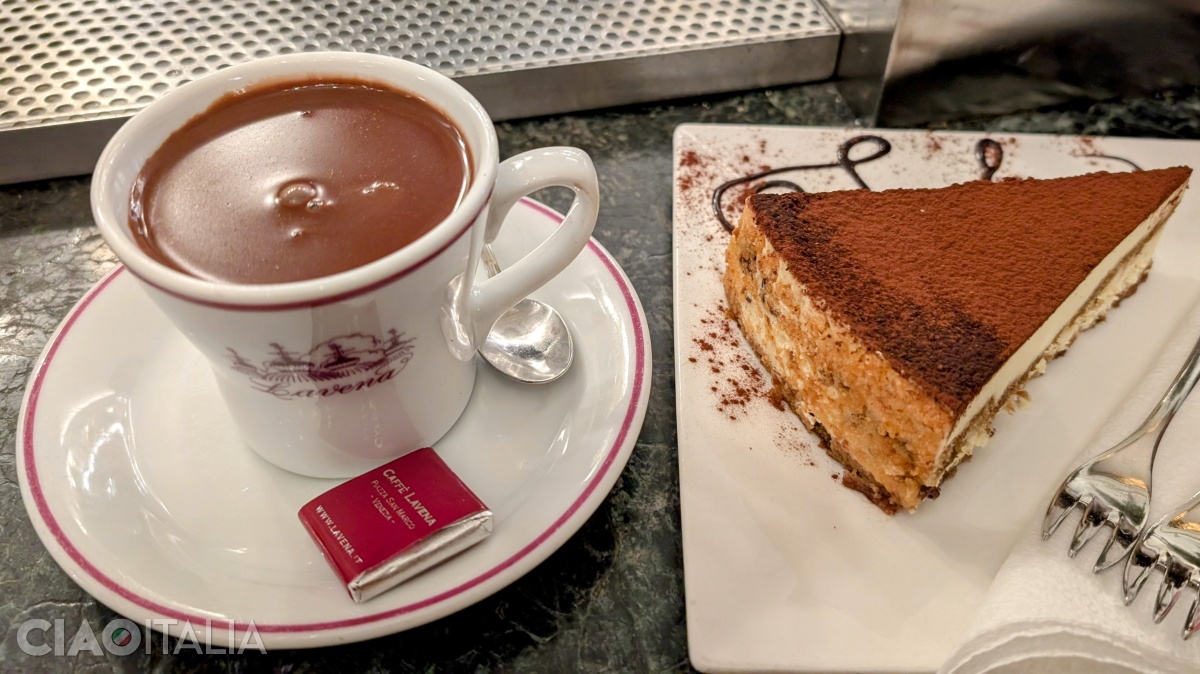
If you sit at the tables inside or in the square, you will find that the prices are exorbitant (reviews on Google are actually commensurate with the surprise of customers who sit down without consulting the menu first). We recommend you go to the bar and try the hot chocolate - in our opinion (and not only ours) the best in Venice. You will drink it standing up, but you will pay little, as bar prices are the standard ones.
Macchiatone
A lesser-known coffee, invented in Venice during the 1980s, is the macchiatone - the middle solution between an espresso macchiato and a cappuccino. Milk foam is added over a dose of espresso, in a larger quantity than for a macchiato, but smaller than for a cappuccino.