Doge's Palace in Venice (Ticket Prices and Opening Hours 2026)
The Doge's Palace (Palazzo Ducale) is one of the most important tourist attractions in Venice. For nearly 1,000 years, it was the seat of Venetian power, bringing together the Doge's residence, the Senate, the Court of Justice, torture chambers, and the prisons where the famous adventurer Casanova was imprisoned in the 18th century. By visiting the Doge's Palace, you will also be able to see the renowned Bridge of Sighs from the inside.
Ticket Prices
In 2026, the prices of entry tickets to the Doge's Palace in Venice are:
- Adult: €35
- Over 65: €15
- Students 15-25 years: €15
- Children 6-14 years: €15
- Children under 6: free
- Free if you have purchased the Venezia Unica City Pass
The Doge's Palace is included in the St. Mark's Square museums circuit. Entrance tickets also include access to the Correr Museum, the Archaeological Museum, and the Monumental Rooms of the Marciana Library.
If tickets are purchased online more than 30 days in advance, the entrance price is:
- Adult: €30
- Over 65: €15
- Students 15-25 years: €15
- Children 6-14 years: €15
- Children under 6: free
The audio guide is included in the cost of the entrance ticket.
Some parts of the Doge's Palace can only be visited via guided tours - available in English, Italian, and French - which take place at specific times. Their price includes the guided tour and the entrance ticket to the Doge's Palace, Correr Museum, Archaeological Museum, and Marciana Library. These guided tours are not recommended for pregnant women, those with mobility difficulties, or those suffering from claustrophobia, vertigo, or cardio-respiratory problems.
Itinerari Segreti ("Secret Itineraries") Tour:
- Adult: €40
- Over 65: €20
- Students 15-25 years: €20
- Children 6-14 years: €20
- Clock Tower ticket holders: €20
The guide will lead you through the old prisons inside the Doge's Palace. Those located on the lower level were called Pozzi ("The Wells"). They were small, damp, and dark cells intended for the poorest of the condemned, where 3 to 4 persons stayed in one single room.
The prisons located on the top level of the palace were called Piombi and took their name from the lead roof. They had better conditions than the Pozzi and were intended for middle and upper-class criminals. Giacomo Casanova was imprisoned in two of these cells and even famously managed to escape.
During the tour, you also visit some administrative rooms, the Secret Archives Room, decorated with many coats of arms, and the torture chamber.
I tesori nascosti del Doge ("The Doge's Hidden Treasures") Tour:
- Adult: €40
- Seniors over 65 years: €20
- Students 15-25 years: €20
- Children 6-14 years: €20
- Clock Tower ticket holders: €20
With this tour, you will discover the Doge's private rooms and chapel, as well as the terrace overlooking the palace's inner courtyard.
Doge's Palace Tickets
You can buy tickets for the Doge's Palace either on-site (but there can be very long queues and long waiting times at the ticket offices, especially in high season) or online. Tickets are non-refundable (don't forget to check the schedule).
There are separate entrances for those with online reservations, for those with guided tours, and for those who want to buy tickets on-site.
If you buy tickets online, you will need to go to the special entrance (signposted). Even if you have skip-the-line tickets, you may still have to queue for the security check.
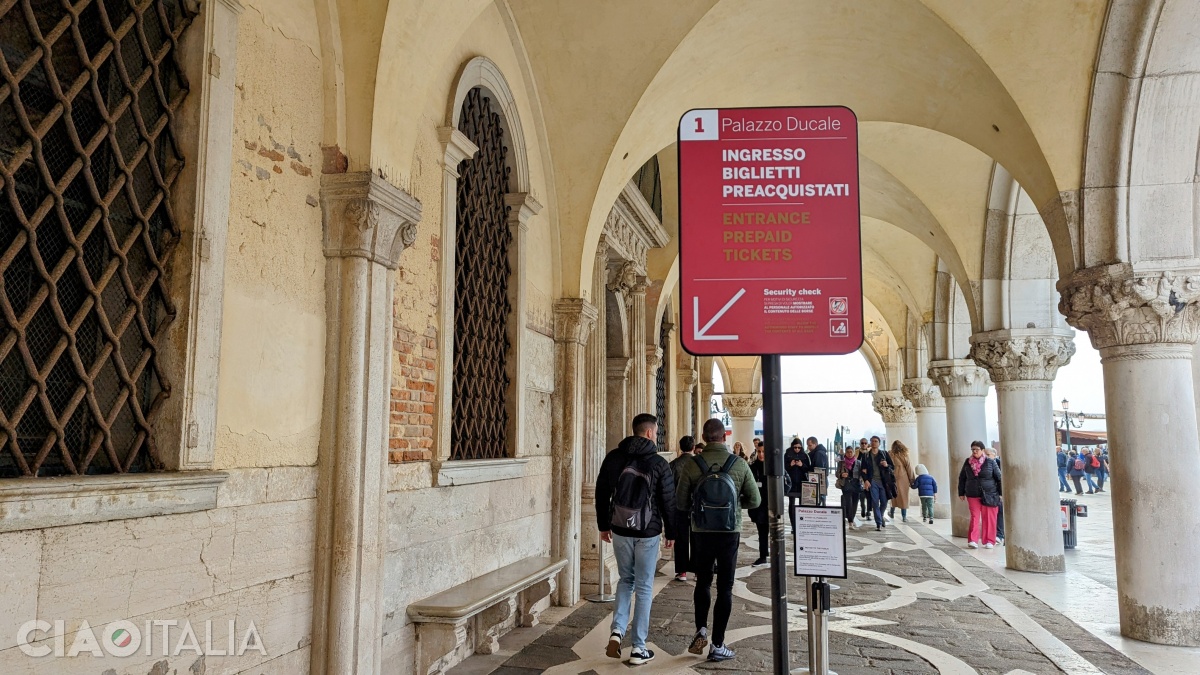
Entry with large luggage is not permitted; these must be left at the cloakroom.
You can buy tickets online either from websites specialized in selling tickets and tours, such as GetYourGuide, Tiqets, or Musement, or from the official website.
1. Doge's Palace Tickets from Ticket & Tours Websites
Online ticket prices for the Doge's Palace are the same as official prices (the provider is the Venice Tourism Office itself).
It is advantageous to buy from here if you get tickets up to 30 days before the visit date and if you are not interested in the two special guided circuits.
Tickets from GetYourGuide and Musement are only valid in the 12:00 PM - 5:00 PM interval, while for those from Tiqets, you will have to choose the time you will arrive (within the normal visiting hours).
There are also various guided tour options, which may include other Venice sights, such as St. Mark's Basilica.
2. Doge's Palace Tickets from the Official Website
The reservation system on the official website is a bit more cumbersome, and you will need to select an entry time.
It is advantageous to buy from here if you are purchasing more than 30 days before the visit date to benefit from reduced rates or if you want to book one of the two special guided circuits.
Opening Hours
The Doge's Palace has the following opening hours:
September 27 - October 31, 2026:
- Monday-Sunday: 9:00 AM - 7:00 PM
November 1, 2026 - March 31, 2027:
- Monday-Sunday: 9:00 AM - 6:00 PM
Last entry is one hour before closing.
Tip: When various events take place in Venice or during public holidays, the Doge's Palace may close earlier or be closed for the entire day. We recommend checking these dates before planning your visit.
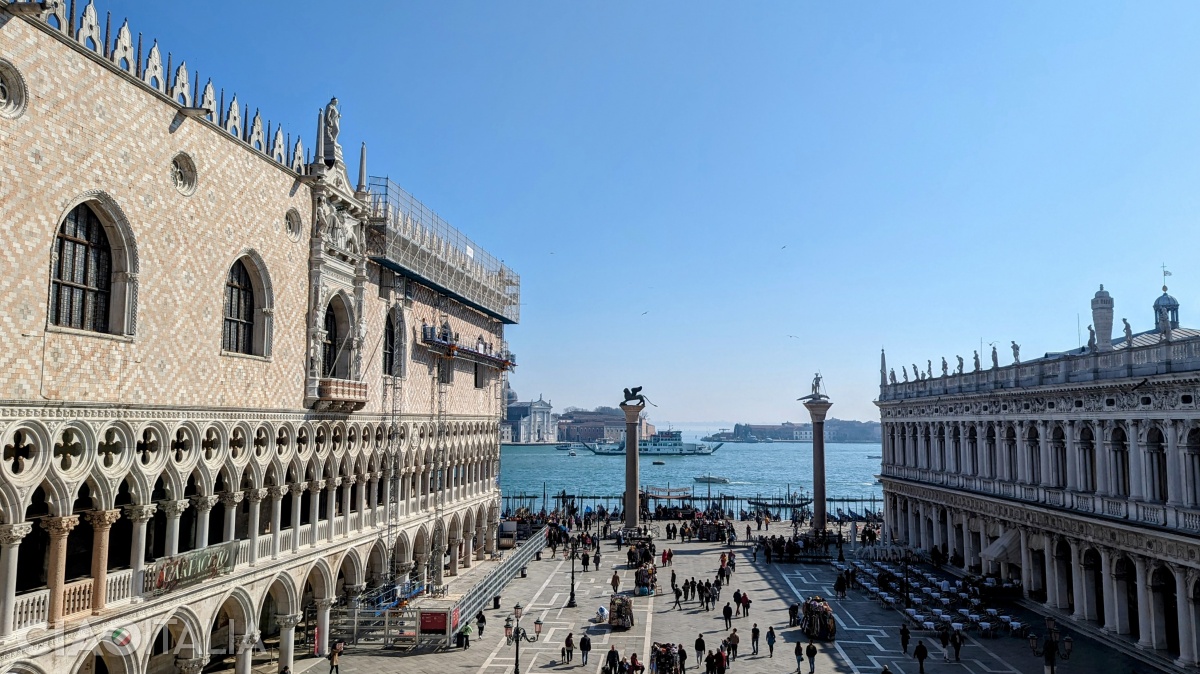
Visiting the Doge's Palace
The first residence of the Doges was built in the 9th century and looked more like a fortress. Destroyed by fire, it was rebuilt and underwent several transformations over time until it reached its current elegant appearance, which dates from around 1550. The oldest wing of the palace is the one facing the San Marco basin, rebuilt starting in 1340.
Inside the Doge's Palace, you will find superb, gilded halls with painted walls, secret small rooms, and the terrible prisons of Venice.
The Exterior
Before entering the Doge's Palace, take a short tour of the exterior.
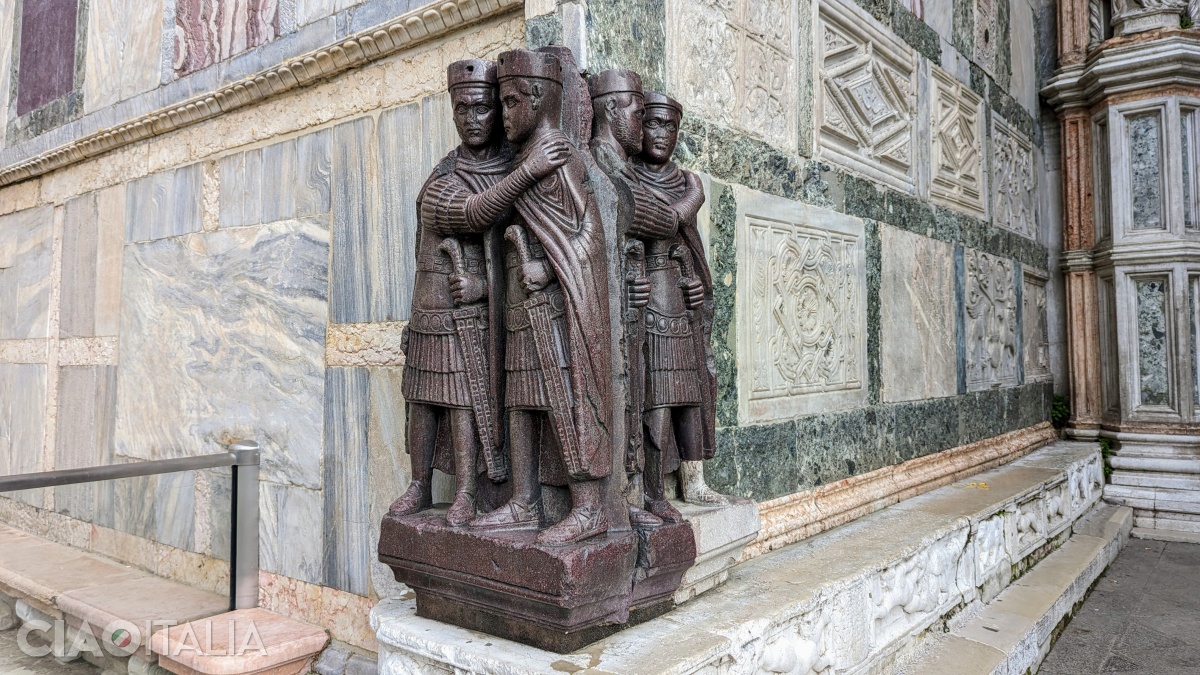
We begin at the end adjacent to St. Mark's Basilica. Right on the palace-facing corner of the basilica stands the sculptural group of the Tetrarchs, made of Egyptian porphyry and brought from Constantinople in 1204. According to the legend, these were thieves turned to stone by St. Mark after they tried to steal from the church's treasures.
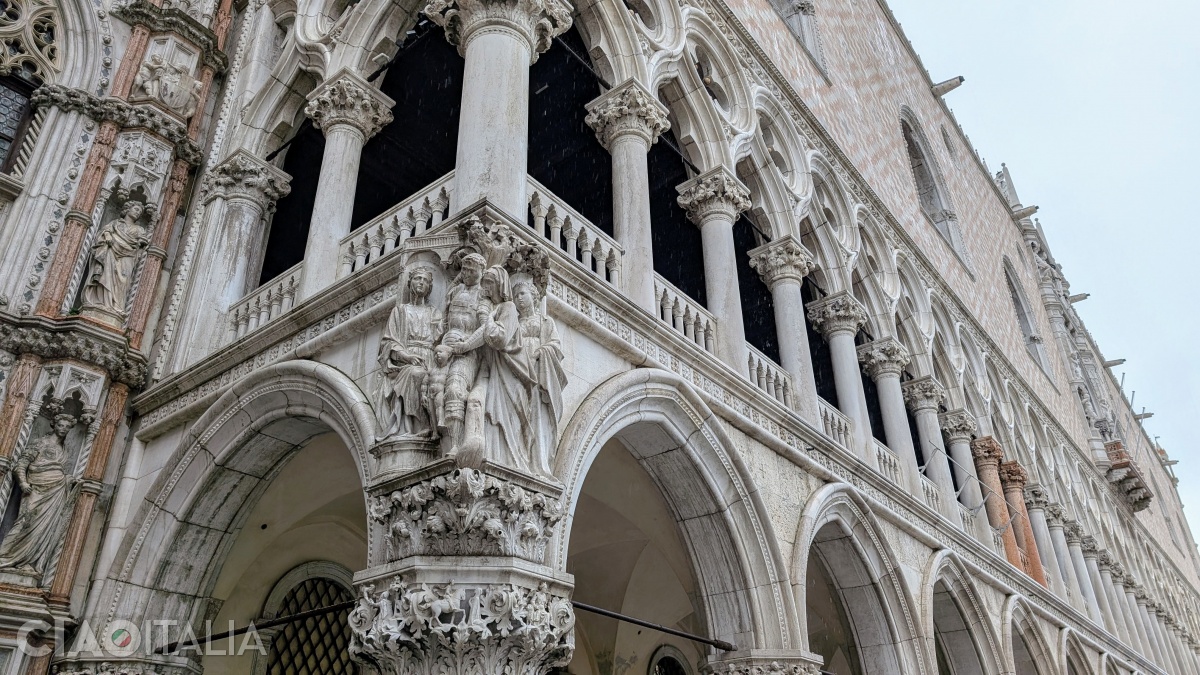
Opposite them, above the capital of the column on the corner of the Doge's Palace, is a marble statue group representing "The Judgment of Solomon".
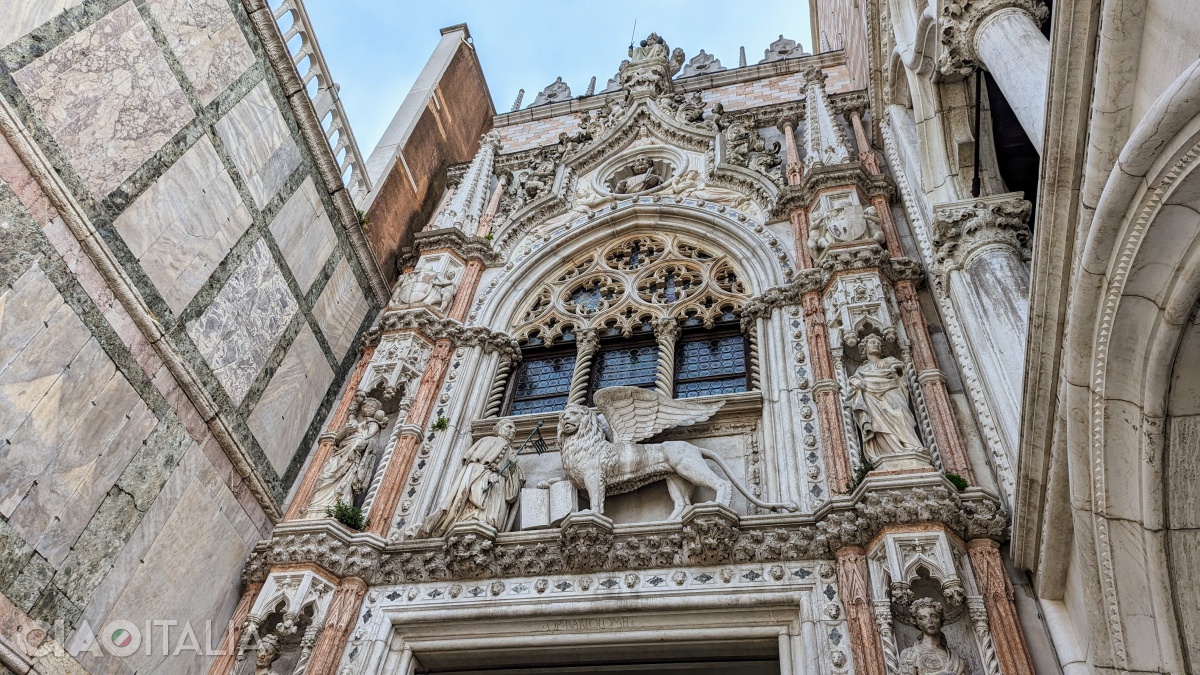
Between the two sculptural groups lies the beautiful Porta della Carta ("Gate of Papers"), built in the 15th century in the Gothic style. Above the gate stands the statue of Doge Francesco Foscari, depicted before the winged lion. Today, this serves as the exit for tourists at the end of their visit, but in the past, it was the ceremonial entrance.
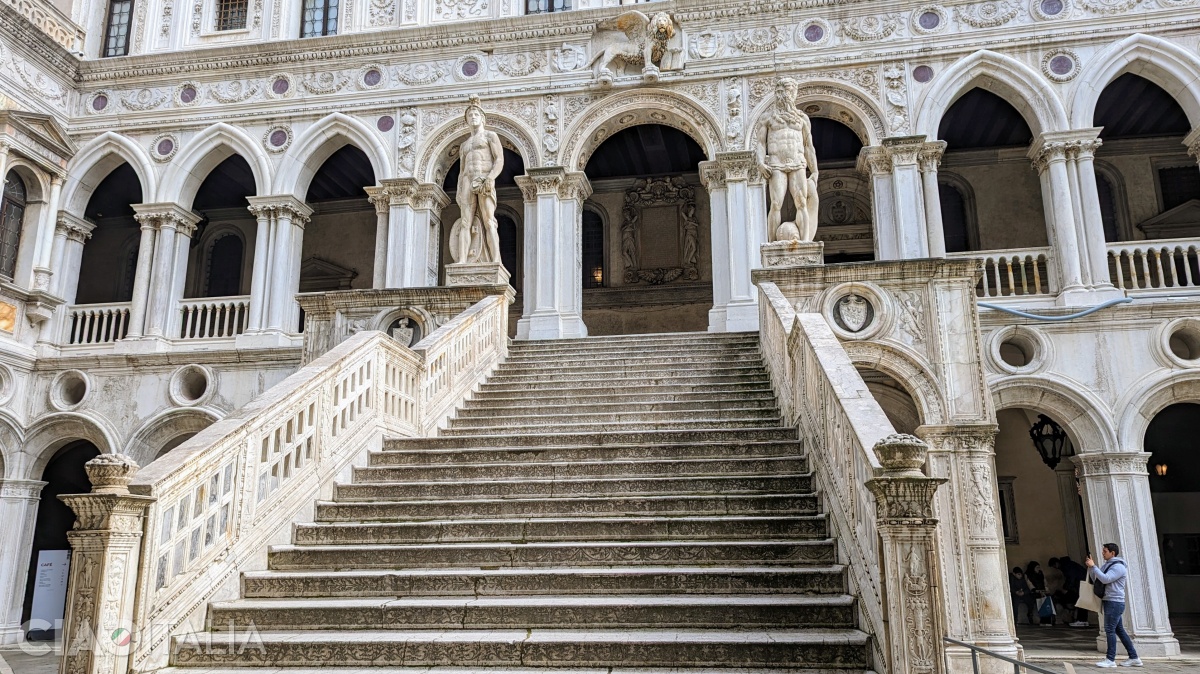
Through the gate, one can glimpse the elegant Giants' Staircase (Scala dei Giganti), designed by Antonio Rizzo and flanked by the imposing statues of Mars and Neptune, sculpted in 1565 by Sansovino. The two statues, which give the staircase its name, symbolize Venice's dominion over land and water, respectively.
At the top of this staircase, the Doge was crowned in the presence of the people and the Republic's dignitaries. Illustrious guests and ambassadors were also received here.
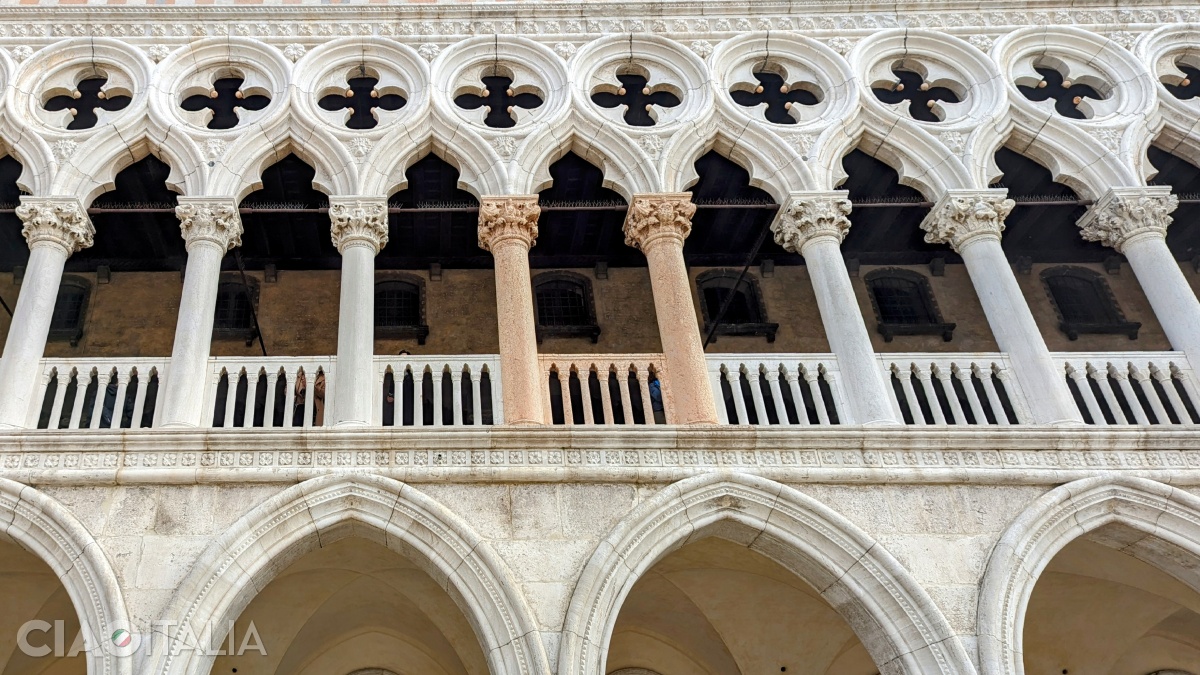
Looking closely at the facade of the Doge's Palace facing Piazzetta San Marco, you will notice that the two middle columns are a different color from the rest. According to legend, the Doge would stand between them to announce death sentences, and the reddish hue of the columns is said to symbolize blood. The executions were then carried out in the square, between the columns of St. Mark and St. Theodore, so that the last thing the condemned would see was the Clock Tower - marking the exact time of their death.
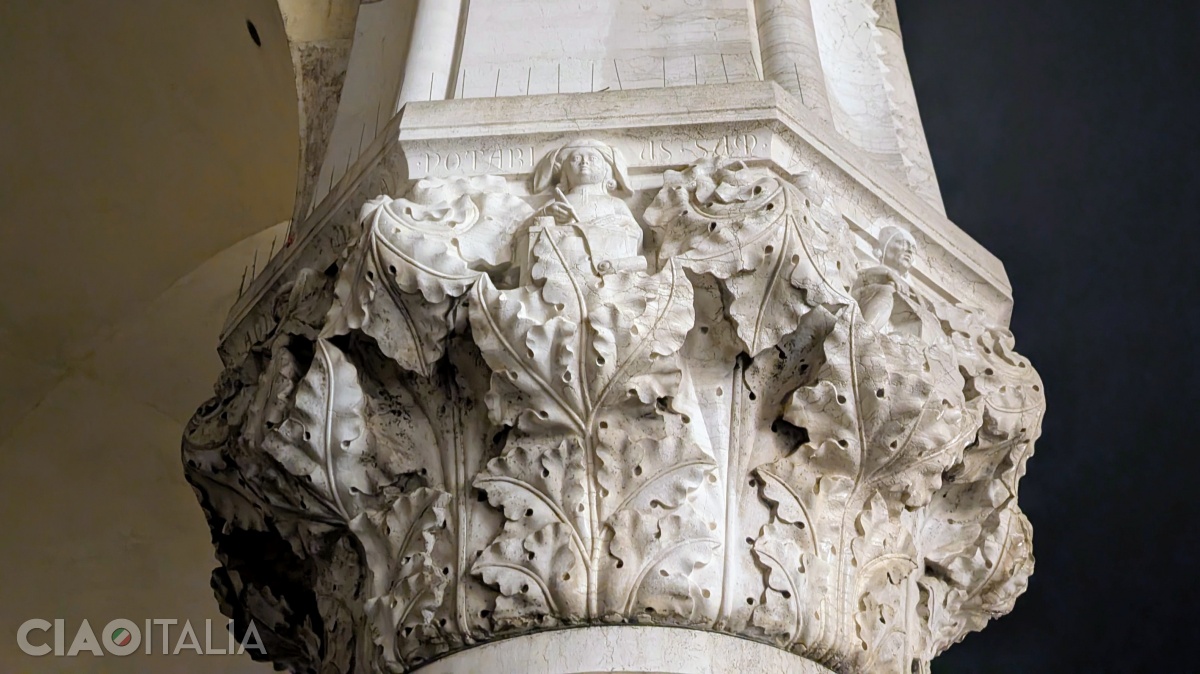
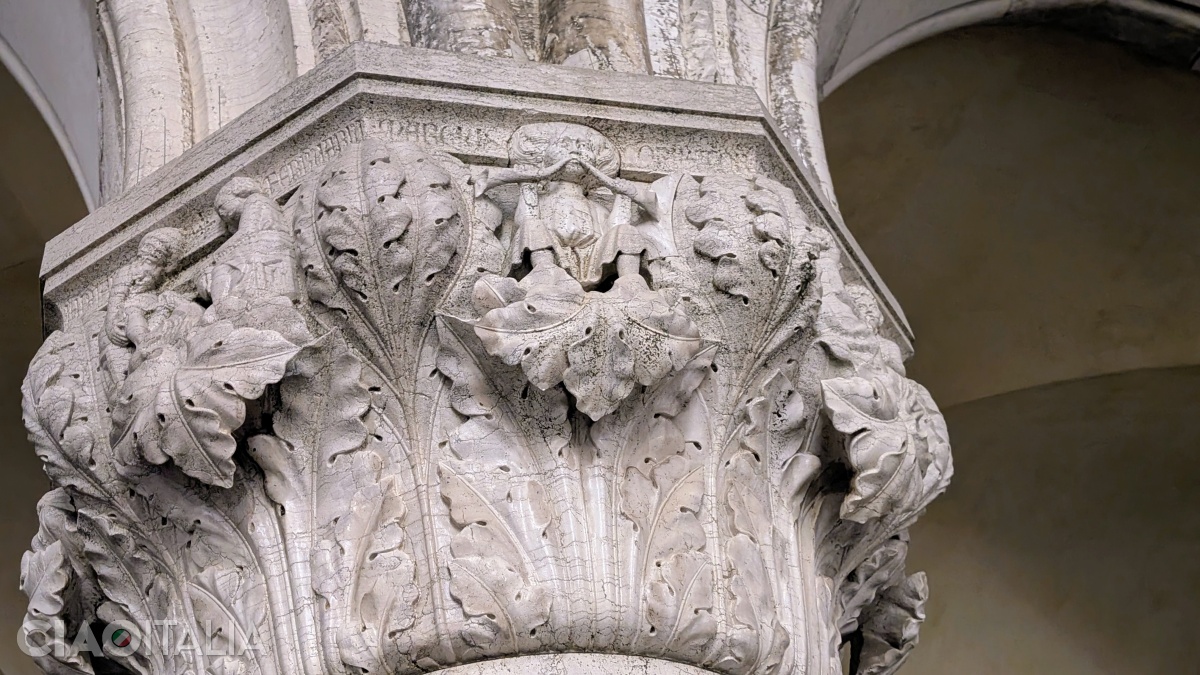
Look also at the capitals of the portico columns, created between 1340 and 1355. These alone, with over 600 images carved in stone, have been the subject of many studies. Among other things, they represent fruits, the months of the year, different trades, birds and predators, saints, planets, nations, kings and emperors, or capital sins.
Above the column on the opposite corner of the palace, facing the sea, is another statue group representing Adam and Eve.
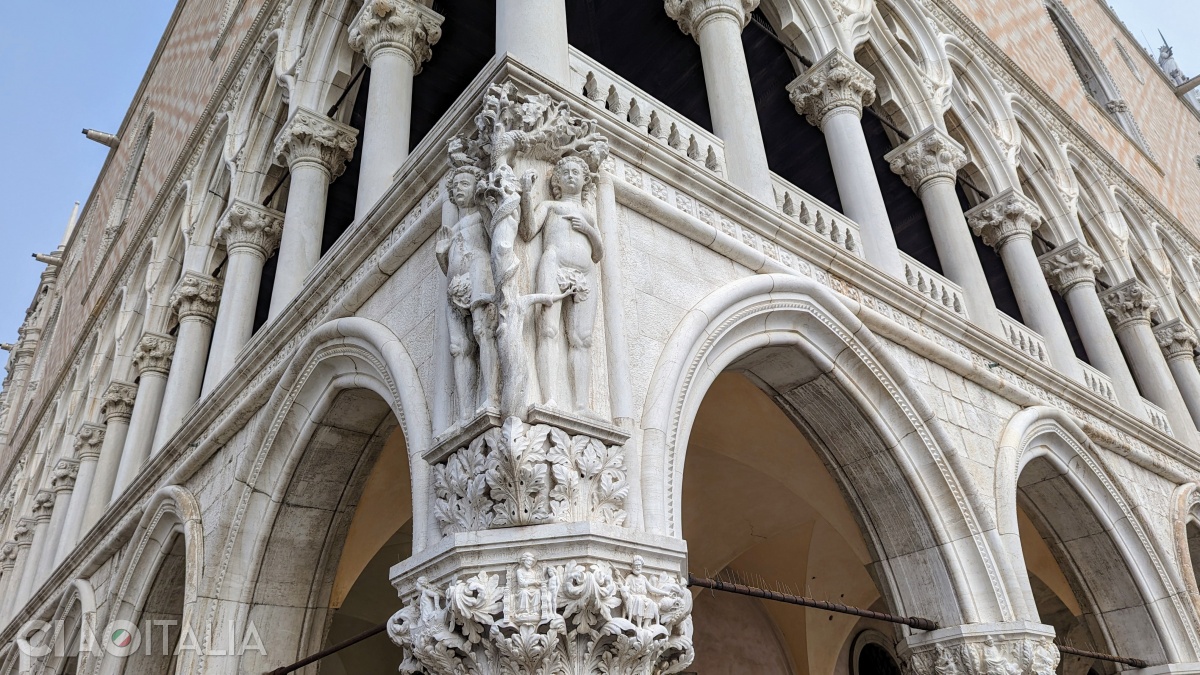
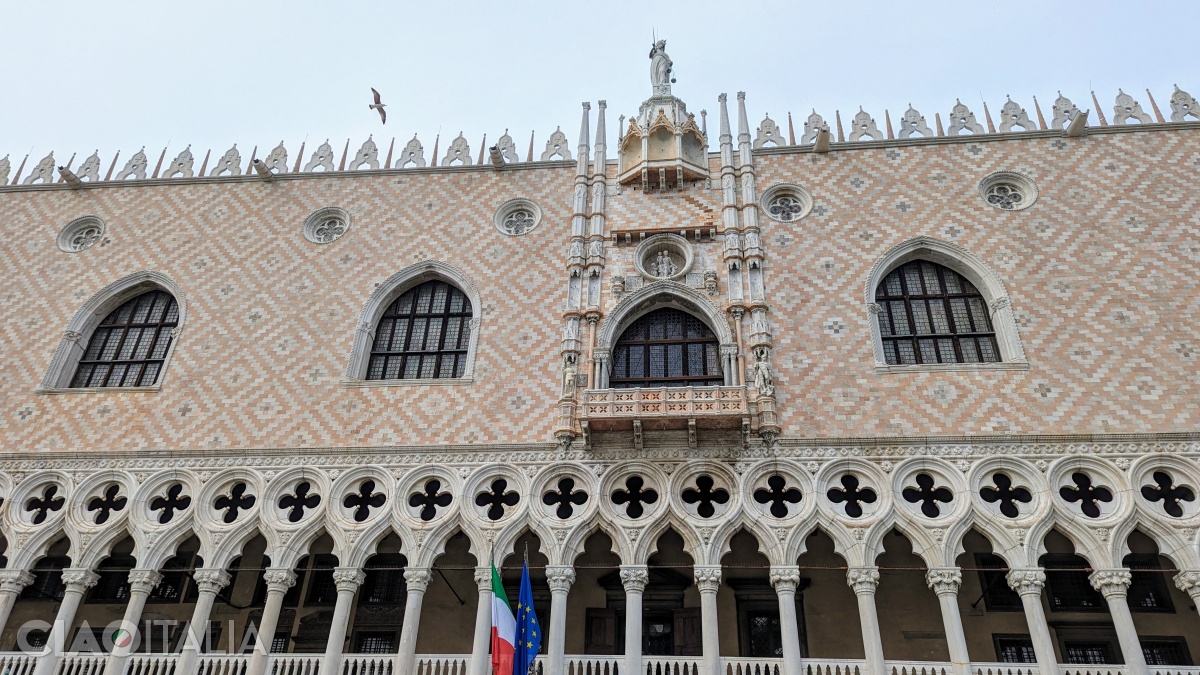
The sea-facing facade features the statue of Justice above the central window, dating from 1579.
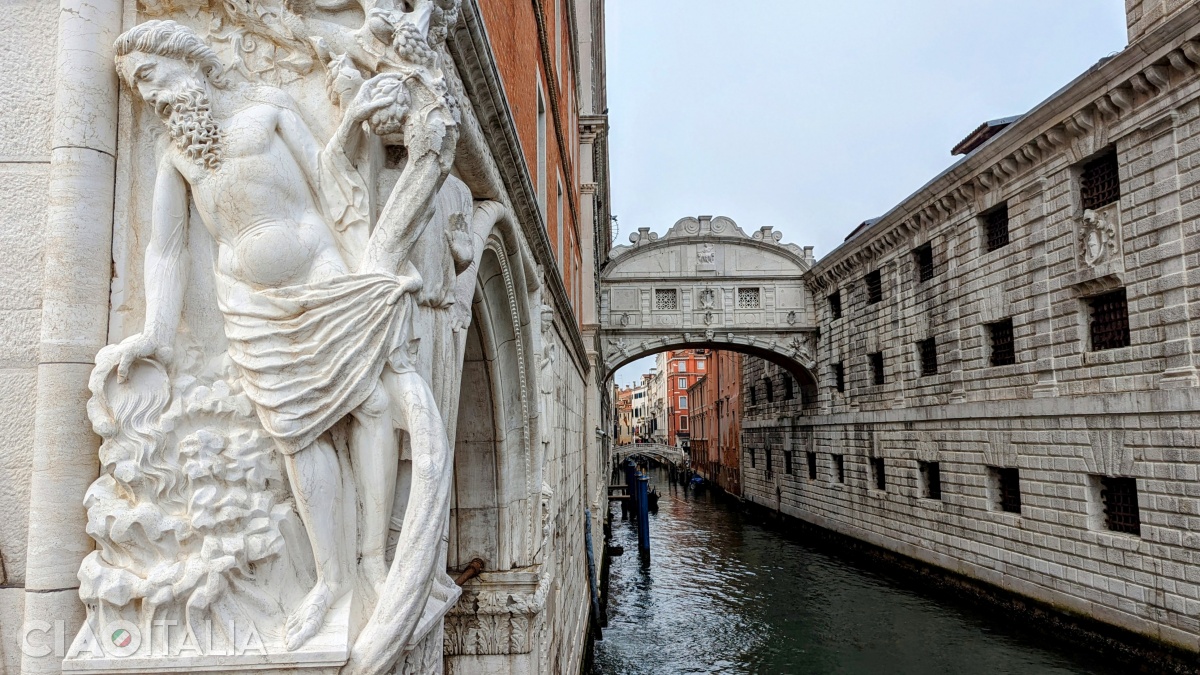
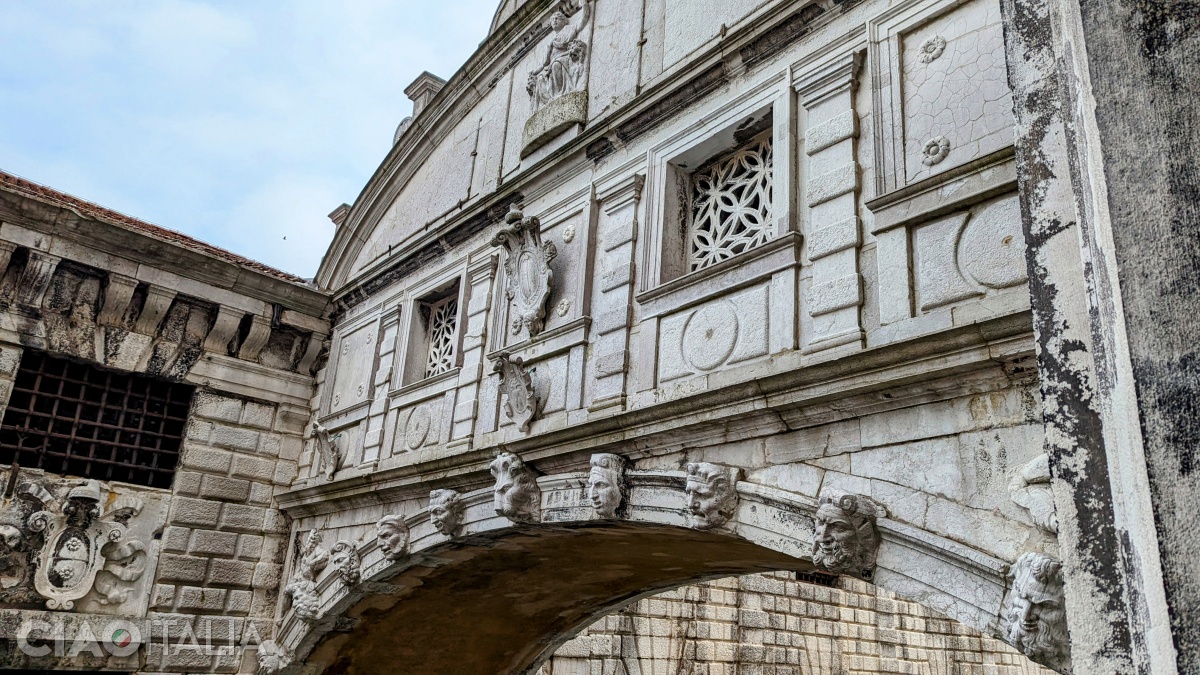
Reaching the end of the Doge's Palace, from the Ponte della Paglia, you will be able to observe not only the Bridge of Sighs but also the last bas-relief on the palace corners, representing "The Drunkenness of Noah".
The Interior
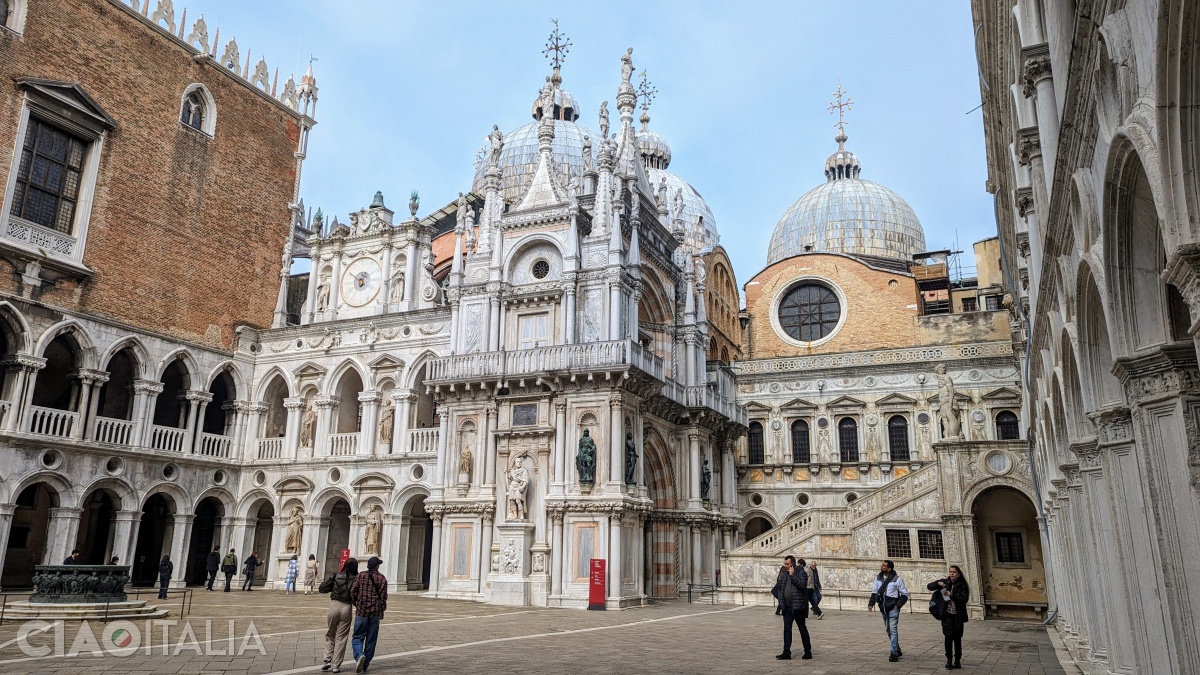
Let's continue the visit with the interior of the Doge's Palace. Once you have presented your ticket and passed through security, you will find yourself in the beautiful inner courtyard, which preserves two 16th-century bronze wellheads.
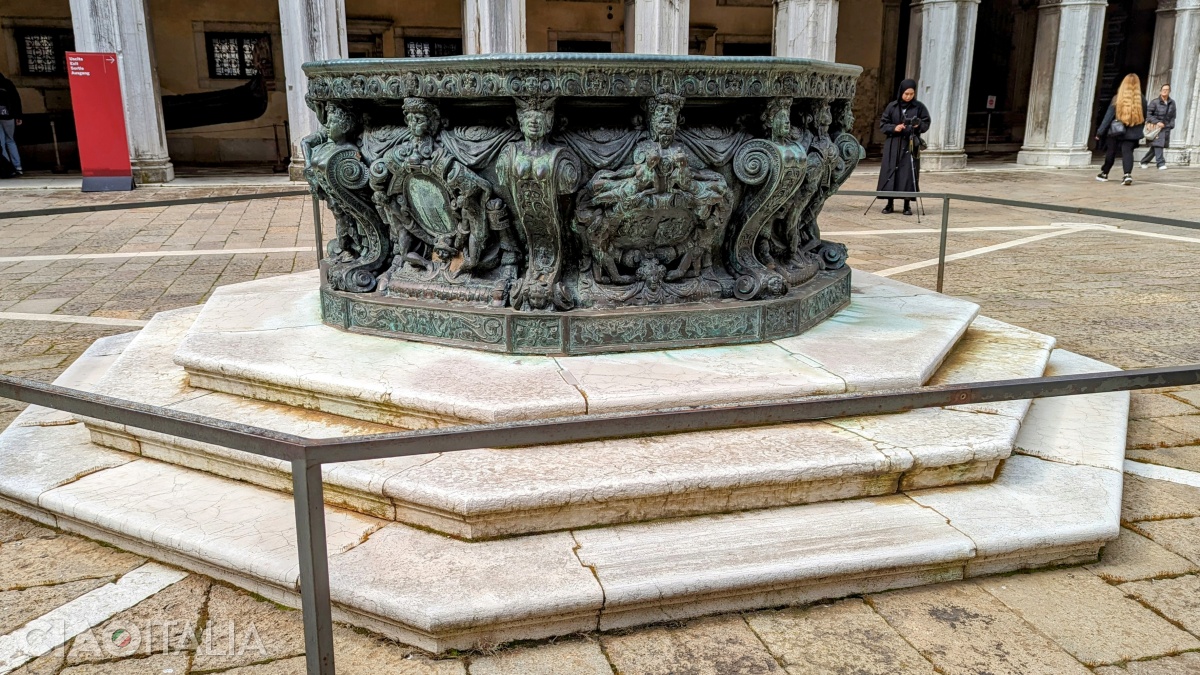
Looking up around you, you can see that the two older wings of the palace - the one facing the sea and the one facing Piazzetta San Marco - have austere facades, while the Renaissance facade, which ends with the Giants' Staircase, is very richly decorated.
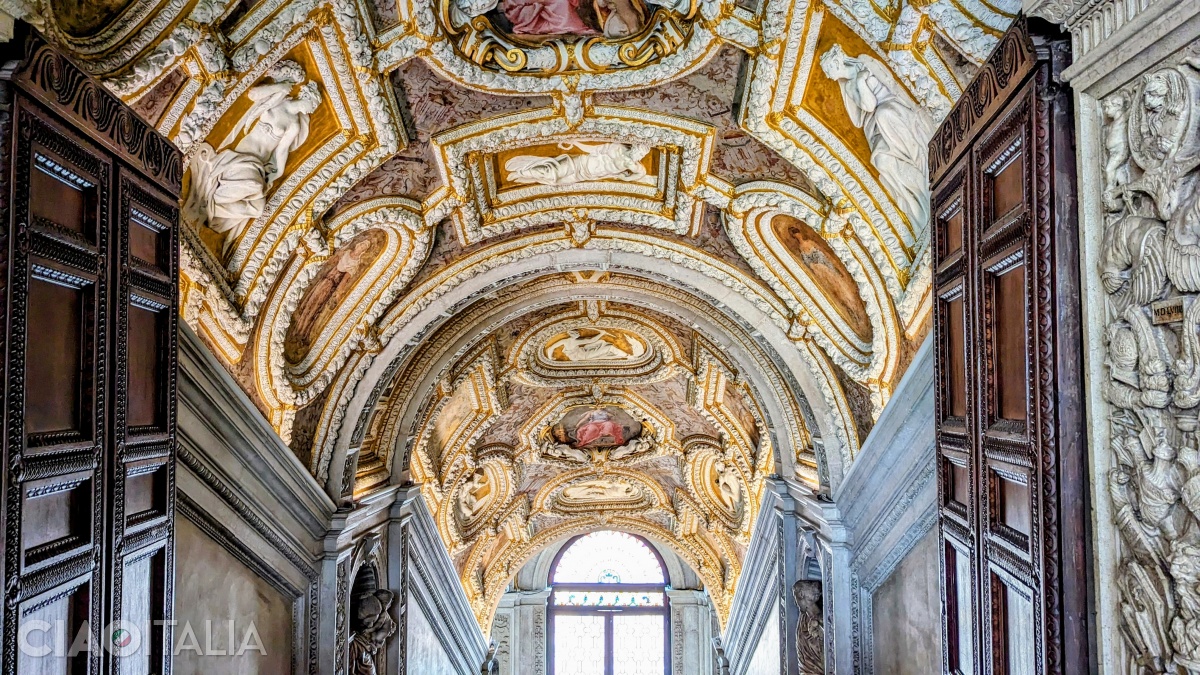
Climbing the Censors' Staircase and Sansovino's Golden Staircase (Scala d'Oro), you will reach the palace's most beautiful salons, decorated in the 16th century by masters of Venetian painting.
The Hall of the Four Doors (Sala delle Quattro Porte) functioned as a waiting and transition room. The ceiling has frescoes by Tintoretto, and on one of the walls, a canvas by Titian represents Doge Antonio Grimani kneeling before "Faith" and St. Mark.
The College Hall (Sala del Collegio - the governing council of Venice), whose decorations were designed after the 1574 fire by architect Andrea Palladio, has a splendid ceiling decorated with paintings by Veronese. It represents the Government of the Republic, the "Faith" on which it is based, and the "Virtues" that guide it. The large canvas on the back wall of the room also belongs to Veronese and represents the 1571 victory at Lepanto of the Christian fleet over the Turkish one.
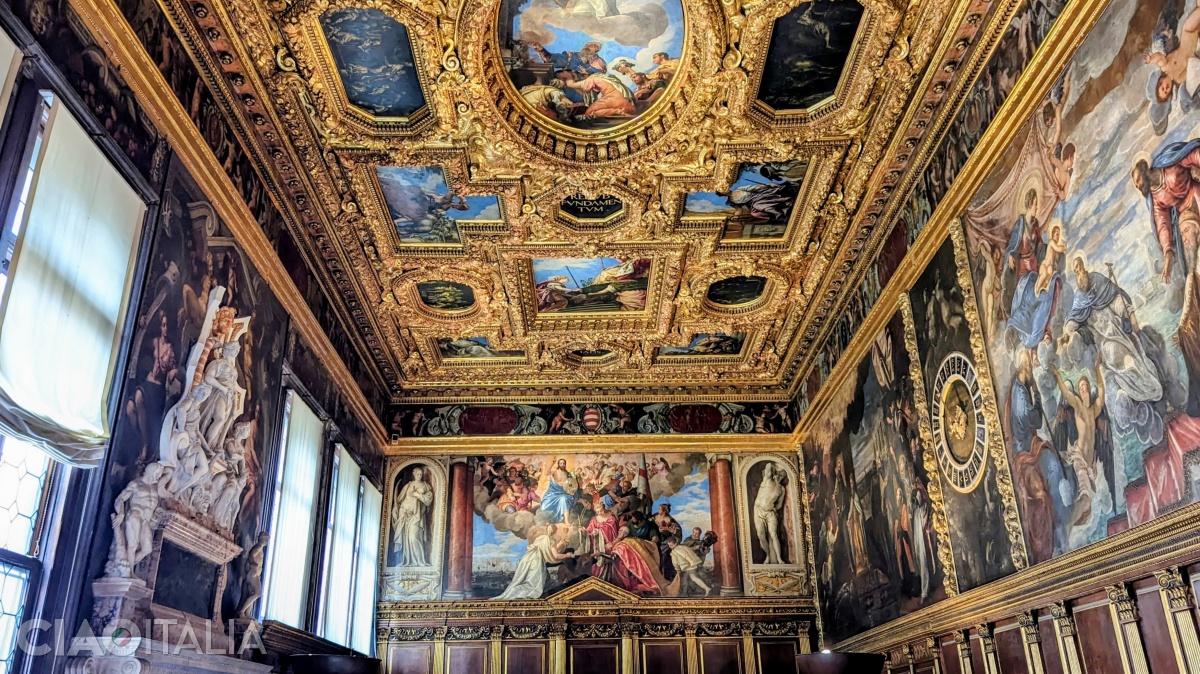
The Senate Hall (Sala del Senato) housed the meetings of one of the oldest Venetian institutions, created in the 13th century. The Senate dealt with economic-financial issues and gathered members of Venice's wealthiest families. This room was also rebuilt after the fire, being finished in 1595. On the ceiling is the "Triumph of Venice", painted by Tintoretto. Other works belong to Jacopo Palma il Giovane and Marco Vecellio.
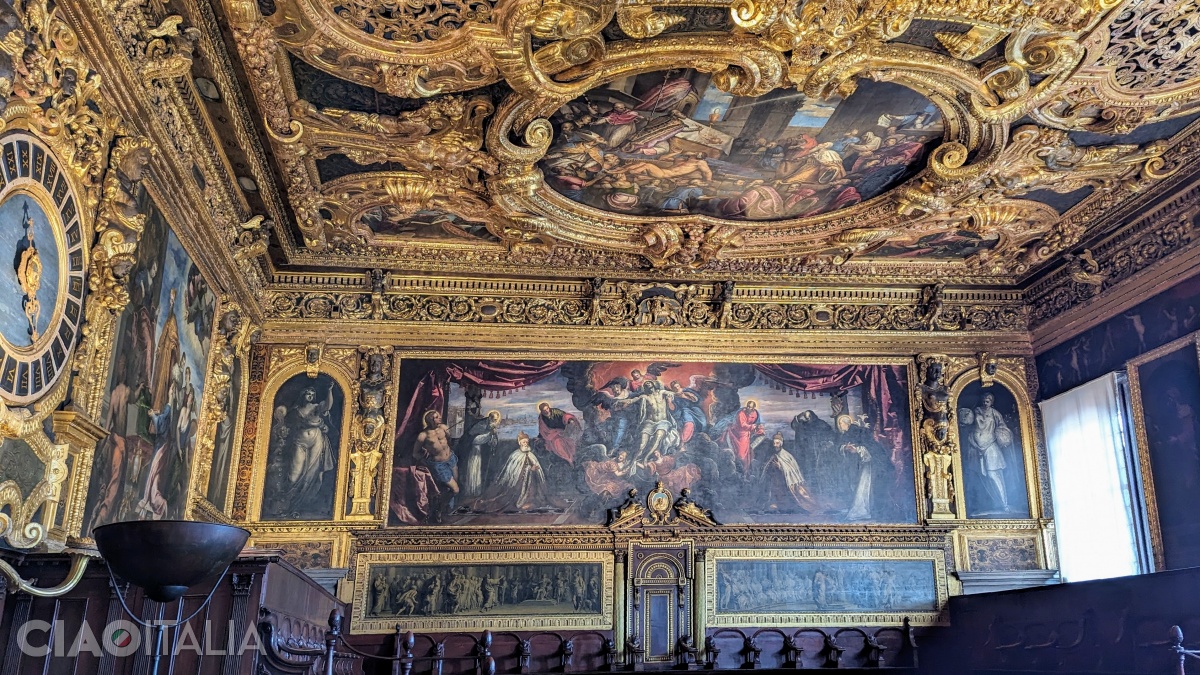
In the Hall of the Council of Ten (Sala del Consiglio dei Dieci), painted by Veronese, Venice's feared secret police magistracy gathered to judge political crimes against state security. The Council of Ten was created in 1310 to judge participants in a conspiracy to overthrow state institutions. Although intended to be temporary, it became a permanent institution. The Council of Ten consisted of ten members elected by the Senate and voted by the Great Council, to whom the Doge and his six councilors were added. Therefore, the room has 17 portraits in a semicircle. The oval painting in the center, representing Jupiter descending from the sky to strike down vices with lightning, is only a copy of the original by Veronese, which was taken to the Louvre by Napoleon.
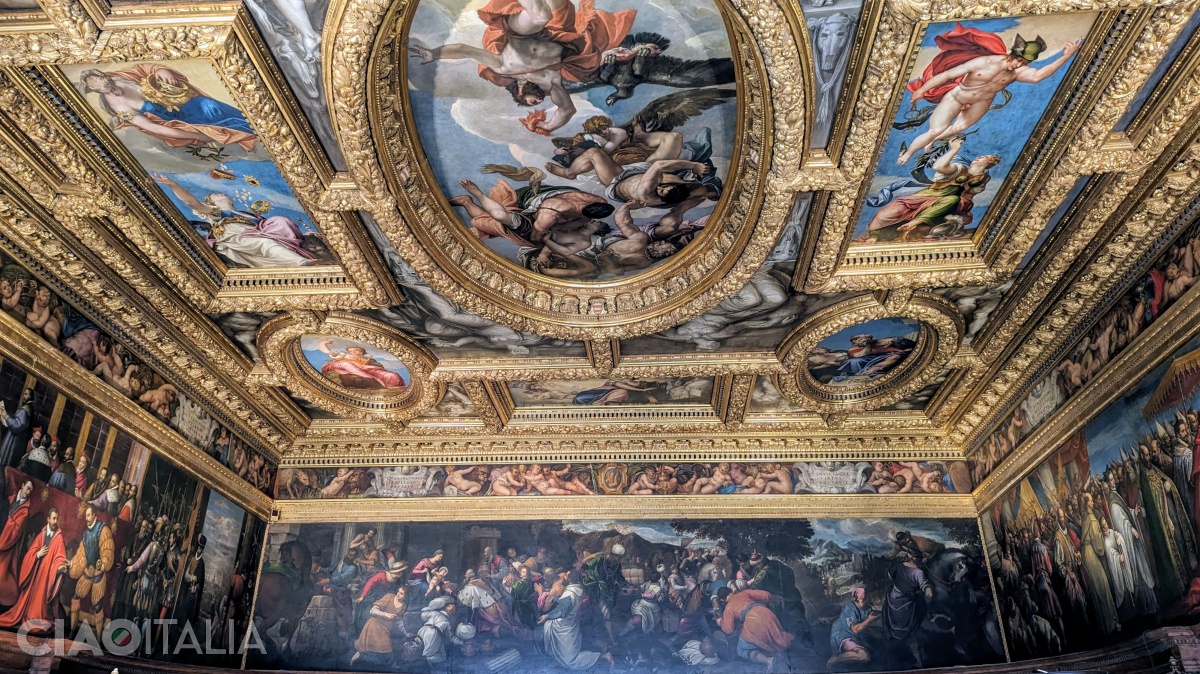
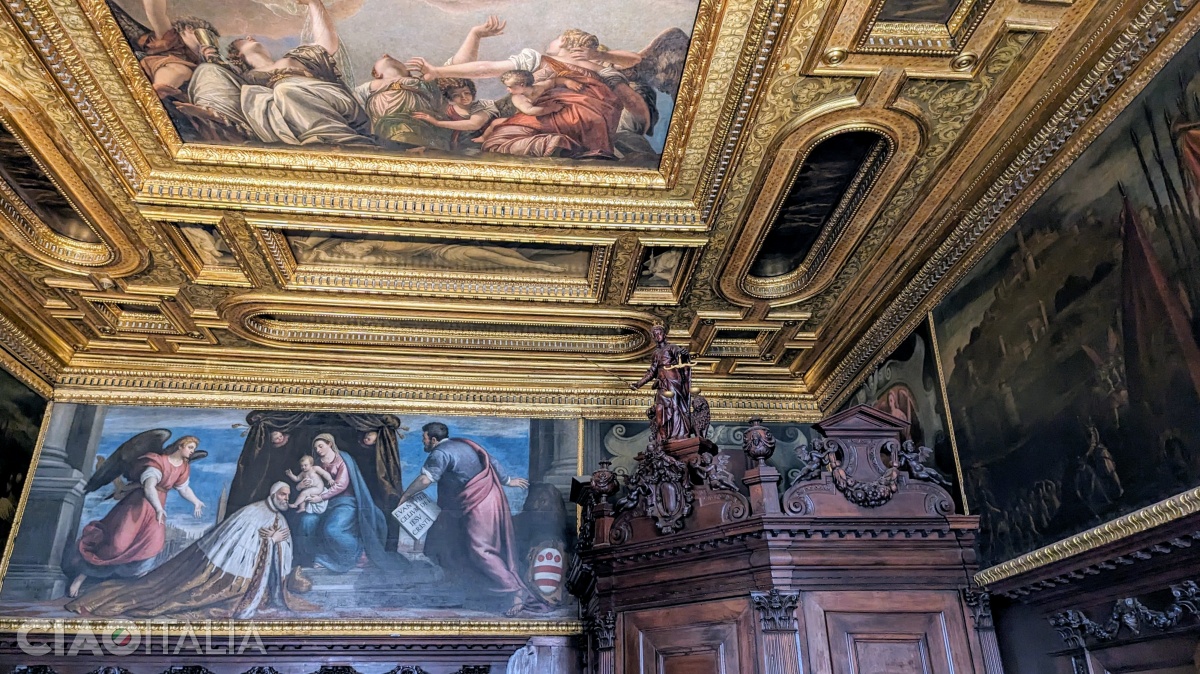
Sala della Bussola takes its name from the wooden compass-box topped by a statue of Justice, which hides the entrance to the Rooms of the three Heads of the Council of Ten and the Inquisitors' Room. These rooms can only be seen as part of the Itinerari Segreti guided tour, along with the ground floor prisons called Pozzi and the upper floor ones called Piombi (from which Casanova escaped). In the Sala della Bussola, those condemned for crimes against the state waited. In this room as well, the original ceiling painting by Veronese was taken by Napoleon to the Louvre, and a copy stands in its place.
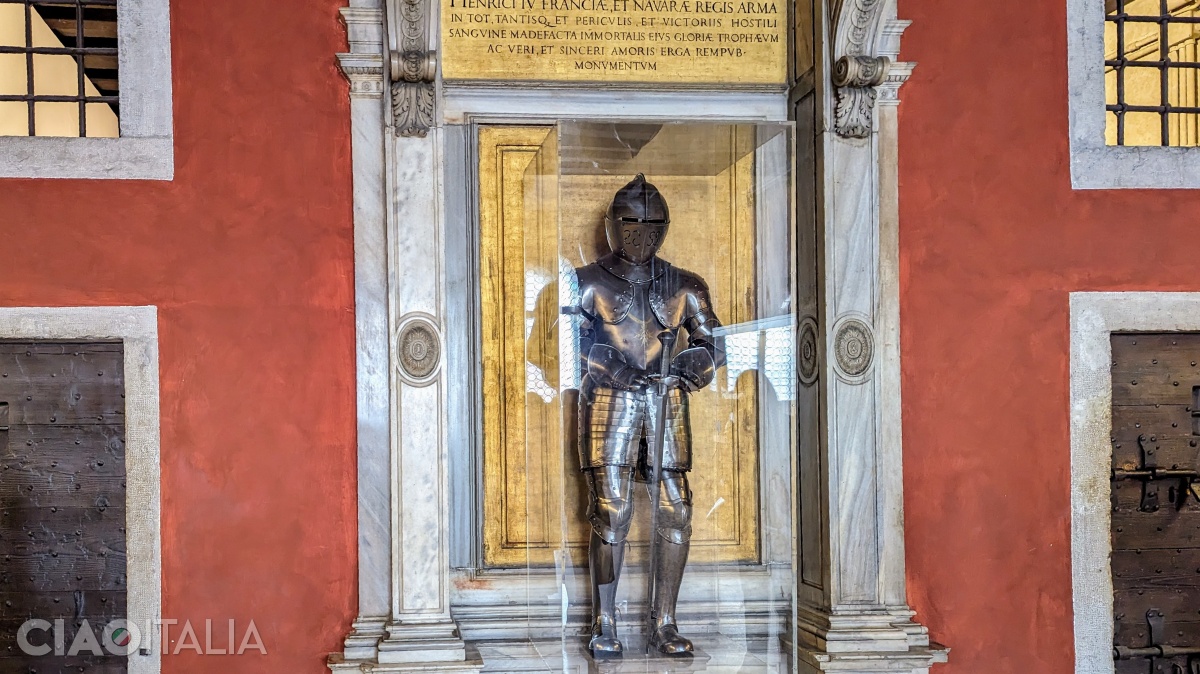
The Armory (Sale d'Armi) comprises a collection of weapons, which is particularly valuable because it includes many full suits of armor. Most of these weapons date back to the 15th and 16th centuries.
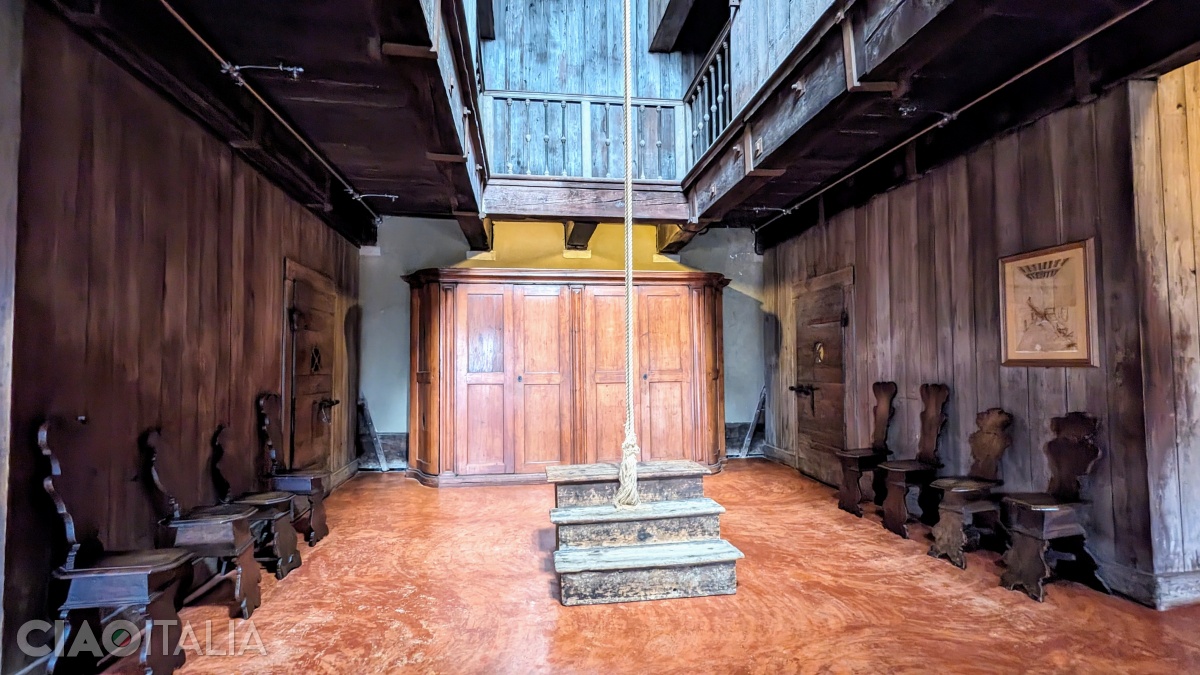
Sala della Quarantia (Council of Forty) hosted the meetings of the Republic's most important court of appeal, created as early as the 12th century.
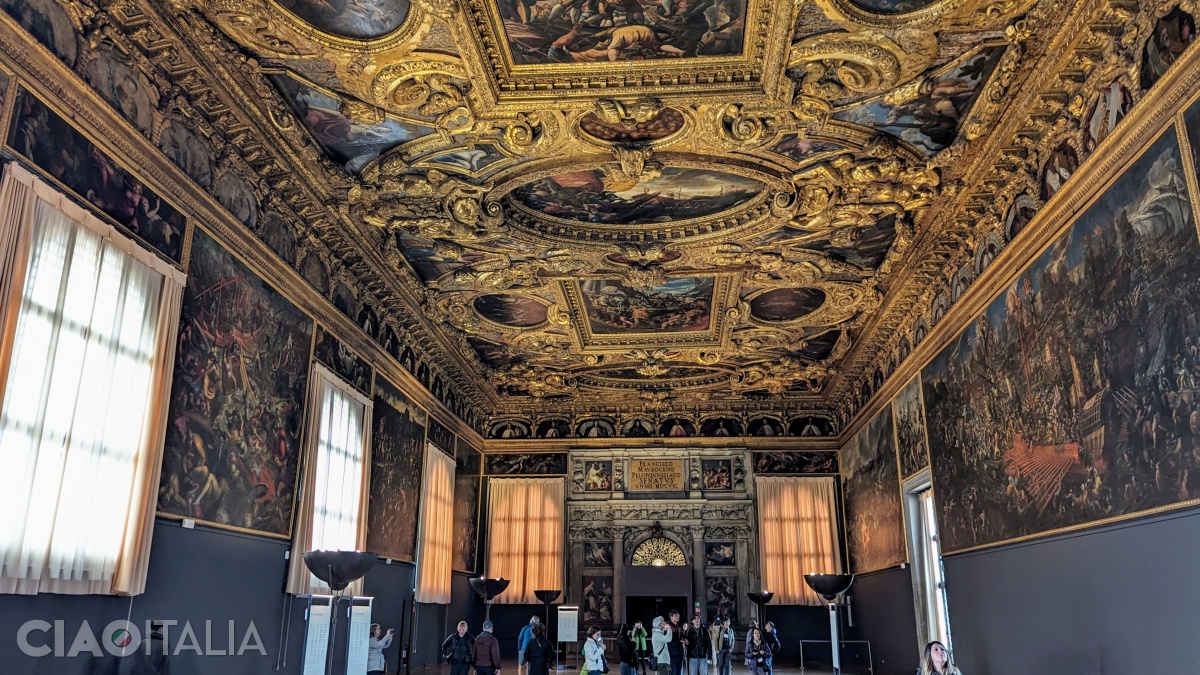
In the impressive Great Council Chamber (Sala del Maggior Consiglio), the largest in the entire Doge's Palace (53x25m) and one of the largest in Europe, the assemblies of the most important judicial power in the Venetian state were held. The Great Council was a very old institution, made up of all Venetian patricians, which brought together, depending on the period, between 1,200 and 2,000 nobles. Members met in this hall every Sunday when the bells rang in the St. Mark's Campanile. The Doge, who presided over the assembly, sat in the center of the tribune, and the councilors sat on seats arranged along the length of the hall.
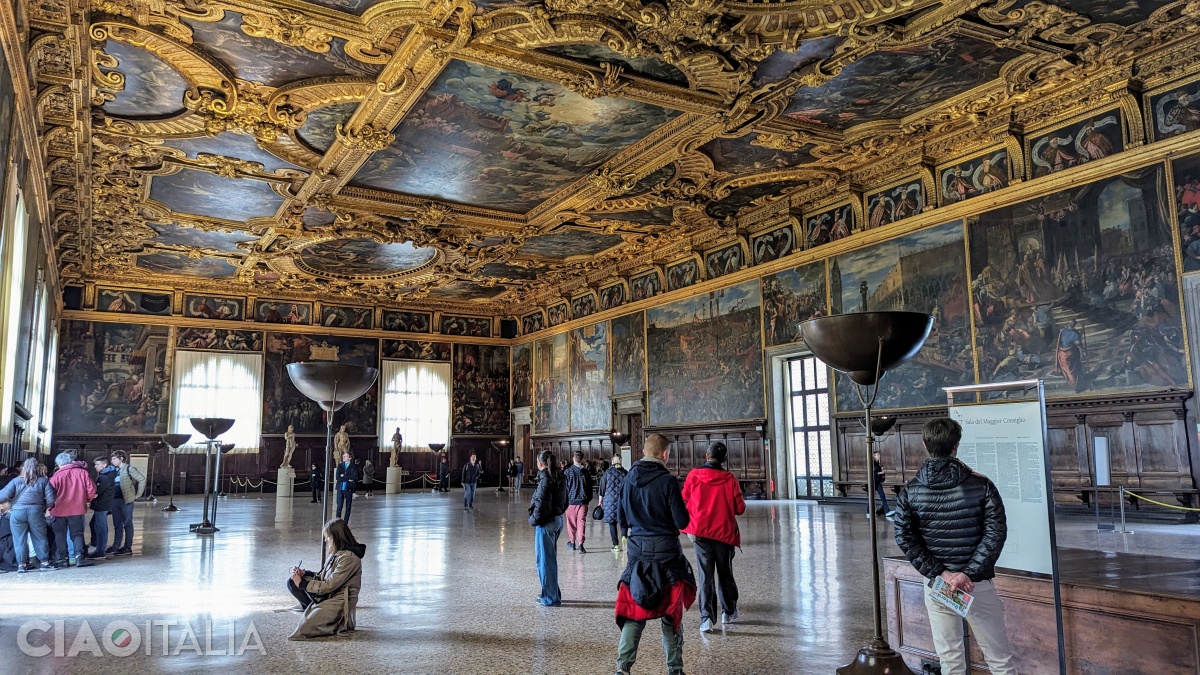
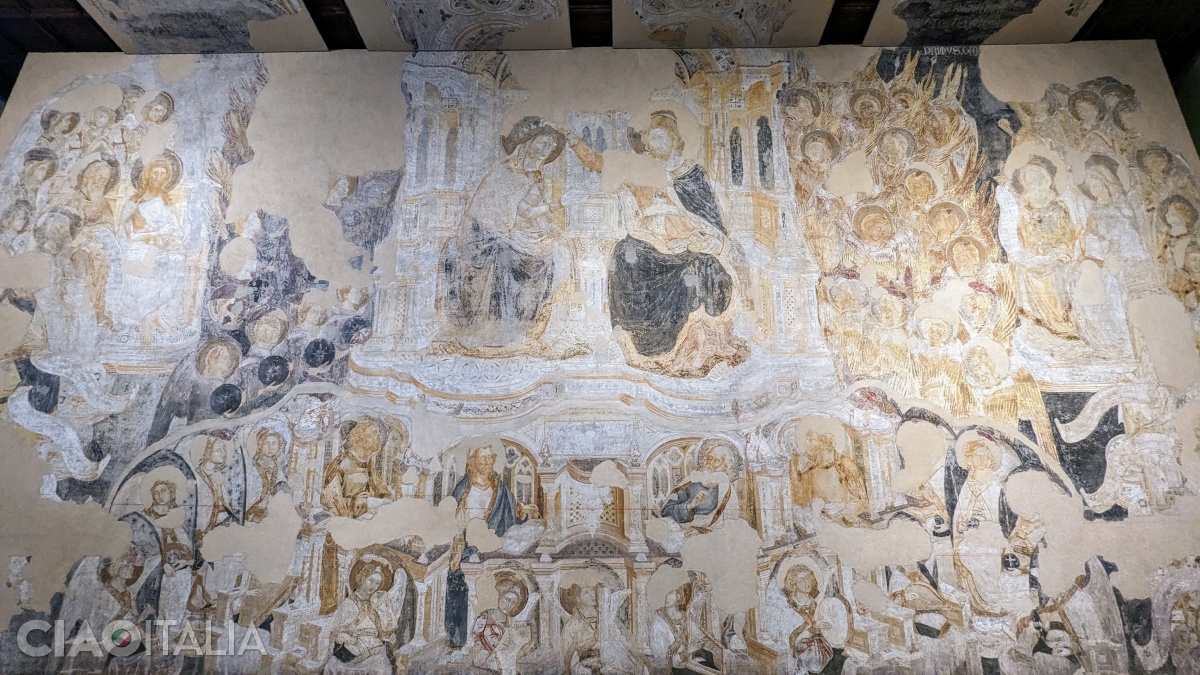
The hall was destroyed by fire in 1577 and rebuilt by Antonio Da Ponte (the architect who also designed the Rialto Bridge). From the 14th-century painting, remnants of a fresco by Guariento di Arpo were discovered (the same artist who painted the Reggia Carrarese, one of the tourist attractions in Padua).
The new painting was executed by Veronese, Jacopo and Domenico Tintoretto, and Palma il Giovane. Above the tribune, across an entire wall (where Guariento's fresco used to be), is "Paradise", the grandiose canvas painted by Jacopo Tintoretto in 1592, which remains the largest oil painting in the world (700x2285cm).
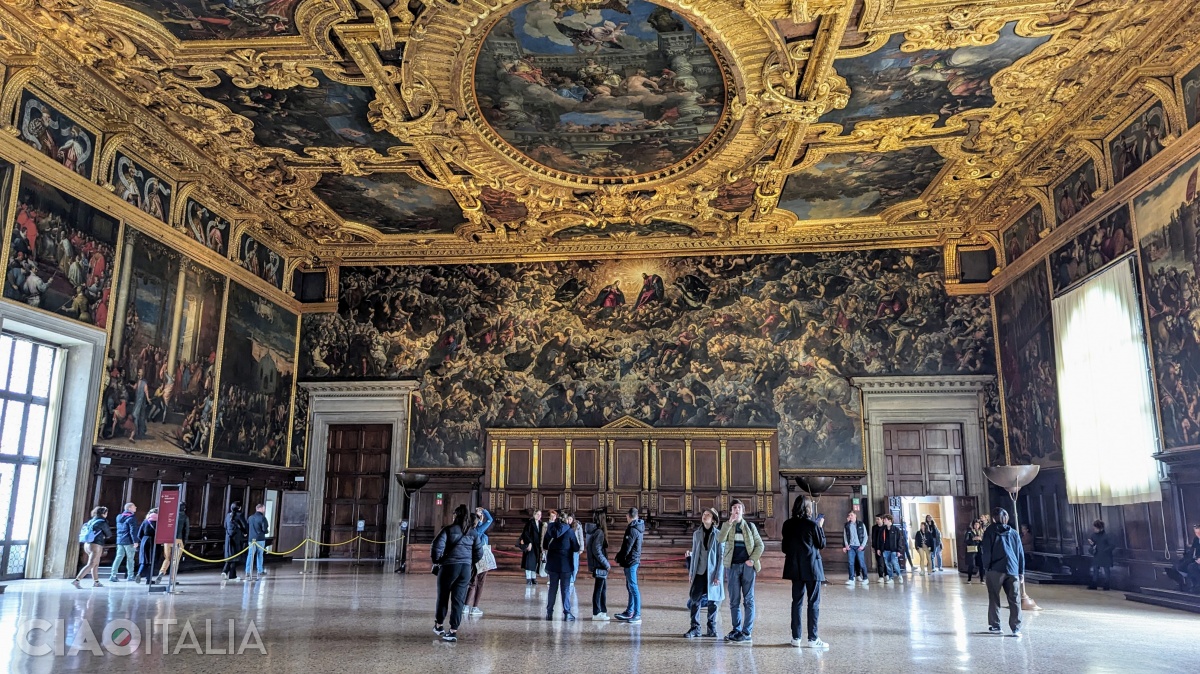
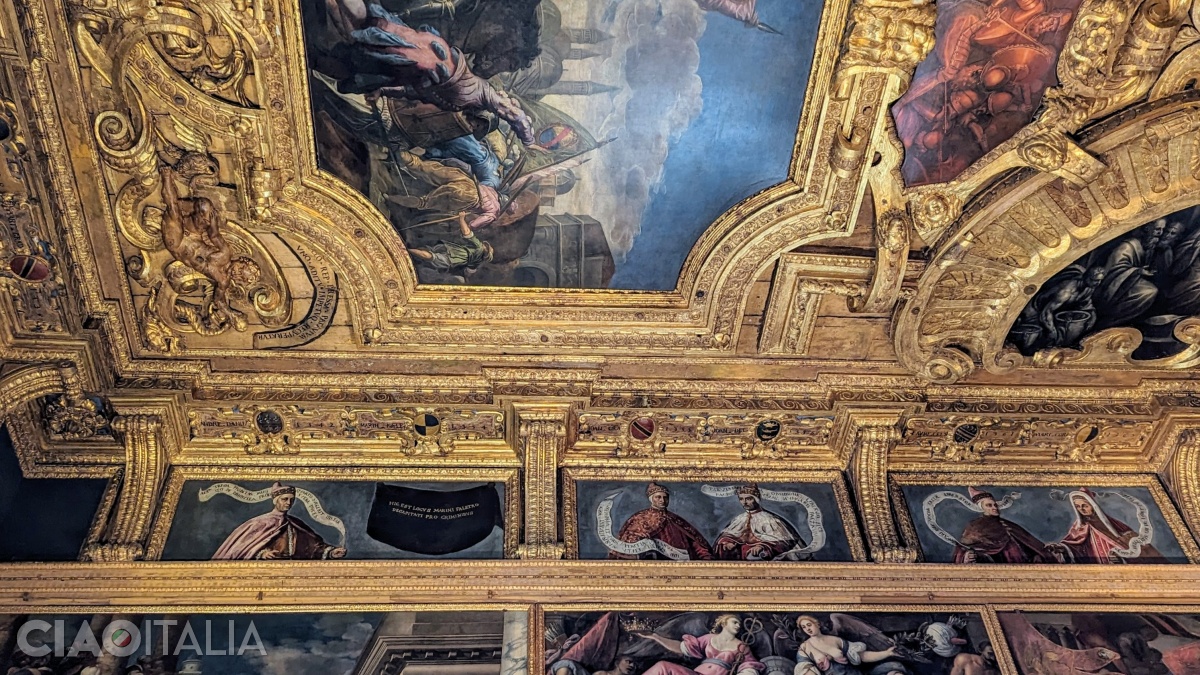
On the walls are episodes from the history of Venice, and on the carved and gilded ceiling is the "Apotheosis of Venice", painted by Veronese. The frieze below the ceiling features portraits of the first 76 Doges of the Serenissima (the others are painted in the Scrutiny Room). Each Doge holds a ribbon with the most important works accomplished under his leadership. If you look at the left corner of the wall opposite "Paradise", you will notice that one portrait is missing, and in its place is a black veil painted with a Latin inscription: hic est locus Marini Faletro decapitati pro criminibus ("This was the place of Marino Faliero, beheaded for treason"). It takes the place of the portrait of Doge Marino Faliero, who in 1355 attempted a coup d'état. He was condemned not only to death by beheading for treason (right in the palace courtyard) but also to the erasure of his name and face from history. Legend says that on nights with a full moon, his ghost wanders the corridors of the Doge's Palace.
The Scrutiny Room (Sala dello Scrutinio) was also rebuilt by the same Antonio Da Ponte after the 1577 fire. The ceiling represents the naval victories of the Venetians in the East and the conquest of Padua in 1405. The wall paintings illustrate battles won between 809 and 1656.
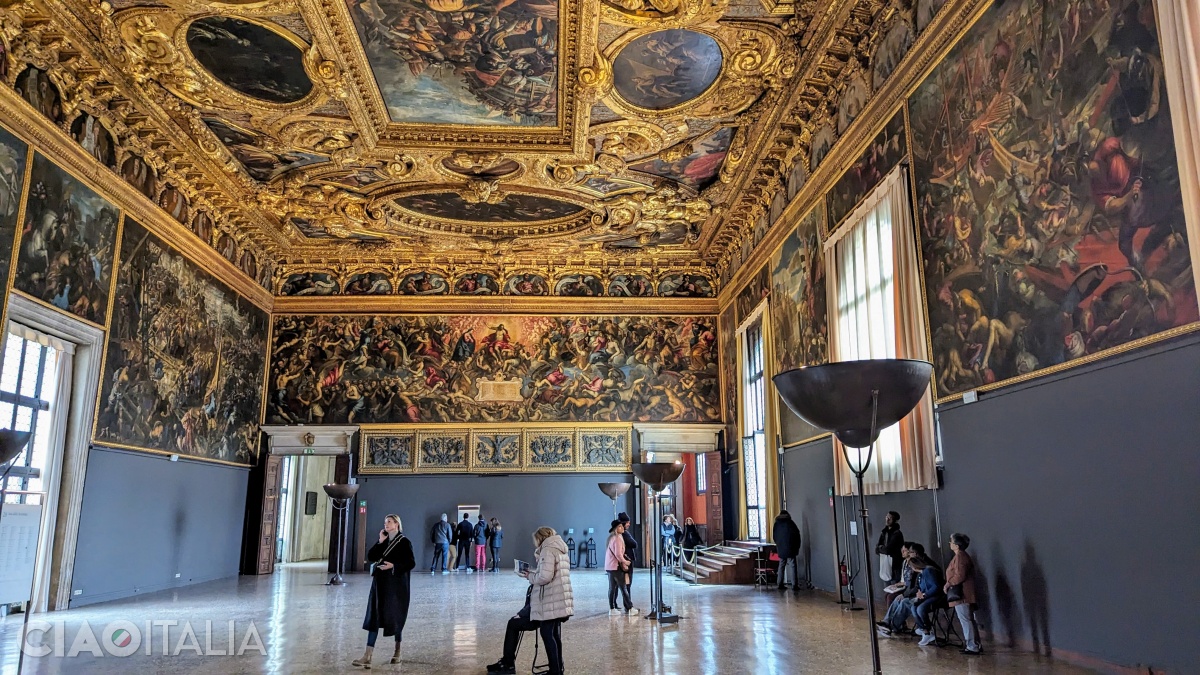
The Triumphal Arch at the back of the room was erected in honor of Doge Francesco Morosini, who died in 1694 during the war against the Turks. Francesco Morosini is the one who placed the Byzantine icon of the Virgin and Child, brought from Crete, in the Santa Maria della Salute Church, an icon venerated by Venetians.
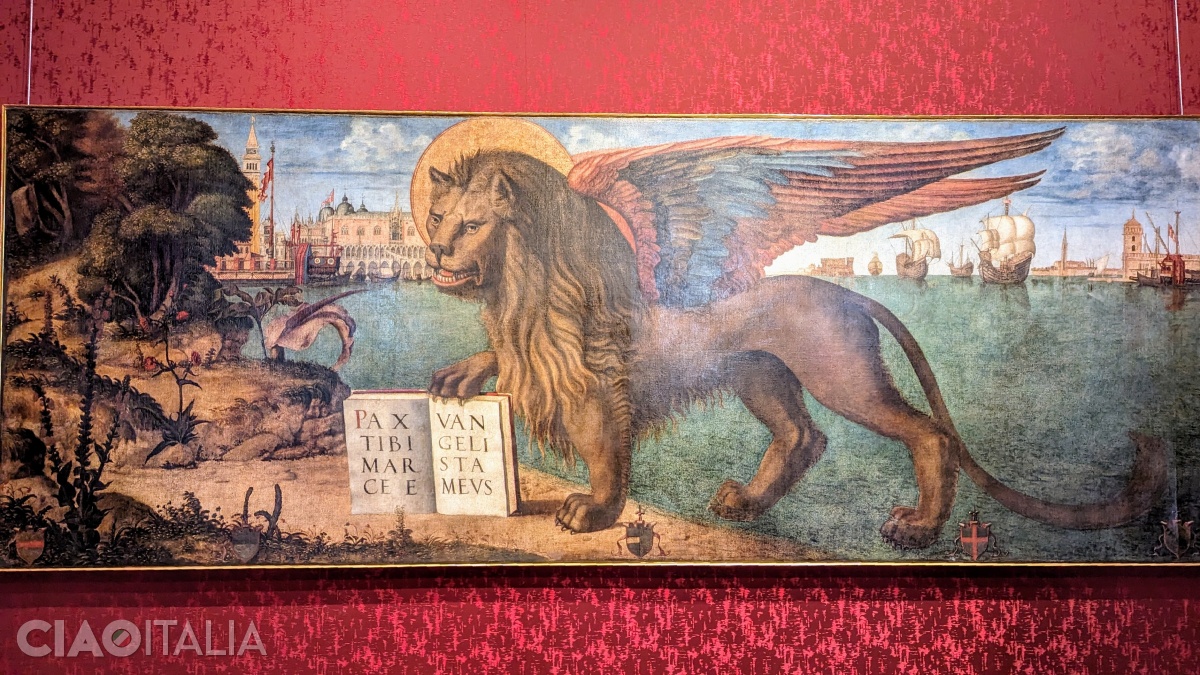
The Pinacoteca Rooms house works by Hieronymus Bosch, Titian, Tintoretto, Artemisia Gentileschi, Tiepolo, Giovanni Bellini, and Carpaccio.
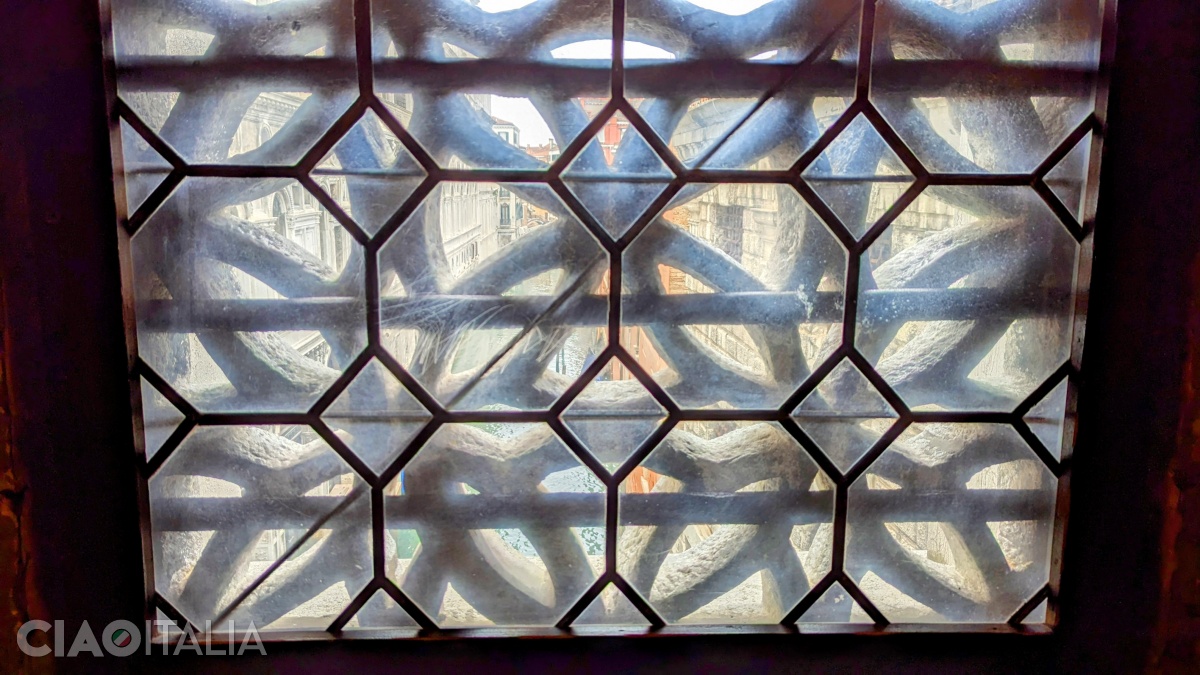
Next, you will cross the famous Bridge of Sighs, passing from the Doge's Palace into the New Prisons building (Prigioni Nuove). The covered bridge has two separate one-way corridors. On the way there, you will be able to look toward the interior of Venice, and on the way back, toward the Venetian lagoon.
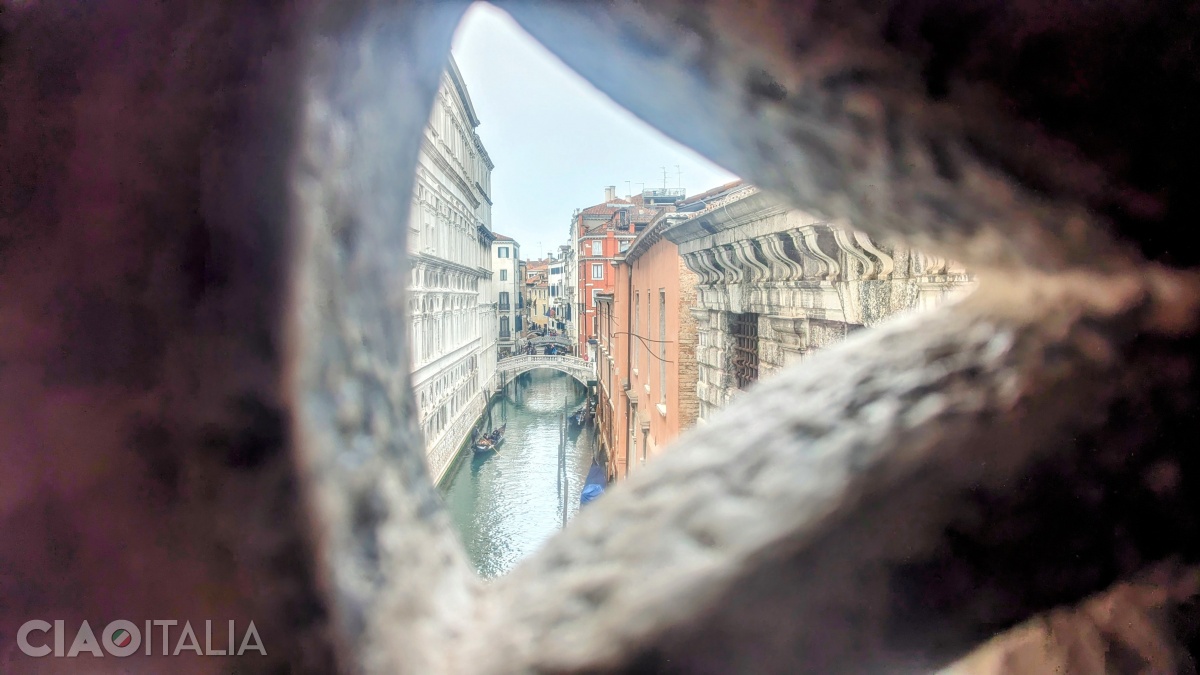
The New Prisons building was built in the second half of the 16th century with the aim of improving the living conditions of prisoners. Unlike the old prisons on the ground and upper floors of the Doge's Palace, the cells in the new prisons were more spacious and better lit, with walls, floors, and ceilings lined with yew wood. This building was one of the first constructions in Europe built with the clear intention of serving as a state prison.
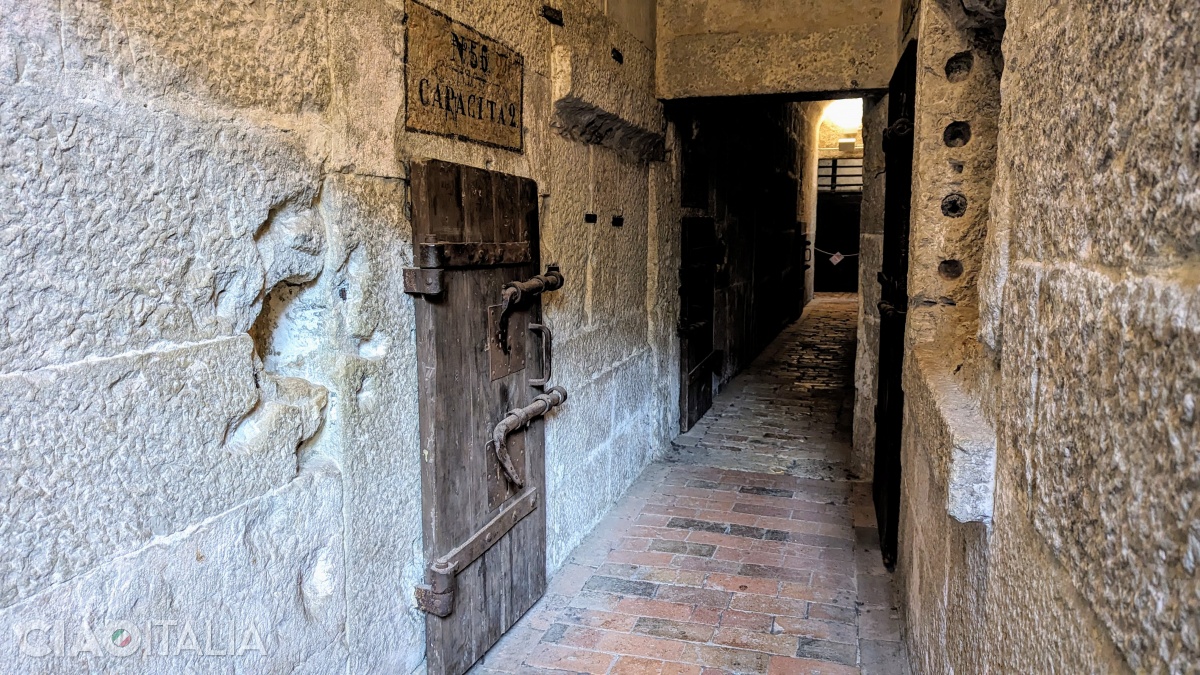
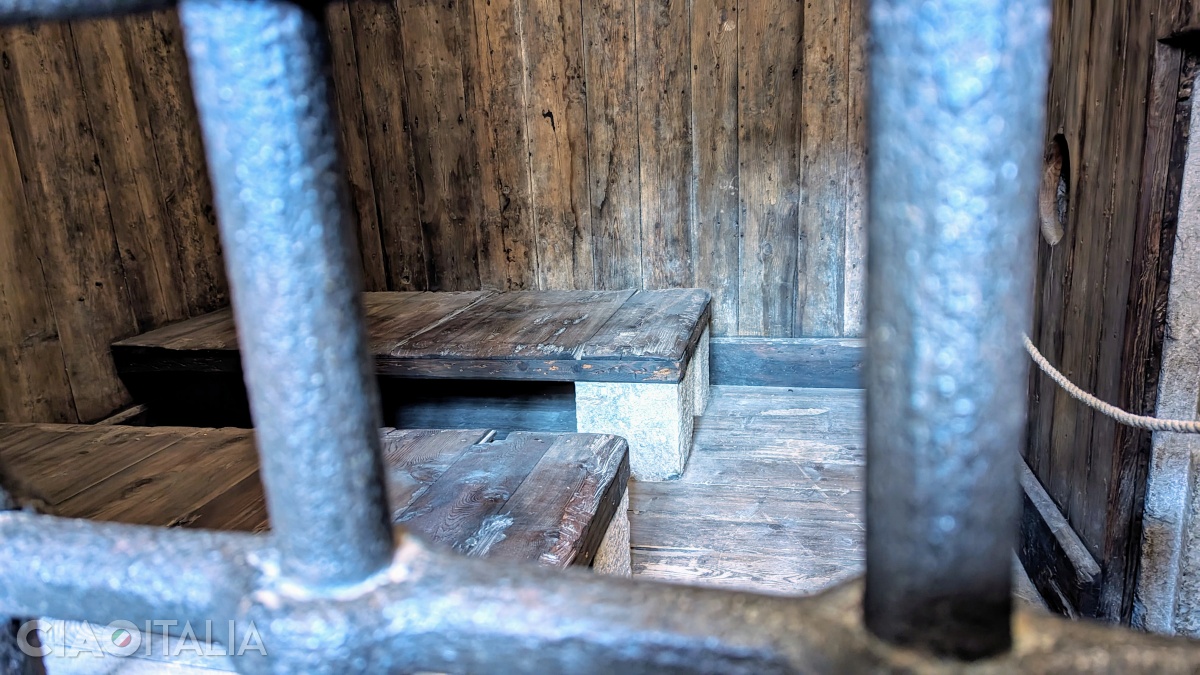
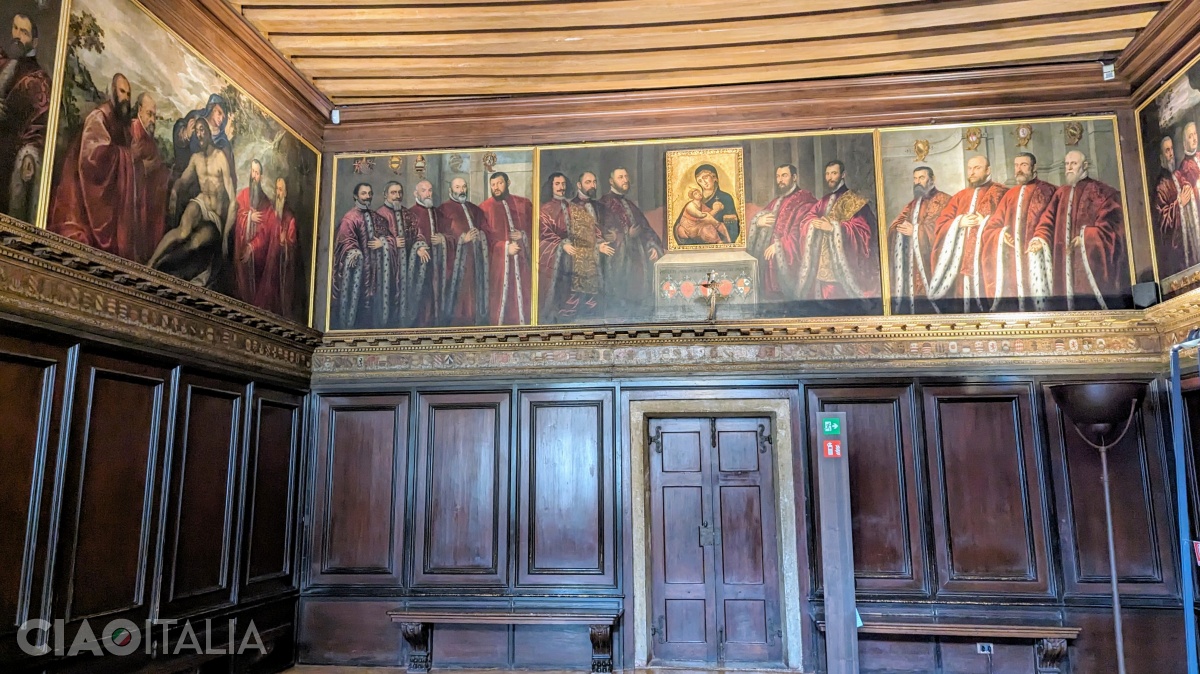
After taking a tour of the cells (you can choose between a shorter route or the full tour), you will return to the Doge's Palace via the other corridor of the Bridge of Sighs, arriving in the Censors' Room (Sala dei Censori), on whose walls are portraits and coats of arms of magistrates, painted by Domenico, the son of Tintoretto.
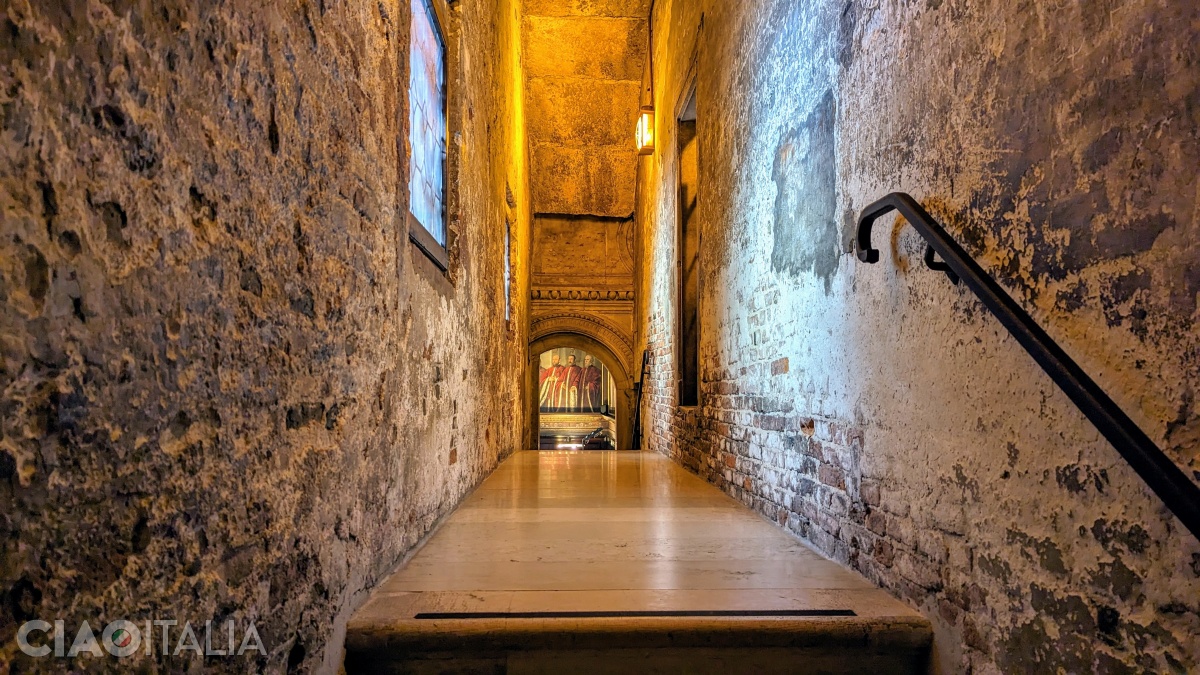
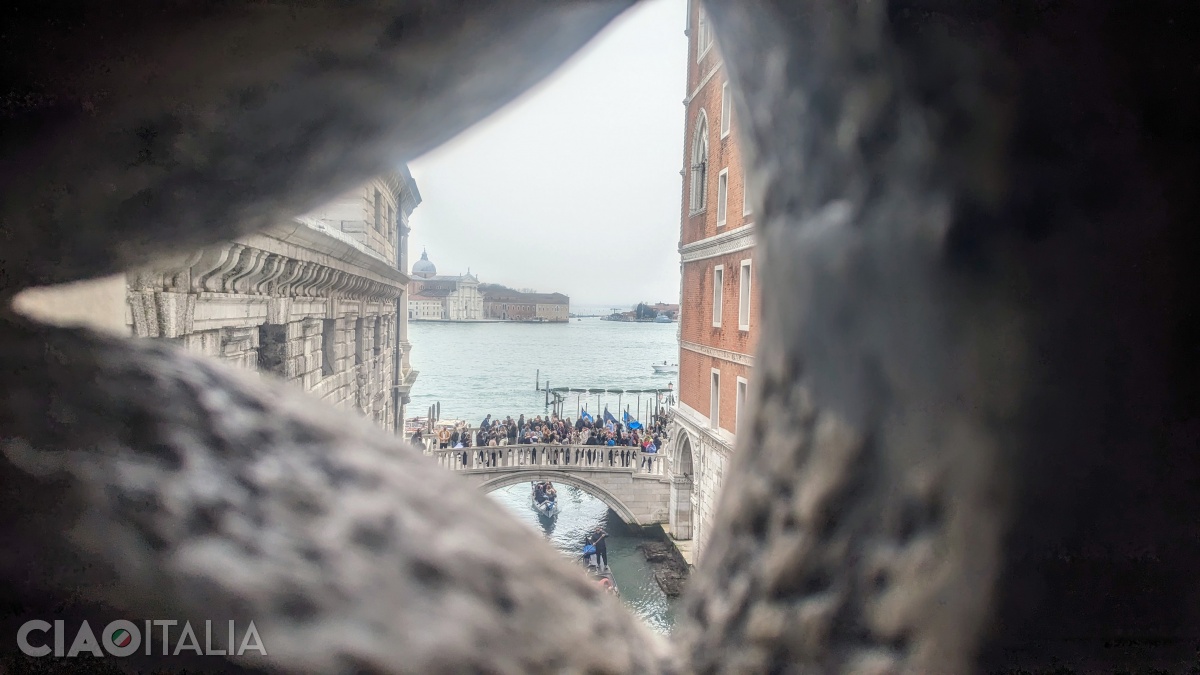
From the window of the next room, Sala dell'Avogaria de Comun, you can see and photograph the exterior of the Bridge of Sighs up close.
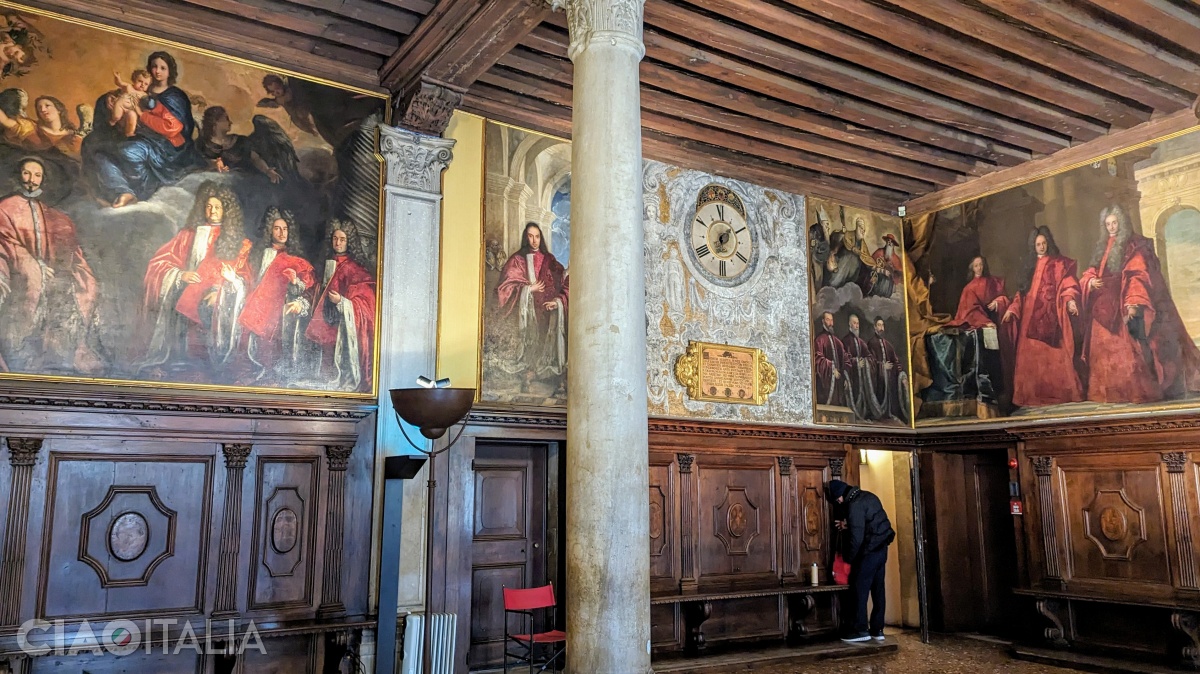
After two more rooms (Sala dello Scrigno and Sala della Milizia da Mar), you will reach the Palace shop and then find yourself in the inner courtyard again. If you wish, you can relax at the Palace café or exit, this time through the Porta della Carta.