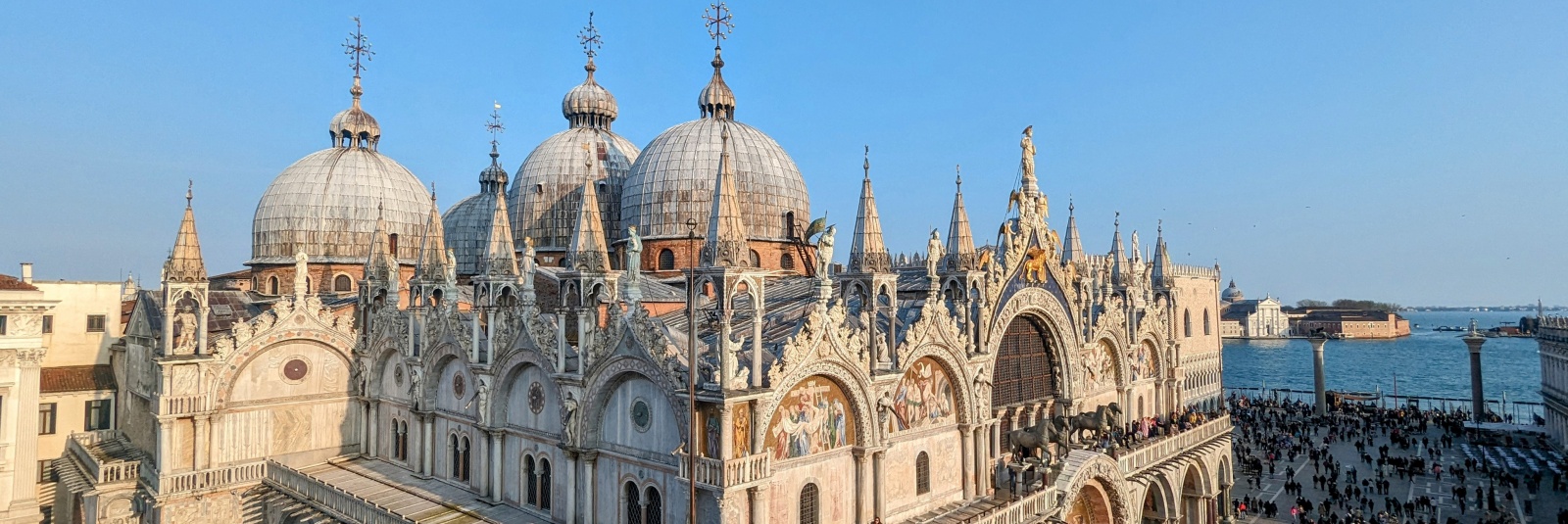
St. Mark's Basilica (Basilica di San Marco) in Venice
Saint Mark's Basilica (Basilica di San Marco), located in Piazza San Marco, is undoubtedly one of the most famous tourist attractions in Venice. The church is an artistic treasure, preserving a historical legacy of over ten centuries.
St. Mark's Basilica Tickets
The prices for entrance tickets to Saint Mark's Basilica in Venice are:
- Church entrance ticket: €10
- Church entrance ticket and access to Pala d'Oro: €20
- Church entrance ticket, with access to the museum and Loggia dei Cavalli: €20
- Museum and Loggia dei Cavalli entrance ticket (Sundays only, between 9:30 AM and 2:00 PM, when the basilica is closed): €14
- Full entrance ticket (Basilica, Pala d'Oro, museum, and Loggia dei Cavalli): €30
Children under 10 have free admission.
Attention! Tickets can only be purchased online. You will need to create an account and choose the date and time slot. You can buy a maximum of 5 tickets per account. Tickets cannot be modified and are non-refundable.
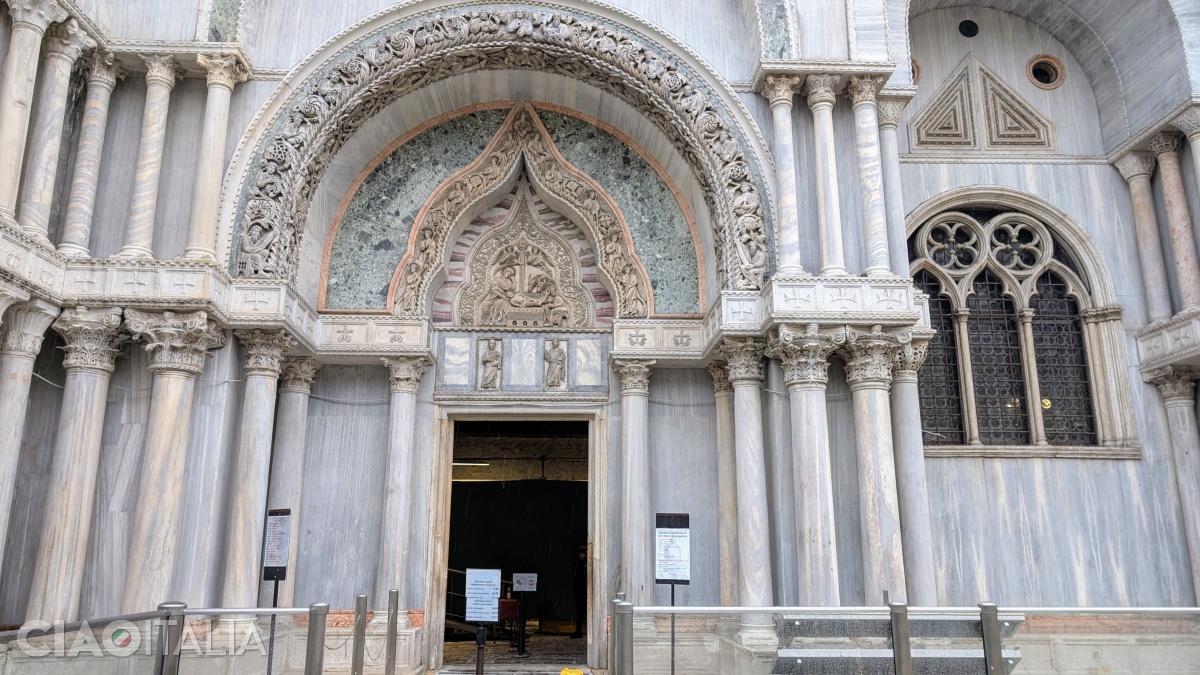
All tickets are skip-the-line, allowing access during the reserved time slot (though you will likely still have to wait in line for security checks). Entrance is via Porta San Pietro (to the left of the main portal on the façade).
Entrance tickets to Saint Mark's Basilica also include access to the sacristy of the Basilica of Santa Maria della Salute, the Pinacoteca Manfrediniana, and the Basilica of Santa Maria Assunta on Torcello Island. You can visit these three for 6 months from the date of ticket purchase.
Tips:
- Be punctual! You can arrive 5 minutes earlier or later than the visit start time.
- Do not visit the basilica with large luggage or bags (over 40x30x20 cm), as you will not be allowed entry.
- Respect the place you are in and dress modestly (shoulders and knees covered).
You can also buy entrance tickets to Saint Mark’s Basilica from specialized sites like Tiqets, GetYourGuide, Viator, or Musement. There, you will find them included in guided tours or packages that may also include audioguides or access to other important attractions in Venice, such as the Doge's Palace.
Opening Hours
The visiting schedule for Basilica di San Marco is:
- Monday-Saturday: 9:30 AM - 5:15 PM (last access at 5:45 PM)
- Sundays and public holidays: 2:00 PM - 5:15 PM (last access at 5:45 PM)
On Sunday mornings, between 9:30 AM and 2:00 PM, it is only possible to visit the San Marco Museum - Loggia dei Cavalli.
Visit to Saint Mark’s Basilica
A visit to Saint Mark's Basilica comprises three parts (with separate entrance tickets):
- Visit to the basilica
- Visit to the Pala d'Oro
- Visit to the San Marco Museum and access to the terrace overlooking St. Mark's Square, called Loggia dei Cavalli ("Loggia of the Horses")
The Basilica
Throughout the centuries, Basilica di San Marco represented a symbol of Venice's power and wealth. Both the exterior and interior will overwhelm you with splendor and opulence.
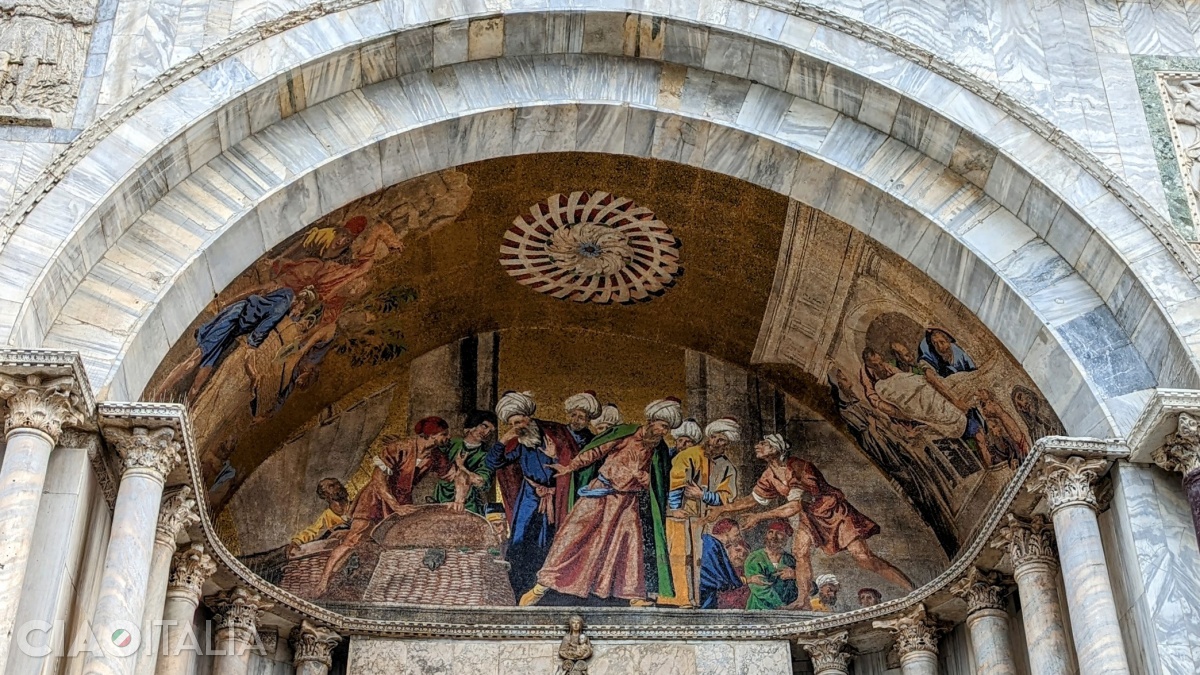
The first church was built in the year 832, specifically to house the relics of Saint Mark the Evangelist. His remains had been stolen by Venetians in 828 from Egypt, from Alexandria, and hidden under piles of pork to trick the Muslims. You can see this scene in one of the mosaics located to the right of the main entrance.
Between 976-978, fires resulting from revolts almost entirely destroyed the church. It was rebuilt by order of Doge Contarini, who demanded the construction of "the most beautiful church ever seen". It was consecrated in 1094, being declared "the official church of the Venetian state". Since then, Saint Mark's Basilica was continuously enriched with mosaics, marble, statues, columns, and valuable objects brought by Venetian merchants from the Orient, until it came to be nicknamed Basilica d'Oro ("The Golden Basilica"). Architecturally, it brings together different elements, as a testament to Venice's eclectic vocation: Byzantine mosaics and Gothic spires, Romanesque arches and Islamic domes.
The church became a patriarchal cathedral quite late, only in 1807, replacing the Basilica San Pietro a Castello.
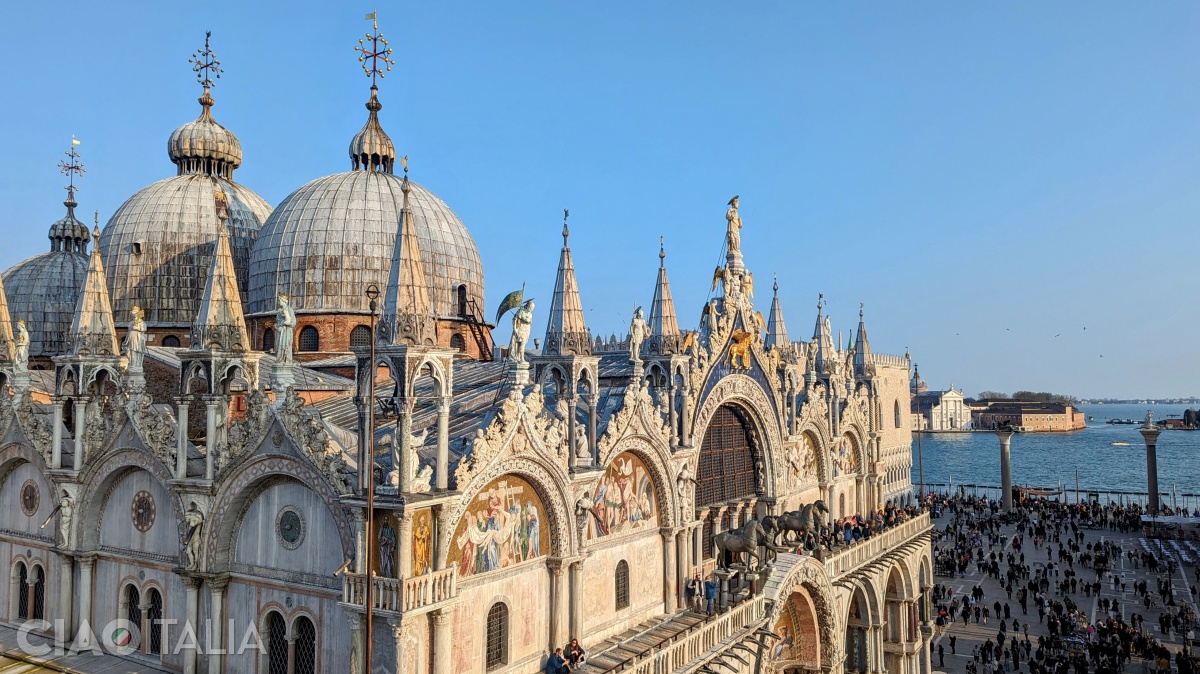
Saint Mark's Basilica has five wooden domes covered in lead, built to be visible from the sea: Cupola dell'Ascensione ("Dome of the Ascension") - in the center, Cupola dei Profeti ("Dome of the Prophets") - above the main altar, Cupola della Pentecoste ("Dome of Pentecost") - above the nave, Cupola di San Leonardo ("Dome of St. Leonard") - towards the sea, and Cupola di San Giovanni ("Dome of St. John") - on the side facing the Clock Tower.
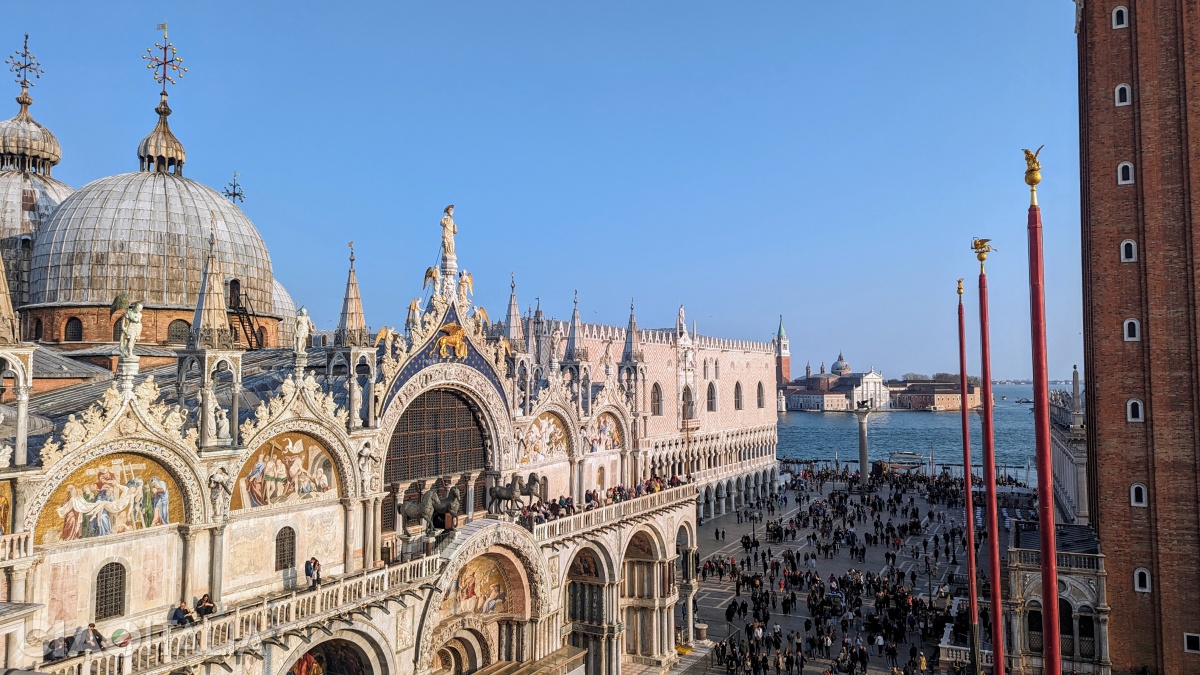
The façades are richly decorated with colored marble, statues, and mosaics.
The South Façade
On the south façade (the one to the right of the church, facing the sea), on the left side, you can see traces of the former water entrance, porta da mar, closed in the 16th century following the construction of the Zen Chapel.
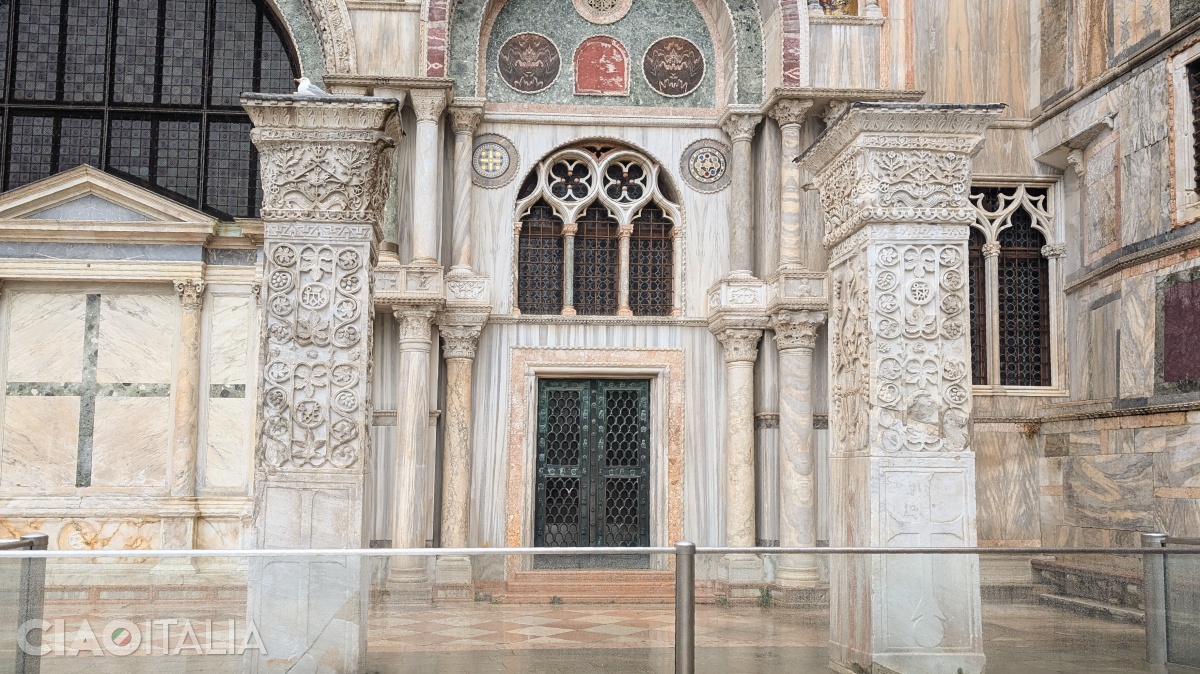
Further to the right of the façade are two freestanding columns, decorated with rich sculptures in Oriental style. Despite being known as Pilastri Acritani ("Pillars of Acre"), excavations in the 1960s proved that they actually originate from a church in Constantinople.
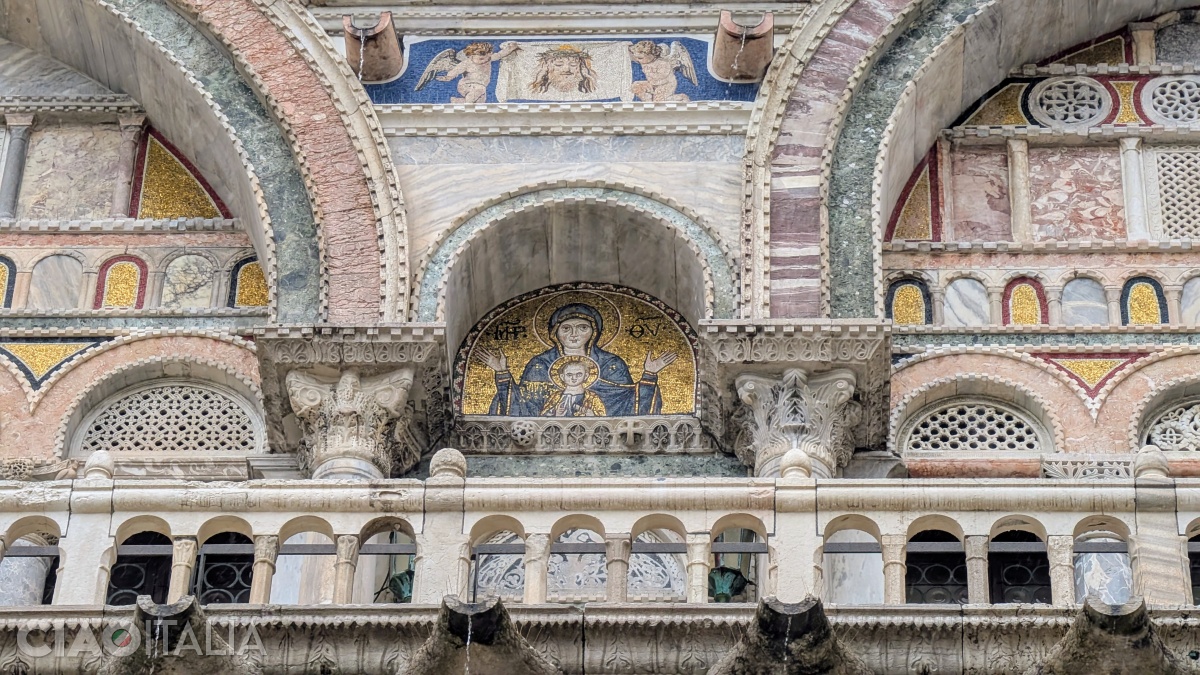
If you look up towards the top of the terrace, under the second Gothic turret, you will notice a small Byzantine mosaic of the Madonna, illuminated at night. It is said that this tradition started from a promise made by a sailor who wanted to show his gratitude after being saved from shipwreck by the Virgin Mary. Those condemned to death, before being executed between the columns in Piazzetta San Marco, would turn their gaze toward the mosaic and pray on their knees, asking for the Virgin's help. According to a popular medieval legend, the authorities lit oil lamps at the icon to atone for the guilt of having wrongfully condemned the baker Pietro Fasiol to death.
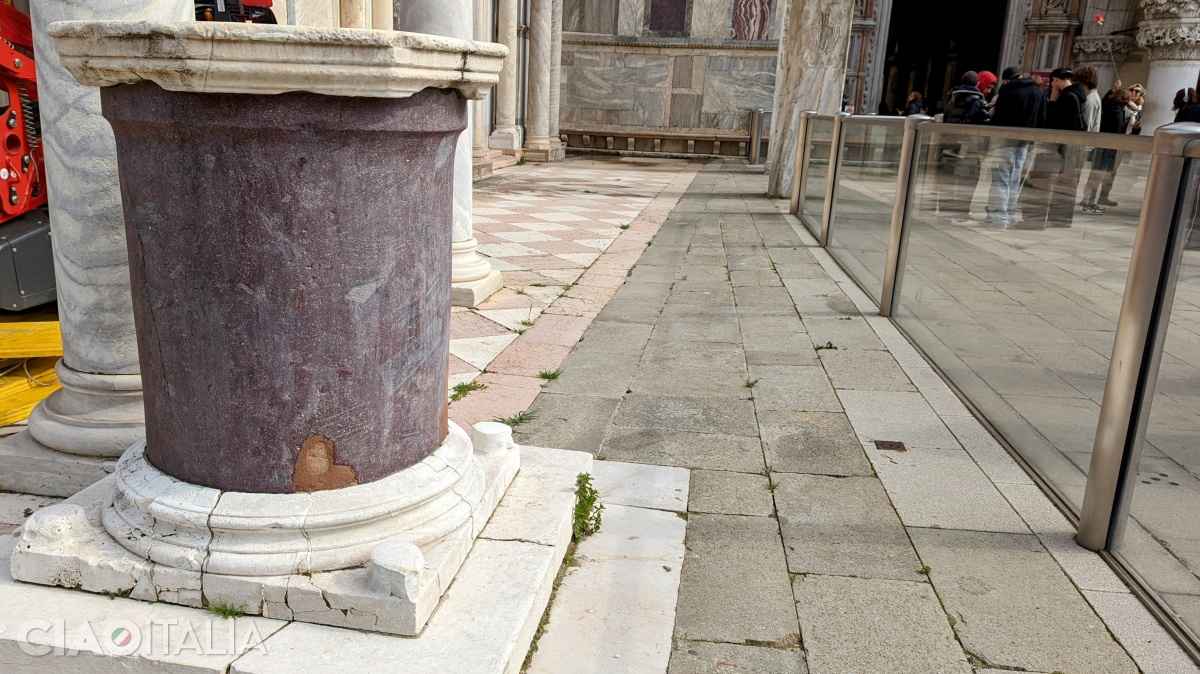
Looking toward the left corner of the church's south façade, you can see a fragment of a red porphyry column at the bottom, originating from Acre (Syria), which bears the name pietra del bando. From this stone (which initially had a small access staircase), new laws and decrees were announced to the population. However, the column had another purpose: the severed heads of those executed were displayed on it, remaining there for three days and three nights. In 1902, when the Campanile of San Marco collapsed, this column fragment protected the church. Rolling down, the debris of the fallen bell tower hit the pietra del bando and slowed down, avoiding major damage. Another column of this type is located in the Rialto area, in Campo San Giacomo.
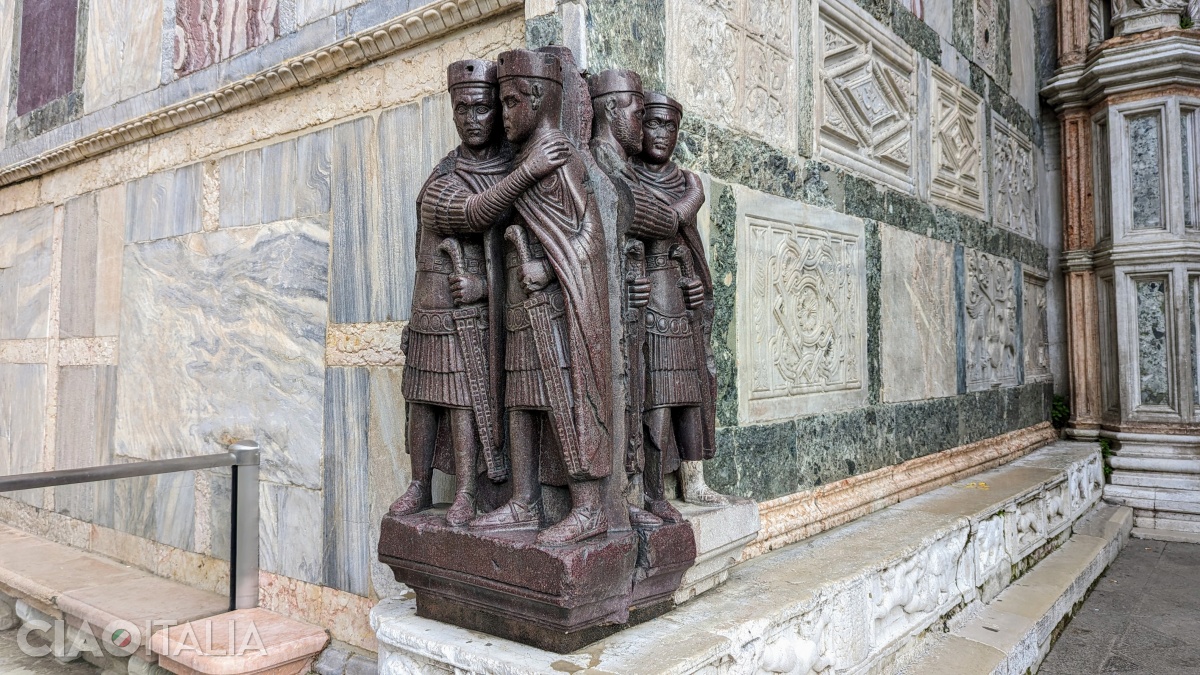
On the right side of the same south façade, towards the Doge's Palace, stands the Monument of the Tetrarchs. The statuary group is made of Egyptian porphyry and was brought from Constantinople in 1204. According to a legend, these are Moorish thieves whom St. Mark turned into stone statues after they tried to steal treasures from the basilica.
The North Façade
On the north façade (facing Piazzetta dei Leoncini), the Porta dei Fiori ("Door of Flowers") stands out, with a beautiful sculpture of the Nativity scene in the upper part. This is the entrance used by worshipers for religious services.
The Main Façade
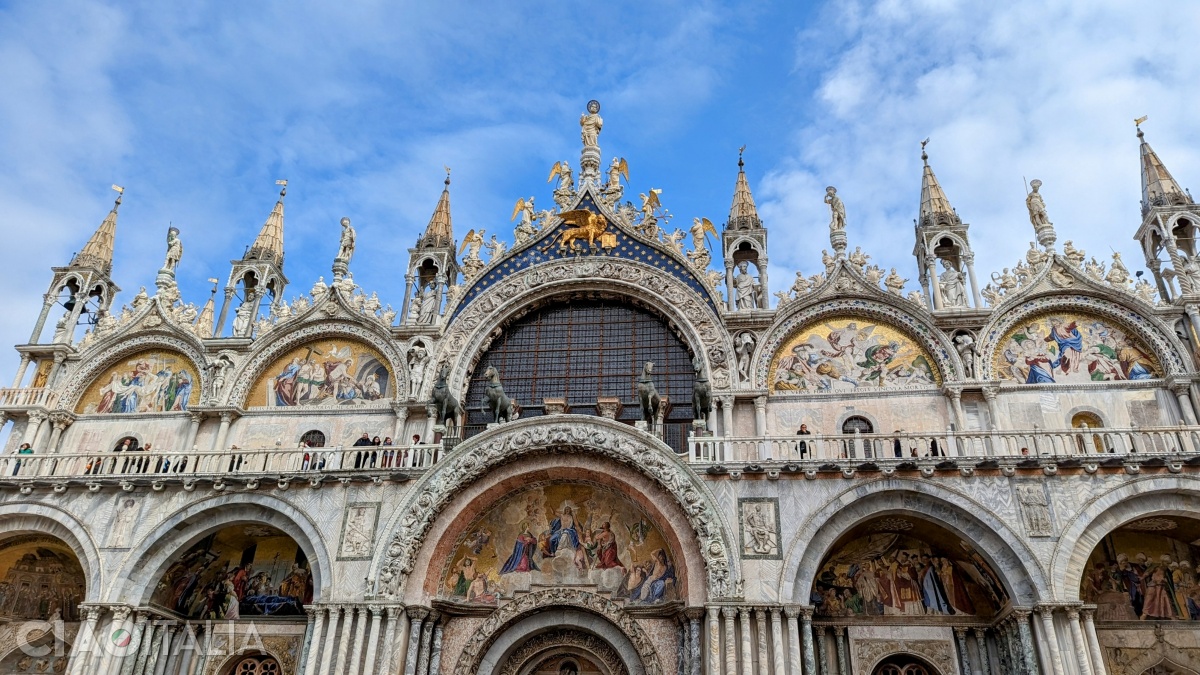
The main façade has five portals, separated by several rows of columns. From left to right, they are Porta di Sant'Alipio, Porta di San Pietro, Portale Maggiore, Porta di San Clemente, and the portal located in front of the Zen Chapel.
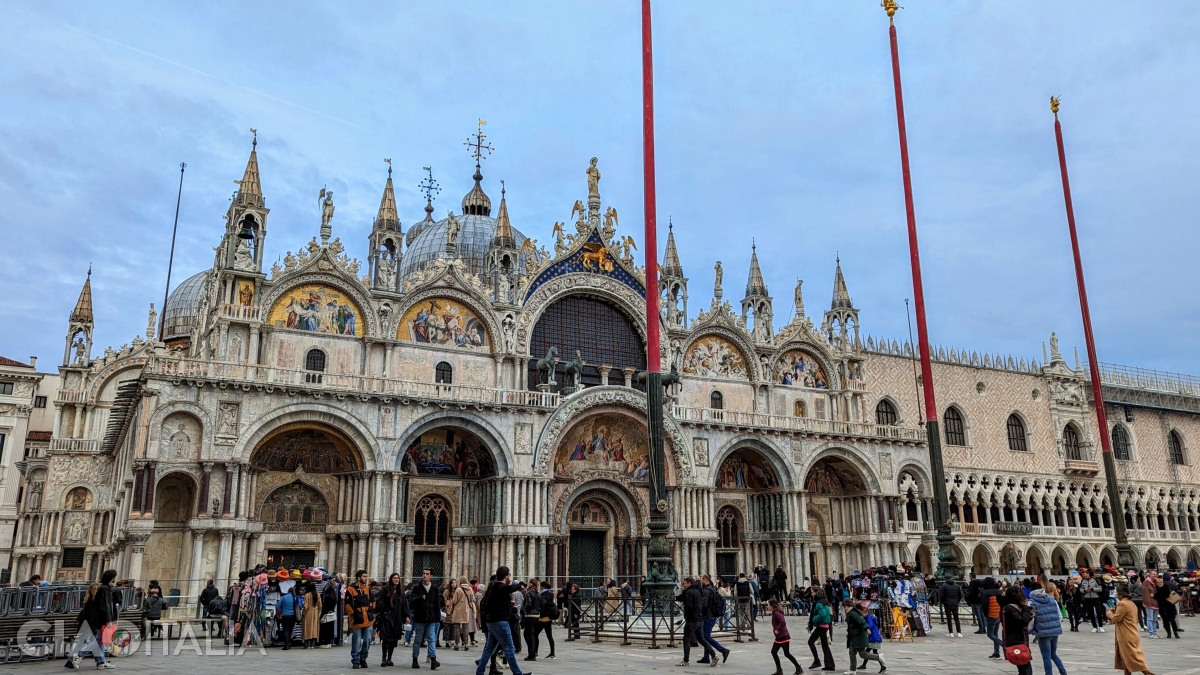
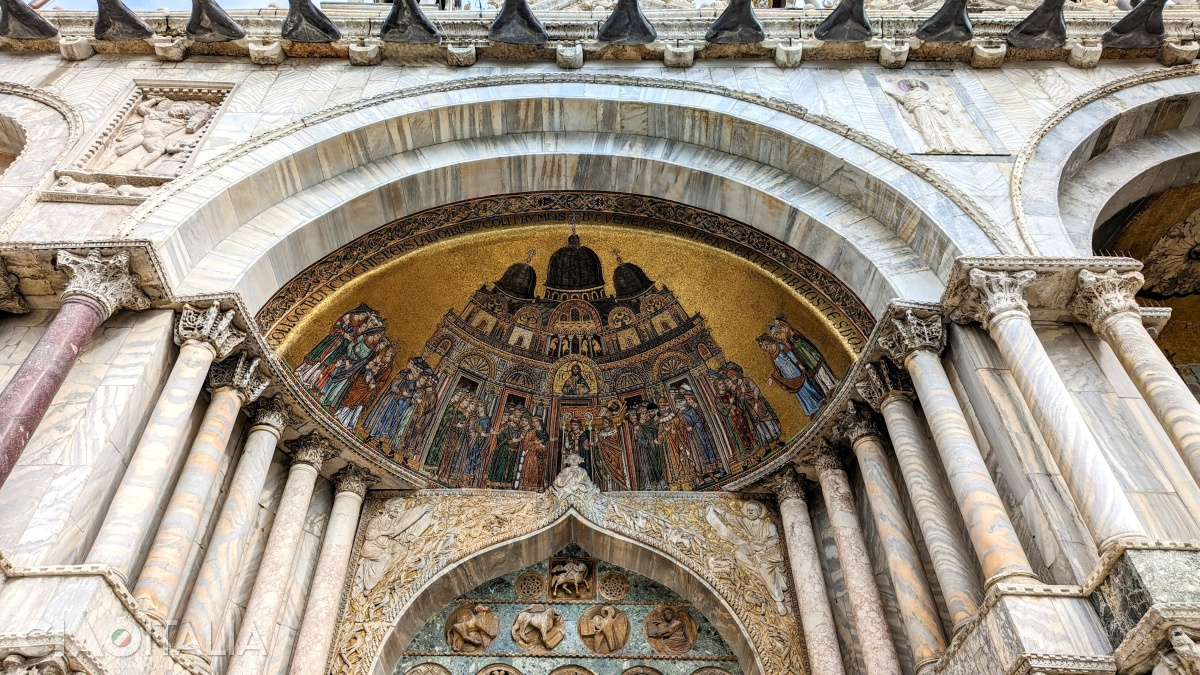
The only original mosaic is the one on the far left, located above the Sant'Alipio portal. The mosaic was created in 1265 to celebrate the transfer of St. Mark's body from the Doge's Palace into the church. Looking at it, you can see what Saint Mark's Basilica looked like in its early days (including the four horses on the terrace). The other mosaics were remade or restored in the 17th and 18th centuries.
Further to the left, at the top of the first column on the main facade of the basilica, a curious object is embedded, resembling a perforated spoon. It is a sundial - one of the few remaining in Venice - and is known as the "Meridian of St. Alipio", named after the statue that once stood in the niche above. Its design is simple and modest, especially when contrasted with the opulence of the basilica. This type of sundial, which projects rays onto the cylindrical surface of the column, precisely indicates only the hour of midday.

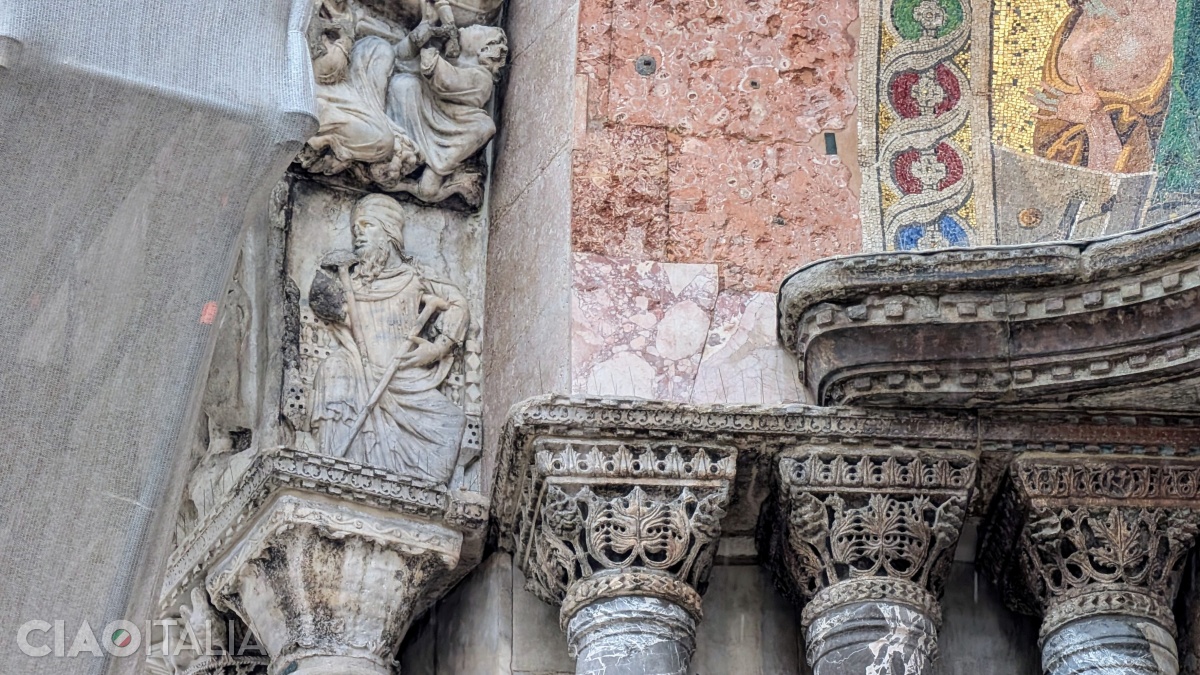
Stop in front of the main entrance portal of the church. Looking closely at the carved stone arch that frames it, you will notice at the bottom left the sculpture of a man wearing a turban and holding two crutches. According to tradition, this is the "unknown architect" of St. Mark's Basilica. The turban most likely indicates his Eastern origins, while the crutches - according to legend - are a sign of the physical infirmity he had to endure as the price for his extraordinary skill in construction.
Although it is hard to see now, it is said that the character was represented with a finger in his mouth. According to legend, when the church was finished and the Doge congratulated the architect, he replied that he could have built a more beautiful one if he had been given more money. As punishment, the Doge supposedly made the architect bite off his own finger.
The three flagpoles in front of the basilica symbolize the three kingdoms conquered by the Venetian Republic: Cyprus, Candia (modern-day Crete), and Morea (modern-day Peloponnese). Once, their flags flew at the top. Following Napoleon's conquest of Venice, the idea of removing the poles emerged because they were seen as symbols of tyranny. Ultimately, they were preserved but were officially transformed into symbols of liberty, virtue, and equality. Today, you can sometimes see the flags of Venice, Italy, and the European Union flying atop them.
The Interior of Saint Mark's Basilica
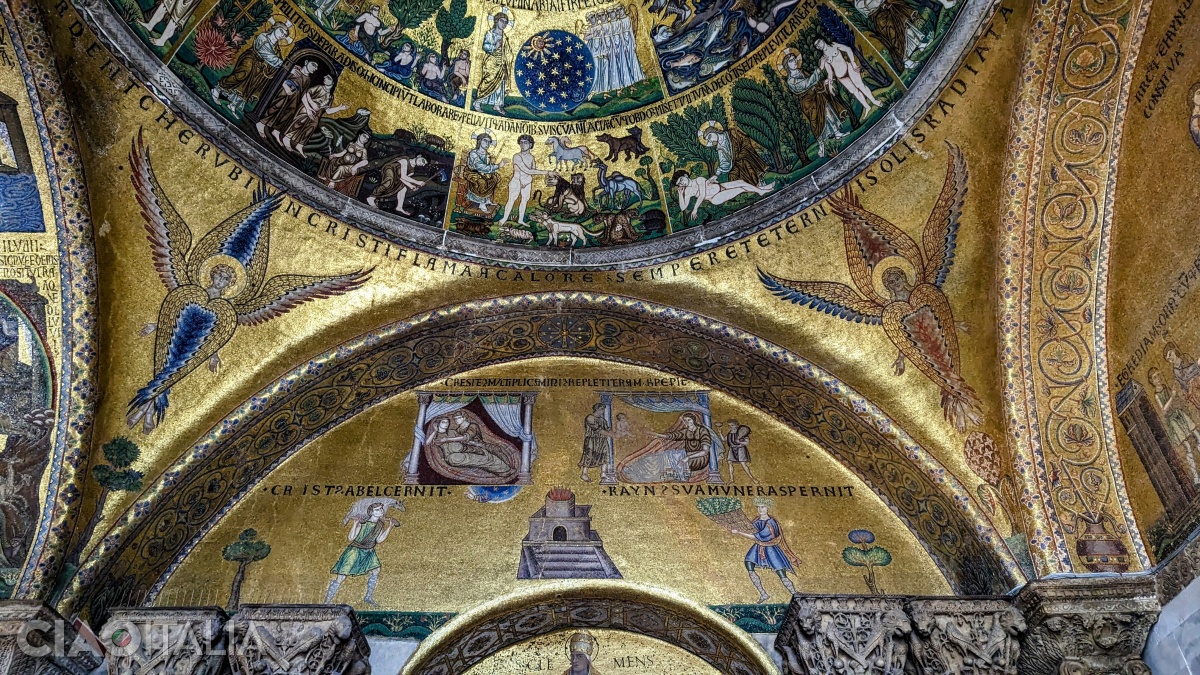
The interior of Saint Mark's Basilica, with a strong Byzantine imprint, is covered with 8,000 square meters of gilded mosaics, created over a period spanning from the 11th century to the beginning of the 18th century.
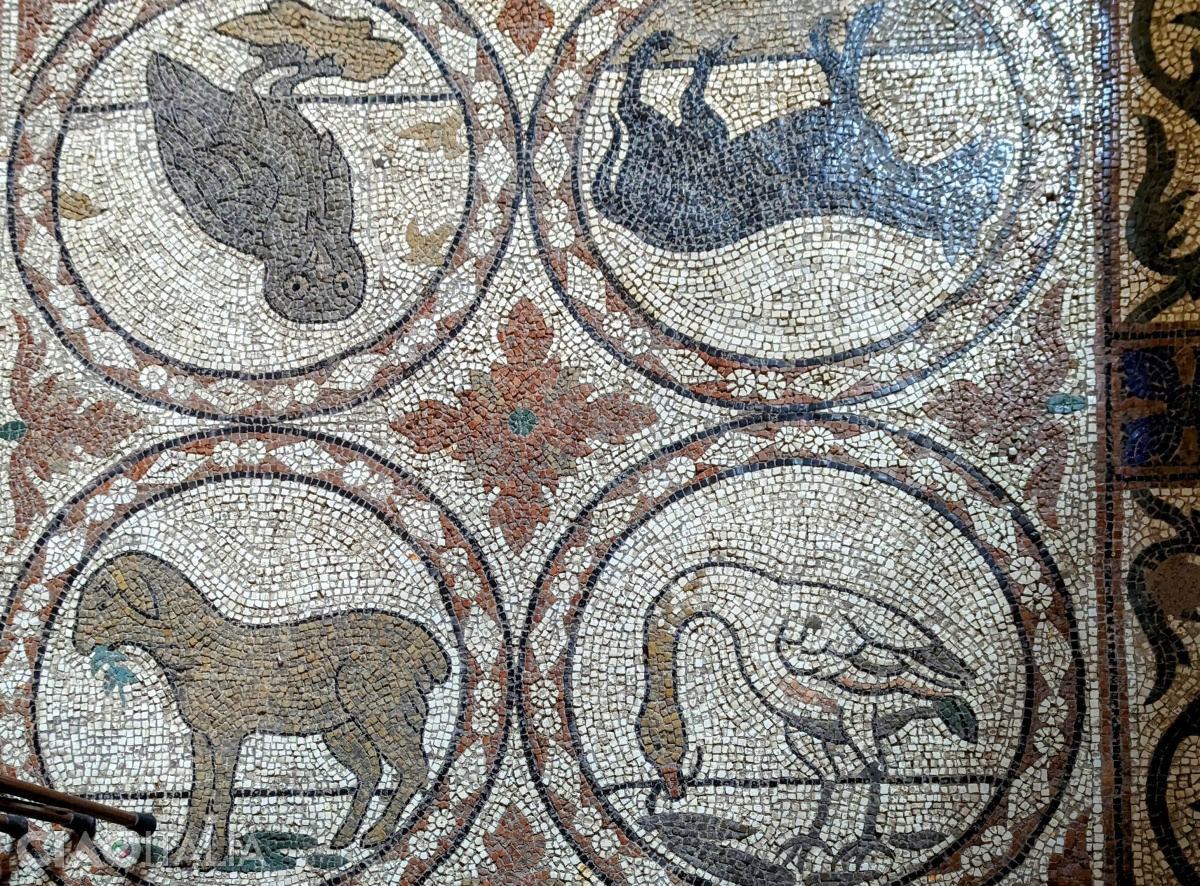
The marble floor features geometric patterns, but you will also encounter mosaics with animal figures.
On the right side of the church, towards the Doge's Palace, lies the Treasury (il Tesoro di San Marco), one of the most beautiful collections of Byzantine objects in Europe, originating from the loot taken by Venetians following the Fourth Crusade (1204).
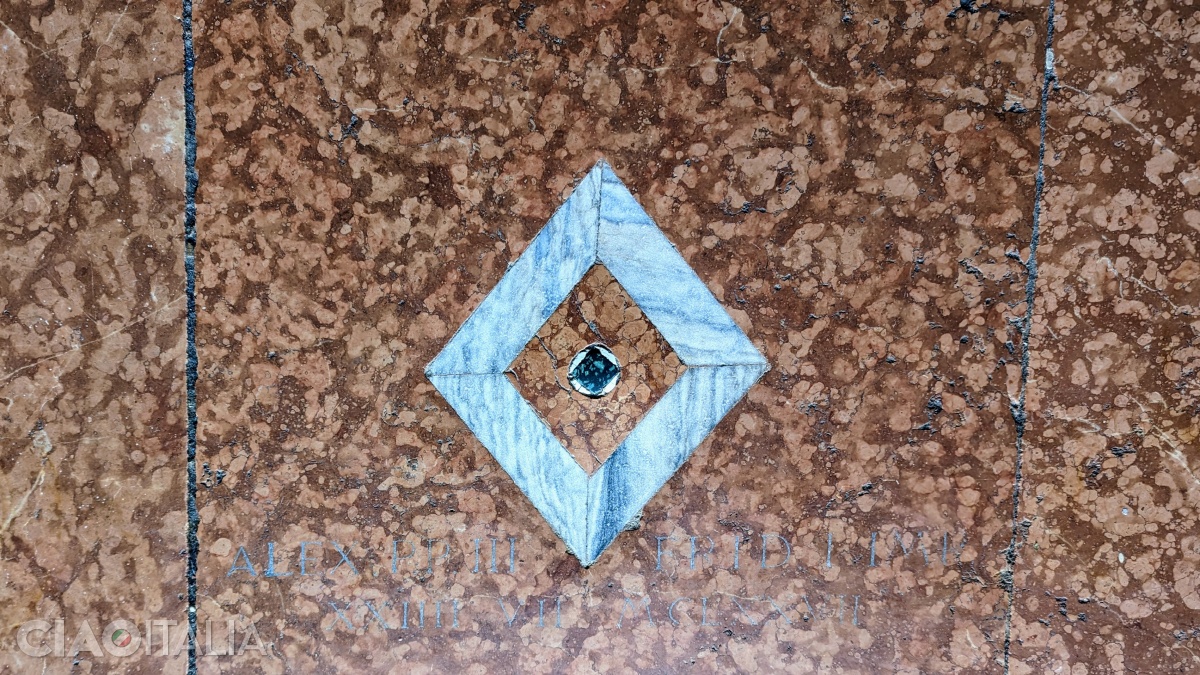
A curious detail: before leaving the church, in the narthex, look for a white rhombus in the red floor. This marks the spot where, on July 24, 1177, Frederick Barbarossa, the Holy Roman Emperor, knelt before Pope Alexander III. Through this gesture - deeply humbling for a man who had envisioned himself as the heir to the Roman emperors - he recognized the Pope's authority and renounced the power to appoint bishops, sealing the reconciliation brought about by the Treaty of Venice.
Pala d’Oro
The Pala d'Oro is located in the main altar where, under a green marble canopy with carved columns, the sarcophagus with the relics of St. Mark is also located.
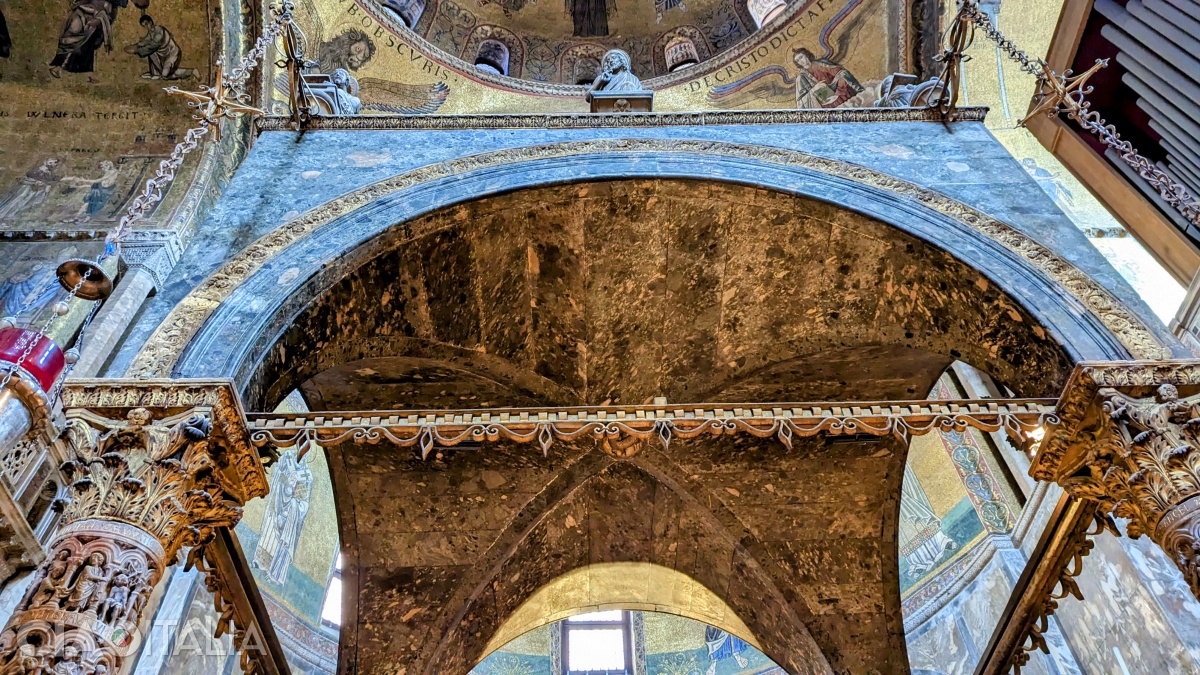
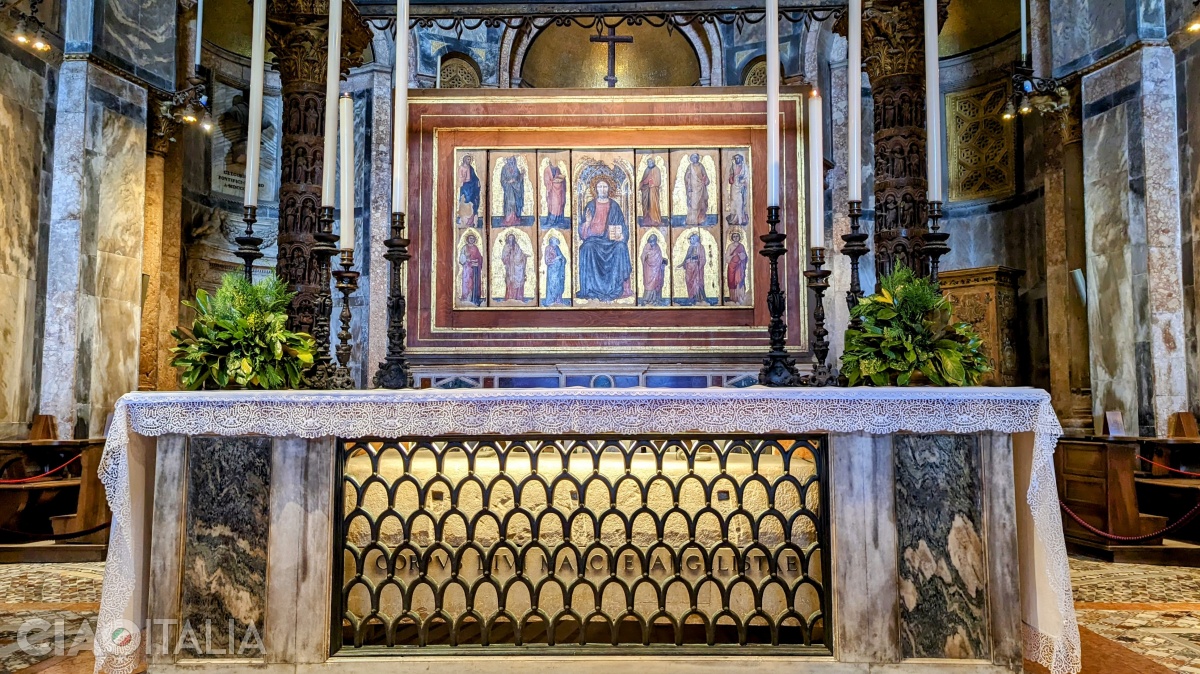
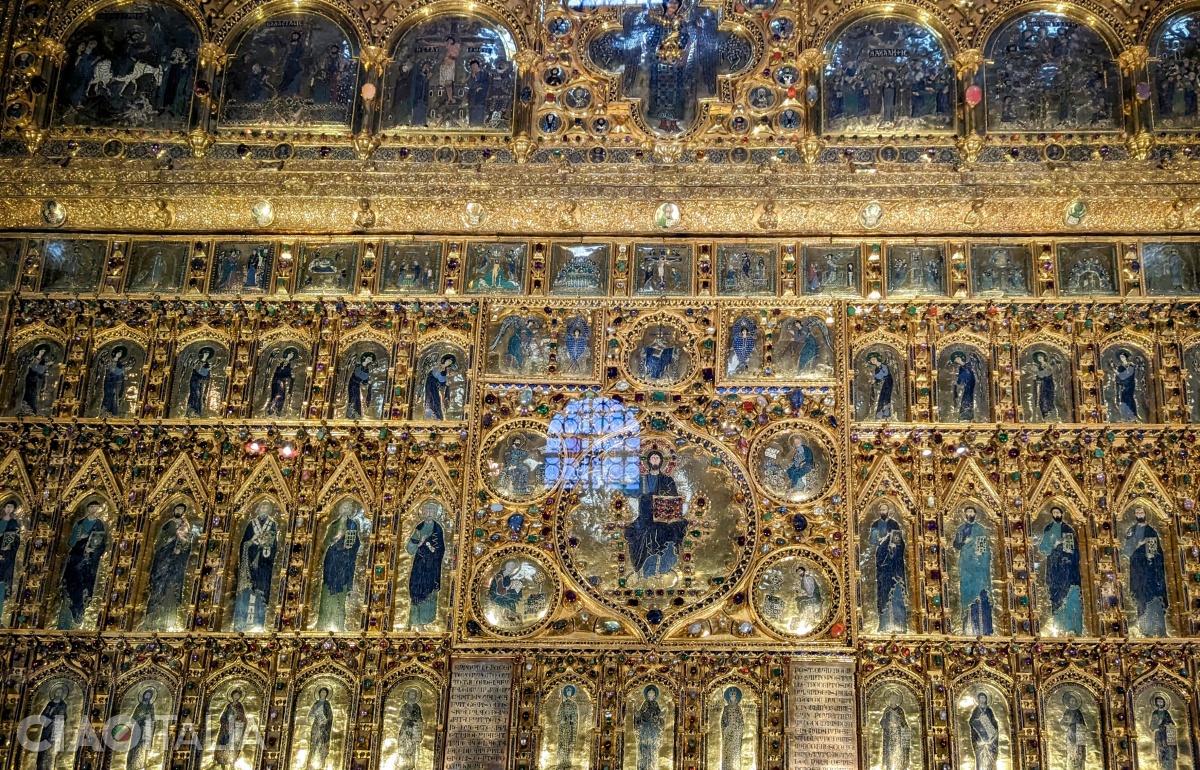
Pala d'Oro is a gilded silver panel adorned with pearls, precious stones, and over 250 enamel plaques. The initial panel was made in Constantinople, commissioned by Doge Orseolo I, in the years 976-978. Since then, over the course of more than four centuries, it was adorned by wealthy merchants. It is the largest exhibit of Gothic goldsmithing preserved in Europe today and contains 1,927 precious and semi-precious stones, including emeralds, rubies, garnets, sapphires, amethysts, and topazes. In the center, Christ is represented between the evangelists, and on the sides are apostles and prophets.
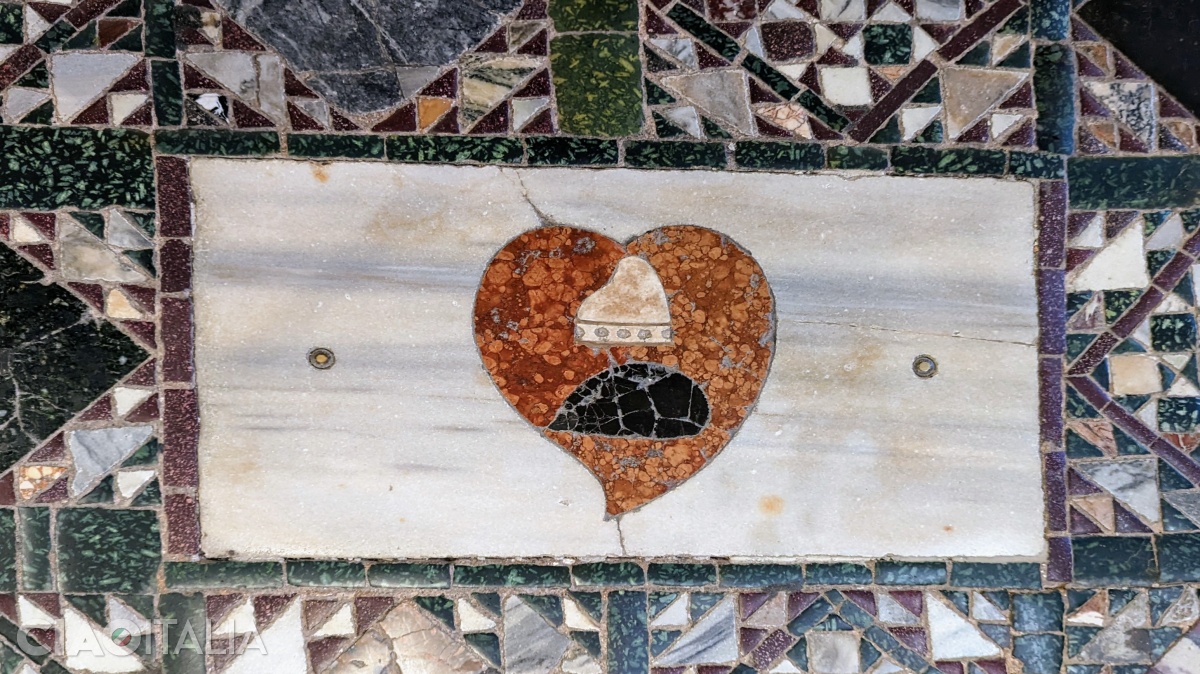
The flooring in this area is exceptionally beautiful, crafted from marble with intricate geometric patterns. In the floor, to the right as you face the Pala d'Oro, you will find a stone depicting a heart, a doge's hat, and a black hedgehog. Beneath this stone, the heart of Francesco Erizzo (Doge of Venice from 1631 to 1646) was buried. The rest of his body rests in the Church of San Martino in the Castello district, near his birthplace. Due to the similarity between the words - in Italian, "hedgehog" is riccio - the animal served as the symbol of the noble Erizzo family.
San Marco Museum and Loggia dei Cavalli
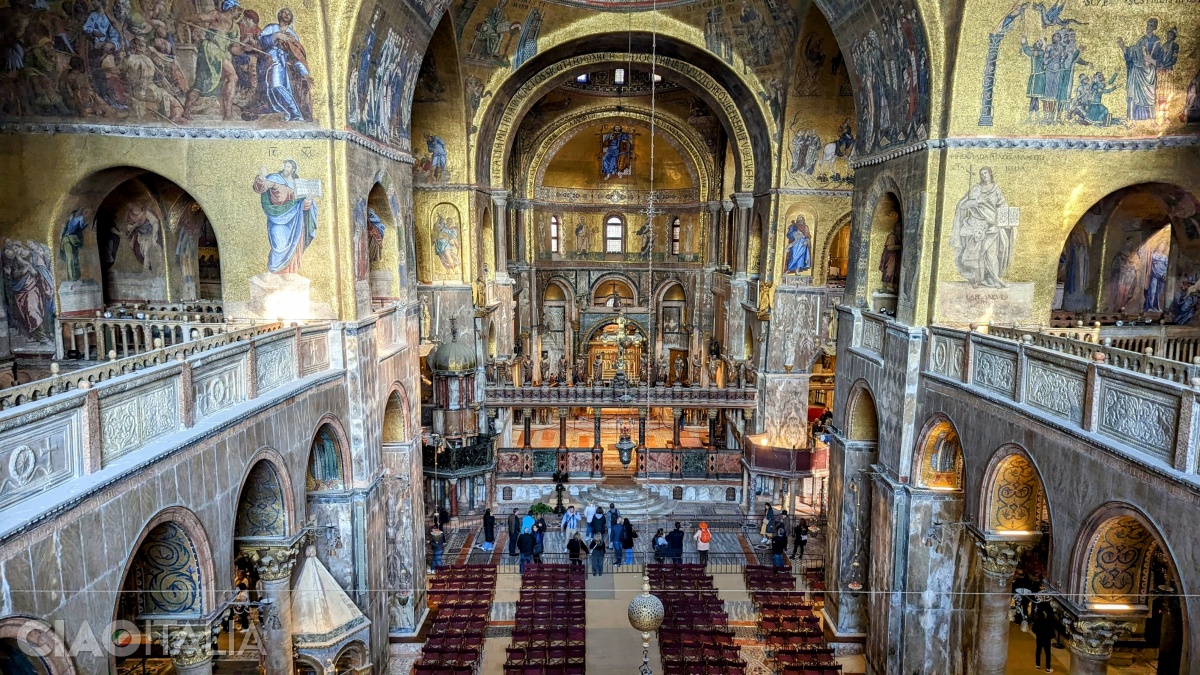
The San Marco Museum (Museo San Marco) is located on the upper floor of the basilica. Climbing up to it, you will also be able to see the interior of the church and the mosaics covering it almost entirely from above.
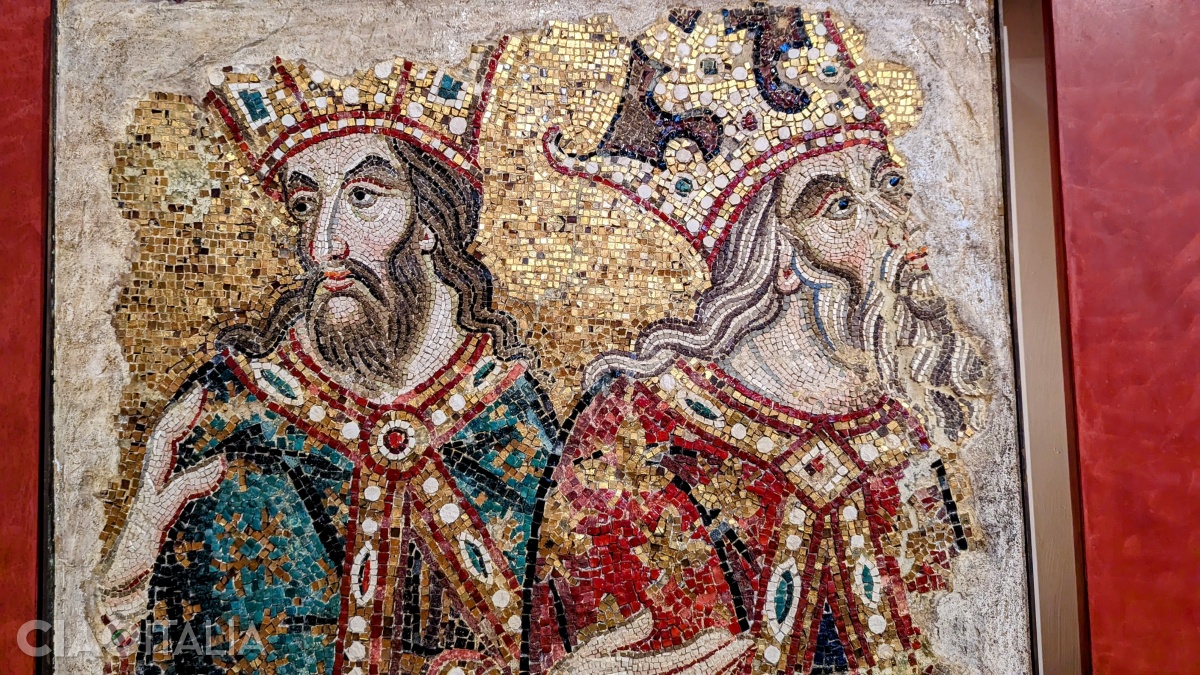
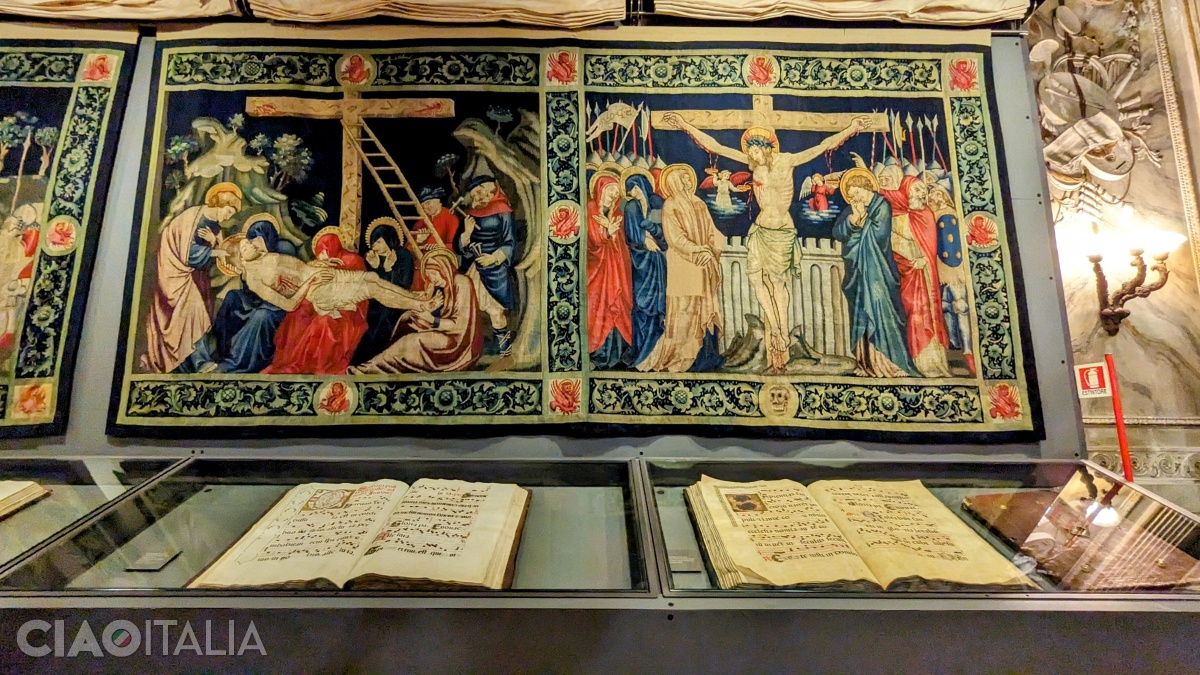
The museum comprises several rooms with pieces of original mosaics, restoration methods, tapestries, and old religious books. However, the "star" is represented by the original statuary group of the four horses (la quadriga marciana), brought in 1204 (along with many other treasures) from the hippodrome in Constantinople by the Venetians victorious in the Fourth Crusade, commanded by Doge Enrico Dandolo.
The horses were made of gilded bronze, and the numerous scratches scoring their surface seem to have been made intentionally to reduce excessive light reflection.
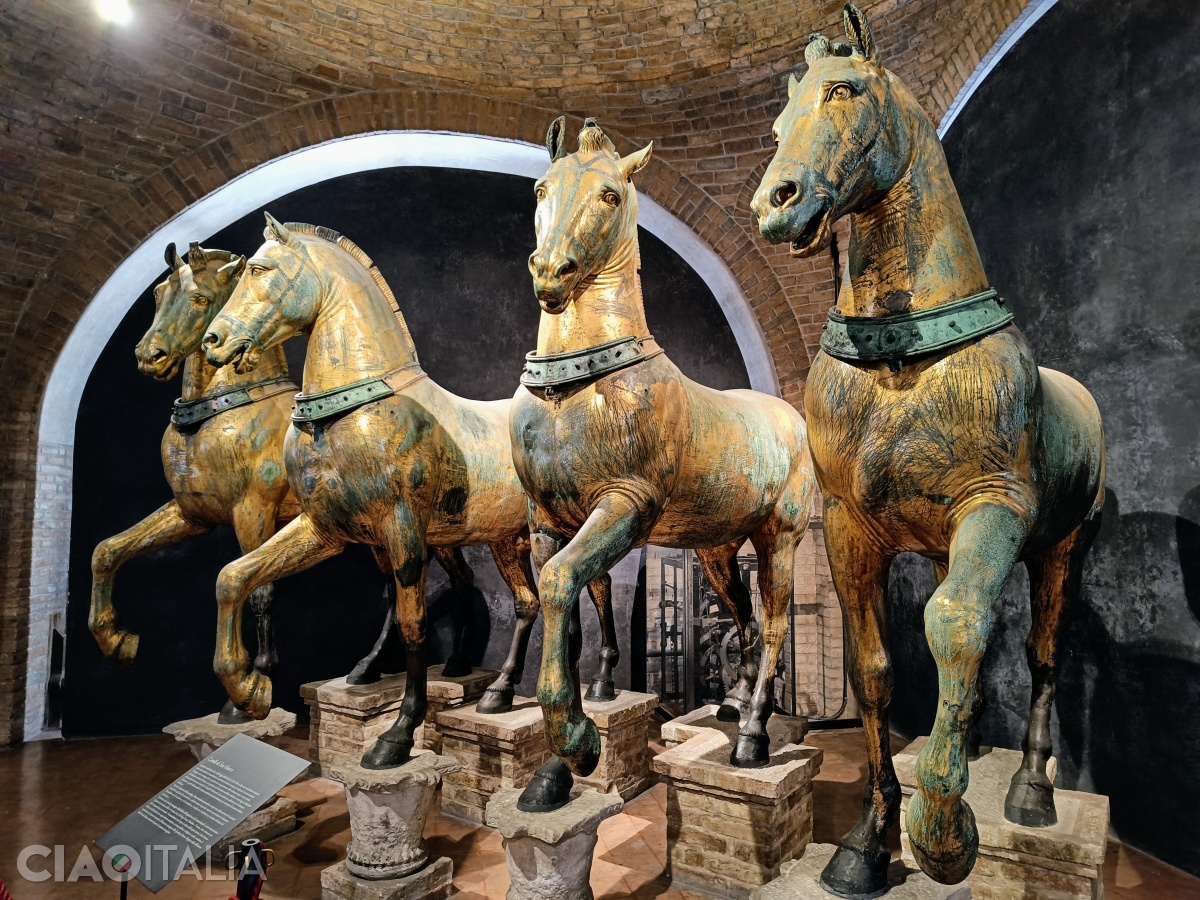
Throughout their history, the four horses have "traveled" quite a bit across Europe. Some say they were created at the end of the 4th century BC by the Greek sculptor Lysippos for the city of Rhodes. According to others, they were cast in Rome around the 2nd or 3rd centuries AD, where they decorated Hadrian's Mausoleum (current Castel Sant'Angelo) for a period. From there, they were taken to Constantinople, from where they were taken by the Venetians. In 1797, when Napoleon occupied Venice, he stole them and took them to Paris. They returned to Venice in 1815, but without the ruby eyes that had been stolen.
With small interruptions (during the two World Wars), the horses stood on the terrace on the façade of Saint Mark's Church until 1977, when it was decided to place them under shelter to protect them from atmospheric agents. They were restored and installed in 1982 in the San Marco Museum, and identical copies were placed in their stead on the terrace (which is what you see today when looking at the basilica from Piazza San Marco).
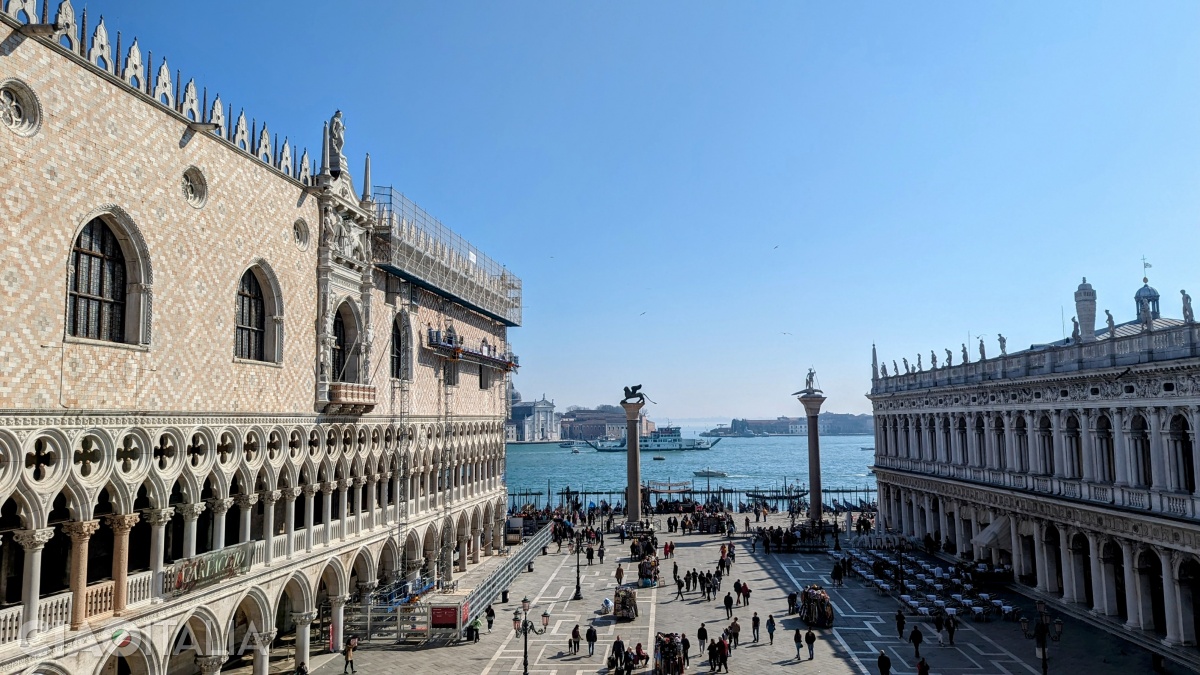
After admiring the sculpture, step out onto the terrace named Loggia dei Cavalli (Loggia of the Horses). From here, a beautiful view opens up towards Piazza San Marco in front, but also towards the Piazzetta and the lagoon on the left side.
Tip: Keep your entrance ticket. You will need to validate it again to exit the museum.