How to Use Public Transport in Venice
Let's start with a warning: the public transport system in Venice is anything but easy to understand. You will need a little time to get used to it and you will have to be quite careful about which means of transport you take and in which direction (it is not at all impossible to find yourself on a vaporetto heading in a direction you didn't want or even to a different destination than the one you intended).
Means of Transport in Venice
Vaporetto
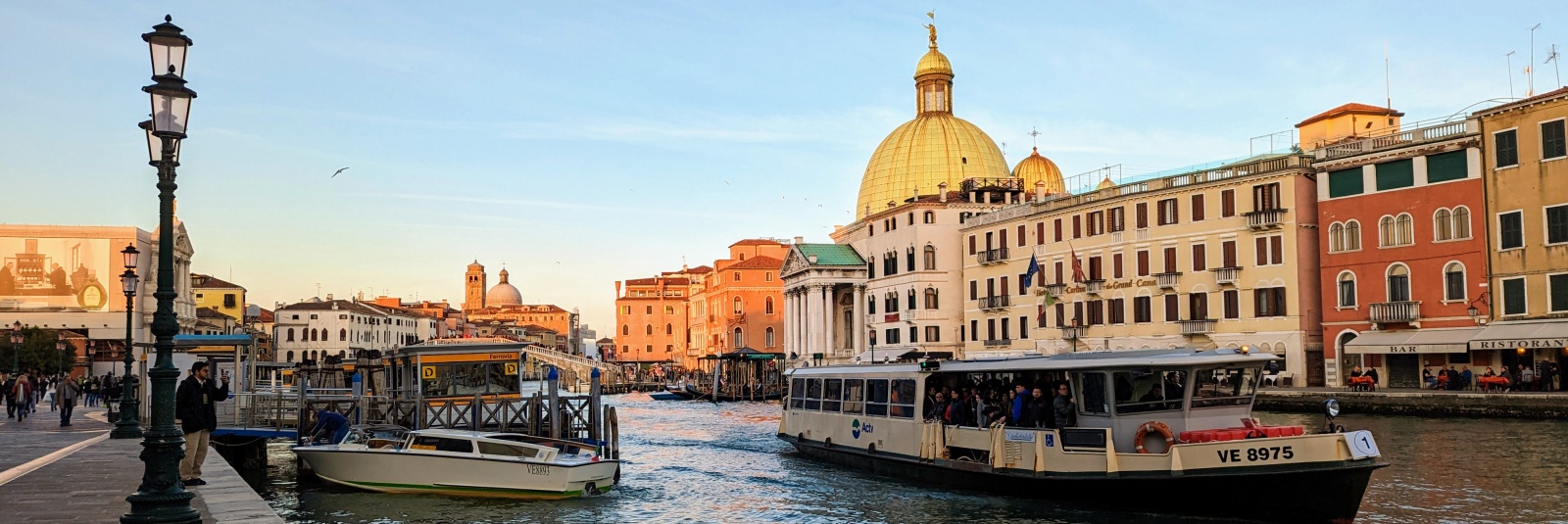
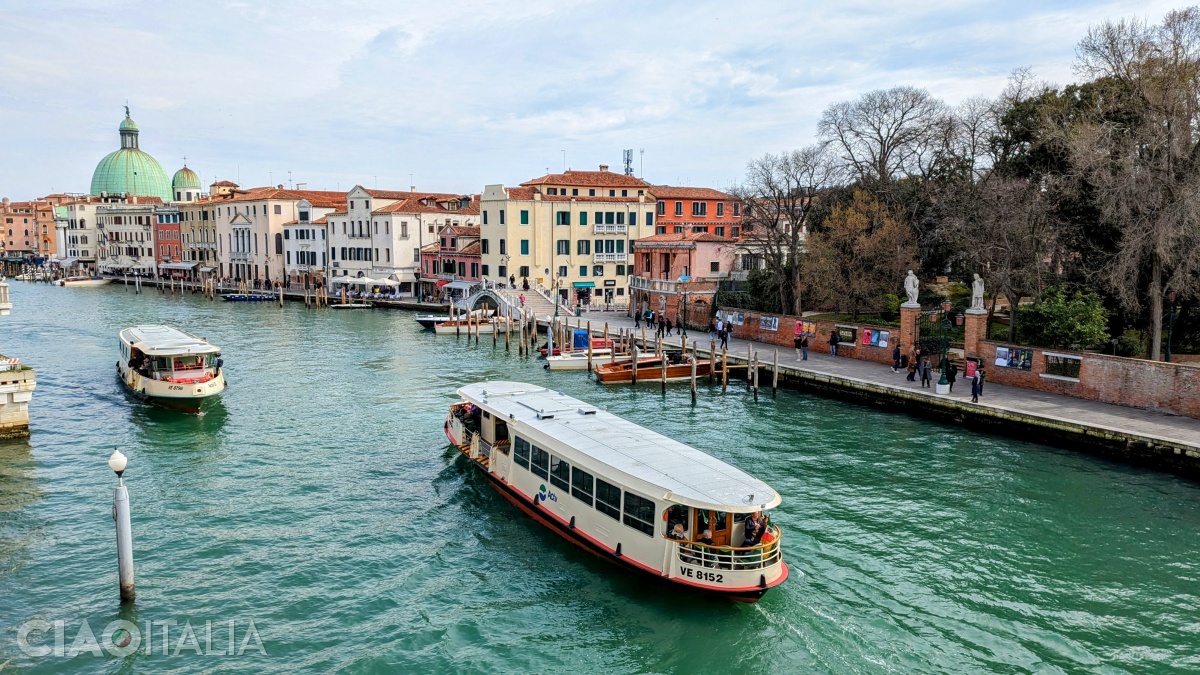
In the historical center of Venice the only options for getting around are either on foot or by using the naval public transport system, which provides several types of boats called vaporetto ("little boat") - see more details in the section Venice by Vaporetto.
The first water buses began operating in 1881, and since then they have become a regular part of the Venetian urban landscape.
Cars and Bycicles
In historical Venice, you cannot travel by car or even by bicycle. Cars can be left at the edge of the city, in the parking lots in the Piazzale Roma, Stazione Marittima, and Tronchetto areas, or on the mainland (for example in Mestre) - see also the article about parking in Venice.
Cycling is prohibited (it is not even permitted to walk alongside your bike, except for the area between Piazzale Roma and Santa Lucia station). Those who arrive in Venice by bicycle, crossing the Ponte della Libertà, can leave it in the specially designated areas in the Autorimessa Comunale parking lot in Piazzale Roma.
Driving and cycling are only allowed on two islands in the Venetian lagoon: Lido and Pellestrina.
Buses, Trams and Trains
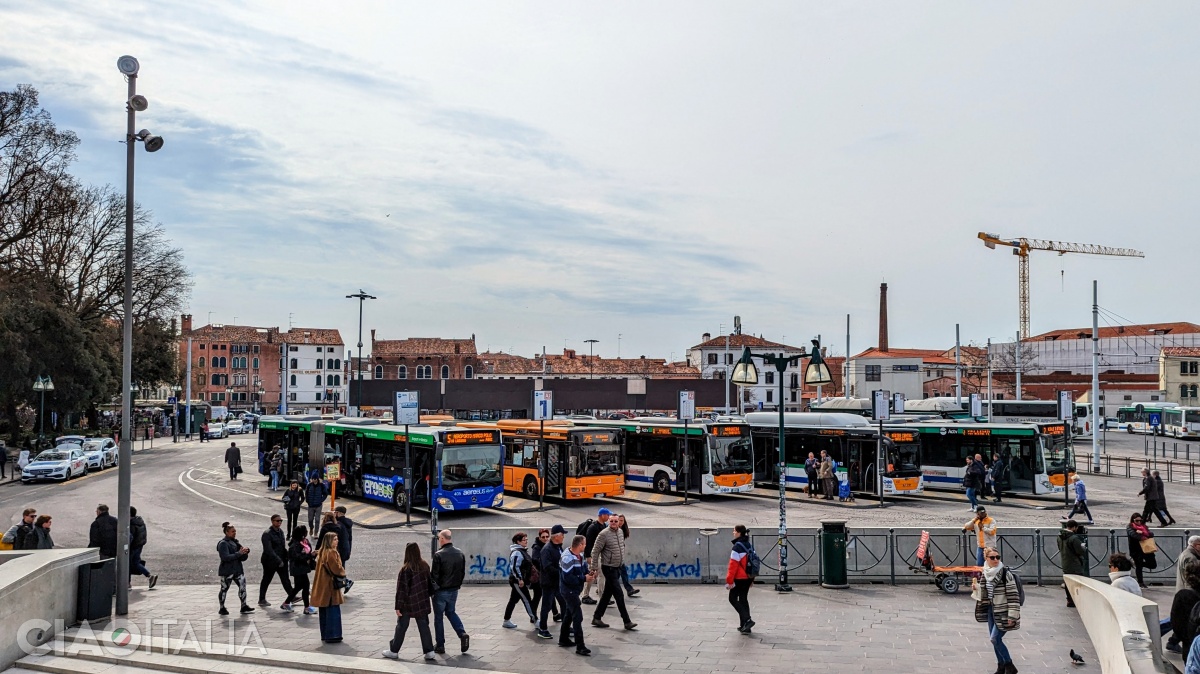
Buses, trams, and trains provide the connection to the mainland and other destinations in the Veneto area and only reach the edge of Venice. They will be particularly useful for transfers from Venice airports (Treviso Airport or Marco Polo Airport etc.) into the city or, for example, if you have booked accommodation in Mestre - see also the article Where to Stay in Venice.
The bus and tram lines belong to the transport companies ACTV and ATVO and terminate at Piazzale Roma.
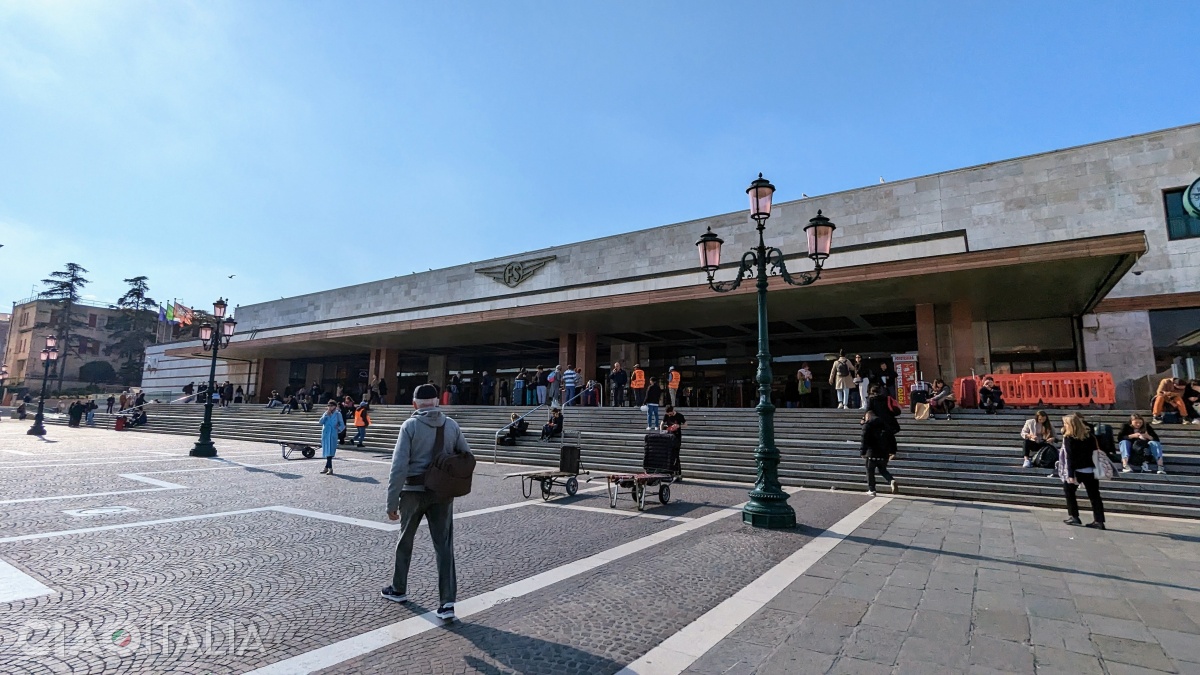
Trains arrive at Stazione Santa Lucia, which is Venice's railway station and takes its name from a former church demolished to make way for the new railway construction. The station, completed in 1952, is one of the largest in Italy.
People Mover
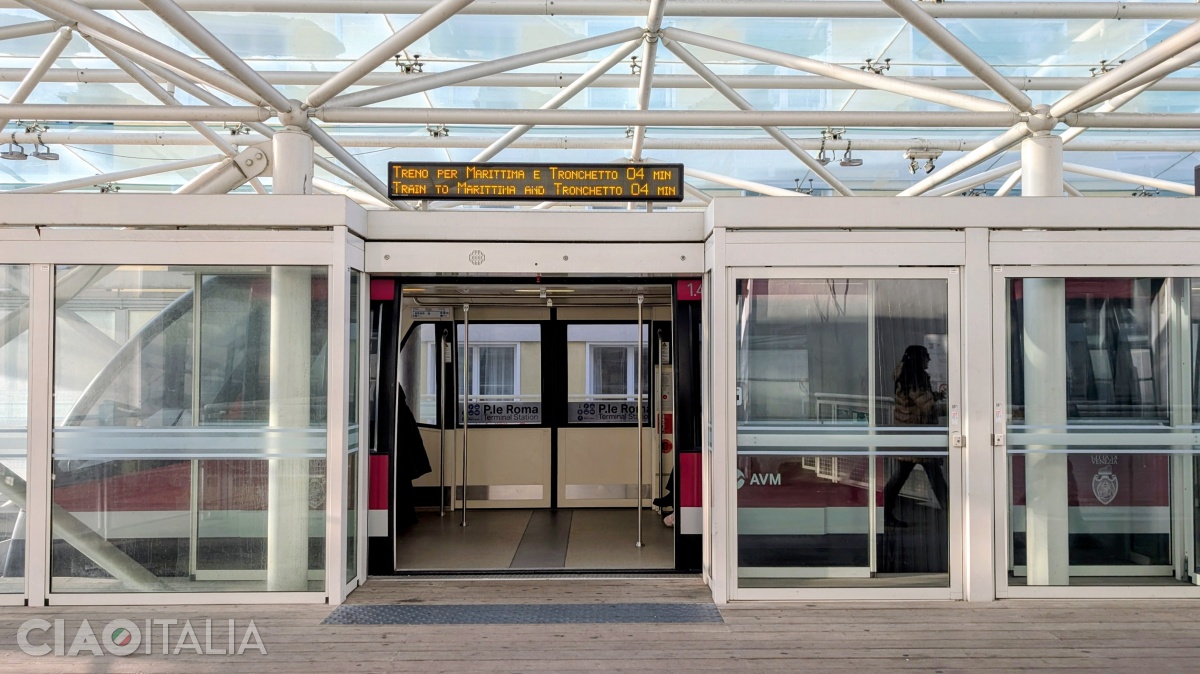
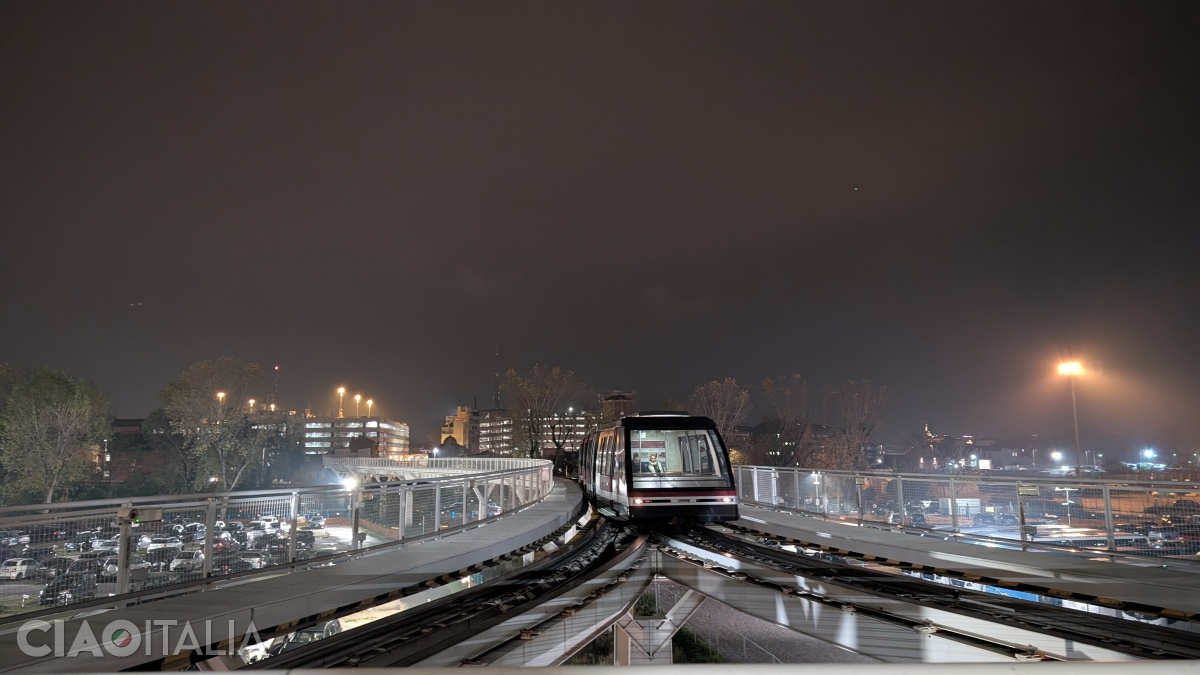
An automated elevated shuttle, the People Mover (similar to those in the cities of Pisa and Bologna), connects the artificial island of Tronchetto (where several parking lots are located, as well as the Hampton by Hilton and the recently built B&B Venezia Laguna) and Piazzale Roma, which it reaches in about 5 minutes.
The People Mover runs every 10 minutes and makes an intermediate stop at Stazione Marittima (where the cruise and ferry terminal is located).
The train schedule is:
- April-October: 7:00 AM - 11:00 PM (Monday-Friday), 8:00 AM - 10:00 PM (Saturday-Sunday)
- November-March: 7:00 AM - 11:00 PM (Monday-Friday), 8:30 AM - 9:00 PM (Saturday-Sunday)
The price of a ticket is €1.5 (it can be purchased from the machines in the three stations, directly by card at the entrance through the Tap&Go system, or via the AMV Venezia app).
Access to the People Mover trains is included in the ACTV vaporetto pass.
Ferry
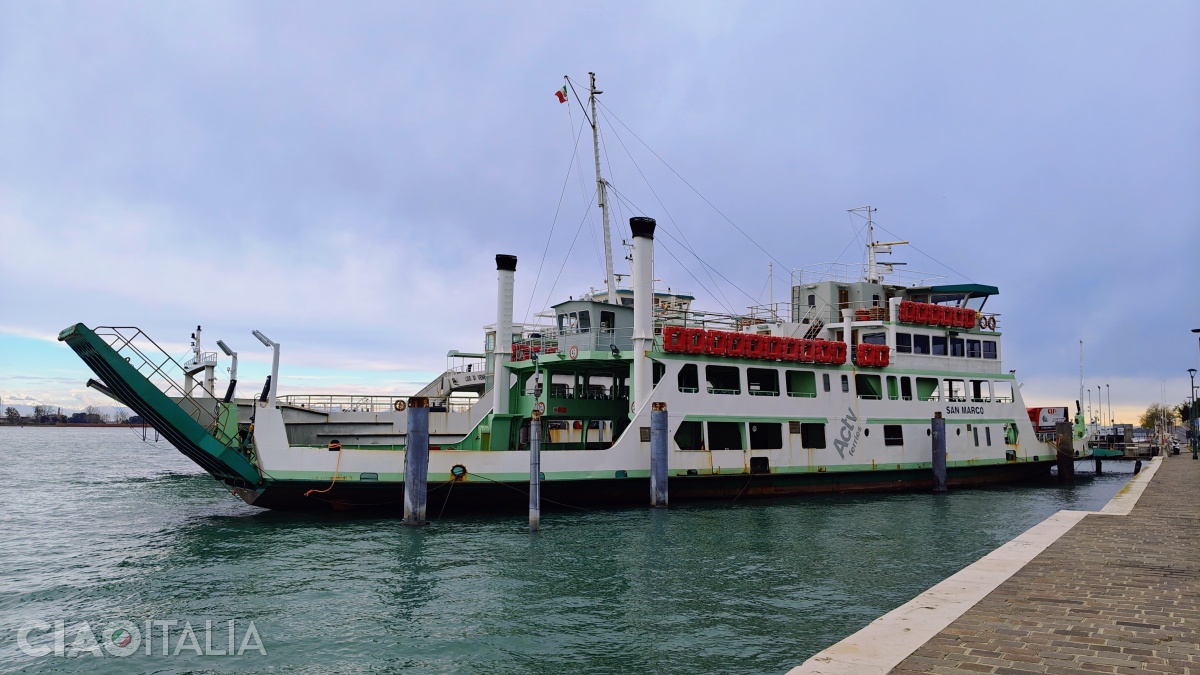
In Venice, there are two ferry lines (traghetto):
- line no. 17, which connects Venice Tronchetto with Lido Island and Punta Sabbioni
- line no. 11 which connects Lido Island with Pellestrina Island
Traghetto gondolas
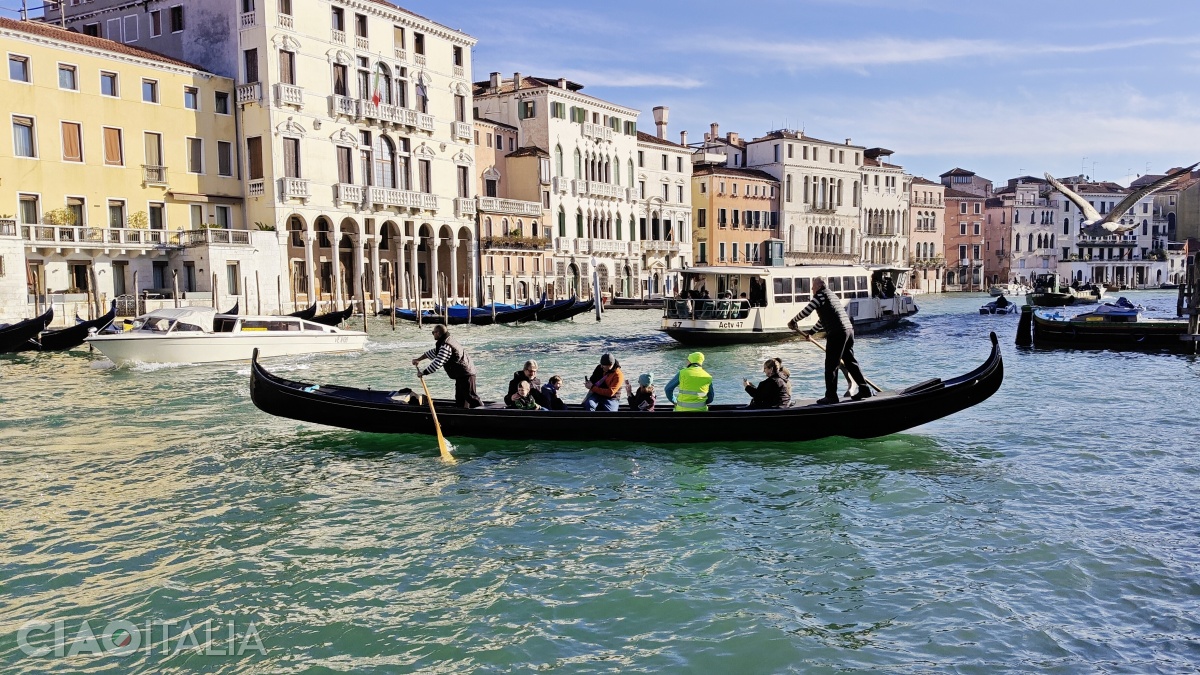
In addition to the famous Venetian gondola, there are also some boats called gondole traghetto, which are used (mainly by locals) to cross from one bank of the Grand Canal to the other. They are larger than regular gondolas and are rowed by two gondoliers. For tourists, the price of a crossing is €2 (see more details in the article about riding a gondola).
Taxi
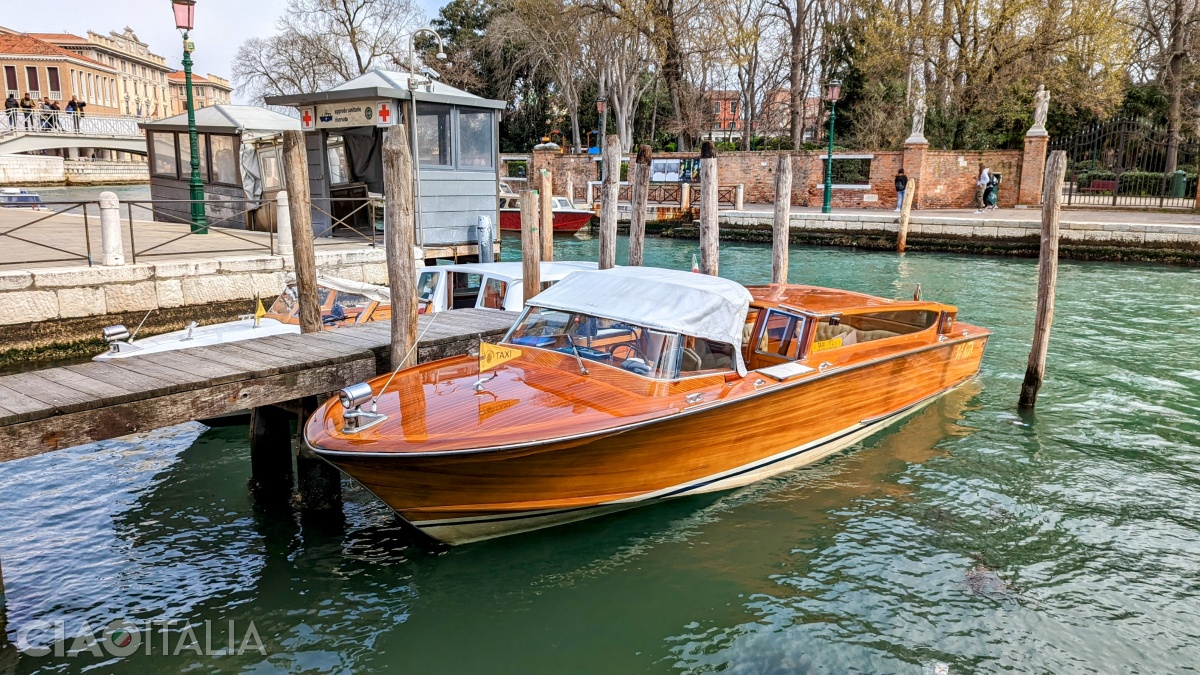
Taxis in Venice also operate on water - they are private motorboats that are registered and have specific identification numbers. You will recognize authorized taxis by the yellow flag at the front that says "TAXI". A water taxi is probably the most comfortable and fastest means of transport, but also the most expensive. It can be an option especially during the night if you can't find any other way to get to your hotel.
Venice by Vaporetto (Companies, Ticket Prices and Vaporetto Passes)
In Venice, water buses (called vaporetto) are the main means of public transport. Even if it seems strange at first, you can think of them as buses that run on water - with stops, schedules, tickets, inspectors, and all the characteristics of a public transport system.
ACTV
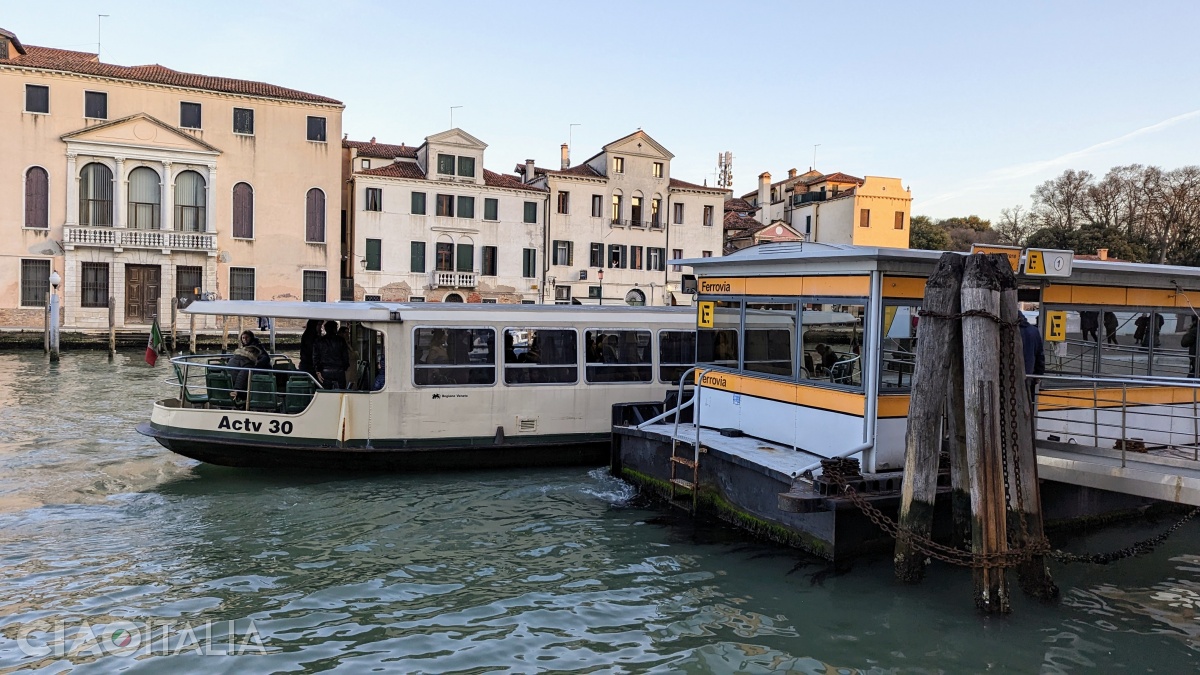
The main naval transport company in Venice is called ACTV (Azienda del Consorzio Trasporti Veneziano) and has about 30 lines, which serve not only Venice but also the surrounding islands and towns. The lines that will probably interest you most are line 1 and line 2, which go through the center of Venice, on the Grand Canal and on the Giudecca Canal (between Venice and Giudecca Island).
The ticket prices for the ACTV vaporetto are as follows:
- Single ticket: €9.5. It allows you to travel for 75 minutes from the first validation on the Venice naval network (except for lines no. 16, 19 and 21, the Casinò line and Alilaguna lines), on the mainland bus network, in Lido and Palestrina (except for the lines to/ from Marco Polo Airport), on trams and on the People Mover elevated train.
- Round-trip ticket for beaches: €16. It allows you to make a round trip on the same day on naval routes no. 14 and no. 15, which perform the Venice - Lido - Punta Sabbioni itineraries, and on the bus lines of Lido di Venezia (except line 11). The return ticket is valid until 11:59 PM on the day it was first validated.
Children under 6 travel for free.
Fortunately, there are also several types of ACTV passes in the form of transport cards:
- ACTV 1-day transport card (Venezia Daily Pass): €25. It allows you to travel for 24 hours from the first validation on the naval lines of Venice (except for lines no. 16, 19 and 21, the Casinò line and Alilaguna lines), on the mainland bus network, in Lido and Palestrina (except for the lines to/ from Marco Polo Airport), on trams, the People Mover, and on the regional (R) and fast regional (RV) trains of the Trenitalia company within the limits of the municipality of Venice (Venezia Santa Lucia, Venezia P.to Marghera, Venezia Mestre, Venezia Carpenedo, Venezia Mestre Ospedale).
- 2-day transport card: €35 (valid for 48h from the first validation)
- 3-day transport card: €45 (valid for 72h from the first validation)
- 7-day transport card: €65 (valid for 168h from the first validation)
The 2, 3, and 7-day transport cards are valid on the naval lines (except for lines no. 16, 19 and 21, the Casinò line and Alilaguna lines), on the mainland bus network, in Lido and Palestrina (except for the lines to/ from Marco Polo Airport), on trams, and on the People Mover.
In conclusion, taking single transport tickets for the vaporetto only proves advantageous if you plan to make a maximum of 2 trips in one day, 3 trips in 2 days, and so on. In all other cases, it is much more convenient financially (and practically) to get 1, 2, 3, or 7-day cards, depending on the time spent and what you want to visit in Venice.
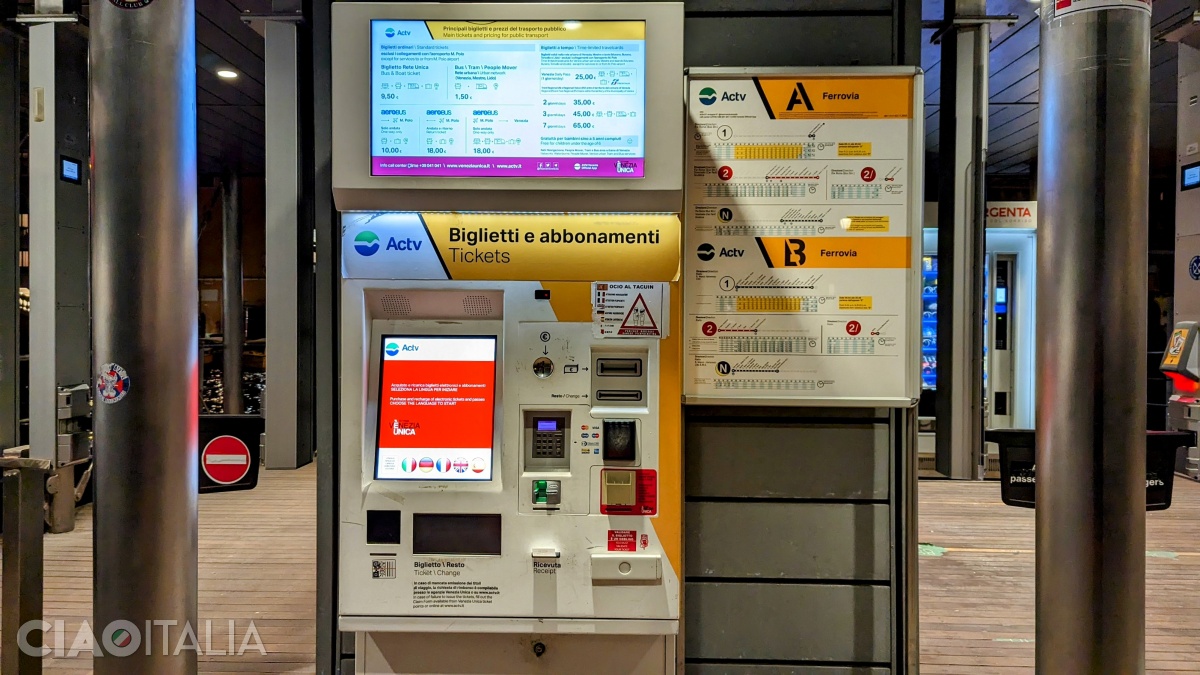
ACTV tickets and transport cards can be purchased from ticket agencies (where there is often a queue) and from vending machines in the city, from the VeneziaUnica.it website, through various resellers, through the AVM Venezia app and via WhatsApp (by scanning a QR code that will send you to a chat system).
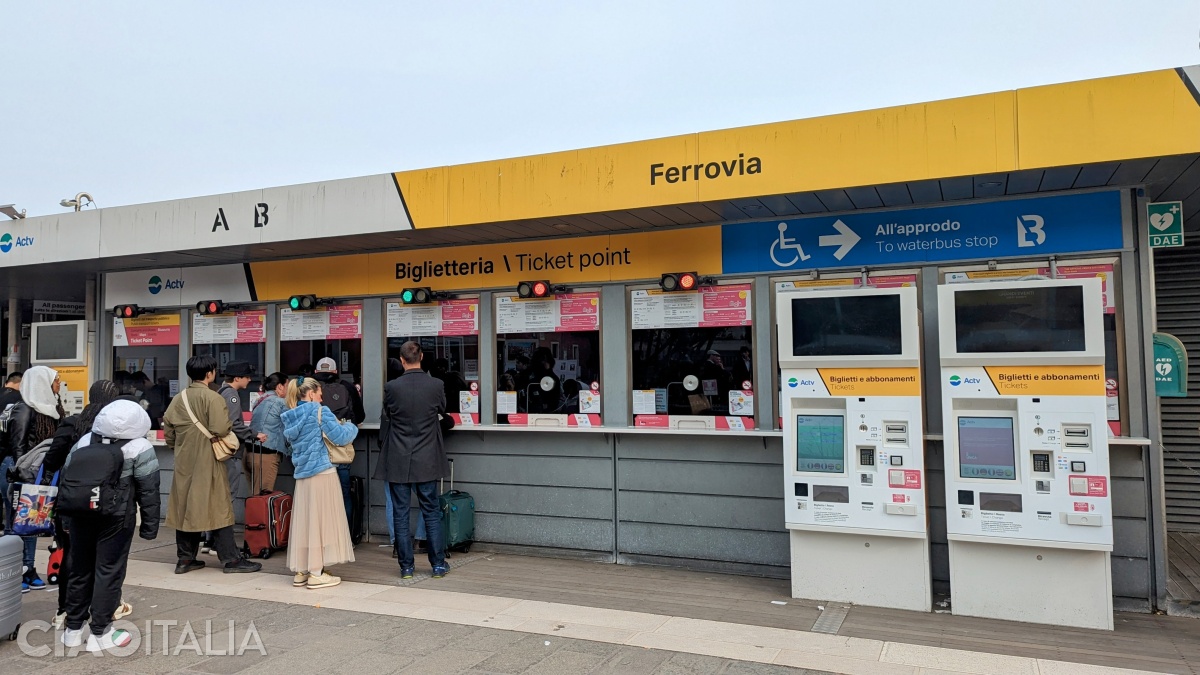
For tickets purchased online, you will receive a voucher, which you must use to pick up your physical transport card. Go to the machines with a yellow band that says "Actv" (they are in many stations), press "Collect tickets purchased online" and enter the voucher code ("activity provider reference"). The machine will issue your transport card. Validity begins from the moment of the first validation. Tickets cannot be modified or refunded.
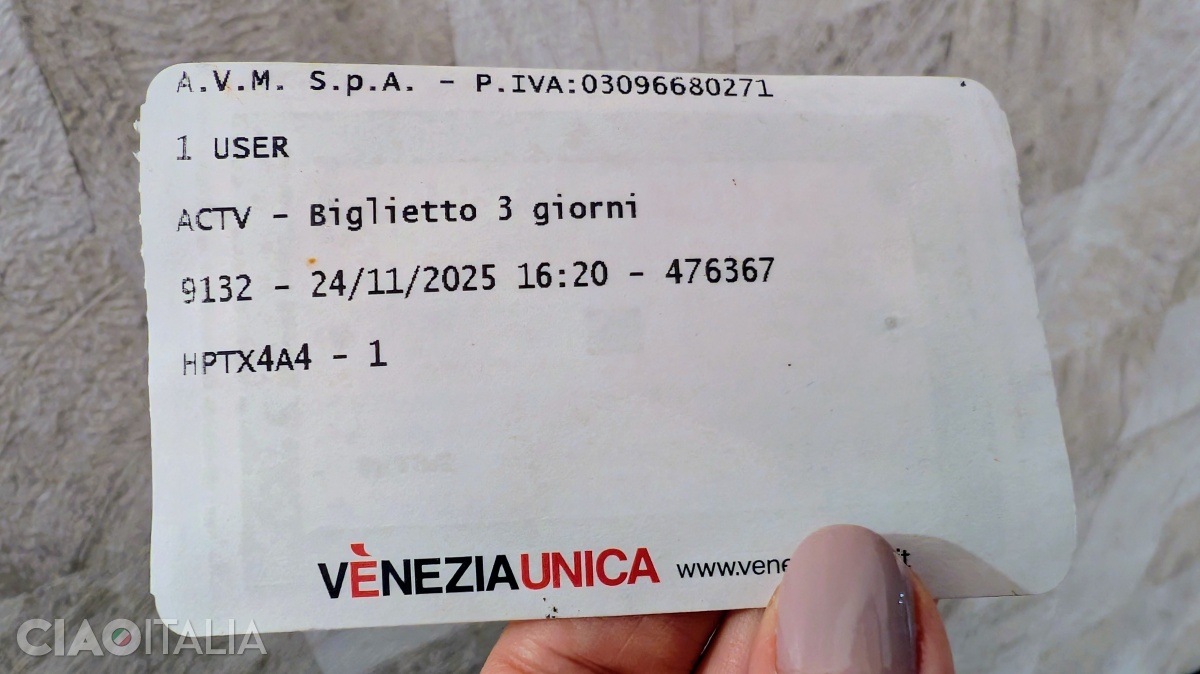
Additionally, you can also pay by card (contactless only) on all means of transport. It is mandatory to validate the card (the same card!) at every boarding and change of transport, as well as at every exit (in the vaporetto and in the People Mover, it is not mandatory to validate it upon exit). The system will automatically calculate the most advantageous price option for you (the adjustment is usually made in the week following the last trip). Attention! If the onboard validators are not working, you will have to buy the ticket using an alternative method.
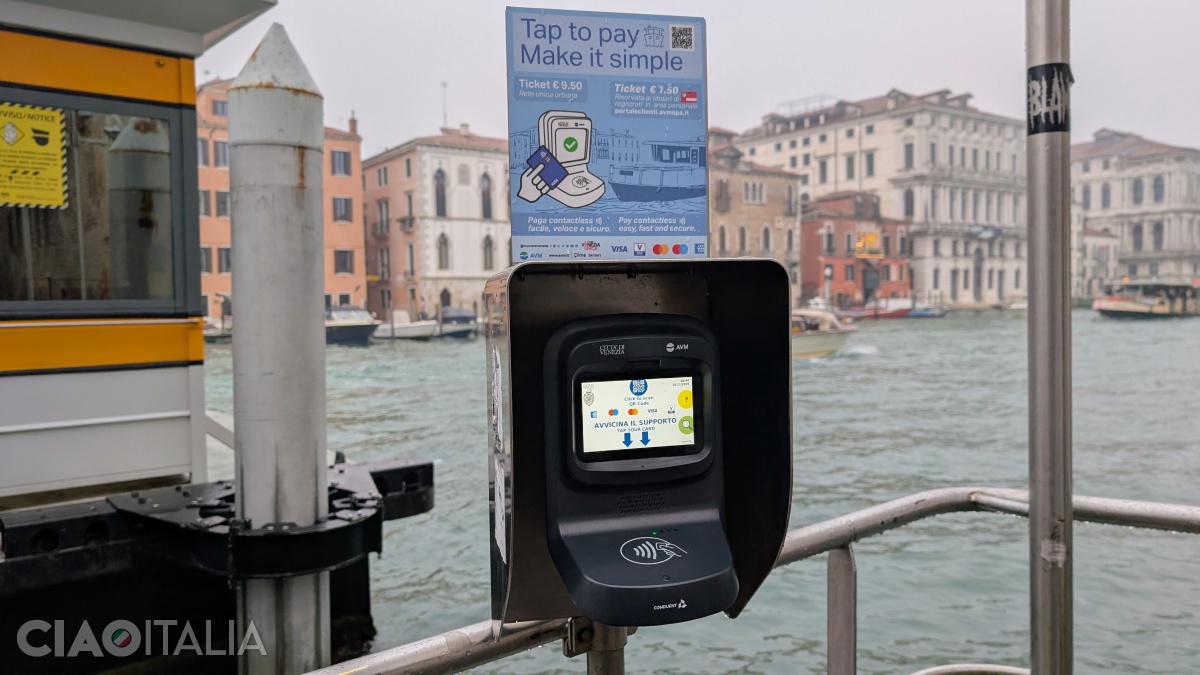
What is important to know about traveling by vaporetto:
- Validate your ticket or pass every time you board a vaporetto, even if there are no access barriers. Inspections on the water buses exist and are quite frequent, and fines start from €50. Tickets are validated by holding them close to the machines located in the area of each pontoon (maritime station).
- The validity of the ticket or pass begins from the first validation. To check when it expires, look at the machine's screen when you validate it. Tickets or passes must be valid until the moment you get off the vessel.
- If you find yourself on a vaporetto without a ticket, inform the staff on board immediately. You will pay for the ticket, but you won't pay the fine.
- Before boarding, always ask the staff on the vessel if the vaporetto is going in the direction you want. Since there are no different stations for one direction or the other, it is very easy to find yourself on the wrong boat.
- Arm yourself with patience! Unfortunately, especially in high season, the water buses are so crowded that you may not be able to board the first one that arrives.
- There are also night vaporetto lines, marked with the letter "N".
- You can check the map of the vaporetto lines on the ACTV website or guide yourself on the Google Maps map.
- A very useful site for navigating the complicated transport system in Venice is CheBateo (you can also find it as an app on Google Play or App Store). Its name is in Venetian dialect and translates to "Which boat?", and the site was made by a local... exasperated by Venice transport.
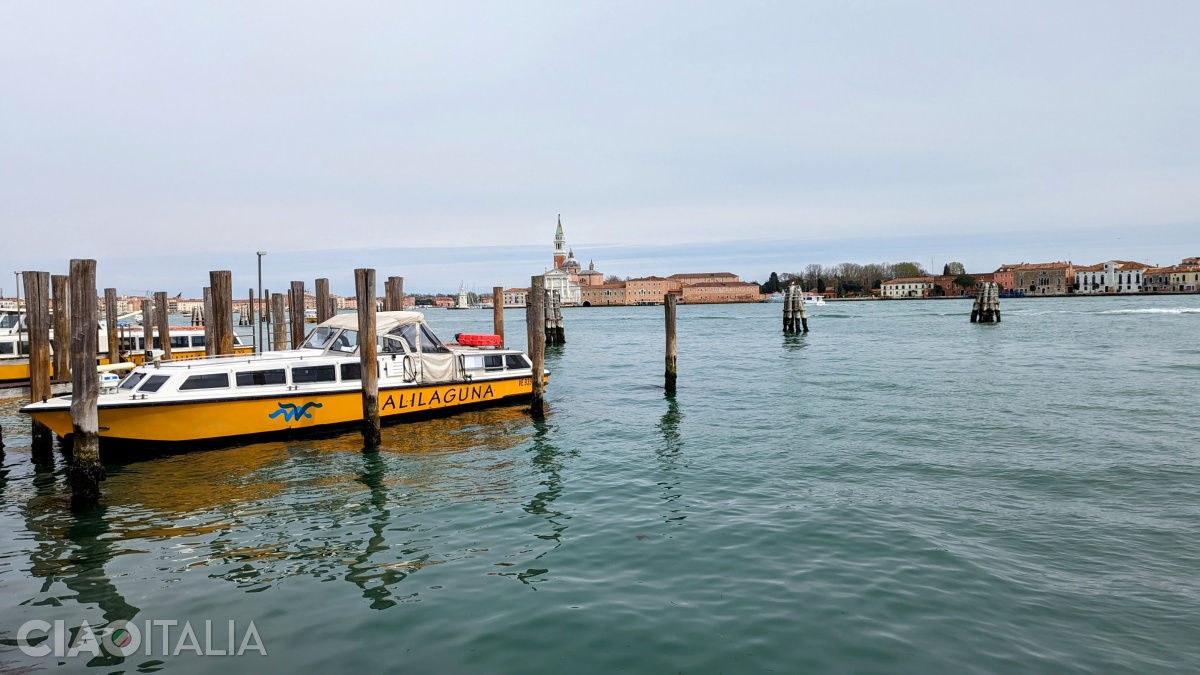
Alilaguna
Another naval public transport company is Alilaguna, which has 3 lines:
- Blue line, which connects Marco Polo Airport with Murano Island, Lido, Venice, and Giudecca Island
- Orange line, which connects Marco Polo Airport with several stations in Venice
- Red line, which is active only from April to October and connects Marco Polo Airport to Murano Island, Lido, and the center of Venice
Ticket prices vary depending on the route, as follows:
- Marco Polo Airport - Venice: €18/ one way, €32/ round trip
- Marco Polo Airport - Murano: €10/ one way, €18/ round trip
- San Marco - Murano: €10/ one way, €18/ round trip
- Railway station - San Marco: €10/ one way, €18/ round trip
Alilaguna transport card prices are:
- 24h card: €40
- 48h card: €60
- 72h card: €80
Passes are valid on the blue, orange, and red lines of the Alilaguna company for 24h, 48h, and 72h respectively from the moment the ticket is issued. Tickets can be purchased from ticket offices and resellers or online, while passes can only be purchased from Alilaguna ticket offices.
Venice on foot
If you are only staying for a few days in Venice, you enjoy walking, you are in good physical shape and you don't want to see the islands, you can get around only on foot. However, take into account that Venice is full of winding streets and alleys and that you will have to climb and descend quite a few steps and bridges. Even if the distances don't seem too long, walking between different sights can become quite tiring.
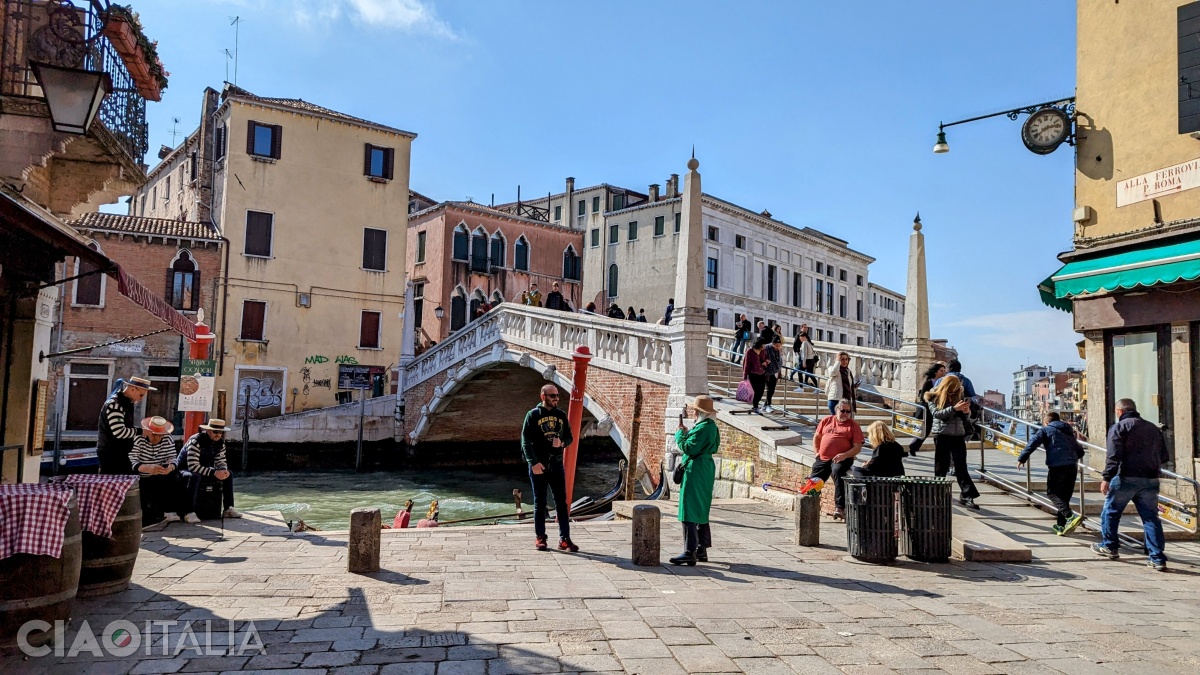
What you should know:
- In Venice, there are 6 neighborhoods called sestieri. These are: Cannaregio (the part located north of the Grand Canal, where Santa Lucia station is located), Santa Croce (the westernmost part, where Piazzale Roma, the maritime station, and Tronchetto island are), San Polo (the central part, where the Rialto food market is located), San Marco (with the square and St. Mark's Basilica, including San Giorgio Maggiore island), Dorsoduro (the southernmost part, which also includes Giudecca island) and Castello (if you look at Venice's fish shape on the map, Castello would be the tail of the fish; from an administrative point of view, the Castello neighborhood also includes San Michele island).
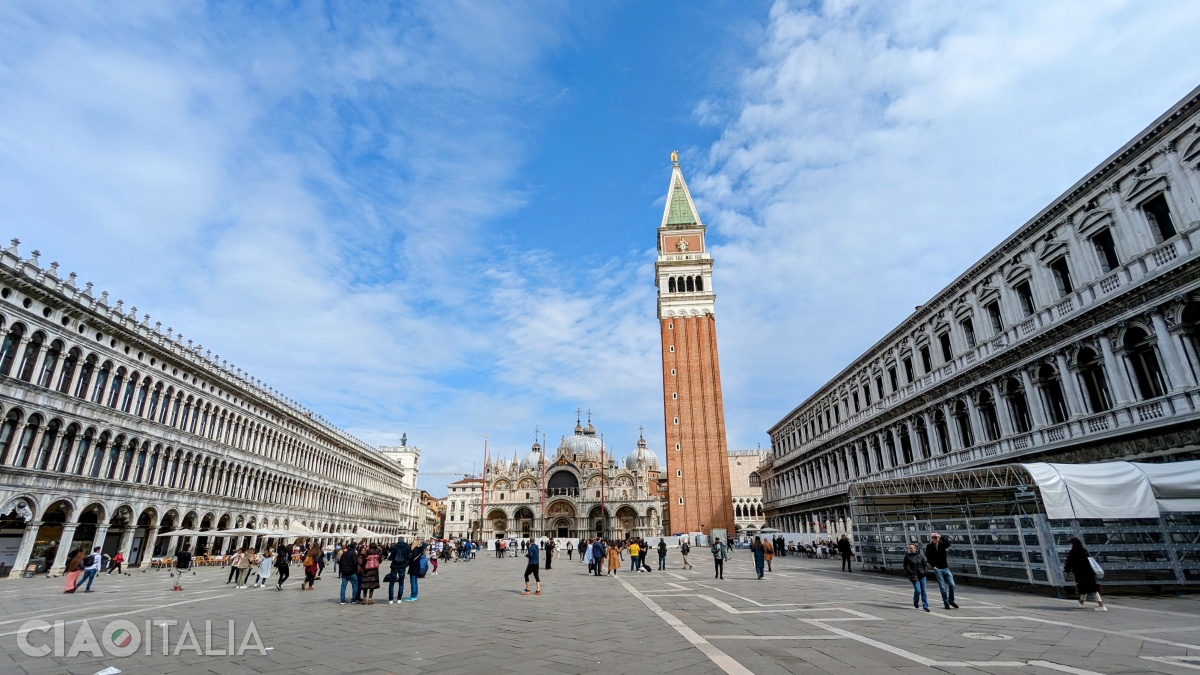
- In Venice, there is only one square that actually bears the name of piazza, namely Piazza San Marco. All other squares are called campi ("fields") or campielli ("smaller fields", referring to small squares). An exception would be Piazzale Roma, located at the edge of the city, in the station area. However, its name is recent, dating from the fascist period.
- Similarly, in Venice there is only one "street": Strada Nova, a wide pedestrian artery that connects Santa Lucia station with Rialto (although technically only a portion of it bears this name, locals call the entire artery from the station to Rialto by this name). The other streets are named calle (most streets), ramo (a secondary street branching off from a main one), fondamenta (quays - streets located along the canals), riva (streets located along the Grand Canal or the San Marco basin) or riò terà (a street created in a place where a canal once existed).
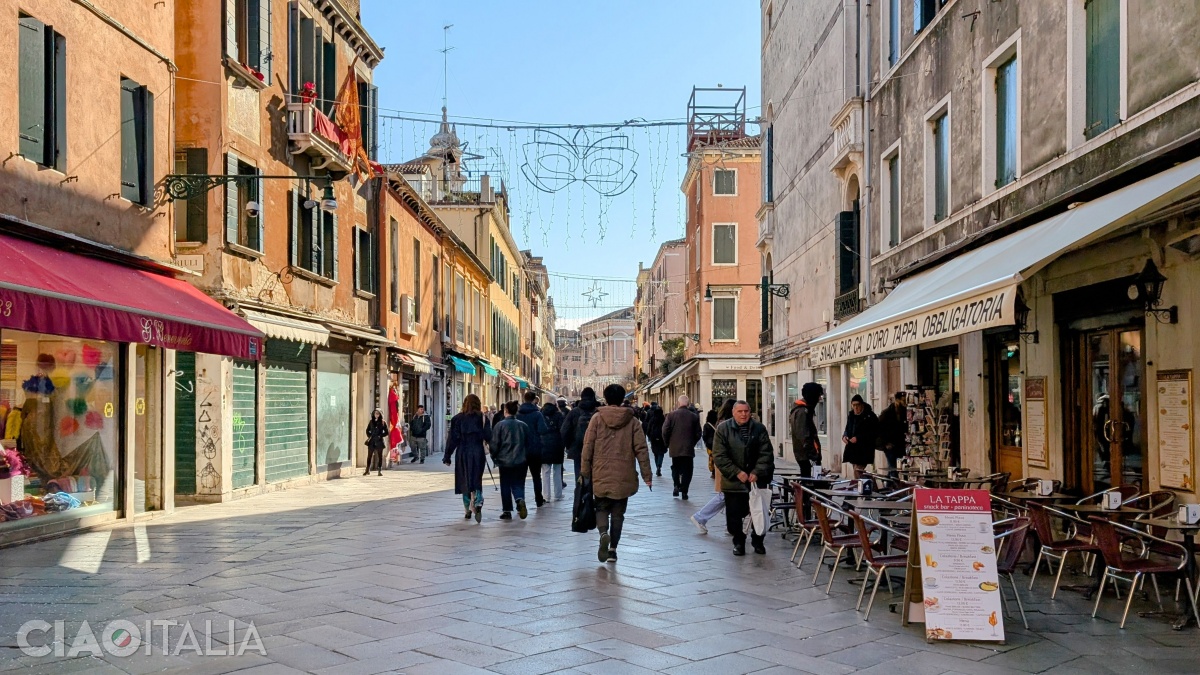
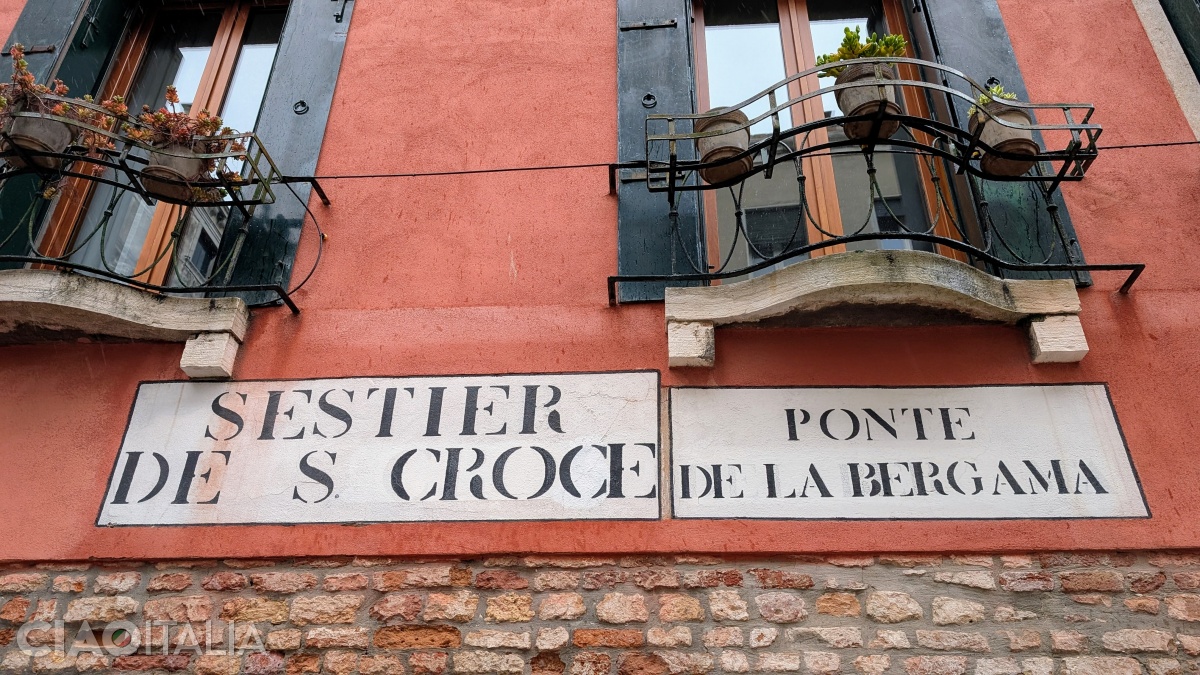
- The names of the streets, squares, and bridges, as well as the crossing zones from one neighborhood to another, are signaled by white rectangles on the walls of the houses, outlined and painted with black letters. Venetians call them nizioleti, a word that in the local dialect means "small sheets", referring to their shape and color. They were introduced only during the French occupation at the beginning of the 19th century to facilitate orientation in the city and to fix the various toponyms that until then were known only through oral tradition.
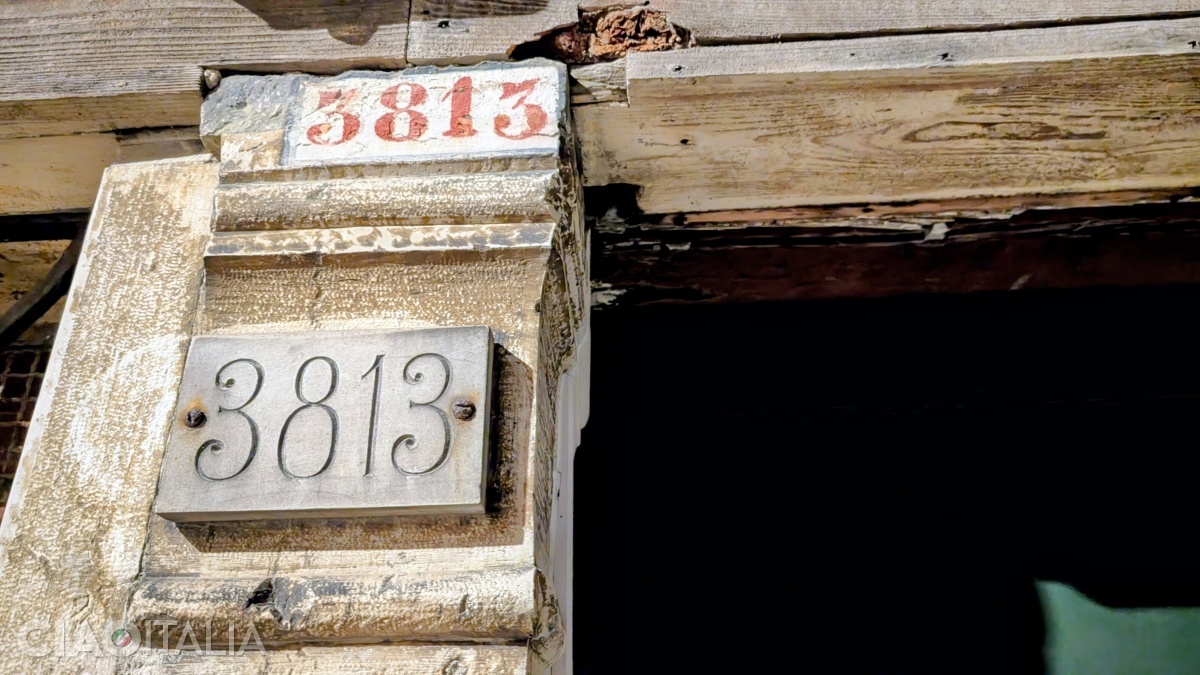
- Addresses in Venice include the name of the neighborhood and a number that reaches up to 4 digits. At first glance, these numbers have no logic - they are not even numbers on one side and odd numbers on the other, and many times they don't even follow each other but increase or decrease apparently arbitrarily. This happens because the sequence of numbers continues on some narrow and barely visible side streets or through one of the many passages called sotoportego. This system was introduced in the 19th century by the Austrians and has been maintained until today.
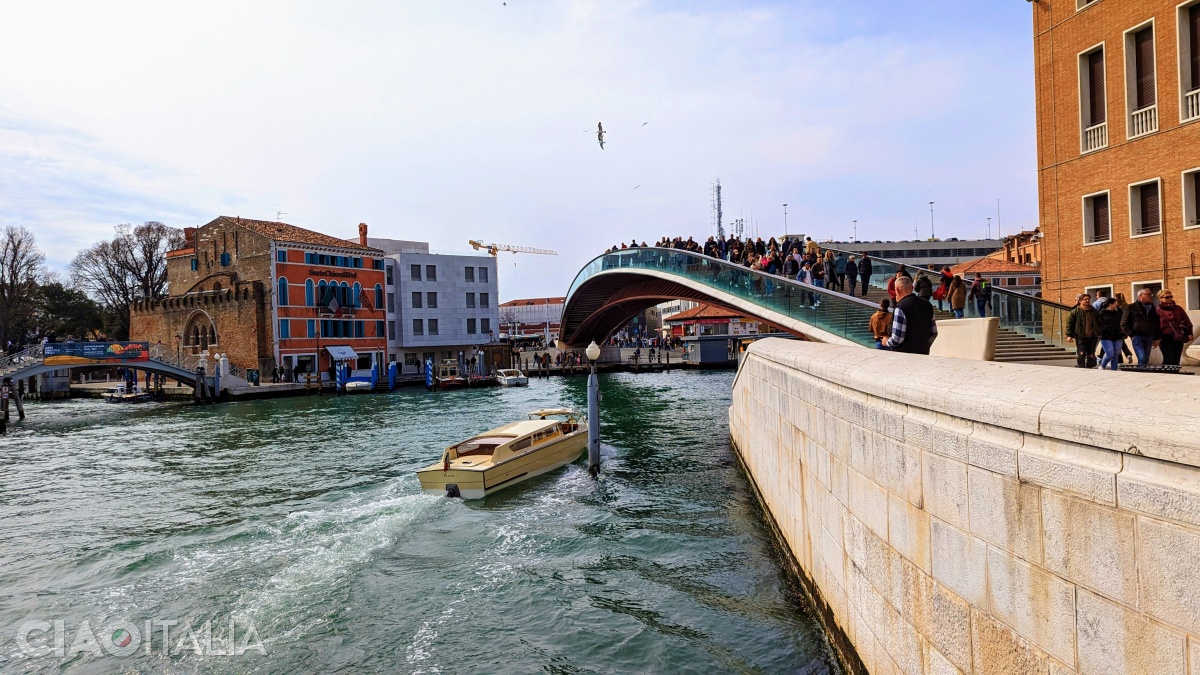
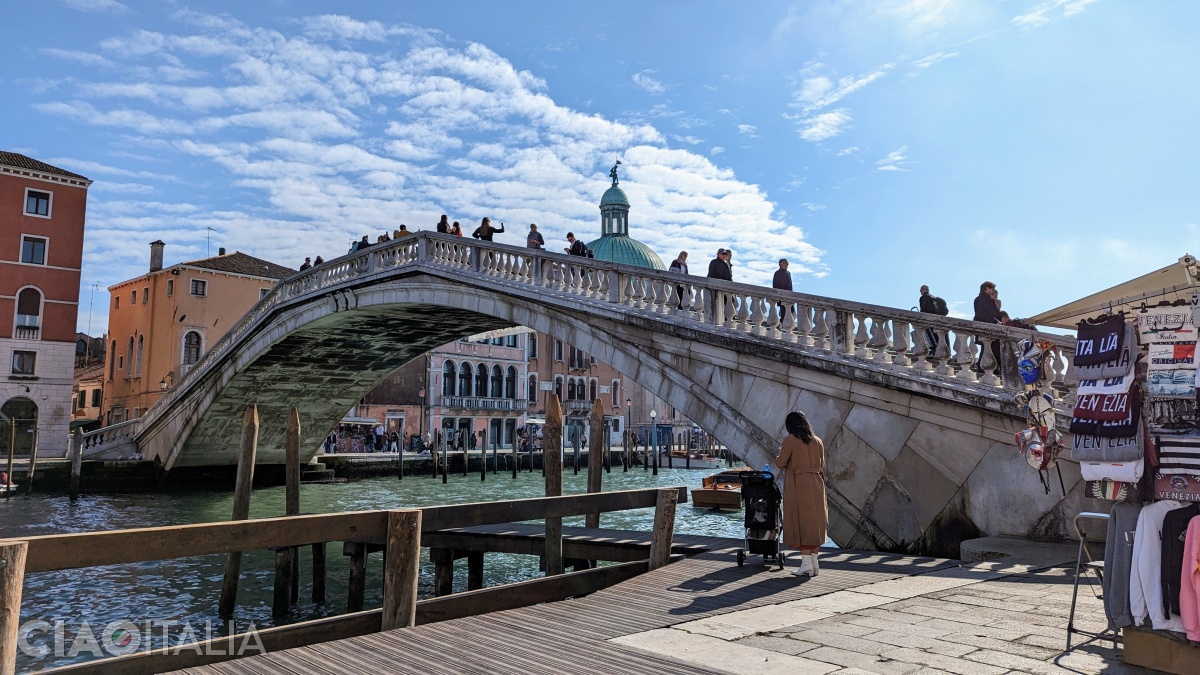
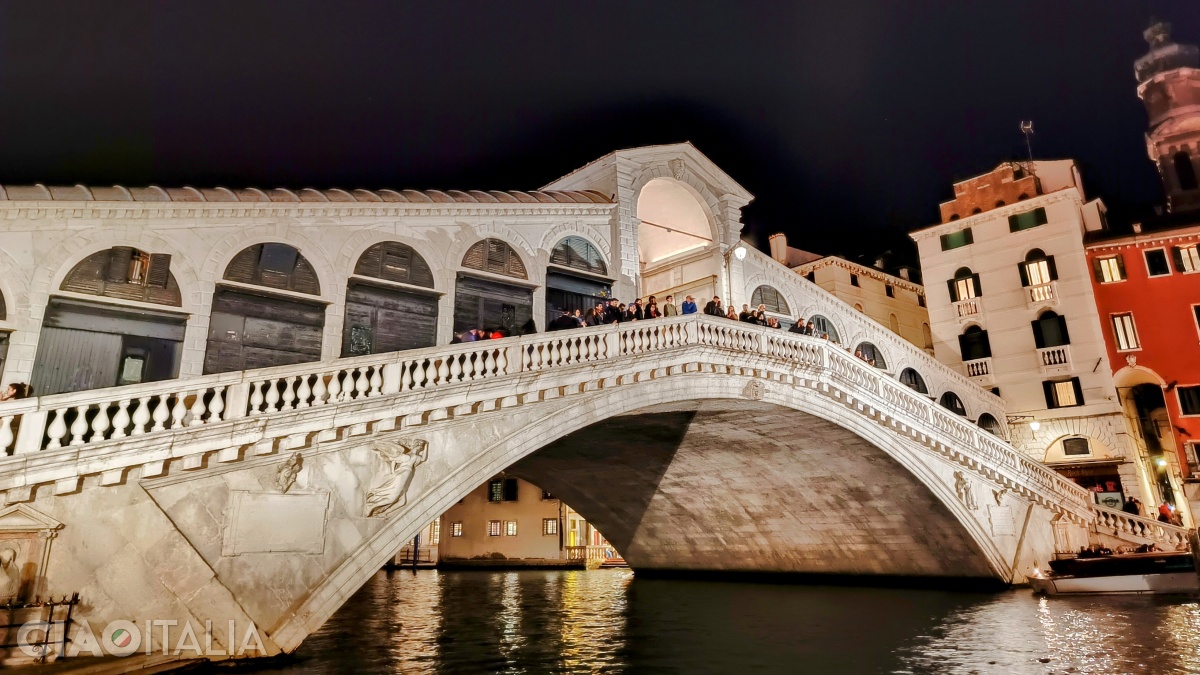
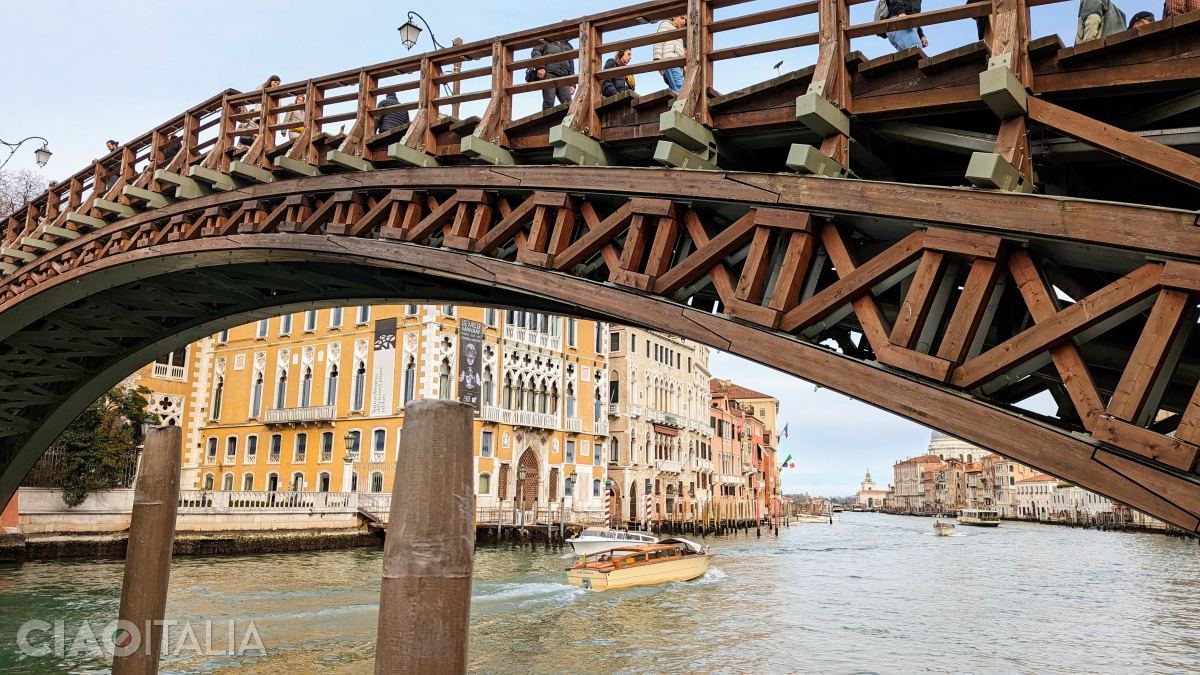
- If you want to cross from one side of the Grand Canal to the other, you should know that it is crossed by only four bridges: Ponte della Costituzione, Ponte degli Scalzi, Ponte di Rialto, and Ponte dell'Accademia. The first two bridges, located in the Santa Lucia station area, are closer to each other. However, to cover the distance between Ponte degli Scalzi and Ponte di Rialto or between Ponte di Rialto and Ponte dell'Accademia, you will walk for 15-20 minutes. To cross the canal, you also have the option of the traghetto gondolas mentioned above.