Giudecca, the Artists' Island in Venice
Located to the south, across the canal of the same name, Giudecca is the closest island to Venice and is administratively included in the Dorsoduro district. It is primarily a residential area, consisting of eight smaller islands, and its atmosphere is as non-touristic as it gets. It may not be the most attractive of the Venetian lagoon islands (it cannot compete, for example, with the much more famous Murano, Burano, or Torcello), but it is worth a visit, especially if you are not on your first city break in Venice, if you desire a more peaceful atmosphere, and if you want to discover its less known and commercial side. In recent years, Giudecca has attracted more and more artists, who have moved their homes and studios to the island.
You can visit almost everything there is to see in 2-3 hours, so we suggest combining Giudecca with a visit to the island of San Giorgio Maggiore, which is located very close by.
How to Get to Giudecca from Venice?
To get to Giudecca Island, you can take vaporetto lines 4.1, 4.2, or 2.
A single ticket costs €9.5 (valid for 75 minutes), while a day pass is €25. Therefore, if you plan to make more than two trips (outside of the 75-minute window), it is more cost-effective to buy a pass (see also the article on transportation in Venice).
Furthermore, to get from Giudecca to the island of San Giorgio Maggiore, you will need to take vaporetto line no. 2.
Where does the Name Giudecca Come from?
It is not known exactly what the origin of the name Giudecca is (in the past, due to its elongated shape, it was called Spinalonga).
According to one hypothesis, it comes from the word zudegà ("judged" in the Venetian dialect), referring to several families who had been judged for conspiracy around the 9th century and sent to live in exile in these places.
According to another theory, it stems from the fact that a Jewish community settled on the island in the 14th century (the term giudecca designates a Jewish settlement, especially in southern Italy). The history of Jews in Venice is very old - see also the article on the Venetian Ghetto.
Finally, others associate the name of the island with leather tanners, who used certain plant-based substances in their work extracted from shrubs and bushes; these substances were called zuèc or zueccam in Veneto and Trentino (the neighboring Italian region).
Whatever the case, it is certain that Giudecca later became a place of recreation for nobles, who built palaces and gardens here. After the fall of the Republic, in the 19th century, several factories were established on the island, and at the beginning of the 20th century, it became a favorite spot for artists. Among those who moved to the island of Giudecca was the Austrian architect Hundertwasser. This artistic vocation continues today, as former industrial spaces have been repurposed and transformed into places dedicated to art.
What to See on Giudecca Island?
We suggest getting off at the Sacca Fisola station and starting your visit from there.
Sacca Fisola
Sacca Fisola is a small artificial island, separated from Giudecca. It is a quiet and newer area, with a housing district built in the 1960s and a sports center with a swimming pool and tennis courts. In short, it is a place where you can observe glimpses of the normal life of Venetians.

To the east lies a smaller island - Sacca San Biagio - where an incinerator was located until 1984, and to the west, Sacca Fisola is connected to Giudecca Island by the Lavraneri Bridge.
Hilton Molino Stucky Hotel
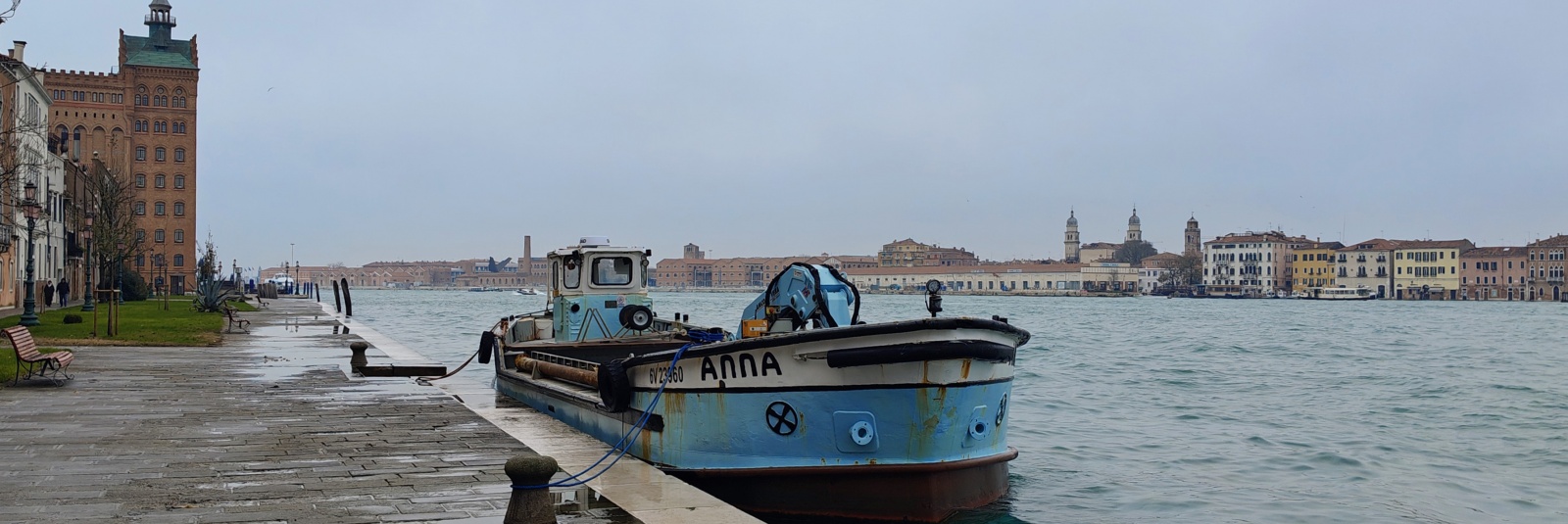
As soon as you cross the Lavraneri Bridge, the Molino Stucky Hotel will be on your left - you surely noticed it from a distance when you were crossing the canal by vaporetto.
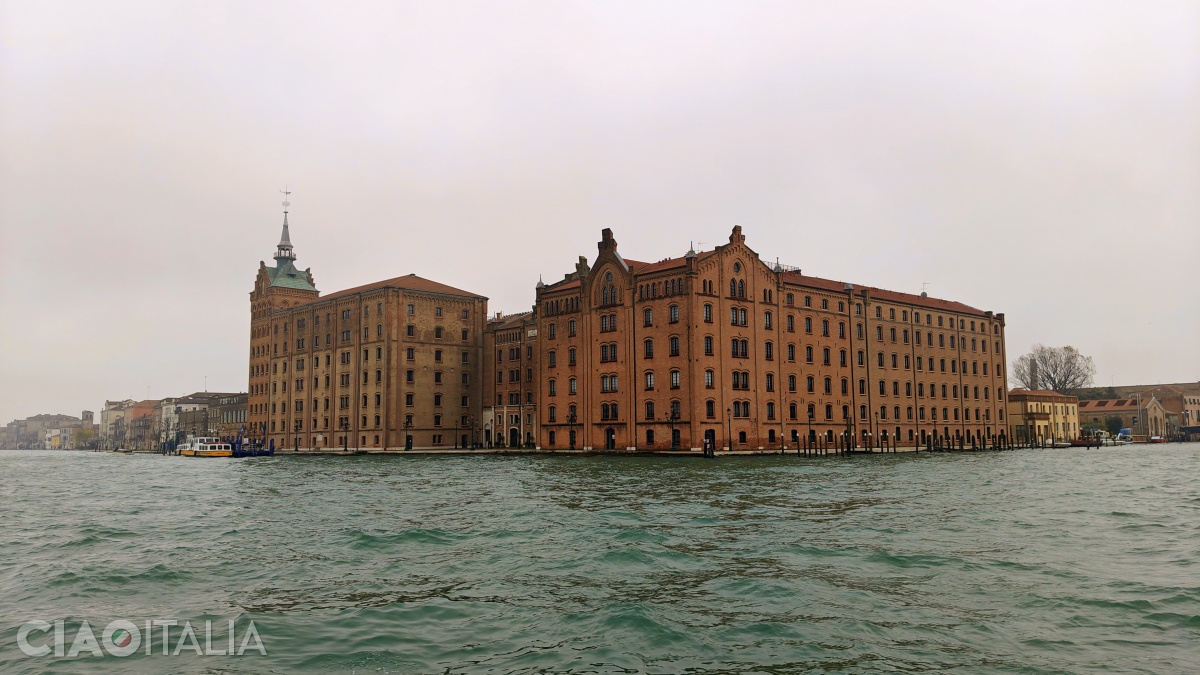
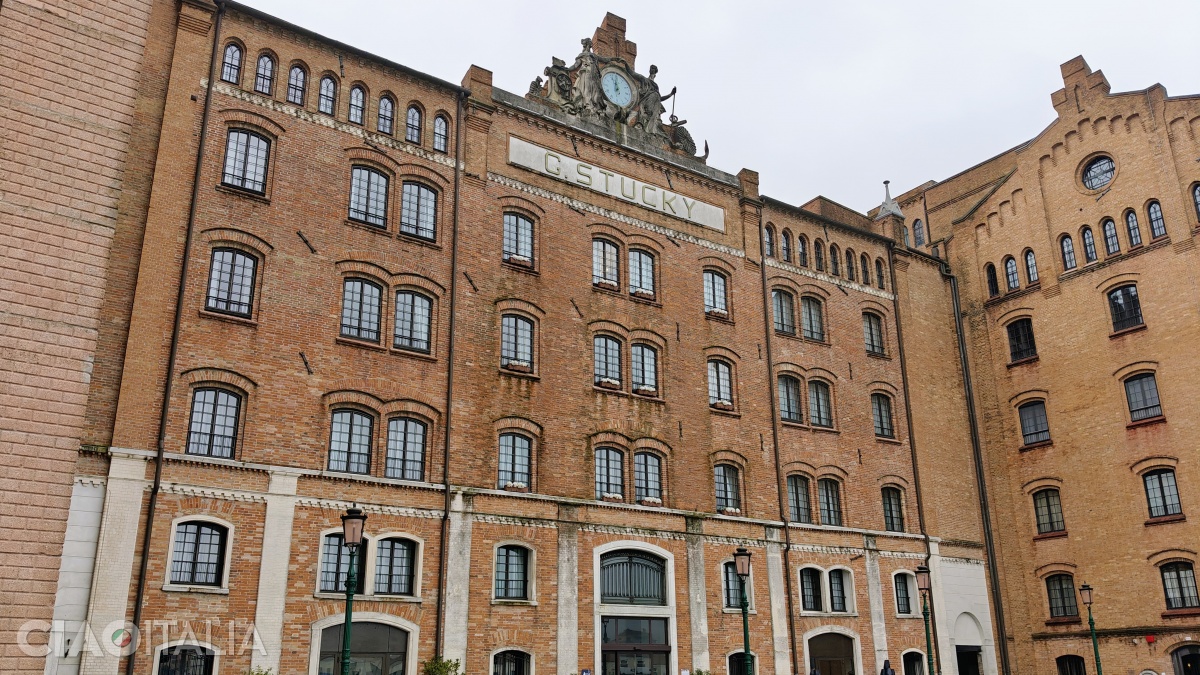
The imposing Neo-Gothic building, of unusual proportions for Venice, was designed in 1895 by an architect from Hanover. It was actually a flour mill, built for the Swiss count Giovanni Stucky right on the waterfront to ensure the rapid transport of grain. It was a period when more and more factories were moving to the island of Giudecca, which offered suitable space for industrial development. The building, quite controversial at the time, only received its construction permit after Stucky threatened to fire all his workers (numbering about 1,500!).
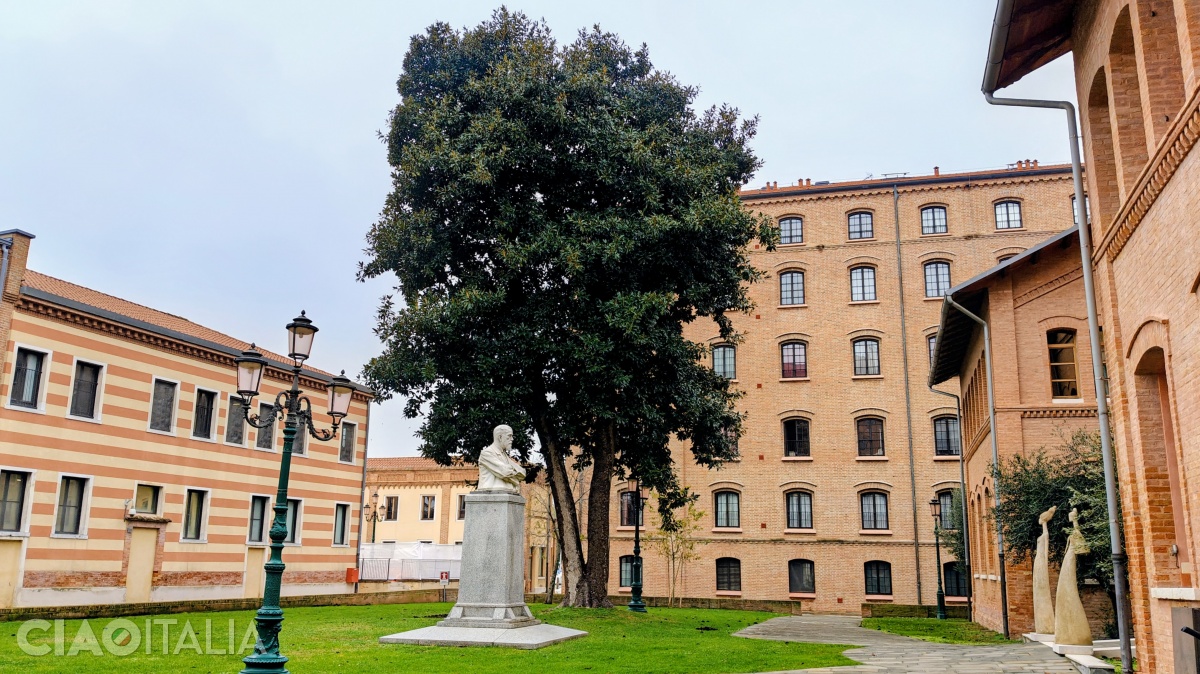
The mill operated until 1955, when it was abandoned. In recent years, it was transformed into a hotel and congress center.
If you want to enjoy a superb view of Venice, you can treat yourself to a cocktail at Skyline Rooftop Bar, the bar located on the 8th floor of the hotel.
The Former Dreher Brewery
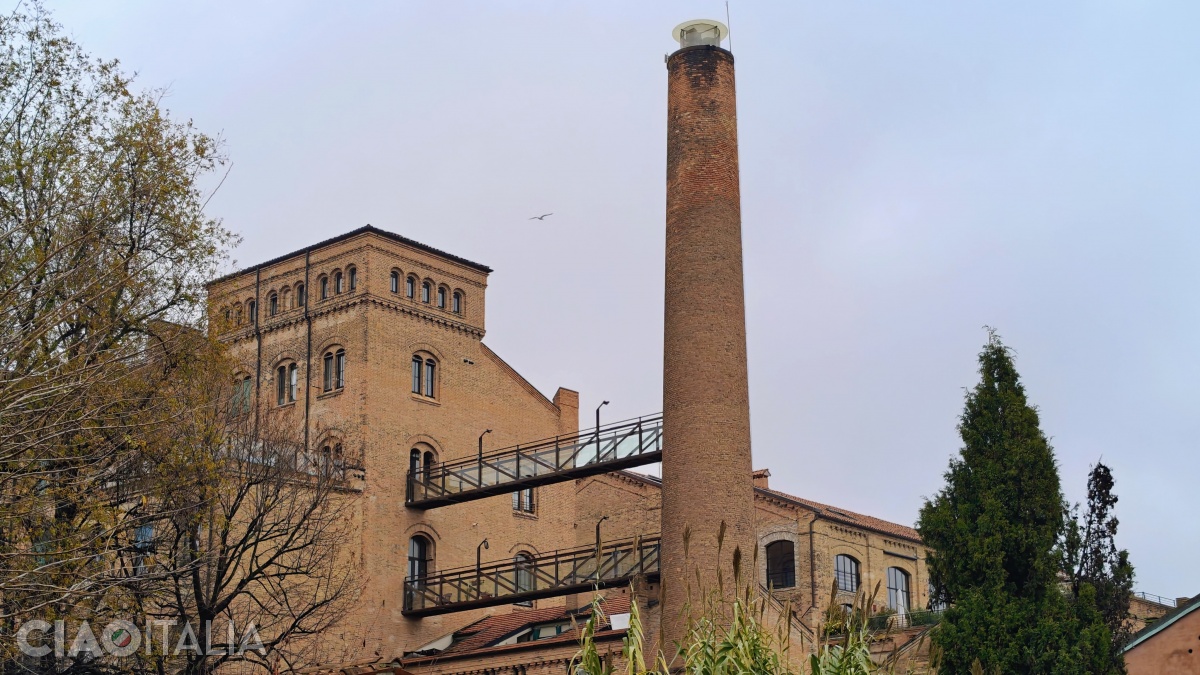
Once you reach Fondamenta de le Convertite, you will see a brick complex with a tower on the left. This is the former Dreher Brewery, built at the end of the 19th century by the same architect who designed the Molino Stucky. In the first half of the 20th century, the factory produced beer and liqueurs; after production was moved elsewhere, the industrial spaces were converted into studios and workshops for artists. Since 2011, Spazio Punch, a non-profit organization that handles cultural events, meetings, and exhibitions, has been headquartered here.
The Women's Penitentiary
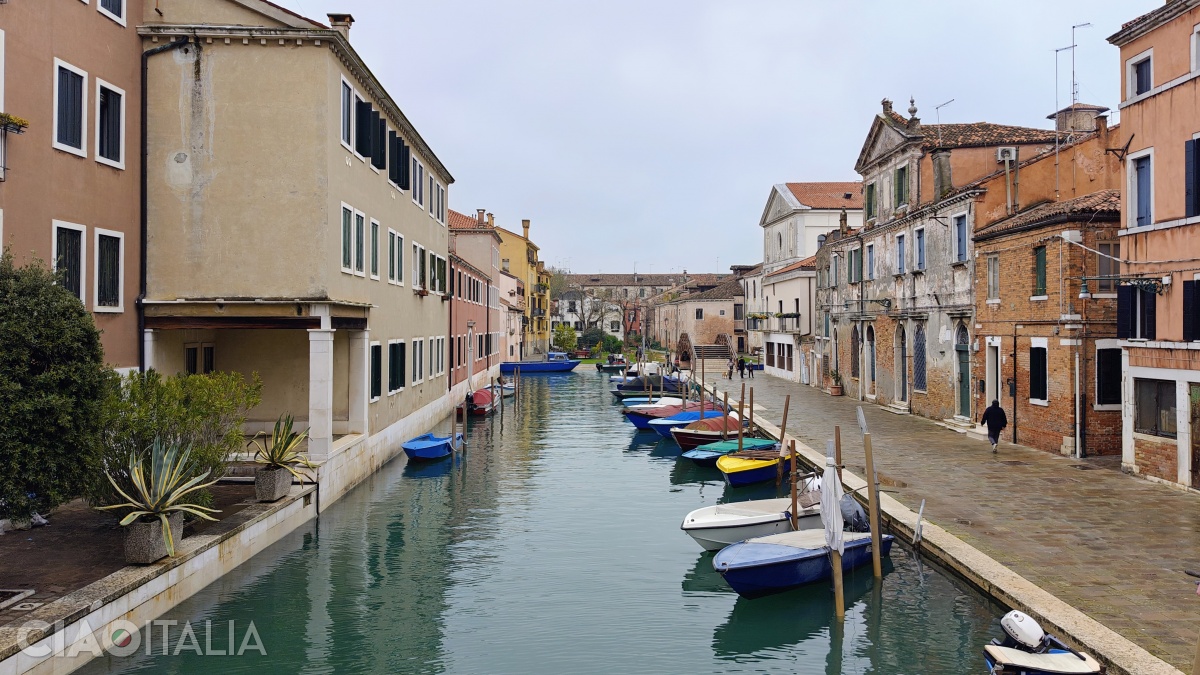
On the right side, beyond the Fondamenta de le Convertite, located within the premises of a former convent, is one of the few women's prisons in Italy. The street takes its name from here - the convent originally housed former prostitutes (the "converted" or convertite), and later, in the 19th century under Austrian occupation, it began housing female convicts.
In recent years, the Rio Terà dei Pensieri Cooperative has implemented a project for the professional retraining and rehabilitation of the inmates. They produce cosmetics, sew clothing, and grow fruits and vegetables (which they sell themselves) in the former gardens of the convent.
Church of St. Cosmas and Damian
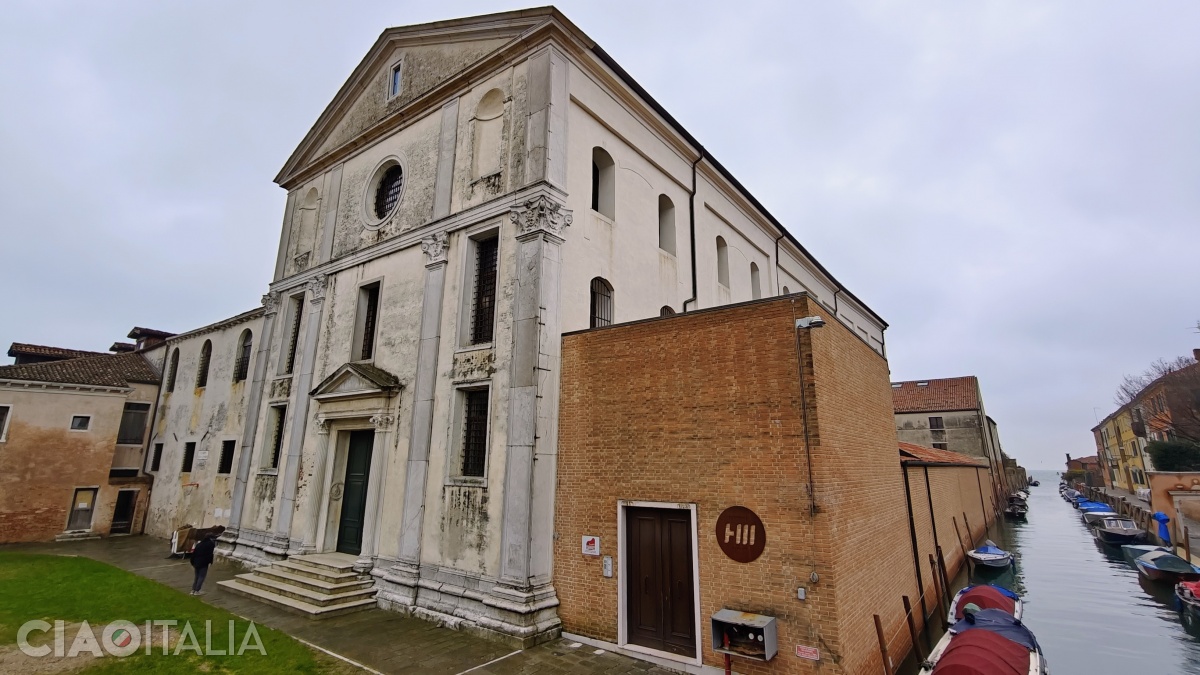
Continuing forward along Fondamenta de le Convertite, you will reach the former Church of Saints Cosmas and Damian (Chiesa dei Santi Cosma e Damiano). This was part of a monastic complex built toward the end of the 15th century by the abbess of another monastery from the island of Murano.
Many of the women who entered this convent came from noble and wealthy families; as a result, the monastery expanded and was enriched with numerous works of art. The church, erected at the beginning of the 16th century, was decorated by some of the most important artists of the time.
Most of these artworks were lost when Venice fell under Napoleon's rule. The former monastic complex was subsequently transformed first into barracks, then a hospital, a salt factory, and, from 1886, a textile factory for the Herion company. In the 1990s, the complex passed into the ownership of the Venice City Council, which restored it and converted it into social housing, artist studios, and four large halls providing spaces for offices and services.
Fondamenta della Giudecca
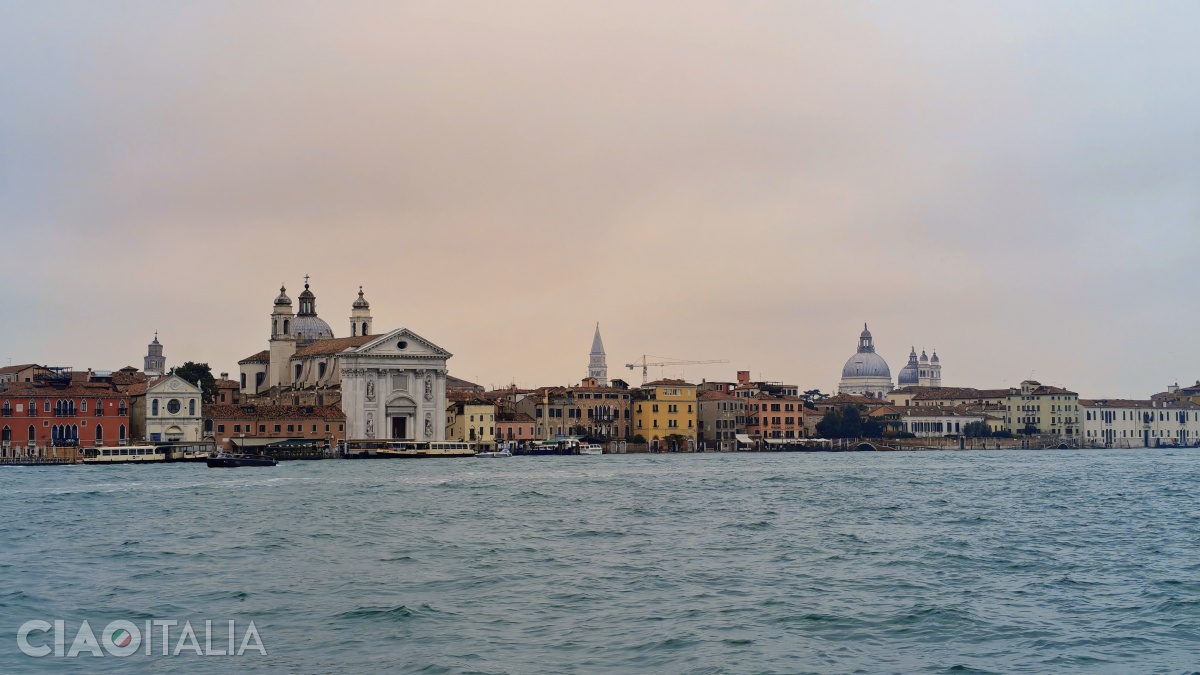
Turning left, you will reach the Giudecca Canal again. The promenade that runs along it bears the general name of Fondamenta della Giudecca, but it is composed of several parts. These include Fondamenta San Biagio (in front of the Hilton Hotel and on the next small island), Fondamenta del Rio Sant'Eufemia, Fondamenta Ponte Piccolo, Fondamenta San Giacomo, Fondamenta Croce, and Fondamenta Zitelle.
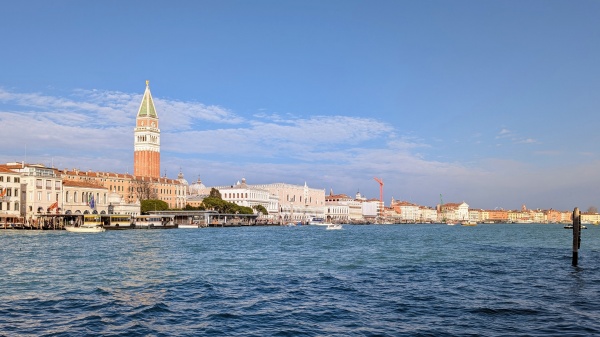
Strolling along the promenade, you can admire Venice on the opposite bank, with the Dorsoduro and San Marco districts.
Church of Sant'Eufemia
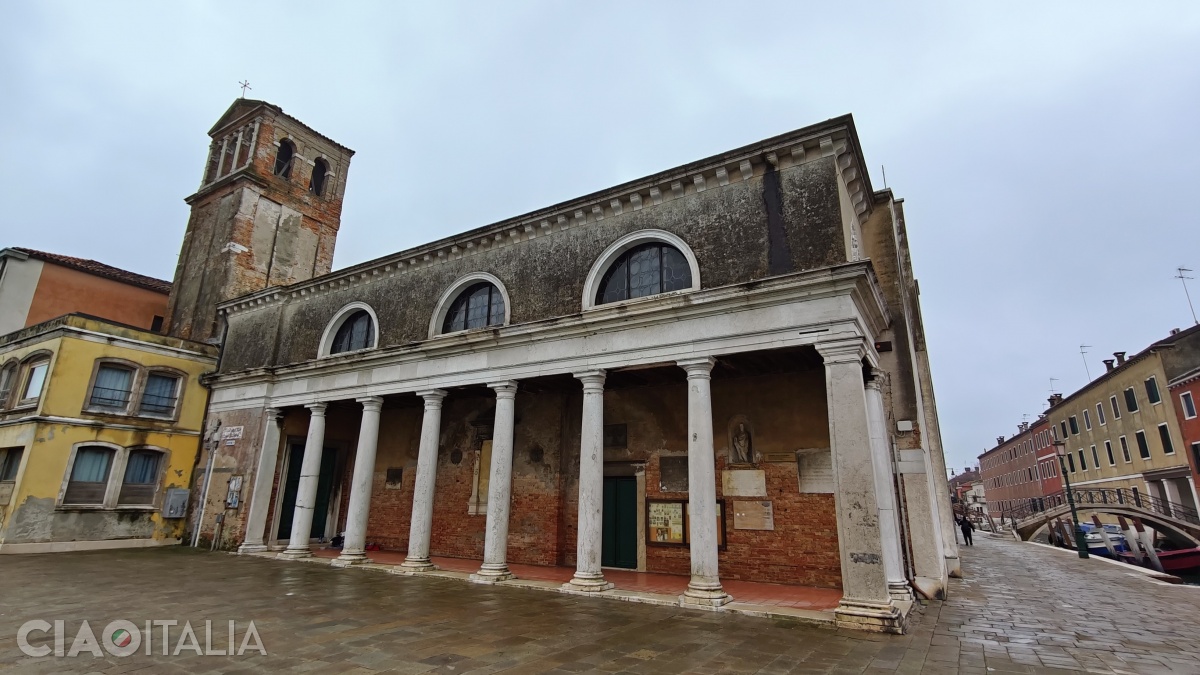
Right on the waterfront, on Fondamenta del Rio Sant'Eufemia, is the Church of Sant'Eufemia. It was built in the Veneto-Byzantine style in the 9th century and modified several times, especially in the 14th and 18th centuries.
The columns of the portico date from the 16th century and belonged to the Church of San Biagio e Cataldo, which was demolished when the Molino Stucky was built.
The church preserves its Romanesque-style bell tower, and inside it is worth seeing "San Rocco and the Angel" by Bartolomeo Vivarini (1480) and the marble sculpture "Virgin with Christ on her Knees" by Gianmaria Morlaiter (18th century).
Basilica of Santissimo Redentore
Continuing along the promenade, you will reach the Basilica of the Redeemer (Basilica del Santissimo Redentore), the most famous landmark on the island of Giudecca. The decision to build it was made in 1577 by the Senate of the Republic, honoring a promise made during the terrible plague epidemic that hit Venice in 1575.
The project was designed by the famous architect Palladio, originally from Padua. However, he died in 1580 before the church was finished, and it was completed in 1592 by Antonio da Ponte (the latter is the one who built the Rialto Bridge and carried out several restoration works on the Doge's Palace).
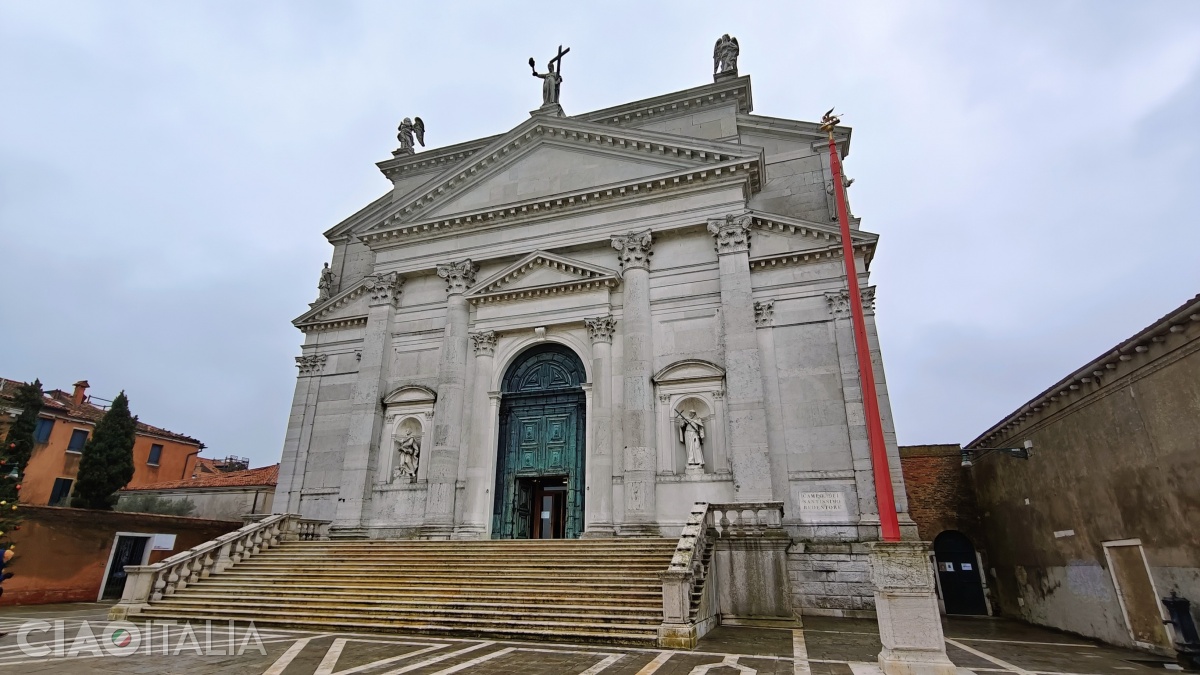
The Church of Santissimo Redentore is an important example of the Renaissance and bears the mark of the Palladian style. The statues framing the entrance portal represent St. Mark and St. Francis of Assisi. Higher up, on the sides, are two other statues of saints Lorenzo Giustiniani and Anthony of Padua, and at the very top, Faith is represented, flanked by two angels.
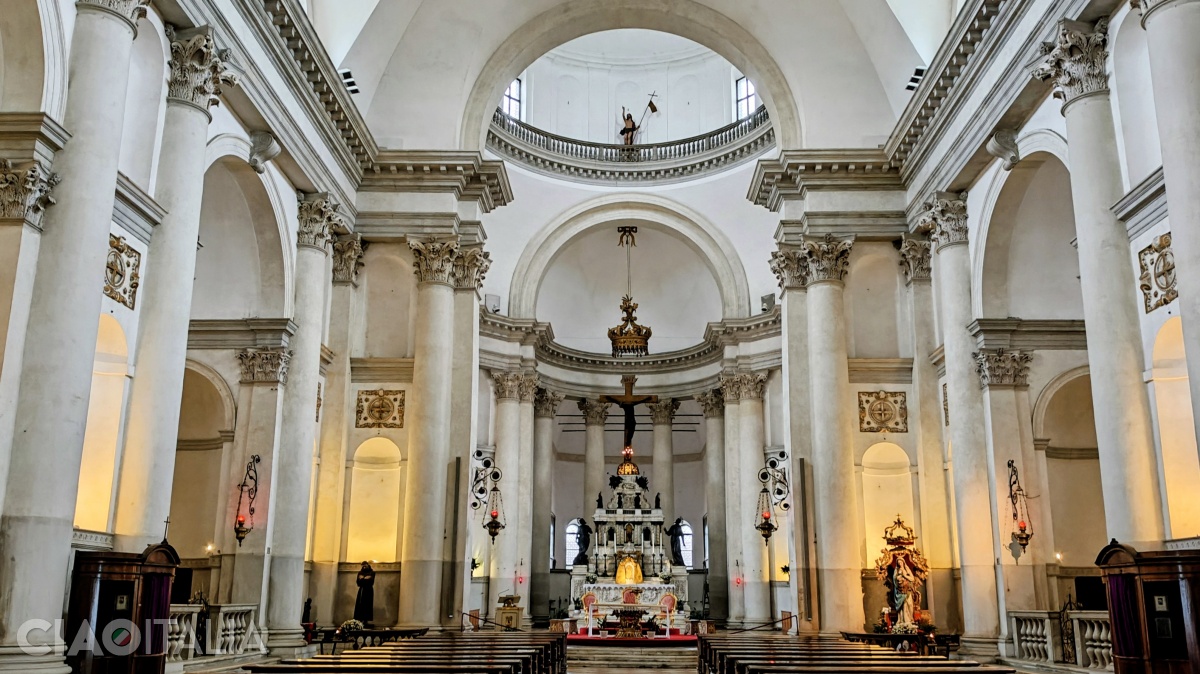
The interior is simple, in line with the rules of the Capuchin monks for whom the church was intended. Several valuable works by Veronese, Tintoretto, and Francesco Bassano are preserved.
In the sacristy, besides relics and the altar panel painted by Veronese ("The Baptism of Christ", 1560), there is also a collection of wax busts made in the second half of the 19th century. Eleven of them represent monks from the Capuchin order who were sanctified. Another bust represents St. Francis of Assisi, the founder of the Franciscan order, to which the Capuchin monks also belong.
Every third weekend of July, the church is at the center of the most beloved Venetian holiday, called Festa del Redentore, which commemorates the end of the plague epidemic in 1577. On this occasion, a floating votive bridge is built across the Giudecca Canal, allowing direct crossing from Zattere to the basilica, and an impressive fireworks display takes place on Saturday night. An important Venetian holiday with similar significance also takes place at the Basilica della Salute on November 21st.
Basilica of Santissimo Redentore
Opening Hours:
- Monday-Saturday: 10:30 AM - 5:00 PM
Ticket Prices:
- Church: Free
- Sacristy: €3.5
Giardino del Redentore
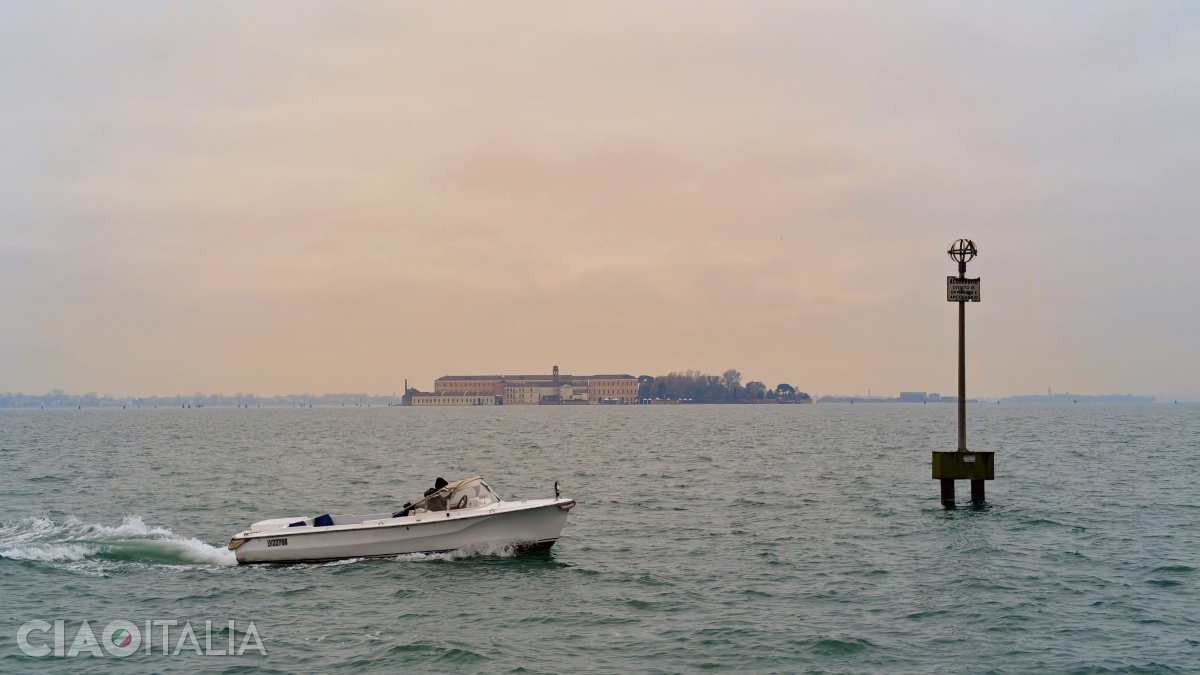
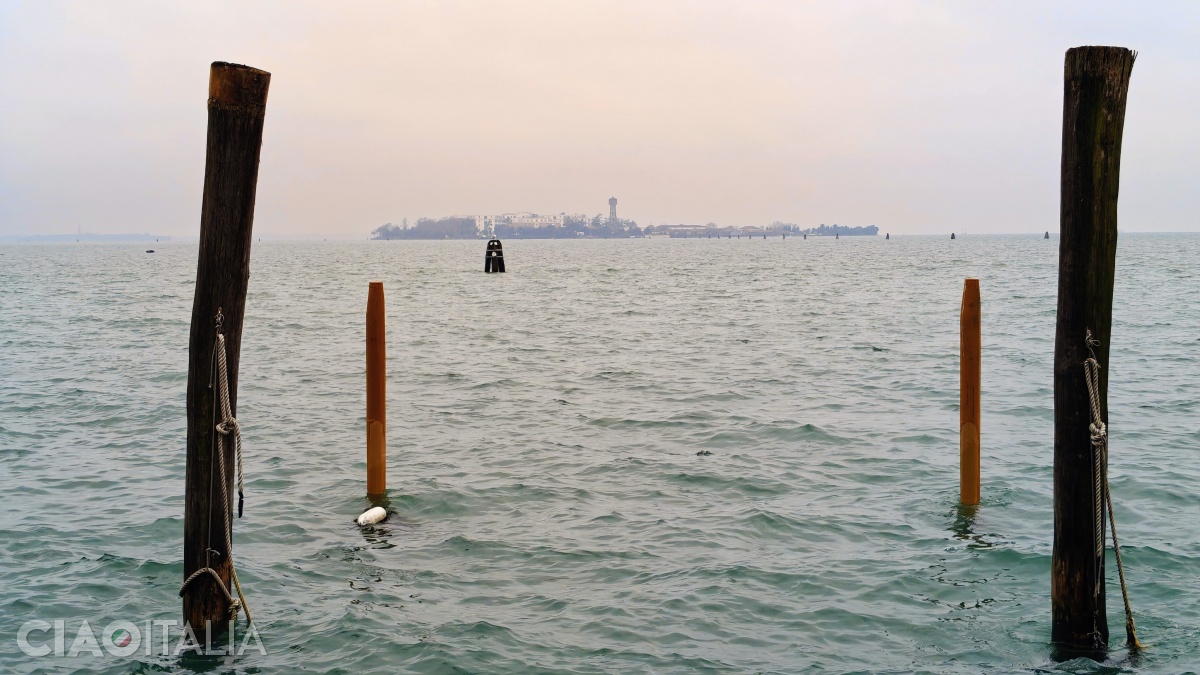
Behind the Redentore Church lies a hidden garden, covering an area of over 2,000 square meters, stretching to the other end of the island, from where you can see the southern lagoon with the islands of San Clemente, della Grazia, and Sacca Sessola (entirely occupied by the JW Marriott Venice Resort & SPA).
The garden (Giardino del Redentore), which belongs to the monastery of the Capuchin monks, was recently restored and reopened by the Venice Gardens Foundation. Along its paths, you will find olive trees, fruit trees, Mediterranean plants, and medicinal herbs.
Giardino del Redentore
Opening Hours:
Thursday, Friday & Saturday:
- January, February: 10:00 AM - 4:30 PM
- March, April: 10:00 AM - 5:30 PM
- July, August: 10:00 AM - 6:00 PM
- November, December: 10:00 AM - 4:30 PM
Wednesday, Thursday, Friday & Saturday:
- May, June: 10:00 AM - 6:30 PM
- September, October: 10:00 AM - 6:30 PM
The gardens are closed on the following days:
- Sunday, Monday & Tuesday
- January 15 - February 7, 2026
- The first day of Catholic Lent
- Holy Week
- October 4
- December 24, 25, 26, and 31, January 1 and 6
Last entry is 30 minutes before closing.
Ticket Prices:
- Adult: €12
- Children 6-12 years: €6
- Children under 6: free
Tickets can be purchased on-site (card only) or online via TicketOne (with a €1.5 commission).
Casa dei Tre Oci
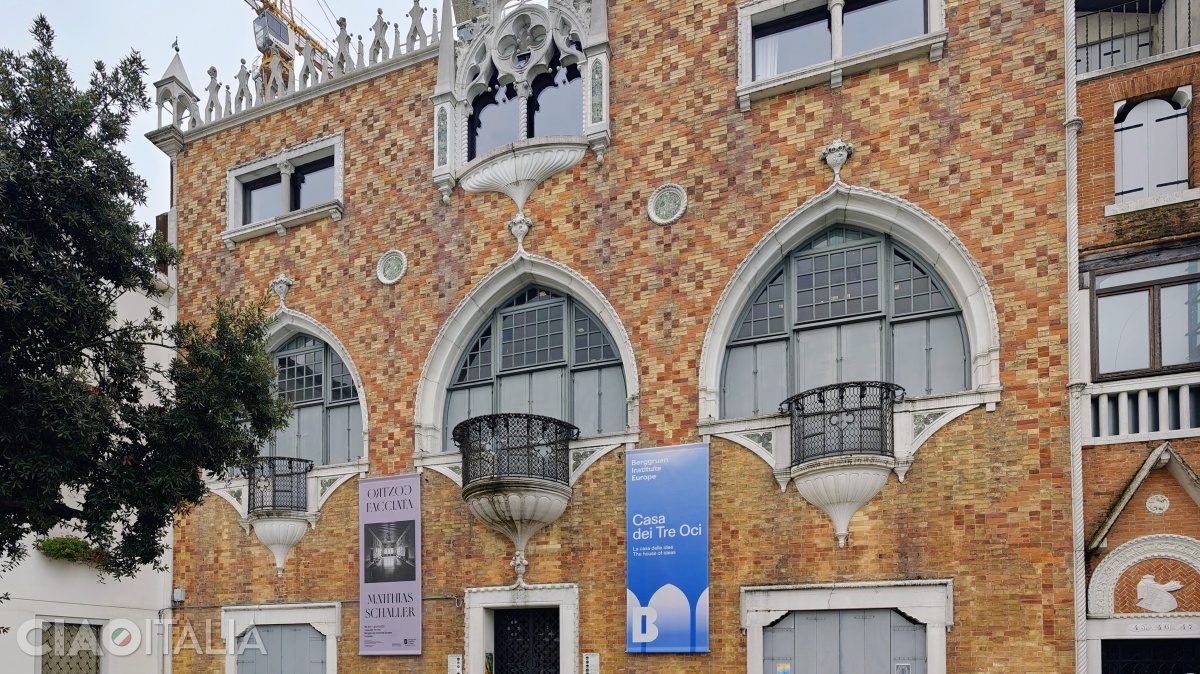
Casa dei Tre Oci means, in the Venetian dialect, "The House of Three Eyes" (referring to the three large ogival windows that dominate the facade). It is a palace built right on the waterfront, on Fondamenta Zitelle, near the Zitelle vaporetto stop.
Casa dei Tre Oci was built in the Neo-Gothic style between 1912 and 1913. The palace was designed by the painter Mario de Maria, originally from Bologna, to serve as his residence and studio. De Maria was known at the time for his night landscapes, many of which depicting views of Venice itself.
The three large windows symbolize the painter, his wife, and their son Astolfo. The smaller window above, in the center of the next level, represents Silvia, the daughter who died prematurely.
Throughout its history, Casa dei Tre Oci has hosted artists and intellectuals. Currently, it is the headquarters of the Berggruen Institute, hosting meetings and exhibitions.
Chiesa delle Zitelle
Right next to Casa dei Tre Oci is the Church of the Presentation of the Virgin at the Temple, dating from 1588. It is more commonly known as Chiesa delle Zitelle because it was part of a complex that included an asylum for young and poor girls who had no dowry (zitelle in Italian). In the asylum, they learned a trade so they could support themselves.
Inside the church, several works are preserved, the most important being by Francesco Bassano (the altar panel with "The Presentation of the Virgin at the Temple").
Villa Hériot
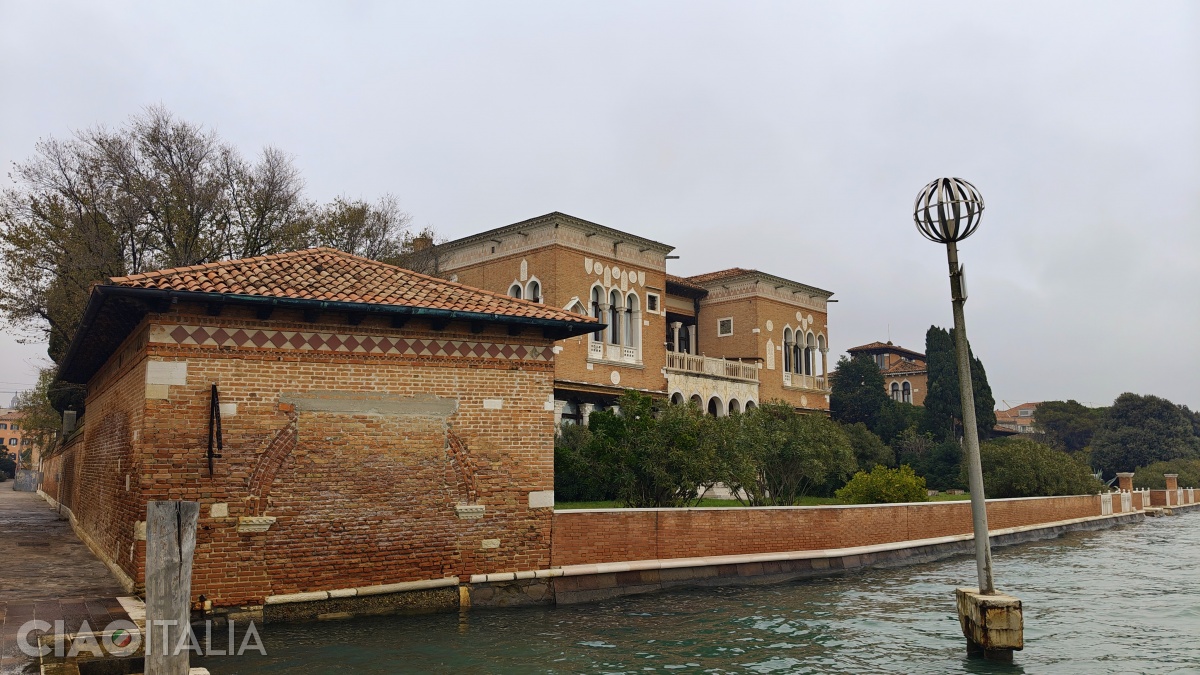
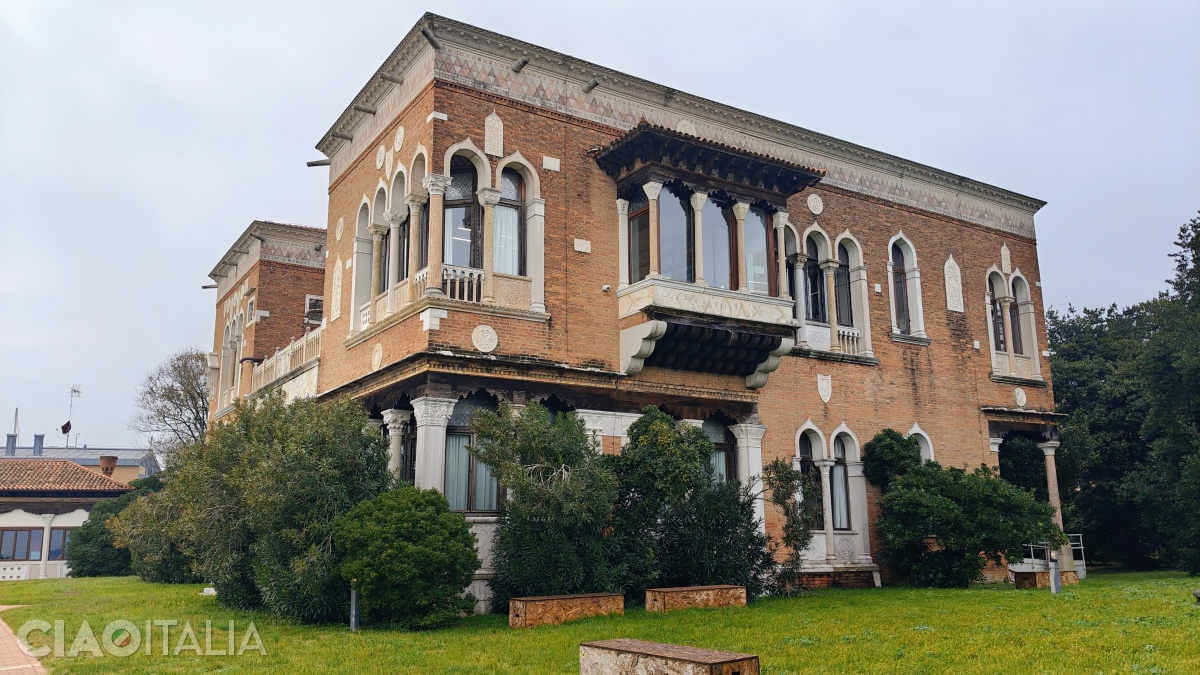
Villa Hériot is located on the opposite side of Giudecca Island from Venice, facing the south of the lagoon. It is a beautiful building, built in 1929 in the Neo-Byzantine style. It was erected by the architect and painter Raffaele Mainella on the site of a former soap factory. The owner - a Frenchman named Hériot - wanted a holiday home here. After his death in 1947, his wife left the house to Venice, on the condition that it be transformed into a school. An elementary school operated there back then, and today the villa is the headquarters of the International University of Arts.
You can walk through the villa's gardens, which are an oasis of peace and offer views toward the south of the Venetian lagoon.
Hotel Cipriani
At the western end of Giudecca Island lies Hotel Cipriani. It was built in 1958 by Giuseppe Cipriani, who founded the famous Harry's Bar and invented the Bellini cocktail (see also the article What to Eat and Drink in Venice).
The hotel was decorated with the most luxurious furniture, works of art, and Murano glass chandeliers, and in 1968, an Olympic-sized swimming pool was built.
Currently, the hotel is part of the Belmond chain and is one of the most luxurious hotels in Venice. Its restaurant holds a Michelin star, and in 2014, American actor George Clooney married Amal Alamuddin here.