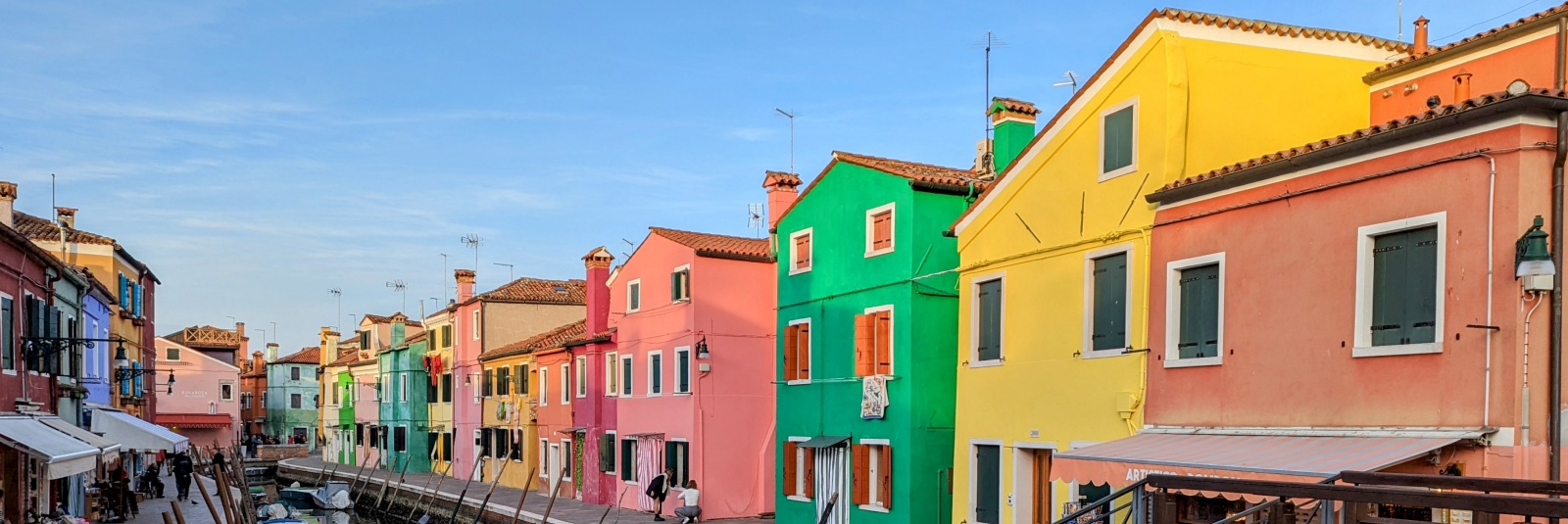
Burano, the Colorful Island of Venice
With its colorful houses and picturesque corners, Burano is the most photographed island in the Venetian lagoon. It is located northeast of Venice, and it seems its name comes from the bora, the cold wind blowing from that direction. Founded in the 5th-6th centuries, Burano is actually formed of four islets, connected by canals and bridges. You don't need more than a few hours to visit it at a leisurely pace.
How to Get to Burano from Venice?
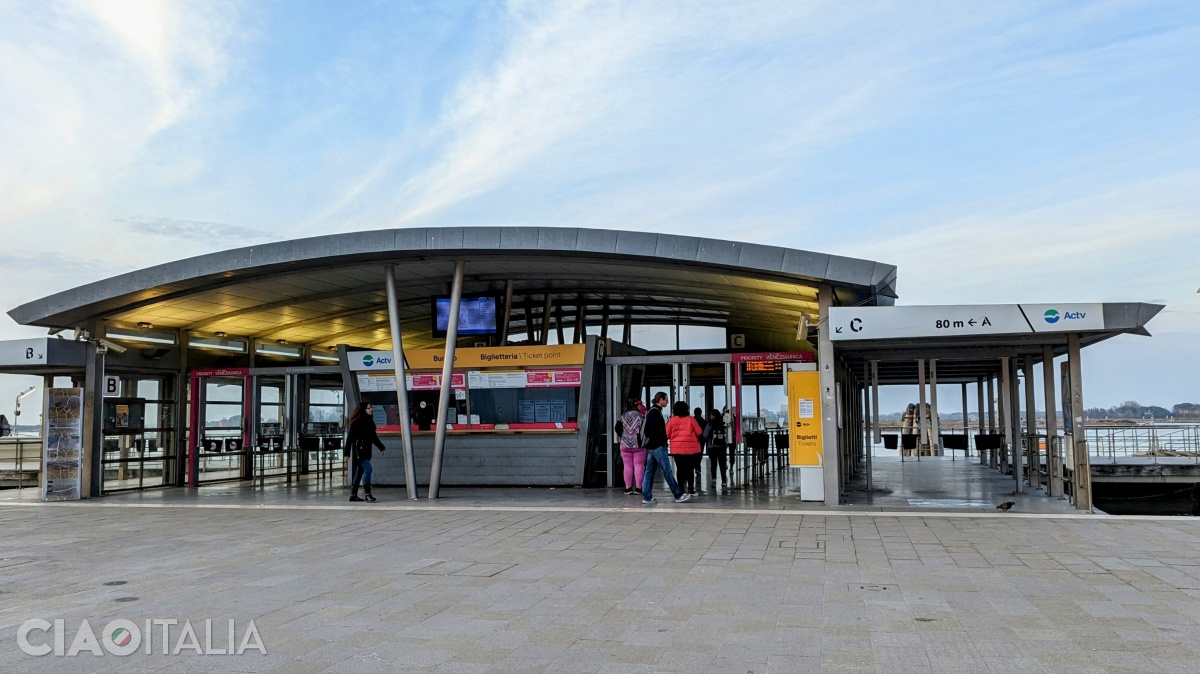
To reach Burano by public transport from Venice, you will need to take vaporetto no. 12 from the Fondamente Nove station. On the way, the boat will stop at Murano Faro and Mazzorbo, and some trips also stop at Torcello.
The duration of the vaporetto trip from Venice to Burano is 40-45 minutes. The price of a single trip is €9.50 (the ticket is valid for 75 minutes from validation). If you plan to see multiple islands, it is more cost-effective to buy a one-day pass, priced at €25. Passes for 2, 3, or 7 days cost €35, €45, and €65 respectively.
Another option to reach the island is to book a tour to Murano, Burano and Torcello. You will have limited time for visits, but you will have a group leader and avoid the stress of navigating public transport and the overcrowding on the water buses.
Book trips to Murano-Burano-Torcello
Things to See in Burano
The Colorful Houses
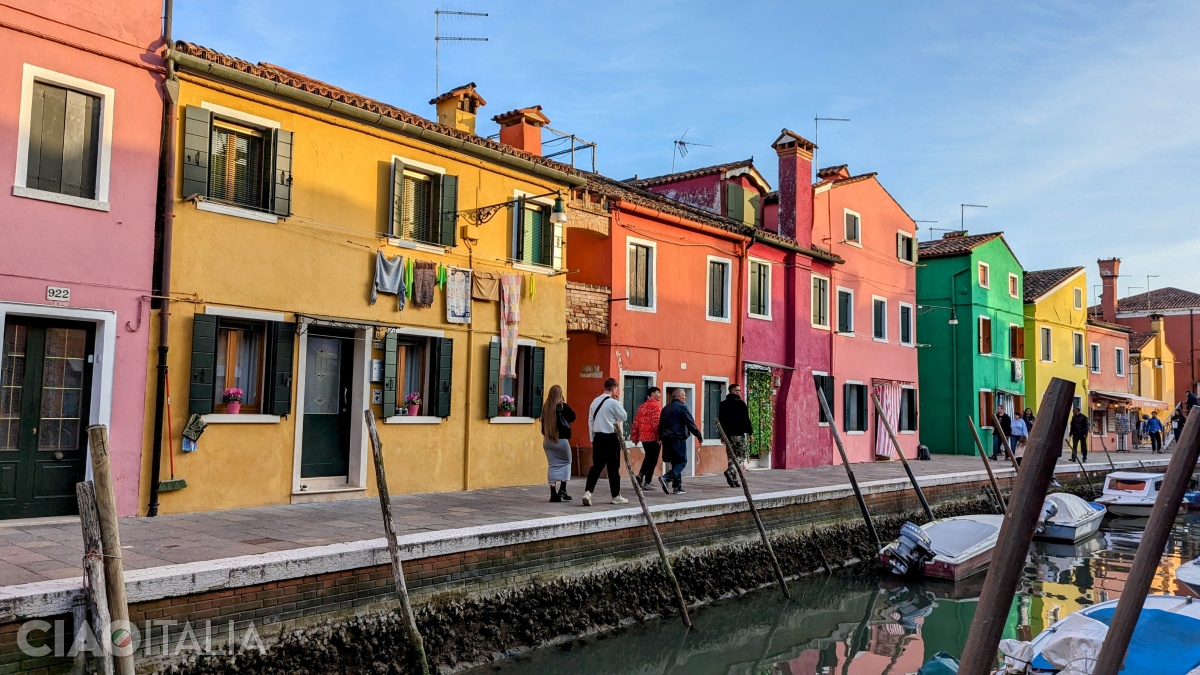
The distinctive feature of Burano is its houses painted in vivid colors, making it easily recognizable even in photos. In fact, Burano ranks among the most colorful places in the world.
The first thing you should do once you arrive is simply wander the streets, getting lost among the colorful houses - each different from the next - and admiring how they reflect in the canal waters, especially at sunset.
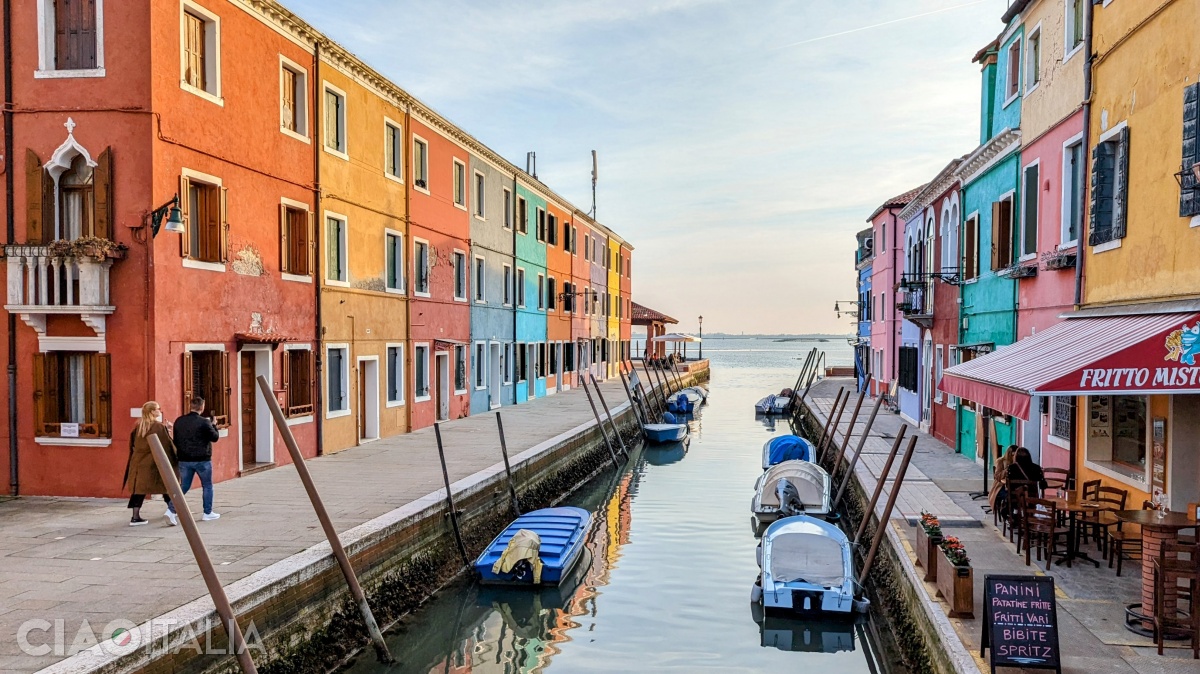
There are several explanations for these colors. The most common is that fishermen painted their houses in bright shades to recognize them from afar through the lagoon's fog when returning from fishing. According to another theory, the bright colors served to ward off the evil eye and bad spirits. A less common explanation is that in the past, when the population was small, each color corresponded to a specific family name.
The Burano Lace Museum
Burano is not only famous for its colorful houses but also for its handmade lace, which boasts a centuries-old tradition. It is said that the women of Burano were so skilled at lace-making because they had to make and repair fishing nets. The lace trade flourished in Venice in the 16th century, a period that saw the publication of many pattern books featuring religious, floral, animal, or geometric subjects. In the past, there was real competition regarding lace creation between France and the island of Burano.
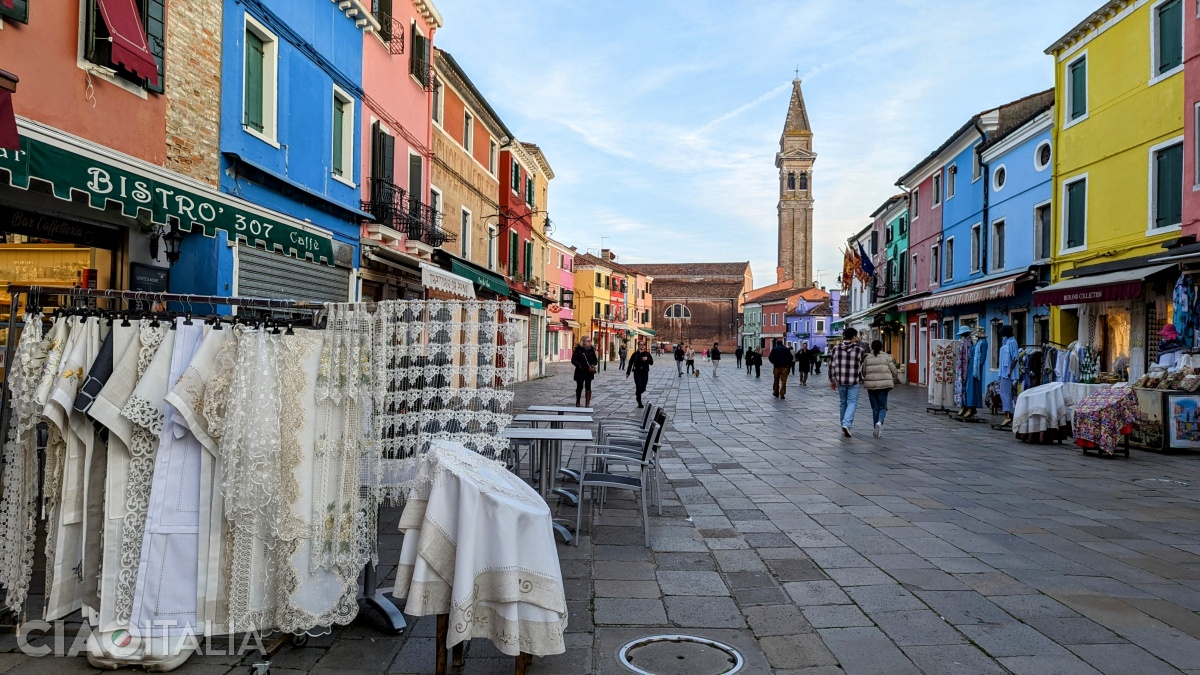
Legend has it that long ago, a fisherman managed to resist the alluring song of the sirens by thinking of his fiancée waiting for him on the island. As a reward, he received a veil made of sea foam from the siren queen, which he gifted to his beloved. The girl's friends, envious of the veil's beauty, tried to imitate it using needle and thread, and thus the tradition of lace-making was born. It is said that since then, women have continuously tried to perfect their art, using increasingly thinner needles and threads to create works more beautiful than the siren's veil.
Today, you can still see women working on lace in their doorways, but unfortunately, Chinese goods have invaded even the tiny island of Burano. You will have to look carefully through the small shops to find genuinely handmade lace.
If you want to better understand this tradition, visit the Lace Museum (Museo del Merletto), located in Piazza Galuppi (the island's only square). The museum, established in 1981, is housed near the Town Hall (Palazzo del Podestà) in the historic Burano Lace School. This school was founded in 1872 by Countess Adriana Marcello to revive and carry on this craft. The museum presents a beautiful collection of over 200 fabrics made by the women of Burano between the 16th and 20th centuries.
Buy ticket for the Lace Museum
Lace Museum Burano
Opening Hours:
September 27 - December 30, 2026:
- Monday: closed
- Tuesday-Sunday: 10:00 AM - 4:00 PM
Last entry is 30 minutes before the closing time.
Ticket Prices:
- Adult: €7 (there is also a combined ticket option with the Murano Glass Museum, which costs €20
- Over 65: €3.5
- Children 6-14 years: €3.5
- Children under 5: free
The Leaning Tower
One of the things that grabs your attention in Burano is the leaning tower, visible from most places on the island, reminding you of the Tower of Pisa. The tower, 53m high, was built in the 17th century and, due to land subsidence, has ended up leaning by 1.83m. Alongside the colorful houses, the leaning tower of Burano has become a symbol of the island.
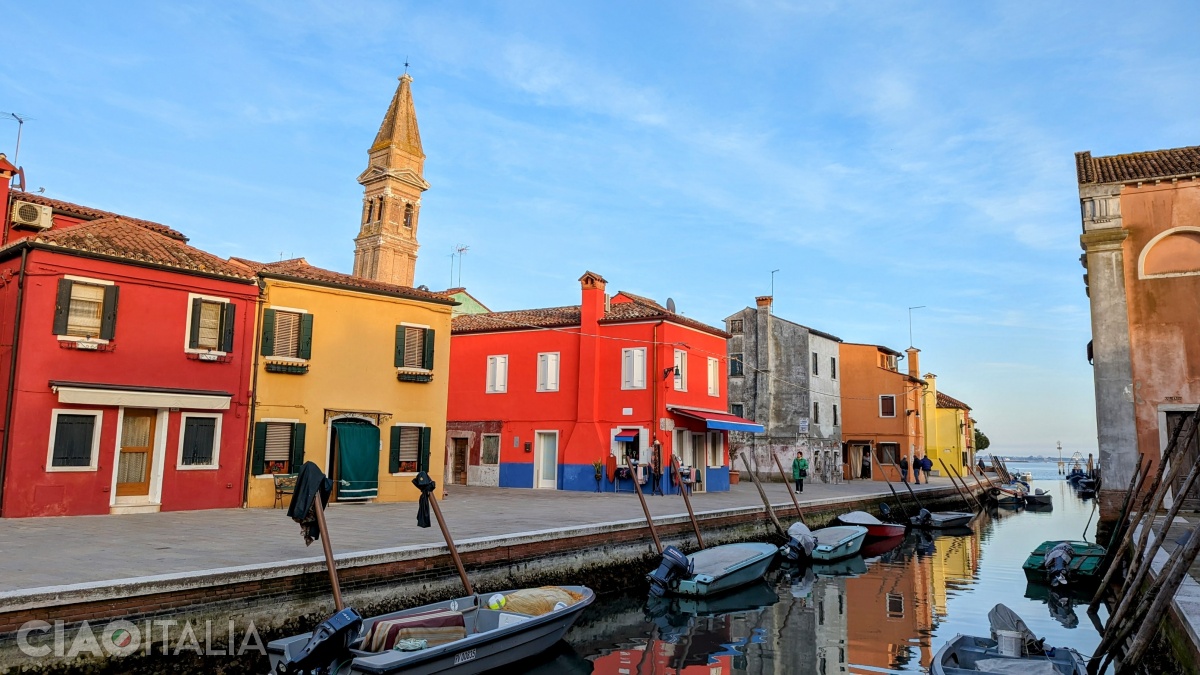
Next to the tower stands the Church of San Martino Vescovo, built in the 16th century. Curiously, there is no main entrance, only a side one. Inside, the church houses the painting "The Crucifixion" by the Venetian painter Giambattista Tiepolo.
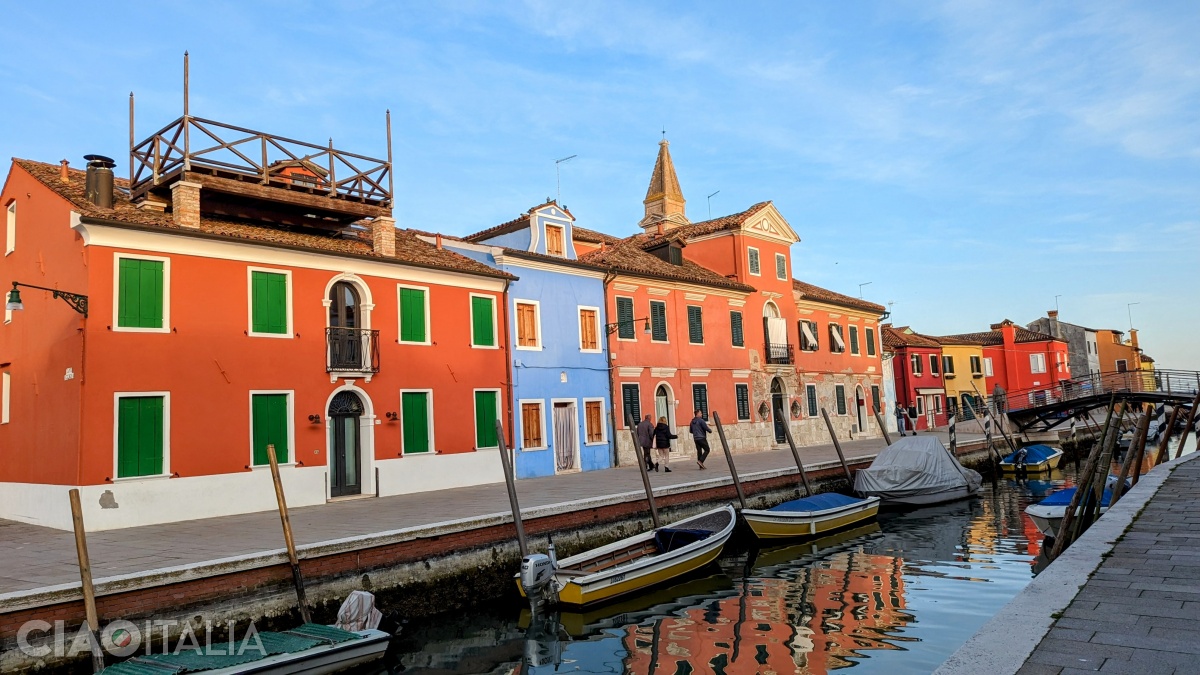
Tre Ponti Bridge
Tre Ponti translates to "Three Bridges". It is a wooden bridge with stairs leading in three directions, connecting three of Burano's islands: Giudecca, San Martino Sinistra, and San Mauro.
From Tre Ponti, you can see some of the streets with the most colorful houses in Burano and take beautiful photos (the crowd of tourists also makes the bridge one of the busiest spots on the island).
Casa Bepi Suà
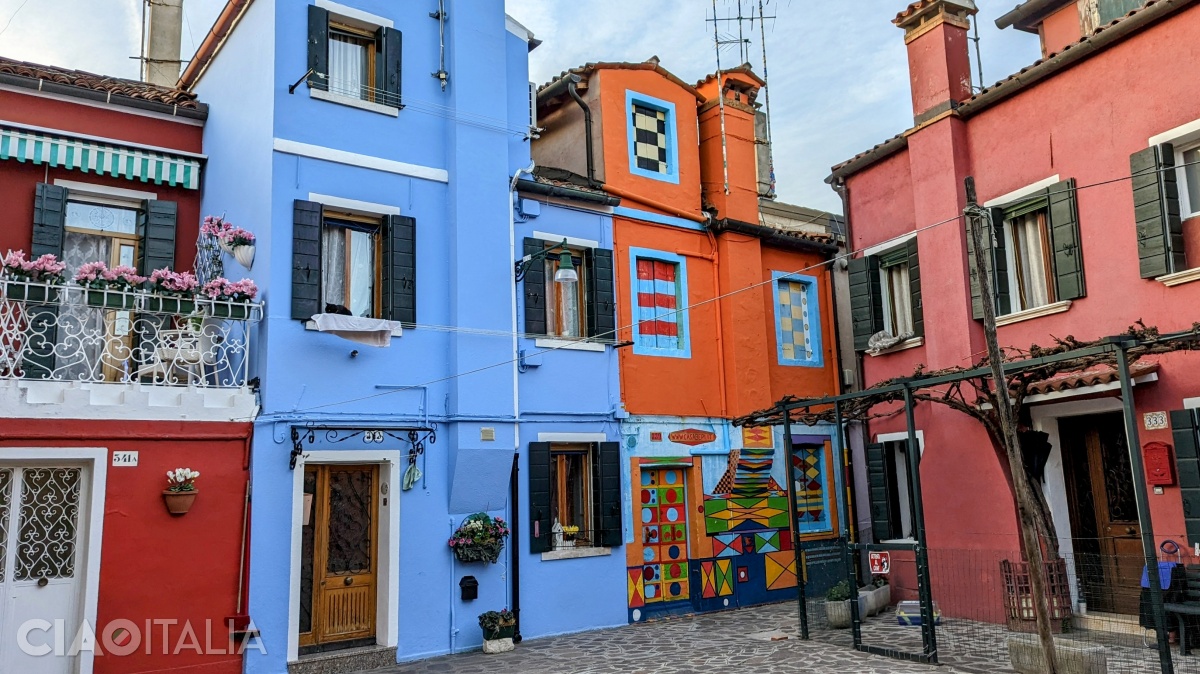
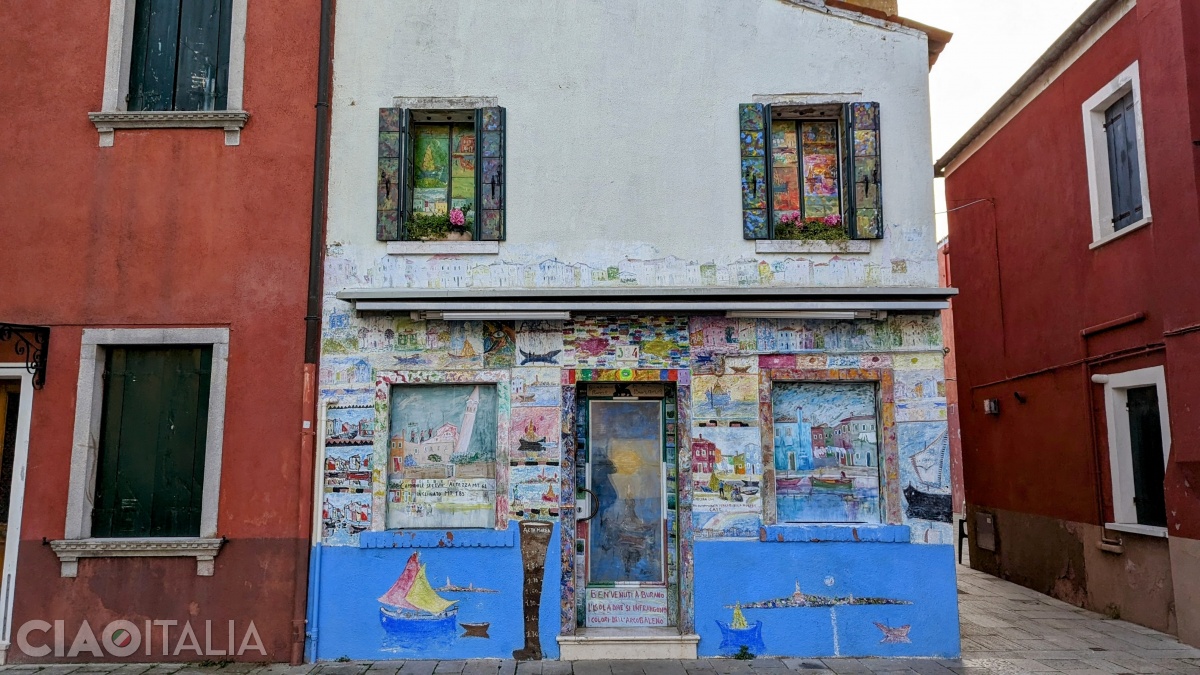
Casa Bepi Suà (Bepi Suà's House) is the most famous and colorful building in Burano, decorated with all sorts of geometric patterns. You can find it on Calle del Pistor, one of the small alleys branching off the island's main street, Via Galuppi.
The house belonged to Giuseppe Toselli, known as Bepi Suà, a local resident with a passion for painting and cinema. He was also nicknamed Bepi delle caramelle ("Candy Bepi") because he sold sweets in the island's square. In the 1940s, he worked at a cinema, and when it closed, he kept the hand-cranked projector. On summer evenings, he would screen films for the locals in the small courtyard of his home.
Bepi used to modify the designs decorating the facade of his house every day, adding a new figure or changing a color, which transformed the residence into a true attraction. Following his death in 2002, the paintings on the house gradually deteriorated and became increasingly difficult to recognize. In 2005, the facade was renovated and repainted with his original designs, and it has been carefully maintained ever since.
The House of Gianfranco Rosso
Another house that will catch your eye is that of Gianfranco Rosso, painted with scenes from island life.
Mazzorbo
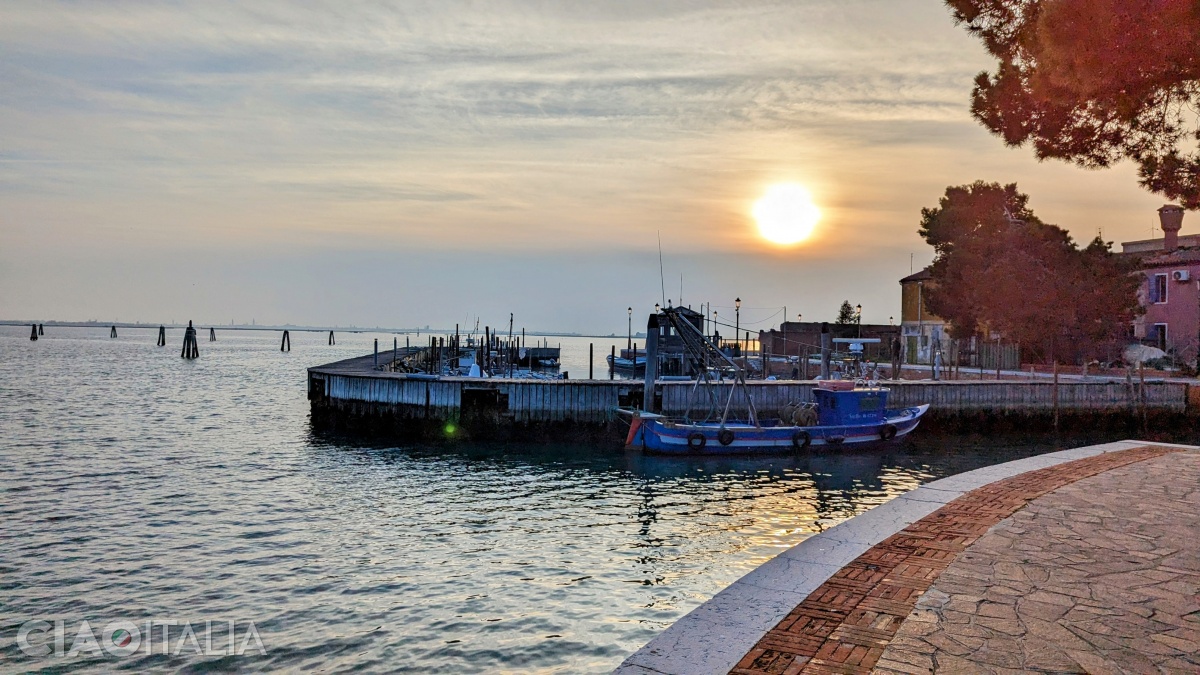
Finally, if you have more time available, you can take a walk on the island of Mazzorbo, to which Burano is linked by a bridge located near the ferry terminal. It is not as famous, but it is a green and distinct island with a much more rural appearance.
What to Eat in Burano?
The food in Burano is quite similar to the food in Venice, with the addition of some local dishes.
Among the numerous fish dishes is the traditional risotto di gò, cooked with the ghiozzo (goby) fish, which lives in the lagoon waters.
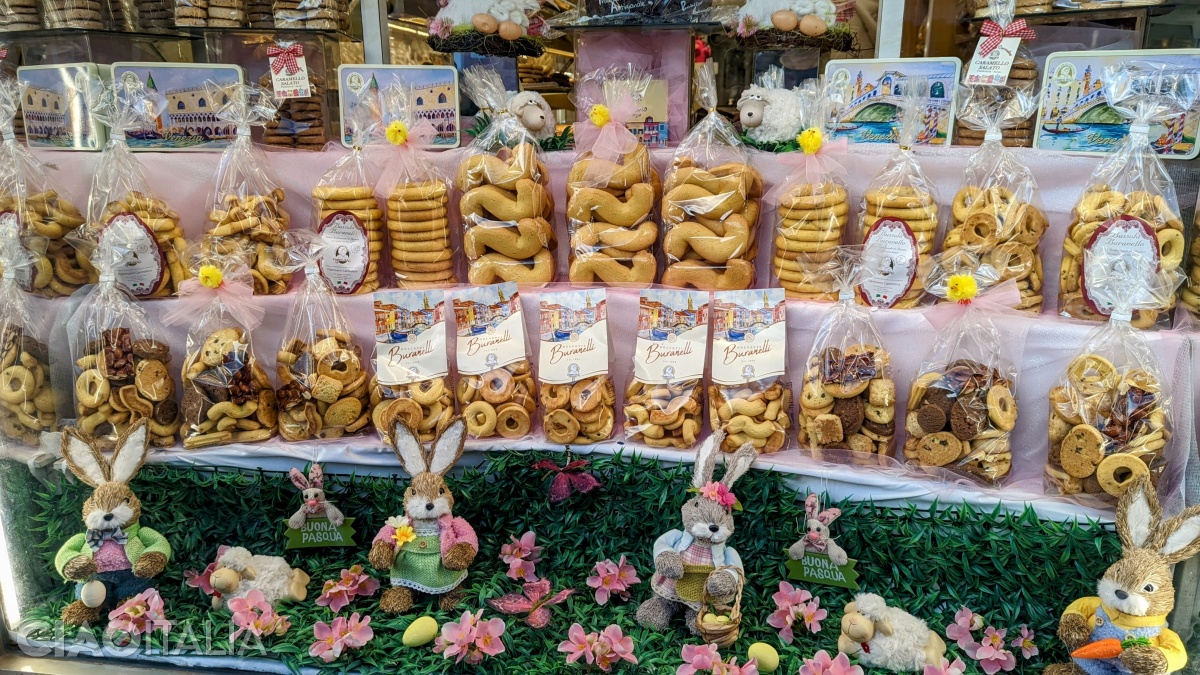
Traditional (and great to buy as a gift or simply as a sweet snack) are the biscuits called bussolai or buranelli. They are either round with a hole in the middle or shaped like the letter S (in which case they are called esse di Burano). In the past, these biscuits were prepared by wives for fishermen who were away for long periods. Today, they are prepared in Burano homes, especially around Easter.