The Basilica of Santa Maria della Salute in Venice
The Basilica of Santa Maria della Salute, which the Venetians simply call La Salute, is one of Venice's emblematic churches and an important example of the Baroque style in the Veneto region. Its image is very easy to recognize, often appearing in photographs and postcards.
Location
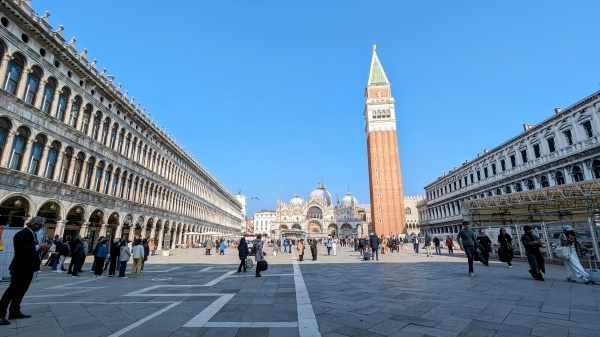
The Basilica of Santa Maria della Salute is located in the Dorsoduro district, just a few minutes' walk from the Peggy Guggenheim Museum. It is situated on the Grand Canal, in the area called Punta della Dogana, where the Grand Canal meets the Giudecca Canal, forming the St. Mark's Basin. The church is visible from many areas, including St. Mark's Square or the Ponte dell'Accademia.
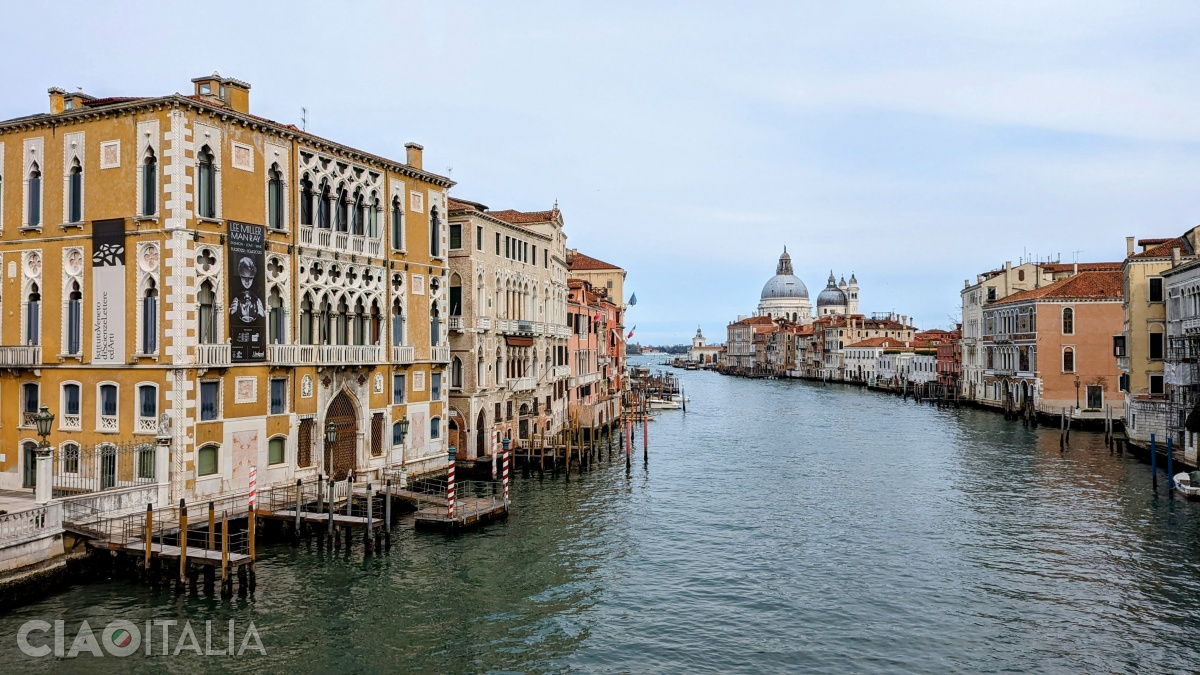
To get there by vaporetto (water bus), you will need to take Line 1 and alight at the "Salute" stop.
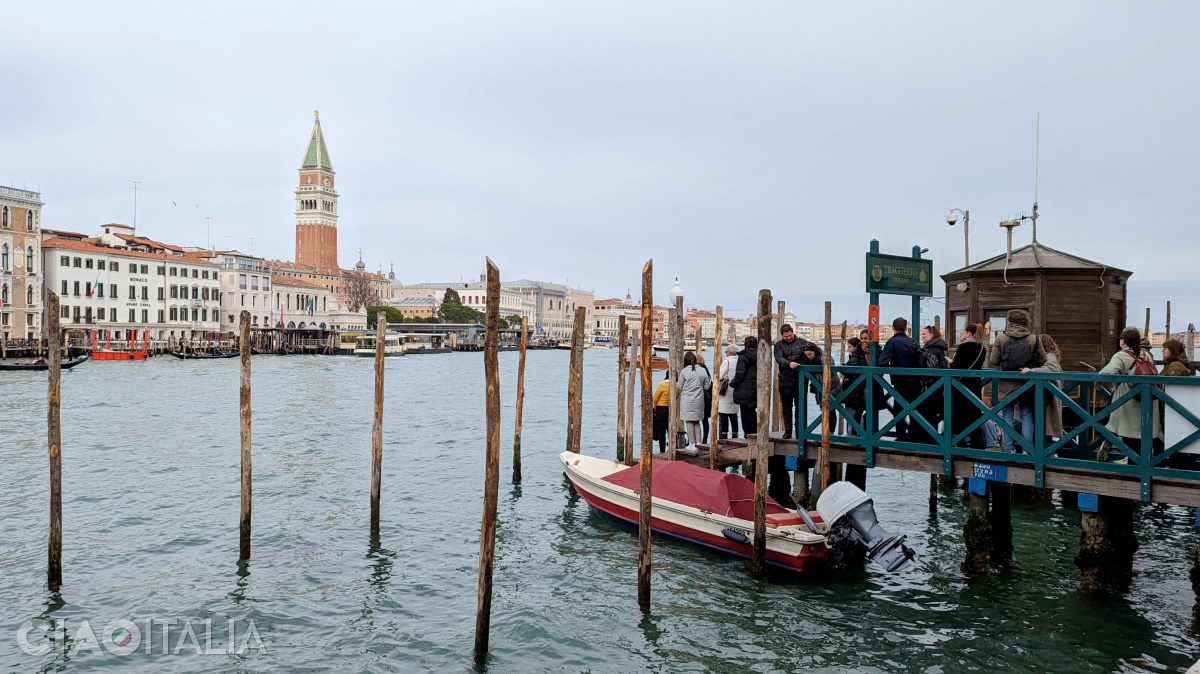
The Dogana traghetto (gondola ferry) station is in the immediate vicinity, so you can take the opportunity to cross the canal using the simple boats favored by Venetians for crossing from one bank to the other. The cost of a crossing is €2 (you can find more details in the article about taking a gondola ride).
Entrance Fee
Entry to the Basilica of Santa Maria della Salute is free (check out other places that you can visit in Venice for free).
If you wish to visit the sacristy (which holds several important works of art), the choir, and the art gallery, or ascend to the inner balustrade or the exterior dome, you will need to purchase a ticket.
Ticket Prices are:
- Sacristy: €6
- Ascent to the inner balustrade: €5
- Ascent to the dome: €8 (you will have to climb 150 steps; there is no elevator)
- Dome + Sacristy: €13
Attention! If you have already purchased tickets for St. Mark's Basilica, you are entitled to visit the sacristy of the Basilica of Santa Maria della Salute for free for 6 months from the date of purchase.
Opening Hours
The Basilica of Santa Maria della Salute can be visited according to the following opening hours:
April 1 - October 31, 2026:
Basilica:
- Monday to Sunday: 9:00 AM - 12:00 PM, 3:00 PM - 5:30 PM
Sacristy:
- Monday: closed
- Tuesday: 2:00 PM - 3:30 PM, 4:40 PM - 5:30 PM
- Wednesday-Friday: 10:00 AM - 12:30 PM, 2:00 PM - 3:30 PM, 4:40 PM - 5:30 PM
- Saturday: 10:00 AM - 12:30 PM, 2:00 PM - 5:30 PM
- Sunday: 10:00 AM - 10:30 AM, 2:00 PM - 5:30 PM
Dome:
- Tuesday-Sunday, access to the top at fixed times, between 10:00 AM - 5:00 PM
Visit to the Basilica of Santa Maria della Salute
History
The construction of the Basilica of Santa Maria della Salute was commissioned by the Senate of the Venetian Republic in 1630. It was a sign of gratitude to the Virgin Mary at the end of a terrible plague epidemic that had devastated the city (in Italian, the word salute means "health" but also "salvation"). Most likely, the plague was brought to Venice by an ambassador from Mantua, where the disease was already claiming victims. Although sent into quarantine on Lazzaretto Vecchio, one of the islands of the Venetian lagoon, he still came into contact with a carpenter who, upon returning to the city, spread the disease. It is said that about 46,000 people - roughly a third of Venice's population - died during the epidemic.
The Basilica of Santa Maria della Salute was started in 1631. The architect who won the project was Baldassare Longhena, the same architect who designed Ca' Pesaro and Ca' Rezzonico, other important landmarks in Venice. Work proceeded slowly due to stability issues. Over a million wooden piles were needed to build the foundation. The inauguration finally took place 56 years later, in 1687.
One of the most important Venetian celebrations is connected to this church: the Festa della Salute, which takes place every year on November 21st to commemorate the end of the plague epidemic of 1630. On this day, a temporary floating bridge is constructed, connecting the two banks of the Grand Canal, and locals gather in large numbers to pray and give thanks to the Virgin. Traditionally, they eat castradina, a Venetian dish prepared with cabbage and smoked mutton shank. (A similar popular festival also takes place during the third weekend of July at the Santissimo Redentore Basilica on Giudecca Island.)
The Exterior
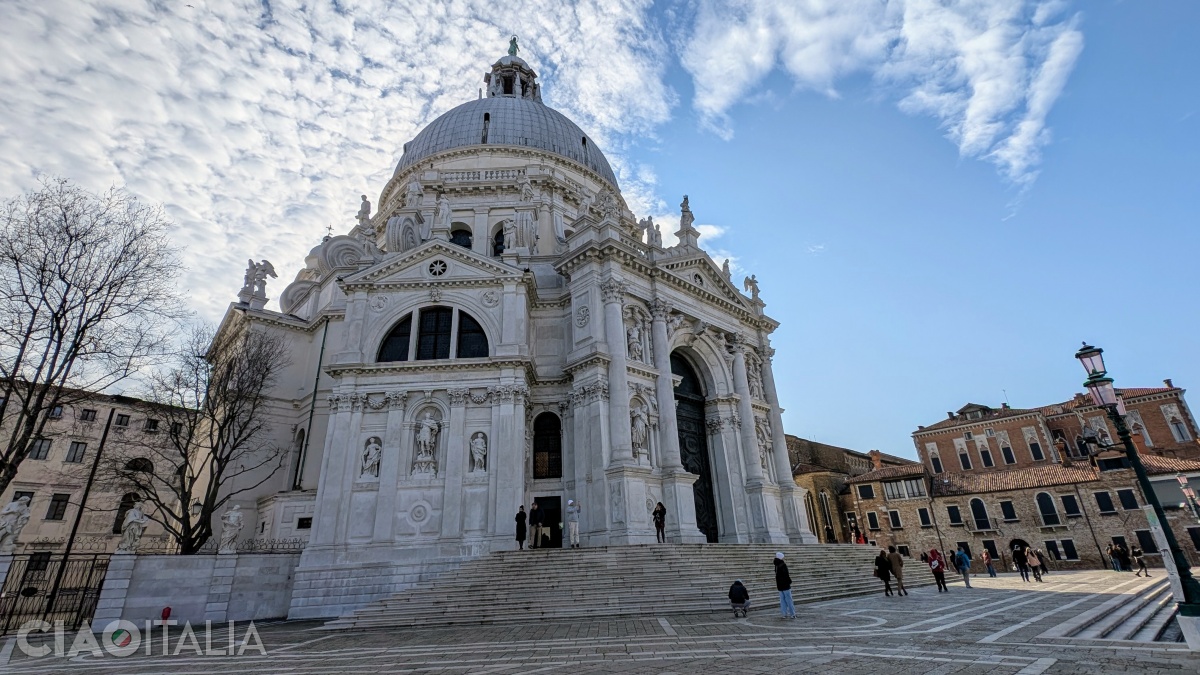
The church has an octagonal plan and two domes (one dome towards the rear). The declared intention of the architect Baldassare Longhena was to make it circular, symbolizing a crown dedicated to the Virgin.

The main dome (which you can climb for a wonderful view of the Grand Canal, St. Mark's Basin, and the island of San Giorgio Maggiore) is framed by several immense volutes that act as buttresses. The Venetians call them orecchioni ("big ears"). At the very top stands the statue of the Virgin, with a crown of stars and the staff of the Capitana da mar ("Captain of the Seas").
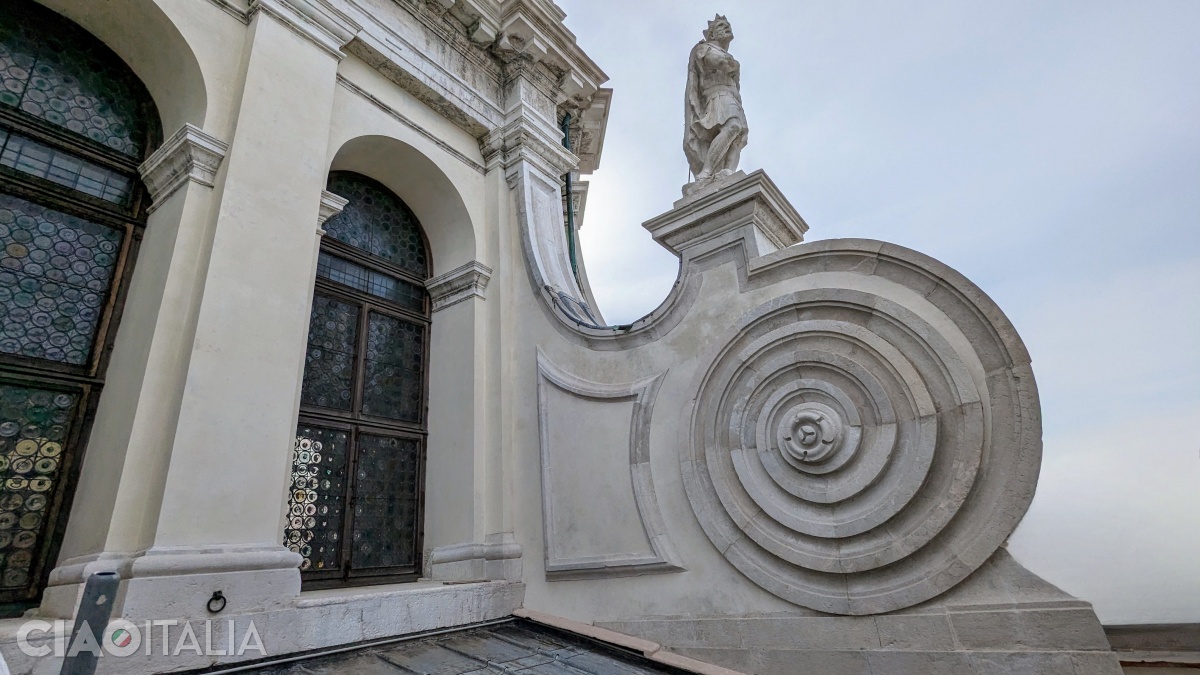
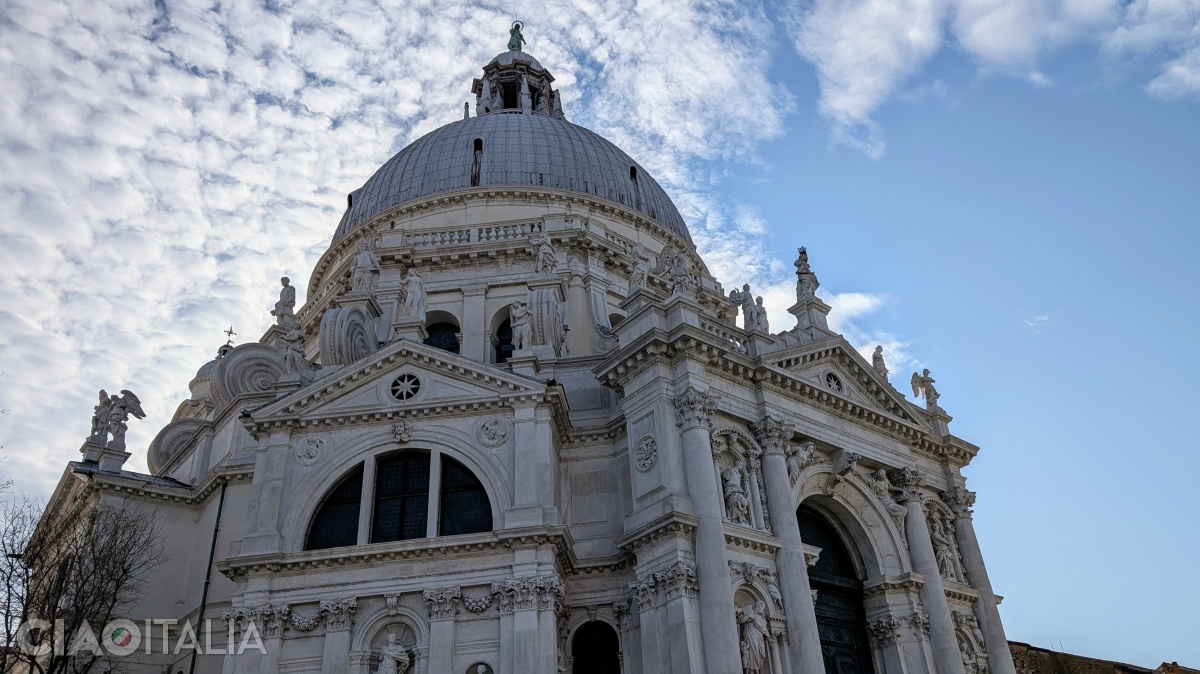
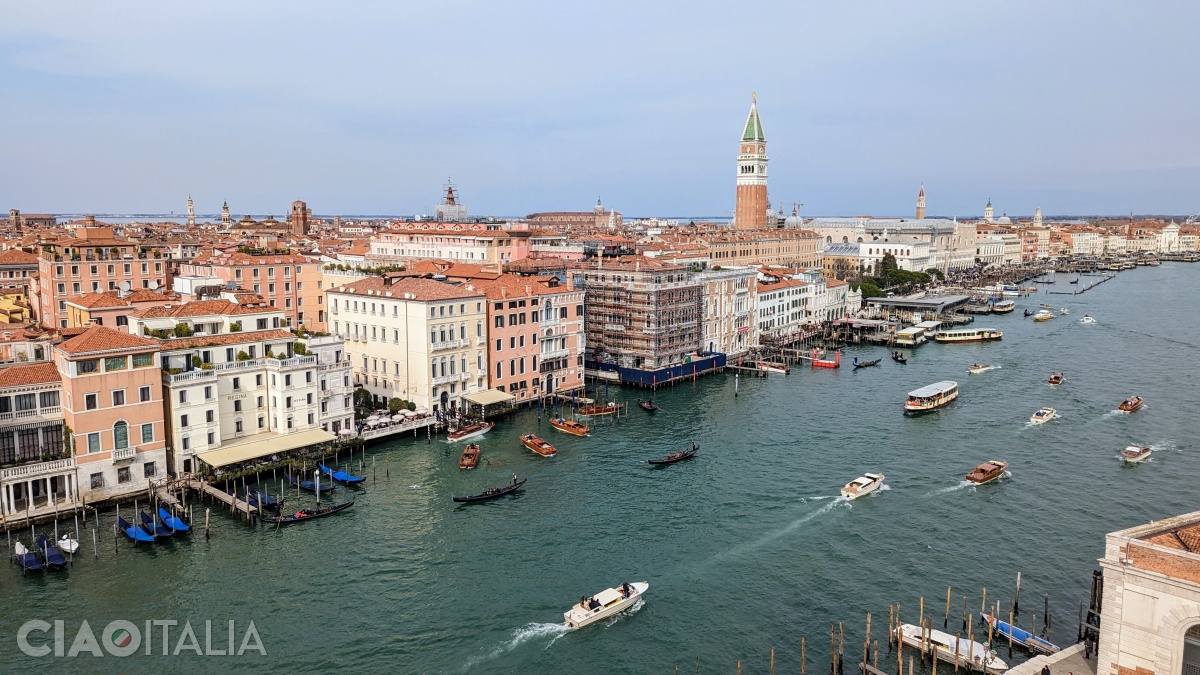
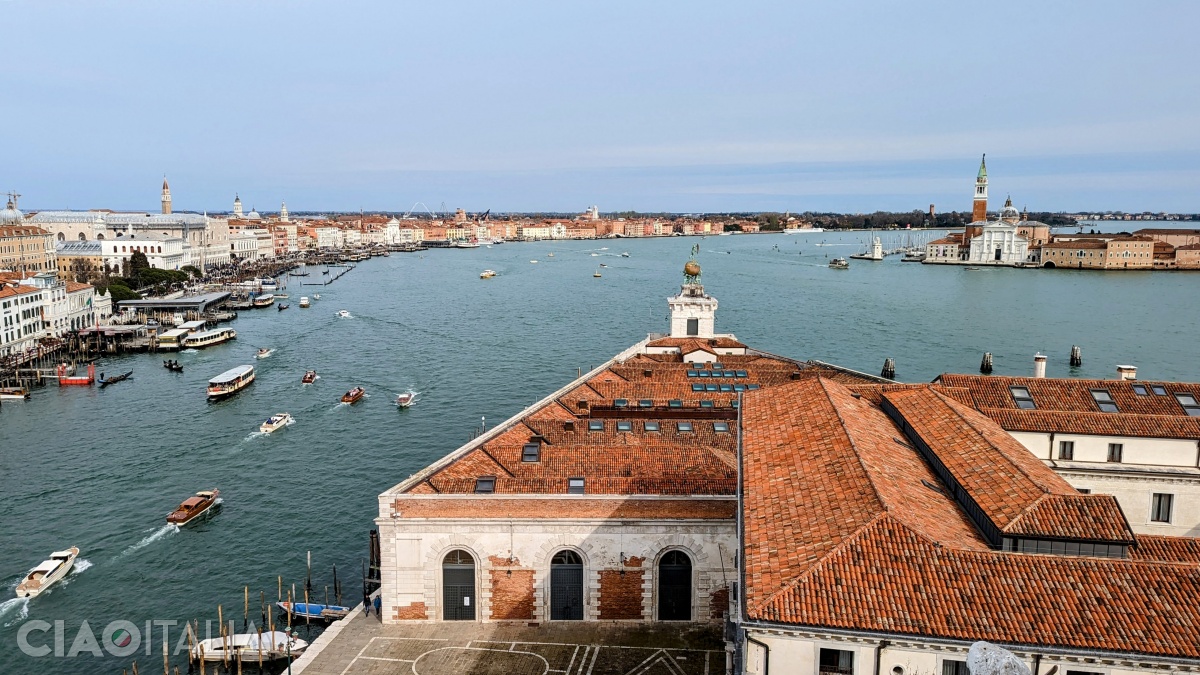
The smaller dome, visible from the Giudecca Canal, is framed by two bell towers.
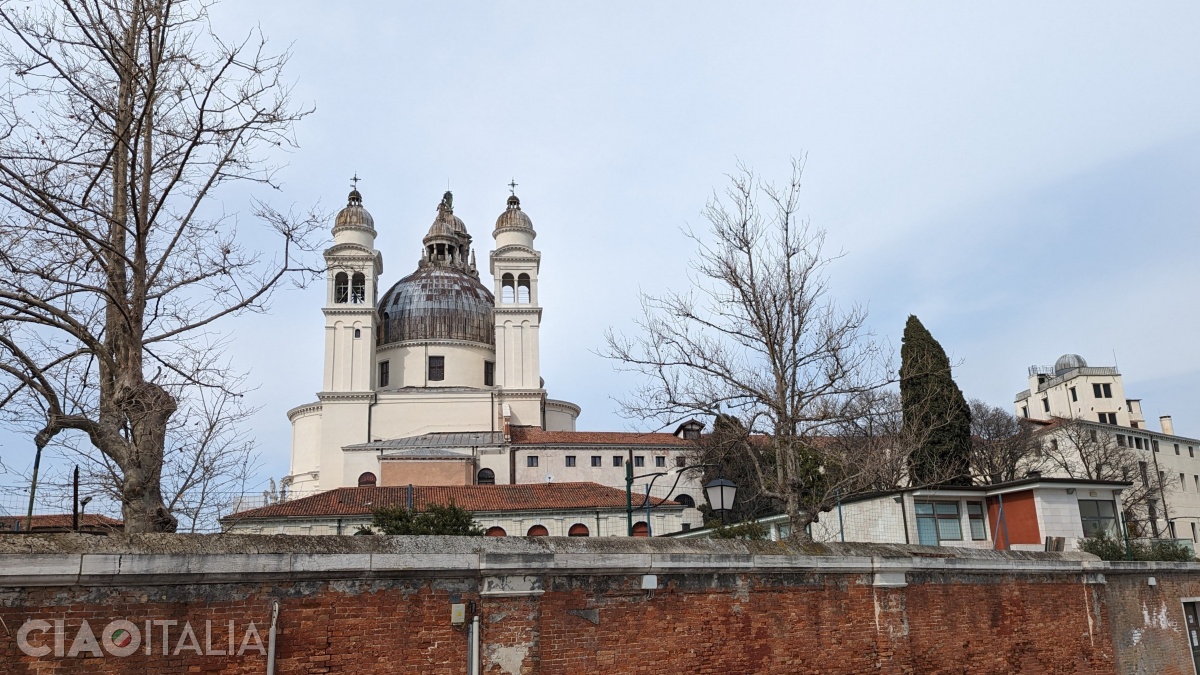
Access to the church is gained by ascending a 15-step staircase, the same number as in the Temple of Solomon. Sculpted above the main door's arch are two sibyls, while the evangelists are represented in two tiers to the right and left.
Above the tympanum over the arch is the statue of the Virgin and Child. The secondary tympana and volutes are decorated with statues of kings and prophets from the Old Testament.
The Interior
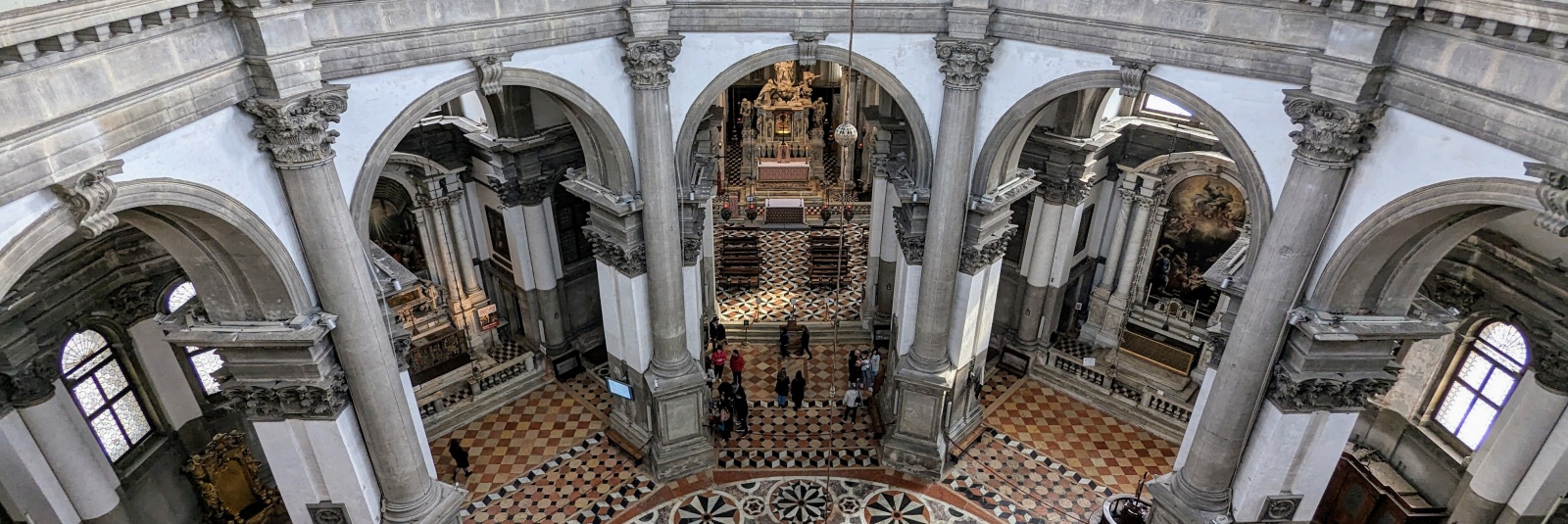
The vast interior space, framed by eight columns, features a marvelous floor of polychrome marble, decorated with concentric circles.
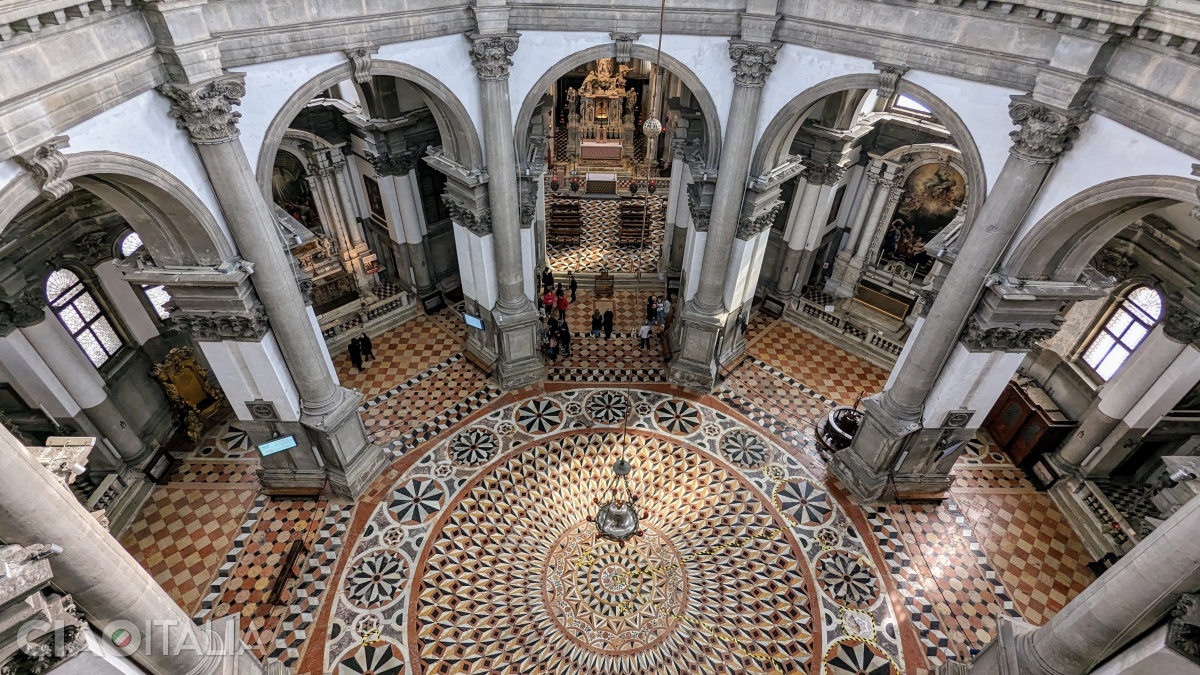
Above it rises the main dome, which has many tall windows at its base and a balustrade adorned with statues of prophets (you can access this level with a special ticket).

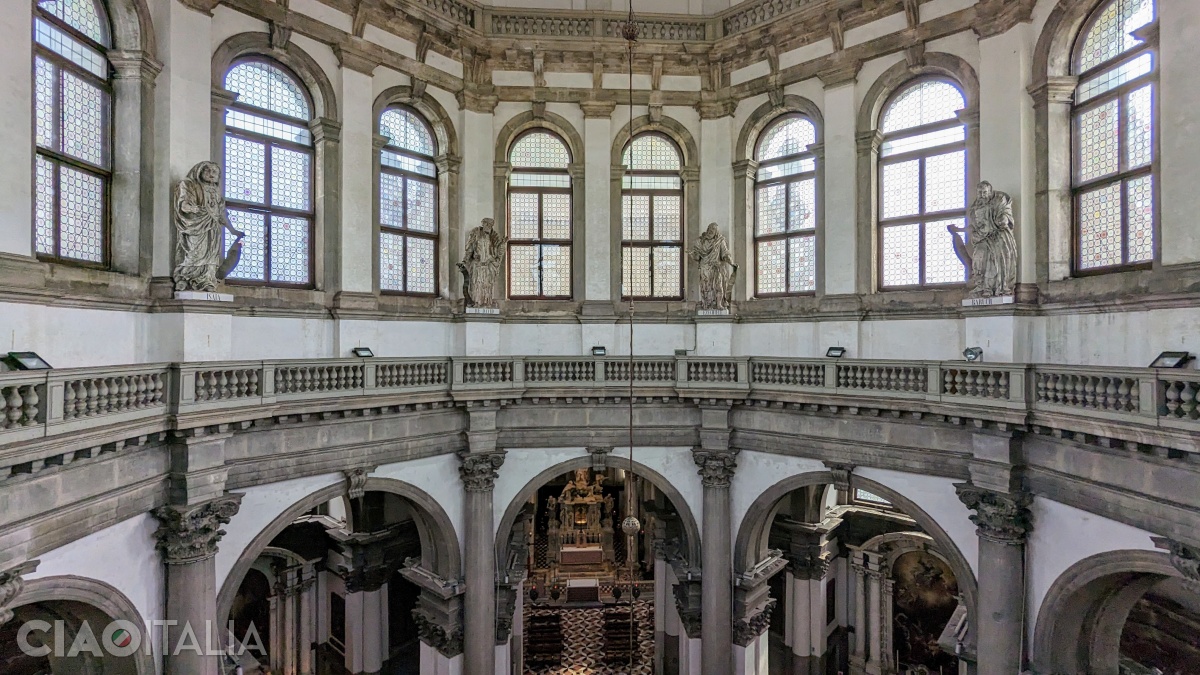
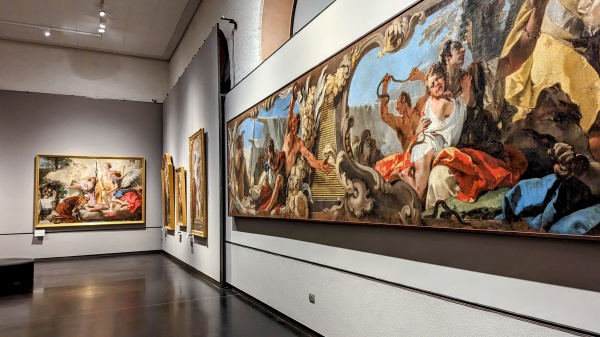
Beyond the arches formed by the columns open six lateral chapels, decorated with works by Pietro Liberi, Titian ("The Descent of the Holy Spirit", the third chapel on the left, near the sacristy entrance), and Luca Giordano.

The main altar was designed by Longhena himself and decorated with statues by the Flemish sculptor Josse le Court (the same artists collaborated on the Altar of the Crucifix in the Basilica of Santa Maria Gloriosa dei Frari). In its center is a Byzantine icon representing the Virgin and Child (Mesopanditissa - from the Greek, "mediatrix of peace") revered by Venetians as the Madonna della Salute. It was brought from Crete in 1670 after a battle against the Turks, by Doge Francesco Morosini, in whose honor a triumphal arch was built in the Doge's Palace.
The marble sculpture above the altar, "The Virgin Expelling the Plague", was created in 1670. The kneeling figure on the left is Venice, and the figure on the right symbolizes the plague, being driven out of the city by an angel.

The Sacristy
The most important works in the Basilica of Santa Maria della Salute are found in the Sacrestia Maggiore (Major Sacristy).
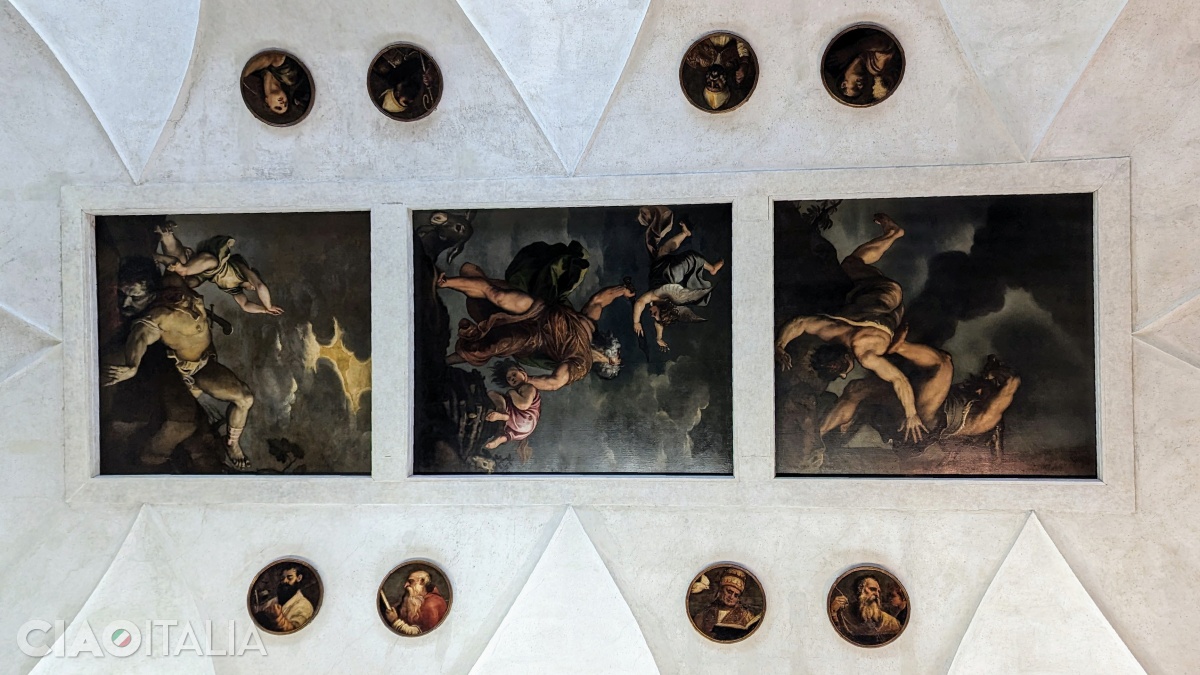
The sacristy ceiling is decorated with three canvases by Titian, created between 1510 and 1545 and influenced by Michelangelo's style: "David and Goliath", "The Sacrifice of Isaac", and "Cain and Abel". Around them, in medallions, are represented the four evangelists and the saints Augustine, Ambrose, Jerome, and Gregory the Great.
Another painting by Titian, created in his youth, adorns the altar: "St. Mark Enthroned with Saints Cosmas, Damian, Sebastian, and Rocco" (1510–1511).
On the right wall of the sacristy is the most significant work in the church: "The Wedding at Cana", the large canvas executed by Tintoretto in 1561 (if you want to see more works by Tintoretto, visit the Scuola Grande di San Rocco).

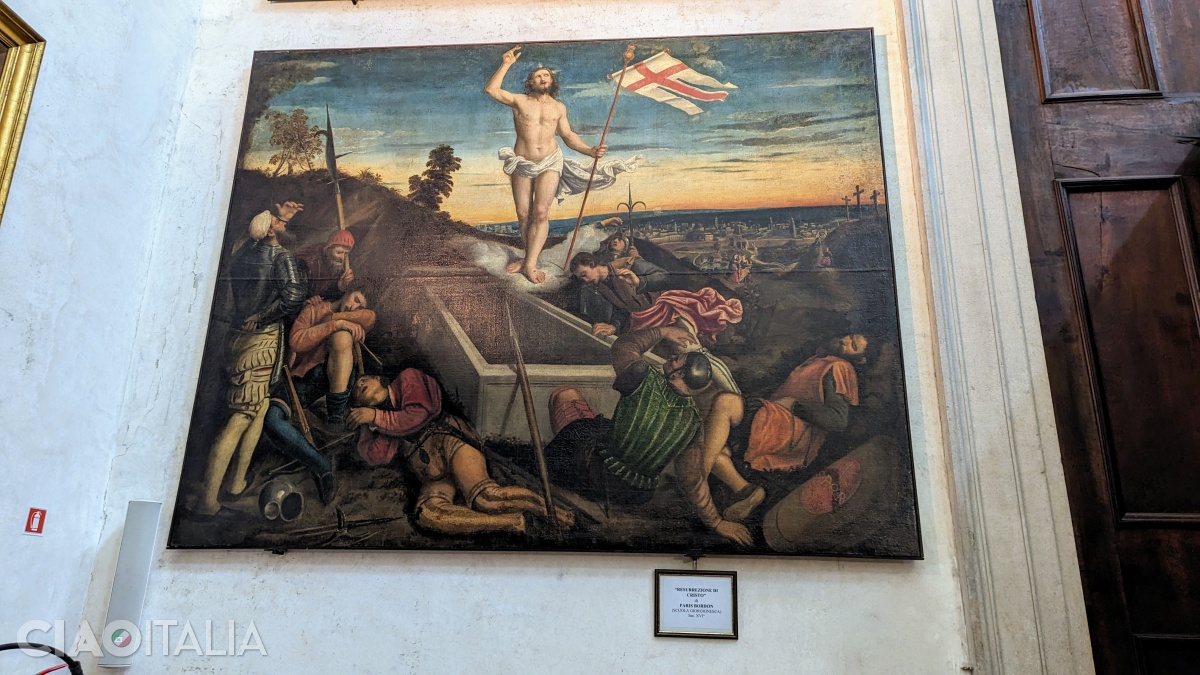
Other works housed in the sacristy belong to artists such as Palma il Vecchio, Giuseppe Porta (il Salviati), Palma il Giovane, and Paris Bordone.