Peggy Guggenheim Museum in Venice
The Peggy Guggenheim Museum (Collezione Peggy Guggenheim) is one of the major tourist attractions in Venice and one of the most representative art museums in Italy. The collection of paintings and sculptures reflects all the important movements of 20th-century modern art.
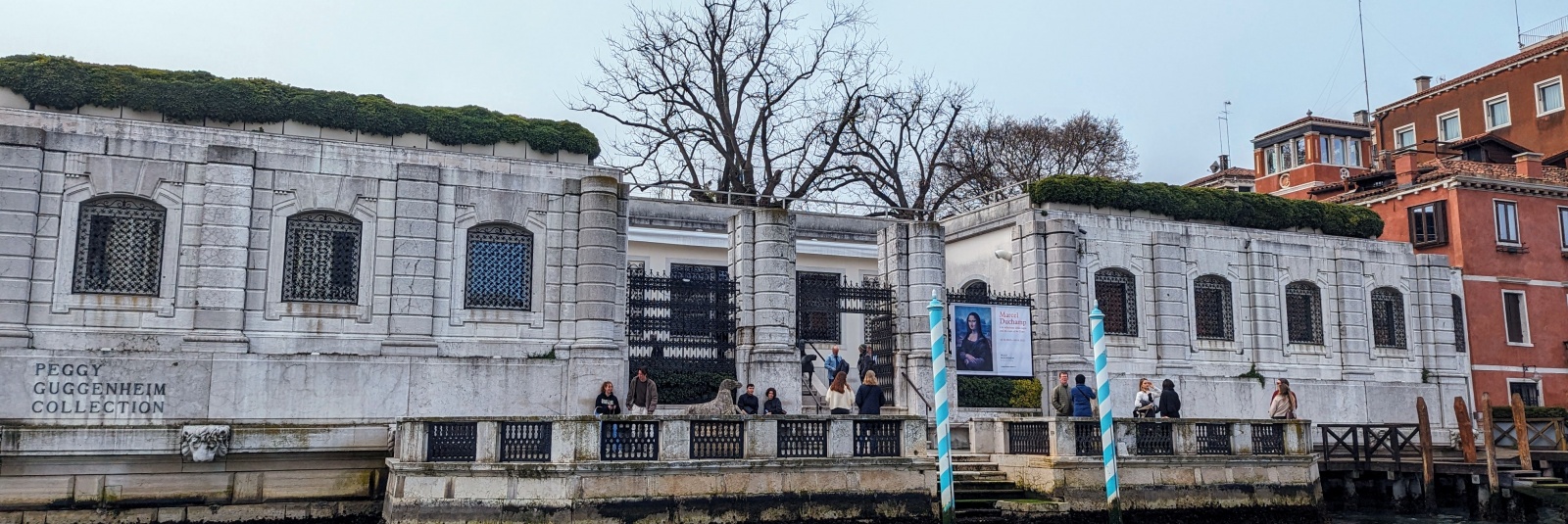
The museum is located on the Grand Canal, in the Dorsoduro district, between the Academy Bridge and the Santa Maria della Salute Church. You can reach it very easily using a vaporetto.
Ticket Prices
Tickets for the Peggy Guggenheim Collection in Venice are priced as follows:
- Adults: €17
- Over 70: €14
- Students under 26: €9
- Children 10-18 years: €9
- Children under 10: Free
Discounts are granted based on supporting documents.
If you have purchased a ticket in the last 7 days for the Accademia Galleries or for the Gallery at Palazzo Cini or Palazzo Grassi - Punta della Dogana, then the price of a ticket for the Peggy Guggenheim Museum is €14.
The price of an audioguide (available in English, Italian, French, Spanish, or German) is €7.
Tickets can be purchased directly at the museum ticket office, subject to availability, or online (with a €1 booking fee), by choosing a time slot for the visit.
Large luggage (large bags, backpacks, etc.) must be left at the cloakroom, located next to the ticket office.
Opening Hours
The opening hours for the Peggy Guggenheim Collection are:
- Monday: 10:00 AM - 6:00 PM
- Tuesday: Closed
- Wednesday-Sunday: 10:00 AM - 6:00 PM
The ticket office closes at 5:00 PM.
Last entry is at 5:00 PM, and museum closing operations begin at 5:50 PM.
On December 25th, the Peggy Guggenheim Museum is closed.
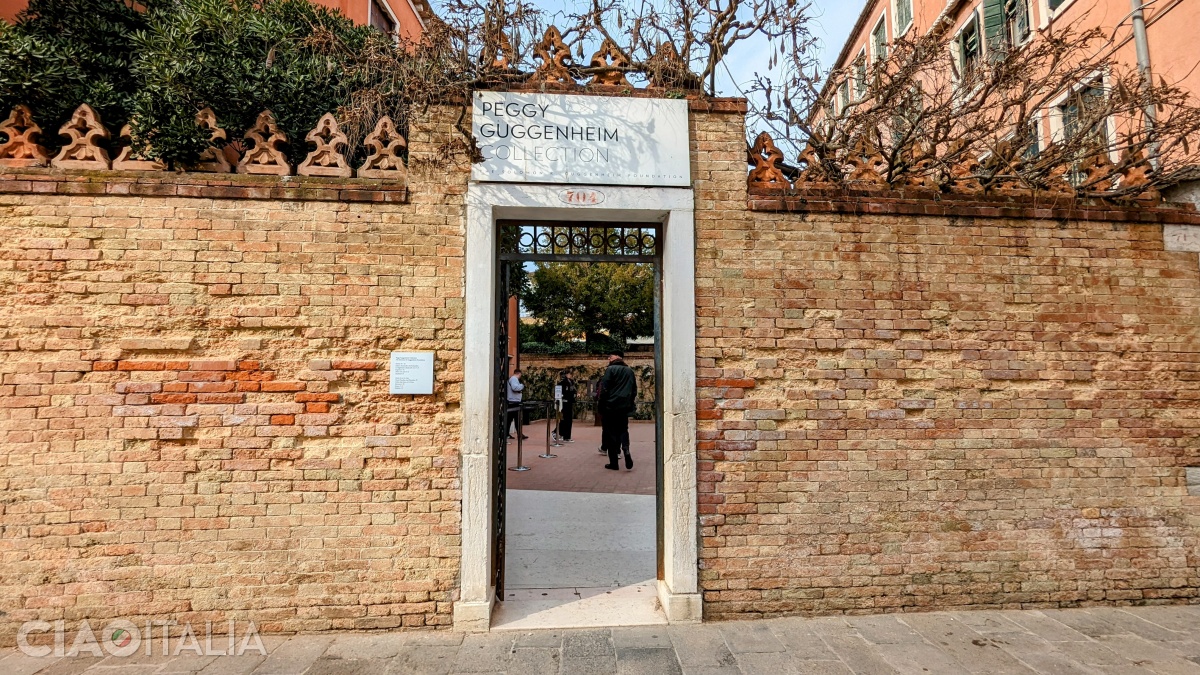
Who Was Peggy Guggenheim?
Born in 1898, Peggy Guggenheim was the heiress of a wealthy New York family.
In 1921, she moved to Europe and became a constant presence in the artistic circles of the time. Brâncuși and Marcel Duchamp were among her famous friends, and for a short period, she was married to the painter Max Ernst. She became a true patron of the arts (during the first month of the war, her motto was "Buy a painting a day") and eventually amassed a significant collection of avant-garde art.
Being in love with Venice, she bought the Venier dei Leoni palace and settled here in 1949; the Venetians named her an honorary citizen of their city.
"I decided that Venice would be my future home. I always loved it more than any place on earth and felt I would be happy alone there". (Peggy Guggenheim)
She spent the rest of her life in Venice, organizing contemporary art exhibitions and continuing to support artists.
In 1970, she donated her palace, and in 1976, she donated the collection to the Solomon R. Guggenheim Foundation in New York. The foundation had been created in 1937 by her uncle, Solomon, with the aim of promoting art.
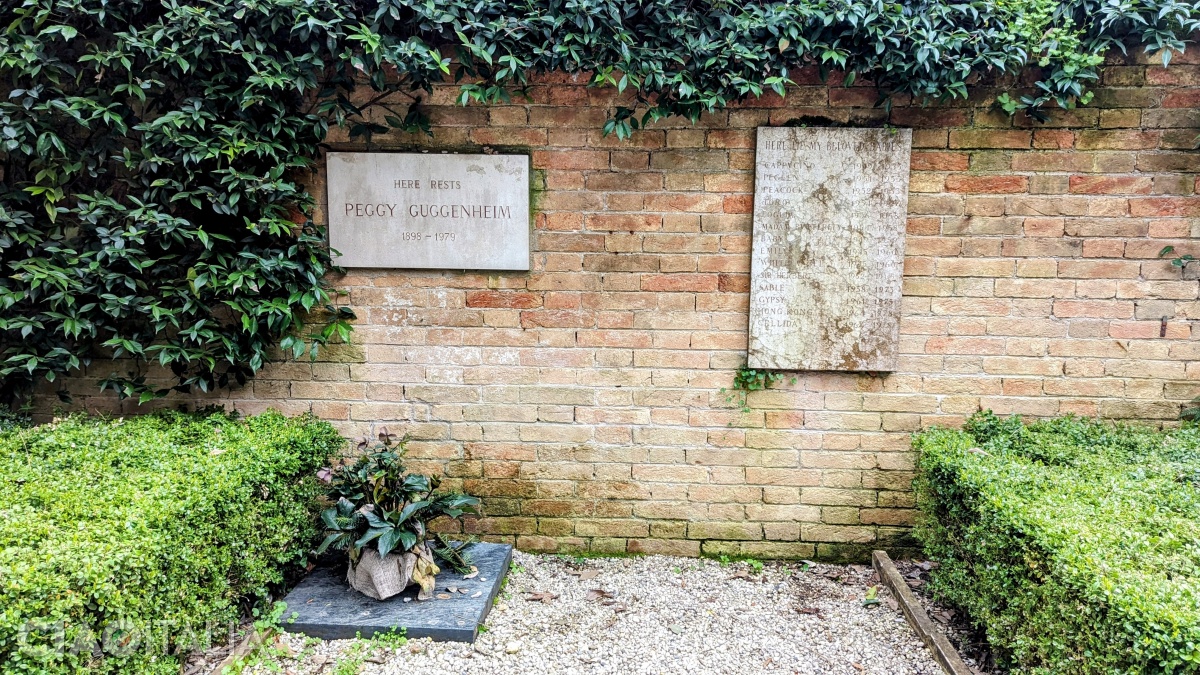
Peggy died in 1979, at the age of 81, in a hospital near Padua. Her ashes were buried in the palace garden, next to those of her beloved dogs.
Visiting the Guggenheim Museum
Palazzo Venier dei Leoni, which houses the museum, is the former residence of Peggy Guggenheim. The palace, built in the 18th century for the Venier family, was also nicknamed Palazzo Nonfinito because it was never finished. Of the planned five floors, only one was completed. According to legend, the owner of the Palazzo Corner, located directly across, did everything in his power to ensure Palazzo Venier remained unfinished, fearing it would overshadow his own home.
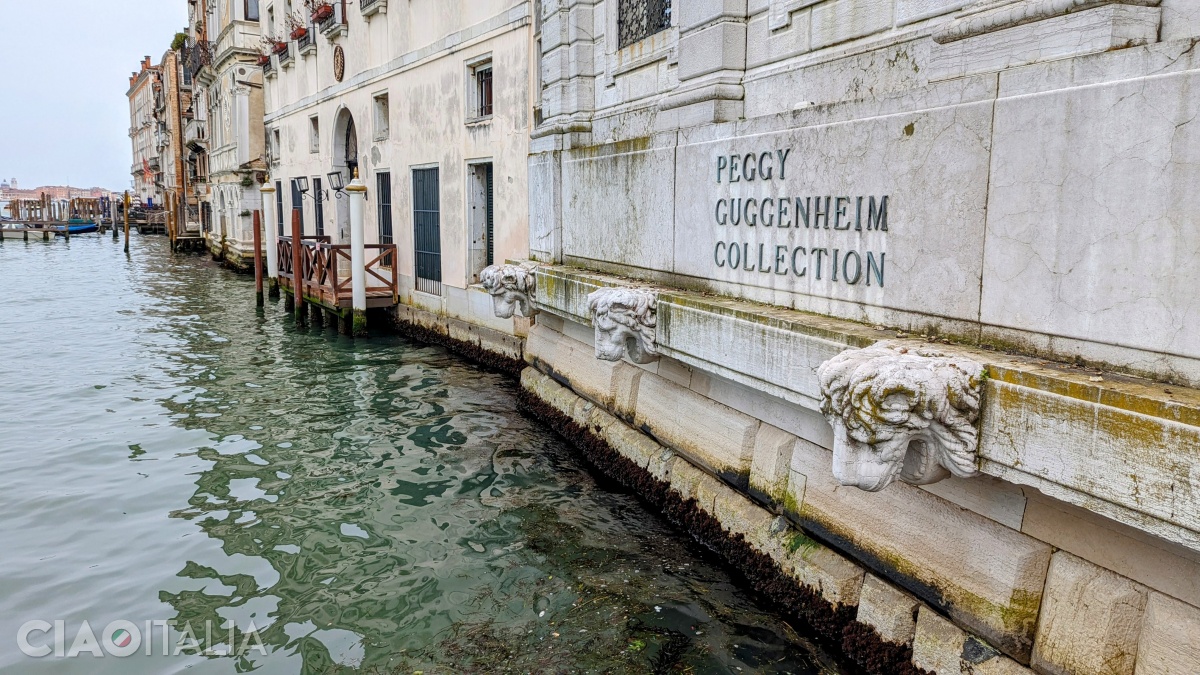
The name (which roughly translates to "Venier Palace of the Lions") comes not so much from the legend that a lion was once kept in the palace garden, but rather from the lion heads carved at the bottom of the facade facing the Grand Canal.
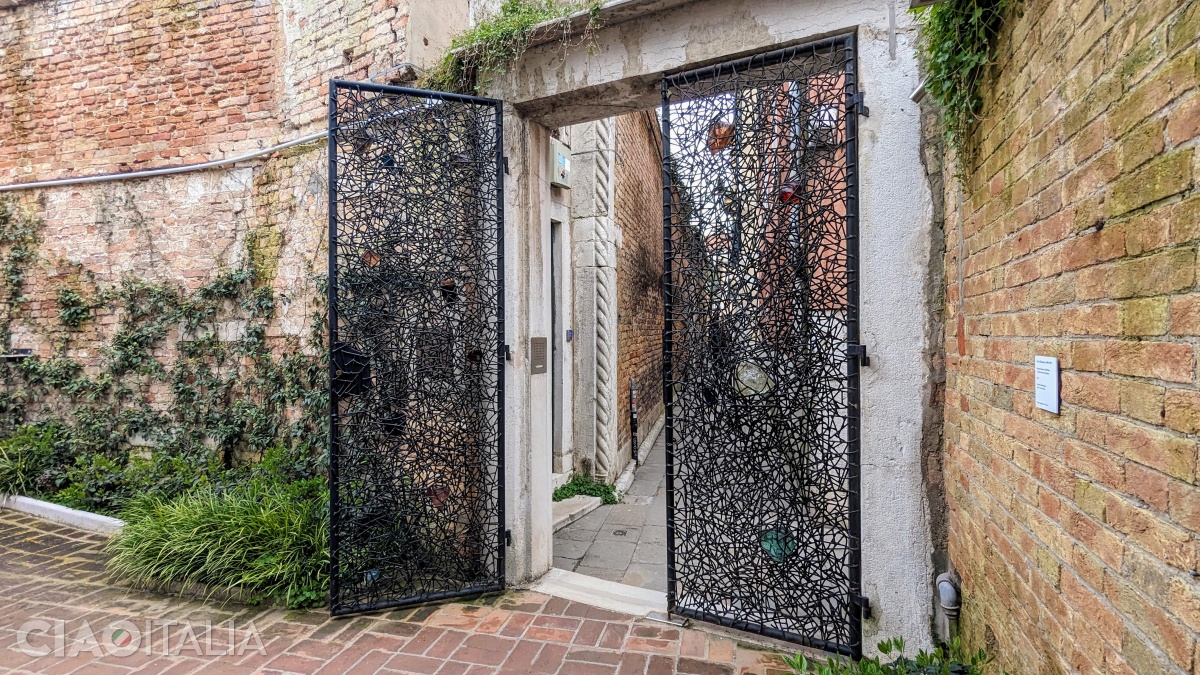
The entrance gates to the museum courtyard are a work of art in themselves. They were created in 1961 from iron and colored glass by Claire Falkenstein.
In the courtyard, to the left of the entrance to the garden and museum, stands a 1960 sculpture by artist Max Ernst titled "On the Streets of Athens".
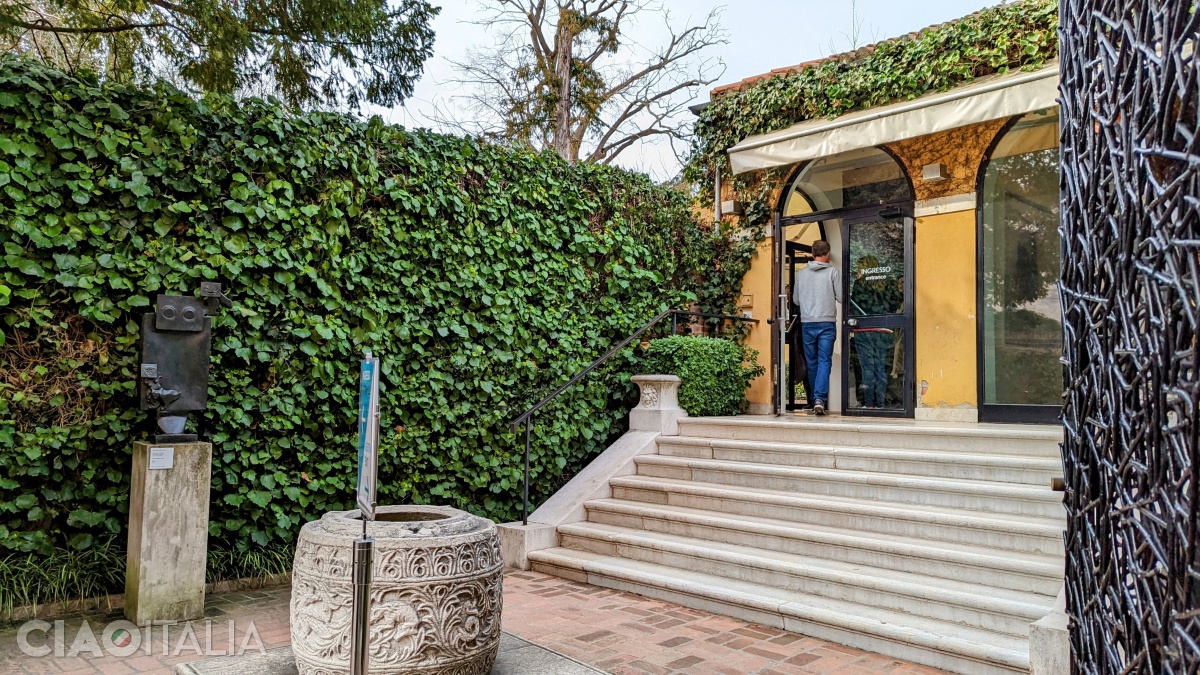
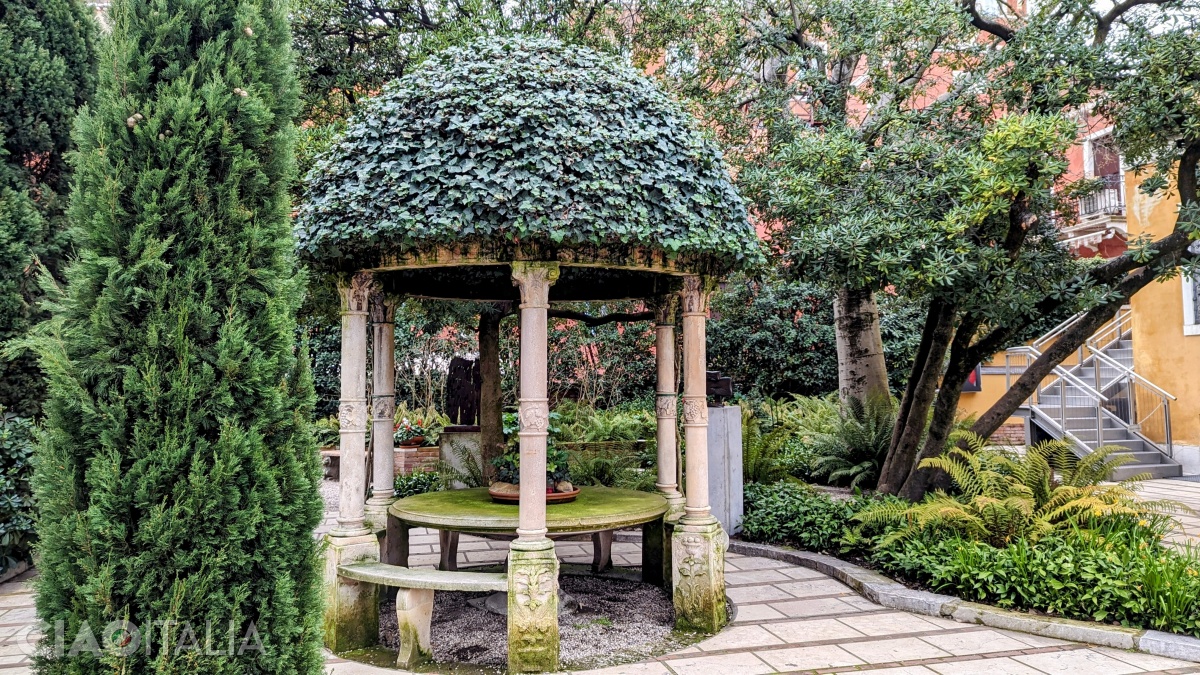
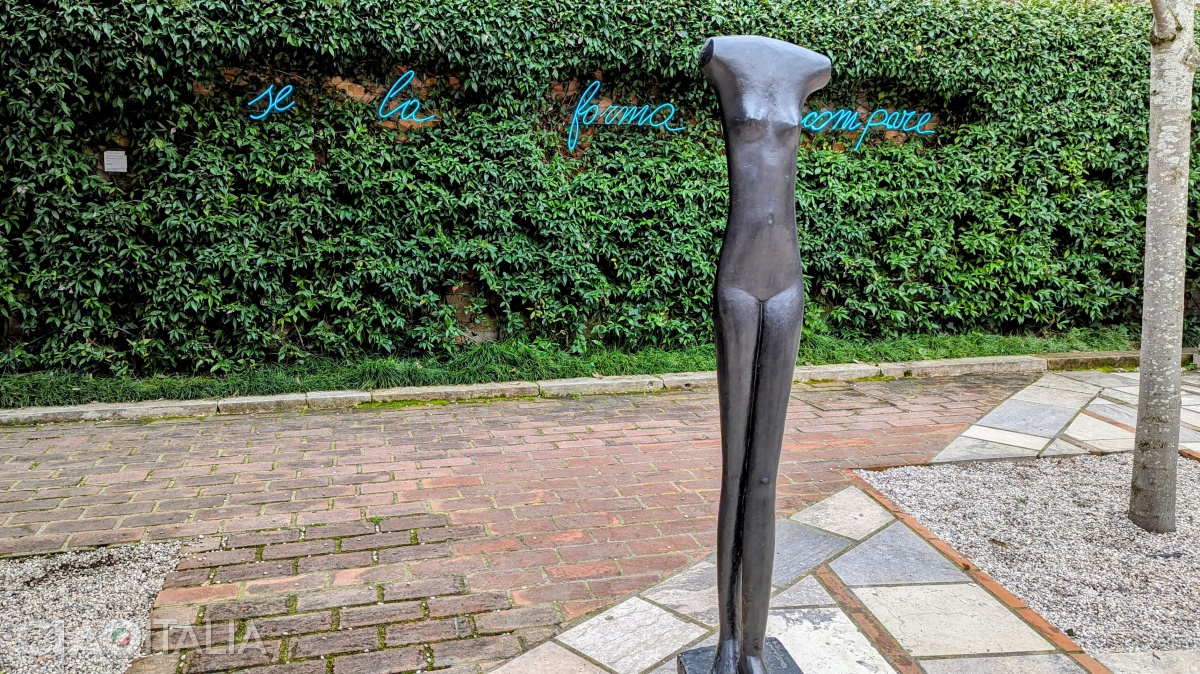
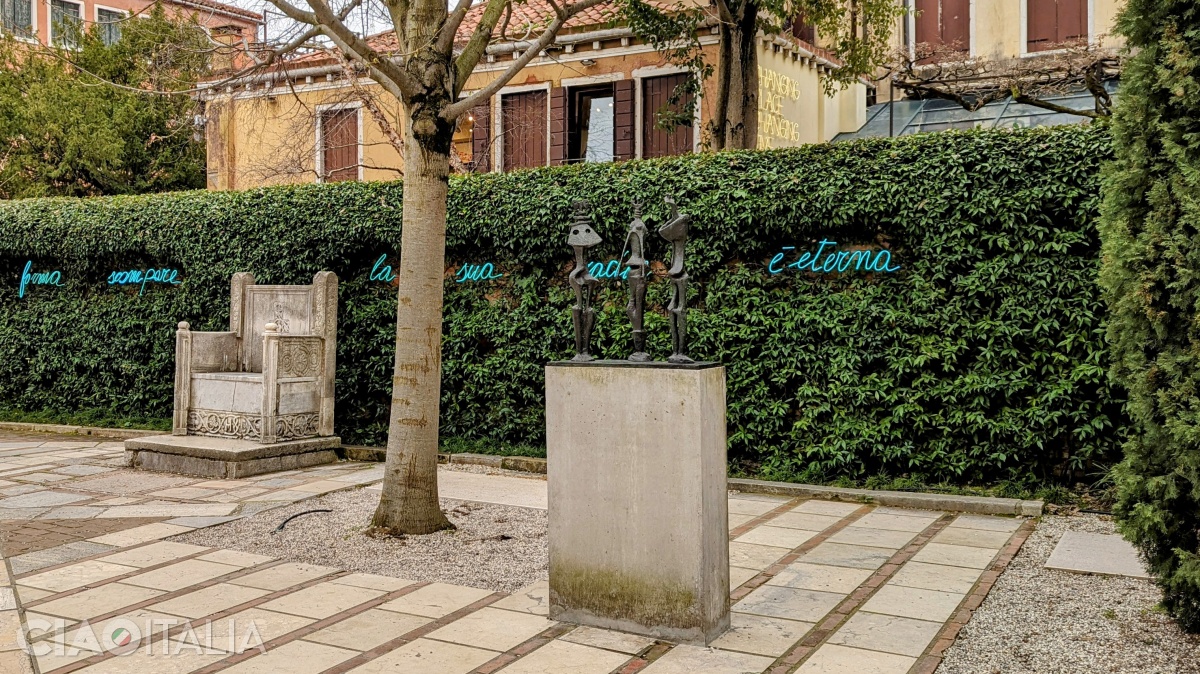
The museum's beautiful garden, designed to highlight the art, is also dotted with sculptural works. In fact, it is even named the "Nasher Sculpture Garden" (Raymond and Patsy Nasher were important art collectors). It includes works from the permanent collection as well as pieces on loan from other galleries.
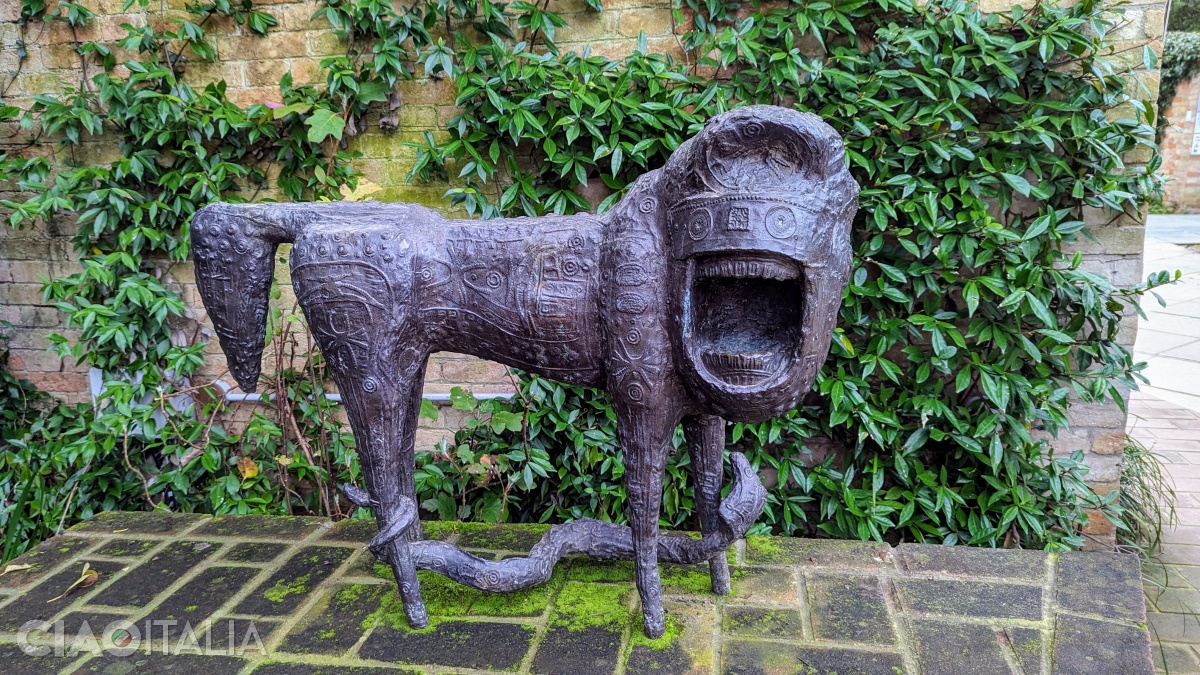
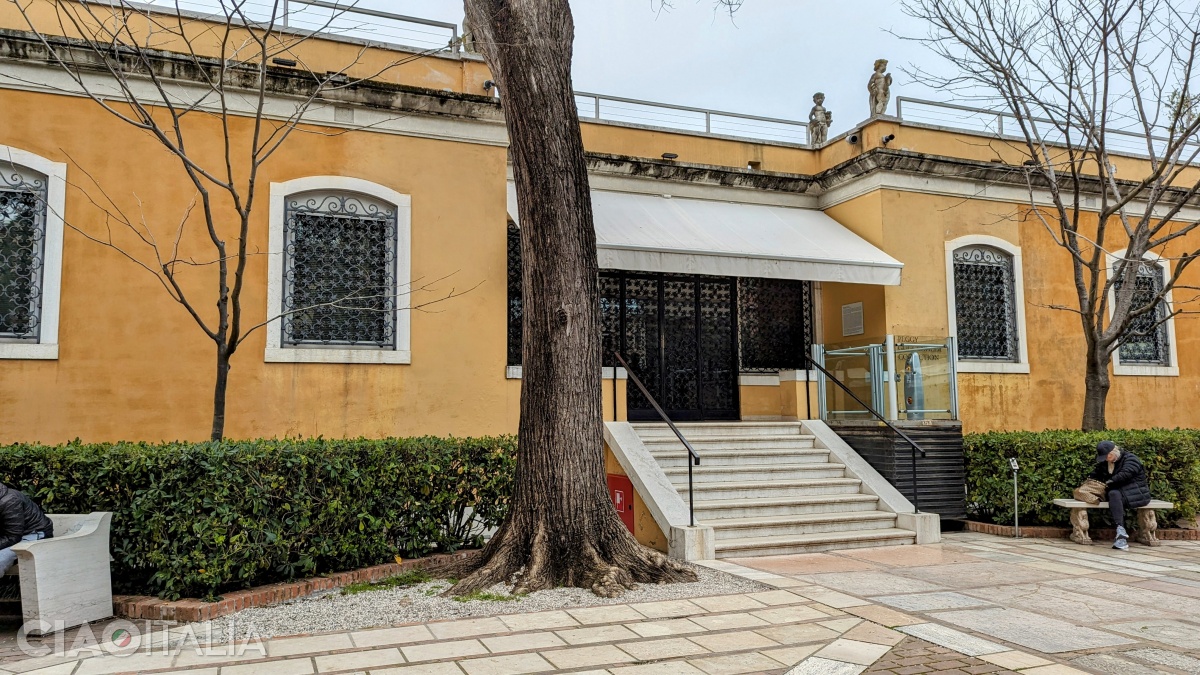
The interior part of the museum is not very large, but it includes works by many of the most important protagonists of 20th-century artistic movements: Cubism, Futurism, Abstract Art, Metaphysical Painting, and Surrealism. Among them are Pablo Picasso, Salvador Dalí, Vasily Kandinsky, Max Ernst, Paul Klee, René Magritte, Marc Chagall, Amedeo Modigliani, Jackson Pollock, Piet Mondrian, and Joan Miró.
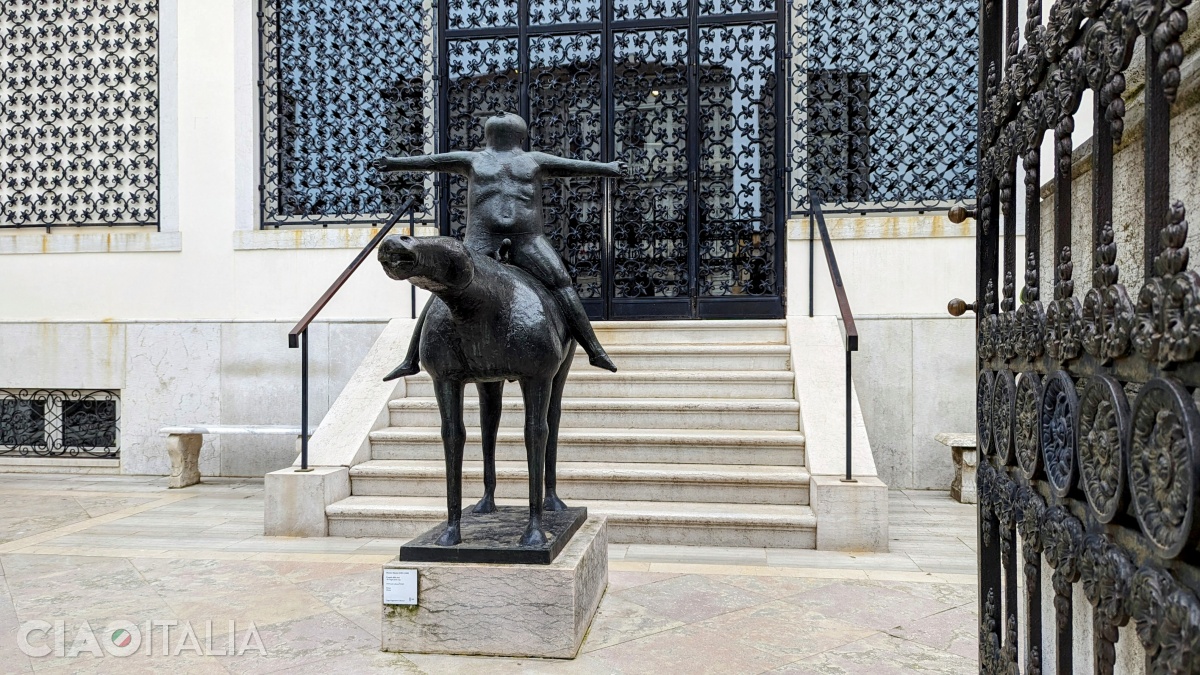
In the center of the panoramic terrace, which offers a wonderful view over the Grand Canal, you will certainly notice the bronze work by Italian artist Marino Marini. It is called "The Angel of the City" and represents a naked rider with an erect phallus looking toward the canal.
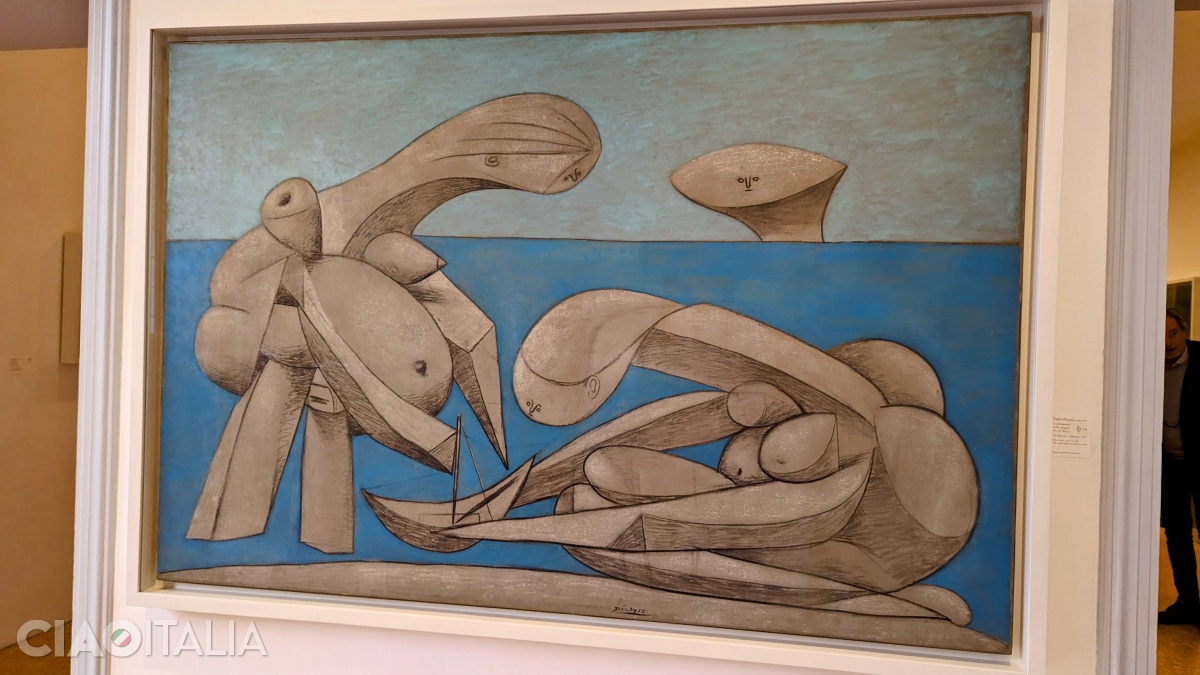
Picasso painted the work "On the Beach" in 1937 at Tremblay-sur-Mauldre, near Versailles. Some have seen it as a form of voyeurism - two girls playing with a small boat while being observed by a swimmer.
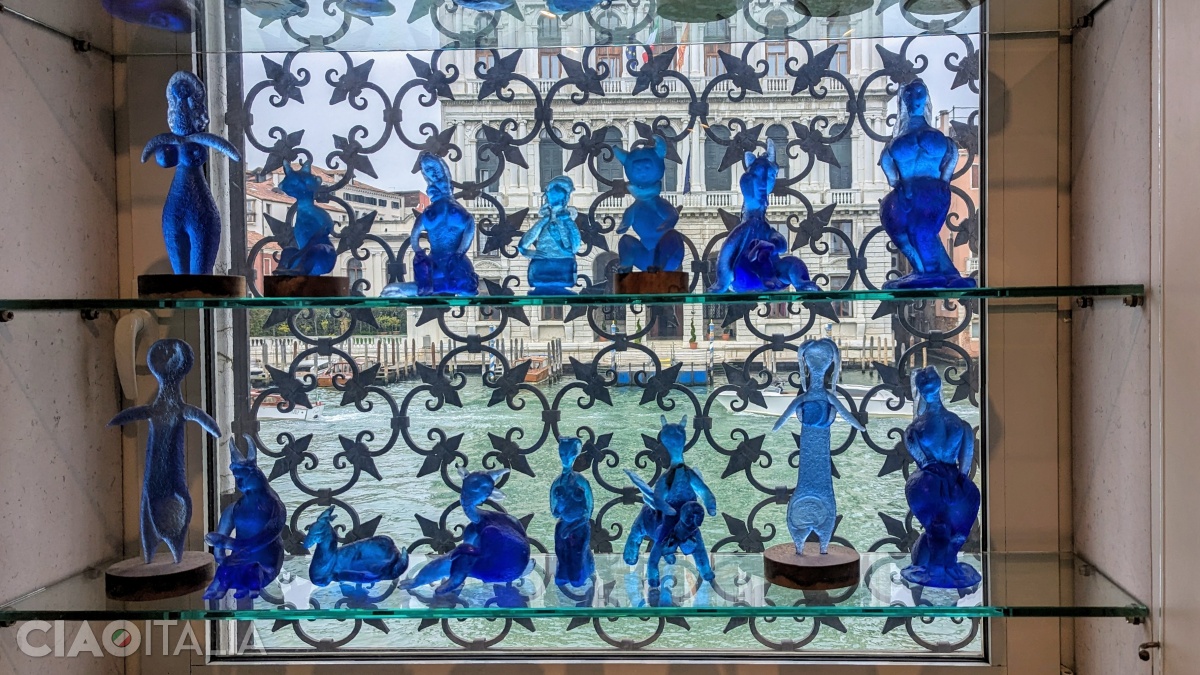
Egidio Constantini was inspired by Picasso's drawings when he created the collection of 23 glass sculptures. His previous experience working with the glass factories on Murano Island marked a decisive step in the artist's career.
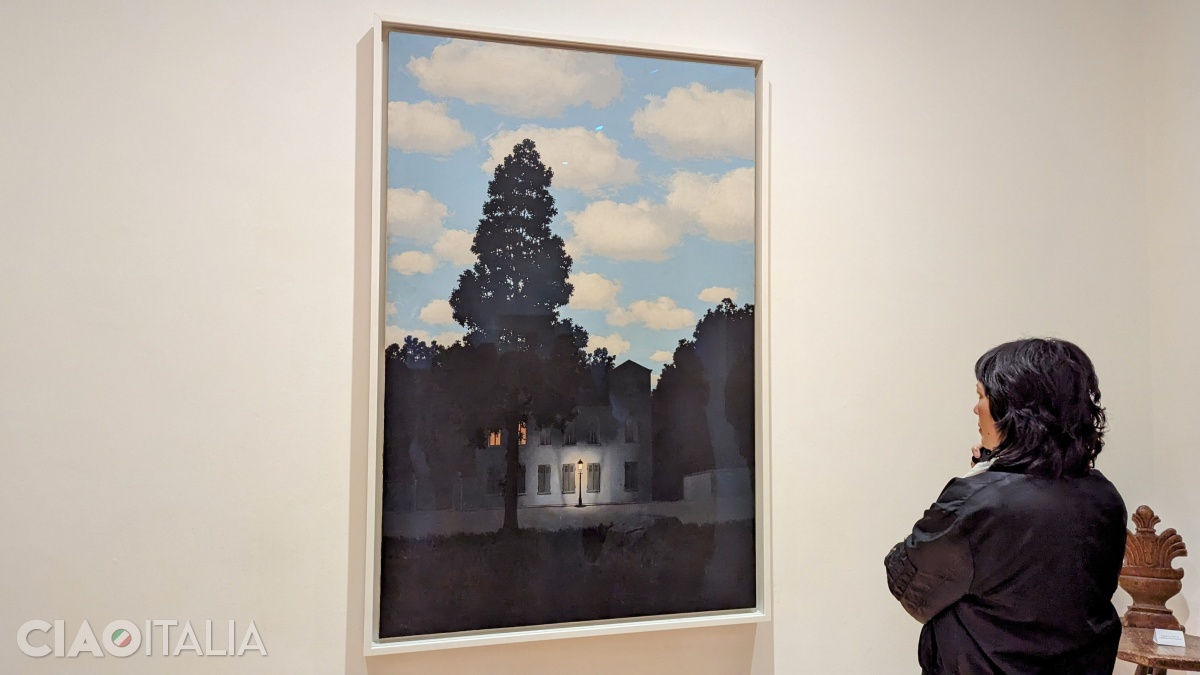
In "The Empire of Light", Magritte simultaneously depicts two opposite moments: both a daytime scene (the blue sky with clouds in the background) and a nighttime one (the dark street and the house dimly lit by a lamppost). The artist's declared goal was to surprise and delight the viewer.
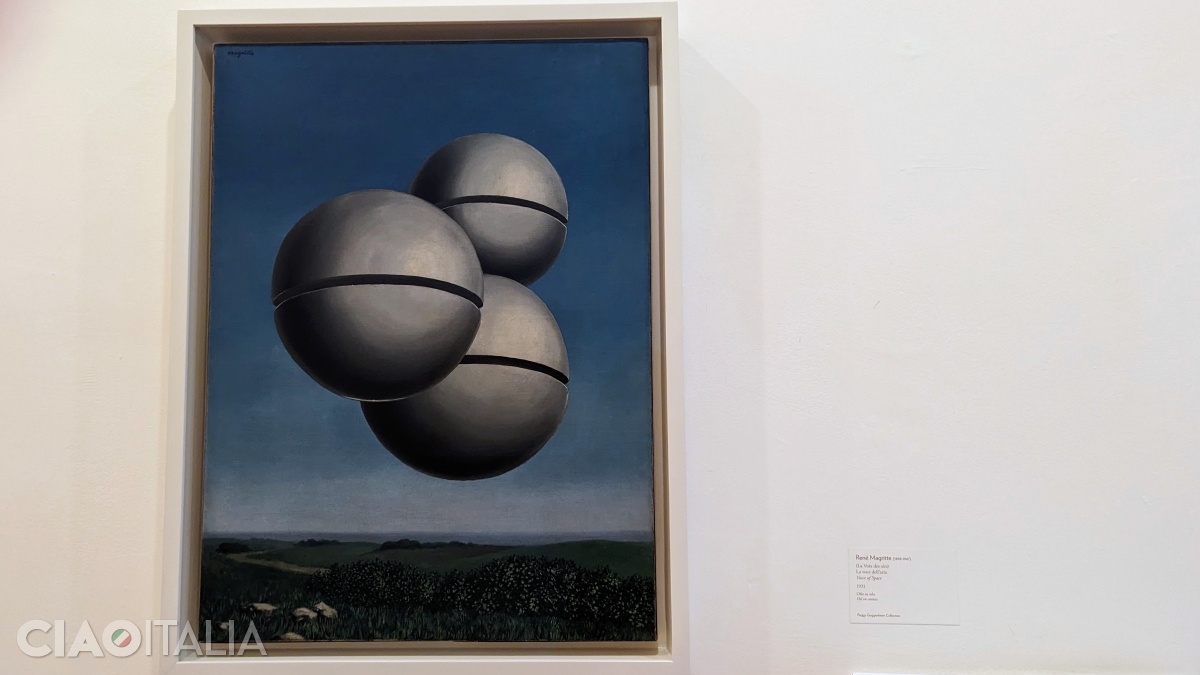
In "The Voice of Space", the surreal effect is created by three giant spheres floating in an ordinary landscape.
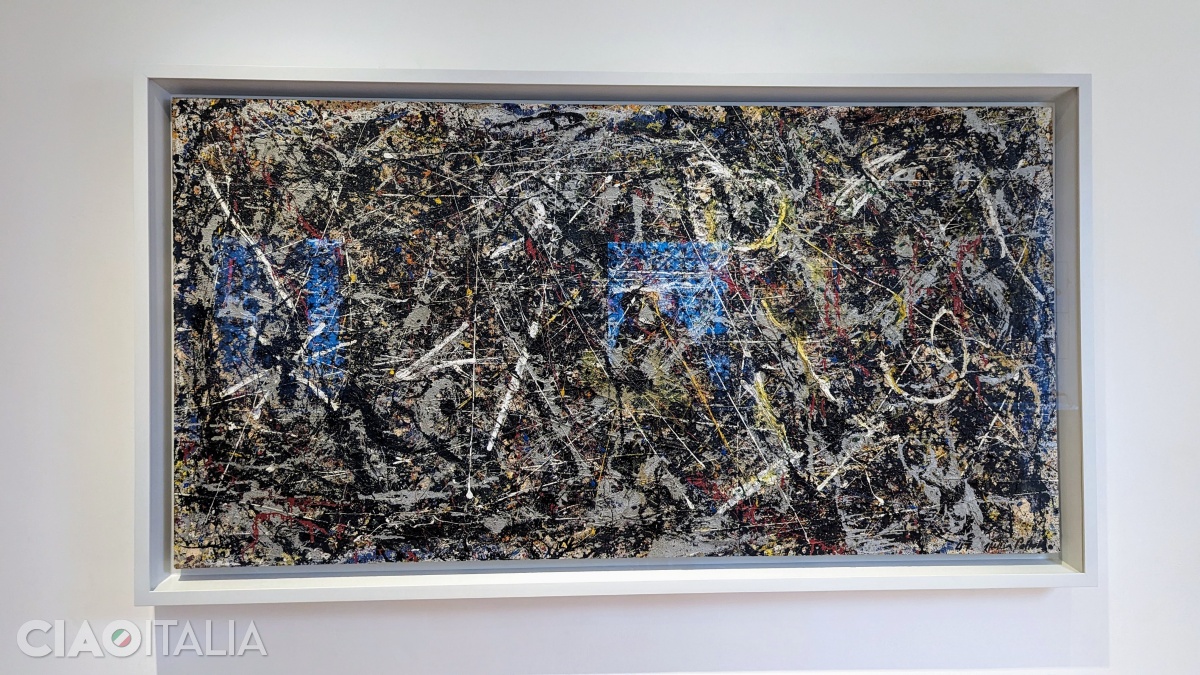
"Alchemy" is one of the first paintings in which Jackson Pollock, an exponent of American Abstract Expressionism, used the process of dripping paint onto the canvas. The layers of paint are so many and so dense that it is impossible to see the canvas. The Opificio delle Pietre Dure museum in Florence, which handled the restoration of the painting, estimated that Pollock used 4.6 kg of paint for this work. And he didn't just use paint, but also... string.
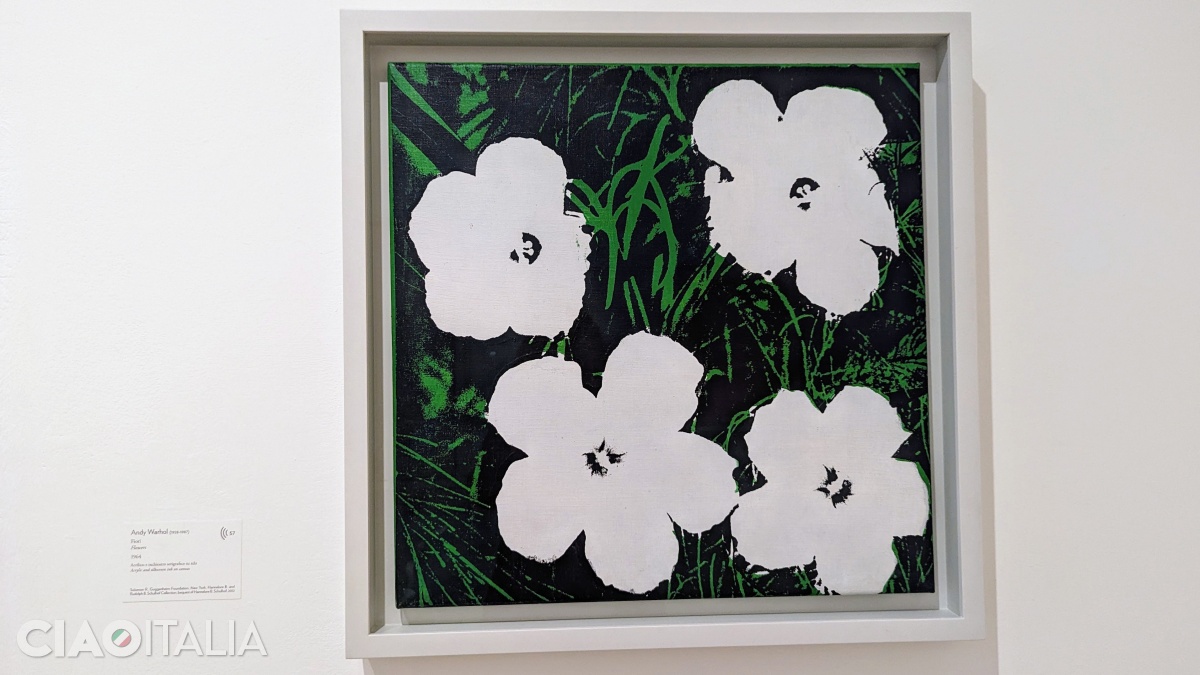
Andy Warhol painted "Flowers" based on a photograph of colorful hibiscus flowers by artist Patricia Caulfield, published in a specialized magazine.
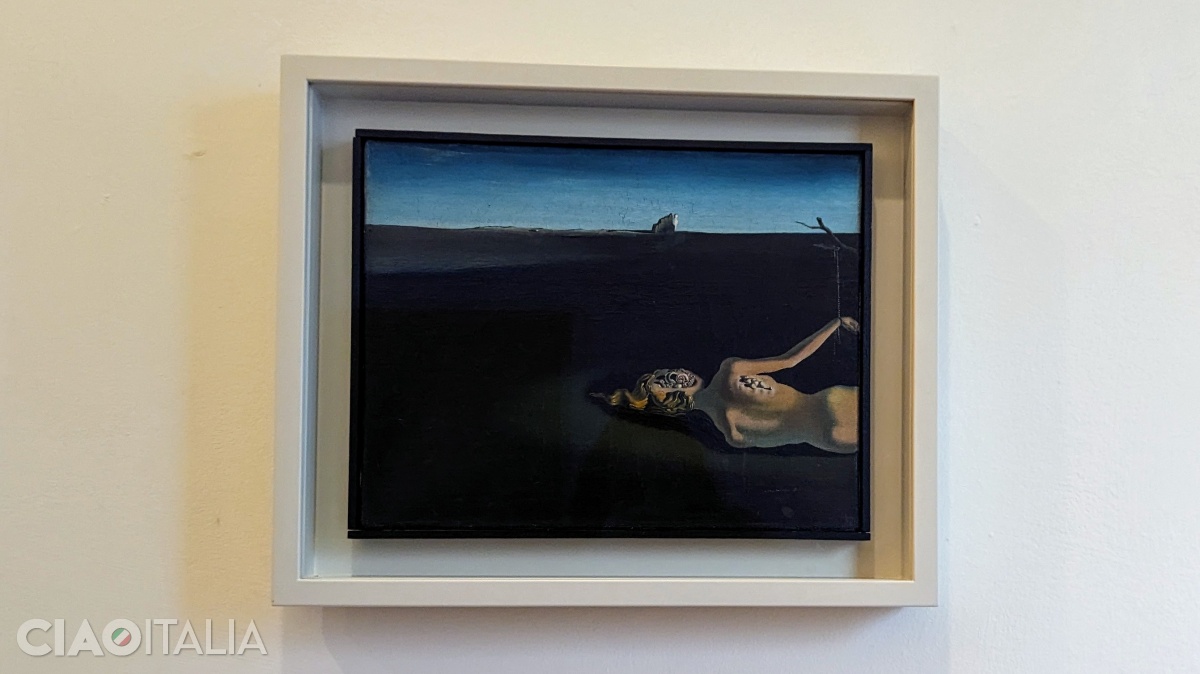
Salvador Dalí is represented at the Peggy Guggenheim Museum by two works: "Untitled" and "Birth of Liquid Desires".
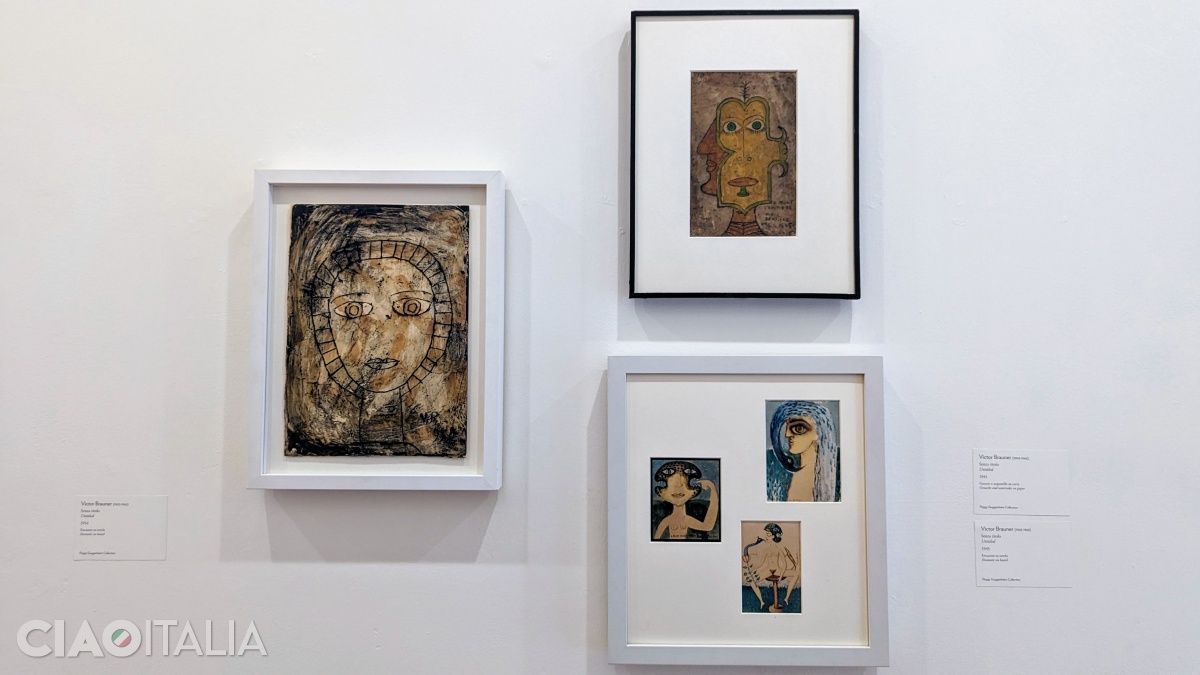
Let us not forget Victor Brauner, the Romanian surrealist painter born in Piatra Neamț, whose works are found in major museums worldwide. Peggy Guggenheim noticed him in 1954 when the artist participated in the Venice Biennale.
One of his paintings is even dedicated to Peggy (A Peggy - l'amitié de Victor Brauner, 16.6.1945).
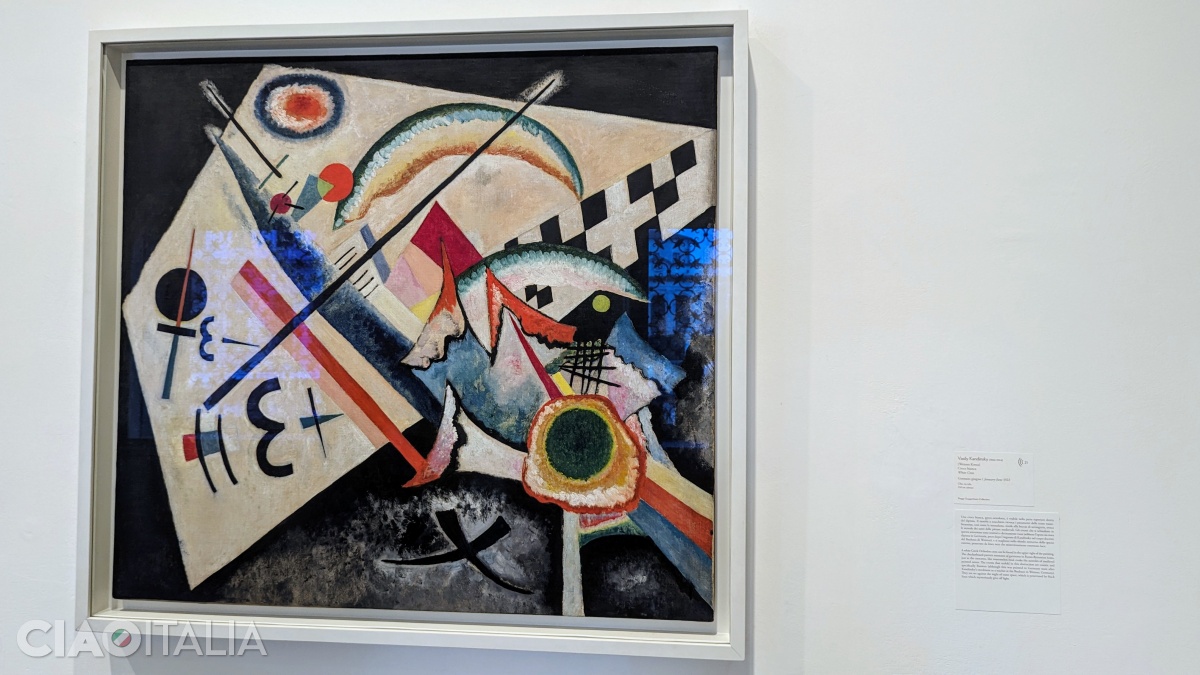
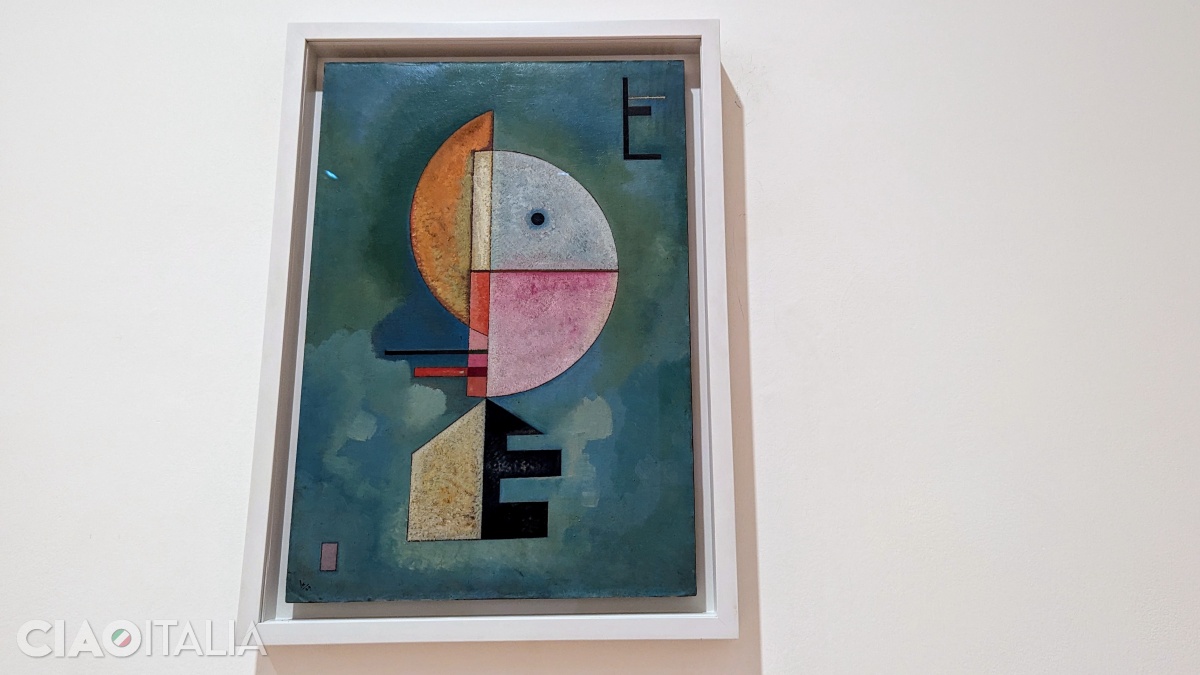
The museum also holds three works by Vasily Kandinsky, a pioneer of abstract art.
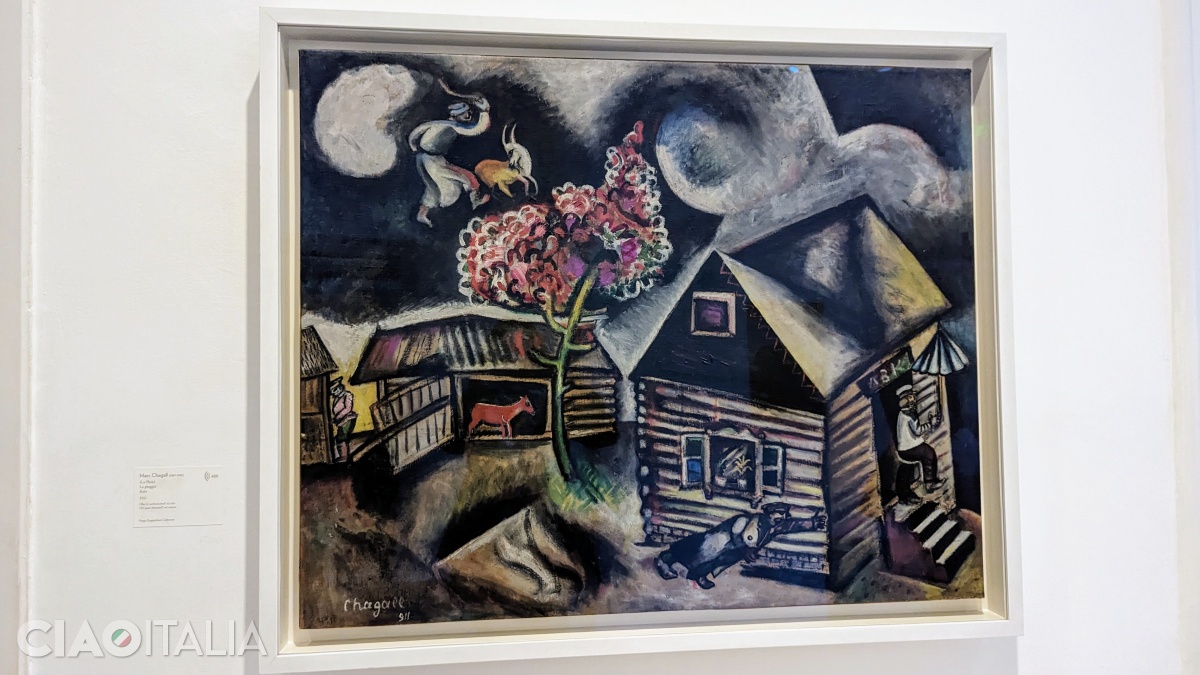
In the painting "Rain", Marc Chagall's nostalgia for his childhood and Russian roots is evident.
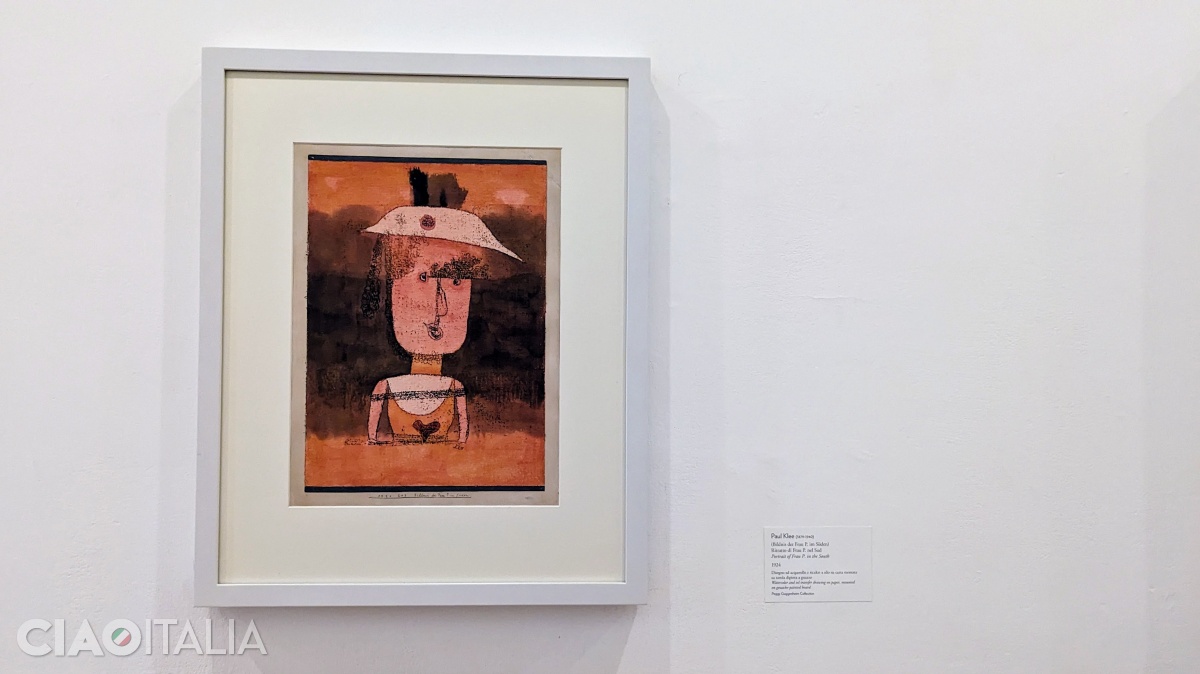
"Portrait of Frau P. in the South" was created by Paul Klee during a holiday in Sicily in the summer of 1924. A lady from the northern countries tries in vain to protect herself from the intensity of the Mediterranean sun with a hat.
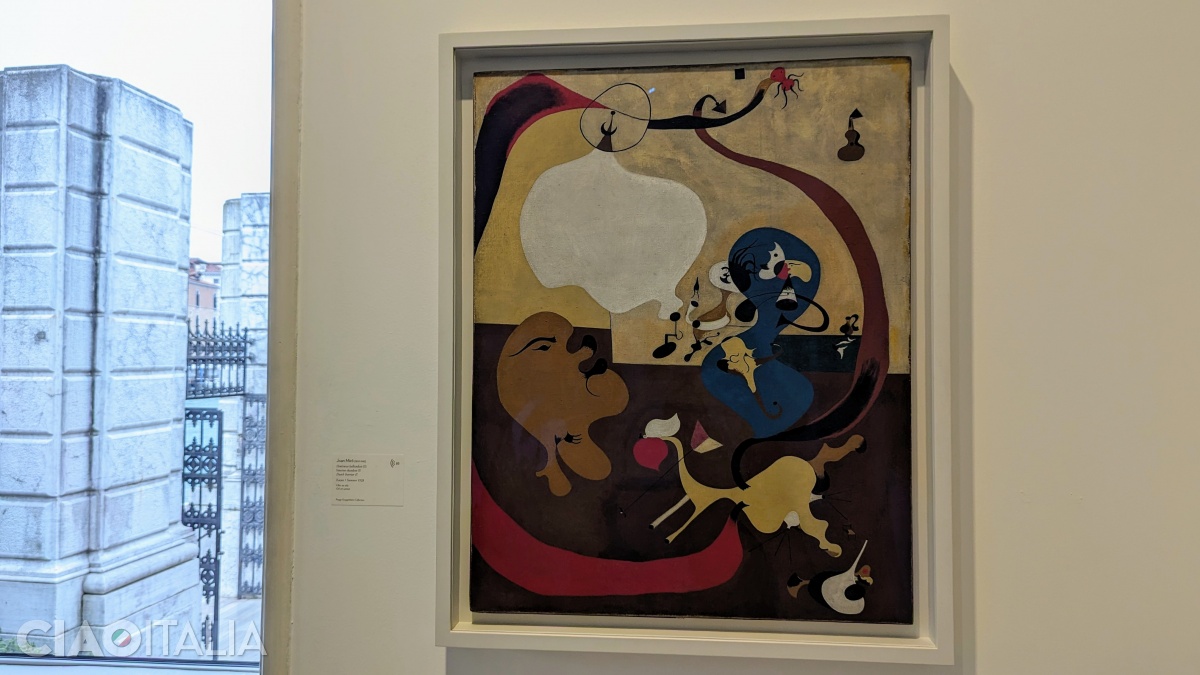
A trip to Holland in 1928 inspired Joan Miró to create "Dutch Interior". The artist brings life to the foreground, enlarging all human and animal forms while reducing the size of objects until the window becomes a small square at the top of the painting.
After finishing your visit (we have only mentioned a few works here), you can take a break at the museum cafe, managed by the Venetian restaurant Ai Gondolieri, or you can take a look in one of the two shops - one is inside the museum, and the other is outside, very close to the entrance.
Peggy Guggenheim and Constantin Brâncuși
The Peggy Guggenheim Collection includes two works by Brâncuși: "Maiastra III" and "Bird in Space". You cannot always see both on display, as they are occasionally lent to international exhibitions.
The theme of the "Măiastra" appeared in Brâncuși's sculpture as early as 1912 and is linked to Romanian mythology. In folk tales, the Măiastra is a bird of special, luminous beauty that comes from "the other realm" and possesses supernatural powers.
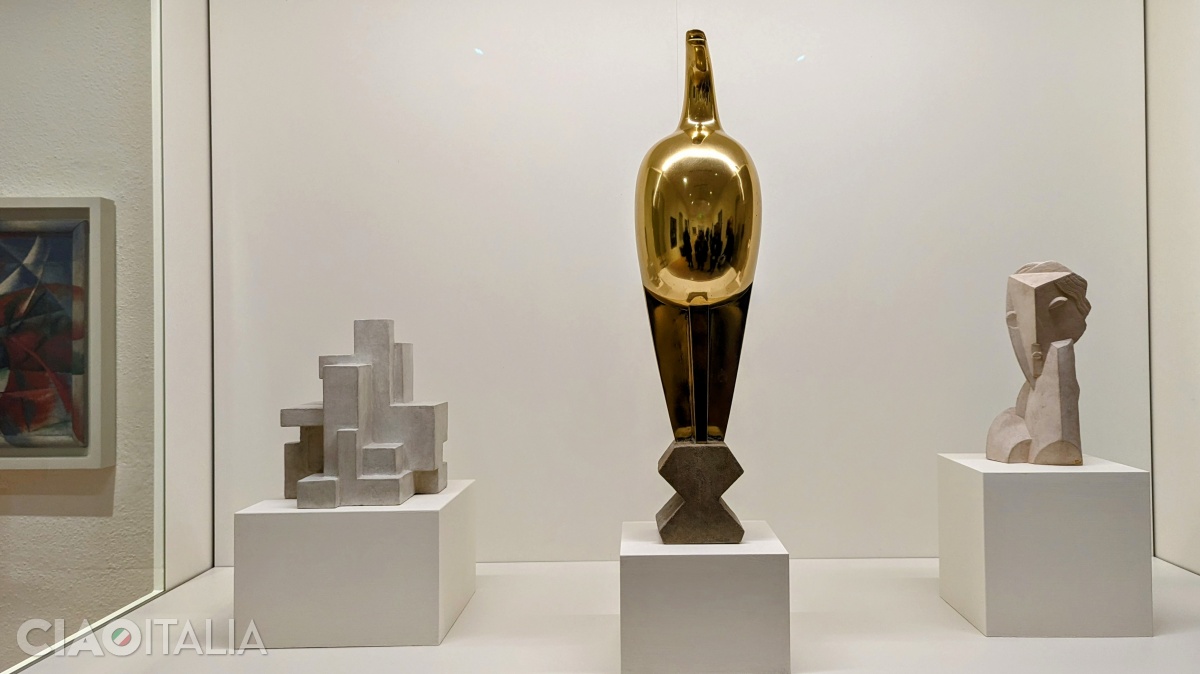
The sculpture "Bird in Space" was created later, between 1932 and 1940.
Peggy Guggenheim and Brâncuși were friends. They met in the 1920s, and Brâncuși called her "Peghița". Despite their friendship, Peggy could not get a better price for the "Bird in Space" sculpture, for which Brâncuși was asking 4,000 USD. It is even said she tried to seduce him to make things easier. She finally managed to buy it in June 1940, as the Nazis were approaching Paris and Peggy was forced, like it or not, to return to America.