Visiting Teatro La Fenice, Venice's Most Famous Opera House
La Fenice Theatre in Venice (Gran Teatro La Fenice) is, alongside La Scala in Milan and San Carlo Theatre in Naples, one of the most elegant, important, and legendary opera houses not only in Italy but in the entire world. Its stage has hosted the world premieres of masterpieces by iconic composers such as Giuseppe Verdi, Gioachino Rossini, Gaetano Donizetti, and Vincenzo Bellini. The building is open for tours, though you can also book tickets for live performances. It remains one of Venice's top tourist attractions, captivating even those who aren't necessarily opera enthusiasts.
The theater is located in Campo San Fantin, in the San Marco district (sestiere). To reach it, you can take vaporetto Line no. 1 (Rialto, Sant'Angelo, San Samuele, or San Marco stations) or Line no. 2 (Rialto or San Marco stations).
Tickets for the La Fenice Theatre Tour
The ticket prices for visiting La Fenice Theatre in Venice are:
- Adult: €12
- Over 65: €9
- Students aged 7-26: €7
- Children under 6: free
An audioguide, available in 10 languages, is included in the ticket price. To receive it, you will need to leave an ID document, which you will recover at the end of the visit.
Tickets can be purchased either directly at the ticket office or online (the online ticket provider is Venezia Unica, the Venice tourism office). Tickets purchased online are valid for 6 months from the moment of purchase. The date indicated on them is the date from which their validity begins. When buying the ticket, you will need to select a time slot (morning, 9:30 AM - 1:00 PM or afternoon, 1:00 PM - 5:00 PM).
For tickets purchased online, there is a separate counter where you will only show the received voucher, and your code will be scanned.
Book Visit at Teatro La Fenice
Opening Hours
Teatro La Fenice can be visited every day between 9:30 AM and 6:00 PM.
On certain days the schedule may vary, so it is best to check it before booking your visit.
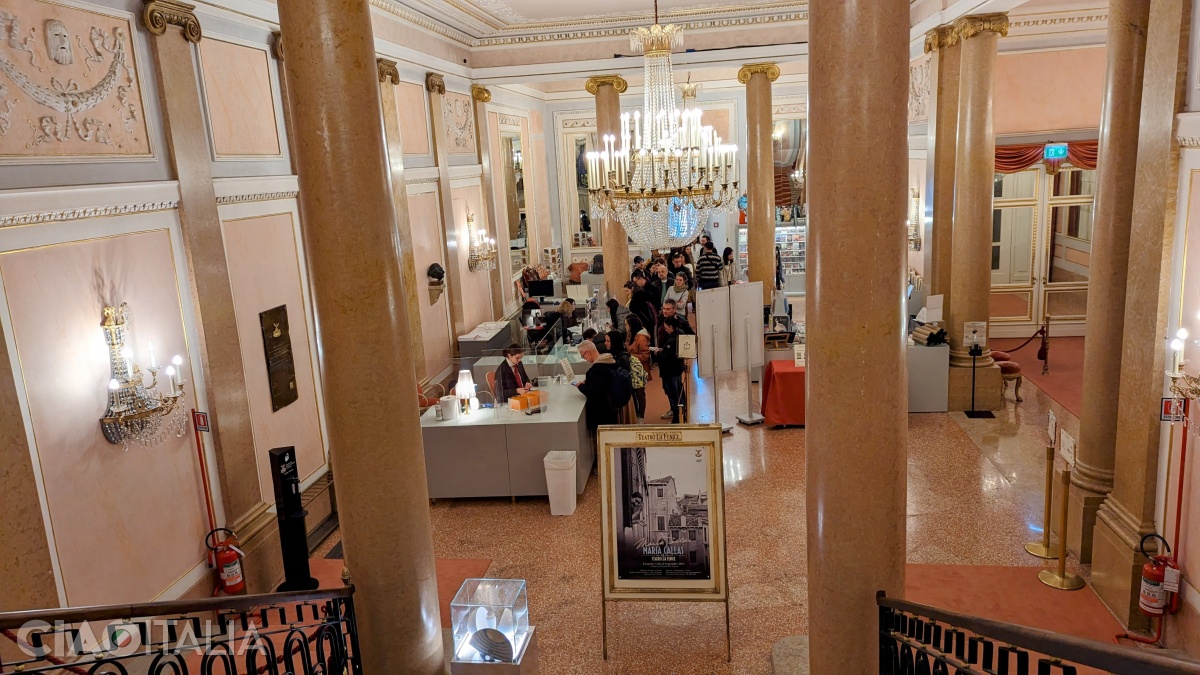
Visiting La Fenice Theatre
The name of the theater, Fenice ("Phoenix"), was somewhat premonitory as, throughout its history, it has risen twice from its own ashes, like the mythological bird.
The first building was constructed between 1790 and 1792. Initially, the entrance was from the water, from a canal built at the same time as the theater, so that spectators could arrive directly by gondola. In 1836, the theater was destroyed by a fire, most likely caused by a malfunctioning stove. Only the vestibule and the Apollonian Halls were saved. A year later, the building was reconstructed with some modifications, and the theater was reopened.
Another fire broke out on January 29, 1996, destroying it almost entirely. This time, the fire was set by a contractor and his cousin, an electrician, who were working on the theater's maintenance. To avoid paying penalties generated by delayed work, the two decided to cause a small fire to trigger a case of force majeure. However, what was supposed to be a "small fire" quickly spiraled out of control, and firefighters struggled all night to extinguish the flames. Ultimately, the perpetrators were identified and sentenced to several years in prison.
The theater was rebuilt once again under the direction of architect Aldo Rossi. His motto was the one that marked the reconstruction of the St. Mark's Campanile in 1912: dov'era e com'era ("where it was and as it was"). After several years of work, in December 2003, La Fenice Theatre was reopened to the public.
Before entering the theater, stop for a moment in the small square in front and observe the neoclassical facade. The statues in the niches above the balcony, which have theater masks above them, represent "Dance" and "Music" and were sculpted by Gian Battista Meduna. Above the door is the Phoenix bird, the emblem of the theater.
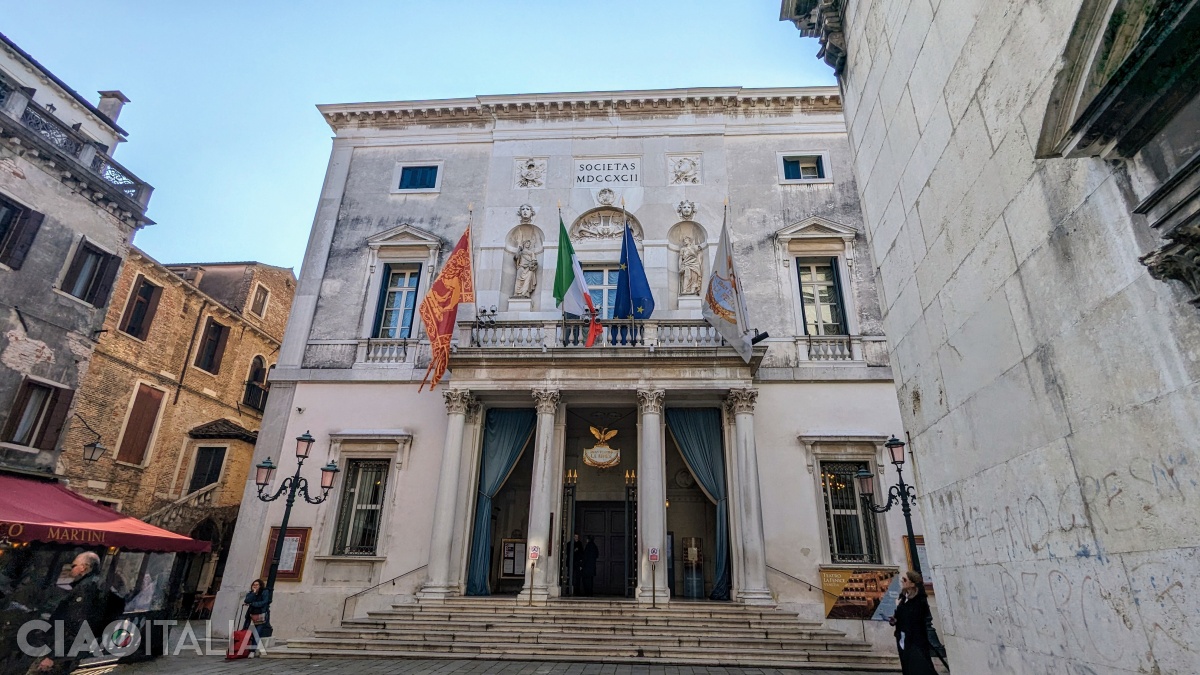
Once you enter, you will find yourself among large marble columns, stuccos, and crystal chandeliers.
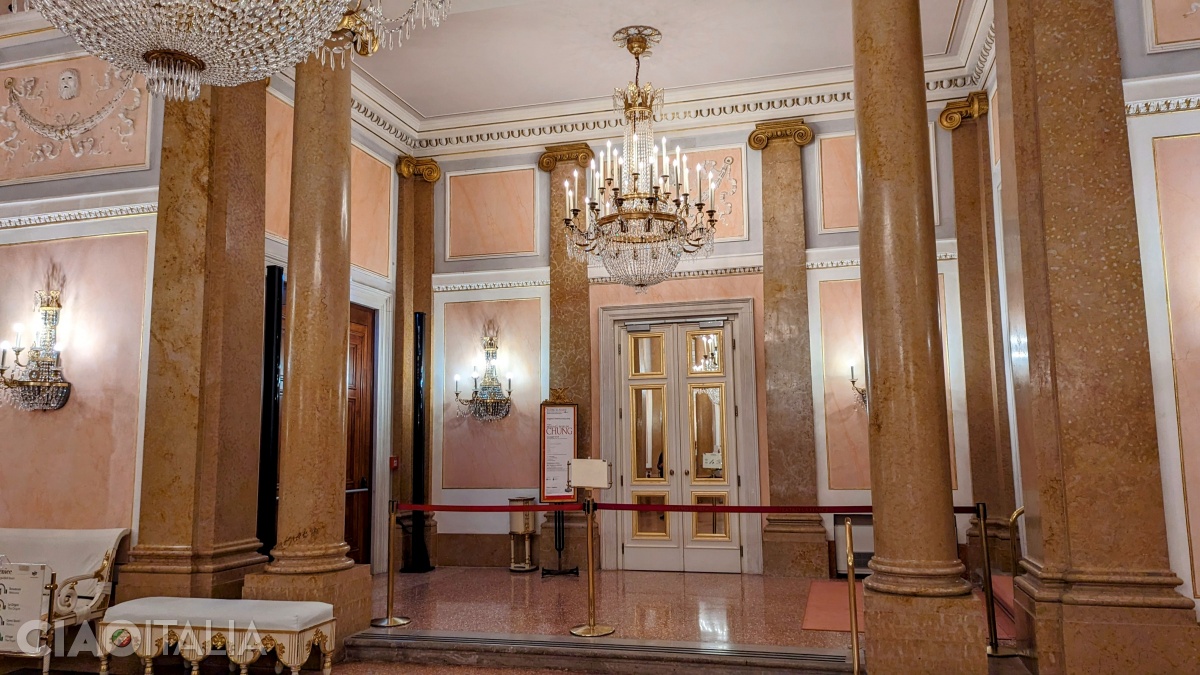
The visit to the theater begins with the foyer, located to the left of the entrance hall. From here, via the hall of honor, one could reach the Apollonian Halls. The foyer is the only part that preserves several original elements, having survived both fires.
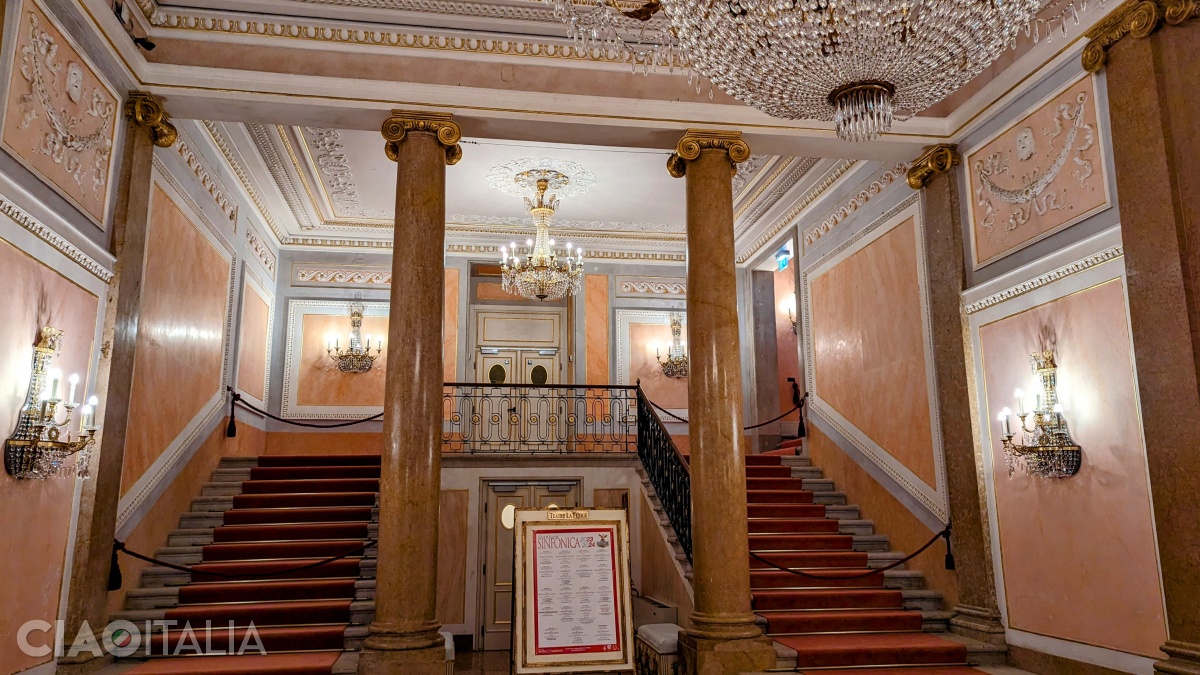
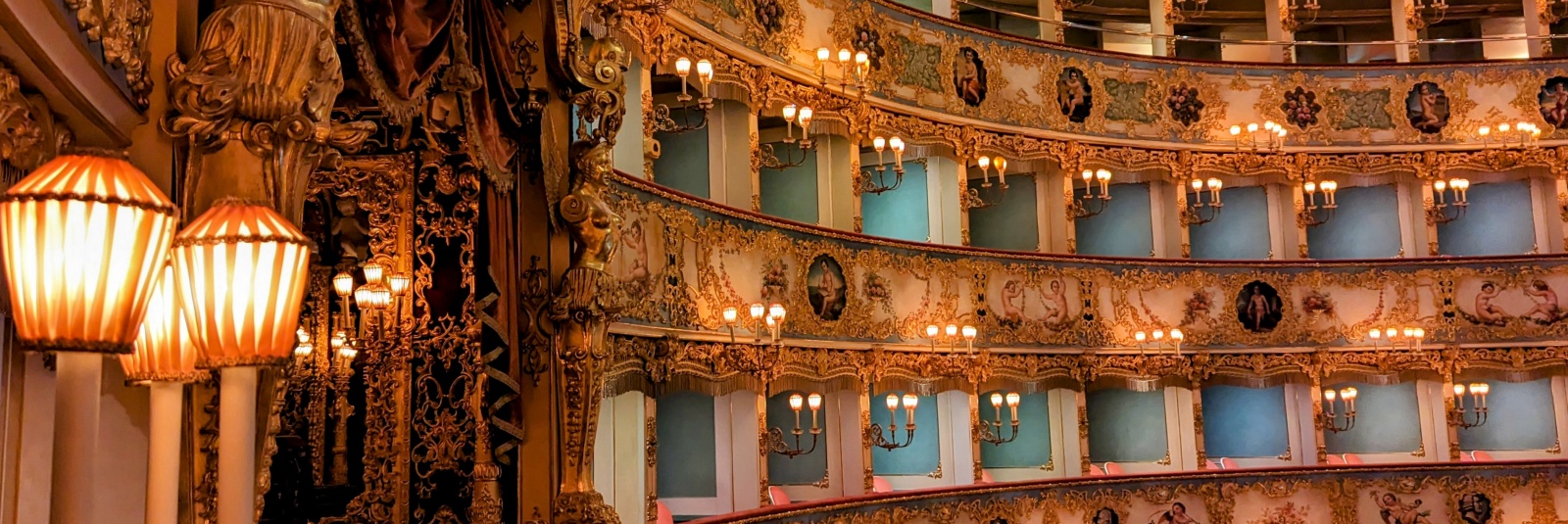
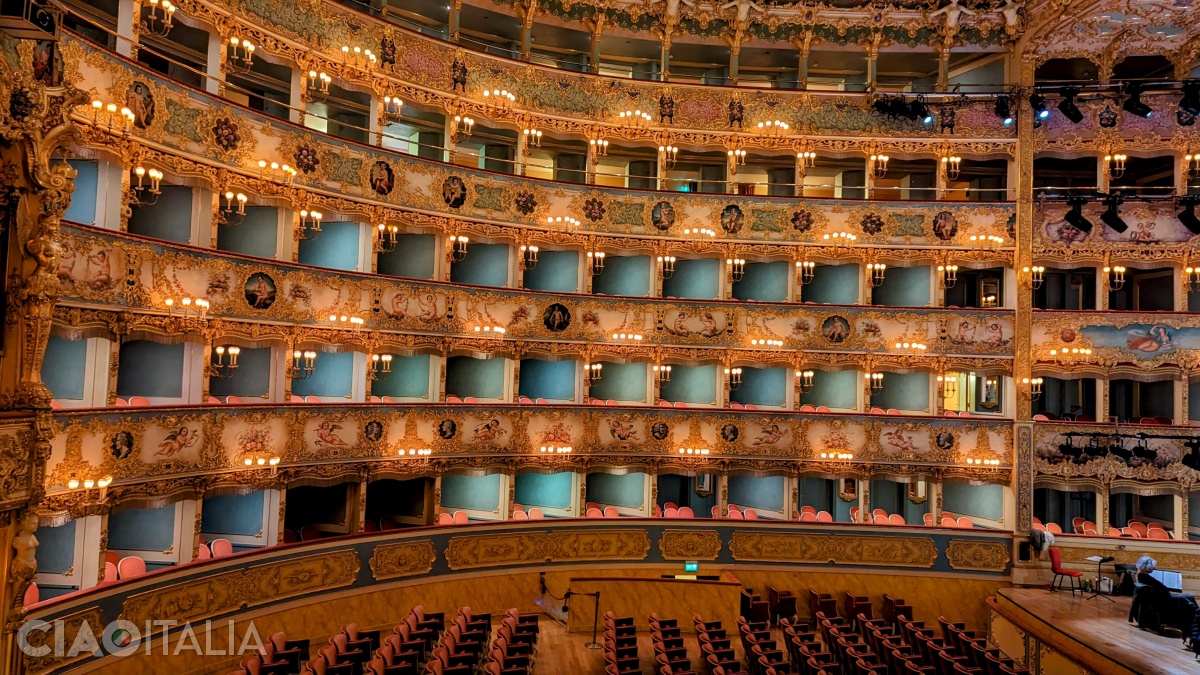
Climbing to the first floor, you will reach the sumptuous auditorium, decorated with stuccos, painted panels, and gilded ornaments. Surrounding the stage are five tiers with 174 boxes. Initially, the interior of the boxes was beige, a color that even in the past was not very popular with spectators. After the reconstruction of the theater, the boxes took on a pastel blue-green hue. The floor, previously covered with red carpet, now has parquet, and the seats in the hall are upholstered in leather. The total capacity is 1,126 seats.
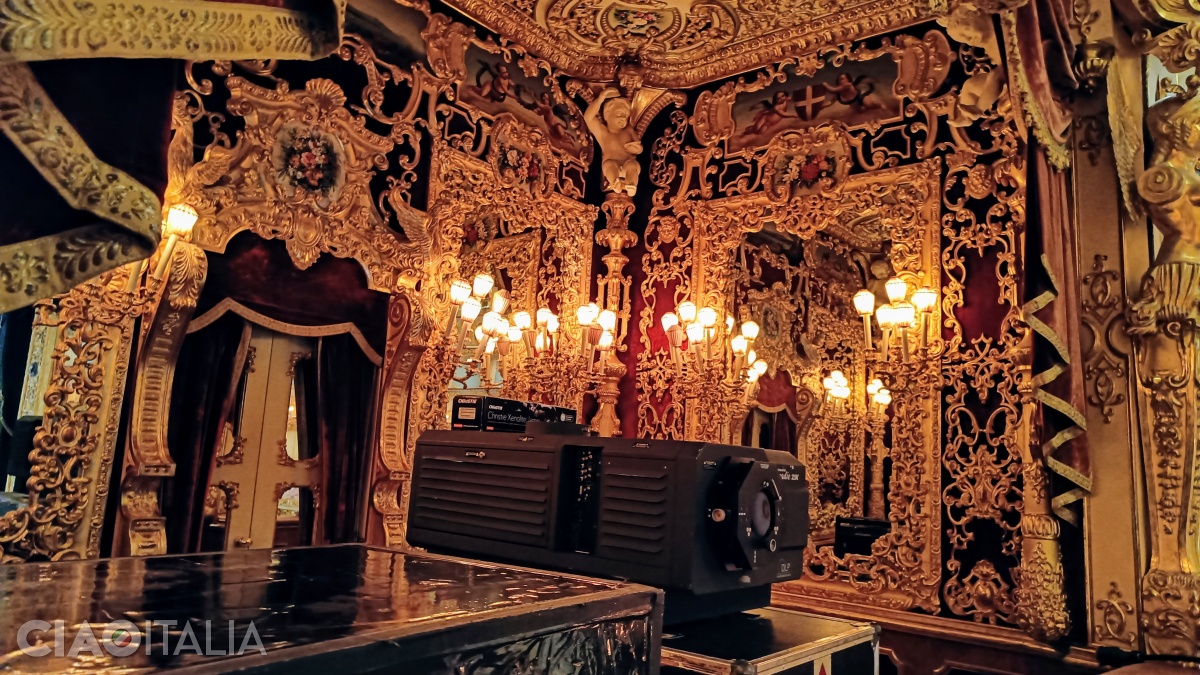
Right across from the stage, in the spot with the best visibility, is the Royal Box. This was not part of the theater's original plans but was built only in 1807, during the French occupation, specifically for Napoleon. It was destroyed during the revolutionary movements of 1848 but was rebuilt immediately afterward. Among the important figures who watched performances at La Fenice from here were Franz Joseph, Emperor of Austria, and Sissi, his famous wife.
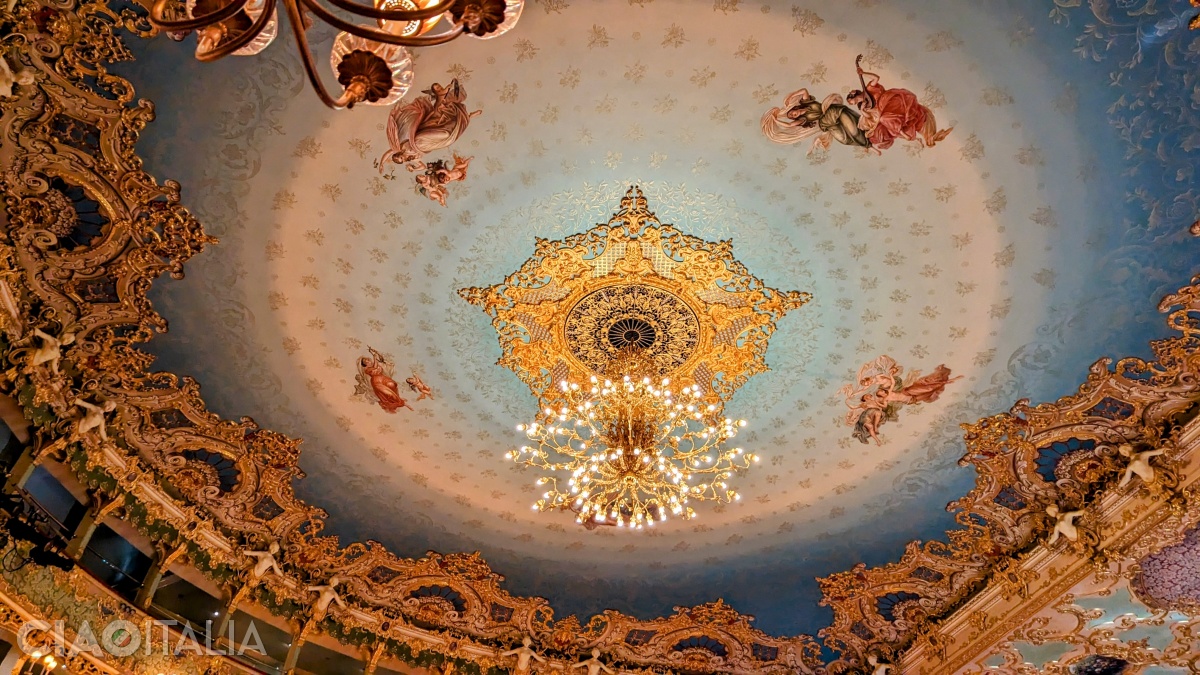
The ceiling of the hall, although flat, gives the illusion of a dome. The paintings on the background of various light blue shades represent "Aurora", "The Three Graces", "Music", and "Dance". Toward the outside, there are busts of nereids (sea nymphs) and rich decorations covered in gold leaf.
The gilded brass chandelier was crafted in Liverpool, modeled after the 1854 original design.
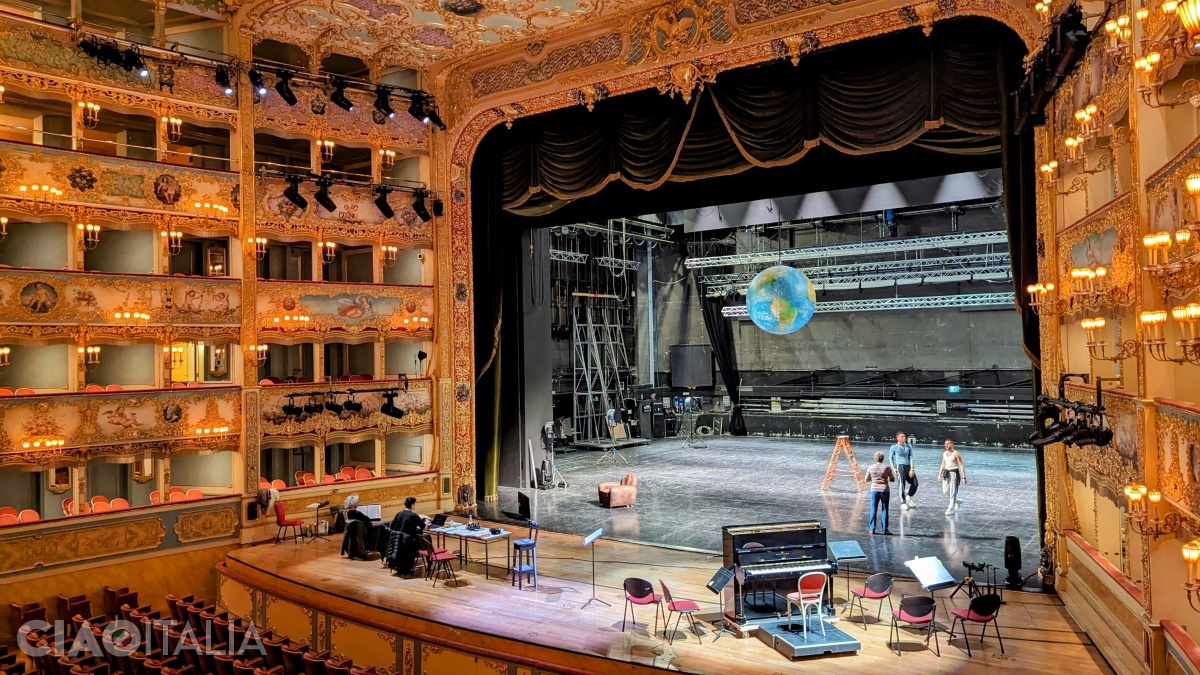
Located beneath the stage, the orchestra pit features a floor that can be raised or lowered to suit the specific needs of each performance.
In the corridor, before entering the boxes to view the auditorium, you can admire a fir wood scale model created in 1790, dating back to before the theater was even built.
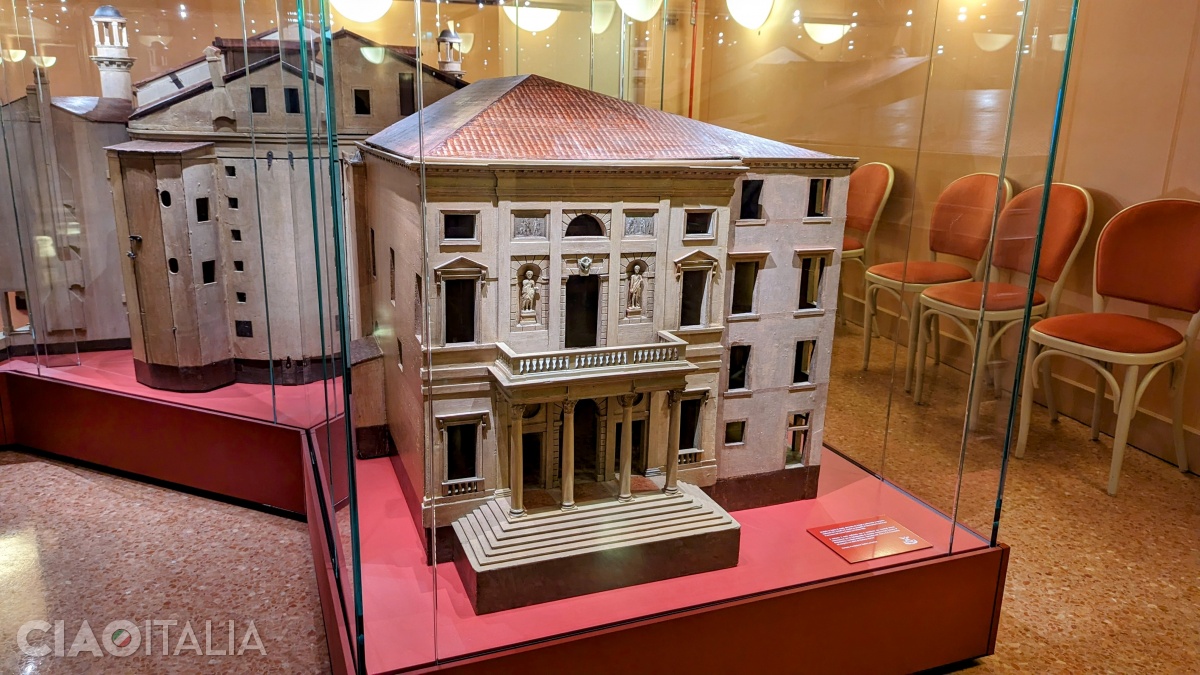
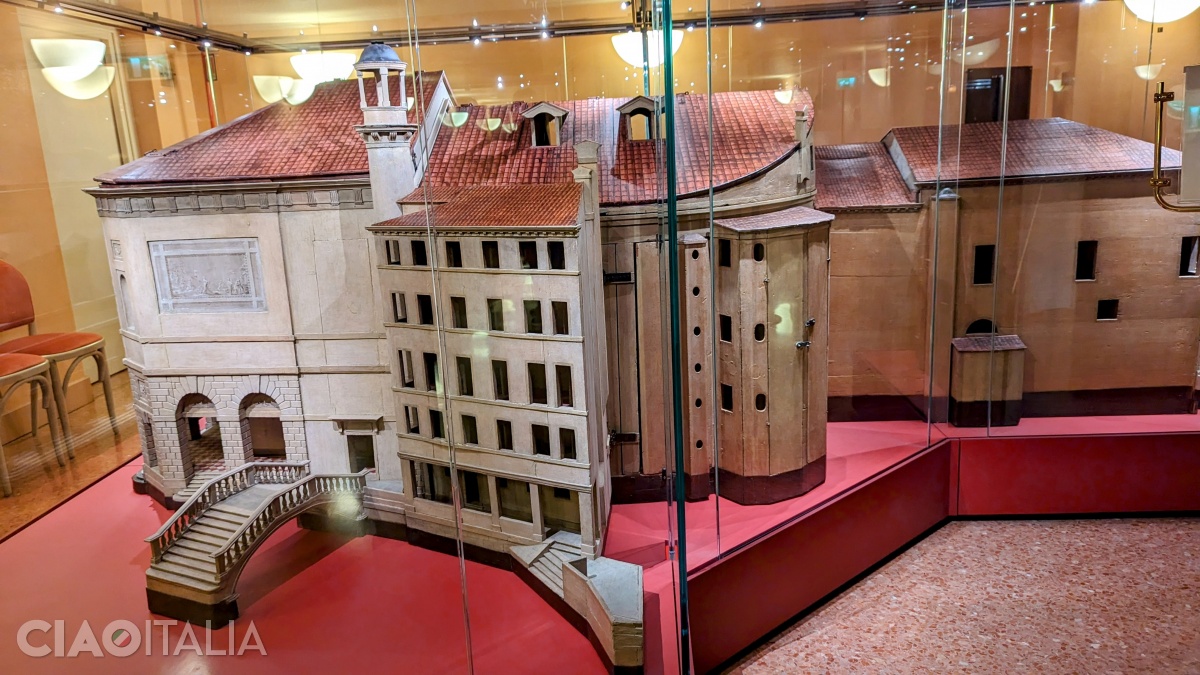
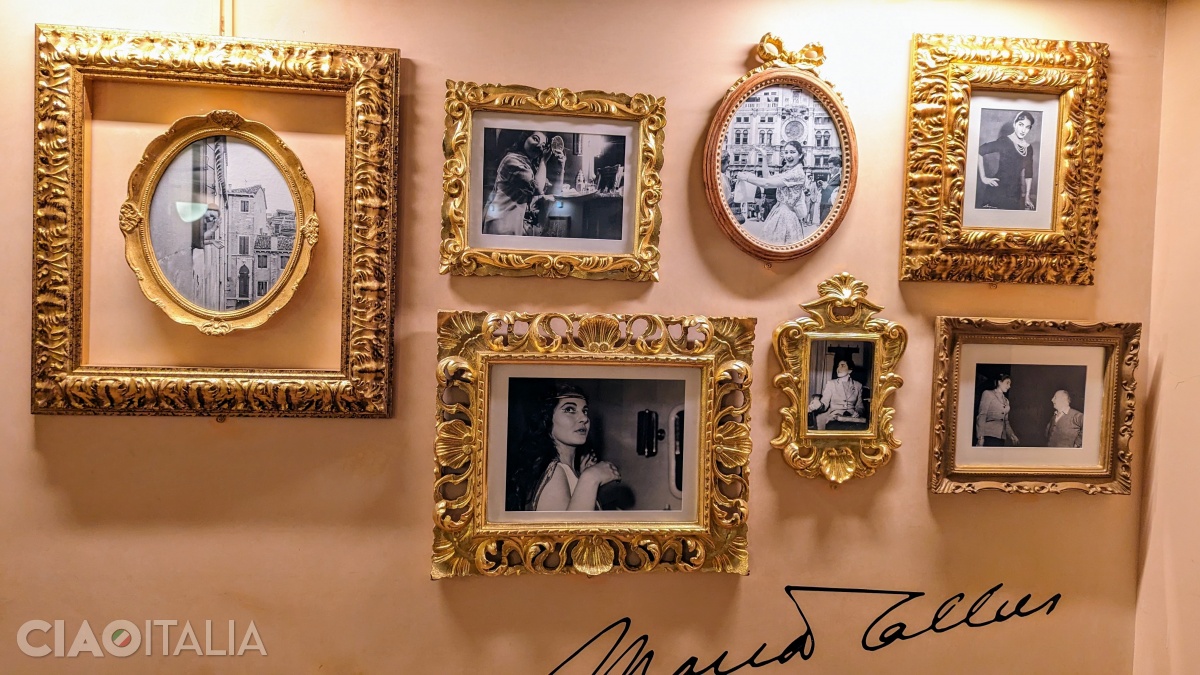
The theater houses a permanent exhibition dedicated to the legendary soprano Maria Callas and her career in Venice.
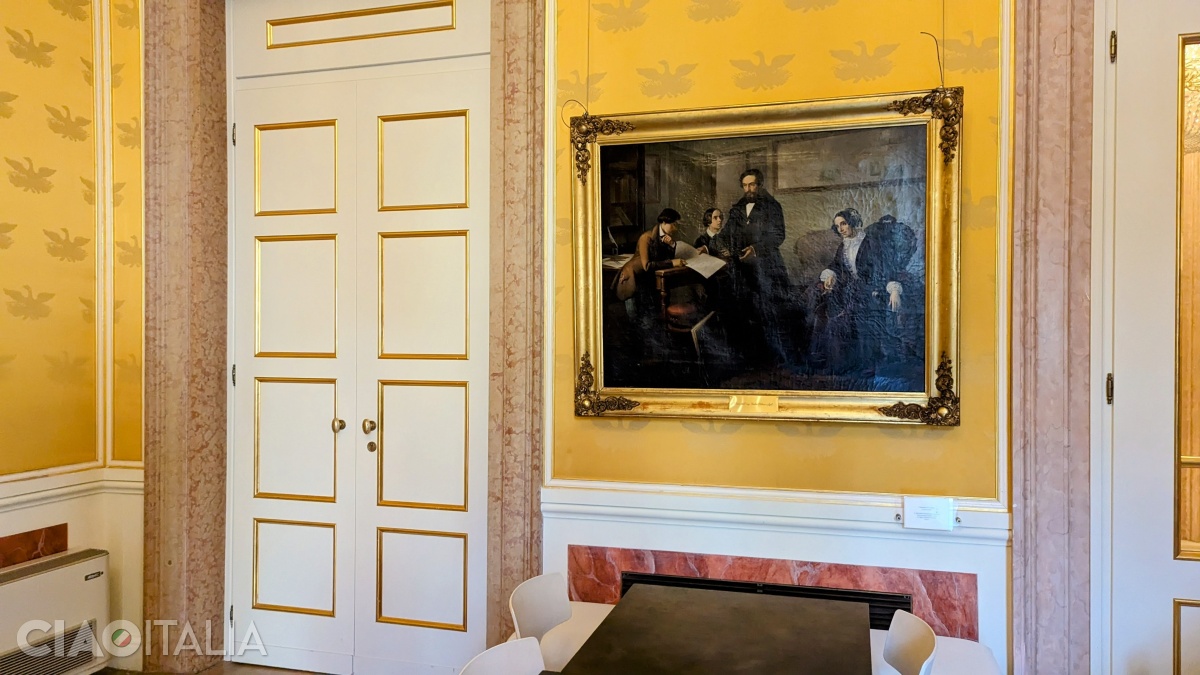
The visit continues with the five Apollonian Halls (Sale Apollinee), whose name comes from the fact that they were decorated with scenes inspired by the god Apollo, protector of the arts and father of the Muses. Initially, there were only two halls, intended for meetings of the members of high Venetian society. In the past, nobles did not go to La Fenice just to attend shows, but also to socialize, play cards or billiards, or have discussions about politics or business.
After the reconstruction of the theater, three new rooms were added, so today there are five Apollonian Halls: Sala Verdi, Sala Dante, Sala Grande, Sala Ammannati, and Sala Rubinstein (Sinopoli).
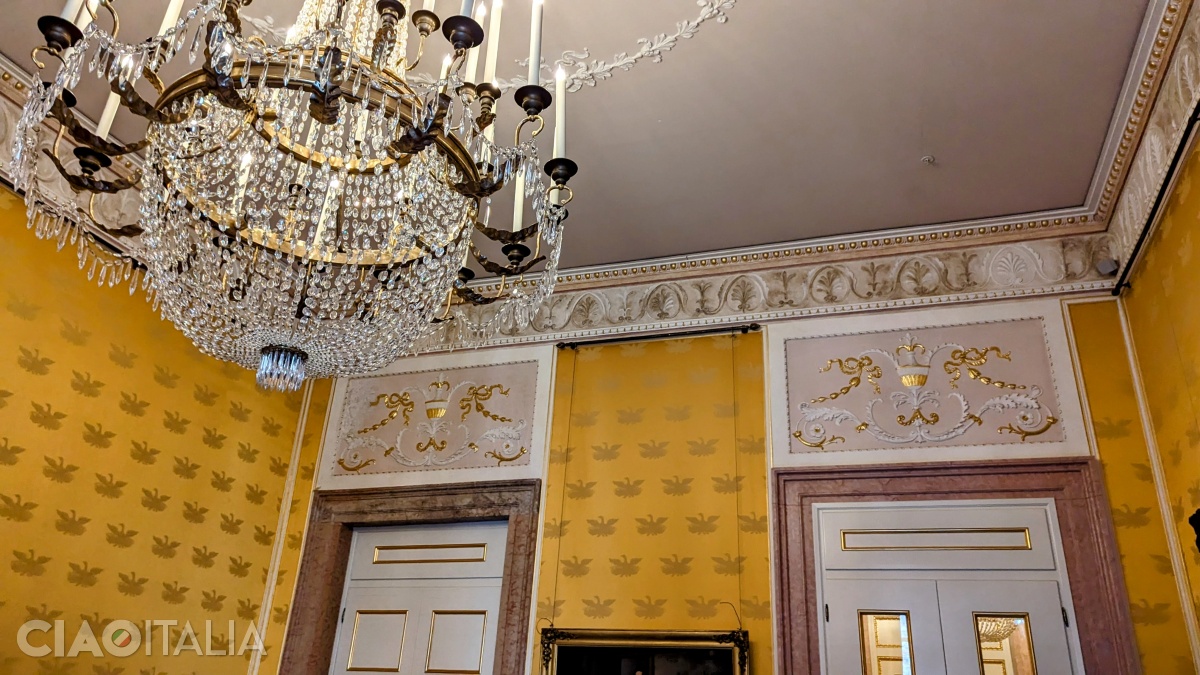
Sala Verdi is the smallest of them and has walls covered in golden silk. If you look at the decorative band just below the ceiling, you will immediately notice the original elements and those rebuilt after the fire.
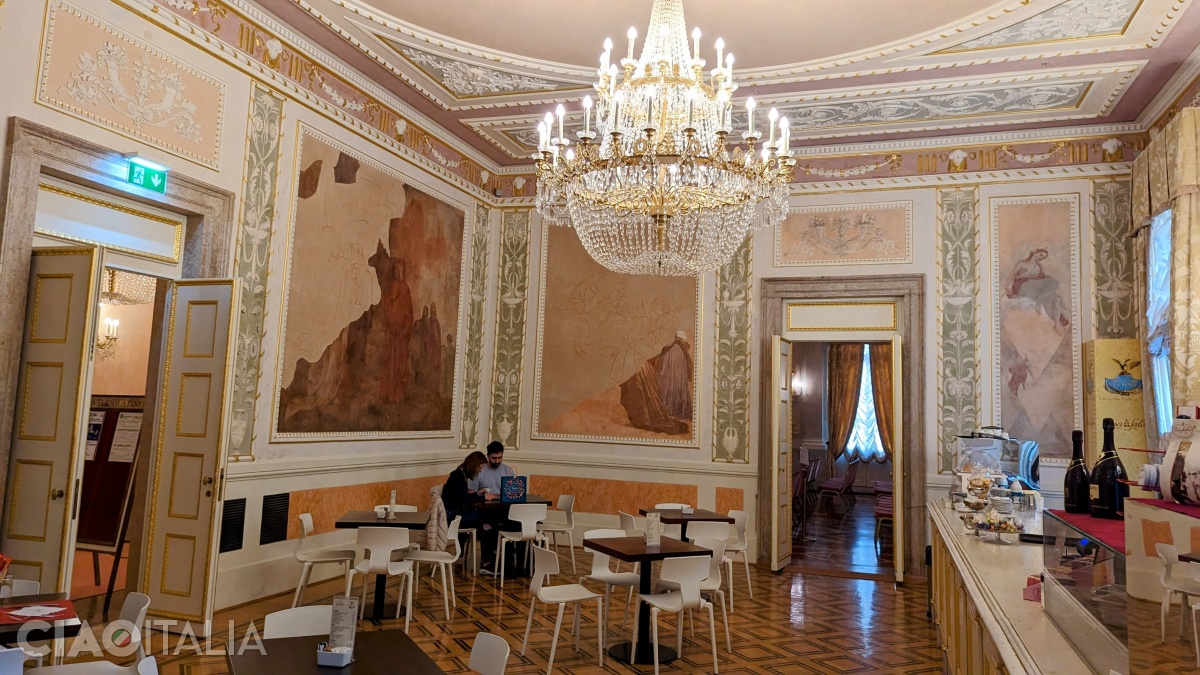
Sala Dante, which today houses the theater's café, takes its name from the frescoes on the walls. Created by Giacomo Casa, they depicted scenes from Dante Alighieri's Divine Comedy. Only a few fragments survived the 1996 fire.
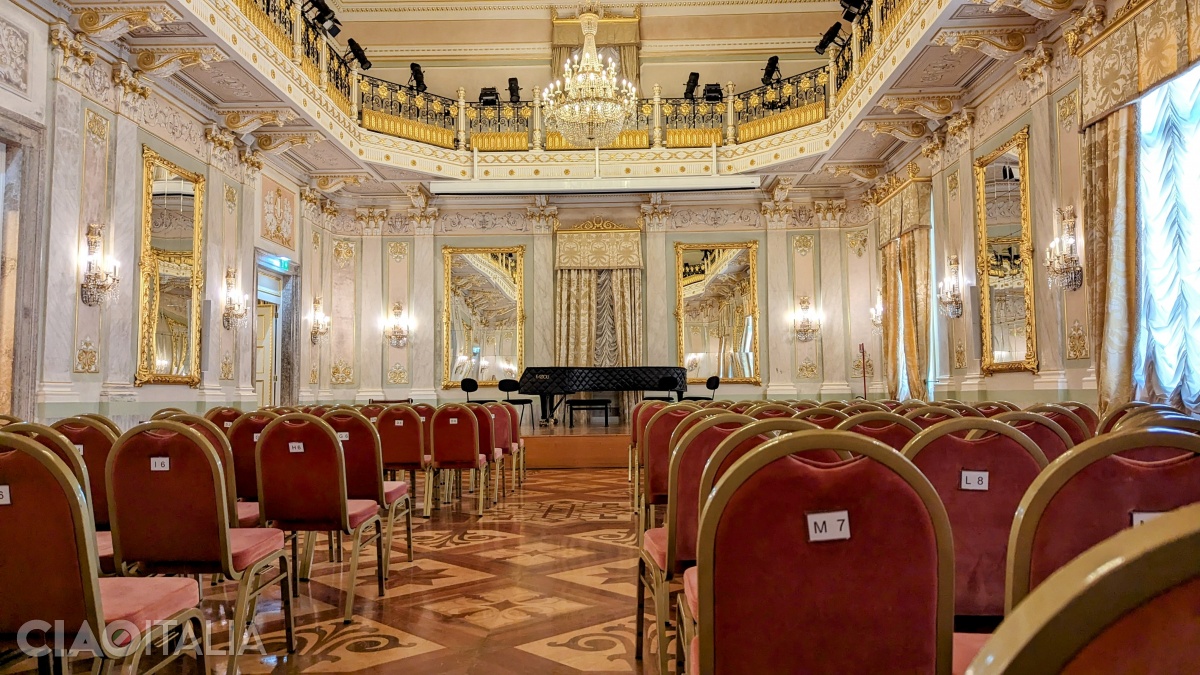
Next is Sala Grande, the largest and most important, where the balls of the Venetian aristocracy took place in the past. The space in the upper part was intended for the orchestra. The hall was completely destroyed by fire but was rebuilt according to the original plan. The floor is made of precious wood with geometric and floral motifs.
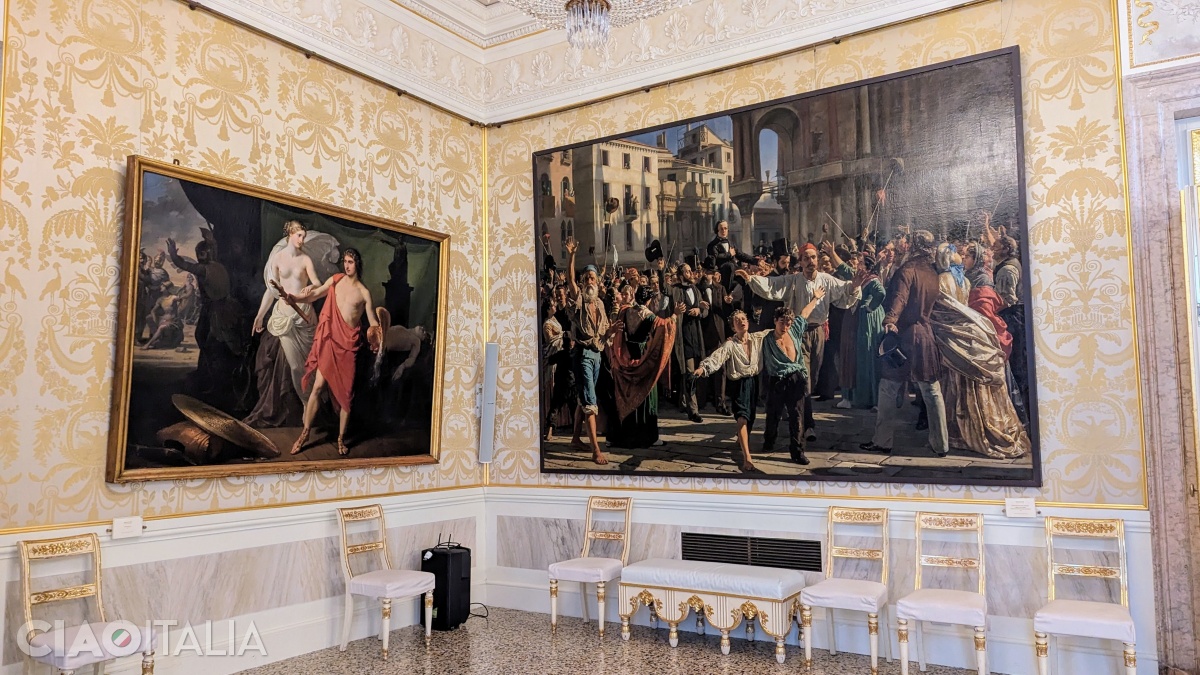
The last two rooms are Sala Ammannati and Sala Rubinstein (Sinopoli).
Since 2004, the arrival of the New Year has been celebrated at Gran Teatro La Fenice with a special concert which, among other arias, includes the chorus Va, Pensiero from "Nabucco" and Libiamo ne' lieti calici from "La Traviata", both operas by Giuseppe Verdi.
And a final note, in case you also visit Rome: the orchestra of La Fenice Theatre performs the music for the official audio guide of the Pantheon.