Visiting La Scala Theatre in Milan
La Scala Theatre in Milan (Teatro alla Scala), which Maria Callas called "a temple of the arts", is the most famous opera house in the world. It can be visited on your own or with a guided tour but attending a performance at La Scala is a unique experience you can have during a city break in Milan. The performances usually include opera, ballet, or classical music concerts.
Tickets for La Scala in Milan
Tickets for the Visit of the Theatre
Tickets for the theatre visit (museum and auditorium) are priced as follows:
- Adult: €12 or €15 for an Open ticket (valid for a visit on a day and time slot of your choice)
- Over 65: €8
- Pupils and students over 6 years: €8
- Children under 6: free
- Family ticket (2 adults and one or two children under 6 years): €20
- Junior Family ticket (2 adults and one or two children aged 6–14): €25
- YesMilano City Pass holders: free
The visit to Teatro alla Scala is free with the YesMilano City Pass. If you're planning to visit multiple places and museums in the city, it's worth checking whether it's a good idea to buy this pass. It gives you access to public transport and free entry to most tourist attractions in Milan. You can also purchase it on GetYourGuide, Tiqets, or Musement.
You can buy tickets for the Teatro alla Scala visit either directly on-site (although there can sometimes be a queue) or online from VivaTicket, where an 8% service fee is added to the regular ticket price for online sales.
Tip: The ticket for the Teatro alla Scala visit also includes access to the auditorium from the third-row boxes, ONLY if there are no performances, rehearsals, or other public events taking place in the hall. Before purchasing your ticket, check here to find the best day and time to visit Teatro alla Scala so you can see the auditorium in the best conditions.
We have another recommendation: the theatre offers an app that will be helpful during your museum visit. We suggest downloading it in advance (while connected to a good Wi-Fi network, as the app is quite large), so you can use it on-site (we weren't able to download it from within the museum). Ideally, you should also bring your own headphones. The app is called Museo Teatrale alla Scala, and you can download it from Google Play or the App Store.
Guided tours at La Scala Theatre
La Scala Theatre in Milan can also be visited with guided tours.
The guided tours organized by Teatro alla Scala are for individuals aged 12 or above and cost €30. They are available only on specific days and at specific times, and can be booked (with an 8% service fee, bringing the total to €32.40) on VivaTicket, in the following languages: English, Italian, French or Spanish.
Guided tours are also offered by various tour operators, on more days throughout the month, and often include access and discounts for children. Prices start at €37, and you can find these tours on GetYourGuide, Tiqets, Musement, or Viator.
We'll repeat the same advice mentioned for self-guided visits: before booking your tour, don't forget to check here the day and time slot that offers the best visibility of the auditorium.
Tickets for Performances at La Scala
Tickets for performances at La Scala in Milan have very different prices, depending on the performance and the seating location. For the most important performances, seats sell out quickly.
Prices start at €20 and can go up to €300 (with an average price around €150-160). The cheapest tickets do not offer much visibility or provide very limited visibility. The best seats are in the auditorium itself, but also in the first row of the boxes (although quite expensive, the seats in the second and third rows of the boxes can be uncomfortable, and you'll have people sitting in front of you; additionally, the screen displaying the opera libretto in the selected language will only be accessible to those in the first row). On the La Scala Theatre website, you can check how the stage looks from each specific seat.
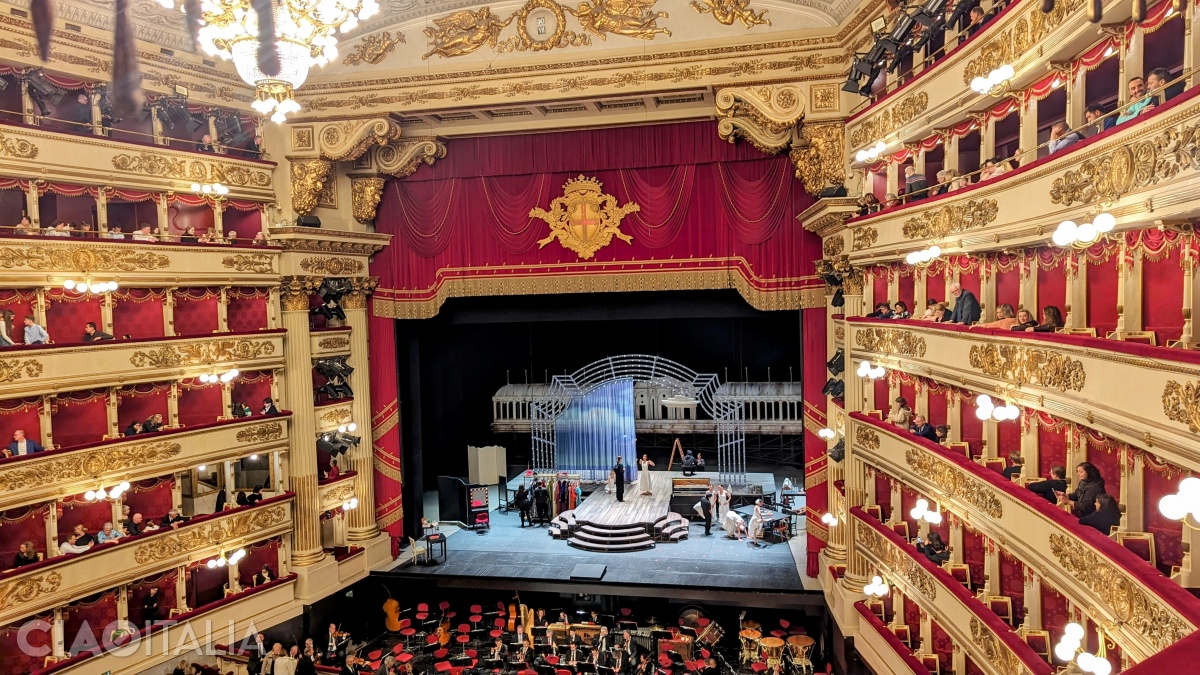
Tickets for performances can be purchased at the box office or on the official website. Once purchased, tickets cannot be canceled, and their cost is non-refundable. However, they can be resold on the official website in the dedicated section. You can also check the availability of tickets resold by others who can no longer attend the performances on the same website.
Once you've purchased tickets for a performance, you can also pre-order drinks or snacks to avoid standing in line during the intermissions. For certain performances, you can also reserve a table menu 24 hours in advance (these are small standing tables).
It is advisable to arrive 20-30 minutes before the performance starts. In any case, be sure not to be late! Especially if you have a seat in the auditorium, you will not be allowed entry until after the intermission, and you'll have to watch the first part of the performance from the screens in the foyer.
Regarding dress code, it must be decent. Access is not allowed in shorts or a tank top (and the ticket price will not be refunded). There have been cases where spectators who were dressed improperly were sent to the nearest clothing store. The rules aren't overly strict - you don't have to be excessively elegant, just decent, out of respect for the venue.
Visiting Hours
The schedule for visiting the La Scala Museum is as follows
- Monday to Sunday, 9:30 AM - 5:30 PM
On December 24th and 31st, the visiting hours are from 09:30 AM to 03:00 PM.
The last entry is allowed 30 minutes before closing time.
The museum is closed on the following days:
- December 7th, 25th, and 26th
- January 1st
- Easter Sunday
- May 1st
- August 15th
You can find the performance schedule for the 2025-2026 season on the official website.
Where is La Scala Theatre Located?
La Scala Theatre is located in the city center, just a few steps from the Milan Cathedral (Duomo). It is situated in Piazza della Scala, directly across from the Town Hall (Palazzo Marino).
The main entrance is right in the square, facing Via Alessandro Manzoni.
If you are visiting the museum or have tickets for a performance with seating in the gallery, you'll need to use the entrance on the left side of the main building, located in Largo Ghiringhelli.
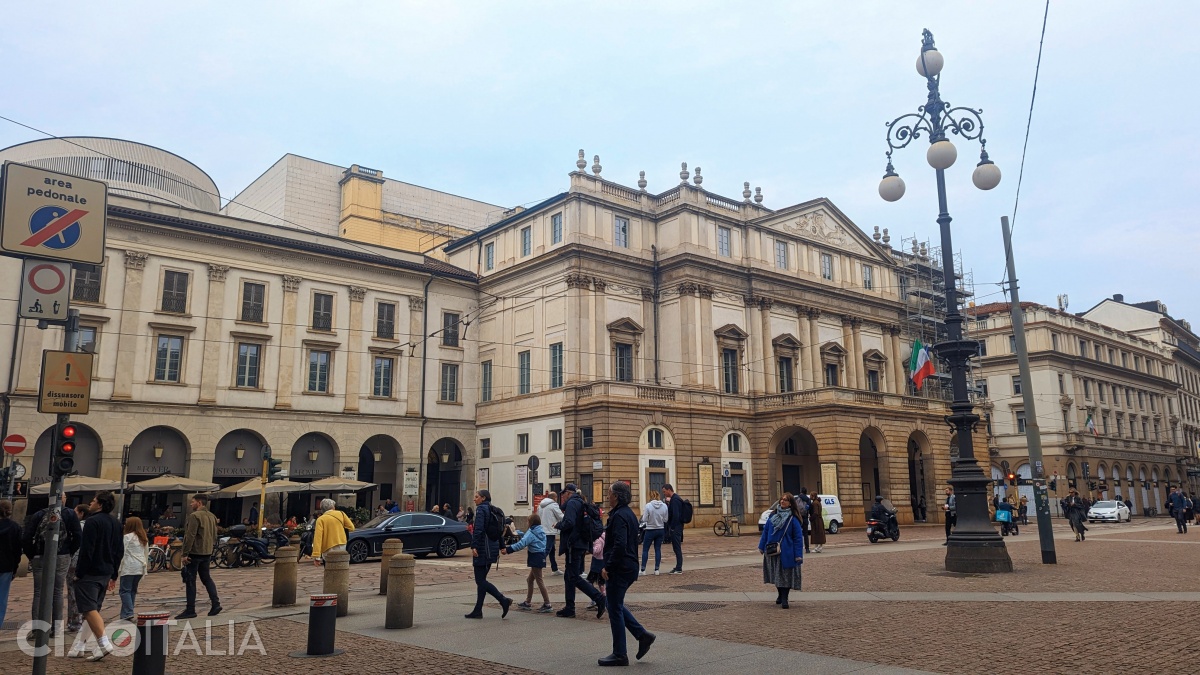
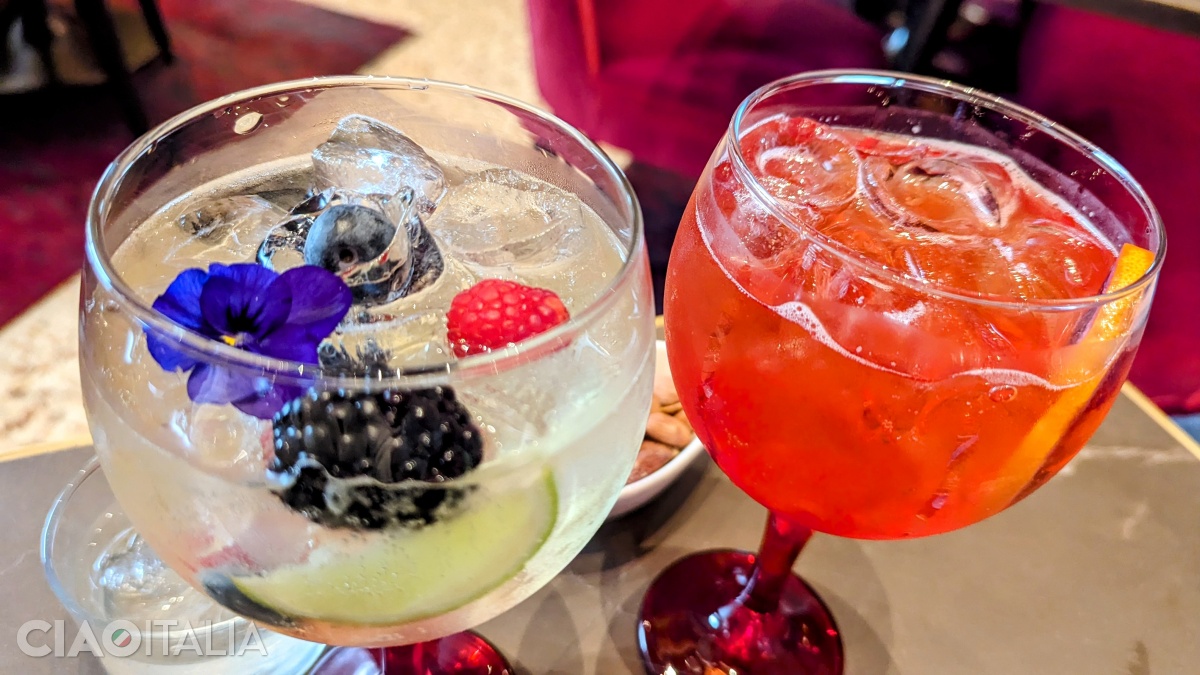
Even further to the left, just past the museum entrance, you'll find the Teatro alla Scala il Foyer Restaurant. It also has an elegant bar where you can stop for a coffee break, a snack, or a La Scala spritz made with saffron liqueur.
Visiting La Scala Theatre
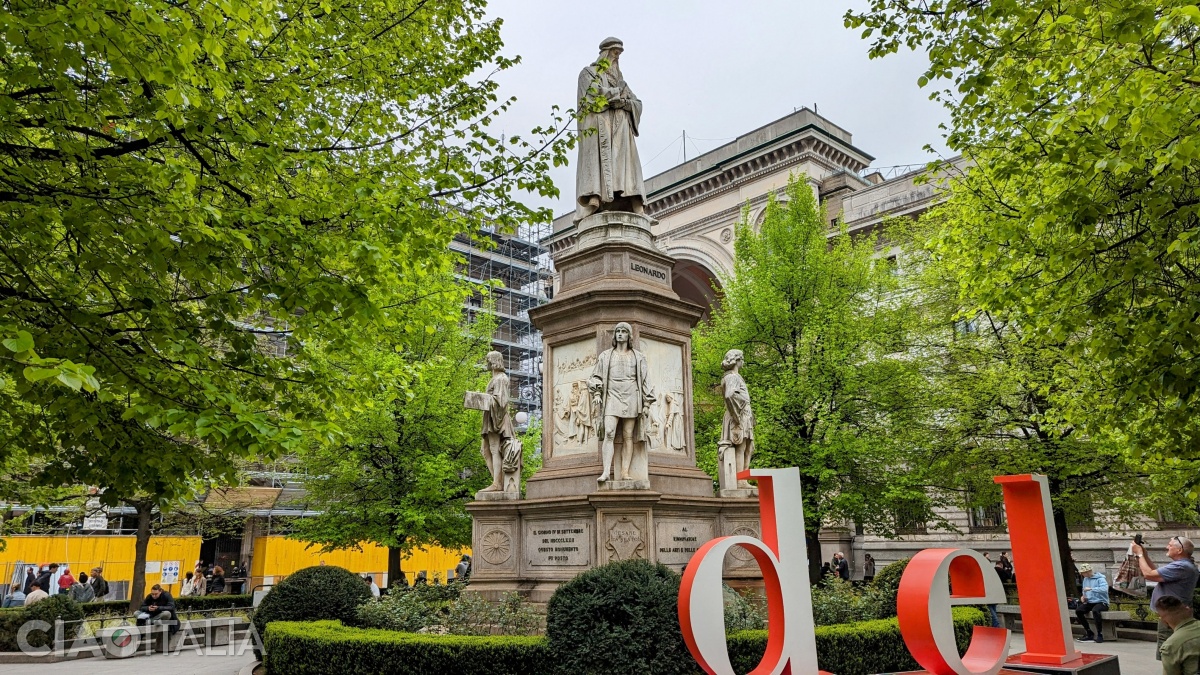
Before entering the theatre, take a moment to look around Piazza della Scala. Originally named Piazza del Teatro, it was created only in 1858, following the demolition of several buildings. Until the square was built, the theatre stood on a narrow street with no visibility.
In the center of the square stands the statue of Leonardo da Vinci, inaugurated in 1872 for the second National Exhibition of Fine Arts. The front of the statue bears the name LEONARDO, while the back is inscribed with PIETRO MAGNI FECE, referring to the sculptor Pietro Magni, who created the monument. The four figures at the base represent Leonardo's four disciples, and the bas-reliefs depict him in various roles: painter, sculptor, architect, and engineer. Leonardo spent 17 years (1482-1499) in Milan, during which he created, among other works, the famous Last Supper mural in the refectory of Santa Maria delle Grazie Church. The city is home to several museums dedicated to the inventor, the most important being the Leonardo da Vinci Museum of Science and Technology.
Directly across from La Scala Theatre is Palazzo Marino, whose oldest part dates back to the 16th century. In the 19th century, it was renovated and became the seat of Milan's City Hall.
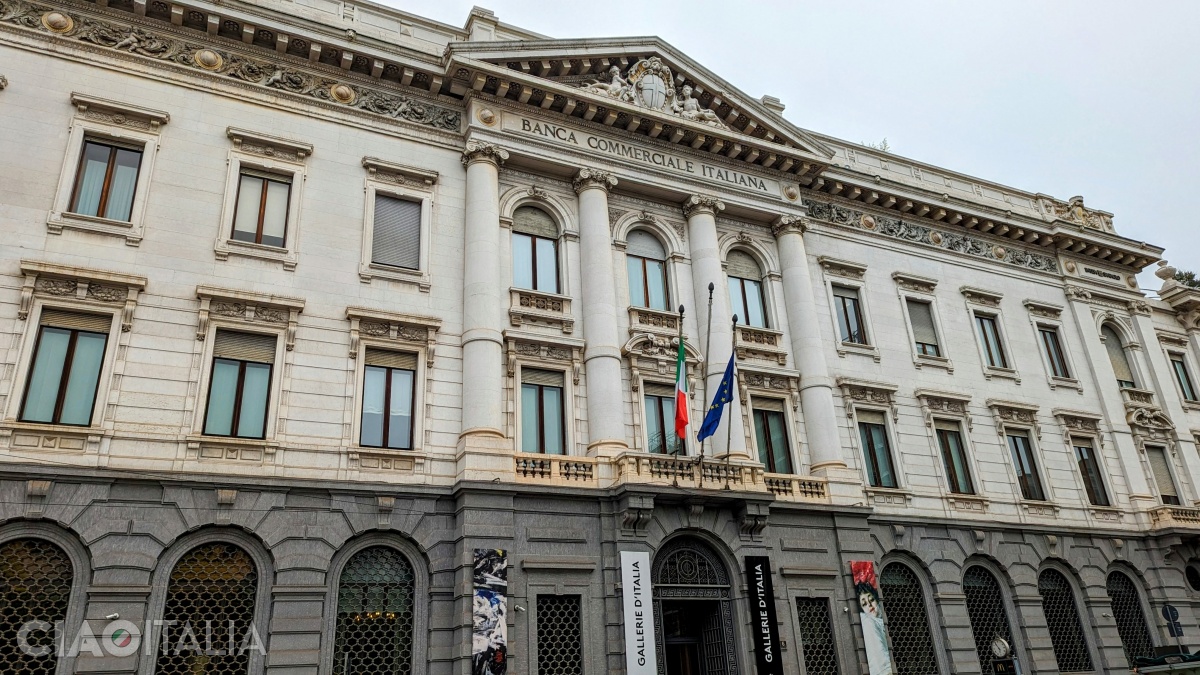
Facing Palazzo Marino, to the right is the entrance to Galleria Vittorio Emanuele II, and to the left is the Palace of the Italian Commercial Bank, built in the early 20th century. If you look closely at the building, you'll notice that its architectural lines are quite similar to those of La Scala, as it was built in the same neoclassical style. Today, the palace houses the Gallerie d'Italia, an art museum featuring works from the 19th and 20th centuries.
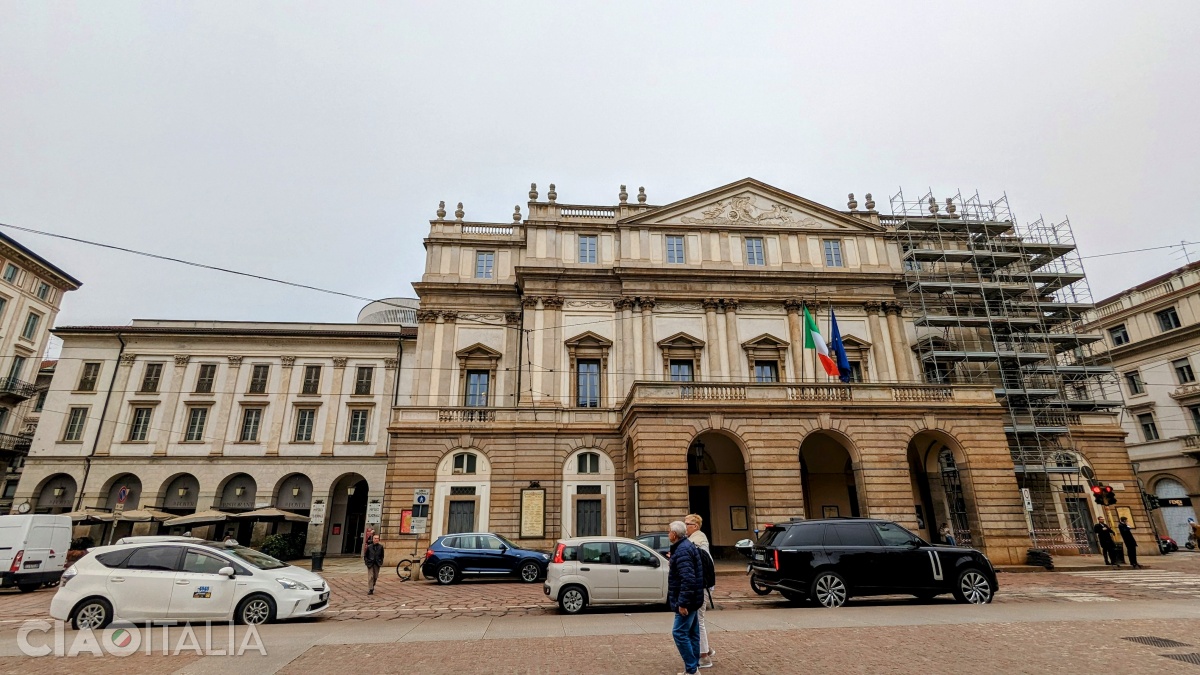
Finally, we arrive at La Scala Theatre. It was built between 1776 and 1778, after the old opera house located in the Ducal Palace on Piazza del Duomo was destroyed by fire. The new venue was built on the site of the Church of Santa Maria alla Scala, which is where the theatre gets its name, Teatro alla Scala. Its architecture was inspired by the Teatro San Carlo in Naples and the Court Theatre at the Reggia di Caserta and in turn inspired other all'italiana theatres, such as the Teatro La Fenice in Venice.
To visit La Scala Theatre, you'll need to enter through the door to the left of the main building, marked Museo Teatrale. On the ground floor, you'll find the ticket office, while the museum is located upstairs.
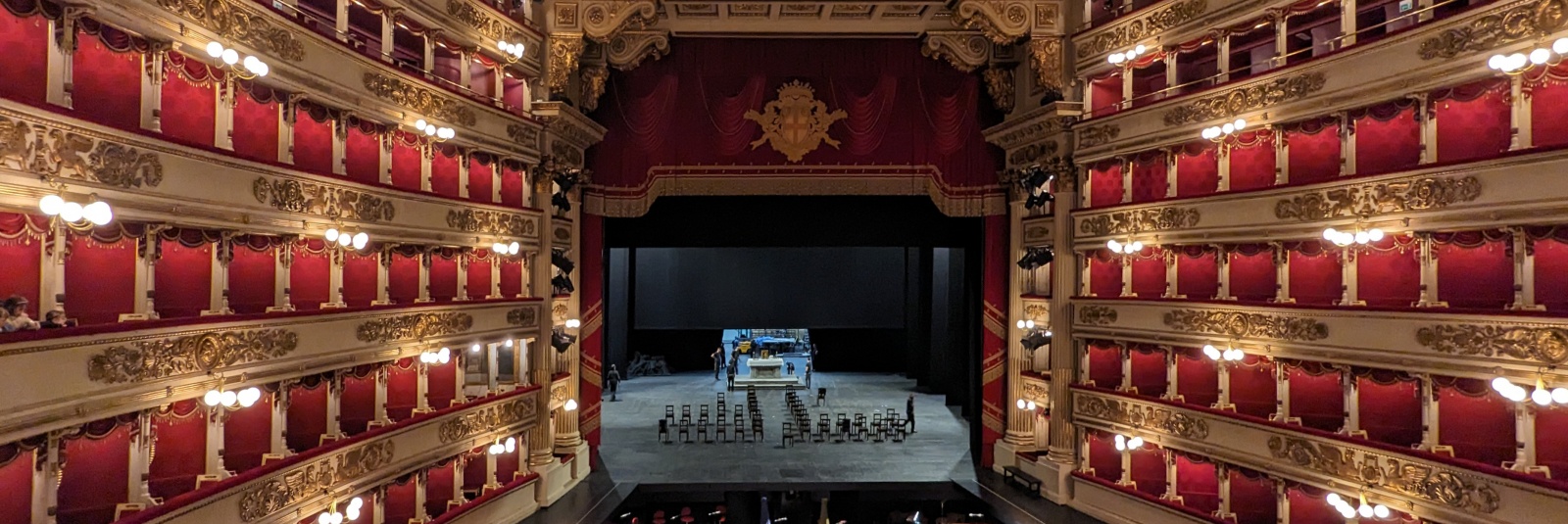
Once your ticket is scanned, head to the left to enter the foyer. From there, you'll have access to the third-row boxes, from which you can view the auditorium. After the major renovation that took place between 2002 and 2004, the theatre's capacity is now 2,030 seats. The orchestra pit is one of the largest in Europe, covering an area of 110 square meters.
Take a close look at the ceiling - at first, you might think it's a sculpted dome. In fact, it is nearly flat and painted in various shades of grey, creating the illusion of vaulted architecture.
The auditorium has a total of four rows of boxes, in addition to the upper level - the gallery. In the past, there were also boxes here (reserved for the impresario), but in 1907 the separating walls were removed. The Royal Box (also known as the Crown Box) is located directly opposite the stage and spans the space of six regular boxes from the second and third rows, above the main entrance to the hall. Notable historical figures who have visited include Napoleon, Emperor Franz Joseph, and Empress Sissi.
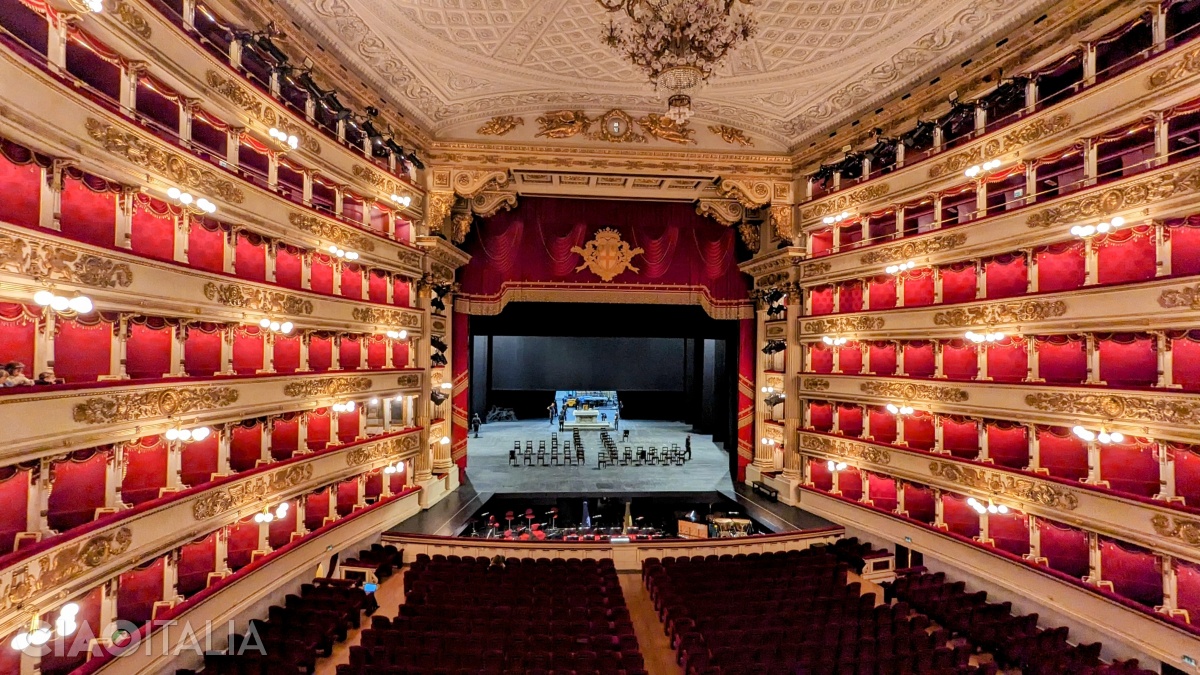
For 150 years, until they were expropriated, the boxes were owned by noble families, who could sell them or pass them on as inheritance. The most expensive ones were those near the center, close to the royal box, which also offered the best visibility of the stage. At one point, they had become so valuable that Stendhal claimed a box at La Scala cost as much as an apartment in Paris. Each box has, behind it on the opposite side of the corridor, a small room which today serves as a cloakroom, but in the past was... a kitchen. At that time, it was customary for nobles to be accompanied to the theater by their chefs, who prepared dishes that they ate warm during the performance. The oddities don't stop there: the leftovers were then thrown out into the street through a window. Additionally, during the cold season, spectators would bring braziers with charcoal to keep warm. These, along with the use of candles for lighting, greatly increased the risk of fire, given that the theater was largely made of wood.
In 1883, La Scala Theatre became the first public building in Milan to be illuminated with electricity. At that time, an impressive chandelier was hung from the ceiling of the auditorium. Once a year, during the summer, it is lowered, and all 383 bulbs are cleaned and replaced. The chandelier you see today is a replica, as in 1943, during World War II, the theatre was bombed. The bombs did not explode, but the roof collapsed, damaging several boxes. Fortunately, the structure of the building was not affected, and three years later, the recently renovated theatre was reopened with a concert conducted by Arturo Toscanini.
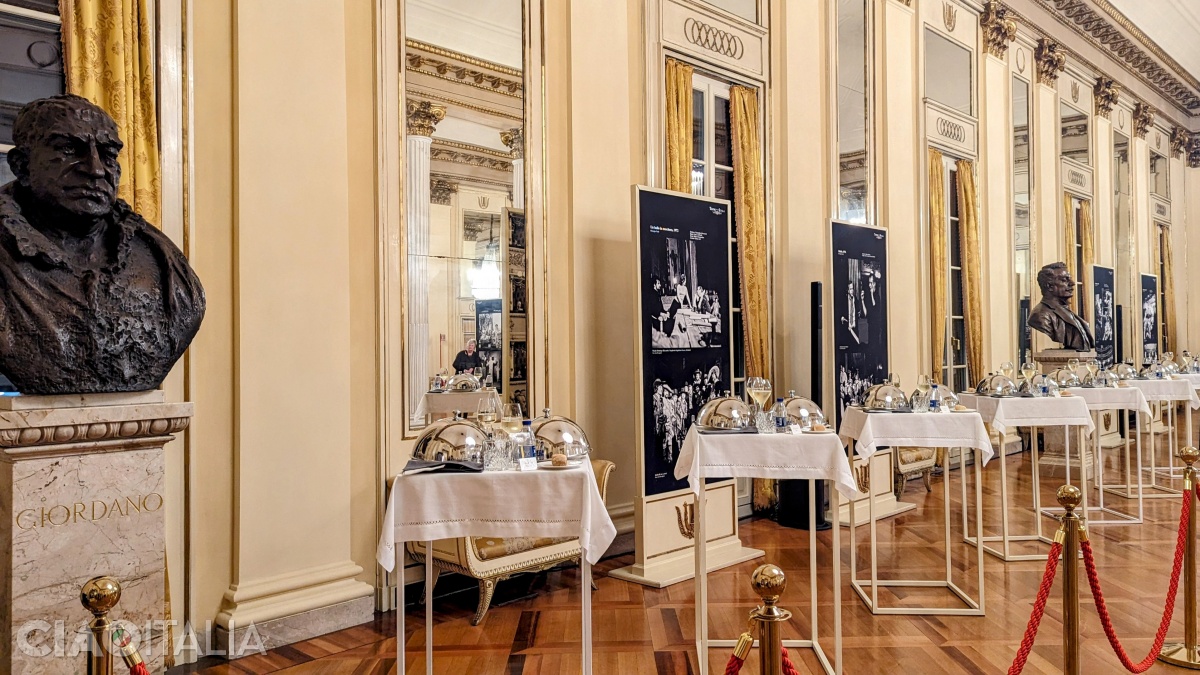
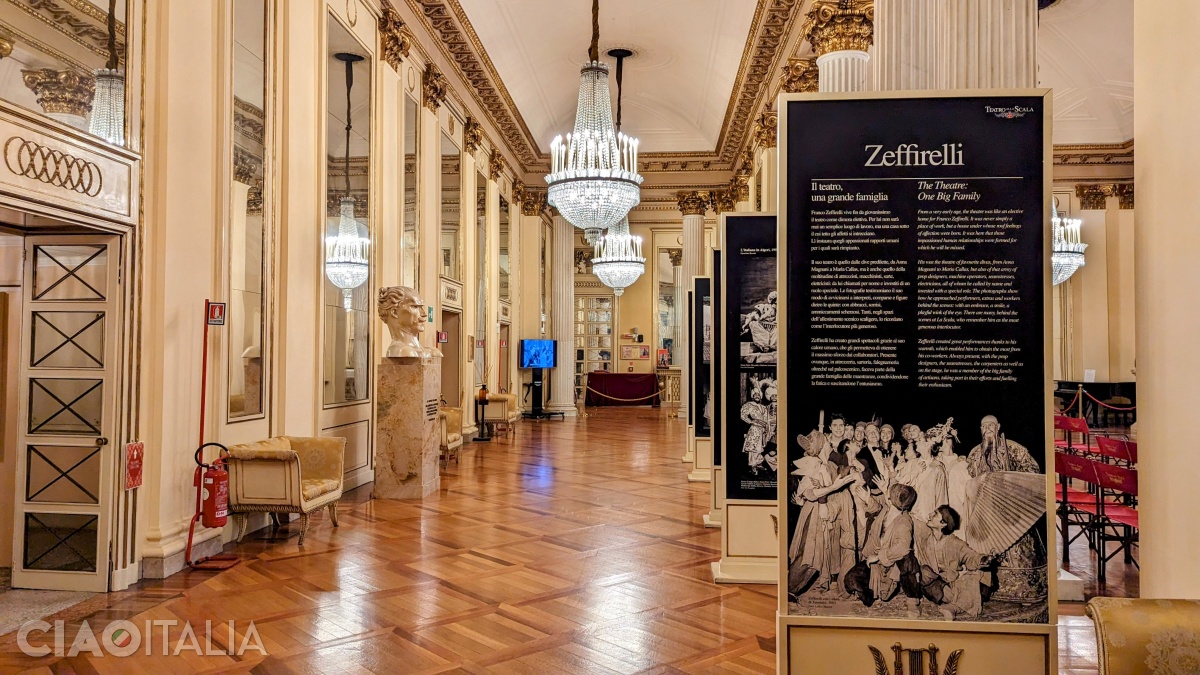
After viewing the auditorium, return to the foyer. It is named after the conductor Arturo Toscanini, whose bust can be seen in the center of one of the walls.
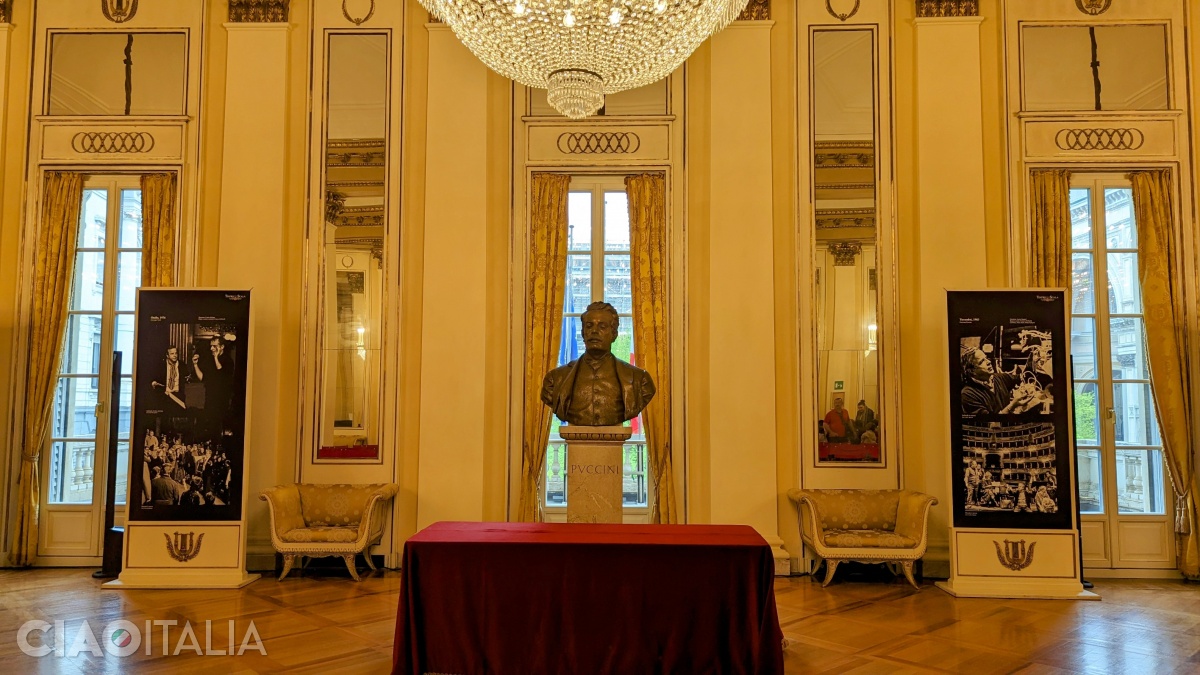
The room also contains other busts of famous musicians, among which you'll recognize Puccini.
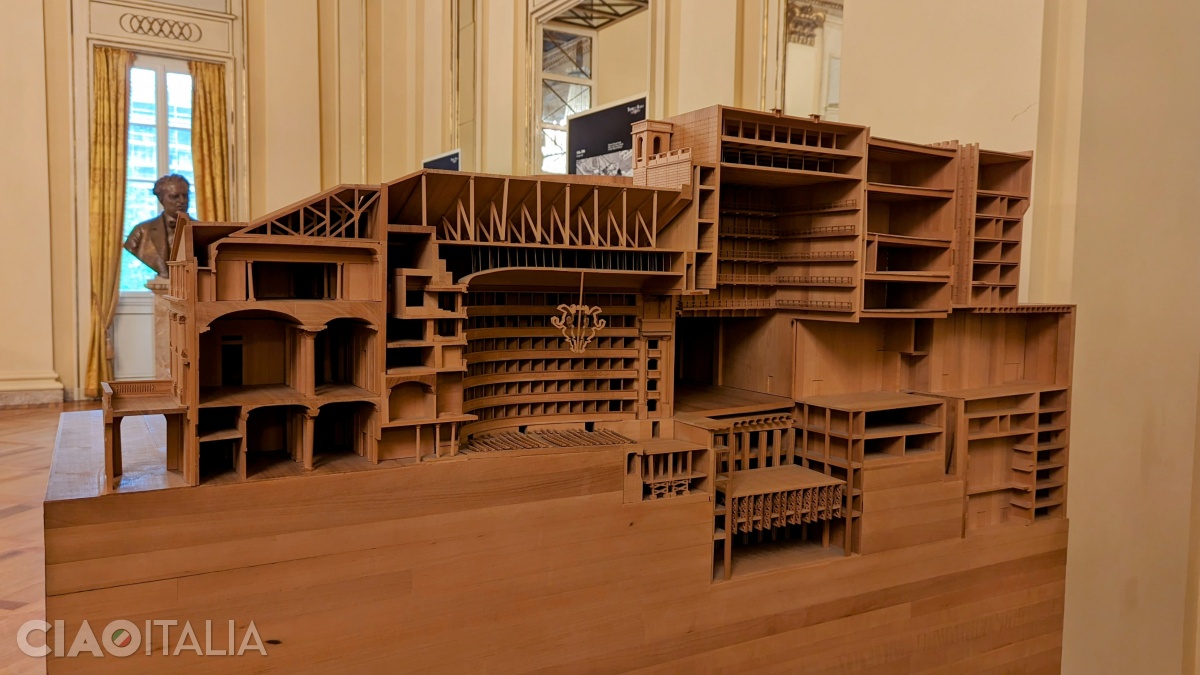
Don't miss the wooden model that shows the theatre in cross-section and can help you understand the complex mechanism located behind the stage.
In addition to the foyer you are in, there is also a lower foyer at the auditorium level and an upper one at the gallery level.
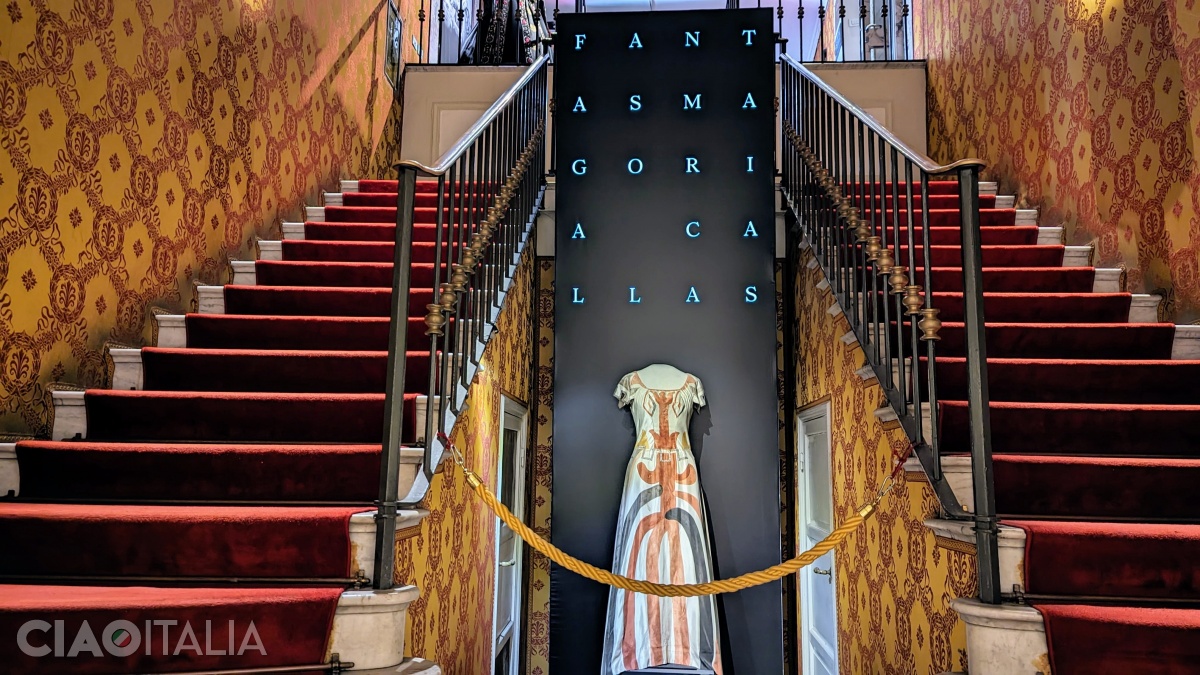
From the foyer, turn back and enter the museum (located to the right of the staircase you came up). The museum was inaugurated in 1913, in the Casino Ricordi - the building annexed to La Scala Theatre - which was formerly used for receptions and private balls. It houses a rich collection of musical instruments and costumes, as well as a gallery of portraits and busts of illustrious musicians.
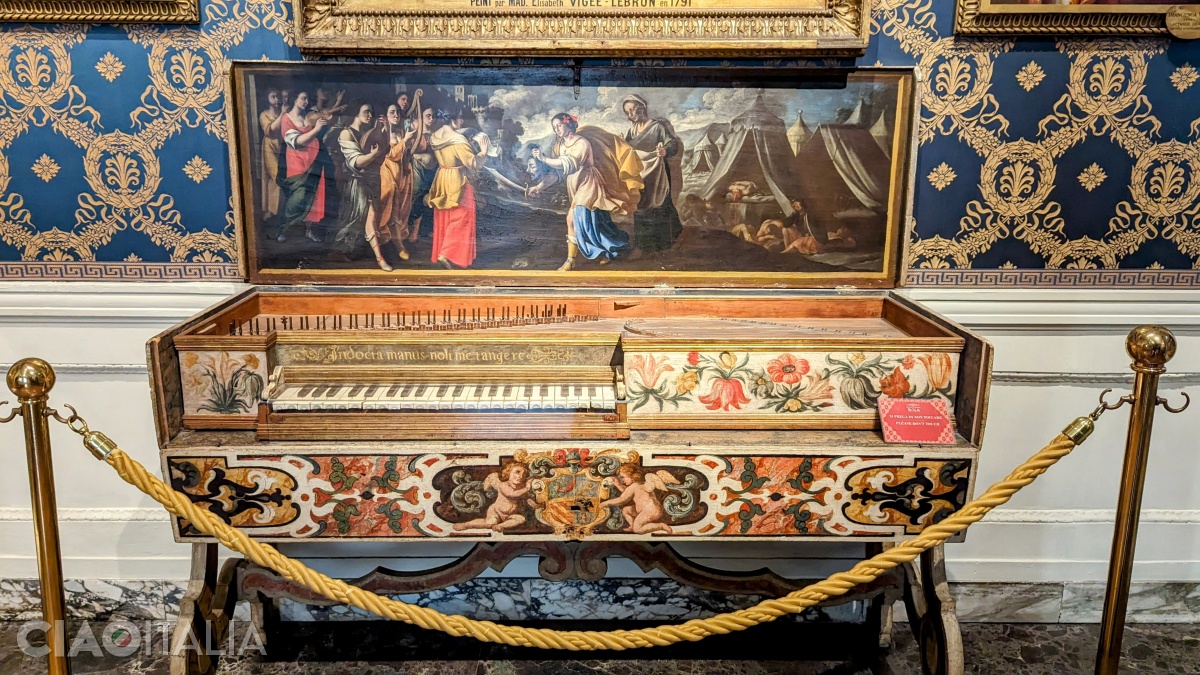
Near the entrance to the museum's first hall, there is a spinet dating from 1667, made in Naples. It is an old musical instrument similar to a harpsichord. Above the keys, a Latin inscription warns: Indocta manus noli me tangere ("Let not the unskilled hand touch me"). The lid is painted with a biblical scene: Judith displaying the severed head of Holofernes.
In one display case, eight unusual instruments are exhibited. Among them are the harp-lute, the guitar-mandolin, the lyre-guitar, and a flute that transforms into... a walking cane.
Above the display case hangs an oil painting by Evaristo Baschenis from Bergamo. It is a still life which, instead of flowers or fruit, depicts five musical instruments: a lute from Venice, a guitar, a violin with a bow, a mandolin, and a spinet. The painting was acquired in 1912 by Ettore Modigliani, one of the founders of the La Scala Theatre Museum, who was then the director of the Brera Gallery.
In the room, there is also a bronze bust of the composer Giuseppe Verdi. It is one of the copies made after the original terracotta version located at Villa Verdi in the village of Sant'Agata, in the Emilia-Romagna region, near the border with Lombardy. Above the bust is a portrait of Giuseppe Piermarini, the architect who designed La Scala Theatre. He is depicted holding a compass, one of his working tools.
The second room is themed around the Commedia dell'Arte, in which actors improvised, incorporating acrobatics and songs into their performances. The central display case exhibits jewellery, librettos, and playing cards from the 18th century, found in the theatre’s boxes.
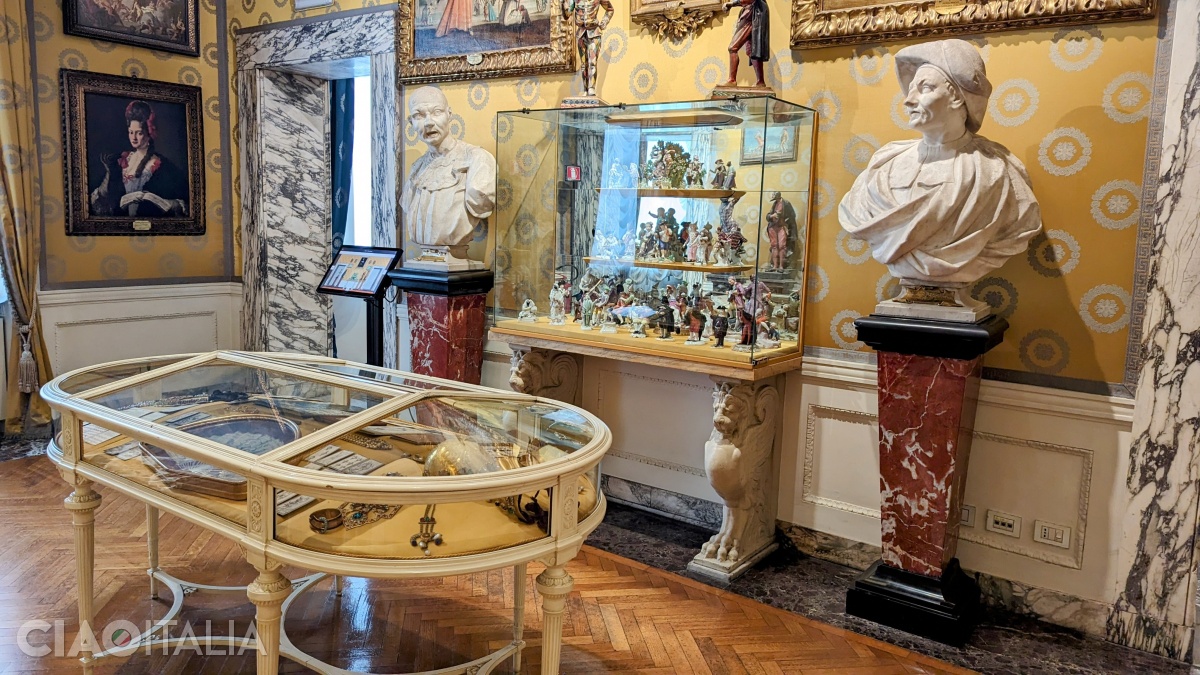
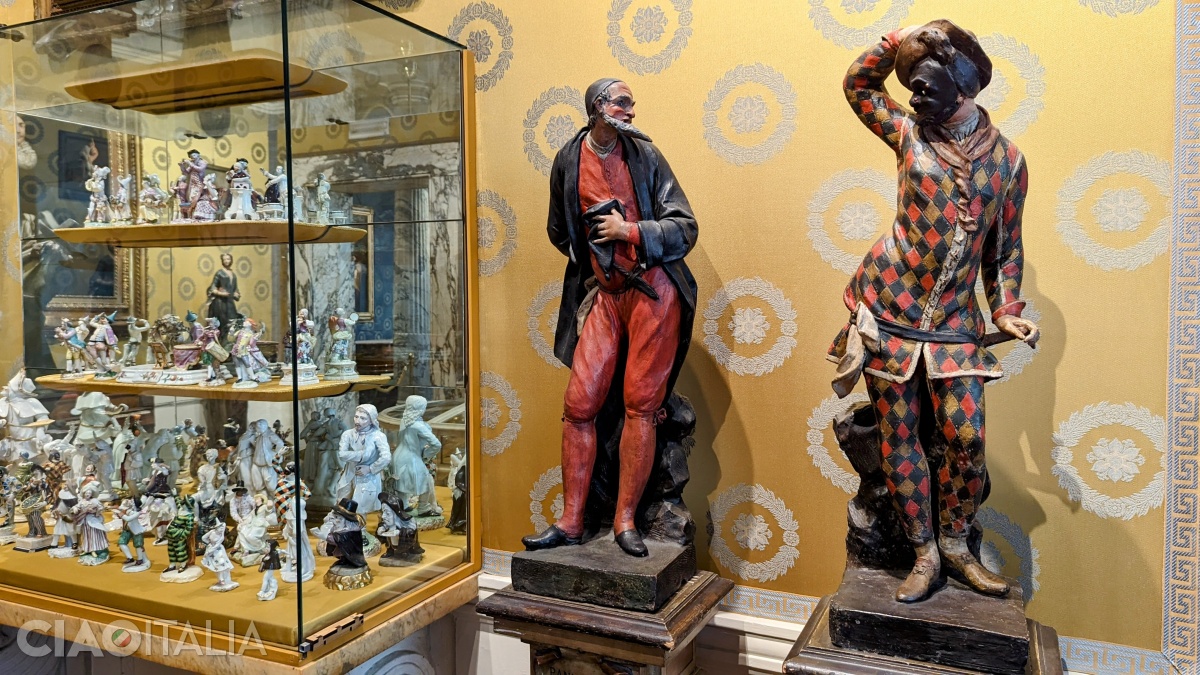
On pedestals are busts and statuettes of actors and characters, while the display cases near the wall contain a valuable collection of porcelain.
The third hall displays portraits of famous opera singers from the first half of the 19th century. To the right, between the columns, the portrait above the piano depicts Maria Malibran wearing the costume of Desdemona from Rossini's opera. The initials of the flowers in the bouquet she holds spell out the name Carlo in Italian (camelia - camellia, acanto - acanthus, rosa - rose, luppolo - hops, and olea fragrans - fragrant olive), referring to Charles Auguste de Bériot, the violinist who was the great love of the artist, who died too young after a fall from a horse.
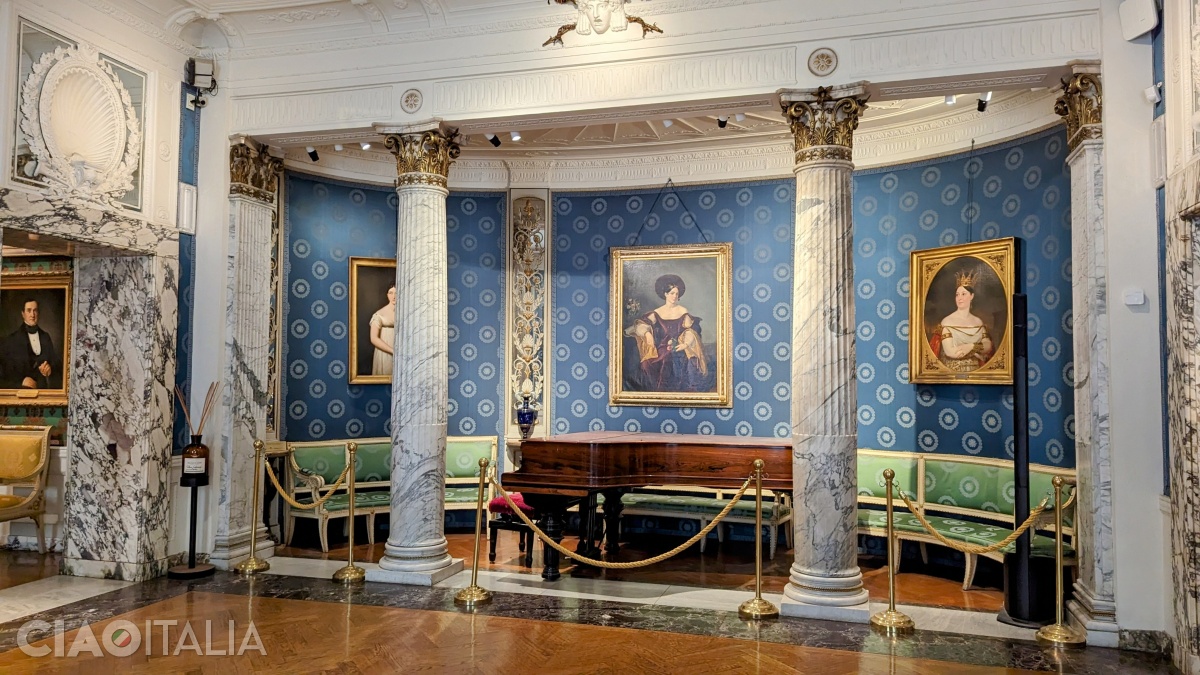
The portrait on the left represents the singer Giuditta Pasta, who made her debut on the stage of La Scala in 1831 with the opera "Norma" by composer Vincenzo Bellini, born in Catania (if you happen to be there, don't miss visiting the Teatro Massimo Bellini). Legend has it that the name of one of Sicily's most famous dishes - pasta alla Norma - originates from this opera (see also the article What to Eat in Sicily).
To the right is the portrait of the singer Giuseppina Rosi de Begnis, a renowned interpreter of Donizetti's operas.
In the fourth room, there are paintings by 19th-century artists who had a connection to La Scala. On the front wall, there is a painting depicting the theatre in 1852, at a time when the square in front of it had not yet been built.
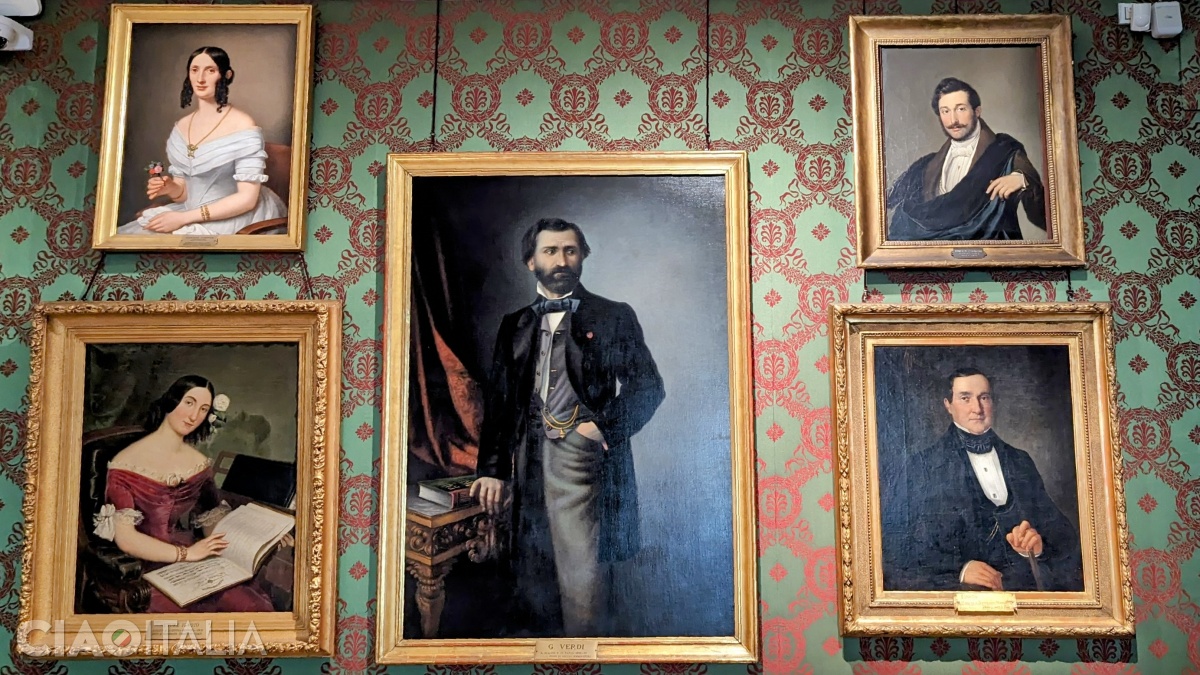
The right wall of the room is entirely dedicated to Verdi: in the center is his portrait, surrounded by portraits of figures connected to him, such as Bartolomeo Merelli (bottom right), the impresario who gave him the opportunity to stage the opera "Nabucco".
In the next two rooms, you'll find portraits, busts, musical instruments, and medals, as well as Verdi's death mask and objects that were found at the time of his death in his apartment at the Grand Hotel et de Milan.
Upstairs, there are sketches depicting stage designs, musical instruments, the museum's library, and exhibitions are usually held there.
Returning to the ground floor and heading to the right, you'll pass through two more rooms and eventually reach the museum shop.