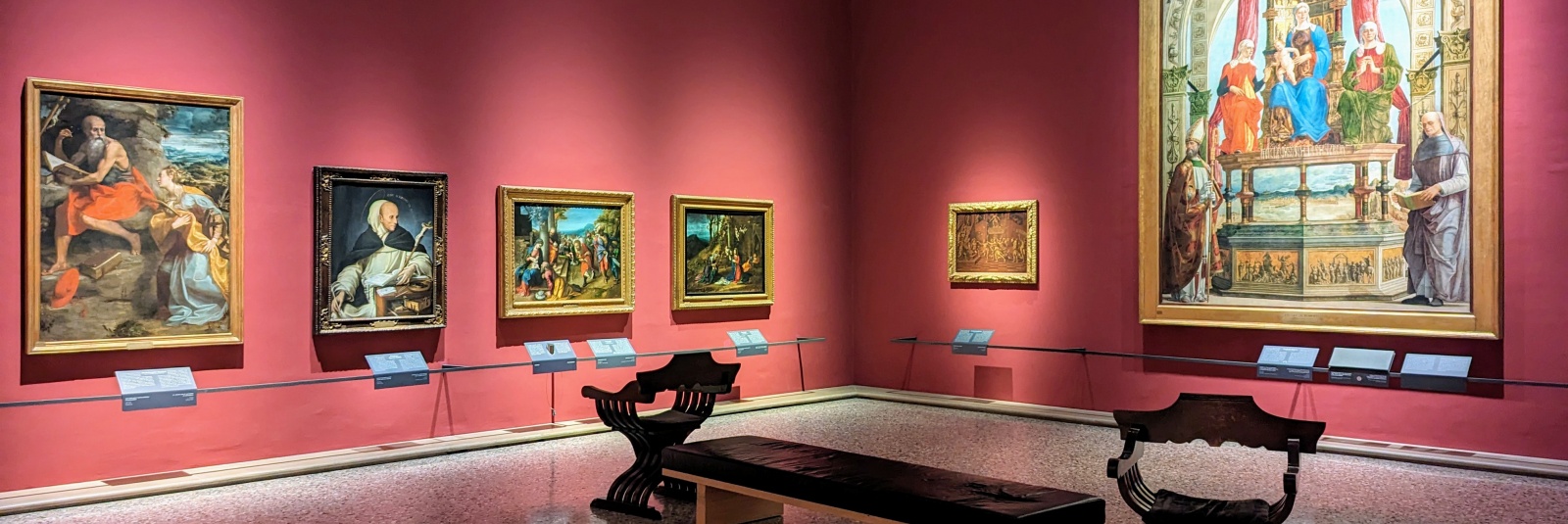
Pinacoteca di Brera (Brera Art Gallery) in Milan
The Pinacoteca di Brera (Brera Art Gallery) is a major tourist attraction in Milan and is well worth a visit, especially if you are an art lover. The museum houses the most valuable art collection in northern Italy, second only to the Gallerie dell'Accademia in Venice.
Tickets
The ticket price for the Pinacoteca di Brera is:
- Adults: €15
- Over 70 (on Tuesdays and Wednesdays): €7.5
- EU citizens 18-25 years: €2
- Under 18: Free
- Families (one or two adults accompanied by up to 5 minors): €10 per adult
You can rent an audio guide in Italian, English, French, or German for €5.
Tickets can be purchased on-site (at the ticket counter or from ticket machines) or online - as recommended by the museum. Online tickets allow entry up to 15 minutes after your reserved time, so it's important to arrive on time.
On the first Sunday of each month, admission to the Pinacoteca di Brera is free. Note: on these days, online reservation is mandatory (see also the article about free attractions in Milan).
Some agencies offer guided tours of the Brera Gallery (with entry ticket included), combined with a guided walking tour of the Brera district, one of the liveliest and most artistic neighborhoods in Milan.
Opening Hours
The Pinacoteca di Brera has the following visiting hours:
- Monday: closed
- Tuesday to Sunday: 8:30 AM - 7:15 PM
Last entry is at 6:00 PM.
The museum is closed on December 25th, January 1st, and May 1st.
How to Get to Pinacoteca di Brera?
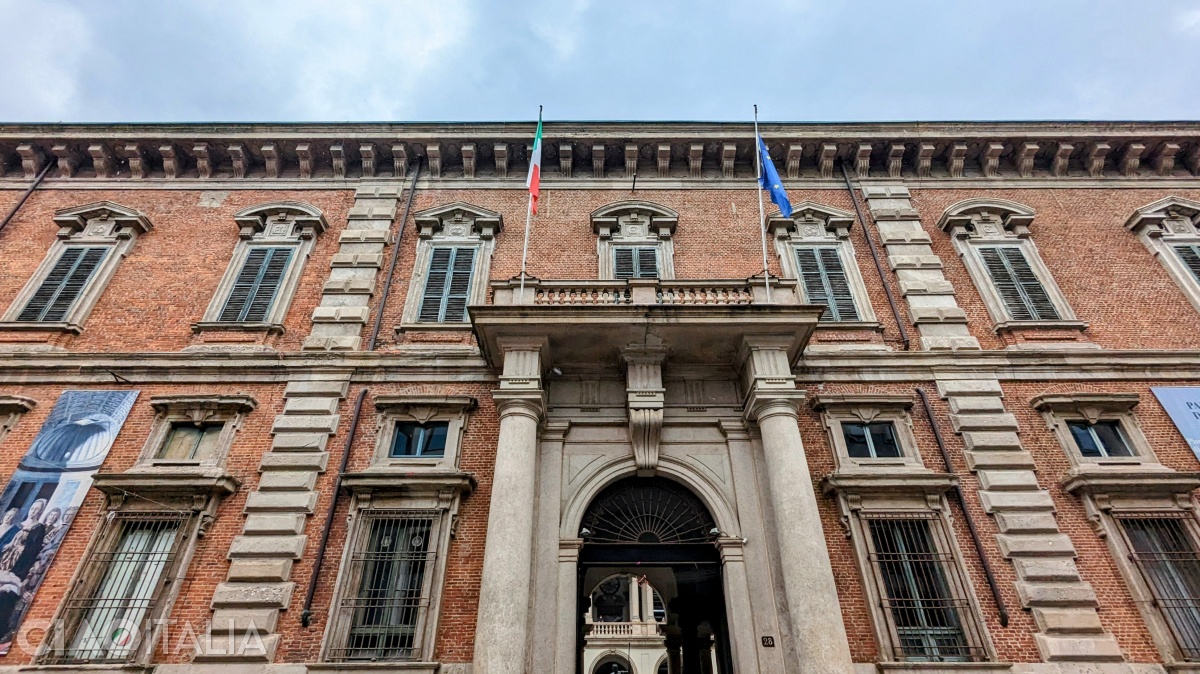
The Pinacoteca di Brera is located in the city center, at Via Brera 28, in the district bearing the same name. You can get there using the following public transport options in Milan:
- Metro: Line 2 (Lanza station), Line 3 (Montenapoleone station), or Line 1 (Cairoli station)
- Bus: 61 (stop at Via Pontaccio / Via Monte di Pietà) or 57 (stop at Foro Buonaparte)
- Tram: 1, 2, 12, or 14 (stop at Via Cusani) or 4 (stop at Lanza)
The Pinacoteca is just a 9-minute walk (650 meters) from Sforza Castle and about 15 minutes from Sempione Park.
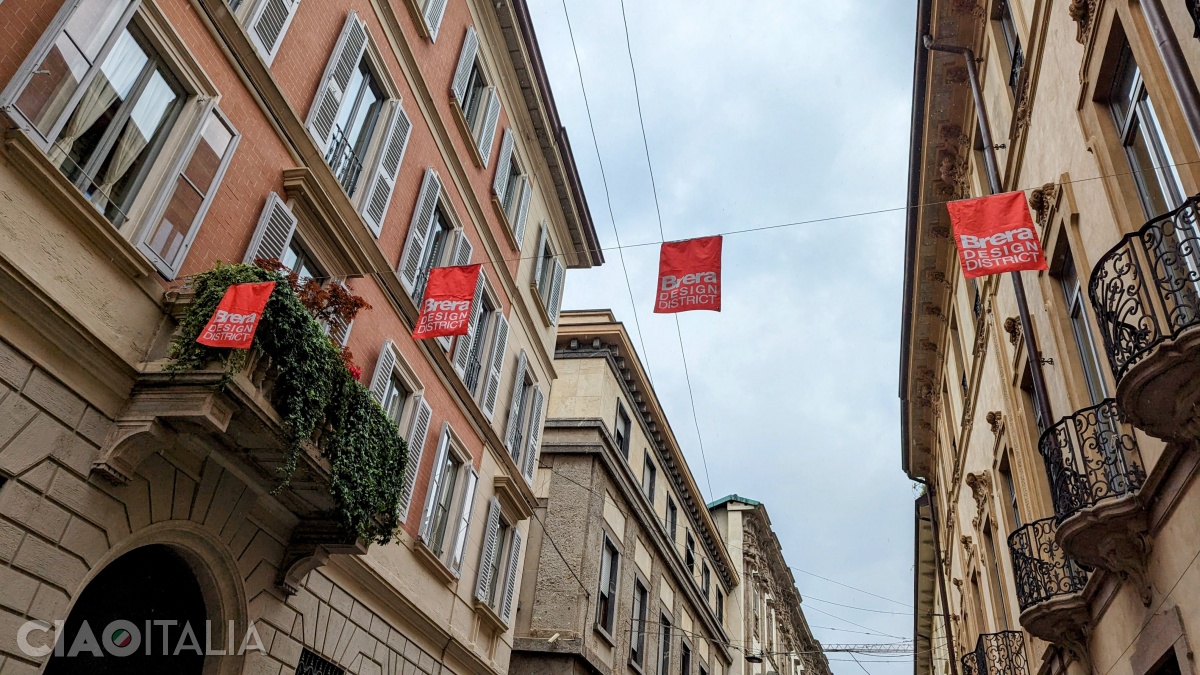
Artworks at Pinacoteca di Brera
Officially, the Pinacoteca di Brera was opened to the public in 1809. An earlier collection had existed since 1776, established by Maria Theresa of Austria to serve the educational needs of students. This collection, which had since grown with additional works, was transformed into a museum during the time of Napoleon, when the city of Milan was named the capital of the Kingdom of Italy. Most of the artworks were confiscated from churches and monasteries and brought to the Pinacoteca di Brera, which Napoleon intended to turn into a second Louvre.
Today, the Pinacoteca is one of the most important museums in Milan. It is housed in the Palazzo Brera, built in 1776 on the site of a former medieval monastery. The architect was Giuseppe Piermarini, who also designed the Teatro alla Scala. The same building also hosts the Braidense Library, the Astronomical Observatory, the Botanical Garden, the Lombard Institute for Science and Literature, and the Academy of Fine Arts.
In the beautiful inner courtyard, framed by arcades, stands a bronze statue of Napoleon depicted as the god Mars. The 3-meter-tall monument was created by Antonio Canova in 1810 and is an exact copy of the marble sculpture currently located in London. Also in the courtyard are statues of important figures from the city of Milan.
Today, the Pinacoteca di Brera displays over 400 artworks from the 13th to the 20th century, including some of the most significant pieces from Lombardy, as well as renowned works by painters from Veneto, Emilia Romagna, and Marche. Among the most well-known names are Gentile da Fabriano, Andrea Mantegna, Giovanni Bellini, Jacopo Tintoretto, Bramantino, Piero della Francesca, Raffaello Sanzio, Tiepolo, and Caravaggio.
It is a modern and elegant museum, recently renovated, that highlights masterpieces through its display methods, lighting system, and the innovative way in which you can experience the art. For example, with some paintings, you'll find a small text accompanied by a scent diffuser that recreates the smells depicted in the painting. With others, you can touch the fabrics represented in the artwork.
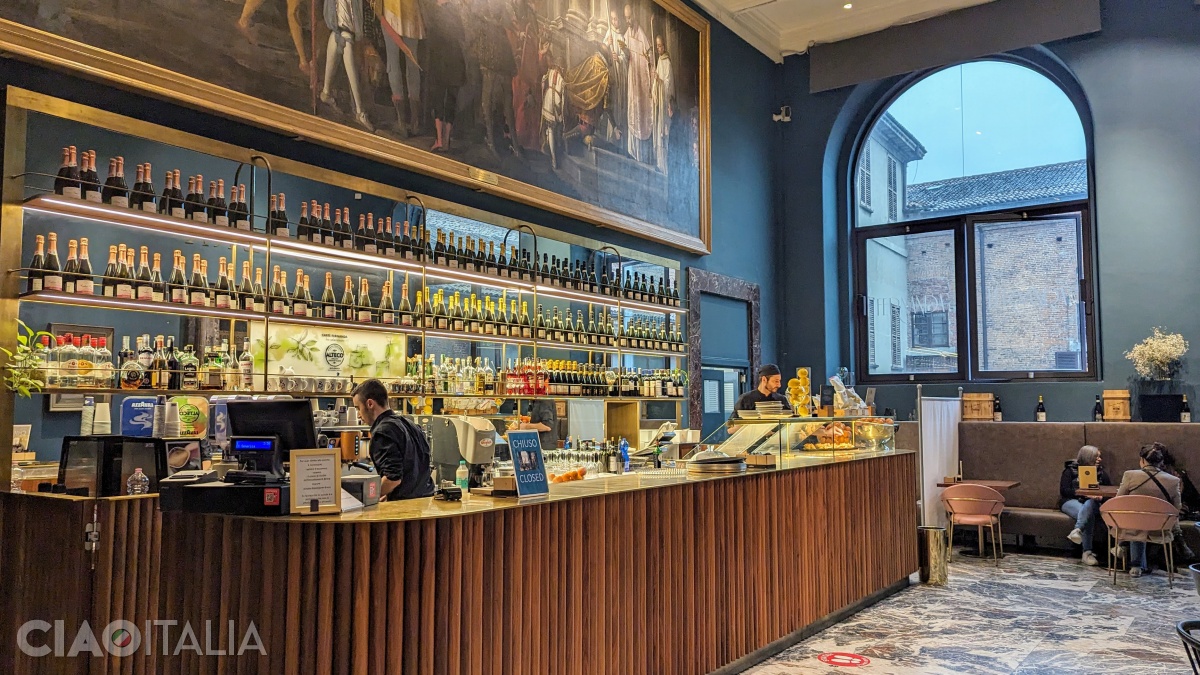
During or at the end of your visit, you can stop for a coffee and a snack at Caffè Fernanda, the elegant café-bistro on the first floor, which also has outdoor seating under the portico. It was named in honor of Fernanda Wittgens, the first woman to direct an Italian state museum and the one who oversaw the reconstruction of the Pinacoteca di Brera in 1947, after it was damaged by bombings during World War II.
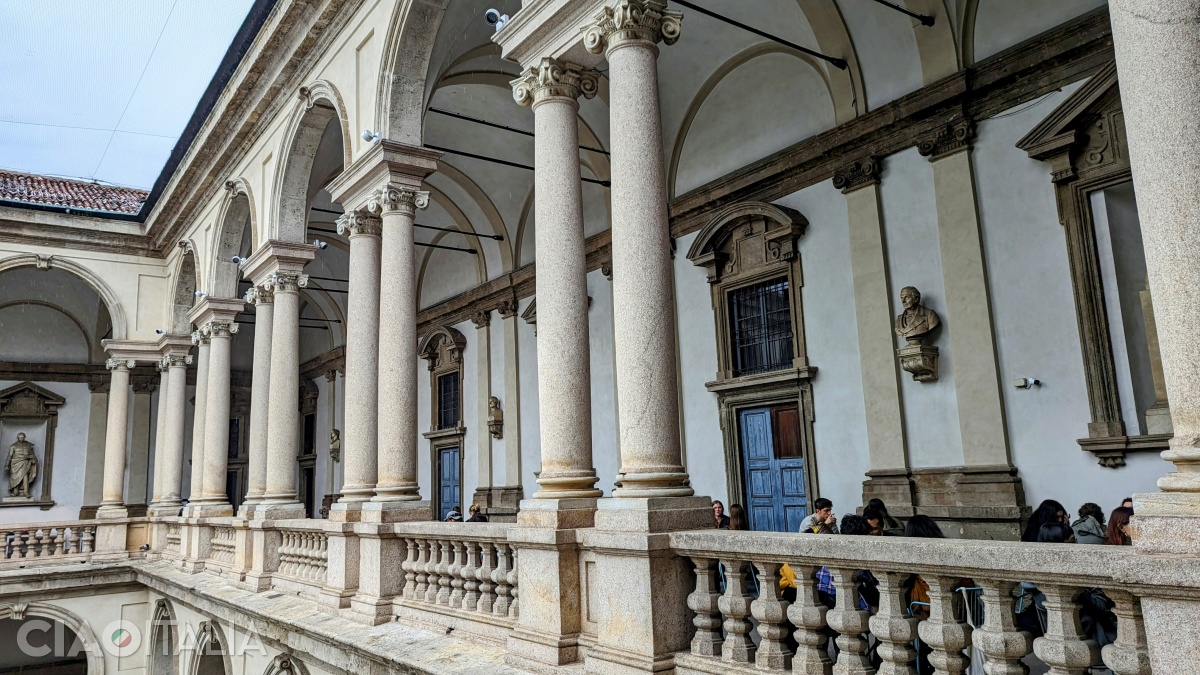
The museum has 38 rooms, which follow a chronological order but also take into account the origins of the painters (the map can help you, as it also mentions the most important artists).
Braidense Library
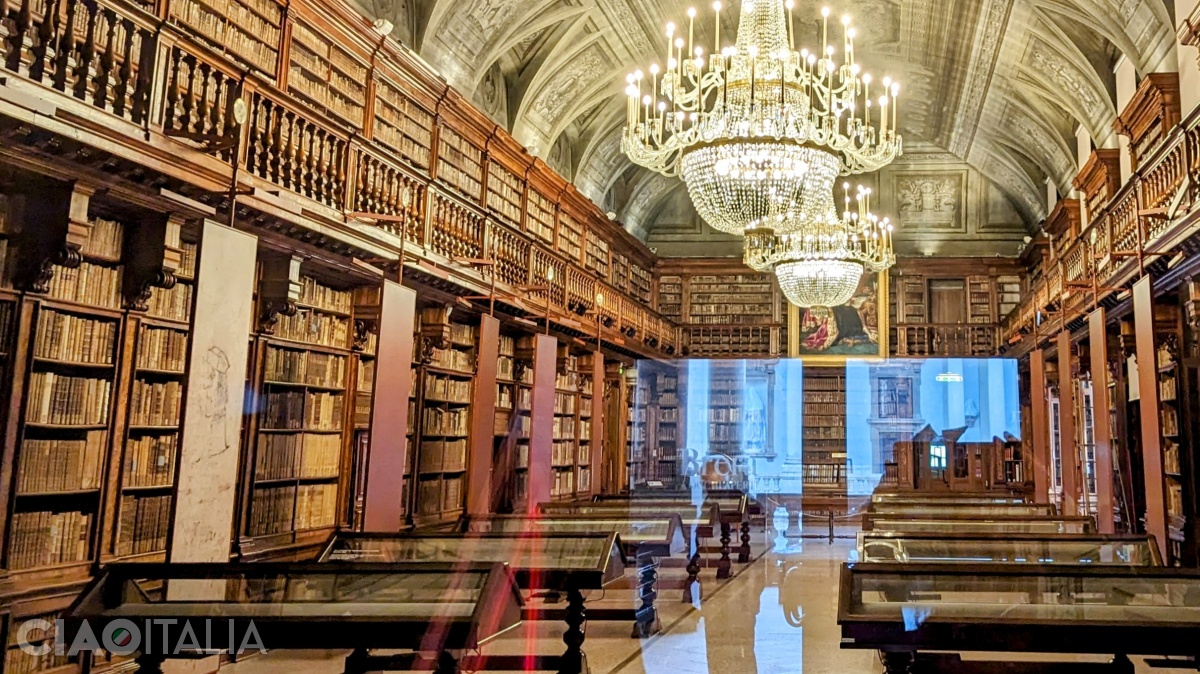
Once you have ascended to the first floor (where the exhibition begins), you will find yourself in front of the monumental hall of the Braidense Library. We recommend taking a glance inside, even through the glass windows. The library was founded in 1770 by Empress Maria Theresa, and since 1773, it is hosted by Palazzo Brera. The hall is decorated with walnut wood and houses about 40,000 volumes printed in the 16th-18th centuries. The Bohemian crystal chandeliers hanging from the ceiling were made using what remained of the chandeliers from the Cariatids Hall in the Royal Palace, which were destroyed during the bombings of World War II.
The Chapel of Mocchirolo
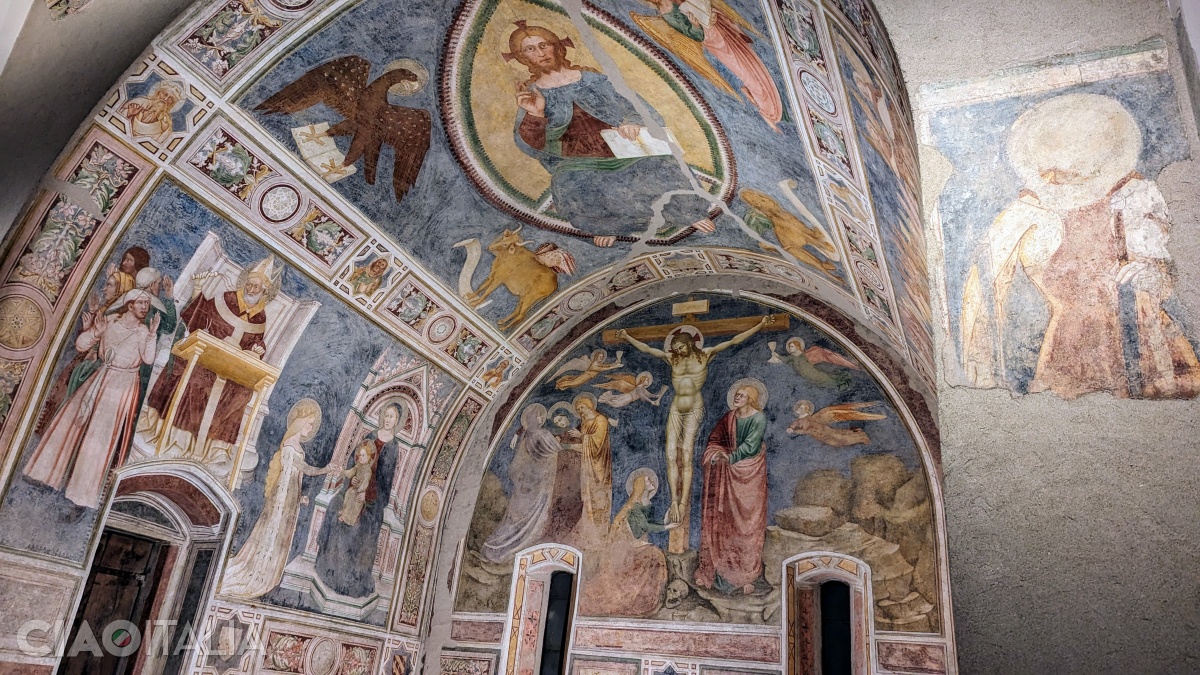
Some of the oldest paintings come from the oratory in the town of Mocchirolo. The frescoes, created between 1360 and 1370 by Pecino da Nova (also known as the "Master of Mocchirolo"), were removed in 1949 from the walls of the oratory and brought to the Pinacoteca di Brera for better preservation.
The chapel, reconstructed in the museum, is dedicated to Saint Ambrose (the patron saint of Milan) and Saint Catherine. On the left wall, there are the frescoes "Saint Ambrose Scourging Heretics" and "The Mystic Marriage of Saint Catherine", while on the right wall is depicted the noble family who commissioned the painting. On the back wall is the fresco of the "Crucifixion".
14th-15th Century Paintings from Central Italy (Rooms 2-5)
In the next rooms, works from the 14th-15th centuries are displayed, created by painters from central Italy.
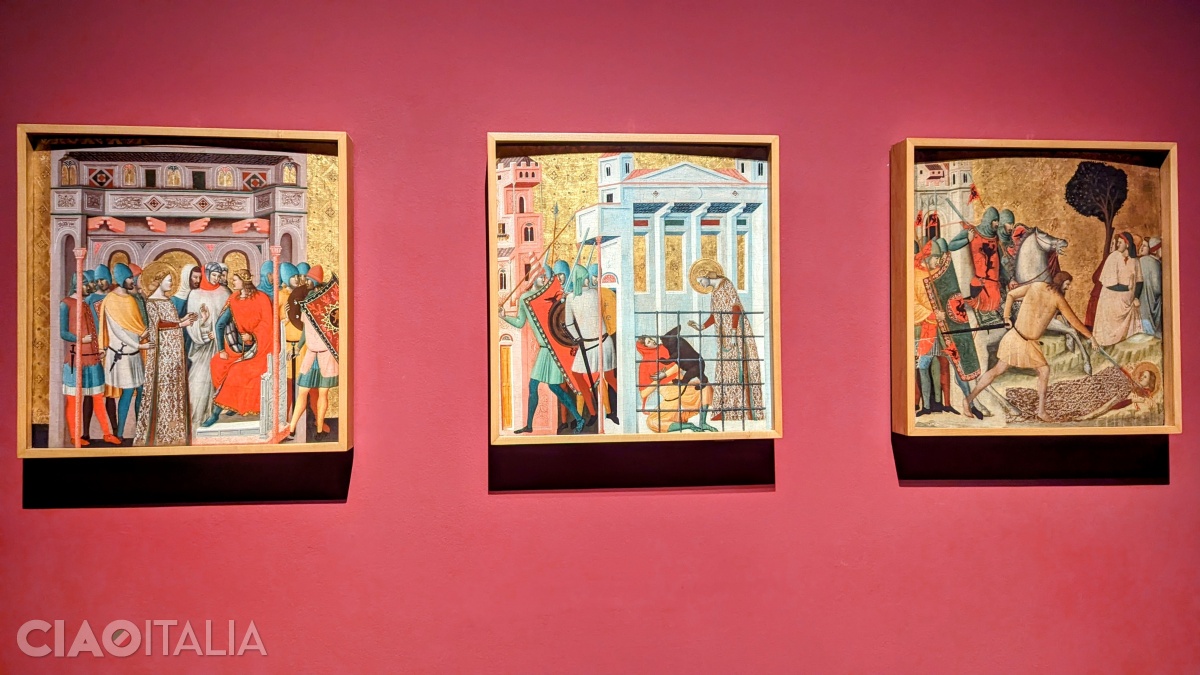
From the 14th century, there is "Christ on the Throne, Adored by Angels" by Giovanni da Milano and "The Stories of Saint Colomba" by Giovanni Baronzio (the most famous painter from Rimini during that period).
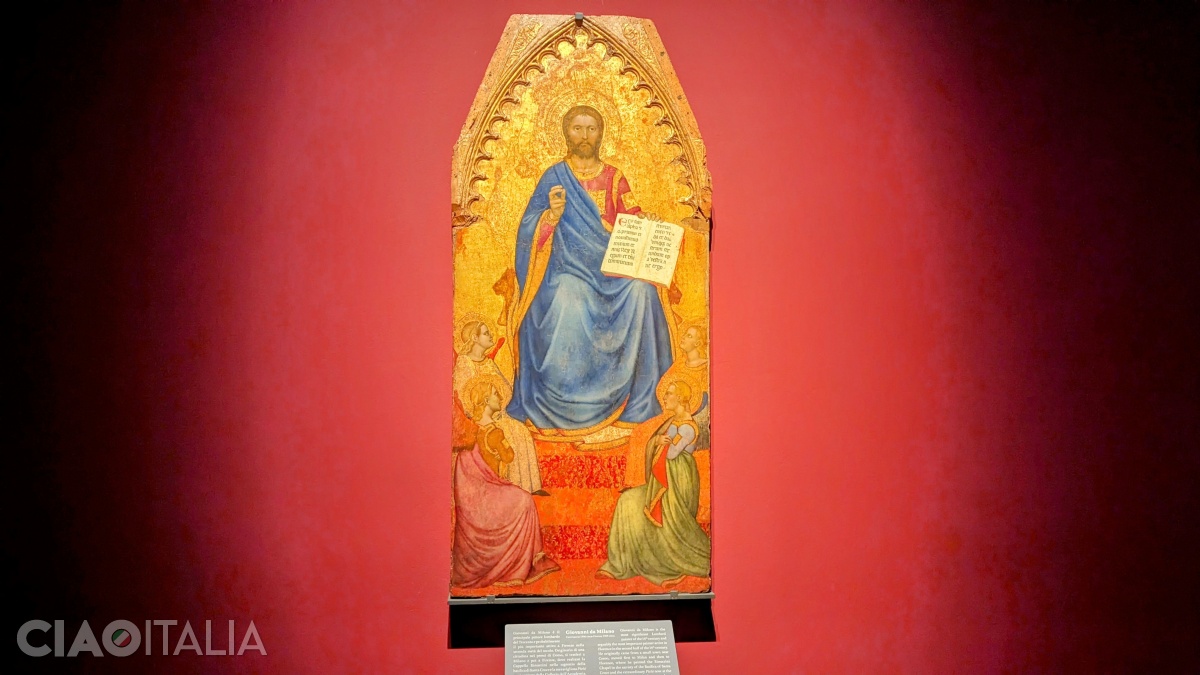
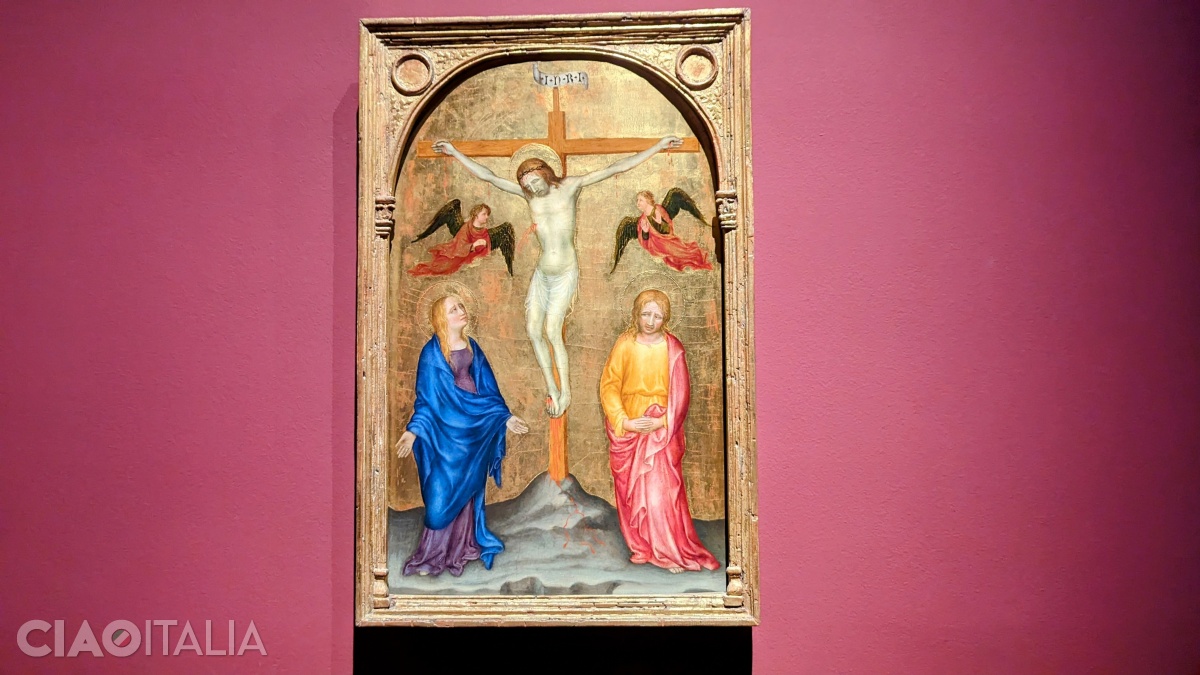
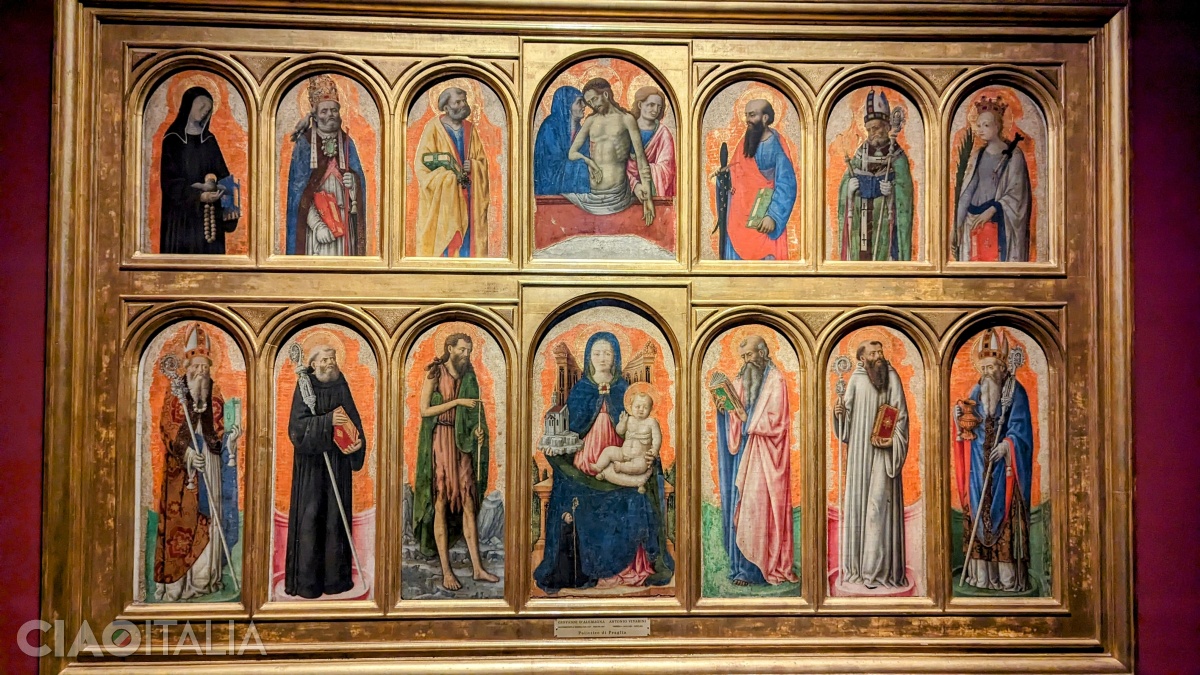
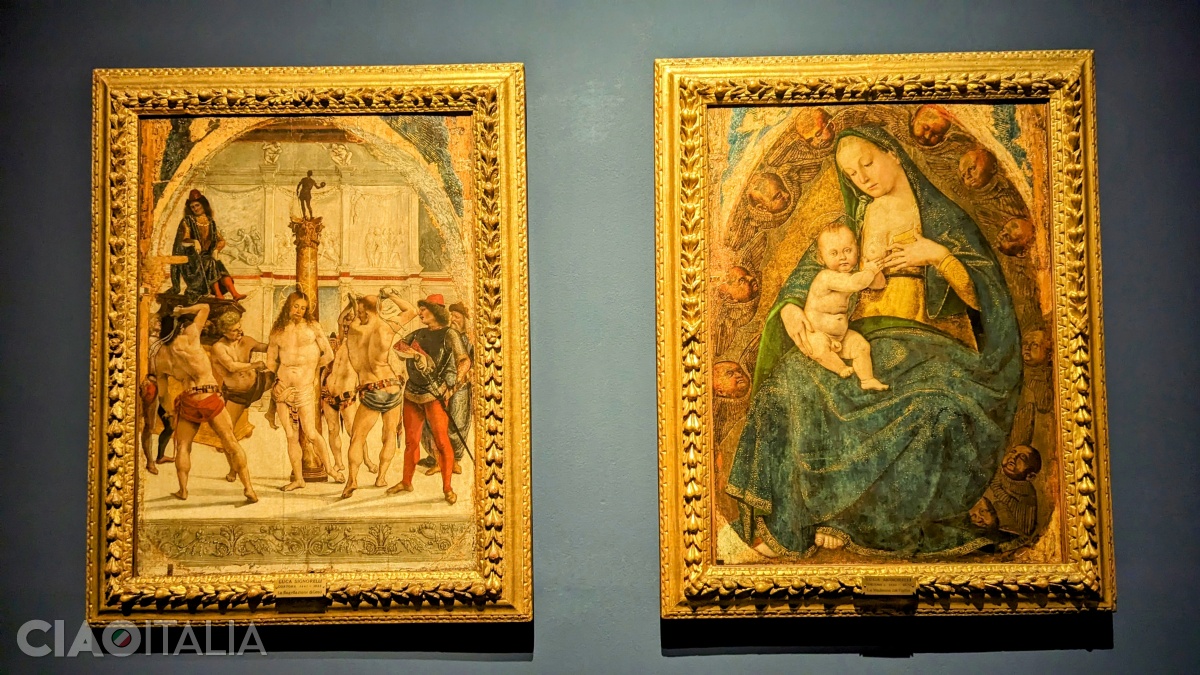
Among the 15th-century paintings are "The Crucifixion" by Gentile da Fabriano, the polyptych altar painted by Antonio Vivarini and Giovanni da Alemagna, "Christ between the Virgin Mary and Saint John" by Benozzo Gozzoli, and paintings by Luca Signorelli, including "The Scourging" and "Madonna of the Milk".

15th-Century Venetian Painting (Room 6)
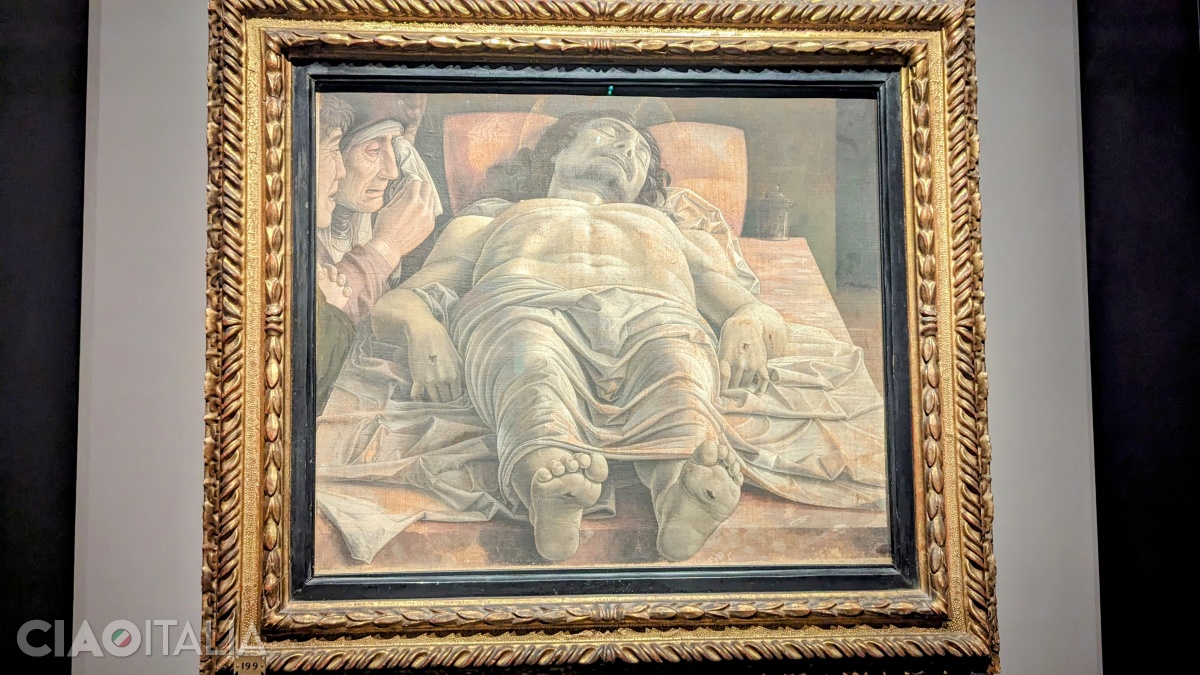
In Room 6, two of the most famous works from the Pinacoteca di Brera are displayed: Giovanni Bellini's "Pietà" and Andrea Mantegna's "The Dead Christ".
Giovanni Bellini's "Pietà" (brother-in-law of Andrea Mantegna) impresses with the humanity of the figures, portrayed here with almost sculptural brushstrokes.

"The Dead Christ" by Andrea Mantegna is renowned for its extraordinary perspective, created through foreshortening (which makes you feel almost involved in the scene), and for the precision with which the artist depicts the wounds of Christ in the foreground, his face resting on a pillow, or the beard grown for a day.
15th-16th Century Venetian Paintings (Rooms 7-8)
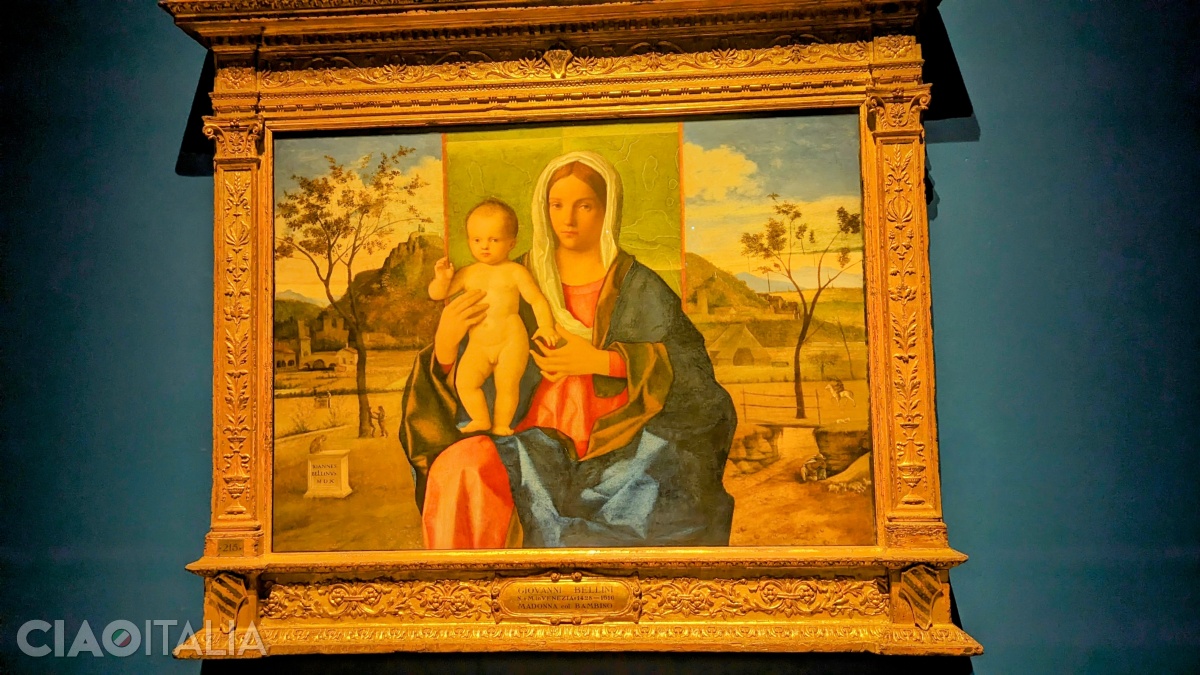
Room 7 is dedicated to the painters Giovanni Bellini and Vittore Carpaccio.
"The Virgin with the Child" was painted by Bellini when he was 80 years old and already a prominent figure of the Venetian Renaissance movement.
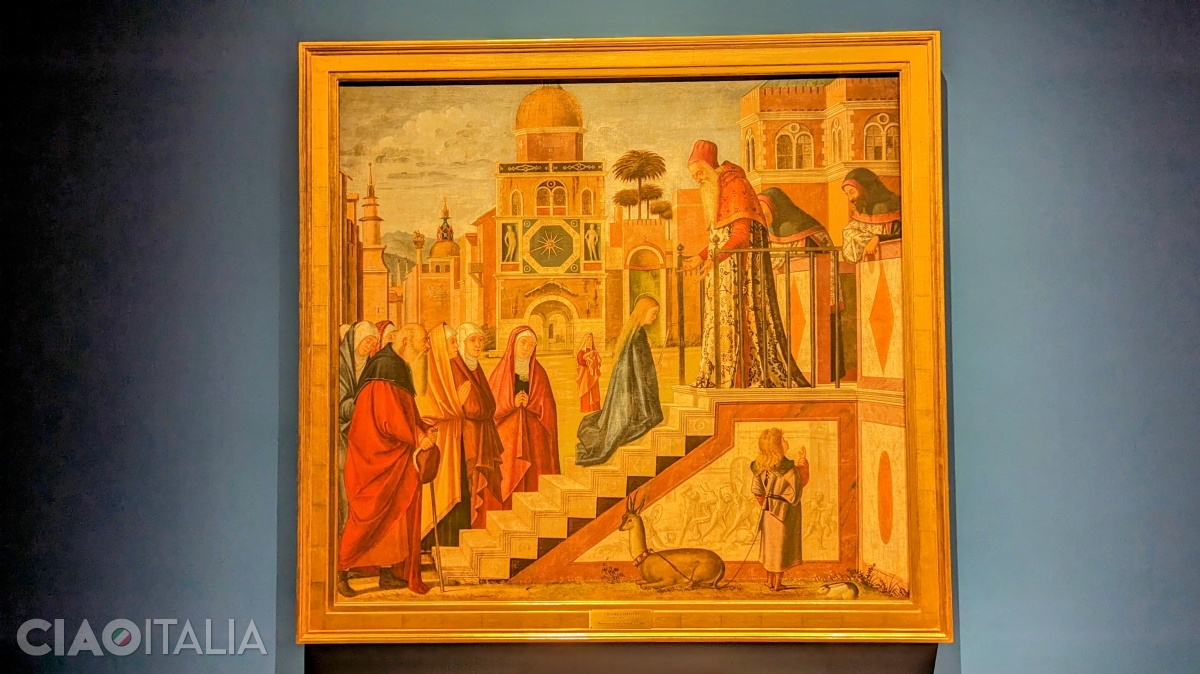
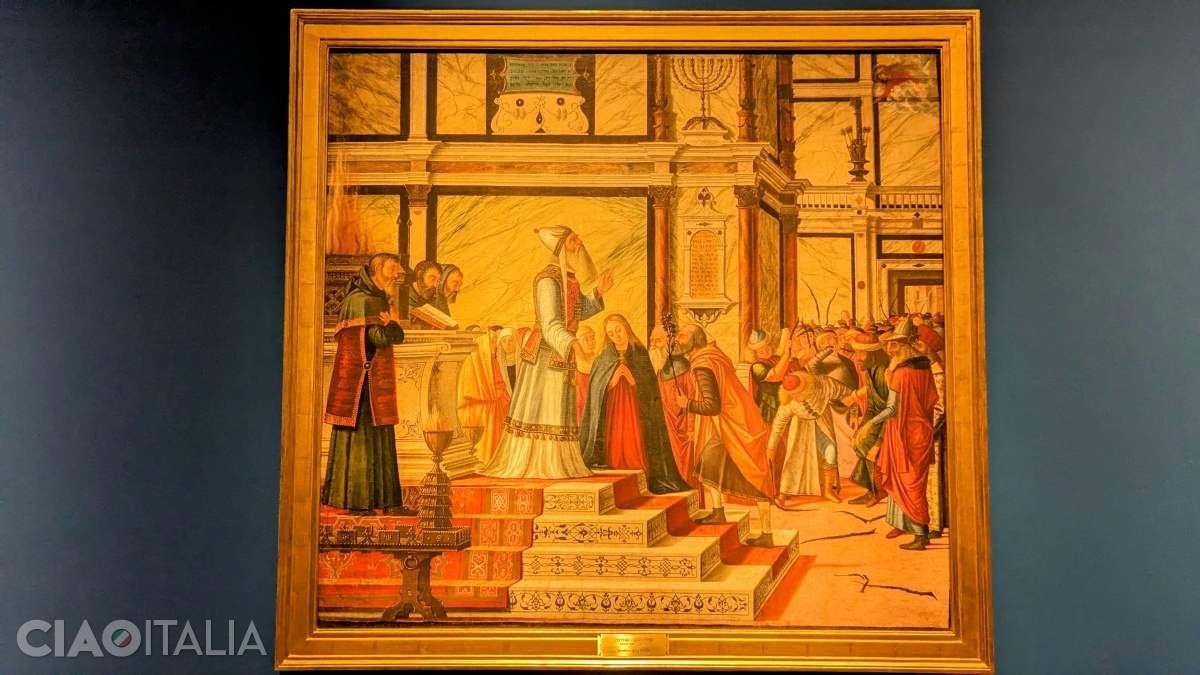
The paintings "The Presentation of the Virgin at the Temple" and "The Marriage of the Virgin" were part of a larger cycle dedicated to the life of the Virgin Mary, commissioned from Vittore Carpaccio by the Albanian Confraternity of Venice to decorate one of their meeting rooms. Today, the paintings are divided between the Pinacoteca di Brera, the Accademia Carrara in Bergamo, and the Gallerie dell'Accademia in Venice.
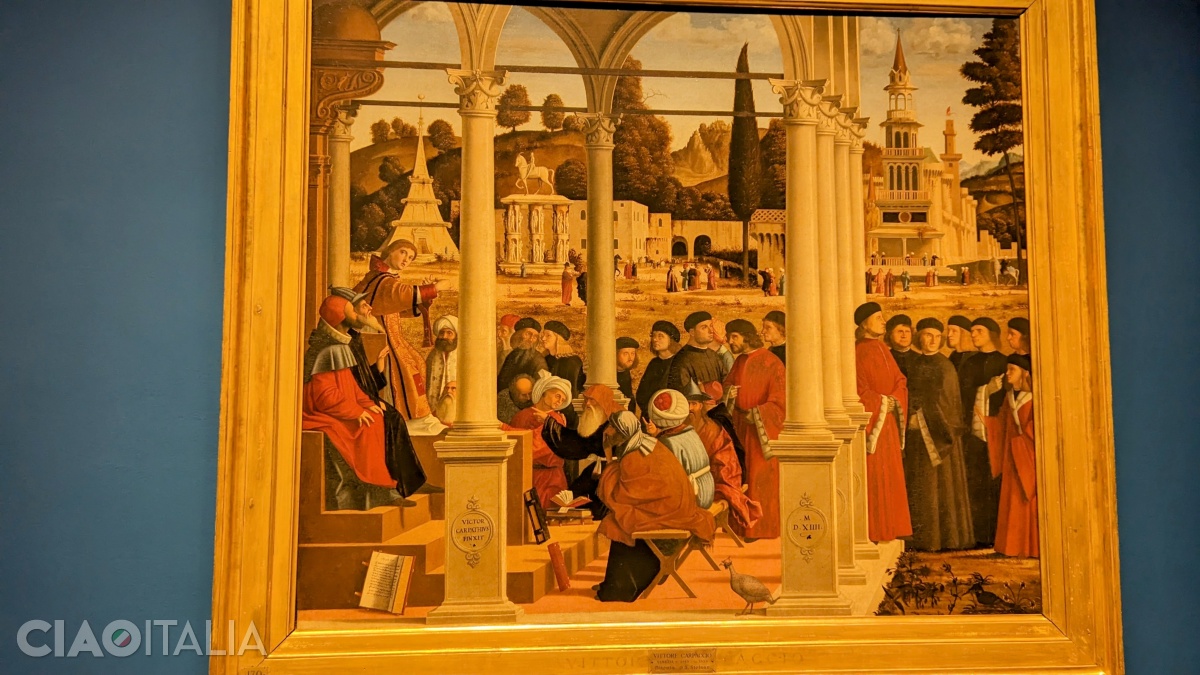
Similarly, the painting "The Dispute of Saint Stephen in the Synod" was part of a cycle dedicated to the life of the saint, created for the headquarters of the Confraternity of Santo Stefano in Venice.
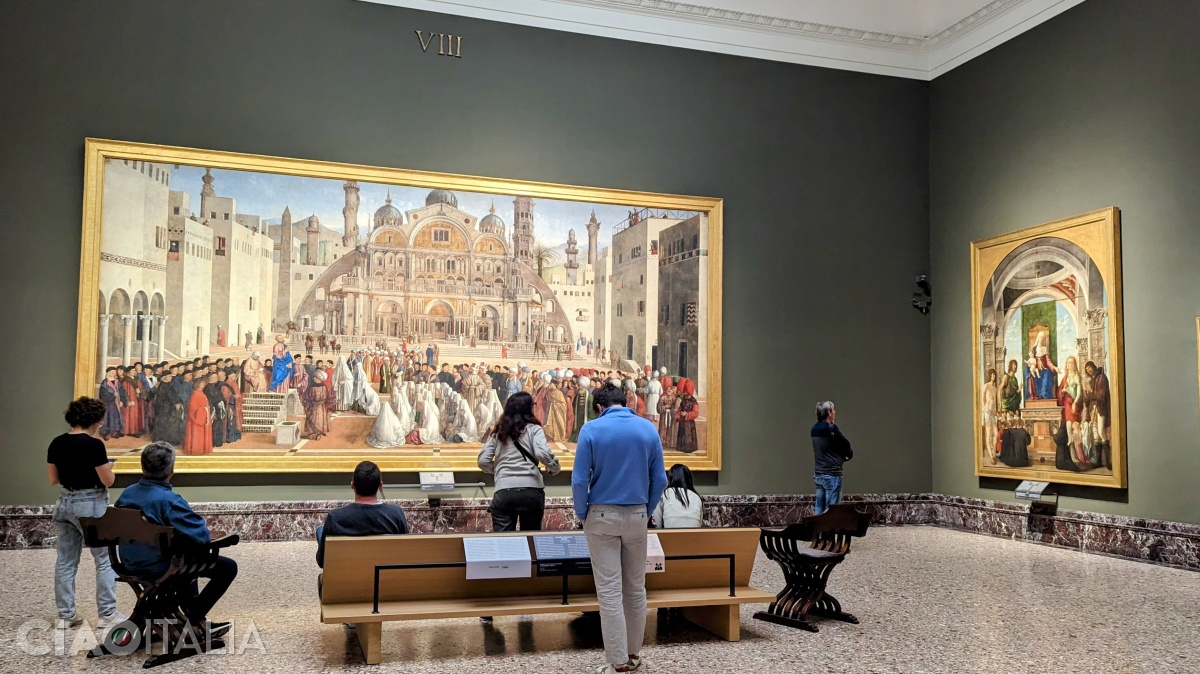
Room 8 is dominated by a large-scale work: "The Preaching of Saint Mark in a Square in Alexandria", which once decorated the hall of the Scuola Grande di San Marco in Venice. The painting, begun by Gentile Bellini, was completed after his death by his brother, Giovanni. Gentile had traveled as far as Constantinople to paint the portrait of Sultan Mehmed II and was familiar with the features of Eastern cities, which he depicted in the painting.
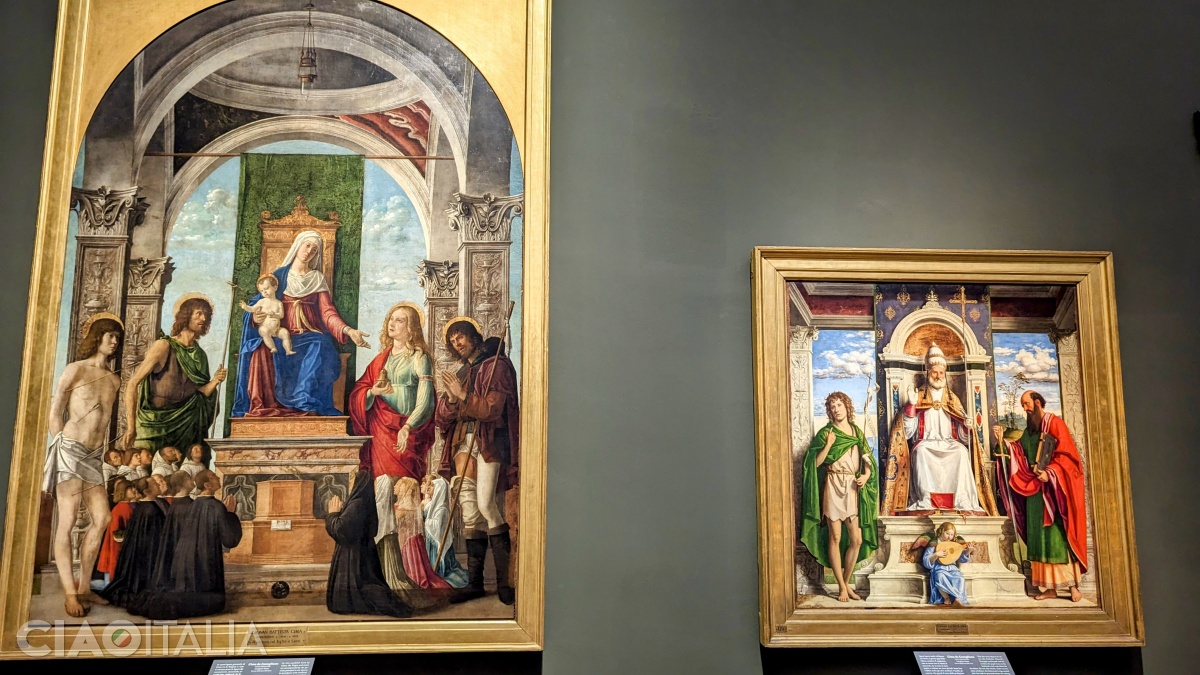
The same room also features several paintings by Cima da Conegliano.
16th-Century Venetian Painting (Room 9)
Room 9 is dedicated to some of the great masters of the Venetian Renaissance: Titian, Veronese, and Tintoretto.
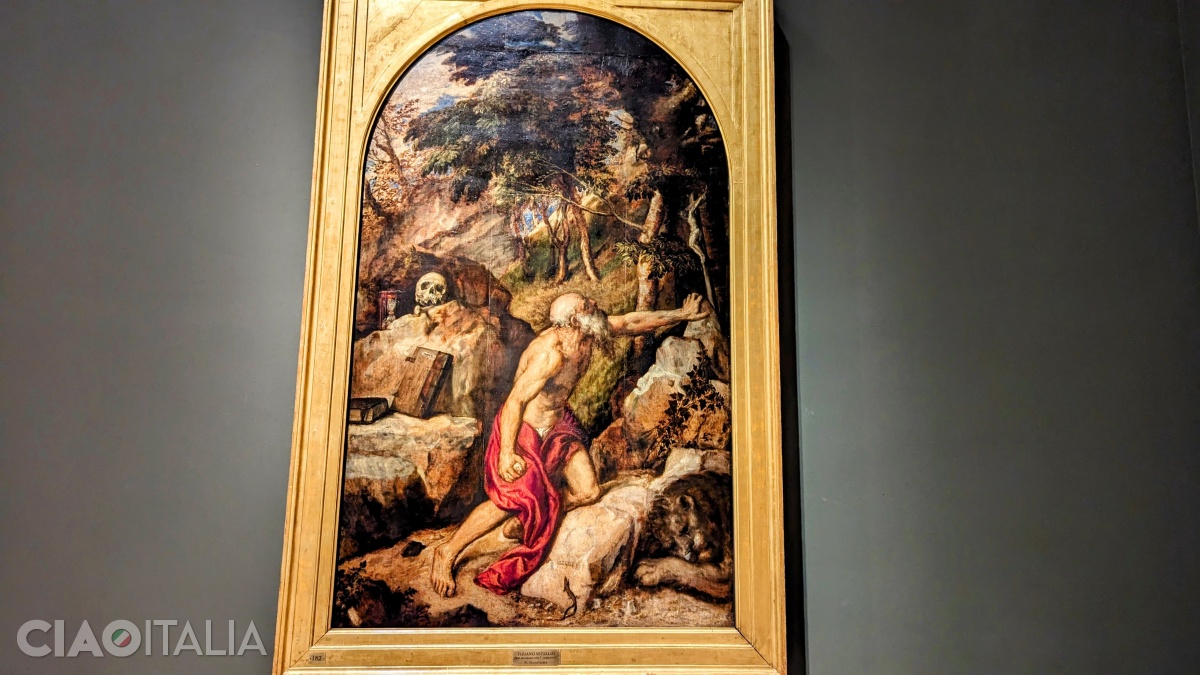
Titian's painting "Saint Jerome" is rich in symbolism. Some of the depicted elements are the lizard, which alludes to temptation, or the skull and the hourglass, symbolizing death and the passage of time. In its original form, the painting was rectangular; the arched upper part was added only in the 17th century (if you look closely, you can see the dividing line).
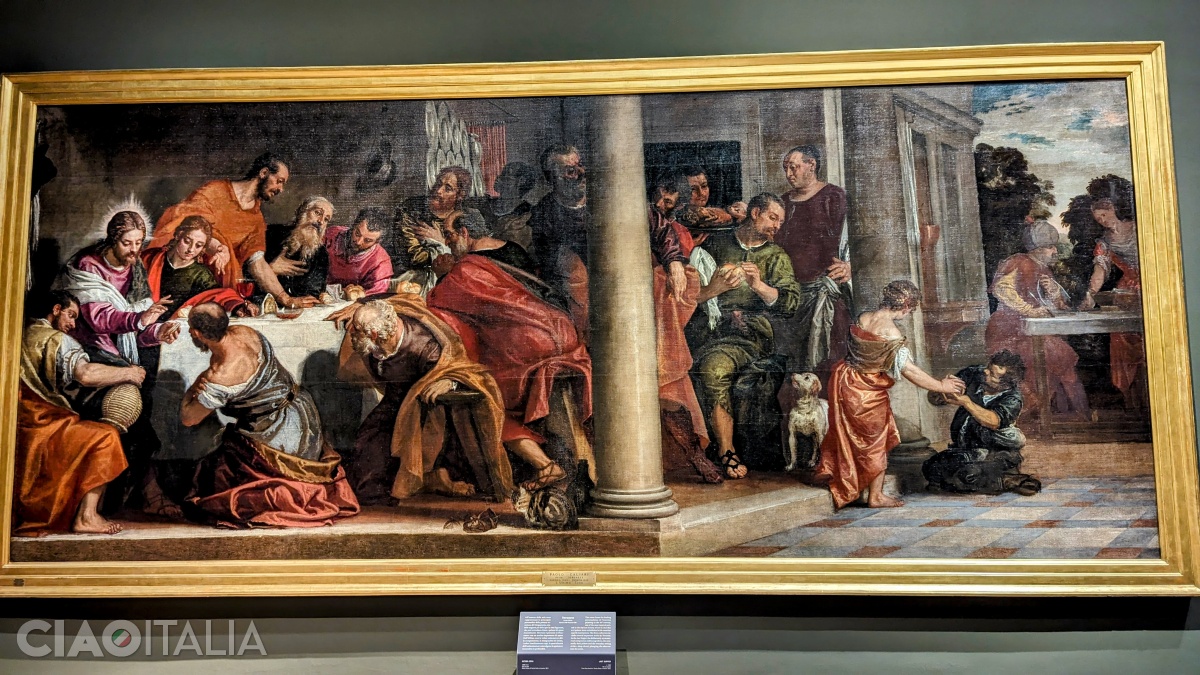
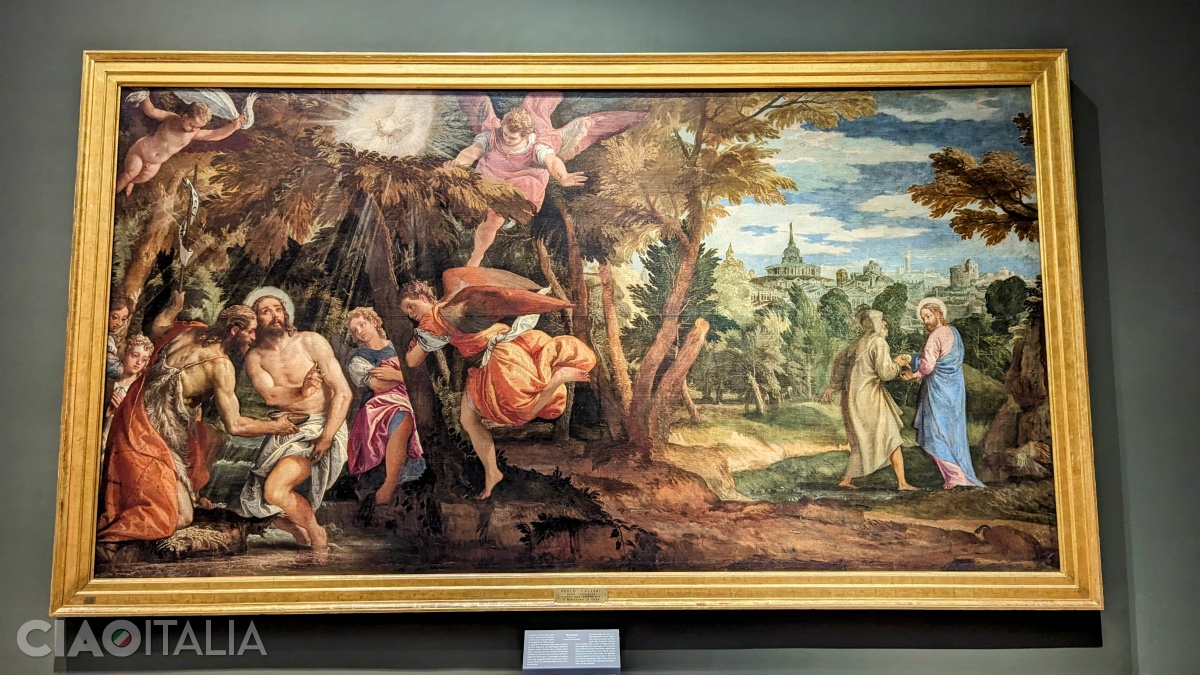
Veronese is represented in the Pinacoteca di Brera with several works, including "The Last Supper" and "The Baptism and Temptations of Christ".
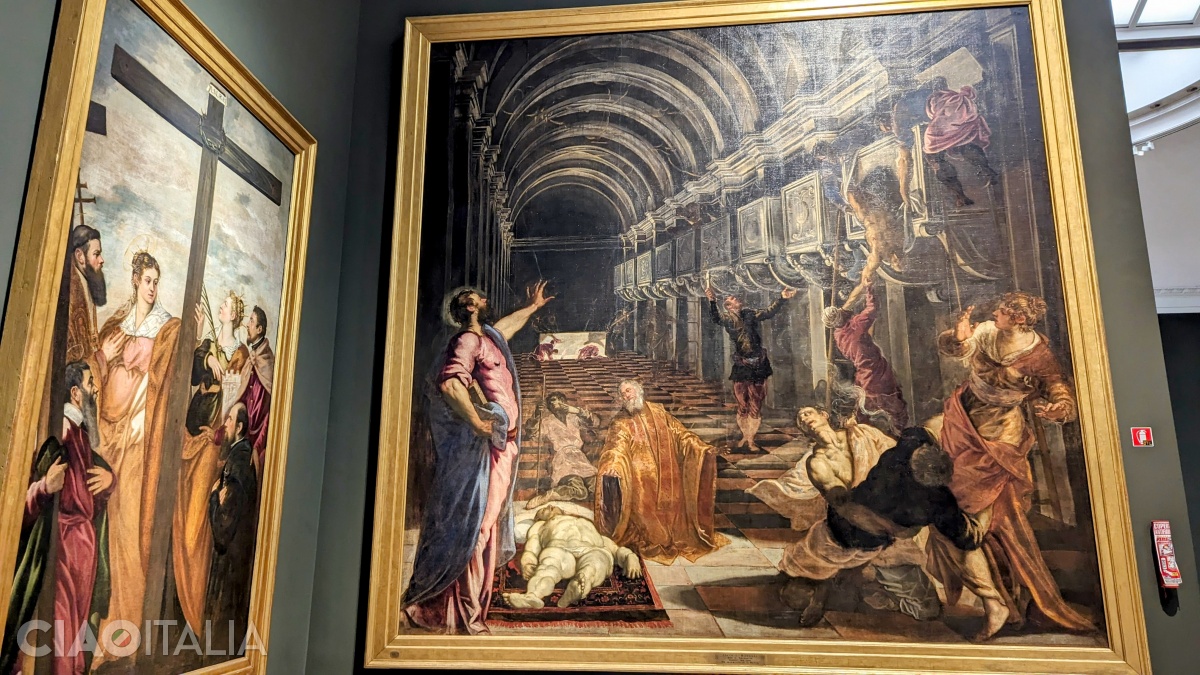
Tintoretto, another prominent figure of the Venetian Renaissance, is also featured with several paintings (and if you're ever in Venice, don't miss his masterpieces at the Scuola Grande di San Rocco and Madonna dell'Orto Church).
15th-16th Century Lombard Paintings (Rooms 10-15)
From Room 9, you pass directly into Room 14, which is dedicated to Venetian and Lombard paintings from the 16th century. At the center of the room is the plaster model of the statue of Napoleon that you already saw in the inner courtyard, created by the great sculptor Antonio Canova.
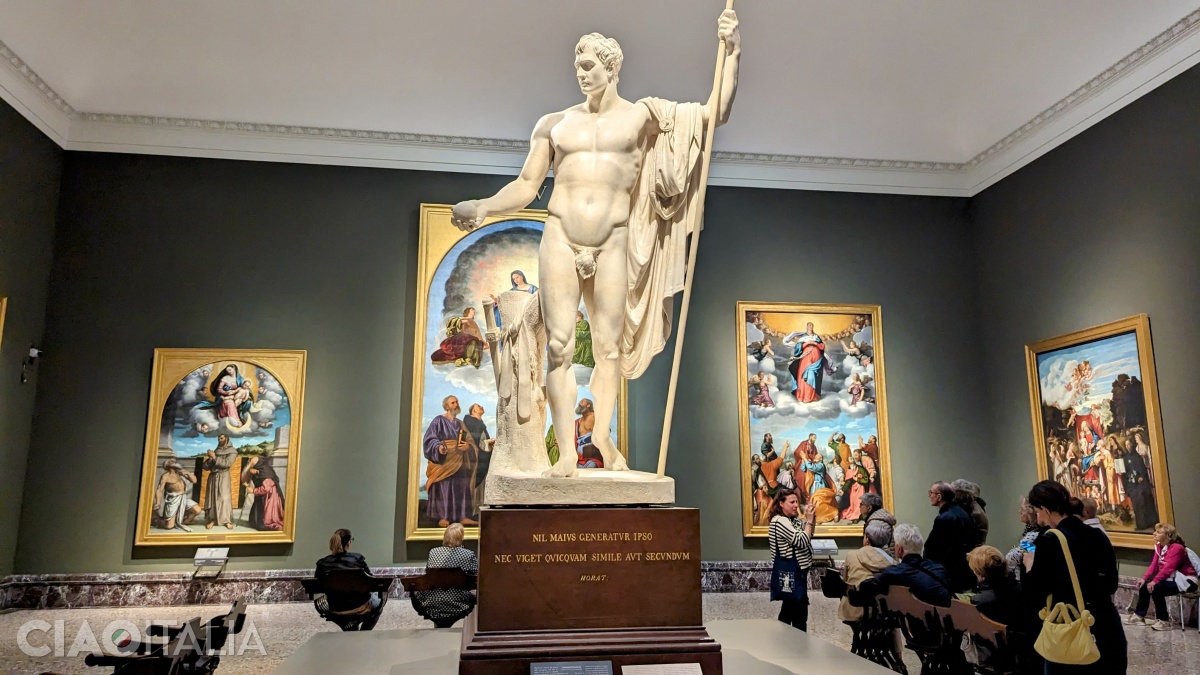
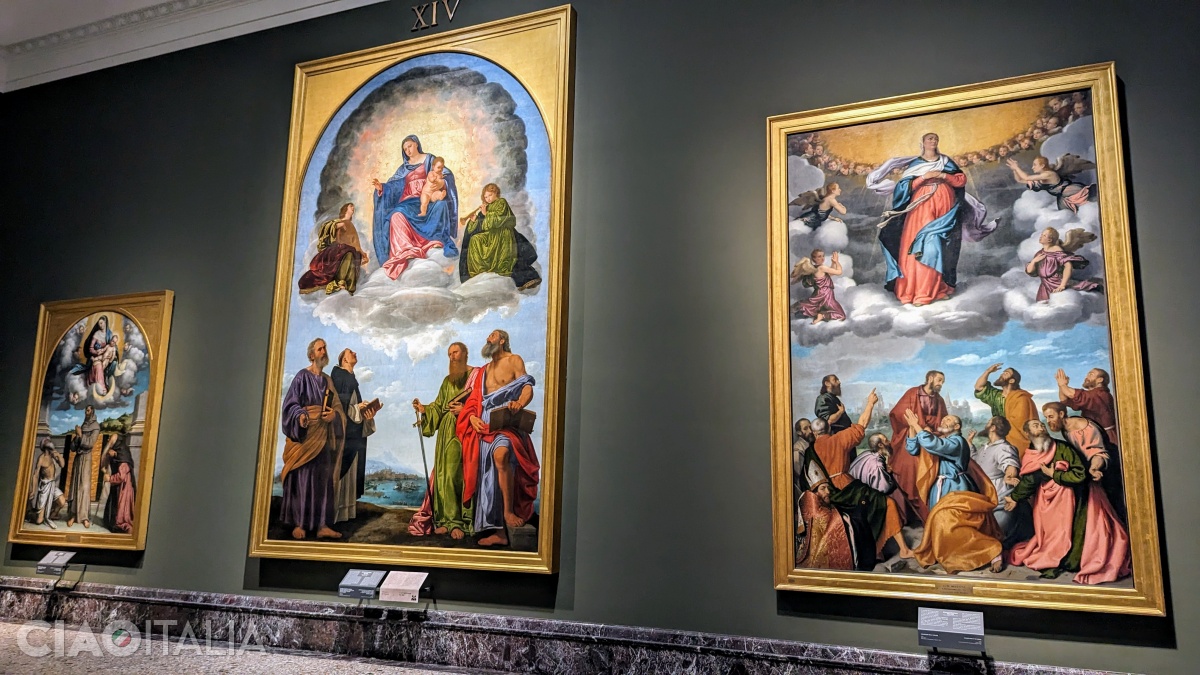
Large paintings hang on the walls, many of them by Giovanni Gerolamo Savoldo and Lorenzo Lotto. The altarpiece painted by Savoldo, "The Virgin in Glory", is the largest in the Pinacoteca di Brera and among the largest in the world. It has left the museum only twice, during the two World Wars. In the background, behind Saint Peter, Saint Dominic, Saint Paul, and Saint Jerome, you can see a panorama of 16th-century Venice.
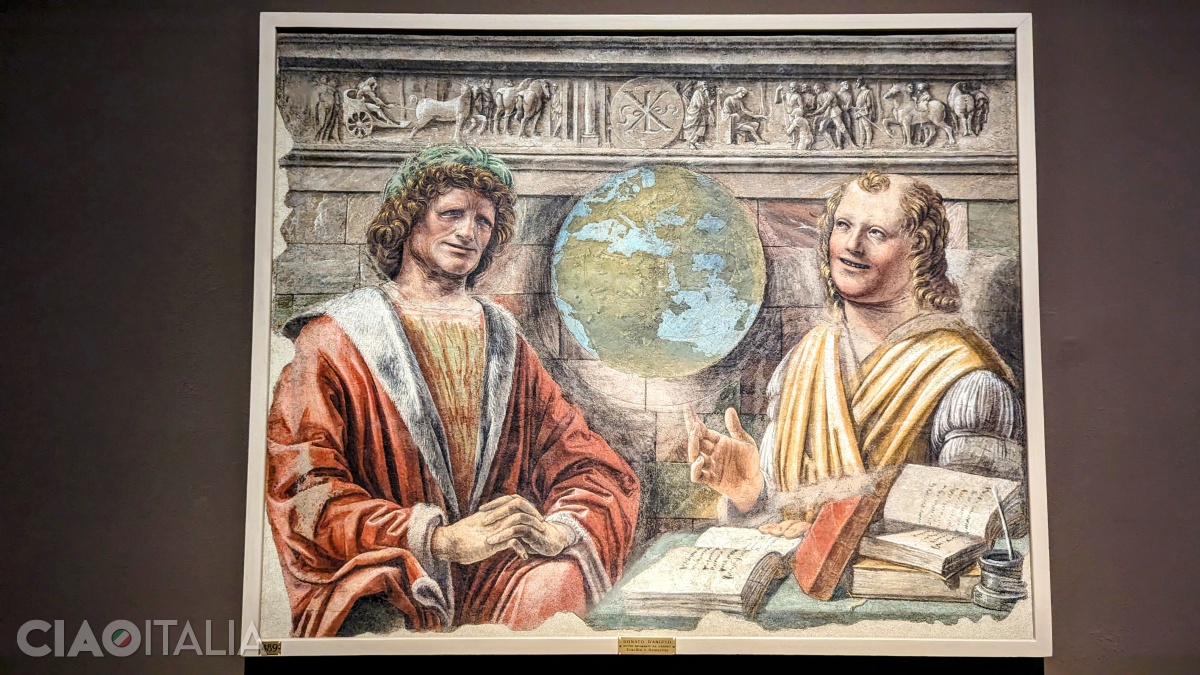
Rooms 10-14 are smaller and are located along a side corridor, accessible from Rooms 8 and 15. They contain works by Lombard painters from the 15th-16th centuries, including Bernardo Luini, Bramantino, or Bramante (better known for his architectural work, especially at St. Peter's Basilica in the Vatican).
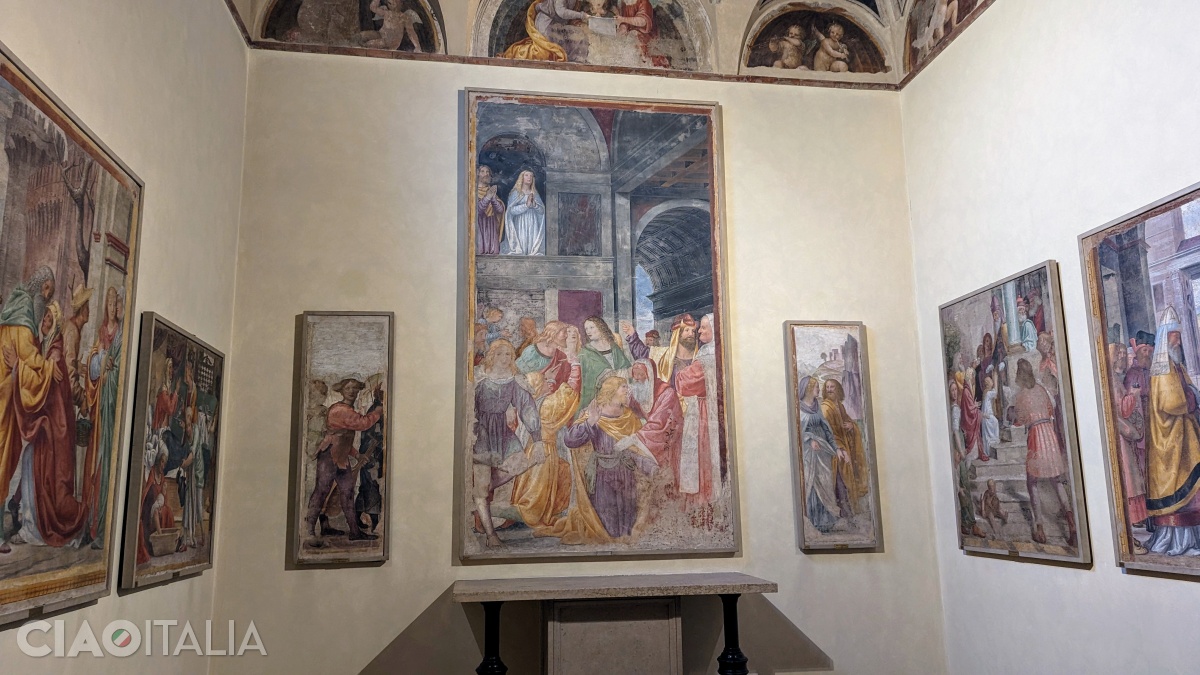
Room 13 features frescoes brought from the Chapel of Saint Joseph in the Church of Santa Maria della Pace in Milan. The frescoes were painted by Bernardino Luini and depict the lives of the Virgin Mary and Saint Joseph.
Piero della Francesca, Bramante and Raffaello Sanzio (Room 24)
Room 24 of the Pinacoteca di Brera is the only one that has retained its original appearance following the major renovation completed in 2018, in memory of architect Vittorio Gregotti, who originally designed it.
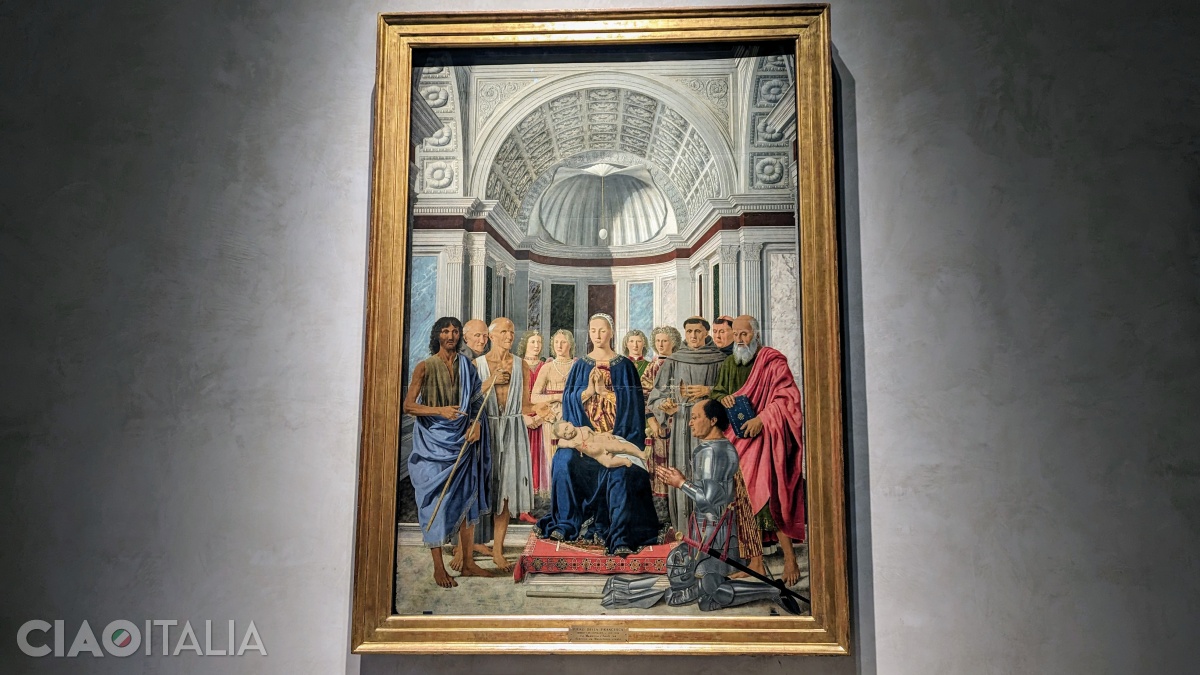
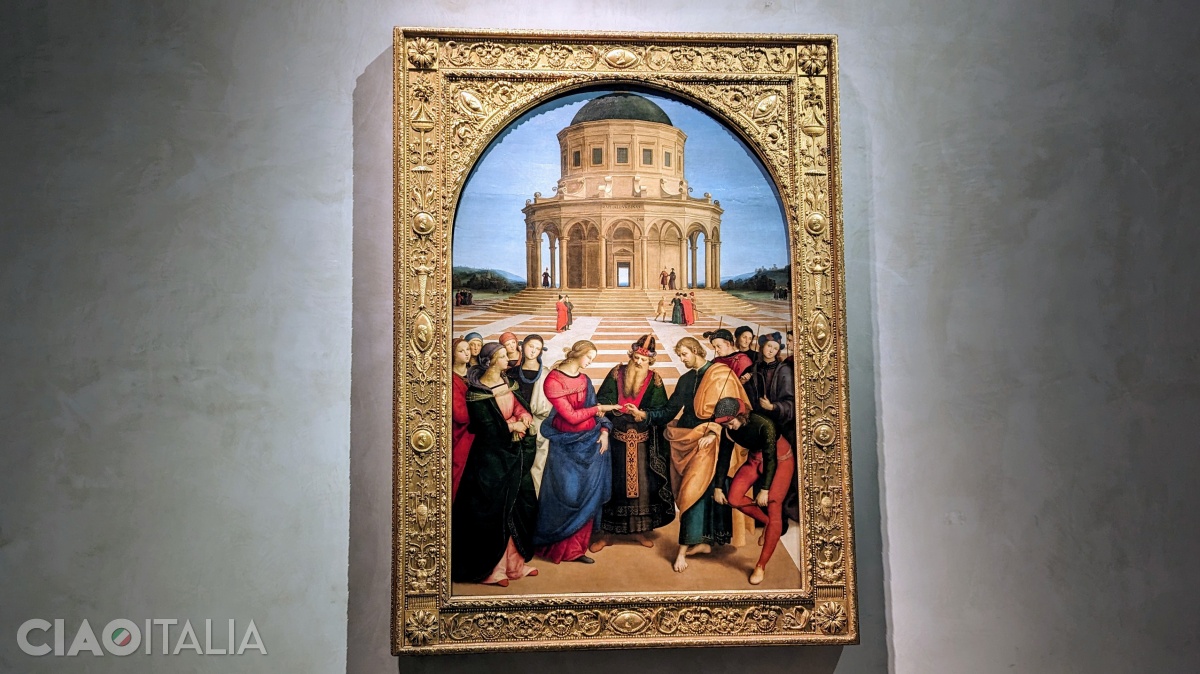
This room houses some of the museum’s most famous paintings: "The Virgin and Child with Saints" by Piero della Francesca, "Christ at the Column" by Bramante, and "The Marriage of the Virgin" by Raphael.
"The Virgin and Child with Saints" (also known as Pala di Montefeltro) is an altarpiece commissioned by Federico da Montefeltro, Duke of Urbino and a great patron of the arts. Federico is depicted on the right side of the painting, dressed in a condottiero's armor and kneeling before the Virgin. Next to him are Saint John the Evangelist, Saint Peter Martyr (with a wound on his head), and Saint Francis showing his stigmata. On the other side are Saint John the Baptist, Saint Bernardino, and Saint Jerome beating his chest with a stone. The panel was likely made for a church intended to house the duke's tomb. The ostrich egg hanging in the apse can have several meanings - it may symbolize fertility (Federico's wife had died a few months earlier after giving birth to a long-awaited heir), or it could represent posthumous forgiveness.
In "The Marriage of the Virgin", Raphael depicts the betrothal (engagement) of the Virgin Mary to Joseph. The painting has a mathematically precise composition, with the lines of perspective converging toward the temple door. When Raphael created the piece, he was just over 20 years old. He was inspired by Perugino, one of his masters, who had painted the same subject for a church in Perugia.
Caravaggio (Room 28)
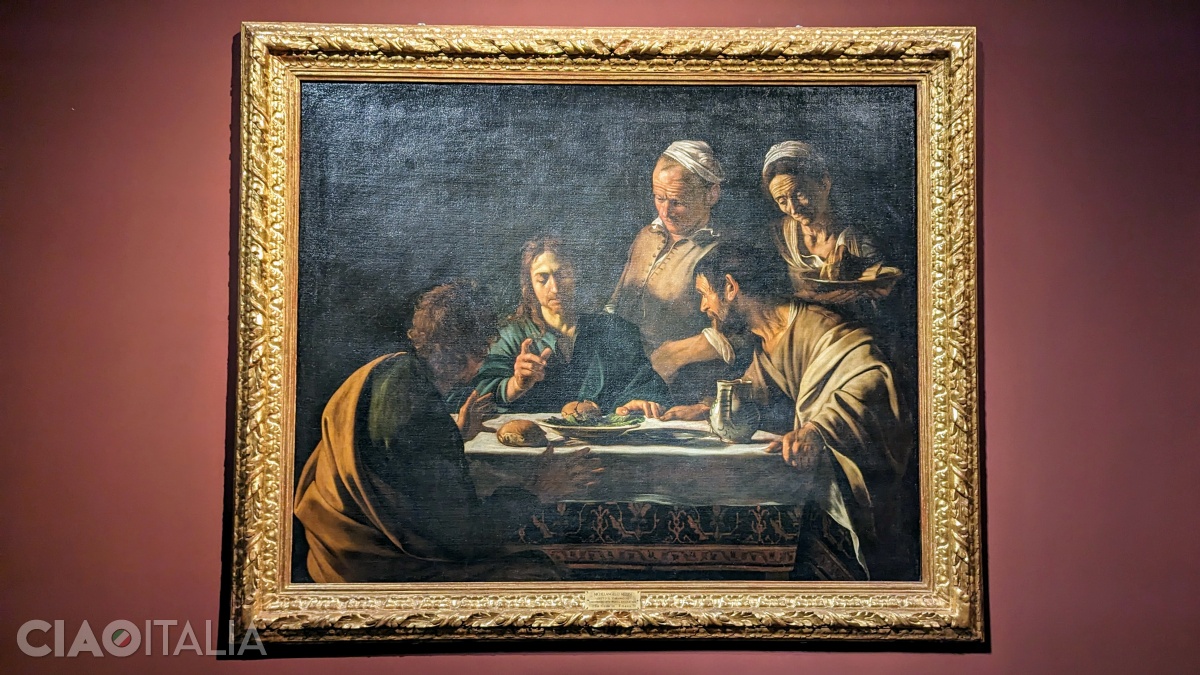
The Pinacoteca di Brera also houses one of Caravaggio's works, the master of chiaroscuro. It is "The Supper at Emmaus", displayed in Room 28.
At the center, Jesus is depicted blessing the bread. The gestures of the two apostles on either side of Him express their astonishment when they recognize Him. In the background are an innkeeper and an elderly woman bringing a plate of food.
Caravaggio painted this work during the time he had taken refuge on the Colonna family estate, after fleeing Rome following the killing of Ranuccio Tomassoni.
Van Dyck and Rubens (Room 31)
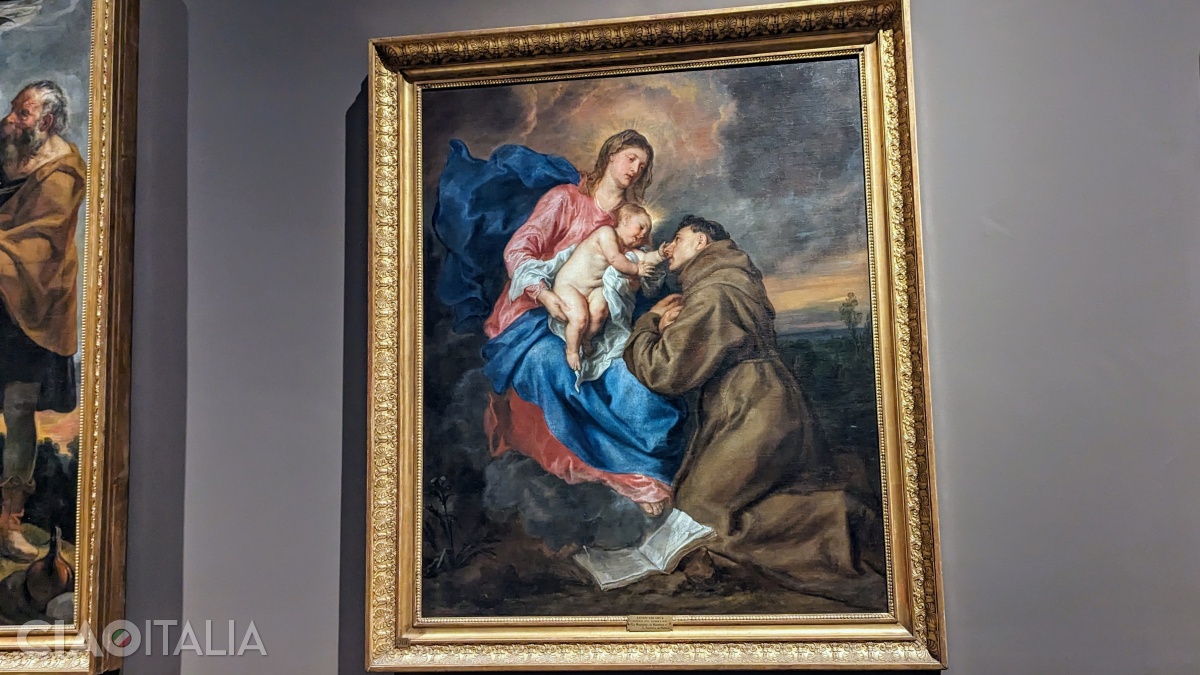
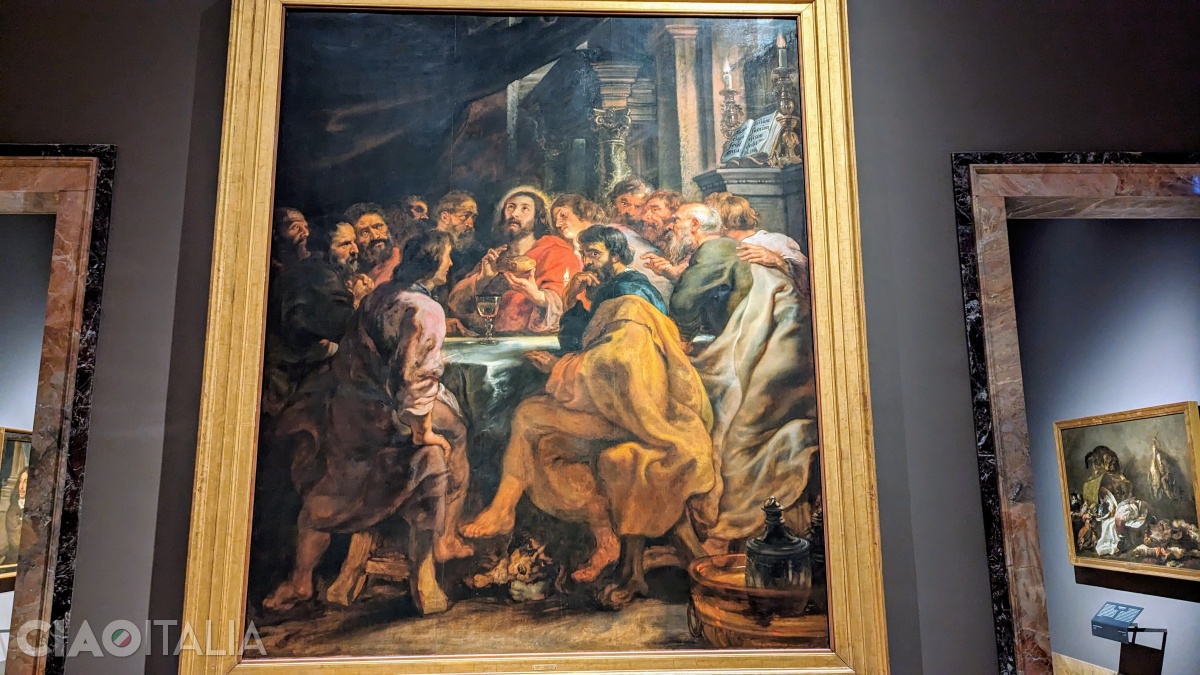
Among the works displayed in Room 31 are two paintings by Antoon van Dyck ("Portrait of a Woman" and "The Virgin and Child with Saint Anthony of Padua") and "The Last Supper" by Rubens.
Tiepolo (Room 34)
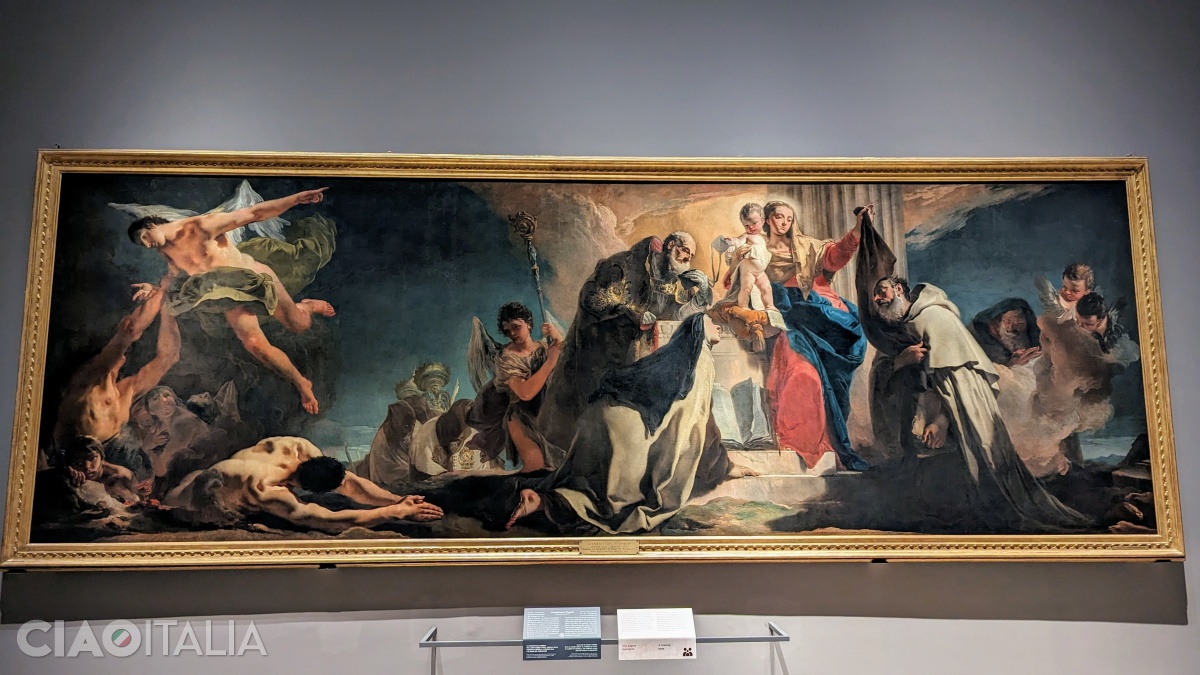
Room 34 is dedicated to 18th-century sacred painting, and one of its most prominent representatives is Giambattista Tiepolo.
Canaletto (Room 35)
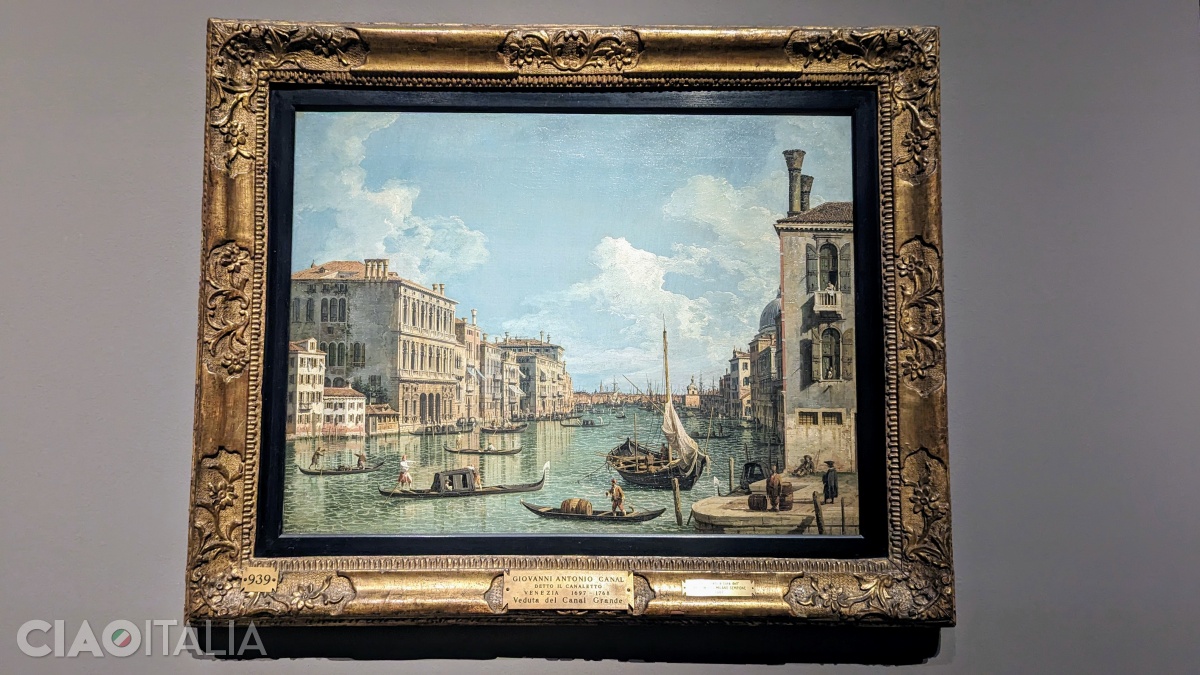
Another Tiepolo painting ("The Temptation of St. Anthony") can be found in Room 35, alongside two paintings by Canaletto that depict the well-known Venetian landscapes. You will recognize the Grand Canal, the Doge's Palace, the Piazzetta San Marco, and the Campanile of San Marco in them.
Marino Marini
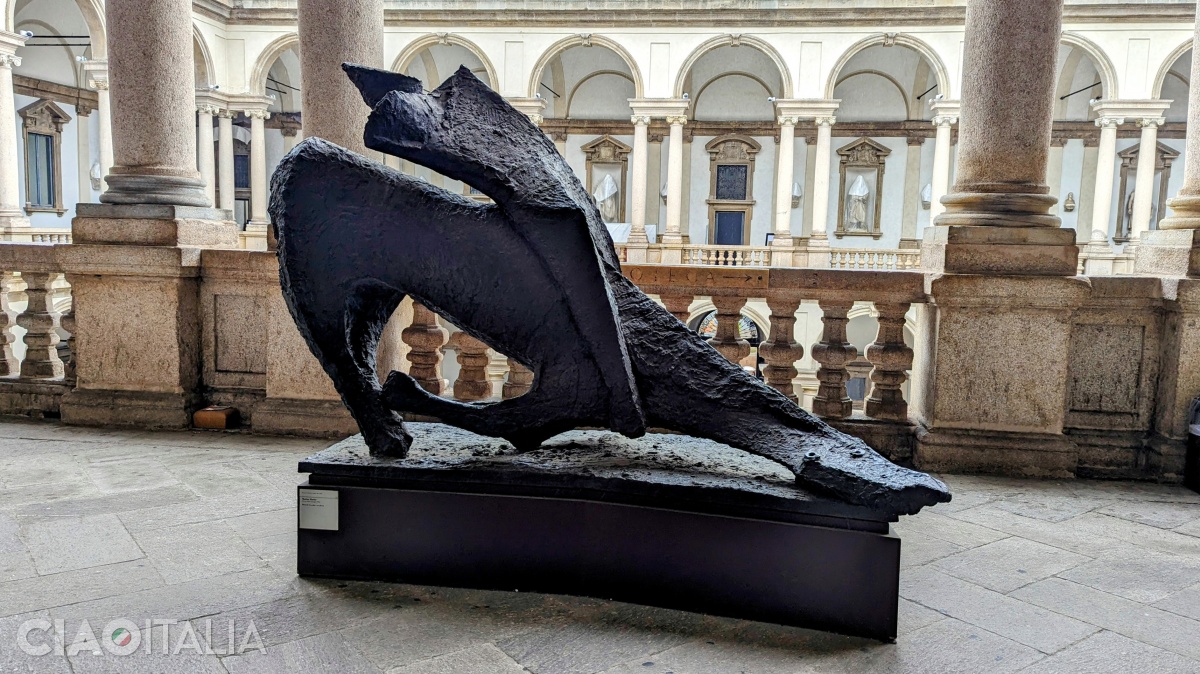
The modern bronze sculpture from the portico on the first floor is by Marino Marini and is titled "Horse and Rider". This is one of the four existing versions (the other three are in Zurich, Munich, and Florence).
If you've been to Venice, you may recall that another sculpture by the same Italian artist, called "The Angel of the City", adorns the panoramic terrace facing the Grand Canal at the Peggy Guggenheim Museum of Modern Art.