Sempione Park in Milan
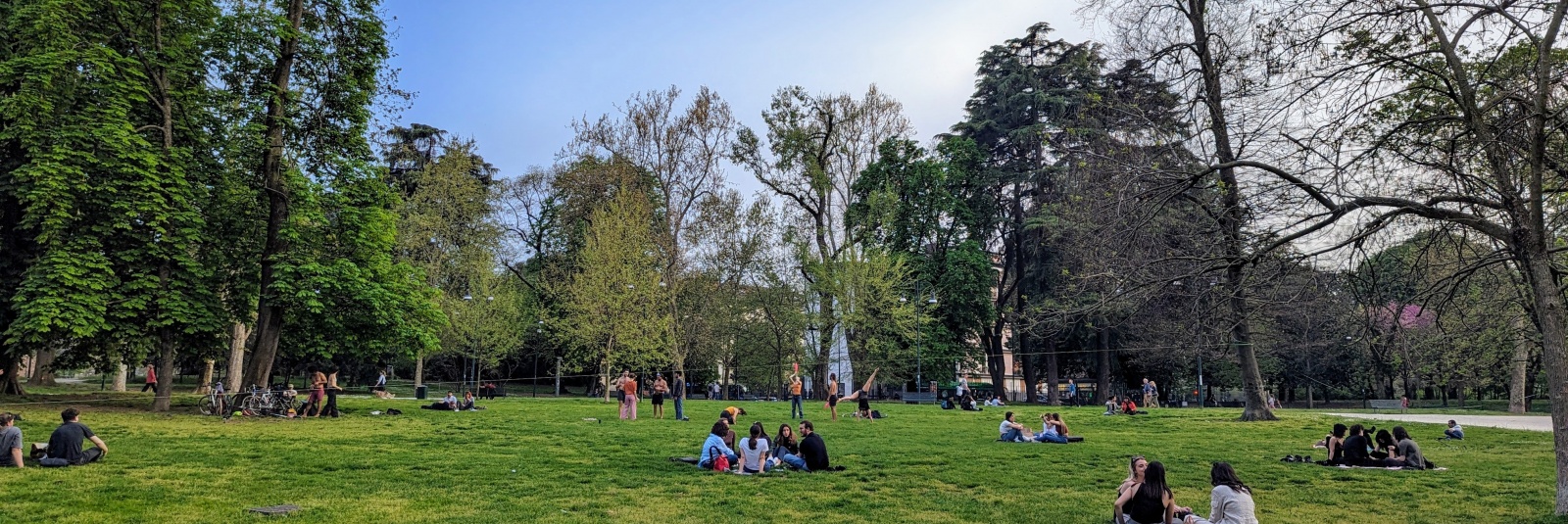
Sempione Park is the largest park in the center of Milan. It covers an area of 386,000 m², stretching between Sforza Castle and Arco della Pace (Arch of Peace). It is an extensive green space where you can take a relaxing walk, but it is also an artistic space, hosting several monuments and historic buildings. In Sempione Park, you will also find Torre Branca ("Branca Tower"), where you can go up to admire Milan from above.
Opening Hours
Sempione Park is fenced, and the gates close in the evening.
Access to the park follows the following opening hours:
- October to March: 6 AM - 10 PM
- May to September: 6 AM - 12 AM
The History of the Park (and a Legend)
The beginnings of Sempione Park date back to the distant 14th century when Gian Galeazzo Visconti ordered the establishment of a vast area north of the fortress, including a decorative garden and a cultivated area.
After 1457, another city leader, Francesco Sforza (who initiated the construction of the castle that would bear his name - Castello Sforzesco), expanded the park. In addition to the fields cultivated with cereals, orchards, and the garden where a fishing lake was arranged, a hunting area was added, as the duke was passionate about hunting. Rabbits, deer, pheasants, and partridges were brought to the park from the surrounding areas of present-day Lombardy (including Lake Como). This hunting park was called barcho, and its memory is preserved in the name of the Sforza Castle gate that leads to Piazza del Cannone and Sempione Park: Porta del Barcho.
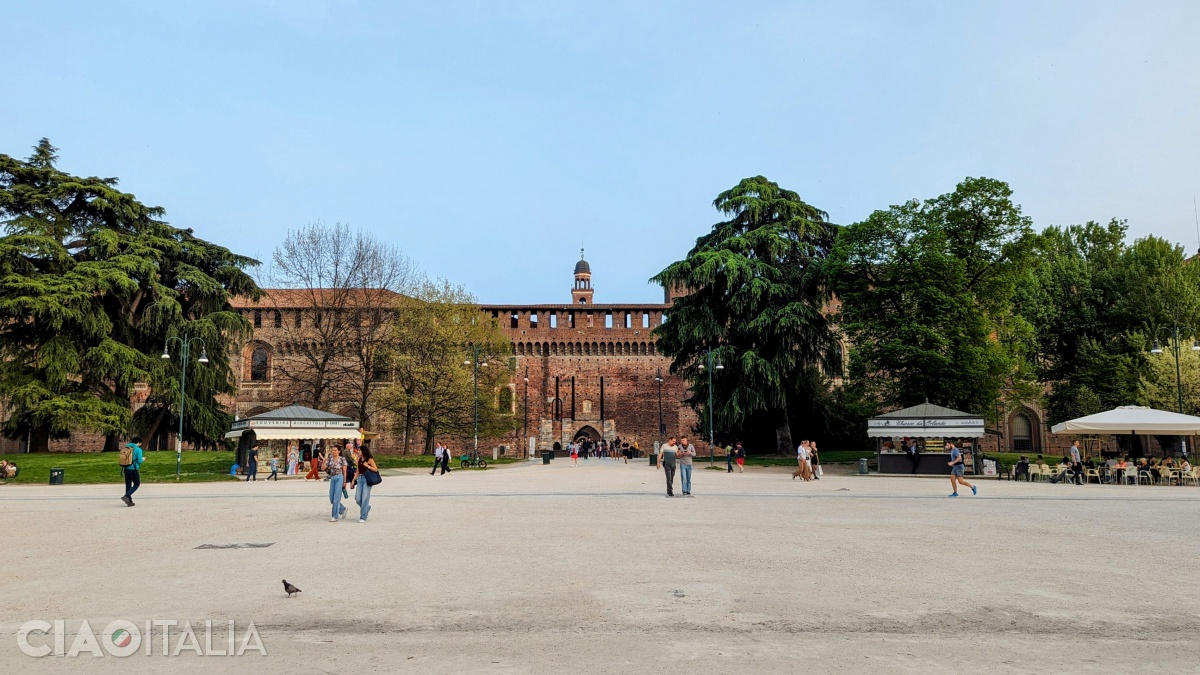
At the end of the 15th century, parties and ceremonies took place in the park, organized by none other than Leonardo da Vinci, who was invited by Ludovico Sforza (nicknamed il Moro) to the ducal court. Leonardo spent several years in Milan, and the city now has two museums dedicated to him (see also the article about the Leonardo da Vinci museums in Milan).
The French occupation, and later the Spanish one, led to the abandonment of the park. Some parts of it have been modified when the Spaniards built fortifications. For several centuries, the old ducal park turned into a place where foreign garrisons were stationed.
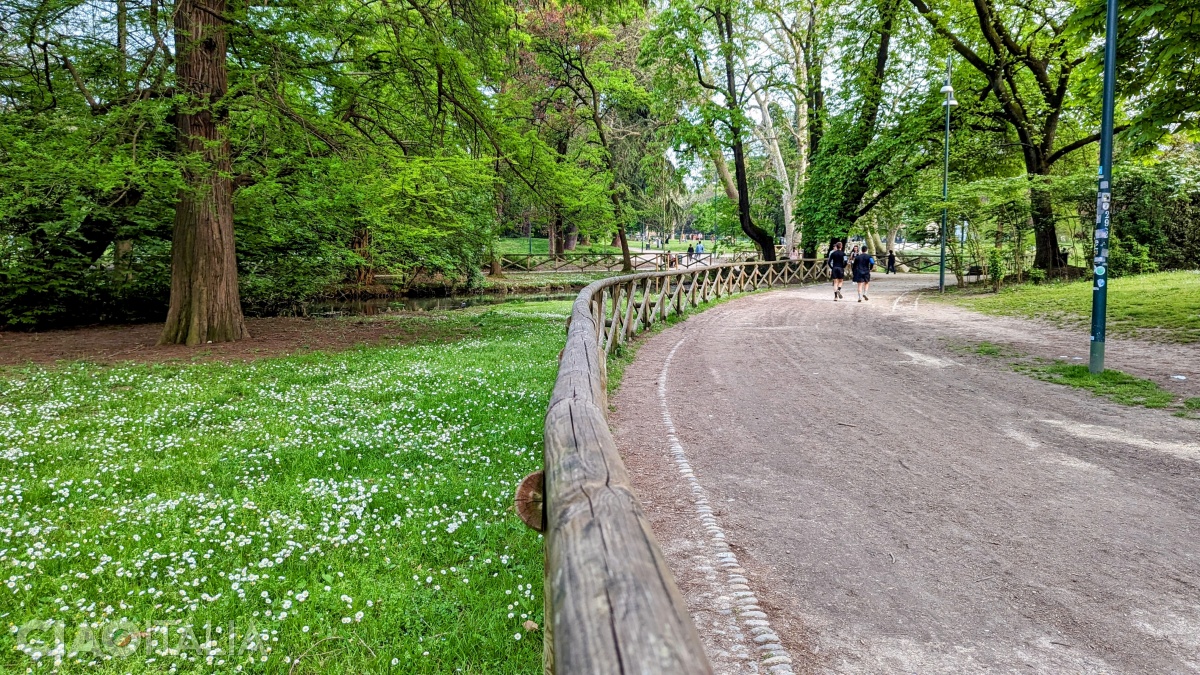
The rescue came at the end of the 19th century, when the people of Milan decided to restore Sforza Castle. It was then decided to renovate the area where the park of the Milanese dukes once stood. The work was completed in 1893 when architect Emilio Alemagna created an English-style garden with wide paths, streams, hills, and a variety of trees and shrubs, reminiscent of the wild nature of rural areas. It was named Sempione Park (Parco Sempione) because it was located on the route that led from the Milan Cathedral, passing by Arco della Pace, to the Sempione Pass (Simplon Pass, now in Switzerland), which connected Milan to France.
In 1906, Sempione Park hosted Milan's first International Exhibition. Since then, the Aquarium pavilion, built in the Liberty style, has remained in the park.
Between 1996 and 2003, Sempione Park was restored and expanded, and today it can be included on the list of tourist attractions in Milan.
Sempione Park is the scene of a famous urban legend - that of the woman in black, the so-called Dama nera, one of Milan's most well-known ghosts. It is said that on foggy evenings, when the park is deserted, a woman dressed in black, with her face covered by a veil and surrounded by the scent of violets, appears to men who happen to pass by. On hidden paths, the mysterious woman leads them to a villa. Those who lift her veil discover only a skull with empty eye sockets and flee in terror. It is said that these men are cursed to endlessly search for the ghostly woman, experiencing a love that will drive them to madness and, eventually, death. The legend of the woman in black has inspired stories and plays. The historical figure who inspired it could be Isabella da Lampugnano, sentenced to death by burning in 1519 for witchcraft, or Countess Bianca Maria Scapardone, beheaded in 1526 in the courtyard of Sforza Castle after allegedly killing one of her numerous lovers.
Attractions in Sempione Park?
Besides the multitude of trees, shrubs, and flowers, Sempione Park features several historical and artistic buildings and monuments, as well as one of Milan's most important museums.
Right next to the park is Sforza Castle, which houses several museums (including the Pietà Rondanini Museum, with Michelangelo's last known sculpture).
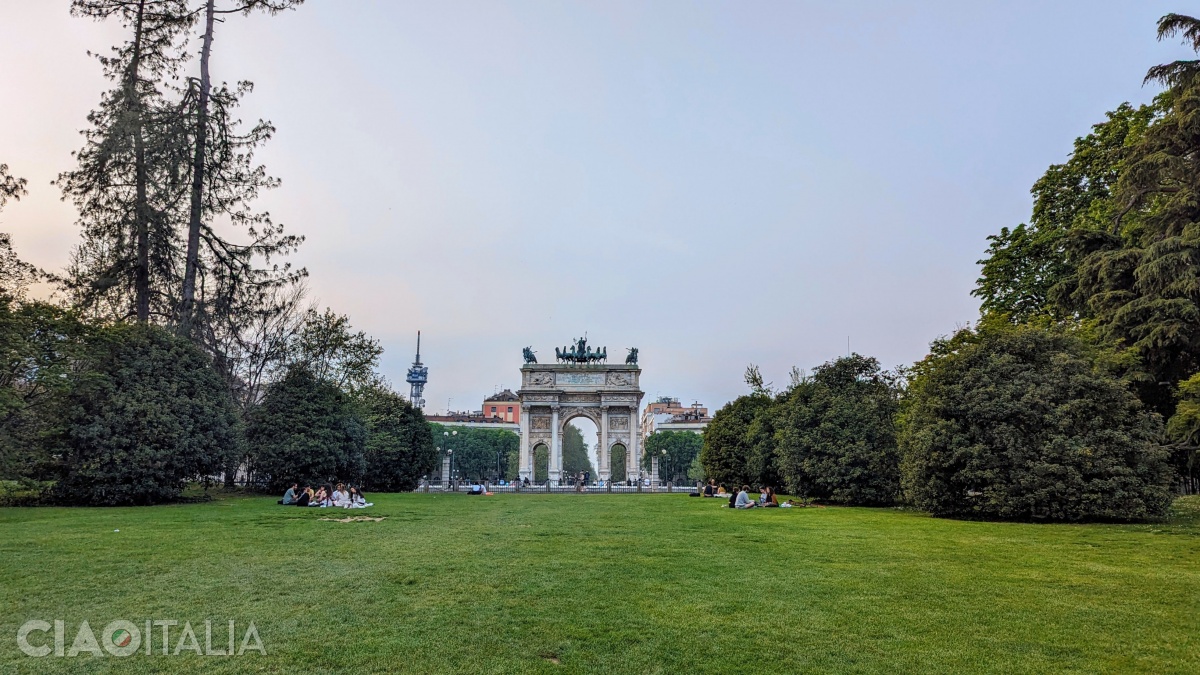
At the opposite end of Sempione Park is Arco della Pace ("the Arch of Peace"). Its construction began in 1807 to celebrate Napoleon's victories but was abandoned after his abdication in 1814. In 1826, the Austrians resumed the work, dedicating the arch to the peace of 1815, established by the Congress of Vienna. The monument was inaugurated in 1838 in the presence of Emperor Ferdinand I of Austria. In 1859, Napoleon III and Vittorio Emanuele II, victorious in the Battle of Magenta against the Austrians, passed under the arch.
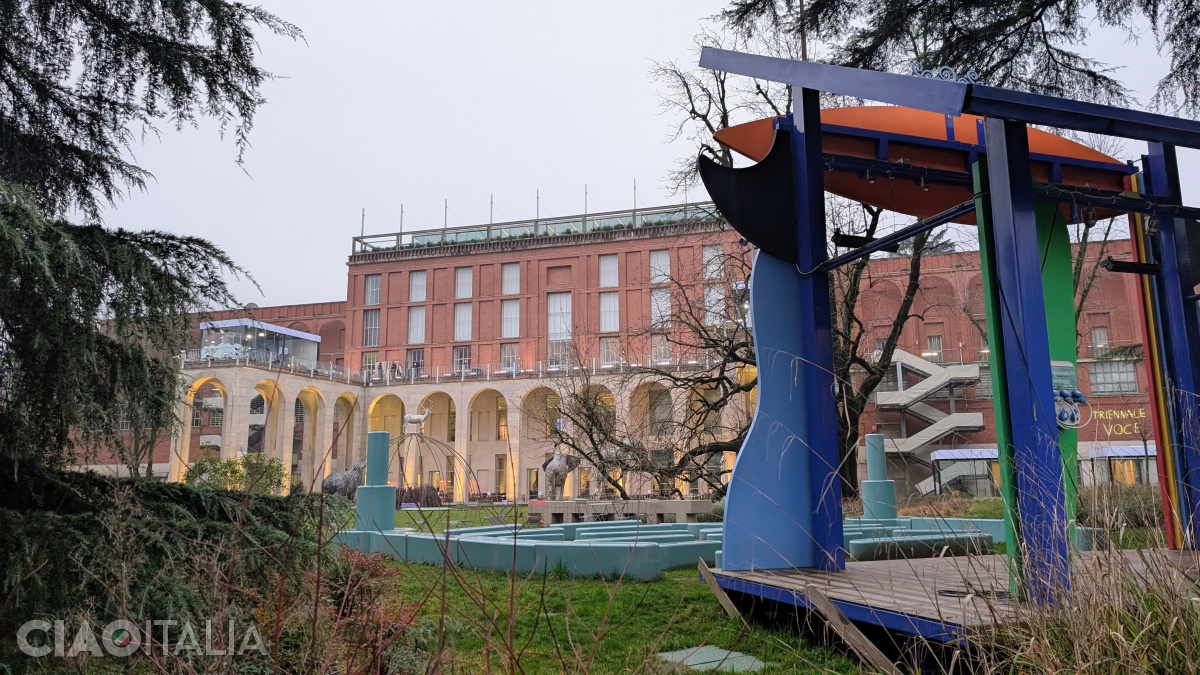
On the side facing Cadorna Station (see the article about public transport in Milan), there is the Palazzo dell'Arte ("Palace of Art"), built in 1933 as a permanent venue for the International Exhibition of Decorative Art, which had previously been held at the Villa Reale in Monza. The building, an example of rationalist architecture, is also known as the Palazzo della Triennale because it hosts the Triennale, as well as other events related to contemporary art. The building, characterized by monumental and bright spaces, houses the Museum of Italian Design (Museo del Design della Triennale).
Nearby stands Branca Tower (Torre Branca), where you can climb to enjoy a panoramic view of the city. Built of steel in 1933, Torre Branca was one of the first modern towers in Milan. It was constructed in just two and a half months for the occasion of the 5th Triennale. It was designed by the famous architect Giò Ponti (who also restored the University of Padua, among other works). The height of the tower was limited to 108.6 meters due to a law at the time that prohibited buildings taller than the Madonnina statue at the top of Milan Cathedral.
The tower was initially called Torre Littoria and later became Torre del Parco ("Tower of the Park"). It was renamed Torre Branca after the famous Fratelli Branca distillery, which purchased it in 1990 and restored it in 2002.
Today, a modern elevator carries five people at a time to the top of the tower, with intervals of less than one minute.
Branca Tower
Opening Hours:
October 1 - October 31, 2026:
- Monday: closed
- Tuesday: 3:00 PM-7:00 PM
- Wednesday: 10:30 AM-12:30 PM, 3:00 PM-7:00 PM
- Thursday: 3:00 PM-7:00 PM
- Friday: 10:30 AM-12:30 PM, 3:00 PM-7:00 PM
- Saturday: 10:30 AM-2:00 PM, 2:30 PM-7:30 PM, 8:30 PM-12:00 AM
- Sunday: 10:30 AM-2:00 PM, 2:30 PM-7:30 PM
In case of wind or bad weather, the tower will be closed.
Ticket Prices:
- Adult: €9
- Children under 7: €6
The visit lasts 6-7 minutes.

On the opposite side is the Arena Civica in Milan, built in 1807 using materials from the demolition of the Spanish fortifications surrounding Sforza Castle. The stadium, inaugurated in 1807, had a capacity of around 30,000 spectators. In the first half of the 20th century, it hosted football matches for the Inter Milan team, and during World War II, when San Siro Stadium was difficult to access, it was also used by AC Milan. Since 2001, the Arena Civica has been named after the sports journalist Gianni Brera. Today, it is used for concerts and sporting or cultural events.
Next to the Arena Civica is the Aquarium, one of the oldest in Europe. It was built in 1906 in Liberty style for the Milan International Exposition. The decorations that adorn the building have an aquatic theme - from the statue of the god Neptune to shells and hippopotamus heads. The aquarium is not very large, but it can be a good idea to spend time if you're in Milan with children.
Aquarium
Opening Hours:
- Monday: closed
- Tuesday to Sunday: 10:00 AM - 5:30 PM
- closed on December 25, January 1, May 1
The ticket office closes at 4:30 PM. The last entry is at 5:00 PM.
Ticket Prices:
- Adults: €8 (or €20 with Tourist Museum Card, which is valid for 3 days and includes all the civic museums in Milan)
- Over 65: €4
- 18-25 years old: €4
- Under 18: free (ticket is needed)
- Free entry with Yes Milano City Pass Card
Entry is free on the first Sunday of the month (see the article about free things to do in Milan).
In 1973, as part of the Contatto Arte-Città ("Art-City Contact") project, created for the 15th Triennale of Milan, three artworks were placed in Sempione Park: the fountain Bagni misteriosi ("Mysterious Baths") by Giorgio De Chirico, Accumulazione musicale ("Musical Accumulation") by Arman, and Storia della Terra ("The History of the Earth") by A. Paradiso.
The Bagni misteriosi fountain, made of Vicenza stone, is the largest sculpture by Giorgio De Chirico (better known for his surrealist paintings). It depicts a basin containing two swimmers and a fish. Since 2010, the original figures have been replaced with replicas, while the originals were moved to the Museo del Novecento, now located in Piazza del Duomo in Milan.
In the work Accumulazione musicale, Arman (the name by which the American artist Armand Fernandez is known) envisioned an amphitheater for an orchestra, with iron chairs of various shapes embedded in concrete on the steps. On the front podium, intended for the conductor, the shapes of different musical instruments can be recognized.
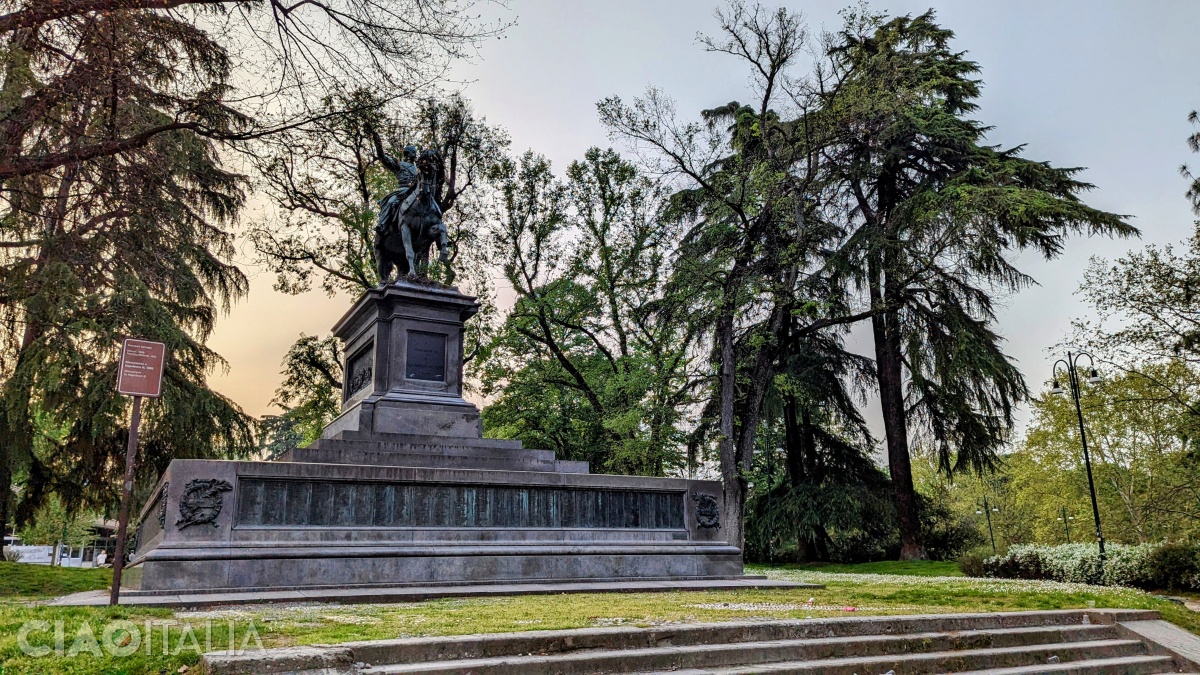
Also in the park, on the hill called Monte Tordo, stands the bronze equestrian statue of Napoleon III, created in 1886. It was erected in honor of the French army, which in 1859 liberated Milan from Austrian occupation. The side bas-reliefs depict the death of General Espinasse during the Battle of Magenta and the triumphant entry into the city of Napoleon III and Vittorio Emanuele II. At the base of the statue, eight laurel wreaths (two on each side) commemorate the French commanders who lost their lives. Between them are inscribed the names of 2,584 soldiers who fell in battle.
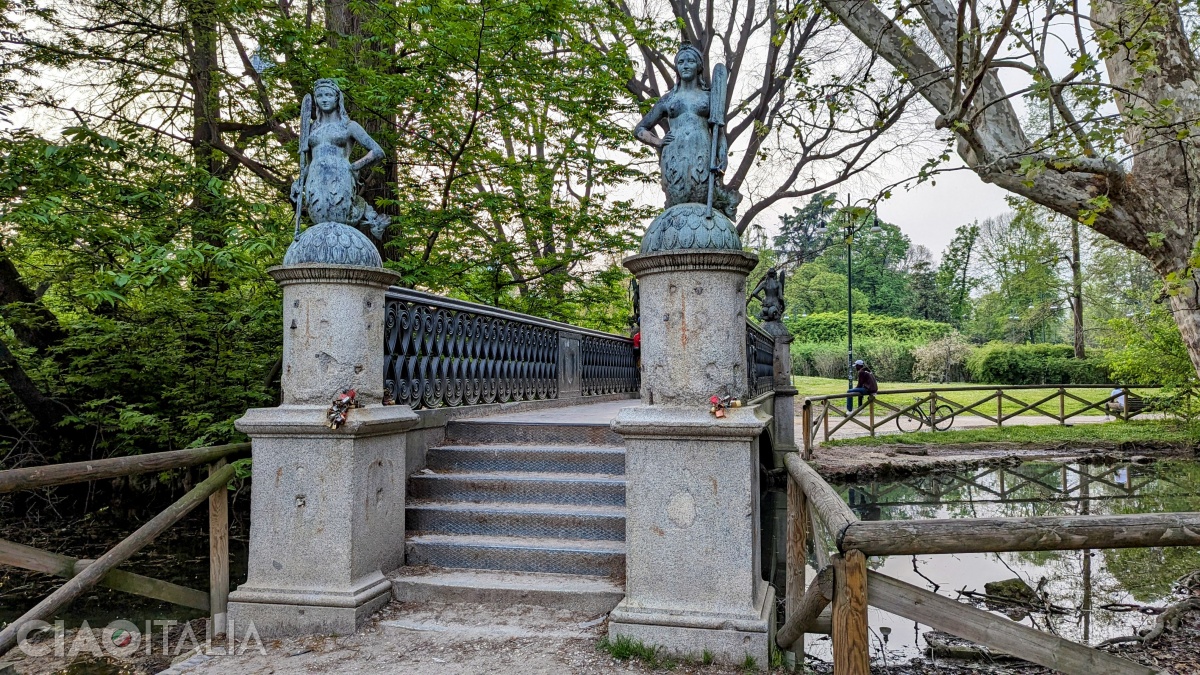
The small cast-iron bridge that crosses the artificial lake in the middle of the park is now known as the Ponte delle Sirenette ("Bridge of the Little Mermaids") due to the sculptures that adorn it. In fact, the bridge is older than Sempione Park and was originally called Ponte San Damiano ("St. Damian Bridge"). Built in 1842 over the Naviglio di San Damiano canal, it was the first metal bridge in Italy. In 1930, following the covering of the canal, the bridge was moved to Sempione Park. Today, the Ponte delle Sirenette is known as a lovers' spot.
Towards the center of the park is the Library, housed in the pavilion built for the 10th Triennale, held in 1954.