The Milan Cathedral (Duomo) - Tickets, Opening Hours and Info
The Milan Cathedral (Duomo) is the most impressive Gothic cathedral in Europe and one of the most famous churches in the world. Dedicated to the Virgin Mary, the Duomo is considered the symbol of the city, and one of the most important tourist attractions in Milan.
Prices and Ticket Types for the Milan Cathedral
There are several types of tickets for the Milan Cathedral (Duomo). Depending on what you want to visit and how much time you have, you can choose the one that suits you best. The visit to the Cathedral is included (depending on the chosen option) in the Yes Milano City Pass.
The tickets for the Milan Cathedral have the following prices:
| Duomo Ticket Types | Adults | Children 6-18 years |
|---|---|---|
| Combo Stairs Ticket: Cathedral + roof (stairs) + museum and San Gottardo Church | €22 | €11 |
| Combo Lift Ticket: Cathedral + roof (lift) + museum and San Gottardo Church | €26 | €13 |
| Roof Ticket (lift) | €18 | €9 |
| Roof Ticket (stairs) | €16 | €8 |
| Fast Track Ticket (lift) | €28 | €14 |
| Fast Track Ticket (lift): Cathedral + archaeological area + roof (by lift) + museum + Scurolo di San Carlo | €32 | €16 |
|
Cathedral + Ambrosiana Ticket: Cathedral + roof (stairs) + museum and San Gottardo Church + archaeological area + Ambrosiana Art Gallery + San Sepolcro Crypt |
€36 | €24 |
| Cathedral + museum and San Gottardo Church Ticket (on Wednesdays only the Duomo) | €10 | €5 |
| Culture Pass Ticket: Cathedral + archaeological area + museum and San Gottardo Church + Scurolo di San Carlo | €15 | €7.5 |
Children under 6 years old enter for free.
Most types of tickets are valid for 2 days from the first validation. You can enter each included attraction only once.
Access to the roof is either by stairs (you will need to climb 251 steps) or by elevator (in which case you will still need to climb a few dozen steps to reach the highest part). There are two separate entrances, located on the left side of the Cathedral (the side facing Galleria Vittorio Emanuele). In both cases, the descent is only by stairs, directly into the Cathedral.
Access to the archaeological area is made from inside the cathedral.
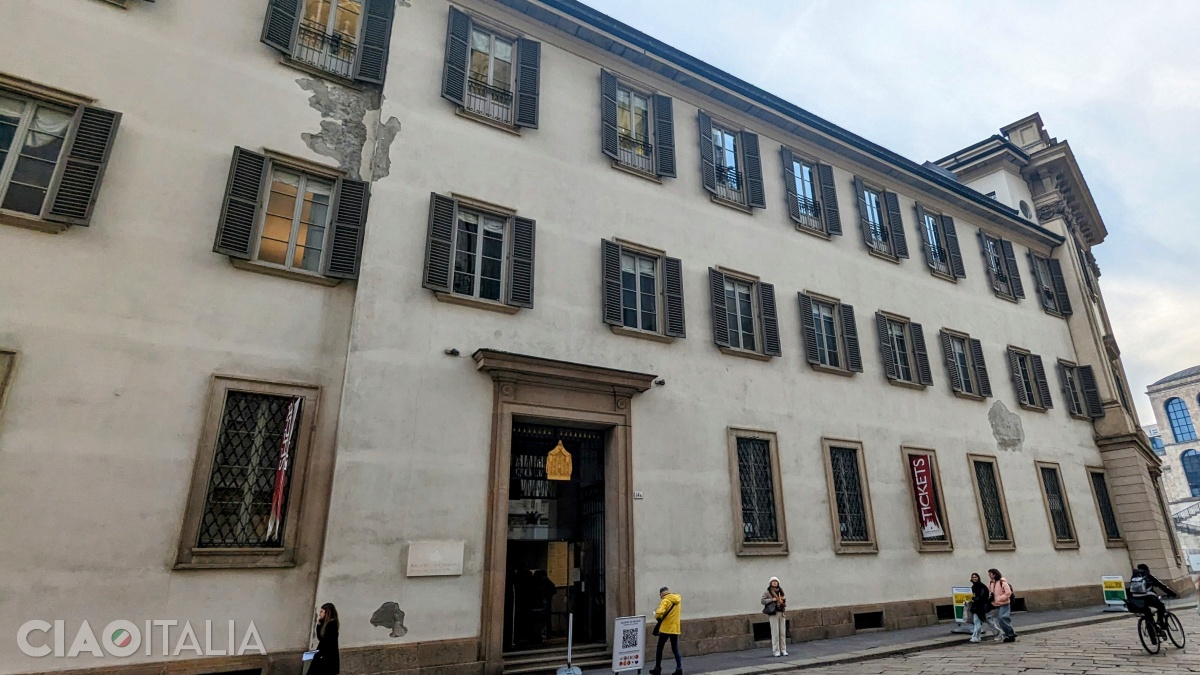
To reach the Cathedral Museum (Museo del Duomo), you will have to exit the church and head to the left, towards the Royal Palace (Palazzo Reale), where the museum is located.
The Ambrosiana Art Gallery (Pinacoteca Ambrosiana) and San Sepolcro Crypt are not too far away, just about a 5-minute walk from the Cathedral.
Free Admission Days at the Milan Cathedral
Access to the Duomo and the Duomo Museum in Milan will be free on the following days:
- Friday, October 16, 2026 (09:00 AM - 6:00 PM) - reservations mandatory, starting October 9, 2026
- Wednesday, November 4, 2026 (09:00 AM - 4:00 PM) - reservations mandatory, starting October 28, 2026
- Tuesday, February 2, 2027 (09:00 AM - 4:00 PM) - reservations mandatory, starting January 26, 2027
- Thursday, March 18, 2027 (09:00 AM - 6:00 PM) - reservations mandatory, starting March 11, 2027
Starting September 27, 2026, entry to the Duomo Museum will be free on the last Sunday of every month between 10:00 AM and 7:00 PM (last entry at 6:00 PM). Online reservation is mandatory and can be made starting the Tuesday before that Sunday.
Each user can book a maximum of 2 spots per reservation (up to a maximum of 3 reservations per day).
Where to Buy Tickets for the Duomo?
You can buy tickets for the Duomo either on-site or online.
On-Site Tickets
The ticket office is located on the right side of the Cathedral (opposite from Galleria Vittorio Emanuele). Once inside the building, you will have to take a waiting ticket. There are both ticket machines and several counters where you can buy tickets from the staff.
If you choose to buy tickets on-site, be prepared to wait in long queues (depending on the period and time of day). The number of tourists visiting the Milan Cathedral is high - in 2024 it exceeded 3,5 million visitors and is continuously increasing.
Online Tickets
The alternative is to buy the Cathedral tickets online. These allow you to avoid the queue for on-site ticket purchase, but not the entry queue to the Cathedral (except for guided tours).
You can buy tickets from the official website, managed by Veneranda Fabbrica del Duomo di Milano, the institution that has been managing the cathedral for over 600 years.
Alternatively, you can book entry tickets to the Cathedral from websites like GetYourGuide or Tiqets. Most have the same Veneranda Fabbrica del Duomo as the provider, the prices are a few Euros higher, but the booking process is easier.
Finally, there is also the possibility of booking guided tours, which are more expensive but offer the advantage of explanations from a professional guide and most have the skip-the-line option, allowing you to avoid waiting in the entry queue to the Duomo. Group access to the cathedral is not allowed on Saturdays after 16:30 and on Sundays between 09:30 and 12:30 and after 16:30. During these hours, group access is allowed on the roof and at the Cathedral Museum.
Alternatively, you can download the official Milan Cathedral app, available on Google Play and App Store.
Opening Hours
Milan Cathedral
In 2026, the opening hours for the Duomo (cathedral, archaeological area, and rooftops) are as follows:
- Monday-Sunday: 9:00 AM - 7:00 PM
Last admission is at 6:00 PM. Closing procedures begin at 6:30 PM.
On the following dates, the rooftops will remain open until 8:00 PM (with the last ascent at 7:00 PM):
- April 3-6, 2026 (Catholic Easter)
- April 25-26, 2026 (Liberation Day)
- May 1-3, 2026 (Labor Day)
- May 30 - June 2, 2026 (Republic Day)
- June 8 - September 13, 2026: every Saturday and Sunday
Note: Access to the rooftops may be restricted during high winds or storms for safety reasons.
Duomo Museum
The Duomo Museum operates on the following schedule:
- Monday-Tuesday: 10:00 AM - 7:00 PM
- Wednesday: closed
- Thursday-Sunday: 10:00 AM - 7:00 PM
Last entry is at 6:00 PM, and closing procedures begin at 6:30 PM.
Pinacoteca Ambrosiana & San Sepolcro Cript
The visiting hours for the Pinacoteca Ambrosiana and San Sepolcro Crypt are:
- Monday-Tuesday: 10:00 AM - 6:00 PM
- Wednesday: closed
- Thursday-Sunday: 10:00 AM - 6:00 PM
Last admission is at 5:00 PM.
How to Get to the Milan Cathedral?
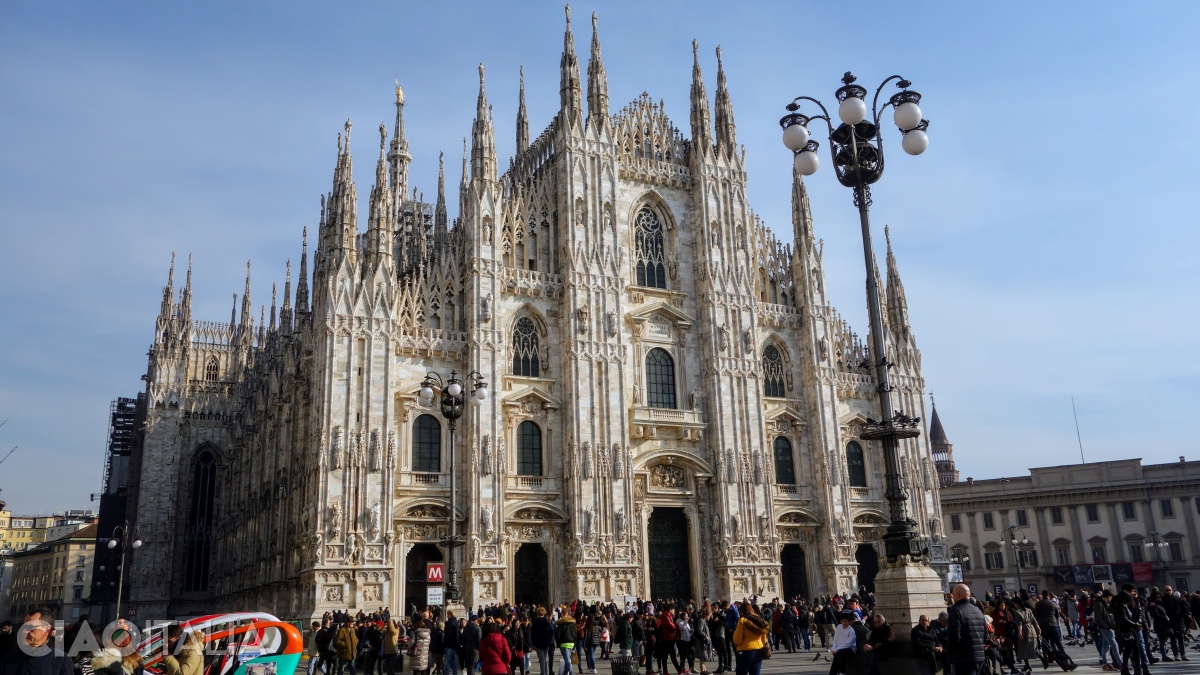
The Milan Cathedral is located right in the city center, in Piazza del Duomo. Access is easy, thanks to the Duomo metro station (lines M1 and M3), located nearby.
The distance between the Central Station and the Milan Cathedral is about 3 km. You can cover it by metro (line M3) in about 10 minutes, or on foot, in approximately 40 minutes.
Access Rules
- At the entrance to the Cathedral, a brief metal detector check and bags inspection takes place.
- It is forbidden to enter the cathedral with motorcycle or bicycle helmets, glass objects, strollers, suitcases, or large bags.
- On the roof of the Duomo, it is forbidden to enter with open strollers (they must be folded), except for those used by people with disabilities.
- It is forbidden to lie down on the roof of the Cathedral.
- Clothing must be decent. It is forbidden to enter the cathedral with transparent, low-cut, or sleeveless clothes, shorts, short skirts, or hats.
- It is recommended to keep quiet in the cathedral and set phones to silent mode.
- Photography is allowed without flash and without a tripod.
- Smoking and consuming food or drinks are prohibited.
- It is forbidden to enter with animals (except for guide dogs).
- To climb the roof of the Milan Cathedral, children under 12 must be accompanied by an adult.
Our Tips
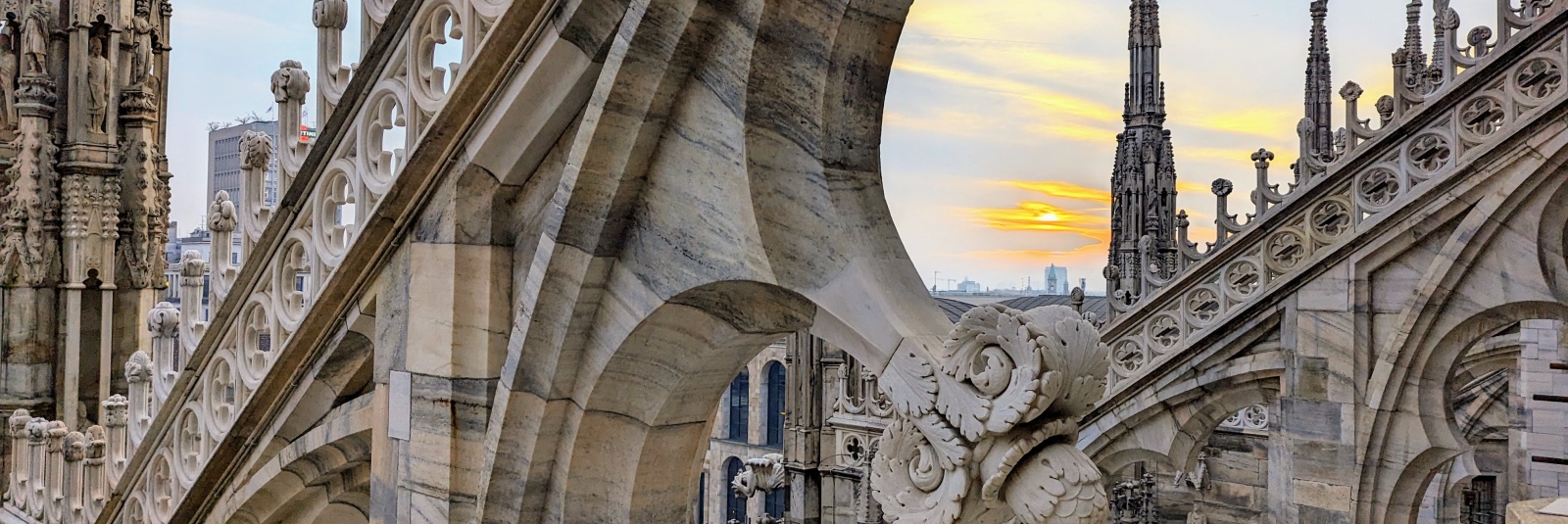
- Don't miss climbing the roof! If you need to choose just one of the attractions of the Cathedral, choose the roof visit. It is impressive to see the spires and stone lace up close, and the view of the city, Piazza del Duomo, and the modern buildings in the distance is truly spectacular, especially at sunset. Climbing to the roof is also one of the right experiences when you're in Milan with kids.
- Wear comfortable shoes! Even if you choose to climb the roof by lift, the descent will be by stairs, which are quite narrow. Additionally, there are sloping or slippery surfaces.
- If possible, avoid scheduling your visit to the Milan Cathedral on a weekend or a Wednesday. On Wednesdays, the Cathedral Museum is closed, and on weekends (besides being much more crowded), you may not have access to the entire cathedral due to religious ceremonies.
- Buy tickets online, especially when you are in Milan only for a short time. You will probably have to wait in line to enter the Cathedral anyway, you don't need an additional queue in front of the ticket office.
- Allocate enough time for the visit (just visiting the roof, the interior of the cathedral, and the Museo del Duomo can take around 2 hours).
- Expect to find restoration works in some parts. The Cathedral is a huge construction and often needs maintenance interventions.
- Before presenting yourself at the entrance, consider that the Milan Cathedral does not have a toilet.
- If your travel budget does not allow you to visit the Duomo, know that there is a separate and free entrance for those who wish to pray. It is the side entrance, located on the north side, towards Galleria Vittorio Emanuele II, and open between 08:00 and 19:00 (last entry is at 18:10). You will not have access to the entire cathedral, but only to the left nave, but you will get an idea of the church's grandeur. For other ideas, see also the article about what you can see for free in Milan.
Curiosities About the Milan Cathedral
- With a length of 157m and a total area of 11,700sqm, the Milan Duomo is among the largest churches in the world (the first place is held by St. Peter's Basilica in the Vatican). It is estimated that over 40,000 people can fit inside the cathedral.
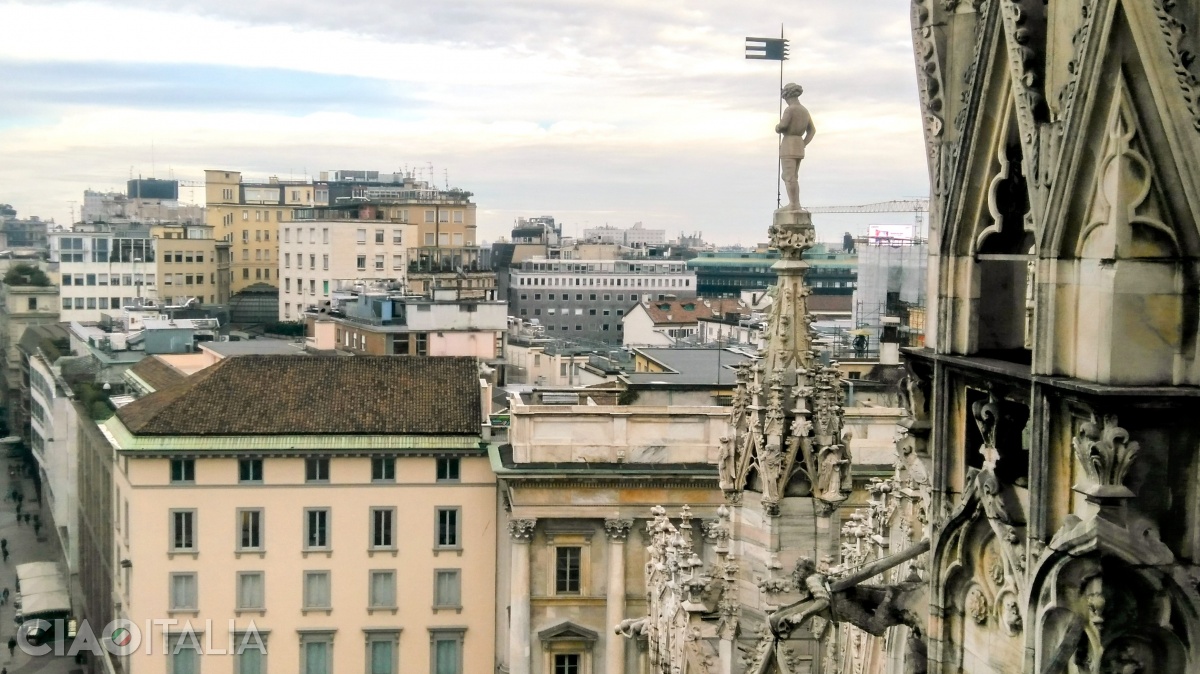
- The construction of the Cathedral began in 1386, by order of Gian Galeazzo Visconti, the ruler of Milan, who hoped that God would thus grant him a son. His wish was fulfilled, but his successor was assassinated shortly after taking the power. The statue of Gian Galeazzo Visconti is at the top of the Carelli spire, the oldest spire of the Cathedral.
- The Cathedral is built from Candoglia marble, a small town situated nowadays in the Piedmont region. Since the end of the 14th century, the Candoglia quarry has been used exclusively for the construction of the Milan Cathedral, and it is still used today for restoration or maintenance works on the construction.
- In the Lombardy region dialect, the expression a uf translates to "free". It seems to originate from the inscription AUF - Ad Usum Fabricae, which marked the marble blocks transported tax-free from the quarry to Milan, to be used by Veneranda Fabbrica del Duomo, the institution created for the construction and administration of the Cathedral.
- 325,000 tons of marble were used to build the Duomo.
- The works on the Cathedral took place over more than five centuries. The cathedral was completed only in the 20th century.
- There is no specific architect of the Milan Cathedral. The construction works spanned such a long period that numerous architects, engineers, and sculptors succeeded each other, each contributing to the church's current appearance.
- After conquering a large part of the Italian territory at the end of the 18th century, Napoleon wanted to be crowned as King of Italy. The ceremony was grand and took place in 1805 in the Milan Cathedral. The works to complete the Cathedral's facade took place at his initiative.
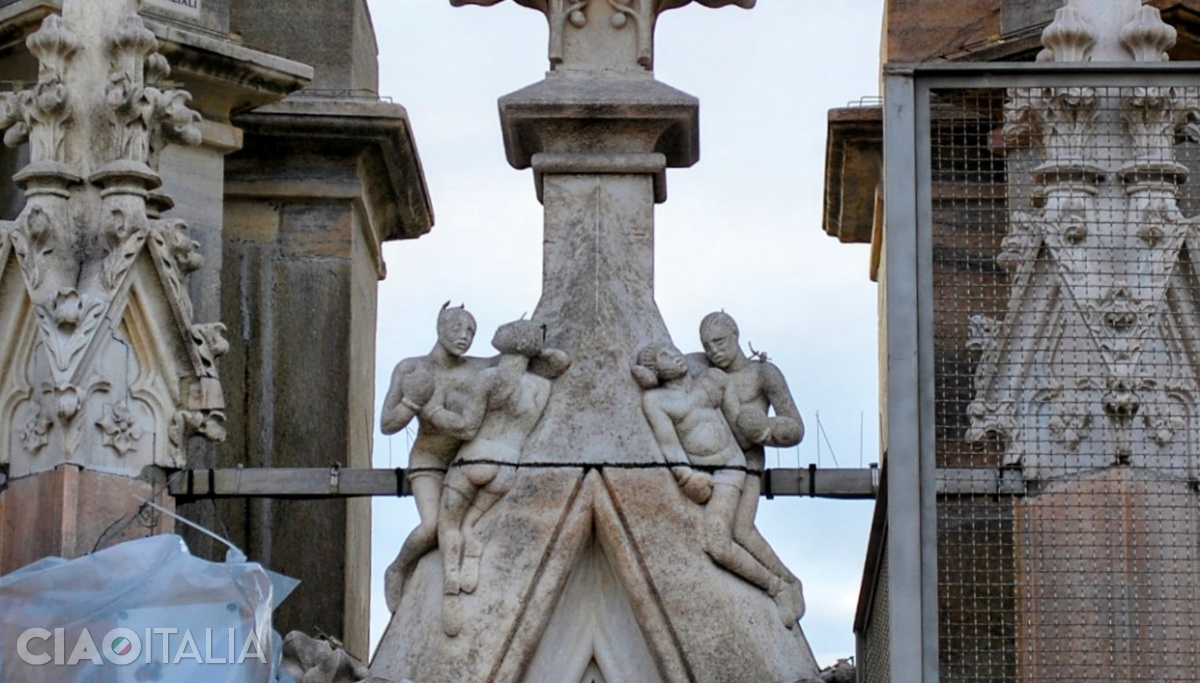
- On the roof of the Cathedral, among the statues of saints, martyrs, and angels, there are also representations of famous Italian figures, such as the poet Dante Alighieri, conductor Arturo Toscanini (who, among other things, was also the musical director of La Scala Theatre), Napoleon, King Vittorio Emanuele, or Benito Mussolini. There are also more unusual and modern stone representations (on the left side of the last stairs leading to the roof) - boxing gloves, a tennis racket, a ball, a climbing ice axe, and a group of statues depicting two pairs of boxers (to see them, you will have to stand on the roof with your back to the Madonnina and look towards the left corner of the Cathedral, at the base of a spire). Among them is Primo Carnera, the first Italian to win the world heavyweight title in 1933. The newest statues, representing priests and cardinals, were added after 2000.
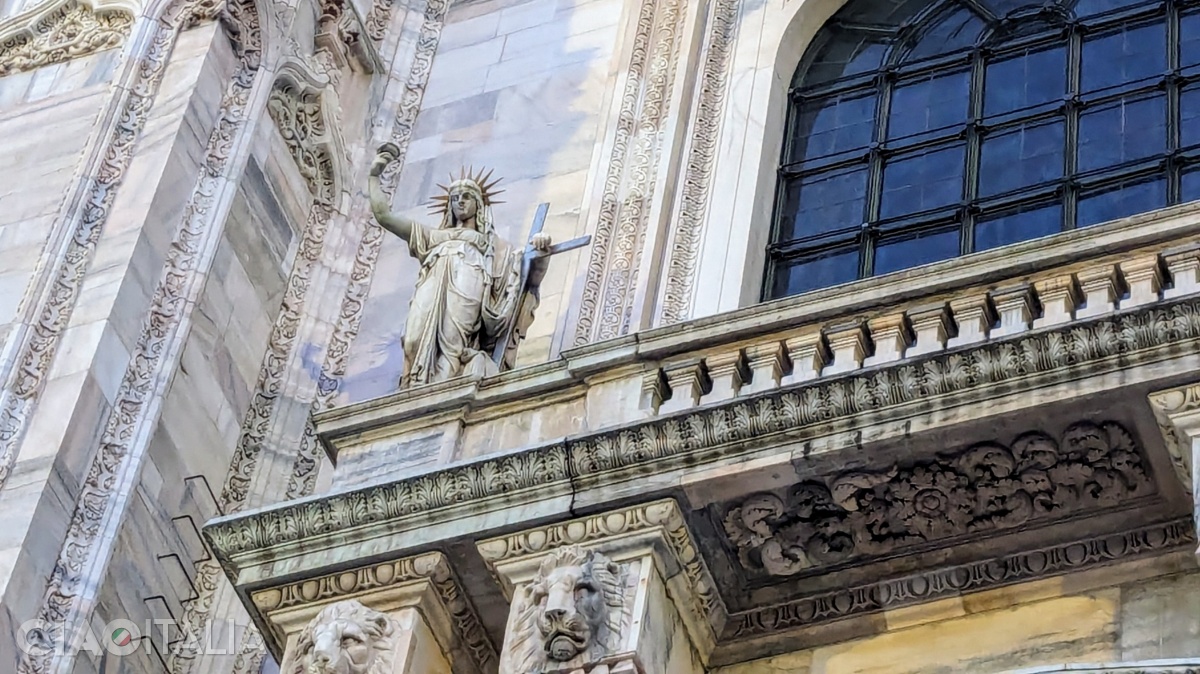
- On the balcony above the main entrance portal of the Cathedral, on the left side, there is another unusual statue, with a torch in hand and a head crowned with rays, reminiscent of the Statue of Liberty in New York. The one on the Cathedral facade was made in 1810 and represents the New Law. The Milanese claim that it was the inspiration for the statue in New York.
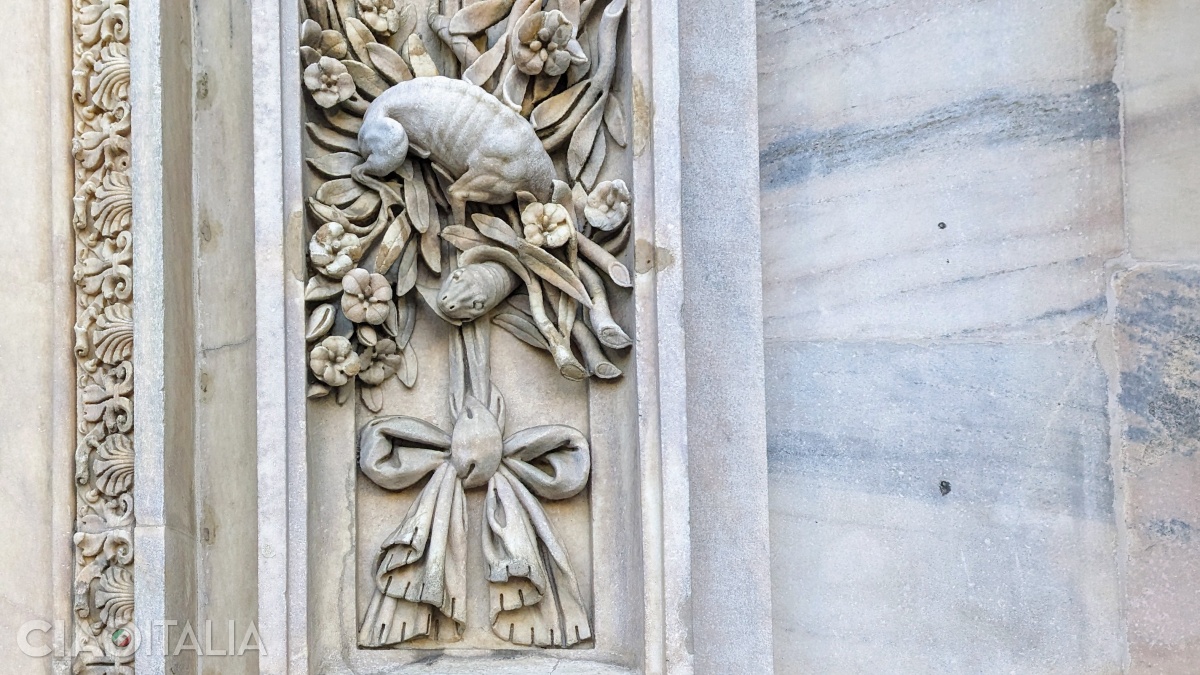
- Also on the exterior of the Cathedral, among the bas-reliefs in the frieze that borders the large bronze entrance doors, at the bottom right, one can see the dragon Tarantasio (which looks more like a cute baby rather than a frightening creature). It is a reference to a medieval legend that tells of a dragon that ate the children of the Milanese, spreading terror in the area. The one who managed to defeat the dragon was Umberto, the founder of the Visconti noble family, who would rule the city of Milan for several hundred years. In memory of this important victory, the dragon was added to the family crest. Another curiosity: the stylized representation of the dragon with a child in its mouth also appears on the logo of the Italian car company Alfa Romeo.
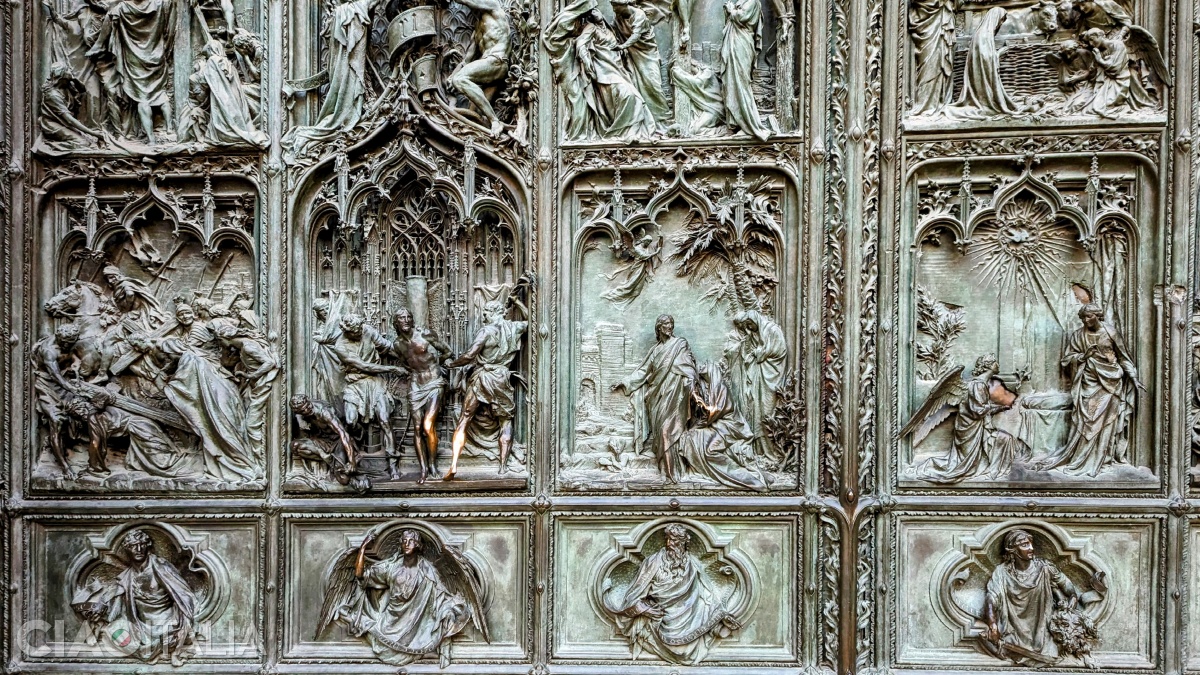
- The superb bronze doors of the Cathedral are also known as Porta Pogliaghi, after the name of the sculptor who made them at the beginning of the 20th century in the Liberty style. The doors have impressive dimensions of 10m in height and 5m in width and depict scenes from the life of Jesus and the Virgin Mary, framed by animal and plant motifs.
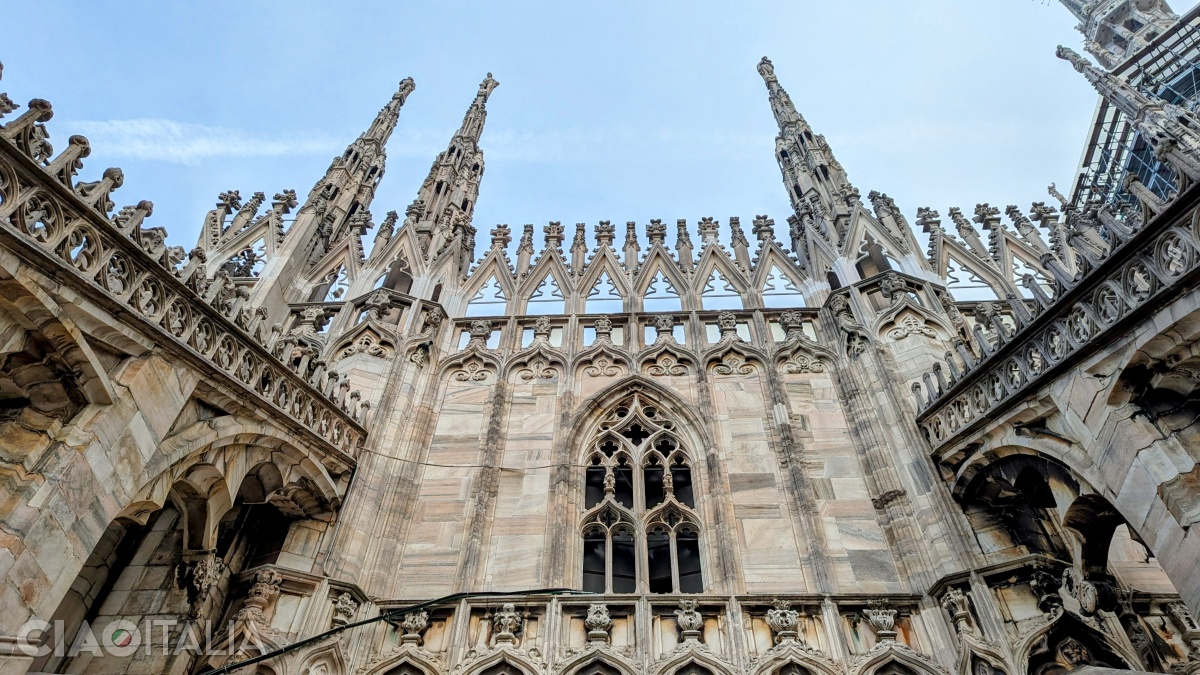
- In total, the Milan Cathedral is decorated with over 3400 statues. Only on the exterior are 2245 statues, 135 spires, and 96 gargoyles.
- The Cathedral houses the largest organ in Italy, with 15,800 pipes.
- Opinions about the Duomo from Milan have always been divided. For example, in the 19th century, Oscar Wilde called it "a terrible, monstrous, and not at all artistic failure", while Mark Twain considered it "a poem in marble".
What Can You See?
The Roof of the Cathedral
To reach the roof, you can either climb the stairs (there are 251 steps, and the climb is not too tiring) or by lift. Once at the top, you will find yourself surrounded by elaborate marble decorations, buttresses, and slender spires, at the top of which statues reign.
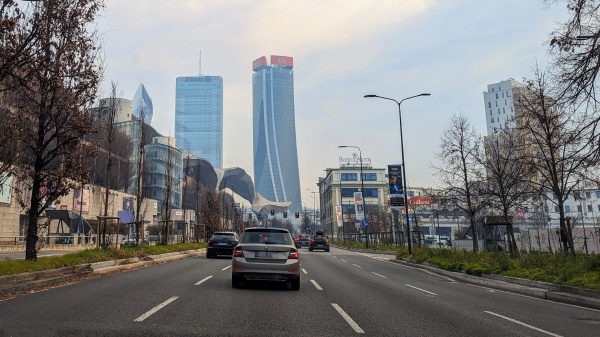
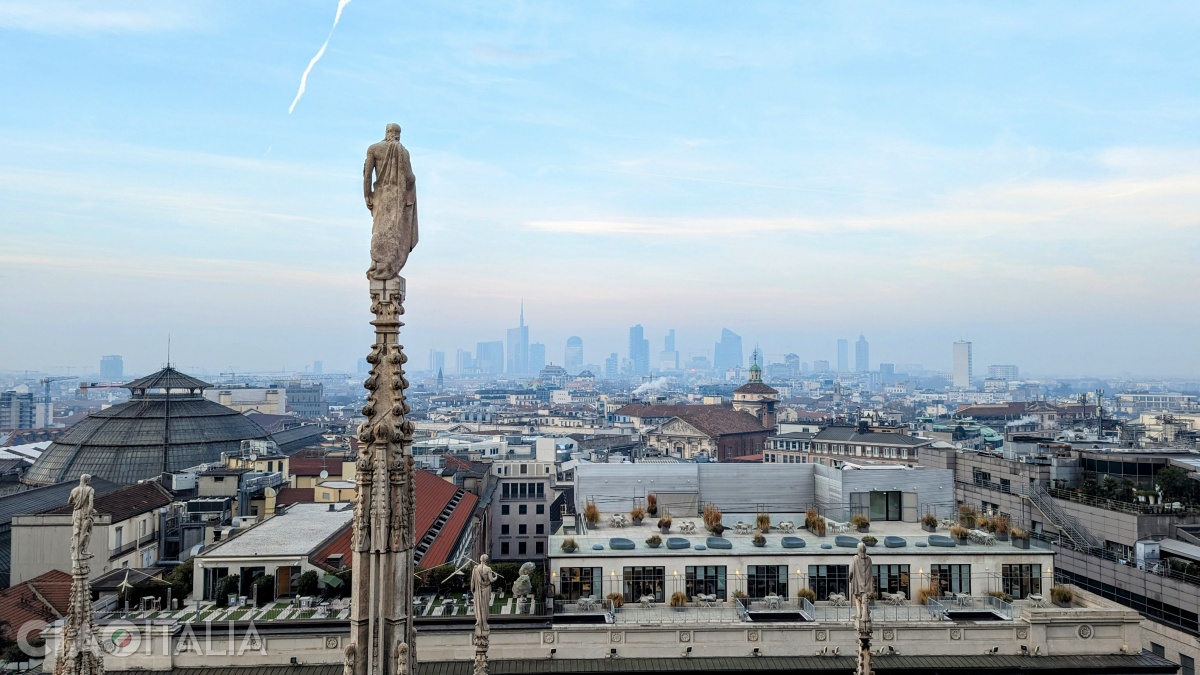
From a height that varies between 50 and 70m, you have a view of the entire city, with its modern skyline contrasting with the Cathedral's statues.
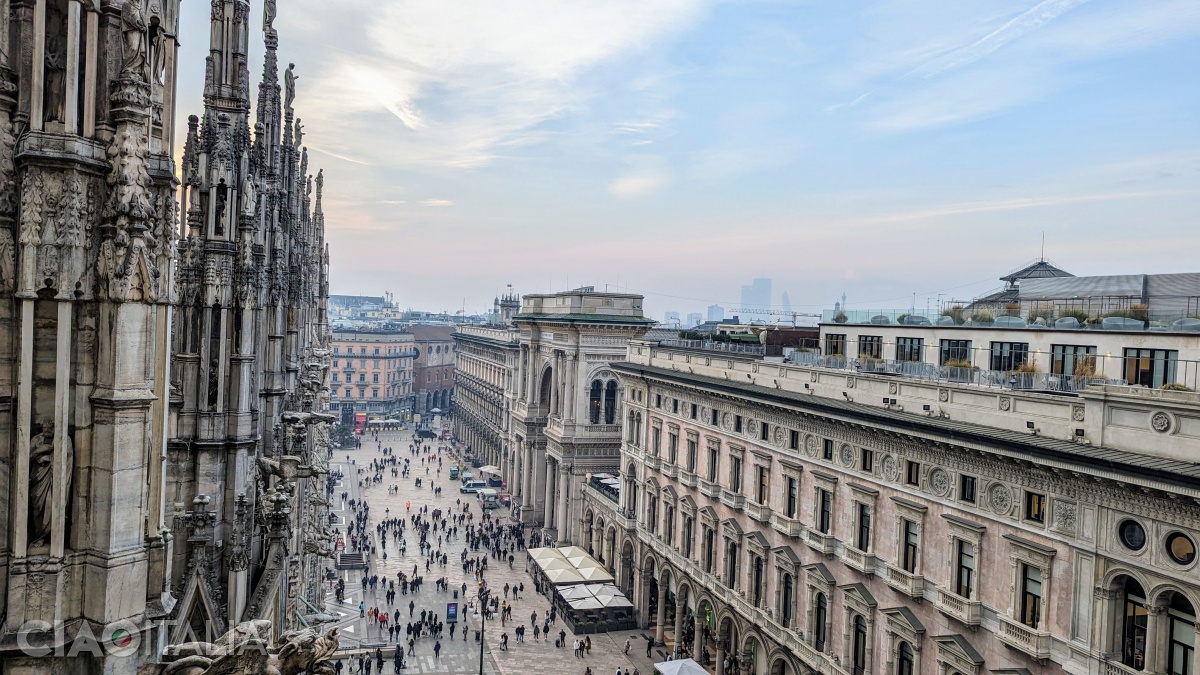
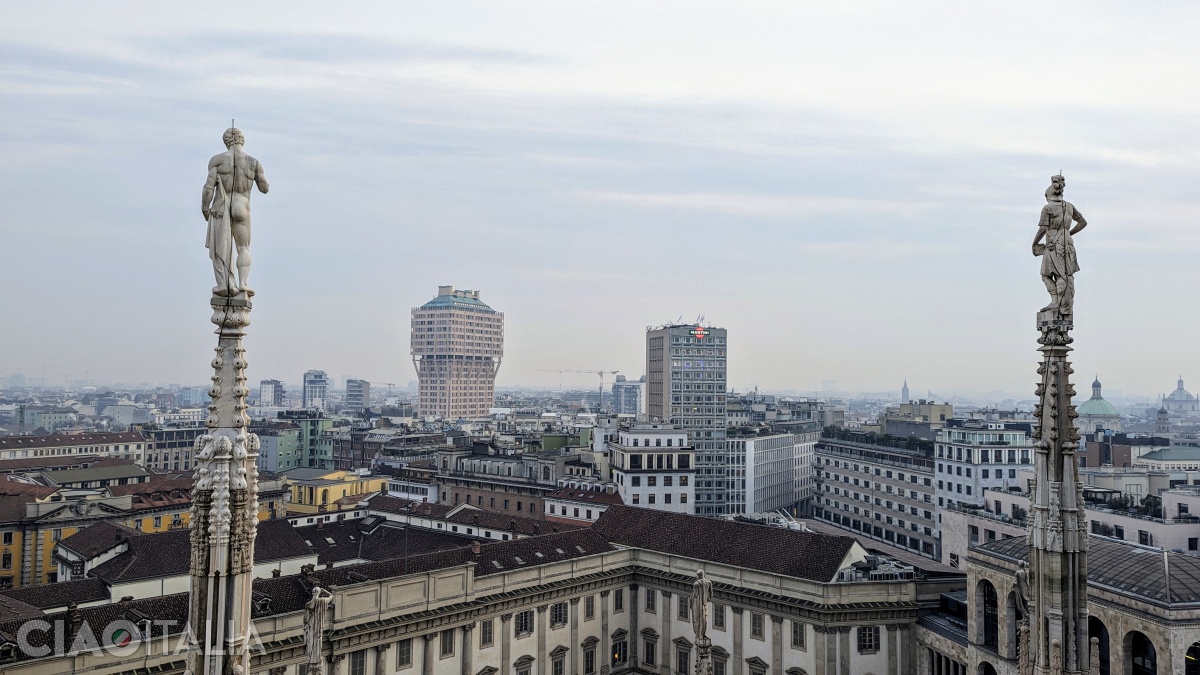
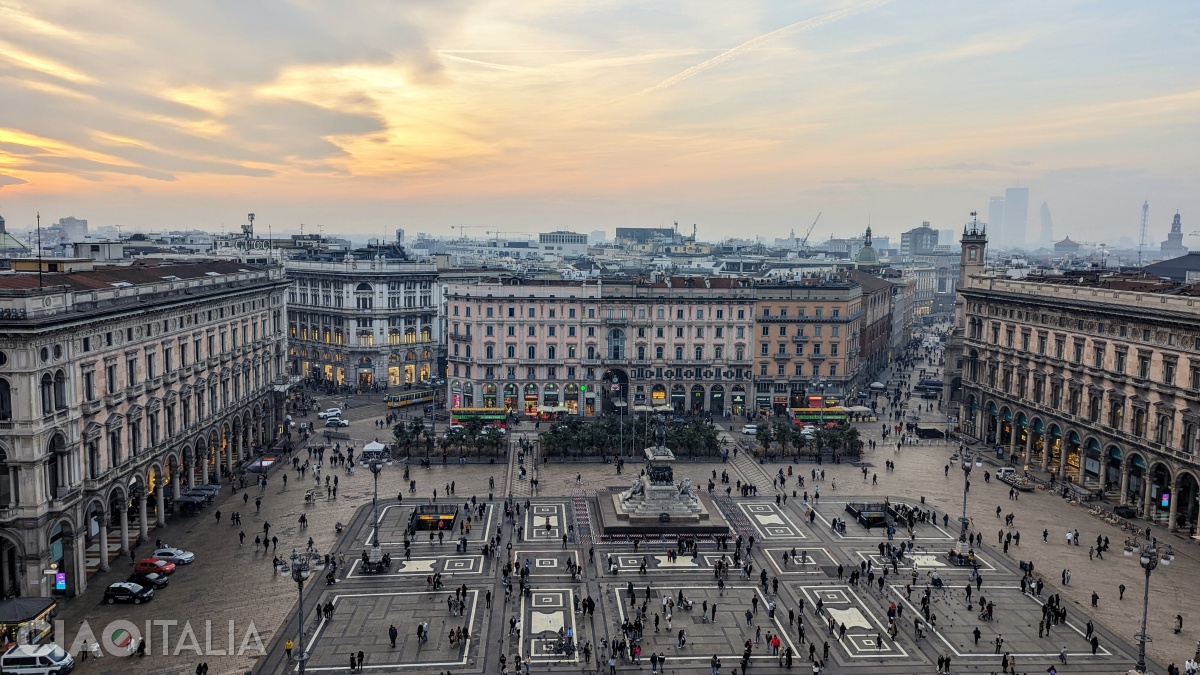
Following the visiting route and climbing a few more steps, you will find yourself right on the ridge of the roof, where you can admire the highest spire of the Cathedral, which bears the famous statue of the Virgin, called La Madonnina. La Madonnina is the protector of the city of Milan and is very loved by the Milanese. The halberd she holds in her right hand serves literally as protection to the Cathedral, acting as a lightning rod. Every year, on the most important national holidays, the Italian flag is raised on this halberd.
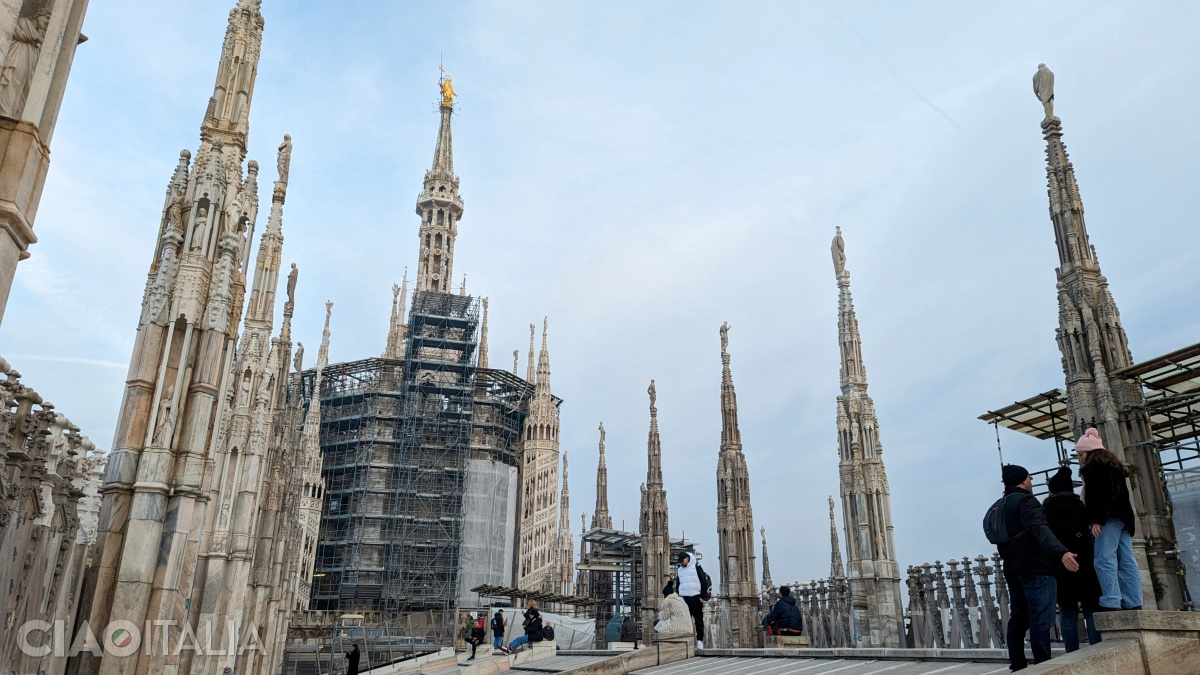
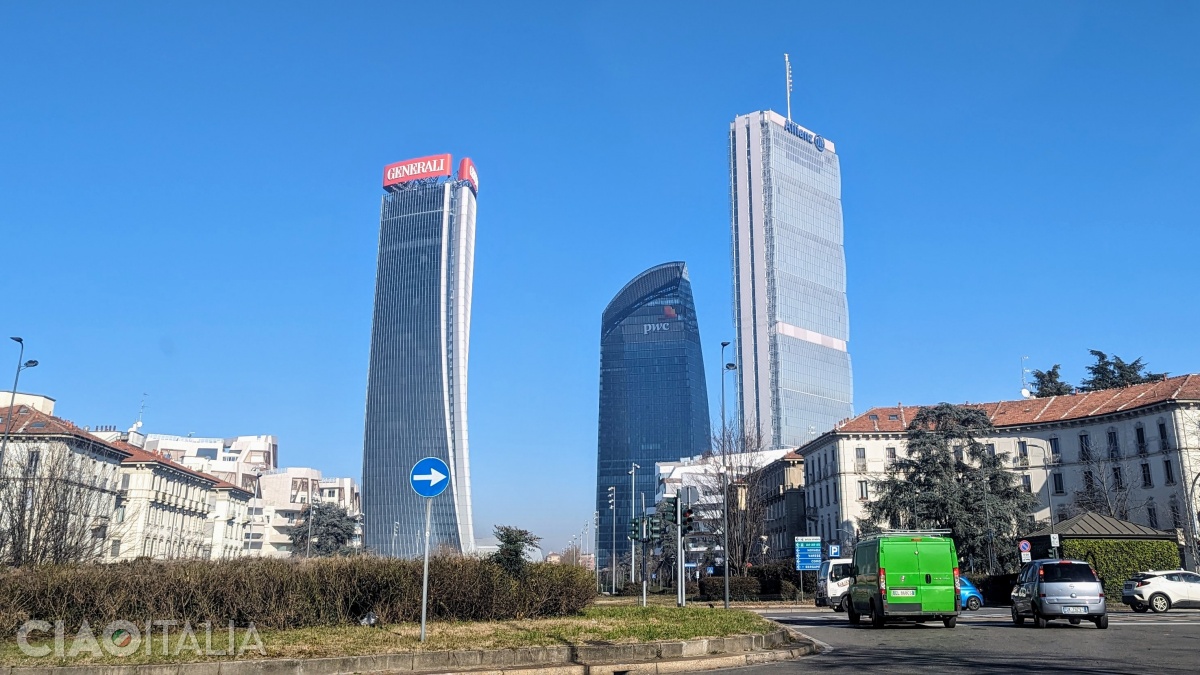
The gilded statue, over 4m high, was placed at the highest point of the Cathedral in 1774. In the 1930s, a law was even passed stating that no building in Milan could exceed the height of 108.5m, where La Madonnina is located. The law was broken with the construction of the first skyscrapers in the city during the 1960s, and since then a new tradition has emerged: every time a building exceeds this height, an exact copy of the Virgin's statue is placed at the top, so that the city's protector is always at the highest point. Today, the tallest skyscraper in Milan (and in all of Italy) is the Allianz Tower, inaugurated in 2015 (50 floors and 260m high, cu tot cu antenă).
During World War II, to prevent bombings on the Cathedral due to the Madonnina's shining, the statue was covered with a gray cloth.
The Interior of the Cathedral
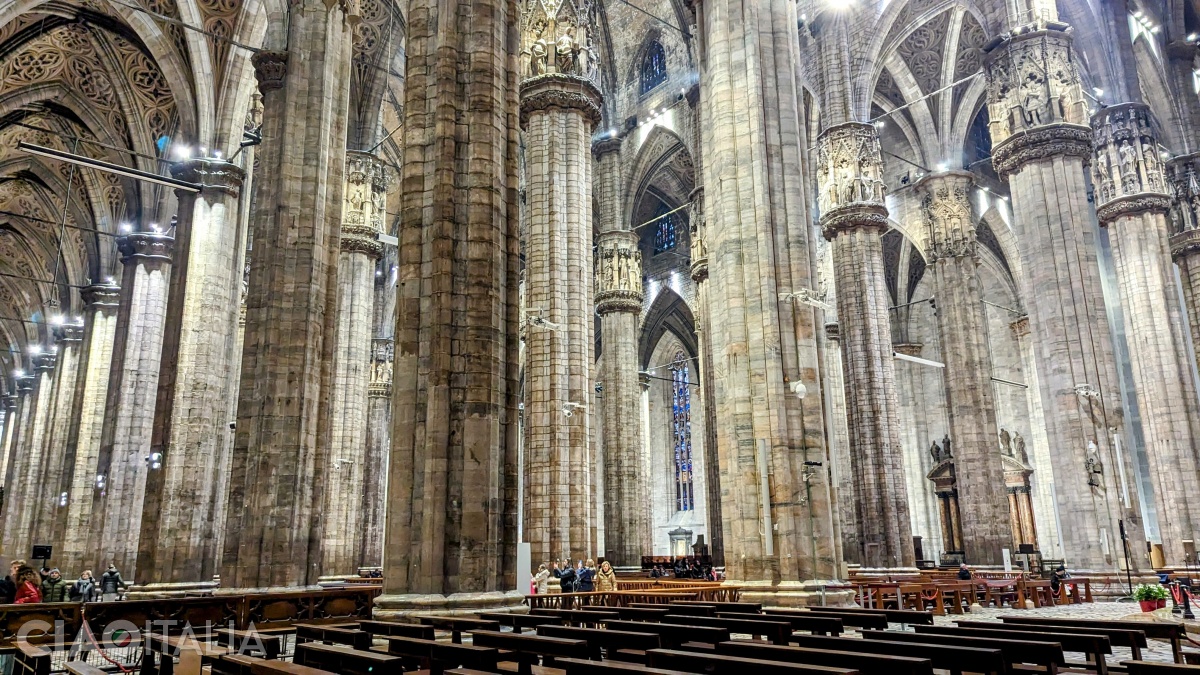
After you finish visiting the roof, descending the stairs, you will reach the interior of the Milan Cathedral. The first impression is overwhelming - you will be impressed by the immense spaces, the stained-glass windows that filter the light, and the numerous marble columns, whose upper part is adorned with statues. There are 52 columns in the Cathedral, like the number of weeks in a year. You are in the apse area, which is also the oldest part of the cathedral, the place where construction began in 1386.
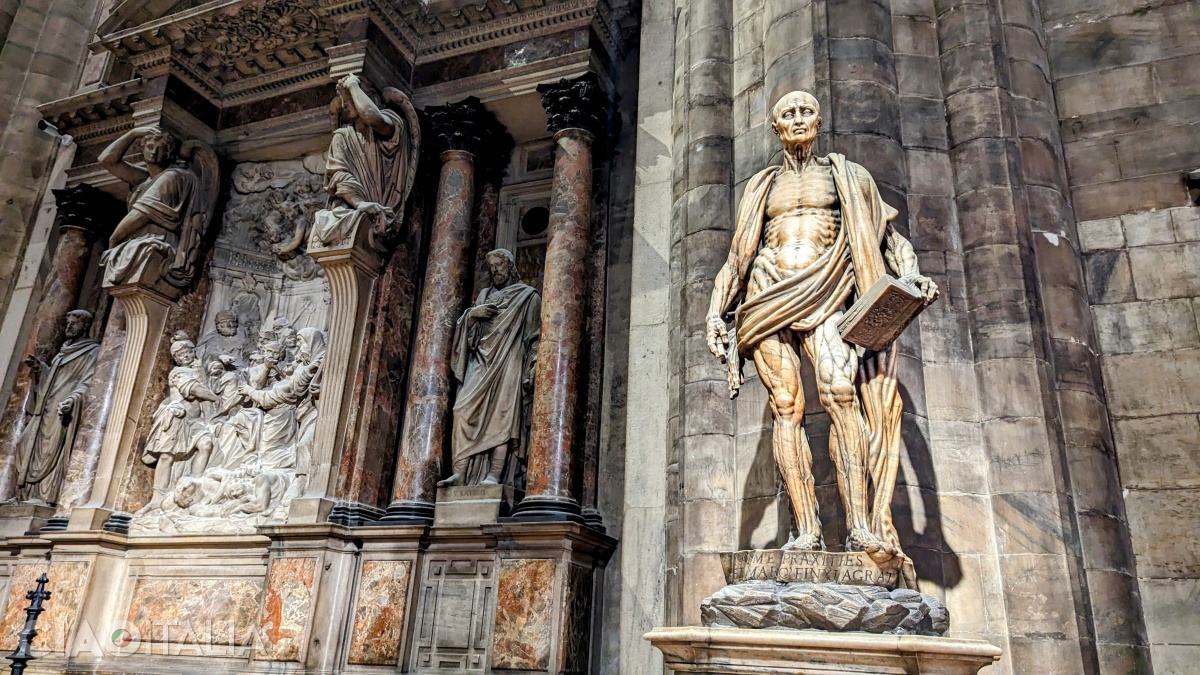
Nearby, in the right transept of the church, you will find perhaps the most impressive statue in the Cathedral: the statue of Saint Bartholomew flayed, who carries his own skin on his shoulders like a cloak (a symbolic representation of the martyrdom of the apostle who, according to tradition, was flayed alive). The statue, made in 1562 by the sculptor Marco Ferrari d'Agrate, looks almost like an anatomical model, with a detailed representation of muscles, bones, and veins. At the base is the inscription Non mi fece Prassitele, bensì Marco d'Agrate ("Not made by Praxiteles, but by Marco d'Agrate"). The artist was therefore proud of his creation, placing himself on the same level as Praxiteles, the great sculptor of ancient Greece.
The statue of St. Bartholomew was initially outside the church. It was moved inside the Cathedral because it scared children and more sensitive passersby.
Heading towards the central part of the church, between the rows of benches and looking towards the main altar, you will see high up in the apse vault, a metal cross surrounded by rays, with a small red light. This is the tabernacle where, in a crystal compartment, one of the nails used in the crucifixion of Christ (called the "relic of the holy nail") is kept. Tradition states that it was miraculously found by St. Helena, the mother of Emperor Constantine. In 1461, the nail was placed in the apse vault of the Cathedral, at a height of over 40 meters, in the most inaccessible and protected place.
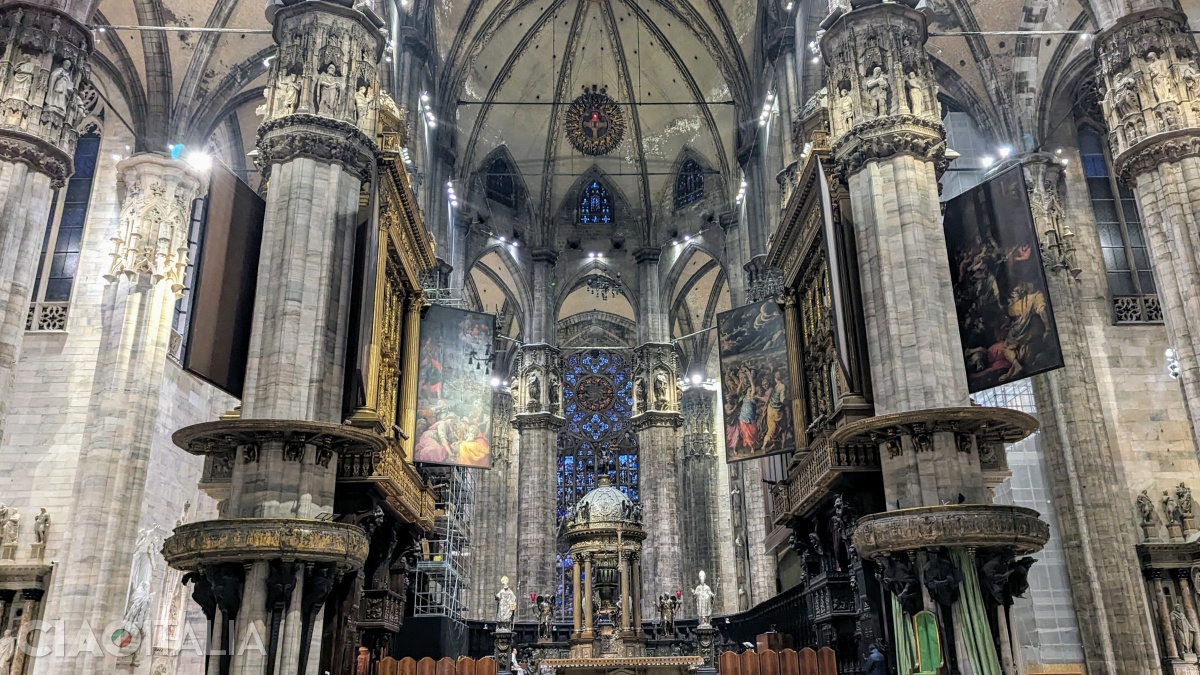
Once a year, on September 13th, on the eve of the Exaltation of the Holy Cross, the Archbishop of Milan ascends to the tabernacle with a kind of elevator in the shape of a cloud (called nivola, from the word nuvola, which means "cloud"), takes the nail, and places it on the altar of the Cathedral. The nivola was built in the 1600s and is decorated with paintings of angels and cherubs. The ceremony is called il rito della Nivola and recalls the procession made in 1577 by St. Carlo Borromeo, who carried the holy relic through the streets of the city, trying to end the plague epidemic.
If you are curious, you can watch a video of this ceremony below
The 55 large stained-glass windows of the Cathedral date from different periods - the oldest from the end of the 14th century, and the most recent from the end of the 20th century. A legend associates the stained-glass windows with the creation of the famous risotto alla milanese. It is said that in the past, painters mixed saffron with paints to give intensity and brilliance to the colors of the stained-glass windows. One of them had the idea of adding saffron to buttered rice, thus creating one of the traditional dishes of the city of Milan.
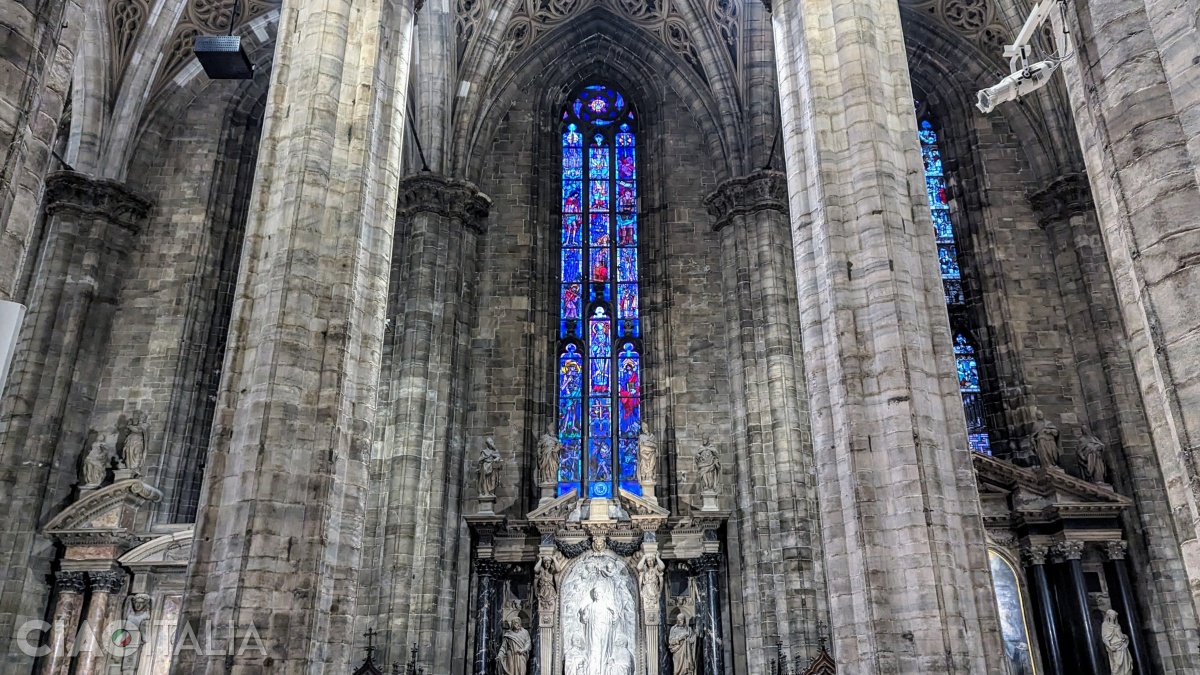
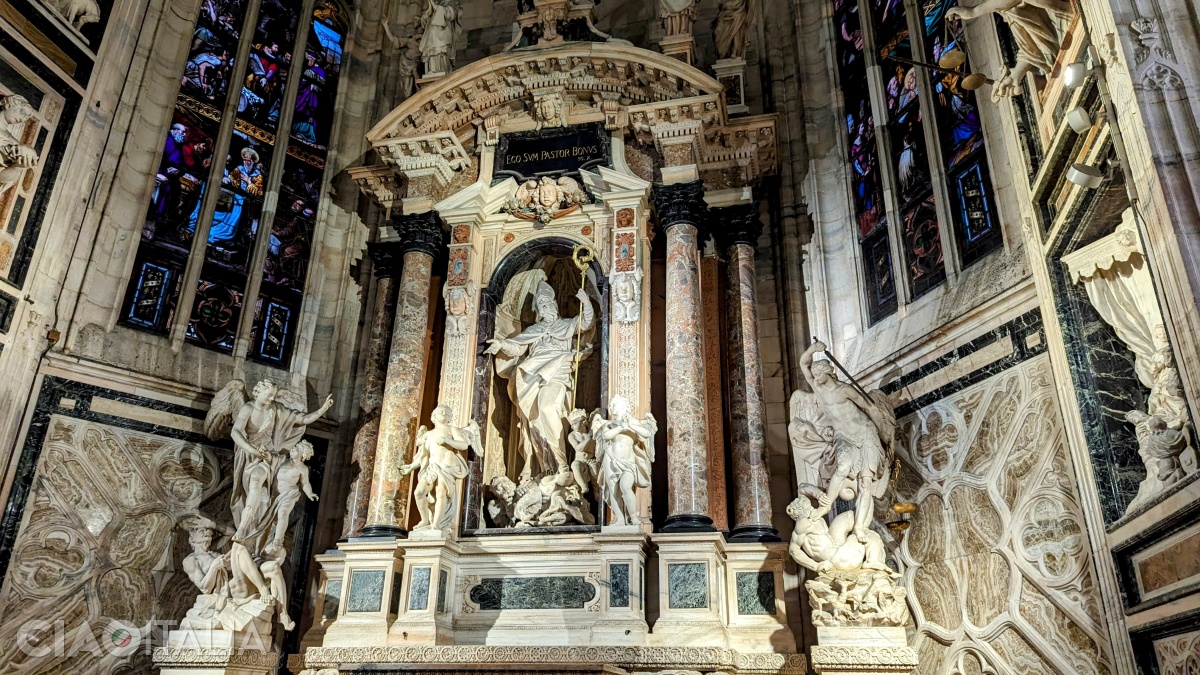
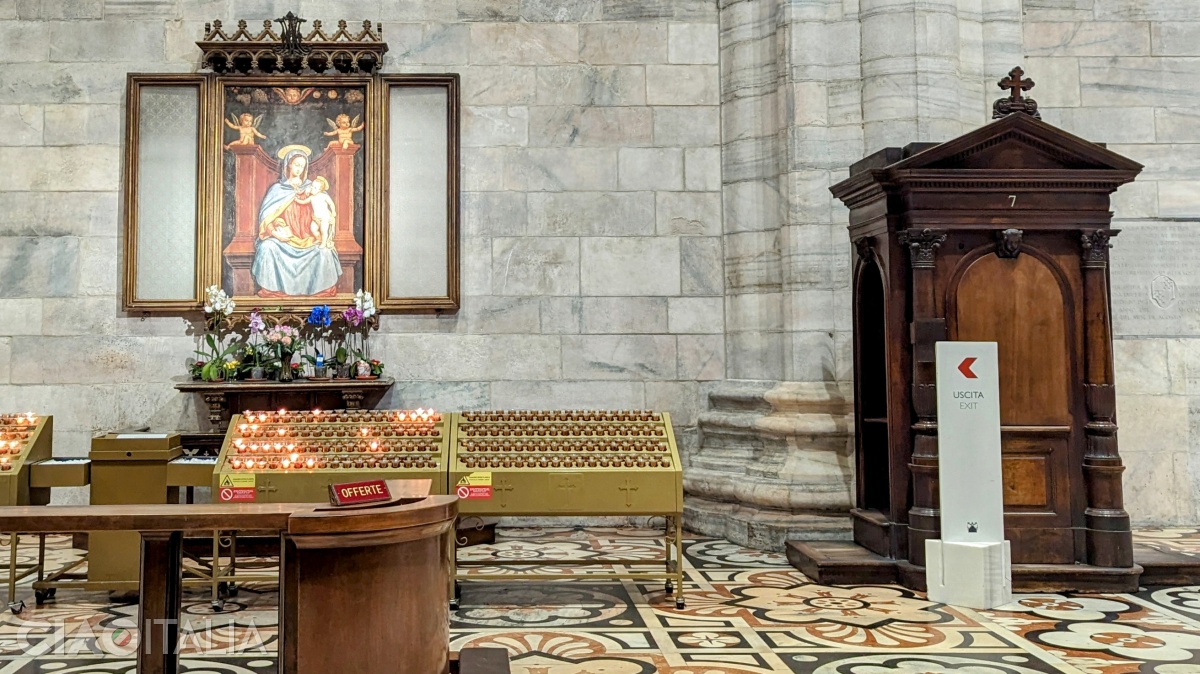
Moving from the altar towards the main doors, on the right side (in the area dedicated to praying), you can observe the painting Madonna delle rose ("Virgin with Roses"), which is also linked to a legend. It is said that at the beginning of the 15th century, when the city was under siege, soldiers decided to use the marble blocks intended for the construction of the Cathedral as projectiles for catapults. A woman who used to pray to this image of the Virgin brought a bouquet of roses before it, asking for forgiveness for what she considered to be a sacrilege. After a while, having not visited the church during this time, she returned to pray for her son, who had been wounded in battle. While praying, she realized that the wilted bouquet of flowers began to miraculously bloom again, and when she returned home, she found her son healed.
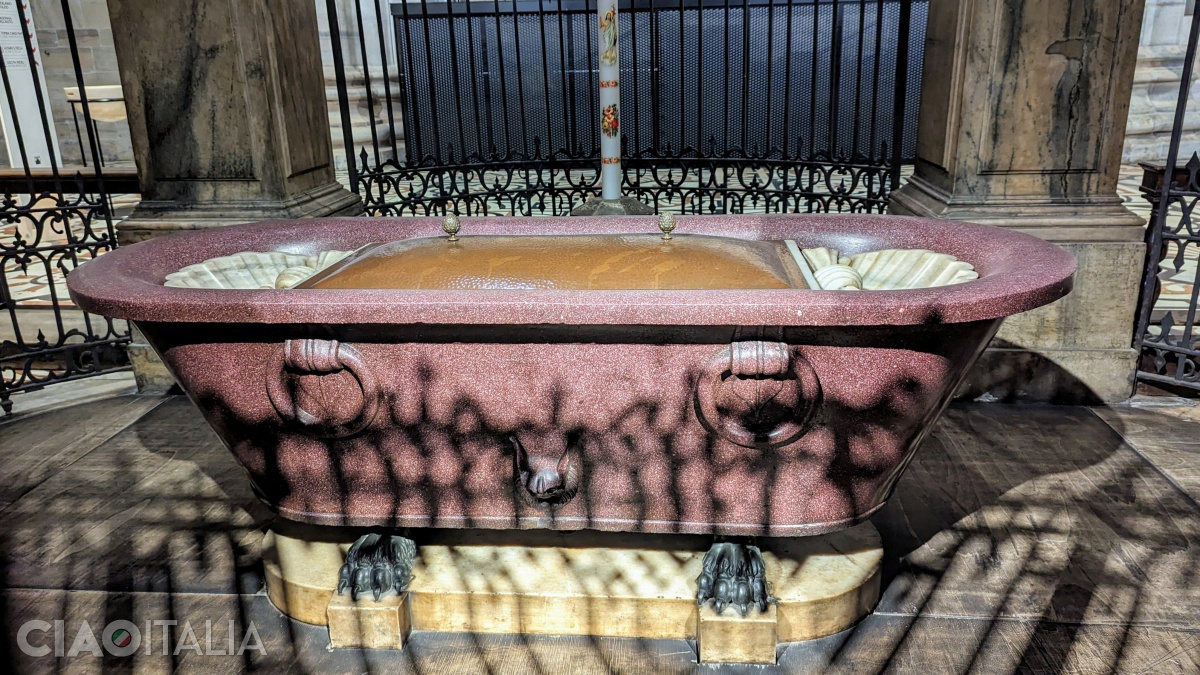
Further ahead, still on the right side as you head towards the bronze exit doors, you will notice a reddish tub. It is an ancient tub made of Egyptian porphyry, dating from the Roman era, and being used today as a baptismal font.
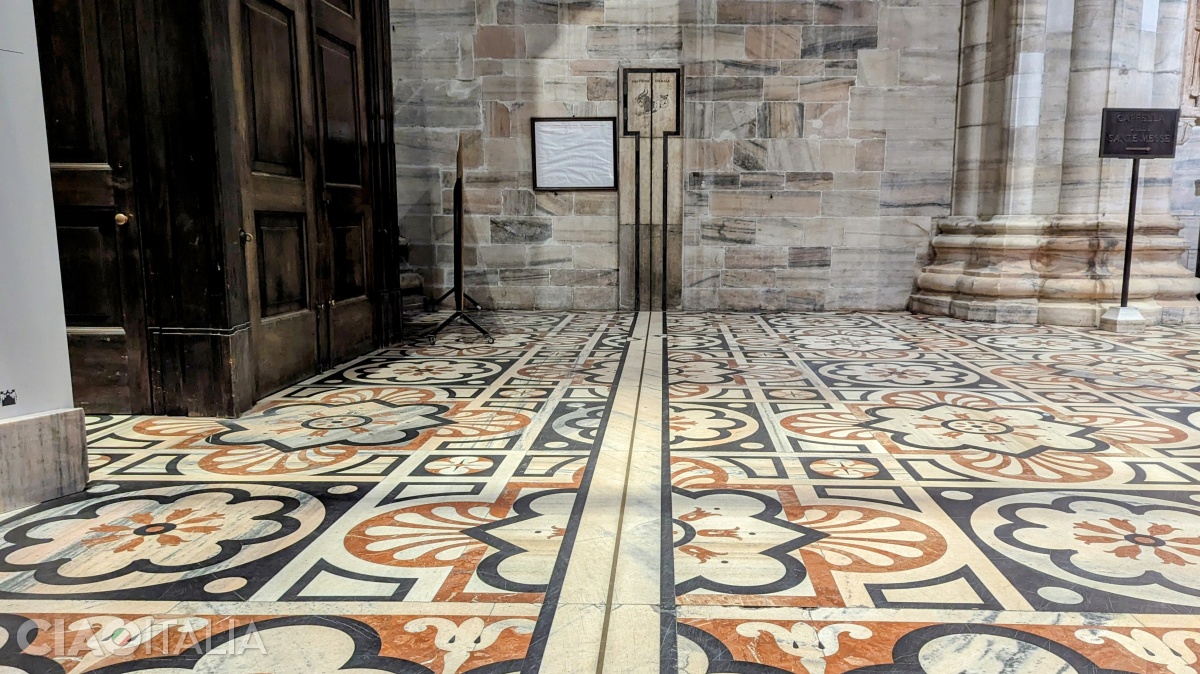
Immediately after, before you reach the exit, look at the floor. You will see a brass line that crosses the cathedral widthwise, from one side to the other. Along it, there are marble plaques with representations of the zodiac signs. It is a meridian constructed in 1786 by astronomers from the Brera Observatory. At noon, through the hole in the vault of the first chapel on the right, a ray of sunlight enters and projects onto the floor, indicating the zodiac sign corresponding to that period of the year.
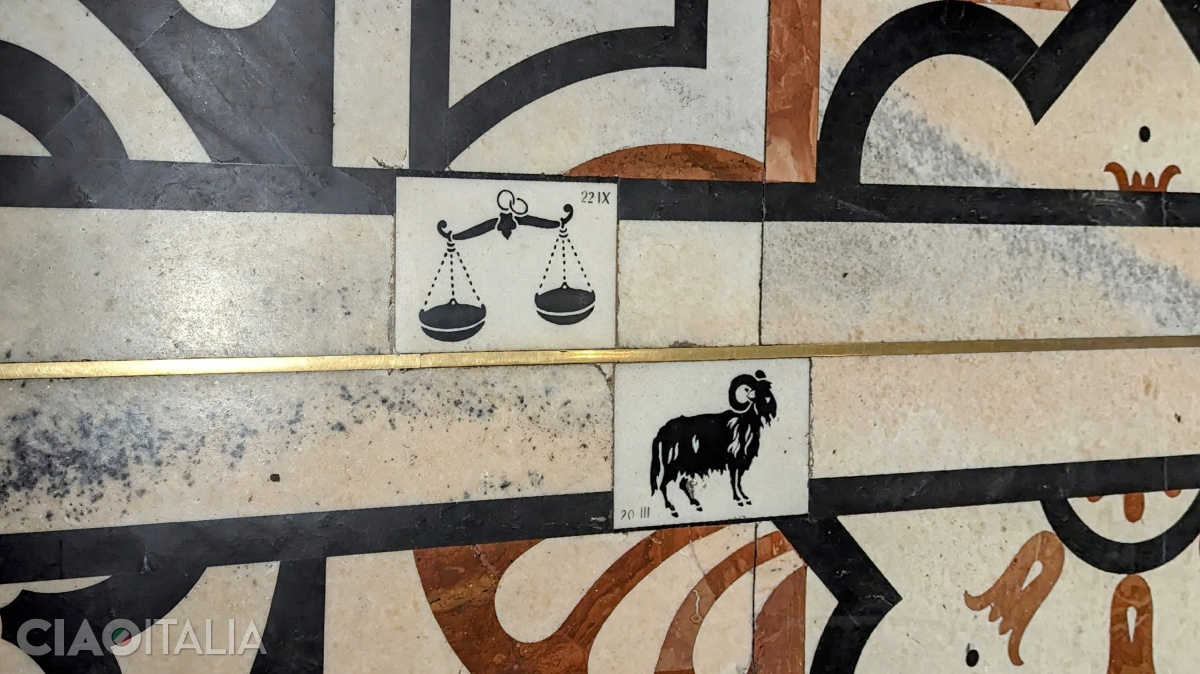
Meridian lines can also be found in the Basilica of San Petronio in Bologna (the longest interior meridian in the world), in the Church of Santa Maria degli Angeli in Rome, as well as in the Church of San Giorgio in Modica (on the island of Sicily).
Archeological Area
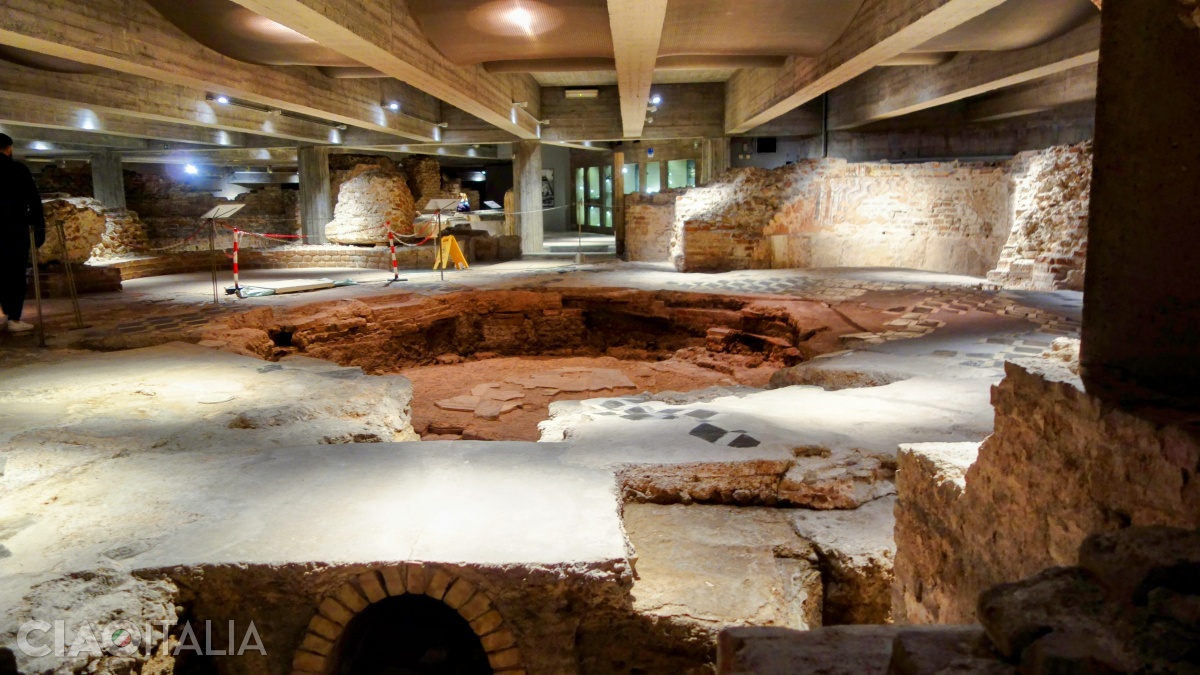
Some of the tickets to the Cathedral also permit the access to the archaeological area (the staircase you need to descend to reach it is inside the cathedral, near the main doors). This area is about 4 meters below the Cathedral level, where you can find the ruins of the Baptistery of San Giovanni alle Fonti (one of the first baptisteries in Milan, dating from the 4th century) and the old Cathedral of Santa Tecla, which stood on this site before the construction of the Cathedral. The Baptistery is believed to be the place where St. Augustine was baptized by Bishop Ambrose, who would become the patron saint of Milan.
The remains were discovered only in the 1960s, during excavations for the construction of the M1 metro line.
Cathedral Museum
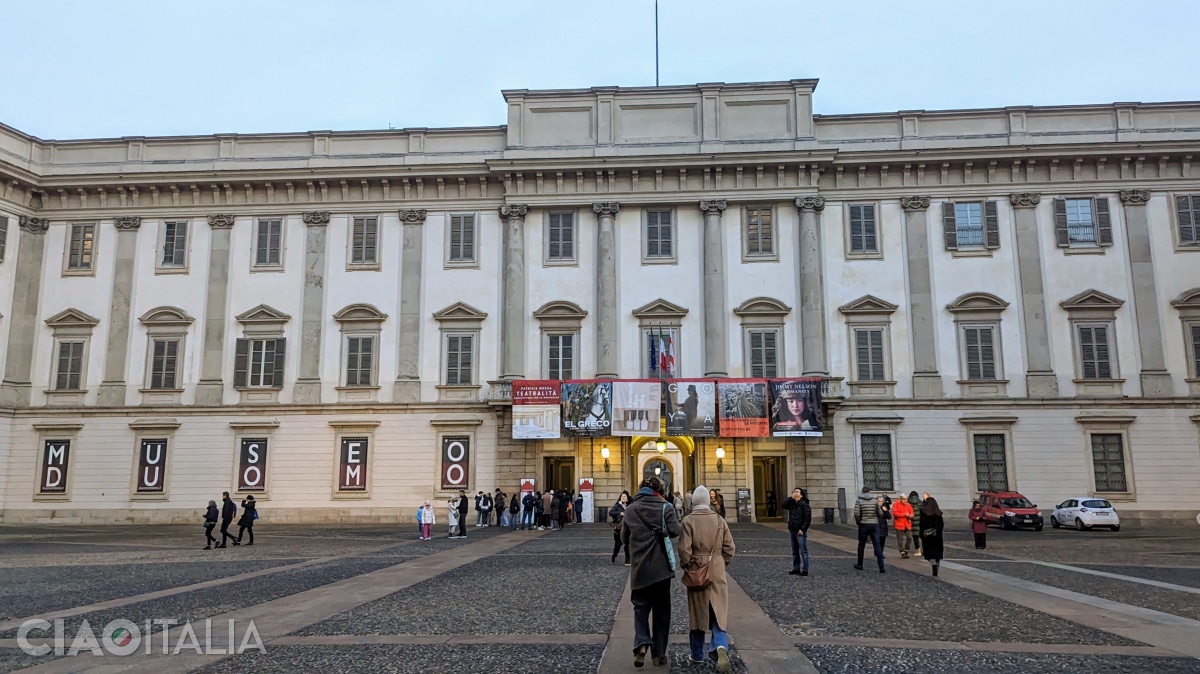
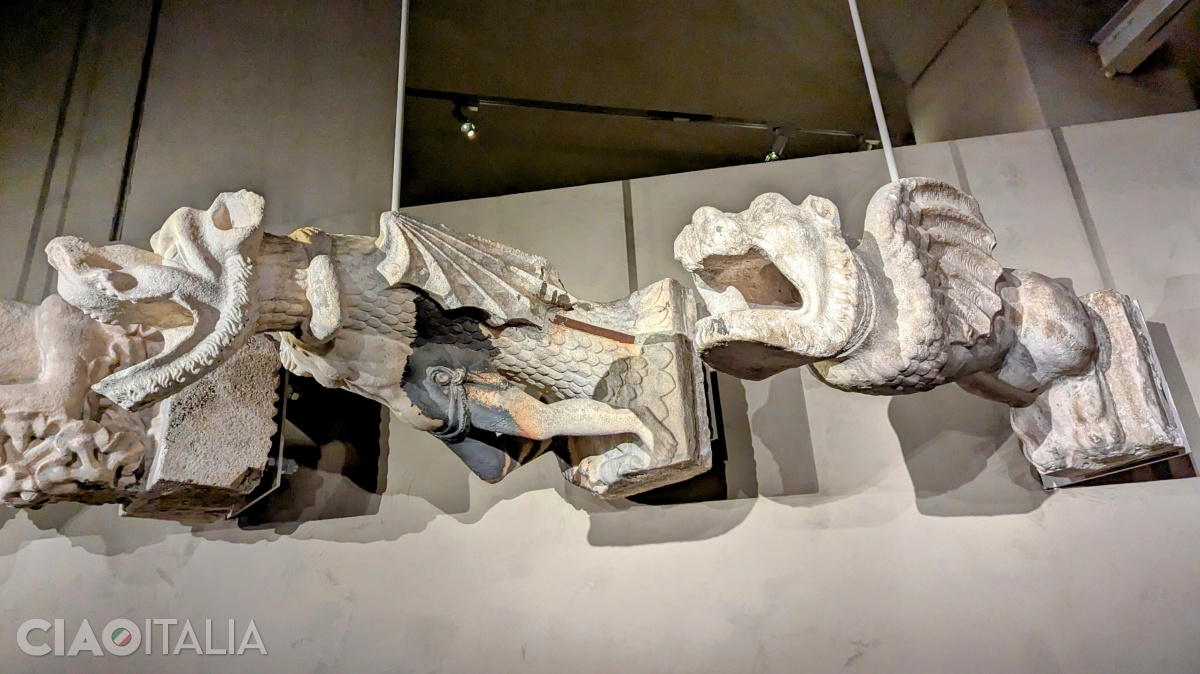
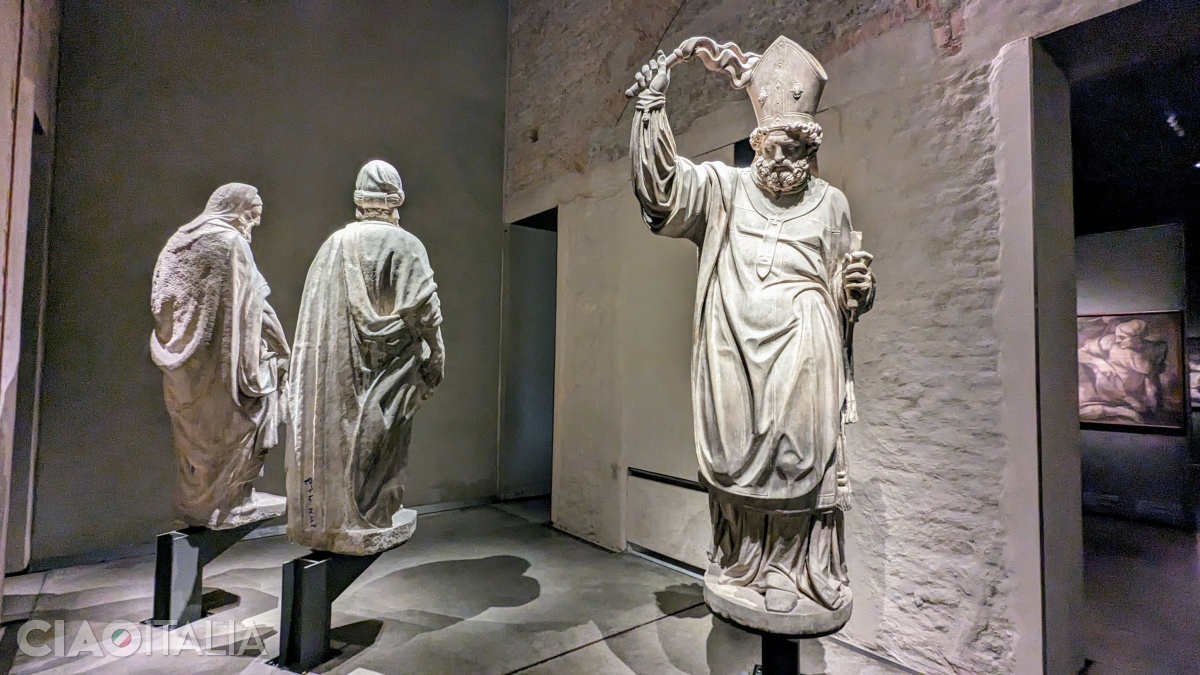
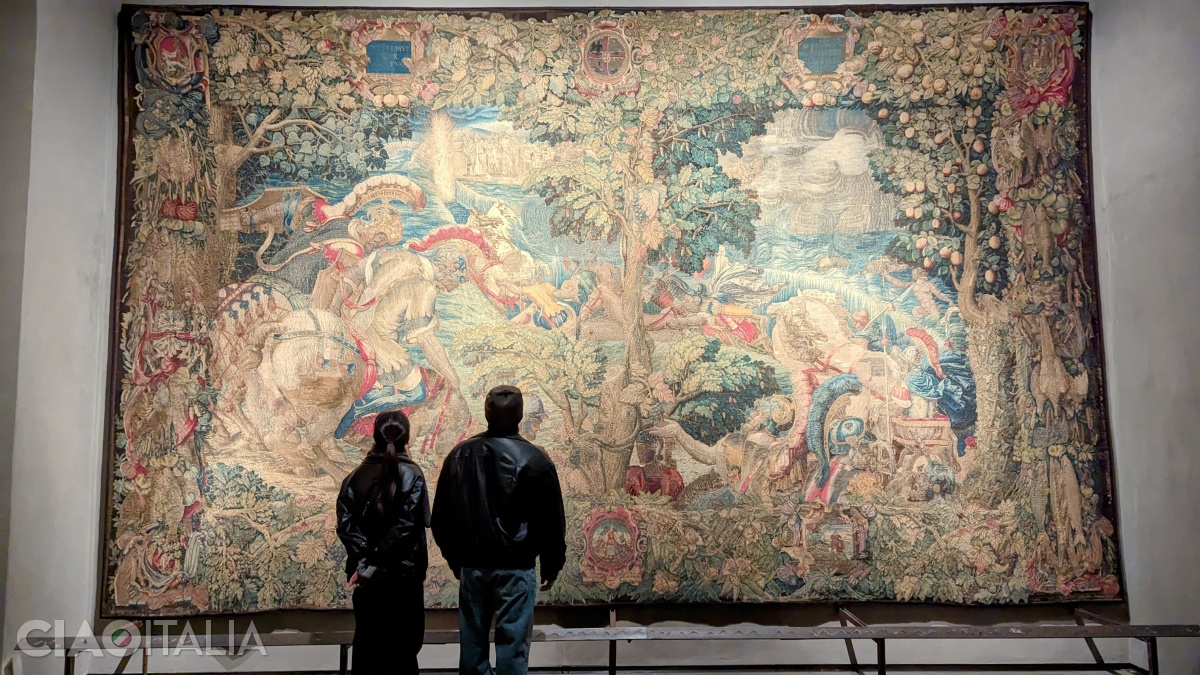
The Cathedral Museum (Museo del Duomo) is housed in the Royal Palace, located very close to the church and it's one of the most important museums in Milan. The 26 rooms contain a collection of statues, tapestries, and precious church objects, as well as original statues that used to be located on the roof of the Cathedral, brought here for protection from the weather conditions.
An impressive feature is a huge wooden model of the Milan Cathedral, which exceeds the height of a person.
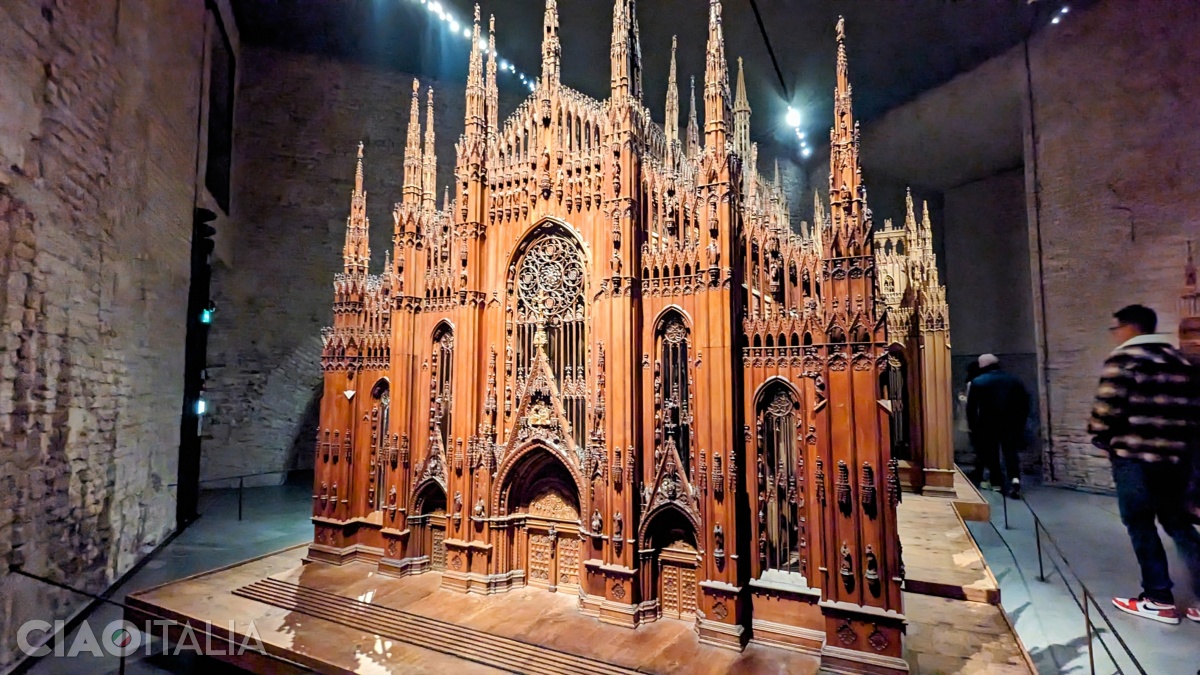
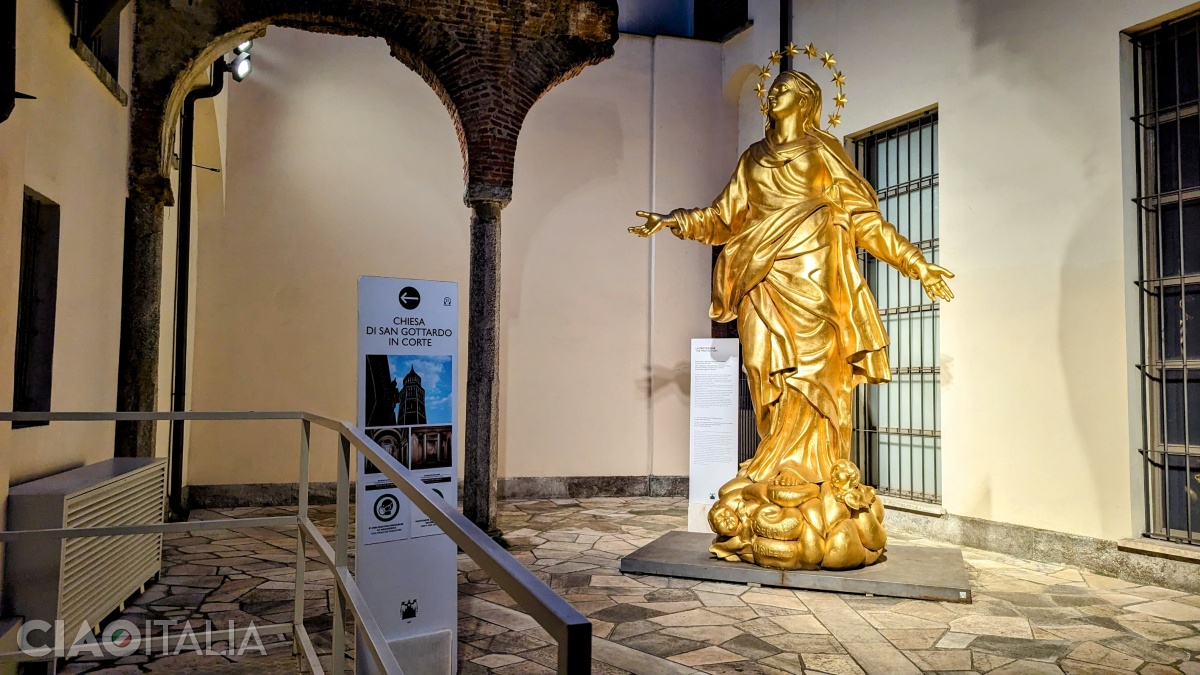
The visit also includes the Church of San Gottardo in Corte, built in the 14th century as a chapel of the Royal Palace.
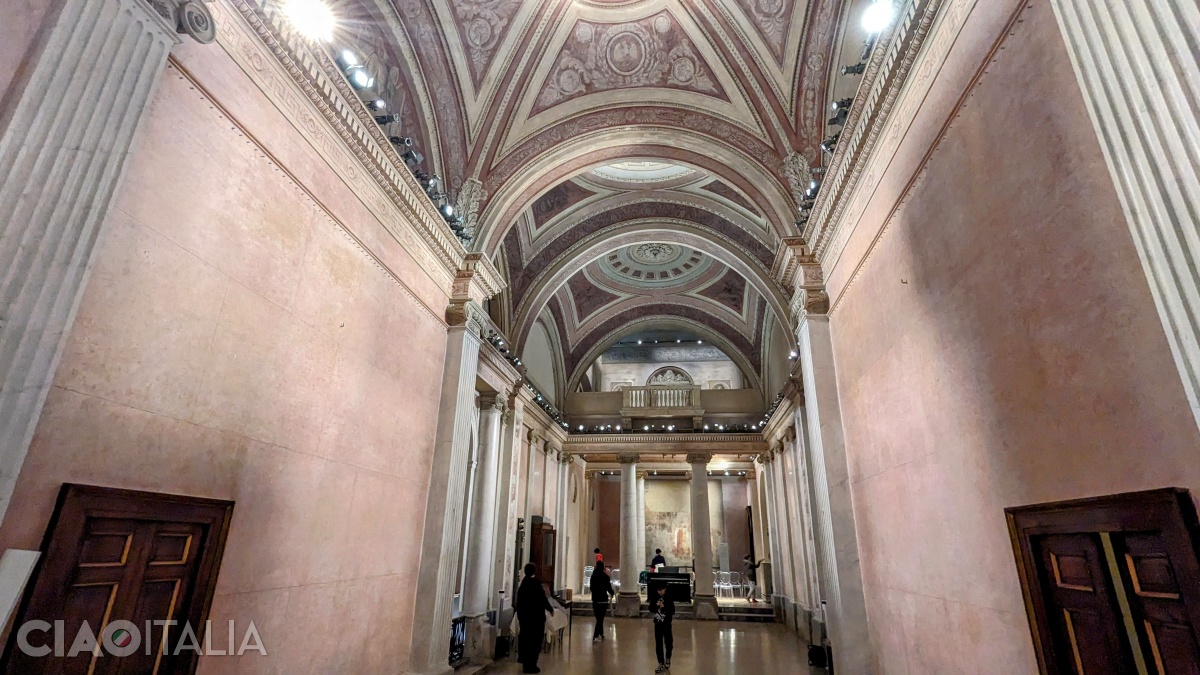
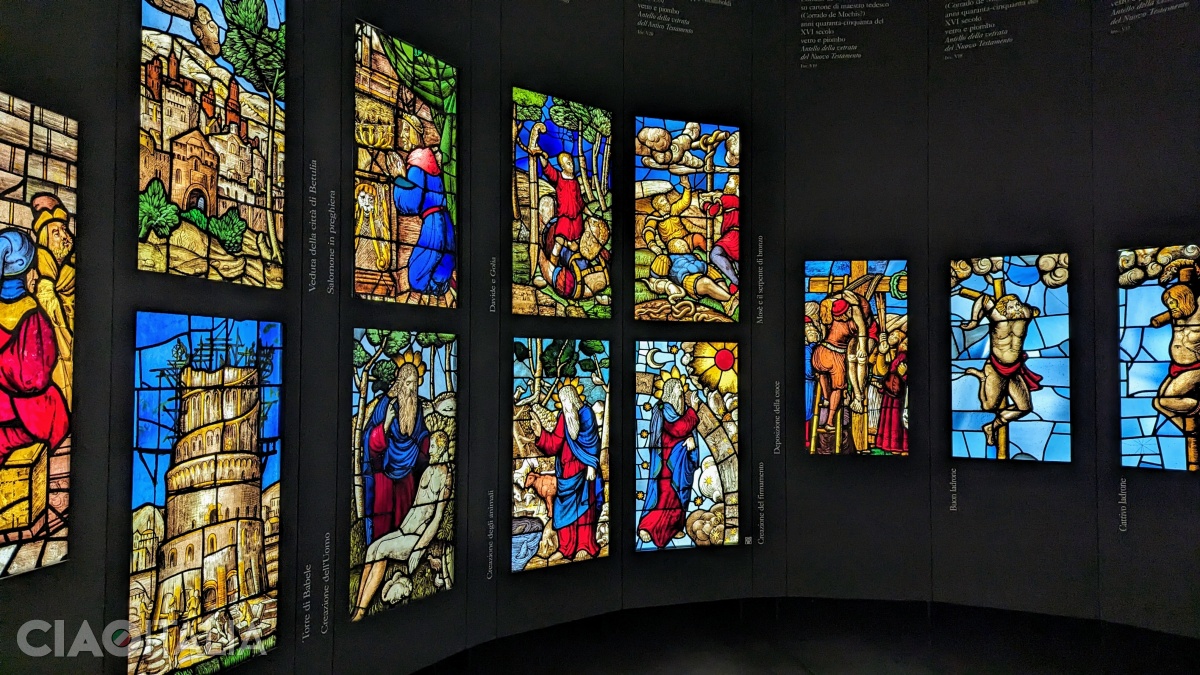
In the beautiful Stained Glass Hall, you can see up close the characters and details of some of the cathedral's stained-glass windows.
Scurolo di San Carlo
The Culture Pass Plus ticket also includes access to the Scurolo di San Carlo. This is the underground crypt built in the 17th century at the request of Cardinal Federico Borromeo to house the relics of St. Carlo Borromeo. It is a small room with walls richly decorated with marble and silk fabrics, which houses the crystal and silver urn containing the saint's relics.
Pinacoteca Ambrosiana
The Pinacoteca Ambrosiana is located a 5-minute walk from the Milan Cathedral. It was founded in 1618 when Cardinal Federico Borromeo donated his collection of paintings, drawings, and statues to the Ambrosian Library, which he had also founded a few years earlier, to transform it into an art museum accessible to everyone.
The Pinacoteca Ambrosiana has 24 rooms where works from the 15th to the 20th centuries are exhibited. Among the most famous are the "Portrait of a Musician" and the collection of writings and drawings (Codex Atlanticus) by Leonardo da Vinci, the preparatory drawing made by Raphael for the painting "The School of Athens" (displayed in the Vatican Museums), "Basket of Fruit" by Caravaggio, "The Virgin of the Pavilion" by Botticelli, "The Adoration of the Wise Men" by Titian, and "Vase with Flowers" by Brueghel. There is also a 17th-century copy of Da Vinci's painting "The Last Supper".
In the Pinacoteca Ambrosiana, you can also find the gloves Napoleon wore at Waterloo, a manuscript of Virgil's works that belonged to the poet Petrarch, and a lock of the famous Lucrezia Borgia's golden hair. In the 19th century, this lock of hair became a source of inspiration for various writers and poets who passed through Milan. According to legend, on All Saints' Night, Lucrezia's spirit wanders through the Pinacoteca, and when she finds the lock of hair, she washes and combs it just as she did when she was alive. The legend says that this is why it remains so beautiful and shiny.
Another legend claims that the same blonde hair of Lucrezia Borgia, Duchess of Ferrara, inspired a chef from Bologna to invent the famous pasta known as tagliatelle (you can learn more from the article What to Eat in Bologna).
Cripta di San Sepolcro
Cripta di San Sepolcro (The San Sepolcro Crypt) is the crypt of the Church of San Sepolcro, located next to the Pinacoteca Ambrosiana. The church was dedicated to the Holy Sepulchre in 1100, after the recapture of Jerusalem by the Crusaders. In the 14th century, a replica of Jesus' tomb was created inside the crypt (you can find something similar visiting the Church of Santo Stefano in Bologna). According to tradition, holy relics and soil brought by the Crusader knights from Jerusalem were deposited here. The San Sepolcro Crypt was the personal place of prayer for Saint Carlo Borromeo, who came to pray here every Wednesday and Friday. After his canonization, a ceramic statue representing him kneeling in front of the coffin was placed in the crypt. The floor, made of large white Verona stone slabs, comes from the pavement of the old Roman forum from the 4th century and is one of the oldest testimonies of the ancient city that existed in this place.