Galleria Vittorio Emanuele II in Milan
The Galleria Vittorio Emanuele II (simply referred to by locals as "Galleria") is one of Milan's top tourist attractions. Situated between the Duomo and Teatro alla Scala, it bustles from morning until late at night. Once inside, you'll find lots of high-end shops from exclusive retailers, historic bars and restaurants, as well as the famous bull mosaic, rumored to bring good luck to passersby.
The Galleria Vittorio Emanuele II: One of Europe’s Oldest Shopping Arcades
Already in the first half of the 19th century, the city of Milan envisioned replacing its old medieval streets with a more refined and modern area to connect Piazza del Duomo to Piazza della Scala. An urban design competition was held, showcasing a total of 176 architectural plans at the Pinacoteca di Brera. After several selective stages, the proposal submitted by Giuseppe Mengoni, an architect from the region of Emilia-Romagna, was the chosen one.
The gallery followed the European trend of covered passageways. If you've traveled through Italy before, you might remember seeing Galleria Umberto I in Naples (inspired exactly by Milan's gallery) or the covered arcades from Turin. However, the Galleria Vittorio Emanuele II surpassed them all, becoming a landmark celebrated for its elegance and breathtaking beauty.
The gallery's construction took place between 1865 and 1878. From the very beginning, the interior featured elegant shops, restaurants, and cafés. It was one of Europe's first shopping centers and the very first in Italy. Quickly, it became Milan's salotto (the living room), where locals chose to spend time strolling, socialising, and, especially, to see and be seen.
Why Does the Gallery Bear the Name of Vittorio Emanuele II?
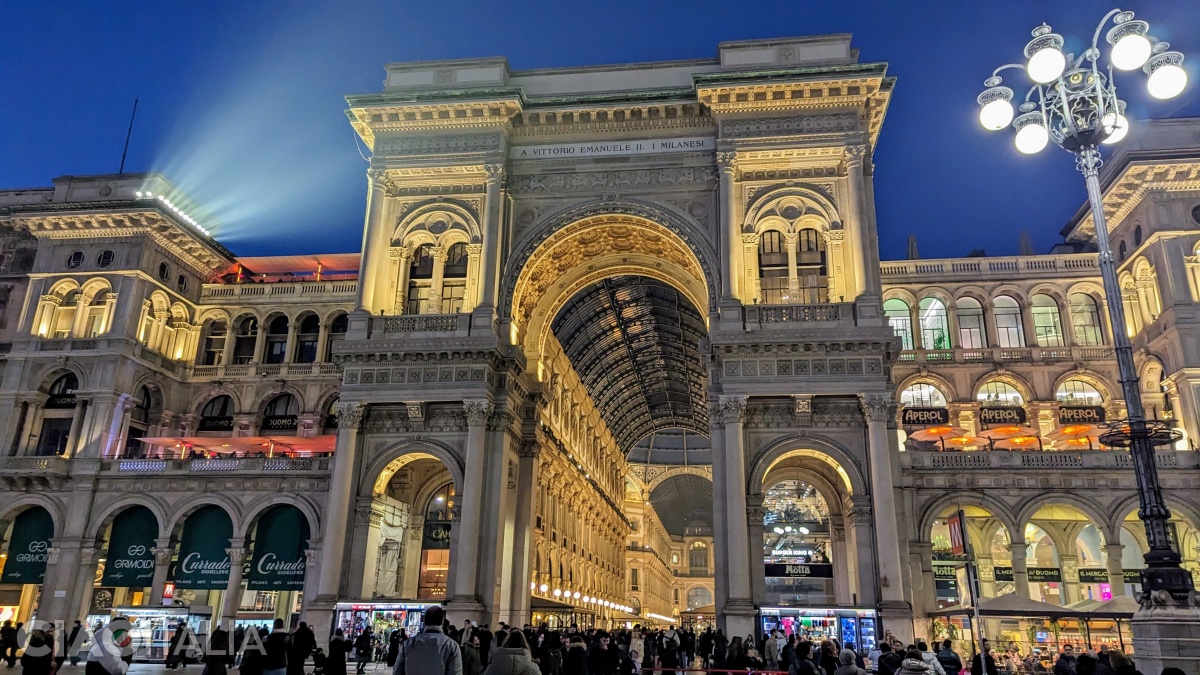
Its construction began shortly after the unification of Italy, so dedicating the gallery to the first king of unified Italy seemed the natural choice. In addition, authorities also hoped this would expedite the royal decrees needed for expropriation and for the beginning of the construction work.
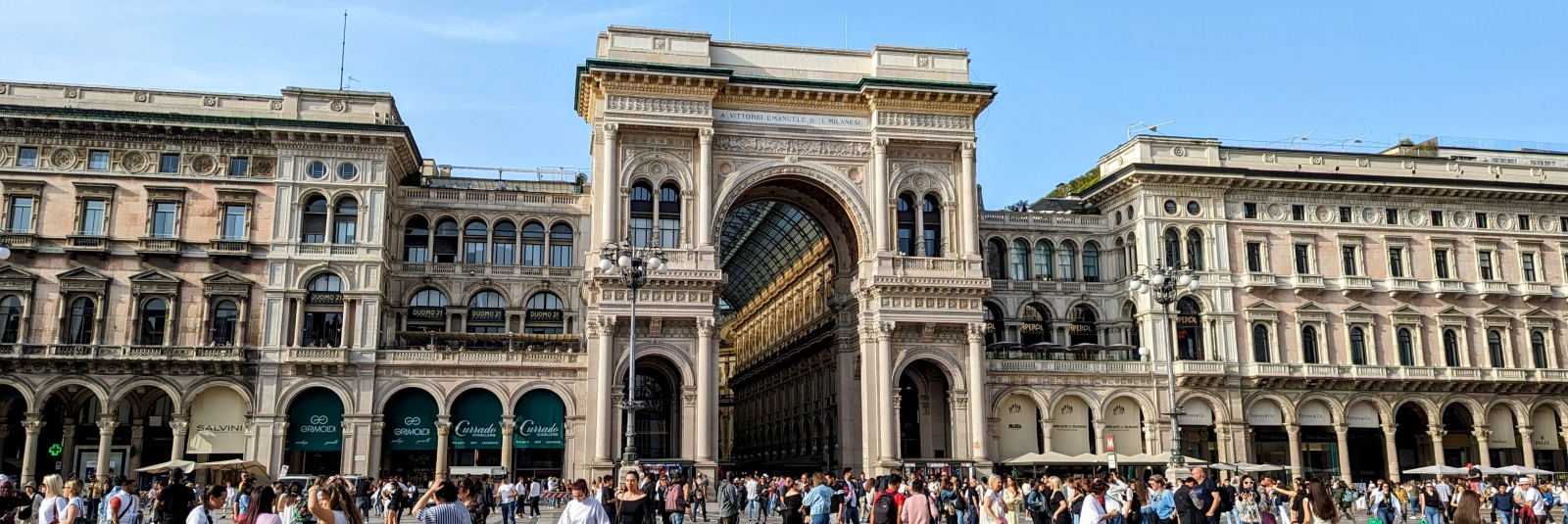
Right above the triumphal arch at the Piazza del Duomo entrance, one can see the inscription: A VITTORIO EMANUELE II. I MILANESI ("To Vittorio Emanuele II. From the people of Milan").
A Tragic Inauguration
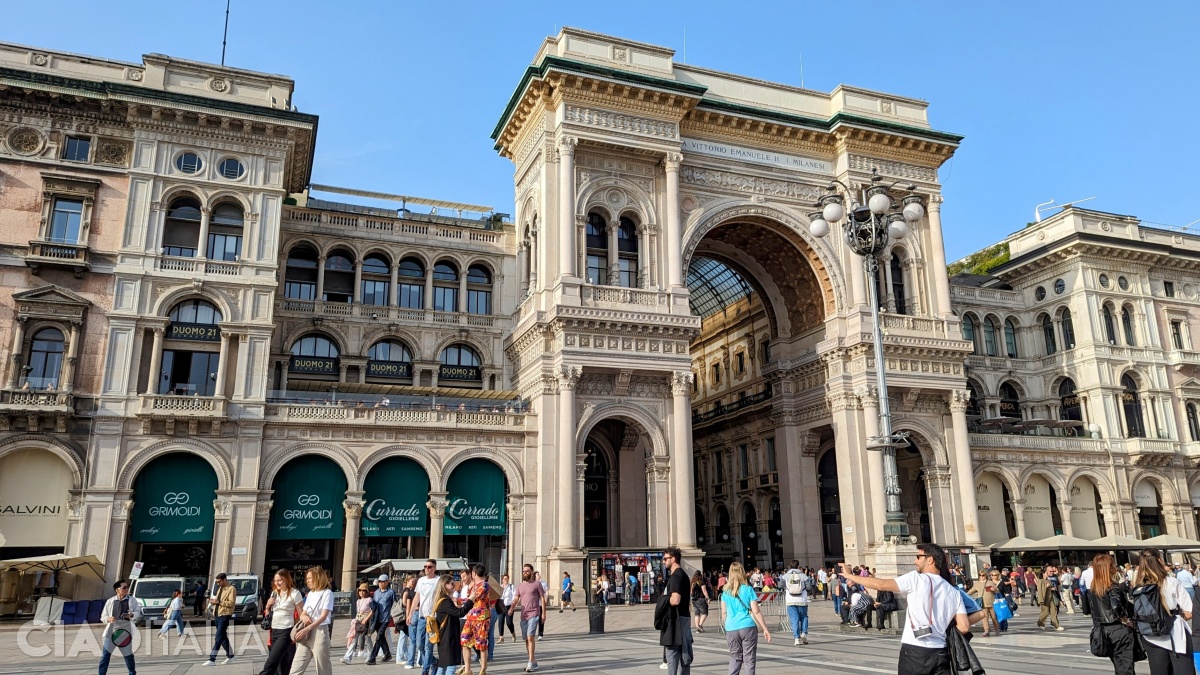
Though today the gallery is a place where tourists come in search of good fortune, its construction was marked by a tragic event. On December 30, 1877, just a day before the official inauguration, architect Giuseppe Mengoni fell from the highest scaffolding and lost his life. This event shocked the Milanese, with some even speculating suicide. Around 4,000 people attended his funeral.
What Is the "Octagon"?
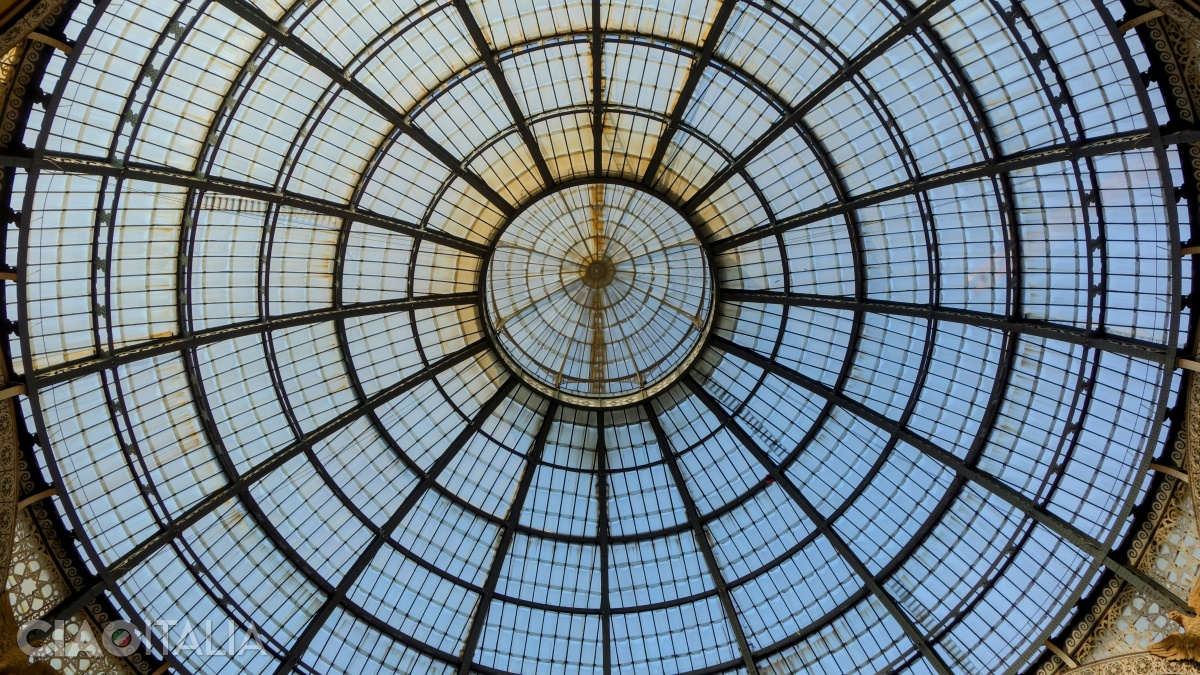
The Galleria Vittorio Emanuele II has a cross-shaped design with arms measuring 196m and 105m. The area where they intersect is known as the "octagon" (ottagono), named for its shape. Above it, at 47 meters high, the iron-and-glass dome rises - a remarkable engineering feat of its time. The surrounding walls are adorned with caryatids and Renaissance-inspired stucco decorations.
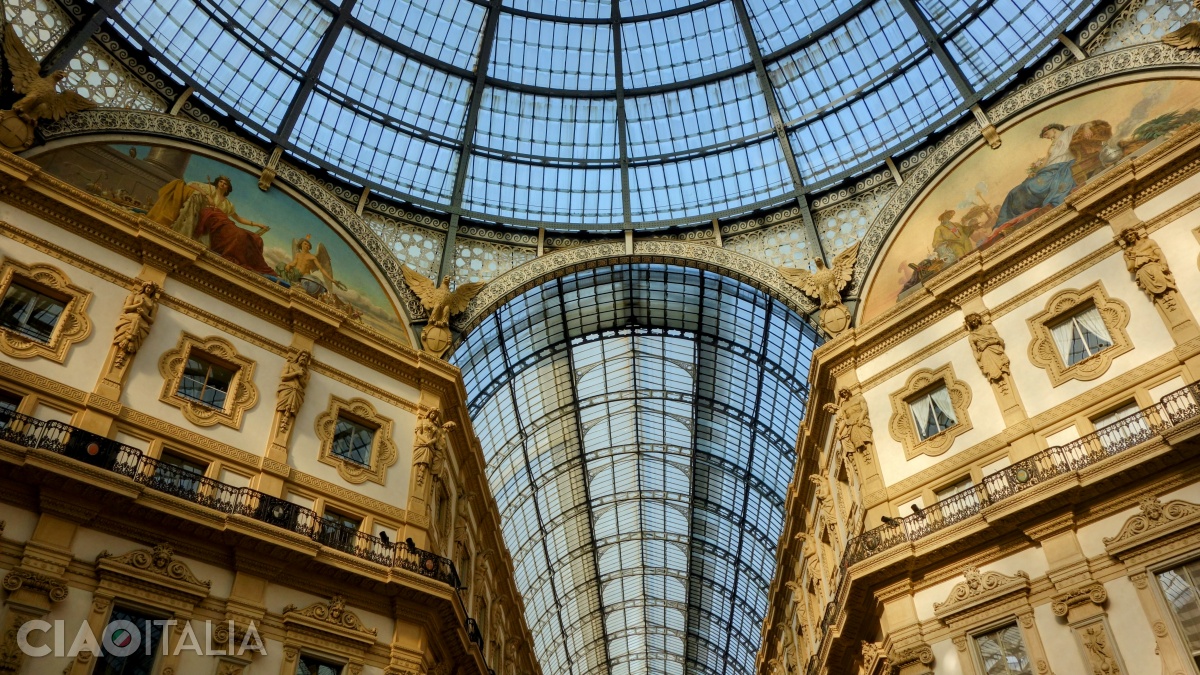
If you stand in the octagon and look up at the dome, you'll notice four lunettes surrounded by statues of eight eagles. The mosaics in these lunettes depict female allegories of the continents: Europe, Asia, Africa, and America. Europe is depicted in ancient clothing, next to a winged man holding a laurel wreath; Asia is seated on a throne, receiving gifts from someone having Asian features; Africa is dressed in Egyptian garments, flanked by a lion and a Moor, while America is surrounded by African Americans and an Indian.
The floor features mosaics created by Venetian artists, with the House of Savoy's coat of arms at the center: a white cross on a red shield. Surrounding it are the emblems of Milan and three other cities that served as capitals of the Kingdom of Italy: Turin, Florence, and Rome.
At the the same time, the entrances from the lateral arm (the shorter one) are decorated on the inside of the gallery with paintings representing "Science", "Industry", "Art", and "Agriculture".
The Bull of Good Fortune
All around the mosaic of the bull, which is the symbol of the city of Turin, there is always a crowd of people waiting their turn to perform the famous ritual bringing good fortune. Legend has it that spinning three times counterclockwise on your right heel over the bull's "intimate area" (symbolising force and power) will bring good fortune. However, the bull itself hasn't been so lucky, as the mosaic requires frequent restoration due to wear and tear.
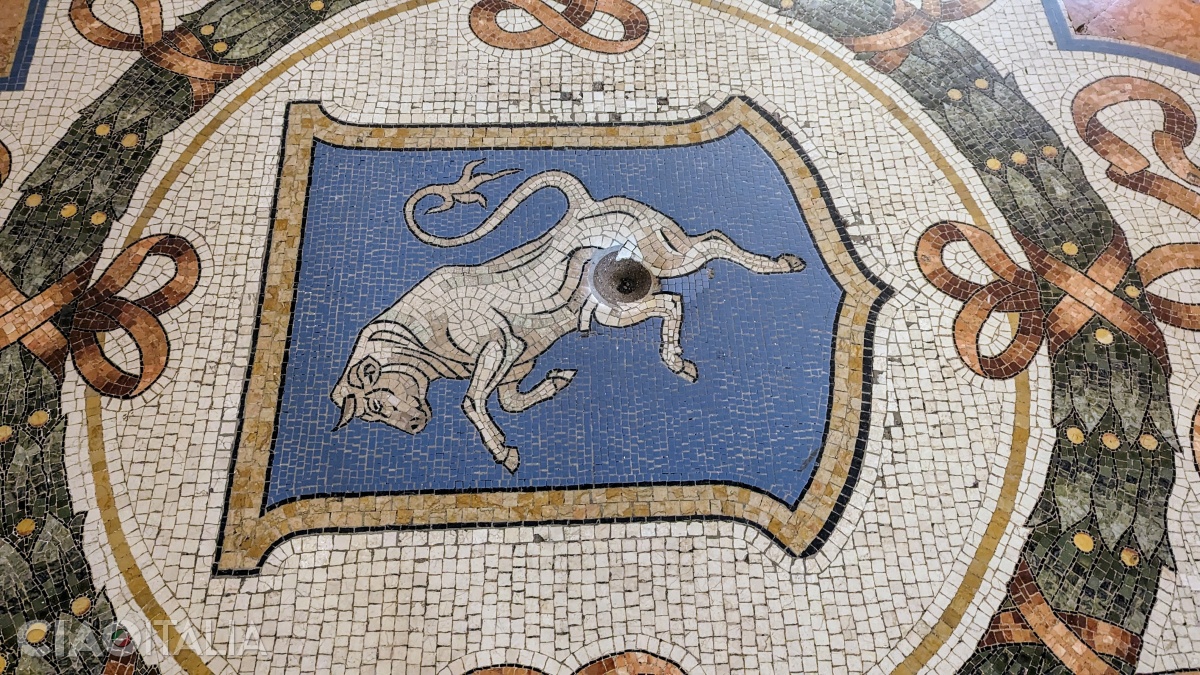
Interestingly, Turin also features a bronze image of the bull under the Piazza San Carlo arcades, surrounded by similar superstitions. For further details, check out the article about the things you can do for free in Turin.
Golden Lettering for Businesses in the Galleria Vittorio Emanuele II
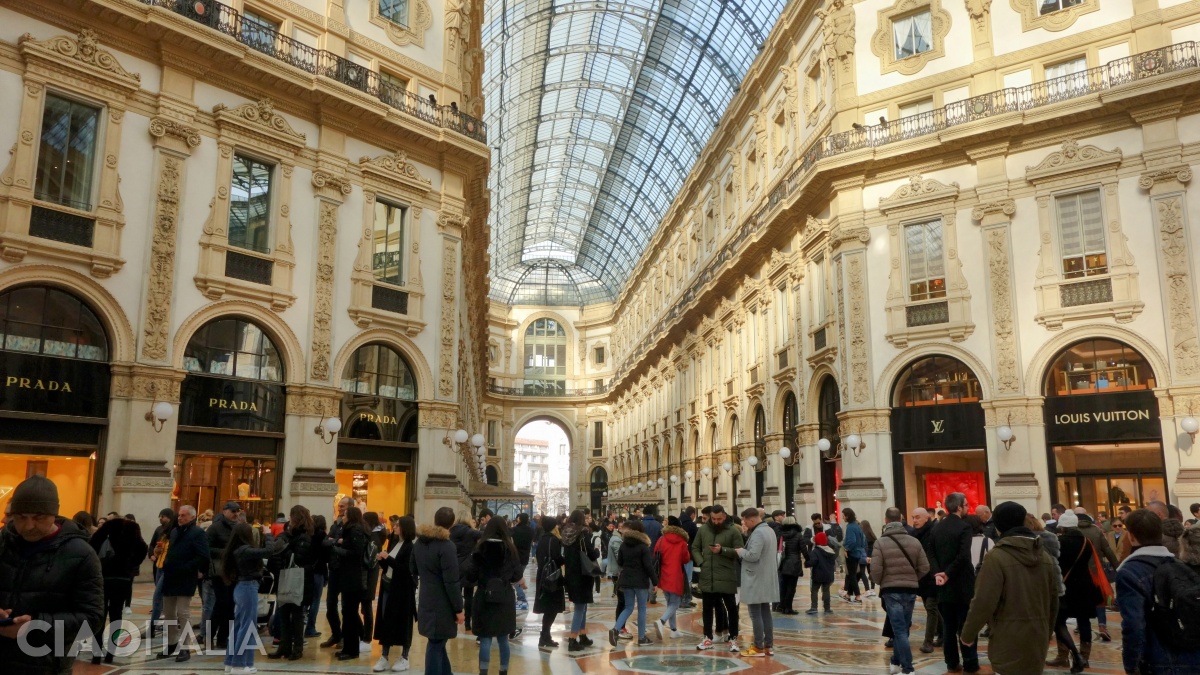
Galleria Vittorio Emanuele II is one of the famous shopping areas in Milan, and is still home to several historical Milanese businesses, including Borsalino (1833), Bocca bookstore (1755), Cadè shirt store (1926), or Prada (1913). Luxury brands like Gucci and Louis Vuitton have also found a place here, alongside a five-star hotel, Galleria Vik Milano.
By law, all businesses in the gallery must display their names in golden letters on a black background.
Aperitivo, Lunch, or Dinner in the Galleria
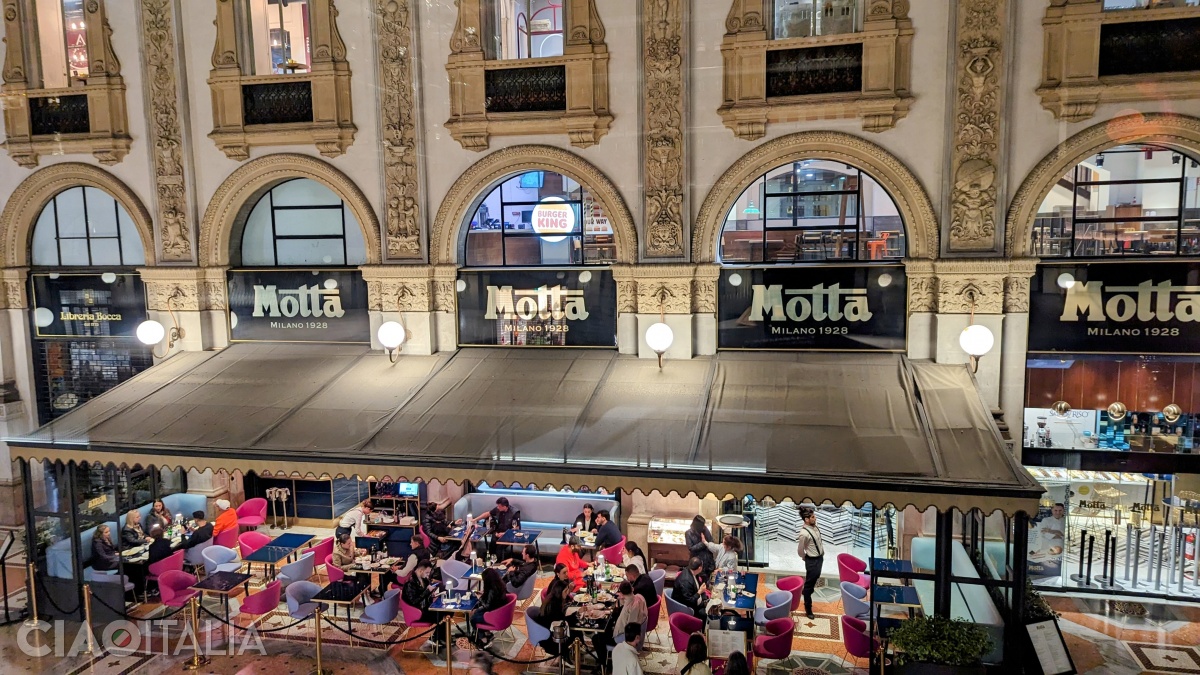
Besides high-couture stores, the Galleria houses historic venues - bars, cafes, or restaurants - such as Caffè Biffi (1867), Savini Restaurant (1867), Camparino (1915), and Motta Milano (1928).
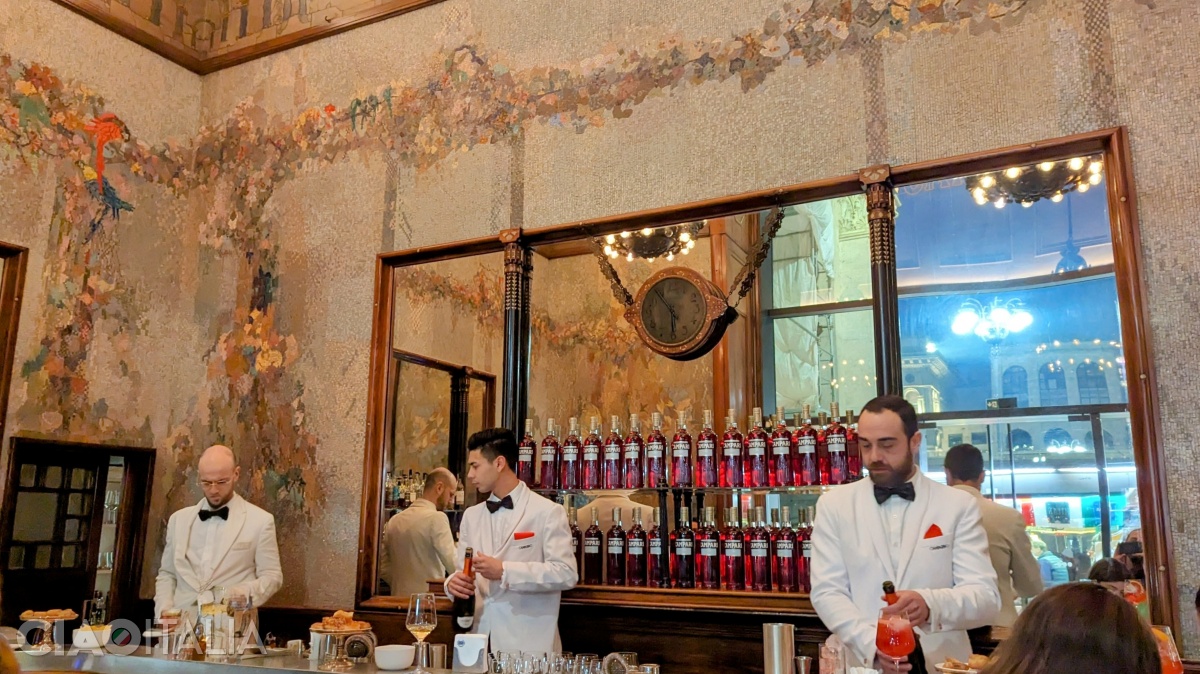
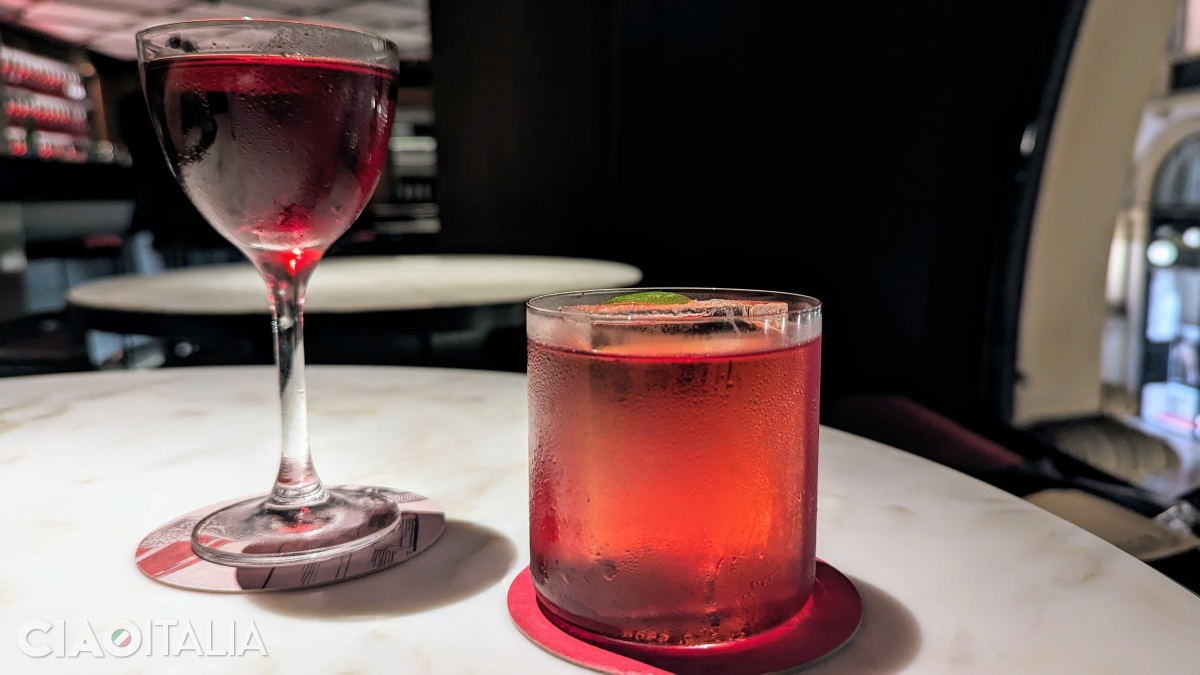
The Camparino bar is the successor of the Caffè Campari bar, founded in 1867 by Gaspare Campari, the inventor of the famous bitter that bears his name. Camparino was opened in 1915 by his son and created the habit of mixing the drink with cold mineral water (Campari soda).
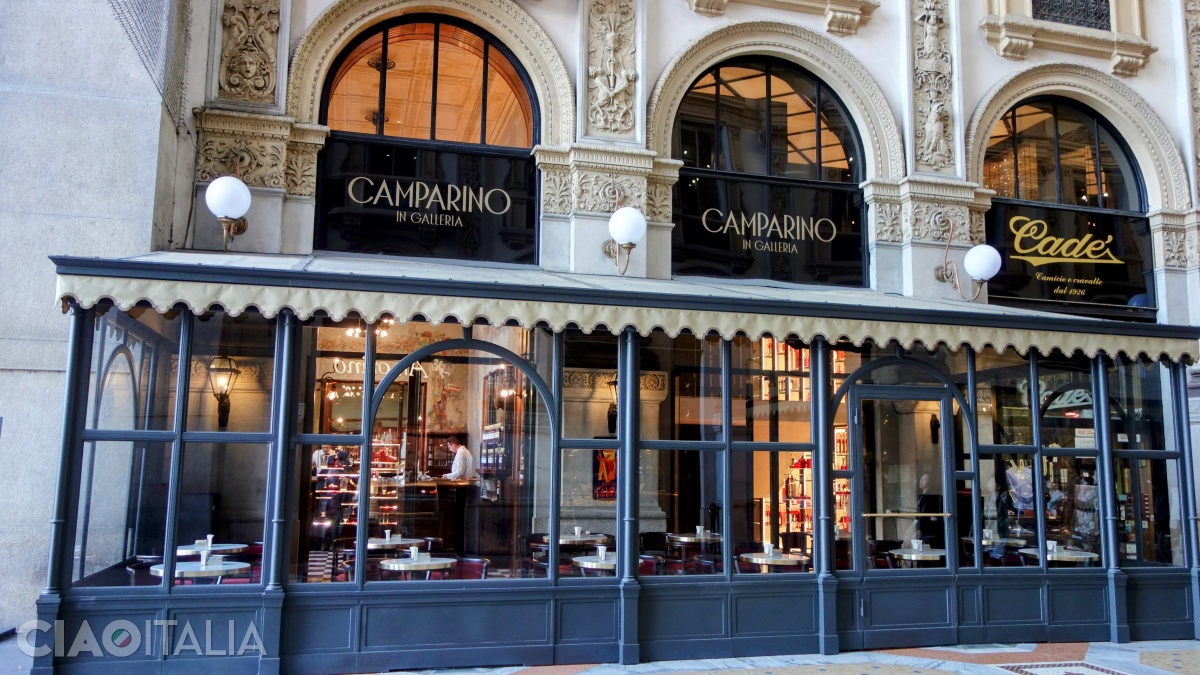
Officially named Camparino in Galleria, the bar is located just to the left of the entrance to the gallery when entering it from Piazza del Duomo. It still retains its original furniture, mosaics, and Art Nouveau-style wrought-iron decorations. On the ground floor, there is a small room and a terrace facing the gallery, while the upper floor offers a larger, more modern space where you can relax, enjoying the view of the bustling passage below, with a Campari cocktail in hand.
Highline Galleria: The Rooftop Walk
Did you know you can walk on the Galleria’s rooftop? The Highline Galleria offers a 40m-high, panoramic walkway stretching a few hundred meters. From here, you can admire both the Galleria and views of Milan and Piazza del Duomo. Entrance: Galleria Vittorio Emanuele II, No. 11/12 (near the Leonardo3 Museum, 6th floor).
Highline Galleria
Opening Hours:
- only guided tours, at fixed times
Ticket Prices:
- Adults: €15 (online bookings on Ticketone, at the price of €16.5)
- Students: €10
- Children 6-16 years: €9
- Children under 6: free