What to Eat in Milan?
Traditional Milanese cuisine consists of rather hearty dishes, generally based on meat and butter, but also featuring plenty of seasonal vegetables. Some of them, such as ossobuco or risotto alla milanese, have made Milanese gastronomy famous worldwide.
Among the historic restaurants in Milan, you'll find: Antico Ristorante Boeucc (1696), which hosted guests like Giuseppe Verdi and Gaetano Donizetti, Ristorante Da Berti (1866), Antica Trattoria della Pesa (1880), Ristorante Giannino (1899), Trattoria Masuelli San Marco (1921), Ristorante A Santa Lucia (1929), frequented by famous personalities like Yves Montand, Marcello Mastroianni, and Frank Sinatra, Trattoria del Nuovo Macello (1928), Trattoria Milanese (1933) and Trattoria Arlati (1936). Additionally, there are several historic restaurants in Galleria Vittorio Emanuele II.
You can find the full list of restaurants registered in the Associazione Locali Storici d'Italia ("Historic Places of Italy") here.
For a quick bite, try Luini Bakery, operating in Milan since 1949 and famous for its panzerotti (a baked product originally from Puglia, the birthplace of the Luini family). And if you're in the mood for something sweet, stop by the renowned Cova pastry shop, founded in 1817. You'll find it on Via Monte Napoleone, in Quadrilatero della Moda, the most famous shopping area in Milan.
1. Michetta
Let's start with bread. The traditional Milanese bread roll has a flower-like shape and is hollow inside. It is called michetta, a name derived from the Latin word mica ("crumb"). In nearby areas, such as Bergamo, it is known as stellina ("little star").
Michetta was born in the early 18th century, when Milan came under Habsburg rule. Austrian officials were not fond of the local bread, which crumbled too easily, so they introduced the rolls they were accustomed to. However, in Lombardy's humid climate, the Austrian kaisersemmel - originally a round, flower-shaped roll with a soft center - lost its pleasant texture. To solve this, bakers removed the soft interior, making the roll harder and crunchier so that it would stay fresh for longer. This is how michetta came to be, and in 2007, it received the De.Co. (Denominazione comunale) designation from the Milan City Council, a title given to traditional Milanese gastronomic products.
Michetta is eaten at the table as a bread accompaniment or used in sandwiches, paired with local cheeses and meats.
2. Insalata di Nervetti
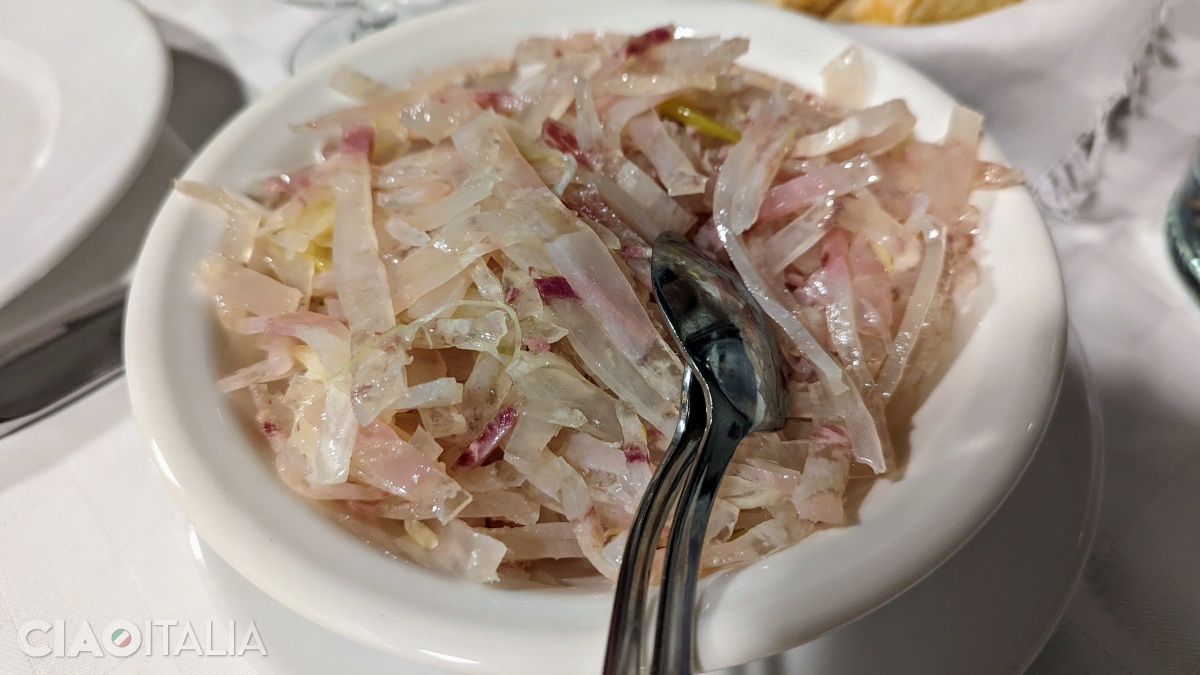
We continue with antipasti, or appetizers... more precisely, appetizers for the more adventurous eaters. Insalata di nervetti (or gnervitt, as the Milanese call it) is a salad made from cartilage from a calf's knees. The cartilage is boiled for several hours, then cut into pieces and seasoned with chopped onion, oil, vinegar, salt, and pepper. Sometimes, parsley or even beans are added.
3. Minestrone alla Milanese
For the primo (first course), try minestrone alla milanese, a soup made with plenty of seasonal vegetables and greens, as well as bacon or pancetta.
Minestrone alla milanese has its origins in peasant culinary traditions from the early 19th century.
4. Minestra di Zucca alla Milanese
Minestra di zucca is a creamy pumpkin soup. In Milanese cuisine, pasta is added to the soup, and it is topped with grated Grana Padano cheese.
5. Risotto alla Milanese with Ossobucco
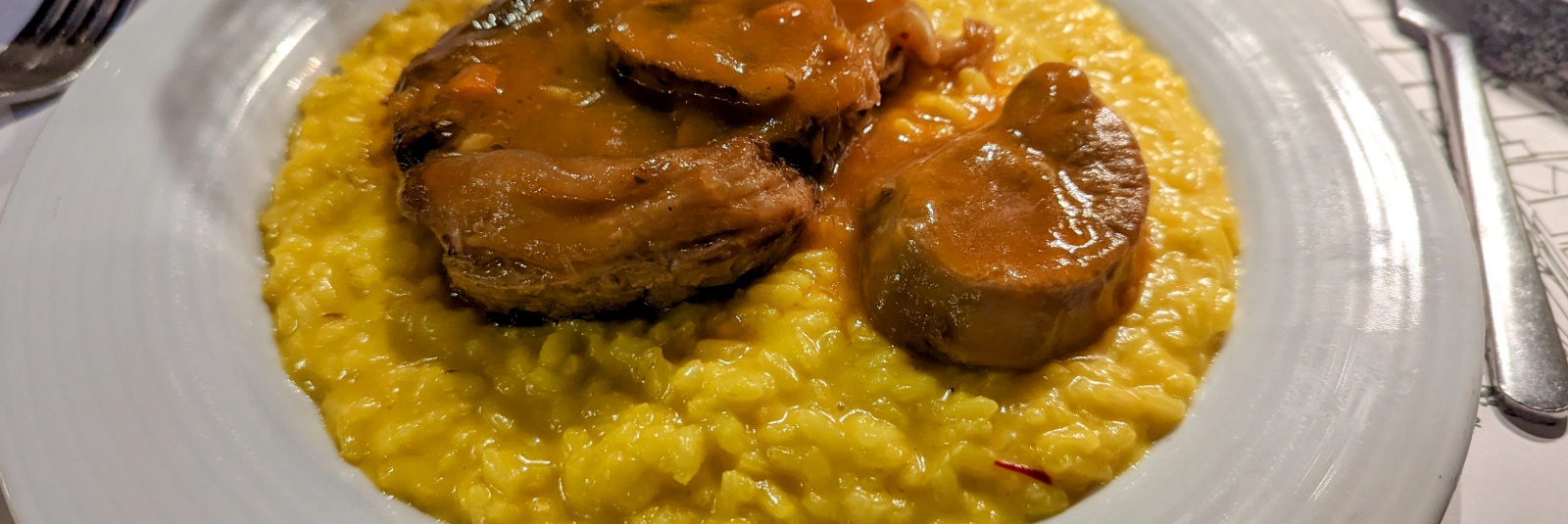
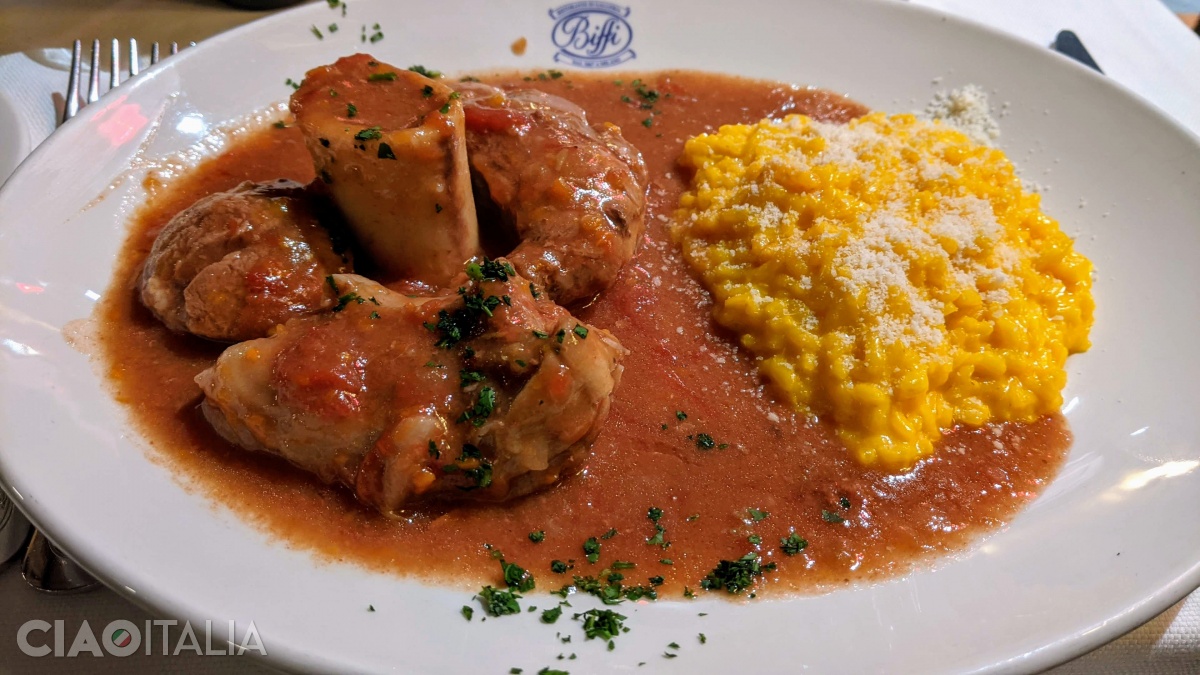
We are now at the secondi, or main courses. Risotto alla Milanese is probably the most famous dish from Milan. It's a risotto made with bone marrow (which melts into the butter and is an essential ingredient) and saffron, giving it its distinct golden color. Its origins date back to 1574, when, according to legend, a painter working on the stained-glass windows of the Duomo di Milano wanted to impress his guests. He added saffron - the same pigment he used to make his paints more vibrant - into the risotto, creating this now-iconic dish.
Another well-known traditional Milanese dish, which appears in cookbooks from the 18th century, is ossobucco. The name comes from ossbus, which means "hollow bone" in Milanese dialect - referring to a veal shank with bone and marrow inside. It is cooked in a flavorful sauce and usually topped with gremolada, a mixture of parsley, chopped garlic, and lemon zest.
Ossobucco is most often served alongside risotto alla milanese, but sometimes you'll also find it paired with polenta, another staple of the cuisine from the region of Lombardy.
6. Costoletta alla Milanese
Costoletta (or cotoletta) alla Milanese is veal schnitzel, whose origins are also claimed by the Austrians under the name Wienerschnitzel.
Milanese schnitzel was mentioned as early as 1148 in a document preserved in the Basilica of Sant'Ambrogio. When prepared authentically, it must include the bone, and the meat (from milk-fed veal) should be pounded to about the thickness of the bone. It is then coated in beaten egg and breadcrumbs and fried in clarified butter.
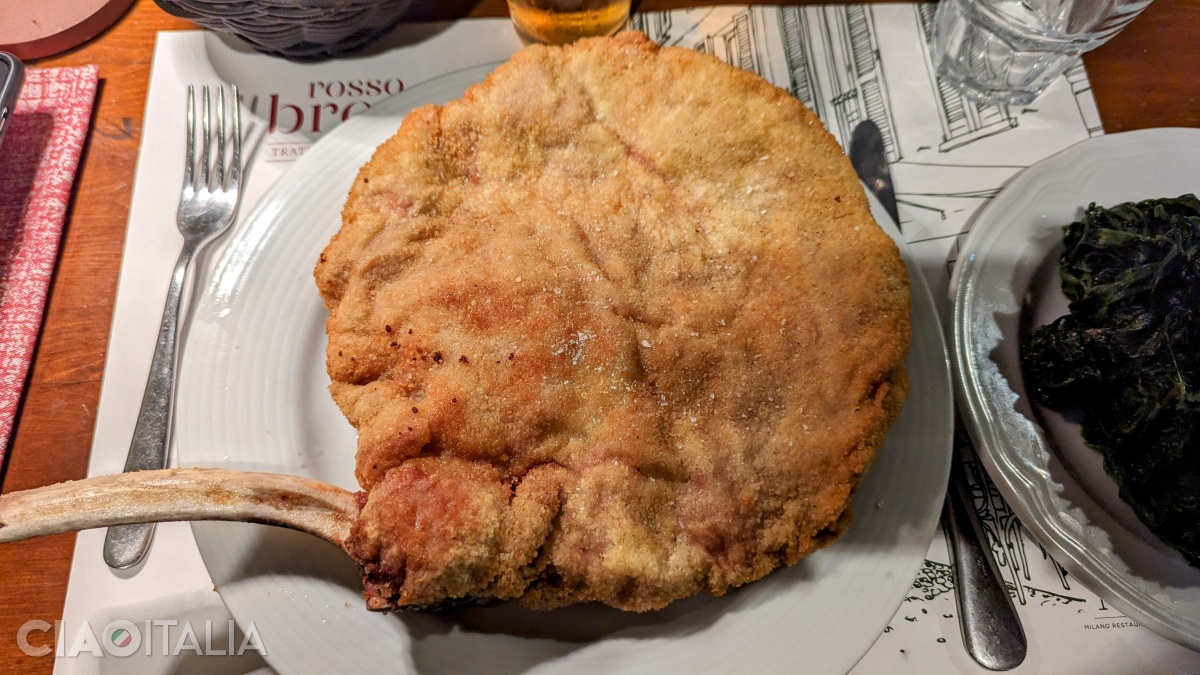
In other places, the boneless veal is pounded even more, until it becomes thin and wide, almost as large as the plate. Due to its generous size, this version is called orecchia d’elefante ("elephant ear").
7. Mondeghili
Mondeghili is the Milanese name for beef meatballs. The chopped beef can be mixed with prosciutto, salami, sausages, liver, eggs, bread soaked in milk, aged cheese, garlic, and nutmeg.
This recipe also received the De.Co. (Denominazione Comunale) designation in 2008.
8. Cassöeula
Cabbage and pork… sound familiar? This is cassöeula, a hearty, high-calorie dish perfect for cold winter days. Its name comes from the pan in which it was traditionally cooked. It is believed that this dish, now a staple of Milanese cuisine, was introduced to Milan during the Spanish rule in the late 16th century. According to legend, a Spanish officer taught his lover, who worked for a noble family, how to prepare cabbage with pork meat and sausages. The dish became popular among the Milanese and eventually became one of the region's most beloved meals. It is said to have been the favorite dish of the famous conductor Arturo Toscanini.
9. Busecca
Another dish representative of Milanese cuisine is busecca, a stew made from beef tripe and beans, also known as trippa ("tripe") alla Milanese. Its origins lie in the old peasant cuisine, and in the past, it was traditionally prepared for Christmas Eve. It was also eaten during local fairs, often served at inns. In fact, the Milanese were sometimes referred to as busecconi or mangiatrippa ("tripe eaters"). In Milanese dialect, the word busa refers to tripe.
10. Arrostino annegato
In translation, arrostino annegato (or rostin nega'a in Milanese dialect) means "drowned steak". The veal is cooked in butter, with a sauce made from white wine and vegetable broth.
11. Panettone
We've arrived at desserts... You've surely heard of panettone, the Italian Christmas cake. What you may not know is that its origins are Milanese (and in the local dialect it's called panetun). It is said to have been created in the 15th century, when a chef at the court of Ludovico il Moro (probably at the Castello Sforzesco) burned the dessert he was supposed to serve at the Christmas dinner. At that moment, his apprentice came to the rescue, offering him a simple dessert he had made for himself: a sweet dough with candied fruits. According to one theory, the name panettone comes from pan di Toni, meaning "Toni's bread" - after the apprentice.
However, it's more likely that the name panettone has a different origin. In the past, the Christmas dessert was called pane di Natale ("Christmas bread"). Because it was large, it was also called pan grande ("big bread"), which eventually evolved into the augmentative form panettone, which carries the same meaning.
Traditionally, panettone is about 30 cm tall and made from a dough of flour, butter, eggs, and yeast, with added raisins or candied fruits. Today, you'll find all sorts of modern versions - from chocolate panettone to pistachio and even limoncello panettone.
In Milan, the tradition remains to keep a piece of panettone from Christmas and eat it on an empty stomach on the morning of February 3rd, the feast day of Saint Biaggio.
Legend has it that this tradition began because a peasant woman forgot her panettone in the parish before Christmas and went to retrieve it on the morning of February 3rd. The priest, who had eaten a piece in the meantime, went to bring it back, asking for forgiveness. Not only was the panettone whole, but it was even larger than before, so the priest attributed this miracle to Saint Biaggio. Since then, the dessert has become a symbol of this feast day, and the tradition of eating a piece of panettone on the morning of February 3rd continues.
12. Busecchina
Another traditional Milanese dessert is busecchina, made from chestnuts, and it is typically prepared in the fall.
13. Barbajada
Another desert, but in liquid form, is barbajada. This warm drink, made from coffee, chocolate, and milk, was created by Domenico Barbaja in the early 19th century while he was working at Caffè Cambiasi, a café located near Teatro alla Scala.
14. Wines
A traditional Milanese meal should be accompanied by local wines. Try wines from the Lombardy region: Franciacorta and Oltrepò Pavese sparkling wines, chiavennasca (a clone of nebbiolo, used for red wines from Valtellina), or Lugana, Bardolino, and Bardolino Chiaretto, produced in the Garda and Iseo lake areas.
15. Aperitif Drinks
Going for an aperitivo (a drink accompanied by snacks) before dinner is a tradition in Milan, even though, the first aperitif drinks (in the form of vermouth) were invented in the city of Turin at the end of the 18th century (see also the article on Turin's gastronomy). Initially, it was believed that the bitter substances from the plants in the aperitifs had the property of stimulating the appetite. The very name aperitivo comes from the Latin word aperire ("to open").
The most famous aperitif drink is undoubtedly Campari. It was created in 1860, in Milan, in Galleria Vittorio Emanuele II, where you can still visit Caffè Camparino, the bar opened by Gaspare Campari's son, the inventor of the drink. Today, alongside the classic sights of Milan, you can also visit Galleria Campari.
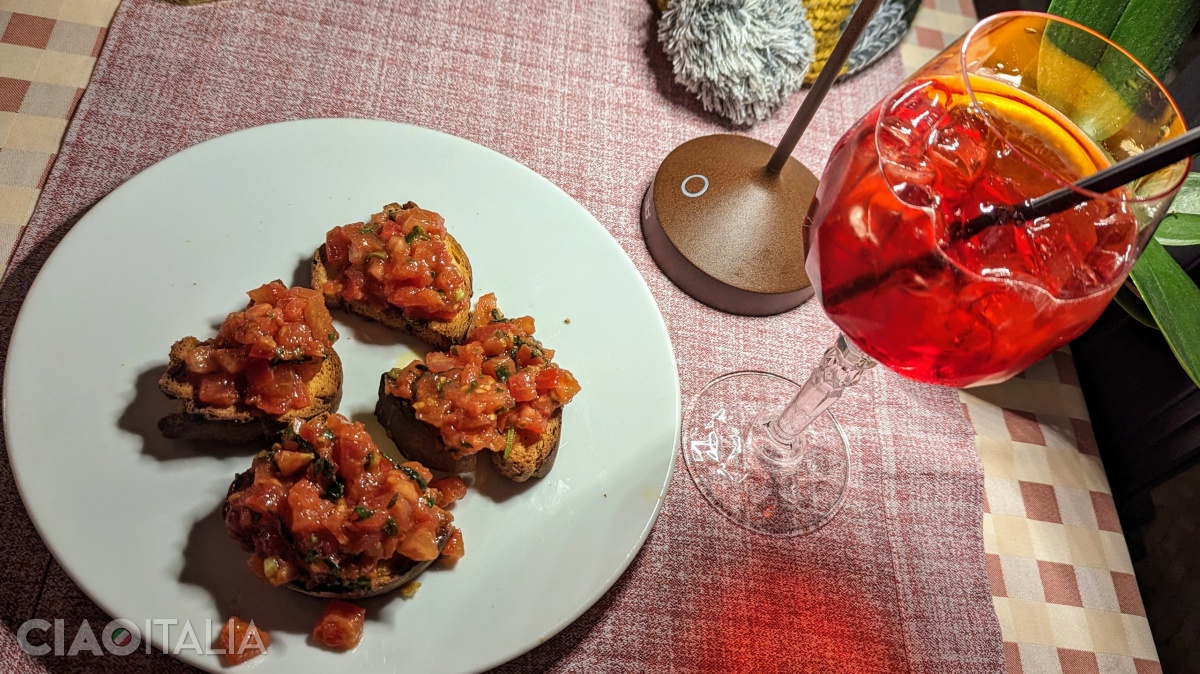
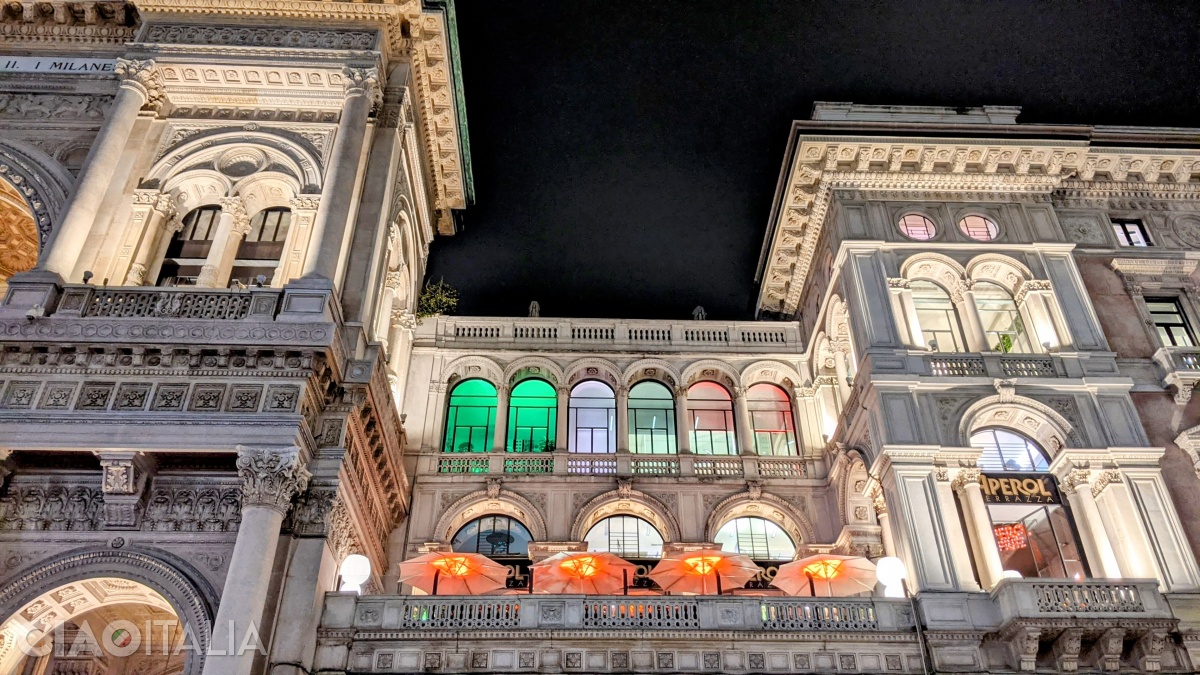
In recent years, however, Aperol (invented in Padua, in the Veneto region, but today produced by the same Campari Group) has surpassed Campari in popularity among Milanese. There's even Terrazza Aperol, with a wonderful view of the Duomo of Milan.
Another aperitivo invented in Milan in 1972 is the Negroni Sbagliato cocktail. As its name suggests ("Wrong Negroni"), it was created by mistake at the historic Bar Basso, when the owner, instead of mixing gin with red vermouth and Campari bitter, used sparkling wine. This made the drink lighter and less alcoholic.
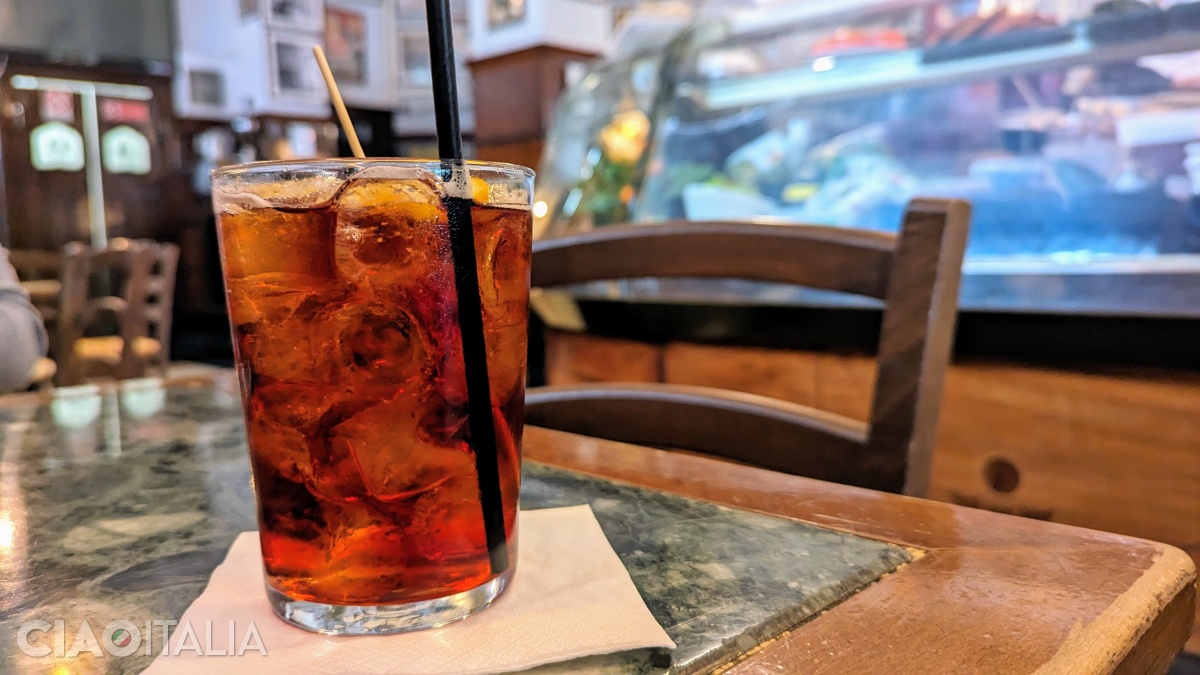
Ginrosa bitter, also associated with Milan, was invented at the end of the 19th century at the bar with the same name, in Piazza San Babila.
16. Digestive Drinks
In Milan, some digestive drinks were also invented, known as amaro, which are consumed at the end of a meal. This is the case of the famous Amaro Ramazzotti, invented in 1815 by Ausano Ramazzotti.
Another amaro with Milanese origins is Rabarbaro Zucca (or simply Zucca), a digestive made from rhubarb, invented in 1845 by Ettore Zucca.
Fernet-Branca was also born in Milan, in 1845. It was created by pharmacist Bernardino Branca, and its initial purpose was to serve as a remedy for malaria and cholera.