What to Eat and Drink in Turin?
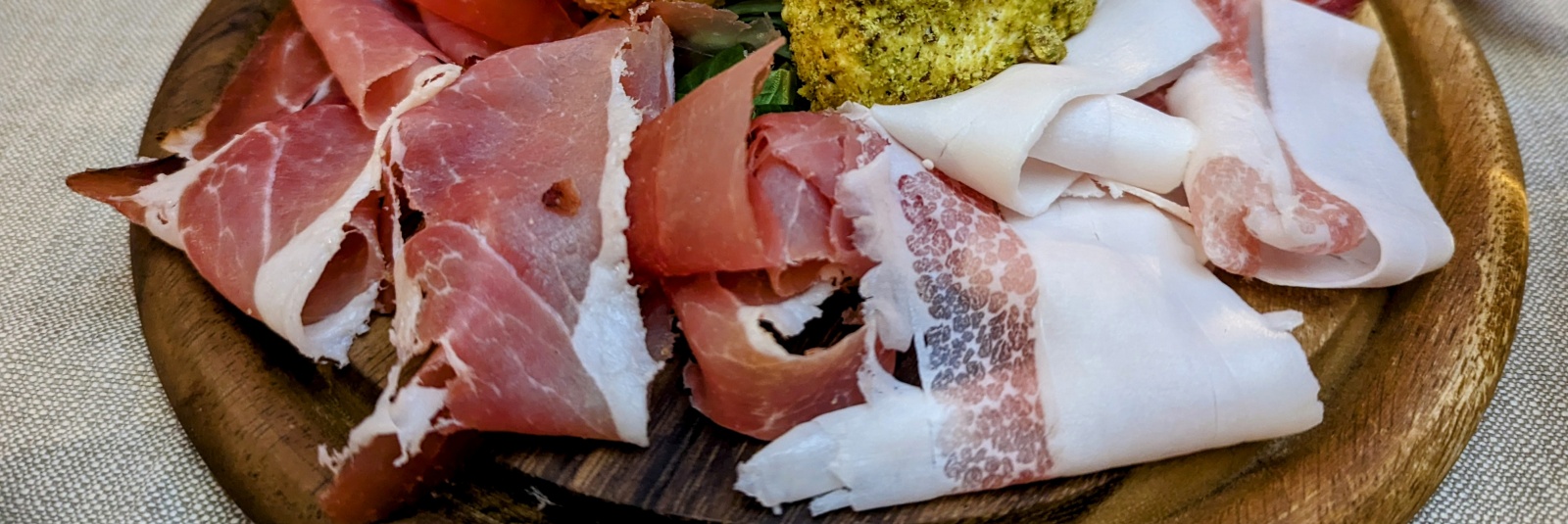
The food in Turin deliciously combines the flavors of traditional Piedmontese cuisine with the noble tastes of the royal cuisine from the House of Savoy court, along with refined French influences.
The dishes (many based on vegetables, pasta, but especially meat) are often elaborate and require long cooking times. You can try them in the wide variety of restaurants found in Turin, catering to all tastes and budgets - from traditional piole, small family-run eateries with very affordable prices, to elegant and expensive Michelin-starred restaurants (including the historic Ristorante del Cambio, established in 1757), which offer innovative interpretations of traditional recipes.
Turin is the birthplace of breadsticks (grissini), gianduja chocolate, vermouth, and tramezzino sandwiches.
What to Eat in Turin?
Here's what to eat if you want to try the local specialties!
Appetizers (Antipasti)
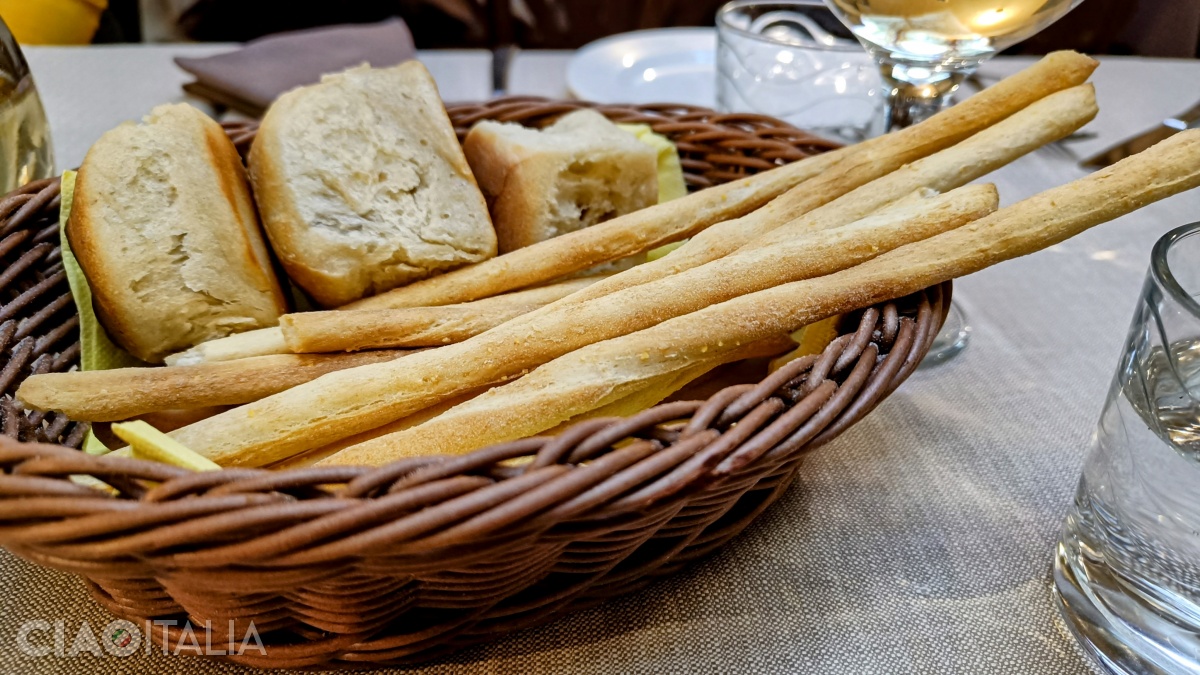
Breadsticks (Grissini)
Not many people know this, but breadsticks are a true specialty of Turin. They were first made here in 1679 by the baker of the Savoy court. The young prince Vittorio Amedeo II had trouble digesting the soft inside of bread, so at the suggestion of the royal doctor, Antonio Brunero created this crispy, crust-only baked product.
In most restaurants in Turin, at the beginning of the meal, you'll be served breadsticks alongside bread.
Vitello Tonnato
Vitello tonnato (also found under the name vitel tonné) is one of the staple appetizers of traditional Turin cuisine. The veal leg (specifically from the local fassone breed) is marinated in a mixture of white wine and spices, then slowly cooked together with the marinade to achieve its characteristic tenderness. It is then sliced thinly and served cold, topped with a sauce made from tuna, boiled eggs, capers, and sometimes anchovies (or alternatively tuna, mayonnaise, and capers).
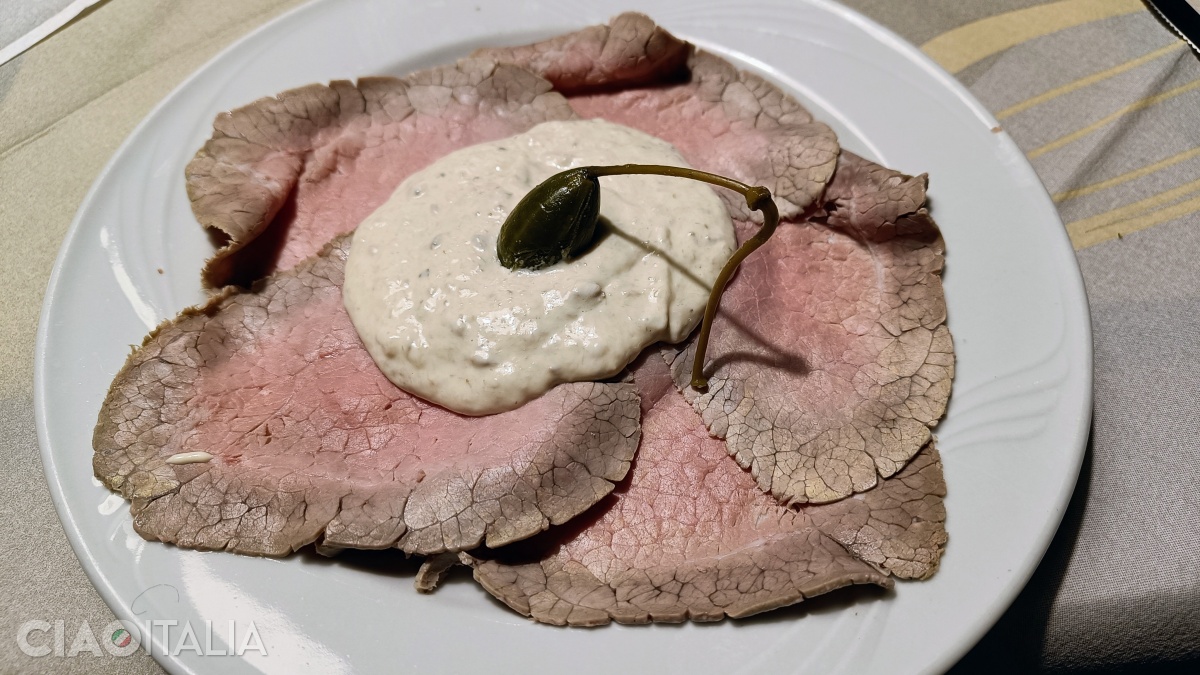
This dish is believed to have originated in the Piedmont region in the 18th century, although its origin is also claimed by three other regions: Lombardy, Veneto, and Emilia-Romagna. The original recipe did not include tuna, which was only available in the area about a century later. The word tonné is thought to be a distortion of the French term tanné, meaning "tanned". According to another theory, tonnato referred to the way the meat was prepared - like tuna - and fish was later added to the recipe, possibly because of the sound of the name.
In restaurants, vitello tonnato may also be served as a main course.
Bagna Cauda
Bagna cauda is for those who love garlic and bold flavors. It's a type of warm sauce (the name literally means "hot dip" in the Piedmontese dialect), made from anchovies, oil, and lots of garlic, served in ceramic pots accompanied by various raw or cooked vegetables.
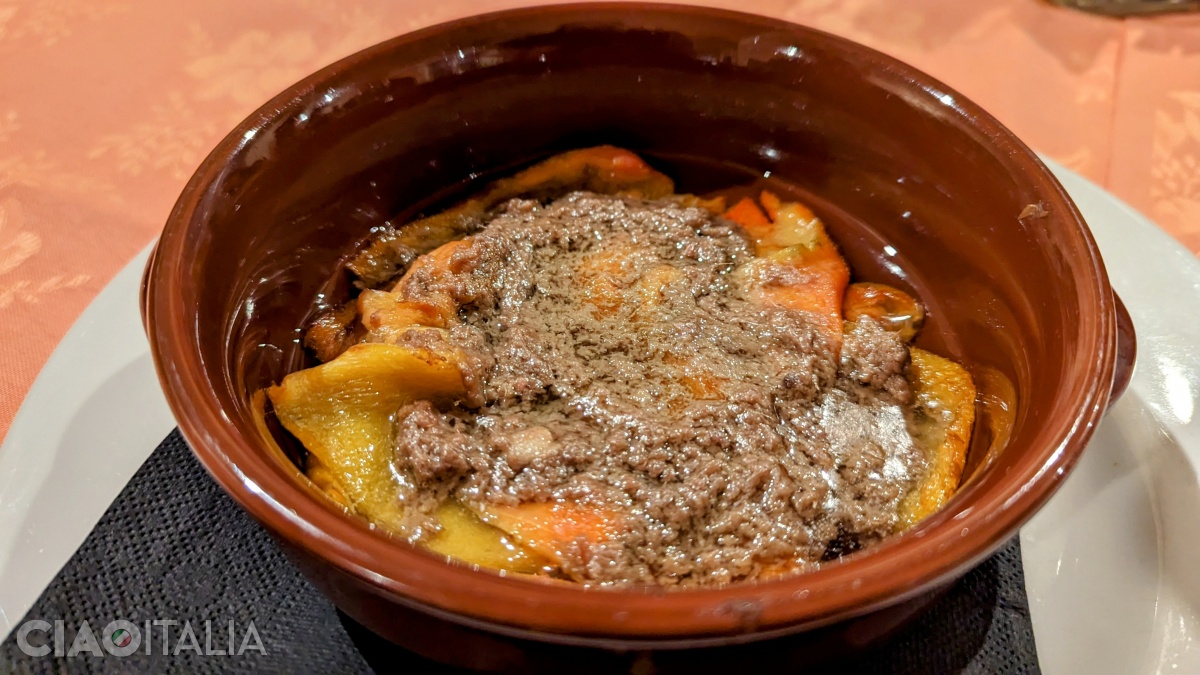
Bagna Cauda is usually shared with others at the table: the pot is traditionally placed in the center, and everyone dips their vegetables into it.
This sauce is typical of the cold autumn-winter season. It's said that in the past, it was given as a reward to vineyard workers after the grape harvest.
Tomini
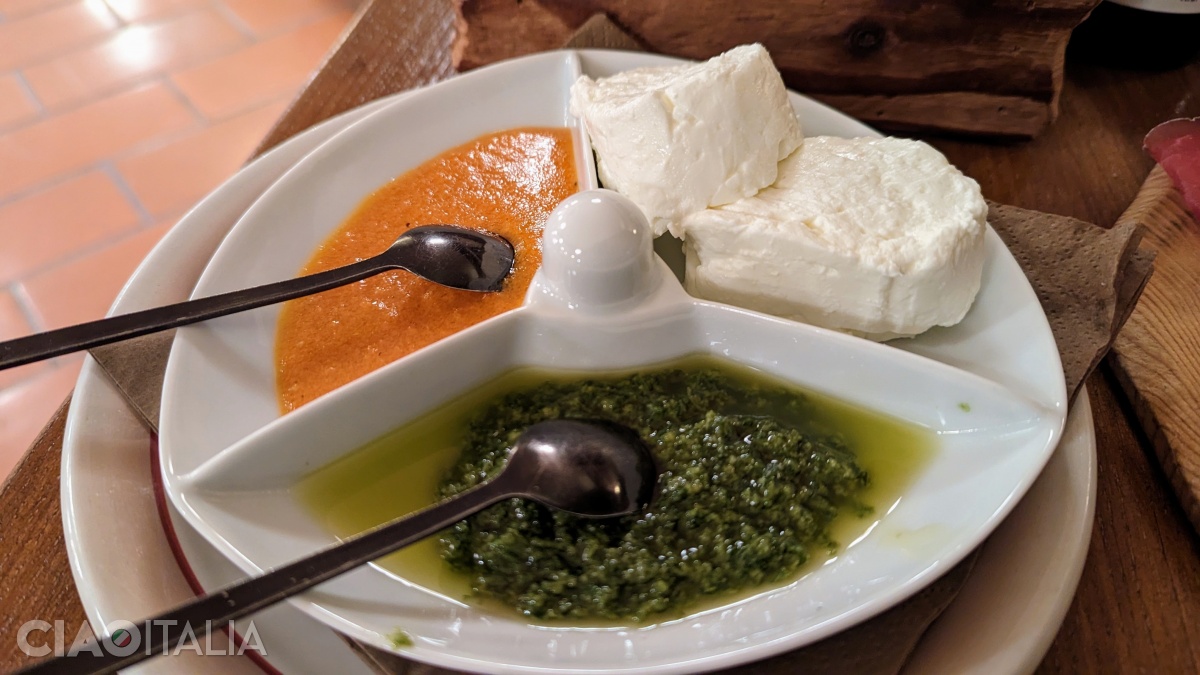
Tomini are small rounds of fresh cheese (usually made from cow's milk), served with various sauces.
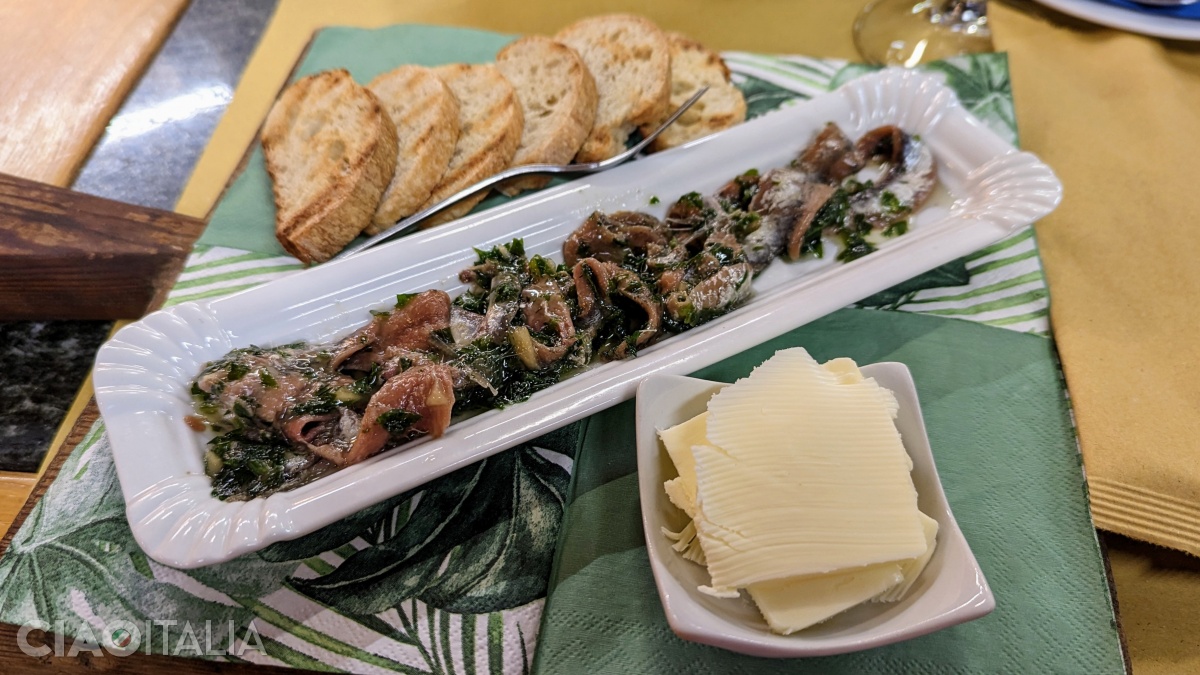
Traditionally, they are accompanied by bagnèt verd, a green sauce made from anchovies, oil, lots of parsley, and bread soaked beforehand in vinegar.
You may also find them served with bagnèt ross, a red sauce made from tomatoes, onions, carrots, garlic, chili pepper, sugar, and vinegar.
Acciughe al Verde
Acciughe al verde are nothing more than salt-cured anchovies served with bagnèt verd sauce.
It may seem strange to find anchovies as an ingredient in many traditional dishes from a region without access to the sea. The explanation lies in the old "salt routes". Salt used to arrive in Piedmont from France, crossing the Alps, and anchovies were used to hide the precious cargo in order to avoid paying taxes.
Pasta
Agnolotti
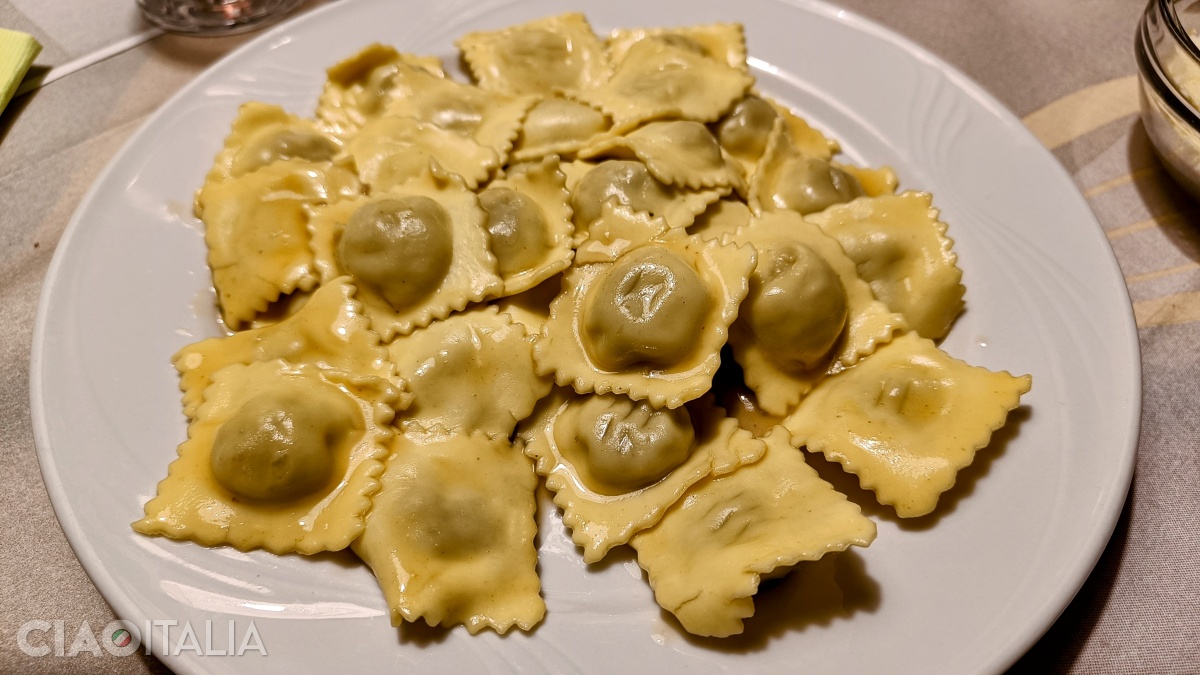
Agnolotti are fresh, square-shaped pasta, similar to ravioli, and filled with meat. They are distinguished by the fact that roasted meat is typically used for both the filling and the sauce.
A smaller, rectangular version is called agnolotti del plin. Plin means "pinch" - referring to the way each agnolotto is sealed by pinching it between the thumb and forefinger to enclose the filling in the pasta.
There are four traditional recipes for agnolotti: with roast meat sauce, with ragù, with butter, sage and Parmesan, or served in meat broth (especially for agnolotti del plin).
According to one legend, the name agnolotti comes from a Piedmontese cook named Angiolino, nicknamed Angelòt, who is said to have invented the recipe. Another theory suggests the name derives from the Piedmontese word anolòt, which was an old iron tool used to cut pasta.
Regardless of the name's origin, agnolotti come from a peasant tradition in which avoiding waste was essential. In the past, leftover roast meat from previous days was minced, mixed with other ingredients, and used to fill the agnolotti.
Tajarin
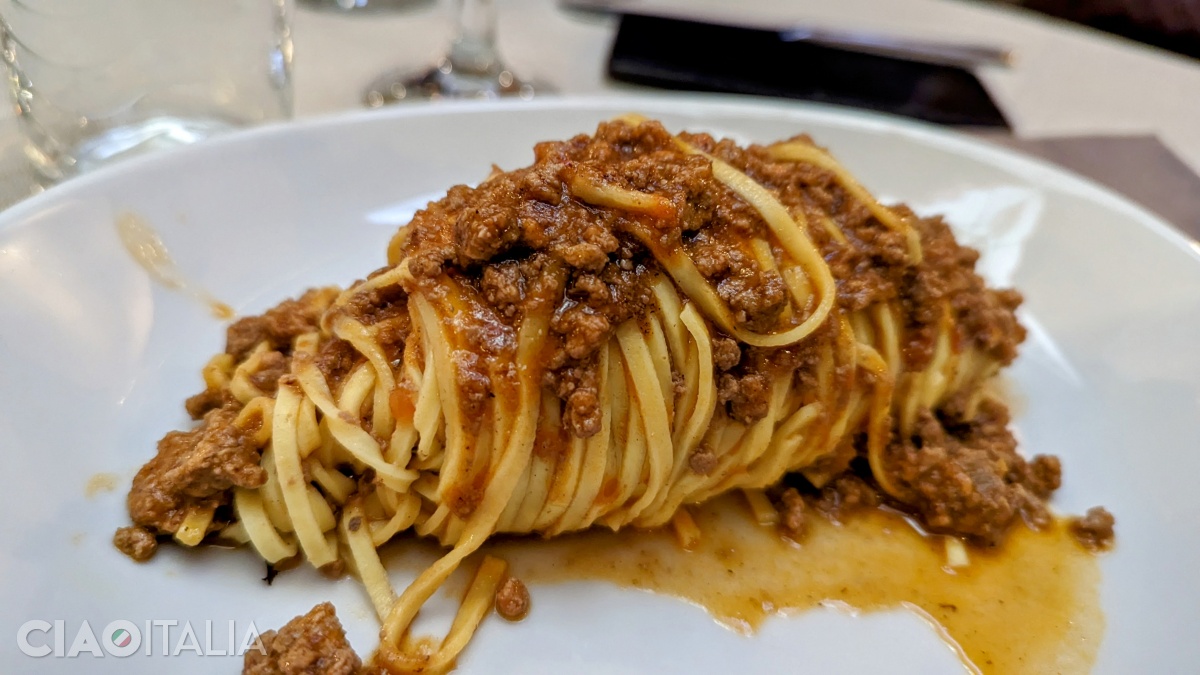
Tajarin are egg pasta similar to tagliatelle but thinner, and they can be prepared with truffles, ragù, or butter and sage.
Main Dishes
Brasato al Barolo
This dish combines two outstanding products of Piedmontese tradition: fassone beef and the famous Barolo red wine.
Brasato al Barolo is beef slowly cooked in wine (sometimes marinated beforehand), until the meat becomes very tender and absorbs the rich aromas of the wine.
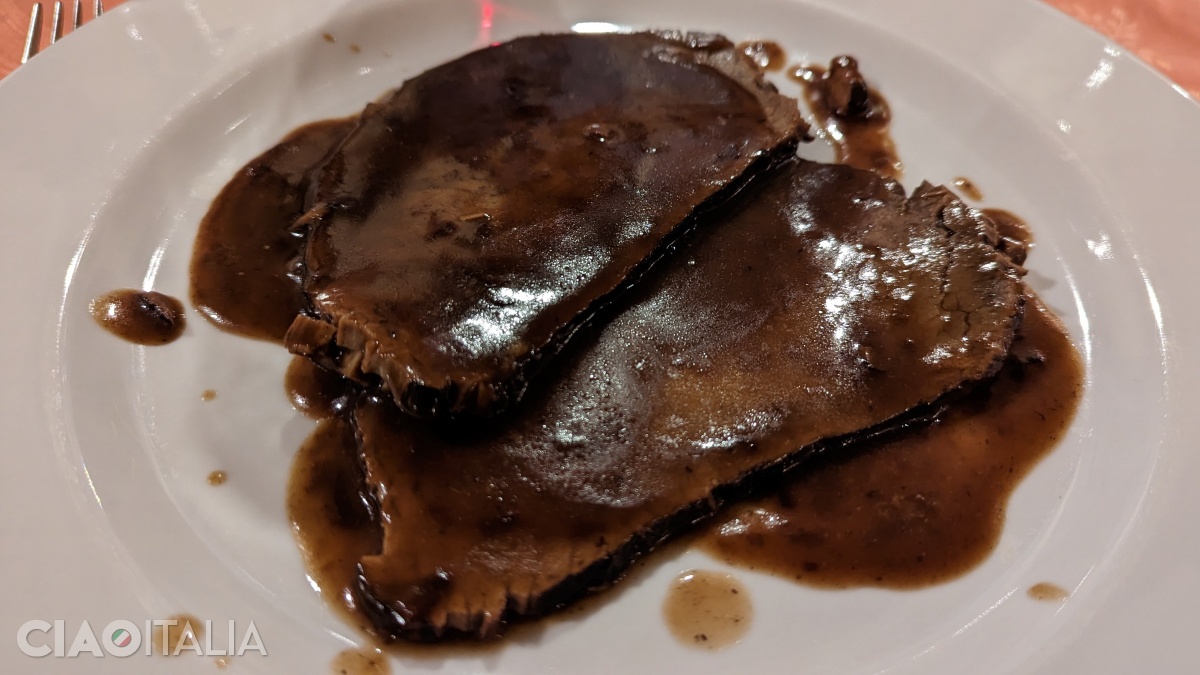
The name of the dish comes from the Piedmontese dialect word brasa, meaning "embers" (related to the Italian brace), referring to the custom of placing the pan of meat in the middle of hot embers, where it would cook for several hours.
It is said that Brasato al Barolo was one of the favorite dishes of Count Cavour (a great politician and patriot from Turin), who, after rejecting Austria's ultimatum in 1859 (one event that helped lead to the unification of Italy), is believed to have said: "Today we made history - so let's go eat brasato".
Bollito Misto
Bollito misto translates as "mixed boil". It is a traditional dish made up of various cuts of beef, veal, and chicken, boiled together with vegetables such as carrots, potatoes, onions, and celery. Sausages and pork may also be added. This is another recipe that requires long cooking and careful attention to the different boiling times of each type of meat.
Bollito misto is served hot or cold, accompanied by sauces such as bagnèt verd or bagnèt ross.
Fritto Misto alla Piemontese
Fritto misto alla piemontese (fricia) is another traditional dish with ancient origins, based on whatever was available in the kitchen at the time.
It was typically prepared in the autumn or winter, on the Sunday following the slaughtering of animals, to make use of parts that couldn't be preserved for long, such as offal. These were fried along with vegetables like carrots, eggplants, zucchini, and artichokes. Over time, sweet ingredients were added as well, such as apples, apricots, figs, plums, or amaretto cookies.
Fritto misto alla piemontese includes a wide variety of combinations: slices of veal, liver, lungs, brain, sweetbreads, marrow, pork sausages, chicken, lamb ribs, and other meats. To these are added vegetables, fruits, and sweets - all fried - resulting in an interesting mix of savory and sweet flavors.
Sweets
Bonet
Bonèt is one of the traditional Piedmontese desserts, found on the menus of most restaurants in Turin.
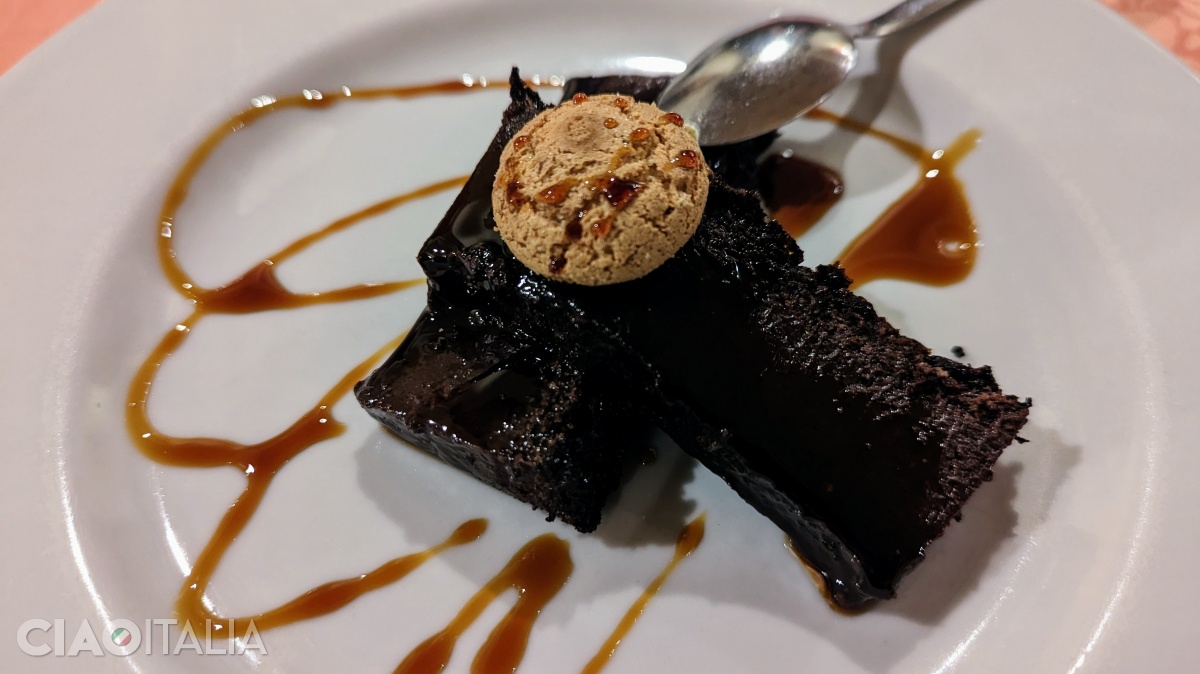
It's a cold pudding made from eggs, milk, sugar, cocoa, rum, and amaretti cookies. Traditionally, Fernet liqueur was used instead of rum to aid digestion.
Gianduiotti
Turin is the Italian city of chocolate, and the gianduiotto is the product that best represents this delicious tradition.
Gianduiotti are prism-shaped chocolates with a rectangular base, made from gianduja chocolate, which is prepared with Piedmont hazelnuts. They are usually wrapped in elegant golden foil and can be found in nearly every café, chocolate shop, and store in Turin.
Gianduiotti chocolates were first produced by the well-known confectionery company Caffarel in 1865, when - during the Carnival - they were handed out to the public by Gianduja, the traditional masked character of Turin (similar to Venice's Pantalone or Naples' Pulcinella), from whom they also take their name.
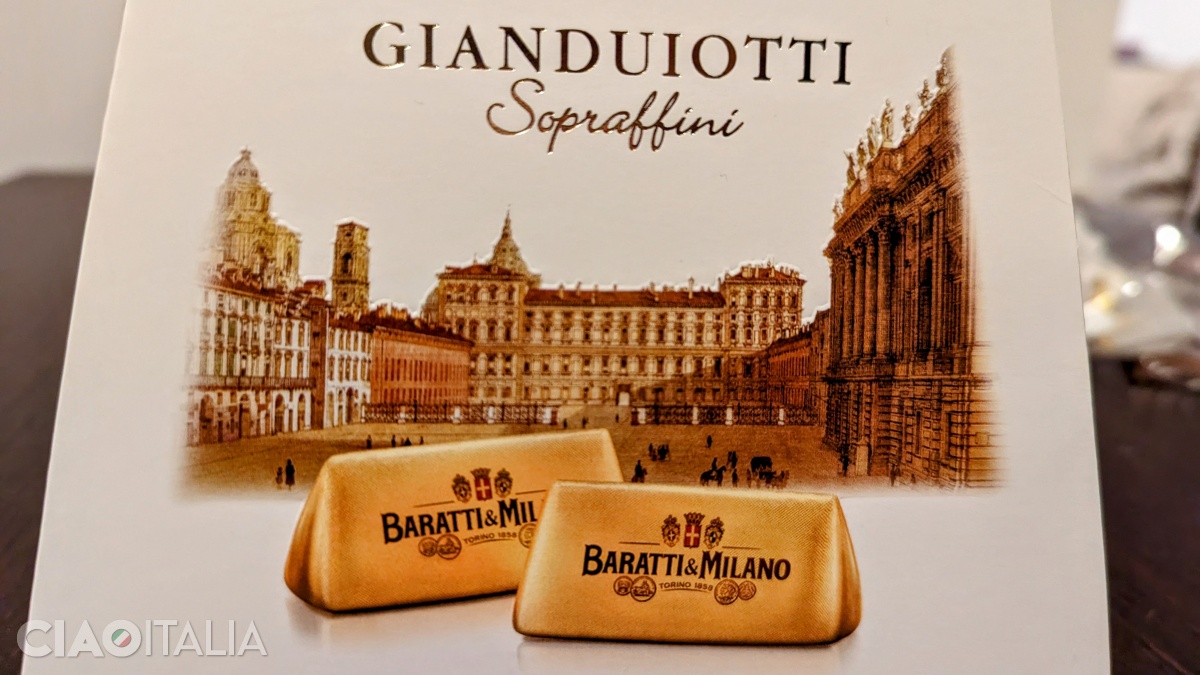
There's also a practical explanation for the invention of gianduja chocolate in Turin. During Napoleon's continental blockade, the amount of cocoa reaching Europe was increasingly limited and costly. As demand for chocolate was rising, the Caffarel factory decided to partially replace cocoa powder with ground hazelnuts, which were abundant in the region. Thus, in 1806, gianduja chocolate was born - later perfected into the gianduiotti chocolates in 1865.
If you're looking to bring back home a gift from Turin, gianduiotti chocolates are the perfect choice.
Cremino
Cremino is a square-shaped chocolate, made of two layers of gianduja chocolate that enclose another layer of chocolate cream with hazelnuts, coffee, or lemon.
Cremini chocolates were invented in 1858 by one of the founders of the café and pastry shop Baratti & Milano.
Cri-cri
Cri-cri are round chocolate candies with a whole hazelnut in the center, coated with tiny sugar beads and wrapped in colorful paper.
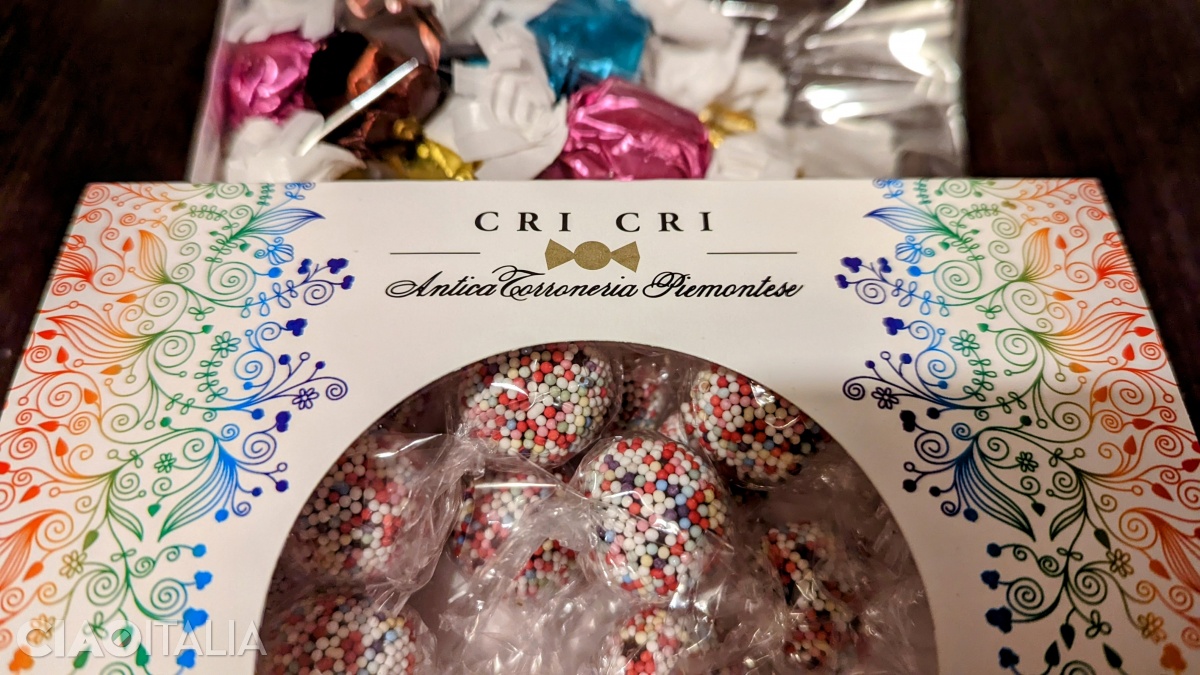
Behind the sweet-sounding name of these candies lies a romantic legend. The story goes that at the end of the 19th century, a young seamstress named Cristina lived in Turin, sewing dresses for high-society ladies. A student fell madly in love with her and affectionately called her Cri. Every time they met, he would first stop at a pastry shop to buy these candies, which the girl loved. The shop assistant, who knew both of them, would ask, "Cri?", and he would reply, "Cri!" Witnessing this, the shop owner decided to name the candies cri-cri, in honor of the two lovers.
What to Drink in Turin?
Wines
It won't be hard to find a good local wine in the restaurants of Turin. The hilly area around the city has a long winemaking tradition, and wines from Piedmont, in general, are considered among the best in Italy.
Among the red wines are world-famous varieties such as Barolo, Barbaresco, Nebbiolo, Barbera, and Dolcetto, while the white wines include names like Erbaluce, Gavi, and Cortese.
Vermouth
The well-known aromatized wine-based drink was born right in Turin, in 1786. It was produced for the first time in Piazza Castello by Antonio Benedetto Carpano, who poured white wine over an infusion of more than 30 herbs and spices. Today, you can visit the Carpano Museum for free, located in the Eataly Lingotto complex.
The famous company Martini & Rossi also originated from this area, founded in 1863. Casa Martini can be visited in the village of Pessione di Chieri, near Turin.
Amaro San Simone
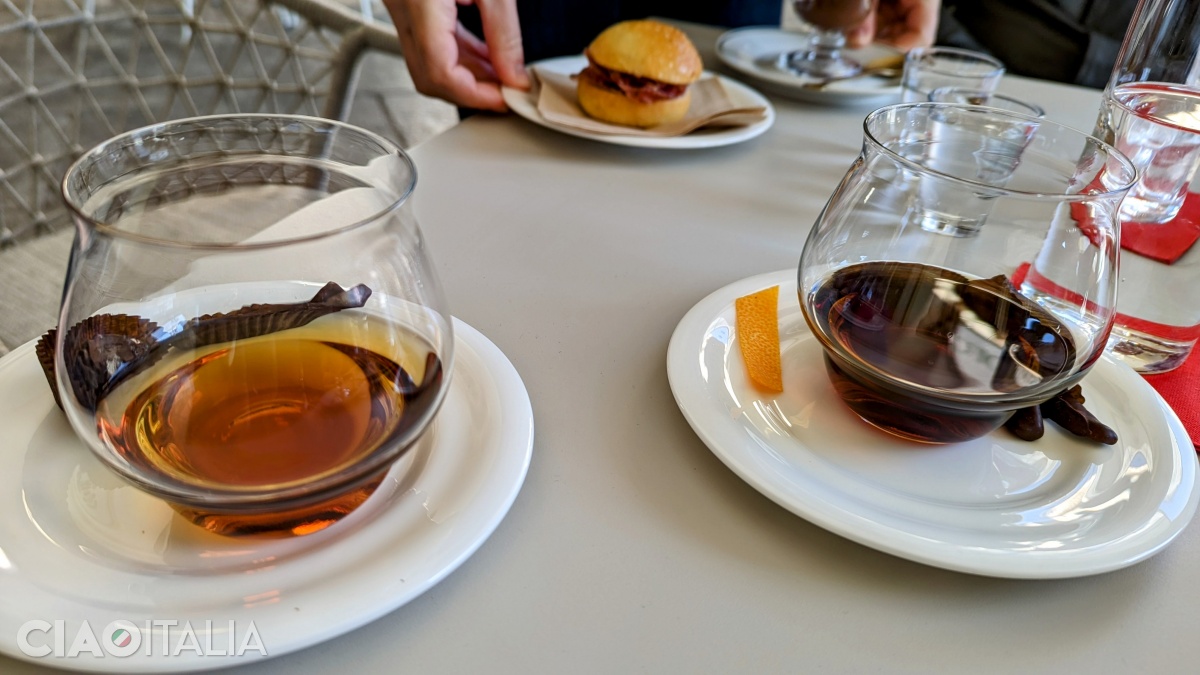
San Simone is an amaro-type liqueur made from a blend of 39 local herbs. It is traditionally consumed in Turin at the end of main meals as a digestif.
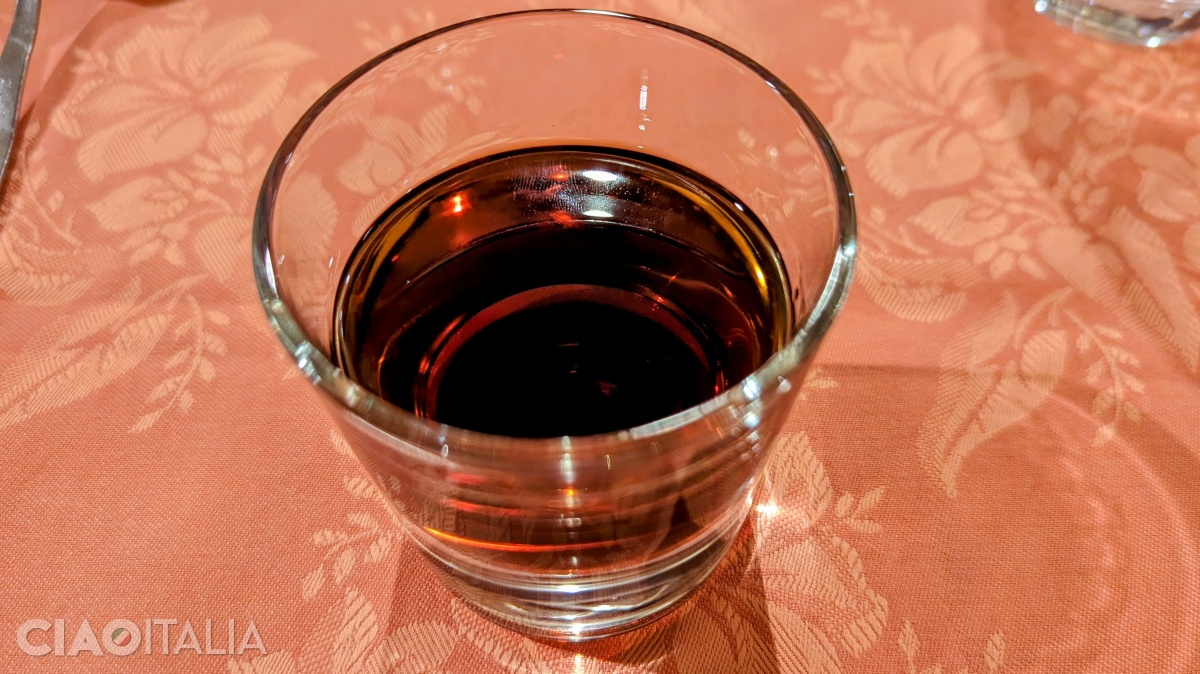
Bicerin Liqueur
Bicerin liqueur (not to be confused with the traditional hot coffee-based drink) is a liqueur made with gianduja chocolate cream, characteristic of the city of Turin.
Gastronomic Experiences
Historic Cafés of Turin
The historic cafés are more numerous here in Turin than in any other Italian city and deserve a chapter of their own. Most of them are part of the Locali Storici d'Italia network and the local association Caffè Storici di Torino e del Piemonte, and they hope to be included in the UNESCO World Heritage list.
These are elegant cafés, with crystal chandeliers, marble tables, and exquisite interiors dating back to the 18th and 19th centuries, immersing you in the atmosphere and aromas of times gone by. Over the years, writers, nobles, politicians, and other important figures have sat at their tables to discuss the issues of their time. So, take a break from visiting Turin's tourist sights and stop for a coffee, a snack, or an aperitivo.
Here are just a few of Turin's historic cafés.
Caffè Confetteria Al Bicerin
Caffè Confetteria Al Bicerin is the oldest historic café still in operation and probably the most famous in Turin. It is a small café with marble tables and red velvet-covered chairs, opened in 1763 in Piazza della Consolata. It is located opposite the Baroque church of della Consolata, which you can be visited on this occasion (see also the article 25 things you can do for free in Turin).
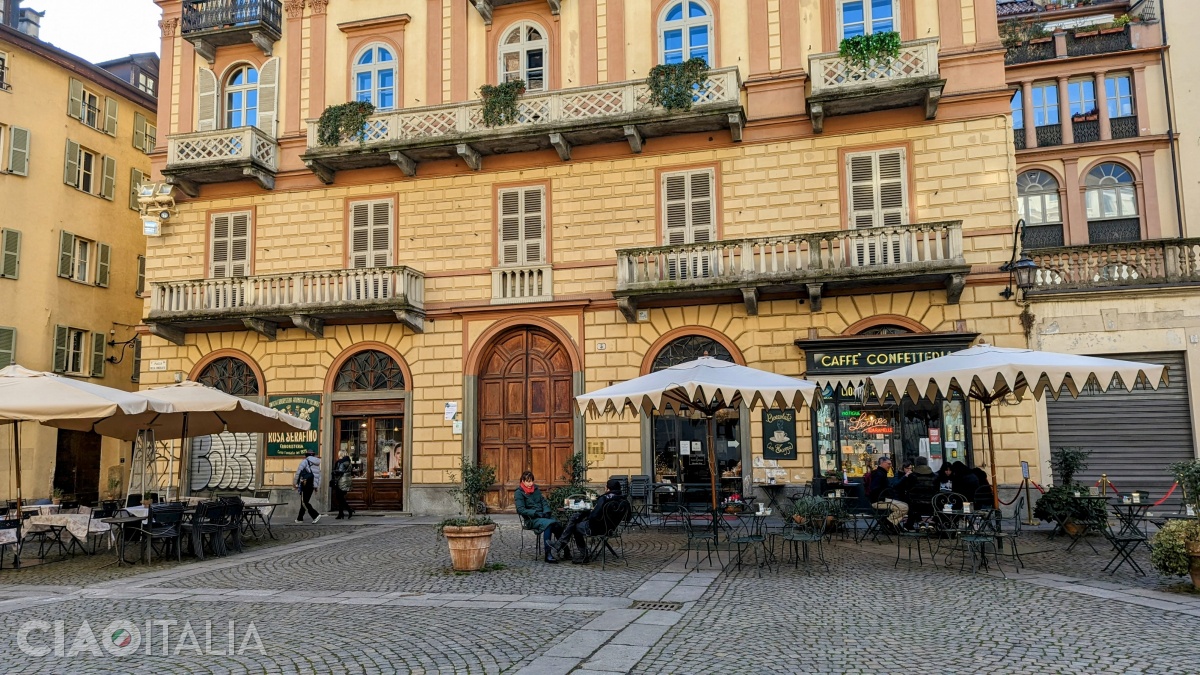
This is the place where the bicerin drink was born, a quintessential specialty of Turin (today you can find it in various versions at many cafés, but Caffè Al Bicerin holds the original recipe).
Bicerin (which means "small glass" in the Piedmontese dialect) is a famous hot drink made from coffee, chocolate, and cream. To enjoy it properly, it should not be stirred, so as not to spoil the balance of the three layers, whose flavor combination you are meant to experience directly in your mouth as you take the first sips.
It is said to have been the favorite drink of Count Cavour, who, being an atheist, would wait for the royal family attending service at the Church of della Consolata while sitting at the tables across the street, in front of a bicerin.
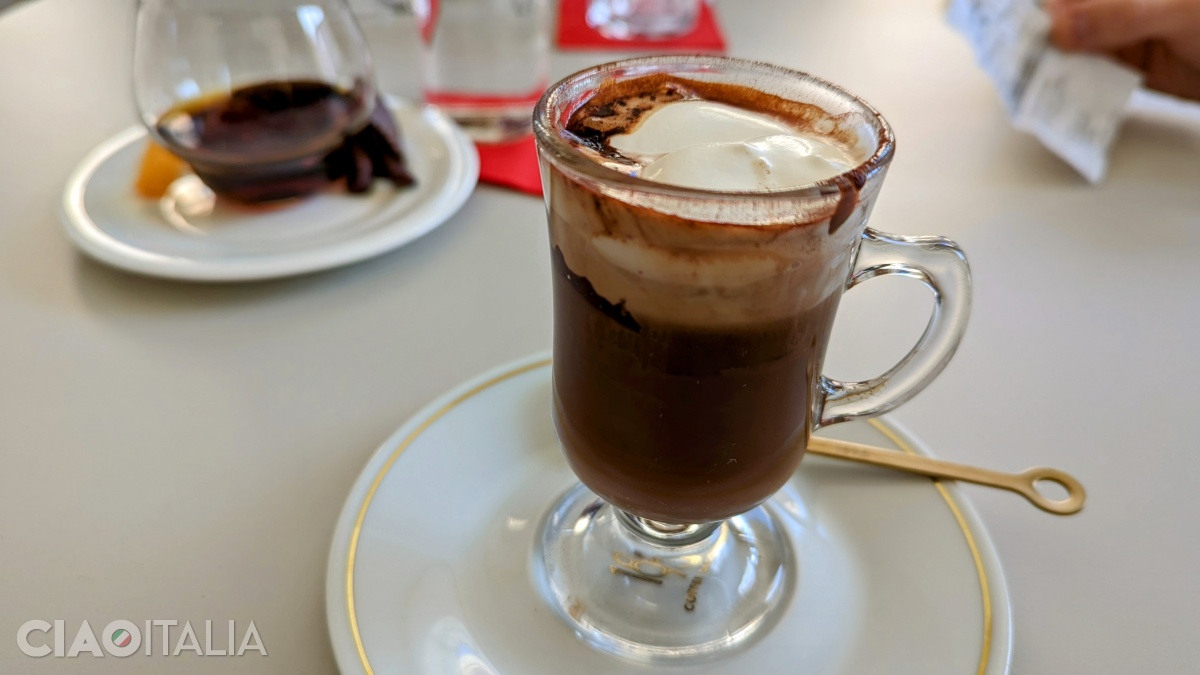
In a letter to a friend, Alexandre Dumas states: "Among the best and most beautiful things I encountered in Turin, I will never forget Bicerin, that excellent drink made of coffee, milk, and chocolate, which was served in all the cafés at a fairly low price".
In the novel "The Prague Cemetery", set at the end of the 19th century, the writer Umberto Eco dedicates several lines to it:
"[…] I was heading toward Caffè Al Bicerin, near Consolata, to get the glass with a metal holder and handle, smelling of milk, cocoa, coffee, and other aromas. I did not yet know that Alexandre Dumas, one of my heroes, would write about bicerin a few years later, but within no more than two or three visits to that magical place, I had learned everything about this nectar, which derives from bavareisa. Although in bavareisa the coffee with milk and chocolate are mixed and sweetened with syrup, in bicerin the three ingredients remain in separate and very hot layers, so they can be ordered in three variations: pur e fiur - milk coffee only; pur e barba - coffee and chocolate; and 'n poc 'd tut - with all three ingredients".
The list of famous guests also includes names like Giacomo Puccini, Nietzsche, the writer Italo Calvino, and more recently, the American actress Susan Sarandon, who visited here with her family in 2006 during the Turin Winter Olympics.
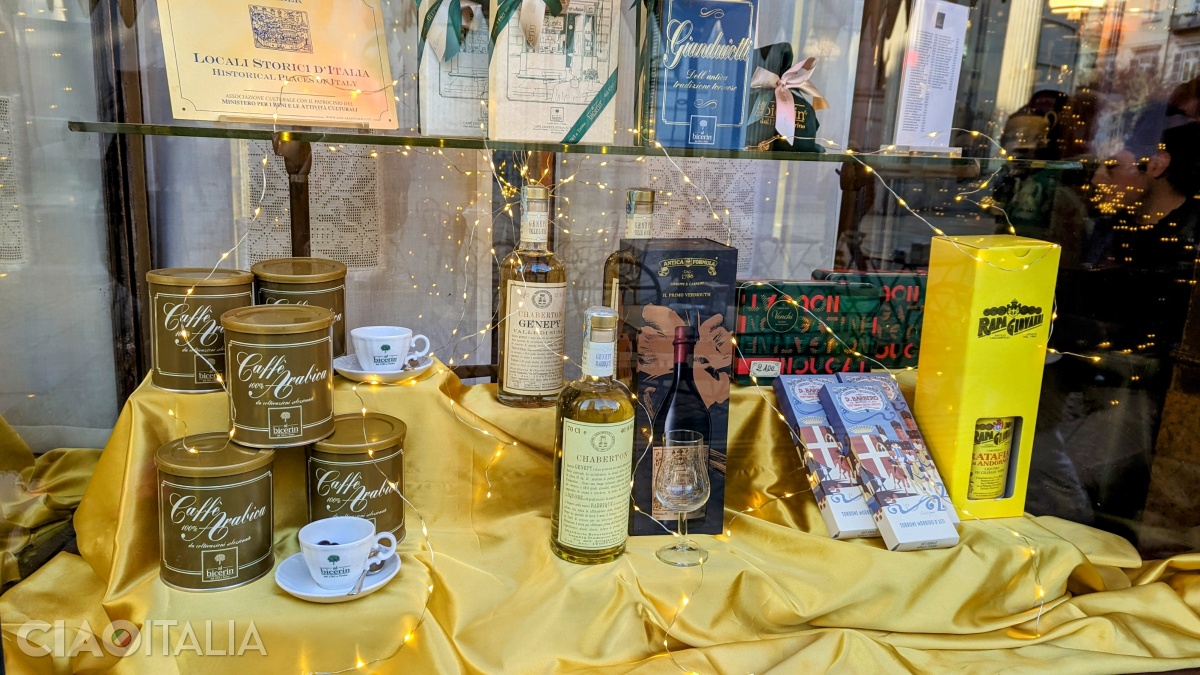
Besides bicerin, at the café you can also enjoy hot or cold chocolate, zabaione cream, cakes, biscuits, teas, wines, ice creams, cocoa liqueur, and even chocolate toast.
Caffè Mulassano
Compared to the other historic cafés, Caffè Mulassano is a "young" café. It opened in 1907, in Piazza Castello, and was a meeting place for Turin's nobility as well as actors from the nearby Teatro Regio.
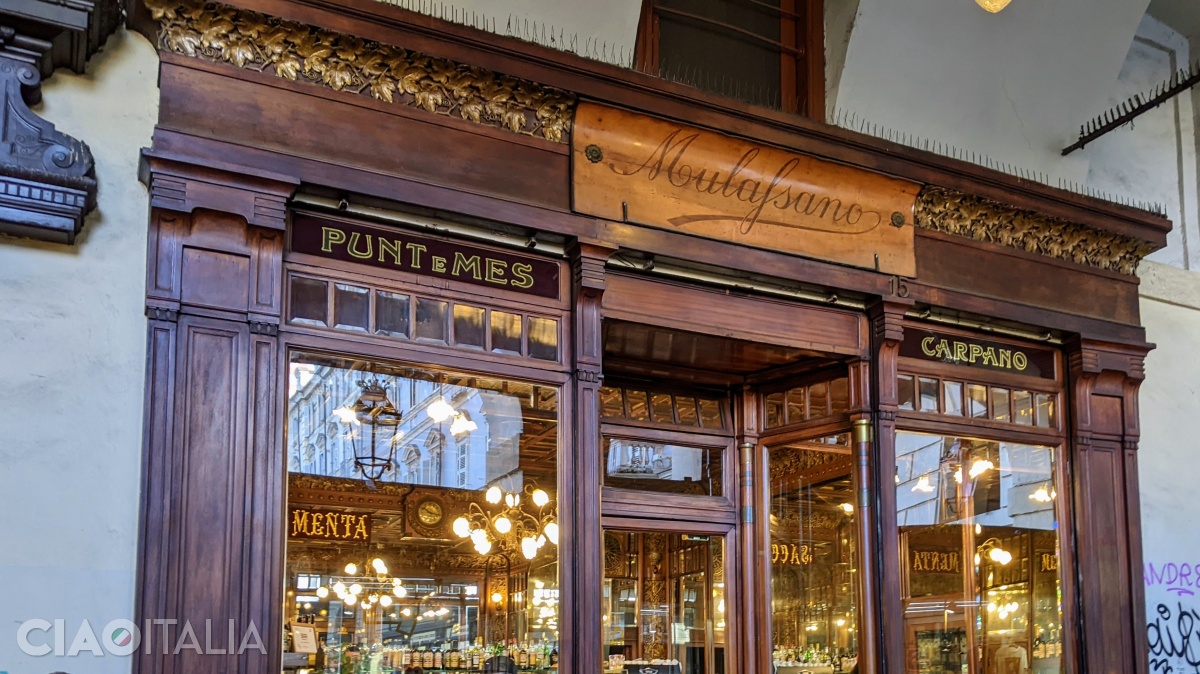
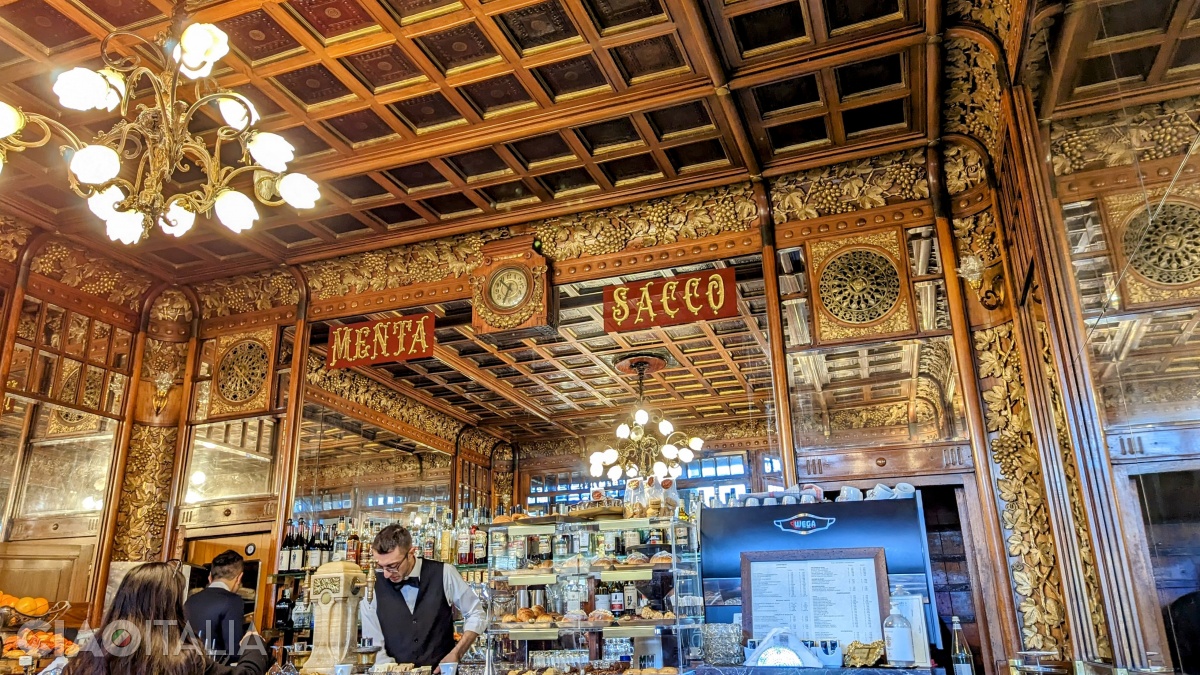
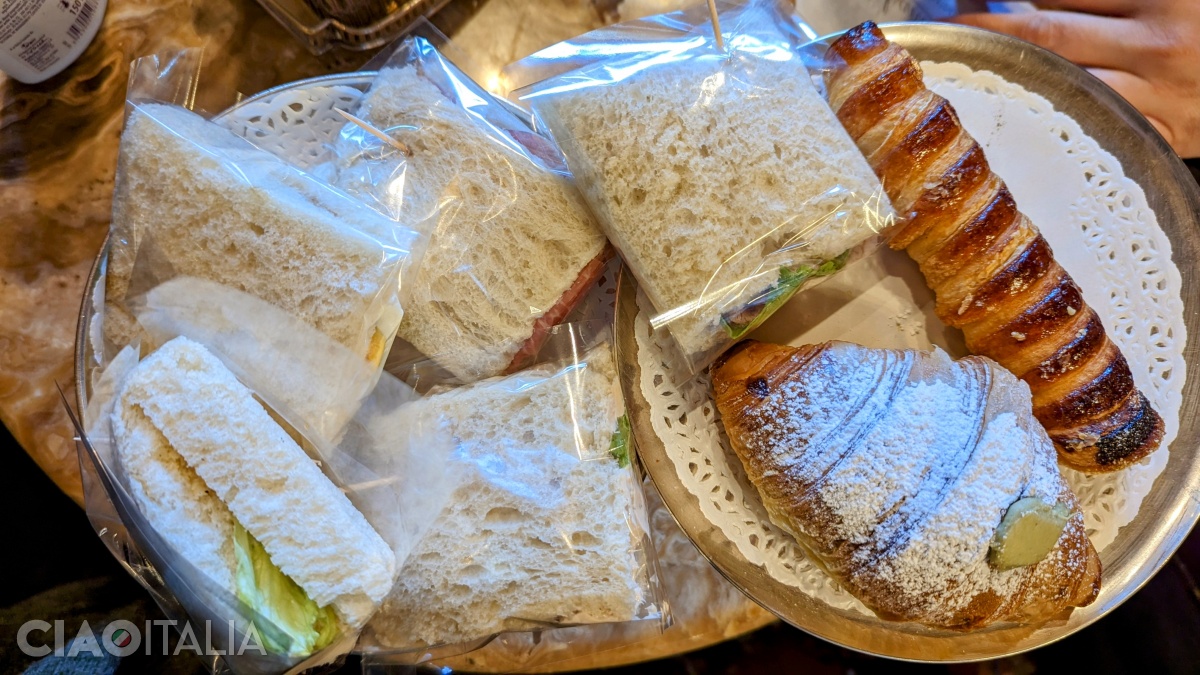
In 1926, the tramezzino was prepared here for the first time - the delicious Italian sandwich made with soft, crustless bread, now found all over Italy, and named by the writer D'Annunzio.
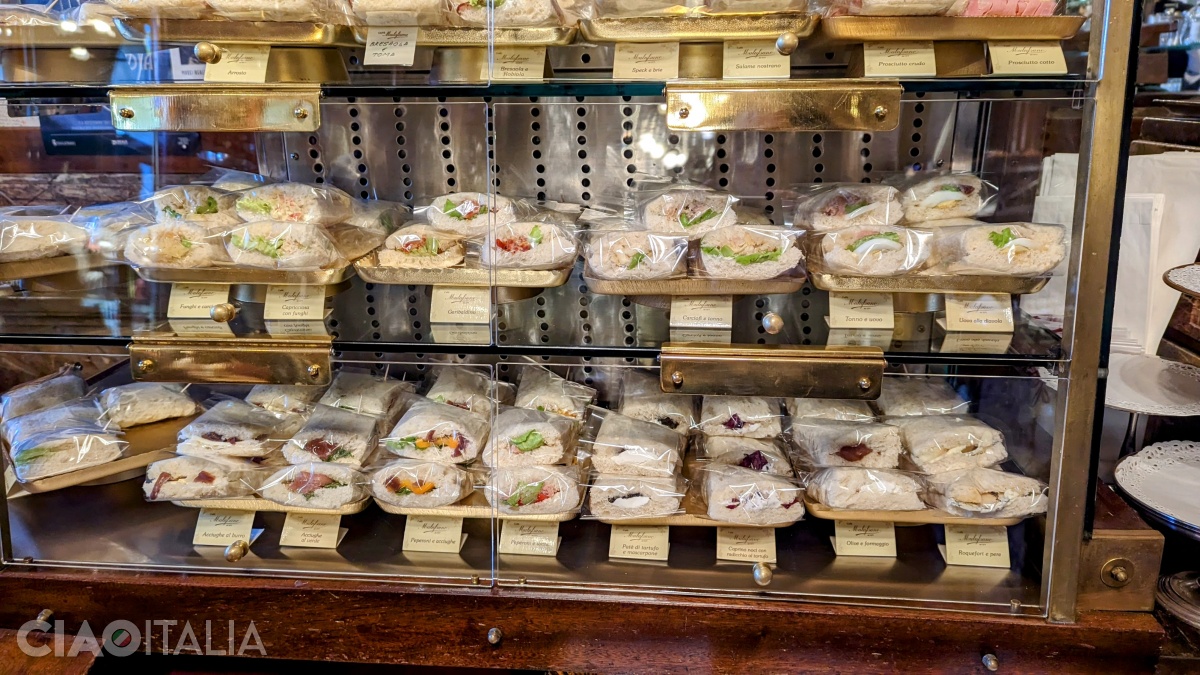
At Caffè Mulassano, you can choose from several dozen types of tramezzini, along with pastries, sweets, coffee specialties, and alcoholic drinks (including the Mulassano Spritz).
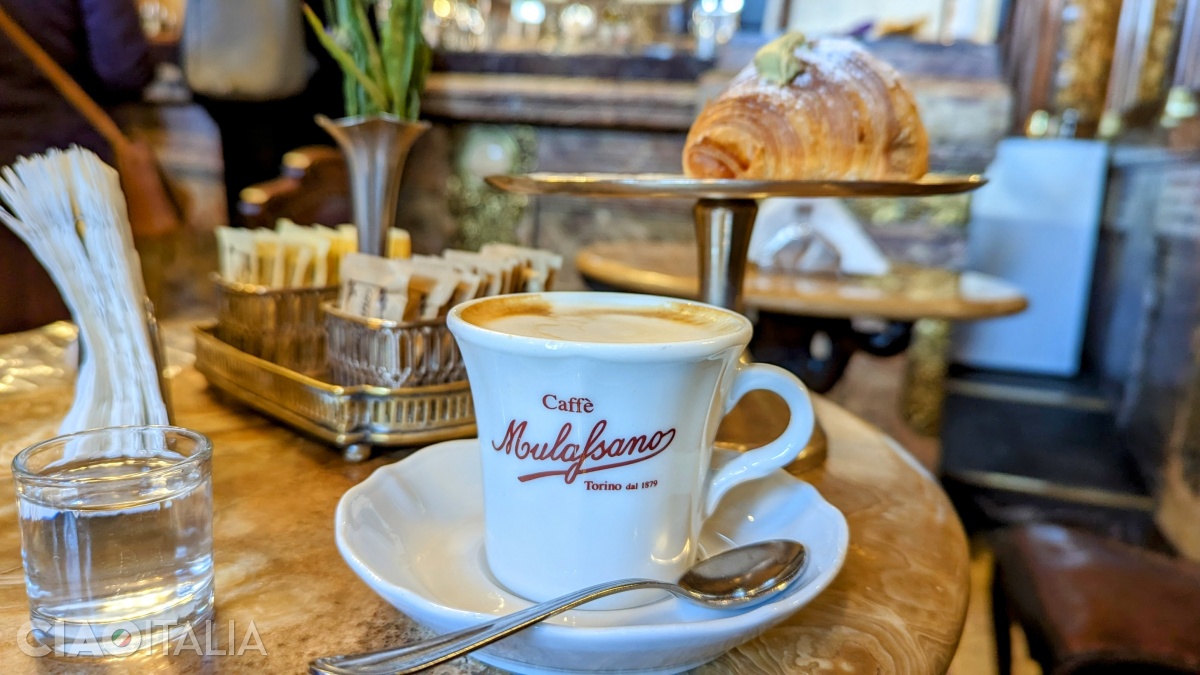
The interior is very small (only 31 square meters), and there are only a few tables outside. Expect to wait in line during peak hours.
Caffè Confetteria Baratti & Milano
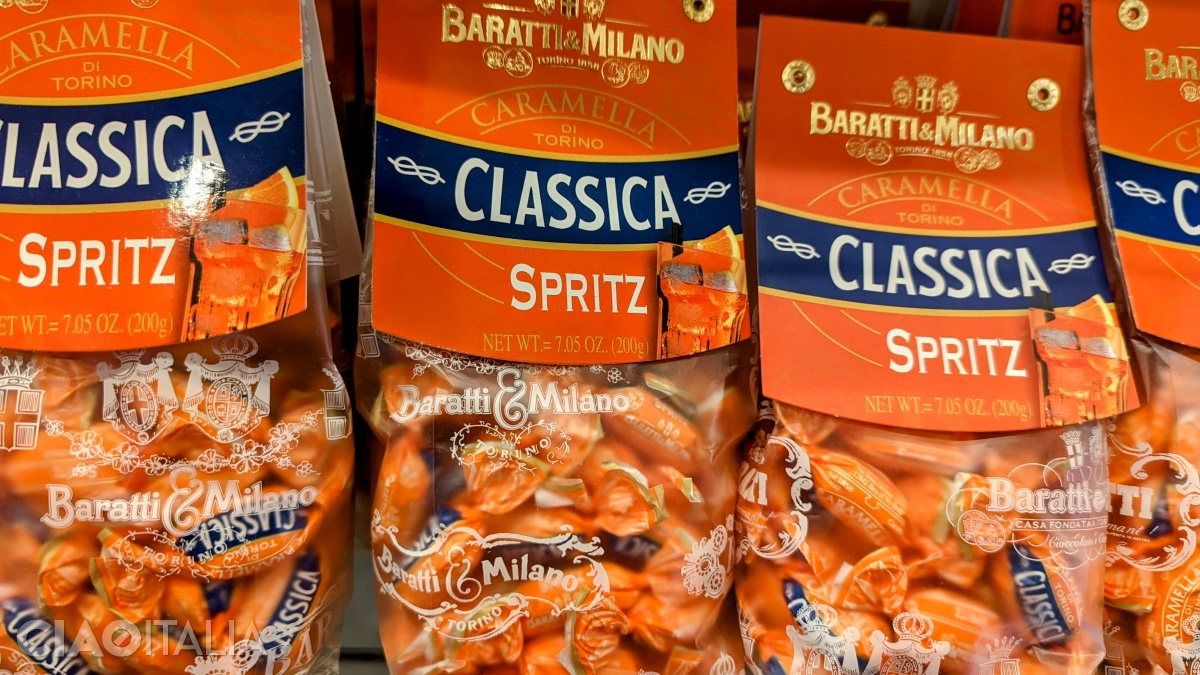
Very close to Caffè Mulassano is another famous historic venue: Caffè Baratti & Milano, founded in Turin in 1858. This is where cremini - the three-layer chocolate candies with a creamy center - were first created.
Since 1875, the café has relocated to the city center, at the entrance into the Galleria Subalpina in Piazza Castello. Having become a supplier to the Royal House and redesigned in the early 20th century in the Art Nouveau style, the café is now one of the most elegant and luxurious in Turin. Over time, it also served as a true literary salon, visited by many famous people.
Caffè Gelateria Fiorio
Located in the city center on Via Po, Caffè Gelateria Fiorio was opened in 1780 and served as a gathering place for the nobility of the House of Savoy. Among the café's specialties is the gianduja ice cream.
Caffè San Carlo
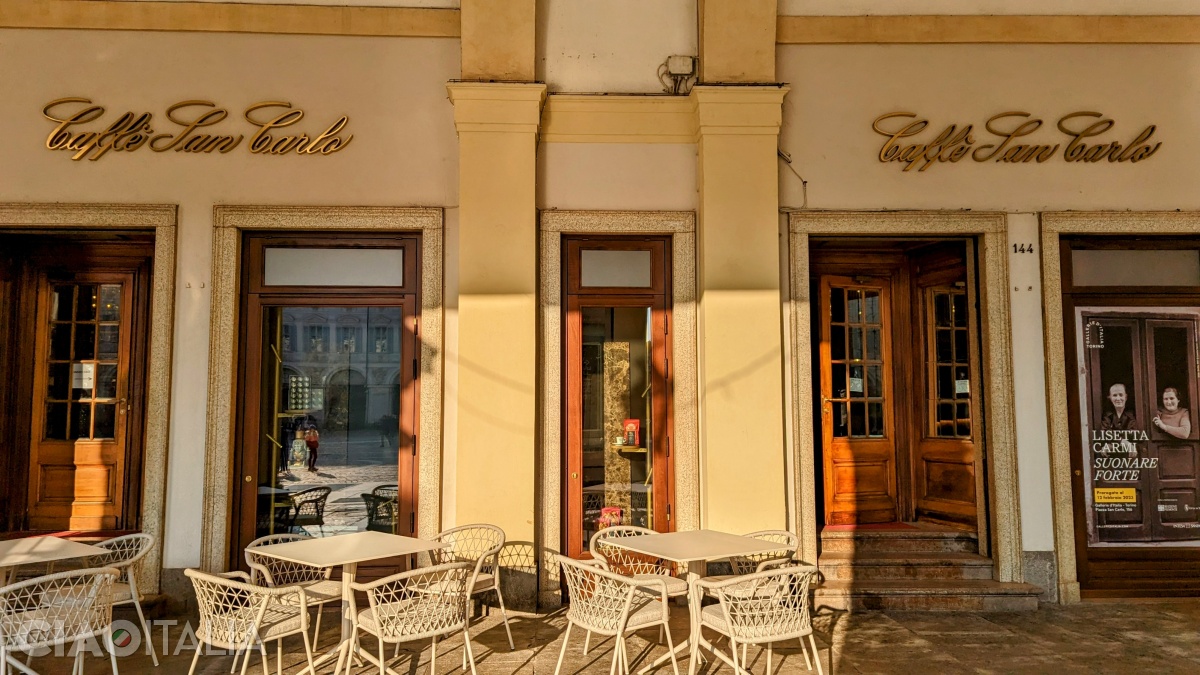
Opened in 1822, Caffè San Carlo, situated in the square of the same name, was one of the meeting places for intellectuals during the Risorgimento period, which laid the foundation for the unification of Italy.
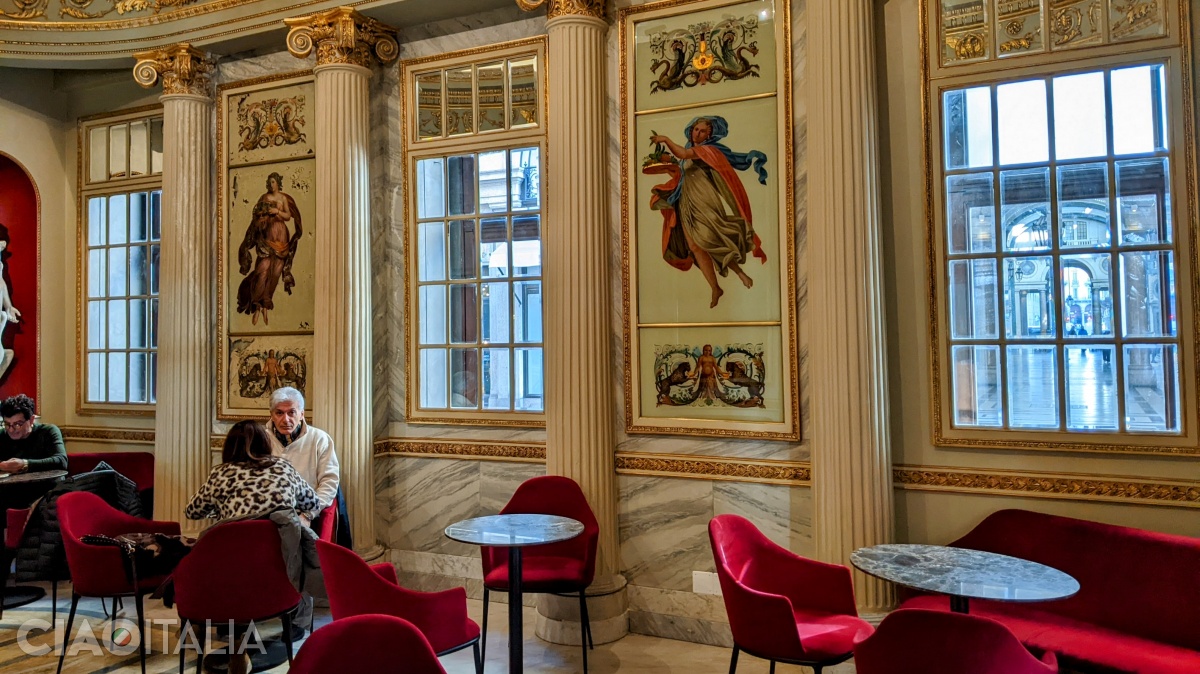
The café is spacious, with elegant decor, and in the evening, it turns into a restaurant.
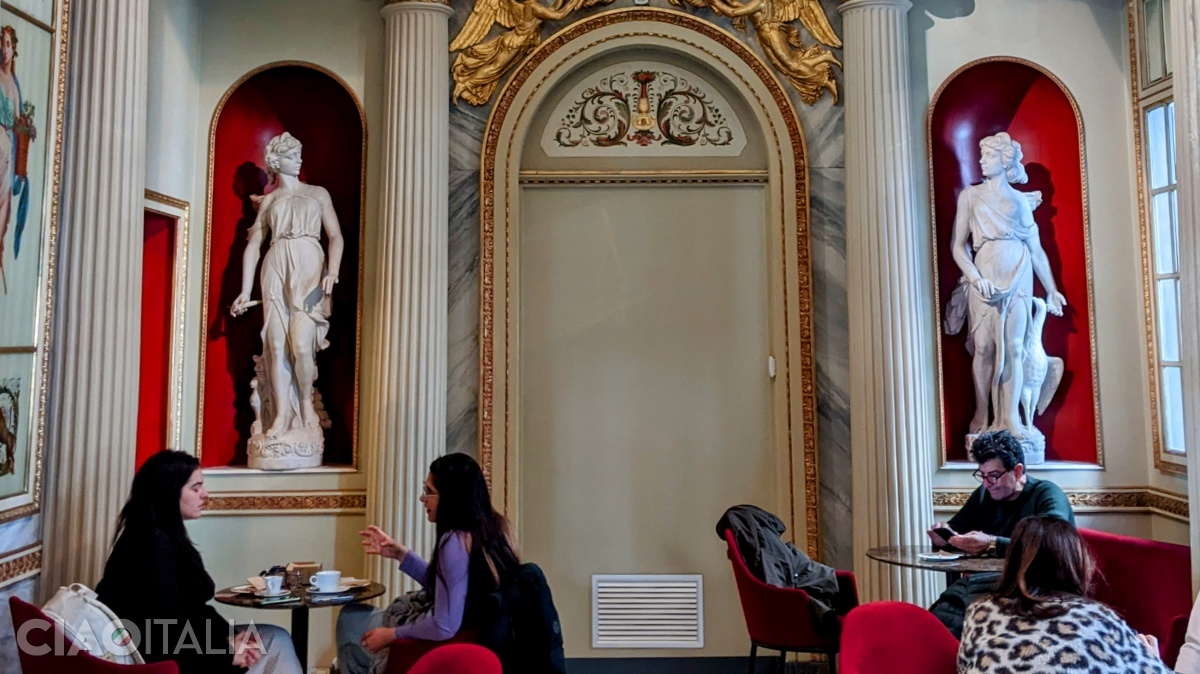
Caffè Torino
Piazza San Carlo also houses Caffè Torino, opened in the early 20th century. It is said that if you step on the bronze image of the bull found in the pavement in front of the café, you will have good luck.
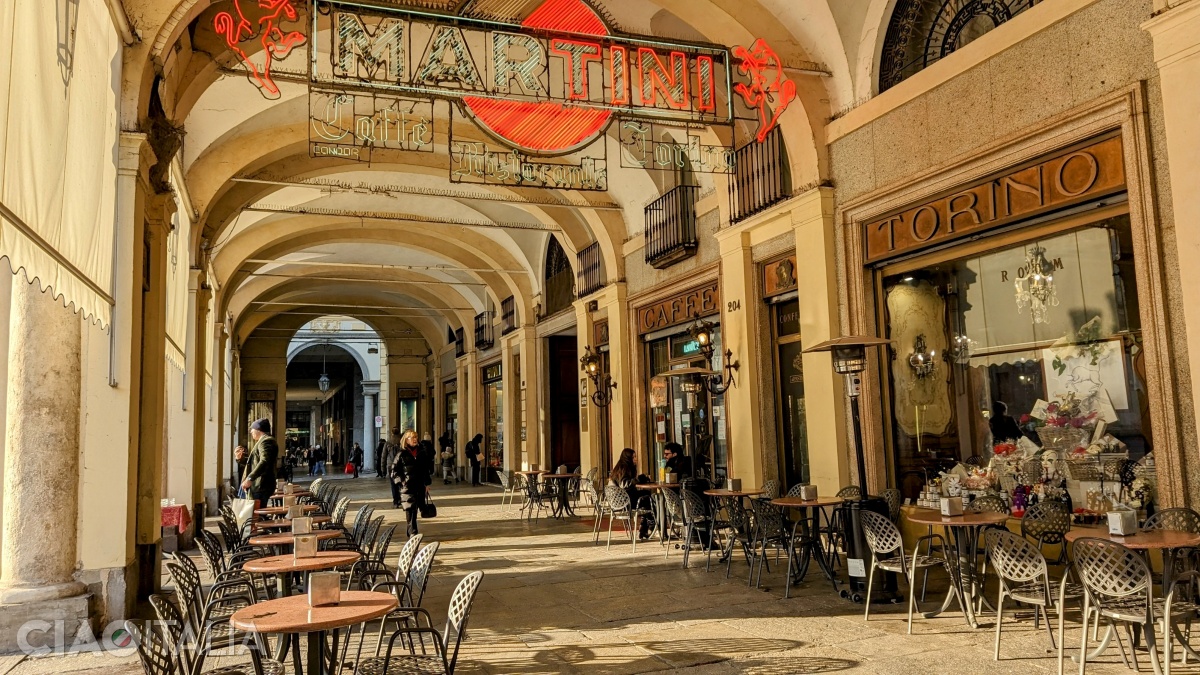
Confetteria Stratta
Also, under the arcades of Piazza San Carlo, Confetteria Stratta has been there since 1836.
Caffè Platti
Opened in 1875, Caffè Platti is located near Porta Nuova train station. Famous figures such as Luigi Einaudi (the second President of the Italian Republic), writer Cesare Pavese, publisher Giulio Einaudi, Giovanni Agnelli (one of the founders of the FIAT company, whose name is borne by the Automobile Museum in Turin), and Luigi Lavazza (don't forget that you can visit the Lavazza Museum in Turin) have also passed through here.
Gelateria Pepino
Founded in 1884 by the Neapolitan Domenico Pepino, Gelateria Pepino, located in Piazza Carignano, is among the oldest in Europe.
Caffè Elena
Caffè Elena opened in 1889 in Piazza Vittorio Veneto and was one of the places frequented by Nietzsche and Cesare Pavese.
Ristotram
For a different kind of experience, you can choose to have lunch, dinner, or apericena on one of the two trams operated by GTT, Turin's public transport company.
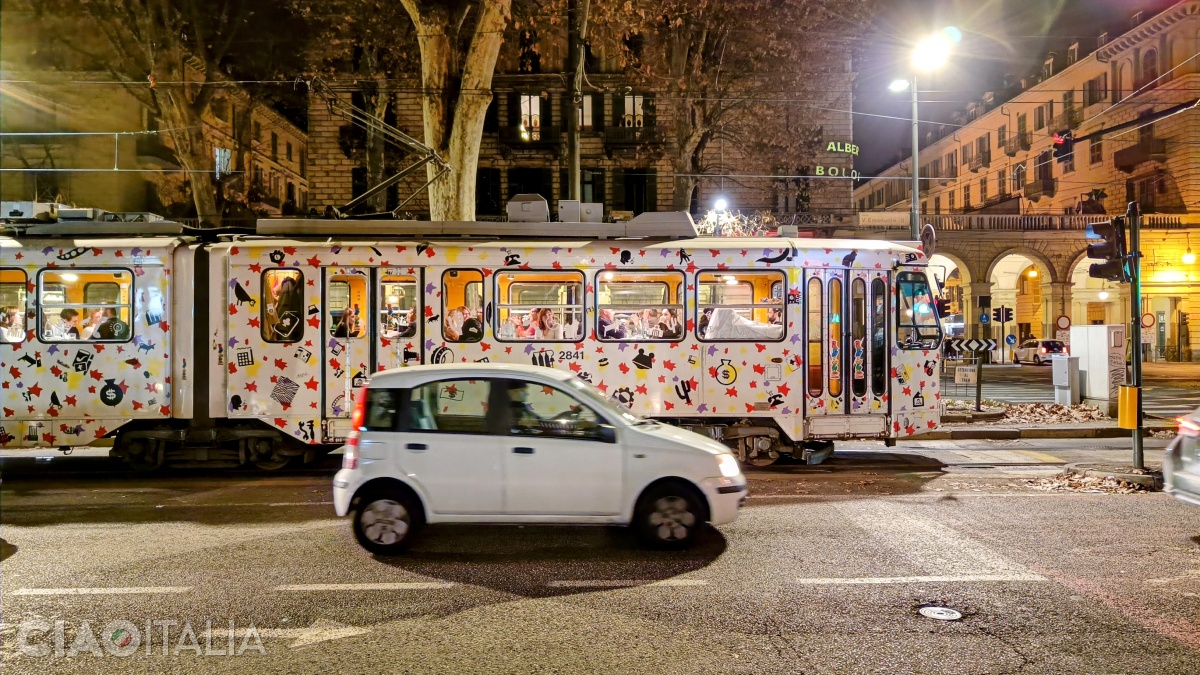
The concept is called Cene in movimento ("Dinners on the move"), and the events take place on Friday and Saturday evenings and Sunday at lunchtime, aboard the Gustotram and Ristocolor trams.
Il Mercato Centrale
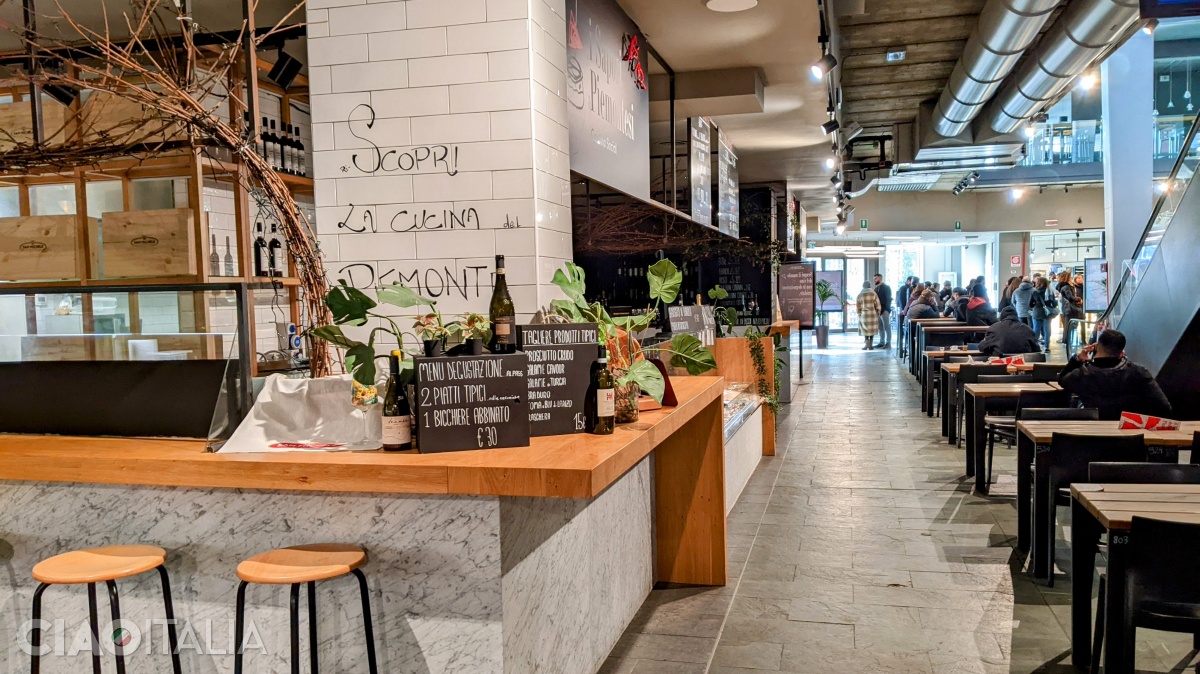
Il Mercato Centrale ("the central market") is located in Piazza della Repubblica. It is a space dedicated to gastronomy, featuring on the ground floor a large area with bakeries, bars, and restaurants. You pay for your food at the cashier of each individual stall, and then you can sit at any of the tables arranged all around.
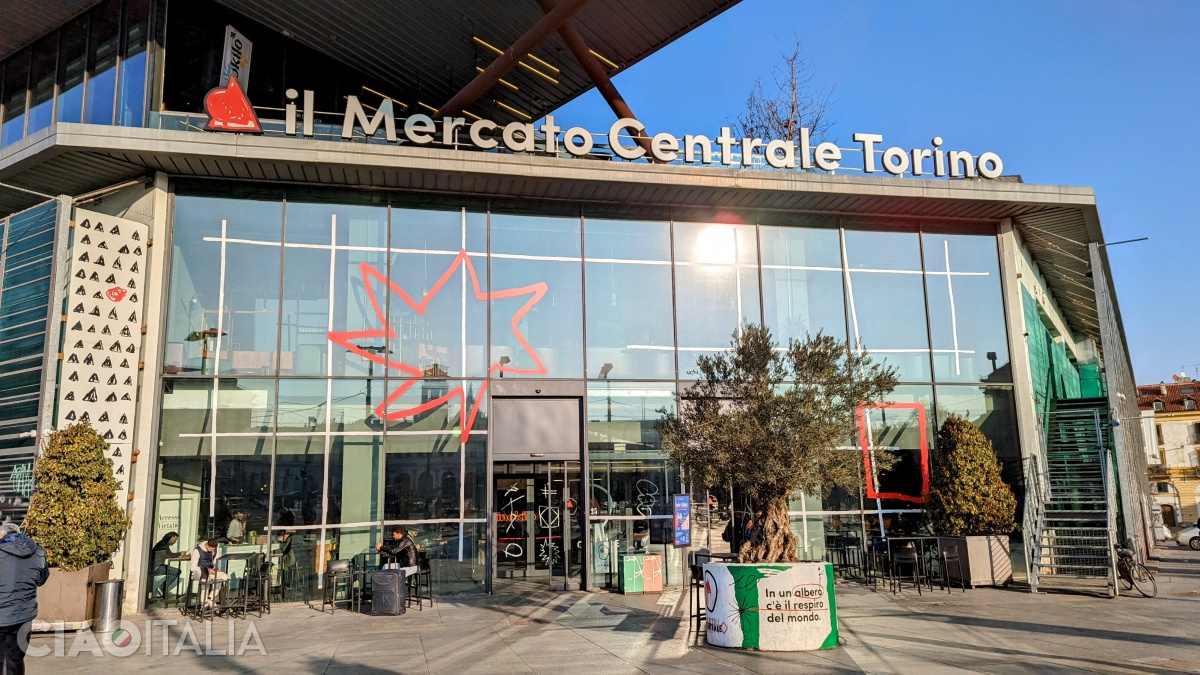
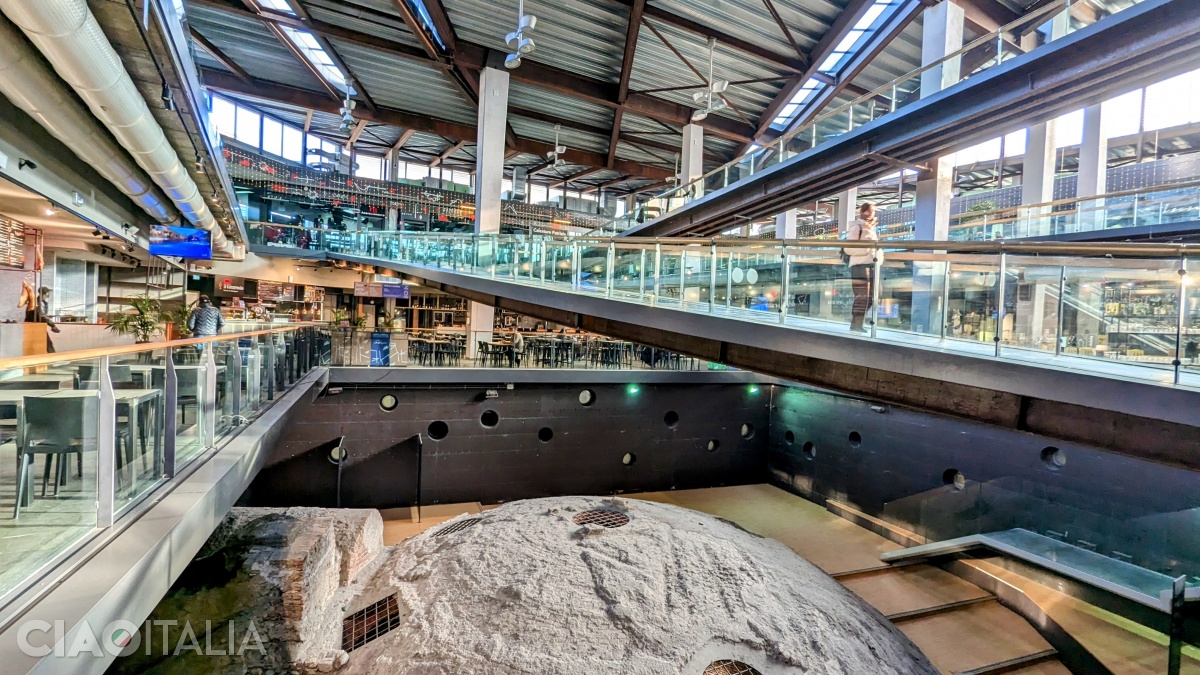
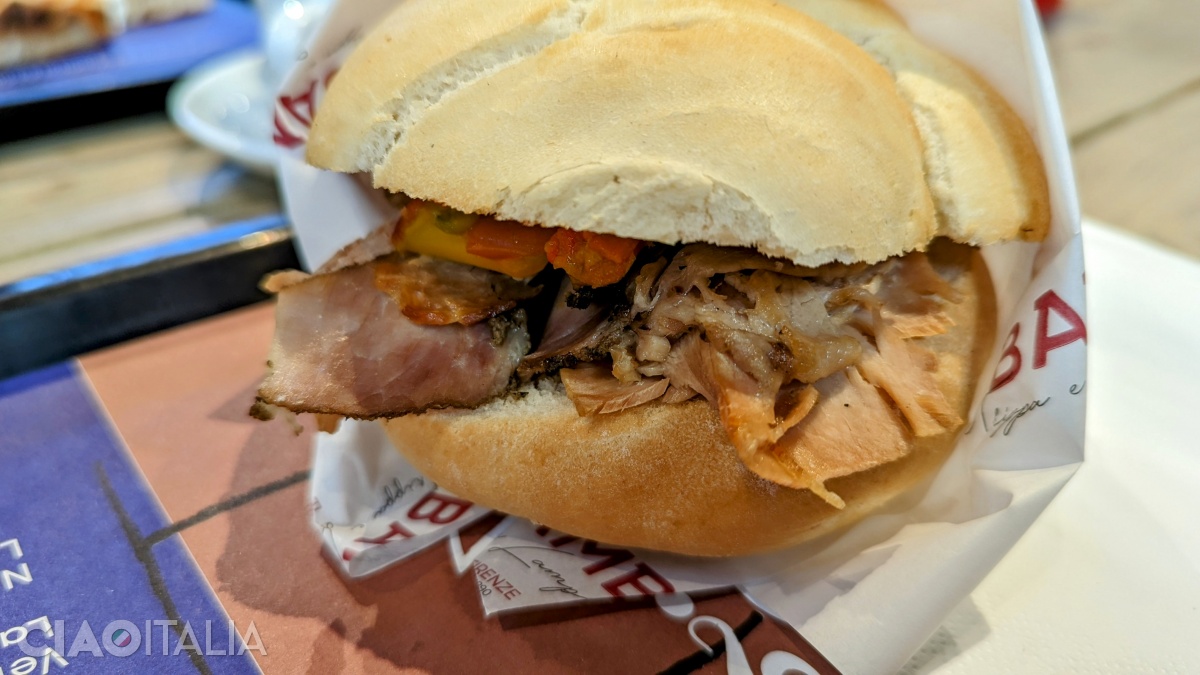
Mercato Centrale is the ideal place for a quick and tasty snack. Here you'll find bakery products, coffees, wines, pizza, pasta, lampredotto (a traditional dish from Florence), burgers, fritto, grilled meats, cooked dishes, and much more.
Eataly
Eataly is the temple of Italian gastronomy, and Turin is the city where, in 2007, the first store of this chain opened, in the former Carpano vermouth factory, in the Lingotto district, near the Fiat factory.
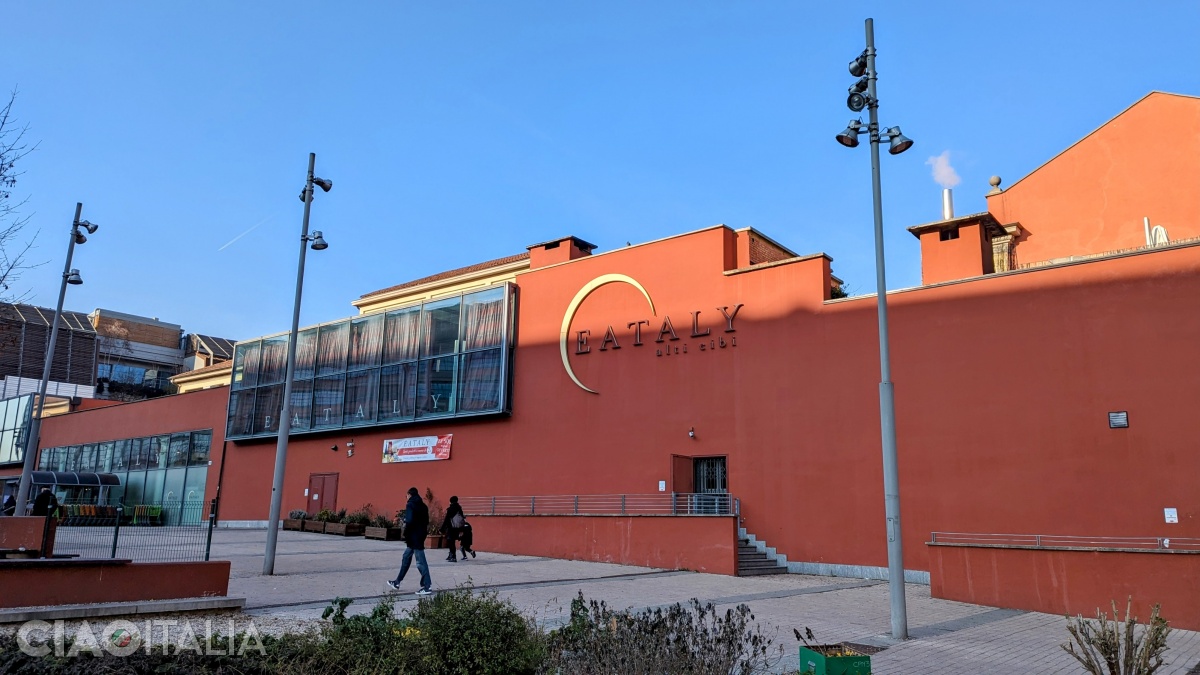
In the Eataly complex, you will find a fresh fruit and vegetable market, shops with the best Italian products, bakeries, cafés, wine shops, and restaurants of all kinds (including a Michelin-starred one).