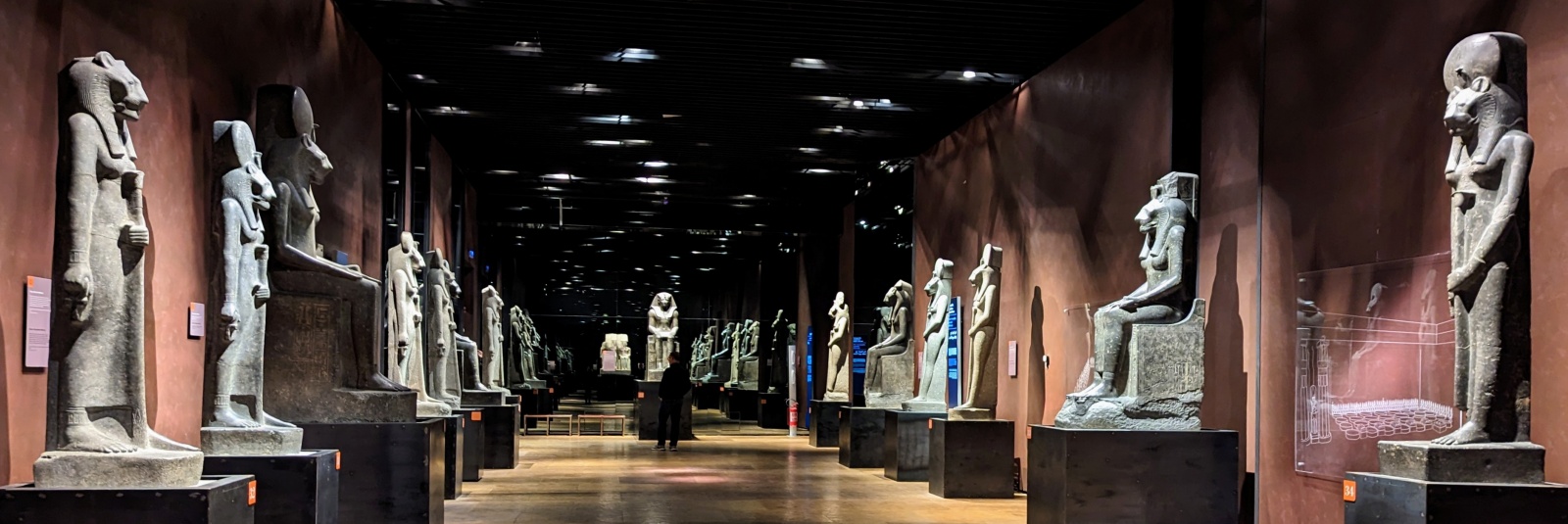
The Egyptian Museum in Turin
The Egyptian Museum (Museo Egizio) is one of the most important tourist attractions in Turin, as well as one of the most significant museums of its kind in the world, housing the second most important collection after the one in Cairo.
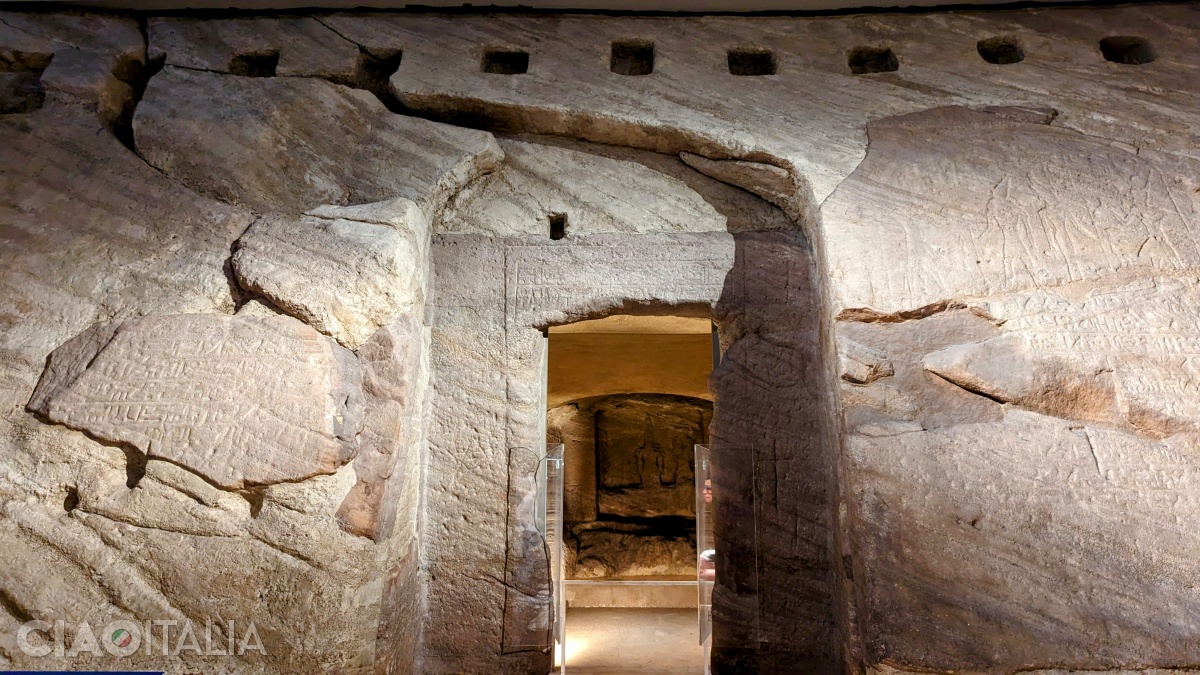
The Egyptian Museum in Turin was founded in 1824, when King Carlo Felice of the House of Savoy decided to purchase the collection of over 7,000 artifacts belonging to Bernardino Drovetti, a French consul in Egypt (originally from Piedmont) during the Napoleonic Wars. This collection was later enriched with other objects already owned by the House of Savoy, thus creating the first Egyptian museum in the world. Over time, the collections grew with artifacts discovered during excavations carried out by Italian archaeologists at the beginning of the 20th century. In 1967, the Egyptian government donated the rock-cut temple of Ellesyia to the museum as a sign of gratitude for the assistance provided in saving the Nubian temples, which were threatened by the construction works preceding the building of the Aswan Dam.
Today, the collections of the Egyptian Museum in Turin include around 40,000 objects, and the museum - reorganized and modernized following its 2015 restoration - is one of the most visited and most highly regarded in Italy.
A curiosity: the esoteric fame that surrounds the city has not bypassed the Egyptian Museum. It is said that both positive energy - mainly generated by objects that belonged to Pharaoh Thutmose III - and negative energy - attributed to artifacts that belonged to Tutankhamun - can be felt here. (You can read more about the city's magical aura in the article 25 Free Things to Do in Turin.)
The museum is situated in the city center, in an imposing Baroque palace (the Palace of the Academy of Sciences), at 6 Via Accademia delle Scienze, near Piazza San Carlo.
Tickets and Reservations
Entrance tickets to the Egyptian Museum can only be purchased online, by selecting the day and time of your visit.
Ticket prices in 2026 are as follows:
- Adult: €18
- Over 70: €15
- 15-18 years and students: €3
- Children 6-14 years: €1
- Children under 5: Free
- Family ticket (2 adults and 2 children under 18): €36 per family
If you have purchased the Torino+Piemonte Card, entry to the Egyptian Museum in Turin is free. However, a reservation is still required. You'll need to go to the website, choose the date and time of your visit, and select a free ticket (choose Free admission by Pass if using the English version of the site, or Ingresso Card for the Italian version), and then present your card at the entrance.
Tip: On certain days, the Egyptian Museum in Turin offers free admission and special deals:
- On your birthday, you can enter for free (presenting a valid ID)
- On Valentine's Day (February 14), each couple pays for only one ticket (offer not valid for groups)
- On International Women's Day (March 8), women enjoy free admission (offer not valid for groups)
- On Father's Day (celebrated in Italy on March 19), fathers get free entry if accompanied by their children (offer not valid for groups)
- On Mother's Day (celebrated in Italy on the second Sunday of May), mothers get free entry if accompanied by their children (offer not valid for groups)
Visiting Hours
The Egyptian Museum in Turin is open every day of the week.
Visiting hours in 2026 are:
- Monday: 9:00 AM - 2:00 PM
- Tuesday-Friday: 9:00 AM - 6:30 PM
- Saturday: 09:00 AM - 8:00 PM
- Sunday: 09:00 AM - 6:30 PM
Special openings:
- Friday, October 30, 2026: 9:00 AM - 10:00 PM
- Saturday, October 31, 2026: 9:00 AM - 10:00 PM
The last entry is allowed one hour before closing.
Visit to the Egyptian Museum in Turin
A visit to the Egyptian Museum in Turin typically lasts about 2 hours, but you can easily spend half a day there, getting lost among the exhibits that tell the history of Egypt.
Inside, you are allowed to take photos and videos without flash and without a tripod.
The museum's collections are arranged over 4 levels, and the entire route is approximately 2.5 kilometers long.
Entrance is on level -1, where you will find the ticket office, cloakroom, and souvenir shop.
You are required to leave backpacks of any size, bags larger than 30x40x15 cm, and non-collapsible umbrellas at the cloakroom. The cloakroom is free for these items. For other items (such as clothing), there is a fee.
Tip: Before starting your visit, download the museum's app on your phone (you can find it via the QR codes displayed inside). You can use it to guide yourself during the visit. It doesn't work perfectly, but it can be helpful if you haven't booked a guided tour.
On this level, there are several rooms where you can learn about the history of the museum.
From level -1, you will go directly up to level 2, which includes four rooms with exhibits from the Predynastic Period, the First Intermediate Period (the tomb of the Unknowns, the tomb of Ini, the tomb of Iti and Neferu), the Middle Kingdom, and the New Kingdom.
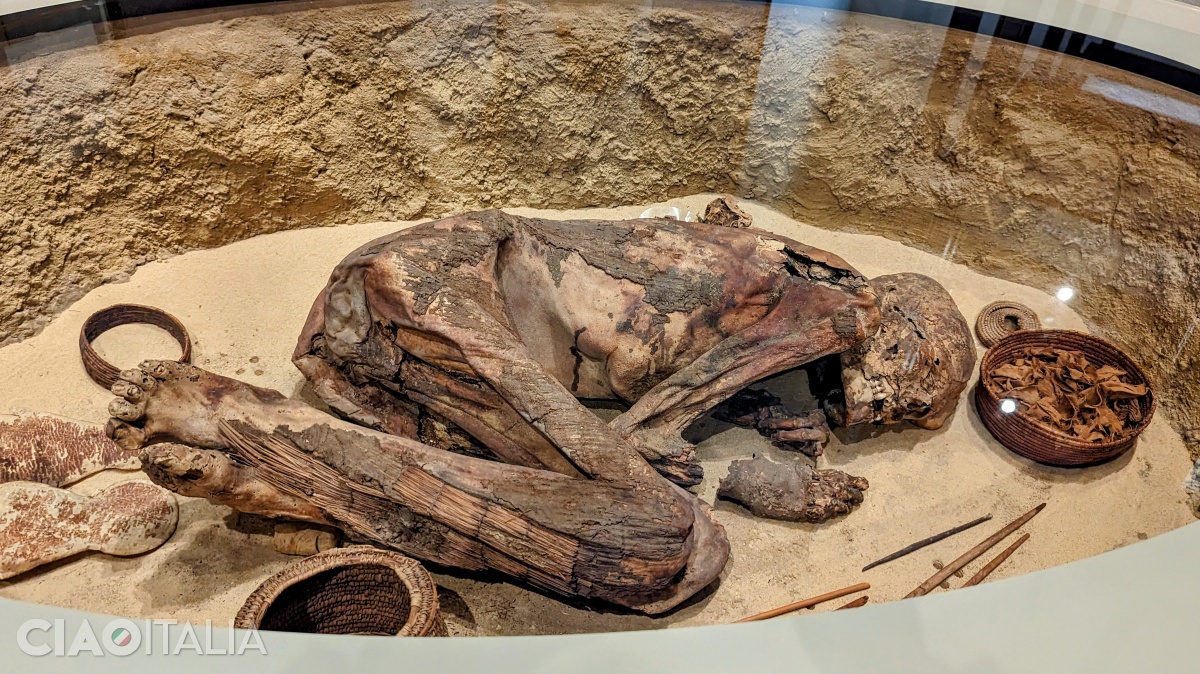
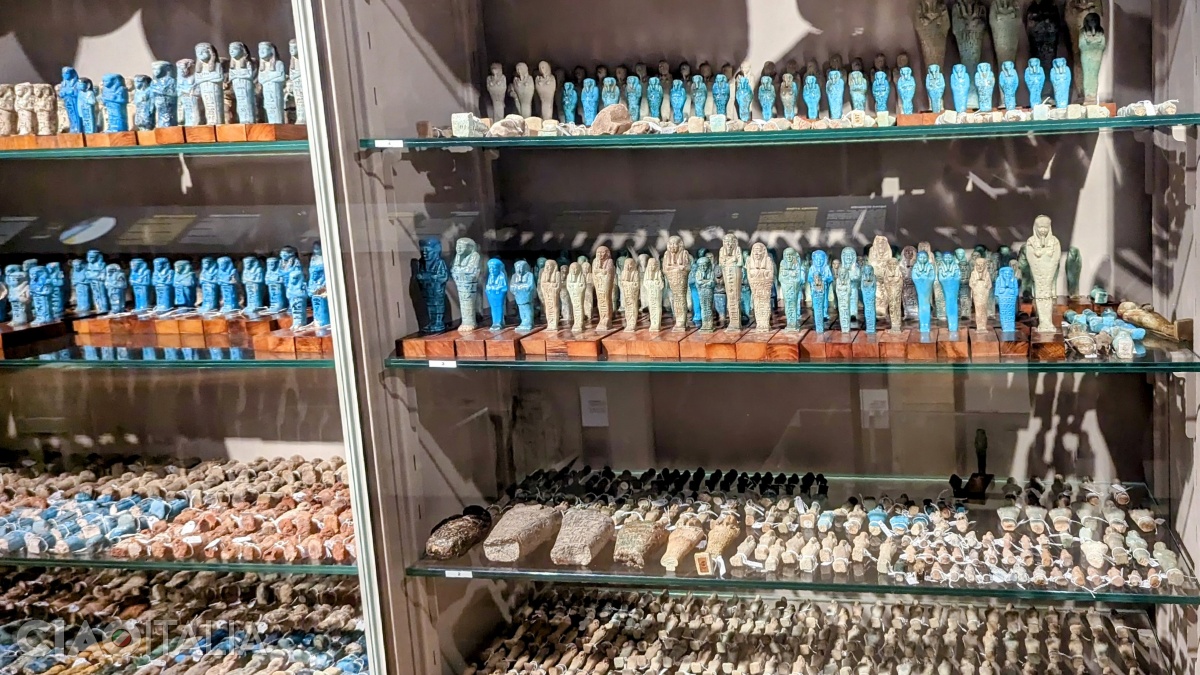
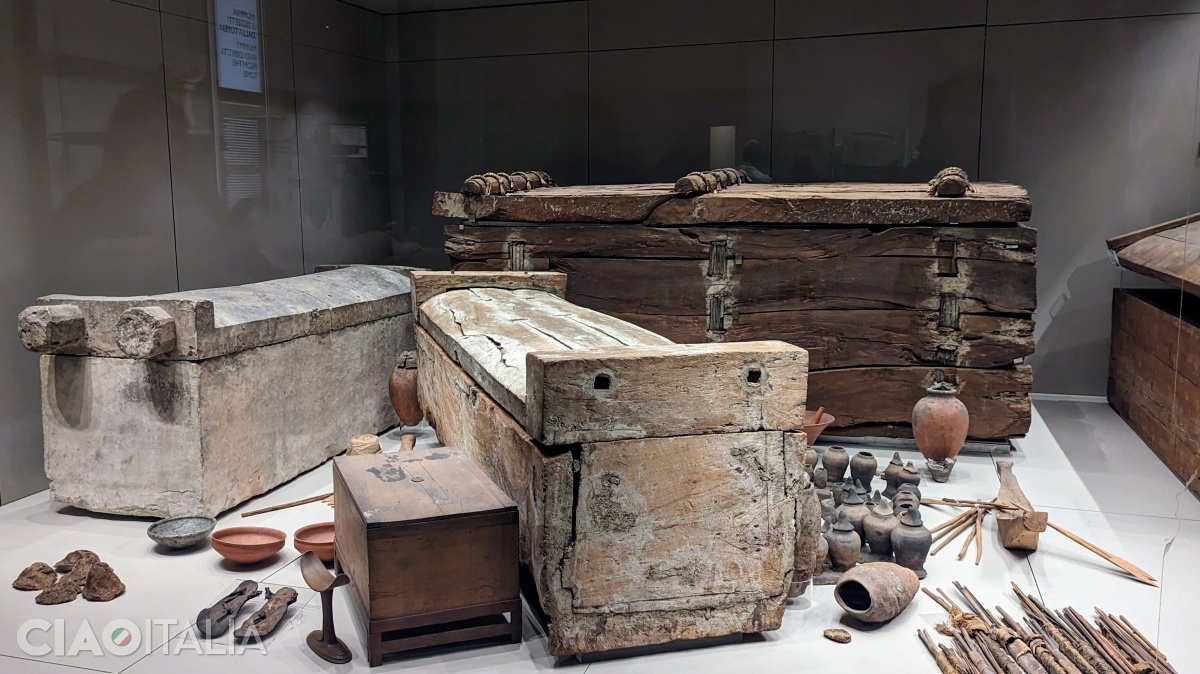
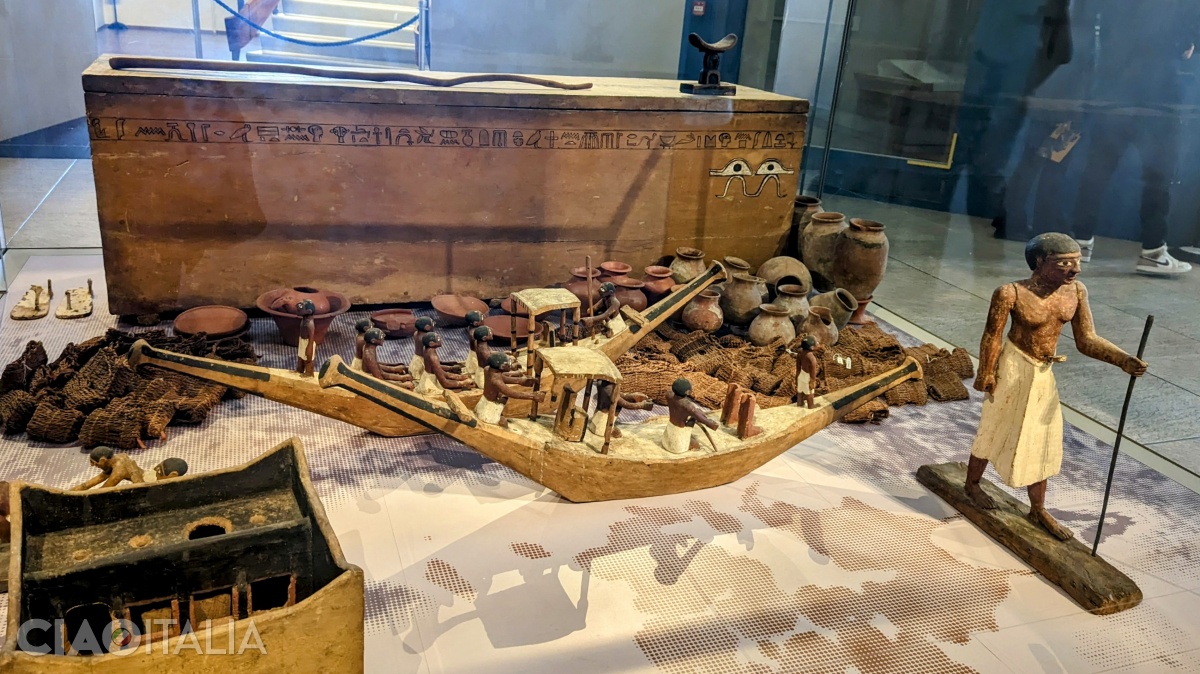
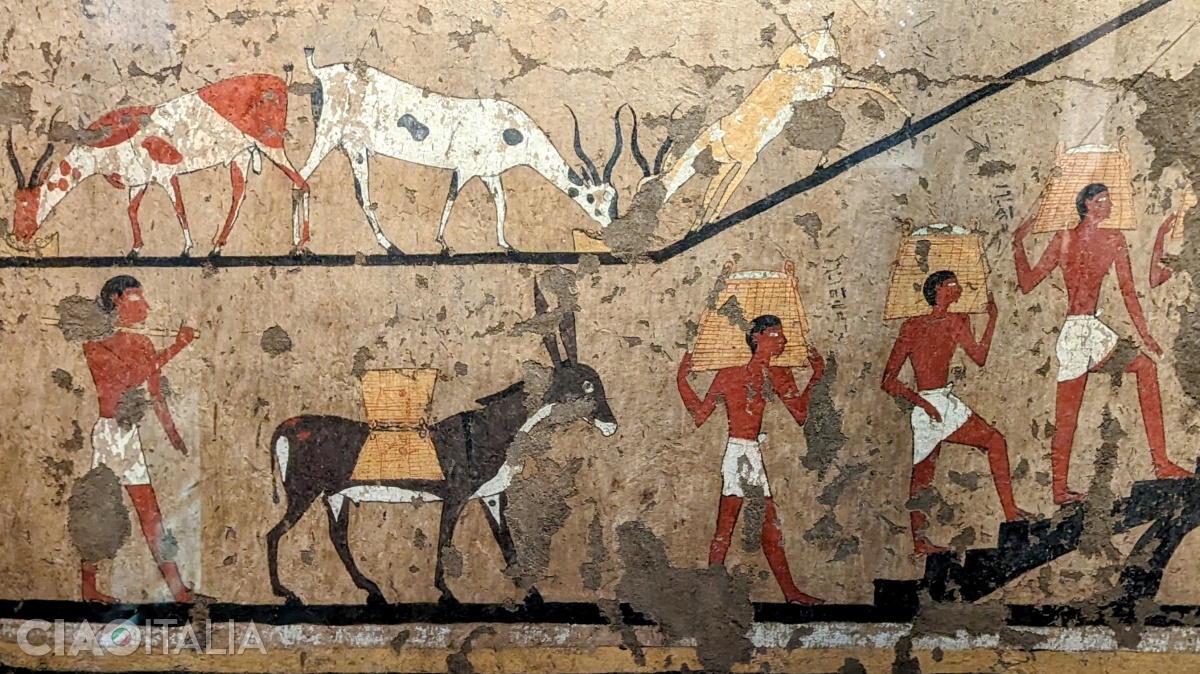
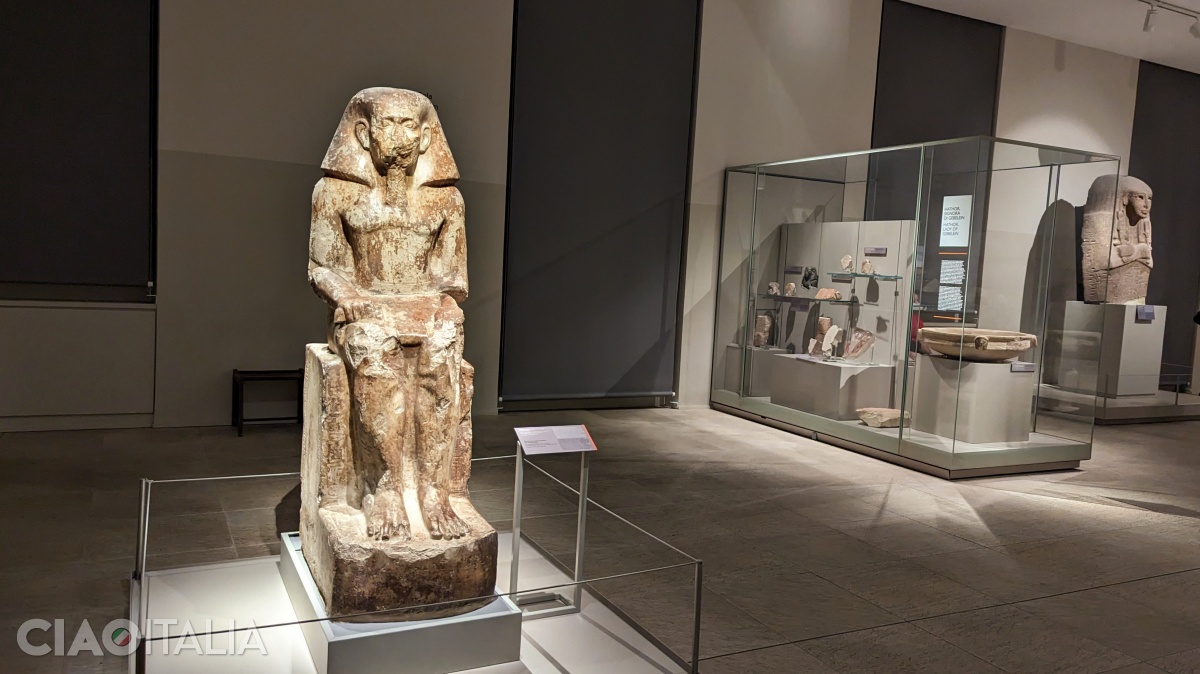
From level 2, you will continue your visit by going down to level 1, where you can first take a coffee break. The rooms on this level contain artifacts found by Ernesto Schiaparelli (the museum's director at the beginning of the 20th century) in the village of Deir el-Medina -today's Luxor. Particularly valuable is the tomb of Kha and his wife, discovered intact, with mummies and all funerary objects. Among these is the most detailed and complete papyrus of the Book of the Dead discovered so far. Dating from 332-320 BCE, the papyrus is over 8 meters long and is displayed on an entire wall.
On the first floor, there are other precious papyri. Among them is the Royal Papyrus, also known as the Royal Canon or the "Turin Papyrus". It dates from the reign of Ramses II (1290-1224 BCE) and contains a list of Egypt's rulers, specifying the length of each reign.
Another famous (and controversial) exhibit is the Erotic Papyrus of Turin. Dating from 1190-1077 BCE, it features satirical and erotic themes on both sides. On one side, animals display human behaviors, while on the other, couples are depicted having sex in awkward positions, with men represented caricatured and women portrayed according to all the rules of Egyptian beauty.
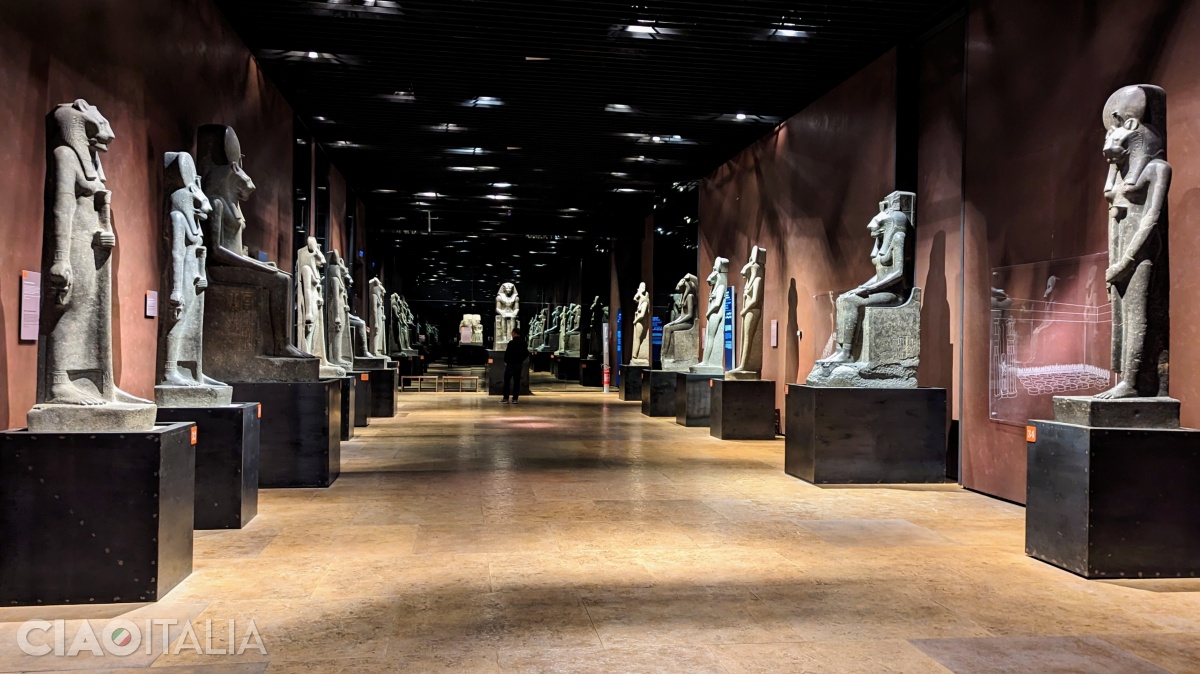
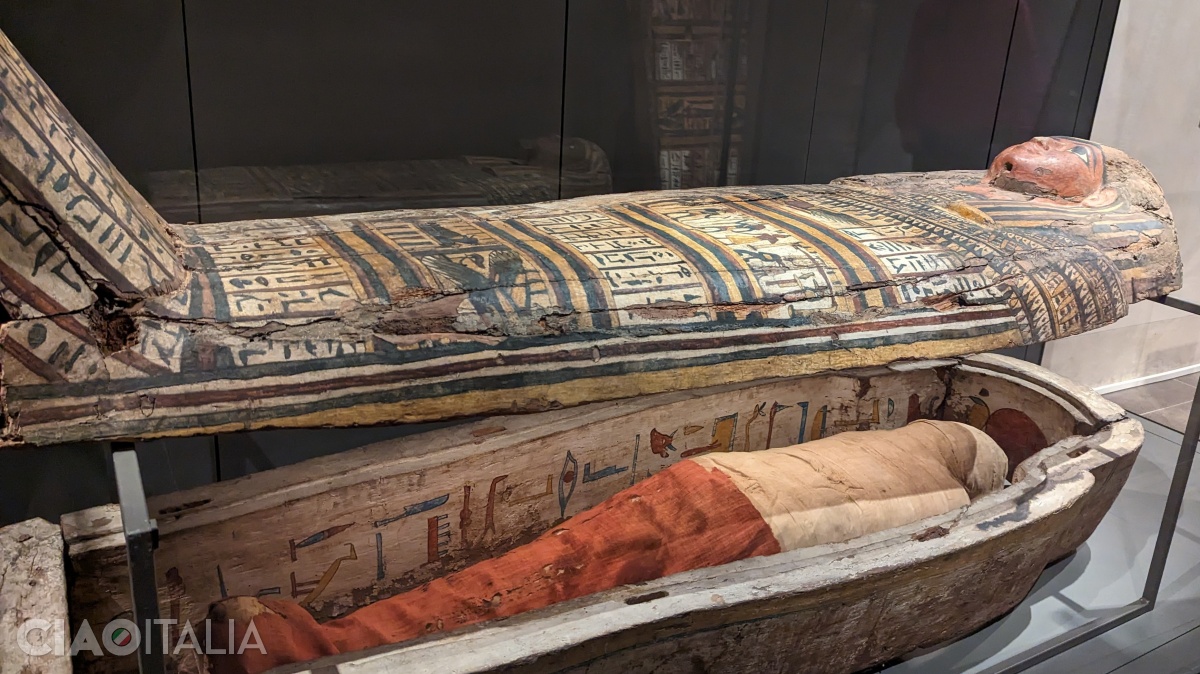
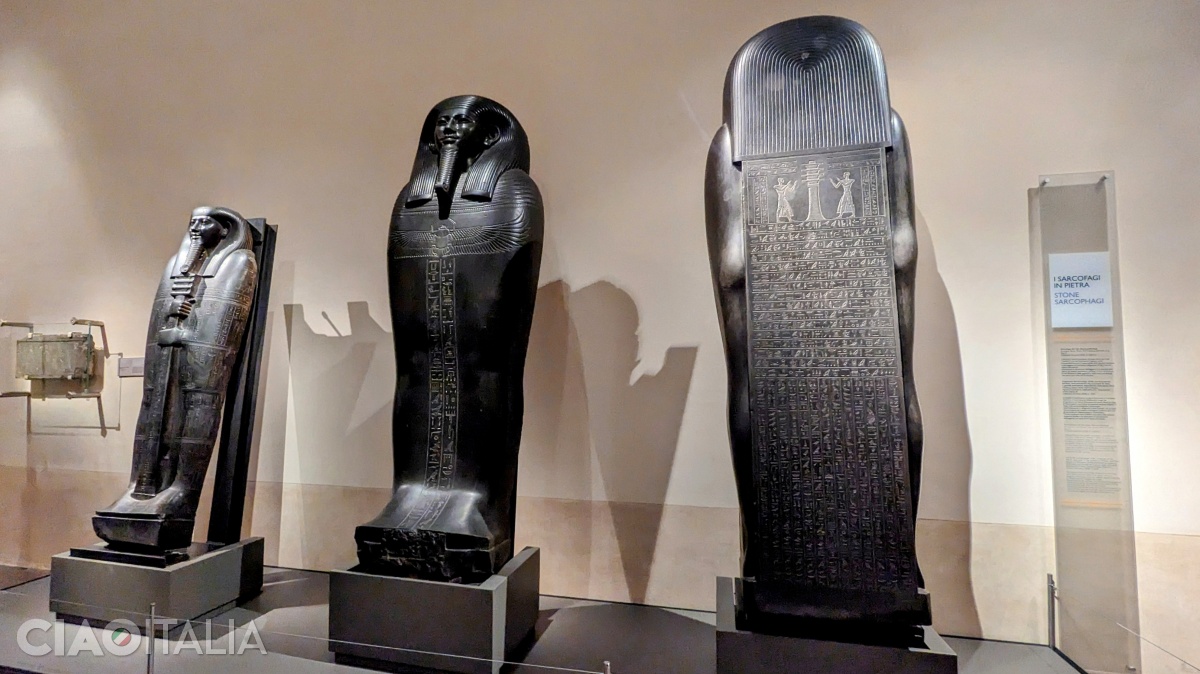
Also on display are the Gallery of Sarcophagi and other artifacts from the Late Period, the Ptolemaic Period, and the Roman Era.
The visit continues with level 0, where you will find a beautiful Gallery of the Kings and the Temple of Ellesiya, located in the Nubian Room.