Mole Antonelliana and the National Museum of Cinema in Turin
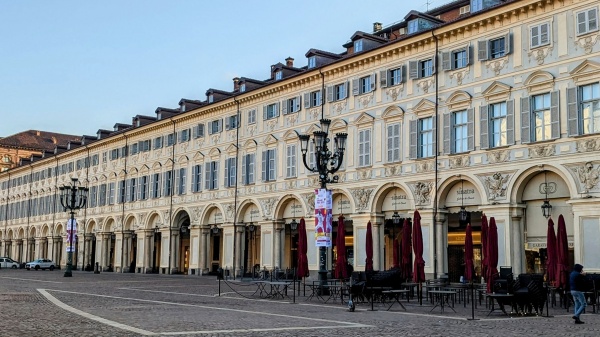
With its slender tower rising above all the other rooftops, Mole Antonelliana is, without a doubt, the symbol of the city of Turin and one of the most well-known buildings in Italy. It is so famous that it even appears on the 2-cent coins issued by the Italian state. Moreover, it houses one of the most renowned museums in the Piedmont region: the National Museum of Cinema. Mole Antonelliana is located right in the center of Turin, at Via Montebello no. 20.
Mole Antonelliana
The name may seem somewhat unusual, but the explanation is simple: in Italian, the word mole refers to a large, massive building, and Antonelli is the name of the architect who designed it. The people of Turin simply call it la mole.
The building has quite an interesting story. Construction began in 1863 and it was originally intended to be a synagogue for the Jewish community in Turin. According to the initial plan, the building was supposed to be only 47 meters tall. During the construction process, architect Alessandro Antonelli changed the plans, increasing the building's height, which led to higher costs, a longer construction time, and disagreements with those who had commissioned the project. Due to a lack of funds, in 1869 the Jewish community decided to halt construction and close the site. At that stage, the building had reached a height of 70 meters.

Eventually, the city hall took over the project, and construction resumed. Antonelli worked on it until his death in 1888, and the building was completed a year later, in 1889. In its final form, the roof reached a height of 167 meters, making Mole Antonelliana the tallest brick building of its time.
The story doesn't end there. In 1953, following a powerful storm, the building's spire collapsed into a nearby garden. It was rebuilt seven years later, this time with a metal structure clad in stone.
Since Turin is a city of magic and esotericism (you can read more in the article 25 Free Things to Do in Turin), urban legends have not spared Mole Antonelliana. According to one legend, the building is a huge antenna designed to concentrate positive energy from the sky (through the spire) and from the earth (through the pyramidal base).
Contradicting this legend, another myth says that students who climb the spire will not graduate (similar superstitions exist in Bologna, where students should not climb the Asinelli Tower, and in Pisa, where students should avoid climbing the Leaning Tower).
Taking the Elevator in the Molle Antonelliana
Since 1961, Mole Antonelliana has had a panoramic elevator. It was installed to mark the centenary of Italy's unification and was renovated in 1999.
The elevator goes right through the middle of the Museum of Cinema and takes you in less than a minute to the terrace at a height of 85 meters. From there, you can enjoy a full panorama of the city, with the majestic peaks of the Alps on one side and the Po River valley on the other.
The panoramic elevator is operated by GTT, the Turin public transport company.


The National Museum of Cinema in Turin
Since 2000, the National Museum of Cinema (Museo Nazionale del Cinema) has been housed in the Mole Antonelliana. It is not a museum dedicated specifically to Italian cinema, but to the art of cinematography in general, from its origins to the present day, making it one of the richest museums of its kind in the world.
Tickets and Reservations
The ticket prices for the Museum of Cinematography are:
Museum of Cinema (access to exhibitions is included):
- Adult: €18
- 6-26 years: €16
- Children under 6: free
Between October 7 and November 9, 2026, due to the installation of a new exhibition, the ticket price will be €16.
Panoramic elevator:
- Adult: €9
- 6-26 years: €7
- Children under 6: free
Combined ticket for the Museum of Cinema + Panoramic elevator:
- Adult: €23
- 6-26 years: €20
- Children under 6: free
If you have purchased the Torino Piemonte Card (which we recommend if you plan to visit several museums), admission to the Museum of Cinema in Turin is free, and the ride on the panoramic elevator has a reduced price of €7.
Because the number of available tickets for different time slots is limited, we recommend buying tickets online for busy periods (e.g., weekends), choosing the day and time for both the Museum of Cinema and especially for the panoramic elevator.
If you have the Torino Piemonte Card, you can make reservations in the same way, but instead of selecting the regular-priced ticket, you will choose "Free Admission Convention" option for the Museum of Cinema in English, or Gratuito Convenzione Museo in Italian, and for the panoramic elevator select "Panoramic Lift Concession Convention" option in English or Ridotto Convenzione Ascensore in Italian.
Tip: If you want to both ride the elevator to the terrace and visit the Museum of Cinema, book your elevator time about 30 minutes before your museum entry time. This way, you'll have enough time to enjoy the panoramic terrace view and then calmly explore the museum.
Visiting Hours
The visiting hours for the Museum of Cinematography (also valid for the panoramic elevator ride) are:
- Monday: 9:00 AM - 7:00 PM
- Tuesday: closed
- Wednesday to Sunday: 9:00 AM - 7:00 PM
The ticket office closes at 6:00 PM, and the last elevator descent is at 6:50 PM.
On certain days of the year, the Museum of Cinema has special opening hours:
- November 1, 2026: 9:00 AM - 7:00 PM
- December 1 and 8, 2026: 9:00 AM - 9:00 PM
- December 24, 2026: 9:00 AM - 6:00 PM
- December 25, 2026: 2:00 PM - 9:00 PM
- December 26 and 29, 2026: 9:00 AM - 9:00 PM
- December 31, 2026: 9:00 AM - 6:00 PM
- January 1, 2027: 2:00 PM - 9:00 PM
- January 5 and 6, 2027: 9:00 AM - 9:00 PM
Visit to the National Museum of Cinema in Turin
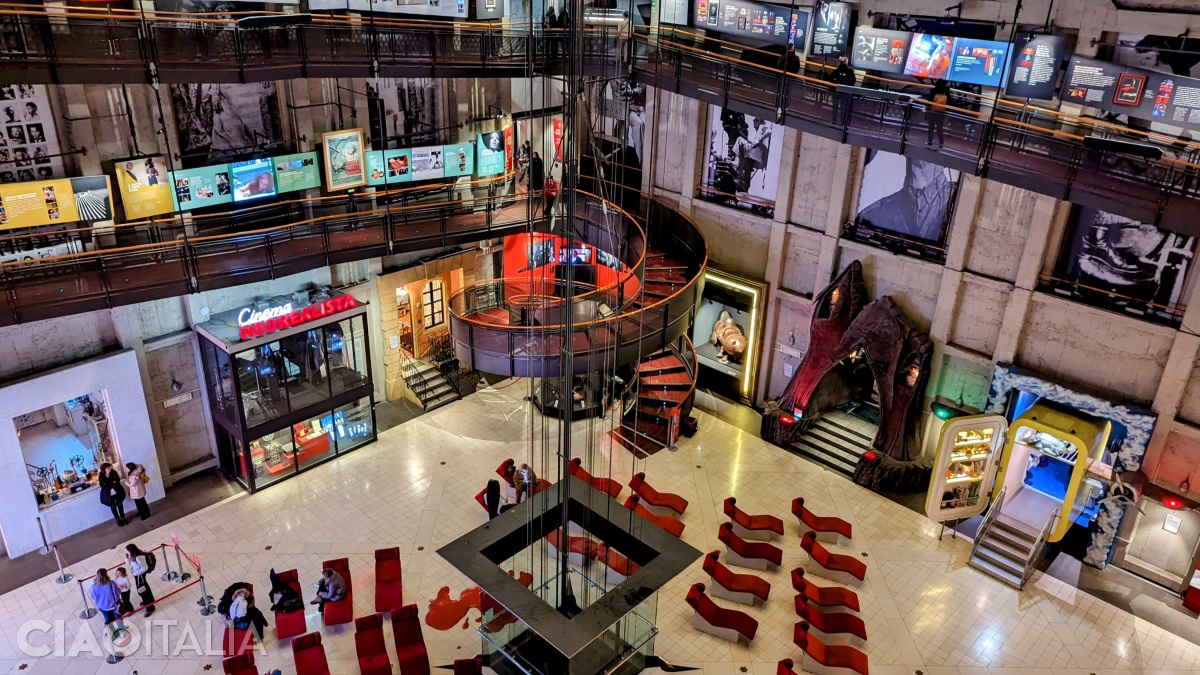
The exhibition route was created by Swiss set designer François Confino (who also designed the Automobile Museum in Turin), in a vertical, spectacular, and interactive presentation full of visual and auditory stimuli, designed to give you the emotions you experience when watching a movie.
The visit begins on the ground floor, with the section called "Archaeology of Cinema", where you can try objects and devices from the 18th century and early 19th century that preceded the beginnings of film, such as magic lanterns and optical boxes.

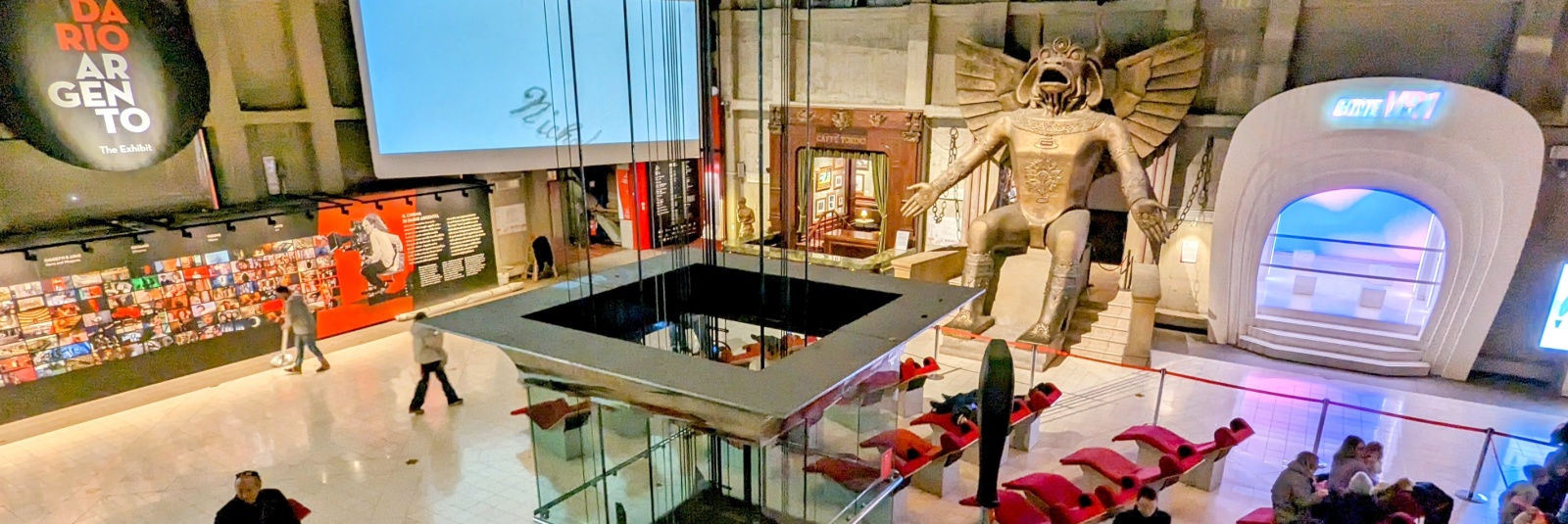
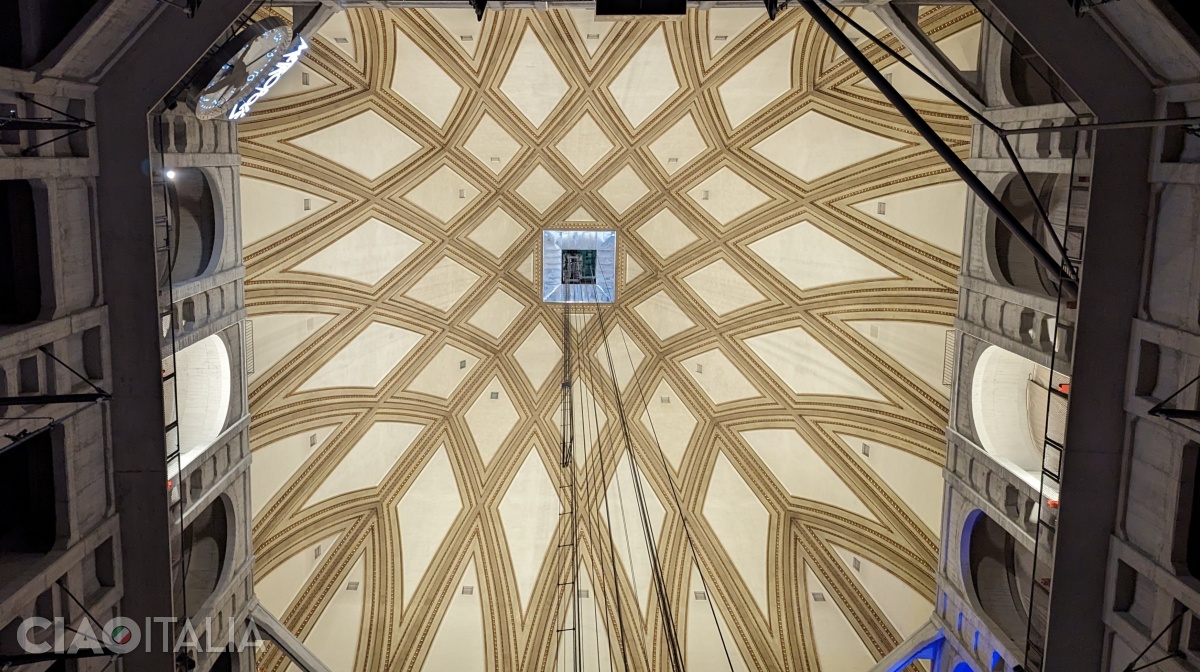
The core of the museum is situated in the central hall (which was originally intended for the Jewish community) and is called the "Temple Hall". Here, a huge statue will surely catch your attention - it is the winged god Moloch from Giovanni Pastrone's film Cabiria, the first Italian blockbuster, filmed in Turin in 1914. Lying back on a lounge chair, you can watch film projections or light shows projected onto the building’s vault. The hall is surrounded by ten rooms dedicated to different film genres, from animation to westerns, horror, or sci-fi.
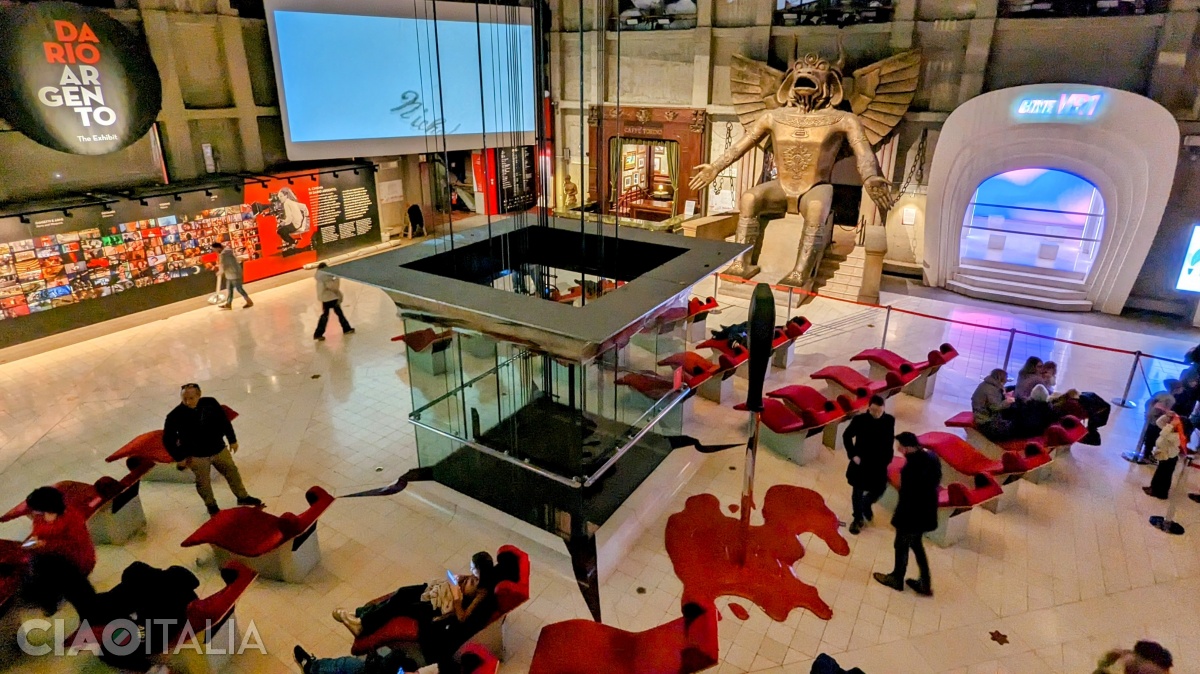
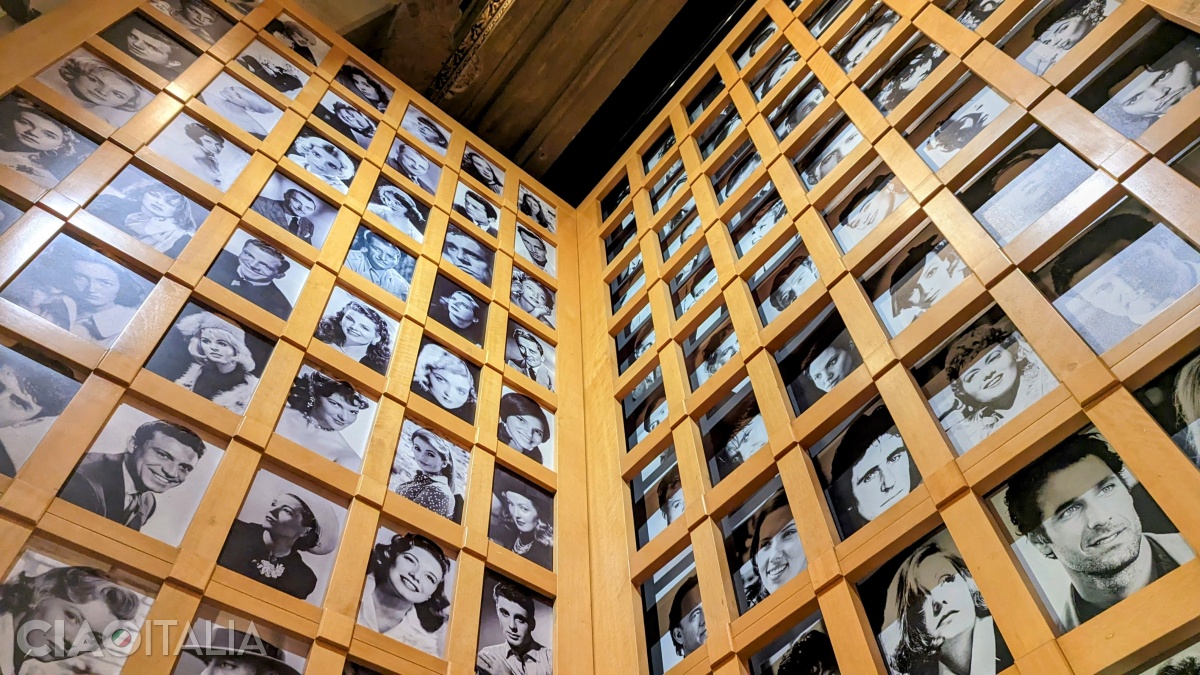
Climbing the spiral ramp that winds along the walls toward the dome, like a film reel, you will be able to admire the Mole Antonelliana from above, passing through the temporary exhibitions area. In the upper sections, you will discover the components that characterize film-making - from production to directing, set design, actors, and costumes, as well as important films and actors from the history of cinema.
A visit to the Cinema Museum in Turin lasts on average about 1.5 hours.