The Towers of Bologna
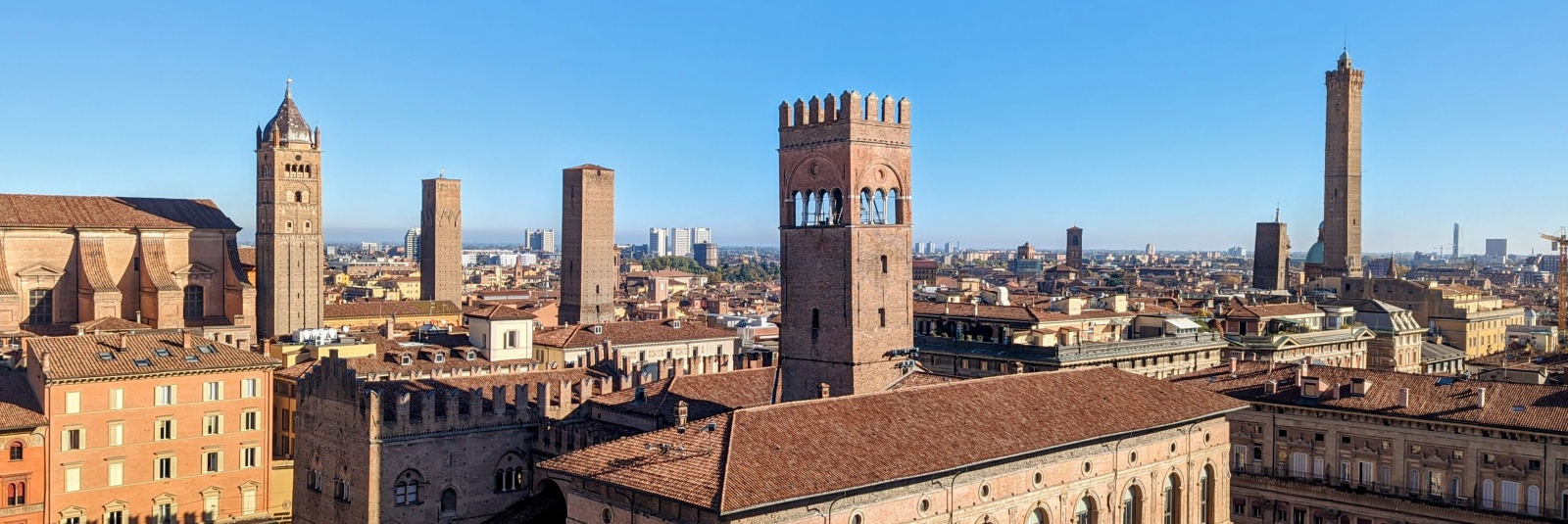
Once, Bologna was also called la turrita, meaning "the city of towers". And with good reason - in the Middle Ages, around 100 towers rose across Bologna, built for military purposes or to symbolize the power and prestige of wealthy families. Of all these, only 24 remain today. You can see some of them while walking around the city center, and you can even climb a few (Asinelli – currently closed, the Clock Tower, Prendiparte Tower, and the Cathedral tower) to admire the city panorama from above. If you're curious to see what Bologna looked like in the past, you can try Macchina del Tempo, a virtual reality experience.
The Leaning Towers of Bologna (Asinelli and Garisenda)
The most famous towers in Bologna are Asinelli and Garisenda, simply called "the two towers" (le due torri) or "the leaning towers" (le torri pendenti). The towers were built between 1109 and 1119 and belonged to noble families whose names they bear.
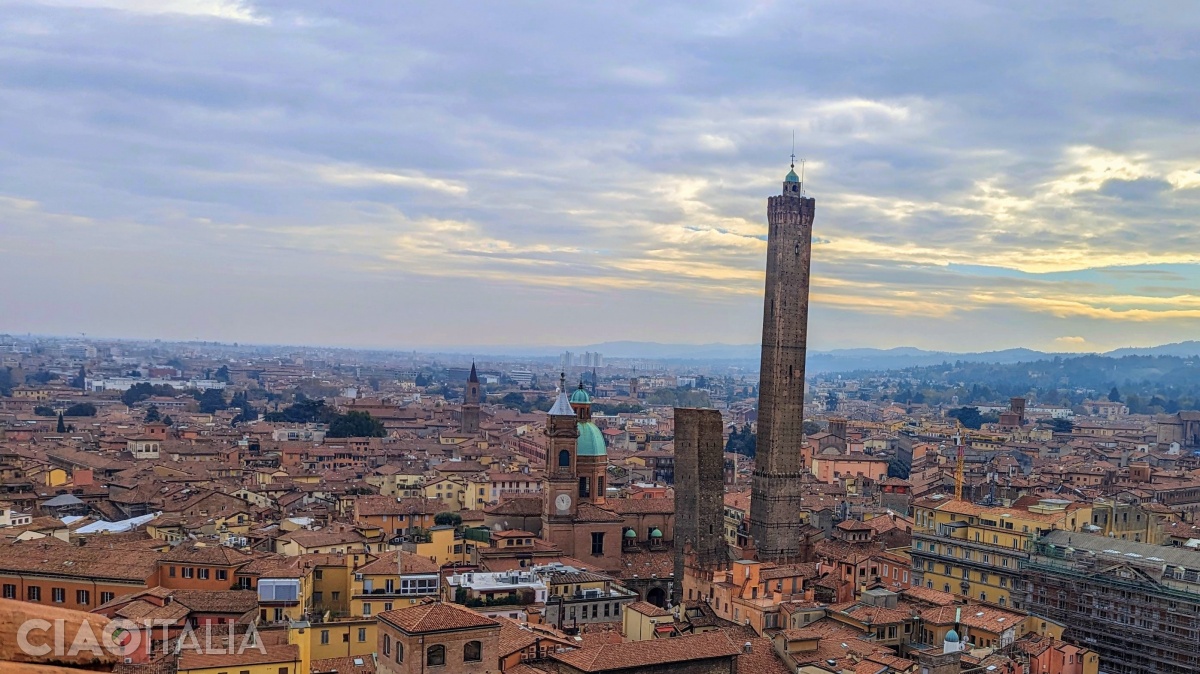
Asinelli Tower (Torre degli Asinelli) stands 97.2 meters tall, making it the fourth tallest medieval tower in Italy, after the Torrazzo in Cremona (112 m), the Torre del Mangia in Siena (102 m), and the Campanile di San Marco in Venice (98.6 m). However, it is the tallest leaning tower, surpassing the height of the Tower of Pisa. Its lean measures 2.23 meters from the vertical.
Asinelli Tower is such a city landmark that even the width of tagliatelle pasta is calculated based on its dimensions. After cooking, the pasta should not be wider than 8 mm, which is the 1/12,270th part of the tower's height (you can learn more in the article What to Eat in Bologna).
The tower also has a legend dating back to the Middle Ages. It is said that one day, a poor man followed his donkeys, who helped him find a treasure of gold and silver coins. The man hid the treasure until one day his only son asked him to build the tallest tower in the city - he wanted to win the heart of a girl of noble origin. The tower was built using the treasure found by the donkeys and was named after them - il Torre degli Asinelli ("The Donkeys' Tower").
Throughout its long existence, Asinelli Tower has survived fires, lightning strikes, cannon shots, and bombings during World War II.
Inside, 498 steps lead you to the top, where a wonderful view of all Bologna opens up. There is no elevator, despite several plans to build one starting from the late 19th century.
According to a superstition (similar to those that say you shouldn't cross Piazza Maggiore diagonally, or climb the Mole Antonelliana in Turin, or the Leaning Tower of Pisa), students are not supposed to climb Asinelli Tower if they want to graduate.
Access to Asinelli Tower is currently prohibited due to restoration work on Garisenda Tower.
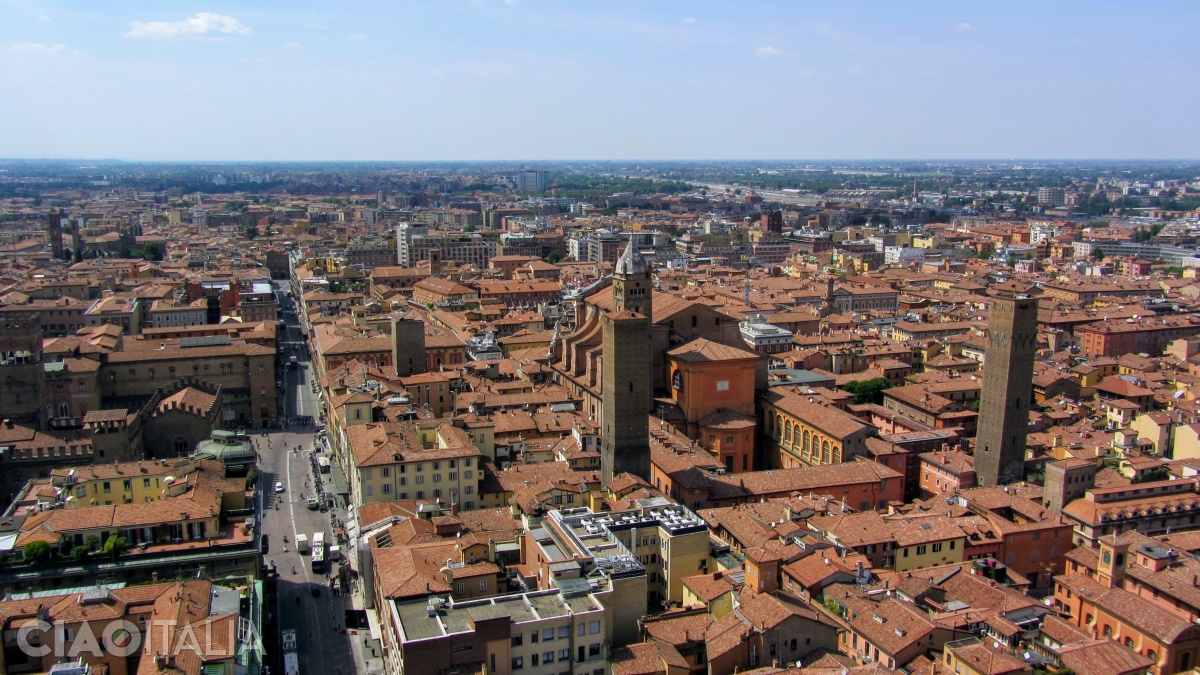
Located next to Asinelli, Garisenda Tower (Torre della Garisenda) is smaller (48 meters) but more tilted (3.22 meters off vertical). In fact, the tower was never completed. Moreover, around the 1300s it was shortened (it originally stood about 60 meters tall) because it was at risk of collapsing. Even today, the tower is not in great condition - restoration work began in October 2023.
Garisenda Tower is mentioned by Dante in the Inferno chapter of the Divine Comedy (Canto XXXI):
"And as the Garisenda seems moving too
from underneath its overhanging side
(with moving clouds behind, it falls on you):
like that (as I waited - silent and terrified -
to see Antaeus bend) he loomed over me;
I’d rather have ridden any other ride."
The two towers stand in Piazza di Porta Ravegnana, a five-minute walk from Piazza Maggiore, and are among the most important tourist attractions in Bologna. A curiosity: there used to be no fewer than five medieval skyscrapers in Piazza di Porta Ravegnana, but three of them were demolished in 1919 despite local opposition.
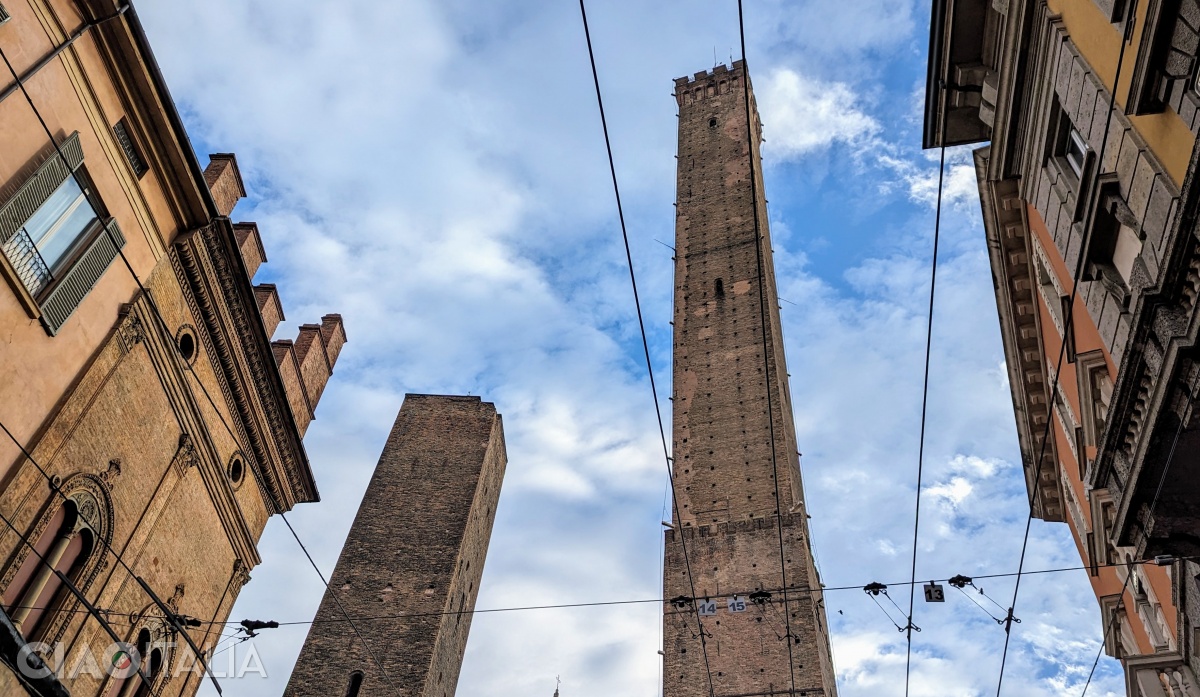
The Clock Tower (Accursi)
The Clock Tower (Torre dell'Orologio), built in 1250, stands on Piazza Maggiore and adorns a corner of the City Hall building. Its official name is Accursi Tower, named after Accursio, the first owner of the palace (Palazzo d'Accursio), which the tower is part of.
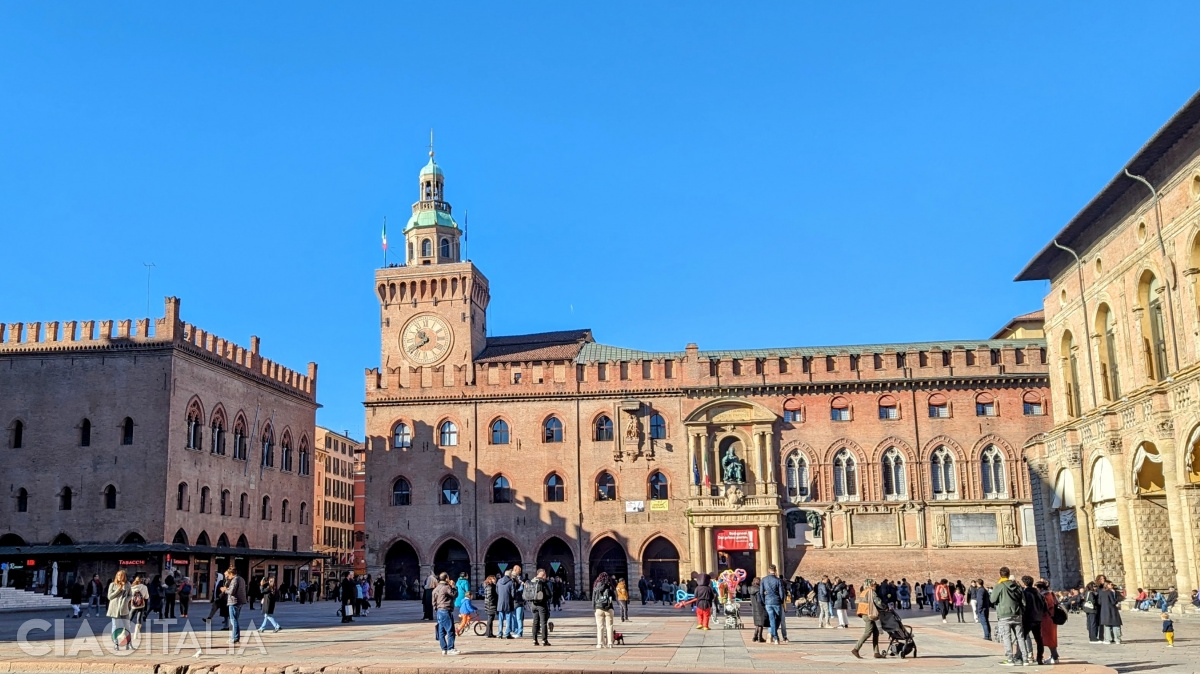
The large clock on the façade was added in 1451, and it served as the reference by which all other clocks in Bologna were set. With a diameter of 6.4 meters, it is one of the largest clocks in Italy.
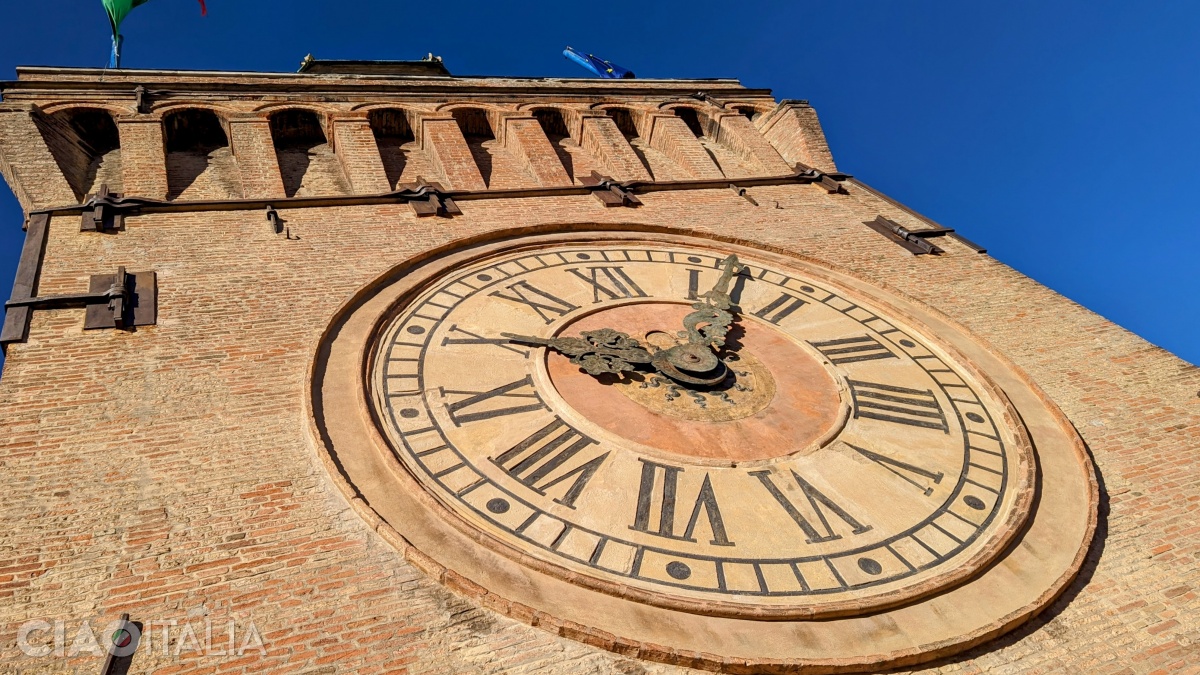
The Clock Tower is one of the few towers in Bologna that you can climb. Its total height is 46.2 meters (36.2 meters up to the second terrace, plus an additional 10 meters for the spire).
Access is from the second floor of City Hall, via Farnese Hall. To get there, enter the inner courtyard of City Hall from Piazza Maggiore. In the back, in the left corner, there is an elevator - but we recommend heading to the right corner, where you can climb the beautiful Bramante staircase. Built in the 16th century, this staircase was designed to allow the city's officials to make a grand entrance on horseback.
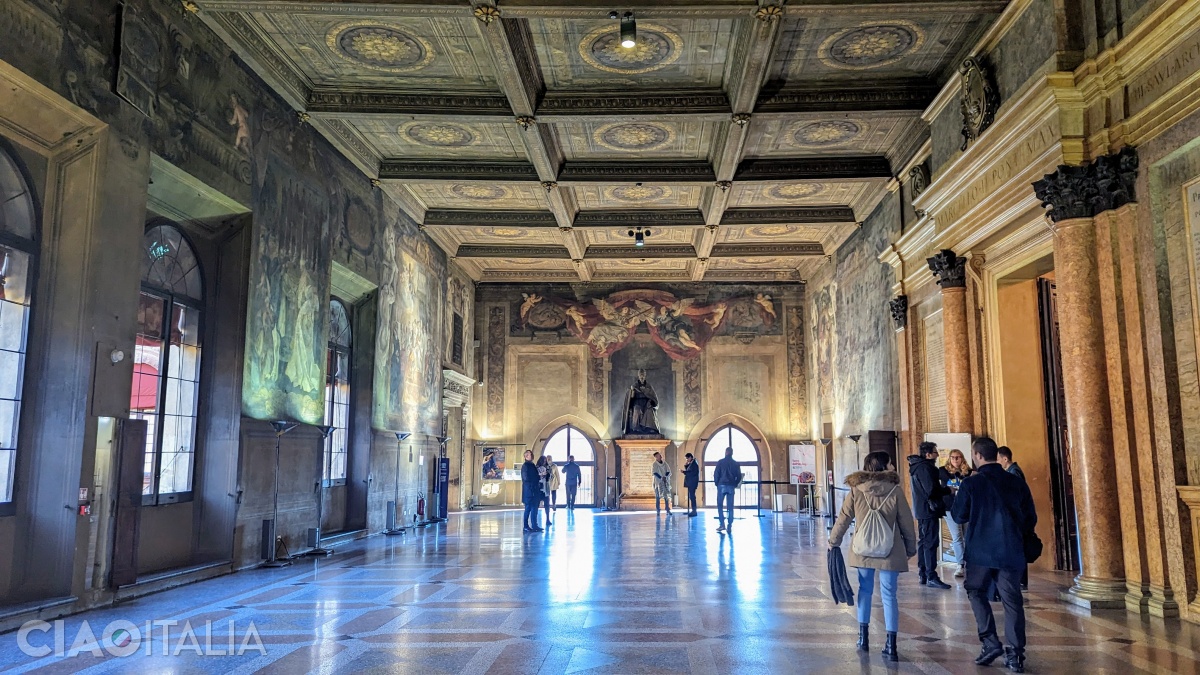
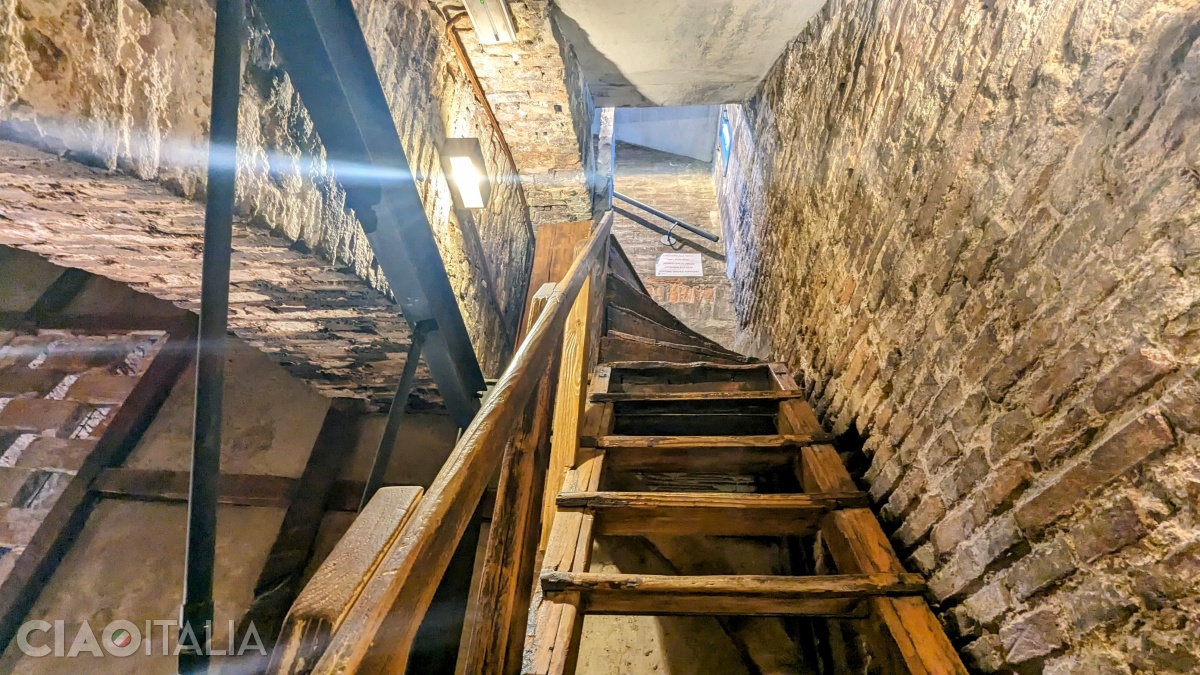
Entry to the tower from Farnese Hall is through the last door on the right (toward the windows), where a staff member will scan your ticket. From there, there aren't many steps left to climb, and along the way, there is also an intermediate terrace. Before ascending the final narrow wooden staircase to the panoramic terrace above the clock, you'll need to provide written consent (your name and signature).
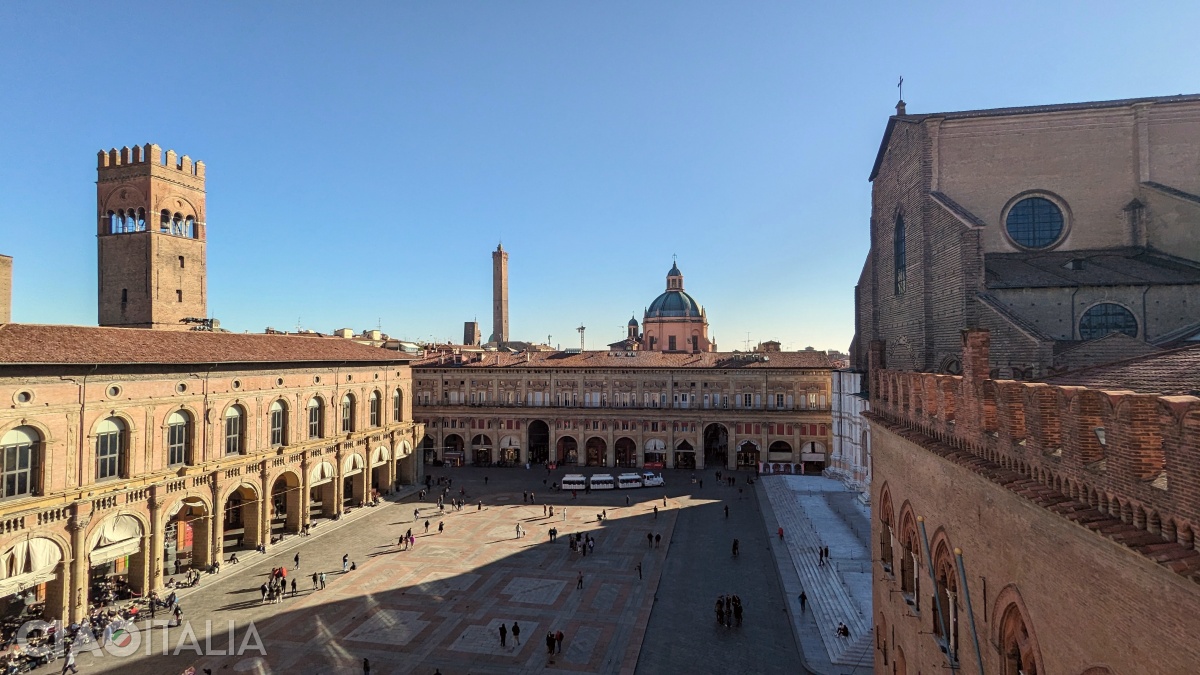
From the top of the Clock Tower, you'll have a beautiful view over Piazza Maggiore, as well as other parts of the city - for example, from the back side of the terrace, you can see San Luca Basilica on the hill.
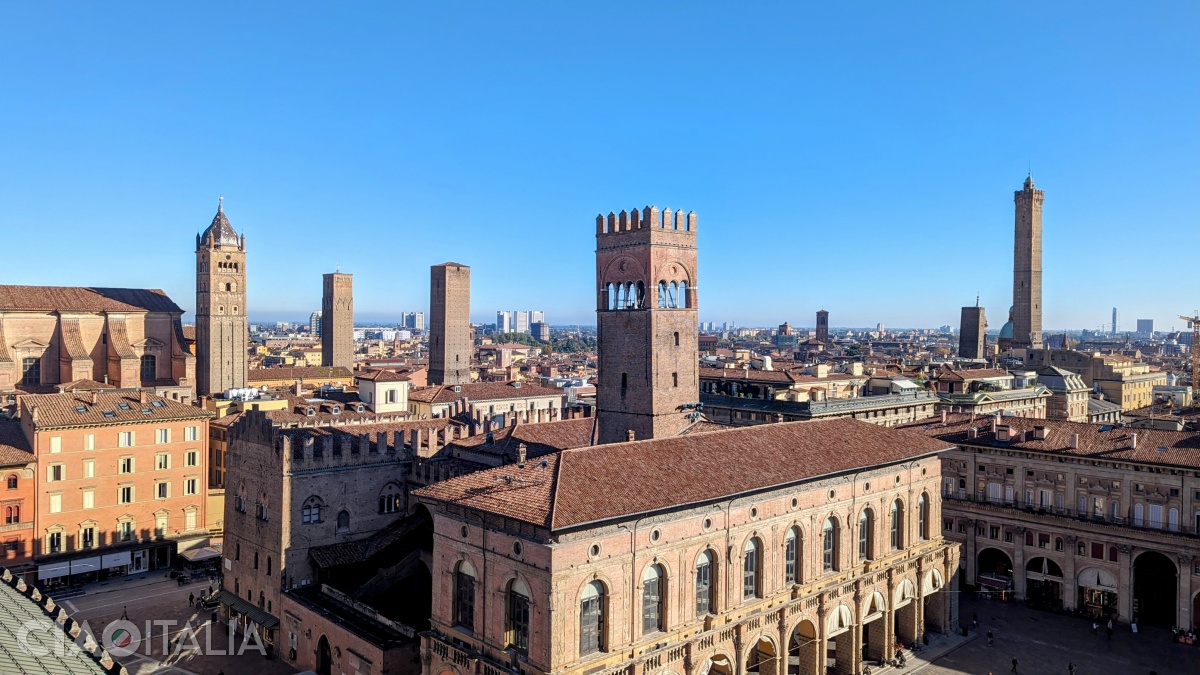
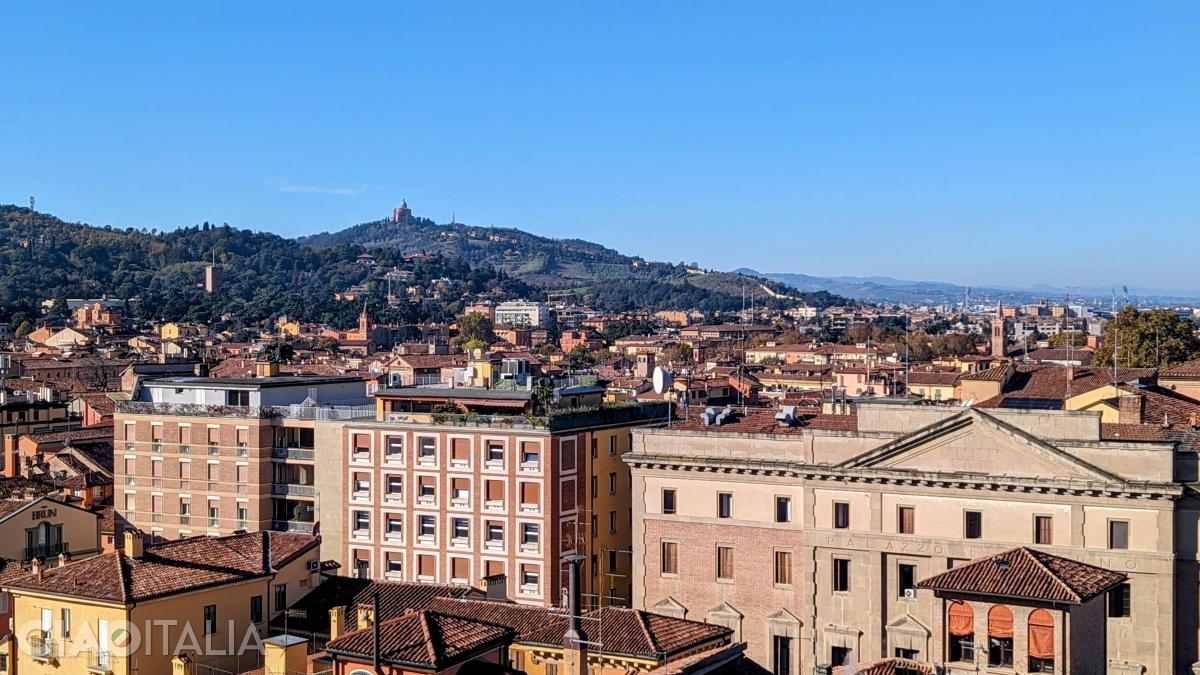
Tickets can be booked online or at the Bologna Welcome tourist information office in Piazza Maggiore.
The ticket includes an audio guide (on your phone, via QR code scan) and access to the Municipal Art Collections (except on Mondays), so make sure you leave time to visit them and check their opening hours. The entrance to the Collections is again in Farnese Hall, opposite the entrance to the tower.
Clock Tower (Accursi)
Opening hours:
September 7 - December 31, 2026:
- Monday to Sunday: 10:00 AM - 6:20 PM (last entry), three times per hour (on the hour, at twenty past, and at forty past)
- December 24 and December 31, 2026: last entry at 4:20 PM
- December 25, 2026: Closed
Ticket prices:
- Adults: €10
- Seniors (65+ years): €7
- Children (4-11 years): €7
- Children under 4: free
- Free with Bologna Card
Prendiparte Tower
Prendiparte Tower is located at Piazza Prendiparte no. 5. It is also known as Coronata, due to a crown-shaped decoration at the top. The tower was recently renovated. At 59.5 meters tall (though it's believed to have originally been even taller), it is the third tallest tower in Bologna (not counting the Cathedral tower), after the Asinelli and Azzoguidi towers.
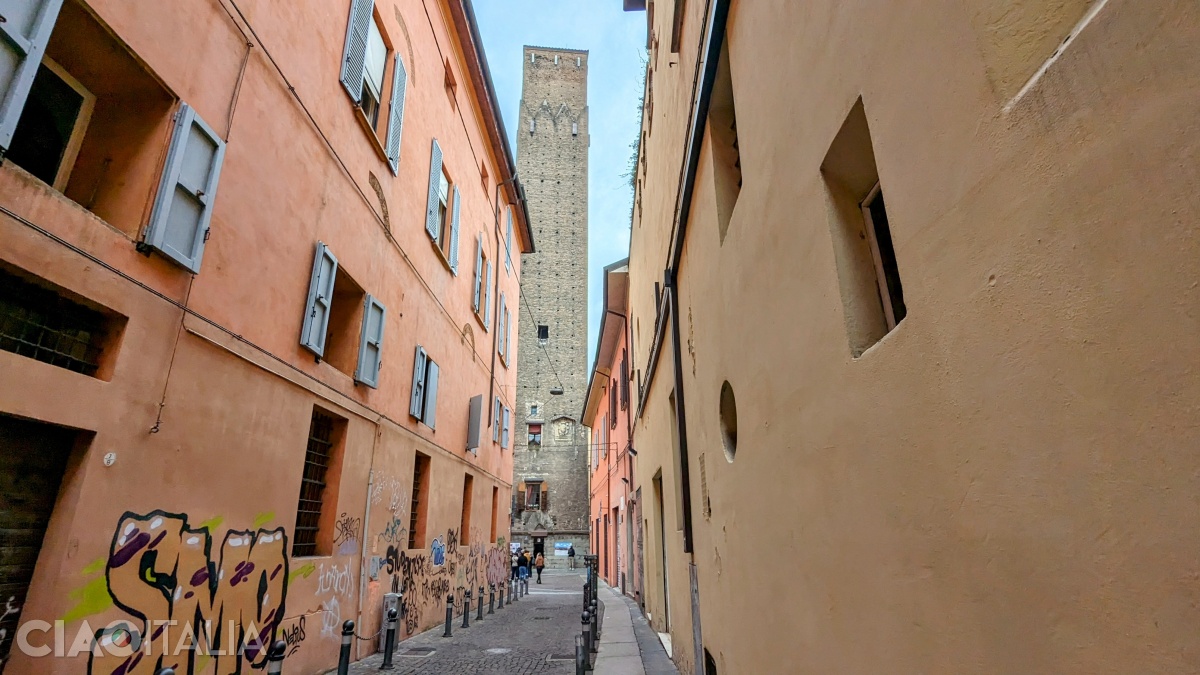
The tower was built around the year 1150 by the Prendiparte family for defensive purposes. During the 17th and 18th centuries, it was used as a pantry, a seminary, and a prison of the Archbishopric. The prison occupied the third, fourth, and fifth floors and held individuals accused of committing acts considered immoral by the Church. Among the inmates were a man who had impregnated two nuns and another who had picked chestnuts from trees growing on Church land. Some of the inscriptions made by prisoners can still be seen on the walls.
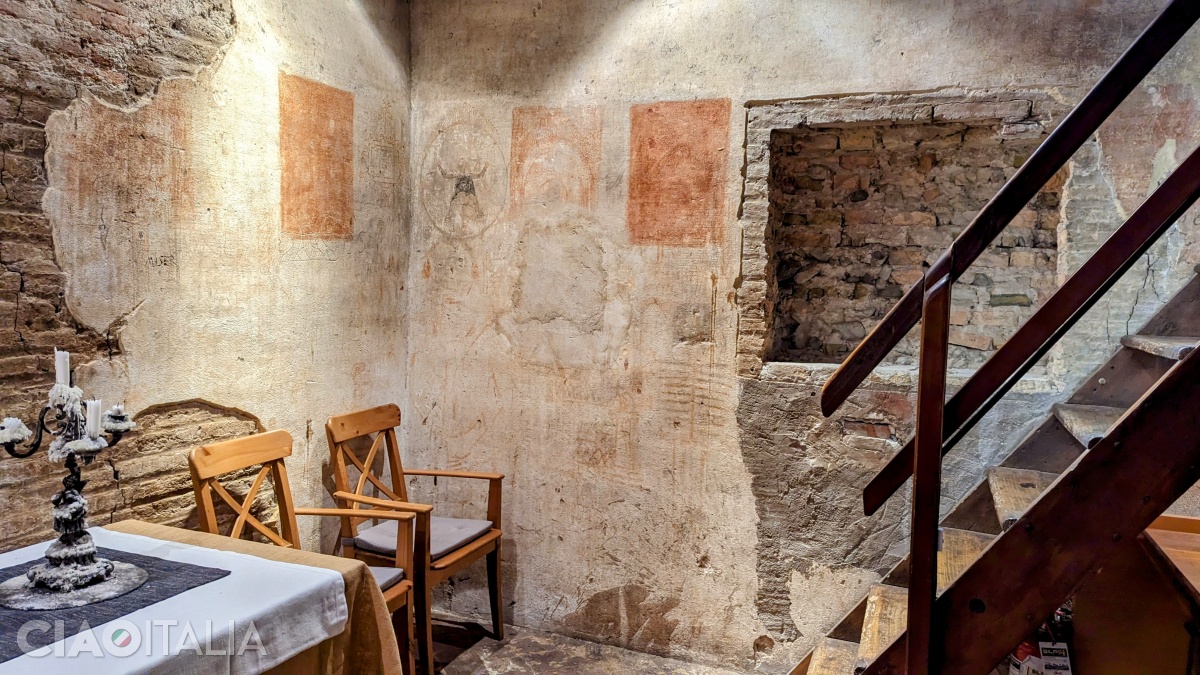
At the end of the 18th century, the first three floors were converted into a residence. The larger windows on the lower part of the tower date from this period and were intended to create a more welcoming space.
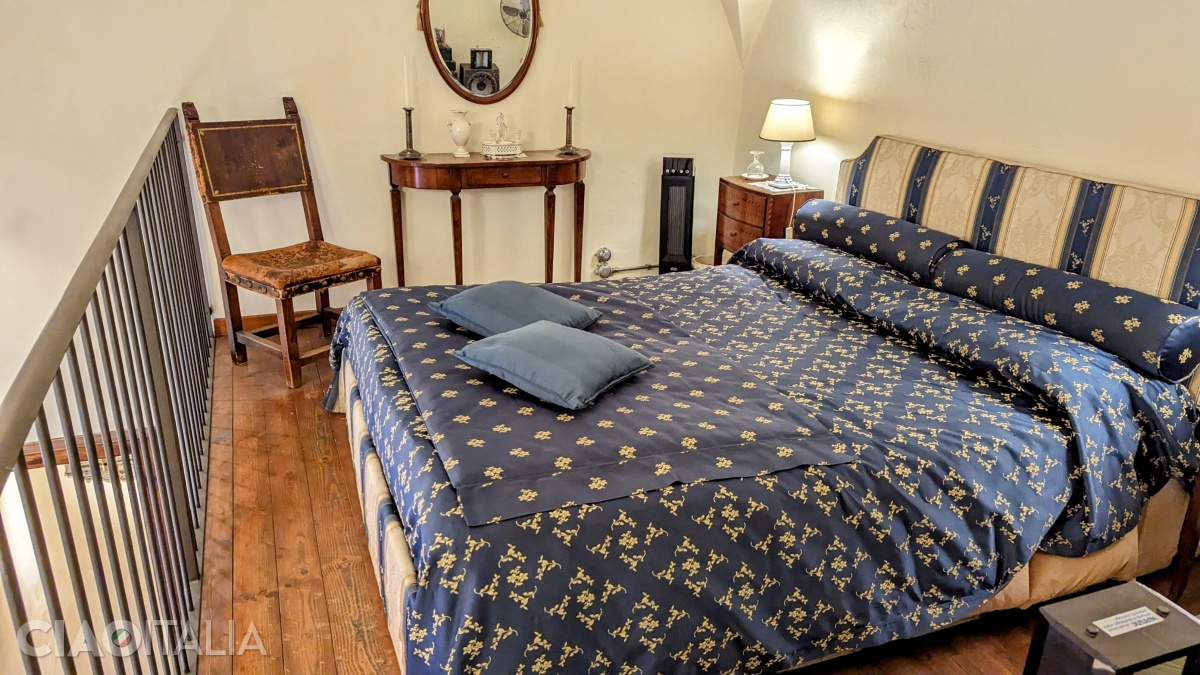
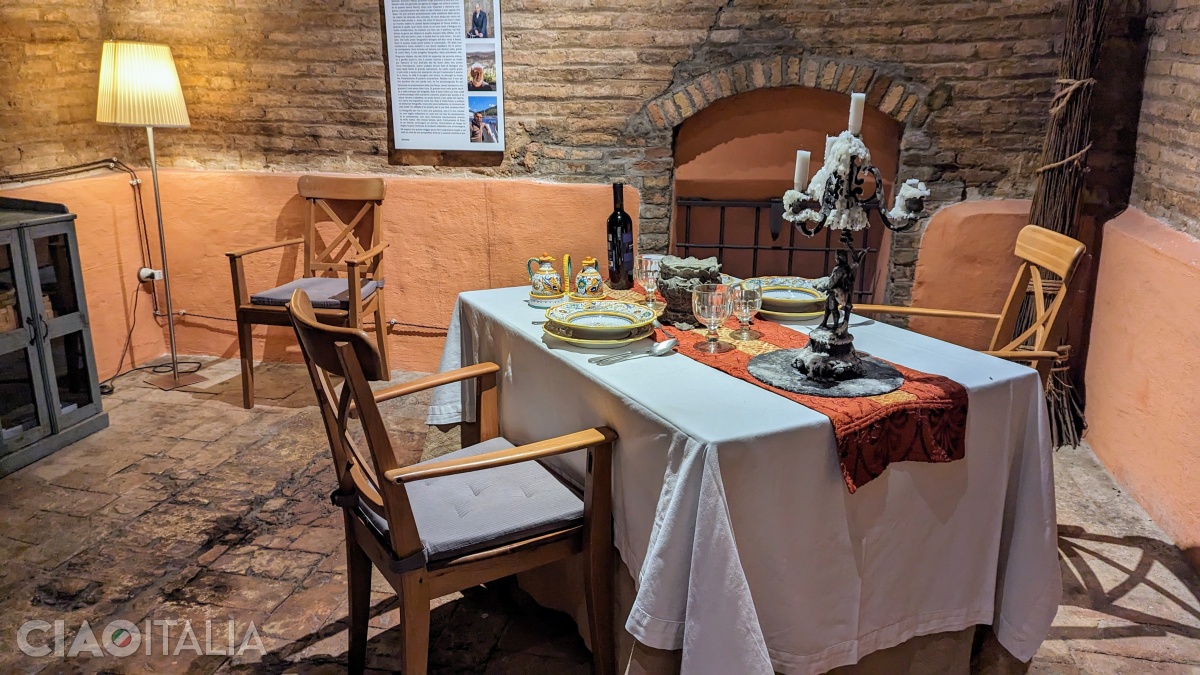
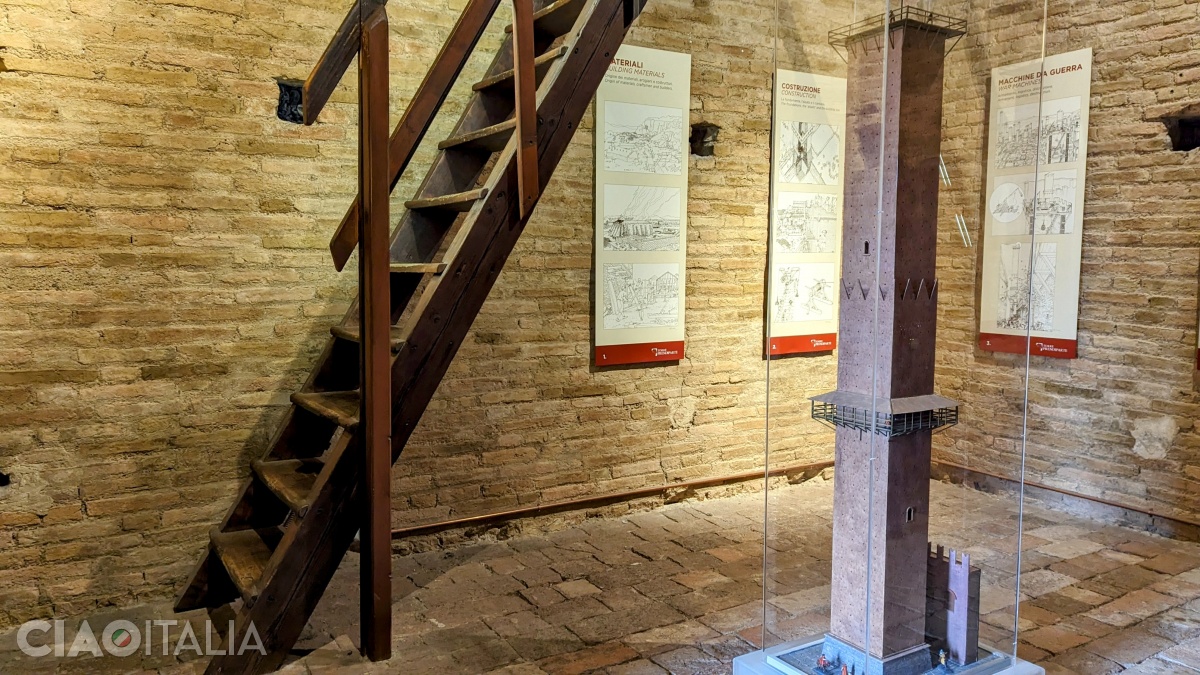
To reach the terrace of the Prendiparte Tower, you'll need to climb 12 floors (about 300 steps) via narrow and steep staircases - first stone, then wooden - but the view from the top is well worth the effort.
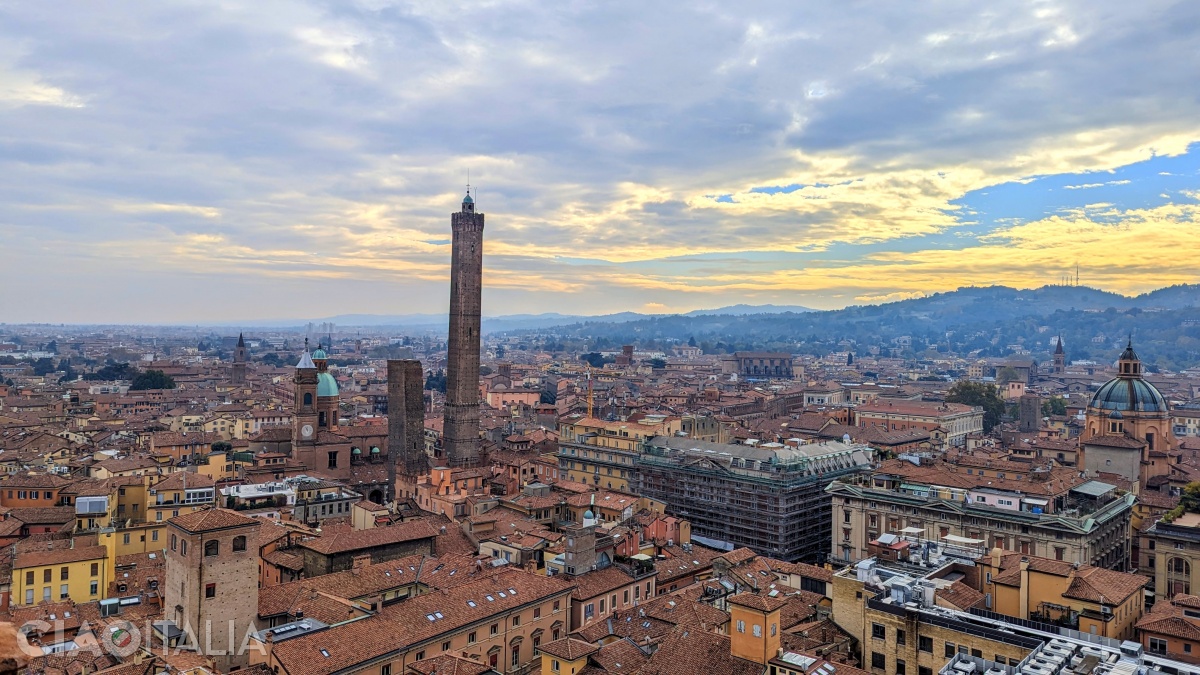
Since 2026, the Succede Solo a Bologna Association has replaced the possibility of climbing the Prendiparte Tower with climbing the panoramic terrace of the Strazzaroli Palace.
Strazzaroli Sky Experience
Opening hours (departures are every hour):
- Visits will resume in September 2026.
Ticket prices:
- Adults: €10
- Children 7-17 years: €8
- Children under 6: free
San Pietro Cathedral Tower
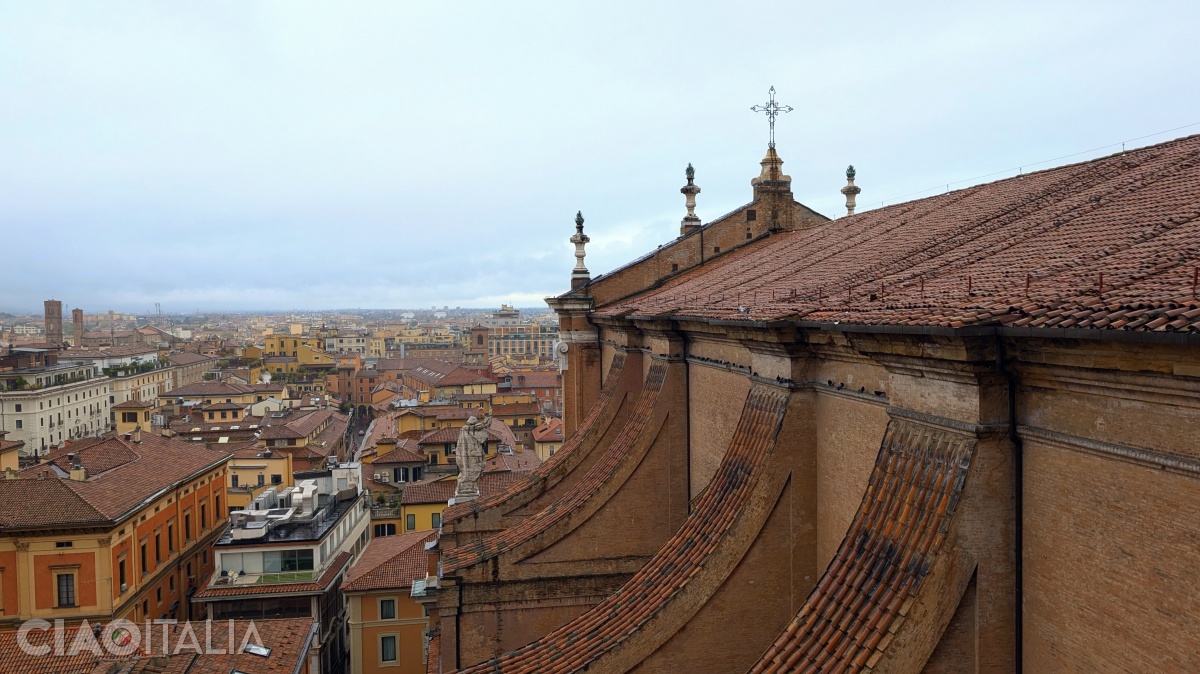
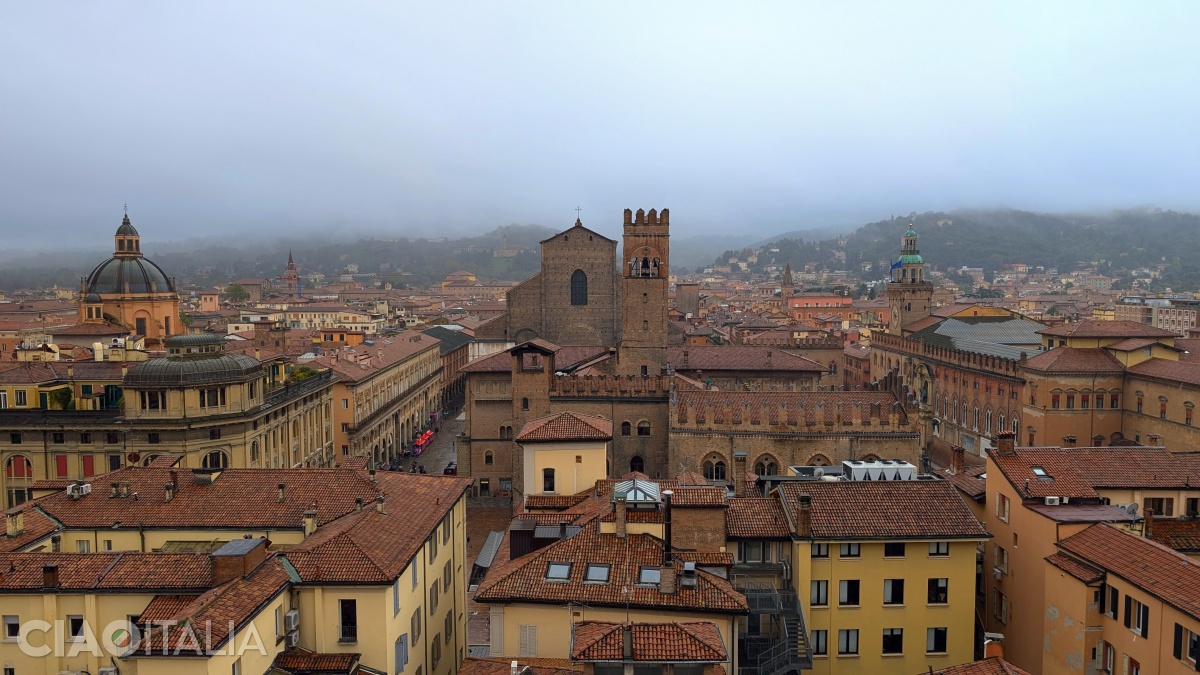
Although it is a church tower, we will mention here the bell tower of San Pietro Cathedral on Via Indipendenza no. 7 because you can also admire Bologna from its top and because it has some interesting features.
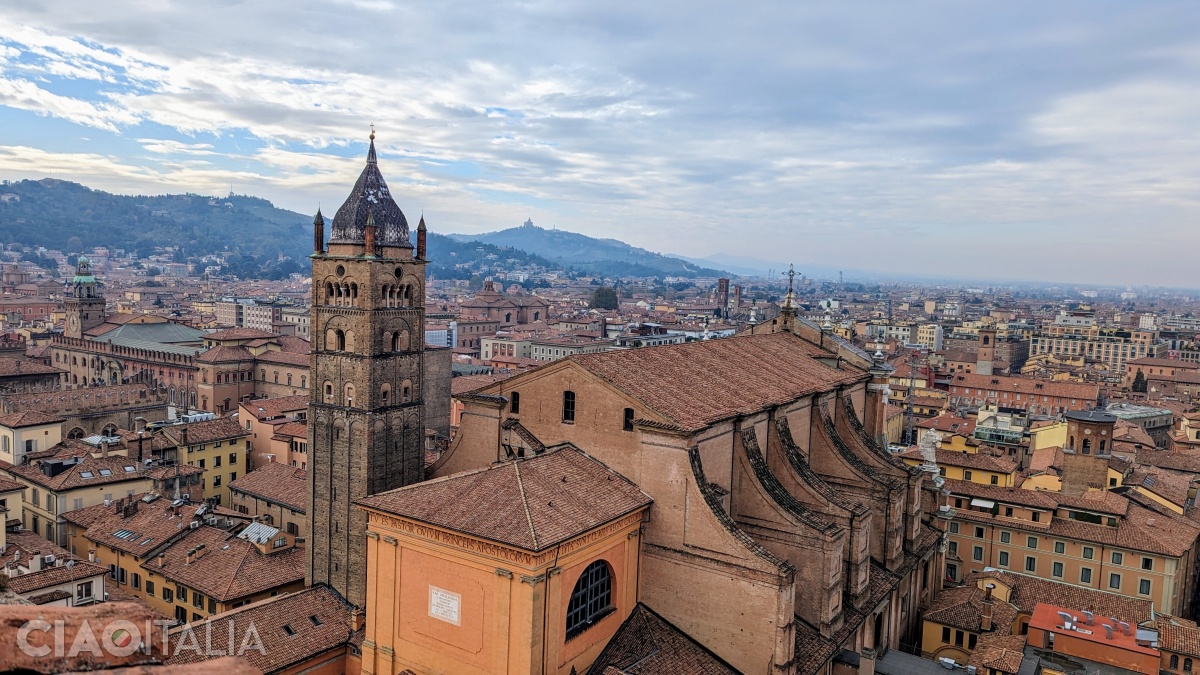
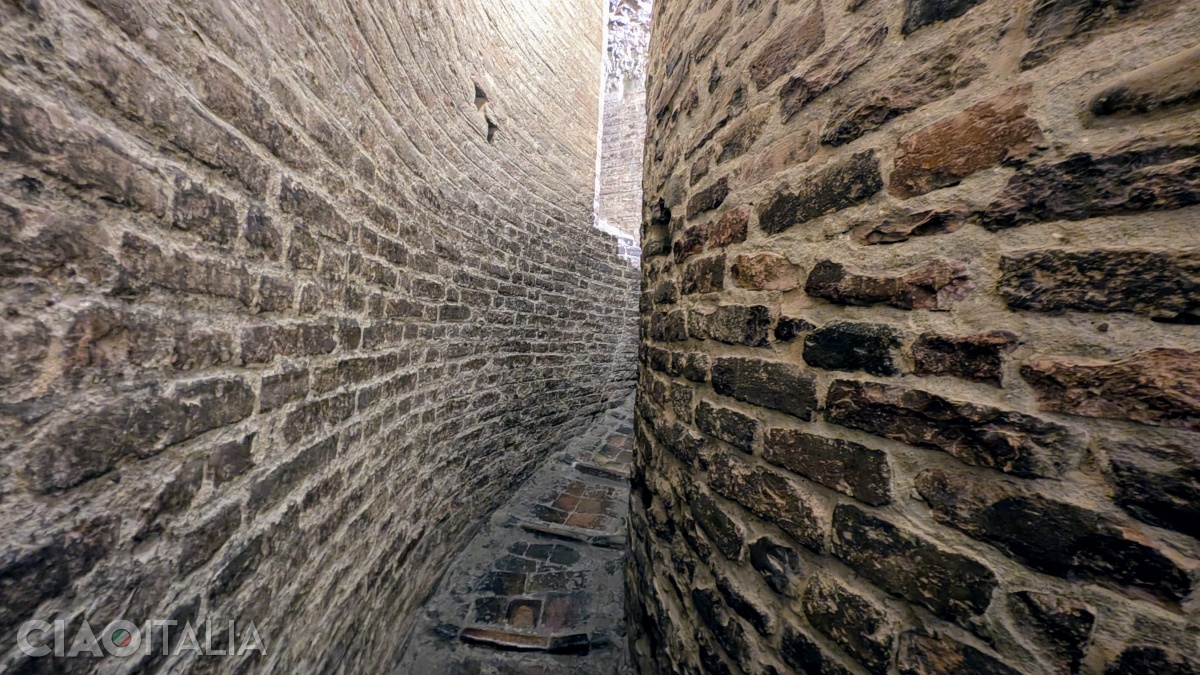
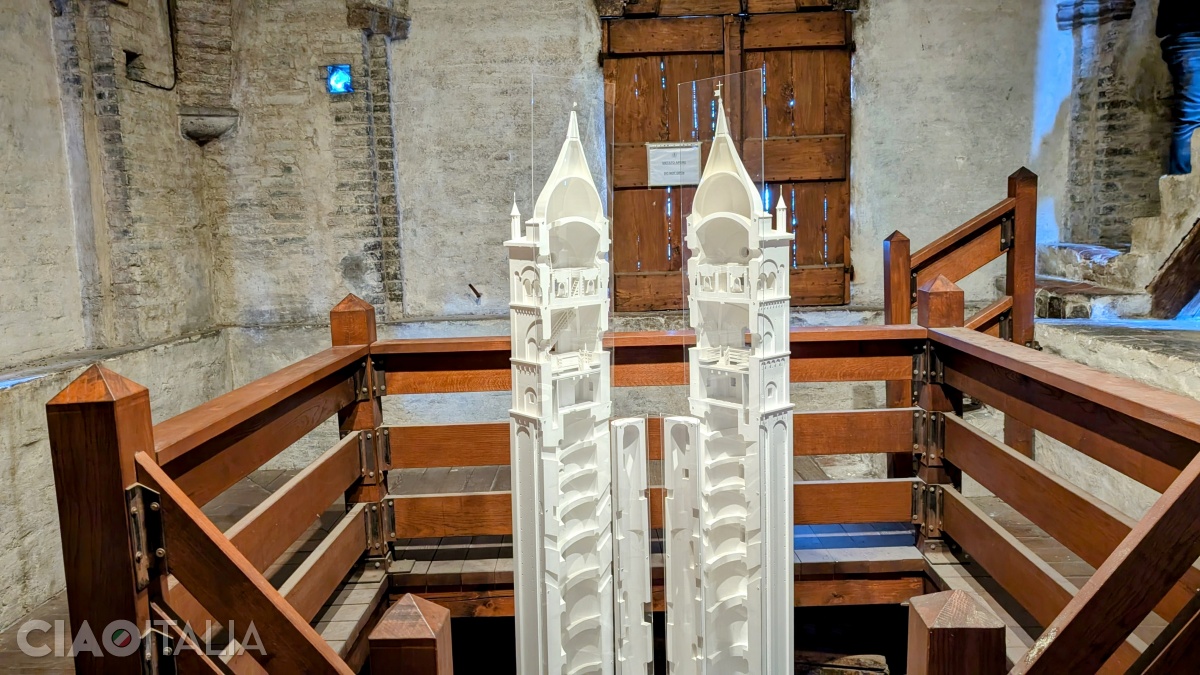
In fact, it is a "tower within a tower" (there are only two others like this in the Emilia-Romagna region). The current tower, 70 meters tall, was built between 1184 and 1426 around the old round tower from the 10th century, which was only 40 meters high. When you climb to the top, for a good part of the way you will walk through the space between the two towers.
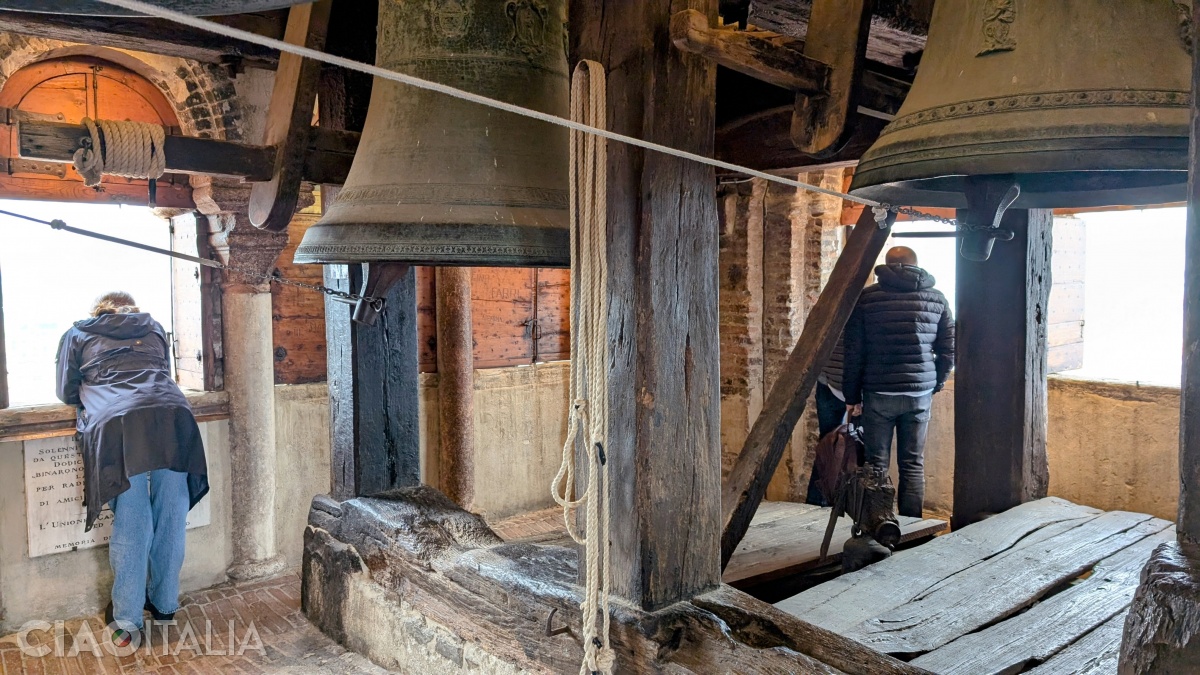
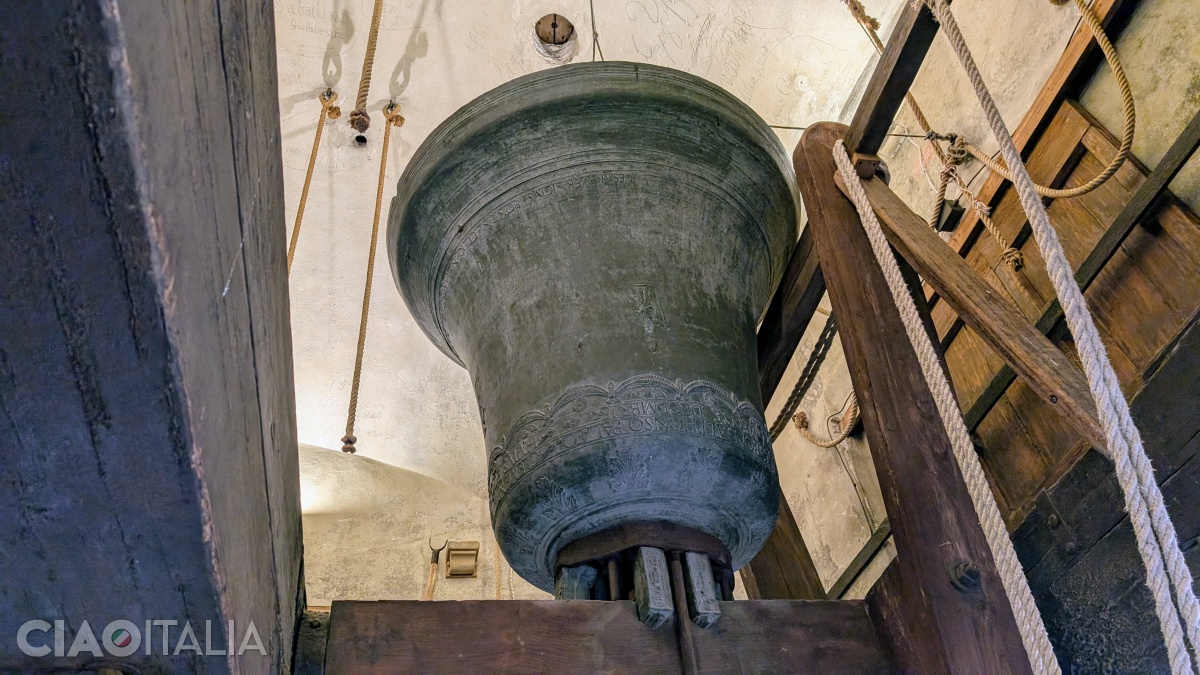
The campanile houses four bells - the heaviest in the entire province, which are still in use. The largest dates from 1595, weighs over 3 tons, and is nicknamed la grossa ("the big one") or la nonna ("the grandmother").
San Pietro Cathedral Tower
Opening hours:
- Saturday and Sunday, 2:00 PM - 5:00 PM
Ticket prices:
- €5 (includes the crypt and the Cathedral's Treasure Museum)
- you can also book tickets online
Lapi Tower
The Lapi Tower, located at Via IV Novembre no. 1, was originally a passageway through the walls that surrounded Bologna. It was later converted into a tower by the Lapi family and today is incorporated into the Town Hall building, having been reduced to a height of 18 meters.
Arengo Tower
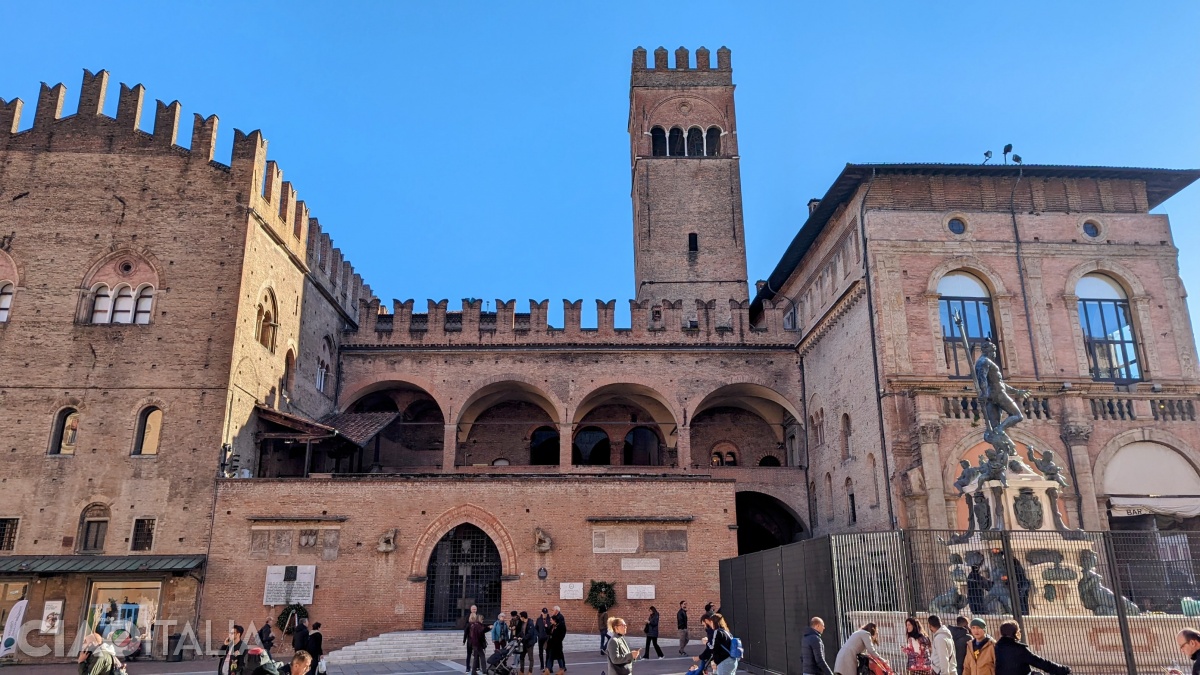
The Arengo Tower (Torre dell'Arengo) is the tower on the Governor's Palace (Palazzo del Podestà), located across from the Basilica of San Petronio. It dates back to the 13th century and stands 47 meters tall. Since 1453, its large bronze bell, weighing 4,700 kg, has marked every important event in the city - celebrations, tragedies, or calls to arms.
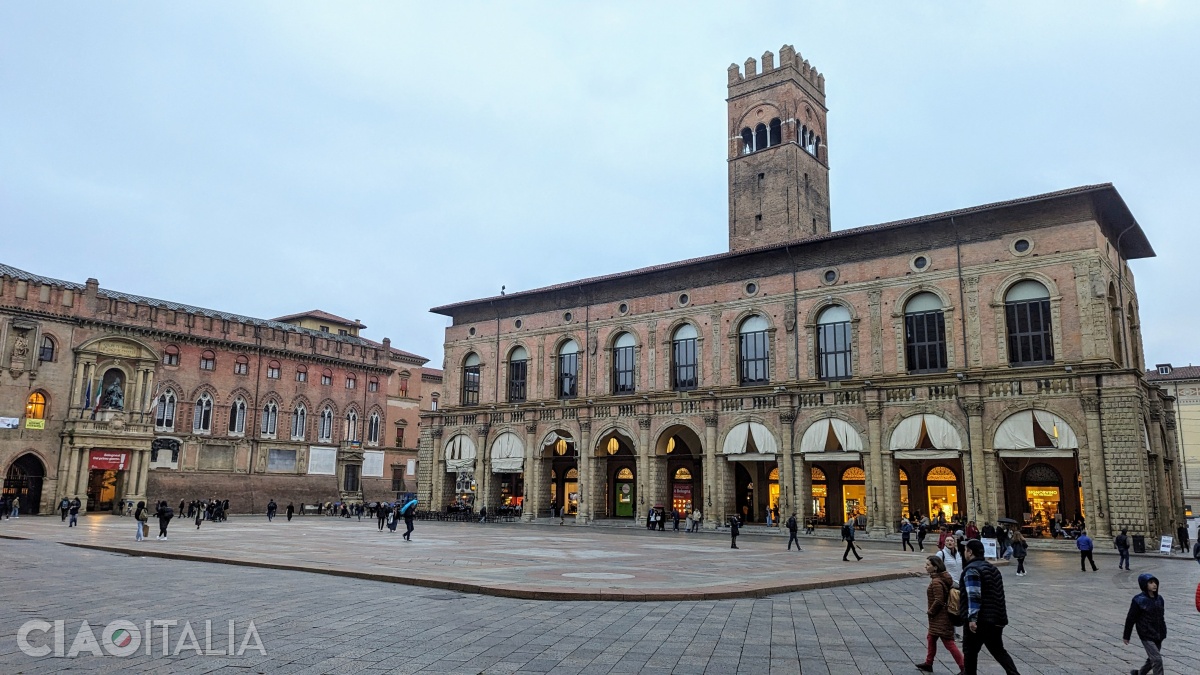
Each year, on April 21 at 10:00 AM, the bell rings in memory of Bologna's liberation from fascist occupation in 1945.
Lambertini Tower
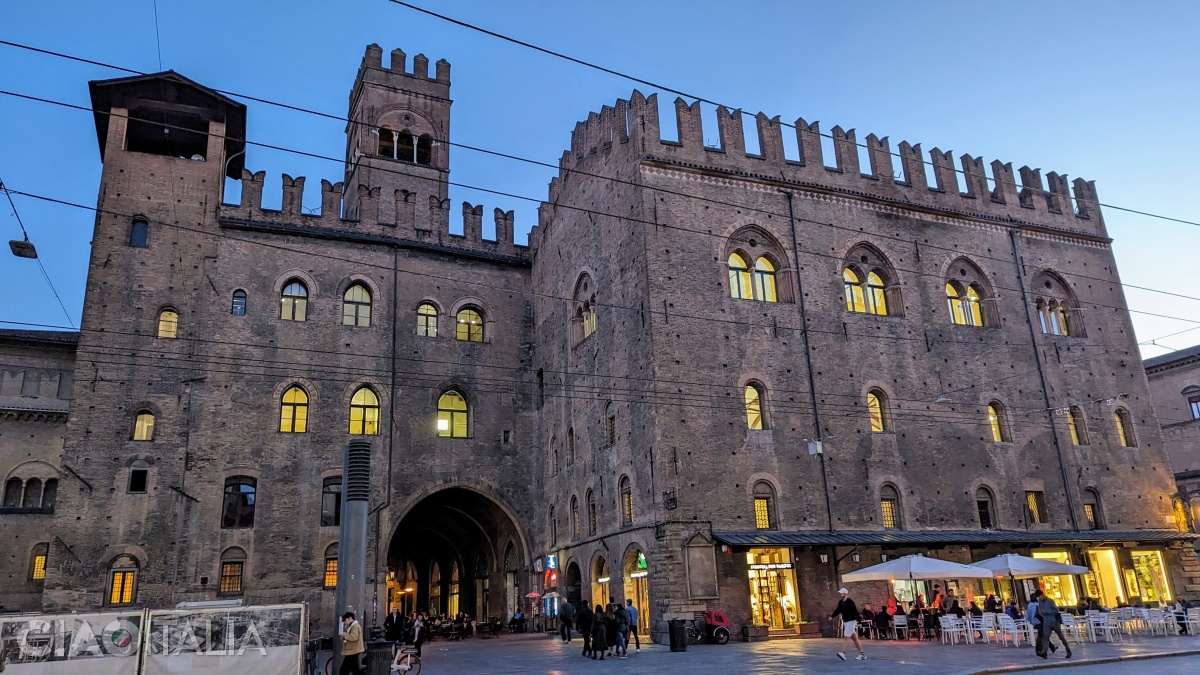
The Lambertini Tower (Torre dei Lambertini) rises in Piazza Re Enzo (toward Via Rizzoli), at the corner of the Re Enzo Palace, and stands 25 meters tall.
The tower was built between 1120 and 1142 by the Lambertini family (from which it takes its name), the same family that captured and imprisoned King Enzo of Sardinia in the adjacent palace. In 1294, the tower was purchased by the Bologna Town Hall, and in 1327 it was converted into a women's prison.
Guidozagni Tower
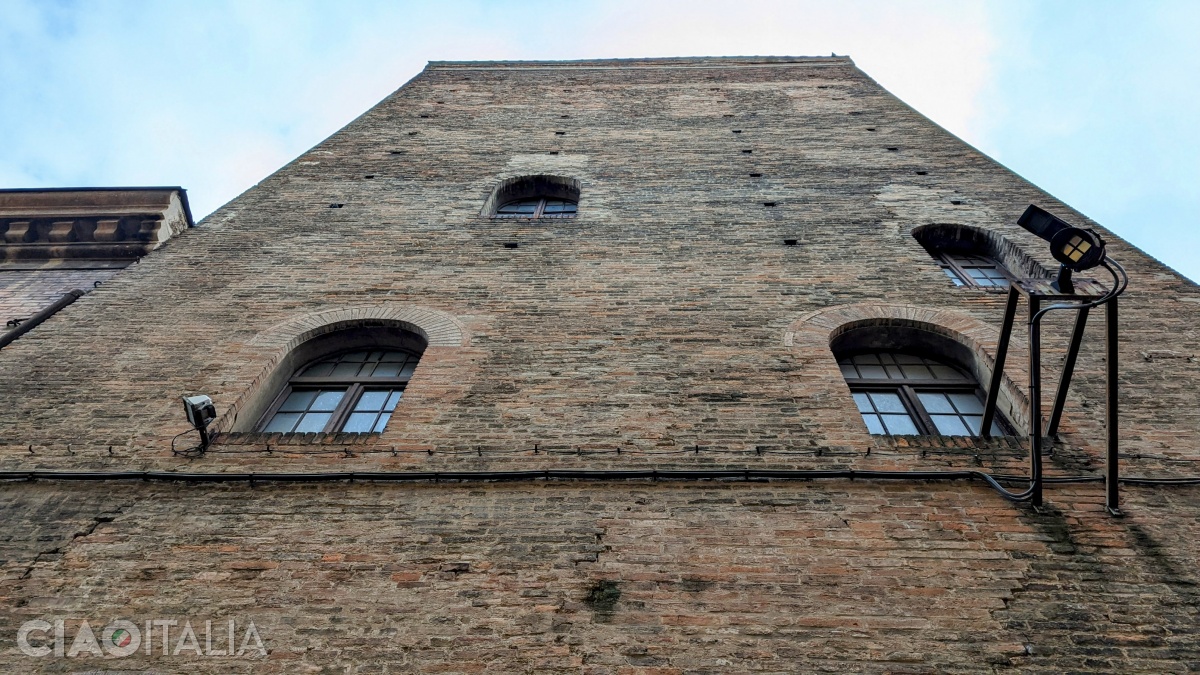
The Guidozagni Tower is located near the Prendiparte Tower, at Via Albiroli no. 1. Built in the 13th century, it is in fact a tower-house that served as a residence. The collapse of its upper section in 1487 reduced its height to 20 meters.
Azzoguidi Tower
The Azzoguidi Tower (Torre Azzoguidi) at Via Altabella no. 15 stands 61 meters tall, making it the second tallest in Bologna after the Asinelli Tower. It is also known as the Altabella Tower ("tall and beautiful").
The tower was built in the 12th century and belonged to the Azzoguidi family, one of the most prominent in Bologna.
Galluzzi Tower
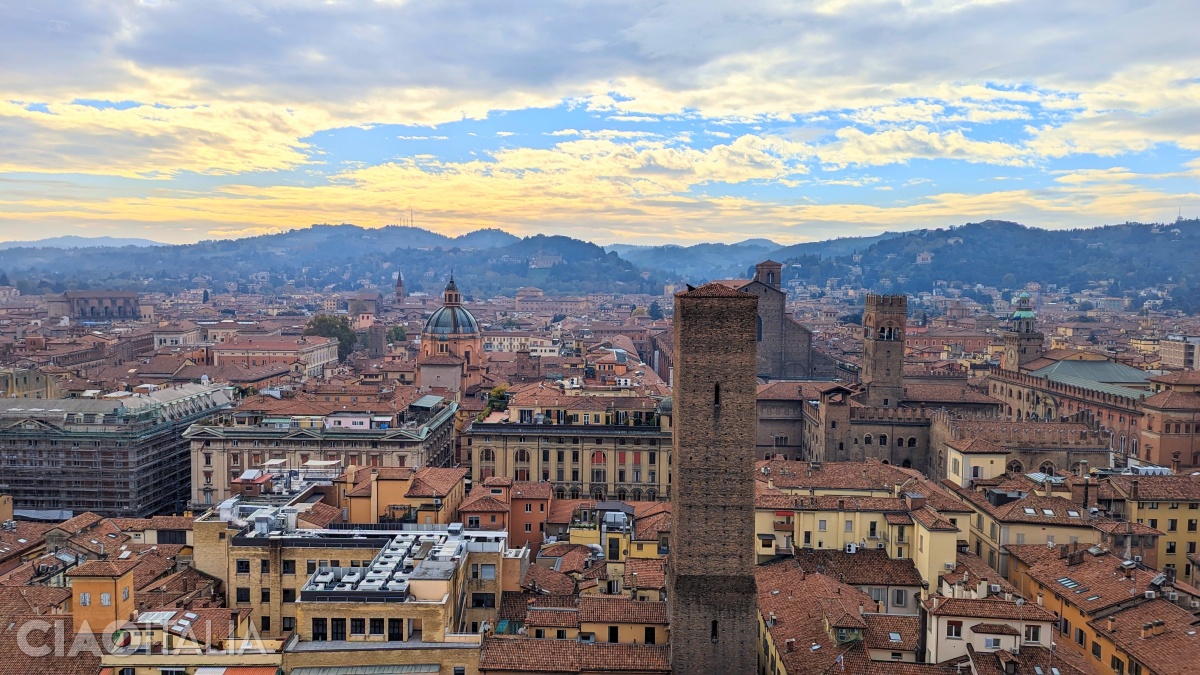
The Galluzzi Tower is located at Corte de'Galluzzi no. 1. It was built in 1257 by the powerful Galluzzi family. Although it was once among the tallest towers in Bologna, today it stands at only 30 meters.
The tower is also associated with a story reminiscent of Romeo and Juliet from Verona. Two young lovers, Virginia Galluzzi and Alberto Carbonesi - whose families belonged to the rival factions of the Guelphs and Ghibellines - were secretly married in 1258. However, Alberto was killed by the girl's family, and Virginia hanged herself from the balcony of her family home, located next to the tower.
Scappi Tower
The Scappi Tower (Torre degli Scappi) is located on Via dell'Indipendenza, near the bell tower of San Pietro Cathedral.
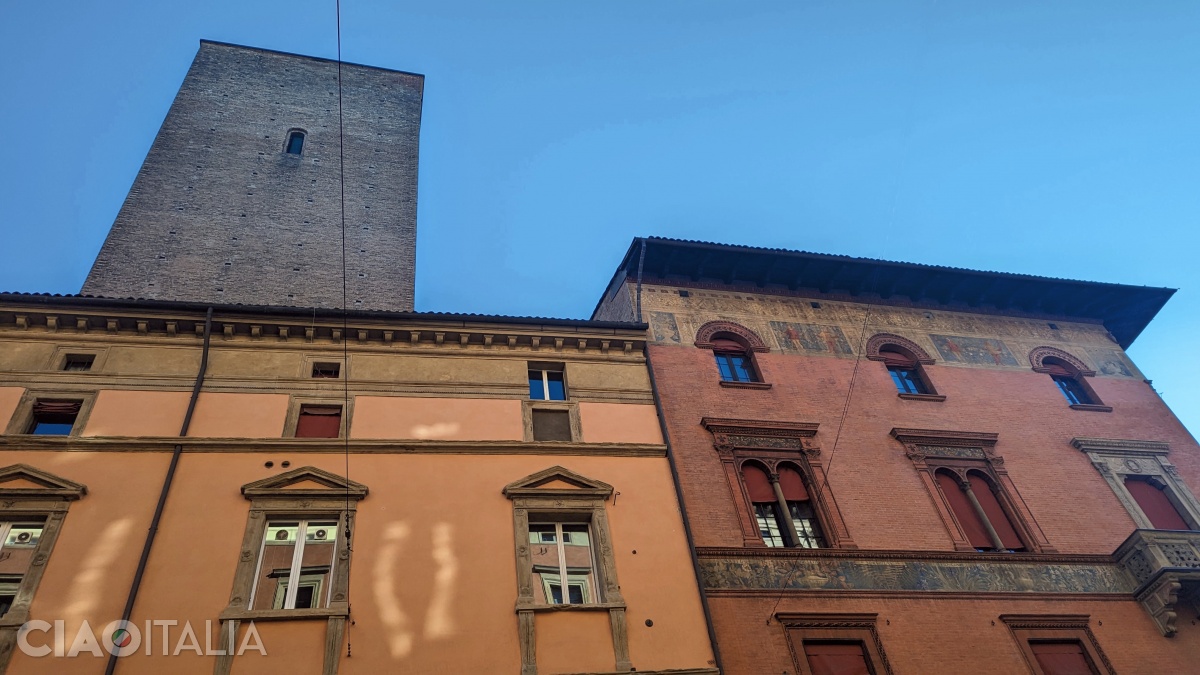
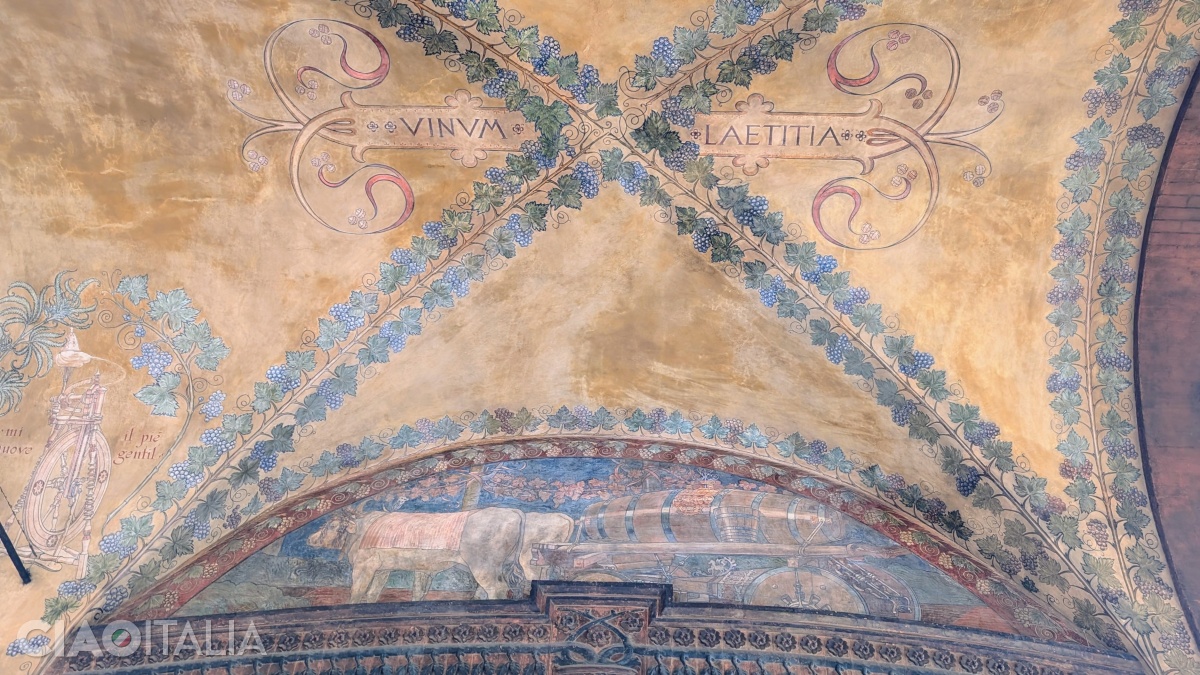
The tower was built in the 13th century and likely had a height close to that of the nearby Azzoguidi and Prendiparte Towers. Today, it measures only 38.4 meters, and its lower section is incorporated into a 16th-century house. On the arch of the portico of this house, you can find some interesting inscriptions (see also the article on things to do in Bologna).
Agresti Tower
The Agresti Tower (Torre degli Agresti) is tucked between two modern buildings, at Piazza Galileo Galilei no. 1.
The tower was built in the 13th century but was rebuilt after being damaged by a fire in 1641, and today it stands at only 20 meters tall.