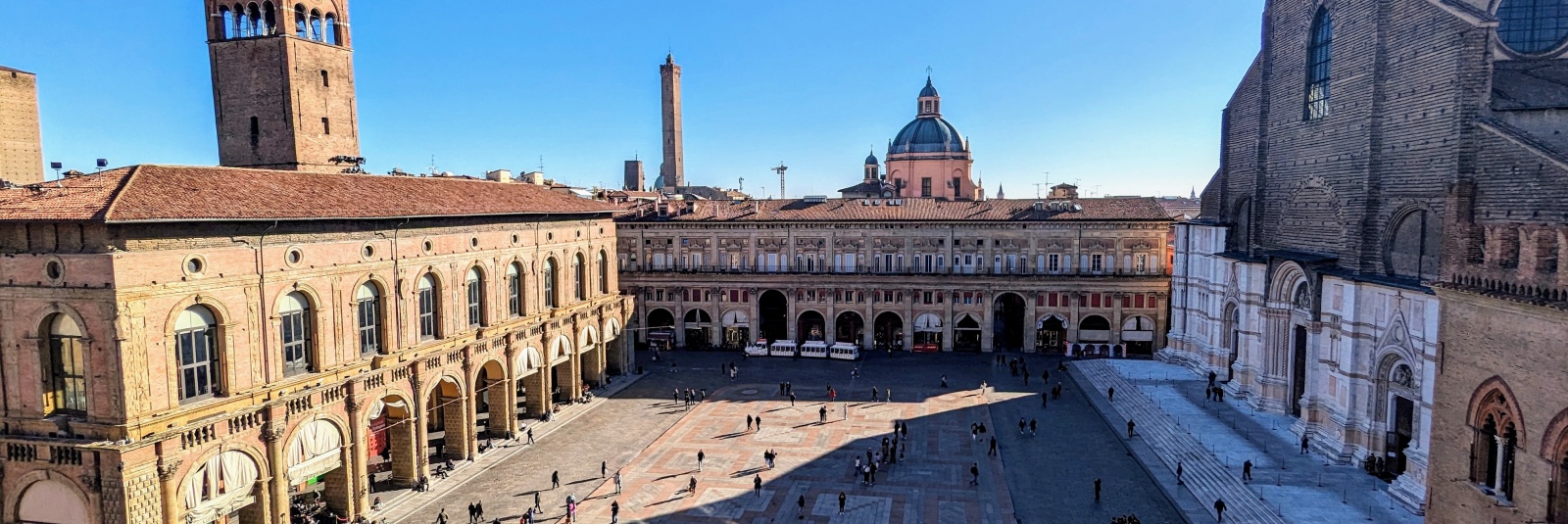
Piazza Maggiore in Bologna
Piazza Maggiore is the main square in Bologna and is considered the historical center of the city. It measures 115 meters in length and 60 meters in width, making it one of the largest squares in Europe. Together with the adjacent squares (Piazza del Nettuno and Piazza Re Enzo) and the nearby area (the so-called Quadrilatero), it concentrates most of the tourist attractions in Bologna, cafés, restaurants, and shops.
Piazza Maggiore
In the Middle Ages, the Bologna market was held in Piazza Maggiore. Today, it brings together some of the most beautiful buildings in the city. The people of Bologna also call it Piazza Grande ("the Big Square"). Many believe that the song Piazza Grande by the beloved Italian singer-songwriter Lucio Dalla (famous for the song Caruso) refers to Piazza Maggiore. However, it seems that the song is actually about Piazza Cavour, another square in the center of Bologna, where the artist grew up.
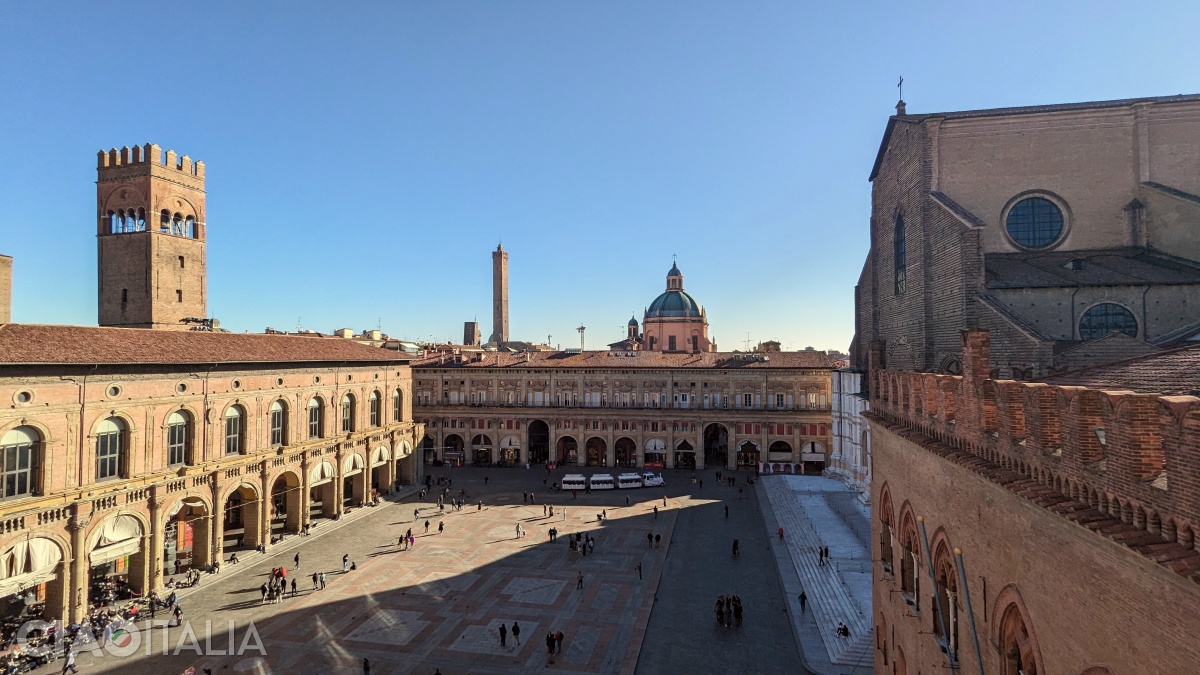
Il Crescentone
Piazza Maggiore has at its center a platform made of white and red granite, built in 1934. Locals call it il Crescentone because it resembles the typical shape of Bolognese focaccia (you can find out more about food in the article What to Eat in Bologna). In the summer months, film screenings take place here as part of the Sotto le stelle del Cinema program.
A superstition says that students who want to graduate should avoid crossing Piazza Maggiore diagonally.
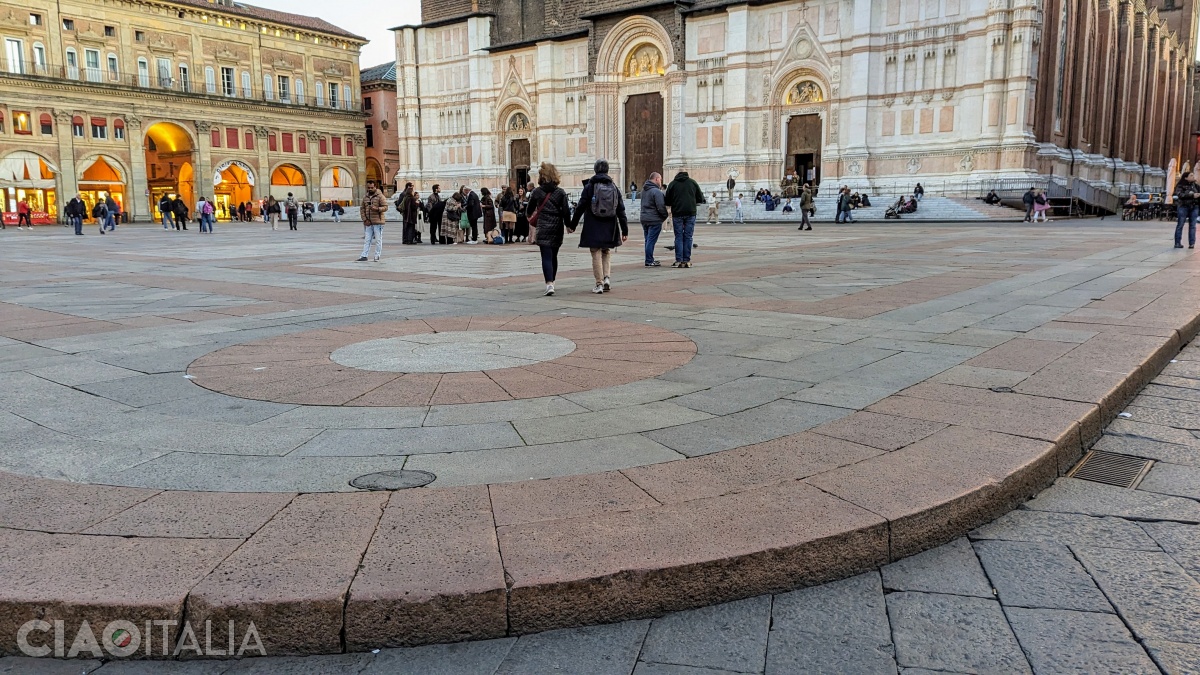
San Petronio Basilica
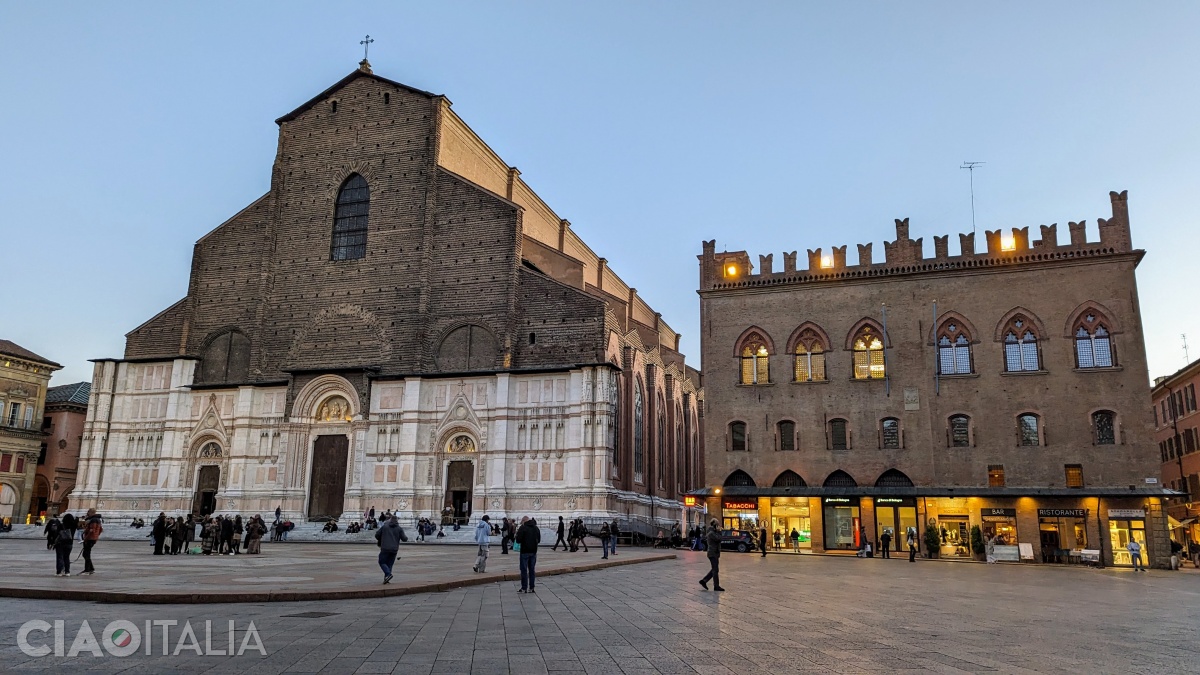
On the southern side, your attention is drawn to a large church - the Basilica of San Petronio, the biggest and most important religious building in Bologna (not to be confused with the Cathedral, which is located on Via dell'Indipendenza). Its construction began in 1390 and stretched over more than 300 years. It is said that the people of Bologna wanted it to be even larger than St. Peter’s Basilica in the Vatican, but the Pope's intervention is believed to have put an end to these ambitious plans. In the end, the church remained unfinished, and today only part of its façade is covered in marble.
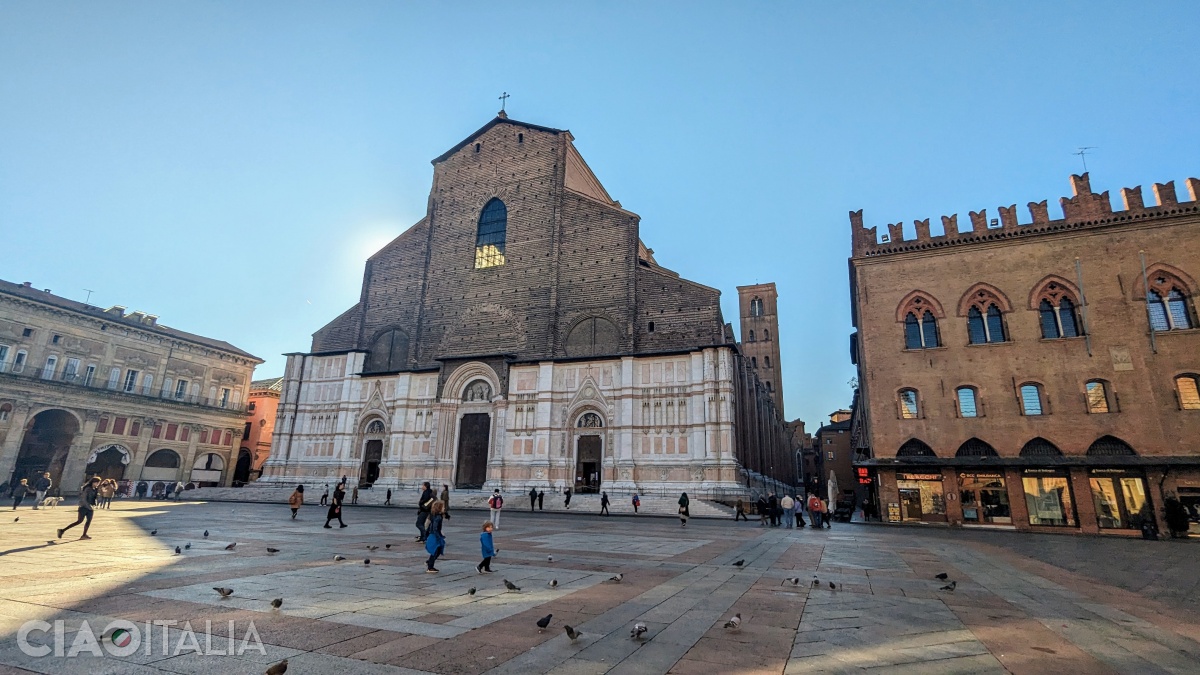
Look at the main portal: it is the work of the sculptor Jacopo della Quercia, one of the most important artists of the early Renaissance, whose works can also be found in some cities of Tuscany, a region located near Emilia-Romagna.
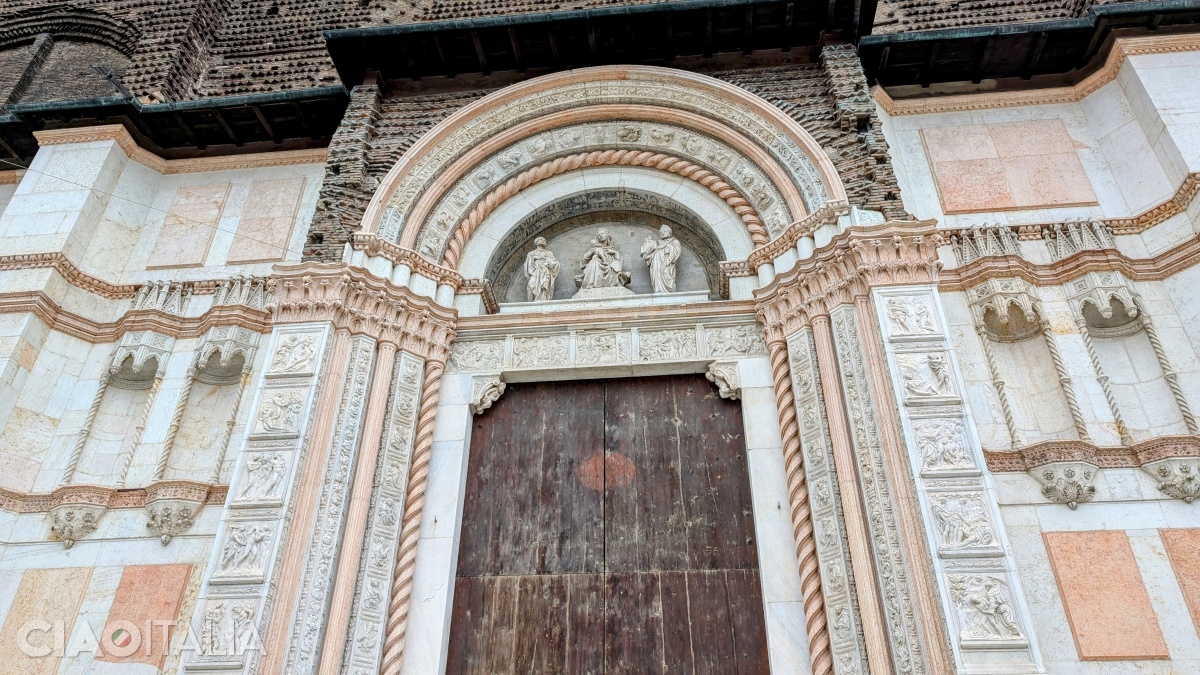
Basilica di San Petronio
Opening hours:
Church:
- Monday-Sunday: 10:00 AM - 6:00 PM (last entry at 5:50 PM)
Bolognini, San Sebastiano, and San Vincenzo Chapels:
- Monday-Sunday: 10:00 AM - 5:30 PM (last entry at 5:15 PM)
Museum:
- Monday-Sunday: 10:00 AM - 5:30 PM (last entry at 5:15 PM)
Ticket prices:
Church:
- free admission
Bolognini, San Sebastiano, and San Vincenzo Chapels:
- Adults: €5
- Seniors (65+ years): €3
- Youth (11-18 years): €3
- Children under 11: free
Museum:
- free admission
Palazzo Comunale or Accursio (Town Hall Palace)
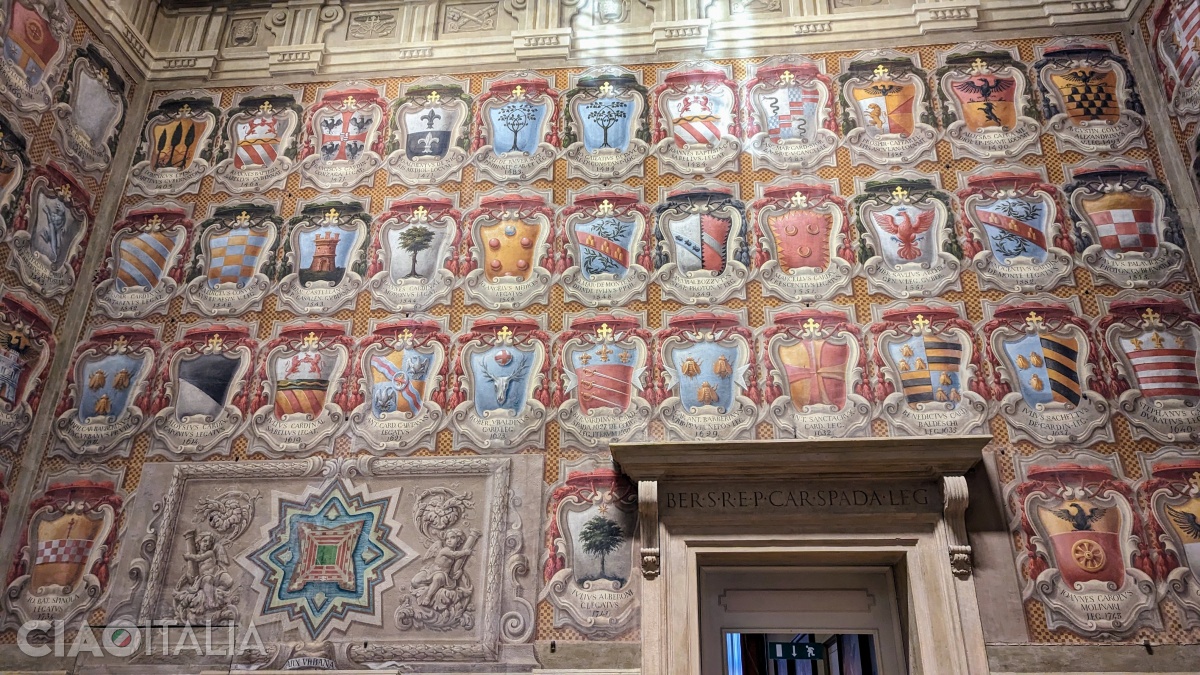
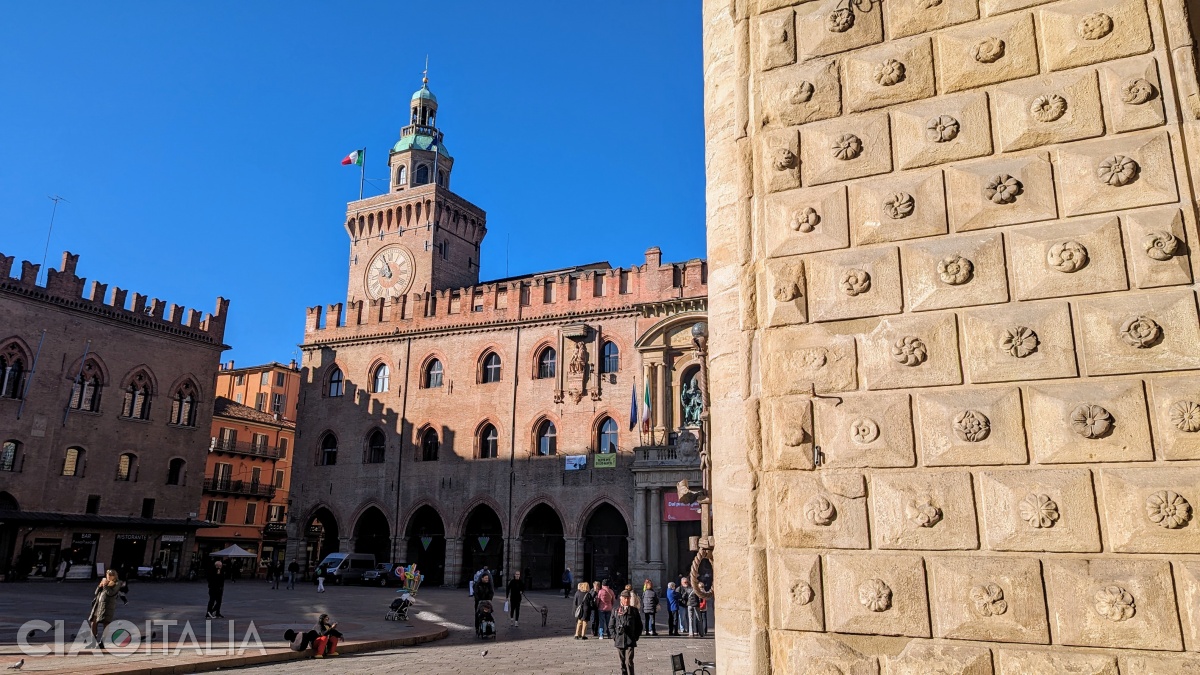
On the western side of the square (the side to the right of the church) stands the massive Palazzo Comunale (Town Hall Palace), which has housed Bologna's City Hall since 1336. It is also known as Palazzo d'Accursio (Accursio Palace), named after its first owner, the jurist Accorso da Bagnolo. You'll recognize the building by its Clock Tower, one of the towers in Bologna that you can climb to enjoy a panoramic view of the city.
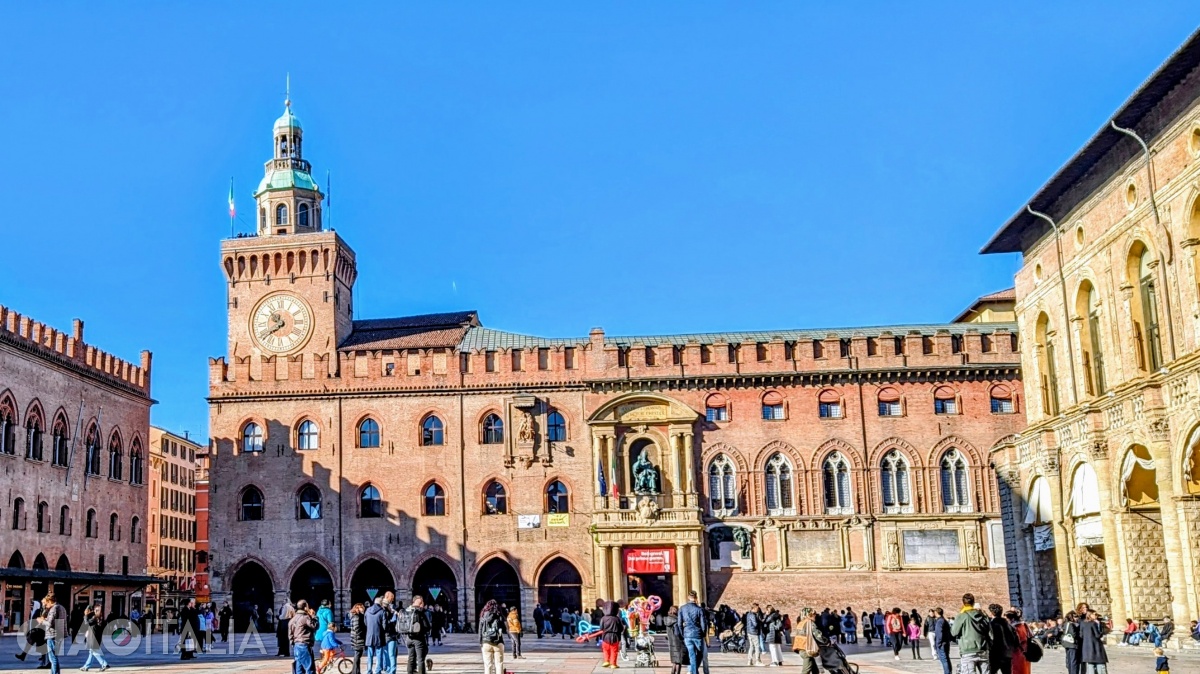
Built between the 13th and 15th centuries, the Town Hall Palace is the result of several modifications made over time.
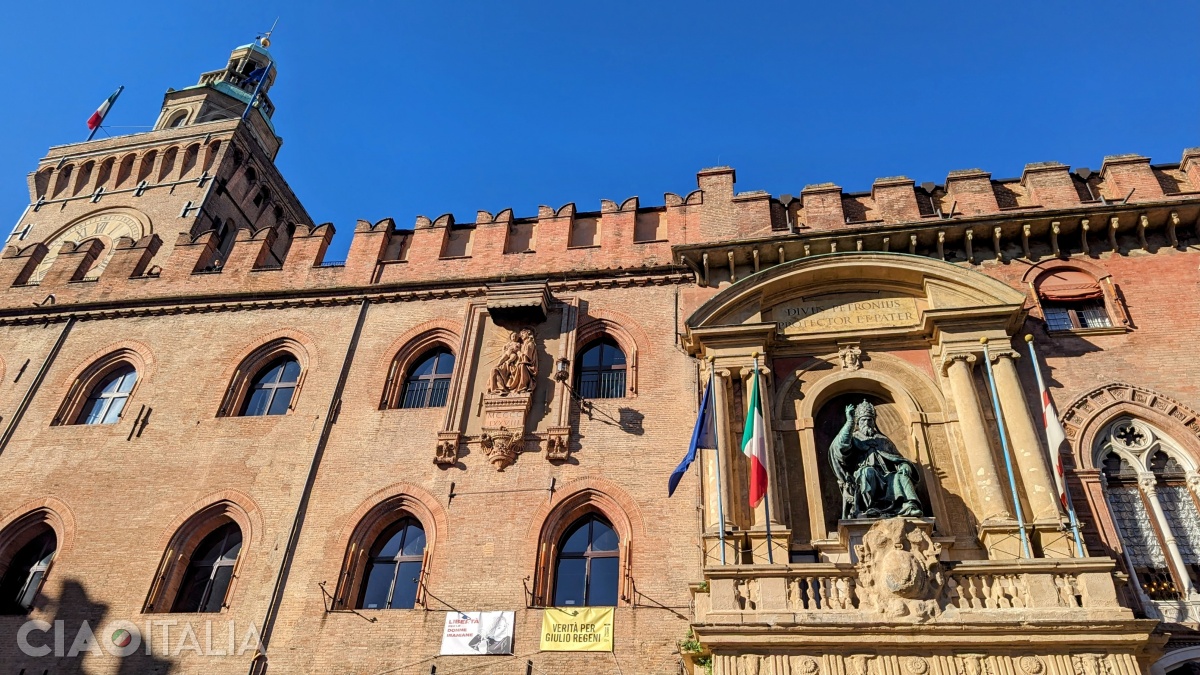
In the niche above the entrance stands the statue of Pope Gregory XIII, created in 1580 by the Bolognese sculptor Alessandro Menganti. Pope Gregory was born in Bologna and is known for replacing the Julian calendar with the Gregorian calendar, which we still use today. The inscription above the statue may seem a bit odd, as it appears to refer to Saint Petronius: Divus Petronius Protector et Pater. The explanation for this lies in the city's turbulent history. In 1796, when French troops - hostile to any papal symbol - entered Bologna, the locals disguised the statue to make it appear that it represented the city's patron saint rather than a pope: they replaced the papal tiara with a bishop's mitre and added an inscription bearing Saint Petronius's name.
To the left of the pope's statue, you’ll find a terracotta sculpture of the Virgin and Child (Madonna di Piazza), a 15th-century work by Niccolò dell'Arca.
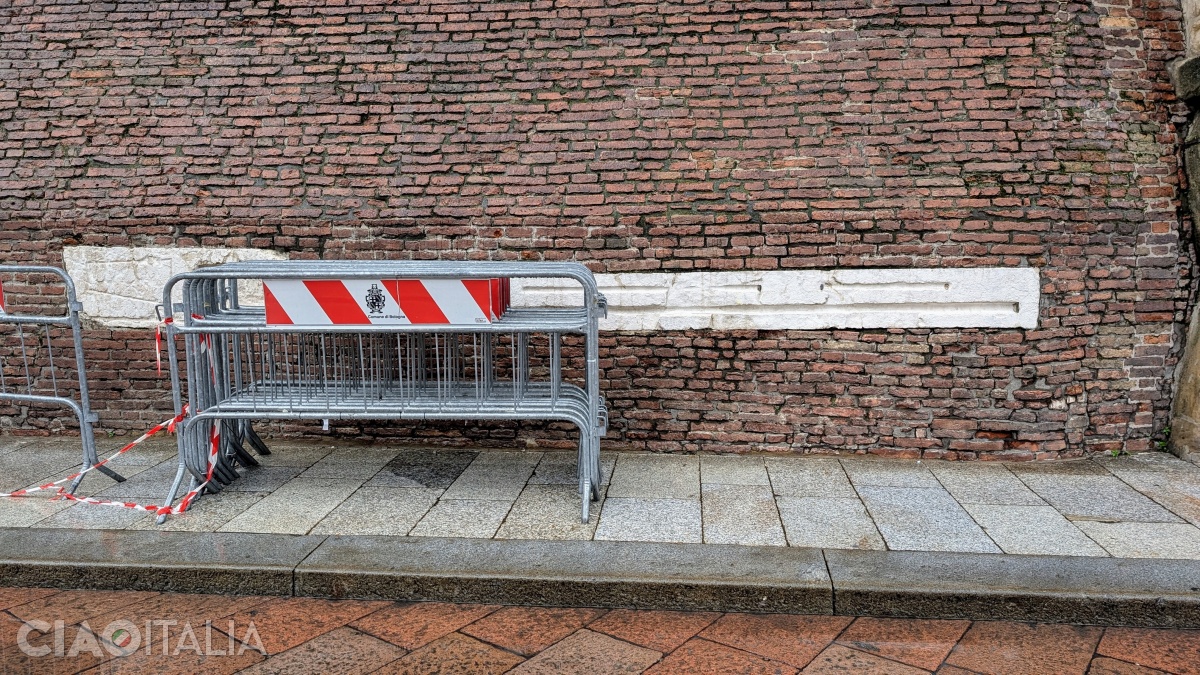
If you lower your gaze, still on the façade of the palace but just above ground level and slightly to the right (in front of the statue of Neptune), you'll notice something in the brick wall that looks like a long white rectangle engraved with various shapes. These are Bologna's old units of measurement, embedded in the wall of Palazzo d'Accursio since the 15th century. In the Middle Ages and even later, until the introduction of the meter as a standardized unit of measurement, each city had its own system of measures. In Italy, you can still see these representations - usually in the market squares - meant to prevent merchants from deceiving customers. One such example can also be found in Piazza della Frutta in Padua while another one is in Piazza delle Erbe in Verona.
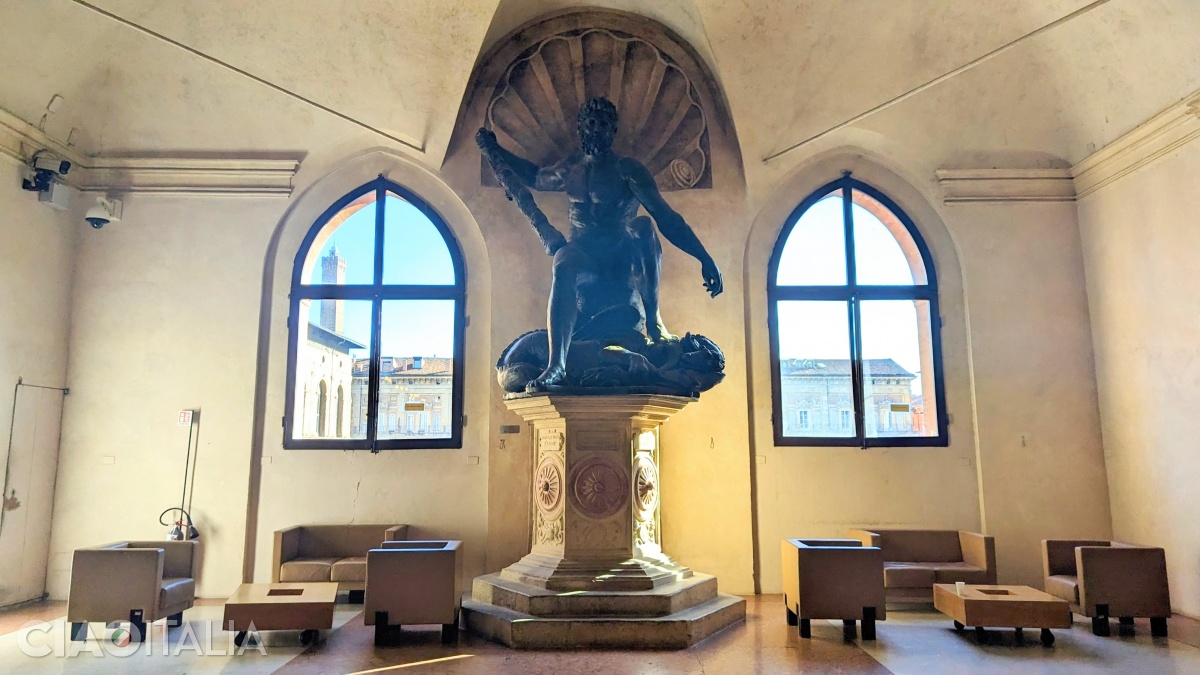
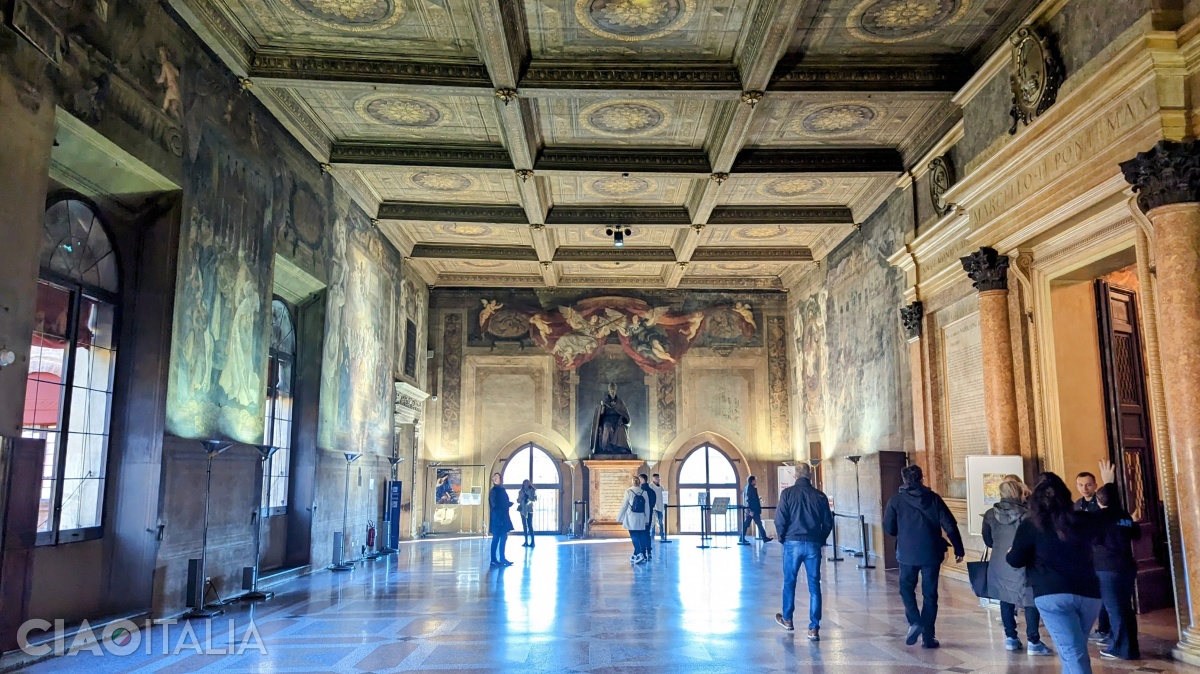
When not in use, some of the rooms inside can be visited for free, and exhibitions are occasionally held in others. On the first floor are the Sala d'Ercole (Hall of Hercules), Sala Rossa (Red Hall), Sala degli Anziani (Hall of the Elders), Sala Manica Lunga, and the Sala del Consiglio Comunale (Municipal Council Hall), while on the second floor you'll find the Sala Farnese and the Farnese Chapel.
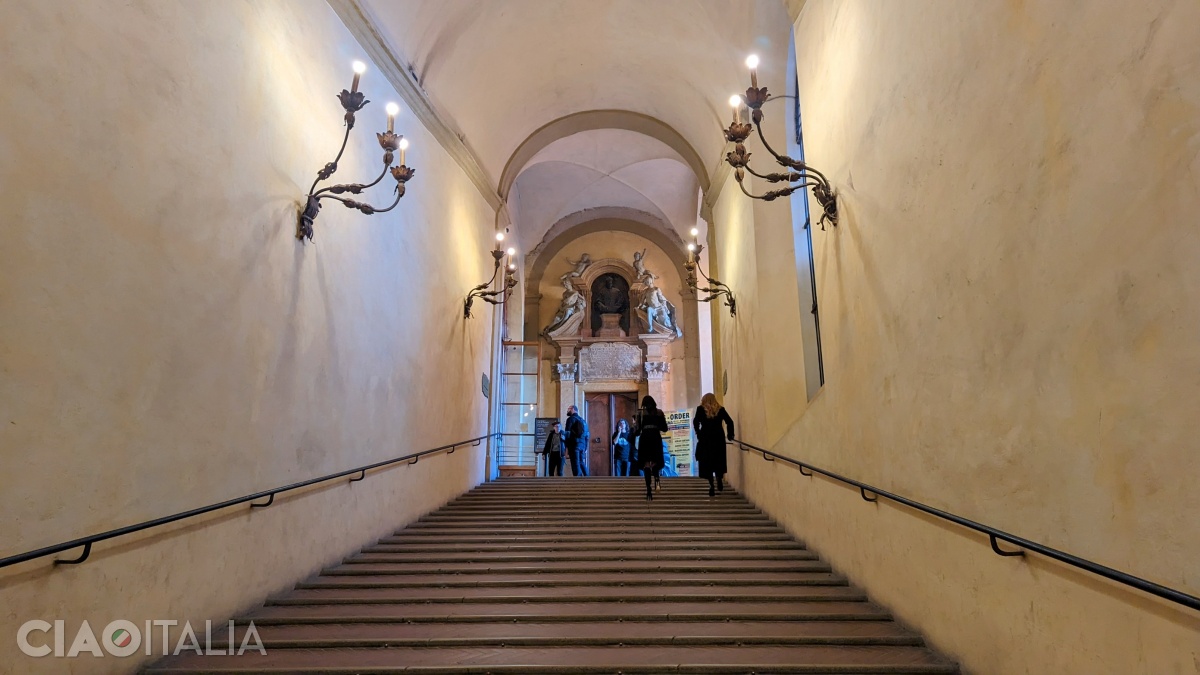
Also noteworthy is the beautiful staircase leading to the two upper floors, designed in the 16th century by the architect Bramante to allow for the triumphant horseback entrance of state officials.
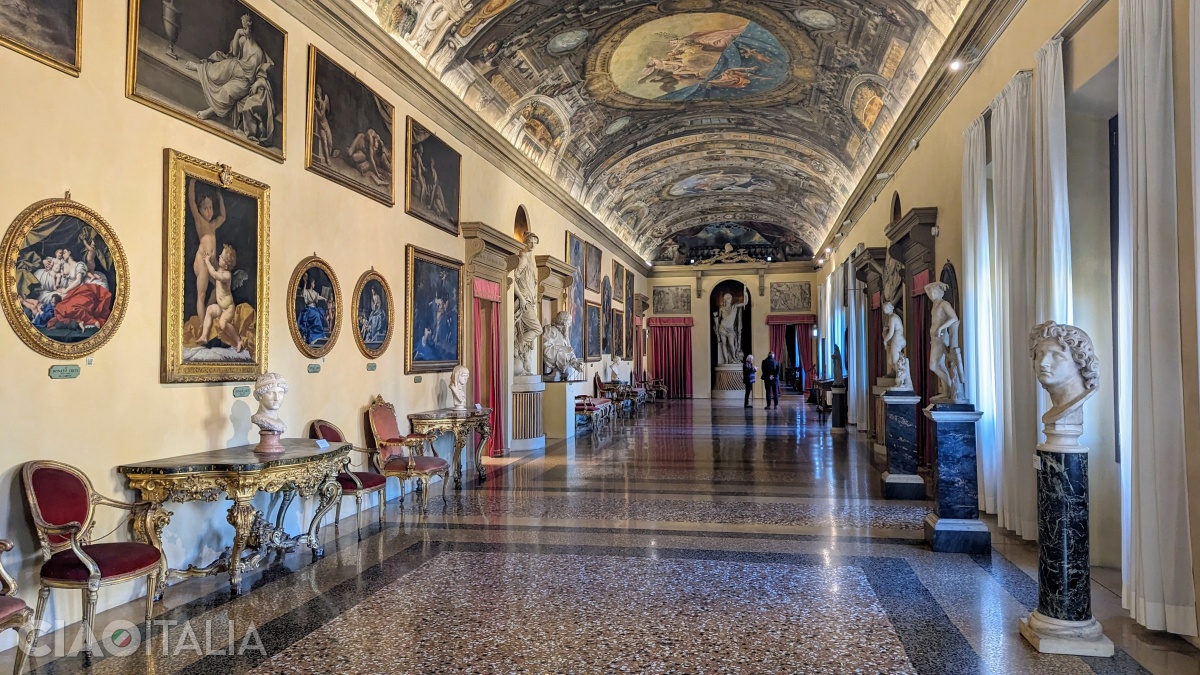
On the second floor, the palace houses the Municipal Art Collections. From the same level (in the Sala Farnese), you can also access the Clock Tower (the ticket includes access to the collections as well).
Palazzo Comunale
Opening hours:
Clock Tower (September 7 - December 31, 2026):
- Monday to Sunday: 10:00 AM - 6:20 PM (last entry), three times per hour (on the hour, at twenty past, and at forty past)
- December 24 and December 31, 2026: last entry at 4:20 PM
- December 25, 2026: Closed
Municipal Art Collections:
- Monday: closed
- Tuesday and Thursday: 2:00 PM - 7:00 PM
- Wednesday and Friday: 10:00 AM - 7.00 PM
- Saturday and Sunday: 10:00 AM - 6:30 PM
- closed: May 1, December 25
- last entry 30 minutes before the closing time
Ticket prices:
Clock Tower and Municipal Art Collections:
- Adults: €10
- Seniors (65+ years): €7
- Children (4-11 years).: €7
- Children under 4: free
- Free with Bologna Card
Municipal Art Collections:
- Adults: €6
- Seniors (65+ years): €4
- Youth (18-25 years): €2
- Under 18: free
Palazzo dei Notai (The Palace of the Notaries)
Between the Town Hall and the Church of San Petronio stands the Palazzo dei Notai (Palace of the Notaries), built in the 14th–15th centuries as the headquarters of the Notaries' Guild. On its façade, you can still see the coat of arms featuring three inkwells and three goose quills.
Palazzo del Podestà
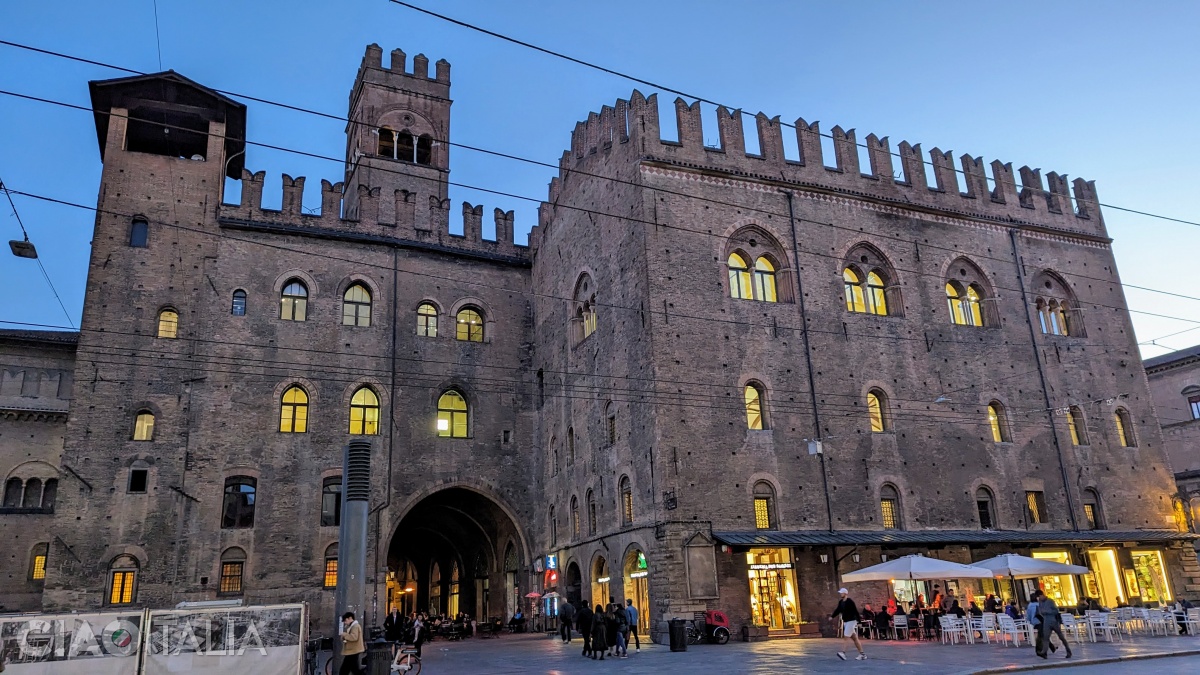
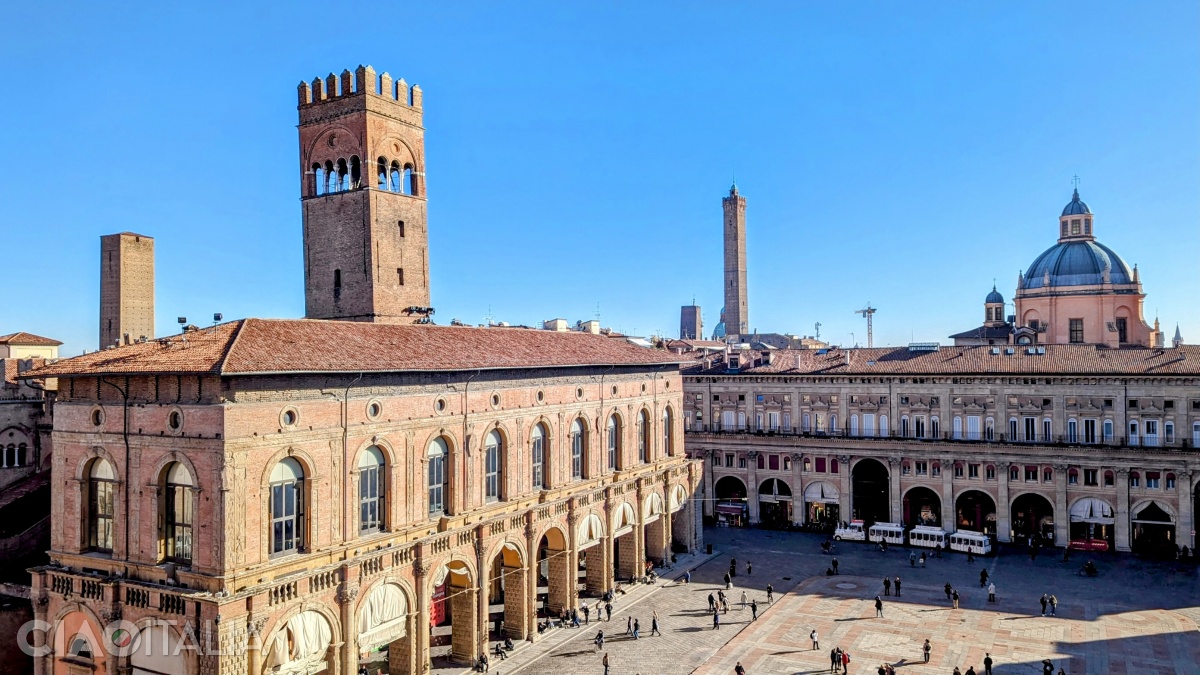
To the north (opposite the church) stands the beautiful Palazzo del Podestà (the former Governor's Palace). It was built in the 13th century, but its current Renaissance appearance dates back to the 15th century. Rising above it is the Arengo Tower, whose bells once rang to announce important events.
The columns facing Piazza Maggiore are adorned with thousands of different types of flowers, coats of arms, animals, and anthropomorphic figures. Legend has it that there are two identical flowers placed side by side - but no one has ever found them.
The palace is crossed by two passages that intersect right beneath the arch under the tower, known as the Voltone del Podestà. This spot hides a remarkable acoustic effect - one of Bologna's curiosities. If two people stand at opposite corners (diagonally) of the square space formed by the columns and whisper toward the wall, they will hear each other clearly. In the past, this had a practical purpose: monks could hear the confessions of people suffering from leprosy or the plague without being exposed to infection. Under the same archway, convicts were hanged so they could be easily seen from the square.
Palazzo dei Banchi
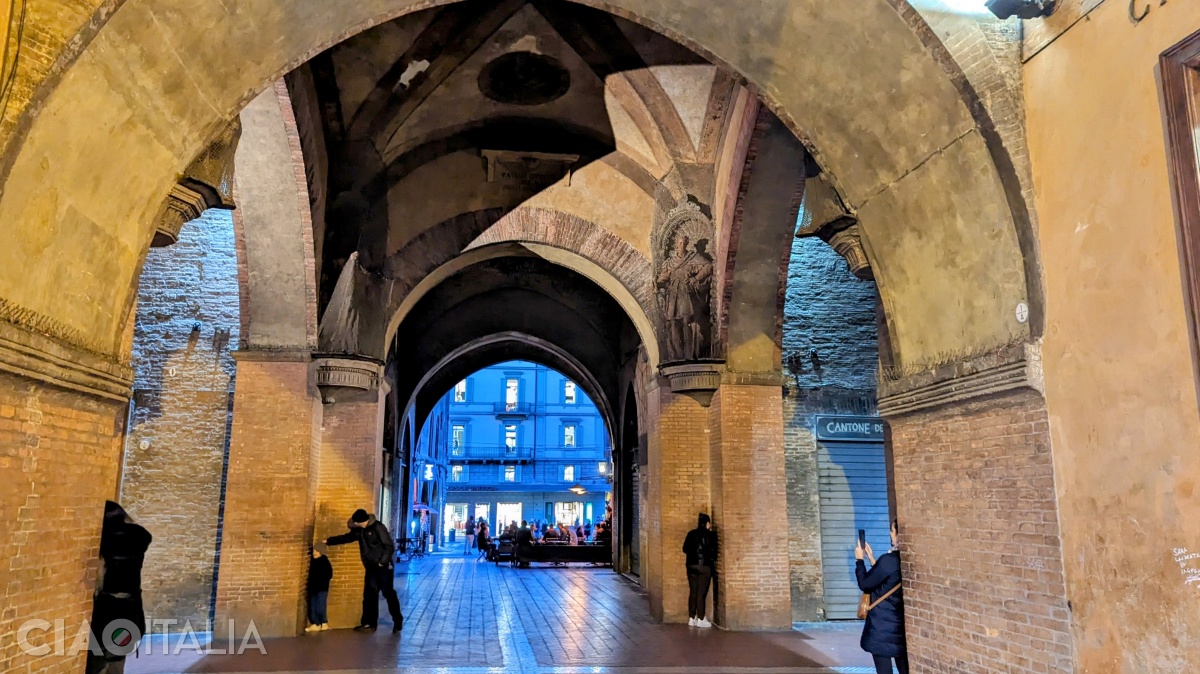
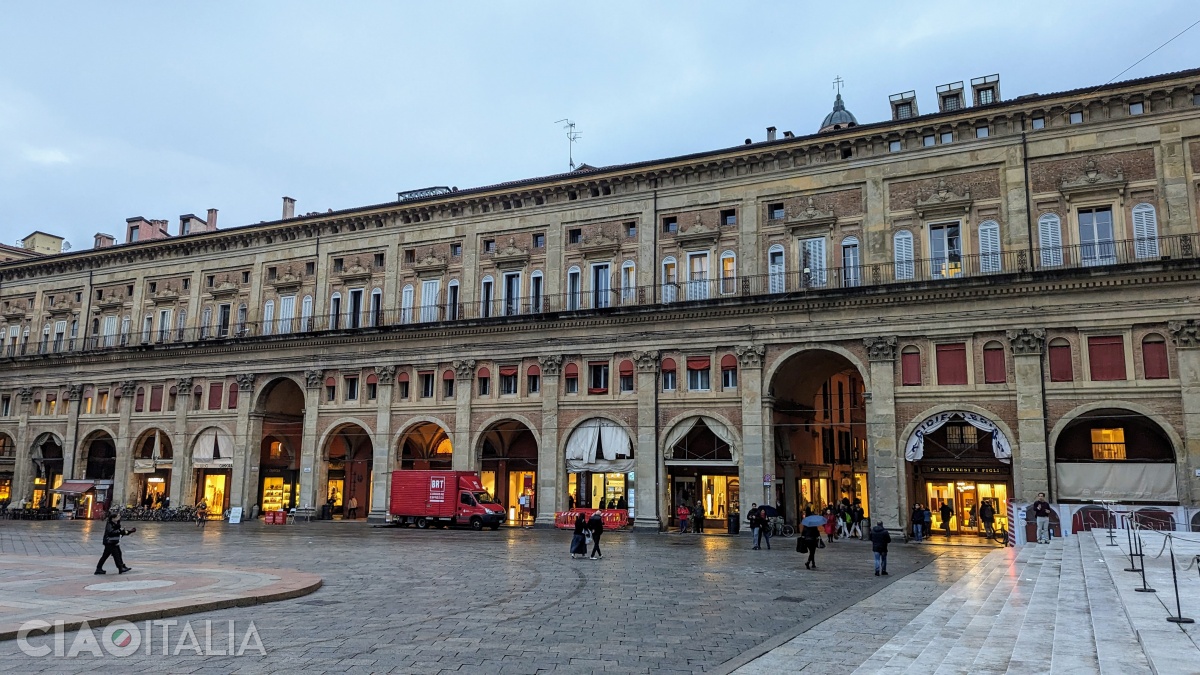
To the east (to the left of the church) stands the Palazzo dei Banchi, the "newest" building in Piazza Maggiore, built in the 16th century to conceal the area of the food market. Behind its fifteen arches begins the lively Quadrilateral (il Quadrilatero) district, full of restaurants, cafés, shops, and nightlife.
Piazza del Nettuno
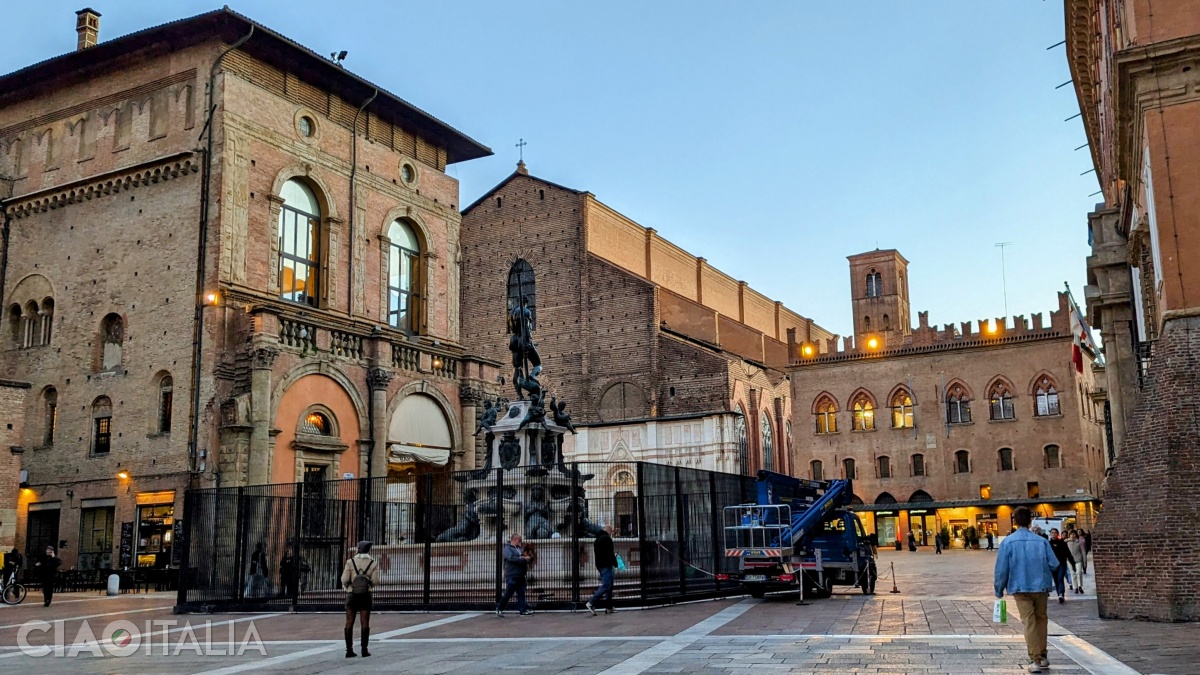
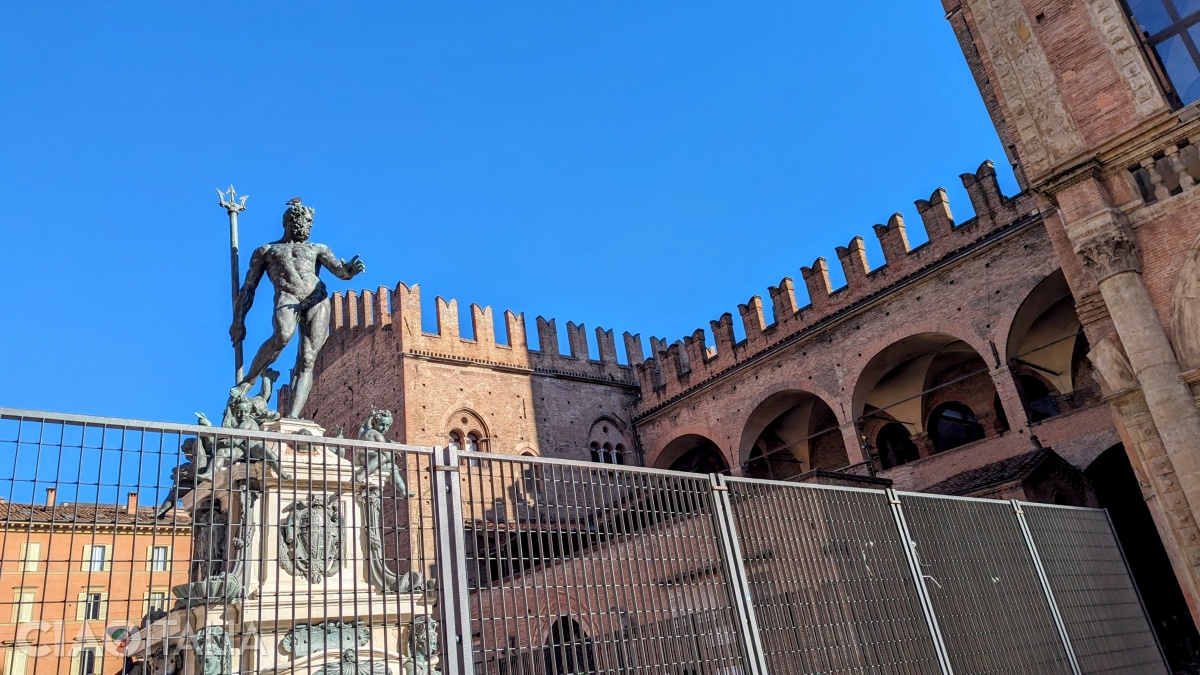
Piazza del Nettuno ("Neptune's Square") is located between Via Rizzoli and Piazza Maggiore and takes its name from the bronze statue that stands at its center, adorning the fountain of the same name.
The Fountain of Neptune (Fontana del Nettuno)
The Fountain of Neptune (Fontana del Nettuno) was built in 1566 by the sculptor Giambologna (also known for works in Piazza della Signoria in Florence), in collaboration with the architect Tommaso Laureti from Sicily.
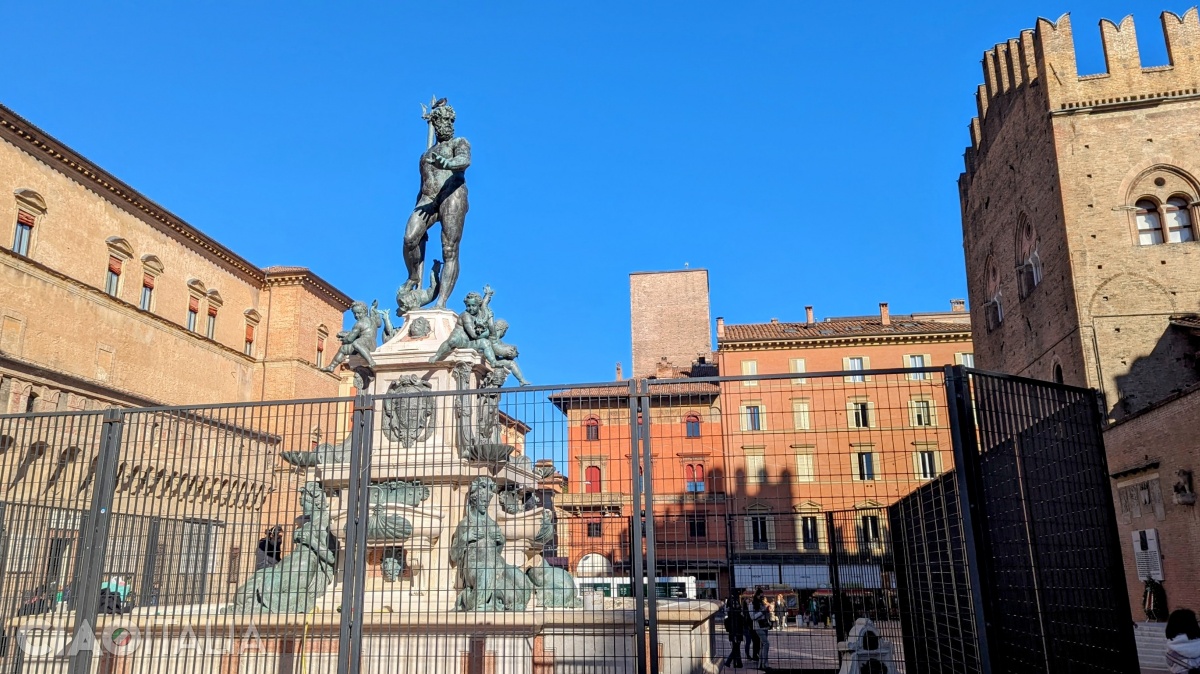
The statue, commissioned by a cardinal, was meant to symbolize the power of Pope Pius IV: just as the god of the sea ruled over the waters, so the pope ruled over the world. However, Neptune's overtly masculine nudity and the sensuality of the nereids from whose breasts water spouted provoked disapproval from the authorities of the time.
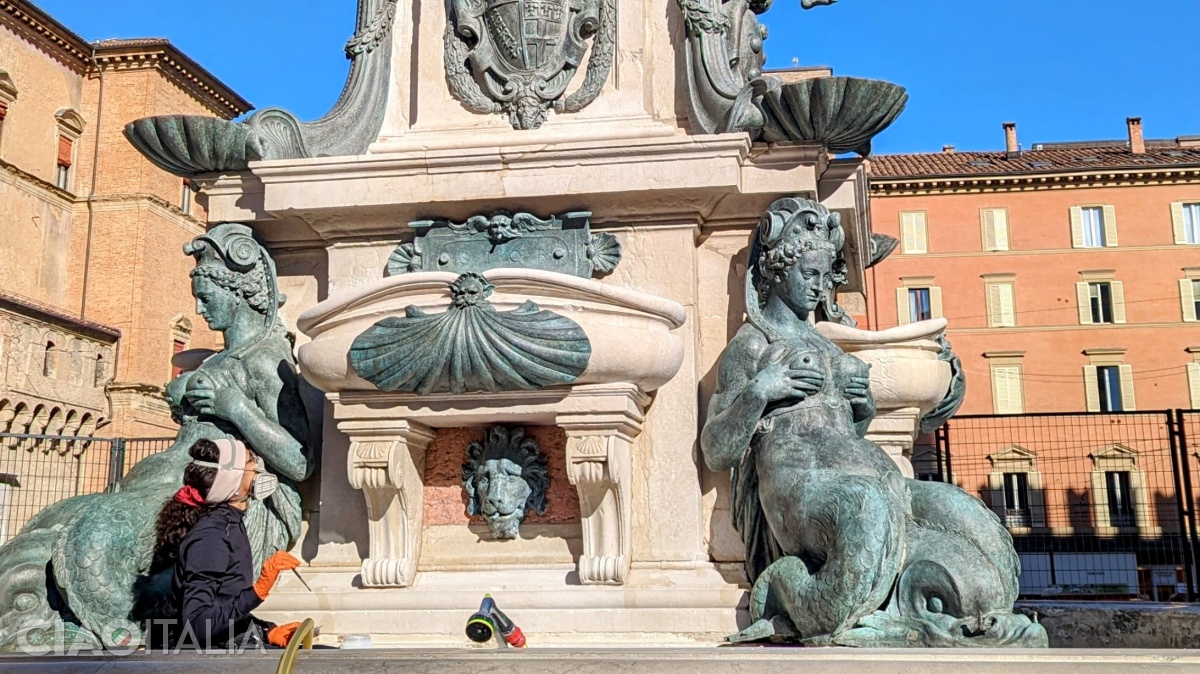
Legend has it that Giambologna wanted Neptune's genitals to be larger so they would match the scale of the statue, but the Church objected. In retaliation, the sculptor supposedly positioned Neptune's left thumb in such a way that, from a certain angle, it looks like... something entirely different. That's why today you'll see many tourists trying to photograph Neptune from behind, on the right-hand side, where in the paving of the square - just before the steps leading to the Salaborsa Library - you'll find a darker-colored stone known as the pietra della vergogna ("the stone of shame").
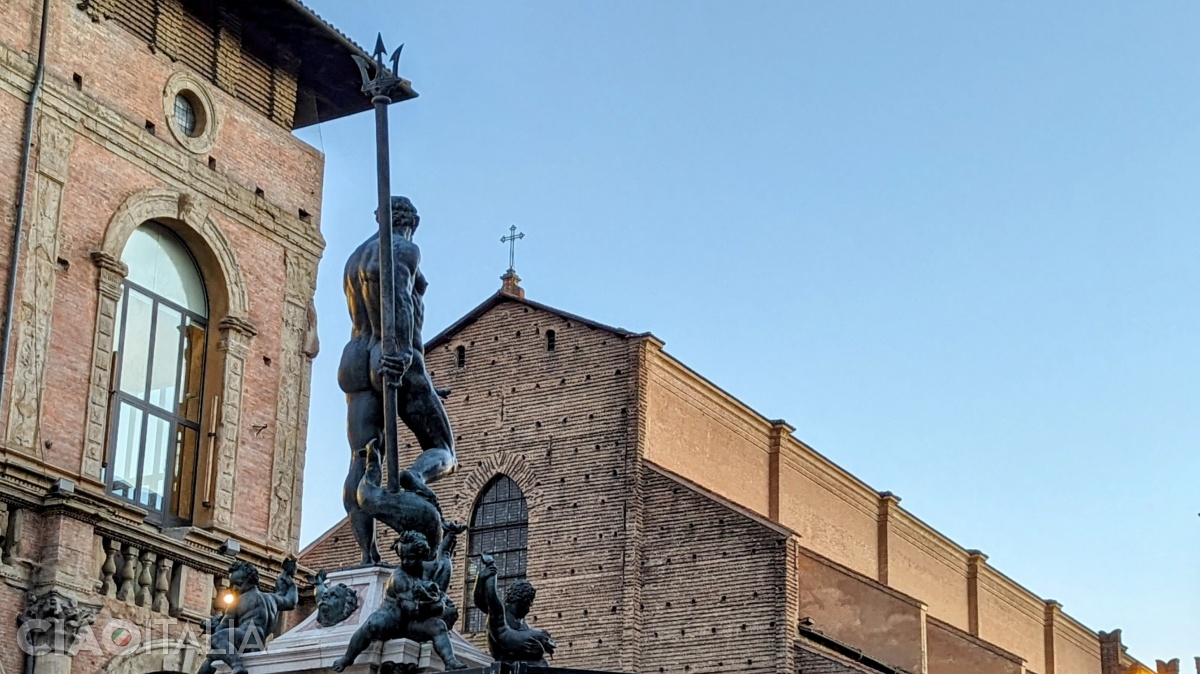
The fountain hasn't been spared from other "adventures" either - although it was intended as a decorative piece, the people of Bologna quickly found other uses for it: merchants from the market held in Piazza Maggiore would wash their goods in it, washerwomen did their laundry there, and some even thought to use it as a... urinal. To put a stop to these abuses, in 1603 the authorities built a fence around the fountain. The fence wasn't removed until three hundred years later, at the end of the 19th century.
Because of the statue's size (it stands 3.2 meters tall), the locals nicknamed it il Gigante or il Zigànt in the Bolognese dialect ("The Giant").
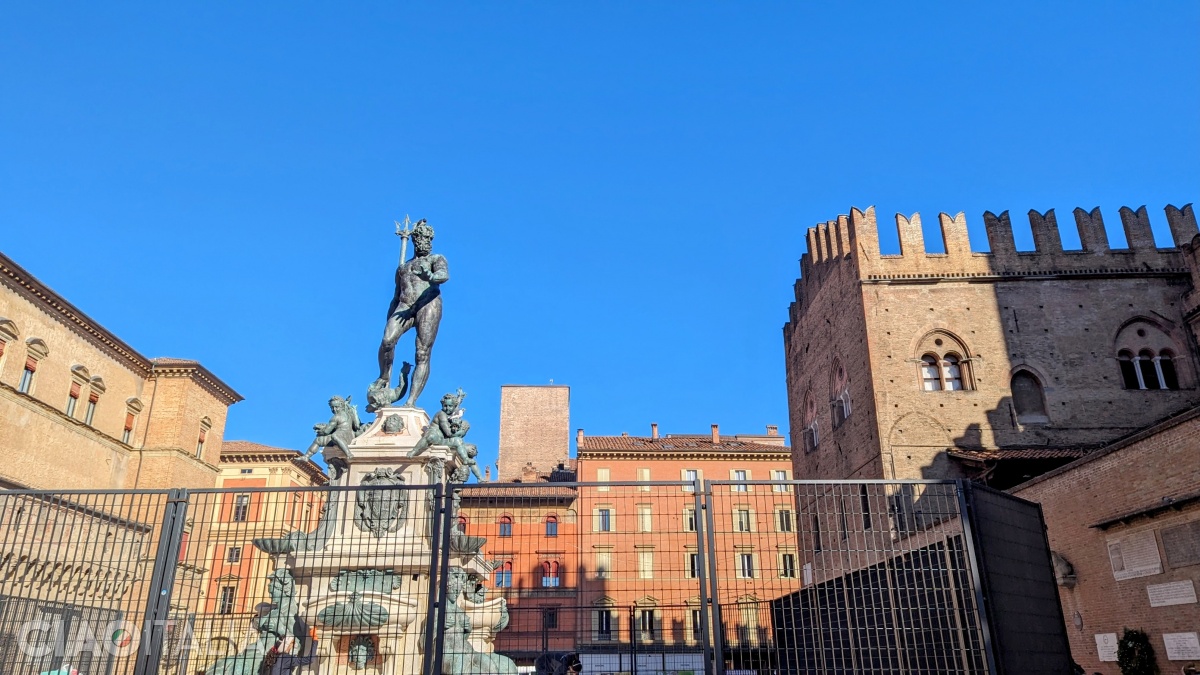
At Neptune's feet, four cherubs symbolize the rivers of the continents known at the time: the Ganges, the Nile, the Amazon, and the Danube (similar to the Fountain of the Four Rivers in Piazza Navona in Rome, where the rivers are represented by four male figures). On the base, made of Verona marble, several papal coats of arms are depicted.
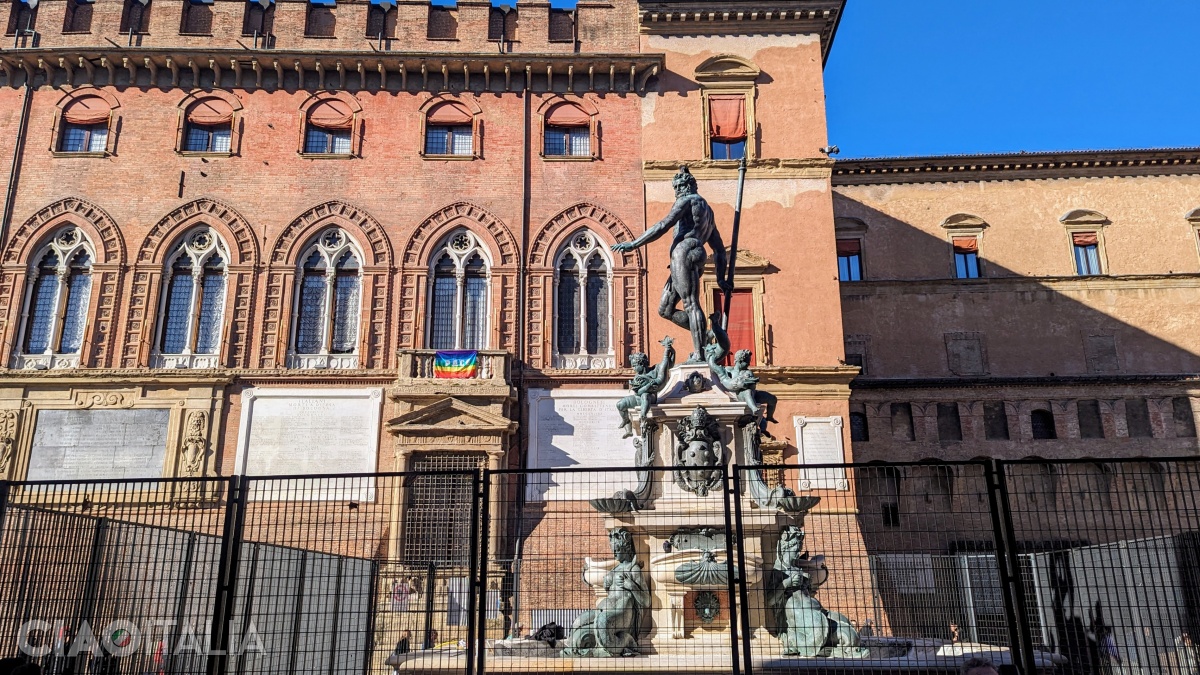
Superstitions haven't spared Neptune either: to ensure they pass an exam, students walk twice around the statue in a counterclockwise direction. It is said that sculptor Giambologna did the same, walking around the base of the fountain to seek inspiration once he learned he had been chosen to create the statue.
And one more curiosity: according to legend, the logo of the Maserati company was inspired by Neptune's trident in Bologna.
Salaborsa Library
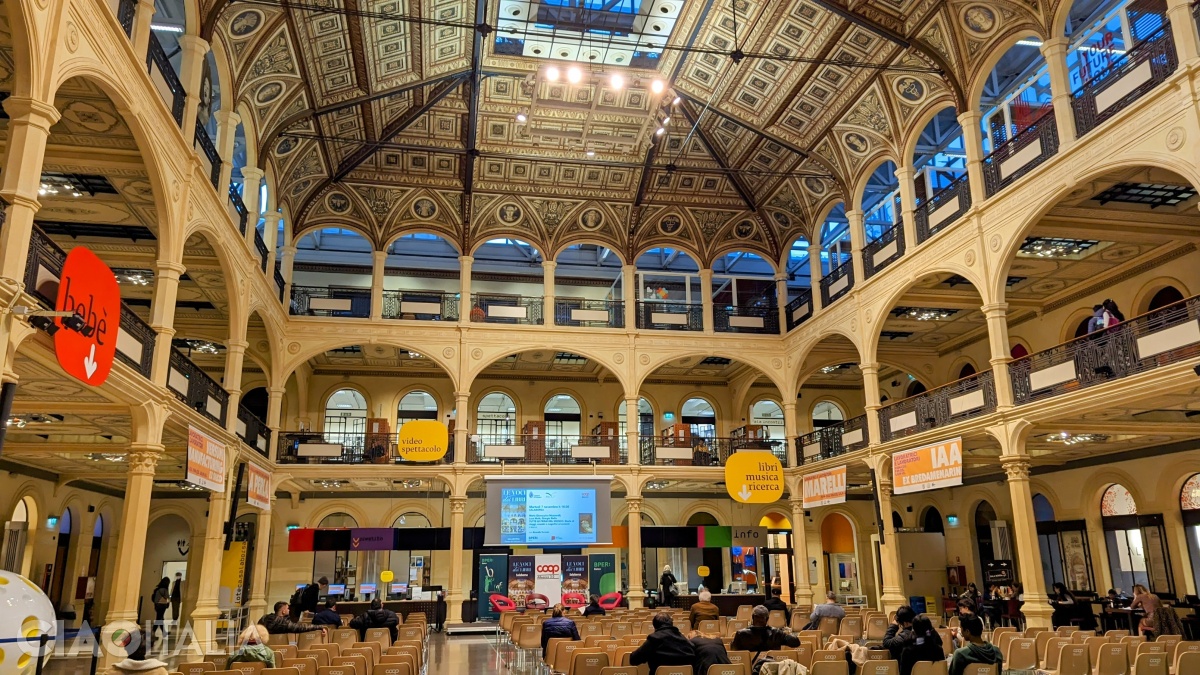
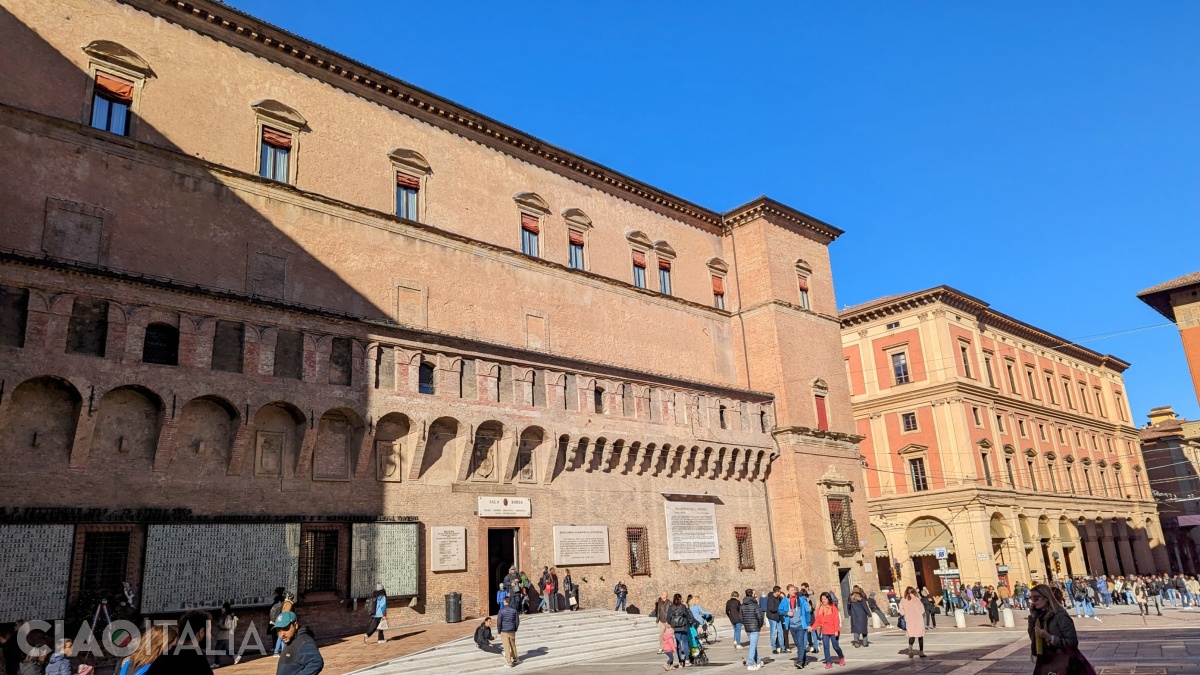
To the right of the statue (as you look from behind) is the Salaborsa Library, attached to the Town Hall Palace. It is named so because between 1880 and 1990 it housed Bologna's stock exchange. The beautiful inner courtyard (Piazza Coperta) is now dedicated to Umberto Eco, and on the upper floor, all around, there is a multimedia library very popular with locals. Beneath this building lie the ruins of ancient Bologna.
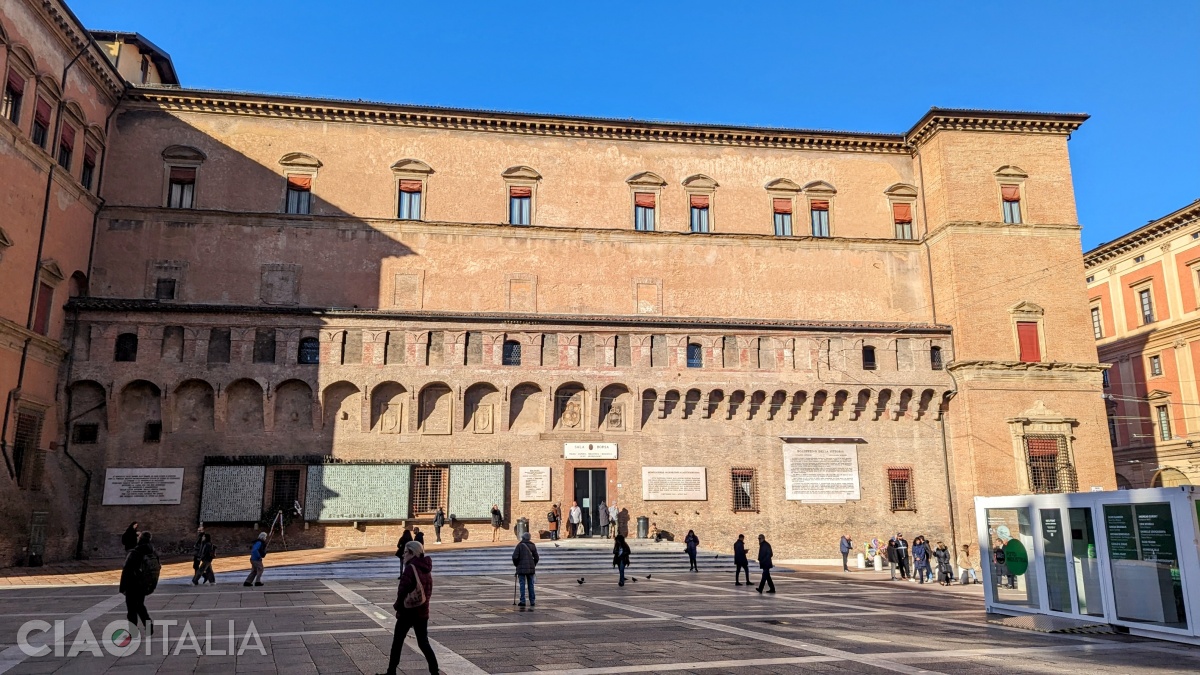
On the wall of the library, to the left of the entrance, you'll notice several panels with photographs - these are images of over 2,000 young people who fell fighting to liberate Bologna from fascist occupation. This was the place where the Nazis used to publicly execute those who opposed them. After April 21, 1945, when the city was liberated, relatives began hanging photographs of their loved ones who had died in the same spot.
Re Enzo Palace (Palazzo Re Enzo)
To the left of Neptune is the Palazzo Re Enzo (Palazzo Re Enzo), also known as Palazzo Nuovo ("New Palace"), because it was added in the 13th century to the Palazzo del Podestà. Its current name refers to the unfortunate King of Sardinia, who was captured following a battle with Bologna and imprisoned in the palace for 23 years until his death in 1272.
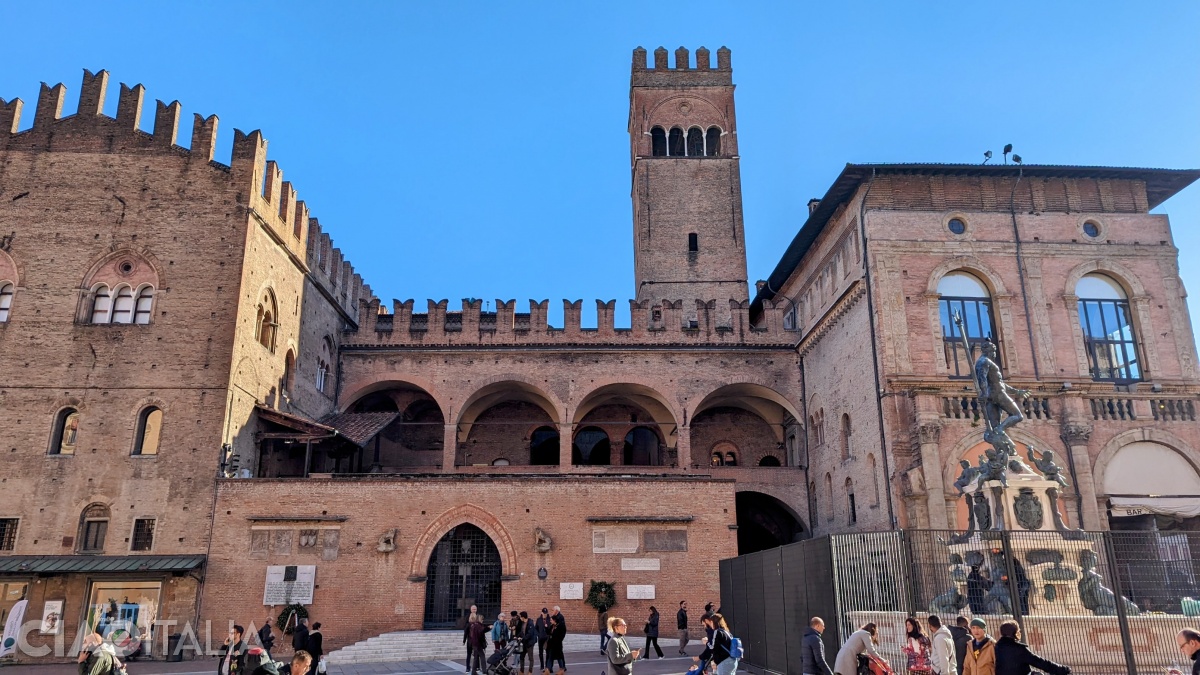
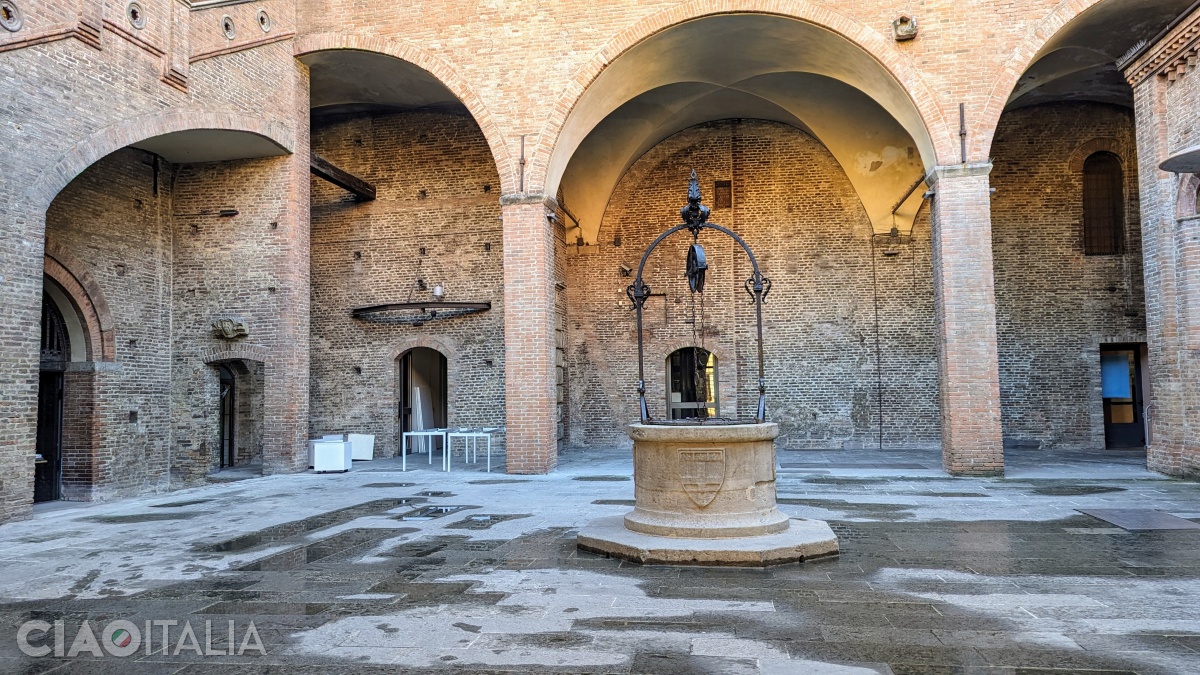
In the small chapel in the inner courtyard, prisoners who were to be executed in Piazza Maggiore received their last communion.
Today, the halls of Palazzo Re Enzo host conferences and various events.
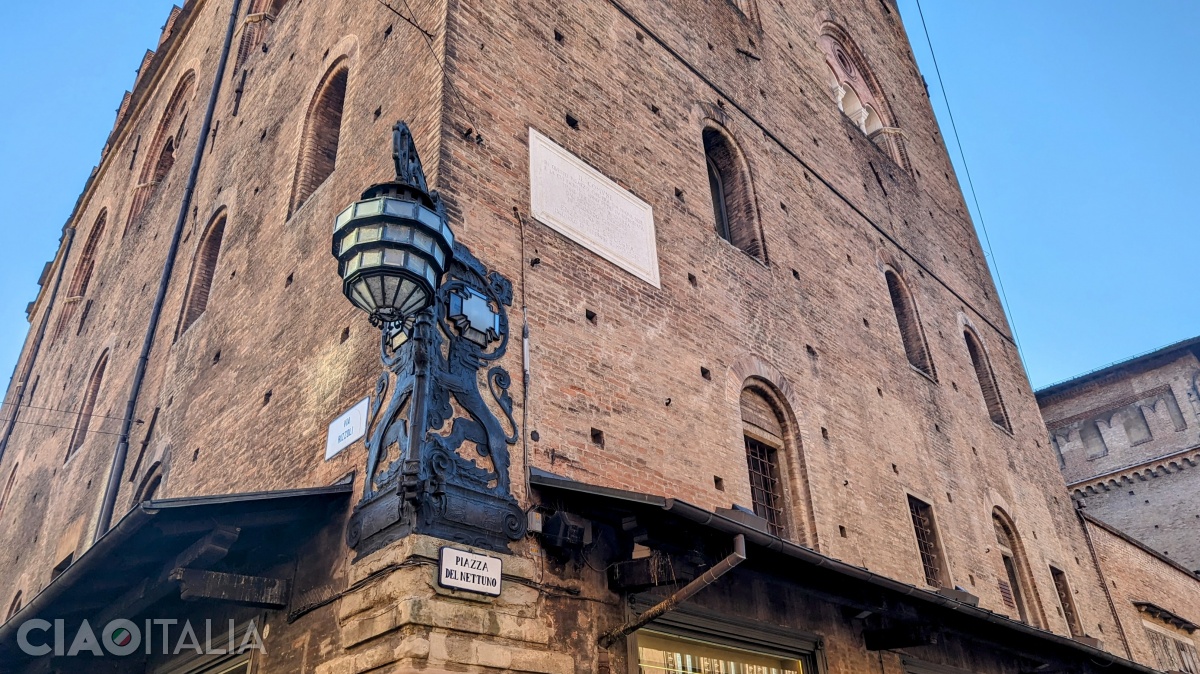
The beautiful Liberty-style streetlamp on its left corner, facing Via Rizzoli, has a special story. Made in 1920, it is also called the Lampione dei neonati ("Newborns' Lamp"). Until a few years ago, it was connected to the maternity hospitals in Bologna and would blink for three seconds each time a new birth was recorded.
On the opposite corner, between Piazza del Re Enzo and Via Rizzoli, stands the Lambertini Tower, built in the 12th century, whose roof is the result of a restoration from the early 20th century.