21 Things to See in Bologna
Most of the tourist attractions in Bologna can be found in the central area, so it will be easy for you to visit them on foot. Only a few sights are farther away or in the surrounding areas, and you'll need to take some form of transportation to reach them. You can also book a guided walking tour in the city center.
1. Piazza Maggiore
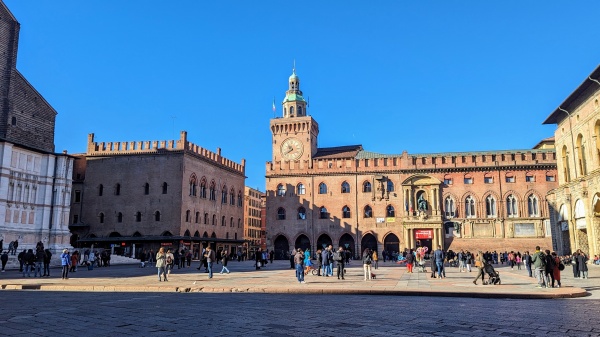
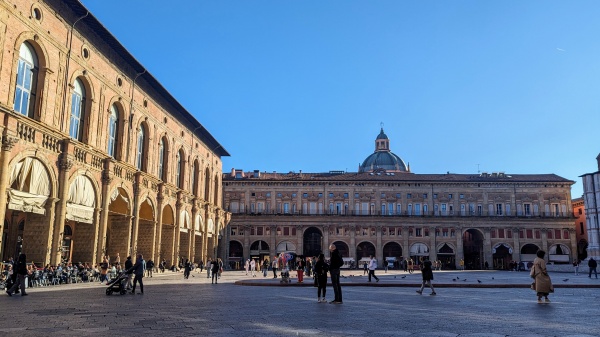
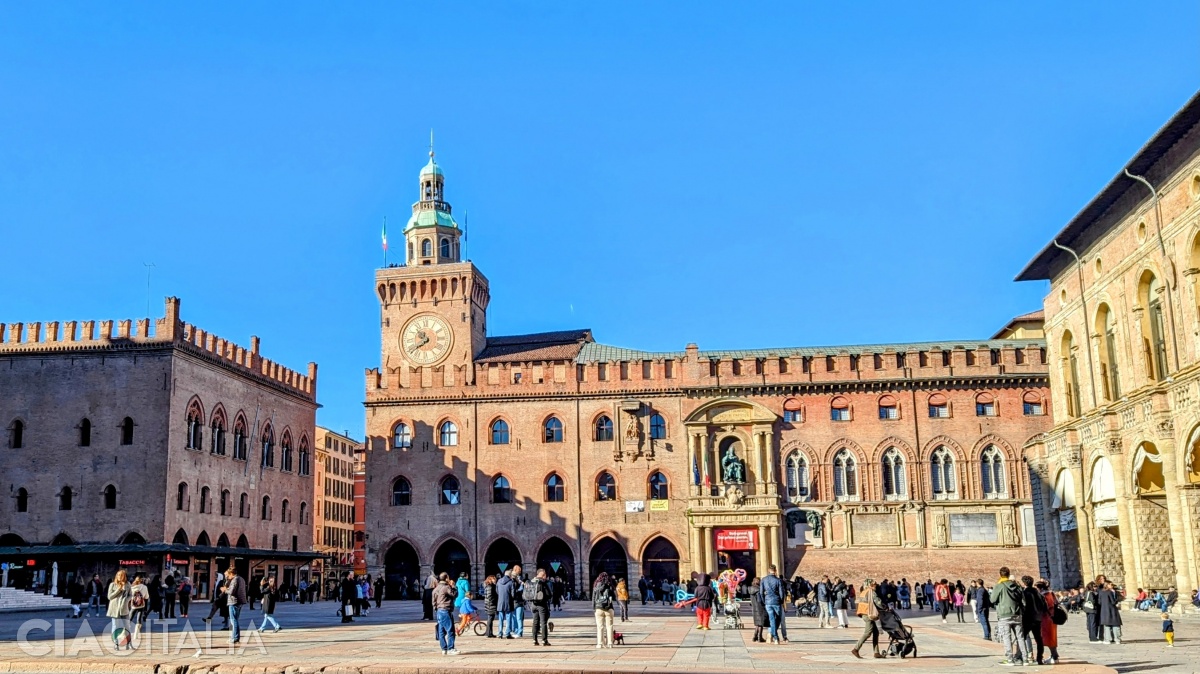
We begin with Piazza Maggiore because it is the heart of the city and because most of Bologna's tourist attractions are clustered around it. The locals also call it Piazza Grande ("the Big Square") or simply la Piazza, and its sides are adorned with some of the oldest and most beautiful buildings in the city.
On the southern side rises the imposing Church of San Petronio. Immediately to its right is the Palace of the Notaries (if you look at the center of the façade, you'll notice the guild's emblem, with three inkwells and three quills).
Next, on the right-hand side of the square, is the Town Hall, also known as Palazzo d'Accursio. The clock on its tower is one of the largest in Italy, and above the entrance stands the statue of Pope Gregory XIII, the man behind the calendar we use today - the Gregorian calendar.
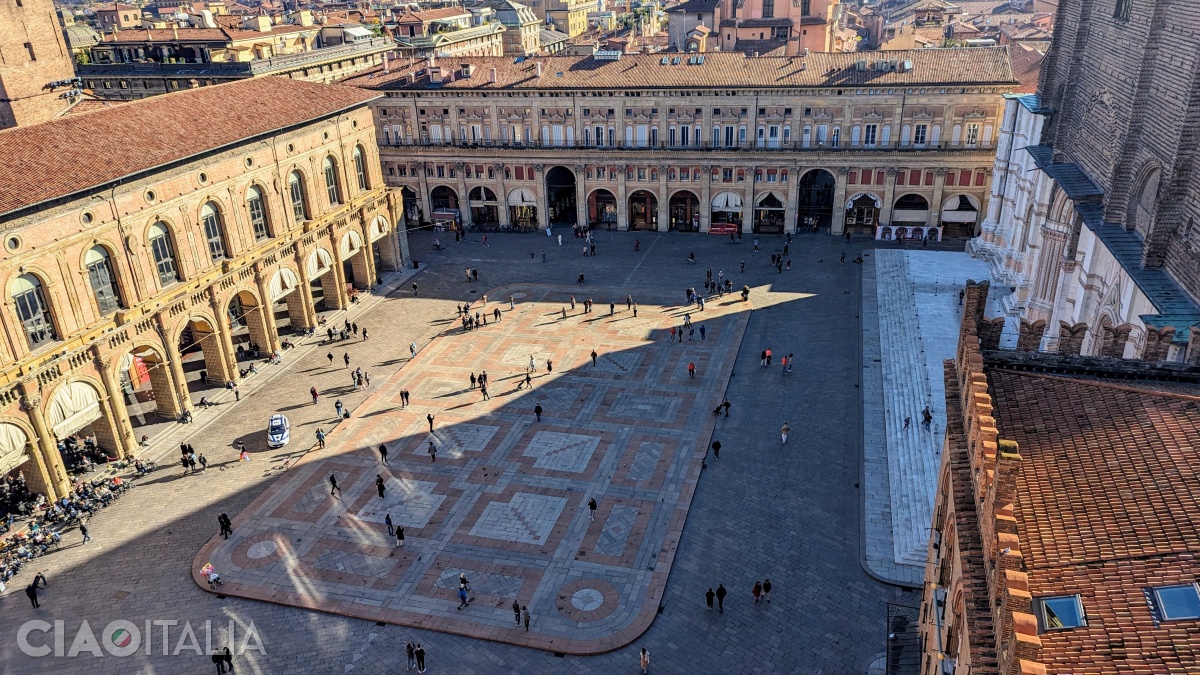
On the adjacent side, opposite the church, stands the Palazzo del Podestà (Governor's Palace). The tower above it is called the Arengo Tower, and its bells were once rung to signal important events. They still ring every year on April 21st at exactly 10:00 AM to commemorate Bologna's liberation from Nazi occupation in 1945.
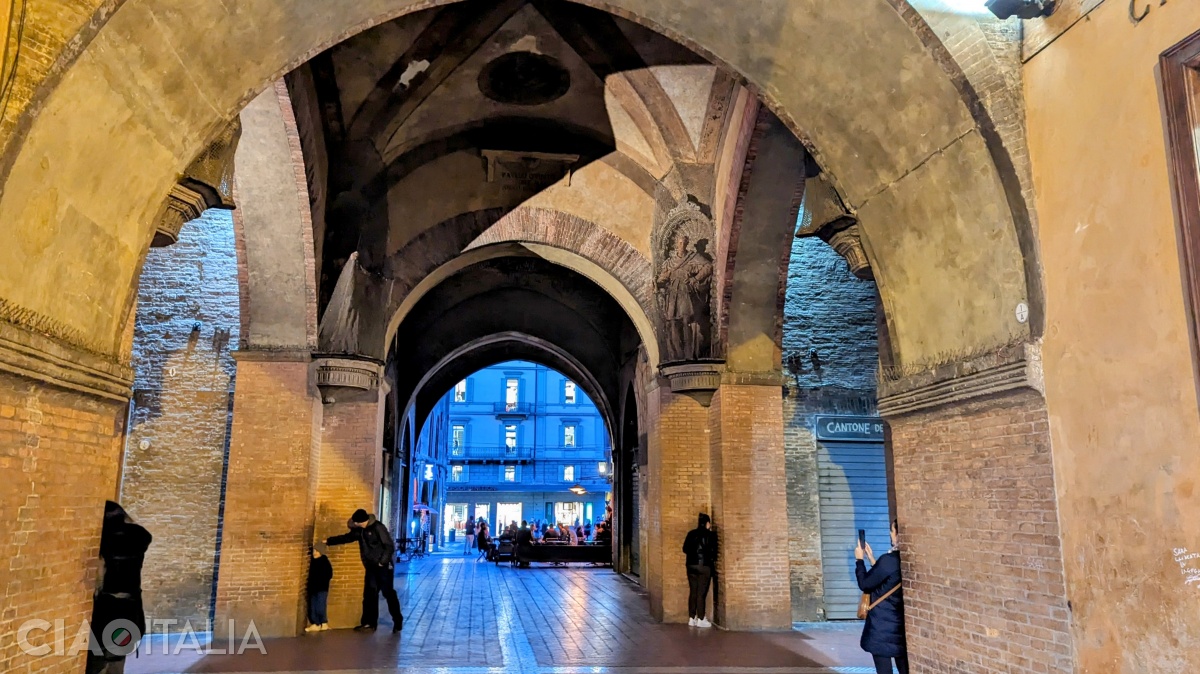
Take a close look at the columns, which are decorated with thousands of different ornamental tiles, featuring flowers, coats of arms, animals, or human figures. It's said that on one of these columns there are two identical flowers placed side by side, but no one has ever been able to find them.
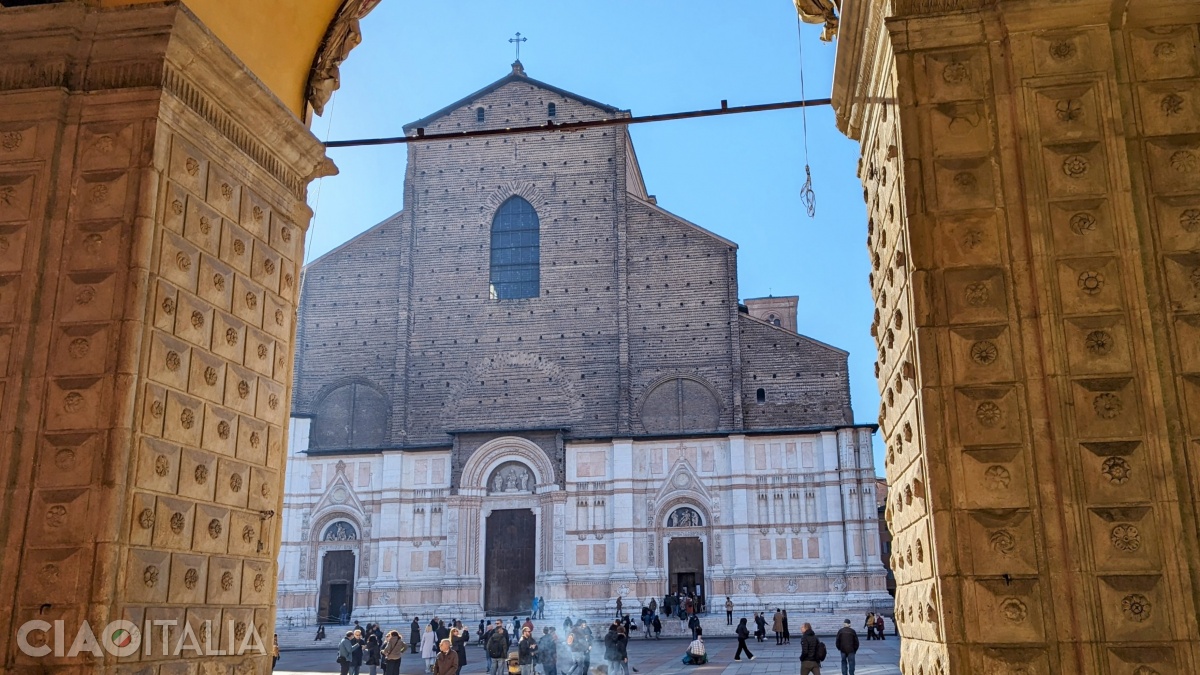
Don't leave without trying the strange acoustic effect that occurs under the vault (Voltone del Podestà) at the intersection of the two pedestrian arcades inside. It's easy to spot - it almost always has people standing at the four corners. If you whisper while facing the wall, someone standing in the opposite corner will hear you. This clever feature once allowed monks to hear confessions from plague victims without risking contamination.
On the next side, to the left of the church, is the Palazzo dei Banchi, with its 15 arches, beyond which lies il Quadrilatero, one of the liveliest areas in Bologna.
2. Basilica San Petronio
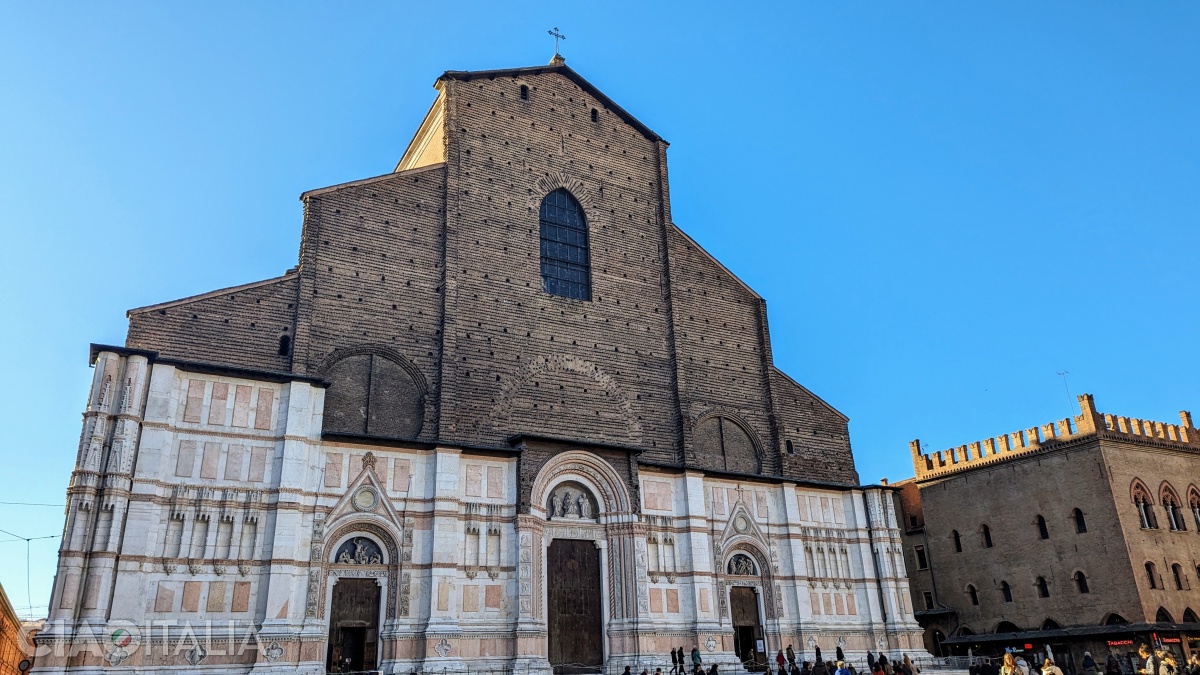
The Basilica of San Petronio is one of the most important tourist attractions in Bologna. It is the largest and most important church in the city, even though it is not a cathedral. Construction began at the end of the 14th century, and it was originally intended to be much larger than it is today. However, the Pope is said to have intervened to prevent the Bolognese from building a church bigger than St. Peter's Basilica in the Vatican. As a result, it was never completed, which is why the façade is half marble and half brick.
The church boasts a beautiful entrance portal created by Renaissance sculptor Jacopo della Quercia, the longest meridian line in the world (visible inside, on the left side), the oldest organ in Italy, and an intriguing depiction of the Last Judgment - particularly of Hell, which controversially includes an image of Muhammad. This depiction has led to terrorist threats over the years.
Basilica di San Petronio
Opening Hours:
Church:
- Monday-Sunday: 10:00 AM - 6:00 PM (last entry at 5:50 PM)
Bolognini, San Sebastiano, and San Vincenzo Chapels:
- Monday-Sunday: 10:00 AM - 5:30 PM (last entry at 5:15 PM)
Museum:
- Monday-Sunday: 10:00 AM - 5:30 PM (last entry at 5:15 PM)
Ticket Prices:
Church:
- free admission
Bolognini, San Sebastiano, and San Vincenzo Chapels:
- Adults: €5
- Seniors (65+ years): €3
- Youth (11-18 years): €3
- Children under 11: free
Museum:
- free admission
3. Palazzo d'Accursio and the Clock Tower
We're still in Piazza Maggiore - if you want to see it from above, you can climb the tower of the Town Hall (Accursi Tower). The entrance is on the second floor, so you'll also get to admire the staircase designed by architect Bramante, built to allow state officials to ride up on horseback. When not hosting events, the Town Hall (Palazzo d'Accursio) can be visited for free. The ticket for the tower also includes access to the Municipal Art Collections, so be sure to plan your time accordingly.
Palazzo d'Accursio
Opening Hours:
Clock Tower (September 7 - December 31, 2026):
- Monday to Sunday: 10:00 AM - 6:20 PM (last entry), three times per hour (on the hour, at twenty past, and at forty past)
- December 24 and December 31, 2026: last entry at 4:20 PM
- December 25, 2026: Closed
Municipal Art Collections:
- Monday: closed
- Tuesday and Thursday: 2:00 PM - 7:00 PM
- Wednesday and Friday: 10:00 AM - 7.00 PM
- Saturday and Sunday: 10:00 AM - 6:30 PM
- closed: May 1, December 25
- last entry 30 minutes before the closing time
Ticket Prices:
Clock Tower and Municipal Art Collections:
- Adults: €10
- Seniors (65+ years): €7
- Children (4-11 years).: €7
- Children under 4: free
- Free with Bologna Card
Municipal Art Collections:
- Adults: €6
- Seniors (65+ years): €4
- Youth (18-25 years): €2
- Under 18: free
4. Neptune Fountain
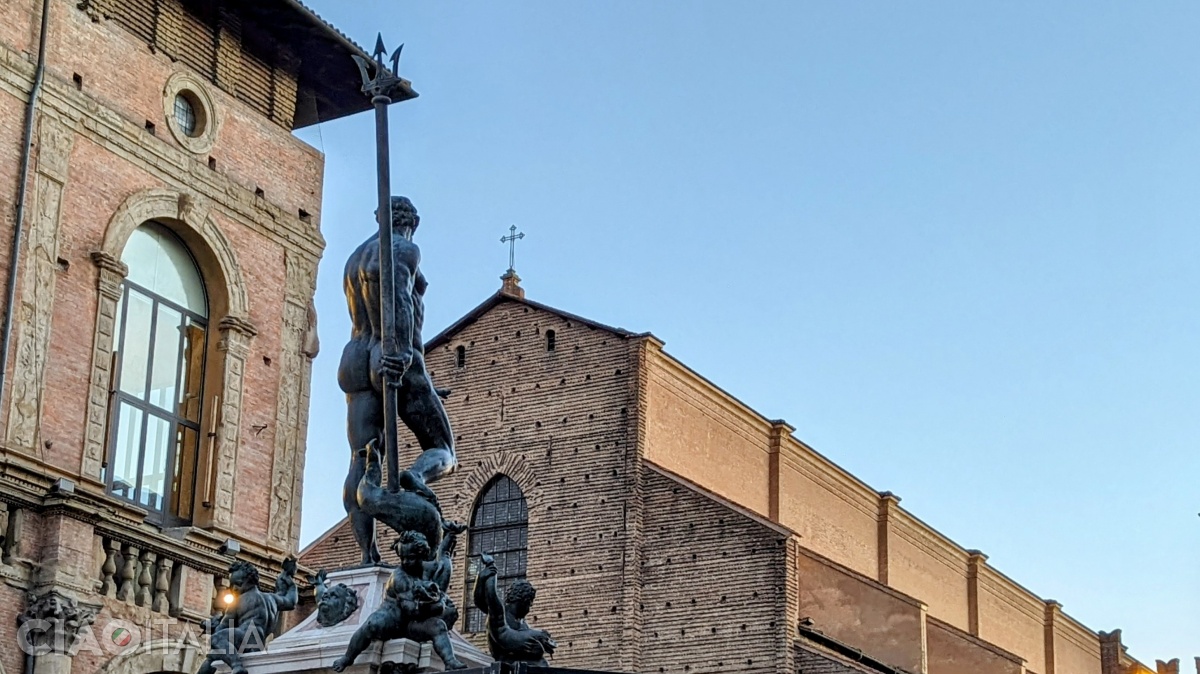
Located in a small square next to Piazza Maggiore, the Fountain of Neptune is a symbol of the city and one of the must-see tourist attractions in Bologna. Created in the 16th century, the fountain was meant to represent papal power, but it ended up sparking controversy. The sensual bodies of the sea nymphs at the base of the pedestal and Neptune's male nudity didn't sit well with the Church. Moreover, legend has it that the sculptor Giambologna used an optical illusion: if you look at the statue from behind, from the right side, the thumb of Neptune's left hand appears to resemble an erect phallus.
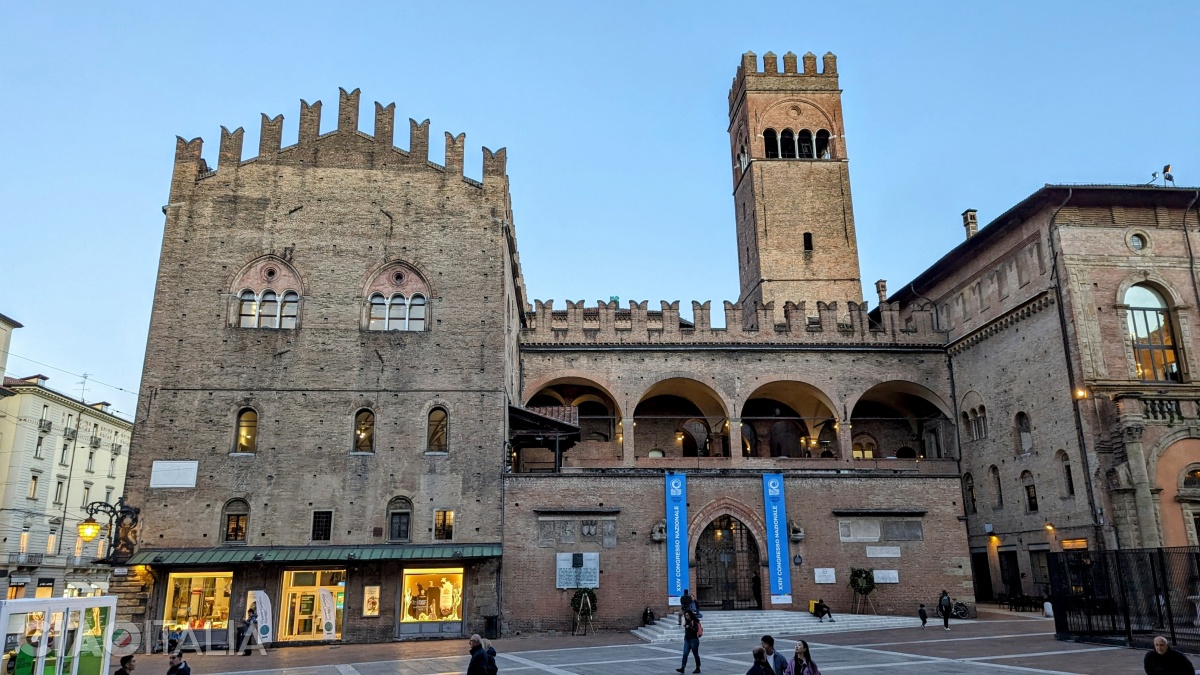
Do have a look also at the two palaces flanking the fountain. On the right is Palazzo Re Enzo, named after King Enzo of Sardinia, who was captured in battle in the 13th century and held prisoner in the palace until his death.
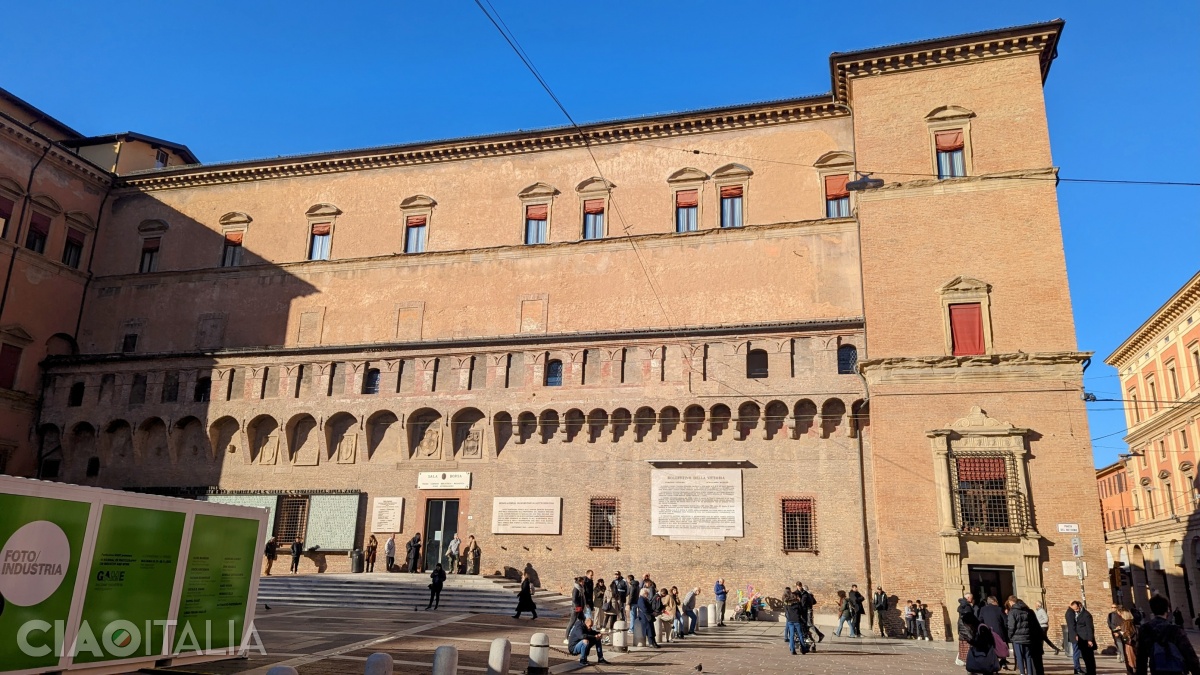
On the left is Salaborsa, a former stock exchange palace that now houses a beautiful library (you can enter its inner courtyard, dedicated to Umberto Eco).
5. Asinelli and Garisenda Towers
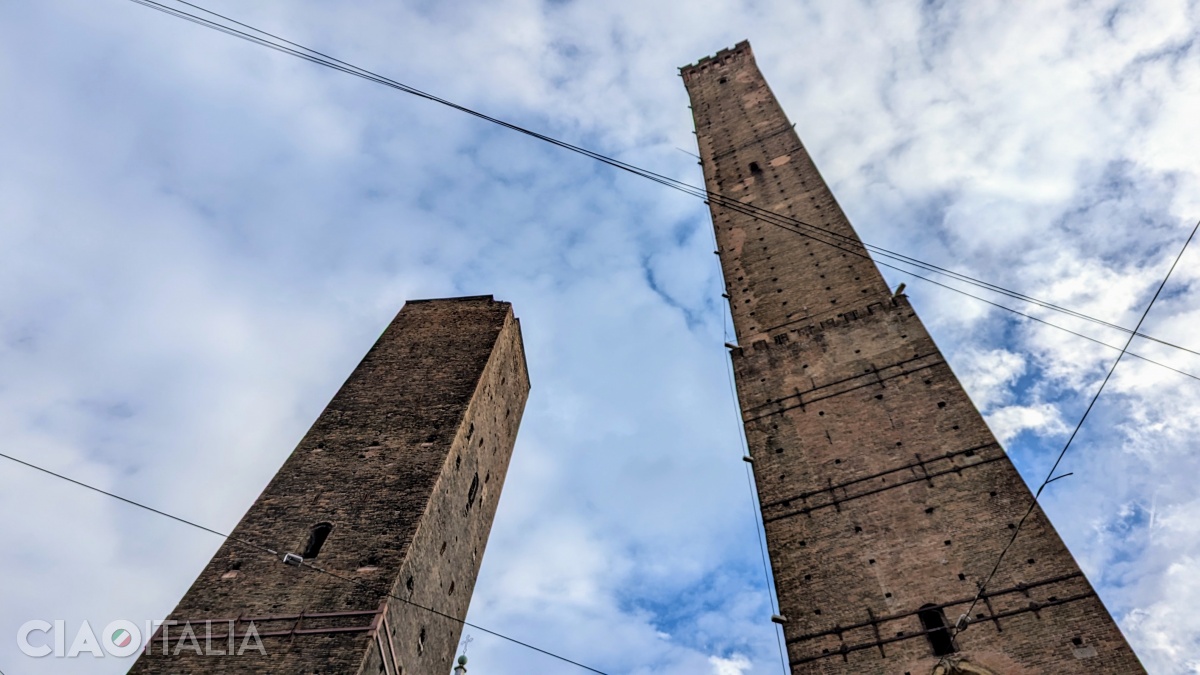
The two leaning towers, Asinelli and Garisenda, located near Piazza Maggiore, are another iconic symbol and one of the most important tourist attractions in Bologna.
At over 97 meters, Asinelli is the tallest of all the towers in Bologna. Throughout its history, Garisenda was shortened and now stands at only 47 meters. However, it wins in terms of tilt, leaning 3.22 meters from the vertical.
Recently, Garisenda has shown signs of structural fatigue, so restoration work began in October 2023, and climbing the Asinelli Tower has also been prohibited for safety reasons.
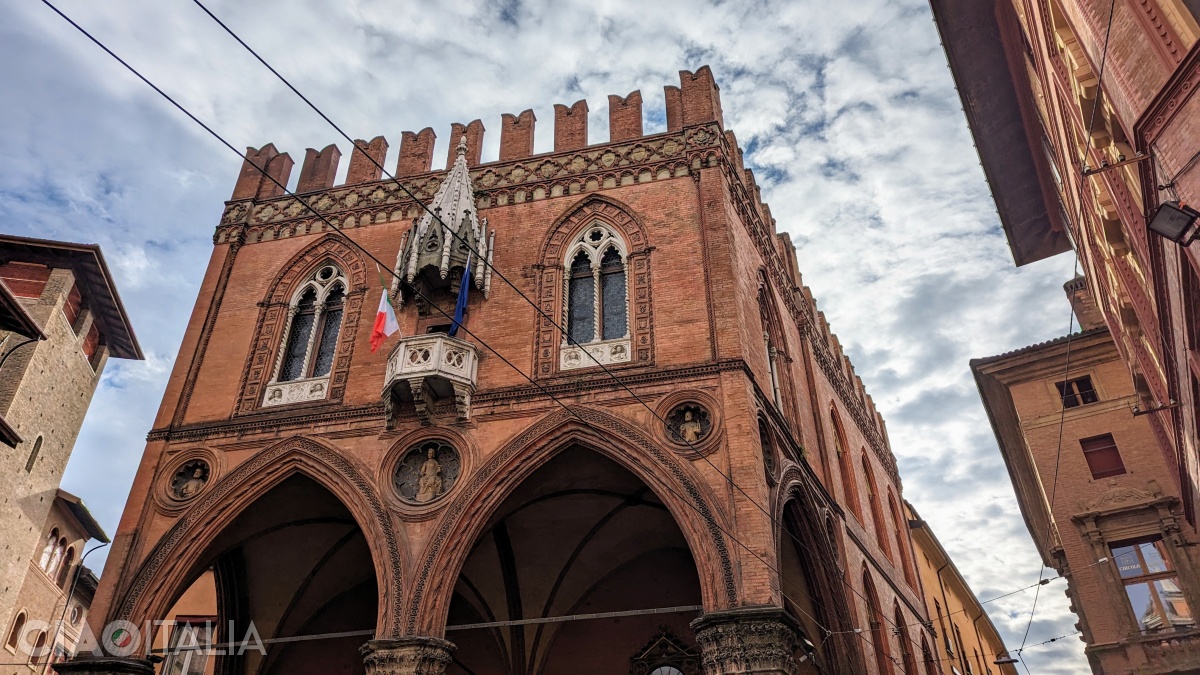
Right next to the two towers, in Piazza Mercanzia, you'll find Palazzo della Mercanzia, one of the most beautiful Gothic buildings in the city. Built in 1384, it used to be the meeting place for merchants and today houses the Chamber of Commerce.
Also very close, about a 2-minute walk away, is the virtual reality museum Macchina del Tempo ("Time Machine"), where you can see what Bologna looked like in the medieval period, when dozens of towers loomed over its skyline.
6. Palazzo dell'Archiginnasio with the Anatomical Theatre and Stabat Mater Hall
Palazzo dell'Archiginnasio is the most beautiful and most renowned palace in Bologna. It was built in 1563, at the request of Cardinal Carlo Borromeo, on a site that was originally meant to be used for the expansion of the Church of San Petronio.
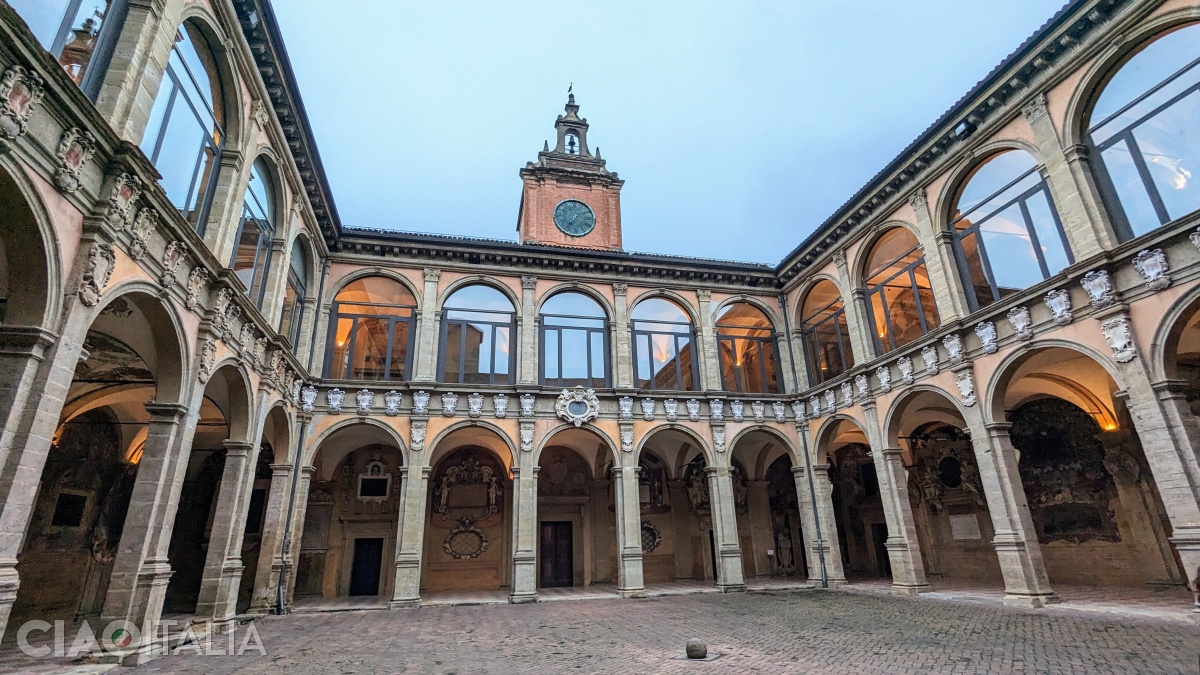
From the very beginning, it served as the seat of the University of Bologna, and in 1838 it was transformed into a library. Its portico features over 30 arches, decorated with student coats of arms.
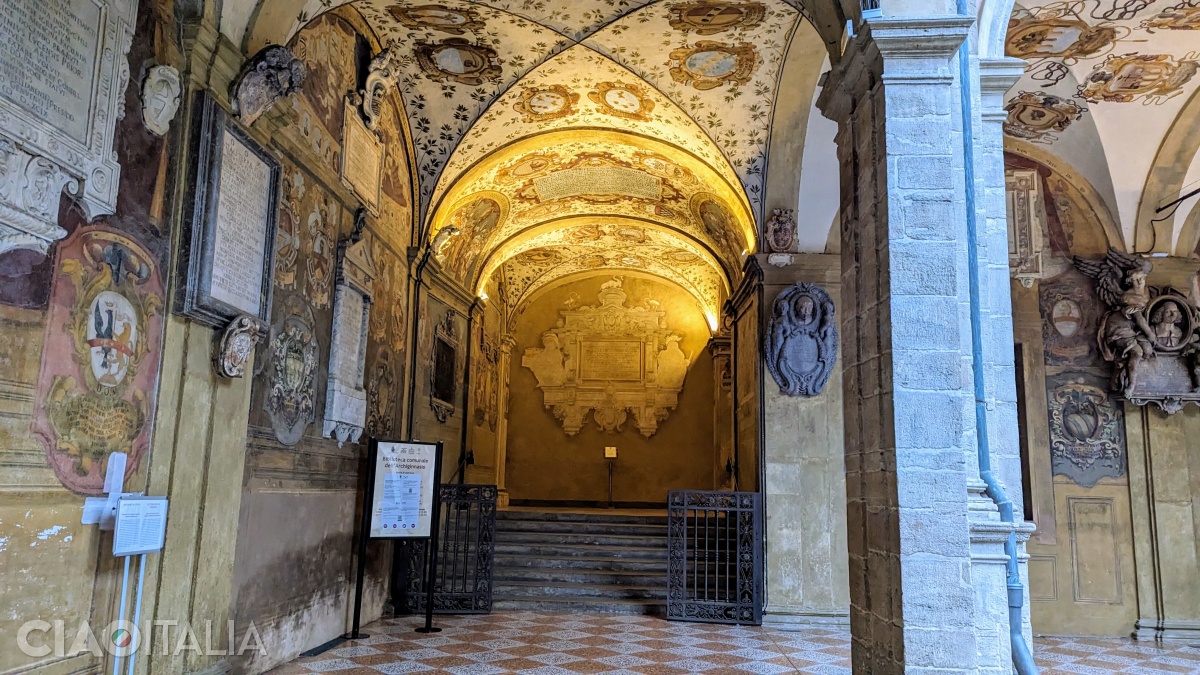
Inside, you can visit the Anatomical Theatre and the Stabat Mater Hall, both adorned with impressive decorations.
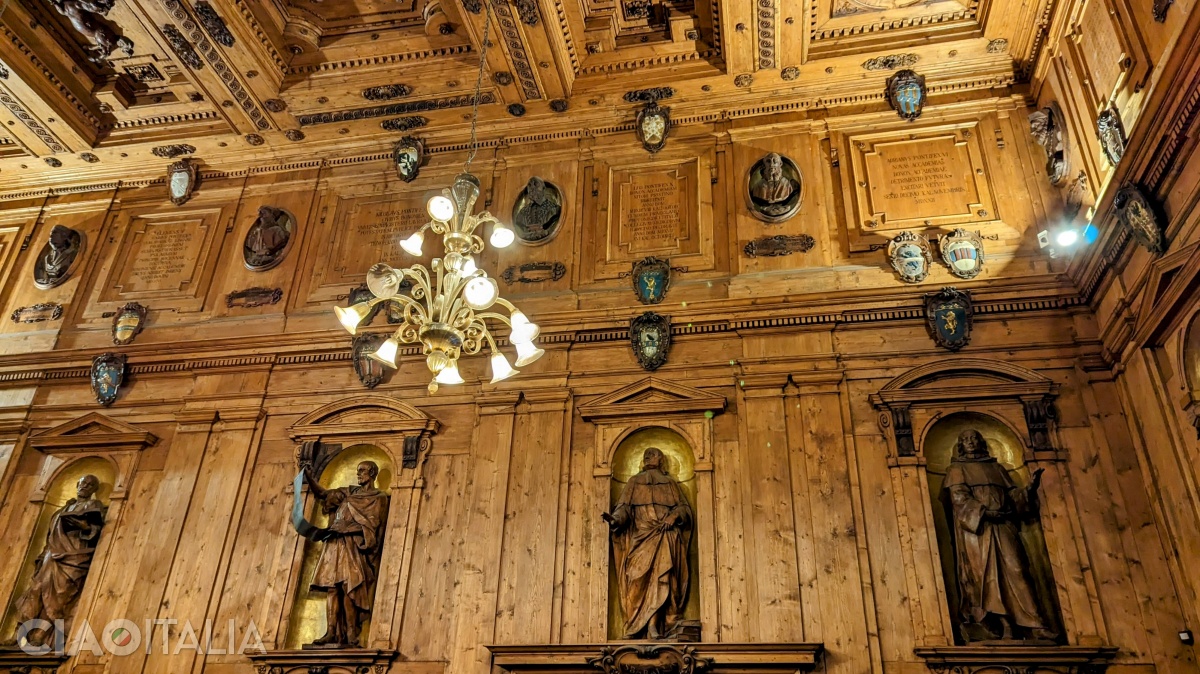
The Anatomical Theatre, entirely clad in fir wood paneling, was the former dissection hall, established in 1637. Students would sit on the benches surrounding the room and observe dissections performed on cadavers, a common practice at the time (another remarkable anatomical theatre can be found in Padua). After being destroyed by bombings in 1944, the hall was completely reconstructed using the original materials.
As you enter, on the right wall of the room, you'll see the Cattedra degli Spellati ("Chair of the Skinned"). The two statues support a female figure who represents an allegory of Anatomy. A winged angel offers her not a flower, but a... femur.
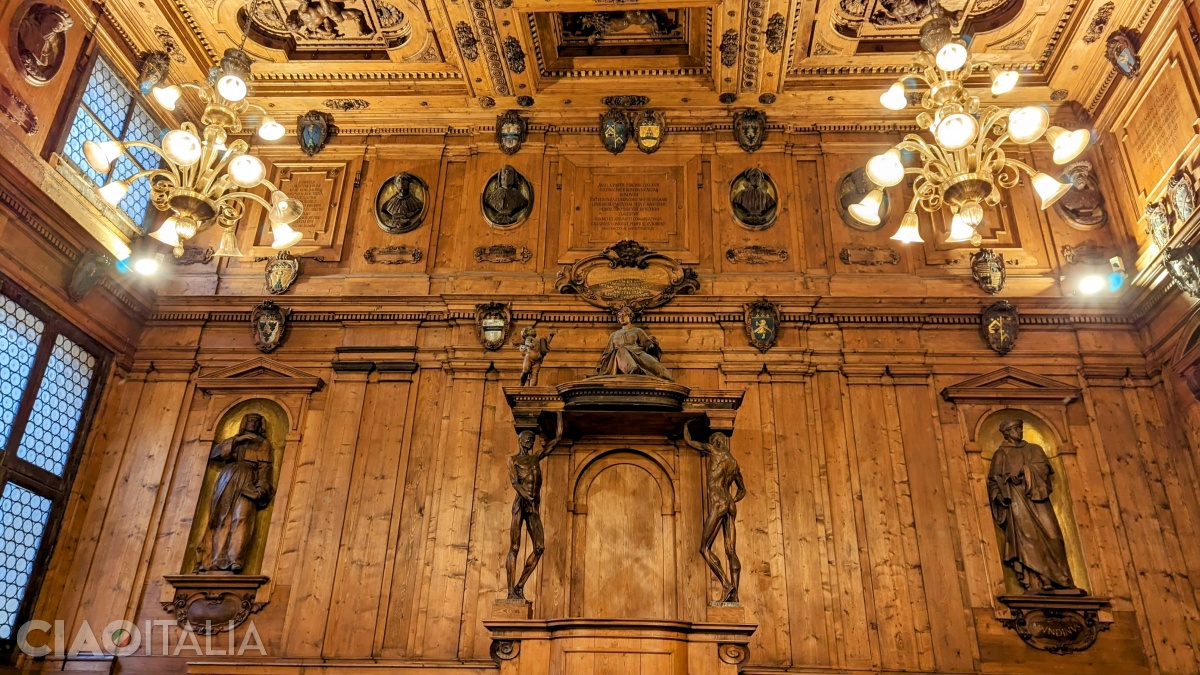
The statues at the bottom represent 12 famous physicians (including Hippocrates), while the upper section features 20 anatomy experts from Bologna.
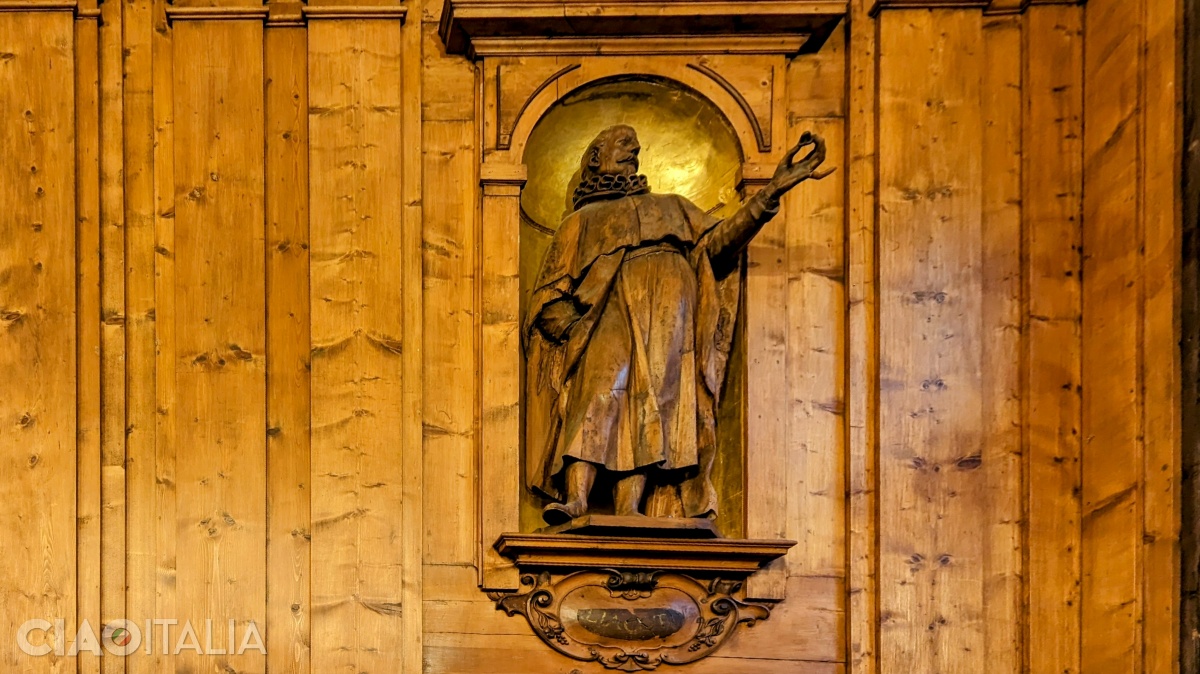
An interesting curiosity is related to the last statue on the left wall (opposite the Chair), which depicts Gaspare Tagliacozzi. If you look closely, you'll notice that the figure is holding a nose in his hand. The doctor, who lived in the 16th century, is considered the father of modern plastic surgery.
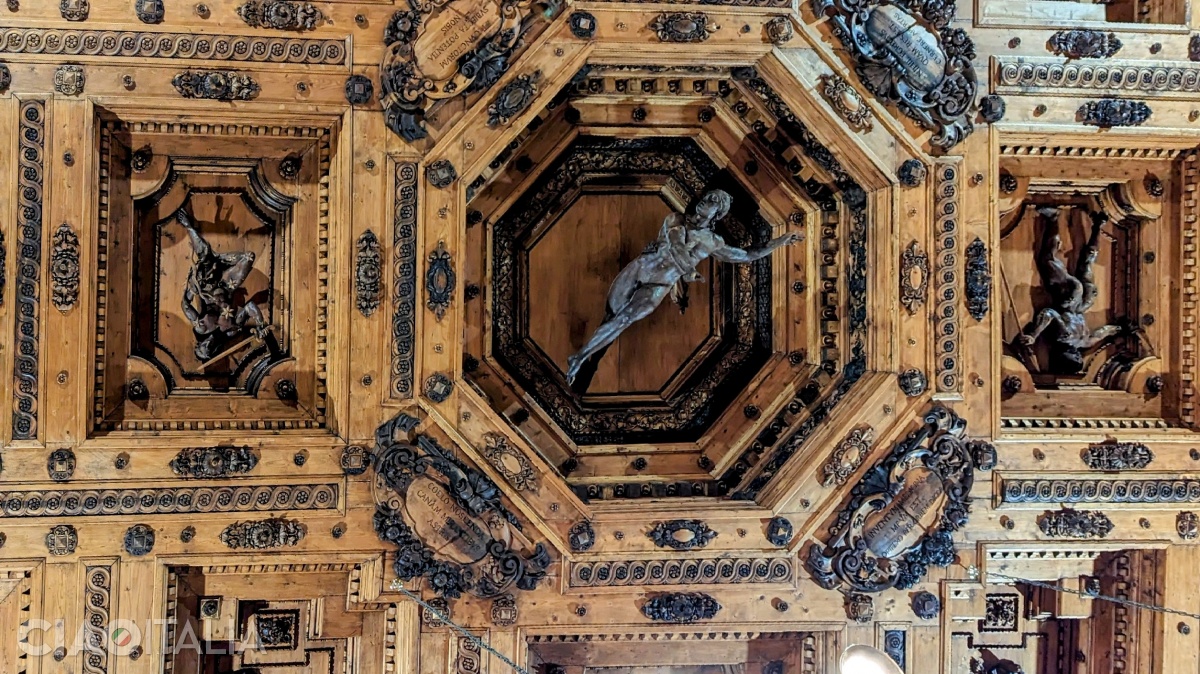
The coffered ceiling features Apollo, the protector of medicine, at its center, surrounded by figures representing the constellations.
The second room you can visit in Palazzo dell'Archiginnasio is the Stabat Mater Hall, which was originally used by legal scholars. It takes its name from the Stabat Mater composition by Rossini, which was performed here in March 1842. The hall is richly decorated with coats of arms and frescoes. On the wall where the lectern once stood, there is a fresco of the Virgin and Child dating from 1569, and on the left wall stands the monument to Cardinal Fabrizio Savelli, featuring a double-headed eagle.
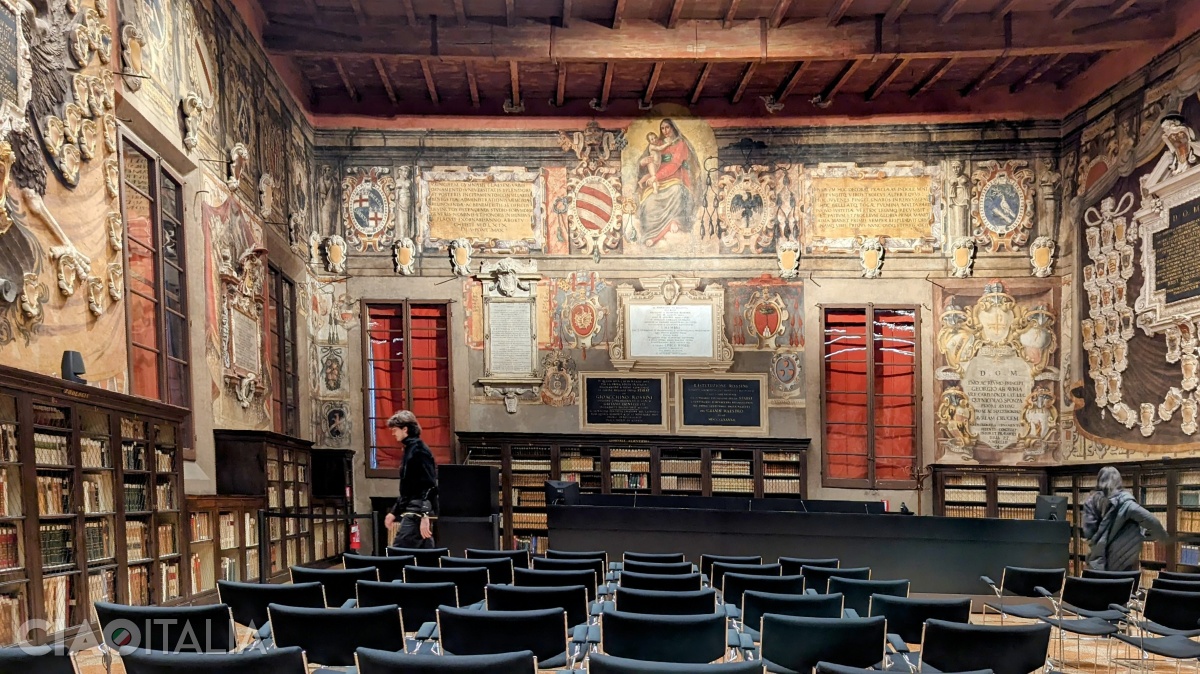
Palazzo dell'Archiginnasio
Opening Hours:
Palazzo dell'Archiginnasio:
- Monday-Saturday: 9:00 AM - 7:00 PM
- Sunday: closed
Anatomical Theatre and Stabat Mater Hall:
Entry with audioguide:
- Monday to Saturday, 10:00 AM - 5:30 PM (admission every 10 minutes)
Guided tours:
- January 12 - February 28, 2026: Monday to Saturday: 11:30 AM and 3:30 PM (Italian); 10:20 AM, 2:20 PM and 4:00 PM (English)
- From March 1, 2026: Monday to Saturday: 11:30 AM, 3:30 PM and 4:40 PM (Italian); 10:20 AM, 2:20 PM, 4:00 PM and 5:10 (English)
Ticket Prices:
Palazzo dell'Archiginnasio: free
Anatomical Theatre+Stabat Mater Hall:
Admission with audioguide (Anatomical Theatre and Stabat Mater Hall, when not occupied by other activities):
- Adults: €10
- 13-18 years: €8
- Under 13: free (without audioguide)
Guided tour (Anatomical Theatre, Stabat Mater Hall, Chapel of Santa Maria dei Bulgari and the Cubiculum Artistarum, when not occupied by other activities):
- Adults €12
- Over 65: €10
- 13-18 years: €10
- Under 13: free
Bookings on Bologna Welcome
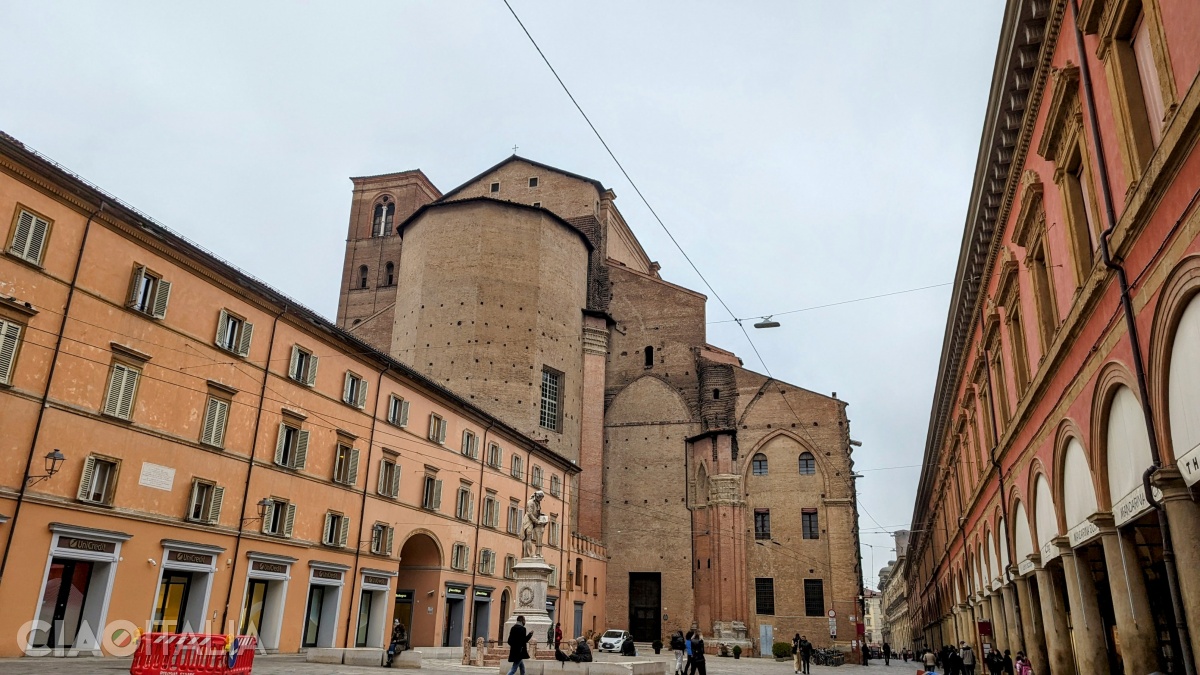
The square in front of the palace is called Piazza Galvani. At its center stands the statue of Luigi Galvani, a professor at the University of Bologna, who in the 18th century experimented with the effect of electricity on animal muscles. Galvani is depicted holding an open book, showing the frog legs he used in his experiments.
7. Il Quadrilatero
Il Quadrilatero is the area located just beyond the arcades of the Palazzo dei Banchi, near Piazza Maggiore, bordered by Via Rizzoli, Via dell'Archiginnasio, Via Farini, and Via Castiglione.
In the Middle Ages, this was where the city market was held. Today, it's a lively maze of narrow streets full of shops, delis, cafés, and restaurants where you can try traditional Bolognese food.
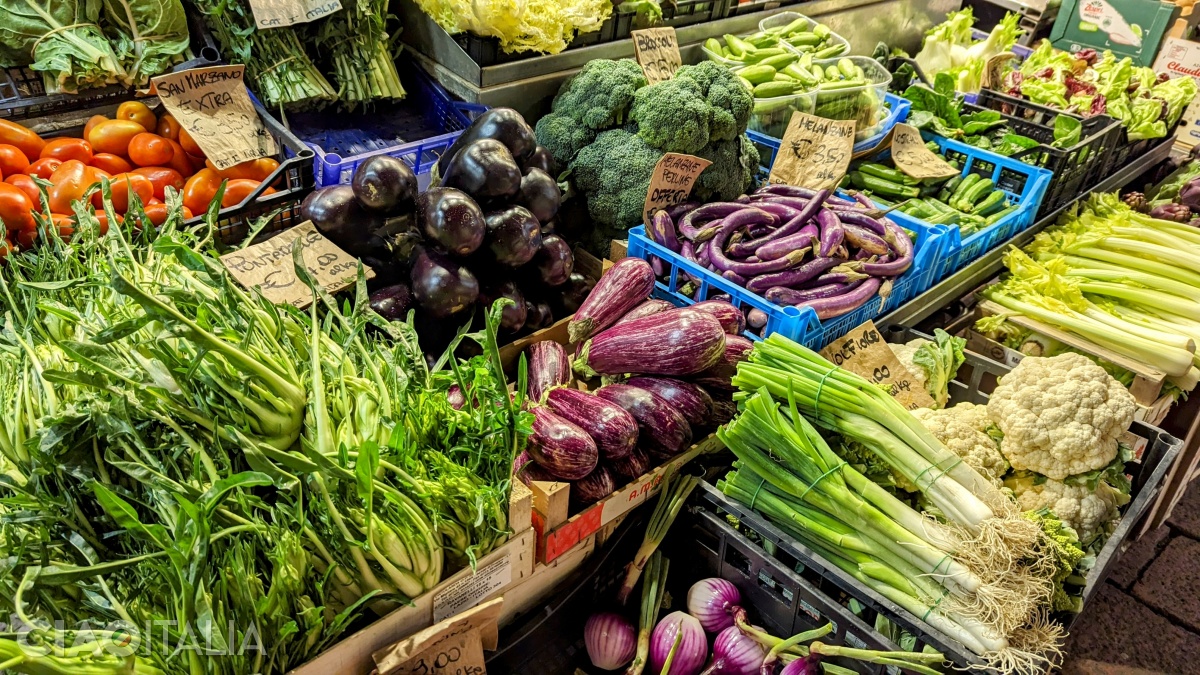
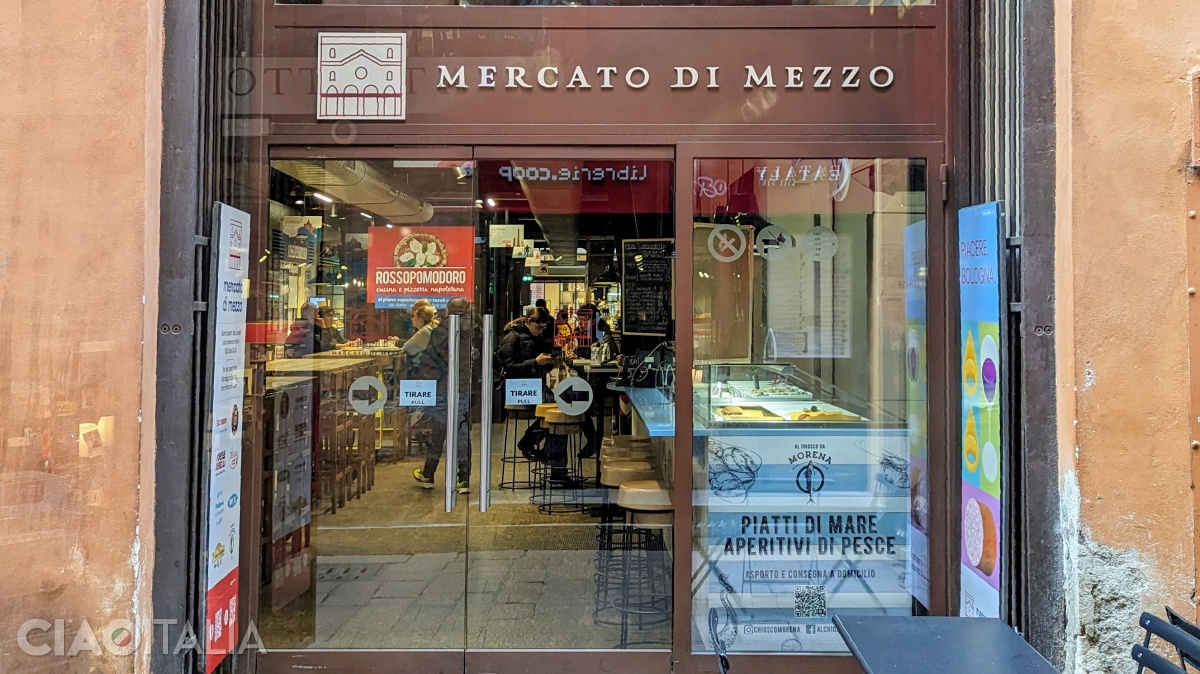
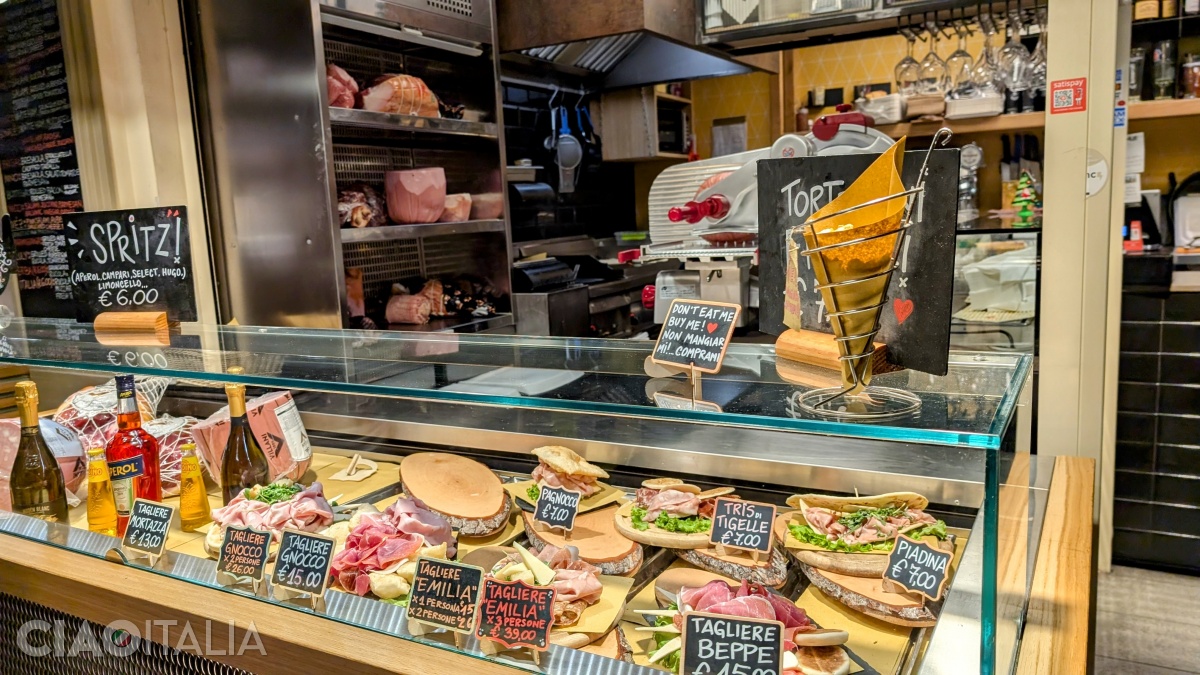
Here you'll find the Mercato di Mezzo food market, offering cured meats, cheeses, pasta, wine, and sandwiches - a great spot for a quick bite at the restaurants and cafés inside.
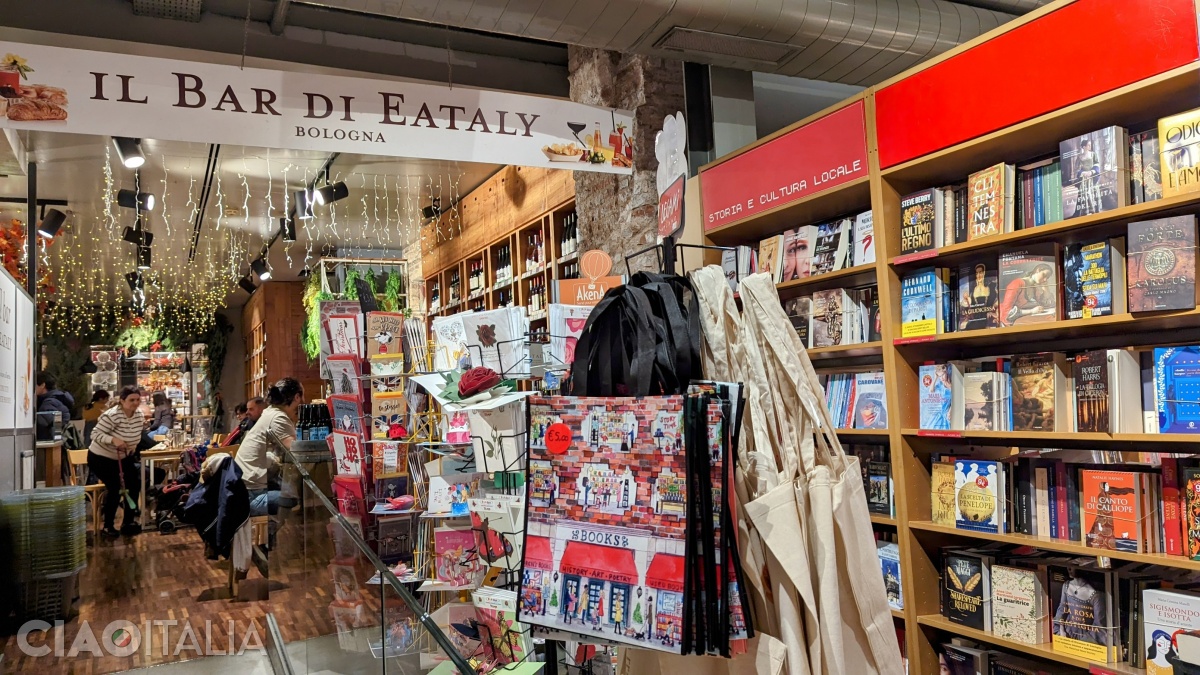
You'll also come across the beautiful Coop Ambasciatori bookstore, which houses Eataly, blending books with gourmet food.
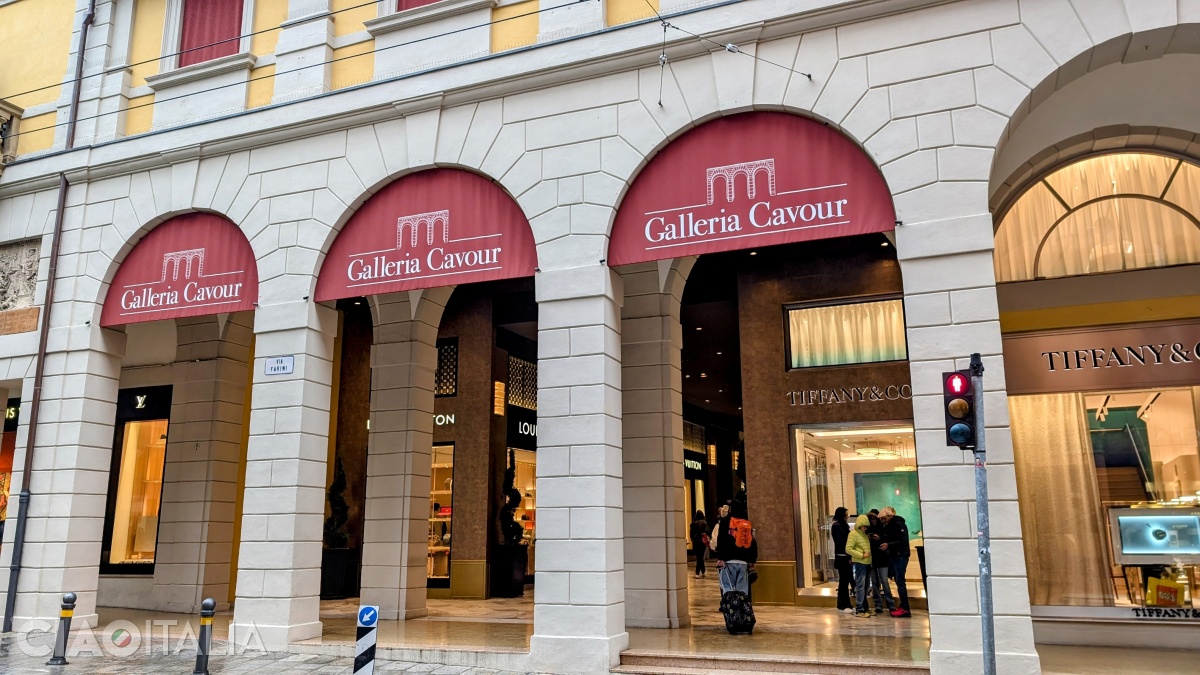
Also, in the Quadrilatero is Galleria Cavour, the perfect destination for luxury brand lovers (especially those for whom money is not an issue).
8. Basilica Santo Stefano
The Santo Stefano Complex is another must-see in Bologna, as it is the best-preserved and most interesting Romanesque-style monument in the city.
It is an unusual religious complex, originally made up of seven churches, of which only four remain today. The overall idea is believed to have come from Bishop Petronius, who, after a journey to the Holy Land in the 5th century, wanted to build something in Bologna resembling the sacred places of Jerusalem.
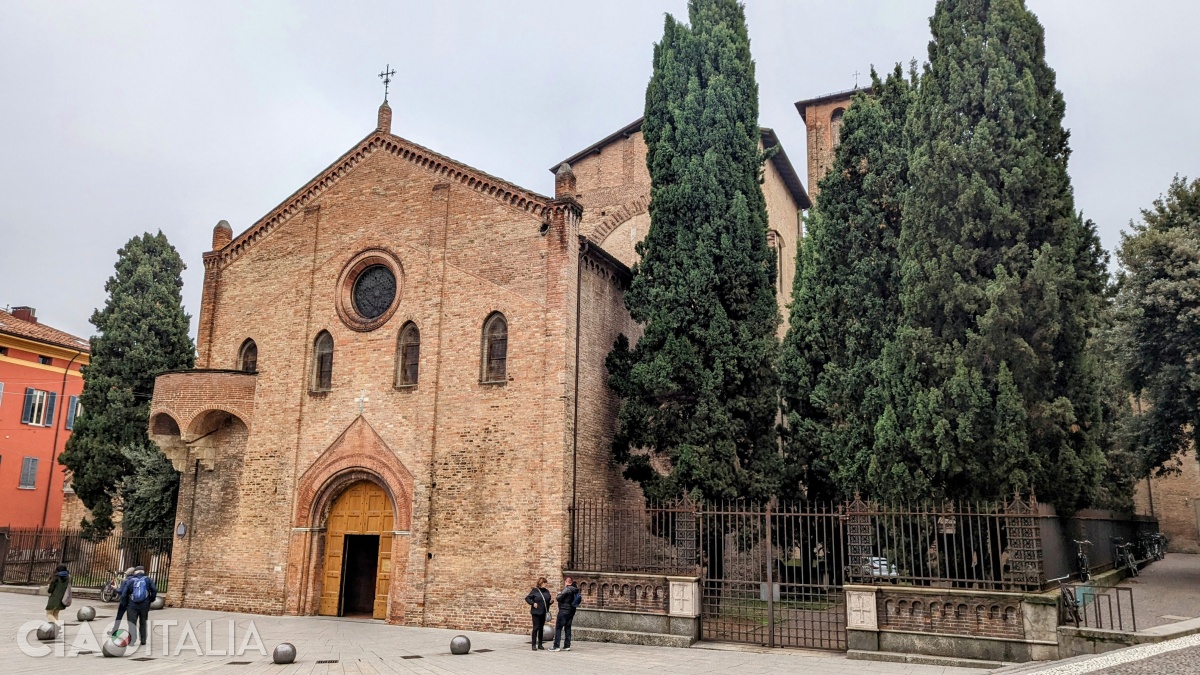
Basilica di Santo Stefano
Opening Hours:
- Monday: closed (only the Basilica is open, not the other monuments)
- Tuesday-Friday: 9:30 AM - 12.30 PM, 2.30 PM - 7 PM
- Saturday: 9:30 AM - 12:30 PM, 2:30 PM - 7:30 PM
- Sunday: 9:30 AM - 12:30 PM, 3:00 PM - 7:30 PM
Ticket Prices:
- free admission
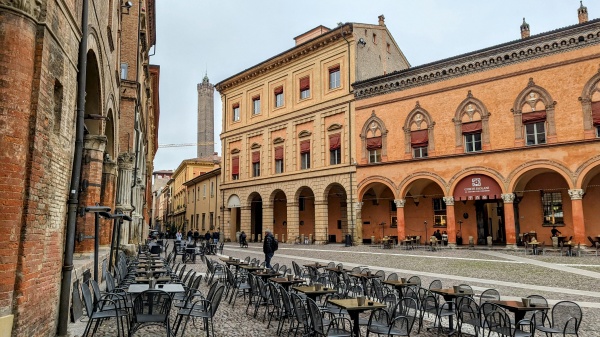
The Santo Stefano Complex is situated in Piazza Santo Stefano, a beautiful square filled with cafés and arcades. As you leave, have a look at the palace to the right of the church - it's famous for the terracotta frieze of heads running along the upper part of the building.
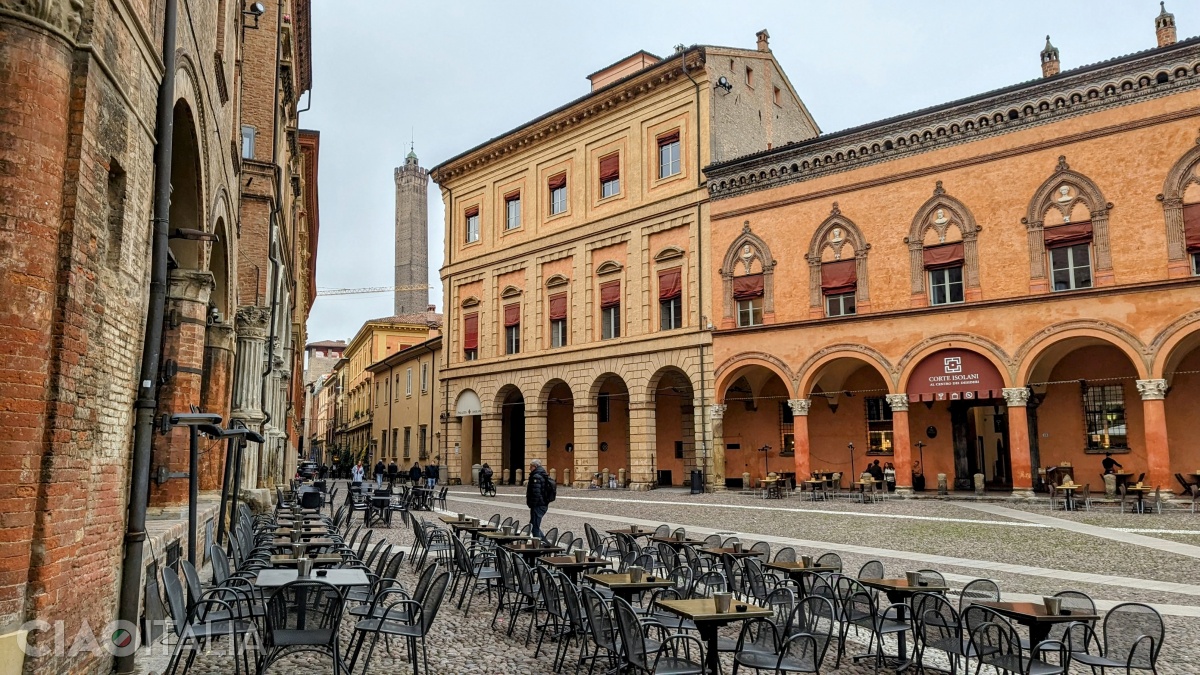
9. Strada Maggiore and Casa Isolani
Strada Maggiore is the most beautiful street in Bologna, lined with old houses and offering a view of the Asinelli Tower.
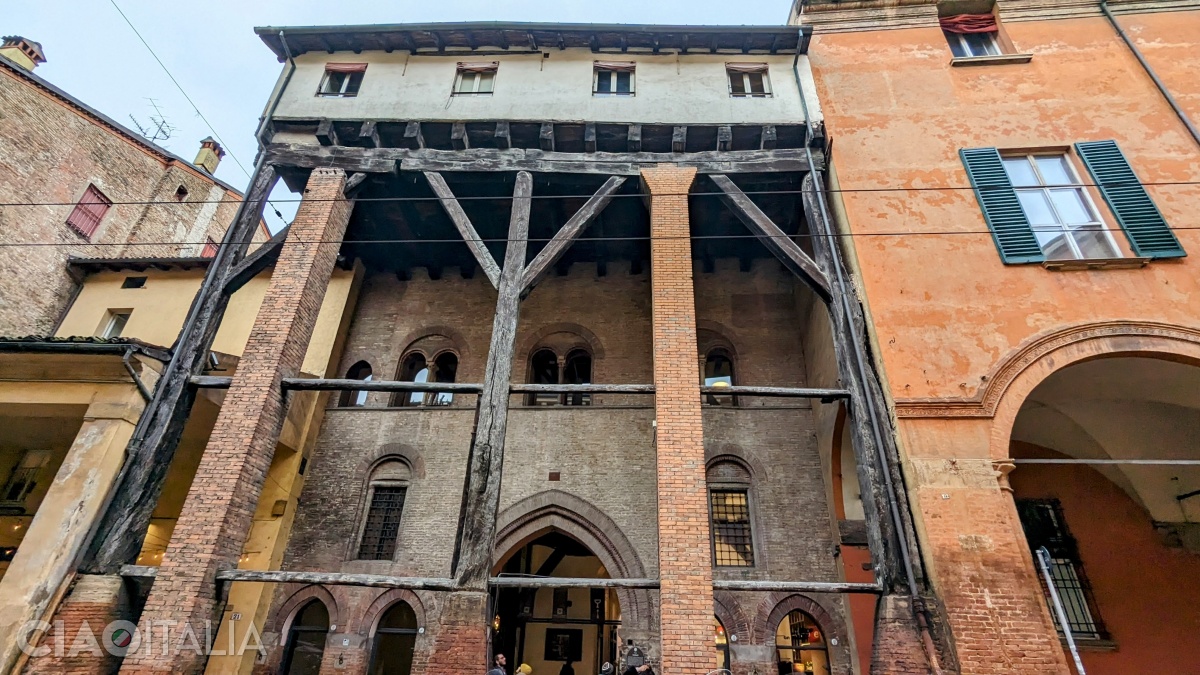
Casa Isolani, at no. 26, features one of the most famous porticoes in Bologna. It's a medieval wooden portico, around 9 meters high, built in the 13th century - a spectacular example of how the city's porticoes used to look.
What truly draws tourists to stop and look up in front of it is the legend surrounding the structure.
According to the story, a nobleman hired three archers to kill his unfaithful wife. The beautiful young woman appeared naked at the window, and the archers, distracted by her charms, missed their target. Instead of hitting her, the arrows ended up embedded in the wooden ceiling of the house’s portico.
A less romantic theory suggests that a worker playfully stuck them there during a 19th-century restoration.
Either way, the arrows are almost impossible to spot, blending in with the dark wooden ceiling- or perhaps they’re no longer even there. But the legend continues to capture the imagination of those passing by.
10. Basilica San Domenico
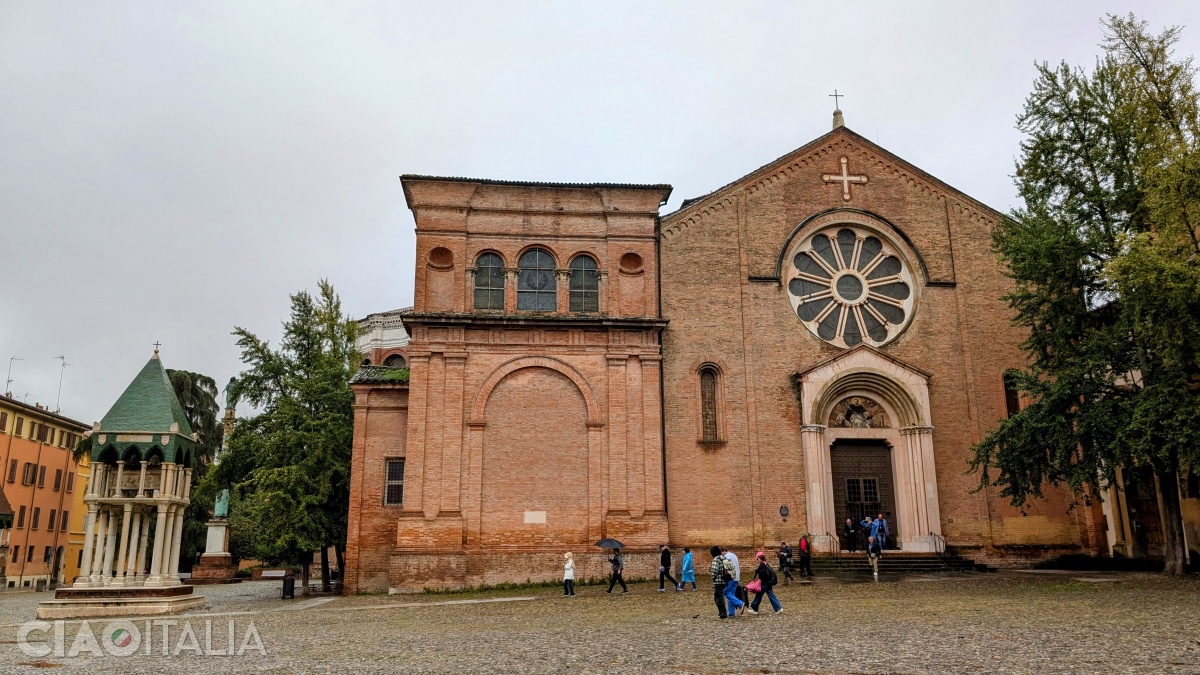
The grand Dominican church of San Domenico, dating from the 13th century, bears the marks of Michelangelo and Mozart's time in Bologna, as well as works by other renowned artists.
In the square in front of the church stands a column topped with a statue of St. Dominic, the church's patron. A bit farther back is the column with the statue of the Virgin Mary, erected in 1630 by the famous artist Guido Reni as an expression of gratitude for saving the population from the plague epidemic.
The funerary monument on the left, featuring a suspended sarcophagus, belongs to Rolandino de' Passegeri, a prestigious notary from Bologna who died in the year 1300.
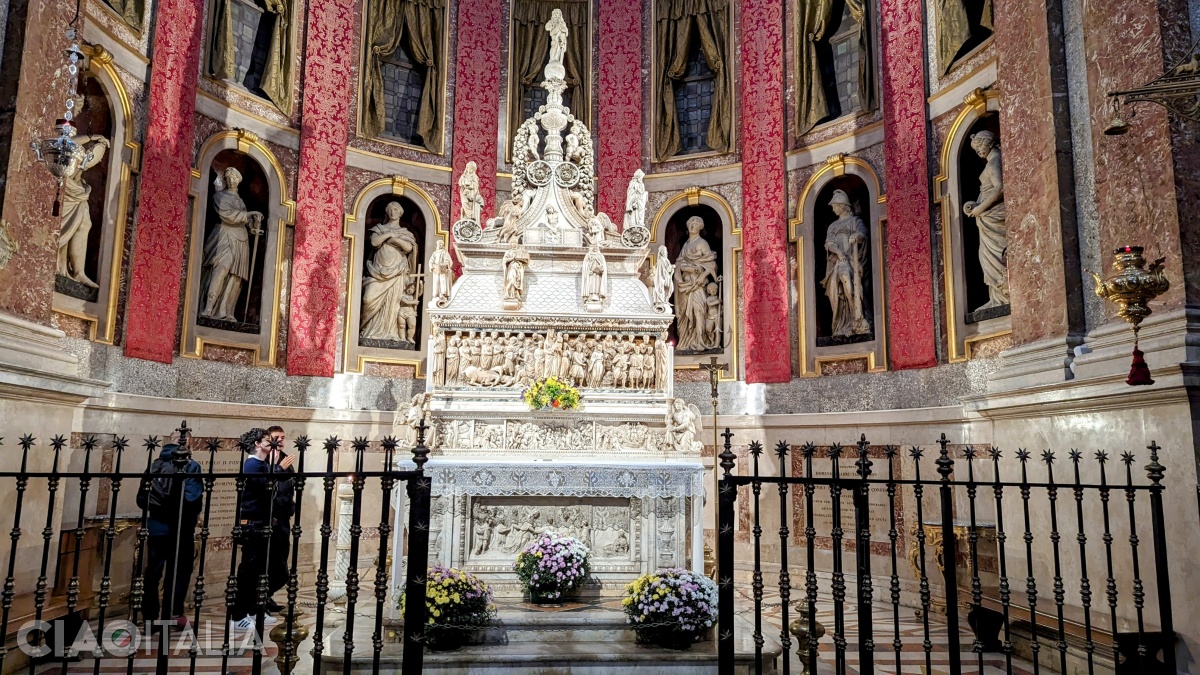
The most important work of art in the church can be found in the sixth chapel on the right. It is the Arca di San Domenico, the sarcophagus that holds the relics of Saint Dominic, who died in 1221. Meticulously sculpted, the sarcophagus is a masterpiece of medieval art, created over time by some of the most prominent artists of their era. The first to work on it, in 1267, were Arnolfo di Cambio (the architect of Santa Maria del Fiore Cathedral in Florence) and Nicola Pisano, both from Tuscany. Two centuries later, sculptures by Niccolò da Bari were added; from then on, he became known as Niccolò dell'Arca. Three of the statues on the monument were made by Michelangelo in his youth, in 1494: San Petronio (second from the top left), San Procolo (on the back side of the sarcophagus), and the angel holding a candlestick (on the right).
Also in the right nave, as you continue forward, you'll reach a chapel that houses a famous painting: "The Mystic Marriage of Saint Catherine", painted by Filippino Lippi in 1501.
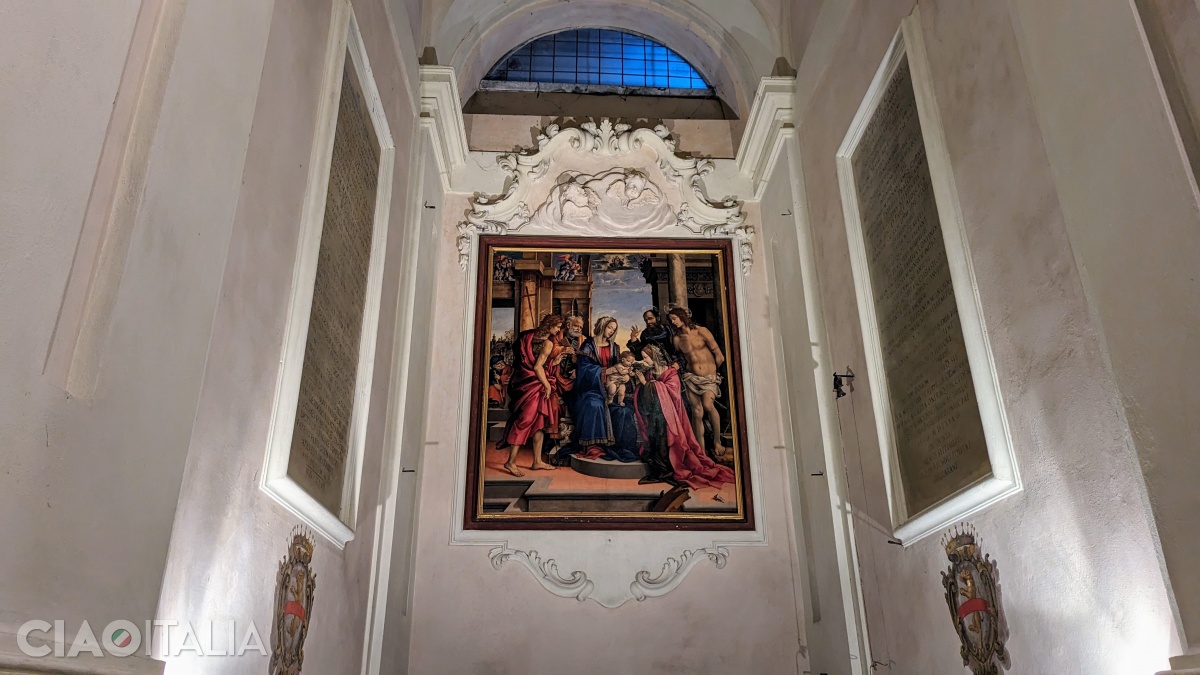
The church is also the burial place of King Enzo of Sardinia - the same king who was imprisoned in the palace that bears his name in Piazza del Nettuno. Also here is the organ used by Mozart during his studies in Bologna.
Basilica San Domenico
Opening Hours:
- Monday-Friday: 7:00 AM - 1:00 PM, 3:30 PM - 8:00 PM
- Saturday: 7:15 AM - 1:00 PM, 3:30 PM - 7:30 PM
- Sunday: 7:55 AM - 12:30 PM, 3:30 PM - 7:00 PM
Ticket Prices:
- free admission
11. The porticoes of Bologna
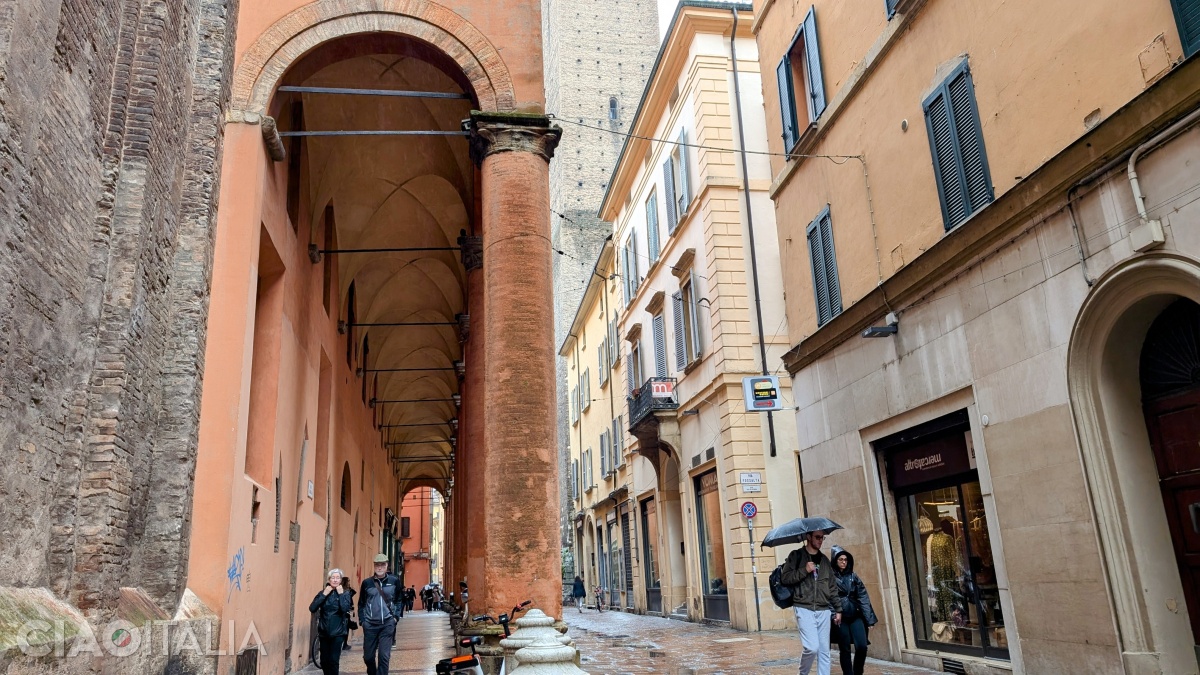
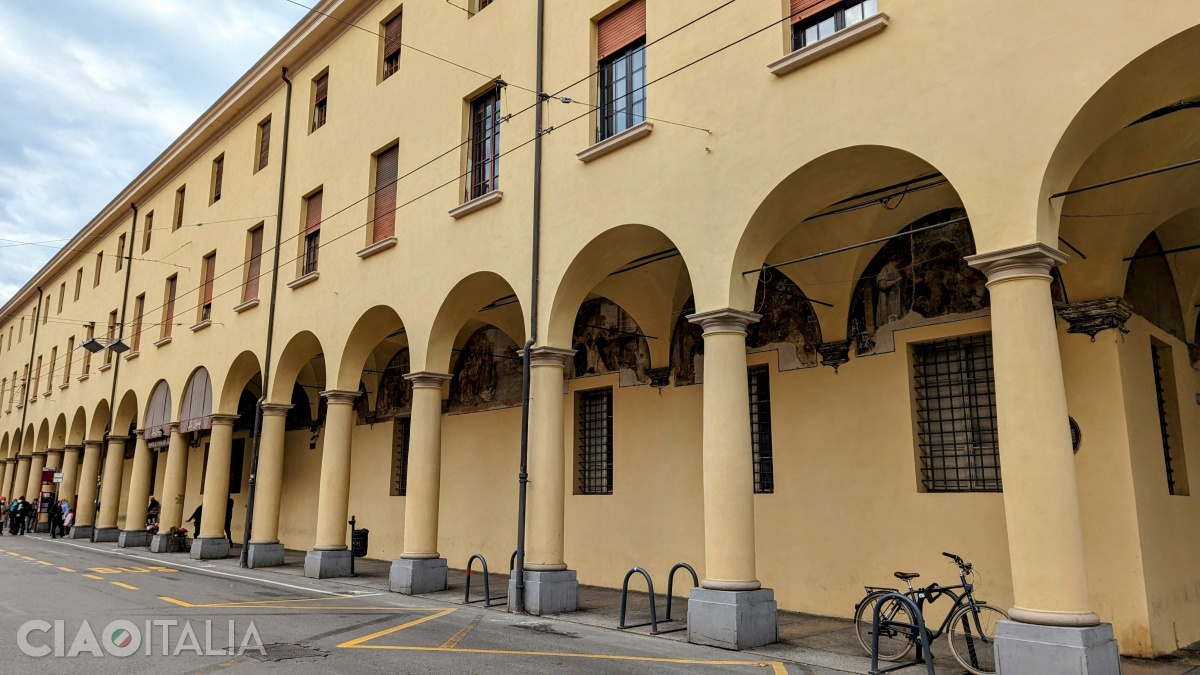
The porticoes of Bologna are famous and are listed as a UNESCO World Heritage Site. There are over 60 km of arcaded galleries (including those outside the city center), built starting with the 12th century. They are either made of wood, brick, stone, or more recently, concrete. Bologna is the city with the most porticoes in Europe, making it very walking-friendly - either on rainy days or during hot summer days.
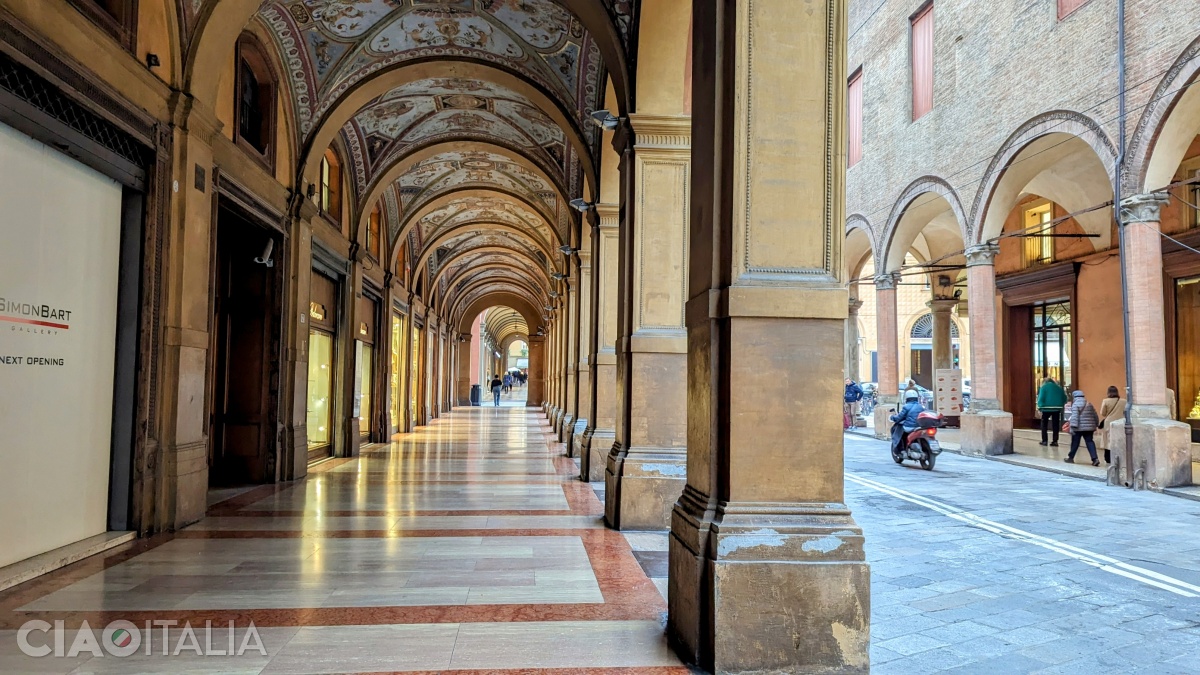
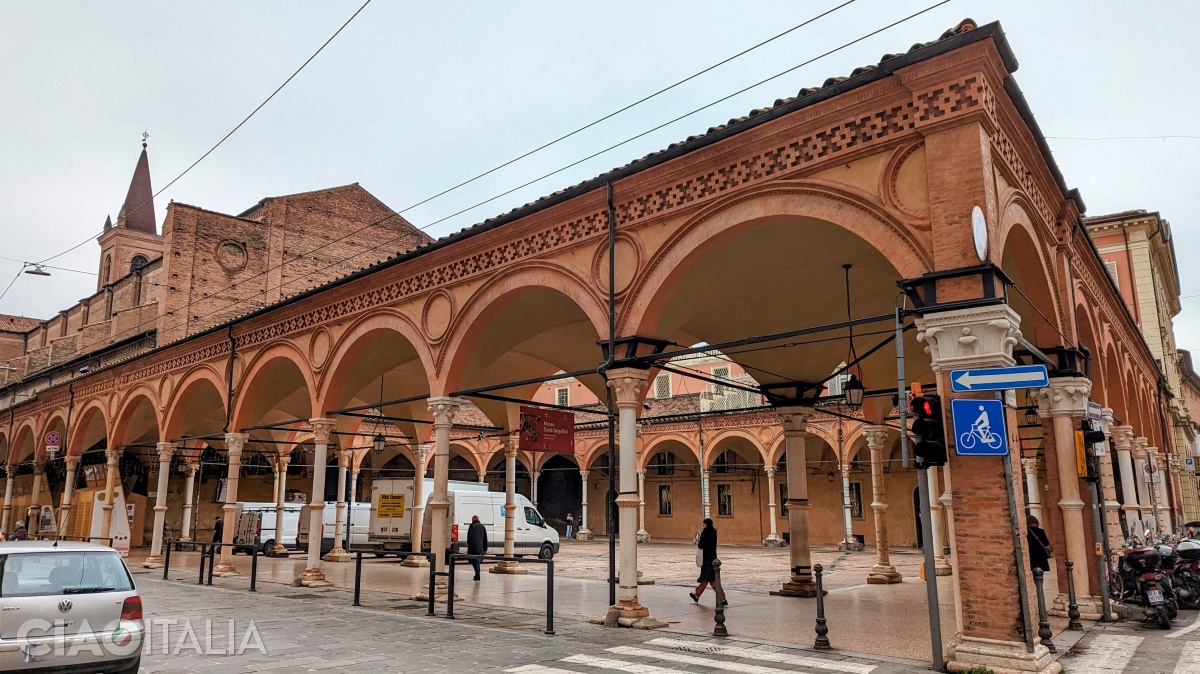
Among the central porticoes, the one at the Archbishop's Palace on Via Altabella is the tallest (10 meters high), while the portico of the Church of Santa Maria dei Servi is the longest, stretching across multiple sides. Also interesting is the portico of the former San Francesco monastery.
12. Strazzaroli Sky Experience
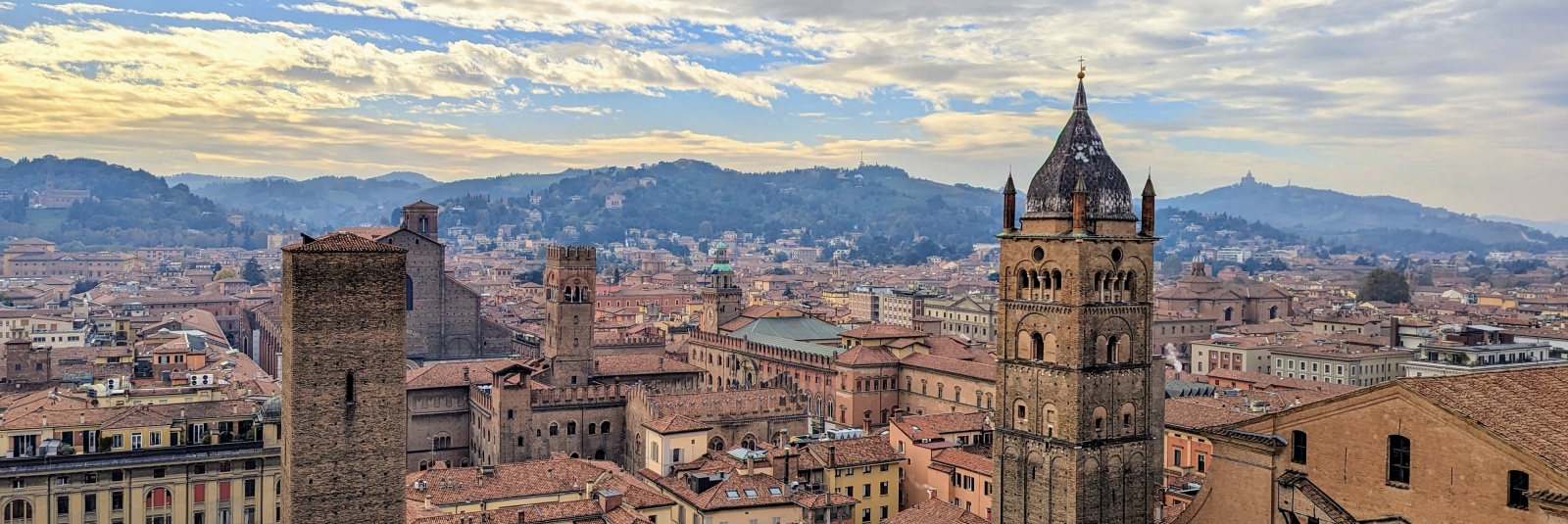
Since 2026, the Succede Solo Association of Bologna has replaced the possibility of climbing the Prendiparte Tower with climbing the panoramic terrace of the Strazzaroli Palace.
Strazzaroli Sky Experience
Opening Hours (departures are every hour):
- Visits will resume in September 2026.
Ticket Prices:
- Adults: €10
- Children 7-17 years: €8
- Children under 6: free
13. Cathedral of San Pietro
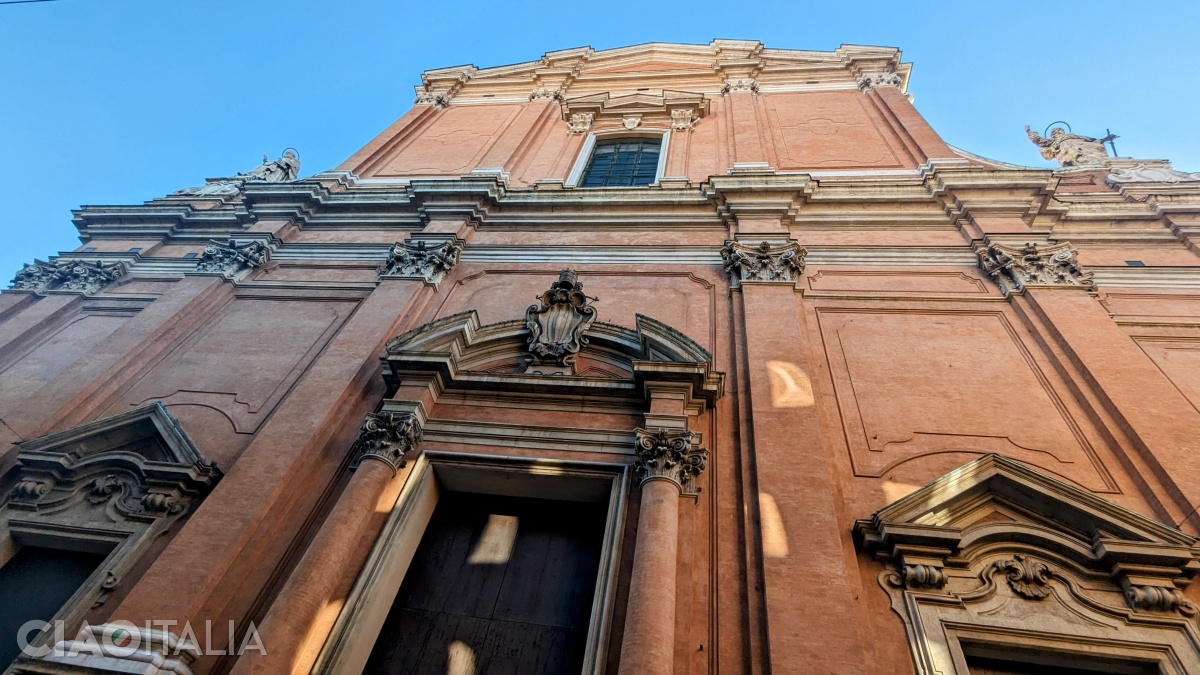
The Cathedral of San Pietro (Bologna's Duomo) is not particularly impressive, especially when compared to the Basilica of San Petronio. Although it is an old structure, dating back to the 10th-11th century, its current Baroque form dates from the 18th century, when the church was remodeled.
On the façade, above the entrance, is the coat of arms of Pope Benedict XIV, who ordered the church's reconstruction. Above that, you'll see the statues of St. Peter (to whom the church is dedicated) on the left, and St. Paul on the right.
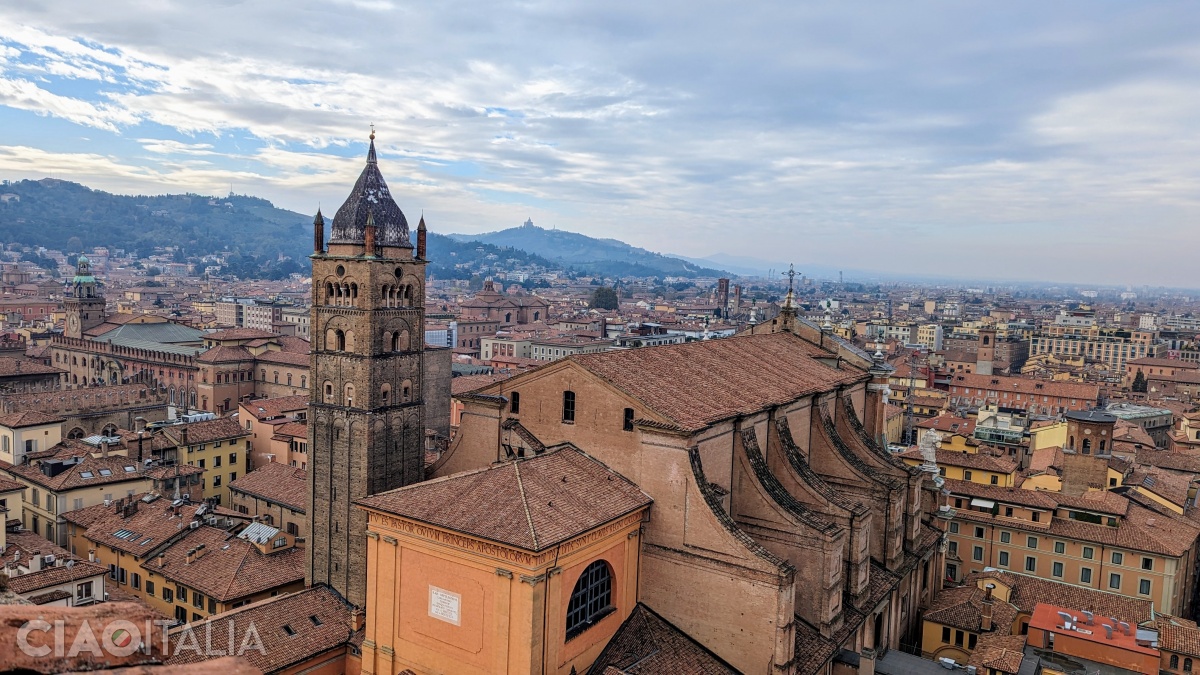
However, the Cathedral of San Pietro has a remarkable bell tower that deserves mention among Bologna's tourist attractions (it's only open on Saturdays and Sundays). The tower stands 70 meters tall, making it the second tallest in the city. Actually, it is a double tower: inside the current 12th-century structure exists an older, smaller tower dating back to the 10th century.
San Pietro Cathedral Tower
Opening Hours:
- Saturday and Sunday, 2:00 PM - 5:00 PM
Ticket Prices:
- €5 (includes the crypt and the Cathedral's Treasure Museum)
- you can also book tickets online
14. Inscriptions beneath the Scappi Tower
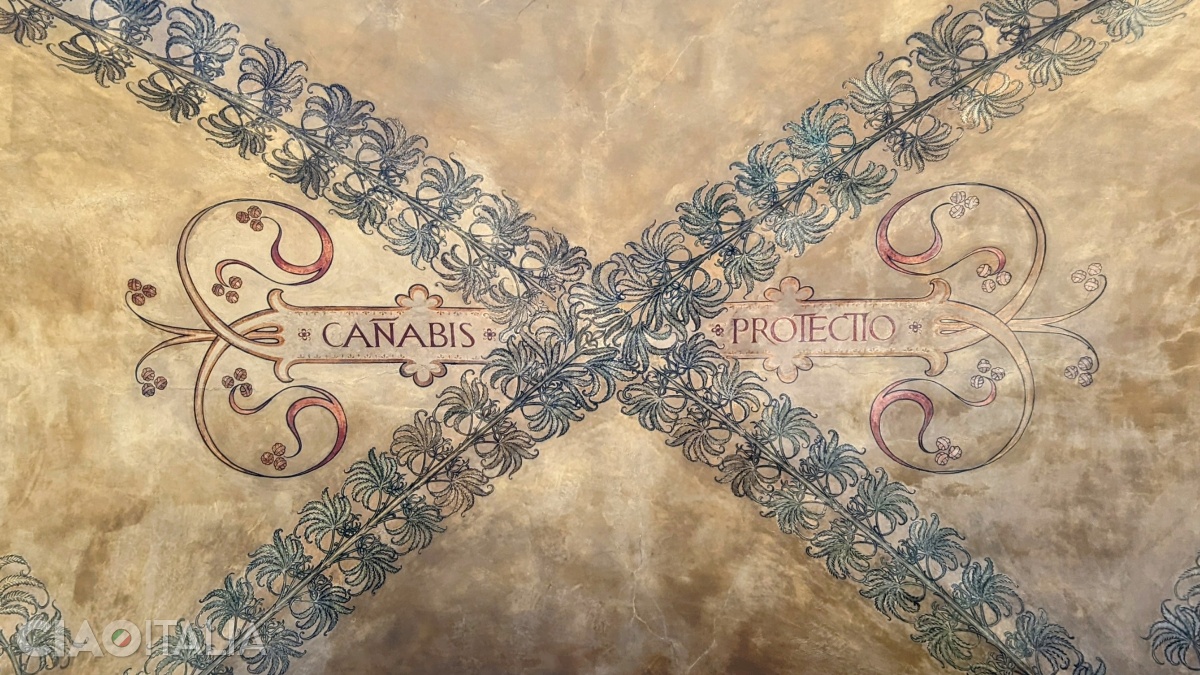
On Via Indipendenza, just before reaching Via Rizzoli, there is a complex of buildings topped by the Scappi Tower. On the vault of their portico are several frescoes bearing the inscriptions: Panis vita ("Bread is life"), Canabis protection ("Cannabis is protection"), and Vinum laetitia ("Wine is joy").
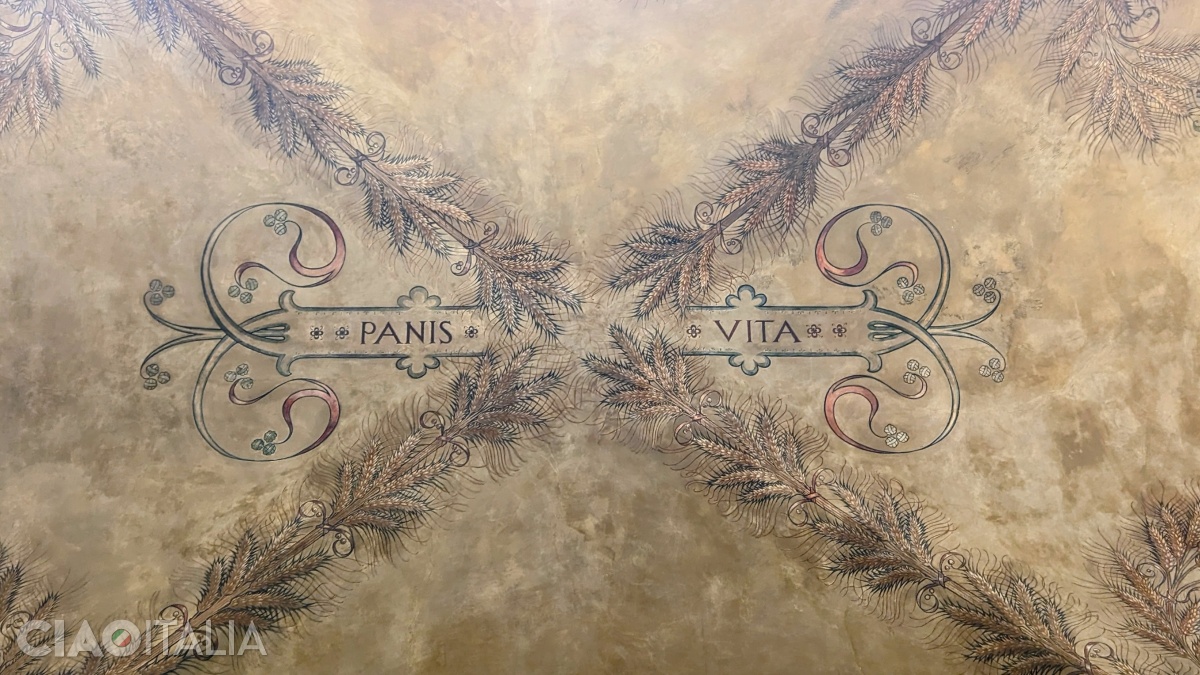
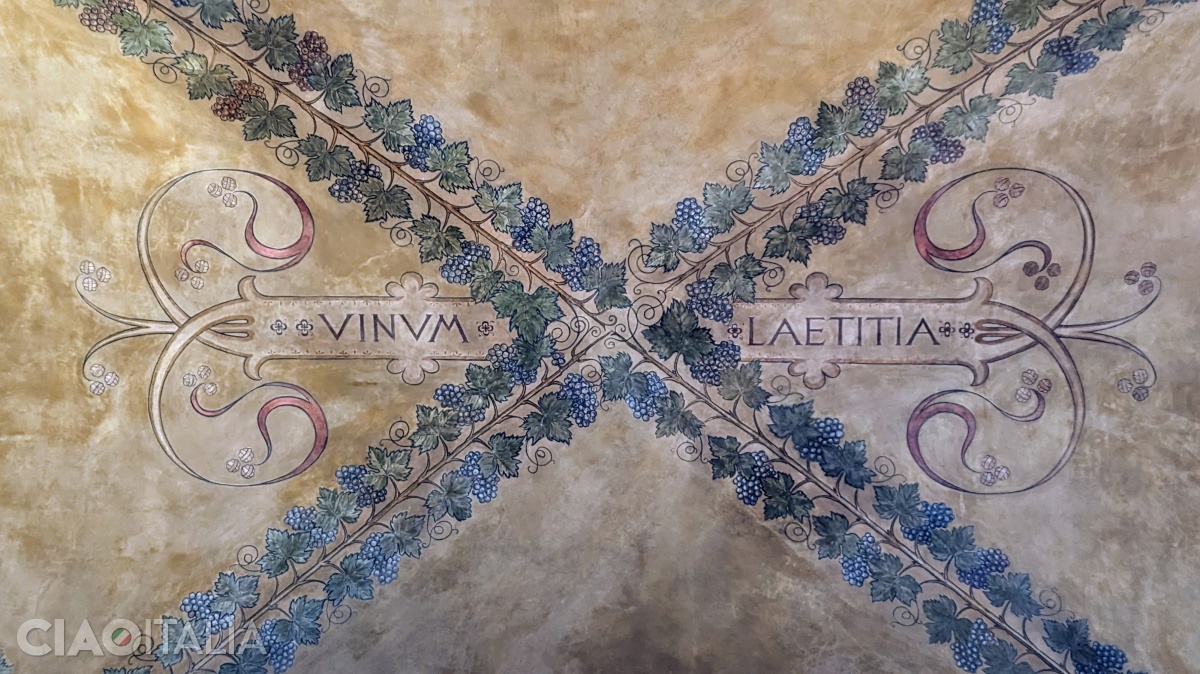
Although the inscription about cannabis is interpreted by some as referring to the healing effects of hemp, it more likely alludes to the hemp trade, which once flourished and brought wealth - and therefore protection - to the city.
15. Church of Santa Maria della Vita
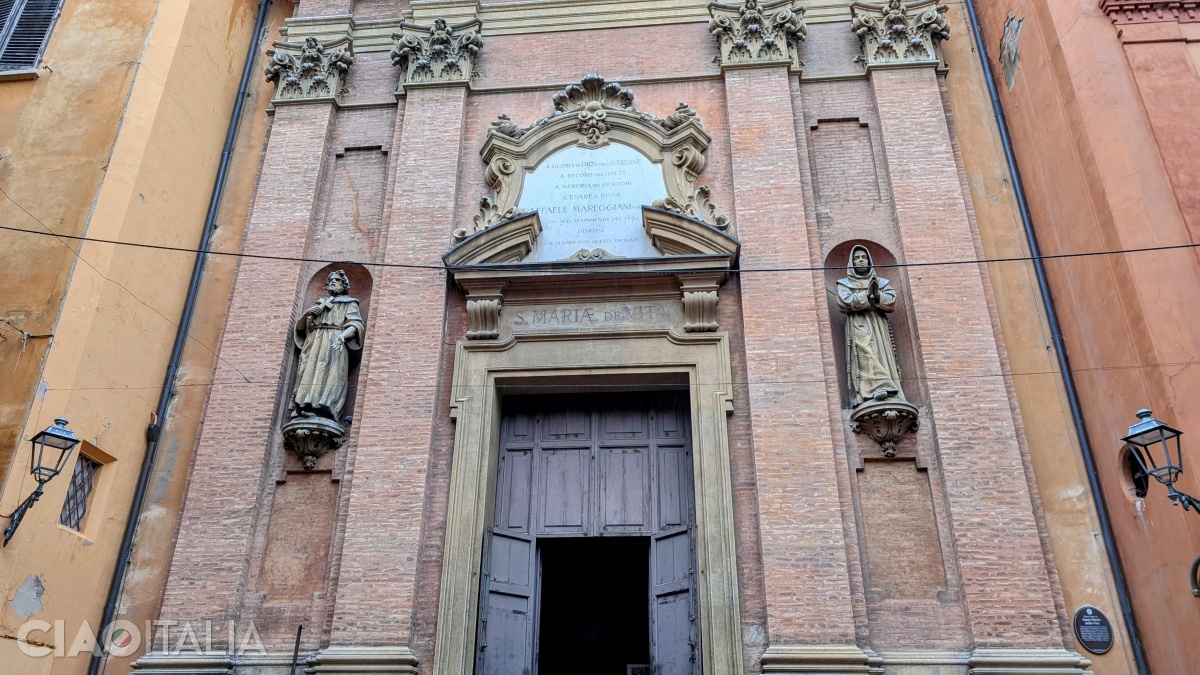
The Church of Santa Maria della Vita, built in the 13th century, is the most important example of Baroque style in Bologna. It's well worth a visit for a famous terracotta sculpture preserved inside. The work was created in the 15th century by Niccolò dell’Arca and is called Il Compianto del Cristo morto ("The Lamentation over the Dead Christ").
Made in 1435, Il Compianto is considered one of the masterpieces of Italian sculpture. It is also one of the most expressive - writer Gabriele d'Annunzio called it "a scream in stone".
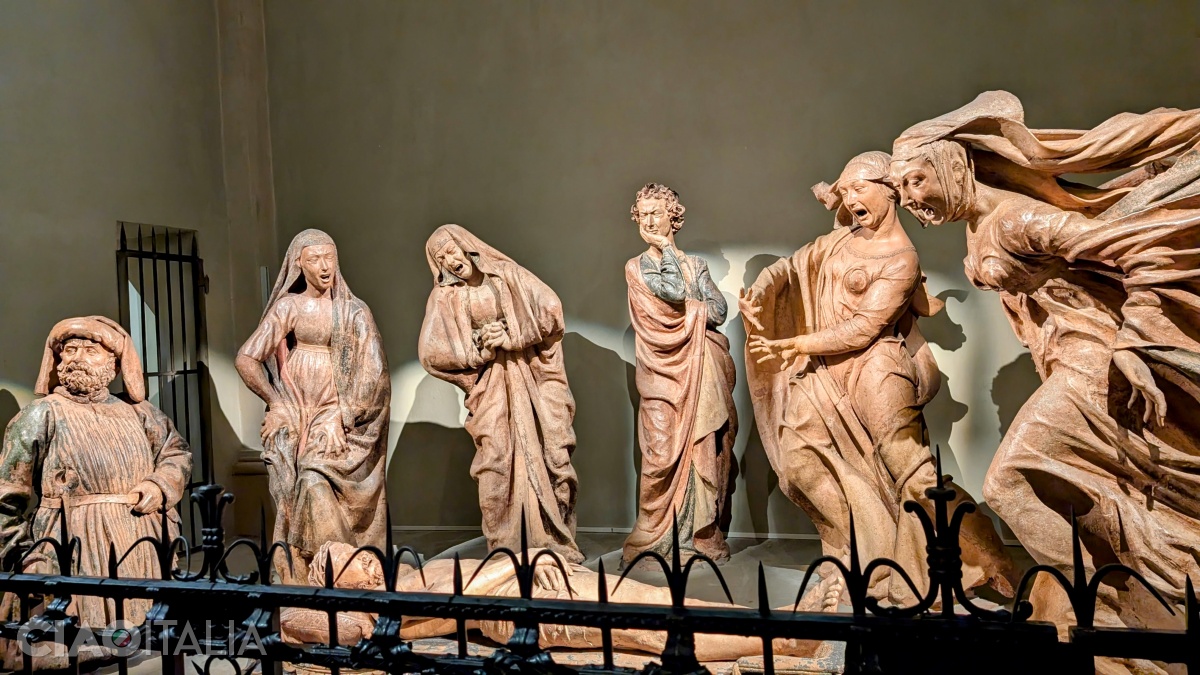
It is said that Niccolò dell'Arca was able to depict such realistic scenes because he lived at the Santa Maria della Vita monastery at the time, next to a hospital, and was thus exposed daily to scenes of suffering.
The hospital built by the monastic order is now a museum (Oratorio e Museo della Sanità e dell'Assistenza) and is located next to the church.
Church of Santa Maria della Vita
Opening Hours:
- Monday-Sunday: 10:00 AM - 6:30 PM
- last entry at 6:00 PM
Ticket Prices:
- Adults: €8
- Students (under 26): €5
- Children (5-18 years):€5
- Children under 5: free
16. Church of Santa Maria dei Servi
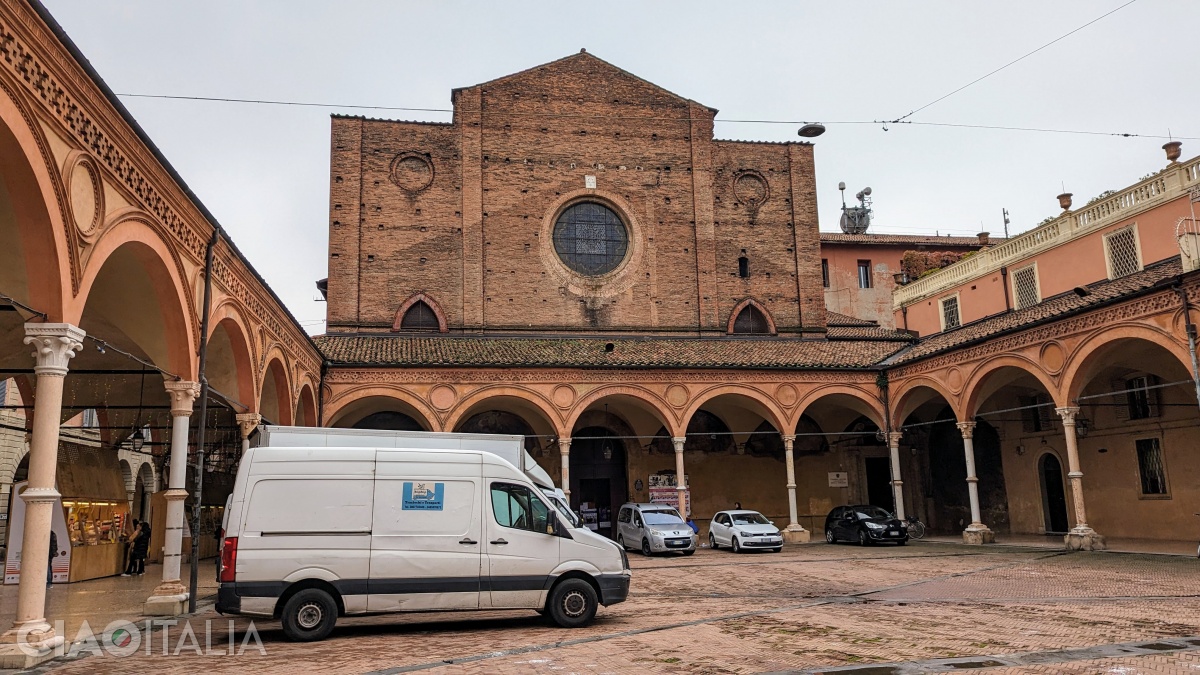
The Church of Santa Maria dei Servi is known for having the most complex portico in Bologna (Quadroportico). The church was built in 1343, and initially only one side had porticos: the one facing Strada Maggiore. Over time, more porticos were added until, in the 19th century, it took on its current appearance.
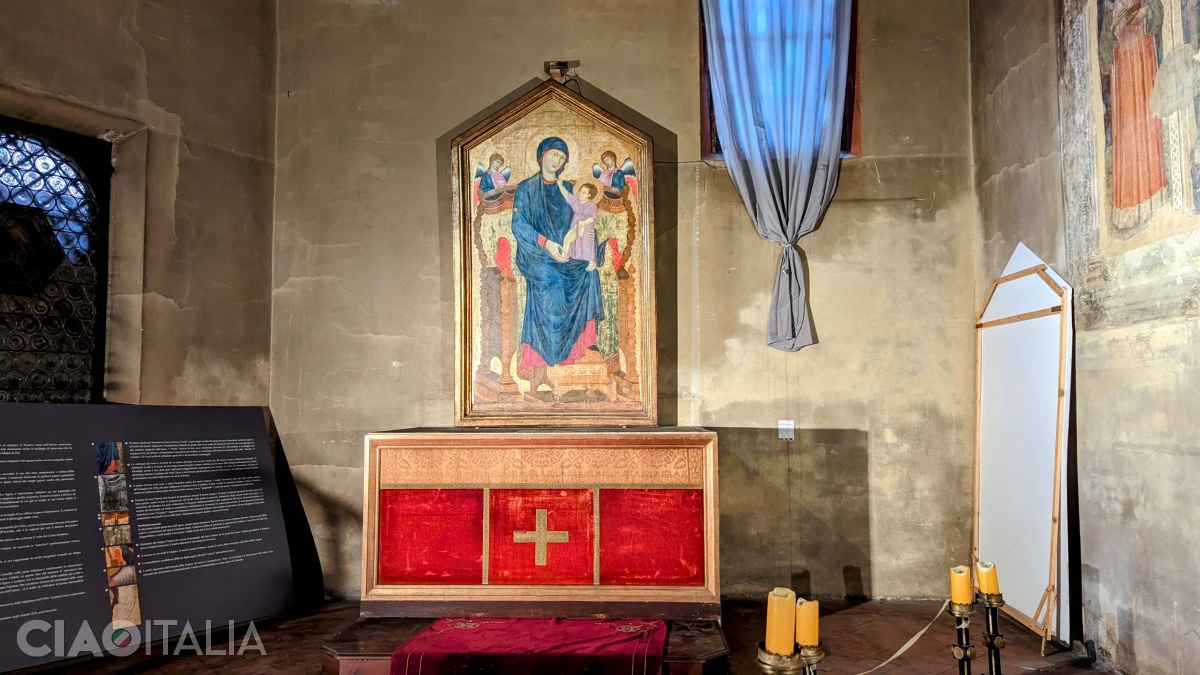
Inside the church, you can find the beautiful Maestà painting by Cimabue, as well as works by Giovanni da Modena (Madonna with Child), Guido Reni (Saint Charles Borromeo and Angels), and Guercino (Eternal Father).
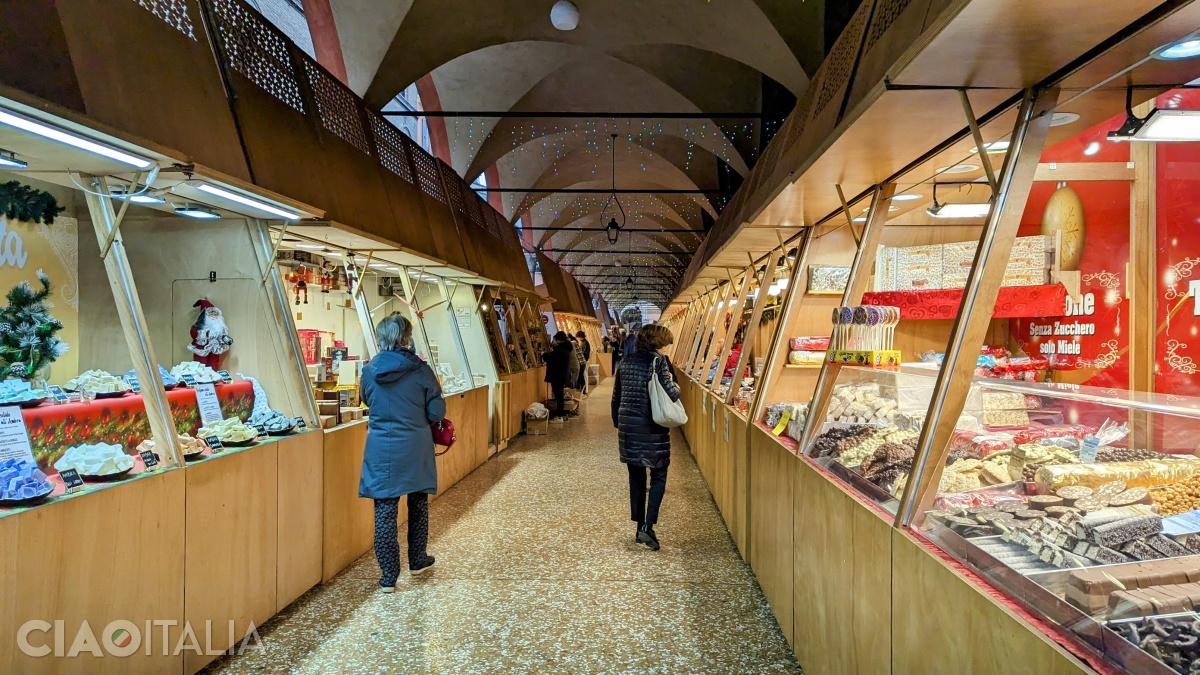
Under the portico facing Strada Maggiore, the traditional Saint Lucia market is held every year, lasting from early November until just after Christmas. At the stalls beneath the arches, you will find traditional sweets, gifts, and holiday decorations.
Church of Santa Maria dei Servi
Opening Hours:
- Monday: 8:30 AM-12:00 PM
- Tuesday-Sunday: 8:30 AM-12:00 PM, 4:00 PM-7:00 PM
Ticket Prices:
- free (to illuminate the Maestà painting, you will need to insert a coin)
17. Church of San Giacomo Maggiore and Oratory of Santa Cecilia
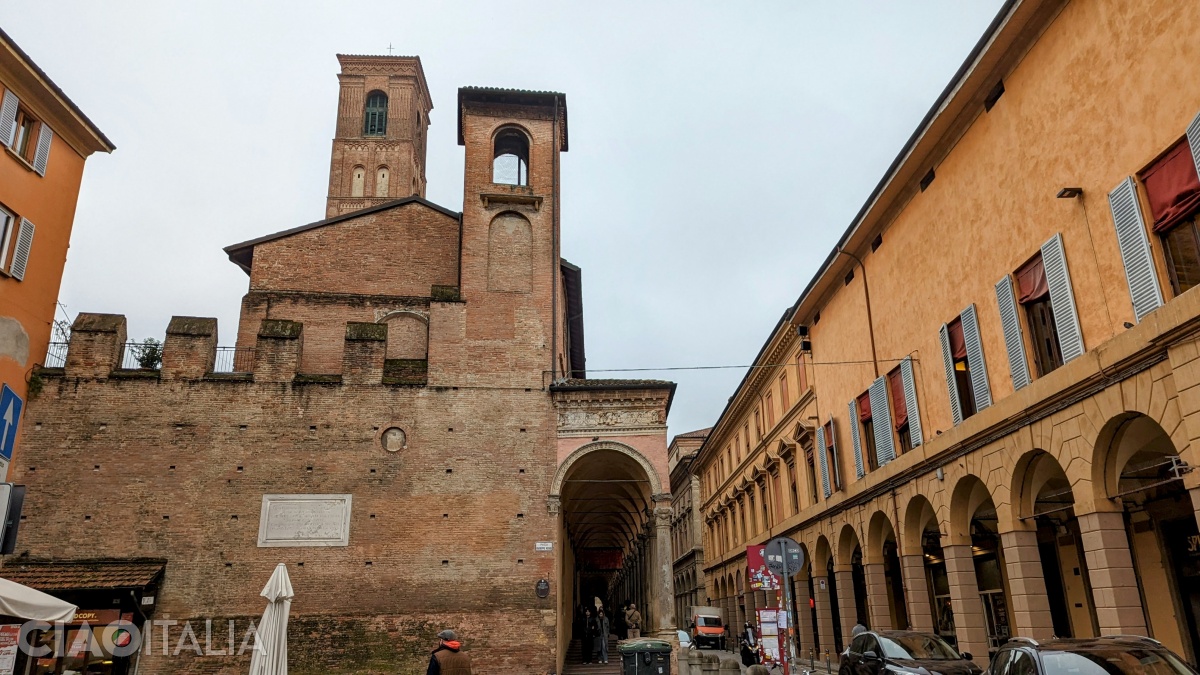
The Church of San Giacomo Maggiore was built in 1267 by Augustinian monks.
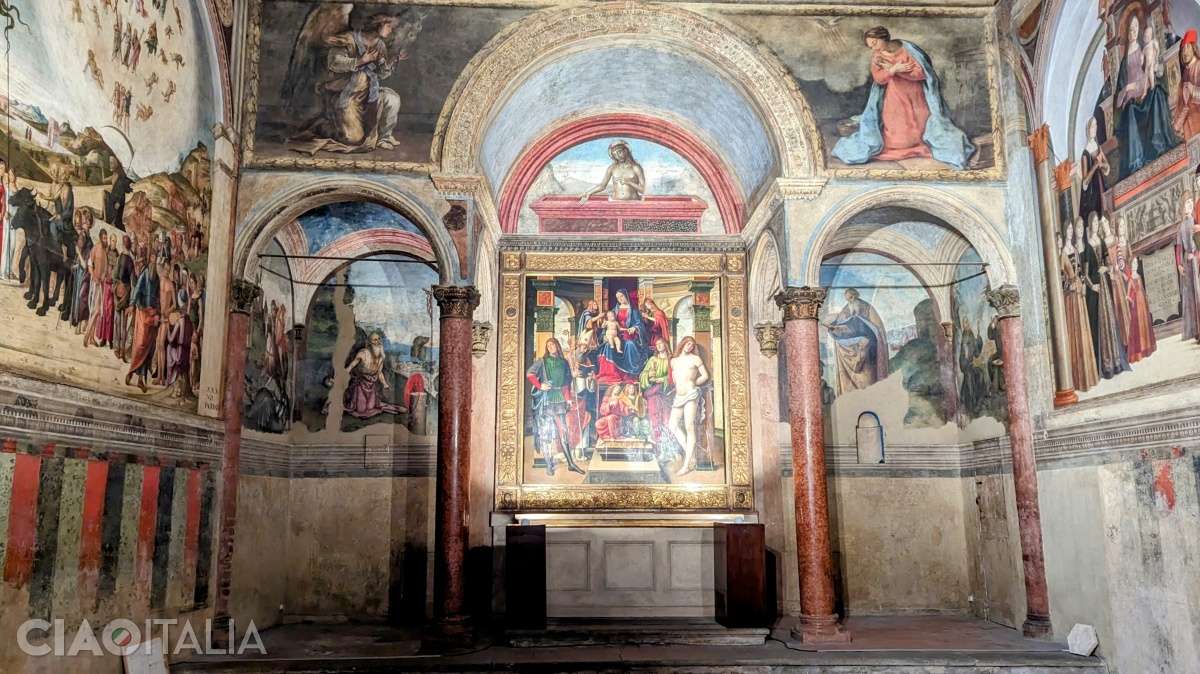
Inside, it's worth seeing the Bentivoglio Chapel, built in 1445 to serve as the mausoleum for the Bentivoglio family, who ruled Bologna. The chapel's altar was painted by Francesco Francia. The frescoes Apocalypse, Triumph of Death, and Madonna and the Saints (which also feature portraits of family members) were painted by Lorenzo Costa.
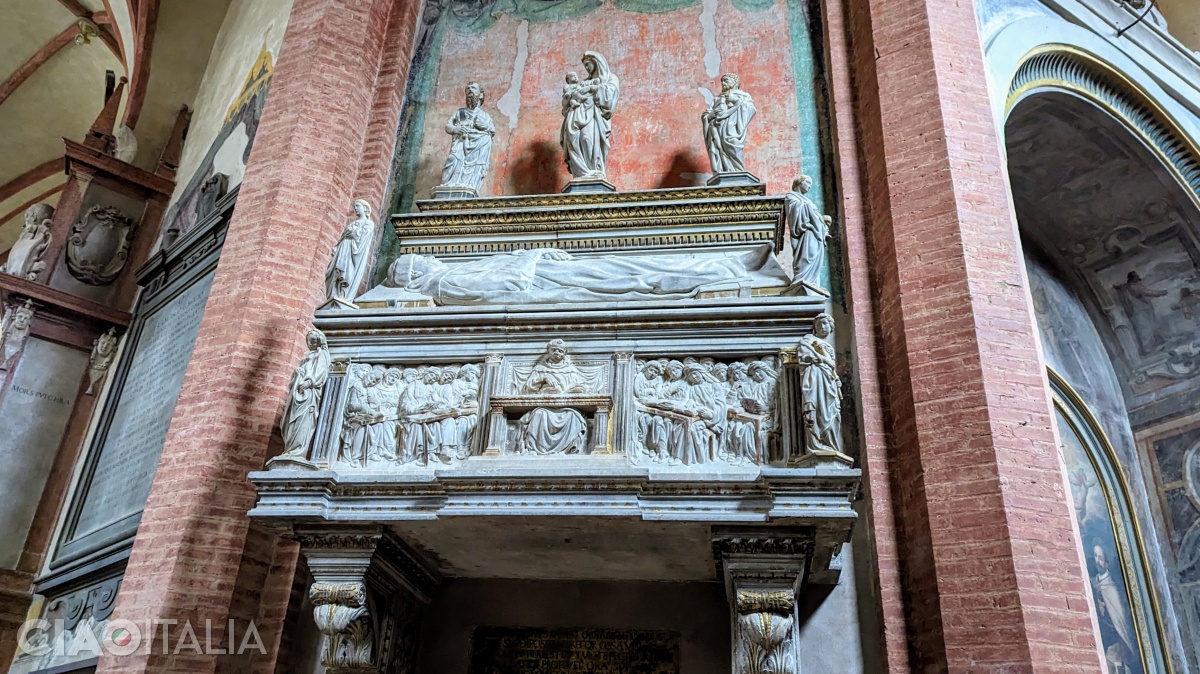
Opposite the chapel is the tomb of Anton Galeazzo Bentivoglio, whose sarcophagus was sculpted by Jacopo della Quercia in 1453, one of his last works.
As an extension of the church is the Oratory of Santa Cecilia, also called the "Sistine Chapel of Bologna". The frescoes and paintings inside date from 1506 and were created by Francesco Francia and Lorenzo Costa.
Church of San Giacomo Maggiore and Oratory of Santa Cecilia
Opening Hours:
Church of San Giacomo Maggiore:
- Monday-Friday: 8:00 AM - 12:30 PM, 3:30 PM - 6:00 PM
- Sunday: 9:30 AM - 12:30 pm, 3:30 PM - 6:00 PM
- duminică: 8:30 AM - 12:30 PM, 3:30 PM - 6:00 PM
Oratorio Santa Cecilia:
- Monday-Friday: 2:00 PM - 6:00 PM
- Saturday-Sunday: 10:00 AM - 1:00 PM, 2:00 PM - 6:00 PM
Ticket Prices:
- free
18. National Art Gallery (Pinacoteca Nazionale)
The Pinacoteca Nazionale is the most important art museum in Bologna.
The most valuable work in the gallery belongs to Raphael and is known as "The Ecstasy of Saint Cecilia" (1515). The painting depicts the saint, patroness of musicians, with musical instruments at her feet and holding an organ, which legend says she was the one to invent it.
Other important painters represented in the museum include Giotto (Maestà), Titian, El Greco, Tintoretto, Parmigianino (Madonna and Saints), Perugino, Giorgio Vasari, Guercino, Guido Reni (Pietà dei Mendicanti), Cima da Conegliano (Madonna), as well as local painters such as Simone de Crocefissi, Vitale da Bologna, and Francesco Francia.
The entrance ticket also includes access to the Palazzo Pepoli Campogrande.
Pinacoteca Nazionale
Opening Hours:
Pinacoteca:
- Monday: closed
- Tuesday to Sunday: 09:00 AM - 7:00 PM
Palazzo Pepoli Campogrande is currently closed for restoration. Reopening is scheduled for 2026.
Ticket Prices:
- Adults: €12
- 18-25 years: €2
- Under 18: free
19. Museo per la memoria di Ustica
The Museo per la memoria di Ustica was established in 2007 in memory of the victims of the 1980 aviation tragedy, when a plane departing from Bologna airport to Palermo crashed into the Tyrrhenian Sea near the island of Ustica.
Museo per la Memoria di Ustica
Opening Hours:
September 28, 2026 - June 26, 2027:
- Monday-Wednesday: Closed
- Thursday-Friday: 9:30 AM - 1:30 PM
- Saturday-Sunday: 10:00 AM - 6:30 PM
On Sunday, November 1, 2026, the museum will be open between 10:00 AM and 7:00 PM.
Ticket Prices:
- free
20. Basilica San Luca
When you walk through Bologna, it's impossible not to notice a building perched on one of the nearby hills. It is the Basilica of San Luca (Santuario della Madonna di San Luca), built in the 18th century in Baroque style, on the site of an older church.
The church is a pilgrimage site for the people of Bologna because it houses a famous icon of the Virgin Mary (Beata Vergine di San Luca), believed to be the first image of the Virgin painted by St. Luke the Evangelist.
Legend has it that a Greek monk on pilgrimage to Constantinople received the icon from the priests of the Basilica of Hagia Sophia, with the task of taking it to Italy, to a height called della Guardia. From Rome, he learned that this place was actually in Bologna. Upon arrival, he was welcomed by the authorities who took the icon to Colle della Guardia, 300 meters high, where it is kept to these days.
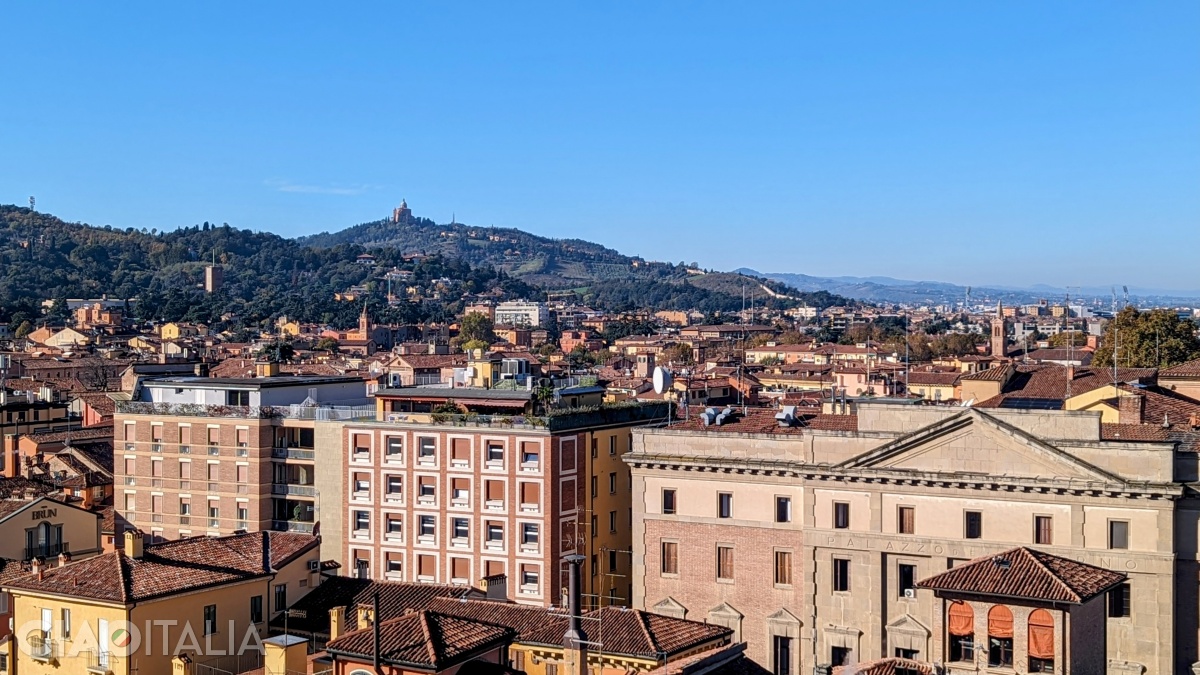
In 1443, when prolonged rains threatened to destroy the city's grain harvest, the icon was brought down to Bologna, and the rains stopped. Since then, every year it is carried down into the city during a procession that takes place in the week of the Ascension. The icon stays for a week at the San Pietro Cathedral. Only two exceptions have been made over time: in 1849, when the city was occupied by the Austrians, and in 1944, during World War II.
Besides the icon, the church also houses works by Guercino and Guido Reni.
You can also visit the crypt, which was recently reopened, and climb up to the church's dome for an even higher panoramic view.
You can reach the Basilica of San Luca by walking up from Porta Saragozza, a stroll that takes about an hour and follows the longest portico in the world - 3.8 km long, with 15 chapels and 666 arches. It was built between 1674 and 1721, and the number is no coincidence - it symbolizes the Church's victory over the devil (from above, the line of porticoes resembles a serpent, crushed by the Church).
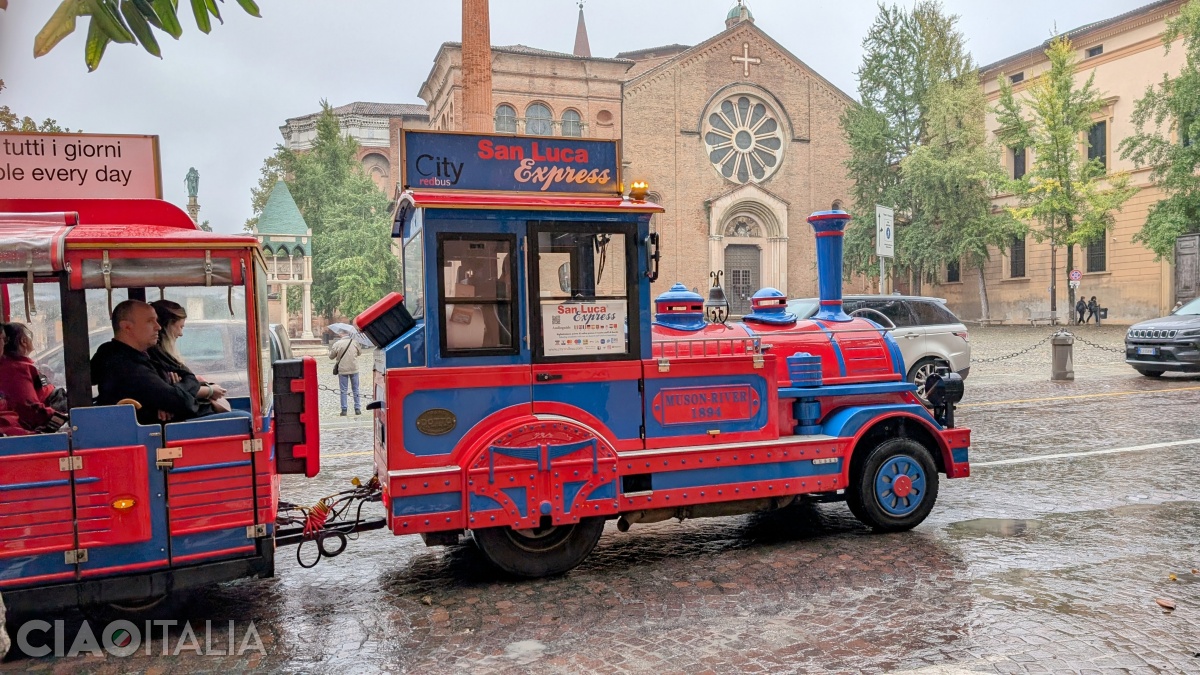
For those not up for the walk, there’s a more comfortable option: the San Luca Express tourist train, which departs from Piazza Maggiore.
Superstitions have not spared this site either - it's said that students shouldn't walk the portico if they have an important exam coming up, and that couples who walk the path together are destined to break up.
From the hill where the church stands, you'll have a beautiful view of the Emilia Romagna countryside.
Basilica di San Luca
Opening Hours:
Church:
- Monday-Sunday: 7:00 AM - 6:00 PM
Sky Experience:
- Monday-Saturday: 10:30 AM - 1:30 PM, 2:30 PM - 6:30 PM,
- Sunday: 12:00 PM - 1:30 PM, 2:30 PM - 6:30 PM
Ticket Prices:
Church:
- free
Sky Experience:
- adult: €5
- 10-18 years: €3
- over 65: €3
- children under 10: Free
21. Grand Tour Italia Theme Park
Grand Tour Italia is a culinary-themed park located about 30 minutes from the center of Bologna. The park opened on September 5, 2024, on the former site of FICO Eataly World. Entry is free, and you can get there by taking one of the buses 35, 55, 20 or 20N operated by TPER.
Inside, you'll find a variety of restaurants, Italian food products for sale, and different workshops you can join - such as pasta-making classes. Children can enjoy themselves at the Luna Farm amusement park.
Grand Tour Italia
Opening Hours:
Grand Tour Italia:
- Thursday-Sunday: 11:00 AM - 11.00 PM
- Saturday: 11:00 AM - 12:00 AM
Luna Farm Park:
- September 26 - December 27, 2026: Saturday & Sunday, 12:00 PM - 8:00 PM
- December 28-30, 2026: 12:00 PM - 8:00 PM
- January 1, 2027: 2:00 PM - 8:00 PM
Ticket Prices:
Grand Tour Italia:
- free admission
- pasta making class: €18
Luna Farm Park:
- Online ticket: €13
- On spot ticket: €15
- Special Days: €16
- Super Special Days: €25