What to Do in Bologna for a Day
Bologna, the capital of the Emilia-Romagna region, is a city that deserves a visit of several days. However, if you only have one day available (perhaps because you're traveling from Bologna to Florence or for other reasons), here's a suggested one-day itinerary that will take you to the main points of interest in the city.
One Day Itinerary in Bologna
Central Station - Piazza delle Medaglie d'Oro - Piazza XX Settembre - Montagnola Park - Piazza VIII Agosto - Via dell'Indipendenza - Via Piella (Canale delle Moline) - Prendiparte Tower - Altabella Tower - San Pietro Cathedral - Palazzina Majani - Inscriptions beneath Torre Scappi - Piazza del Nettuno - Piazza Maggiore - Archiginnasio Palace - Basilica of San Domenico - Quadrilatero - Basilica of Santo Stefano - Isolani House - Strada Maggiore - The Two Towers (Garisenda, Asinelli) - Via Rizzoli
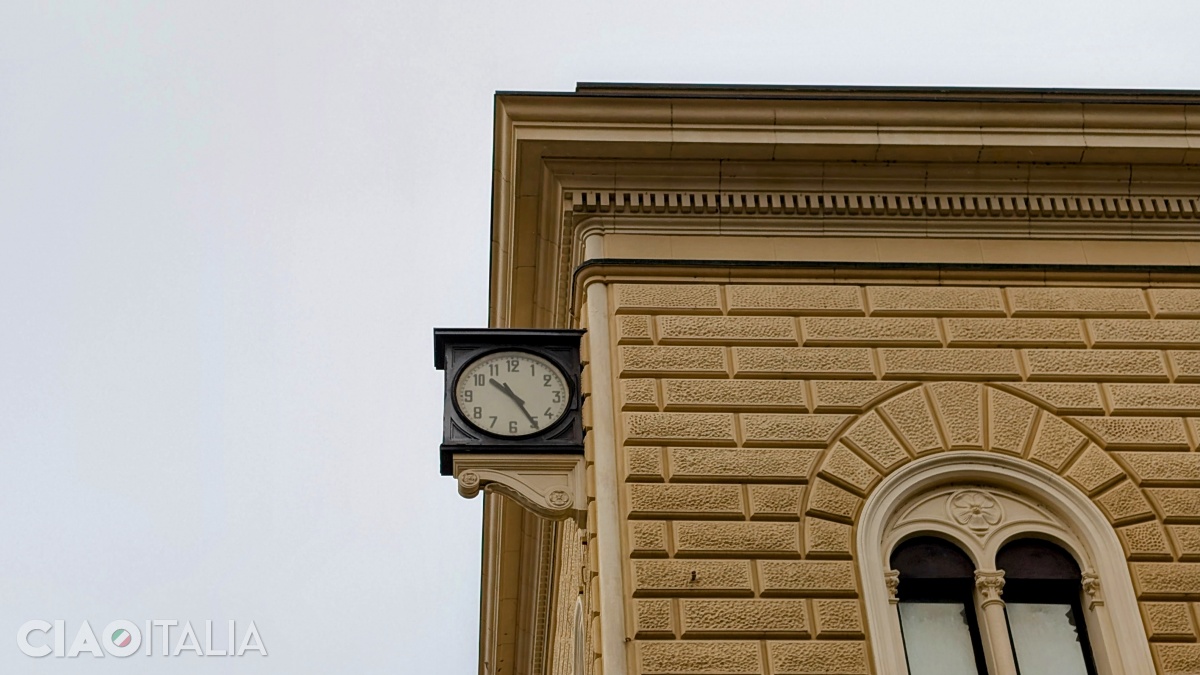
We begin the tour at the Central Station (Stazione Centrale). Before heading toward the city center, take a moment to stop in the square in front of the station (Piazza delle Medaglie d'Oro) and look at the clock on the building. It shows 10:25 - and it never changes. It marks the moment when, on August 2, 1980, a bomb exploded in the station, killing 85 people and injuring several hundred. It was the deadliest terrorist attack in Italy's history, and the clock stopped at that exact moment. Although it was restarted a few times, it was eventually decided that it should remain fixed at 10:25, in memory of the tragedy.
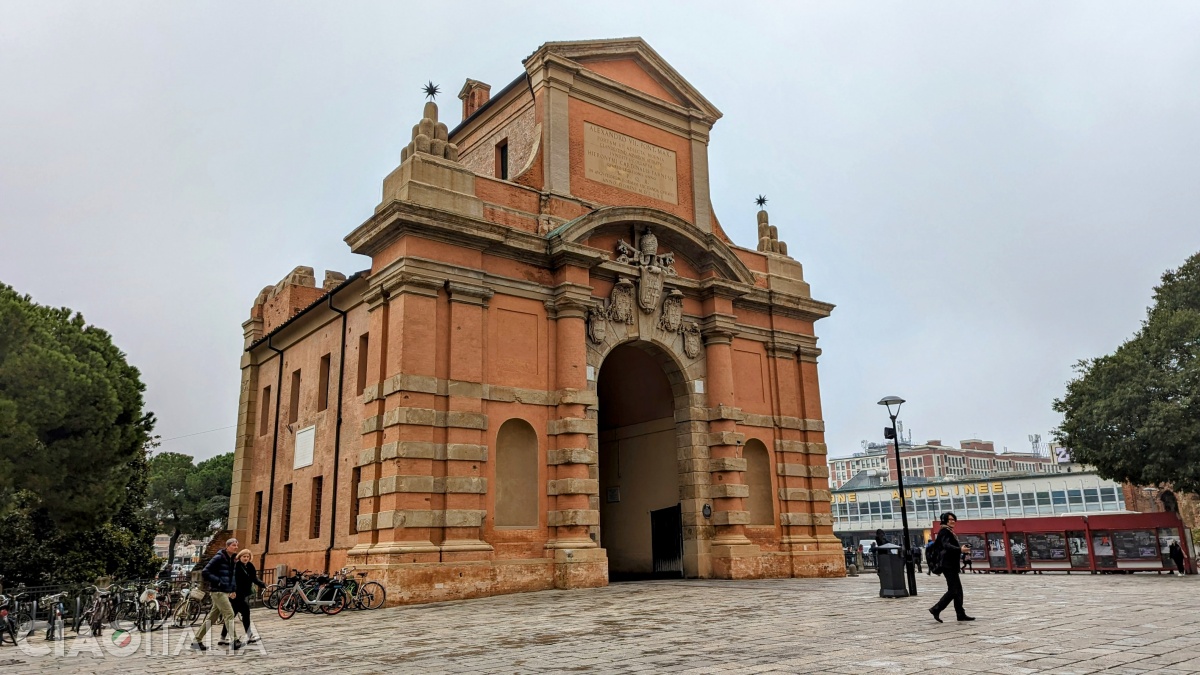
Now walk along Viale Pietramellara, which is part of the ring road marking the central part of Bologna. In Piazza XX Settembre you'll see Porta Galliera, one of the city's old gates. Its current form dates back to the 17th century.
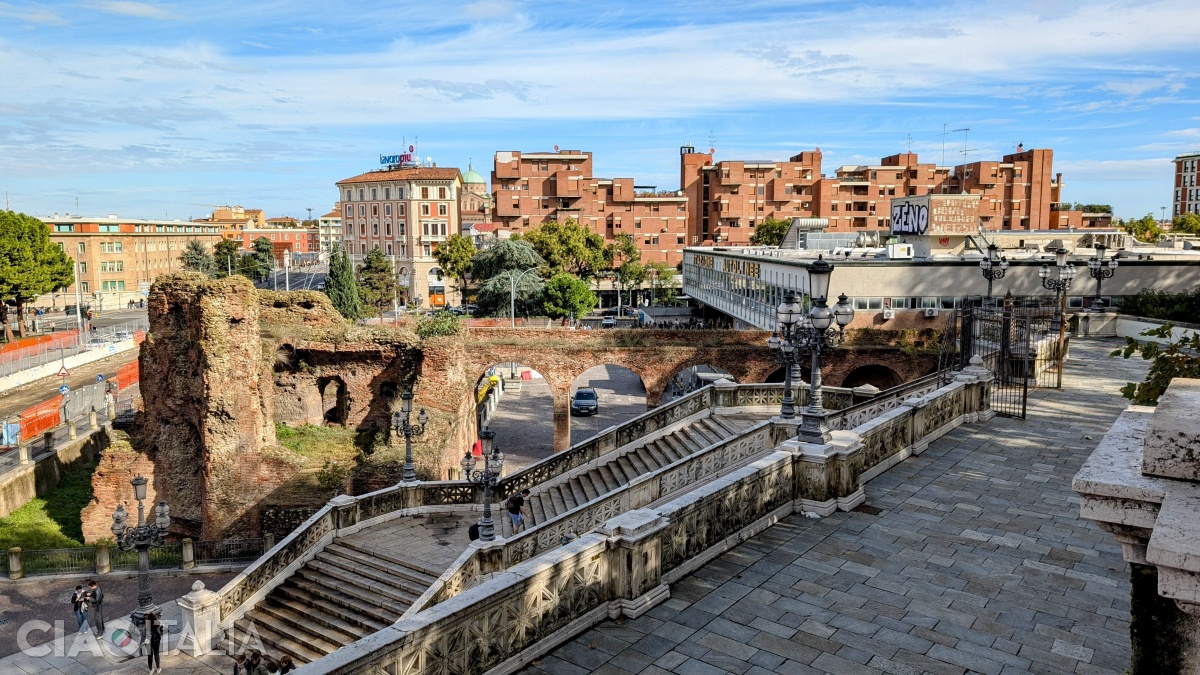
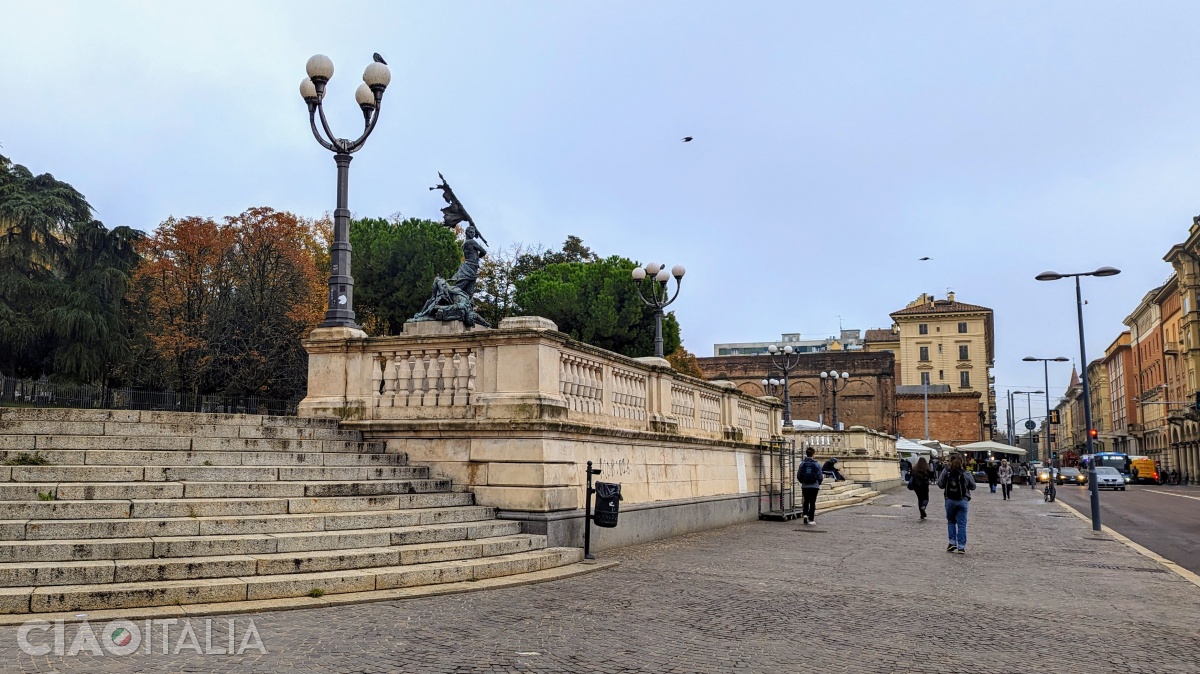
Right nearby is the bus station, and next to it, the ruins of Galliera Castle, built in the 14th century to host the pope (don't forget that Bologna was once part of the Papal State). Just beyond the ruins lies the beautiful Scalinata del Pincio, one of the entrances to Montagnola Park.
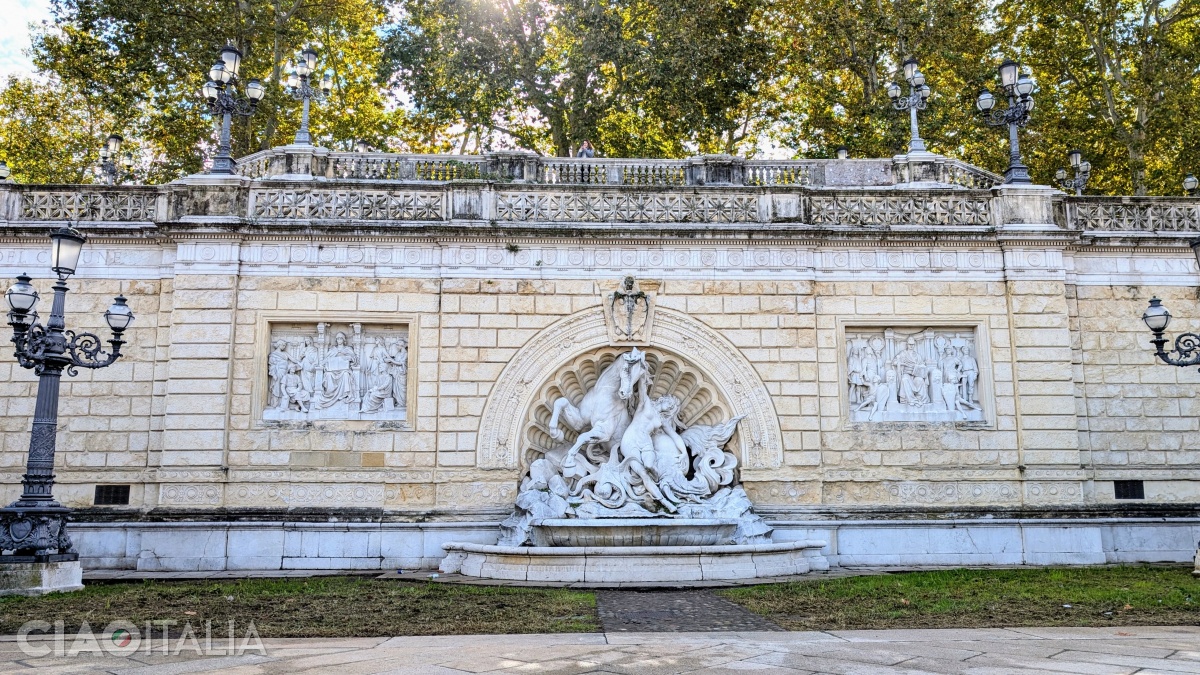
Climb the stairs and enter the park, walking to the right, parallel to Via dell'Indipendenza. The hill on which the park is arranged is artificial, gradually formed since the Middle Ages through the accumulation of waste and construction materials. It wasn't until the 17th century that the area was turned into a promenade, and its current layout dates from the late 18th century, when Napoleon ordered the park to be redesigned.
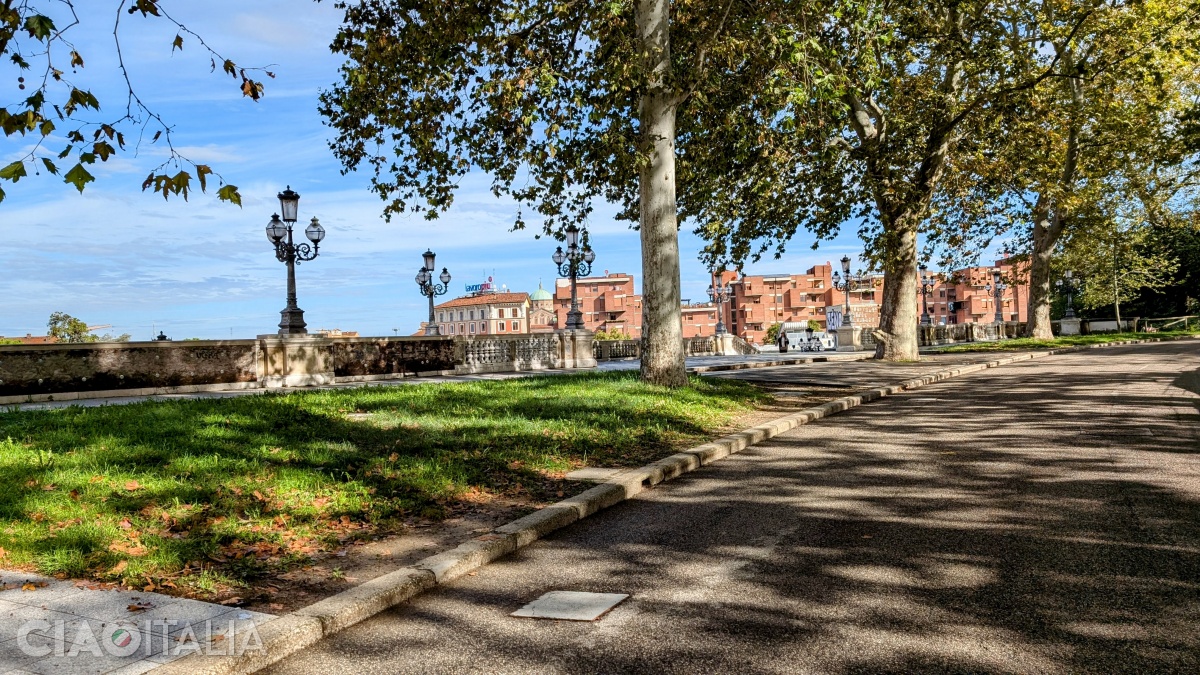
Exit the park toward Piazza VIII Agosto. The square is named after the date of August 8, 1848, when battles took place here between the Austrian army - called in by the pope - and the people of Bologna. The monument at the park's exit was erected in memory of that event and is called Il Popolano ("The Common Man"). Every Friday and Saturday, a large market known as la Piazzola is held in the square.
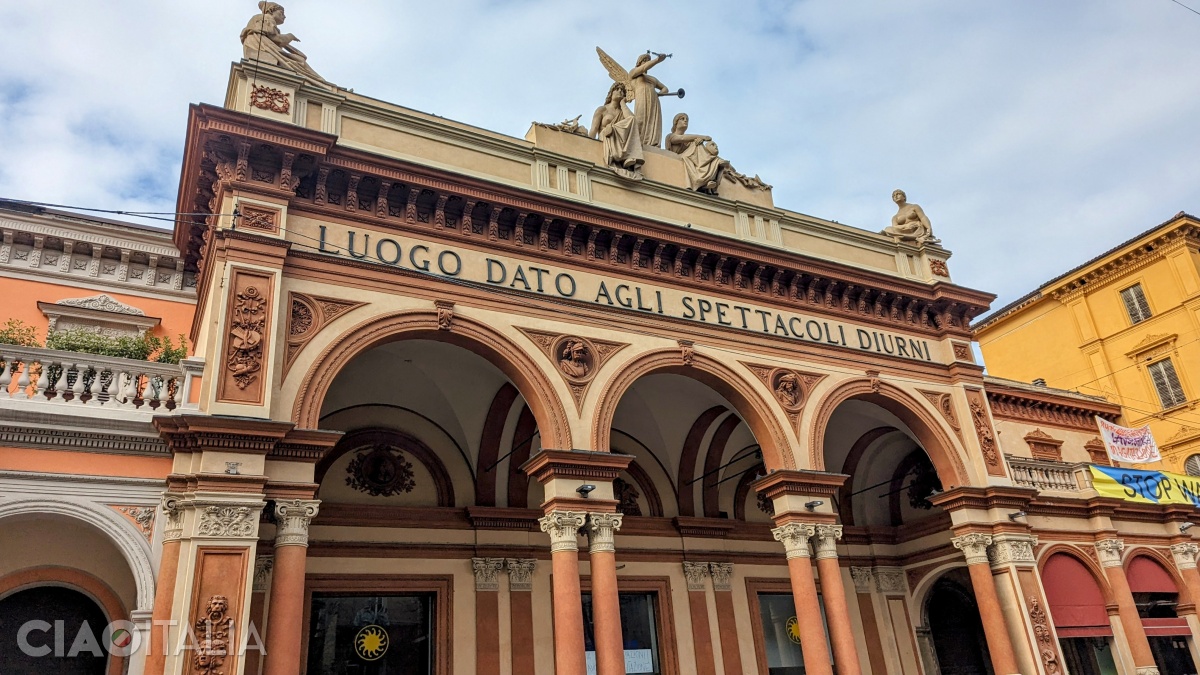
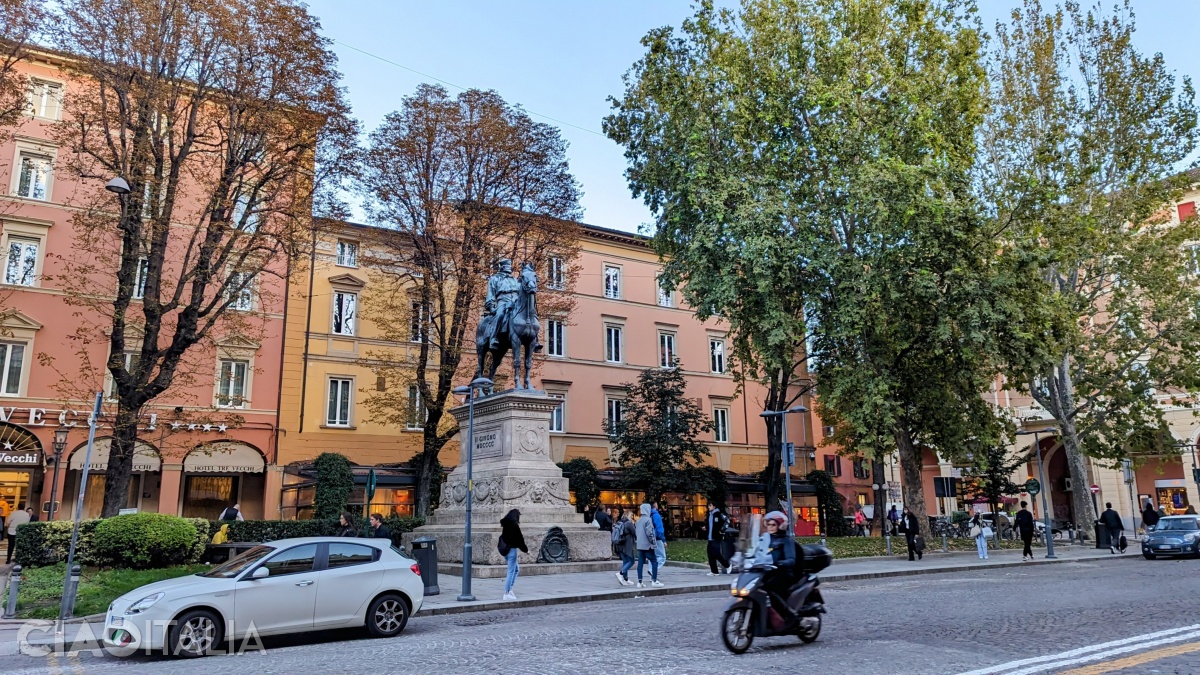
Turn right and then left to get back onto Via dell'Indipendenza, where you'll also find many shops, in case you want to do some shopping. You'll pass by the Arena del Sole Theatre, founded in 1810, and on the opposite side of the street you'll see the statue of Giuseppe Garibaldi.
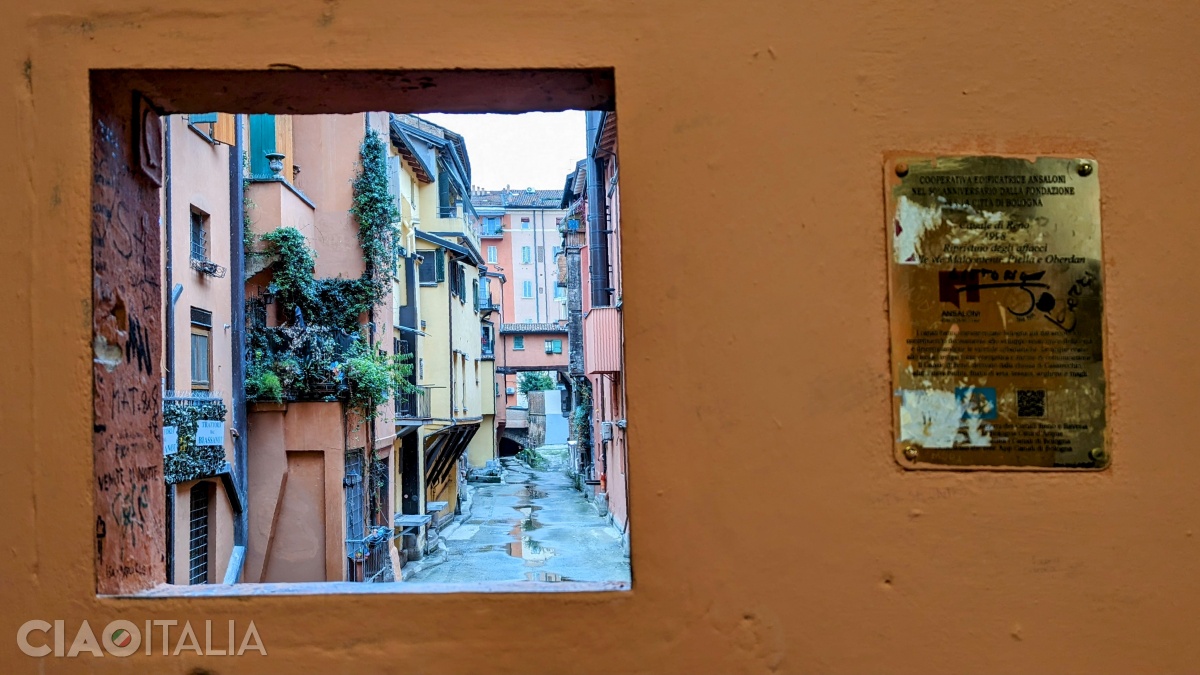
It's time for a short detour to discover a lesser-known side of Bologna - its identity as a city of water. In the past, the streets were crossed by several canals that powered grain mills or supported various types of production. After World War II, most of the canals were covered, and today only a few remain visible. One of them is the Canale delle Moline. The most picturesque view is from the little window at Via Piella no. 16 (next to Osteria Biassanot), nicknamed by locals "Little Venice" because the view (when the canal has water) somewhat resembles Venice.
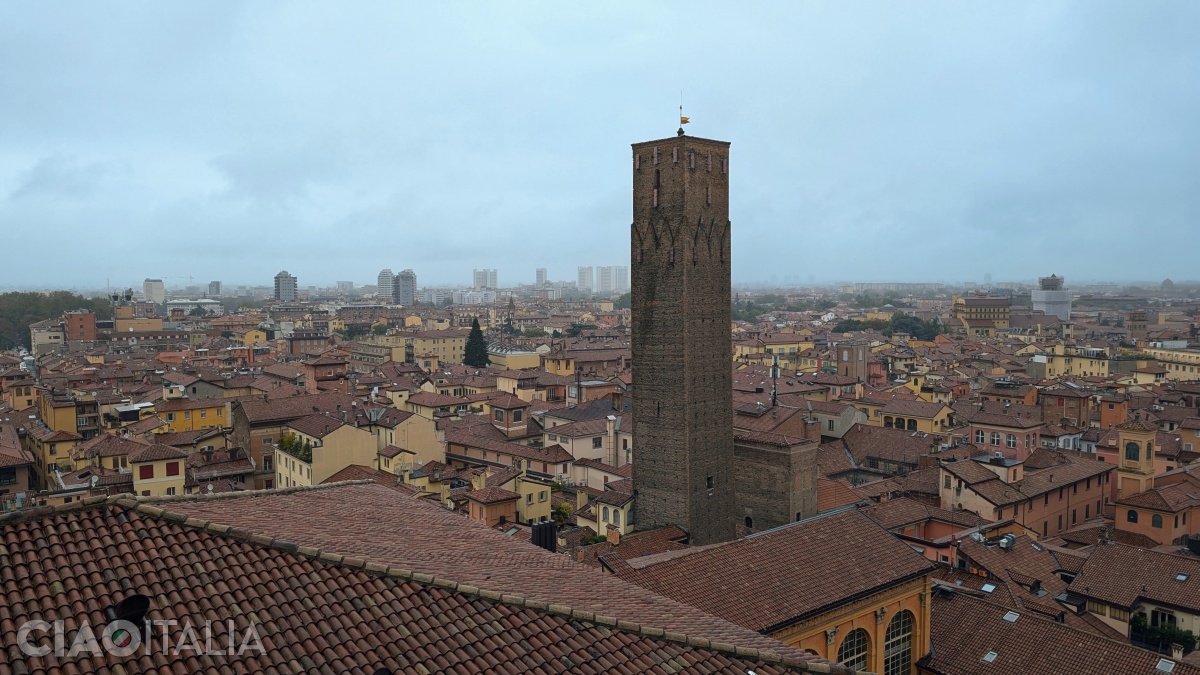
Continue along Via Piella, then take Via del Fico and Via Carbonara, and you'll reach Prendiparte Tower, one of Bologna's towers. The tower dates back to the 12th century and is also known as Coronata. If you look up, you'll see the crown-shaped decoration at the top. Over the years, it has served as a canteen, seminary, prison, and more recently, a B&B.
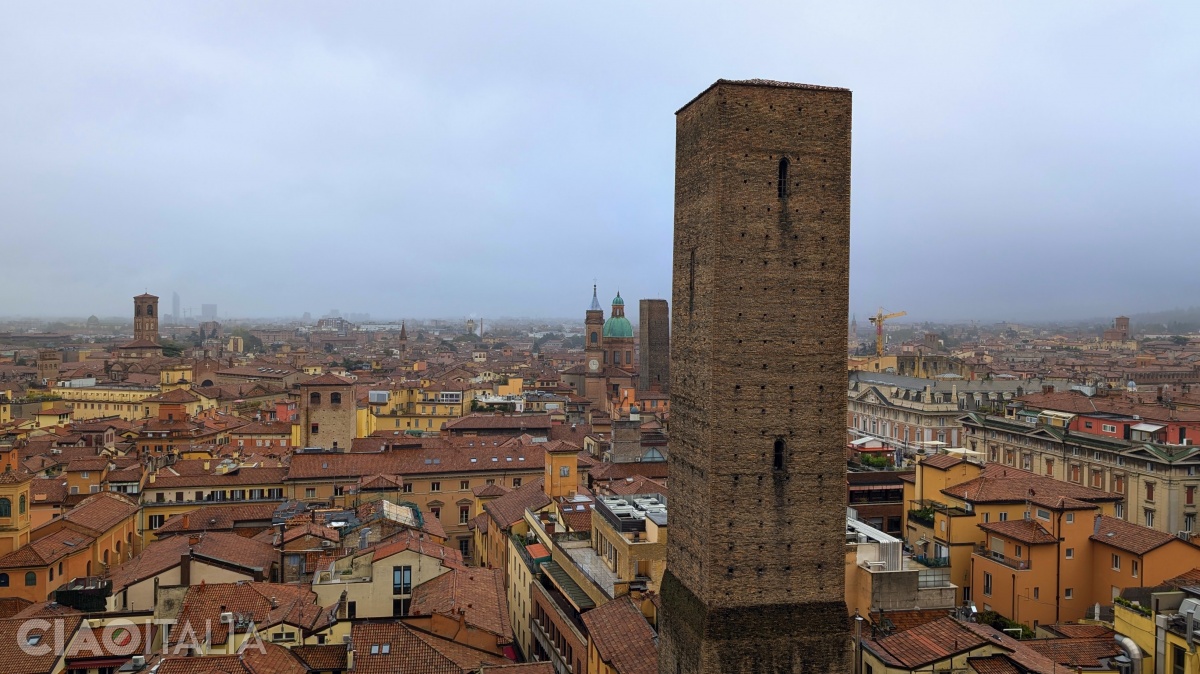
From the tower, walk along Via Sant'Alò and then turn right onto Via Altabella. Near the intersection of these streets stands Altabella Tower, the second tallest tower in Bologna (61 meters), not counting the cathedral's tower.
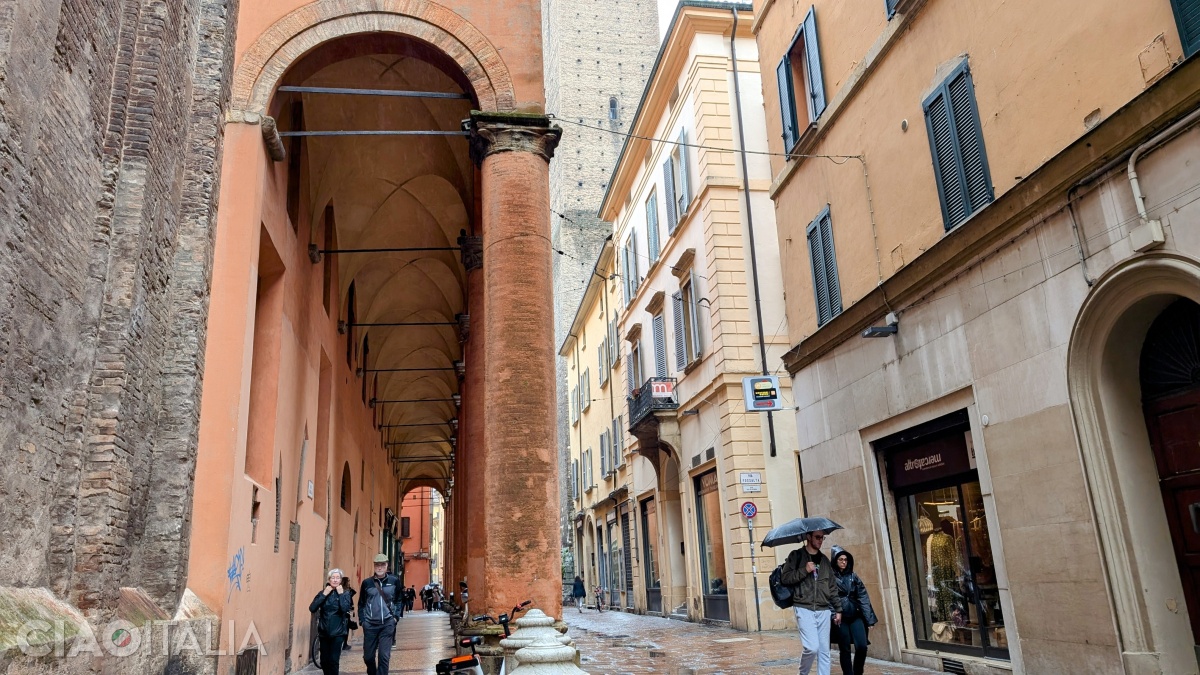
Take note of the arcades of the Archbishop's Palace on Via Altabella - at 10 meters high, they are the tallest in the city.
Exit again onto Via dell'Indipendenza and take a look at San Pietro Cathedral. On its façade are statues of Saints Peter and Paul, as well as the coat of arms of Pope Benedict XIV, who ordered the church's reconstruction in the Baroque style in the 18th century. On Saturdays and Sundays, visitors are allowed to climb the cathedral tower, which dates back to the 12th century and contains an even older tower from the 10th century inside it.
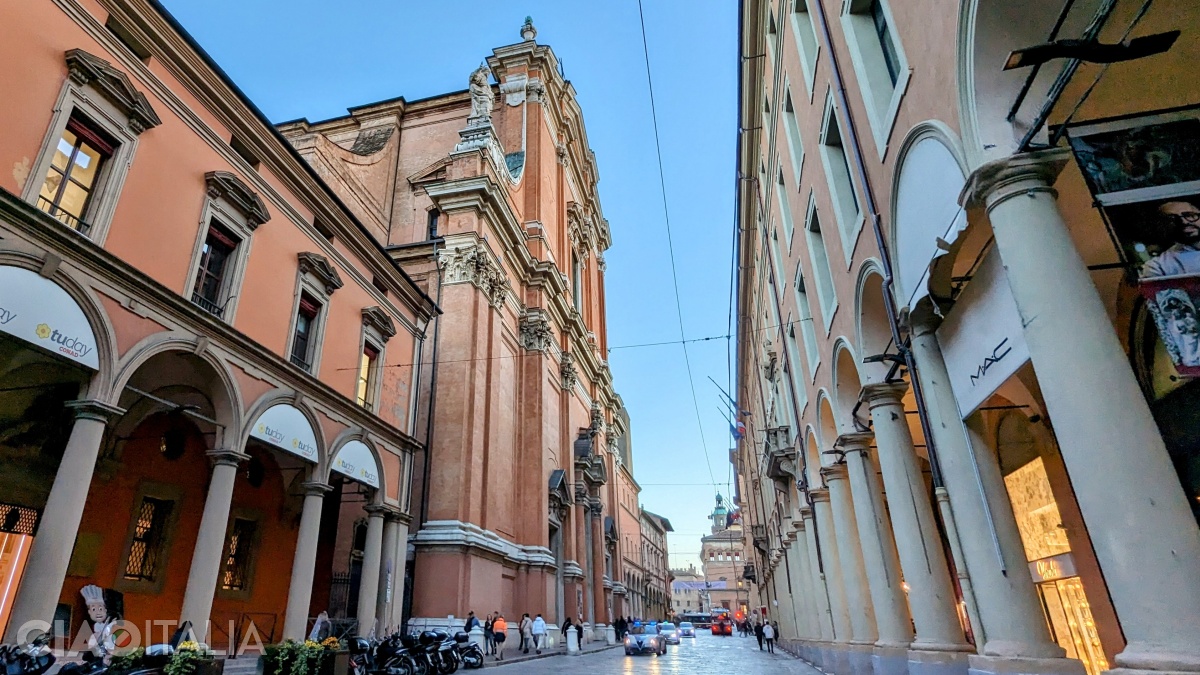
San Pietro Cathedral Tower
Opening hours:
- October-May: Saturday and Sunday, 2:00 PM - 4:30 PM
- June-September: Saturday 2:00 PM - 4:30 PM, 7:00 PM - 10:30 PM, Sunday 2:00 PM - 4:30 PM
Ticket prices:
- €5 (includes the crypt and the Cathedral's Treasure Museum)
- you can also book tickets online
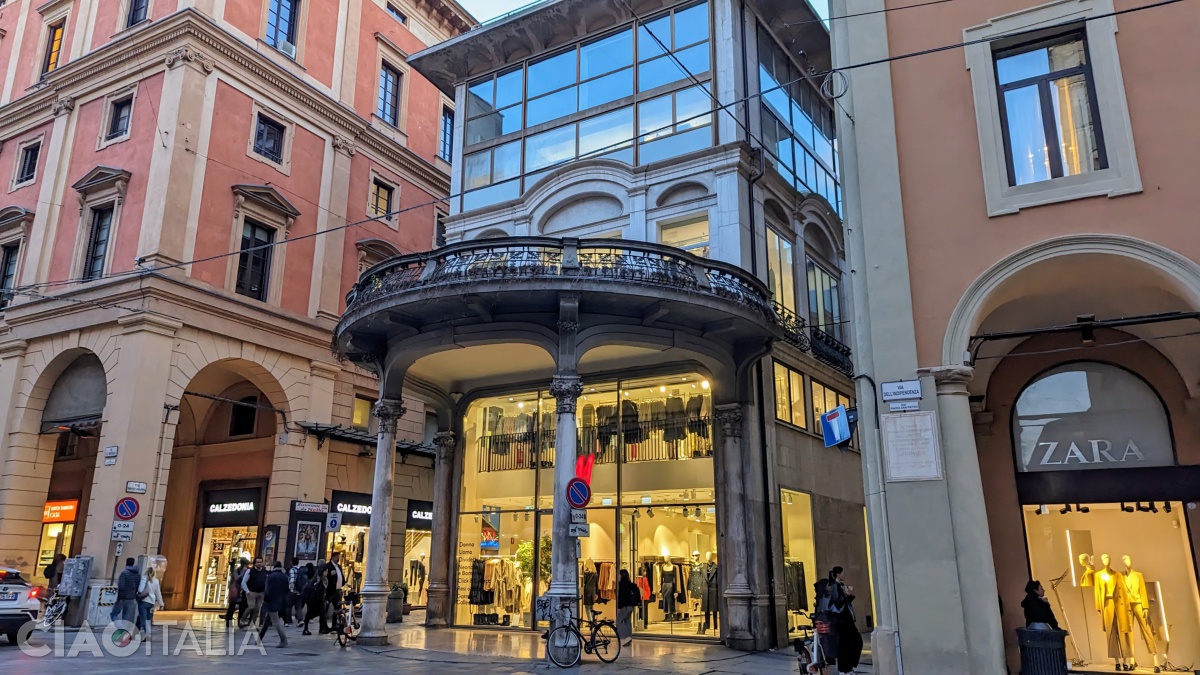
Continue along Via dell'Indipendenza. A bit further ahead on the right, you'll see an interesting building: Palazzina Majani, built in the Liberty style (the Italian equivalent of Viennese Art Nouveau) at the beginning of the 20th century, as the headquarters of the Majani café and chocolate shop. The beautiful building stirred some controversy at first: traditionalist locals claimed it looked like "a Viennese chair placed there just to trip up passersby".
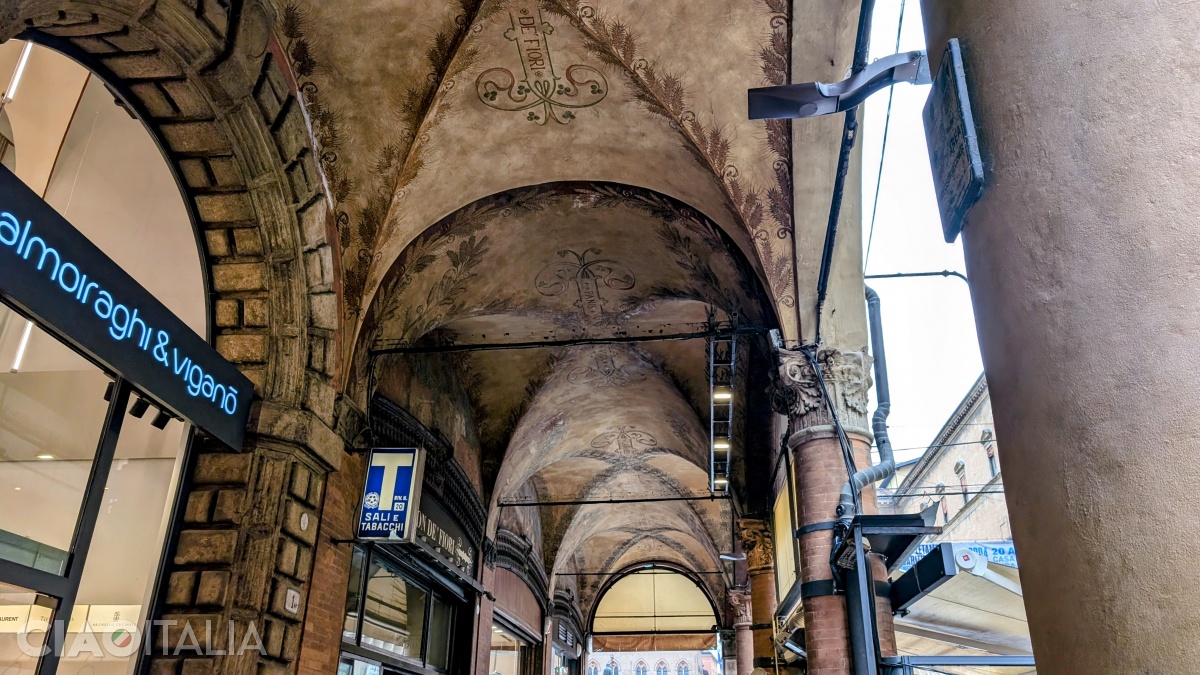
Just before reaching Via Rizzoli, on the arch of the portico on the left side of the street, you'll find three inscriptions: Panis vita ("Bread is life"), Canabis protectio ("Cannabis is protection"), Vinum laetitia ("Wine is joy"). The reference to cannabis is related to the time when the hemp trade brought great wealth - and therefore protection - to Bologna.
Cross Via Rizzoli and you'll find yourself in Piazza del Nettuno. At the center stands the Fountain of Neptune, one of Bologna's symbols. It was built in 1566 by the sculptor Giambologna and stirred some controversy at the time. The sensuality of the nymphs on the base and the prominent nudity of the god - who was meant to symbolize the pope's power - did not sit well with the Church. The sculptor originally wanted Neptune's genitals to be larger, so the proportions would match the over 3-meter-tall statue. The Church opposed this, so Giambologna reportedly resorted to an optical trick: if you look at the statue from behind and to the right, you'll see that the thumb of Neptune's left hand sticks out in a bold and... indecent way.
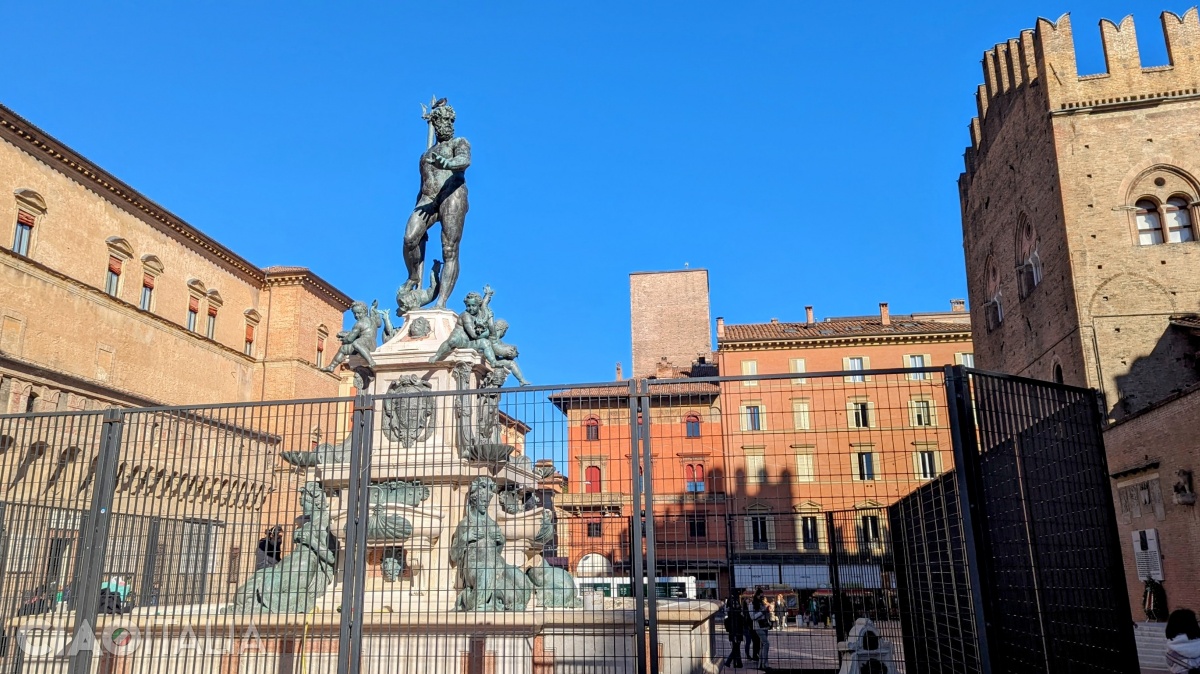
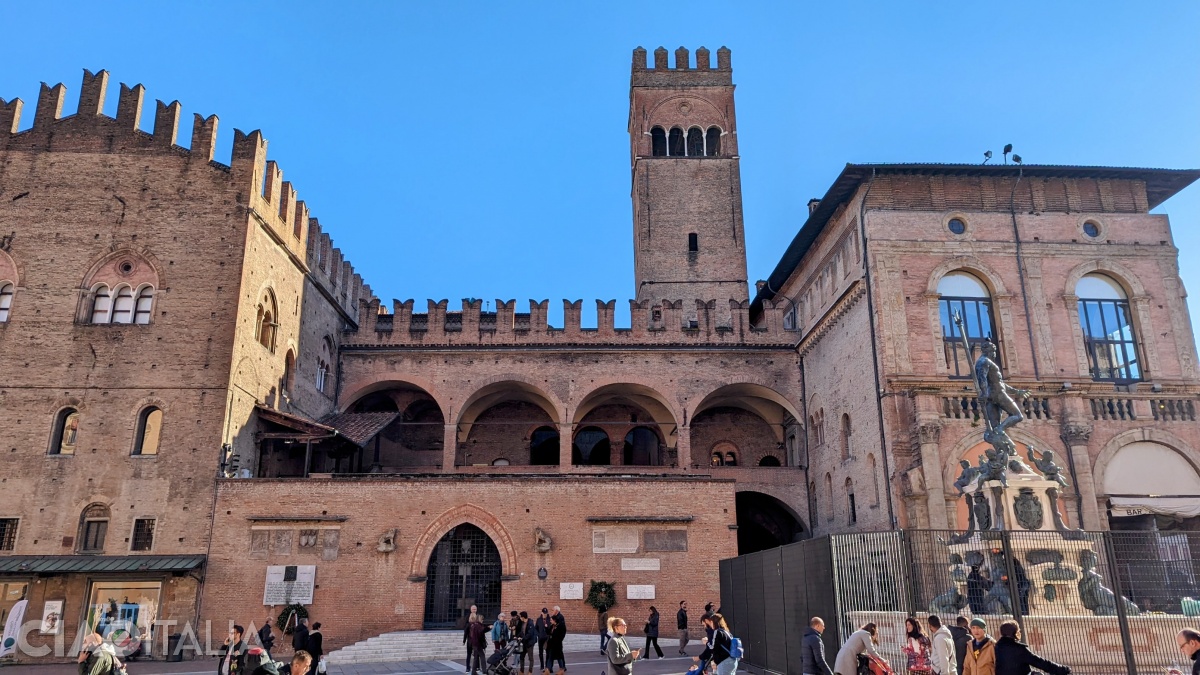
The palace to the left of the statue (when facing from Via Rizzoli) is Palazzo Re Enzo, named after a king of Sardinia, who was captured in the 13th century and held prisoner in this building until his death.
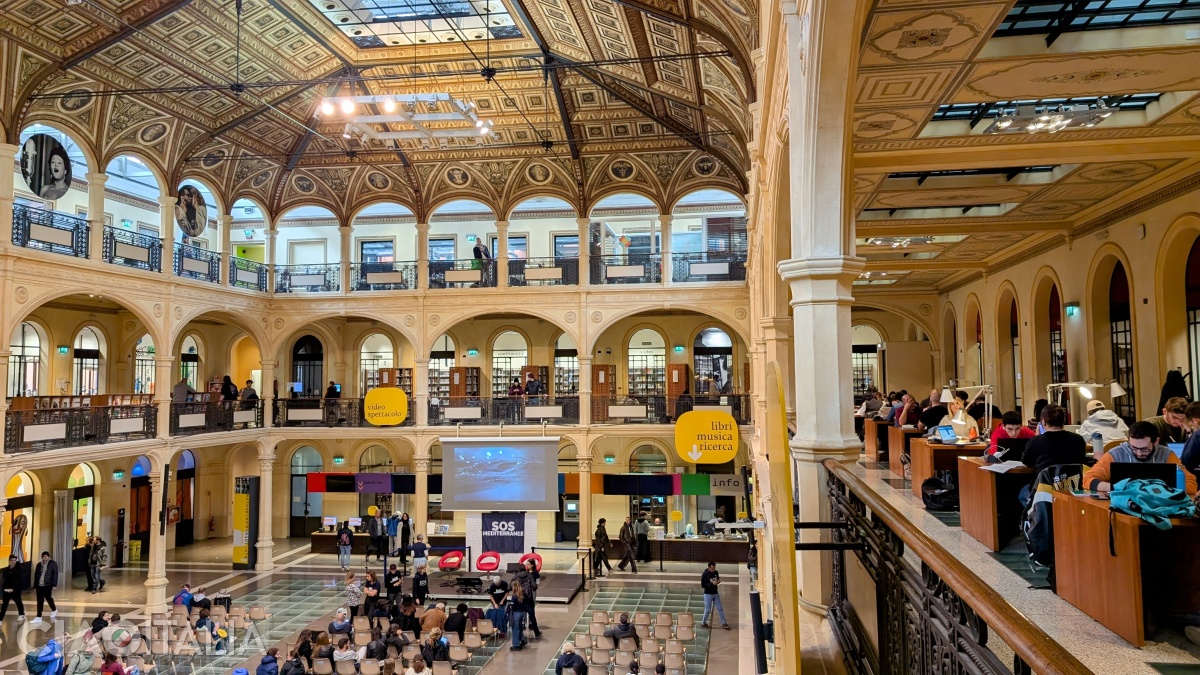
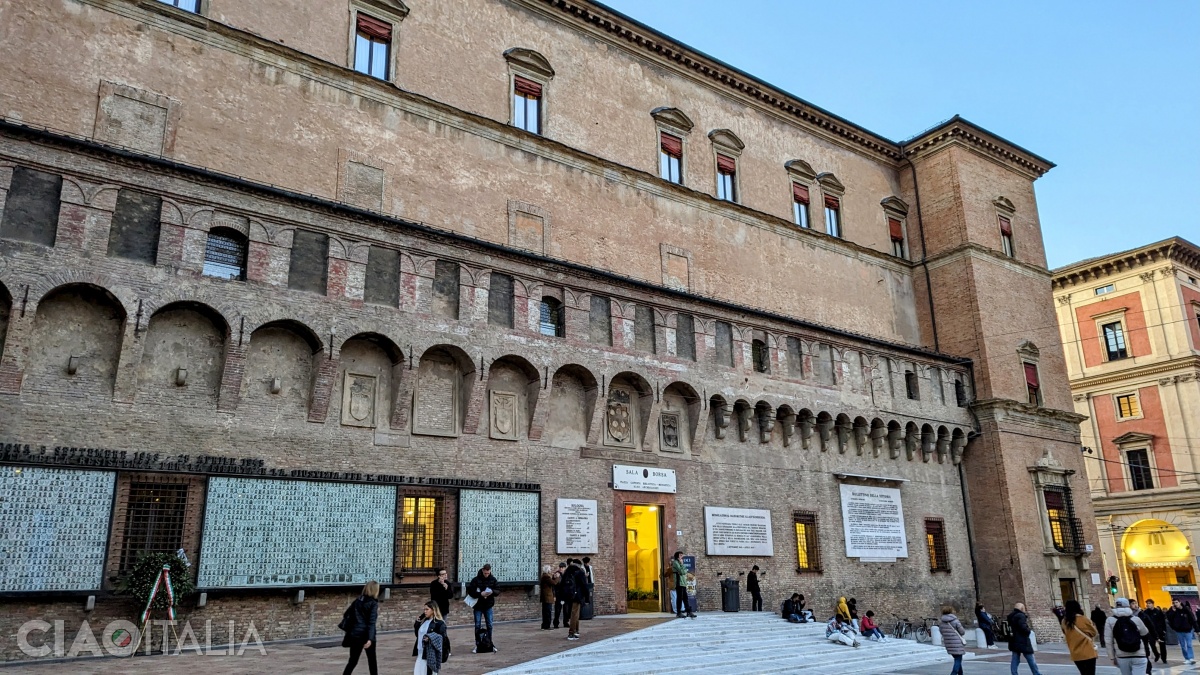
To the right of the statue is Salaborsa Library, the city's former stock exchange, which was converted in 2001 into a beautiful multimedia library. The photographs on the wall to the left of the entrance show residents who were killed by the Nazis. You can step into the covered inner courtyard (Piazza Coperta), named after Umberto Eco, who was a professor at the University of Bologna.
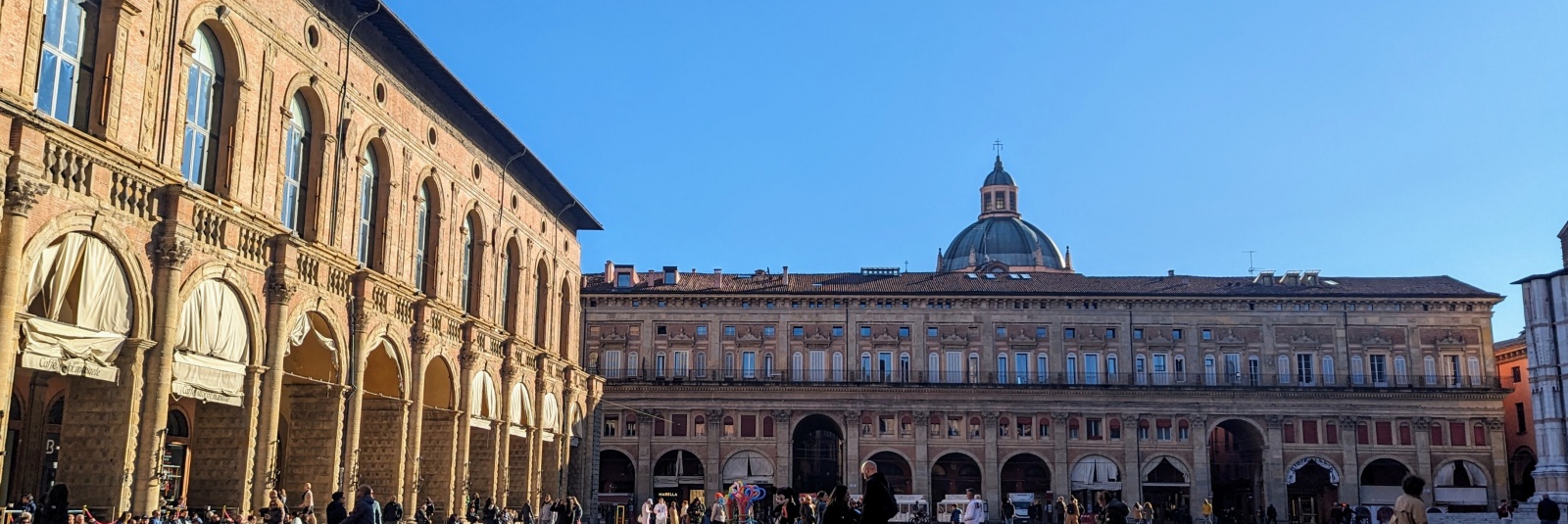
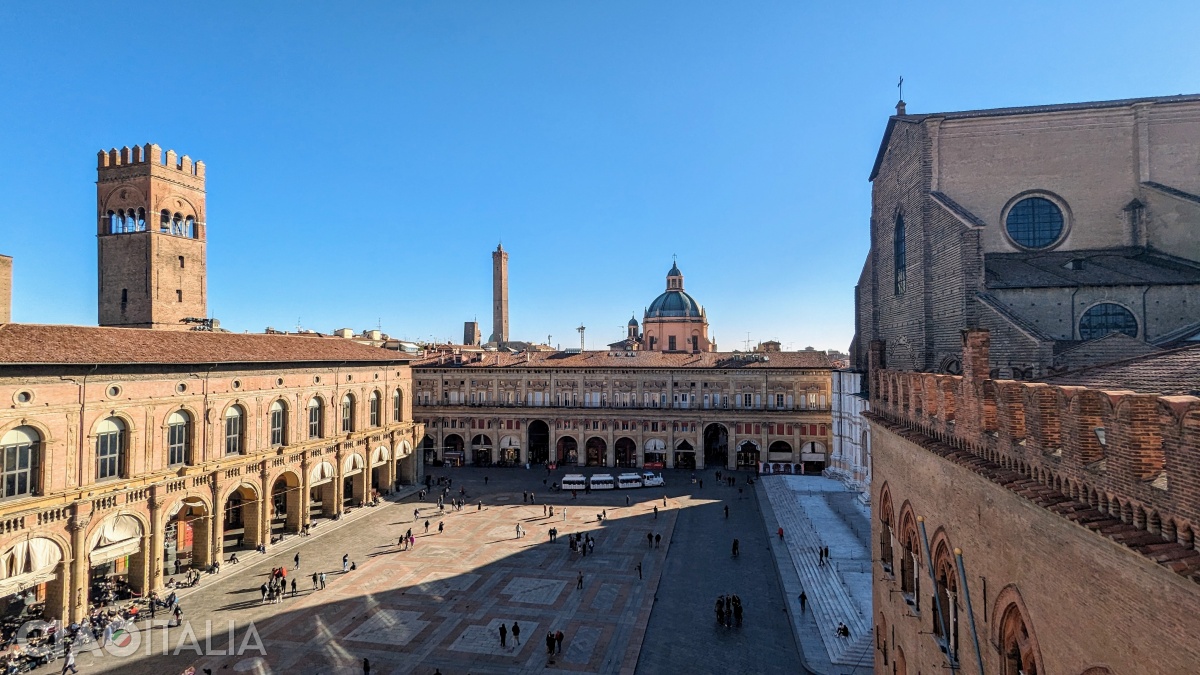
From Piazza del Nettuno, you'll quickly get to Piazza Maggiore. It is surrounded by some of the most beautiful buildings in the city. Your attention will immediately be drawn to the massive church with a façade only half-covered in pink and white marble. This is the Basilica of San Petronio, which is considered even more important than the cathedral you saw earlier. Don't miss the bas-relief above the entrance portal, sculpted by Jacopo della Quercia in the 15th century, the meridian line traced on the church floor (the longest in the world), and the Bolognini Chapel, which contains some spectacular frescoes.
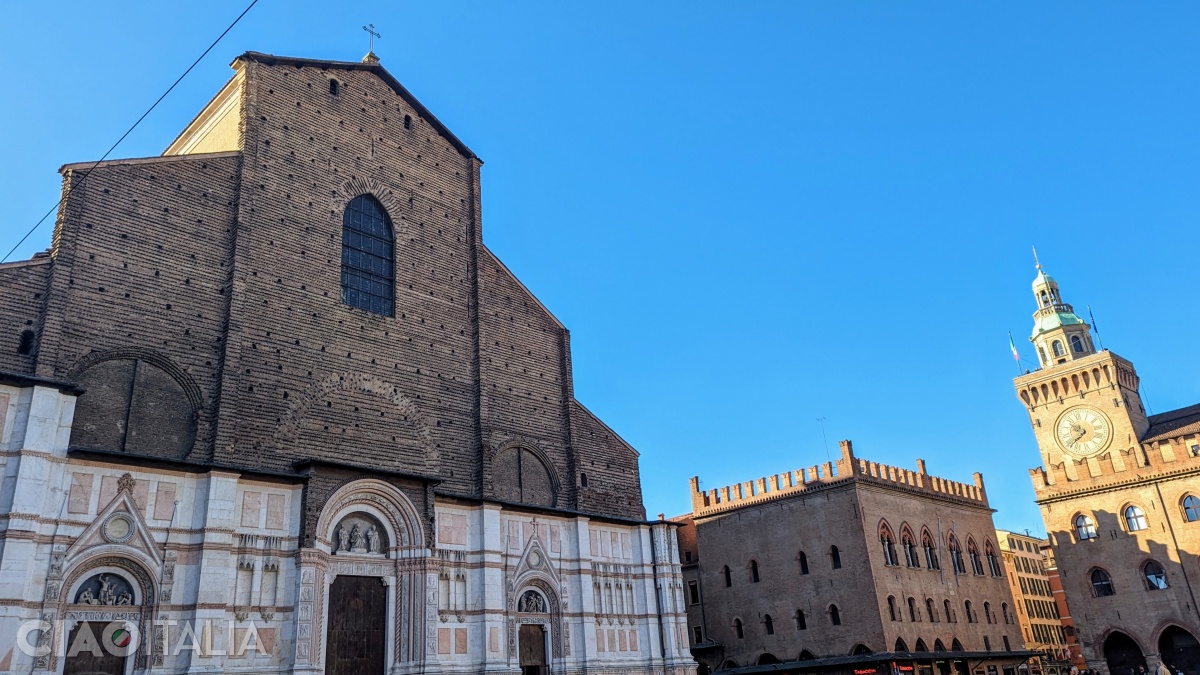
Basilica di San Petronio
Opening hours:
Church:
- Monday-Sunday: 10:00 AM - 6:00 PM (last entry at 5:50 PM)
Bolognini, San Sebastiano, and San Vincenzo Chapels:
- Monday-Sunday: 10:00 AM - 5:30 PM (last entry at 5:15 PM)
Museum:
- Monday-Sunday: 10:00 AM - 5:30 PM (last entry at 5:15 PM)
Ticket prices:
Church:
- free admission
Bolognini, San Sebastiano, and San Vincenzo Chapels:
- Adults: €5
- Seniors (65+ years): €3
- Youth (11-18 years): €3
- Children under 11: free
Museum:
- free admission
Opposite the church is the Palazzo del Podestà. Under its central arch (Voltone del Podestà), you can test an unusual acoustic effect: stand facing one corner and whisper toward the wall. The person standing in the opposite diagonal corner will hear you very clearly. It's said that in the Middle Ages, this allowed people with contagious diseases to confess their sins without putting priests at risk of infection.
The palace to the right of the church is the City Hall Palace (Palazzo d'Accursio), on whose façade you'll see a statue of Pope Gregory XIII (the one responsible for the Gregorian calendar) and a 15th-century terracotta sculpture of the Virgin and Child. Inside, you can visit some rooms for free (when no events are being held), and for a fee, you can explore the Municipal Art Collections and climb the Clock Tower, which offers a beautiful view over the square. The staircase you'll use inside the City Hall was designed in the 16th century by the architect Bramante, specifically to allow the city’s dignitaries to ride up on horseback.
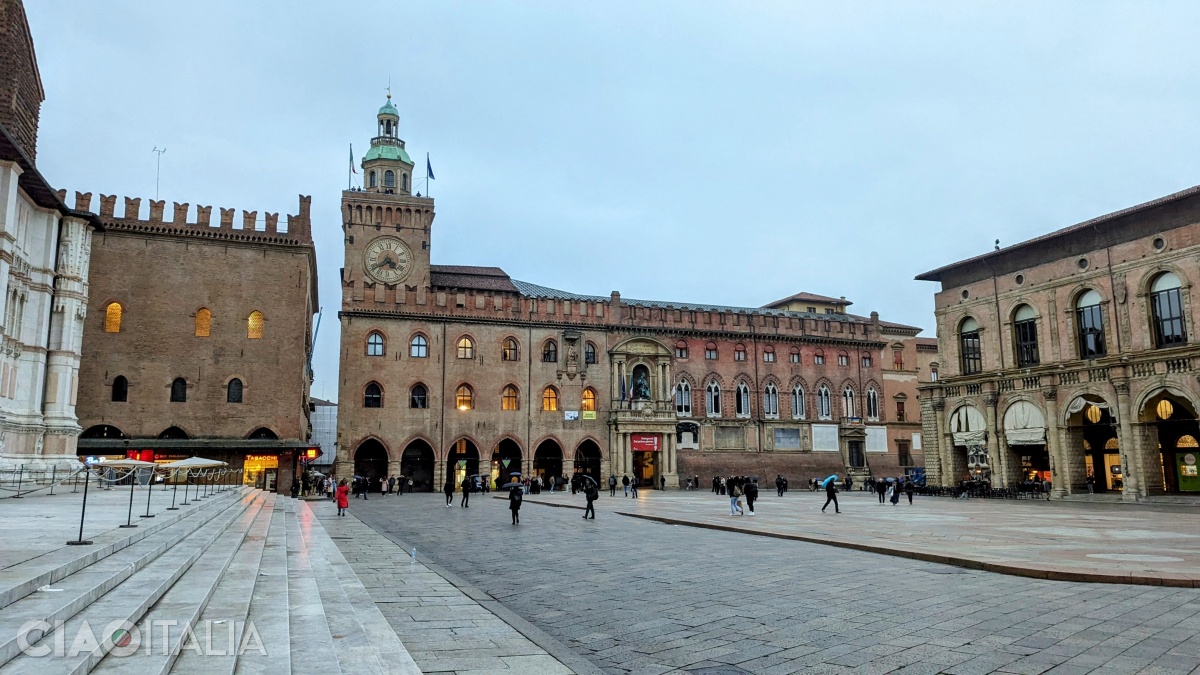
City Hall Palace (Palazzo d'Accursio)
Opening hours:
Clock Tower (September 7 - December 31, 2026):
- Monday to Sunday: 10:00 AM - 6:20 PM (last entry), three times per hour (on the hour, at twenty past, and at forty past)
- December 24 and December 31, 2026: last entry at 4:20 PM
- December 25, 2026: Closed
Municipal Art Collections:
- Monday: closed
- Tuesday and Thursday: 2:00 PM - 7:00 PM
- Wednesday and Friday: 10:00 AM - 7.00 PM
- Saturday and Sunday: 10:00 AM - 6:30 PM
- closed: May 1, December 25
- last entry 30 minutes before the closing time
Ticket prices:
Clock Tower and Municipal Art Collections:
- Adults: €10
- Seniors (65+ years): €7
- Children (4-11 years).: €7
- Children under 4: free
- Free with Bologna Card
Municipal Art Collections:
- Adults: €6
- Seniors (65+ years): €4
- Youth (18-25 years): €2
- Under 18: free
Walk along Via dell'Archiginnasio, the street to the left of the church. Before long, you'll reach the Archiginnasio Palace, built in the 17th century as the seat of the University, on the very spot where a wing of San Petronio Basilica was originally supposed to be built. In the 19th century, it was transformed into a library. You can enter the inner courtyard, which is surrounded by 30 arcades bearing the coats of arms of former students. On the upper floor, you can visit the Anatomical Theatre (the room where dissections were performed in the past, richly decorated with wooden paneling) and the Stabat Mater Hall, used for legal studies.
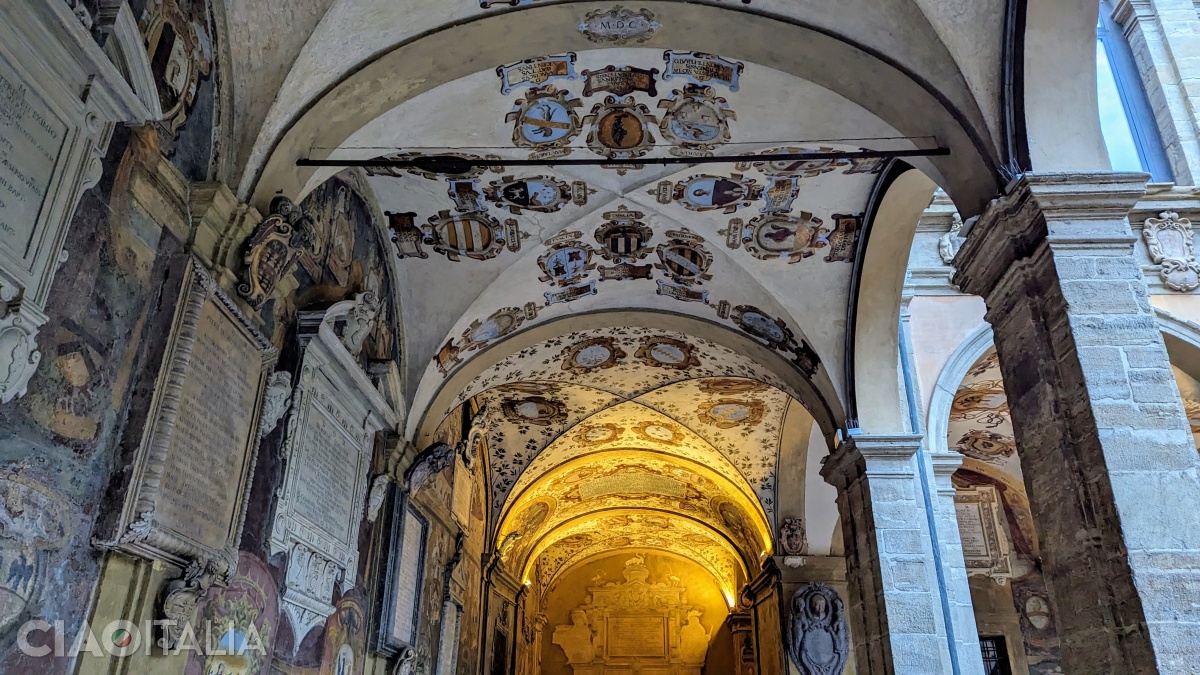
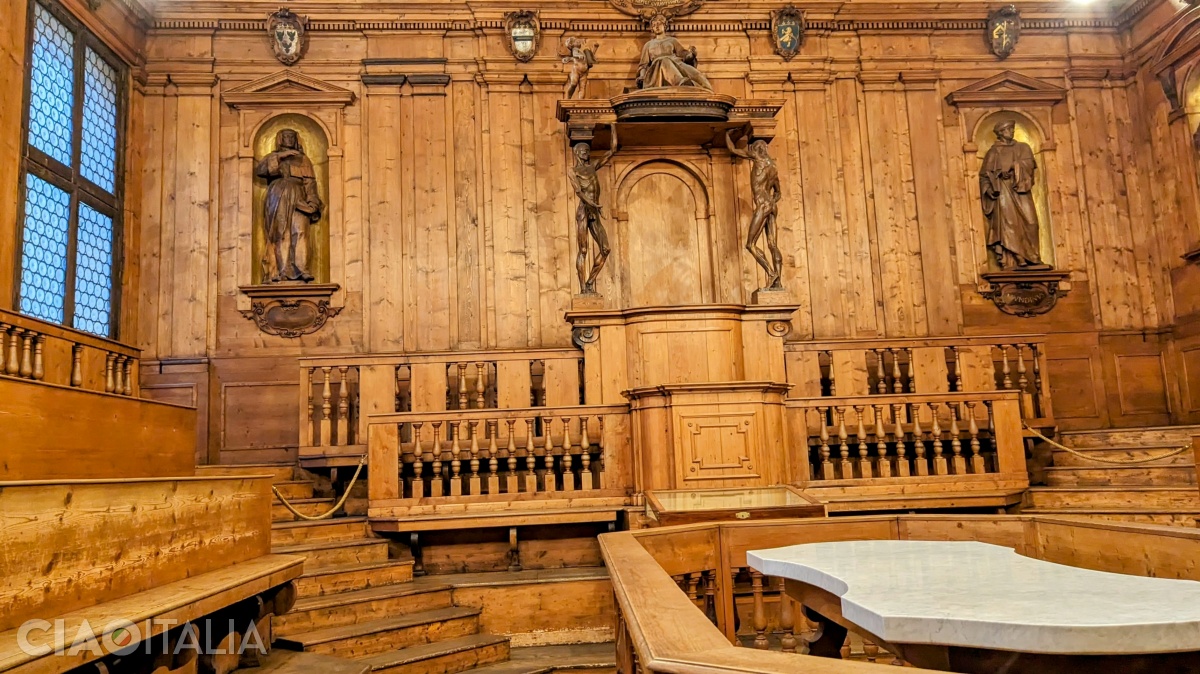
Archiginnasio Palace
Opening hours:
Palazzo dell'Archiginnasio:
- Monday-Saturday: 9:00 AM - 7:00 PM
- Sunday: closed
Anatomical Theatre and Stabat Mater Hall:
Entry with audioguide:
- Monday to Saturday, 10:00 AM - 5:30 PM (admission every 10 minutes)
Guided tours:
- January 12 - February 28, 2026: Monday to Saturday: 11:30 AM and 3:30 PM (Italian); 10:20 AM, 2:20 PM and 4:00 PM (English)
- From March 1, 2026: Monday to Saturday: 11:30 AM, 3:30 PM and 4:40 PM (Italian); 10:20 AM, 2:20 PM, 4:00 PM and 5:10 (English)
Ticket prices:
Palazzo dell'Archiginnasio: free
Anatomical Theatre+Stabat Mater Hall:
Admission with audioguide (Anatomical Theatre and Stabat Mater Hall, when not occupied by other activities):
- Adults: €10
- 13-18 years: €8
- Under 13: free (without audioguide)
Guided tour (Anatomical Theatre, Stabat Mater Hall, Chapel of Santa Maria dei Bulgari and the Cubiculum Artistarum, when not occupied by other activities):
- Adults €12
- Over 65: €10
- 13-18 years: €10
- Under 13: free
Bookings on Bologna Welcome
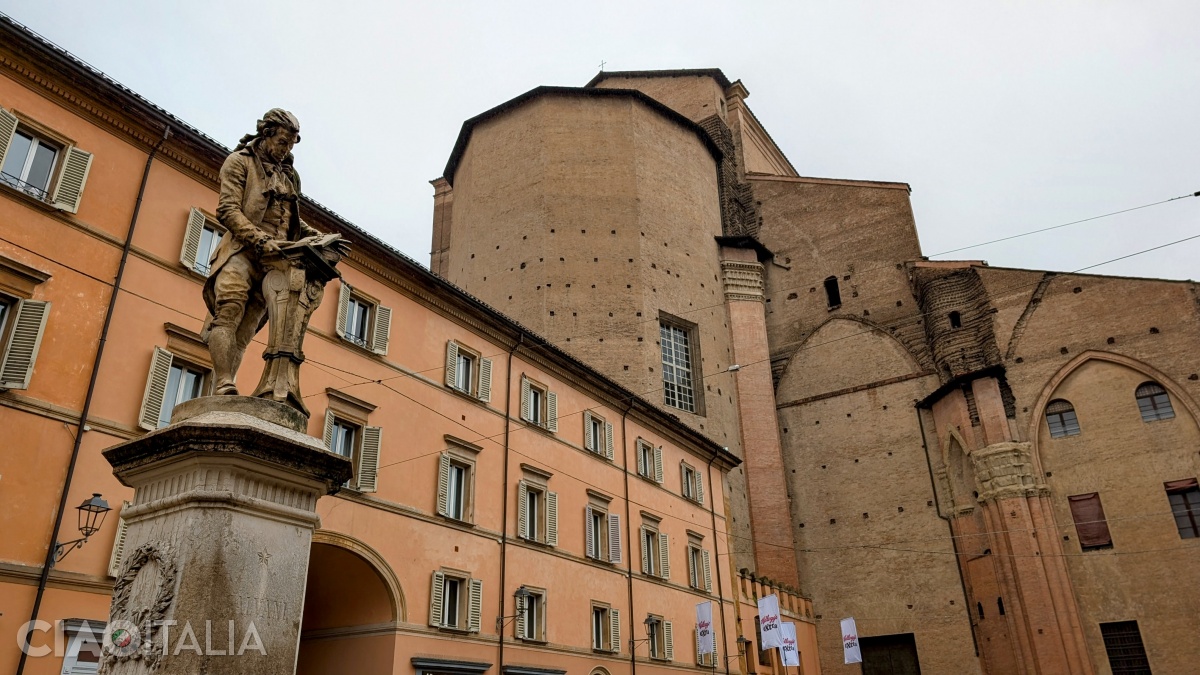
In the square in front of the palace stands a statue of Luigi Galvani, anatomy professor at the University of Bologna. If you look closely at the book he's holding, you'll notice frog legs - Galvani is famous for his experiments studying the effects of electricity on animal muscles.
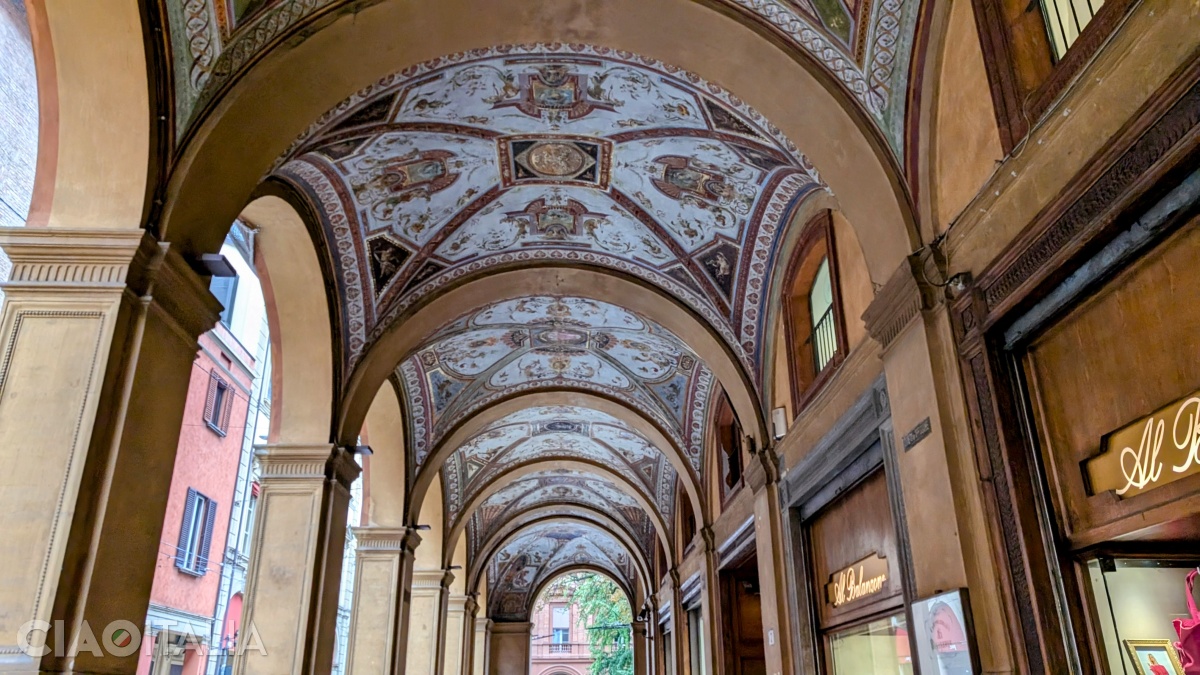
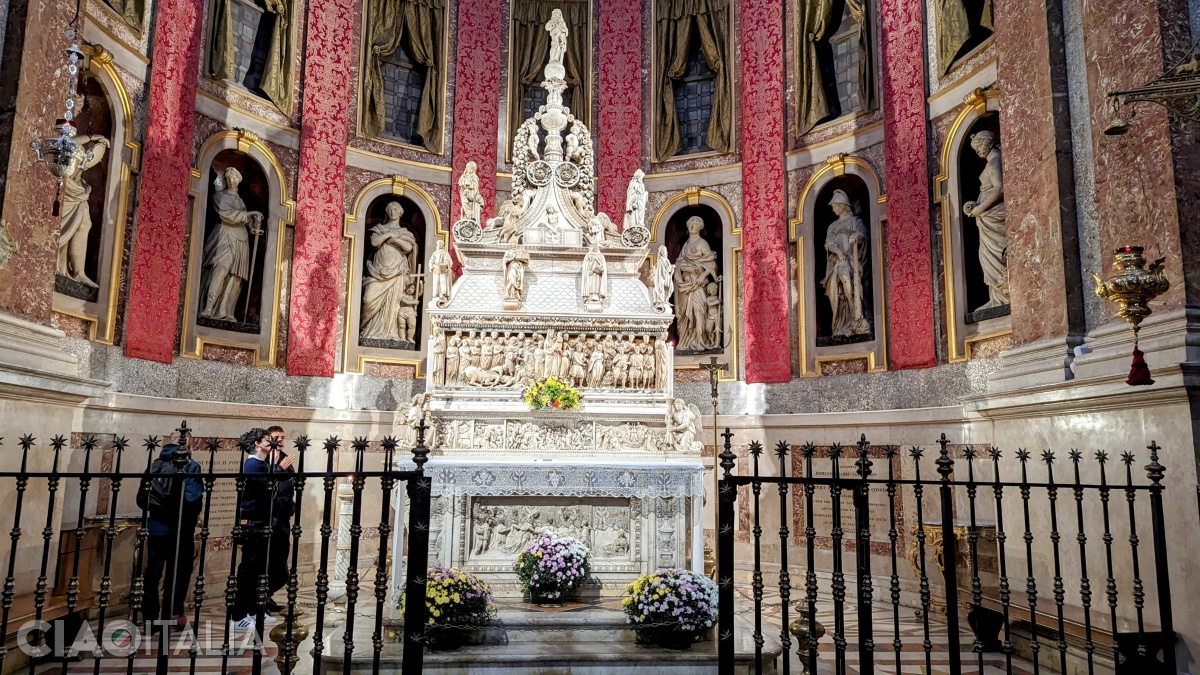
From Piazza Galvani, cross Via Farini (take a moment to admire the beautiful porticoes on the opposite side of the street), then walk through Piazza Cavour and along Via Garibaldi until you reach Piazza San Domenico. The column in the square is topped with a statue of Saint Dominic. His tomb (Arca di San Domenico) is inside San Domenico Basilica, in the sixth chapel on the right, and is a true masterpiece created by several renowned artists over many years. Among them was Michelangelo, who passed through Bologna in his youth. He sculpted the statue of Saint Petronius, holding a model of the city (the second statue from the left on the marble sarcophagus lid), the angel holding a candle on the right, and the statue of Saint Proculus (on the back of the sarcophagus). Further ahead, to the right of the altar, you'll find the famous painting by Filippino Lippi, "The Mystic Marriage of Saint Catherine", completed in 1501.
Basilica San Domenico
Opening hours:
- Monday-Friday: 7:00 AM - 1:00 PM, 3:30 PM - 8:00 PM
- Saturday: 7:15 AM - 1:00 PM, 3:30 PM - 7:30 PM
- Sunday: 7:55 AM - 12:30 PM, 3:30 PM - 7:00 PM
Ticket prices:
- free admission
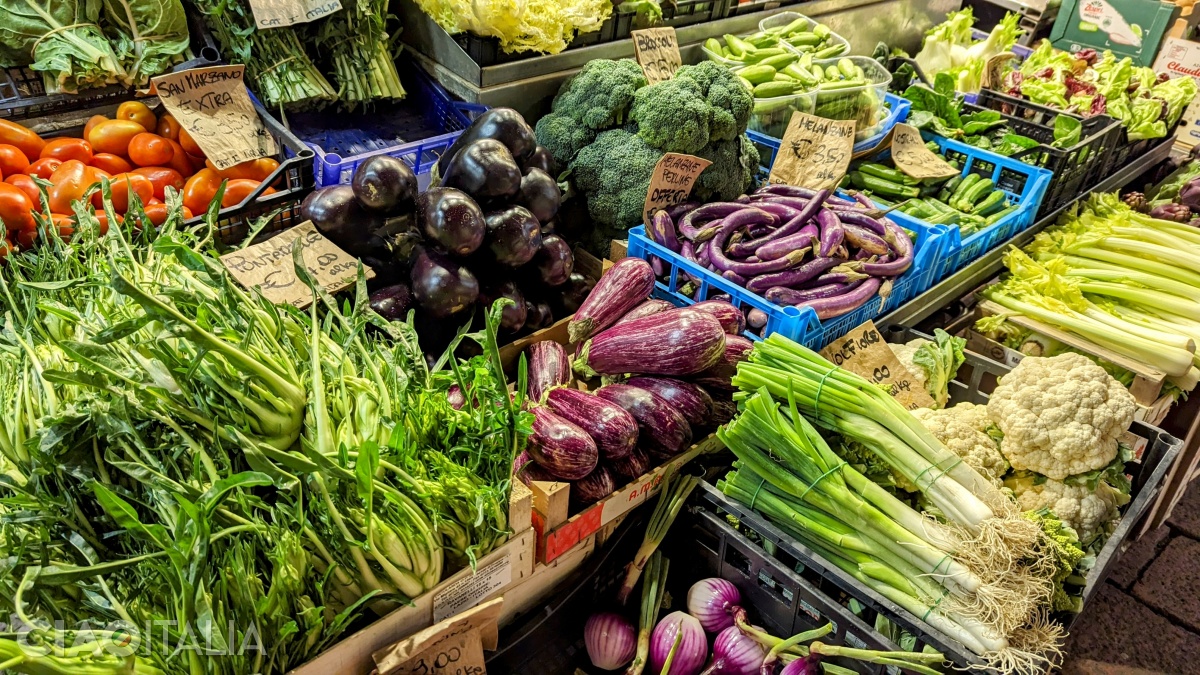
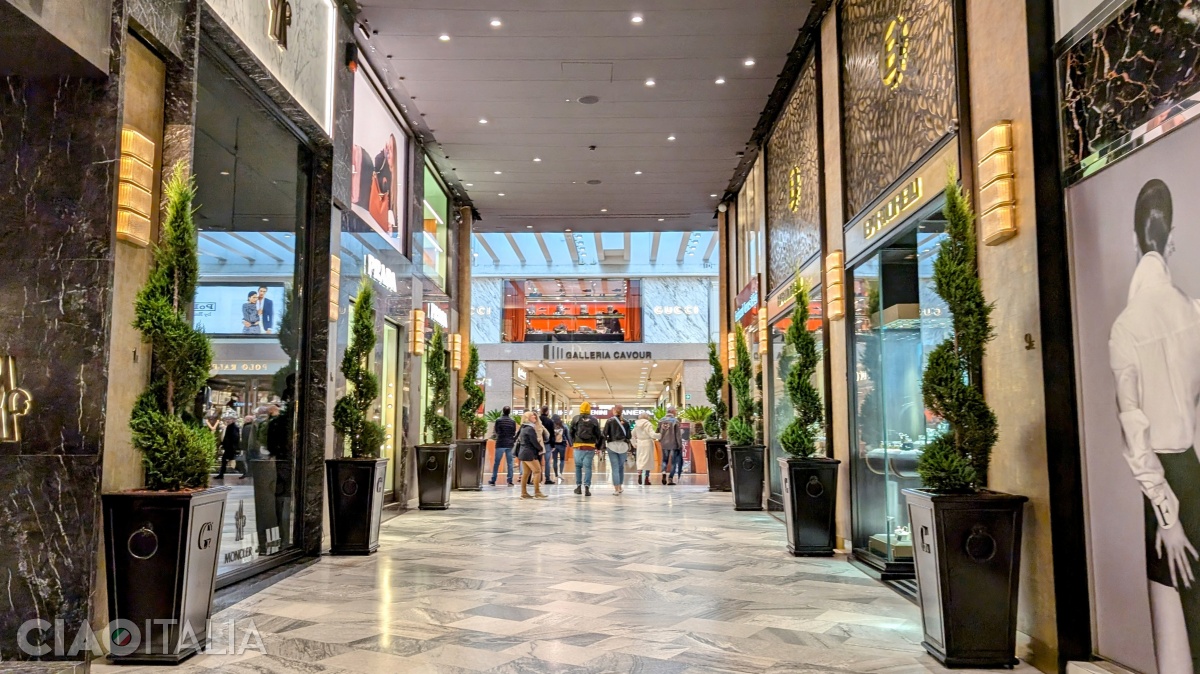
Head back to Via Farini and lose yourself in the narrow streets of Bologna's old commercial district, known as il Quadrilatero ("the Quadrilateral"), bordered by Via Farini, Via Castiglione, Via Rizzoli, and Via dell'Archiginnasio. This area is full of shops (including the upscale Galleria Cavour), delicatessens, restaurants, bars, and cafés. Take a break and try some traditional Bolognese food or simply enjoy the lively atmosphere and vibrant colors of the streets - the fruit and vegetable stands, the cheeses, the variety of pasta types, and the hanging mortadella sausages in the delicatessens.
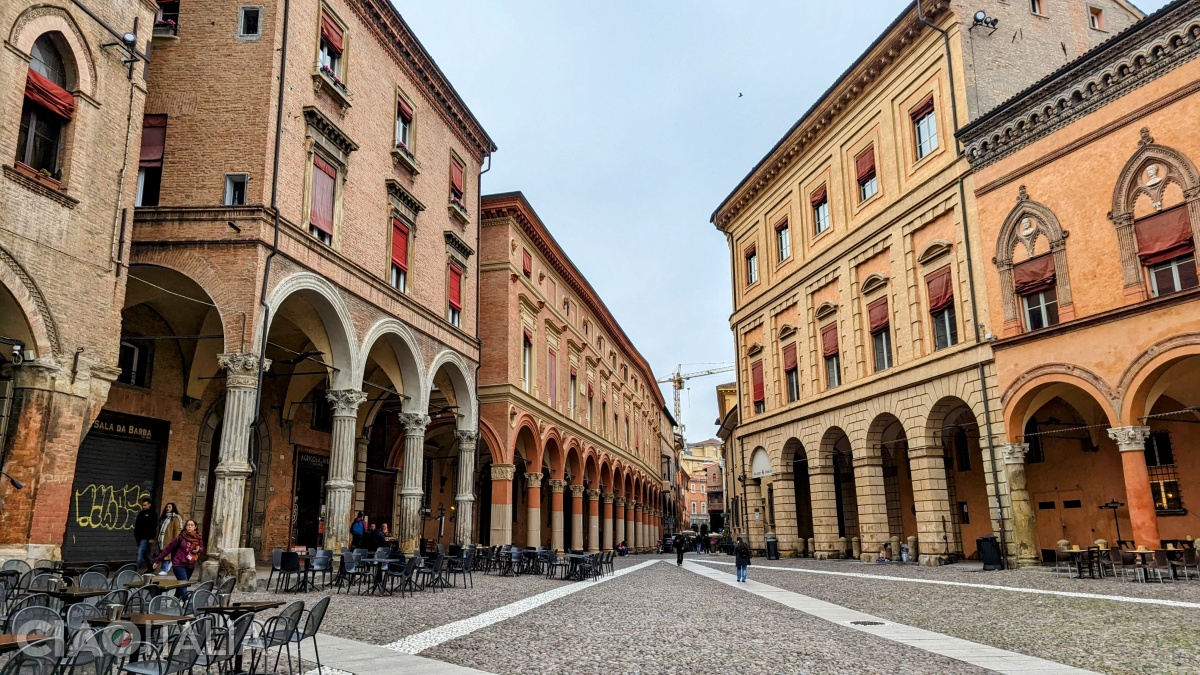
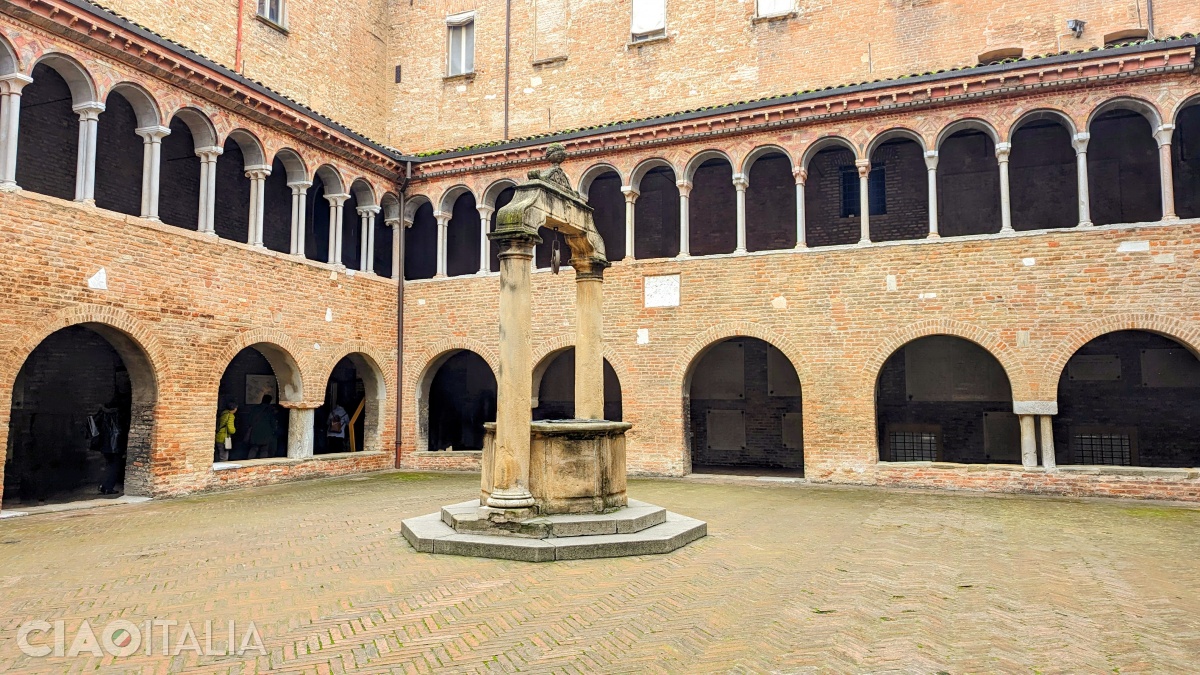
From here, cross Via Castiglione and head toward the beautiful Piazza Santo Stefano, where you'll find the Basilica of Santo Stefano. It's a fascinating complex of four churches (originally there were seven) and two inner courtyards, containing the oldest religious buildings in Bologna. Their symbolism is reminiscent of the Holy Sepulchre in Jerusalem.
Basilica di Santo Stefano
Opening hours:
- Monday: closed (only the Basilica is open, not the other monuments)
- Tuesday-Friday: 9:30 AM - 12:30 PM, 2:30 PM - 7 PM
- Saturday: 9:30 AM - 12:30 PM, 2:30 PM - 7:30 PM
- Sunday: 9:30 AM - 12:30 PM, 3:00 PM - 7:30 PM
Ticket prices:
- free admission
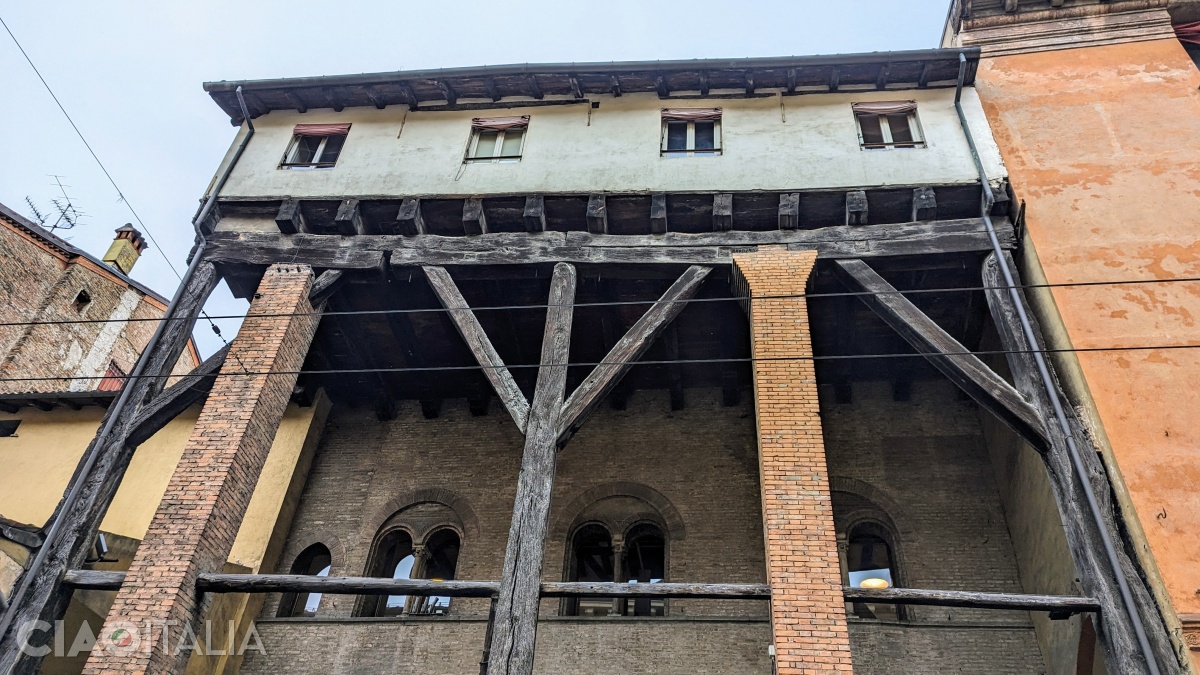
Once you're back out in Piazza Santo Stefano, turn right and walk through the gallery of Palazzo Isolani (Corte Isolani) until you reach Strada Maggiore, one of Bologna's most characteristic streets. Take a look at the beautiful medieval porticoes of the Isolani House façade. According to legend, three arrows are stuck in the wooden ceiling, 9 meters above the ground - though they're quite difficult to spot.
Continue along Strada Maggiore toward the two leaning towers, the most iconic symbols of Bologna. The Asinelli and Garisenda towers were built in the 12th century. Asinelli Tower is the tallest in Bologna (97.2 meters, with 498 steps to the top). Garisenda Tower is shorter (only 48 meters, having been shortened in the Middle Ages), but it leans much more sharply - 3.22 meters from the vertical. For the moment, climbing Asinelli Tower is not possible, due to consolidation work on Garisenda that began in October 2023.
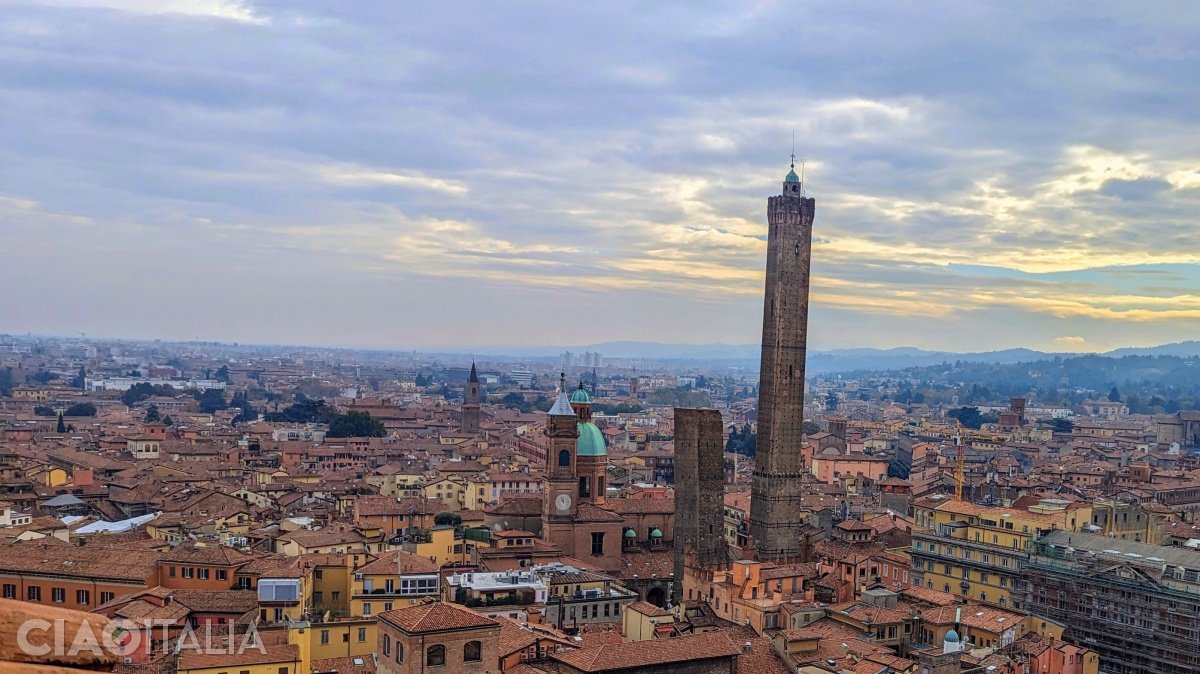
This marks the end of your one-day tour in Bologna. If you walk along Via Rizzoli, you'll return to the intersection with Via dell'Indipendenza, in Piazza del Nettuno. If you have two or three days available, you can explore even more of Bologna's attractions.