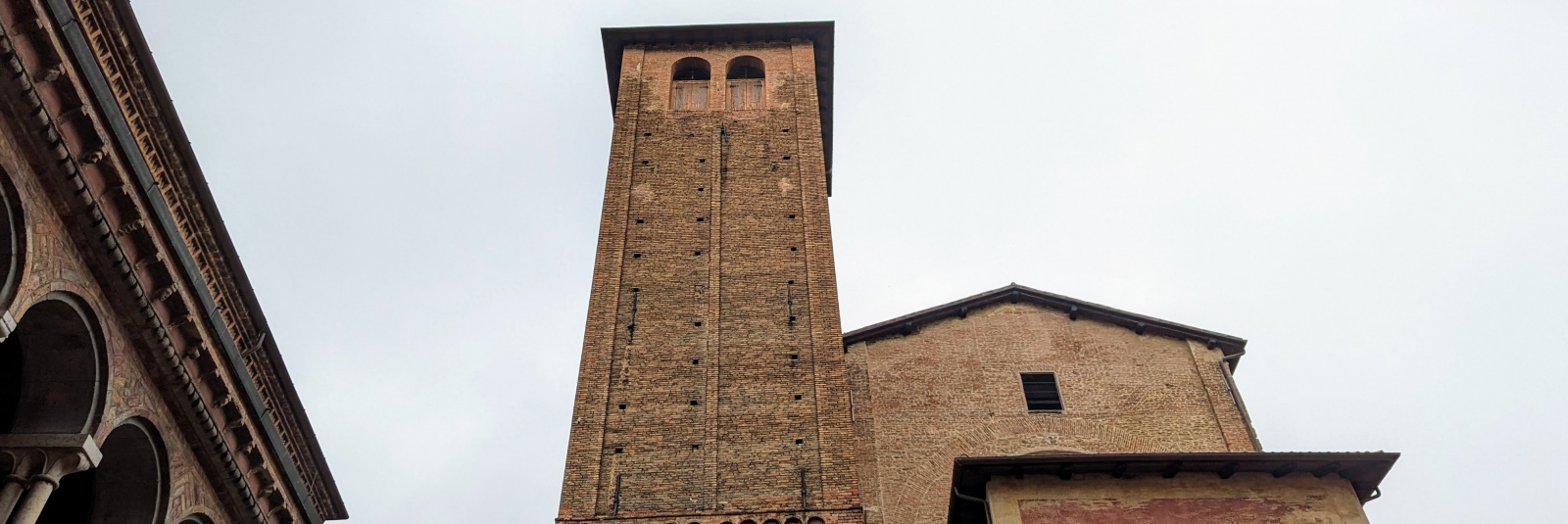
The Basilica of Santo Stefano in Bologna
The Basilica di Santo Stefano, located in Piazza Santo Stefano, is one of the most interesting churches and a must-see tourist attraction in Bologna.
Although commonly known as the Basilica di Santo Stefano, the complex consists of several interconnected religious buildings. Originally, it was made up of seven churches (which is why it is also called Sette Chiese), but only four of them have been preserved to this day.
Opening hours
The opening hours for the Santo Stefano Complex in Bologna are:
- Monday: closed (only the Basilica is open, not the other monuments)
- Tuesday - Friday: 9:30 AM - 12:30 PM, 2:30 PM - 7:00 PM
- Saturday: 9:30 AM - 12:30 PM, 2:30 PM - 7:30 PM
- Sunday: 9:30 AM - 12:30 PM, 3:00 PM - 7:30 PM
Tickets
Admission to the Santo Stefano Basilica Complex is free.
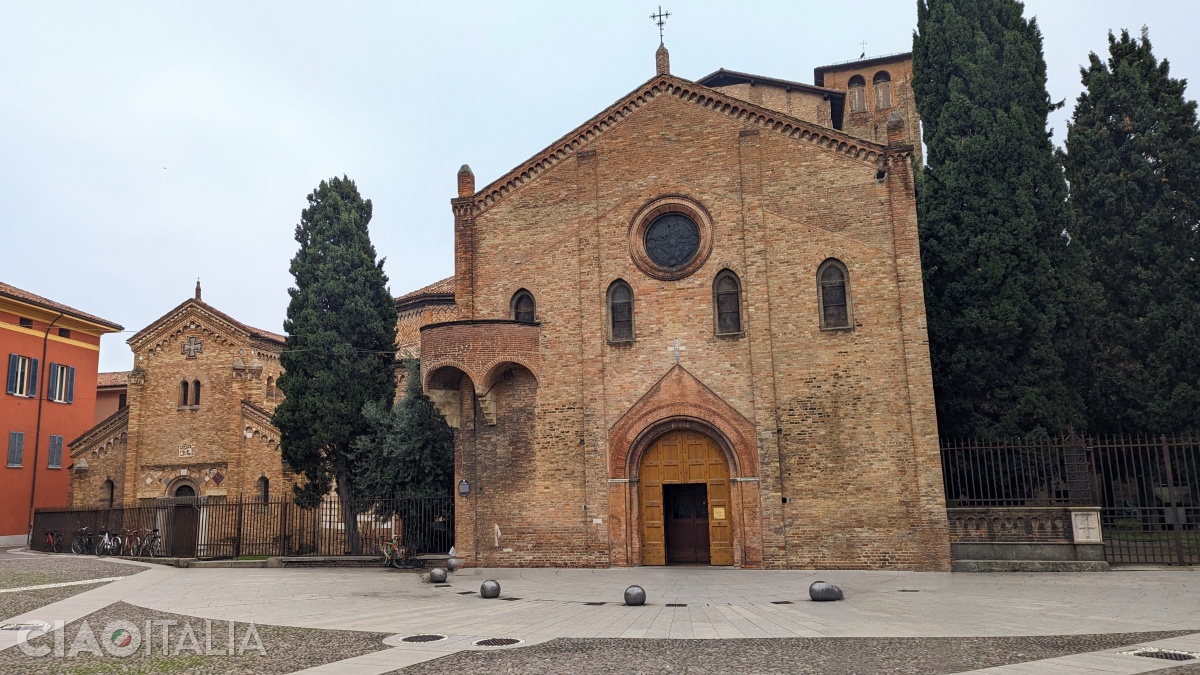
Visit to the Santo Stefano Basilica
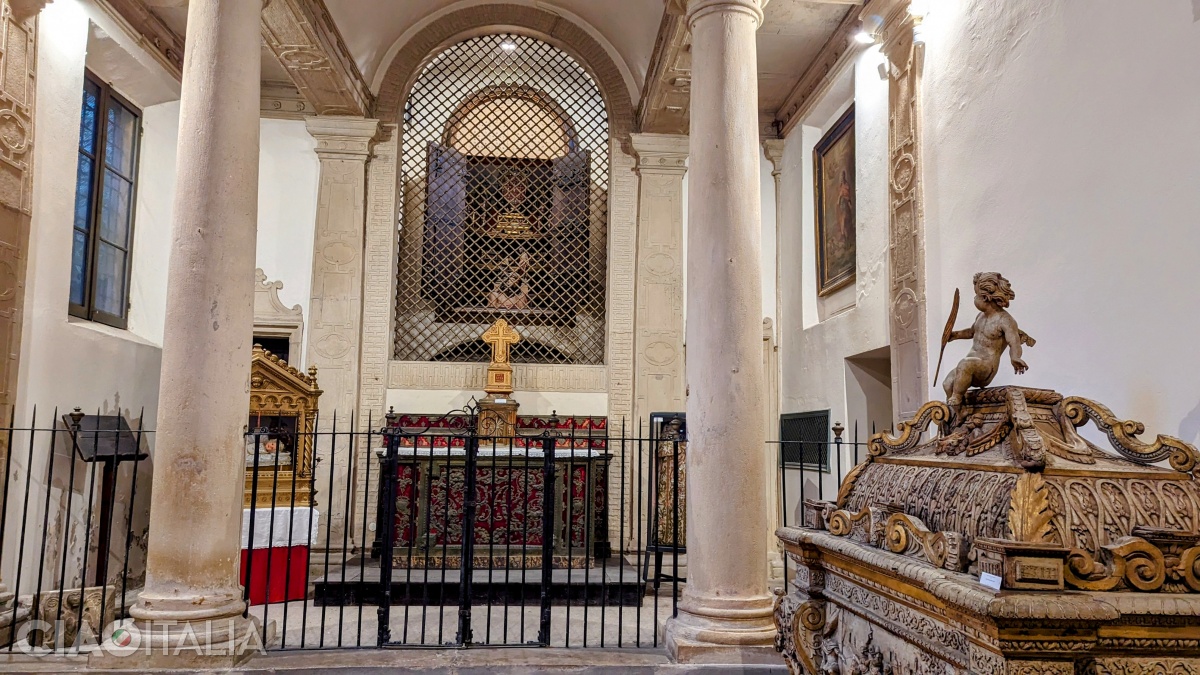
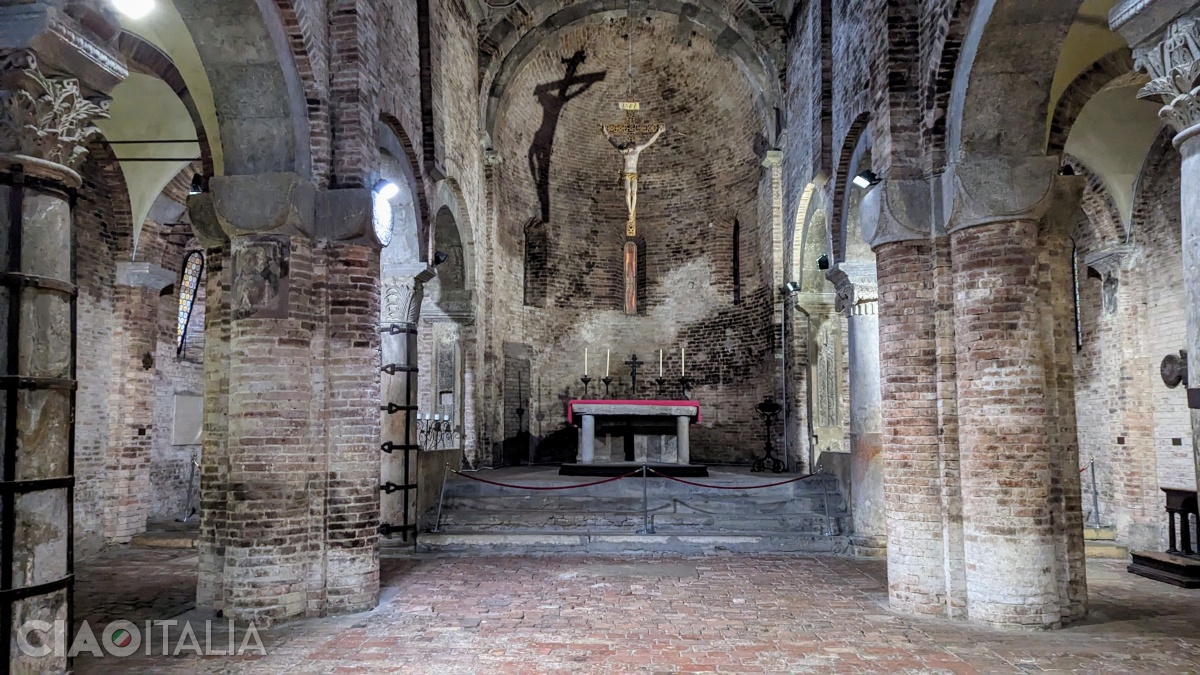
The Church of the Crucifix (Chiesa del Crocifisso)
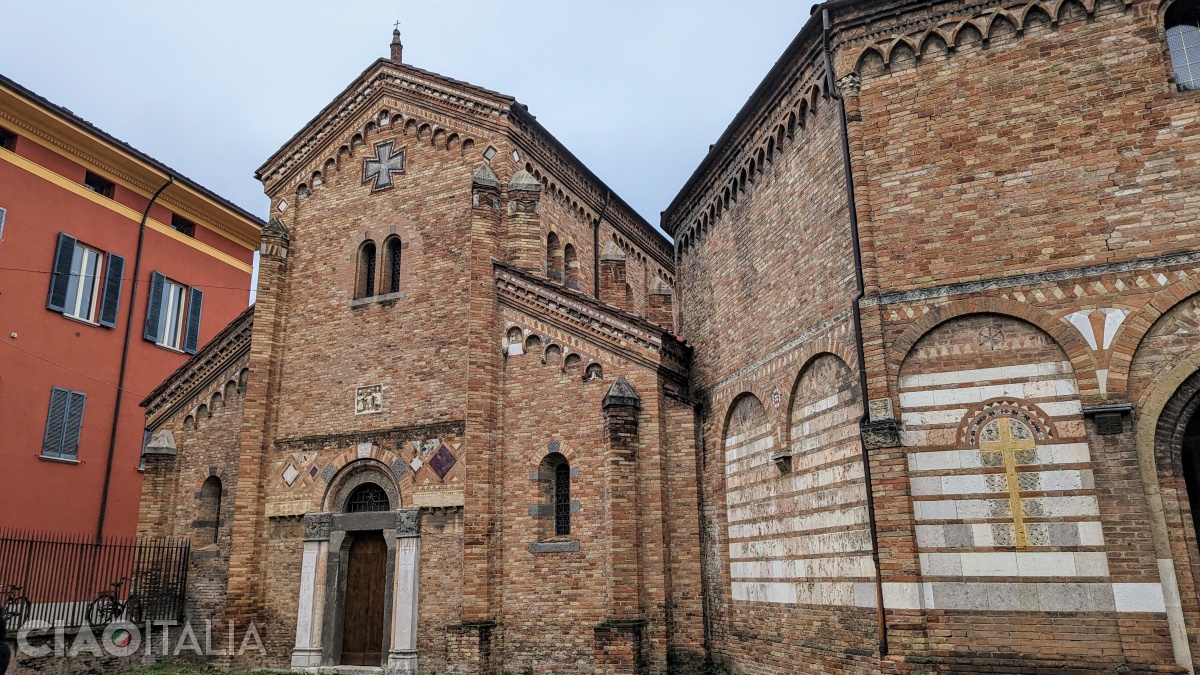
The first church you will enter is the one visible from the square to the right. It is called Chiesa del Crocifisso (The Church of the Crucifix), named after the large 14th-century crucifix hanging above the altar.
The church was built in the 8th century by King Liutprand of the Lombards, who conquered Bologna in the year 727. It is said that, in the past, there was a black stone on its façade facing the square, so shiny that women would see their reflections in it every time they passed by the church. Disturbed by such vanity, a monk cast a curse on the stone, and it stopped reflecting the women's beauty, showing instead their sins. From that moment, it lost its shine, became opaque, and was called "the stone of sins", prompting the people of Bologna to keep their distance from it.
On the left wall of the church is displayed the artwork Il Compianto sul Cristo morto ("The Lamentation over the Dead Christ"), dating back to the 18th century. According to legend, it was made from material obtained from playing cards that had been confiscated during a period when gambling was banned.
The church's crypt, dedicated to St. John the Baptist (the original patron of the church), dates from the year 1017 and houses the relics of Saint Vitale and Saint Agricola. According to legend, one of the twelve columns in the crypt (symbolizing the number of the Apostles) was brought by San Petronio from the Holy Land because it matched the exact height of Jesus - supposedly 1.70 meters. Visitor access to the crypt is not permitted, but you can catch a glimpse through the glass walls.
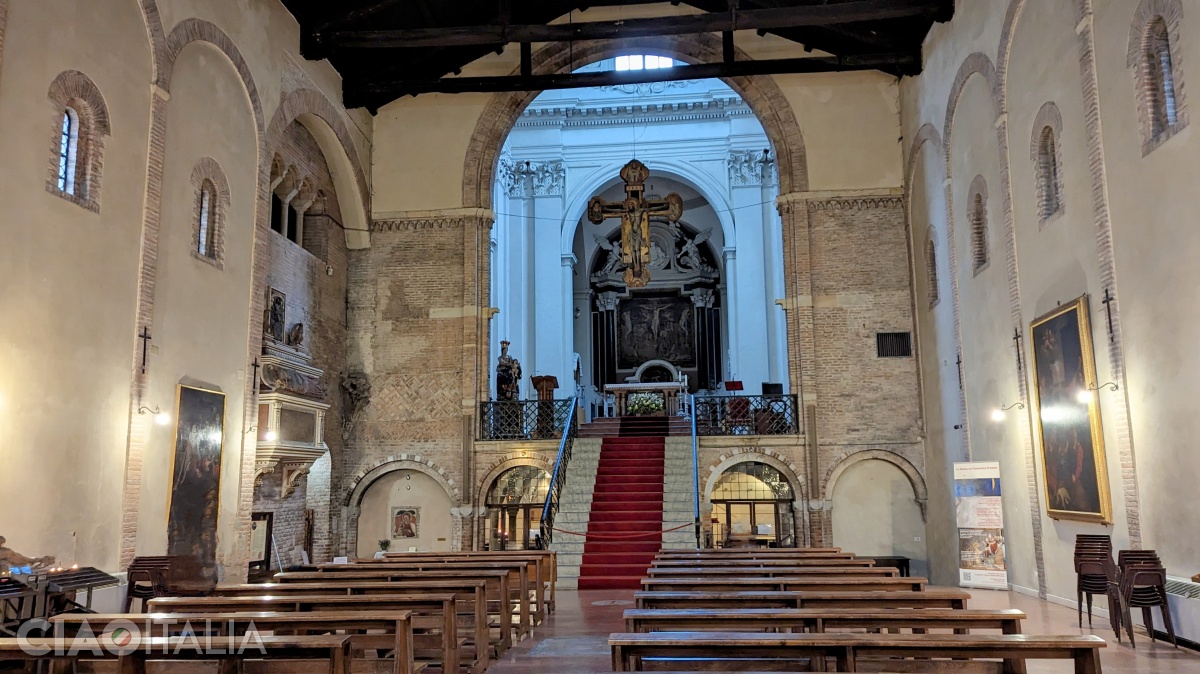
The Church of the Holy Sepulchre (Chiesa del San Sepolcro)
Next is the Chiesa del San Sepolcro (Church of the Holy Sepulchre) - the one in the center when viewed from the square - which is the core of the entire complex. Since the 2nd century AD, this site housed a Roman temple dedicated to the goddess Isis, built above a spring. During the renovation of Piazza Santo Stefano, a stone was discovered bearing the inscription Isidi, the Latin name of the goddess. The presence of springs was characteristic of temples dedicated to Isis, with the spring symbolizing the Nile River. The current church still preserves a few Roman columns from that period.
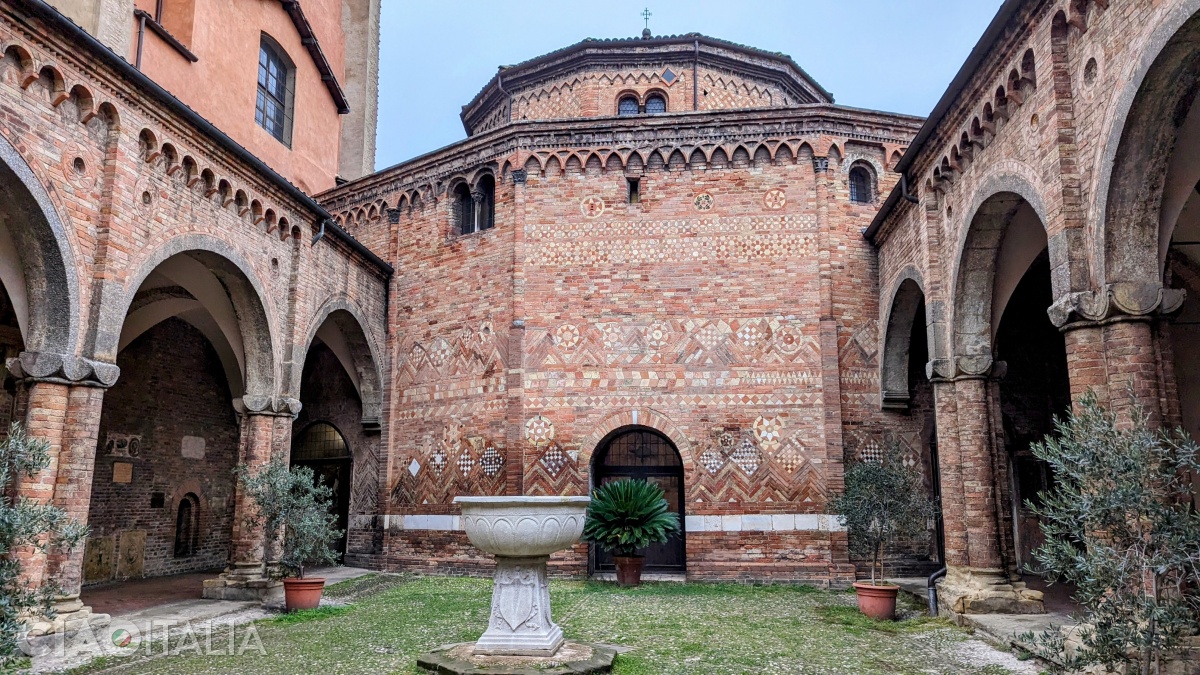
The place maintained its spiritual significance but was converted into a baptistery in the 5th century (hence the octagonal shape) by San Petronio (Saint Petronius), the bishop who later became Bologna's patron saint. From that point on, the spring came to symbolize the River Jordan, and in the Middle Ages, it was believed that its waters had healing powers. San Petronio was the one who initiated the construction of this complex, similar to the Holy Sepulchre in Jerusalem, a place he had visited several times. This was also where he wished to be buried, and his relics were kept in the church until the year 2000, when they were transferred to the San Petronio Basilica in Piazza Maggiore.
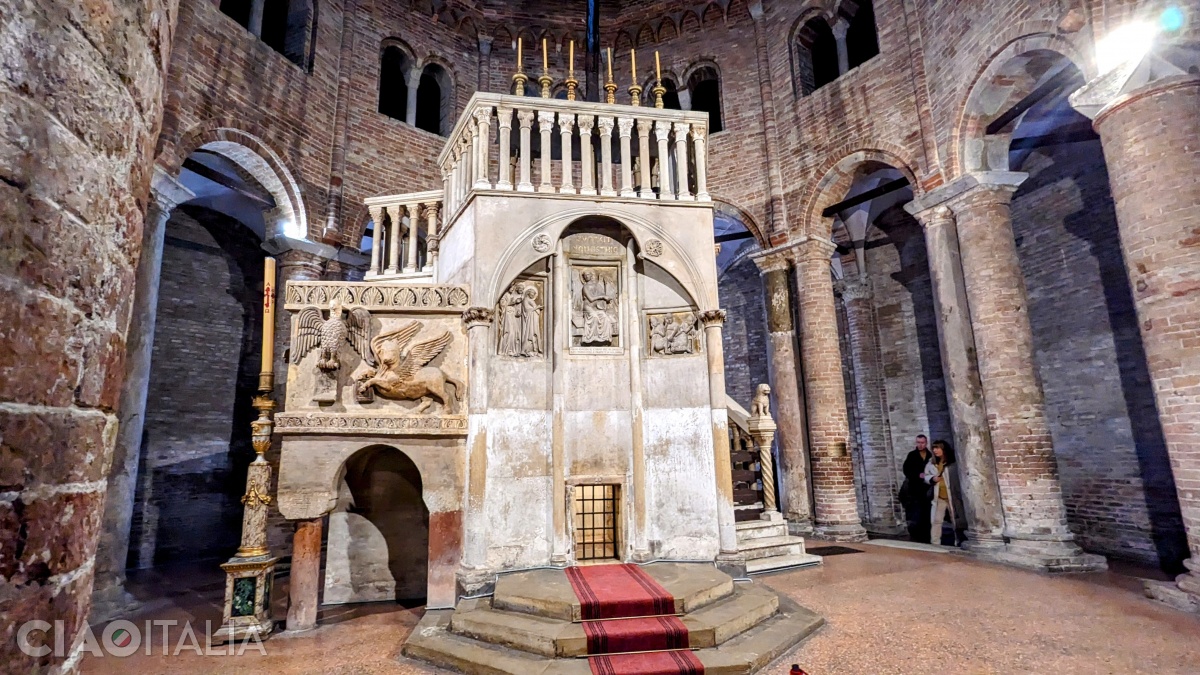
Although it was customary for former temples of Isis to be transformed into churches dedicated to the Virgin Mary or Saint Mary Magdalene, this church was instead dedicated to Saint Stephen. Despite that, during the Middle Ages, prostitutes from Bologna would come here on Easter Sunday to pray to Mary Magdalene.
The church bore the name of Saint Stephen only during the 5th to 8th centuries, after which it was renamed the Church of the Holy Sepulchre. Today, none of the churches in the complex bear Saint Stephen's name, but the entire complex is known as San Stefano alle sette chiese (Saint Stephen of the Seven Churches).
The church has been altered many times throughout history. Inside, it houses a half-scale replica of the Holy Sepulchre in Jerusalem.
There is a tradition where pregnant women come and walk 33 times around the tomb, then pray before the Fresco of the Pregnant Virgin, located in the Church of the Martyrdom.
The Church of Saints Vitale and Agricola (Chiesa dei Santi Vitale e Agricola)
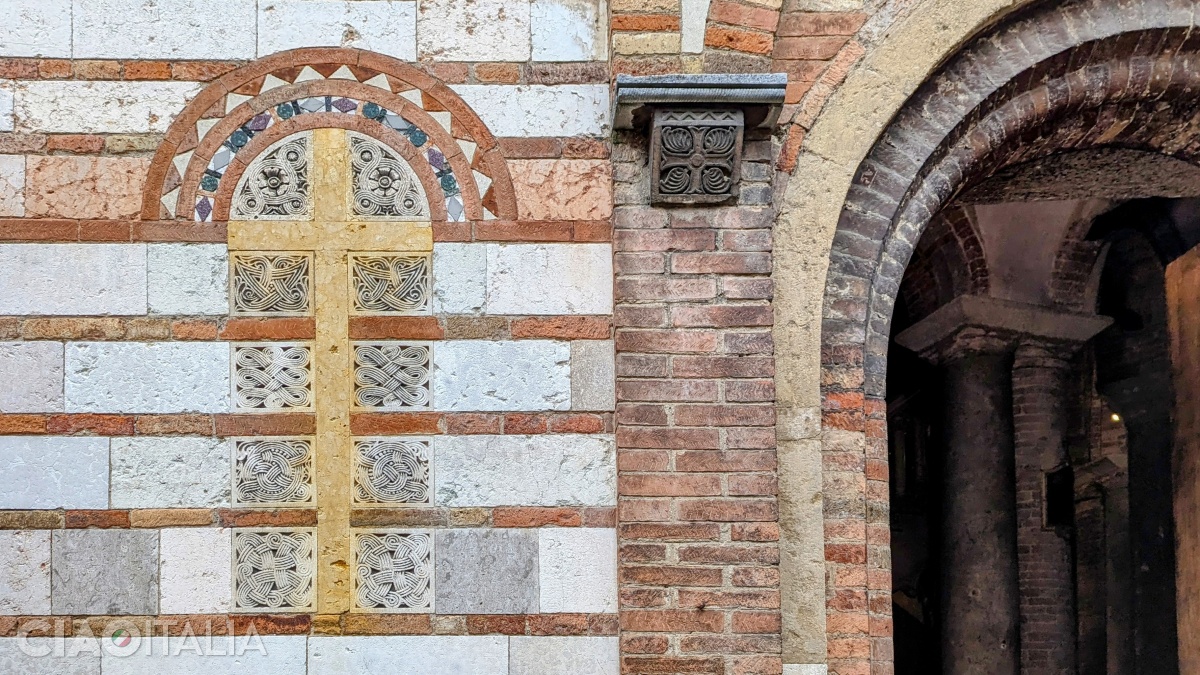
The church dedicated to Saints Vitale and Agricola (Chiesa dei Santi Vitale e Agricola) - the one farthest to the left when viewed from the square - is considered the oldest church in Bologna. It dates from the 4th century (with later reconstructions) and preserves the sarcophagi of the two saints, who were martyred by Emperor Diocletian in the year 304 (their remains were later transferred to Milan). Remnants of the original Roman pavement can also still be seen.
On the right wall, there is a cross said to mark the place where Saint Agricola was martyred, although it dates from a later period.
In the 15th century, some believed that the relics of Saint Peter were kept in this church. Since this belief affected pilgrimages (and revenue) to St. Peter's Basilica in the Vatican, Pope Boniface IX ordered the roof to be removed and the church to be filled with earth. It remained that way for 70 years, until it was restored thanks to the intervention of Archbishop Giuliano della Rovere.
In the courtyard facing the street, there are two medieval sarcophagi that once housed the relics of Bologna's first two bishops.
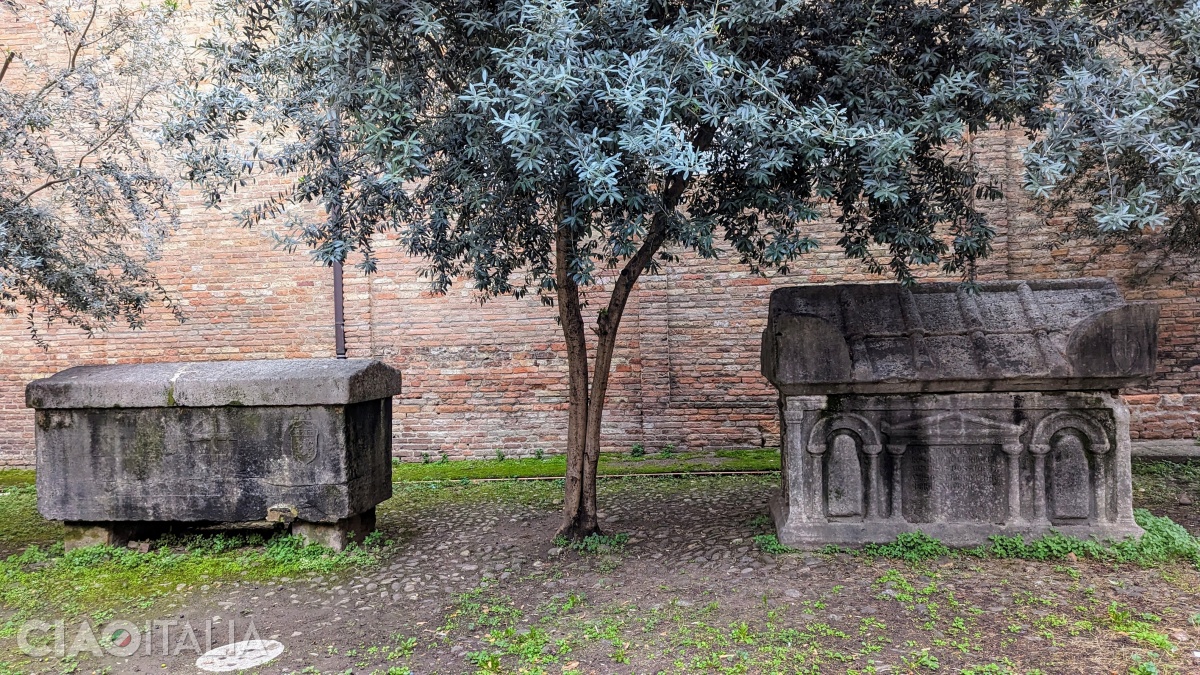
Pilate's Courtyard (Cortile di Pilato)
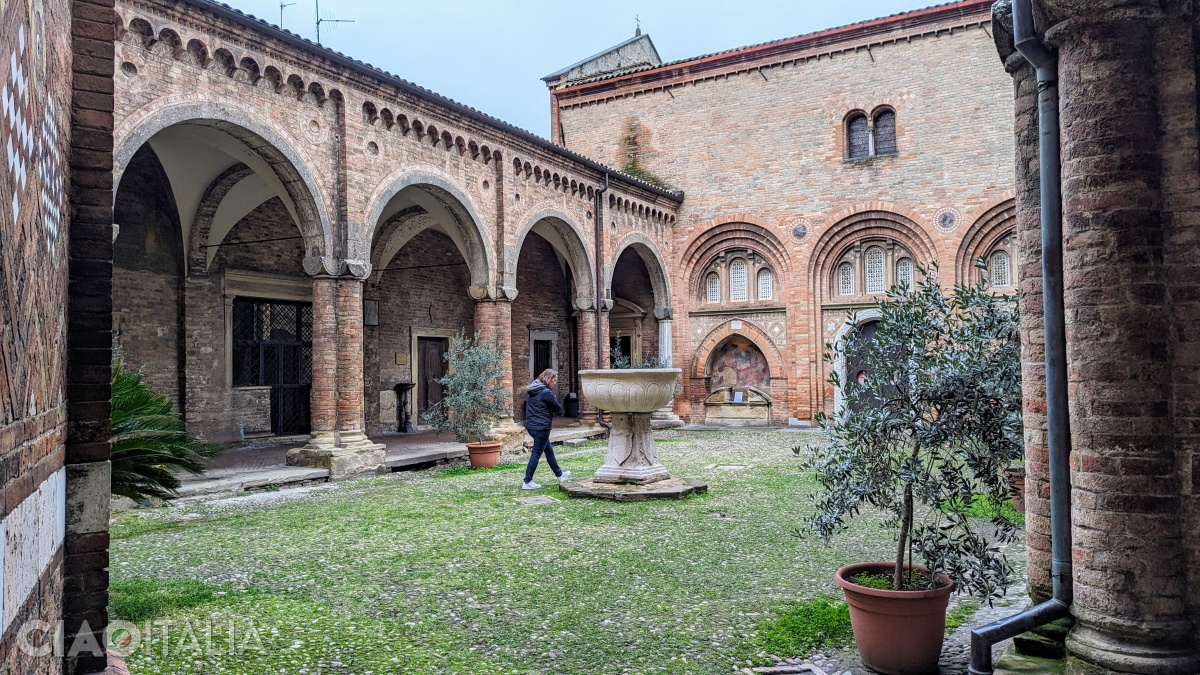
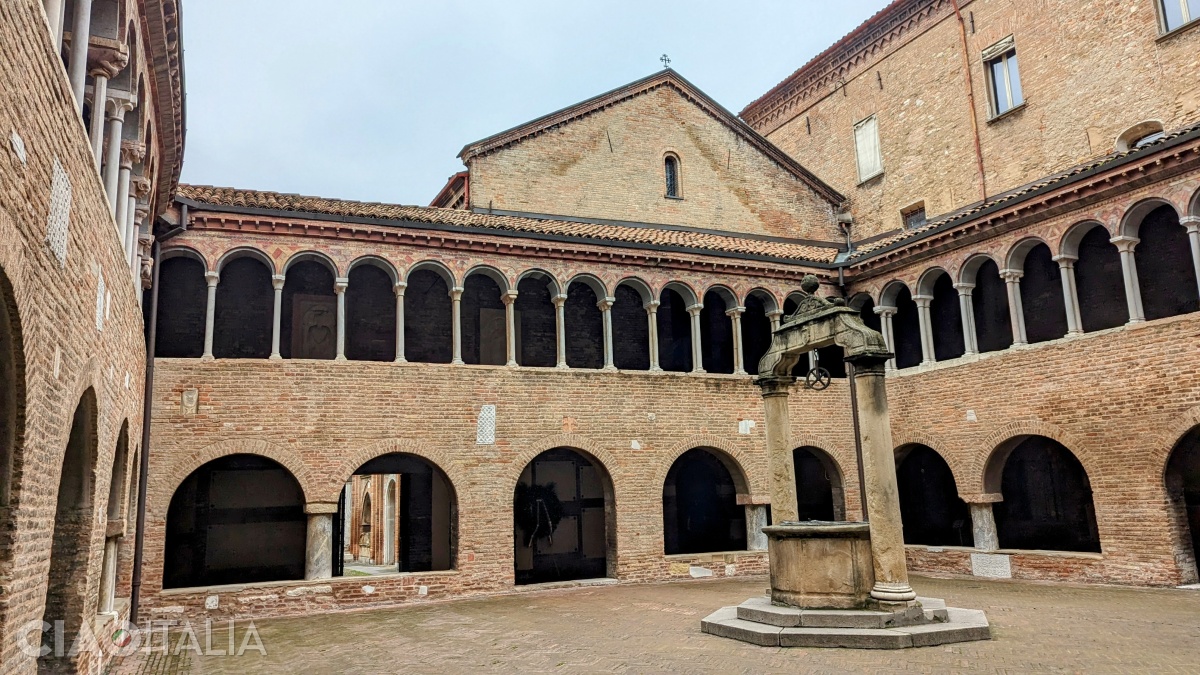
The inner courtyard you reach from the Church of the Holy Sepulchre is called Pilate's Courtyard (Cortile di Pilato), named after the stone basin in the center. At one point, it was believed to be the very basin in which Pontius Pilate washed his hands after condemning Jesus. However, the stone basin dates to the 8th century and bears an inscription mentioning Liutprand, the Lombard king who conquered Bologna.
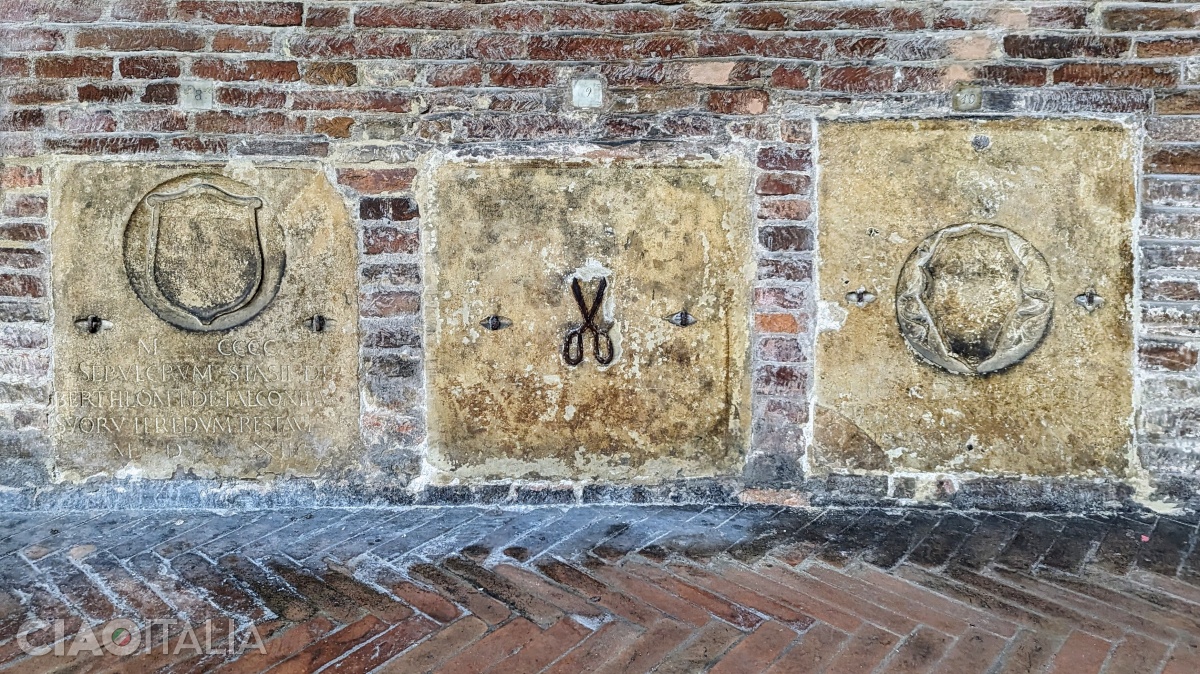
On the right wall of the courtyard (as you come from the Church of the Holy Sepulchre), there is a marble slab featuring a tailor's scissors, symbolizing his trade.
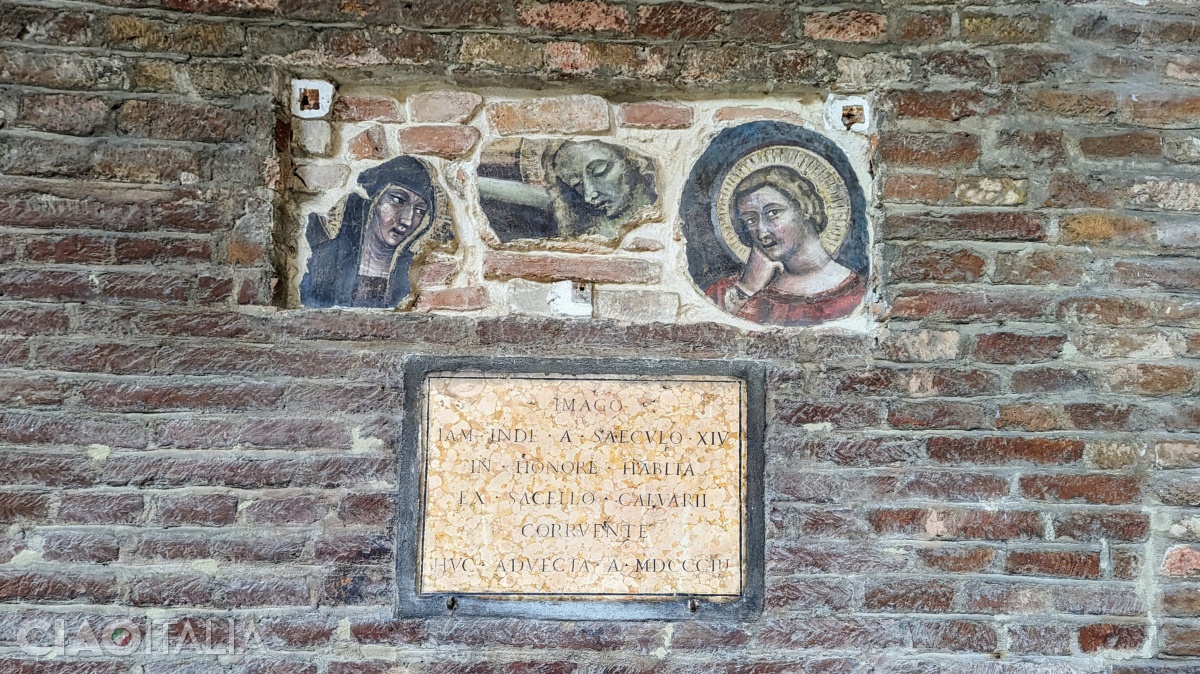
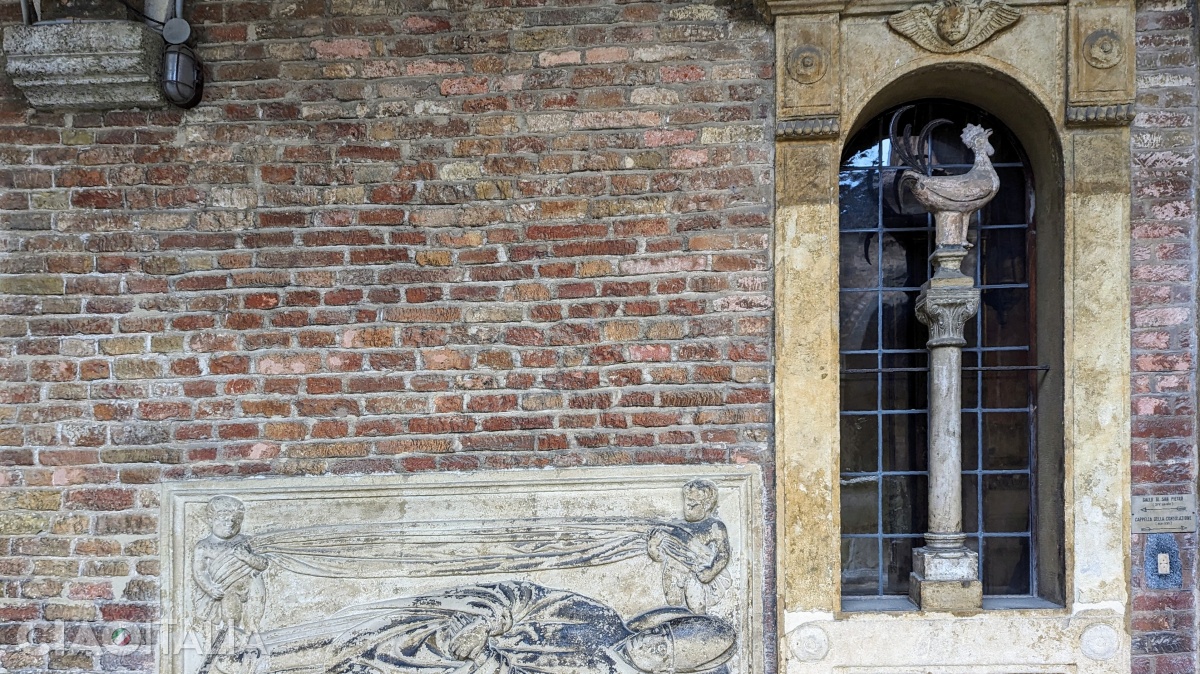
Nearby, at the top of a column set into a window frame, there is a stone rooster from the 14th century, alluding to Peter’s denial of Jesus.
The Church of the Martyrdom (Chiesa del Martyrium)
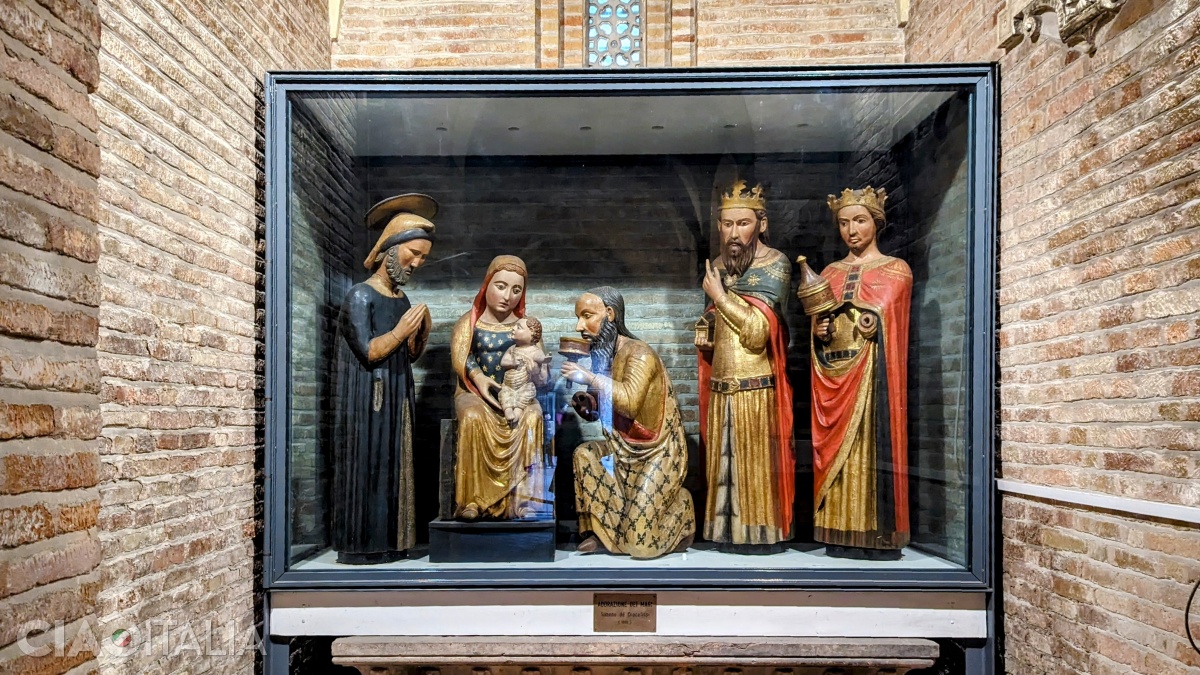
The Church of the Martyrdom (Chiesa del Martyrium) is also known as the Church of the Holy Cross, the Church of Calvary, or the Church of the Holy Trinity. It most likely dates back to the 5th century and houses one of the oldest representations of the Nativity of Jesus. The statues are life-sized, made of wood, and depict the Adoration of the Magi. They were sculpted in the 13th century and painted in the 14th century by the Bolognese painter Simone dei Crocifissi (the same artist who created the crucifix in the first church of the complex).
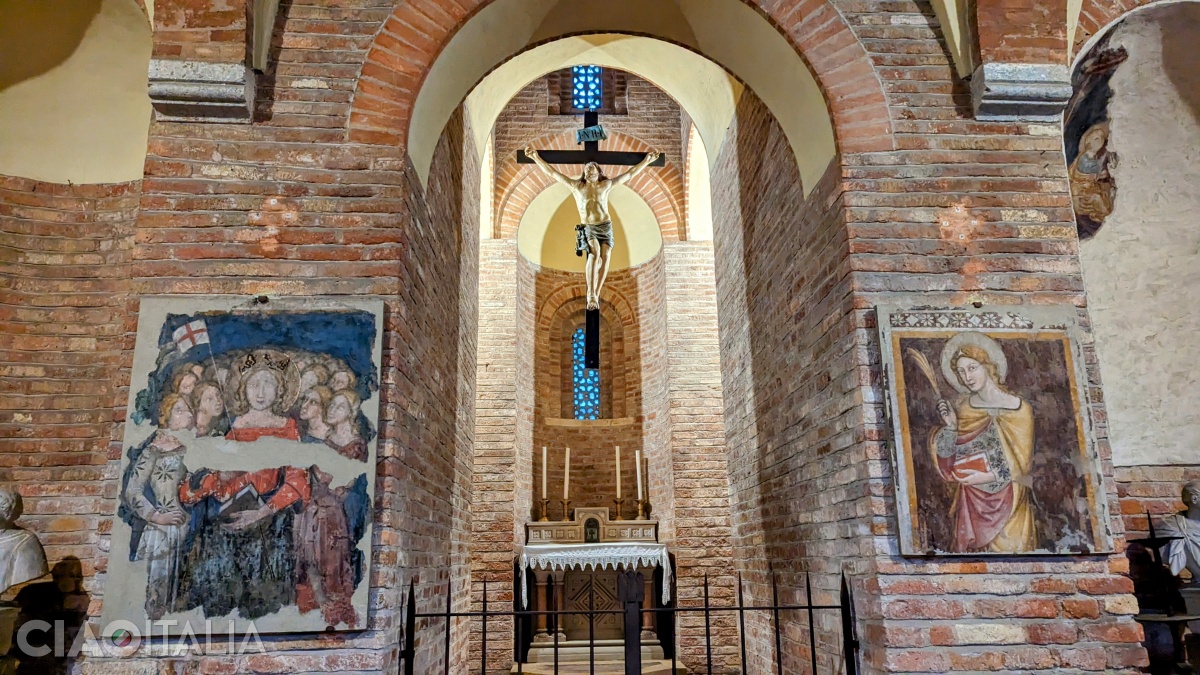
This church also preserves several 14th- and 15th-century frescoes, including the Fresco of the Pregnant Virgin, before which women from Bologna would pray after walking 33 times around the tomb in the Church of the Holy Sepulchre.
The Medieval Cloister
The medieval cloister extends over two levels and has a 17th-century fountain in the center. The columns on the upper level, featuring interesting capitals, date from the 12th century.
On the walls, there are plaques bearing the names of Bologna's residents who died in World War I and World War II.
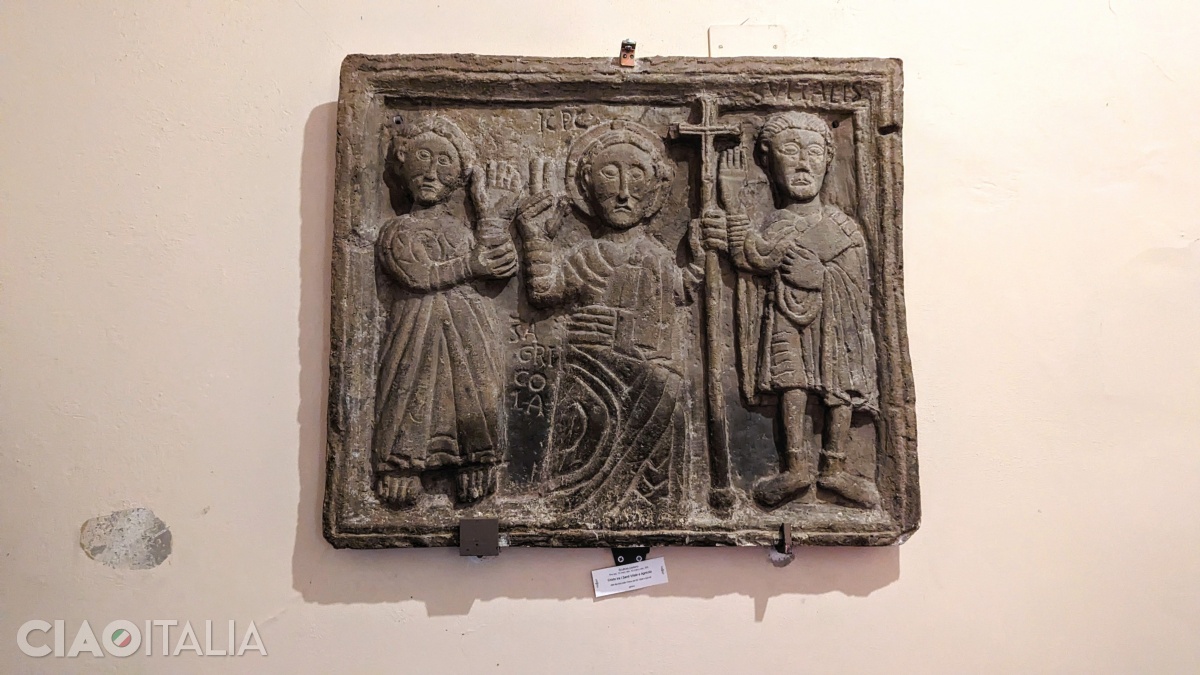
Santo Stefano Museum
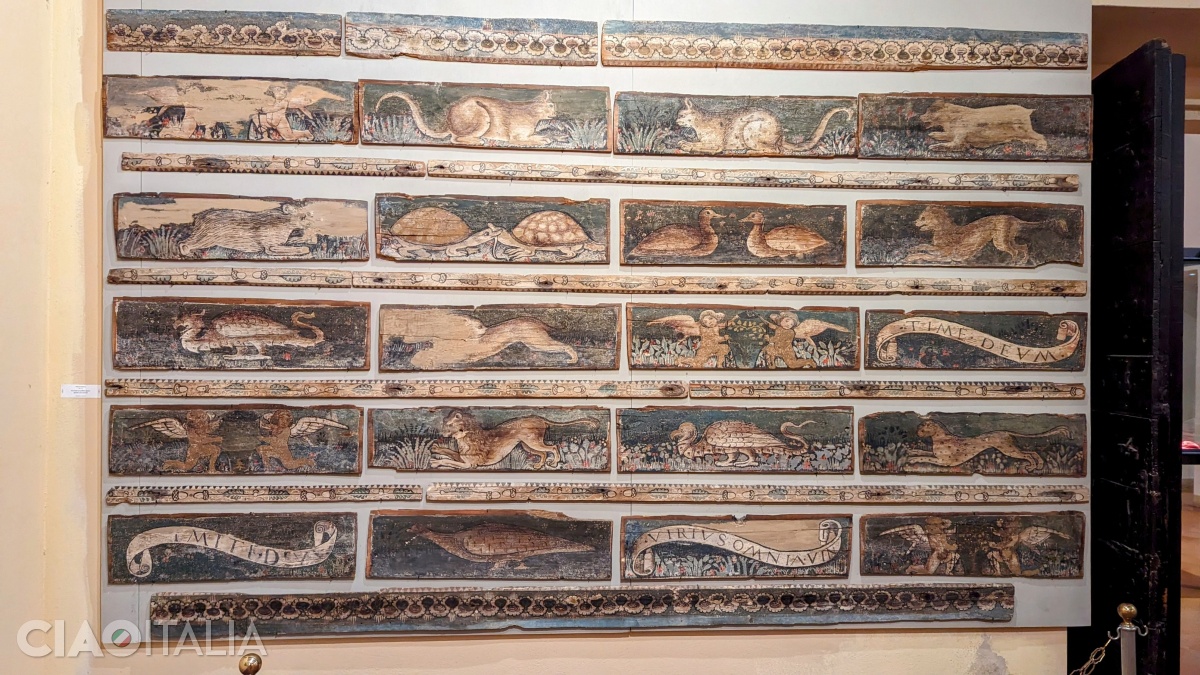
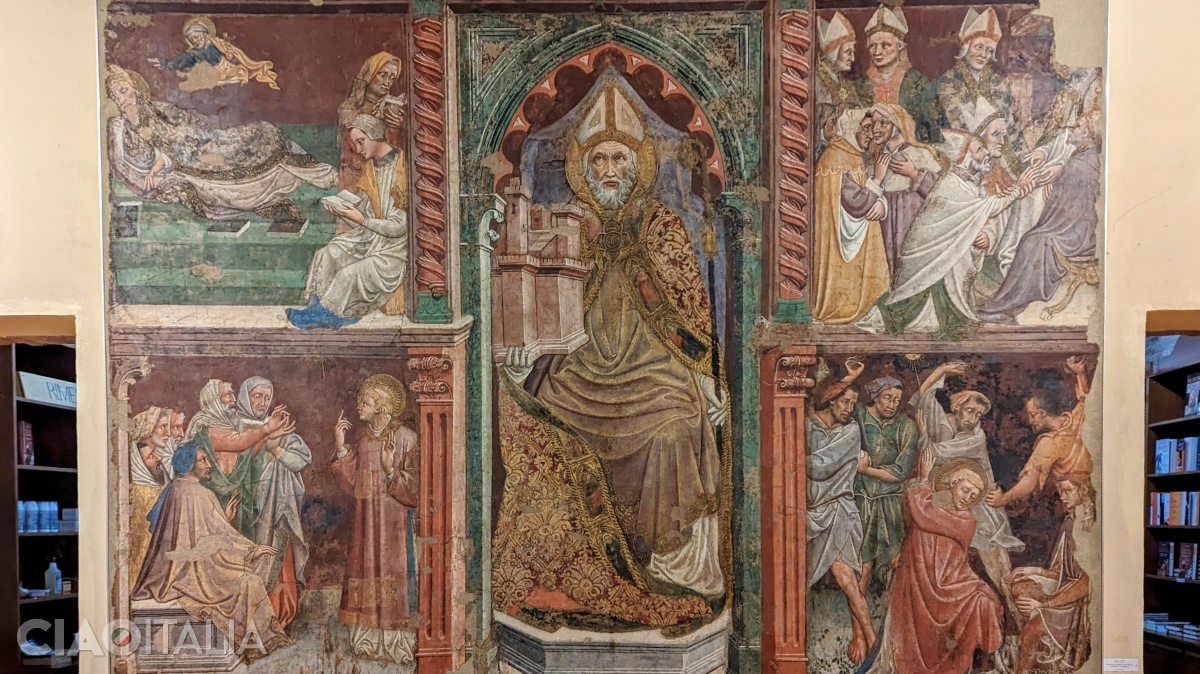
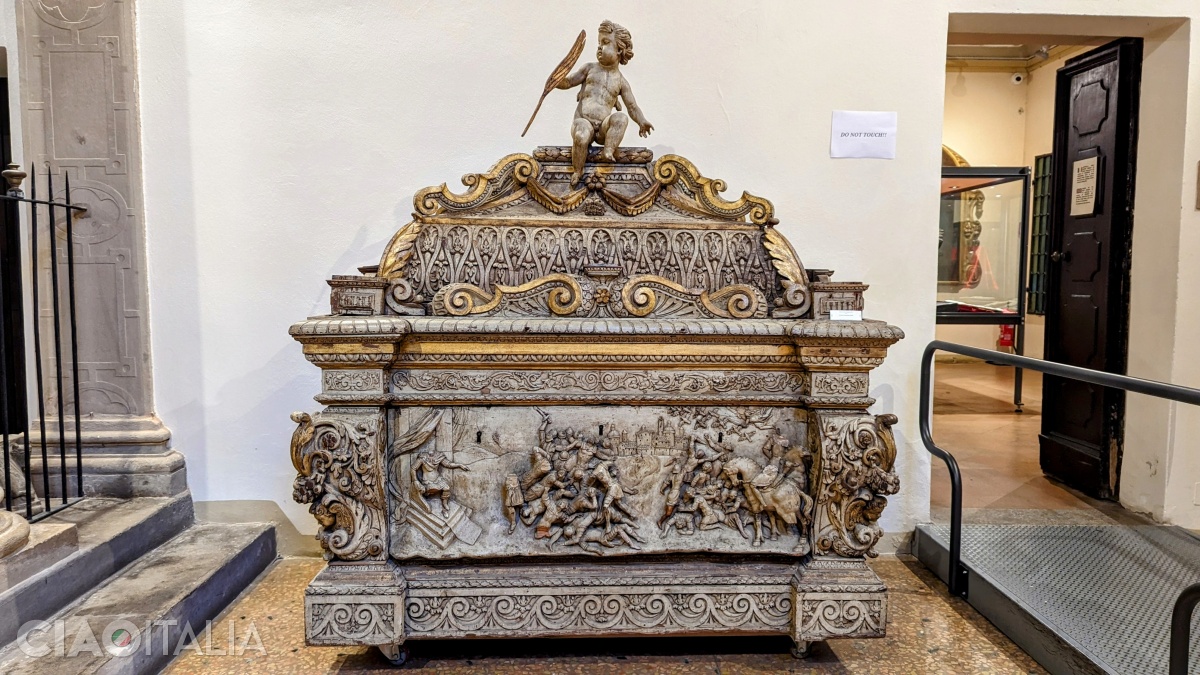
From the medieval cloister, you enter the small museum, which also has a shop selling books, souvenirs, and products made by monks from various monasteries.
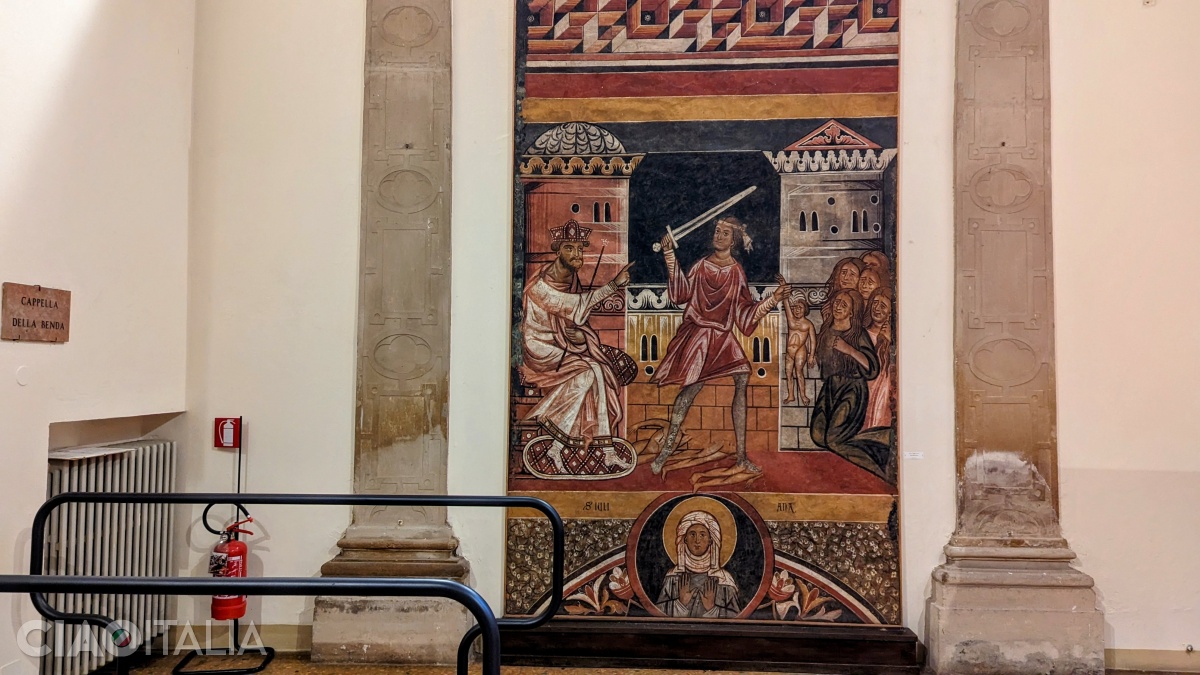
The museum exhibits medieval artworks that were once housed in the seven churches. The Veil Chapel (Cappella della Benda) preserves a strip of cloth that is said to have been worn by the Virgin Mary on her forehead as a sign of mourning.