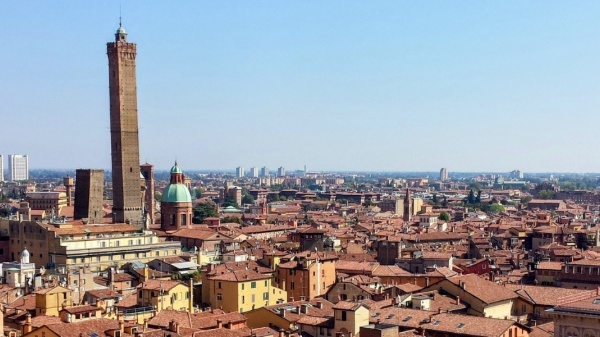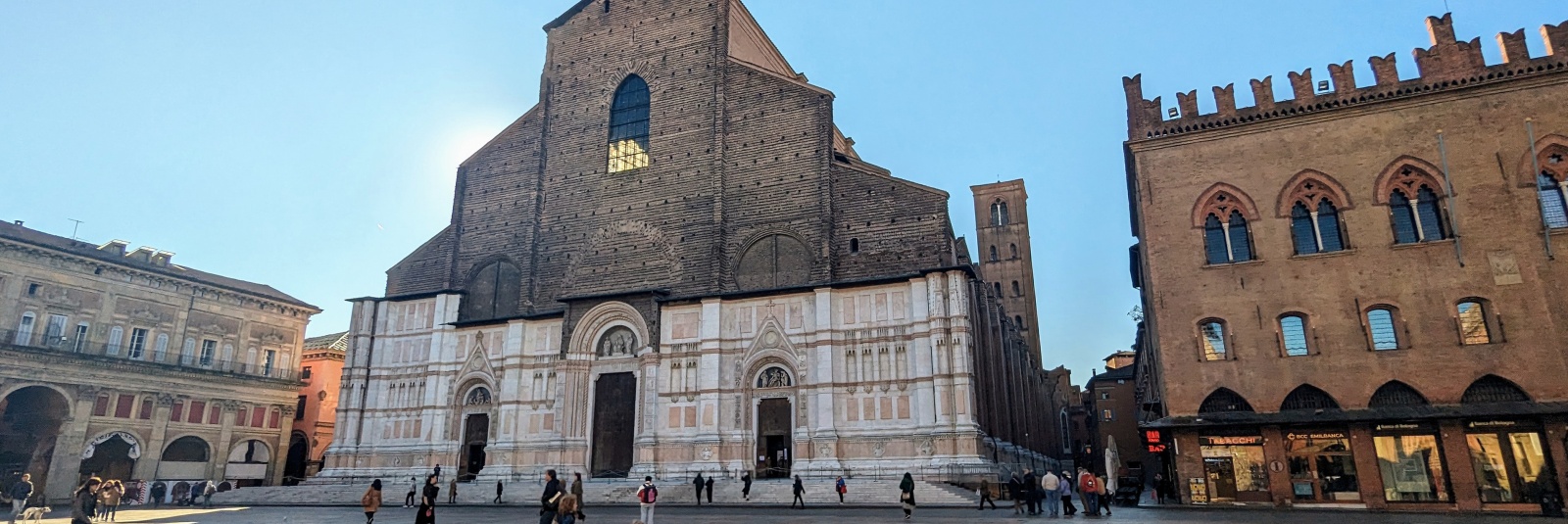
Basilica di San Petronio in Bologna
The Basilica of San Petronio is the largest and most important church in Bologna, although it is NOT the city's cathedral - the cathedral, called Duomo di San Pietro, is located nearby on Via dell'Indipendenza. Situated in Piazza Maggiore, the Basilica of San Petronio immediately catches your eye with its façade clad only halfway in white and pink marble.
The church is dedicated to Saint Petronius (San Petronio), who was bishop of Bologna between the years 431 and 450 and is also the city’s patron saint. His feast day is celebrated every year on October 4th.
Visiting Hours
The visiting hours for the Basilica of San Petronio in Bologna are:
- Church: Monday-Sunday, 10:00 AM - 6:00 PM (last entry at 5:50 PM)
- Bolognini, San Sebastiano, and San Vincenzo Chapels: Monday-Sunday, 10:00 AM - 5:30 PM (last entry at 5:15 PM)
- Museum: Monday-Sunday, 10:00 AM - 5:30 PM (last entry at 5:15 PM)
Tickets
Basilica di San Petronio and the small church museum (where you can see several models and proposed projects over time) can be visited for free.
For visiting the Bolognini, San Sebastiano, and San Vincenzo chapels, where are kept the most important works of art, the ticket price is:
- Adults: €5
- Seniors (65+ years): €3
- Youth (11-18 years): €3
- Children under 11: free
Tickets for access to the three chapels are purchased directly inside the church (on the left side, about halfway down the nave). Photography is not allowed in the Bolognini Chapel.
History
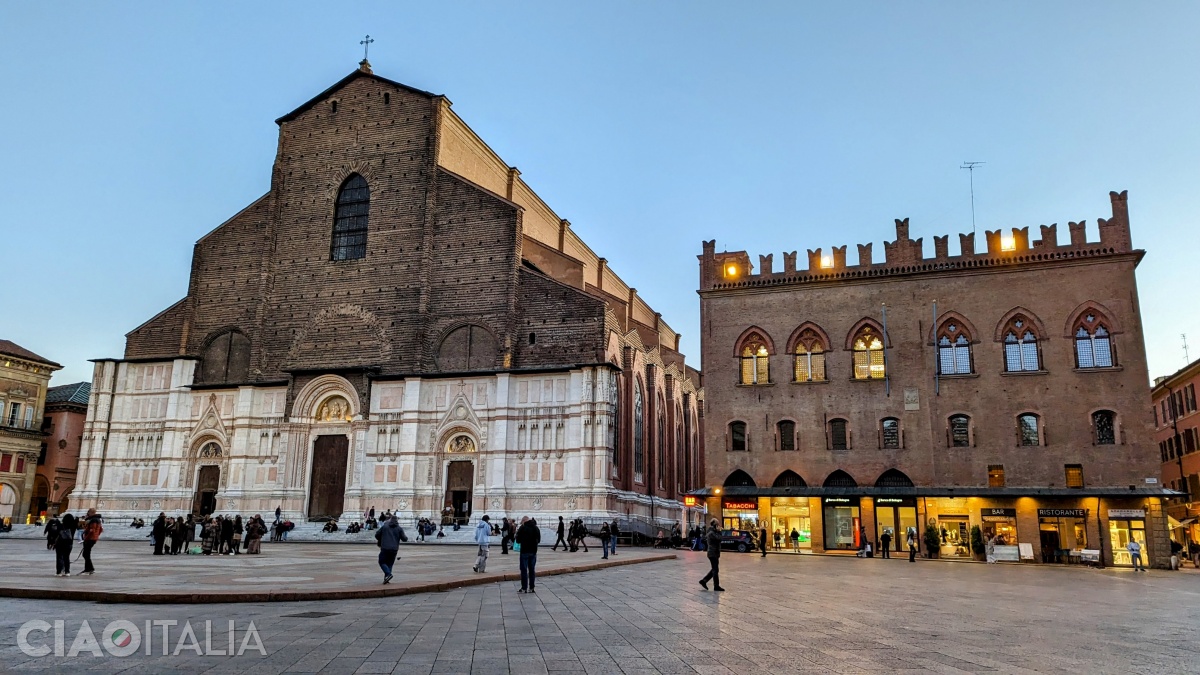
The construction of the Basilica of San Petronio in Bologna began in the year 1390 and lasted for more than 300 years. To make room for it, towers, houses, and other churches were demolished.
The people of Bologna had hoped to build a church twice as large, but their grand plans largely failed due to a lack of funds. The Basilica of San Petronio was supposed to be larger than St. Peter's Basilica in the Vatican, something that, of course, did not please the pope. Legend has it that Pope Pius IV helped slow down the construction efforts, encouraging in 1561 the establishment of the University's headquarters (Palazzo dell'Archiginnasio) right next to it, on the very spot where the basilica was supposed to be expanded.
Also as a sign of their desire for religious independence, the people of Bologna are said to have deliberately built the church along a north-south axis instead of the traditional east-west, so that it could not be turned into a cathedral, which was associated with the symbol of the papacy.
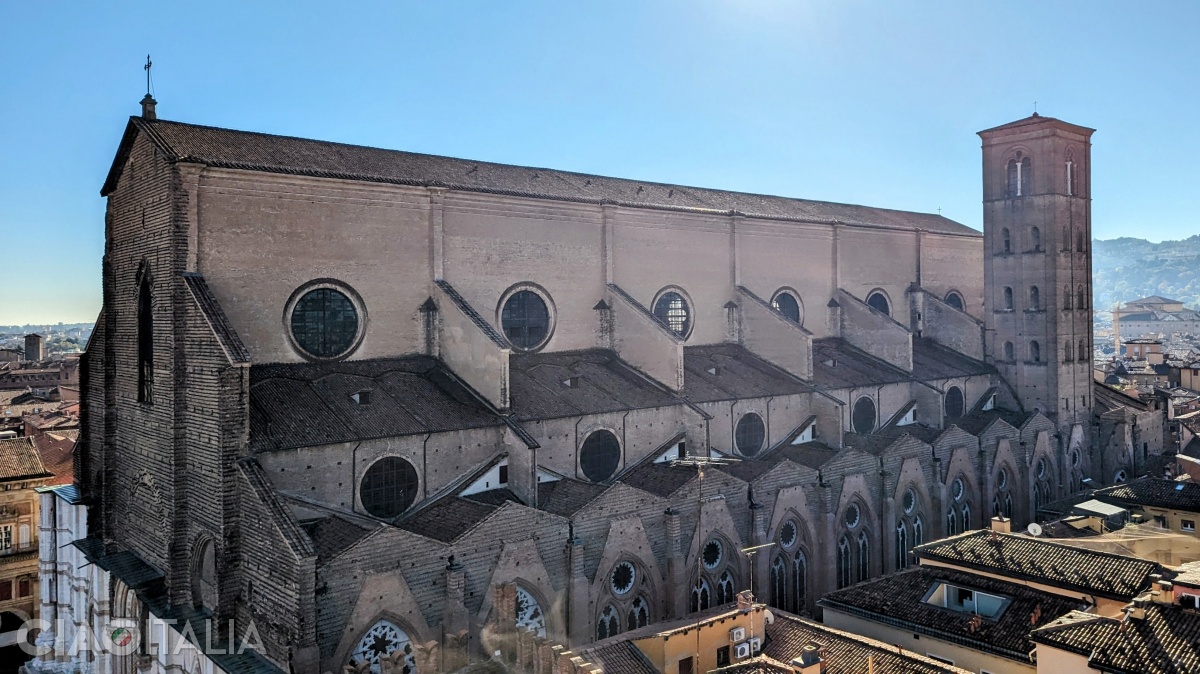
The Church of San Petronio is still unfinished today: the façade is only partially clad in marble, and the transept wings (the cross arms of the church) were never built. Even so, it remains one of the largest churches in the world: it measures 132 meters in length, 60 meters in width, and 45 meters in height, and it can accommodate up to 28,000 people.
The Basilica of San Petronio is also one of the most important churches: it is the place where, in 1530, Charles V was crowned Emperor of the Holy Roman Empire. At that time, Bologna was the most important papal state after Rome.
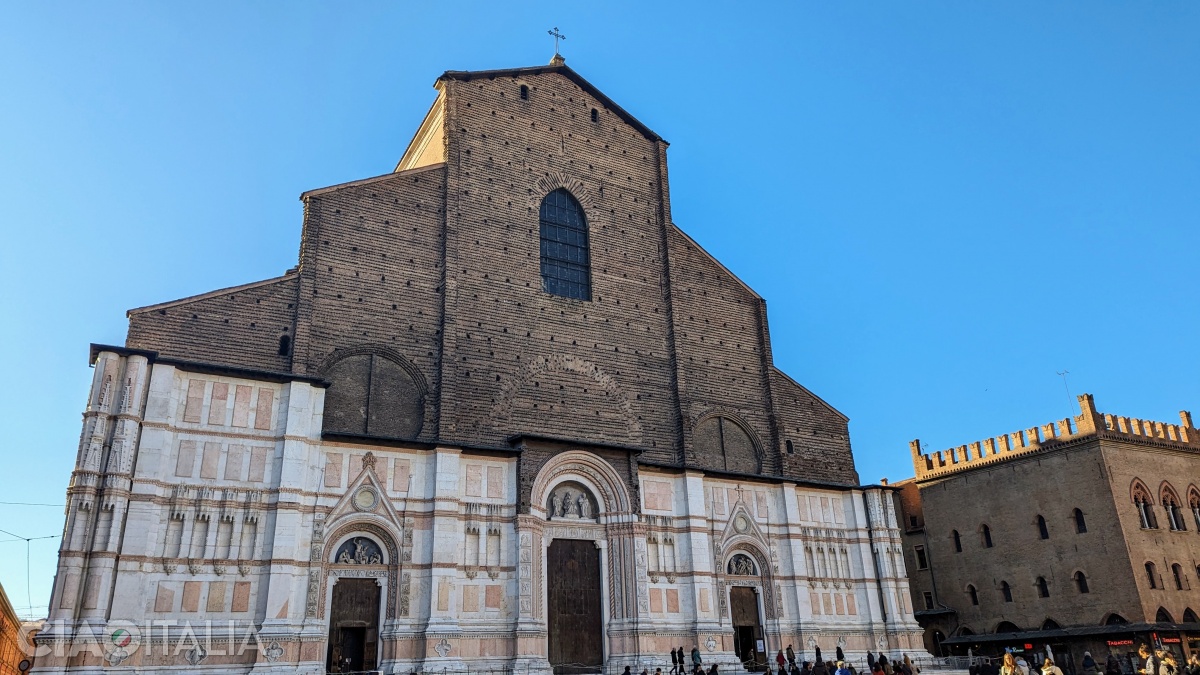
Visiting Basilica San Petronio
Porta Magna
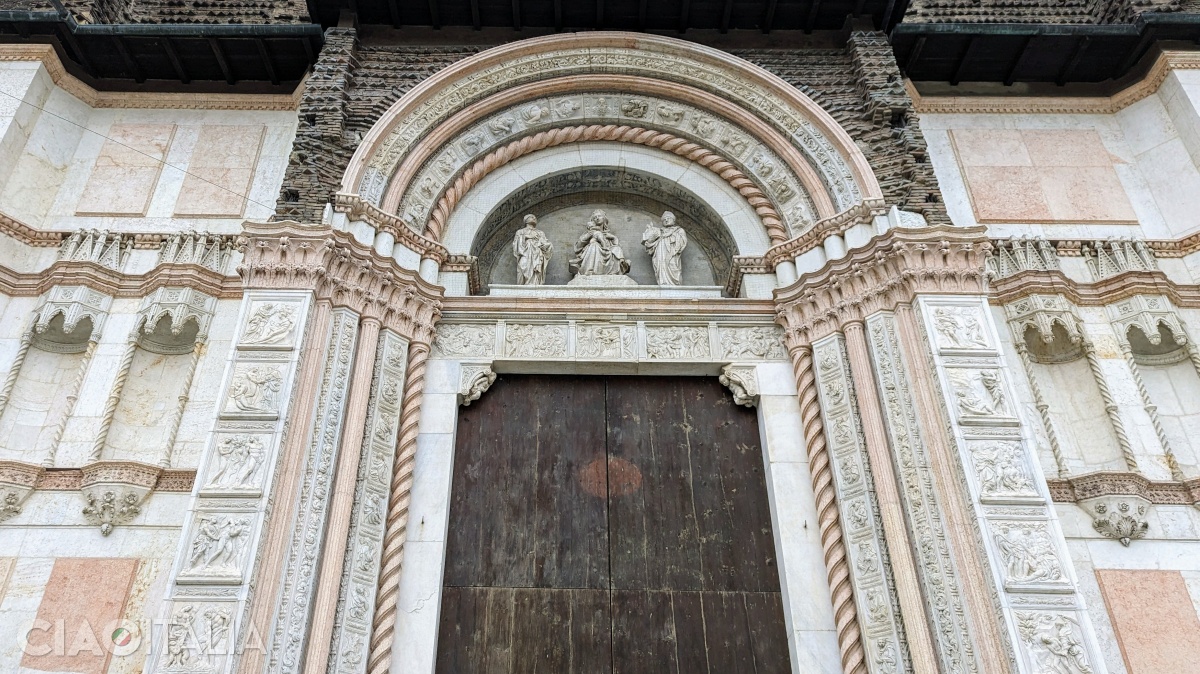
Before entering the church, notice the main entrance portal: it is called the Porta Magna and is the work of the great Renaissance sculptor Jacopo della Quercia. His works can also be found in several cities in Tuscany (including Siena, Lucca, and San Gimignano), and his style later influenced Michelangelo.
There is another connection between Michelangelo and Bologna - for the Basilica of San Petronio, he created one of the only two bronze statues he ever made in his entire life. The statue depicted Pope Julius II and adorned the church's main portal for three years, from 1508 to 1511, when it was destroyed after the Bentivoglio family recaptured the city.
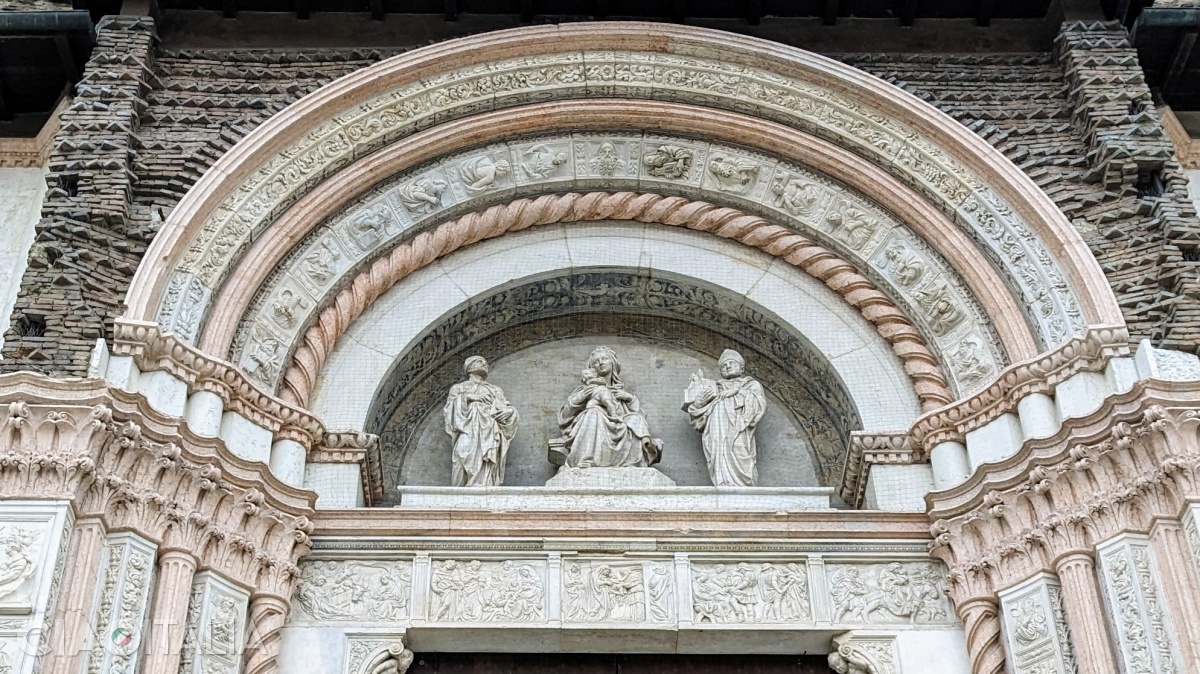
The main portal of the Church of San Petronio in Bologna is considered the masterpiece of Jacopo della Quercia. He worked on it for 13 years, from 1425 until 1438, the year of his death. In the lunette above the entrance, you will see three statues: in the center is the Madonna and Child, with St. Ambrose on the left (as you face it) and St. Petronius on the right, the patron saint of the city, holding a model of the church in his hand. The statue of St. Ambrose was not sculpted by Jacopo della Quercia but by Domenico da Varignana, in the year 1510. In its place, there was originally supposed to be a statue of Cardinal Alemanno, who in the meantime had been expelled from Bologna.
Just below the three statues are five bas-reliefs depicting scenes from the New Testament.
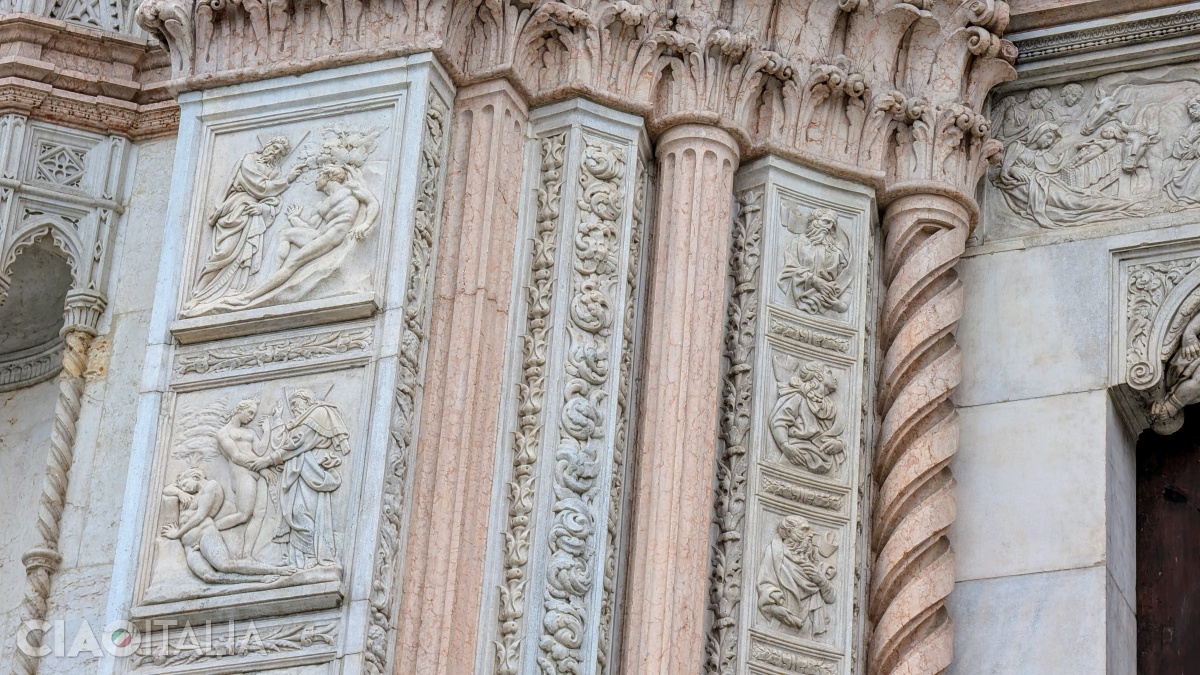
The main door is framed by two spiral columns. Beyond these, further outward, there are additional columns, each with nine busts of prophets, followed by five bas-reliefs showing scenes from the Old Testament. The scenes begin in the upper left corner with the Creation of Adam, followed by the Creation of Eve. These are the representations that inspired Michelangelo when he painted the ceiling of the Sistine Chapel.
The Interior
The interior of the Basilica of San Petronio is imposing and rather austere, dominated by Gothic vaults and flanked by 11 chapels on each side.
According to tradition, the crosses found at the front and back of the two side aisles are the same crosses that St. Petronius is said to have placed at the four gates of the city of Bologna. These were brought into the church in 1798.
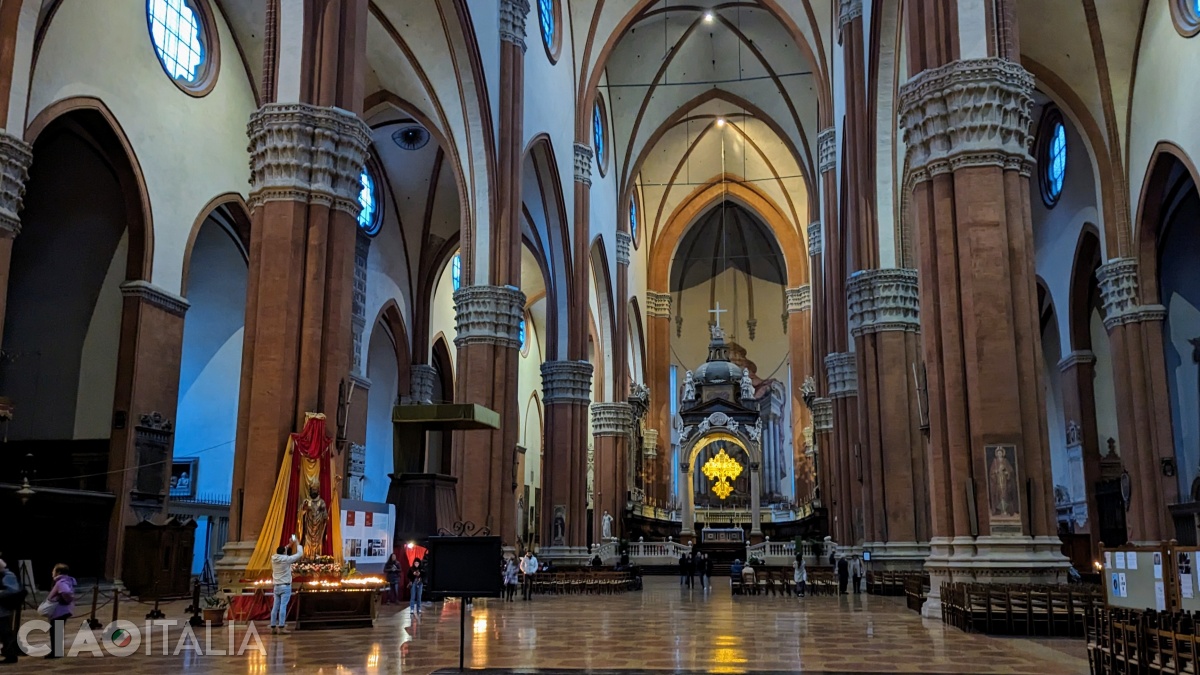
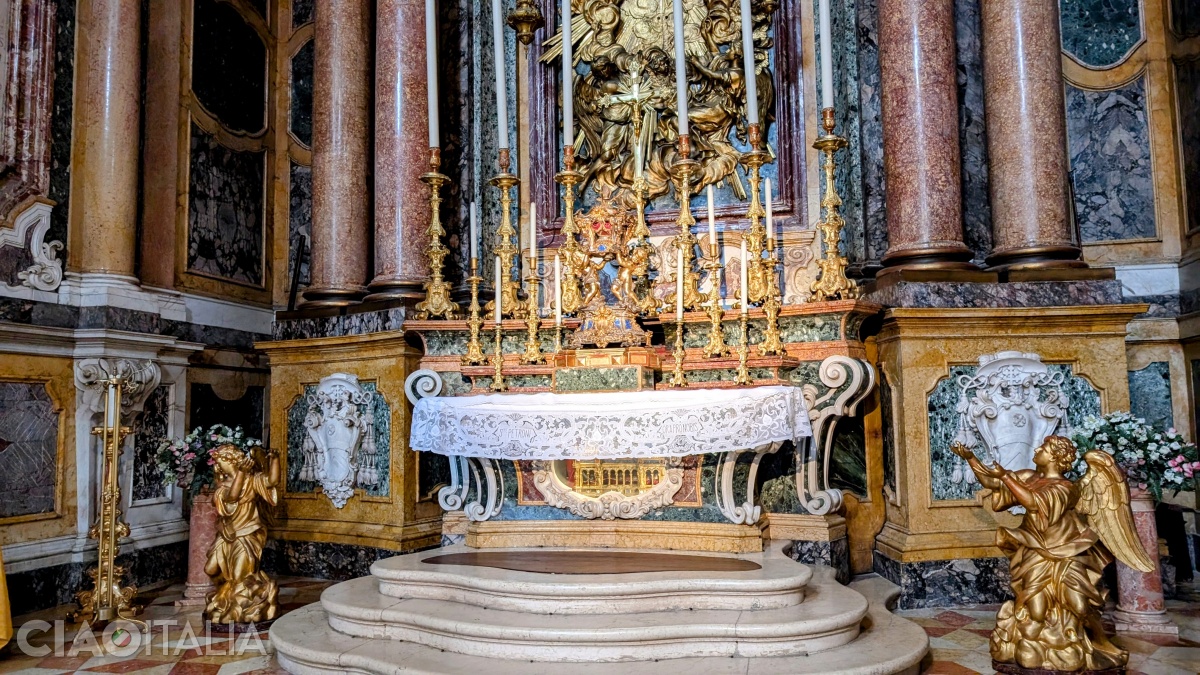
The saint's remains are kept in the second chapel on the left (Cappella di San Petronio), having been transferred in the year 2000 from the Basilica of Santo Stefano, another important tourist site in Bologna. His head is kept in the monumental reliquary above the altar, donated by Pope Benedict XIV. In the same chapel, on the right-hand side, is also the funerary monument of Cardinal Aldrovandi, created in the 18th century.
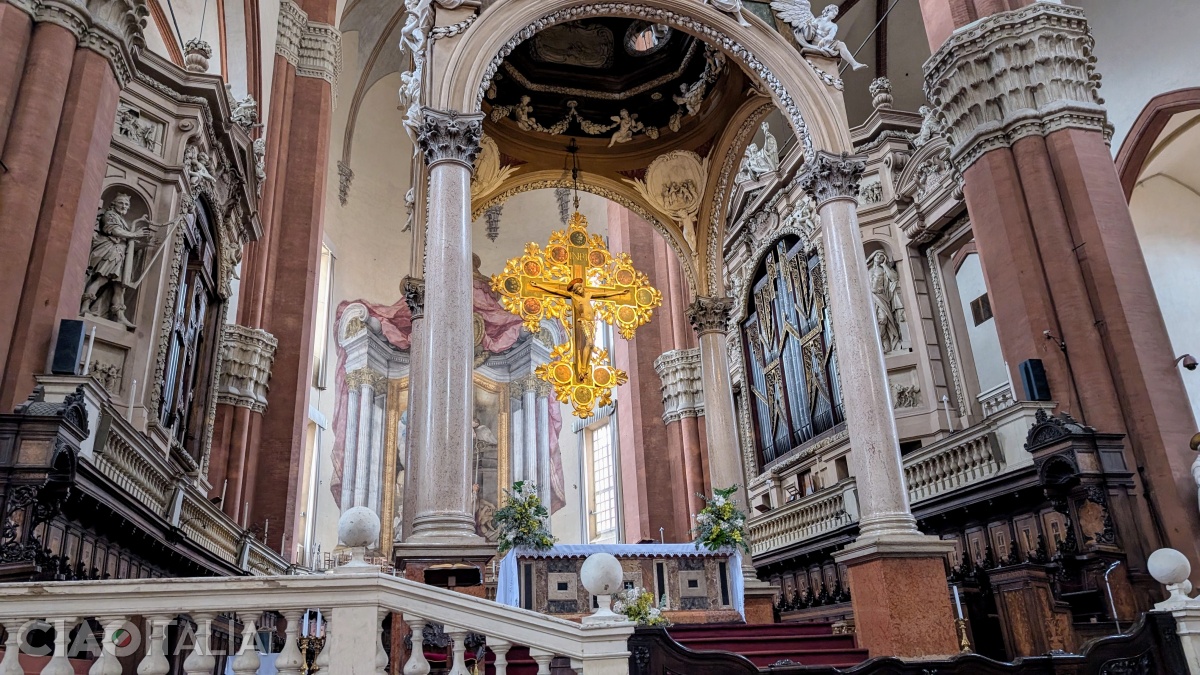
The church houses the oldest organ in Italy (and the second oldest in the world), built between 1471 and 1475 by Lorenzo da Prato.
Bolognini Chapel
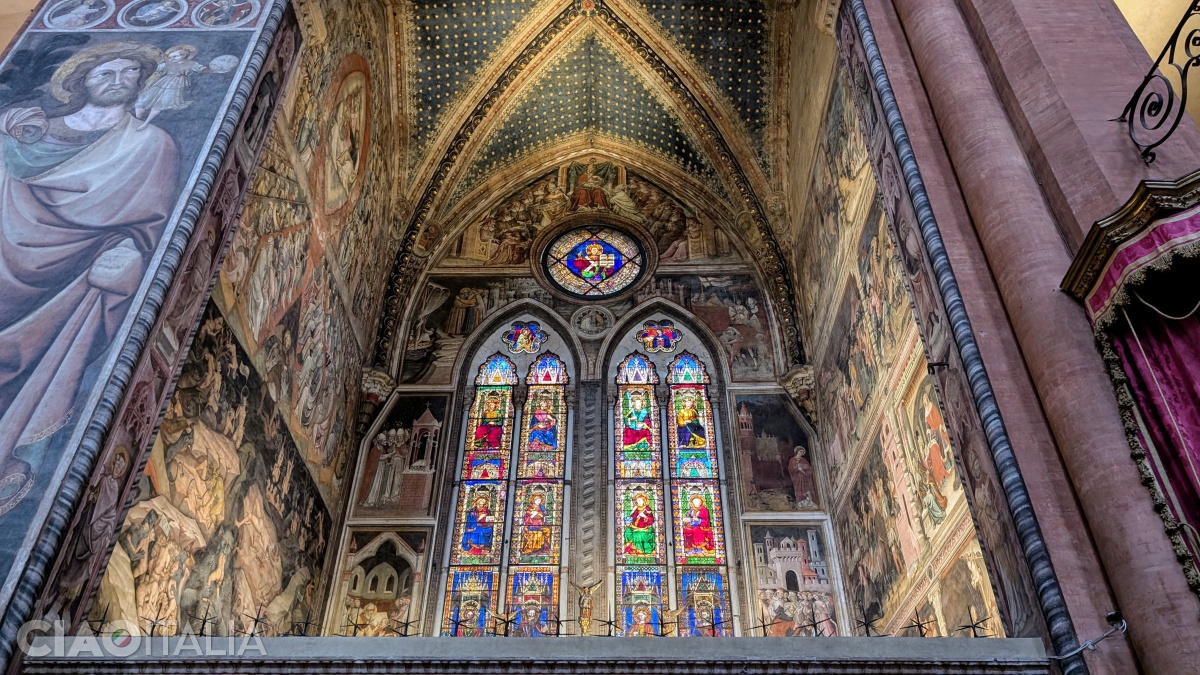
The Church of San Petronio is not particularly rich in works of art. The most important pieces are found in the Bolognini Chapel (the fourth on the left aisle). Bolognini is the name of a wealthy merchant who, at the beginning of the 15th century, commissioned the painter Giovanni da Modena to create a cycle of frescoes to decorate the chapel owned by his family.
The chapel is also known as the Cappella dei Magi ("Chapel of the Magi") because scenes featuring the Three Wise Men are depicted on the right-hand wall.
On the left wall is a painting of the Last Judgment, with Heaven and Hell, whose imagery is inspired by Dante’s Divine Comedy. It's worth paying the €5 (the entrance ticket for three adjacent chapels) even just to see the spectacular depiction of Lucifer at the bottom of the scene, with Judas emerging from his mouth, as well as the way the painter imagined the many forms of punishment for the sinners who end up in Hell. Among them is a depiction of Muhammad being devoured by demons, which has led to San Petronio Church being the target of multiple terrorist threats.
On the front wall is a wooden altar, carved and painted by Jacopo di Paolo at the beginning of the 15th century.
Photography is not allowed in the Bolognini Chapel.
San Sebastiano Chapel
Immediately after the Bolognini Chapel comes the Chapel of San Sebastiano. The central painting depicts the martyrdom of Saint Sebastian; at his feet, on the left side, you can see the priest Donato Vaselli, who commissioned the work. Over time, several theories have been proposed regarding the author of the painting. According to the most recent hypothesis, it is the work of the Renaissance painter Guido Aspertini.
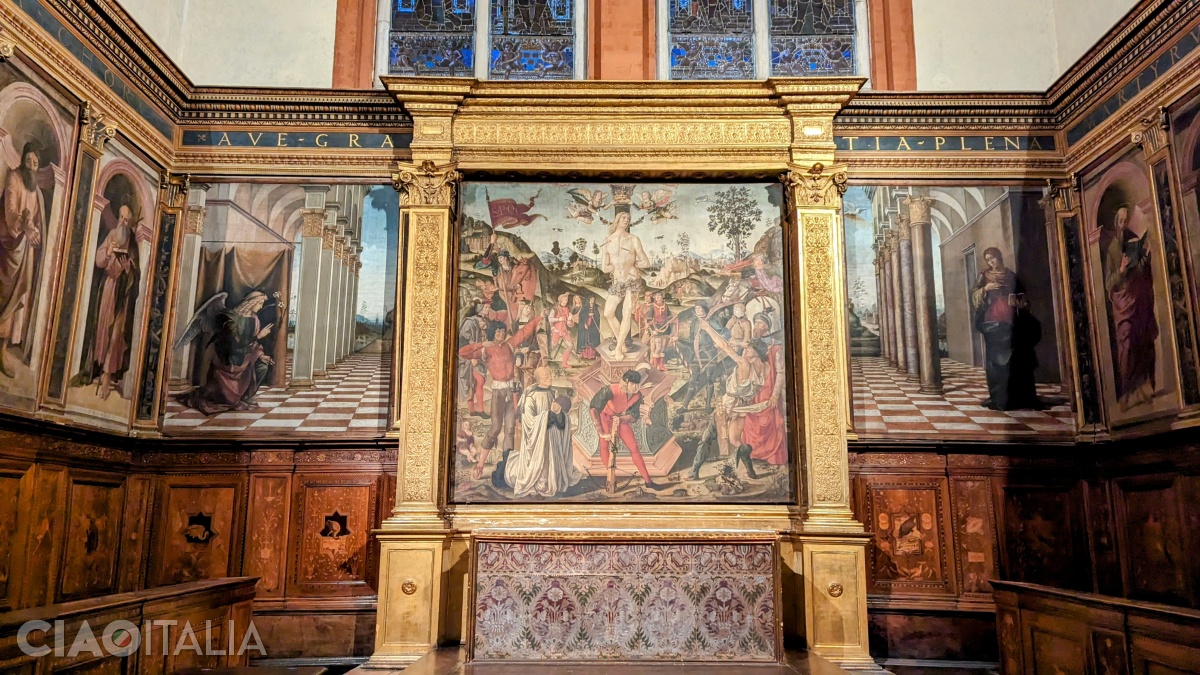
The side paintings depict the twelve apostles and are the work of Lorenzo Costa. On the back wall is the Annunciation, created at the end of the 15th century by Lorenzo Costa and Francesco Francia.
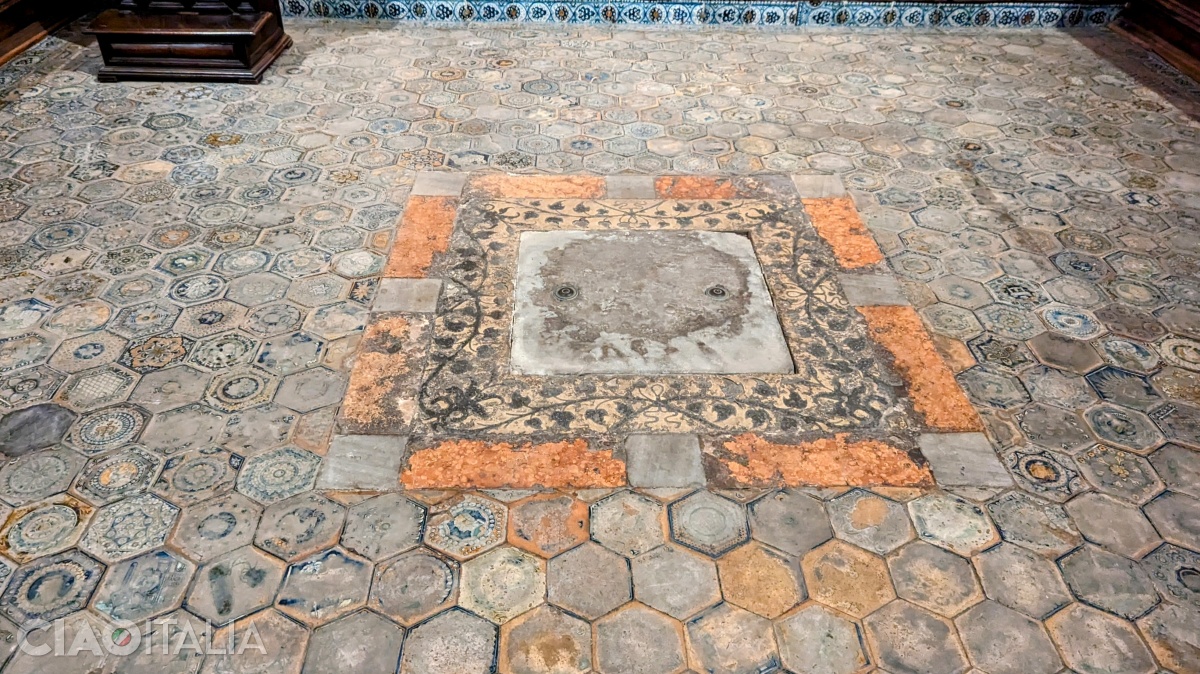
Take note also of the inlaid wooden choir stalls, the stained-glass windows, and the precious majolica tile floor, all crafted at the end of the 15th century.
San Vincenzo Chapel
Around the end of the 15th century, a beautiful multi-panel altarpiece was commissioned by the powerful Bolognese Griffoni family from the painters Francesco del Cossa and Ercole de'Roberti from Ferrara. Its purpose was to adorn the Chapel of San Vincenzo in the Basilica of San Petronio. Around the year 1725, Cardinal Pompeo Aldrovandi, the new owner of the chapel, divided the altarpiece into 23 pieces, which he sent to his residence in Mirabello, near Bologna. At the beginning of the 19th century, the pieces were sold individually on the art market and are now scattered across various museums around the world: the National Gallery in London, the Louvre Museum in Paris, the National Gallery of Art in Washington, the Vatican Museums, the Colezzione Cagnola in Varese, the Pinacoteca di Brera in Milan, and the Fondazione Giorgio Cini on the island of San Giorgio in Venice.
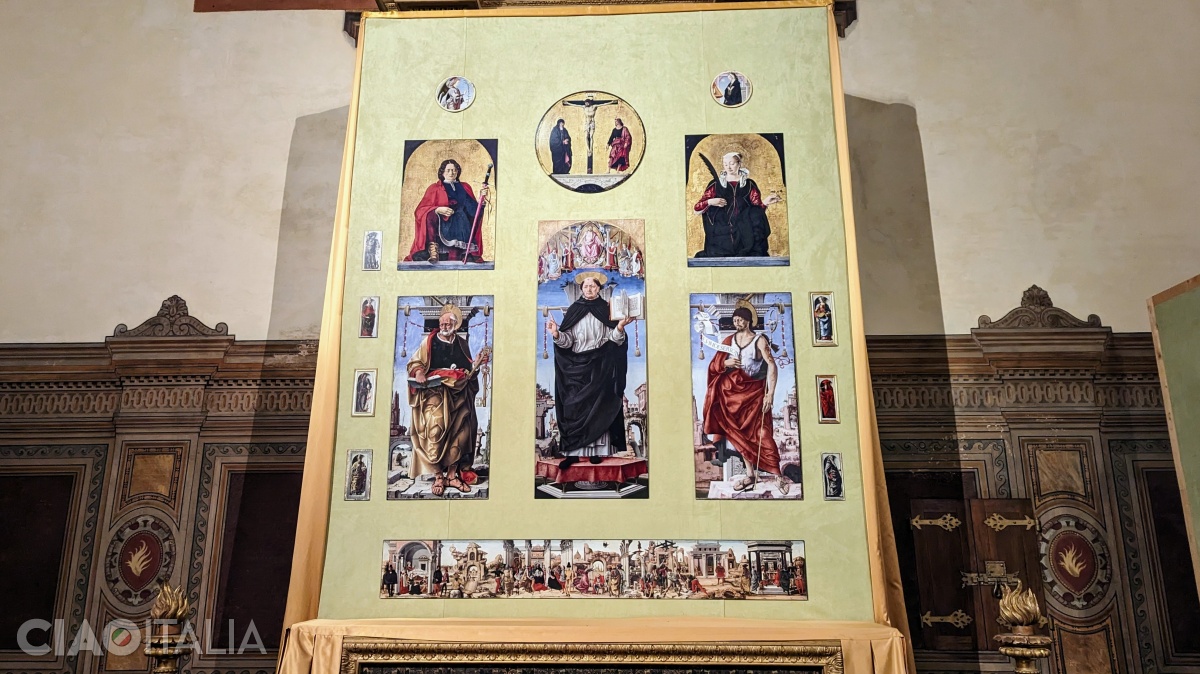
Only 16 of the 23 original parts of the altarpiece are known today. In 2020, they were temporarily reunited in Bologna for an exhibition.
What you see now in the Chapel of San Vincenzo is just an accurate 3D reconstruction of these pieces, arranged in the order in which they are believed to have been placed on the original altarpiece.
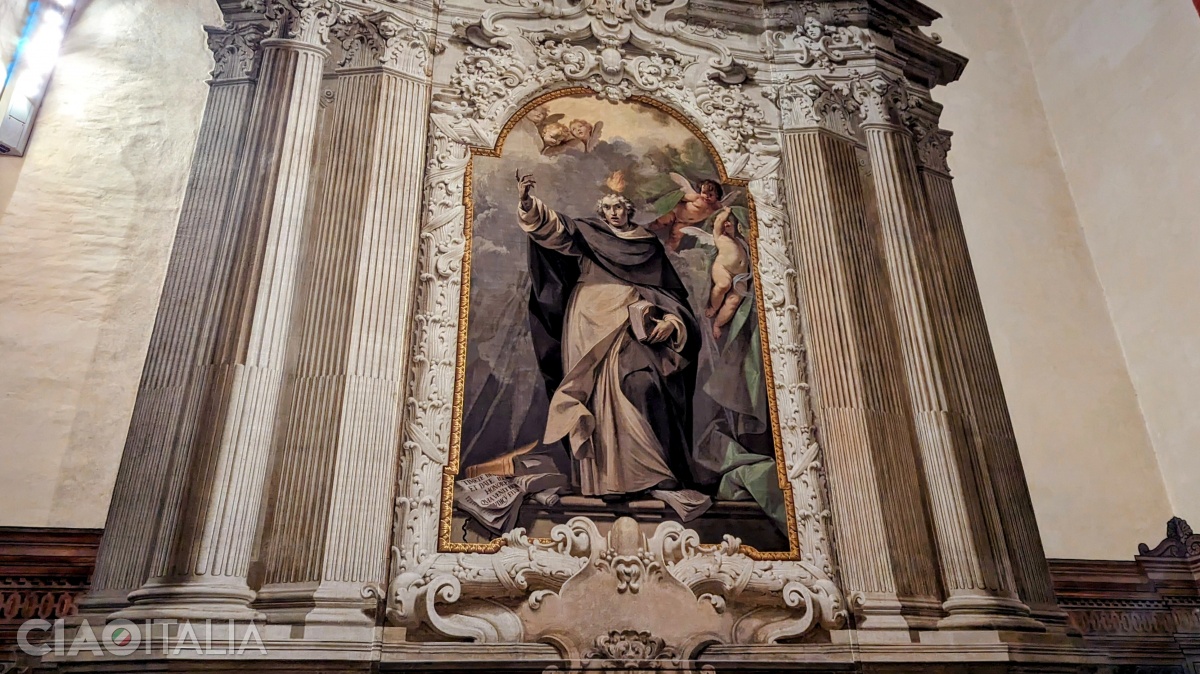
On the left-hand wall of the chapel, there is a painting depicting Saint Vincent.
The Meridian Line of the Basilica of San Petronio
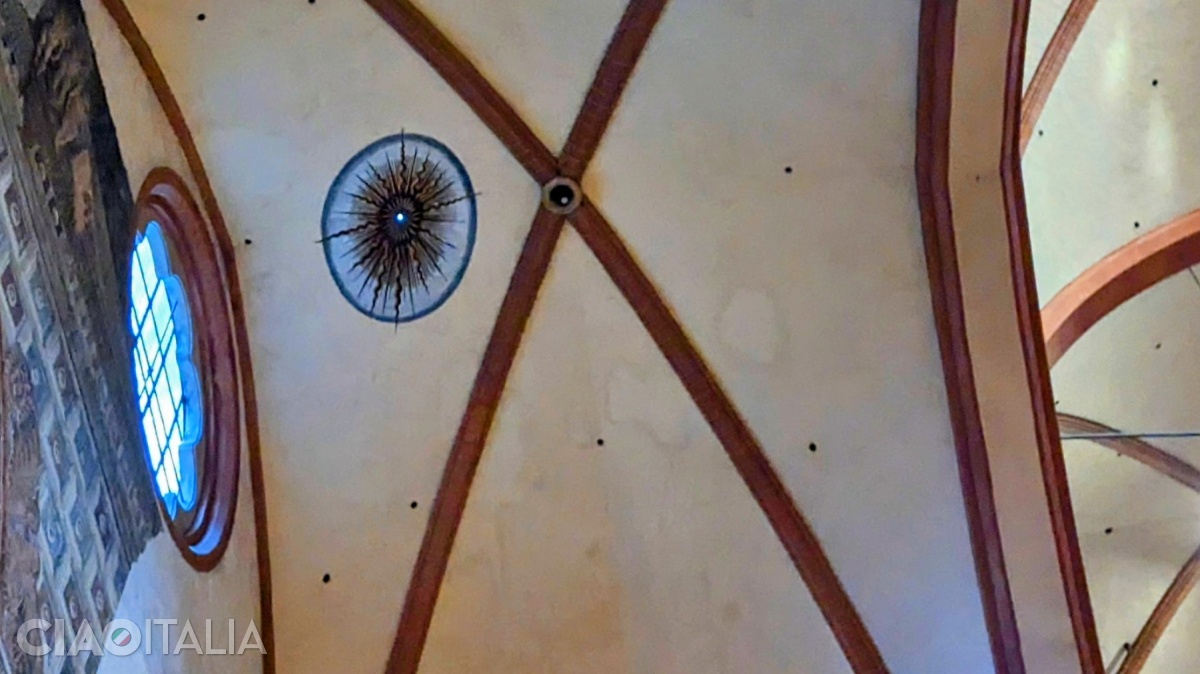
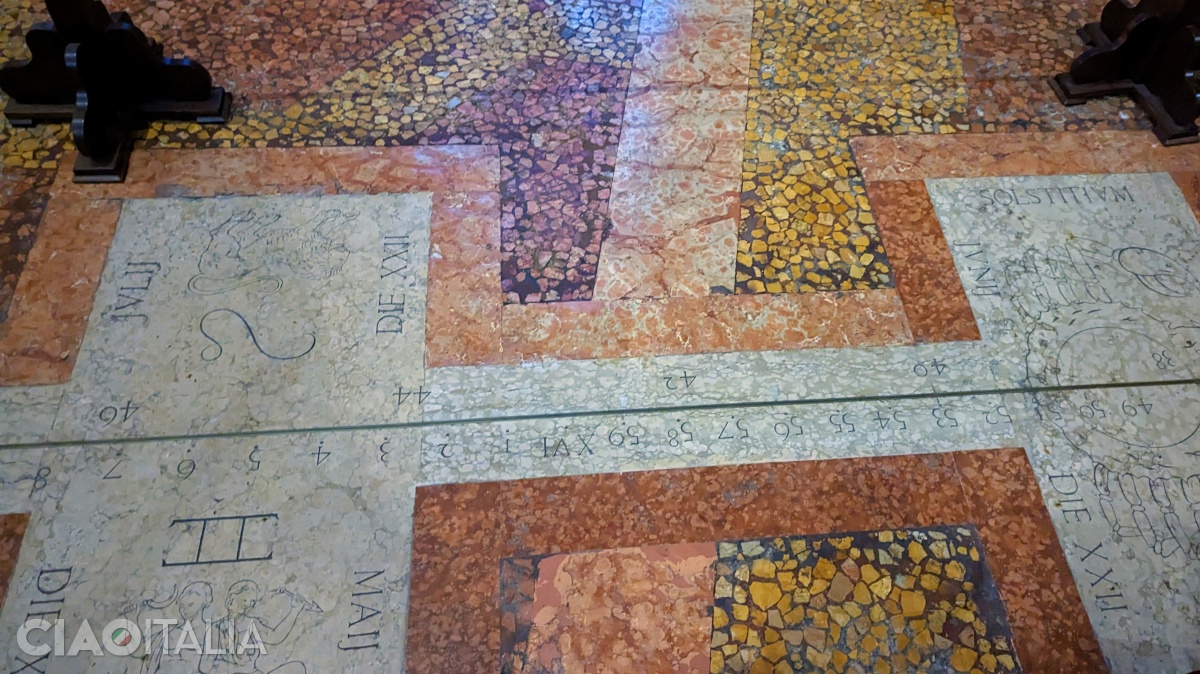
Also in the left aisle, in front of the chapels, the longest indoor meridian line in the world is drawn on the marble floor. It measures 67 meters in length and was created in 1656 by Gian Domenico Cassini, a professor at the University of Bologna, to enable more precise astronomical observations.
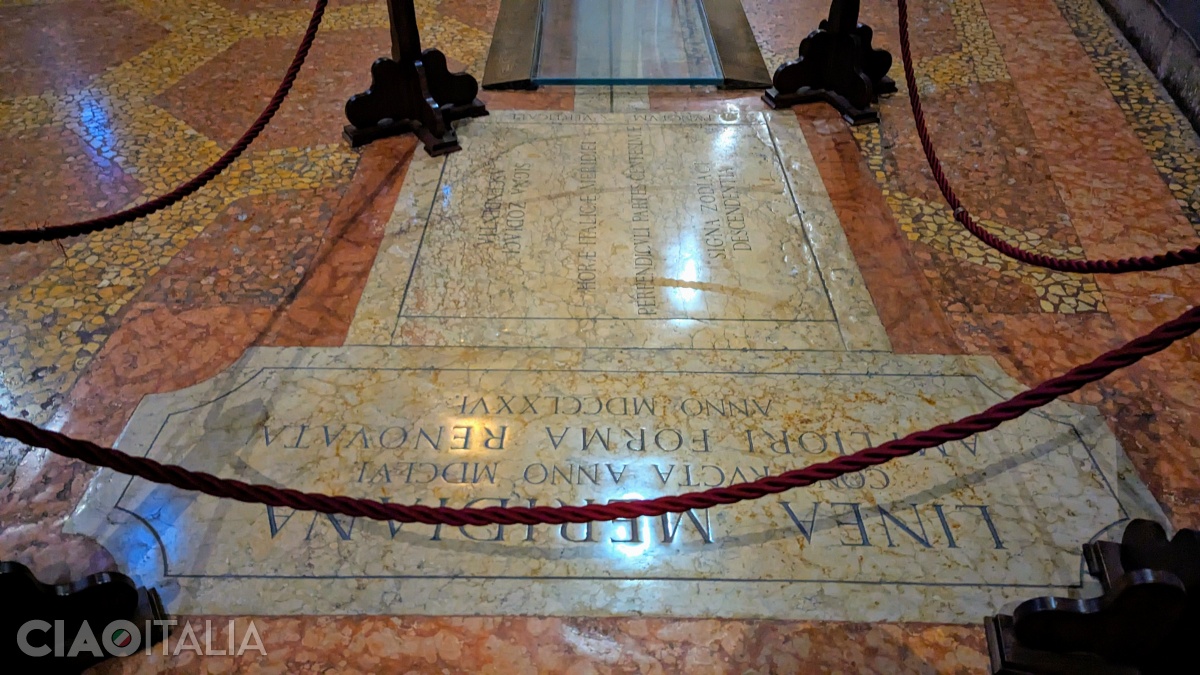
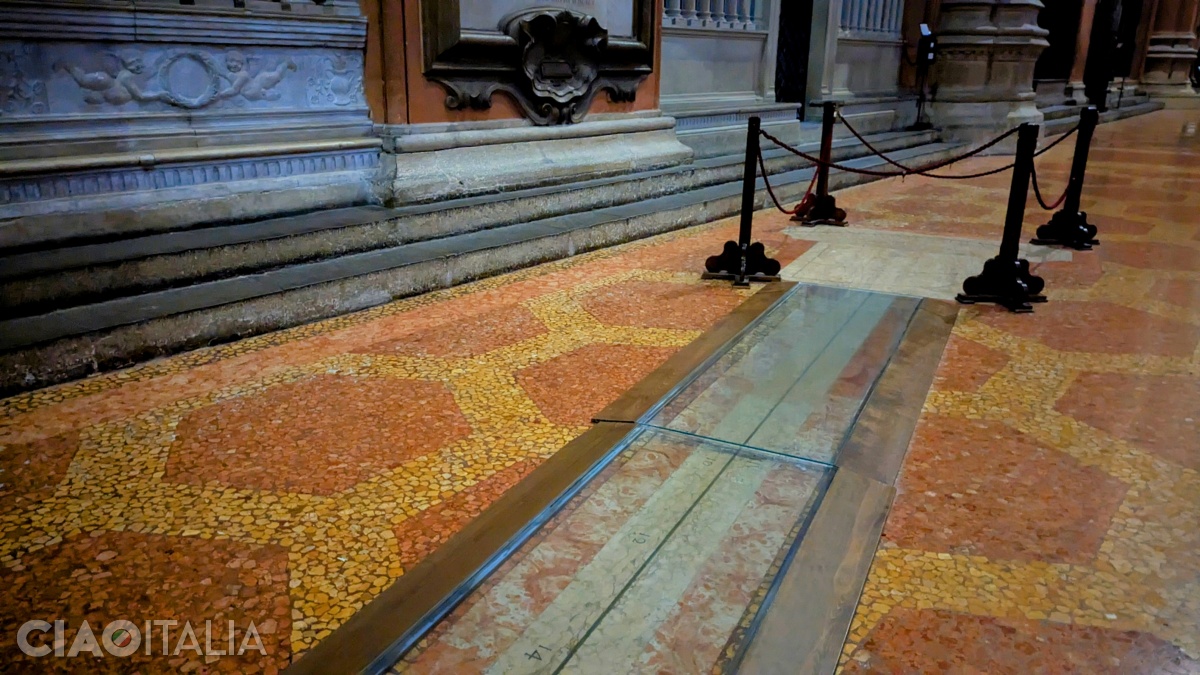
At noon, sunlight enters through a small opening in the church’s vault, 27 meters above, and is projected onto the meridian on the floor, marking the passing of days and seasons.