Sforza Castle in Milan
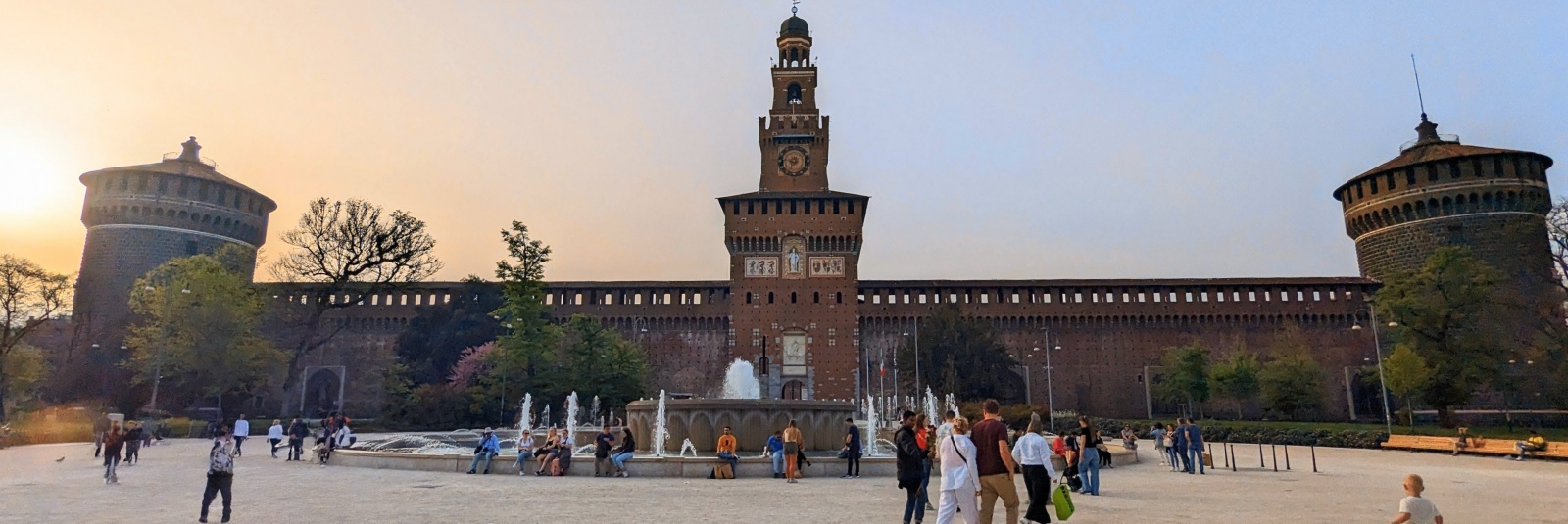
The Sforza Castle (Castello Sforzesco) is one of the most impressive monuments in the city of Milan and one of the largest castles in Europe. Today, it houses several museums, where you can find the Pietà Rondanini - Michelangelo's last known work, and a hall decorated by Leonardo da Vinci. Even if you don't want to visit the museums, it's worth seeing the castle from the outside (access to the inner courtyards is free), especially if you're in Milan with children.
Tickets
The ticket price for the museums at Sforza Castle (which are among the most important museums in Milan) is as follows:
- Adults: €10 (or €20 with the Tourist Museum Card, which is valid for 3 days and includes access to all civic museums in Milan)
- Over 65: €5
- 18-25 years: €5
- Under 18: free (a ticket is still required)
The entrance ticket includes access to all the museums within the castle:
- Basement: Archaeological Museum (Prehistory and Protohistory Section, Egyptian Section)
- Ground Floor: Museum of Ancient Art, Sala delle Asse (Leonardo da Vinci), Armory Room, Pietà Rondanini Museum (Michelangelo)
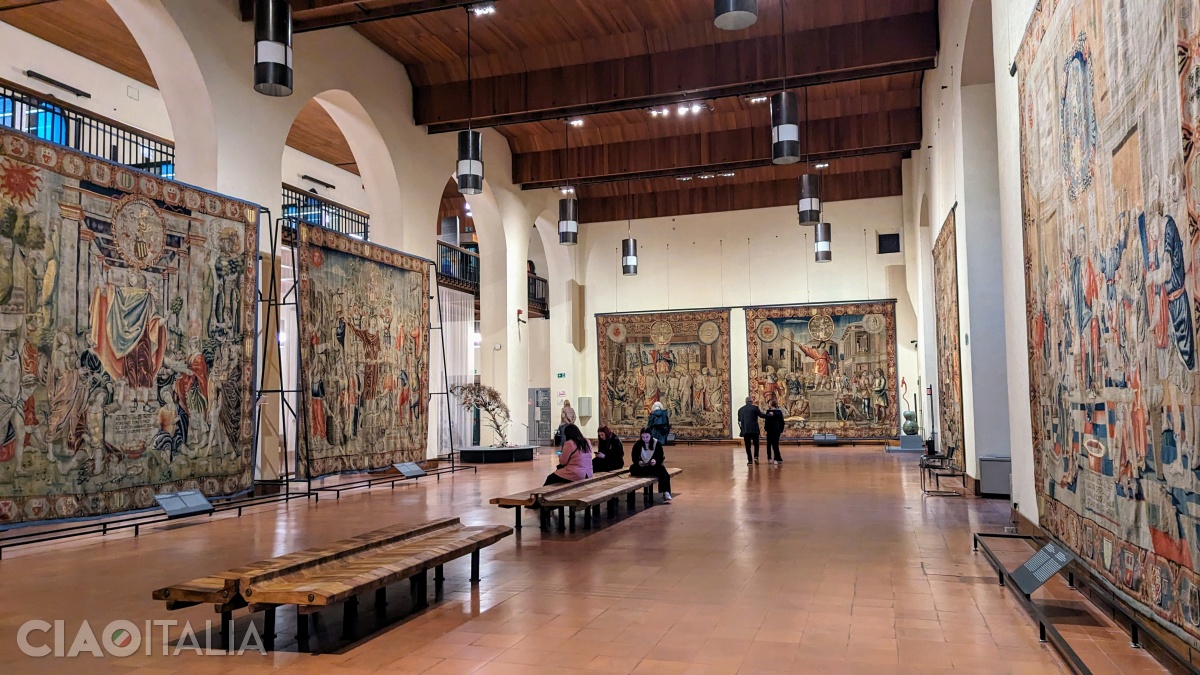
- First Floor: Museum of Furniture and Wooden Sculptures, Pinacoteca, Museum of Musical Instruments, Museum of Decorative Arts (Trivulzio Tapestries and the castle’s Ballroom)
- Second Floor: Museum of Decorative Arts
Tip: Entrance to the Sforza Castle museums is free on the first Sunday of every month (reservations cannot be made for this day). On the second Tuesday of every month, admission is free for visitors under 25. See also the article on what you can see for free in Milan.
Every weekend, at 11:00 AM, guided tours take place - on Saturdays in English and on Sundays in Italian. The meeting is at 10:45 AM at the Info Point, and the price is €20.
Access to the inner courtyards of Sforza Castle is free.
There is also a ticket that grants access to the castle walls' patrol walkway, offering panoramic views. The price for this ticket is as follows:
- Adults: €10
- Over 65 years: €5
- 6-18 years: €5
- Children under 6: free
Tickets can be purchased directly at the ticket office or online on the museum's website.
If you're planning a city break in Milan for at least 3 days and want to visit more attractions, consider getting the YesMilano Card, which includes public transport and free entry to key landmarks (including the museums at Sforza Castle).
Opening Hours
The opening hours for the museums at Sforza Castle are as follows:
- Monday: Closed
- Tuesday to Sunday: 10:00 AM - 5:30 PM
- December 25: closed
- January 1: closed
- May 1: closed
The ticket office closes at 4:30 PM, and the last entry to any museum is at 5:00 PM.
Access to the castle courtyards is free during the following hours:
- Monday to Sunday: 7:00 AM - 7:30 PM
How to Get to Sforza Castle?
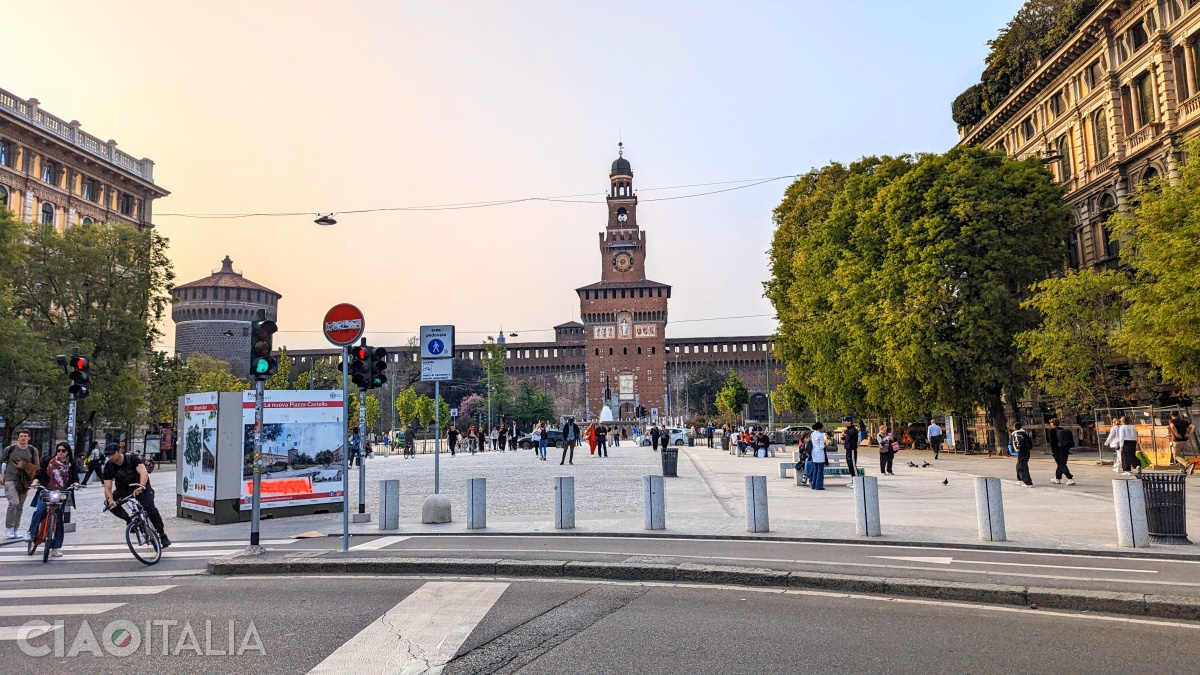
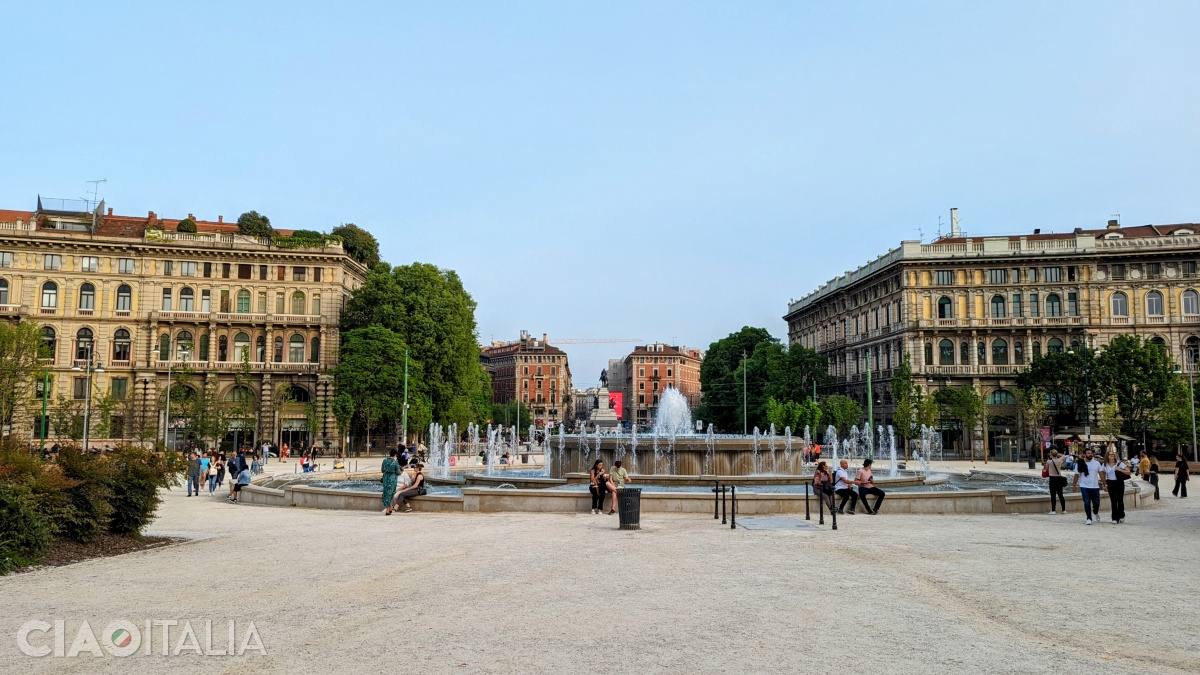
Sforza Castle is located in Piazza Castello, near the city center. You can reach it using the following public transport options in Milan:
- Metro, red line M1 (Cairoli and Cadorna FN stations)
- Metro, green line M2 (Lanza and Cadorna FN stations)
- Tram (lines 1, 2, 4, 12, and 14)
- Bus (lines 50, 57, 58, and 85)
The distance from Sforza Castle to other major tourist attractions in Milan is as follows:
- To the Pinacoteca Brera: 650m (9 minutes on foot)
- To The Last Supper Museum: 900m (12 minutes on foot)
- To La Scala Theatre: 950m (13 minutes on foot)
- To the National Museum of Science and Technology Leonardo da Vinci: 1 km (14 minutes on foot)
- To Milan Cathedral (Duomo): 1.1 km (15 minutes on foot)
Visit to Sforza Castle
A Brief History of the Castle
On the site where the imposing red brick castle stands today, there was once one of the four Roman castra in the city, called Portae Jovis. In the 14th century, Galeazzo II Visconti (who established Milan's first dynastic family) built a fortress called Castello di Porta Giovia. In 1447, this fortress was almost destroyed by an uprising of the people, who proclaimed the Ambrosian Republic. From Visconti's fortress, only the gray stone foundation near the defensive moats remains today.
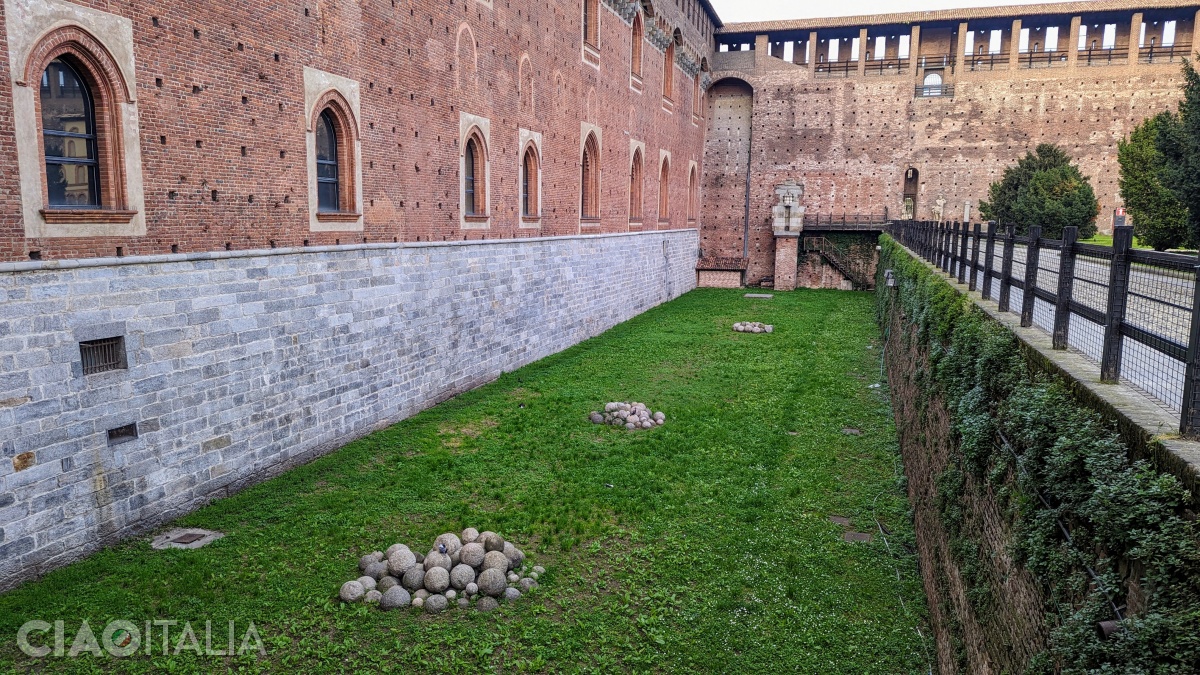
A few years later, Francesco Sforza began the reconstruction of the castle, which took his name: Castello Sforzesco. Francesco Sforza was a condottiero (mercenary captain) who seized power, becoming the founder of Milan's second ruling dynasty. After Francesco's death, his son, Galeazzo Maria Sforza, continued the construction and development of the palace.
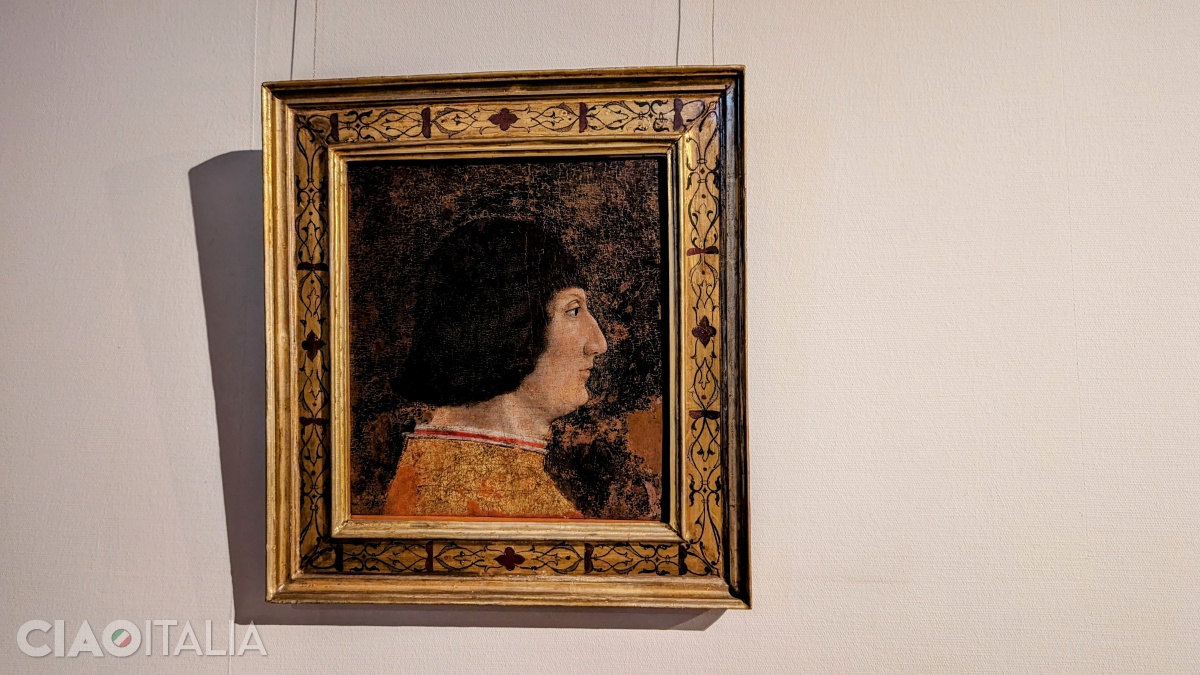
The castle's golden age was at the end of the 15th century, during the reign of Ludovico Sforza, known as il Moro (the brother of Galeazzo Maria). A patron of the arts, Ludovico invited renowned painters and architects to his court (such as Bramante and Leonardo da Vinci), transforming the fortress into one of the richest and most splendid residences in Europe.
The conquest of the Duchy of Milan by the French in 1499 marked the beginning of the castle's decline. It passed from the French to the Spanish and then to the Austrians, losing its status as a noble residence permanently and being converted into a military garrison.
At the end of the 19th century, after years of debate (during which proposals included demolishing the castle and building a residential district in its place), it was decided to begin restoration work. The architect responsible for restoring the fortress to its appearance during the Sforza family's time was Luca Beltrami - the same architect who designed Piazza della Scala and reconstructed the San Marco Campanile in Venice.
Thus, the castle became home to several museums and cultural institutions, shedding its negative association with years of military occupation and becoming a symbol of the city of Milan.
The Exterior of Sforza Castle
The entire structure has a square shape and is surrounded by high walls. Access is provided through four gates:
- The main gate, under the Umberto I Tower (facing Piazza Castello and Cairoli metro station)
- Porta di Santo Spirito (facing Cadorna metro station)
- Porta del Carmine (facing Lanza metro station)
- Porta del Barcho (facing Piazza del Cannone and Sempione Park)
Umberto I Tower (Torre del Filarete)
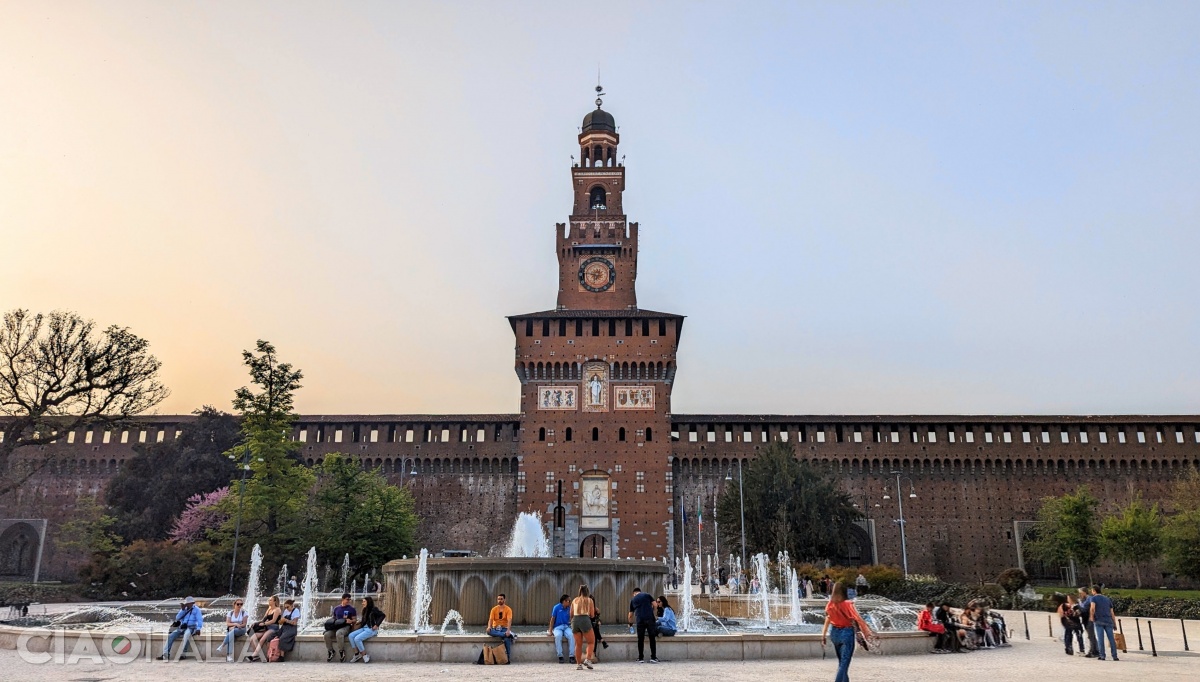
The imposing Umberto I Tower, whose façade faces the city center, is the one you'll pass through if you enter from Piazza Castello. It is also called Torre del Filarete ("Filarete's Tower"), after the architect Antonio Averulino from Florence, nicknamed Filarete (in Greek, philaretos means "lover of virtue"), who designed it in 1452. In 1521, during French rule, the tower, which had been turned into a munitions' depot, exploded, destroying the surrounding walls and causing the death of the castellan.
The current tower is the result of a reconstruction by Luca Beltrami. To restore it to its original form, the architect used 16th-century drawings. The tower was inaugurated in 1905 and was named after King Umberto I, who was assassinated in Monza in 1900 and buried in the Pantheon in Rome.
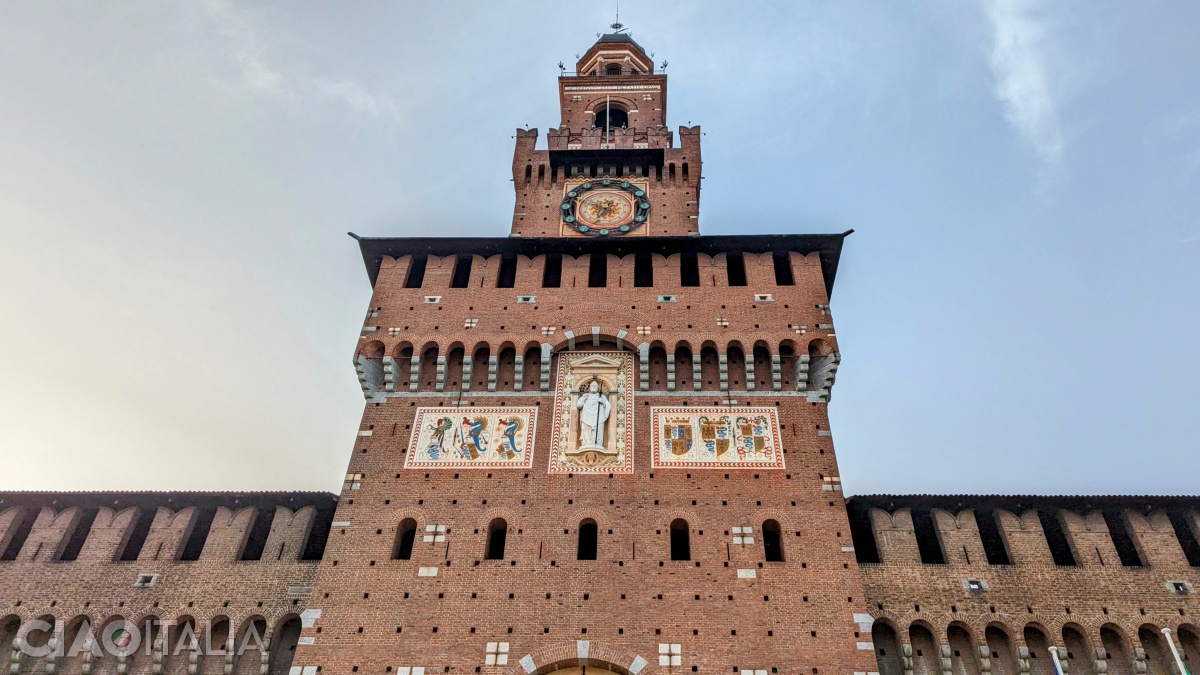
Looking at the tower from top to bottom, you'll notice at the top a clock with a painted sun with rays, inspired by the Sforza family emblem. Below, under an arch, is a Renaissance-style statue of Saint Ambrose, the patron saint of Milan. To his left and right are painted crests of the rulers from the Sforza dynasty, featuring their initials: Francesco, Galeazzo Maria, Gian Galeazzo, Ludovico il Moro, Massimiliano, and Francesco II. Further down, above the entrance gate, there is a bas-relief depicting King Umberto I on horseback.

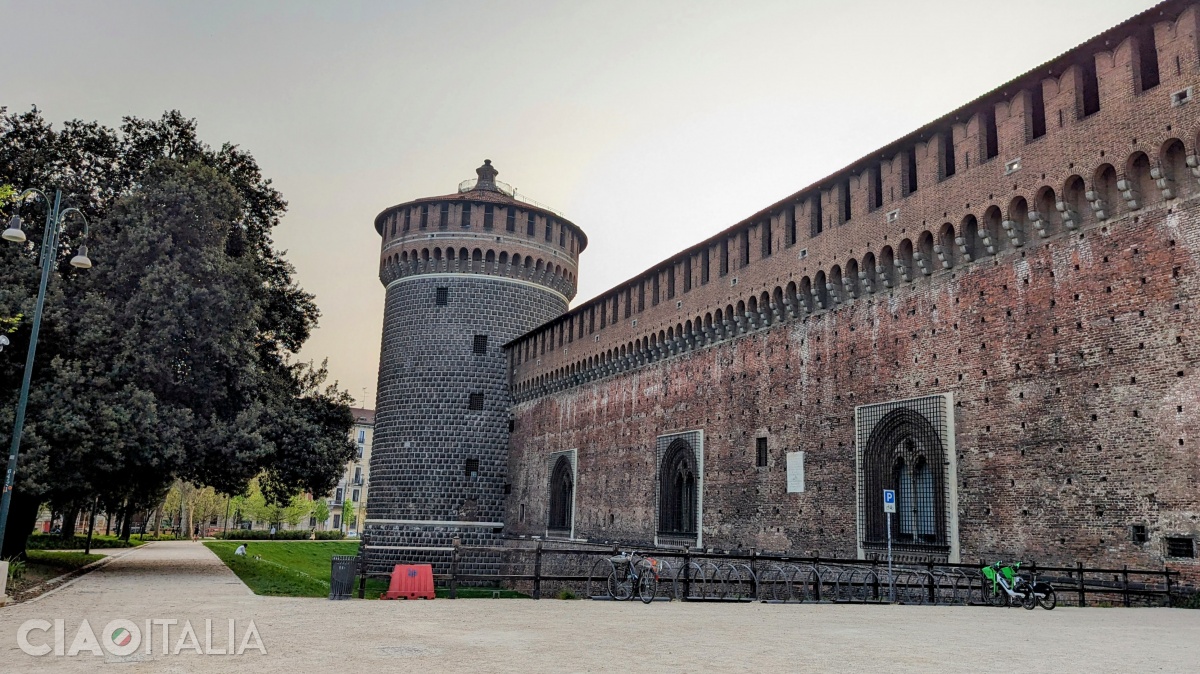
At the corners to the left and right of the walls flanking the Umberto I Tower are two smaller towers: Torrione di Santo Spirito and Torrione del Carmine. These were built in 1452 at the request of Francesco Sforza to fortify the side of the castle facing the city. Inside, the towers feature six vaulted rooms, which have served as prisons over the years. Their current form is also the work of architect Beltrami. Torrione del Carmine functioned for a few years as a potable water reservoir and now houses the Art Library.

The Court of Arms
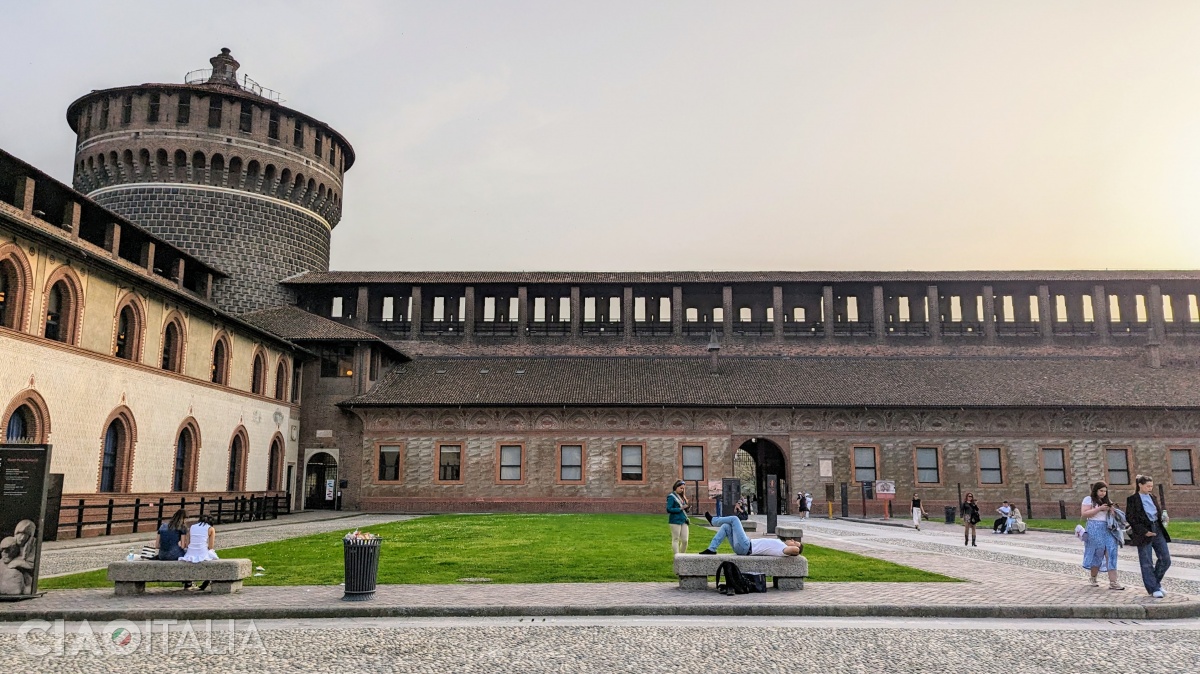
The Court of Arms (Cortile delle Armi) is the courtyard you enter after passing under the Umberto I Tower. It is the largest of the inner courtyards of Sforza Castle and served as the parade ground where the garrisoned troops assembled.
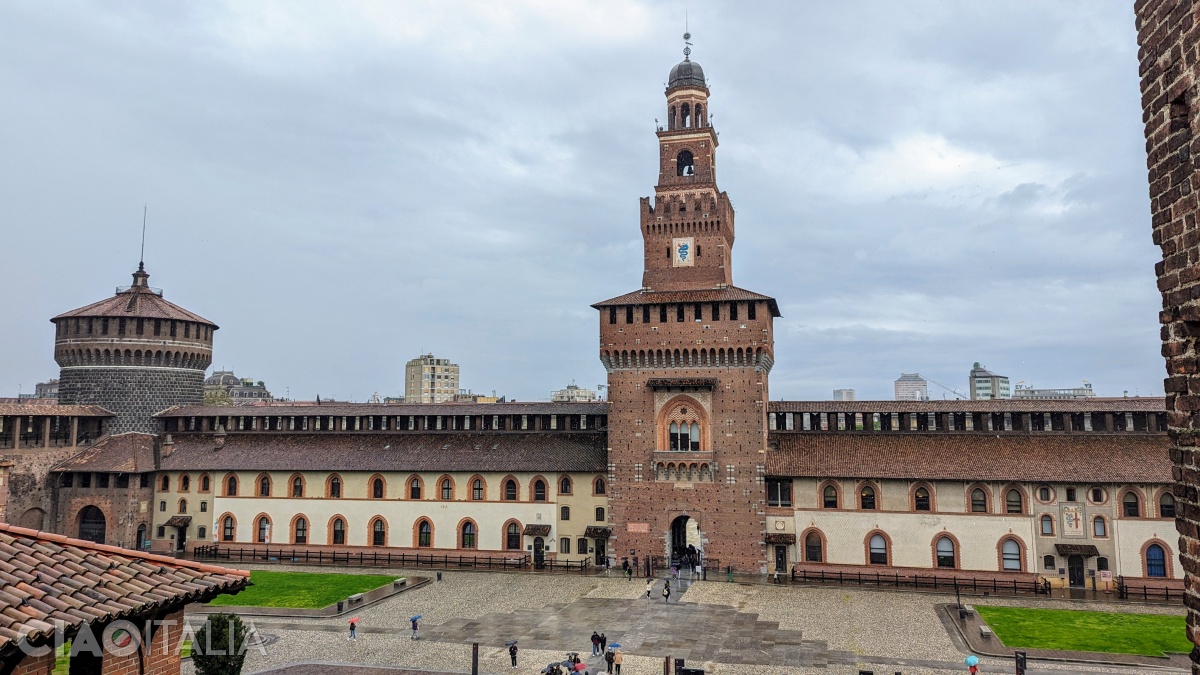
On the left side is the Porta del Santo Spirito and the Spanish Hospital (Ospedale Spagnolo). It gets its name from the 16th century, during Spanish rule, when it was used as the garrison's infirmary. The painted decorations were likely created in 1576. Today, the Spanish Hospital houses the Pietà Rondanini Museum, which displays Michelangelo’s final known work.
On the right side, where sarcophagi and architectural remnants from the Roman period are exhibited, is the Porta del Carmine.
On the far side, opposite the Umberto I Tower, stands the Torre di Bona, built in 1476. The tower served a defensive role, providing a vantage point to oversee the entire castle, but it was also used as a prison, with detention facilities inside.
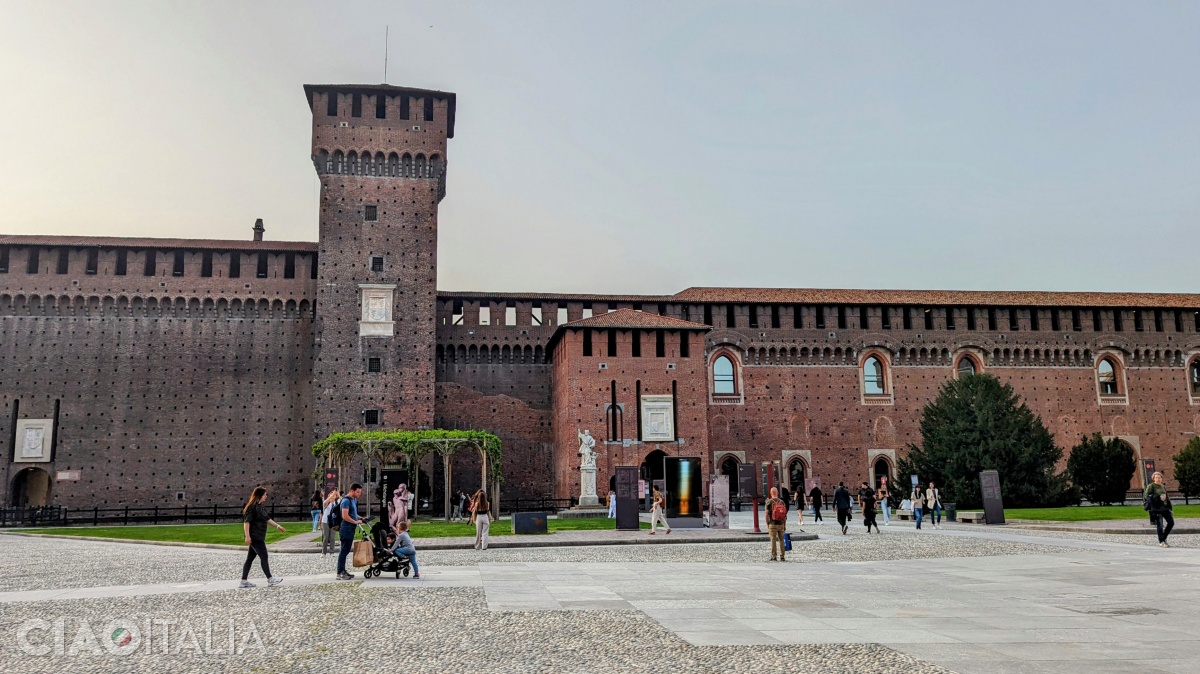
In front of the tower is the white marble statue of St. John of Nepomuk, crafted in the 18th century at the request of the castle's last castellan. The old defensive moat of the first Visconti fortress, built in the 14th century, separates the Court of Arms from the Ducal Court.
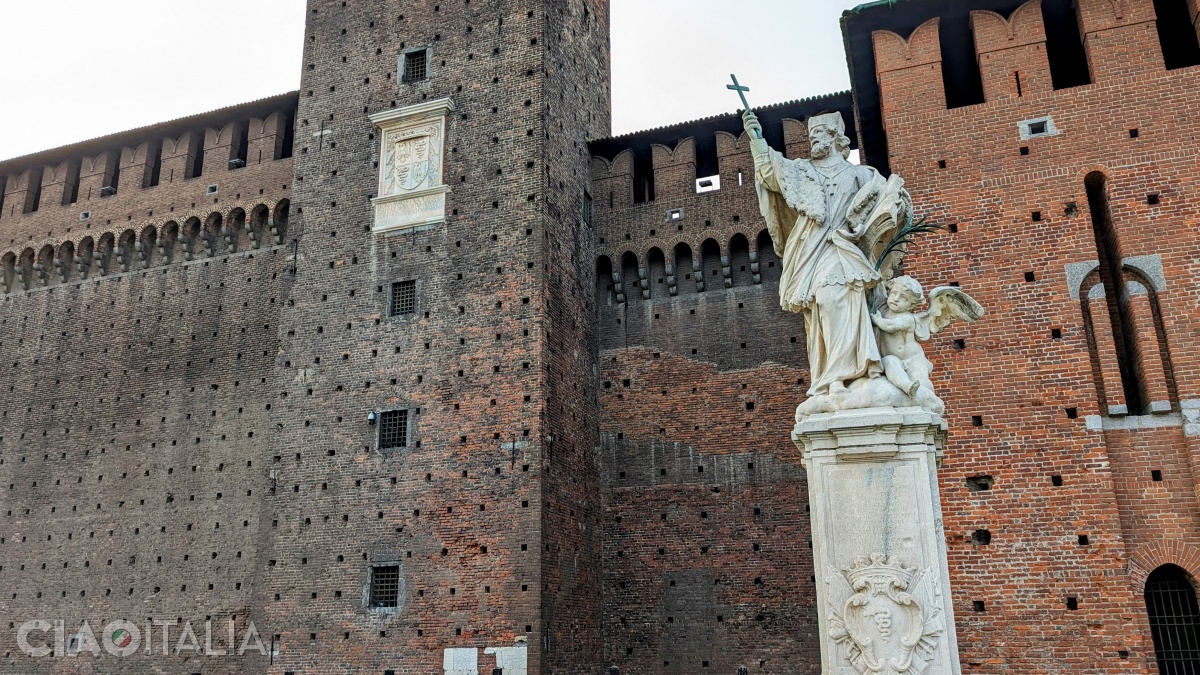
The Ducal Court
Passing through Porta Giovia, a smaller, rectangular courtyard opens up to the right. This is the Ducal Court (Corte Ducale), the residence of the Dukes of Milan. Galeazzo Maria Sforza and, later, Ludovico il Moro lived here.
At the back, the courtyard is bordered by a portico built in 1473, nicknamed the "Elephant Portico" (Portico dell'Elefante), due to the fresco still visible on the left side. In the adjacent fresco, the hind legs of a lion can still be seen.

The ducal apartments, located on the ground floor and the first floor, were connected by a staircase with very shallow steps, designed to allow the dukes to ascend on horseback. The staircase leads to Galeazzo Maria's Renaissance loggia (Loggetta di Galeazzo Maria).
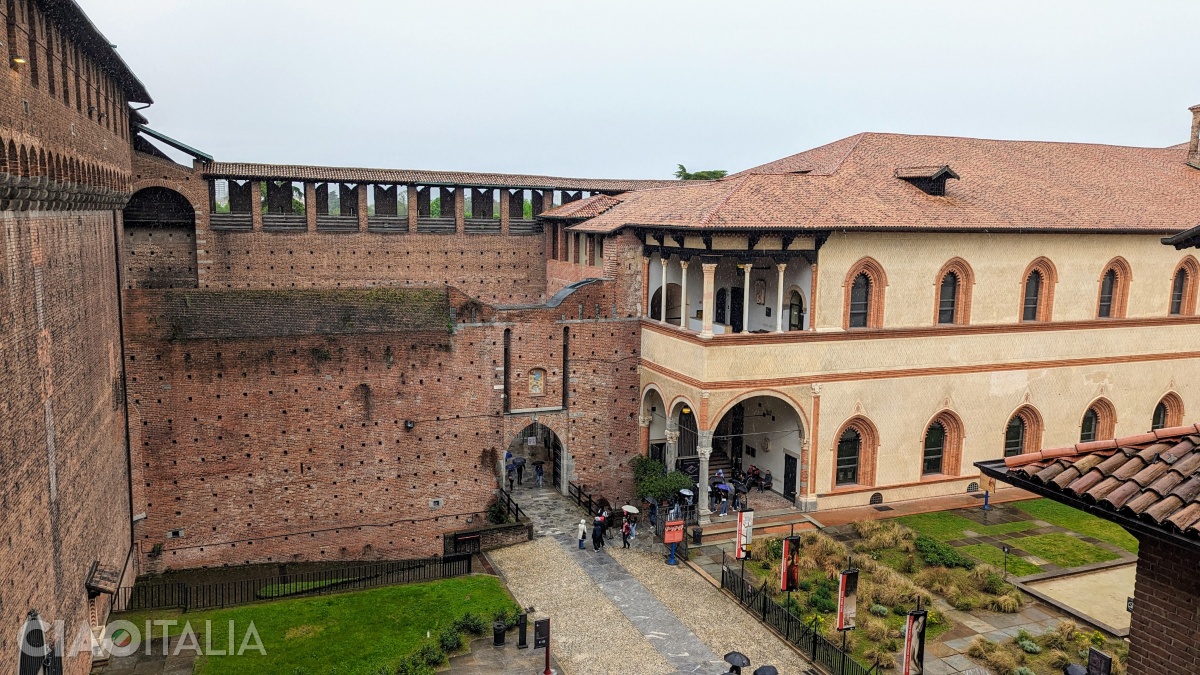
The Fortress Courtyard
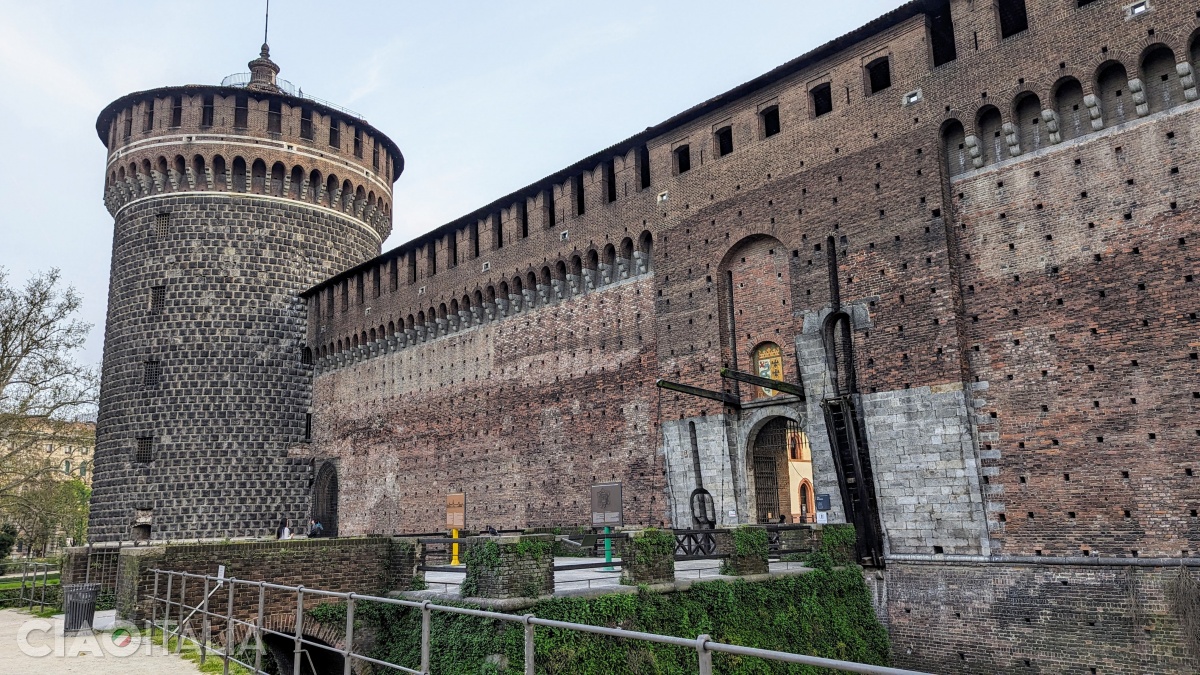
Opposite the Ducal Court is the Cortile della Rocchetta (The Fortress Courtyard). The Rocchetta was essentially a fortress within a fortress, serving as a refuge for the dukes in case of danger. In the past, access was only possible from the Court of Arms via a drawbridge built over the defensive moat.
The walls of the building still bear traces of the old decorations, and the columns of the portico feature capitals adorned with the crests of the Visconti and Sforza families. The vaults of the portico are also beautifully decorated with frescoes.
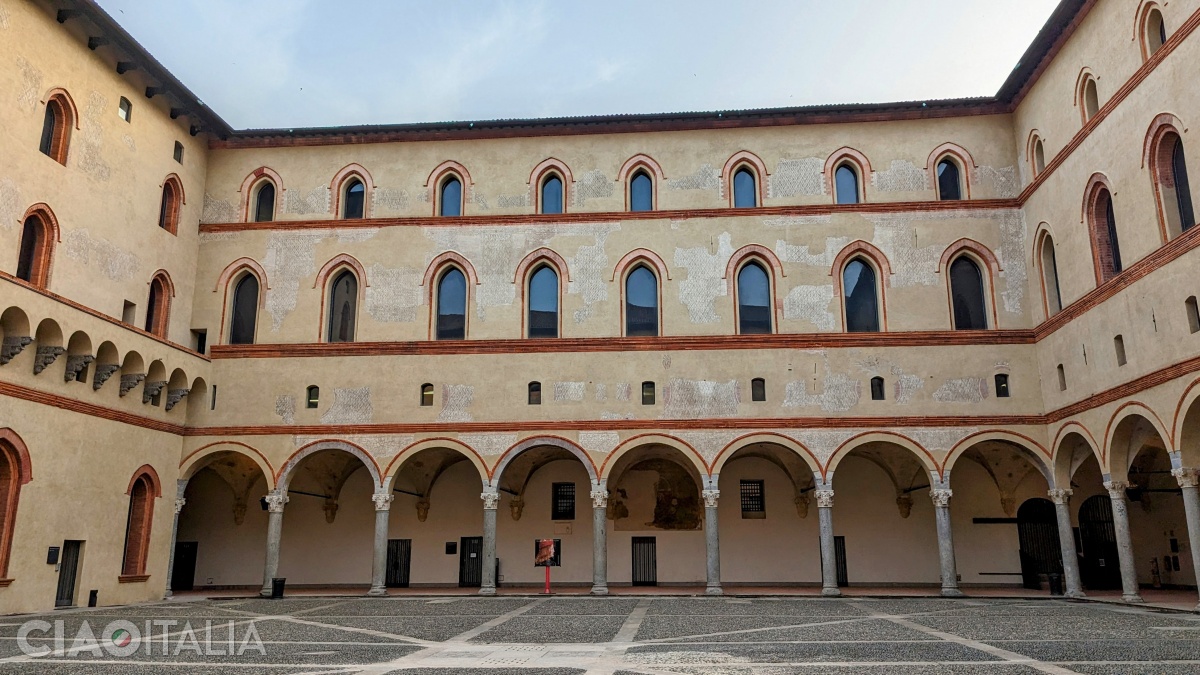
Porta del Barcho
Located directly opposite to Torre del Filarete (Umberto I Tower), between the ducal residence and the Rocchetta, Porta del Barcho provides access from Piazza del Cannone and Sempione Park.
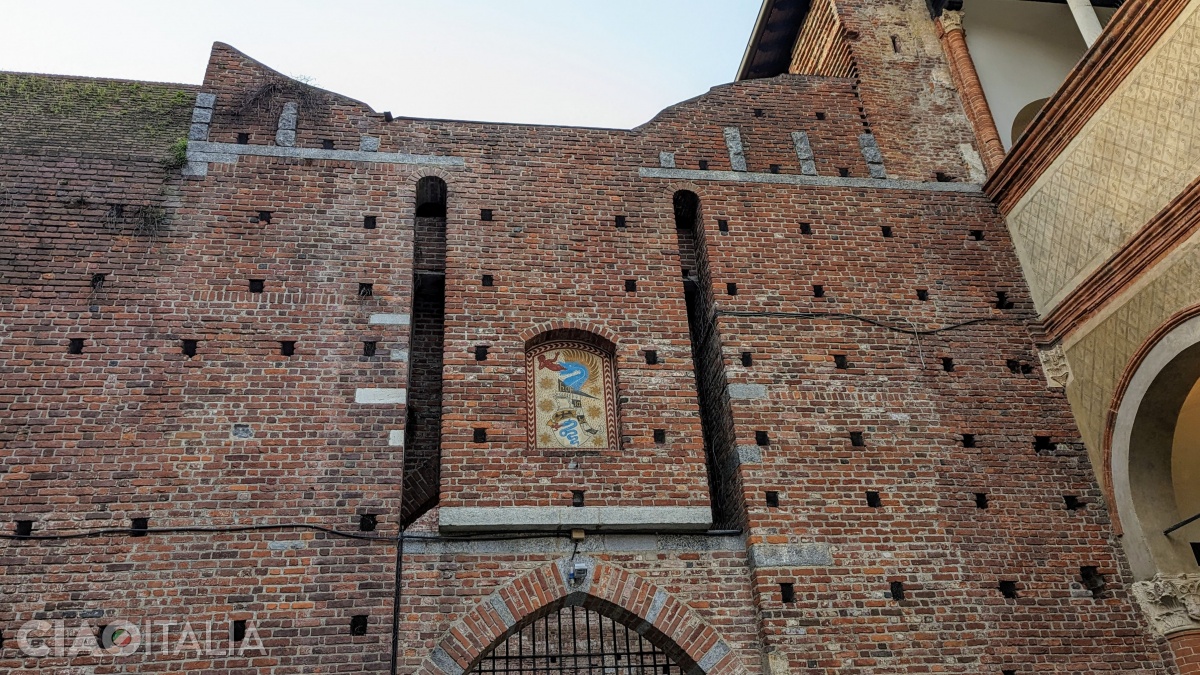
The park, consisting of both a garden area and cultivated land, was created at the end of the 14th century at the request of Gian Galeazzo Visconti. Starting in 1457, under the rule of Francesco Sforza, the park was expanded and enclosed with a fenced section. Hares, pheasants, partridges, deer, and stags were brought in from nearby areas such as Varese or Lake Como. This hunting park was called a barcho, which gives the gate its name (Porta del Barcho). It also featured a landscaped garden with a fishing lake, an orchard, and fields cultivated with grains.
To the right of the gate (when viewed from outside the castle, facing the park) is the Castellana Tower, housing the Sala del Tesoro ("Treasure Hall"), and to the left is the Falconiera Tower, which contains the Sala delle Asse, decorated by Leonardo da Vinci.
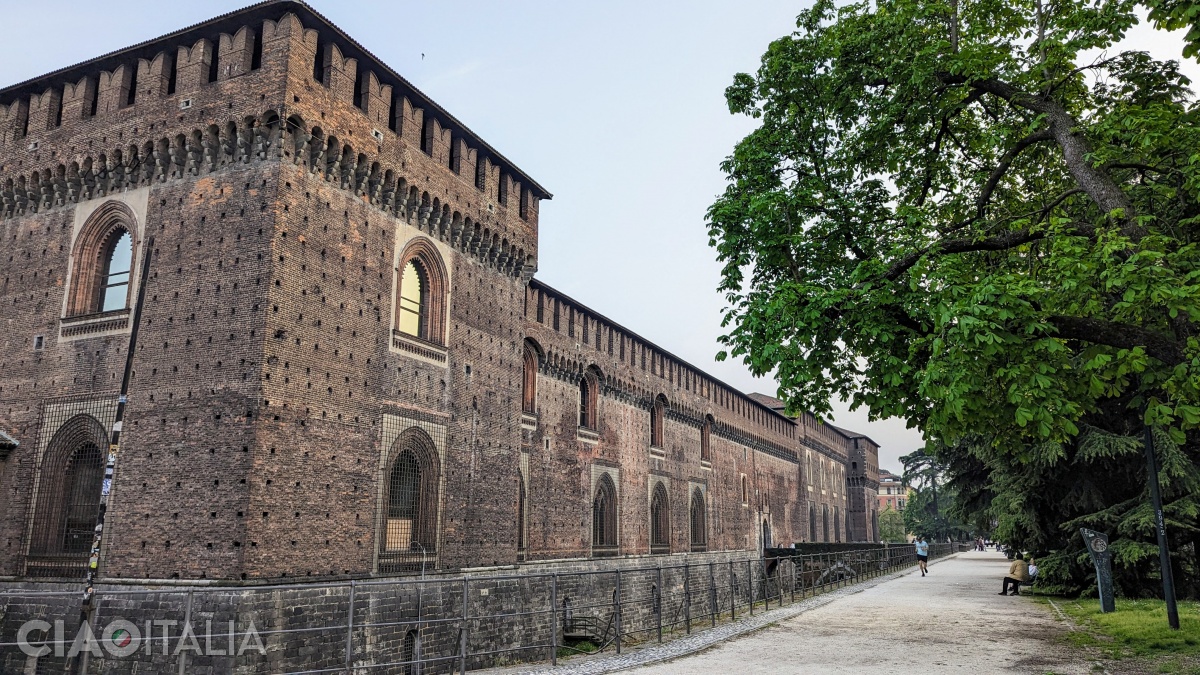
Ponticella
Ponticella is an exterior structure of the castle, built at the request of Ludovico il Moro, above the bridge crossing the moat, right next to the Falconiera Tower. According to tradition, it was designed by Bramante, the great architect from Urbino (today part of the Marche region), whose name is also associated with St. Peter's Basilica in the Vatican.
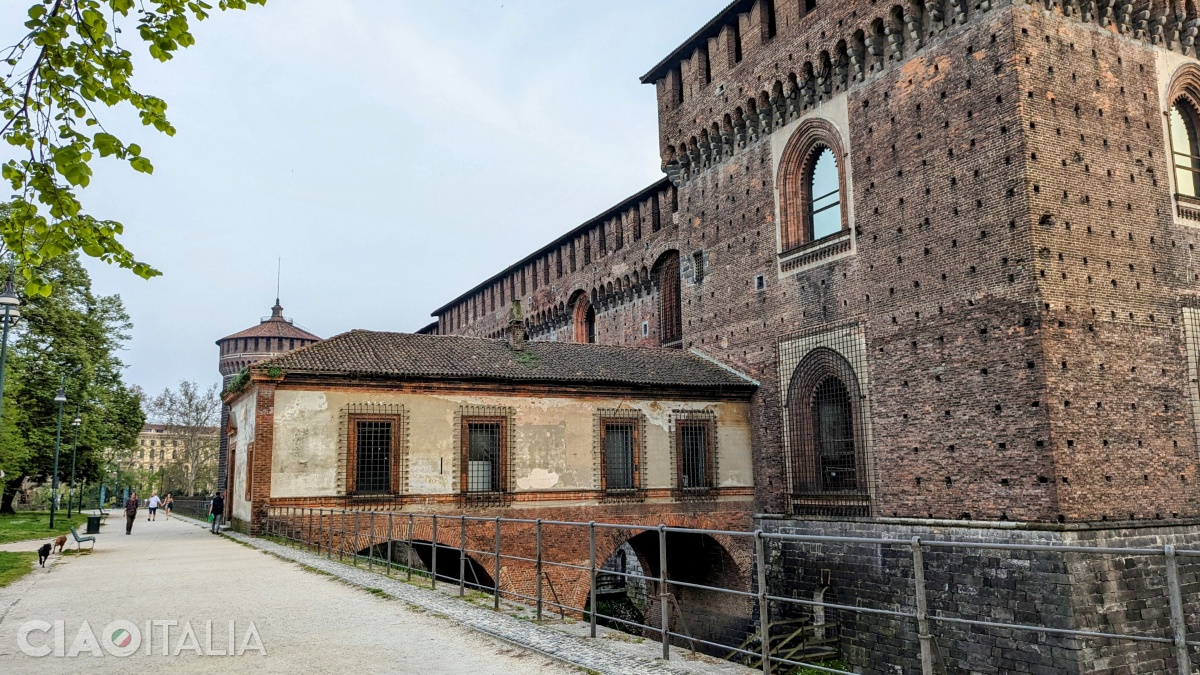
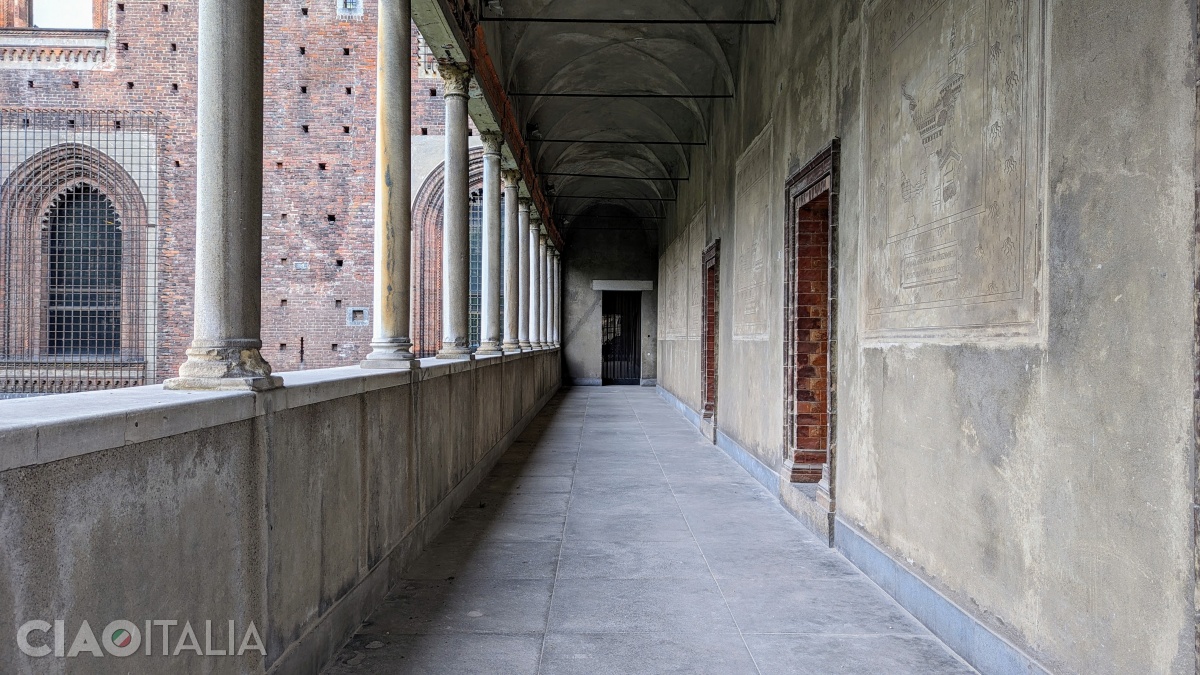
Ponticella consists of three small rooms (Rooms 9 and 10 in the Museum of Ancient Art) and a portico with columns. The rooms were originally decorated by Leonardo da Vinci, but these decorations have not been preserved. However, the name Salette nere ("The Black Rooms"), as defined by Ludovico in his letters, has endured. In one of these rooms, draped in mourning, Ludovico sought refuge, overwhelmed with grief after the premature death of his wife, Beatrice d'Este, who passed away in 1497 at the age of only 22 during childbirth. Legend has it that during this time, Ludovico also constructed a tunnel connecting Sforza Castle to Santa Maria delle Grazie Church, to make it easier for him to visit his beloved's tomb.
The graffiti-style decorations you see today in the portico were created later, at the end of the 19th century, during restoration work carried out by Luca Beltrami.
Museums in Castello Sforzesco
The Pietà Rondanini Museum
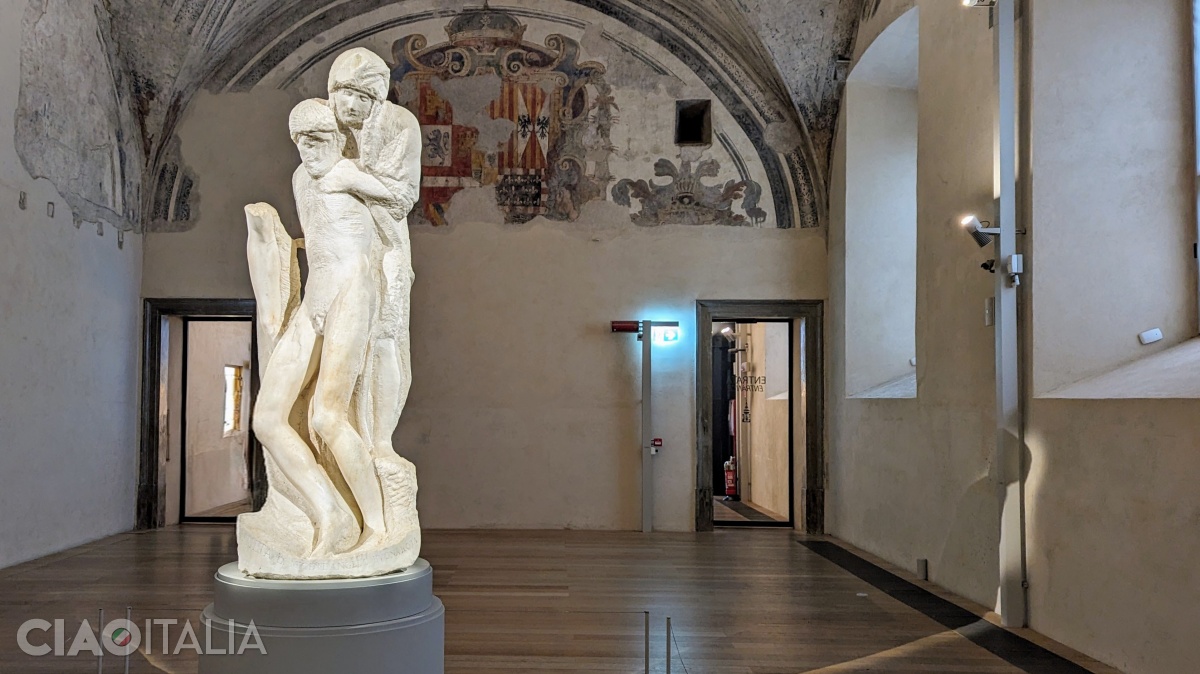
The Pietà Rondanini Museum is situated in the building called Ospedale Spagnolo - "The Spanish Hospital" (as you enter through the Umberto I Tower, on the left side of the Court of Arms). Inside, it houses the most important work in Castello Sforzesco: Pietà Rondanini, the final masterpiece created by Michelangelo. In a large hall, where traces of the frescoes that once adorned the walls are still visible, the artwork is displayed alone, in a setting that allows you to admire it at leisure, stopping in front of it for as long as you need.
The sculpture was discovered in 1564, upon the artist's death, in his studio in Rome. From there, it disappeared and was rediscovered over 200 years later in the courtyard of the palace built by Marquis Giuseppe Rondinini to host his extensive art collection. From a modified form of his name, the piece became known as Pietà Rondanini. In 1952, following a public subscription, it was purchased by the city of Milan, and since 1956, it has been displayed at Castello Sforzesco.
The sculpture, on which Michelangelo worked for over ten years, remains unfinished. Unlike the far better-known Pietà in St. Peter's Basilica, created at the age of 25, the Pietà Rondanini draws on medieval iconography: Mary is depicted standing, supporting the lifeless body of Jesus. As you'll notice in the sketches displayed in the museum, Michelangelo initially envisioned stronger, more muscular figures, in his characteristic style. From this original version, only Jesus' legs, his right arm, and a fragment of Mary's face remain sculpted into the block of marble. You can observe this fragment if you look closely at the right side of the veil she wears. Over time, the artist changed his vision and modified the sculpture, rendering the figures elongated and slender, stylized, almost merging into one another - making it difficult to discern who is supporting whom.
The Museum of Medieval Art
The Museum of Medieval Art is located on the ground floor, with its entrance from the Ducal Courtyard. Inaugurated in 1900, it showcases sculptures representative of Lombard art from the Middle Ages and the Renaissance, originating from excavations, churches, and Milanese residences. These are complemented by works from artists in Tuscany. The museum's rooms, part of the ducal residence, retain decorations commissioned by Galeazzo Maria Sforza or, later, by Ludovico Sforza, known as il Moro.
At the center of the second hall, the marble funerary monument of Bernabò Visconti is displayed, crafted in the 14th century by Bonino da Campione. The monument was commissioned by Bernabò Visconti himself, who is depicted on horseback, flanked by figures representing Justice and Power.
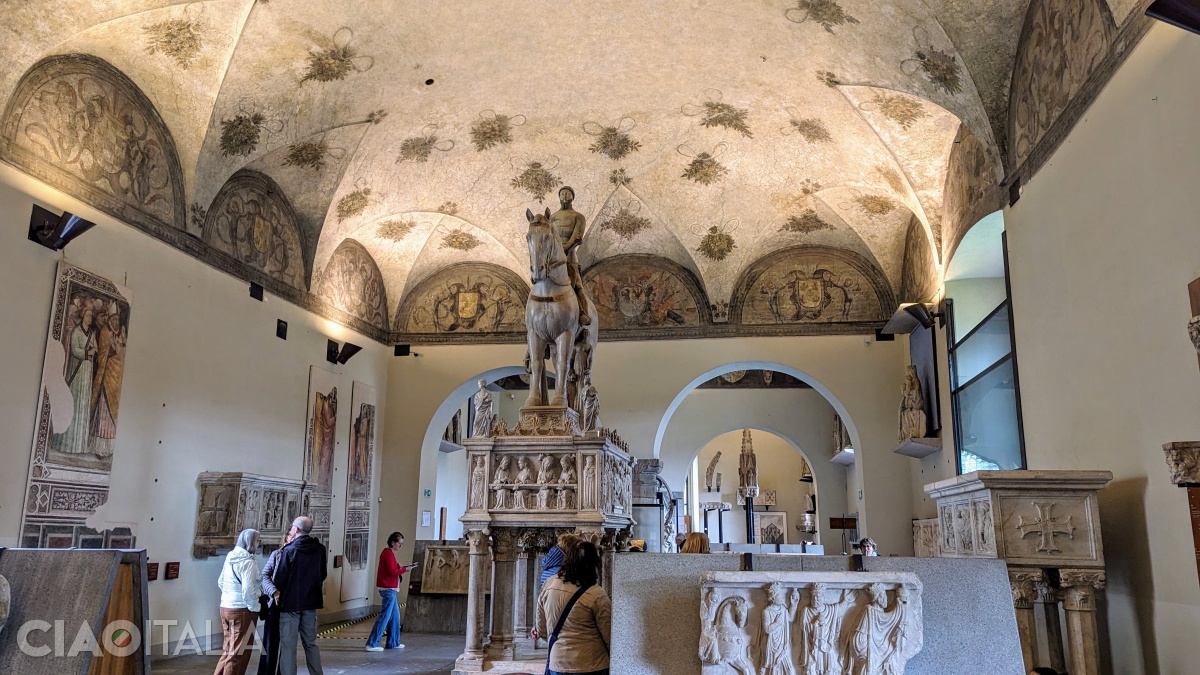
Hall VIII is the Sala delle Asse, named after the wooden paneling that once adorned its walls, making the room more pleasant and warm. It is also referred to as the Sala della Torre ("Tower Hall") because it is located within the Falconiera Tower. This was one of the ducal rooms designated for meetings and audiences.
This is the hall that Leonardo da Vinci, invited by Ludovico il Moro to the Milanese court, decorated in 1498, painting a vaulted ceiling formed by the intertwined branches of mulberry trees. Back then, mulberry trees were very important because silkworms fed on their leaves. Ludovico had even ordered the planting of several mulberry orchards to support silkworm cultivation. According to one theory, Ludovico Sforza's historical nickname il Moro may have originated from the Latin word for mulberry (morus) or the Italian (moro). However, the more widely accepted theory is that the nickname referred to his appearance, with black hair and dark skin (moro can also mean "dark-skinned man, Moor"). The depiction of mulberry trees in the Sala delle Asse also carries symbolic meaning: mulberries were considered a symbol of wisdom, so their strong roots and intertwining branches on the ceiling also represented the stability and unity of the state Ludovico governed.
At the center of the vaulted ceiling is the ducal coat of arms, and the blue inscriptions on the gilded background refer to three significant events: the alliance with Emperor Maximilian, sealed through his marriage to Sforza's niece, Bianca Maria; the support sought from the emperor in the war against King Charles VIII of France; and the granting of the title of duke.
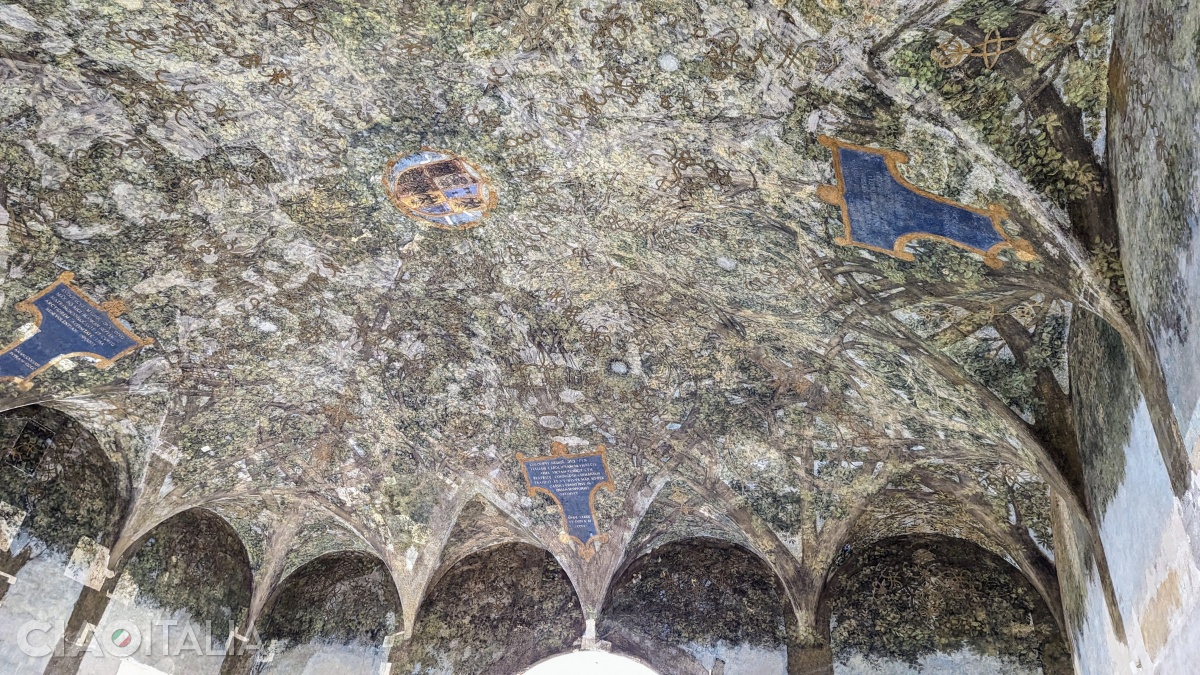
The painting was rediscovered only in 1893, during the castle's restoration. The monochrome fragments still visible on the walls have also been attributed to Leonardo. If you're interested in the work of the great engineer, artist, and inventor, you can visit the Leonardo da Vinci Museums in Milan.
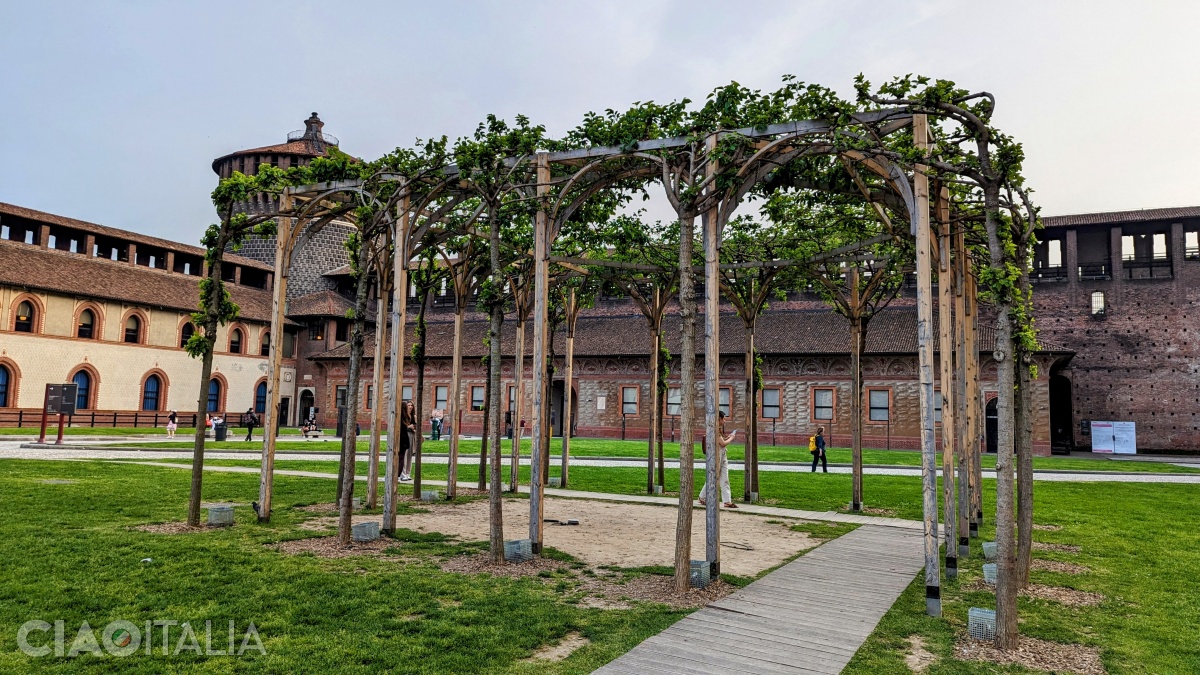
In 2019, as part of the events commemorating 500 years since Leonardo da Vinci's death, a wooden pergola with 16 mulberry trees was set up in the Court of Arms. You might have noticed it while walking through the castle's courtyards. The pergola is a 1:2 scale reproduction of the decoration Leonardo designed in 1498 for the ceiling of the Sala delle Asse, allowing you to imagine what a corner of a garden might have looked like during that time.
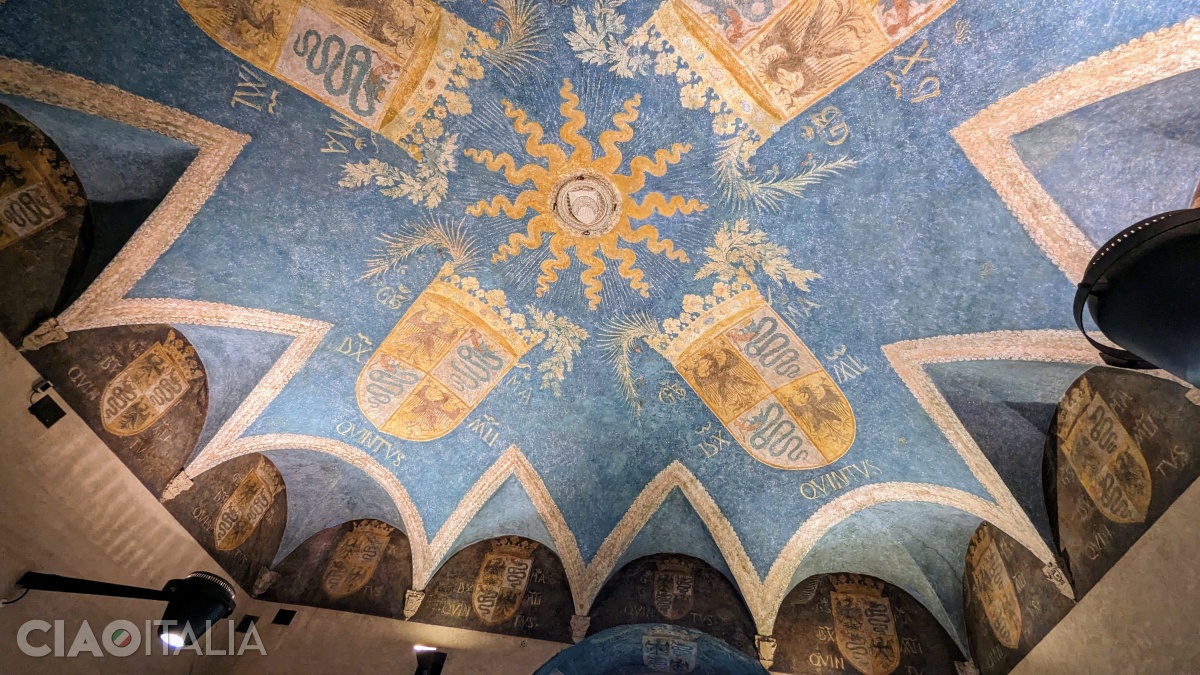
Room XI, called the Sala dei Ducali ("Hall of the Dukes") after the ducal coats of arms decorating its ceiling, was once part of the private apartments of the Sforza family. The blue vaulted ceiling is adorned with the coats of arms of Galeazzo Maria Sforza, framed by the initials GZ MA and the title DVX MLI (Galeazzo Maria, Duke of Milan).
Room XII was the former ducal chapel, established in 1473 at the request of Galeazzo Maria Sforza, who is believed to have also suggested its iconographic program. The gilded walls are decorated with figures of saints, and in the medallion on the ceiling, God the Father is depicted, surrounded by cherubim and archangels. Below is a depiction of Christ rising from the dead above a tomb guarded by soldiers. The lunettes feature paintings of the Annunciation and the Sforza family crests, which are now faded. On the wall where the altar once stood, a 15th-century sculpture of the Virgin and Child is displayed.
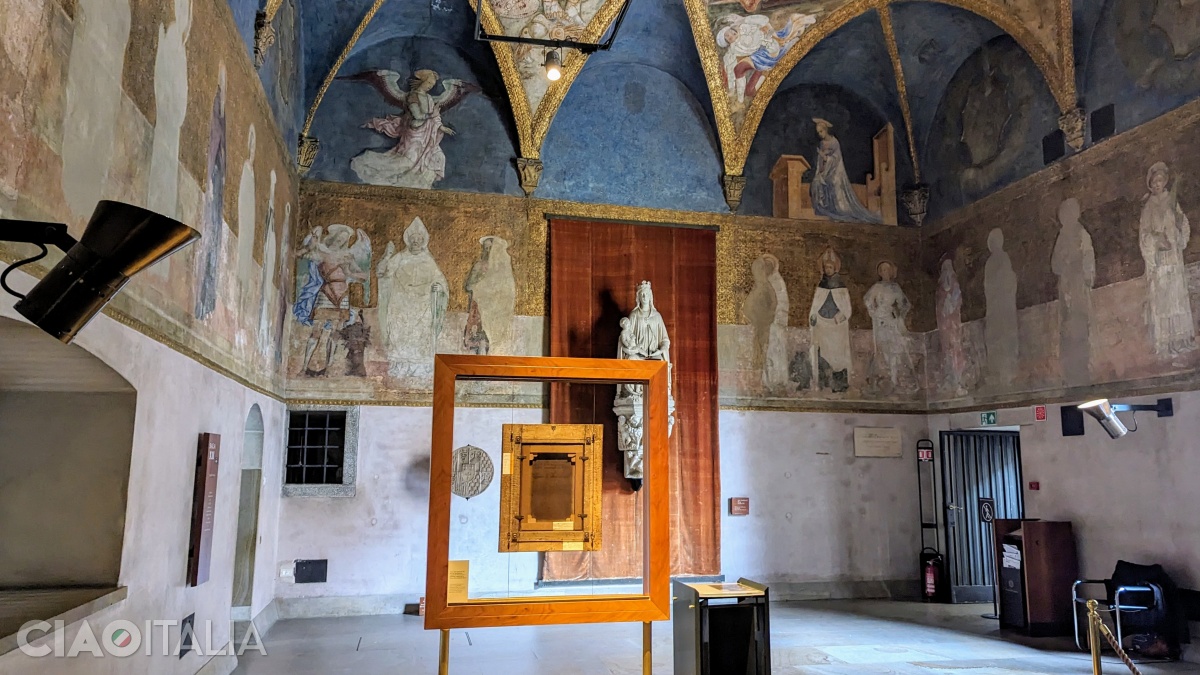
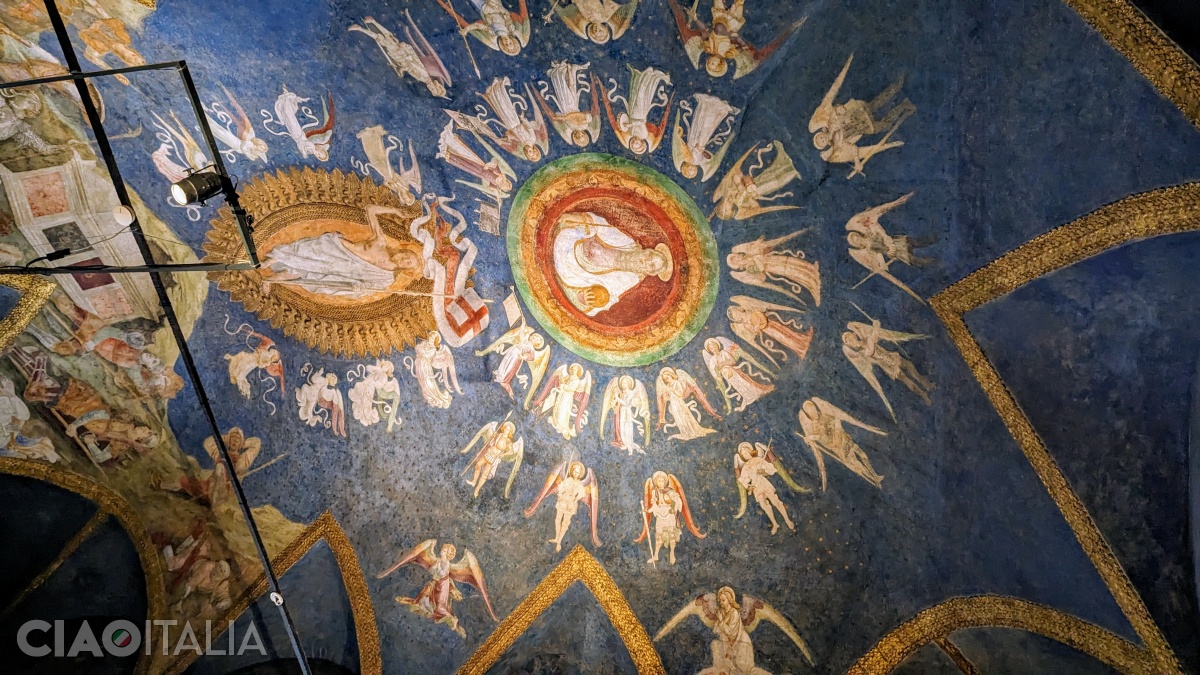
Room XIII is called the Sala delle Colombine ("Hall of the Doves") because of its decoration, which features a recurring motif of the sun with a dove at its center, reminiscent of a silk fabric. Formerly part of the ducal apartments, this room now houses some of the most important sculptures from the second half of the 14th century.
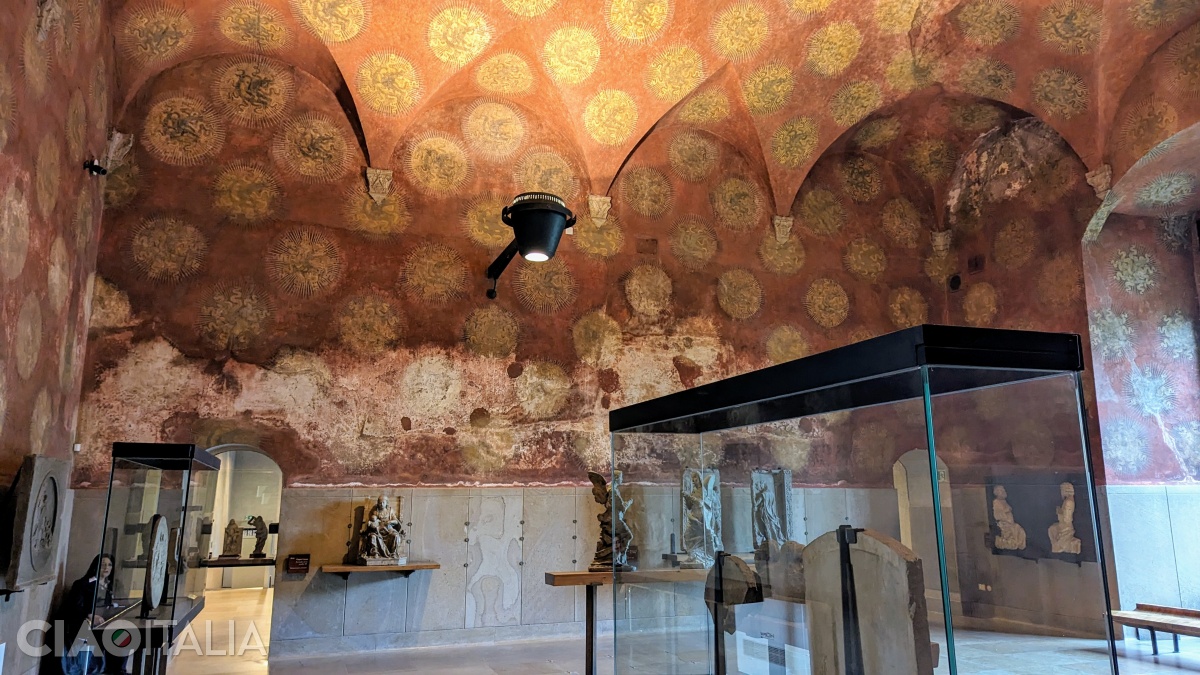
Room XV is known as the Sala degli Scarlioni, named for the zigzagging white and red striped decoration called scaglioni or scarlioni. This room was used by the duke for audiences and to convene the Secret Council. It is also home to another significant artwork - the funerary statue of Gaston de Foix, created by Agostino Busti at the beginning of the 16th century from Carrara marble. The statue was commissioned by Francis I, King of France, for Duke Gaston de Foix, who died in 1517 during the Battle of Ravenna.

Museum of Furniture and Wooden Sculptures
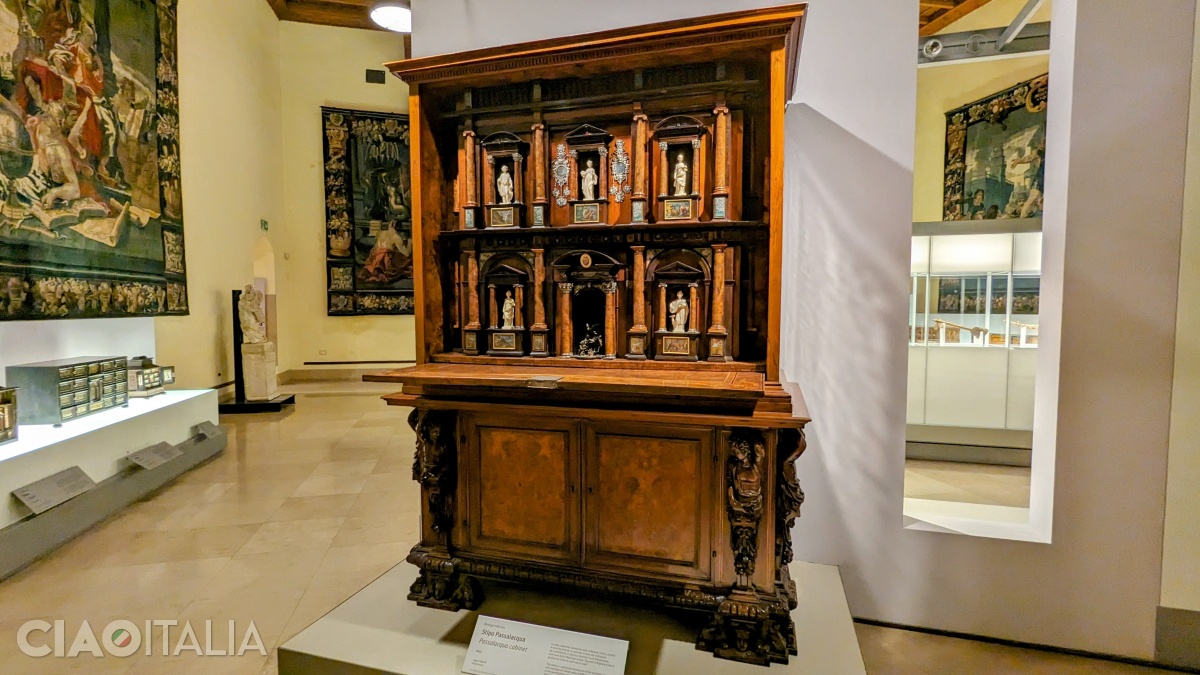
The Museum of Furniture and Wooden Sculptures, located on the first floor of the ducal residence, originated from the collection purchased in 1908 from the Mora family of Bergamo, which has since been expanded with additional acquisitions. Two of the most valuable items are the Passalacqua Cabinet and the chest with Chinese decoration.
The Passalacqua Cabinet was commissioned by Quintino Lucini Passalacqua, a priest at the Cathedral of Como. It was crafted in 1613 in a Milanese workshop using wood, ivory, gilded bronze, silver, rock crystal, and semi-precious stones. Its symbolism is philosophical: when reason allows itself to be guided by the senses, things go wrong. The entire decoration revolves around this theme: the small bronze statue in the center represents reason being pulled by five wild animals, the ivory statuettes symbolize the five senses, and the small scenes below depict biblical episodes.
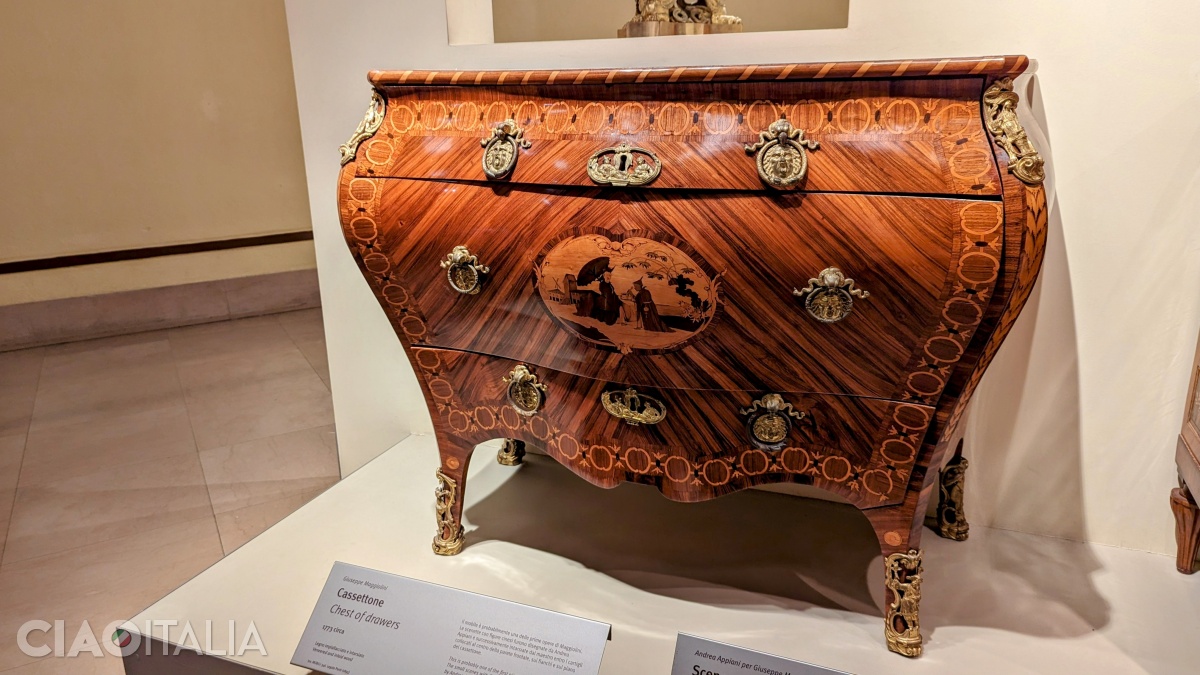
The Chest with Chinese Decoration was created over 150 years later, in 1773, by Giuseppe Maggiolini. Crafted in the Rococo style from various types of wood, it features bronze ornaments representing theatrical masks and central medallions with oriental scenes.
Pinacoteca
Also located on the first floor of the ducal residence is the Pinacoteca, a collection of Lombard paintings spanning the 15th to 18th centuries, with Venetian, Flemish, and Dutch paintings from the 17th century added to it. Among the most famous artists featured are Andrea Mantegna, Giovanni Bellini, Correggio, Tintoretto, Lorenzo Lotto, Bramantino, Bernardino Luini, and Canaletto.
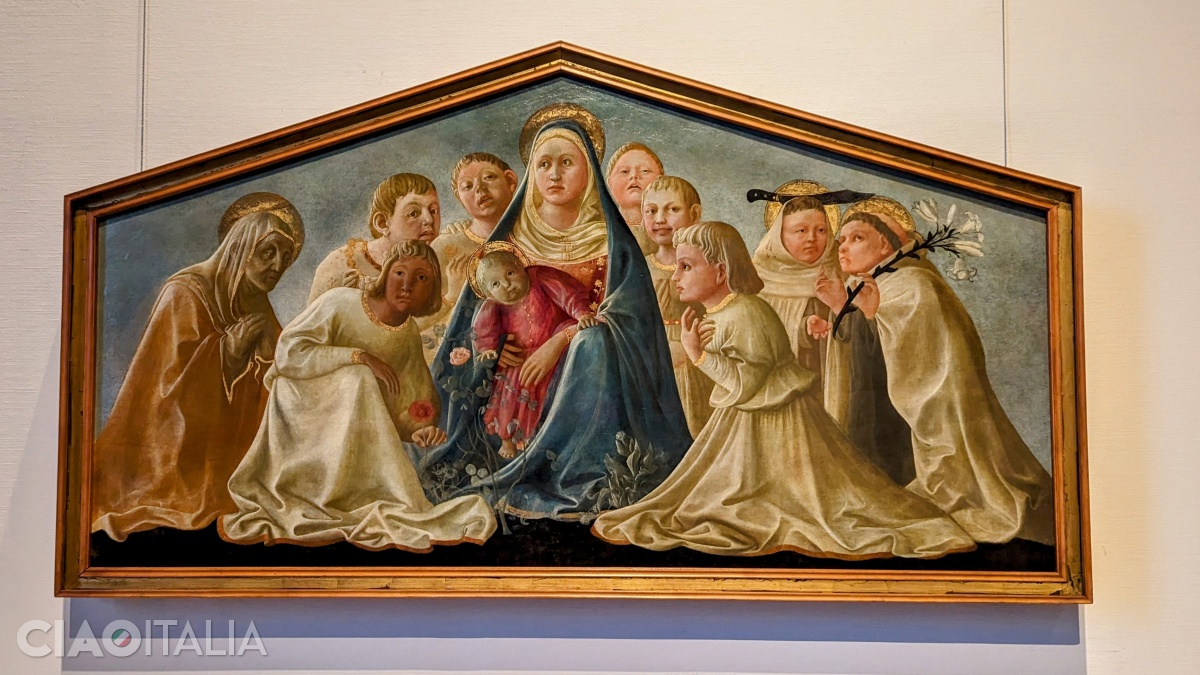
The Madonna dell'Umiltà, painted by Filippo Lippi in 1432, comes from the church of Santa Maria del Carmine in Florence, where the painter had taken monastic vows. In the church, the painting was placed at a height and designed to be viewed from below. The Virgin is surrounded by Dominican saints and angels. The angels are depicted without wings, reflecting a common effort of the time to lend religious images a more human dimension.
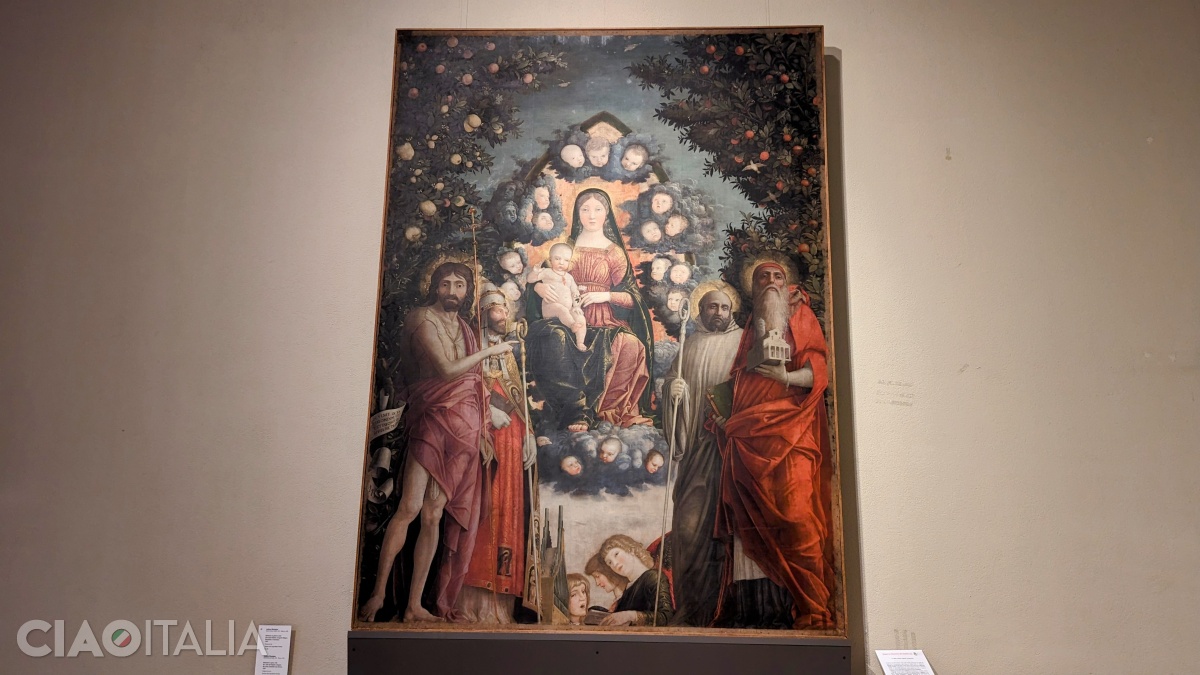
Also dating from the 15th century is the "Madonna in Glory", created by Andrea Mantegna in 1497 for the main altar of the Church of Santa Maria in Organo in Verona. The composition is theatrical: the Virgin and Child are surrounded by cherubs, and the scene is framed by trees laden with citrus fruits. To the left stand Saints John the Baptist and Gregory the Great, while to the right are Saint Benedict and Saint Jerome, the latter holding a model of the church in his hands.
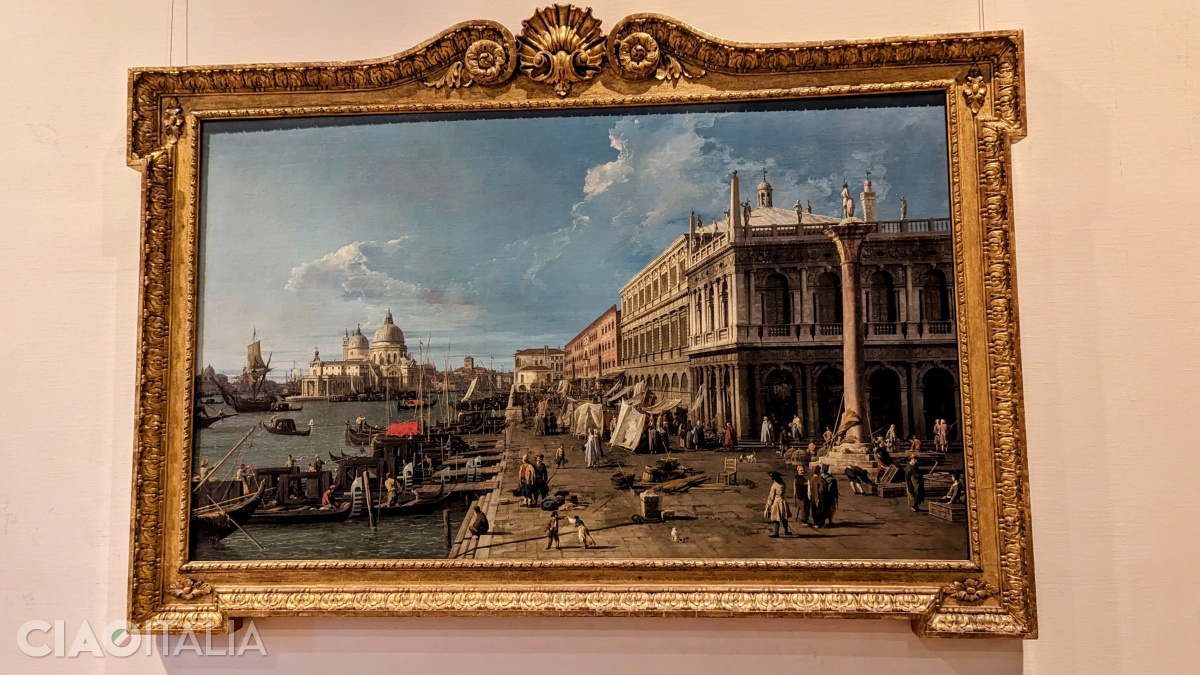
Another significant work preserved in the Pinacoteca is a painting by Canaletto from the mid-18th century, acquired in 1995. It depicts the Venetian waterfront, featuring the column of Saint Theodore in Piazzetta San Marco and the Basilica of Santa Maria della Salute.
Museum of Decorative Arts
The Museum of Decorative Arts is in the Rocchetta, on the second floor. It is one of the most important collections of its kind, showcasing objects made from ceramics and ivory, gold and bronze, precious tapestries, and Murano and Bohemian glass.
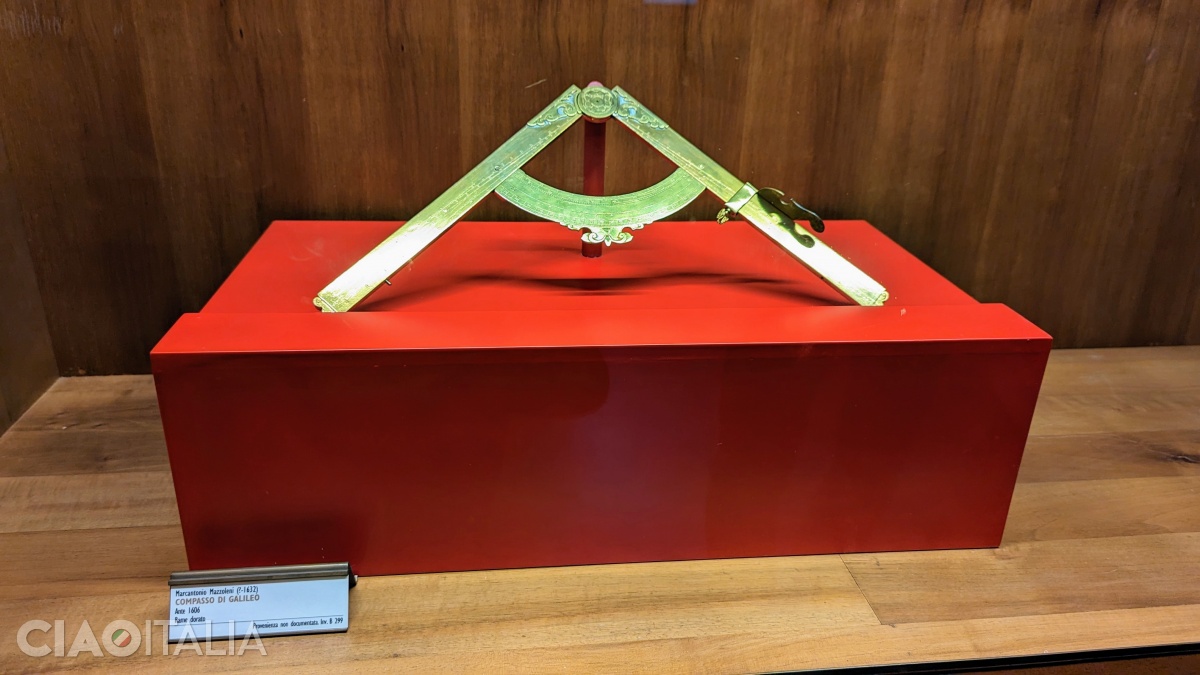
In one of the rooms, you can see Galileo Galilei's geometric military compass, crafted in gilded copper in Padua at the beginning of the 17th century. Galilei described its functionality in his treatise "Operations of the Geometric and Military Compass", published in 1606, which was sold or offered together with the compass. Of the 60 compasses created, only five have survived to this day: one at the Sforza Castle, one at the Museum of the History of Science in Florence, one at the Military Geographical Institute in Florence, one at the University of Pisa, and one in the United Kingdom, at Cambridge.
In another room, there is a display case featuring porcelain objects created by Gio Ponti in the 20th century. Ponti is one of Italy's most famous architects and designers. Among his many works is the restoration of the University of Padua (which is highly recommended to add to your list of places to visit in Padua).

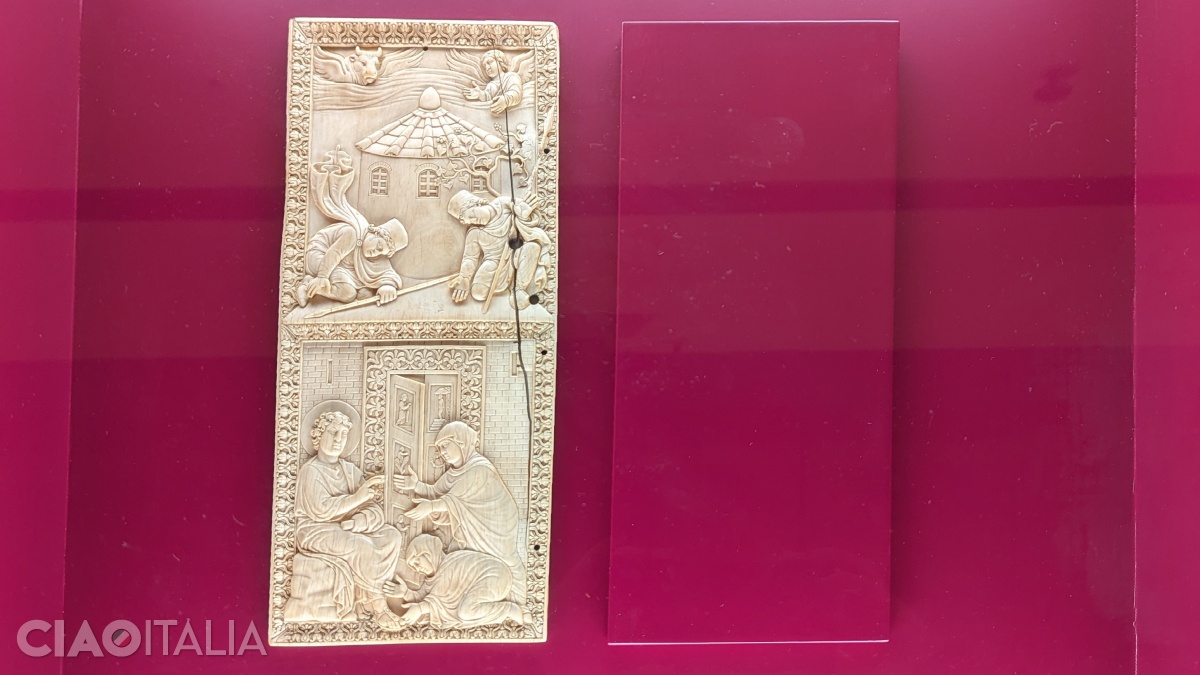
From another era - Late Antiquity (early 5th century) - comes an ivory tablet carved in bas-relief, depicting the two Marys mourning at the tomb of Jesus. It is also one of the earliest known images of the Holy Sepulchre, shown beneath the symbols of the Evangelists Luke (represented by the ox) and Matthew (represented by the angel).
Museum of Musical Instruments
Also located in the Rocchetta, but on the first floor, is the Museum of Musical Instruments, which showcases around 90 different instruments from Europe and beyond.
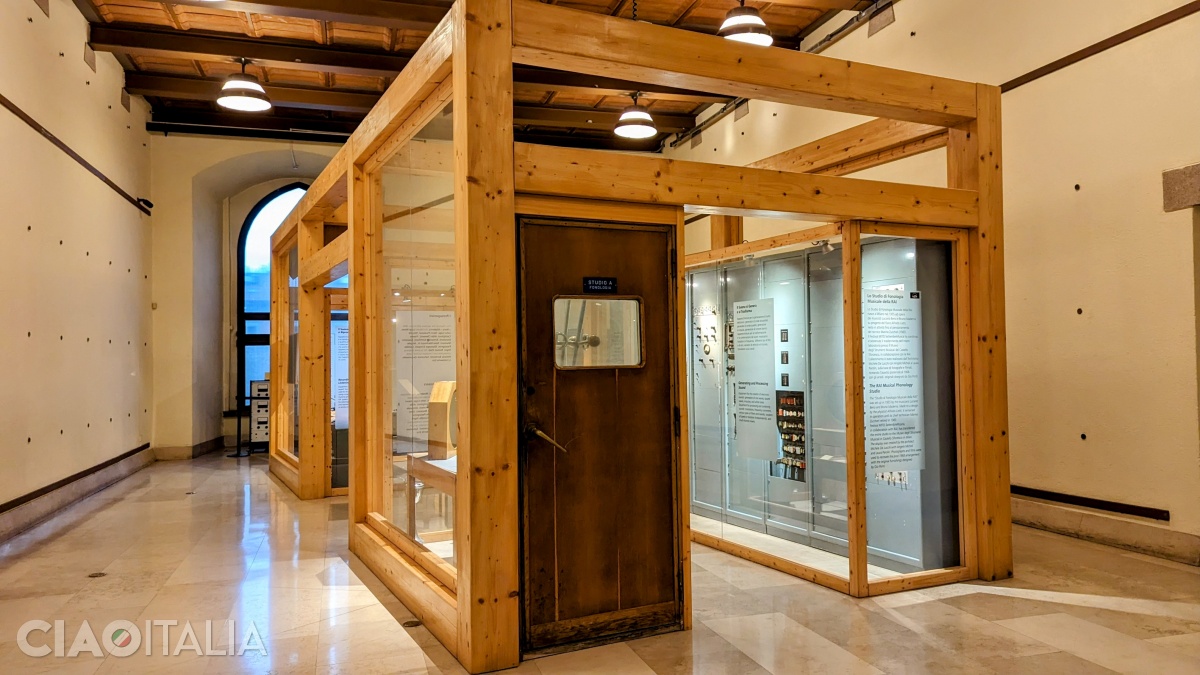
One of the rooms features a reconstruction of a phonology studio from the Italian television network Rai, which operated from 1955 to 1983, producing electronic music and soundtracks for radio and television.
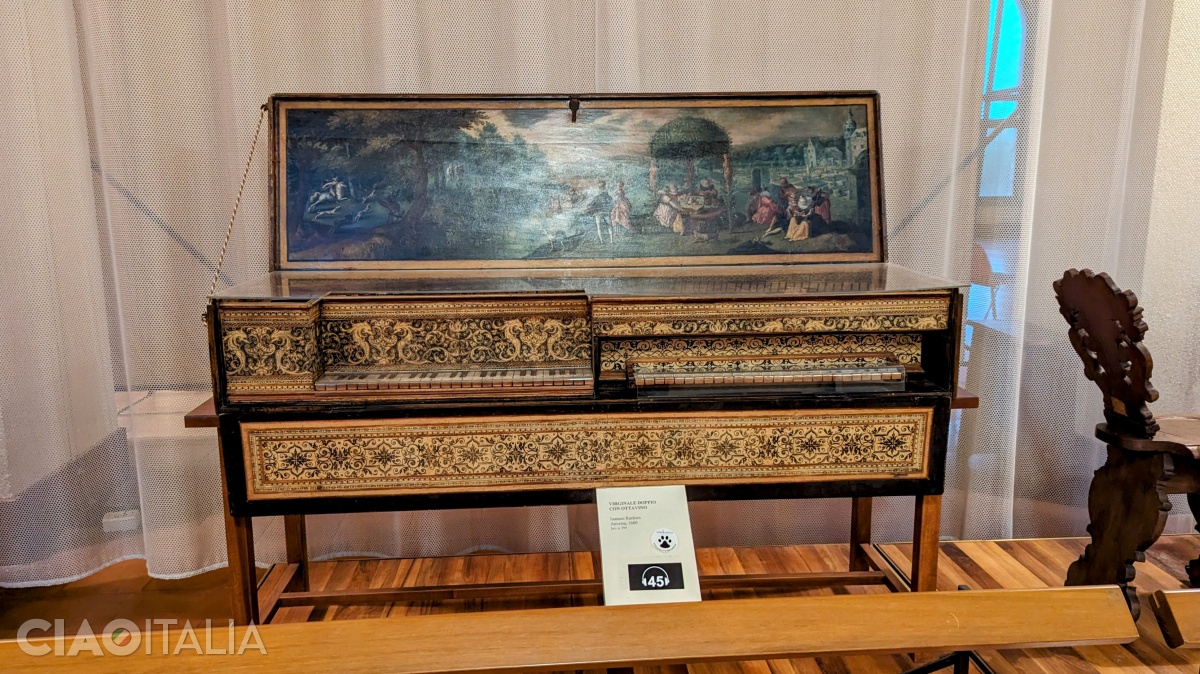
One of the most fascinating instruments in the museum is the double virginal (the virginal is an old stringed keyboard instrument). It was created in 1600 in Antwerp, made of poplar, fir, oak, and beech wood. Within the larger instrument is a smaller one - both could be played simultaneously by two musicians, or the smaller virginal could be placed on top of the larger one, with its keyboard operating both instruments at the same time. The lid is painted with scenes depicting Flemish society engaged in leisure activities, such as reading, boating, or deer hunting.
Further along, you will find the grand Ballroom, decorated with 12 tapestries representing the months of the year. These tapestries were created at the beginning of the 16th century based on designs by Bramantino.
Archeological Museum
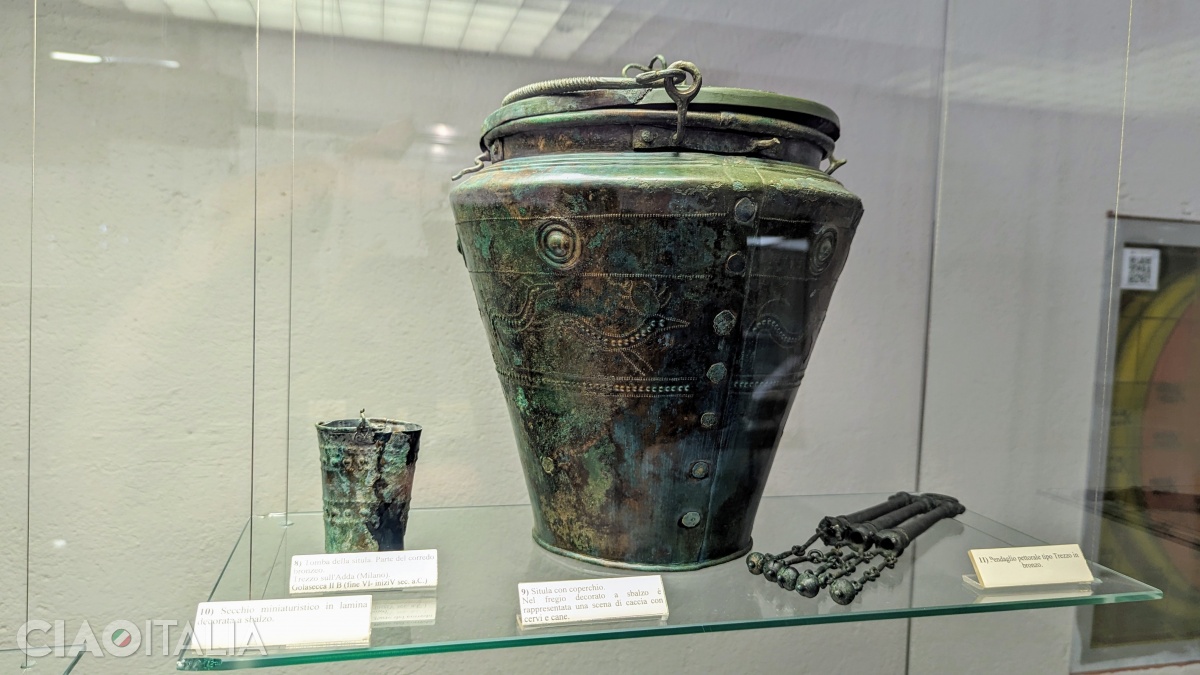
The Archaeological Museum can be found in the basement, with entrance from the Ducal Courtyard. The exhibits date from a time span ranging from the Neolithic period (6th-4th millennia BCE) to the Romanization period (3rd-1st centuries BCE).