Visiting the University of Padua
The University of Padua is one of the oldest in the world. Founded in 1222 by students who had come from Bologna in search of greater academic freedom, it was the second university in Italy. It was the place where figures such as Copernicus and Galileo Galilei studied, as well as Elena Corner - the first woman in the world to graduate from a university. A visit to the university is fascinating and worth considering when planning the sights to see in Padua. Among the most important attractions are the Aula Magna, the Hall of the Forty, the Anatomical Theatre, and the Medicine Hall.
Visiting Hours
The University of Padua can be visited every day, with guided tours in English and Italian or on your own (only on weekends).
Tours are not held on December 24, 25, 31, and January 1.
From Monday to Friday, the Palazzo del Bo guided tour is available. It lasts about 45 minutes and takes place at the following times:
- 10:30 AM: Italian
- 11:30 AM: English
- 12:30 PM: Italian
- 3:30 PM: Italian
- 4:30 PM: English
- 5:30 PM: Italian
During the tour, you will visit the Old Courtyard, the Aula Magna, the Hall of the Forty (featuring Galileo's podium), the Anatomical Theatre, the Medicine and Law halls, and the statue of Elena Corner.
On Saturdays, Sundays, and holidays, the Palazzo del Bo e il '900 di Gio Ponti tour is organized. It lasts about 75 minutes and takes place at the following times:
- 09:30 AM: Italian
- 10:30 AM: Italian
- 11:30 AM: English
- 12:30 PM: Italian
- 2:30 PM: Italian
- 3:30 PM: Italian
- 4:30 PM: English
- 5:30 PM: Italian
This tour can also be done independently, without a guide, on Saturdays and Sundays between 10:00 AM and 6:00 PM, using the QR codes along the route, your smartphone, and your own headphones.
During this tour, you will visit the Old Courtyard, the Aula Magna, the Hall of the Forty (with Galileo's podium), the Anatomical Theatre, the Medicine and Law halls, the statue of Elena Corner, the Rectorate, the Old Archive, and the Basilica.
Ticket Prices
Ticket prices for visiting the University of Padua vary depending on the type of tour.
Palazzo del Bo (guided tour):
- Adult: €8
- Over 65: €6
- 13-25 years: €4
- Children 6-13 years (accompanied by a paying adult): €4
- Under 6: Free
- Family ticket (2 adults and up to 3 children under 18): €18
- Visitors who have already visited the Padua Botanical Garden, the Museum of Nature and Humankind, Villa Parco Bolasco, or the Sala dei Giganti and present a (full-price) ticket: €6
Palazzo del Bo e il '900 di Gio Ponti (self-guided tour):
- Adult: €10
- Over 65: €8
- 13-25 years: €6
- Children 6-13 (accompanied by a paying adult): €6
- Under 6: Free
- Family ticket (2 adults and up to 3 children under 18): €25
- Combined ticket (valid for any two museums among Palazzo del Bo, the Museum of Nature and Humankind, and the Botanical Garden): €18
Palazzo del Bo e il '900 di Gio Ponti (guided tour):
- €5/ person added to the self-guided tour prices.
Visiting the University of Padua
Initially, the university operated across several premises located in different areas of the city. These were centralized only at the beginning of the 16th century in the complex of buildings called Palazzo del Bo, which today serves as the headquarters and the oldest part of the university.
The name Palazzo del Bo translates to "The Ox Palace". In the past, this site near the butcheries housed a famous inn - Hospitium Bovis - which featured an ox head on its sign. The bucranium (ox skull) is the symbol of the University of Padua, and you will find it in many architectural decorations.
Palazzo del Bo underwent several changes to transform it into a university seat: first between the late 15th and early 17th centuries, and again at the end of the 19th century.
Between 1938 and 1942, at the initiative of Rector Carlo Anti, new transformations took place: the building was expanded with a new wing, the modern courtyard was created, and the decorations and furniture were designed by the famous architect Gio Ponti from Milan, along with other prominent representatives of Italian art and design.
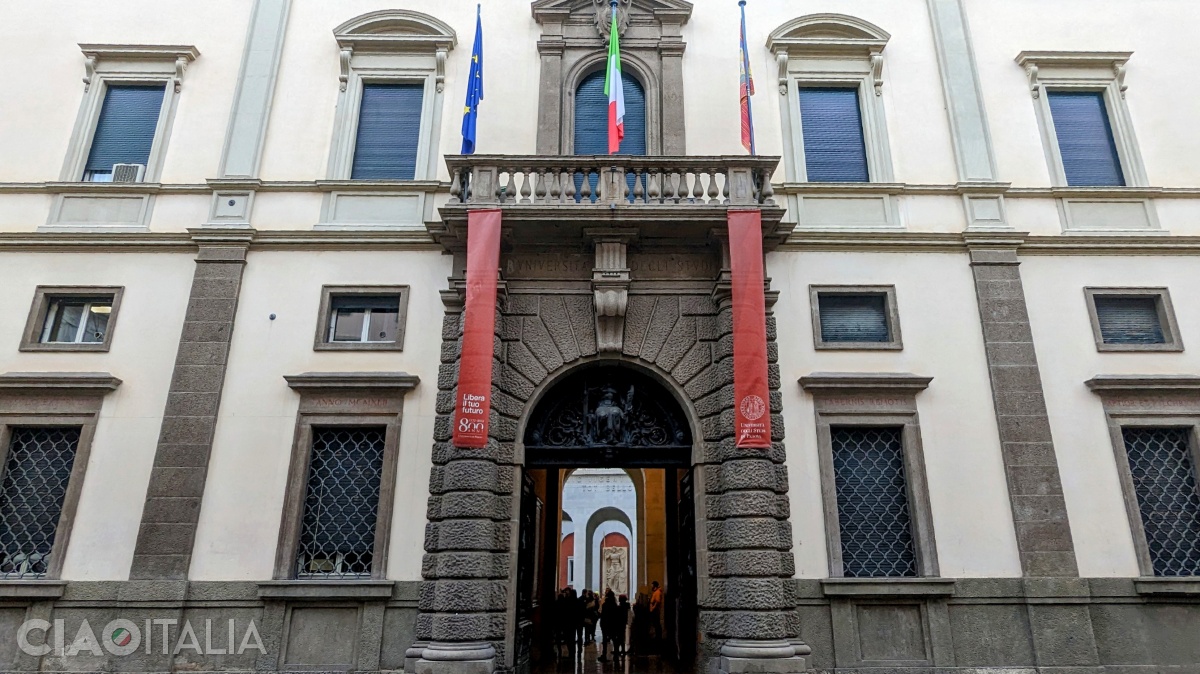
The entrance to the University is at Via VIII Febbraio no. 2. The monumental gate was built in 1922 from the bronze of cannons captured during World War I.
Scala del Sapere
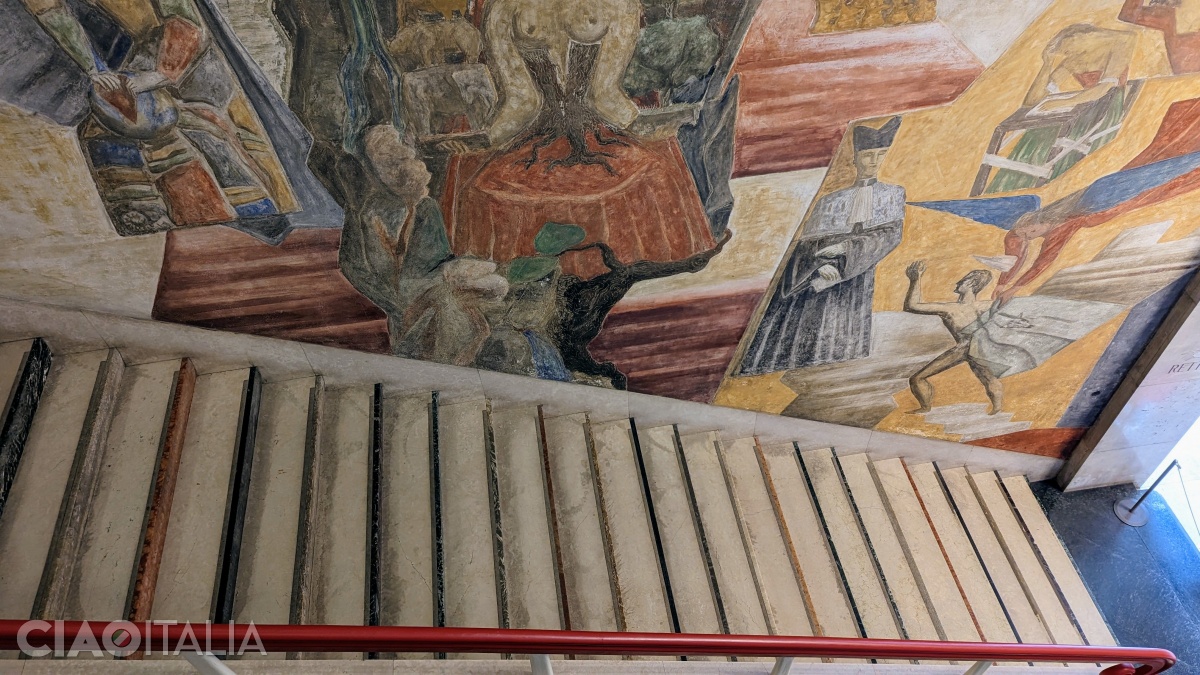
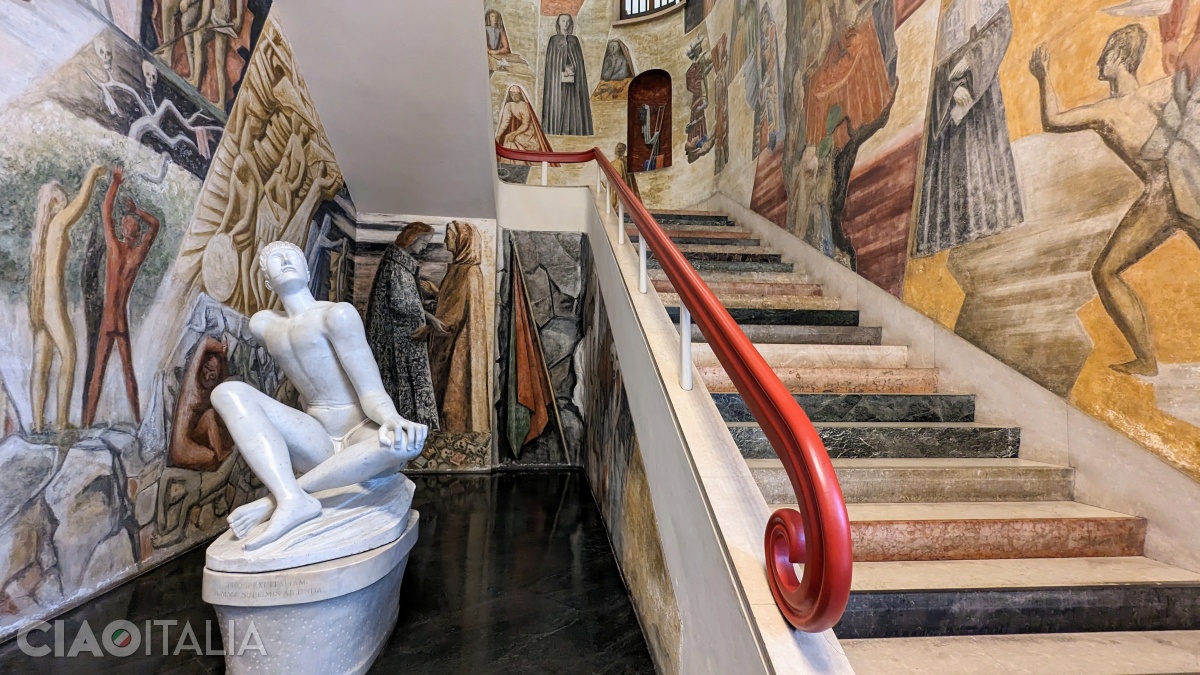
On the left side of the entrance area - named the "Atrium of Heroes" in honor of the students who died in the war - you will find the Scala del Sapere ("Staircase of Knowledge"). This leads to the first floor, which houses the Rectorate and other spaces created during the renovation works of the 1940s.
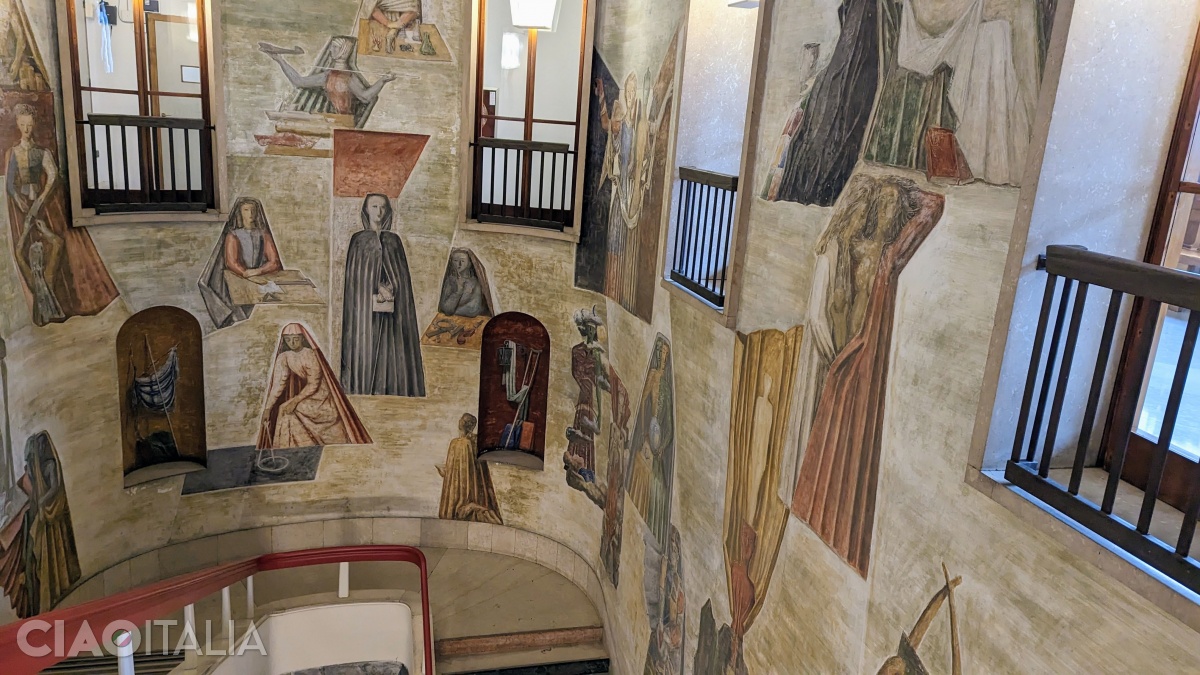
The staircase has steps made of differently colored marble, and the walls are decorated with frescoes painted by Gio Ponti and Fulvio Pendini in the Novecento style. The paintings symbolize the birth of humanity and knowledge and the development of the sciences.
To the left of the stairs is the statue of Palinuro by artist Arturo Martini. It represents the mythical hero Palinurus, who steered Aeneas' ship during the voyage to Italy and fell into the sea after being betrayed by the god of sleep. The statue was created to honor the heroic death of Primo Visentin, a partisan brigade commander.
Aula Magna
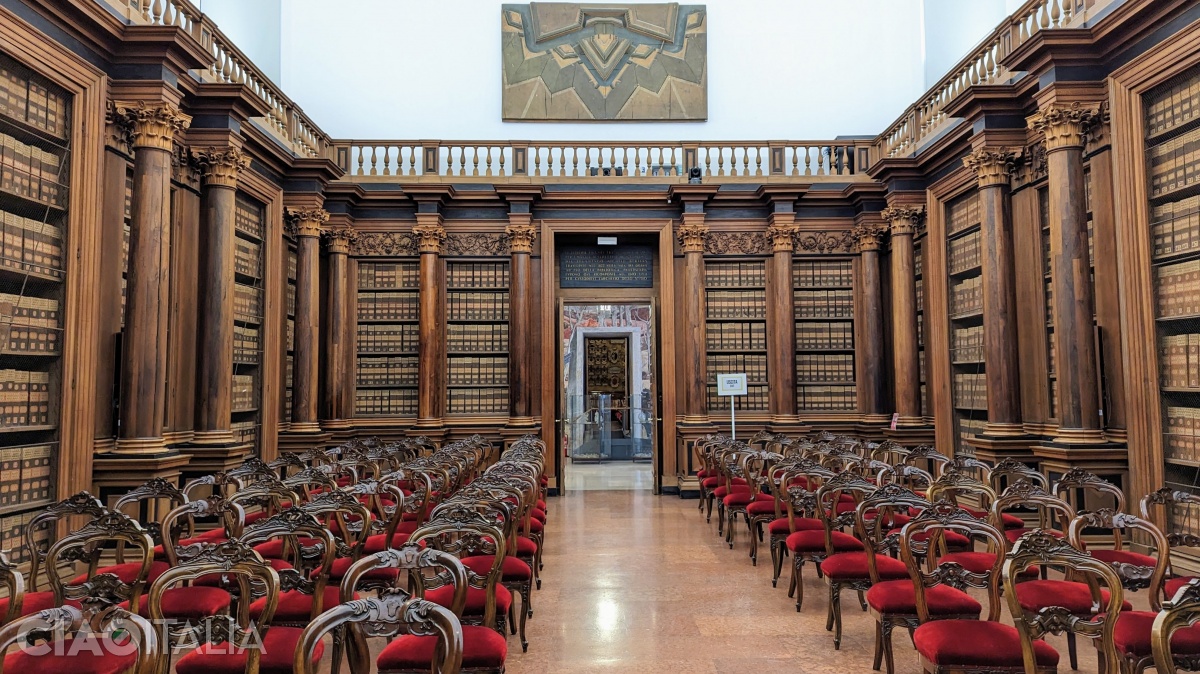
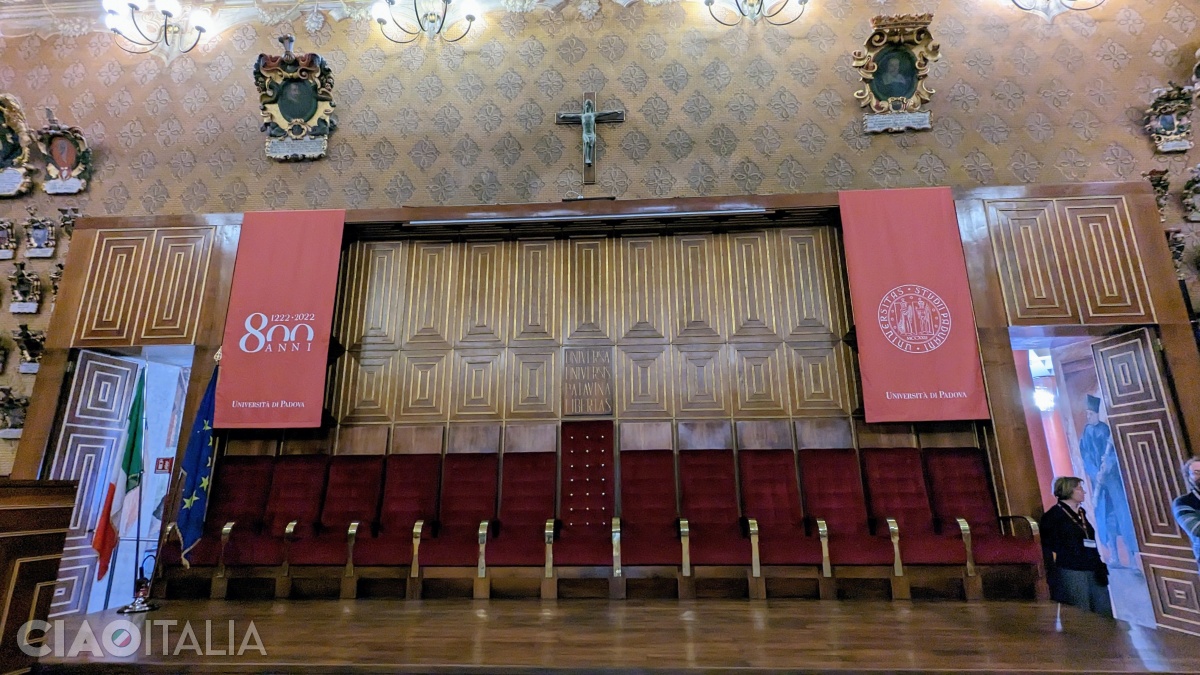
The Aula Magna is the ceremonial hall of the University of Padua.
From the 16th to the 18th centuries, this hall hosted lectures for the Faculty of Law, known as the Scuola grande dei legisti. In an exceptional move, although he belonged to the Faculty of Arts (which included the sciences at the time), Galileo Galilei was also permitted to teach here - it was the only room large enough to accommodate the massive number of students who wished to attend his lectures. Today, the hall is dedicated to him.
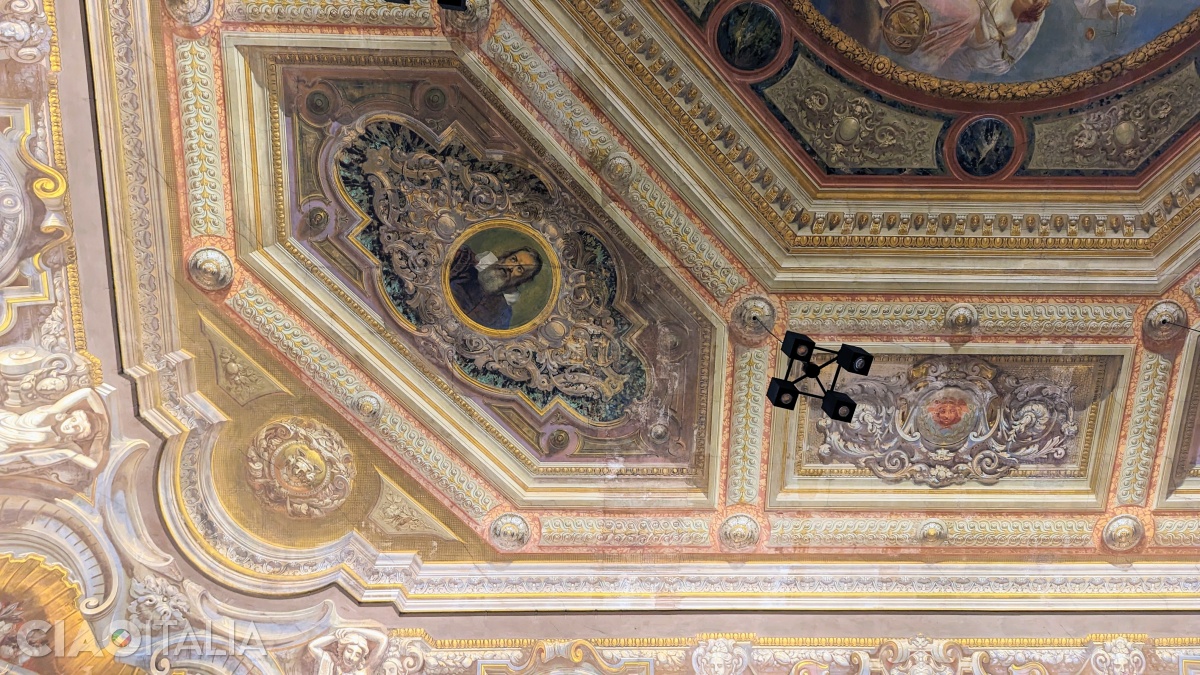
In the first half of the 19th century, it served as a drawing room, and between 1854-1856, it was redesigned to be transformed into the Aula Magna. The ceiling was raised by about 5m and painted by Giulio Carlini. In the center is an allegory of Wisdom which, with the help of a mirror, spreads its rays toward the disciplines taught at the university at the time: Theology, Law, Philosophy, Medicine, and Mathematics.
Surrounding it are symbolic portraits of four figures: Galileo Galilei (representing Mathematics and Physics), the legal scholar Emo (symbol of Law), Cardinal Zabarella (representing Theology and Philosophy), and the physician Giovanni Battista Morgagni (representing Medicine, as he is considered the founder of modern pathological anatomy).
In the 1940s, the hall was renovated by Gio Ponti, who redesigned the chairs, benches, and the podium where members of the Academic Senate sit during the most important ceremonies. Above the central seat, you can see the university's historical motto: Universa Universis Patavina Libertas ("Paduan freedom is universal, for everyone").
Sala dei Quaranta
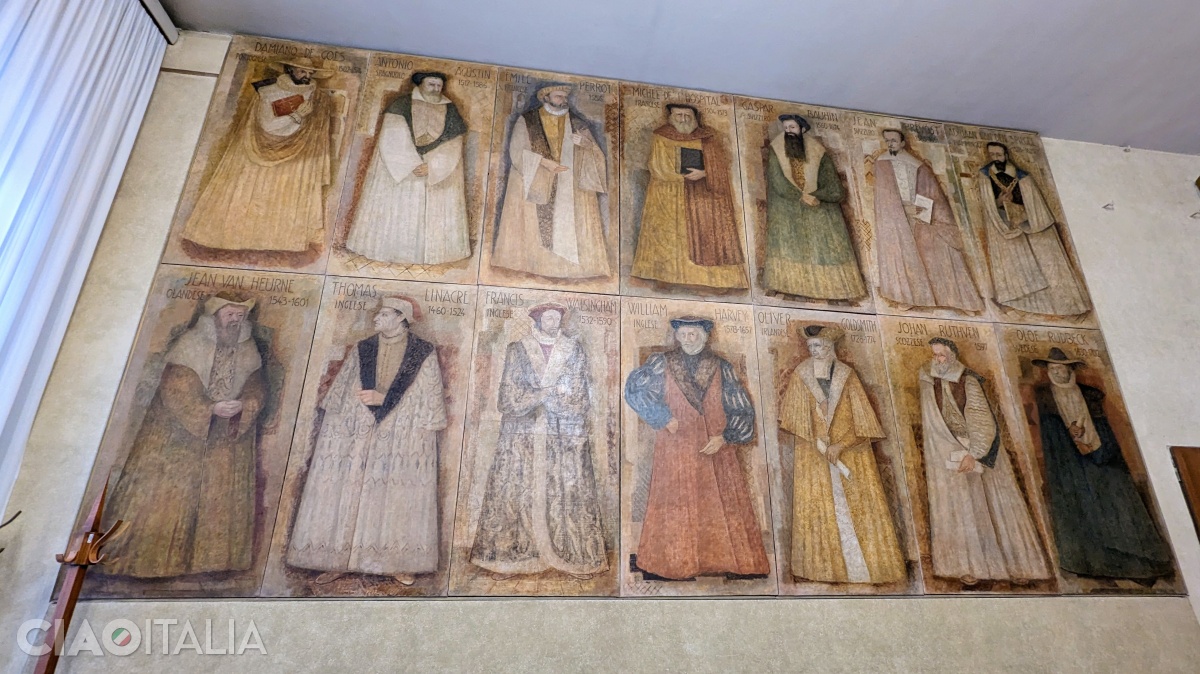
The Sala dei Quaranta ("Hall of the Forty") owes its name to the 40 portraits on the walls. These were painted in 1942 by Giangiacomo dal Forno and depict scholars from various countries who studied at the University of Padua over time, as it was considered the main scientific center of Europe during the 15th-17th centuries.
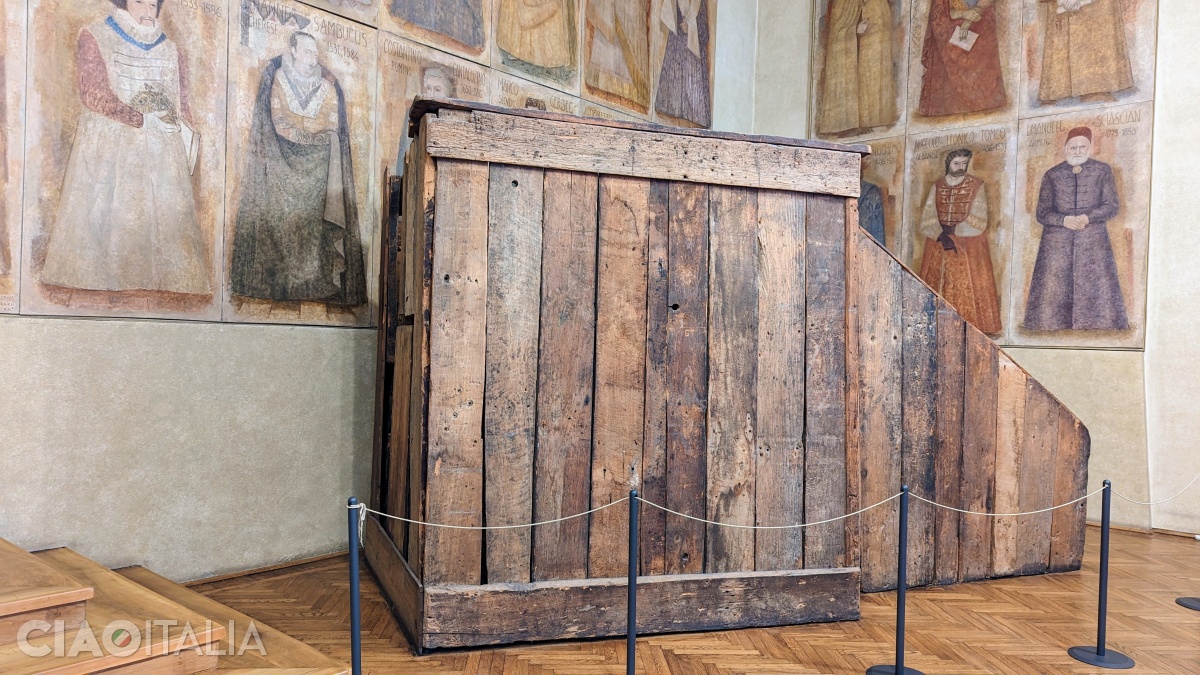
The hall also contains the wooden podium said to have been built by students so that Galileo could teach in the large hall destined for the Faculty of Law (today's Aula Magna). The podium was kept there until the mid-19th century. Galileo Galilei taught mathematics and physics at the University of Padua for 18 years, between 1592 and 1610, and was deeply loved by the students.
Anatomical Theatre
The Anatomical Theatre was built of walnut wood in 1594 at the initiative of the surgeon and anatomy professor Gerolamo Fabrici d'Acquapendente. It was the first permanent structure of its kind in the world (another famous anatomical theatre, built 43 years later, can be seen at Palazzo dell'Archiginnasio in Bologna).
The theatre, with an elliptical plan and inverted cone shape, has six concentric levels arranged around the central dissection table. This design allowed more than 200 students to watch the autopsies and anatomy lessons held at the base from above, initially only by torchlight (windows were only added in 1844). The adjacent small room, called the cucina ("kitchen"), was the place where bodies (sourced only from those sentenced to death) were prepared for dissection.
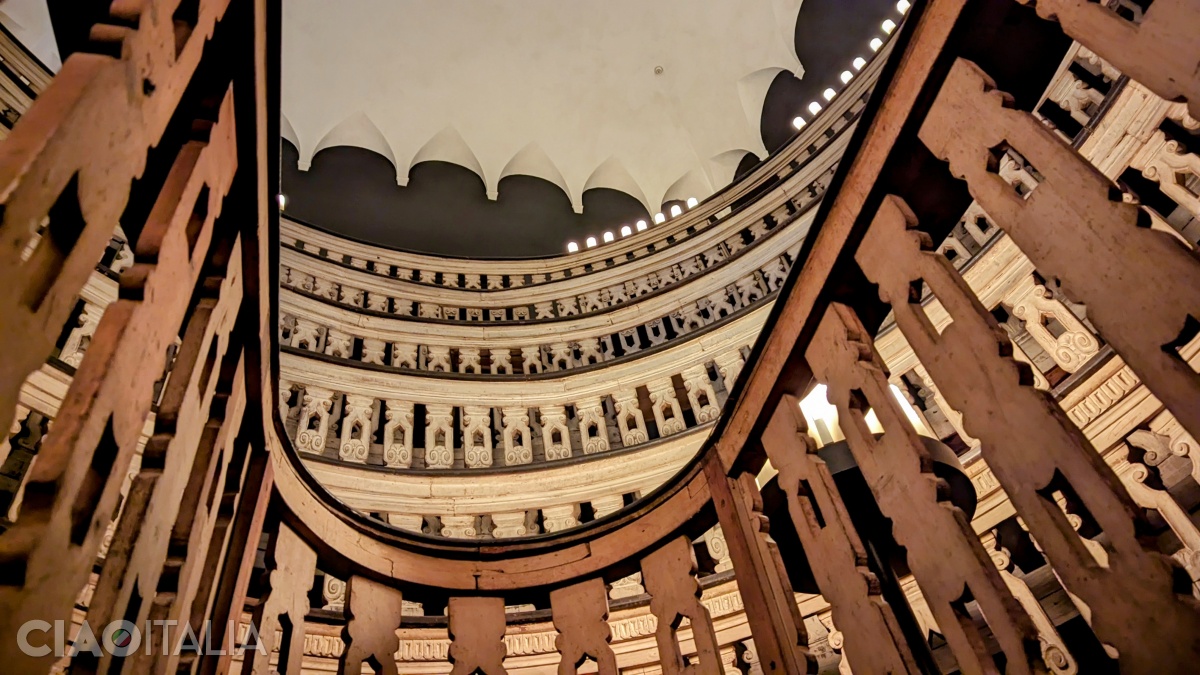
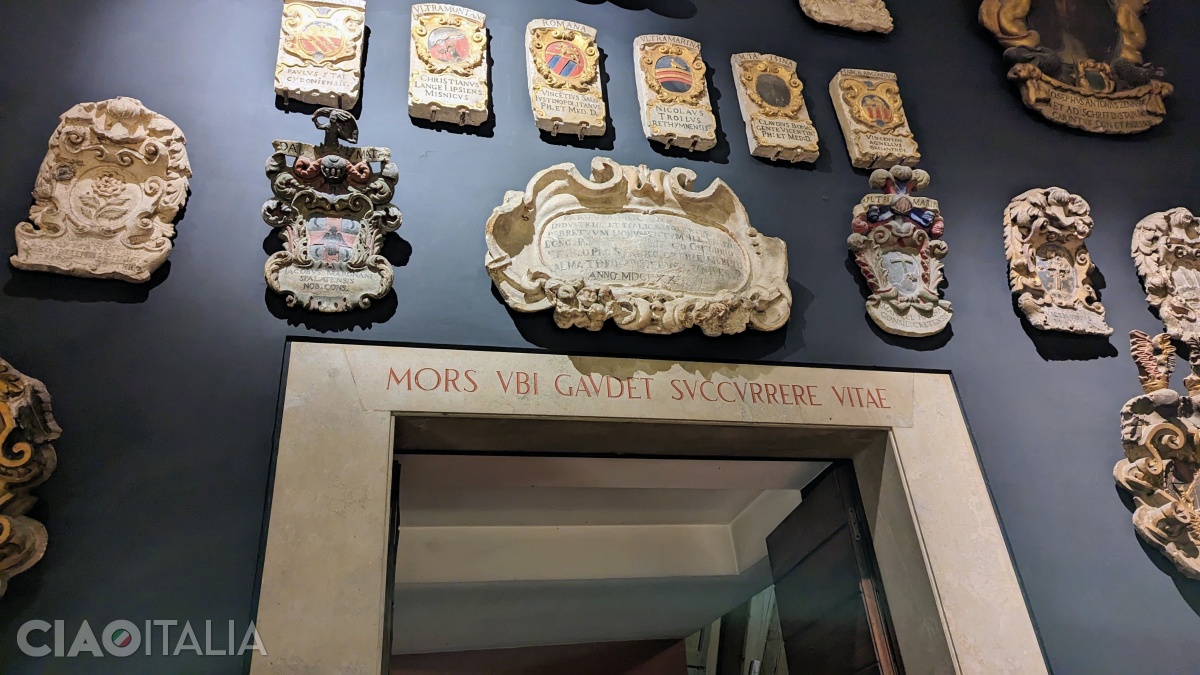
The anatomical theatre was used until 1872. Above the entrance is the Latin inscription Mors ubi gaudet succurrere vitae ("Where Death rejoices to aid life").
The Medical Hall
The Medicine Hall (Aula di Medicina) is one of the most beautiful rooms in the palace. The walls still bear traces of the medieval frescoes that once decorated them, and the wooden ceiling is coffered. It is also one of the oldest parts in the university - in the past, it was part of the houses of the Da Carrara family, upon which the Hospitium Bovis inn was built in the 14th century.
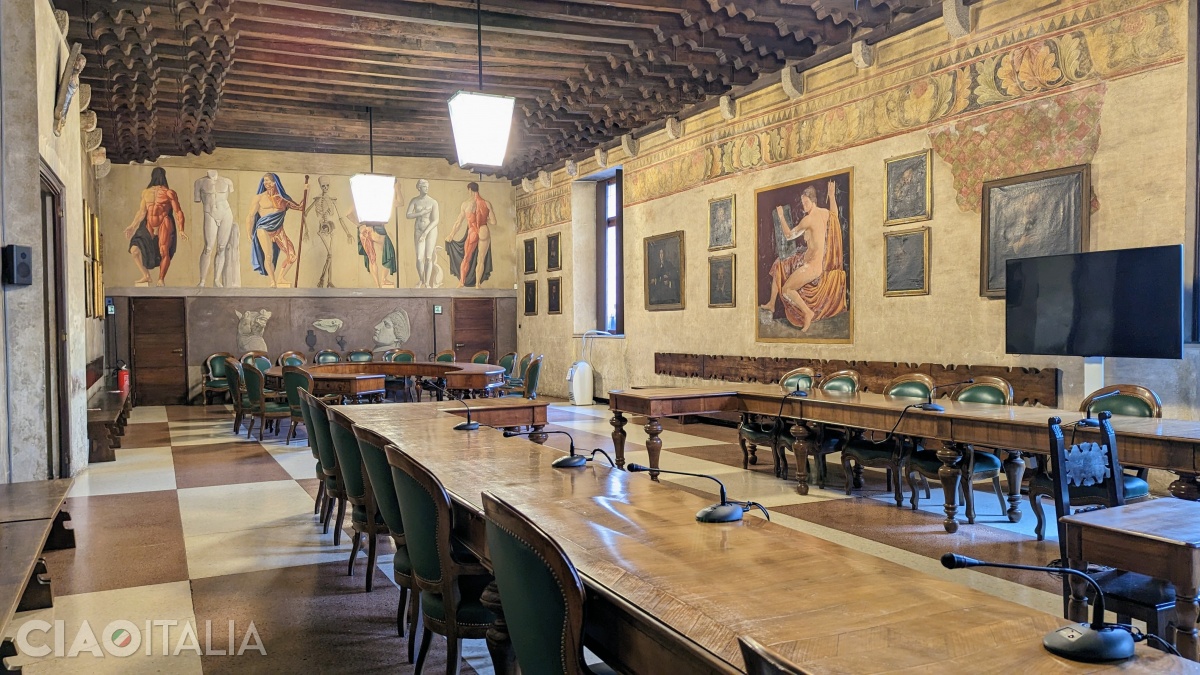
The paintings on the walls depict famous physicians and anatomists, including Gian Battista Morgagni (whose portrait is also found in the Aula Magna).
One of the shorter sides is decorated with the fresco "Anatomy Studies", painted by Achille Funi in 1942. The imagery of human bodies alternates with that of classical sculptures - an allusion to Rector Carlo Anti, who initiated the 1940s transformations and was an archaeologist.
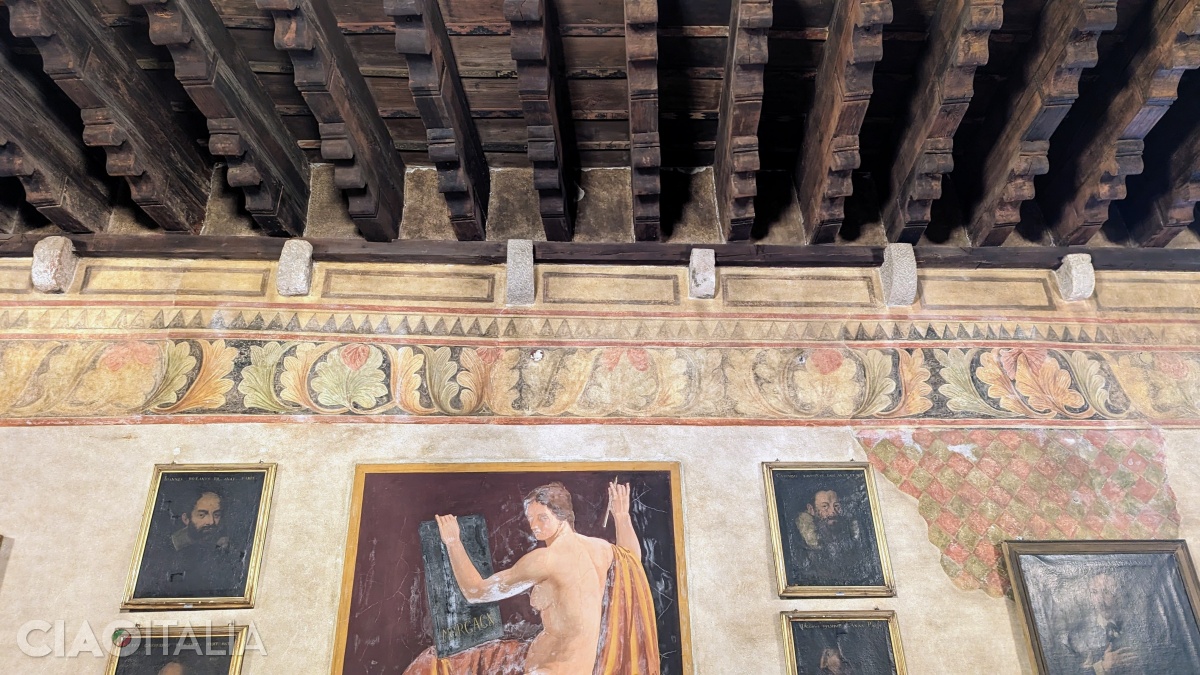
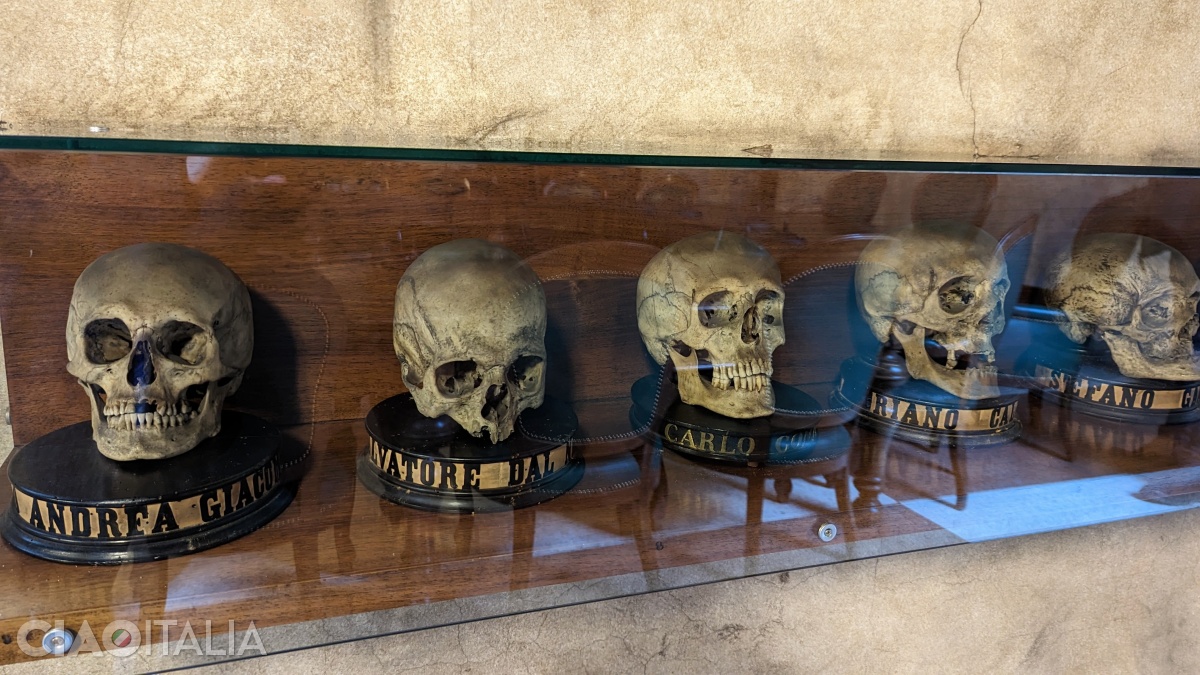
The same futurist artist also signed the painting placed between the two windows, titled "Fame writing Morgagni's name in the book of History". On the same side is a glass case displaying the skulls of eight professors. According to legend, they donated their bodies for scientific research. Recent studies have discovered that the skulls were likely part of a collection started by an anatomy professor, probably for phrenology studies (a theory suggesting a correlation between an individual's intellectual capacities and the shape of their skull).
In the past, theoretical anatomy lessons were held in this hall; today, students present their graduation theses here.
Old Courtyard
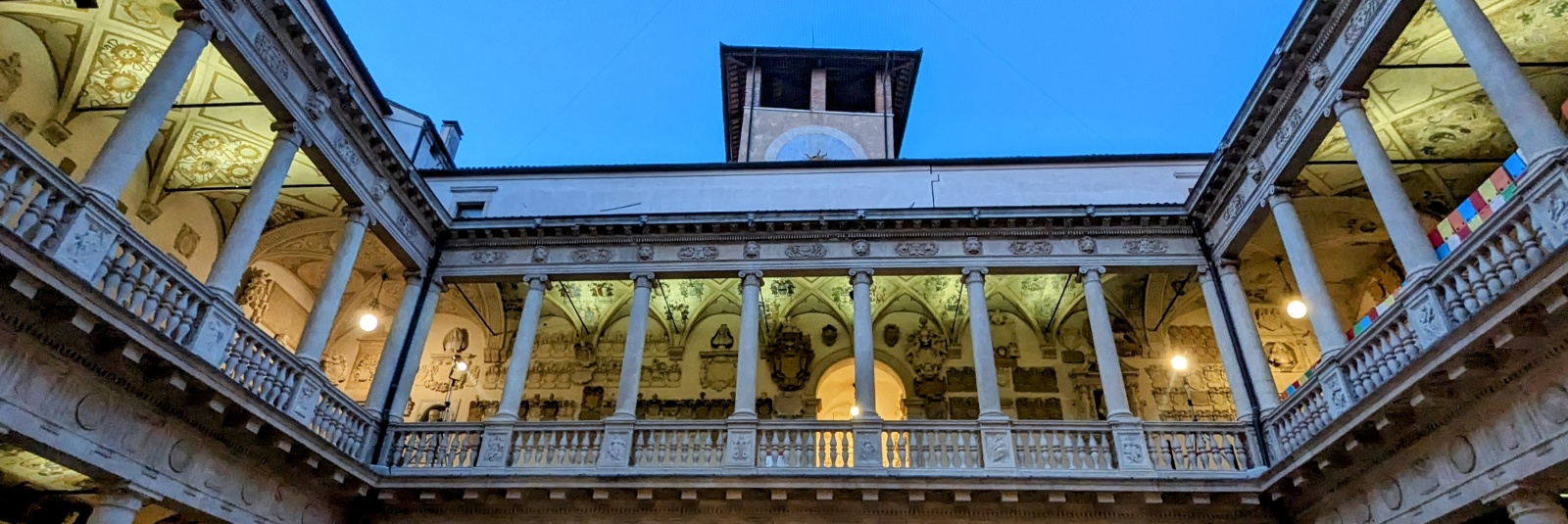
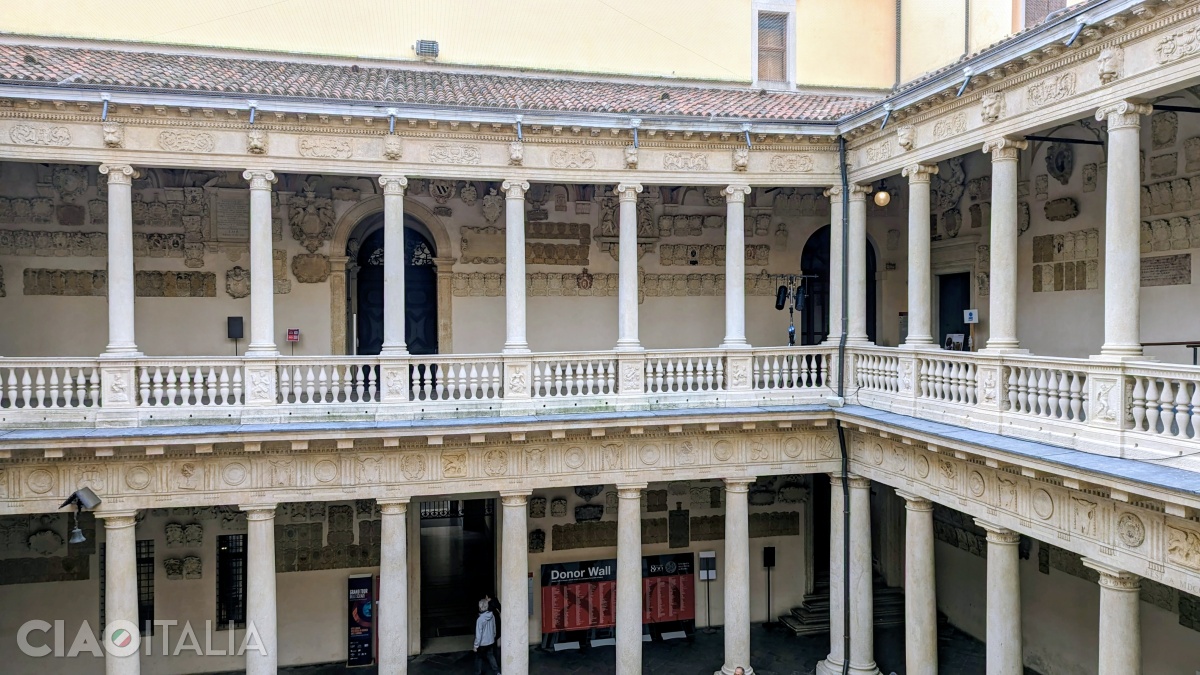
The Old Courtyard (Cortile Antico), bordered by a two-level loggia, was built in 1546.
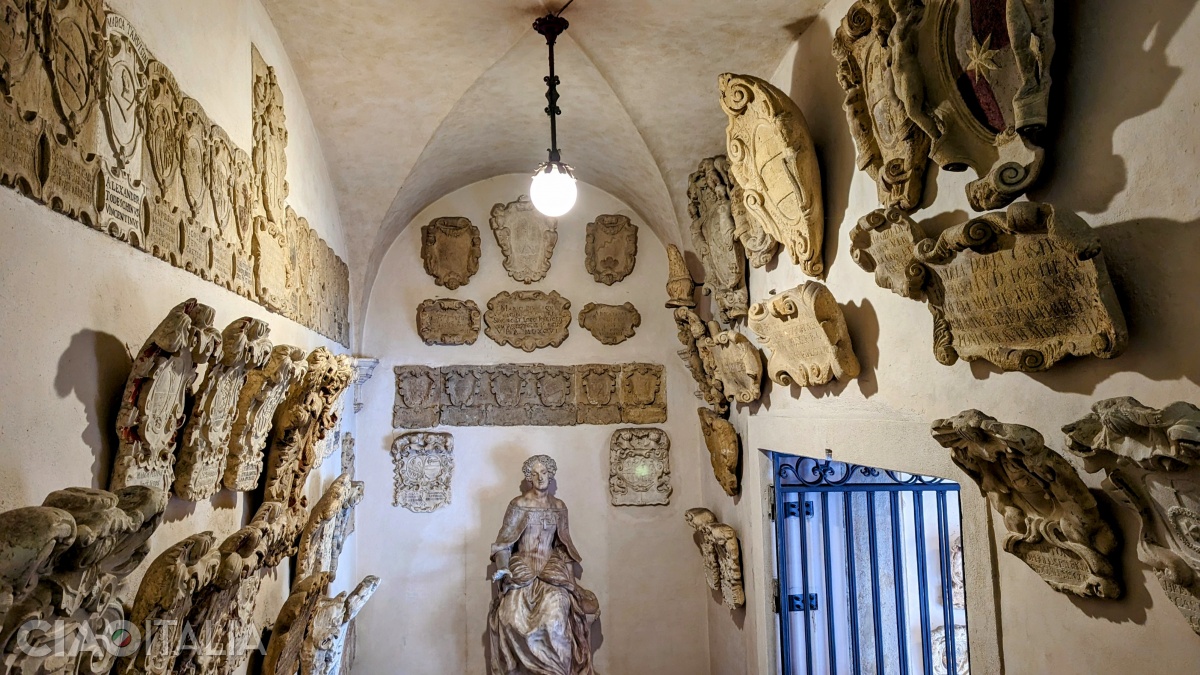
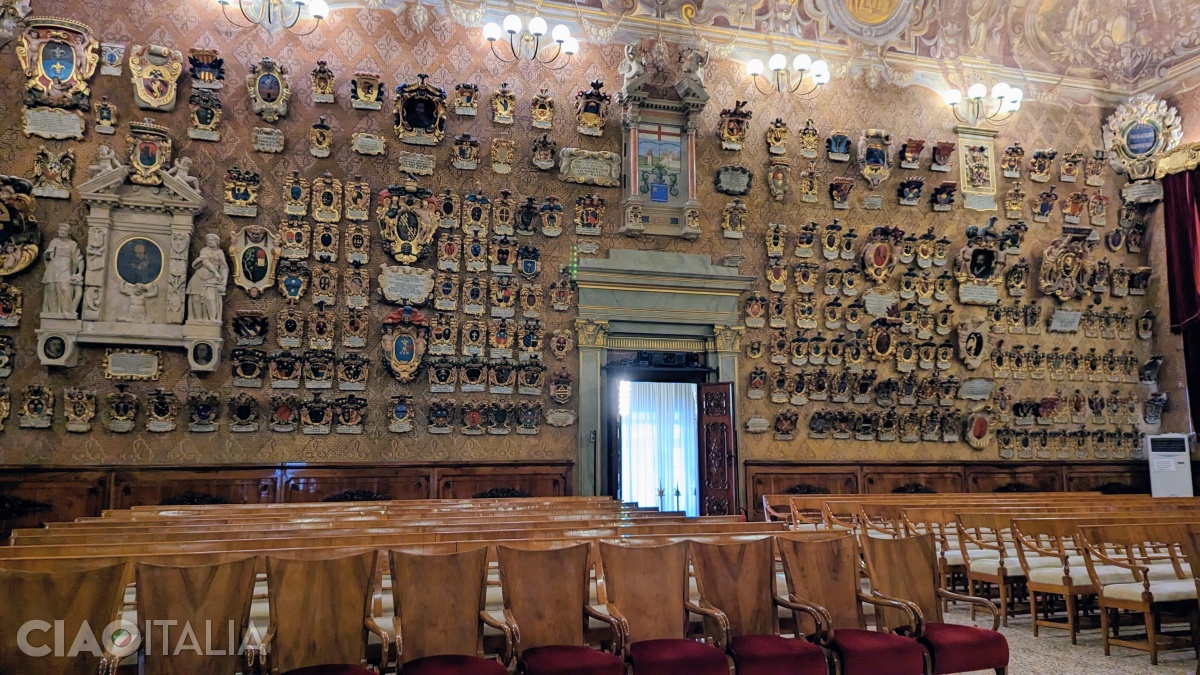
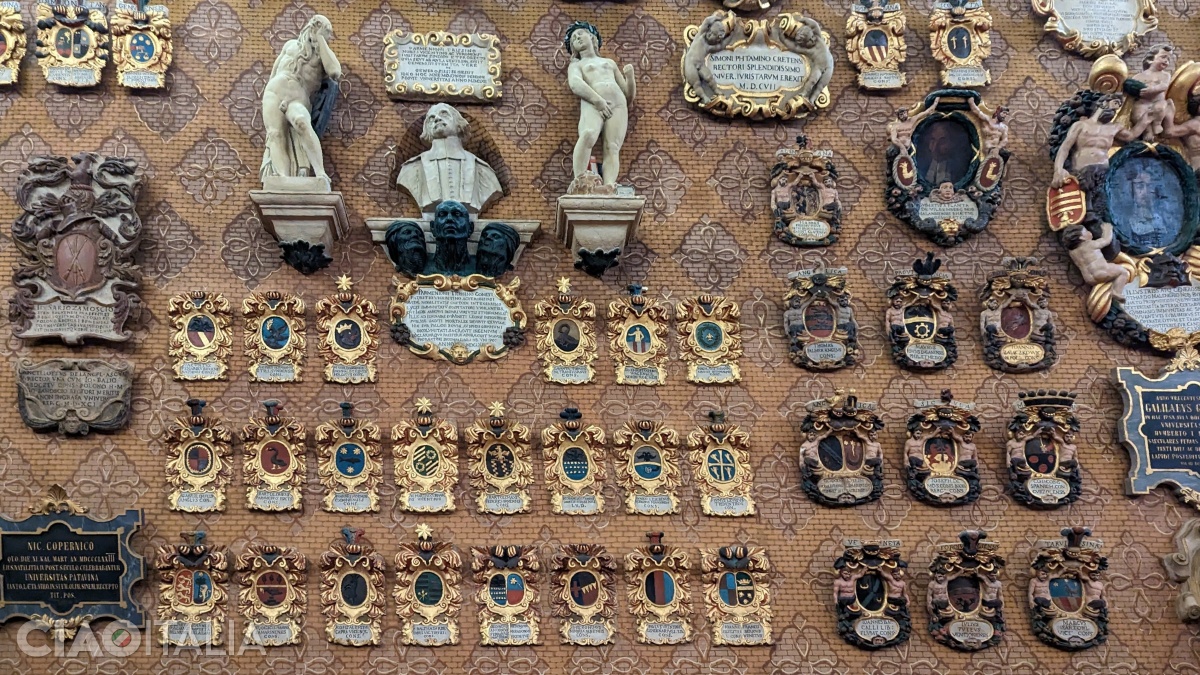
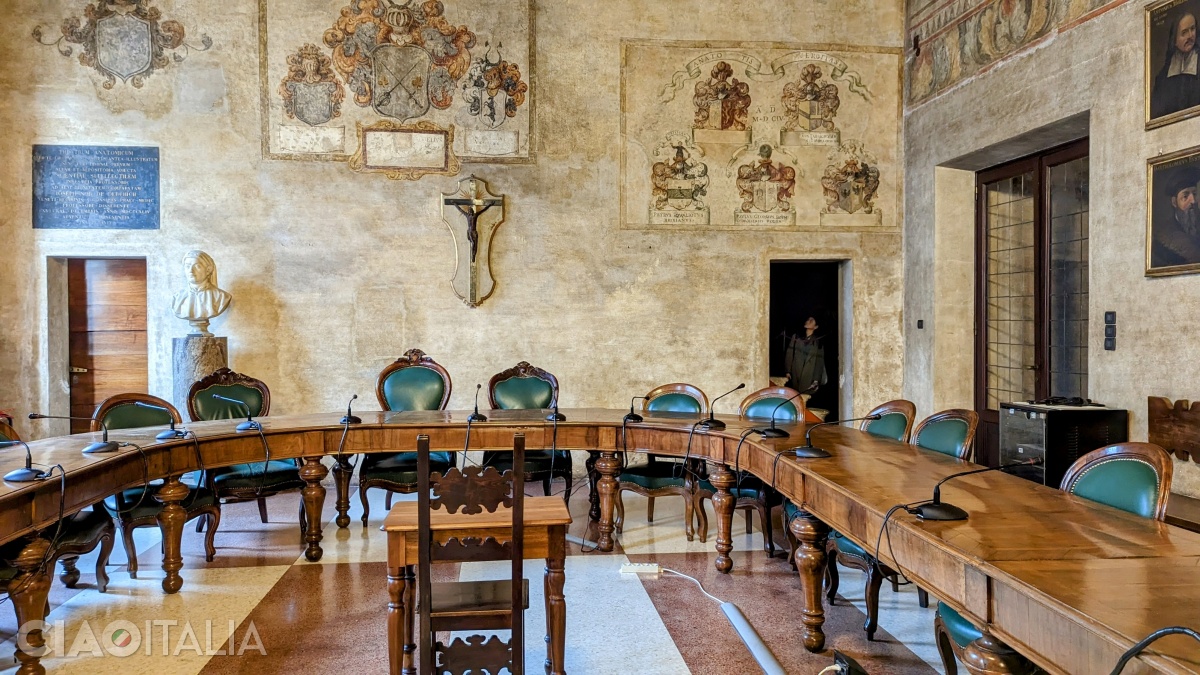
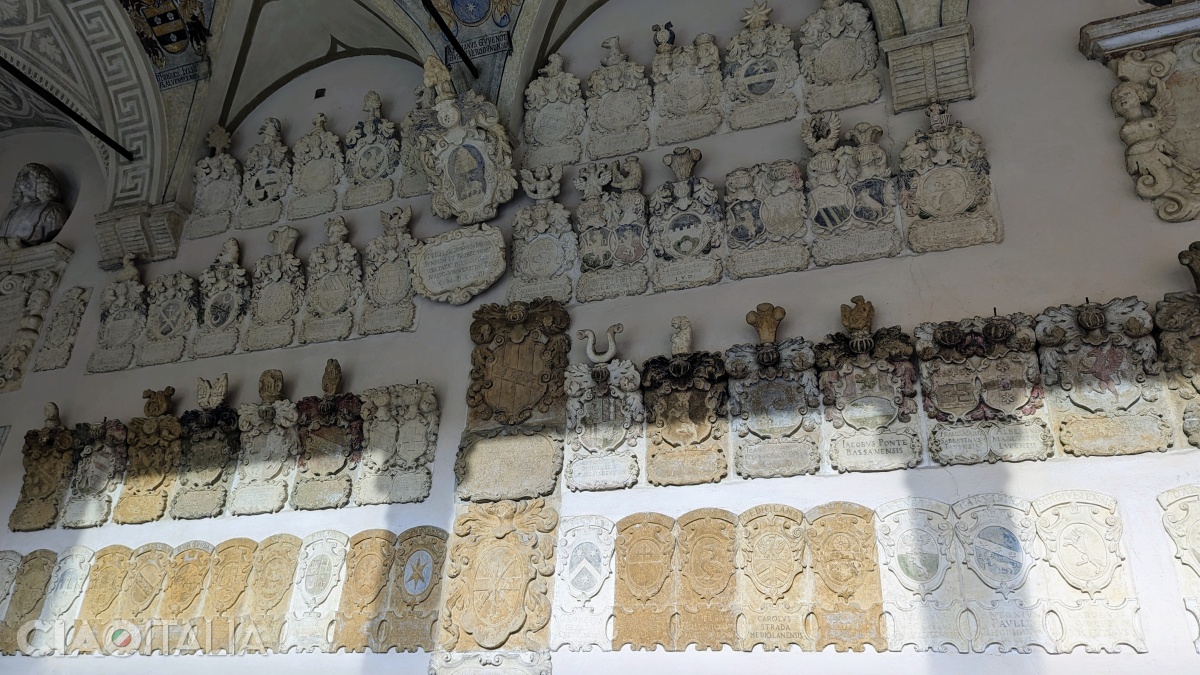
The walls and vaults are decorated with coats of arms - painted or carved in stone - of students, rectors, and counselors. The coats of arms date from 1592 to 1688 and are found in many areas of the University, including the Aula Magna. Their total number reaches about 3,000.
In 1688, Venice (under whose rule the city of Padua fell) ended this practice, as the need for space for new coats of arms was leading to the destruction of old, historically significant ones.
Statue of Elena Corner
At the base of one of the staircases leading to the upper level of the loggia stands a statue of a woman. It depicts Elena Lucrezia Corner Piscopia - a Venetian of noble origin. In 1678, she earned her degree in philosophy at the University of Padua, becoming the first woman in the world to graduate from a university.
The statue was created in 1689 and is the work of sculptor Bernardo Tabacco.