The Scrovegni Chapel in Padua
The Scrovegni Chapel (Cappella degli Scrovegni) is the most important tourist attraction in Padua. Renowned for Giotto's frescoes, it is considered a masterpiece of Western art and is perhaps the most famous chapel in Italy after the Sistine Chapel in the Vatican. Together with other 14th-century paintings in Padua, it is part of the UNESCO World Heritage list.
Where is the Scrovegni Chapel Located?
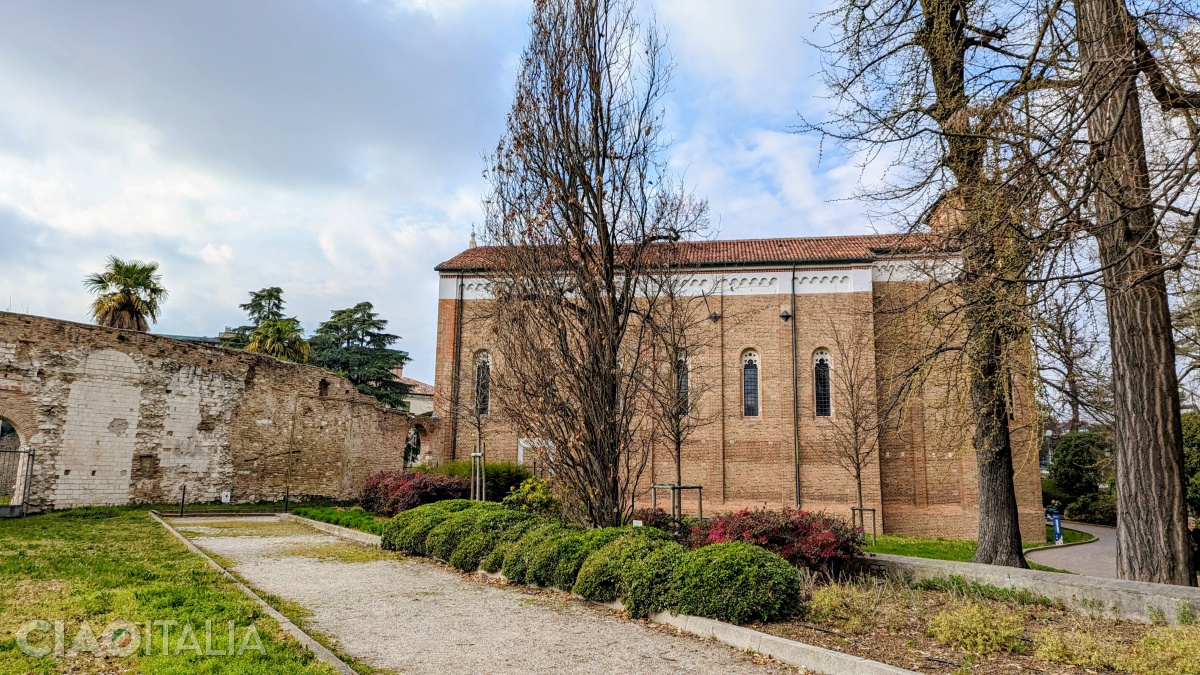
Unlike other attractions in Padua, the Scrovegni Chapel is not located right in the city center, but is situated slightly further out, about halfway between the center and the train station. You can find it in Giardini dell'Arena, but the entrance is from Piazza degli Eremitani.
Opening Hours
March 25 - November 3, 2026 and December 27, 2026 - January 6, 2027:
- Monday-Sunday: 9:00 AM - 10:00 PM
- January 1, 2027: closed
Last entry is at 21:20.
November 4 - December 24, 2026:
- Monday-Sunday: 9:00 AM - 7:00 PM
- December 25 and 26, 2026: closed
Last entry is at 18:45.
Tickets for the Scrovegni Chapel
Tickets for the Scrovegni Chapel have prices that differ depending on the days of the week and the time slot:
- Monday: €12
- Tuesday-Sunday: €16
- Evening ticket: €10
Children aged 6 to 17 and seniors over 65 are eligible for reduced rates.
From Tuesday to Sunday, the ticket also includes entry to the Eremitani Civic Museums and Zuckermann Palace. On Mondays, the ticket only includes entry to the Eremitani Civic Museums.
The evening ticket is called Giotto sotto le stelle ("Giotto under the stars") and is valid from March 25 to November 3, 2026, and from December 27, 2026 to January 6, 2027, for the 7:00 PM - 10:00 PM time slot. This ticket includes entry only to the Scrovegni Chapel; there is no access to the museums as they are closed during these hours.
Tickets can be reserved online through the official distribution channel, at least one day before your visit. You will be required to select a specific time slot, and please note that tickets are non-refundable.
We highly recommend booking well in advance. The Scrovegni Chapel is a major landmark, and a very large number of tourists wish to see it. Furthermore, to protect the sensitive frescoes, only a limited number of visitor slots are allocated each day, divided into specific time intervals. Thus, entry is made in groups of maximum 25 people, every 15 minutes (for the Giotto sotto le stelle evening slots, entry occurs every 20 minutes).
Theoretically, you can purchase tickets on-site as long as there is availability. In practice, however, when we visited in January, we couldn't find any available spots, even though the number of tourists in Padua wasn't particularly high at the time. We returned in March, taking a day trip from Venice specifically to see the chapel. Even though we made sure to book ahead this time, the number of available slots was still quite limited.
If you can no longer find tickets online or if you simply want to learn more about the Scrovegni Chapel, you can also book a guided tour (you can find tours organized by various companies on GetYourGuide or Viator).
Visiting the Scrovegni Chapel
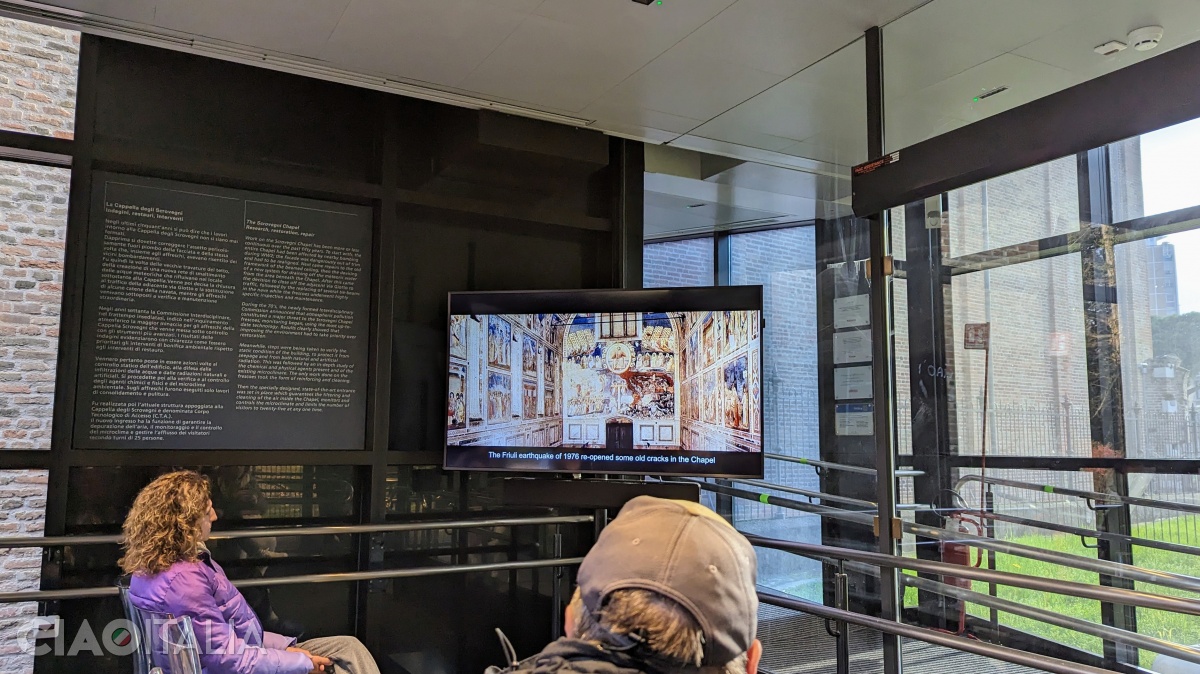
A visit to the Scrovegni Chapel lasts about 30 minutes (15 minutes to watch an introductory film in an acclimatization room and another 15 minutes inside the chapel). You are allowed to take photos inside, but without a flash.
It is recommended to arrive 30 minutes before your scheduled reservation time.
At the entrance, bags must be left at the cloakroom. You will be provided with a small pouch to carry your valuables with you.
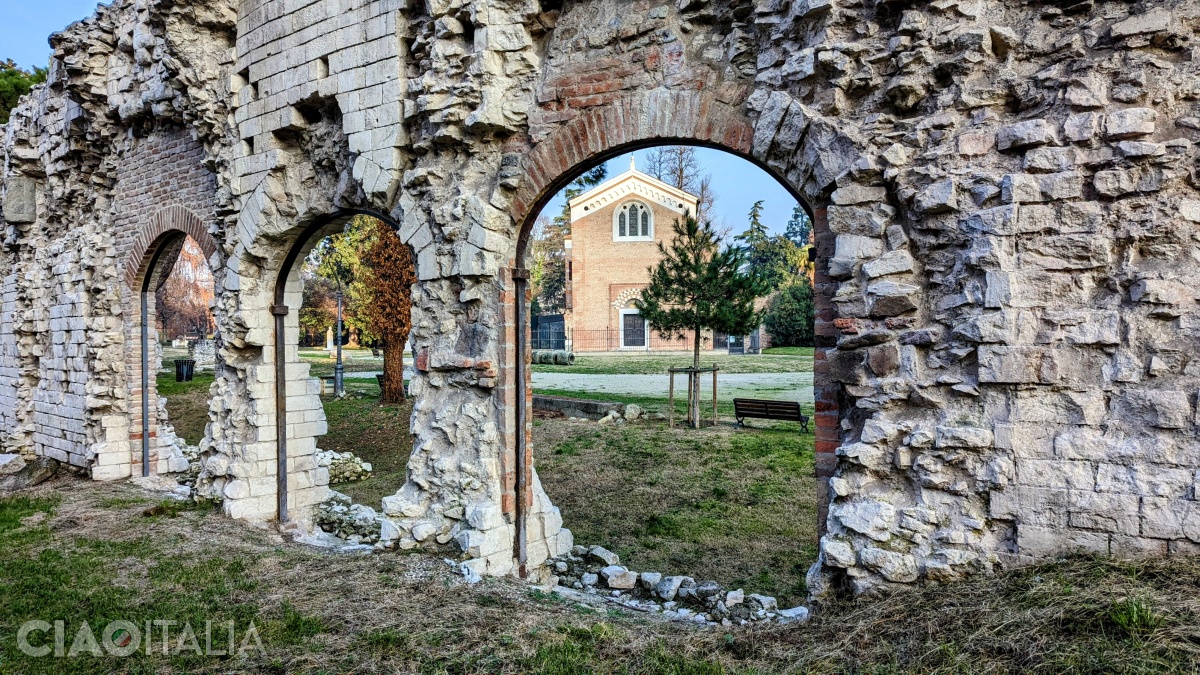
Cappella degli Scrovegni, actually named Santa Maria della Carità, was the private chapel of the Scrovegni family. It was built next to their palace on the site of a former Roman amphitheater. Today, you can still see the ruins of the amphitheater, but nothing remains of the palace, as it was demolished in the 19th century.
Enrico Scrovegni, one of the wealthiest men in early 14th-century Padua, commissioned Giotto to create the frescoes to decorate the chapel. At that time, the Florentine painter was in the city to work on the Basilica of Saint Anthony.
Some say Enrico intended for these paintings to atone for the sins of his father, Reginaldo. His father was notorious for amassing his fortune through usury, and Dante, in the "Divine Comedy", had famously placed him among the sinners in Hell.
The Scrovegni Chapel is world-renowned for the fresco cycle completed by Giotto in just two years, between 1303 and 1305. His work marked a revolution in the art of that era: Giotto depicted realistic physical features and human emotions on his subjects' faces and anticipated the use of perspective - a technique that would not fully preoccupy artists for another century.
The frescoes consist of 39 scenes arranged in several tiers. To follow the narrative sequence, you should look from top to bottom and left to right, much like reading the pages of a book. The paintings depict scenes from the lives of the Virgin Mary and Jesus, culminating with the Last Judgment.
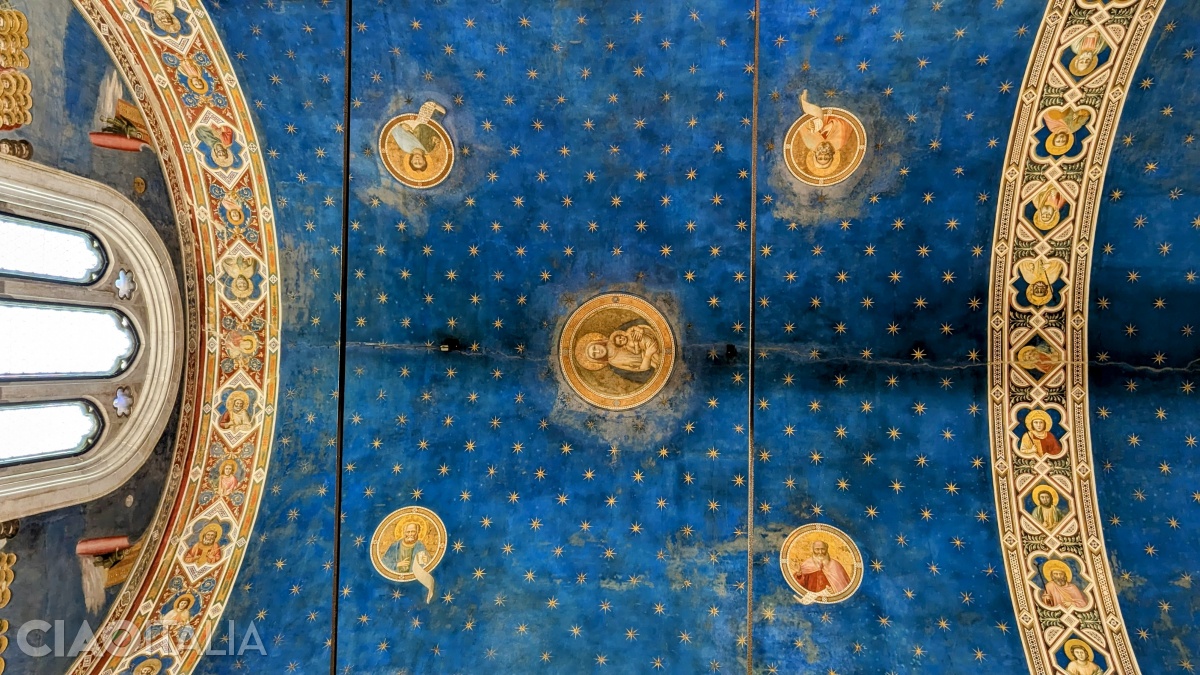
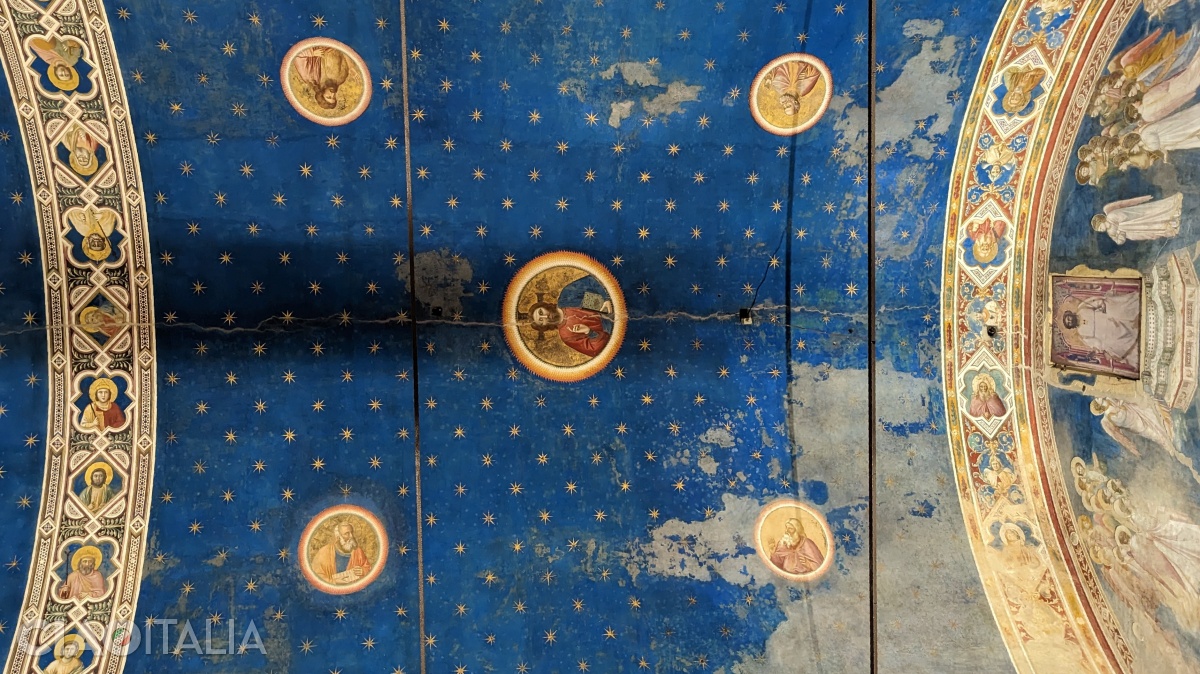
At the base, monochrome allegories of the vices and virtues are represented, while the vault features a painted starry sky adorned with medallions depicting the figures of Christ, Mary, and the prophets.
The Life of the Virgin Mary
The cycle of Mary's life begins in the top register, starting with scenes from the lives of her parents, Joachim and Anne, and continuing through Mary's birth up to the Annunciation. The following scenes are depicted:
- "The Expulsion of Joachim from the Temple"
- "Joachim among the Shepherds"
- "The Angel announces to Anne that she will be a mother"
- "The Sacrifice of Joachim"
- "The Dream of Joachim"
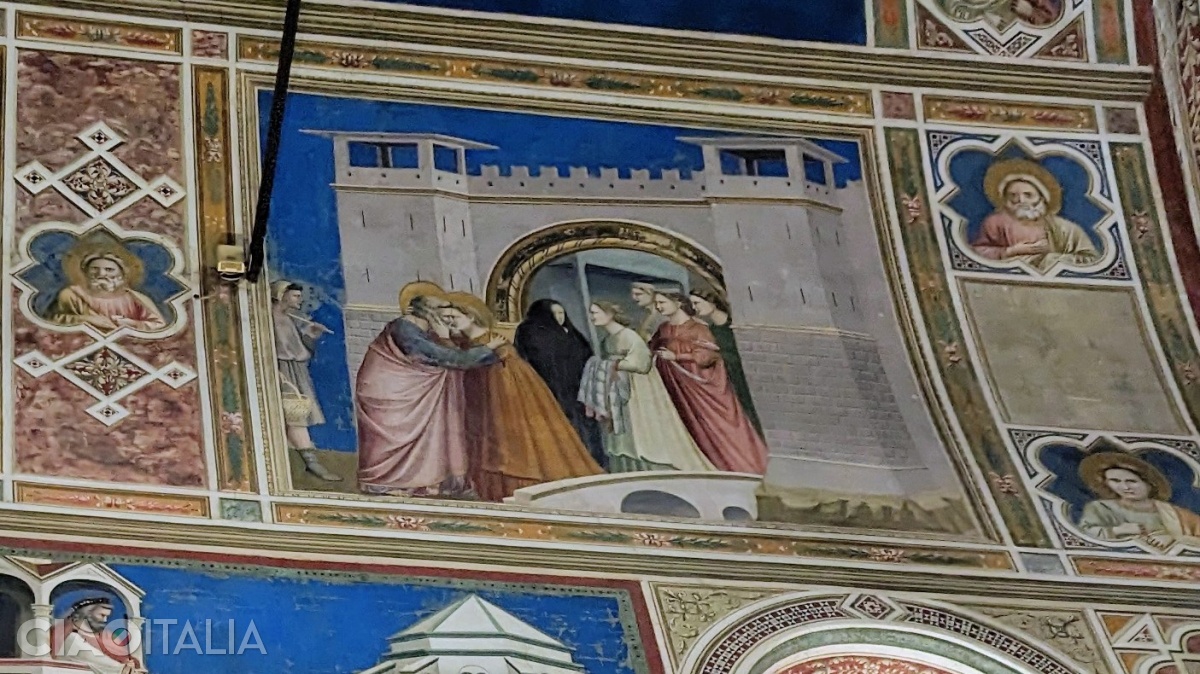
- "The Meeting of Joachim and Anne at the Golden Gate"
- "The Nativity of Mary"
- "The Presentation of Mary at the Temple"
- "The Handing over of the Rods"
- "The Prayer of Joseph and the young men at the Temple"
- "The Marriage of Mary to Joseph"
- "The Nuptial Procession of Mary"
- "God entrusts Gabriel with the message for Mary"
- "The Annunciation"
- "Mary's Visit to Elizabeth"
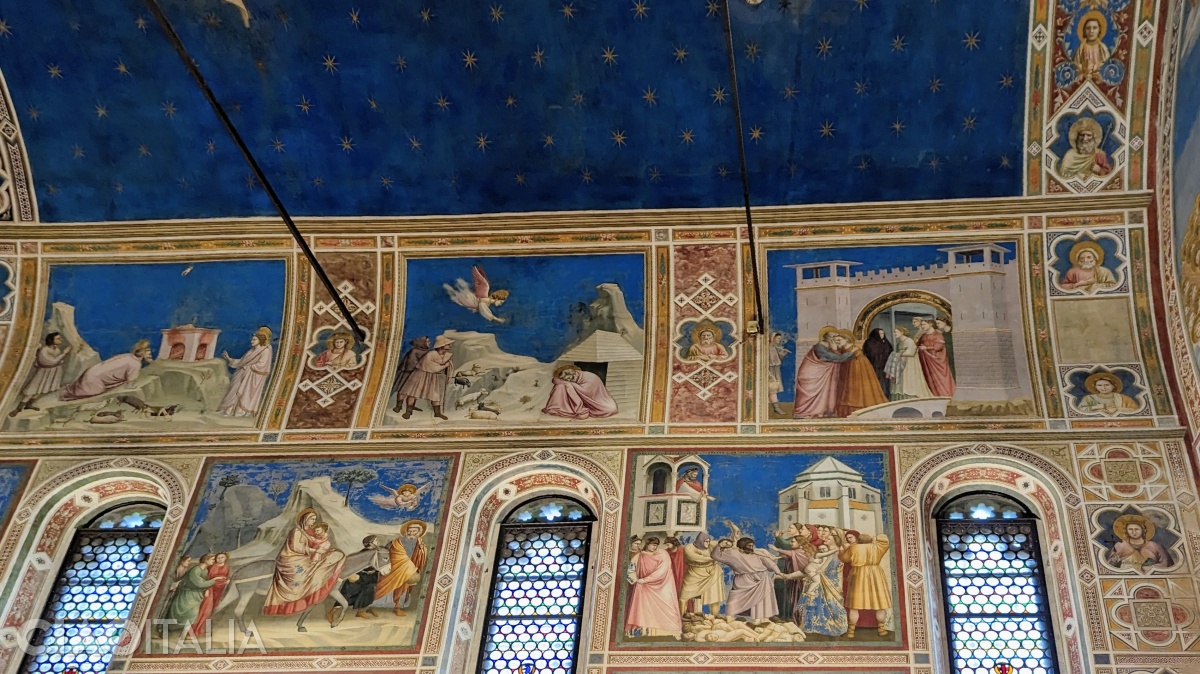
The tender scene of the kiss in "The Meeting of Joachim and Anne at the Golden Gate" is perhaps the most famous of all the frescoes in the Scrovegni Chapel. It is highly significant for the way the artist portrays human emotions and is also considered the first representation of a kiss in Italian painting. In his depiction of the gateway to Jerusalem, Giotto appears to have been inspired by the Roman triumphal arch in Rimini, where he had worked prior to 1305.
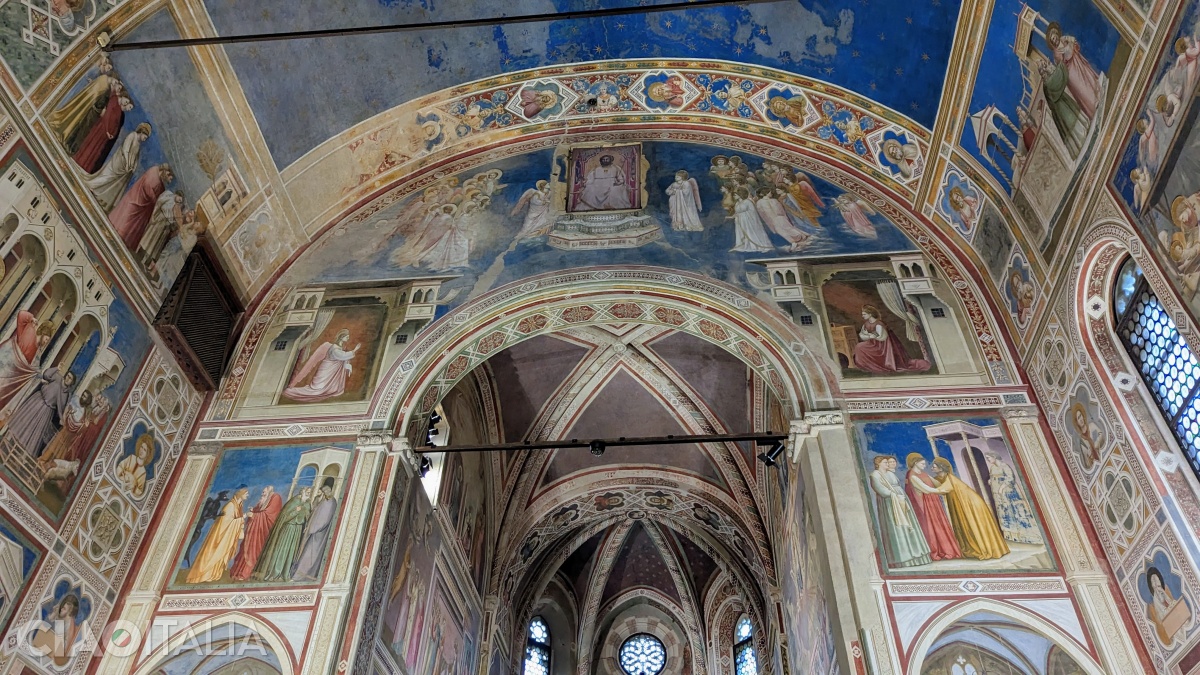
The "Annunciation" scene is located high up, positioned on either side of the arch facing the altar. Above it sits a panel painting of God the Father; the original version of this specific piece is preserved and on display at the Eremitani Civic Museums.
The Life of Jesus
The cycle of the life of Jesus comprises the following paintings:
- "The Nativity of Christ"
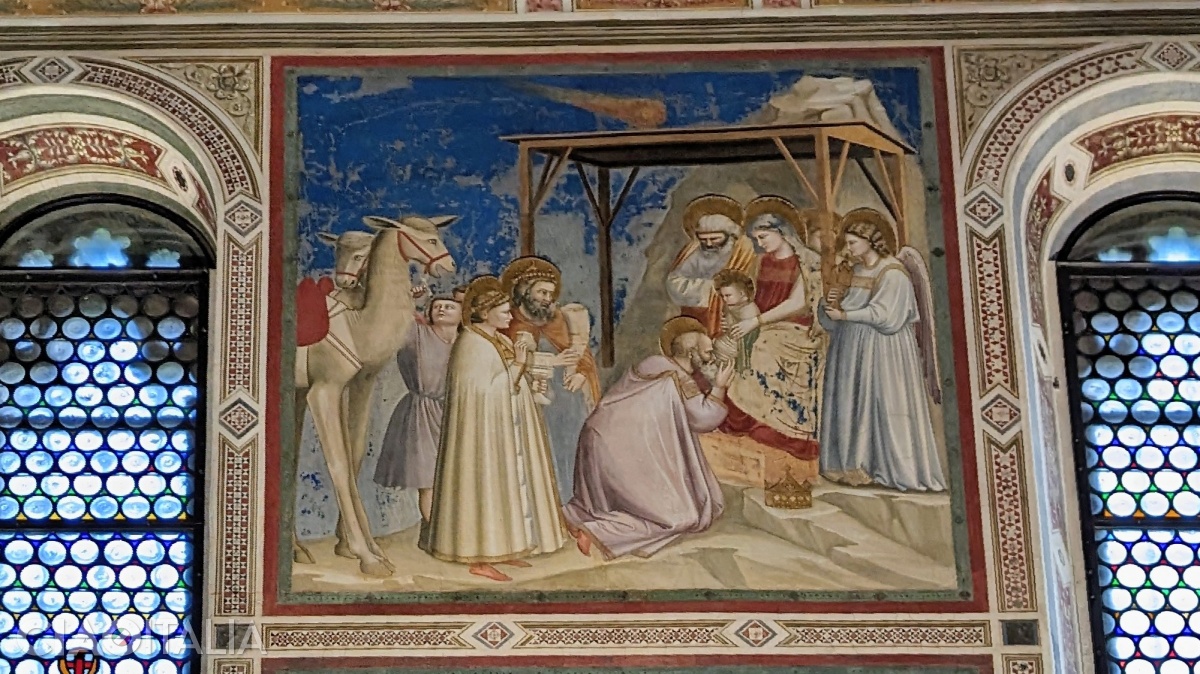
- "The Adoration of the Magi"
- "The Presentation of Jesus in the Temple"
- "The Flight into Egypt"
- "The Massacre of the Innocents"
- "Christ among the Doctors"
- "The Baptism of Christ"
- "The Wedding at Cana"
- "The Resurrection of Lazarus"
- "The Entry into Jerusalem"
- "The Expulsion of the Merchants from the Temple"
- "The Betrayal of Judas"
- "The Last Supper"
- "The Washing of the Feet"
- "The Arrest of Christ"
- "Christ before Caiaphas"
- "The Mocking of Christ"
- "The Way to Calvary"
- "The Crucifixion"
- "The Lamentation of Jesus"
- "The Resurrection"
- "The Ascension"
- "Pentecost"
- Perspective representation of two architectural spaces
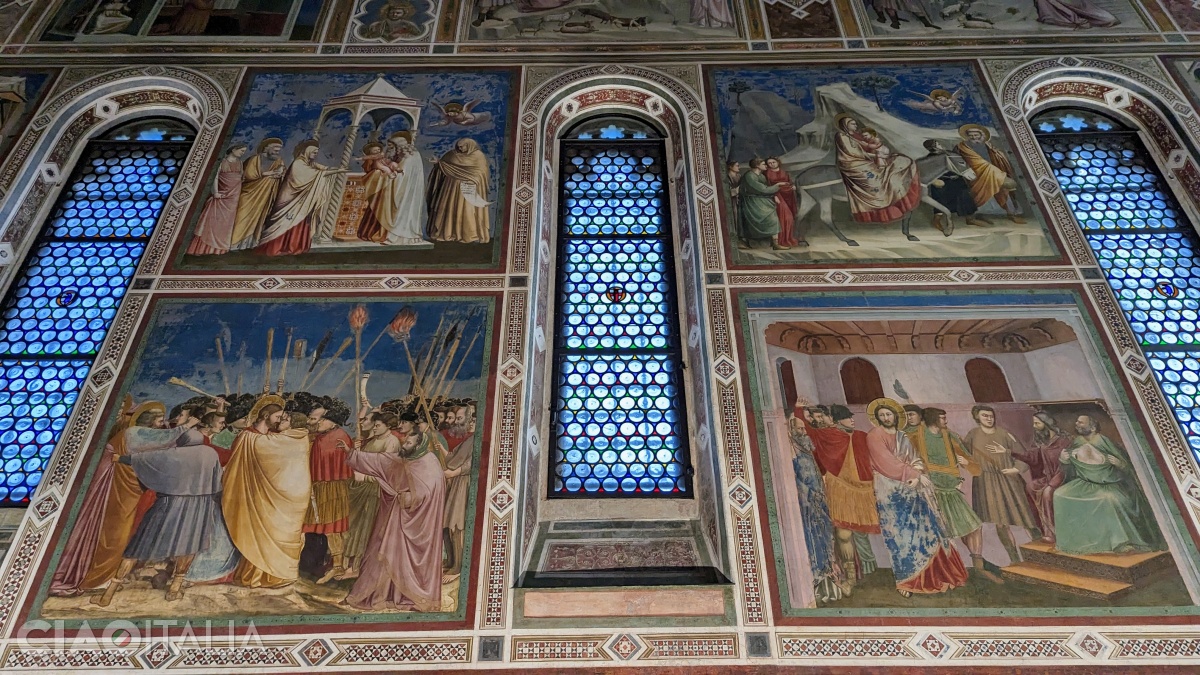
If you look closely at the "Adoration of the Magi" scene on the wall to the right of the altar, you will notice that the star depicted above the stable where Christ was born has a rather peculiar shape - it looks like a comet. This is most likely because Giotto was inspired by the passage of Halley's Comet in the year 1301, which he would have witnessed.
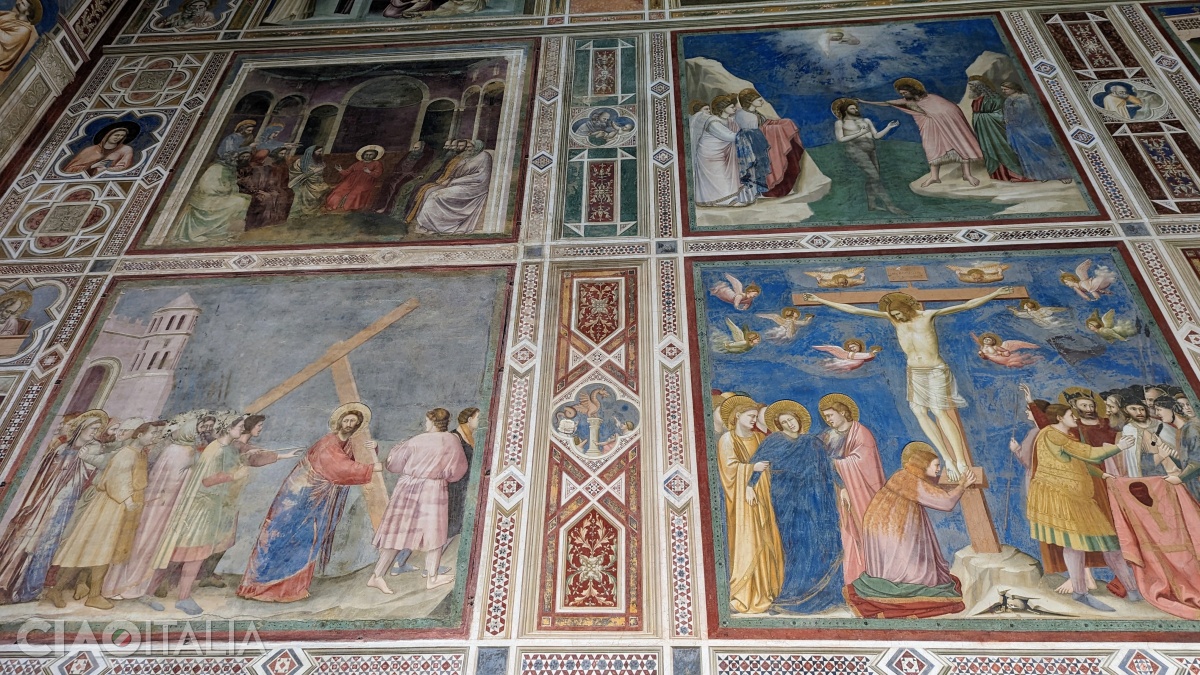
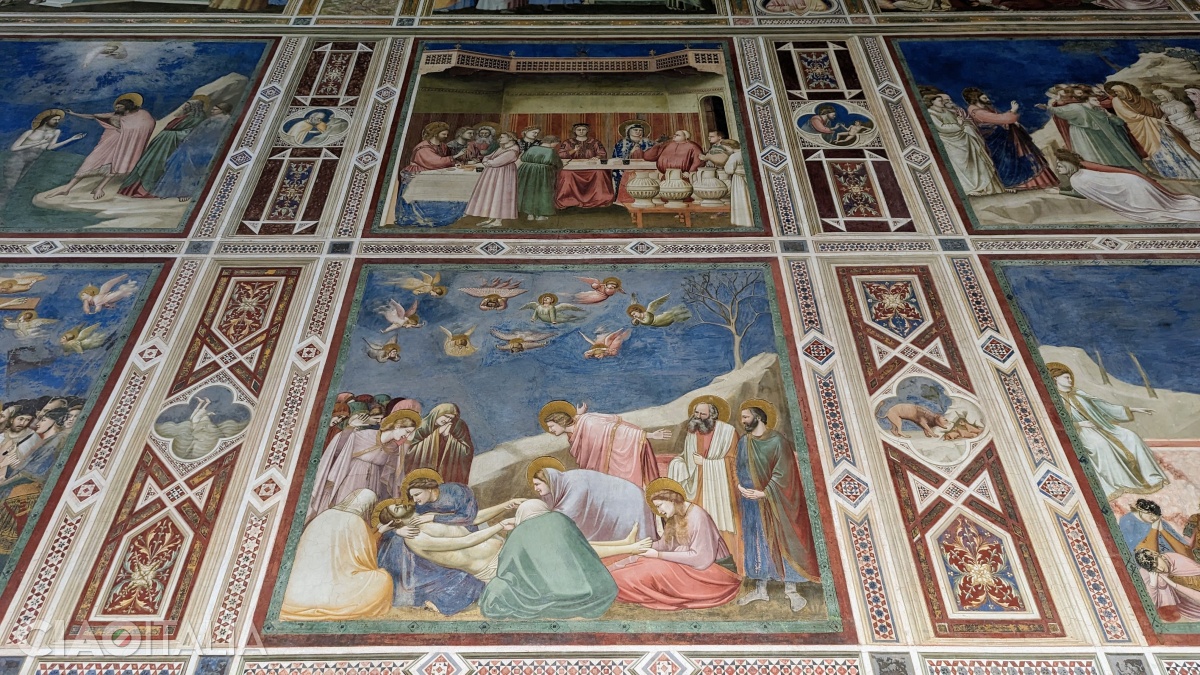
Take a moment to observe the desperate faces of the mothers in the "Massacre of the Innocents" or the profound grief on the faces of those in "The Lamentation" (The Mourning of Christ). These are striking examples of how Giotto revolutionized art by successfully capturing raw human emotion and the inner soul of his subjects.
The Last Judgment
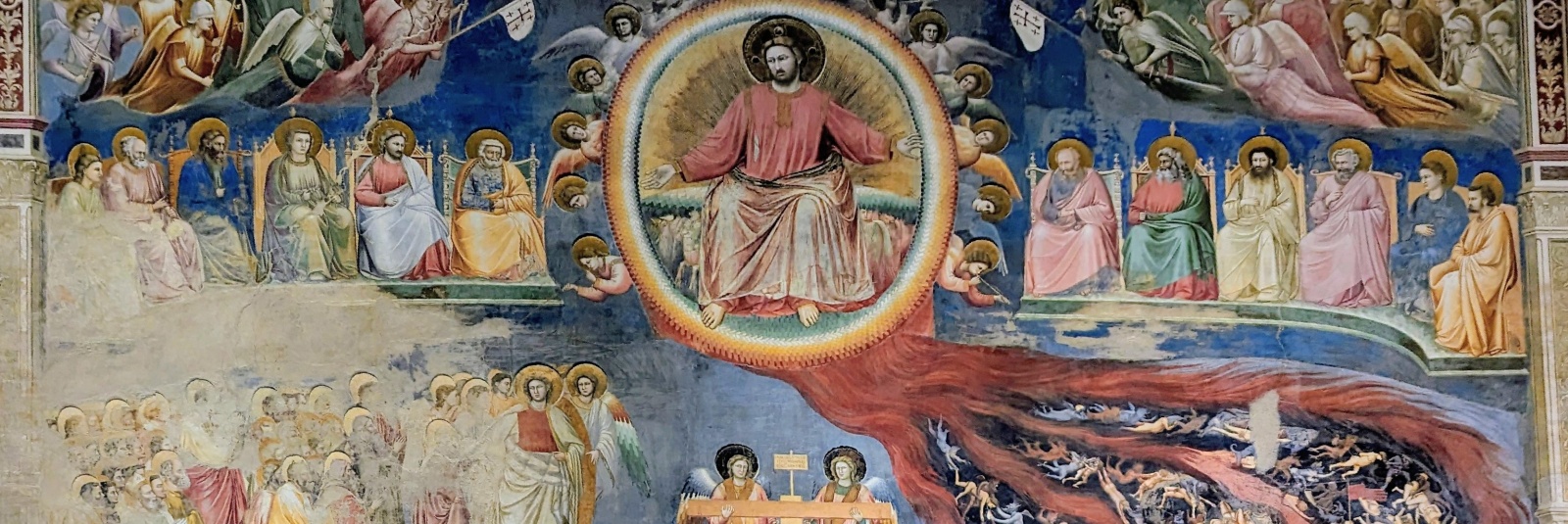
Occupying the entire wall opposite the altar is the Last Judgment. This masterpiece served as a blueprint for generations of Italian artists to follow - including Michelangelo when he painted the Sistine Chapel.
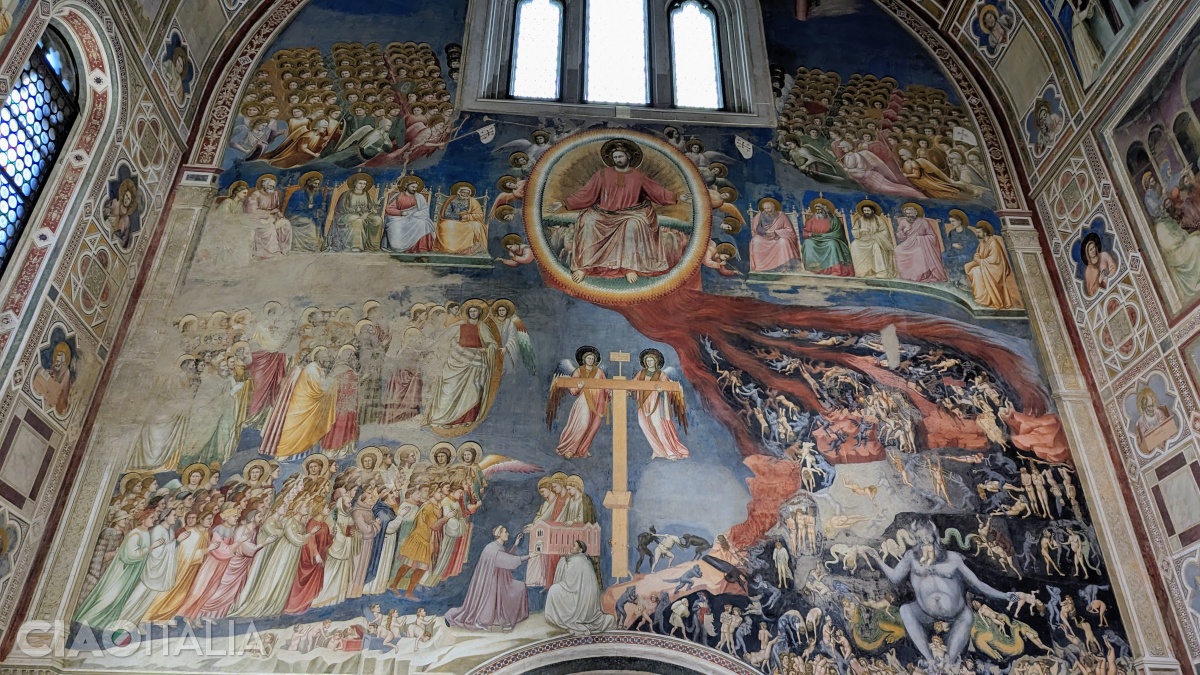
In the center, positioned beneath the Gothic window (which was also likely designed by Giotto), sits Jesus surrounded by hosts of angels. On either side of Him, the twelve apostles are seated upon thrones. To the right, within a four-branched river of fire, Hell unfolds. Here, demons are depicted finding endless, grisly ways to torture sinners. At the bottom, a massive and grotesque Lucifer is shown with snakes emerging from his ears; he is depicted swallowing one soul while simultaneously excreting another. Judas is also shown following his suicide, depicted in isolation beneath a group of three hanged figures.
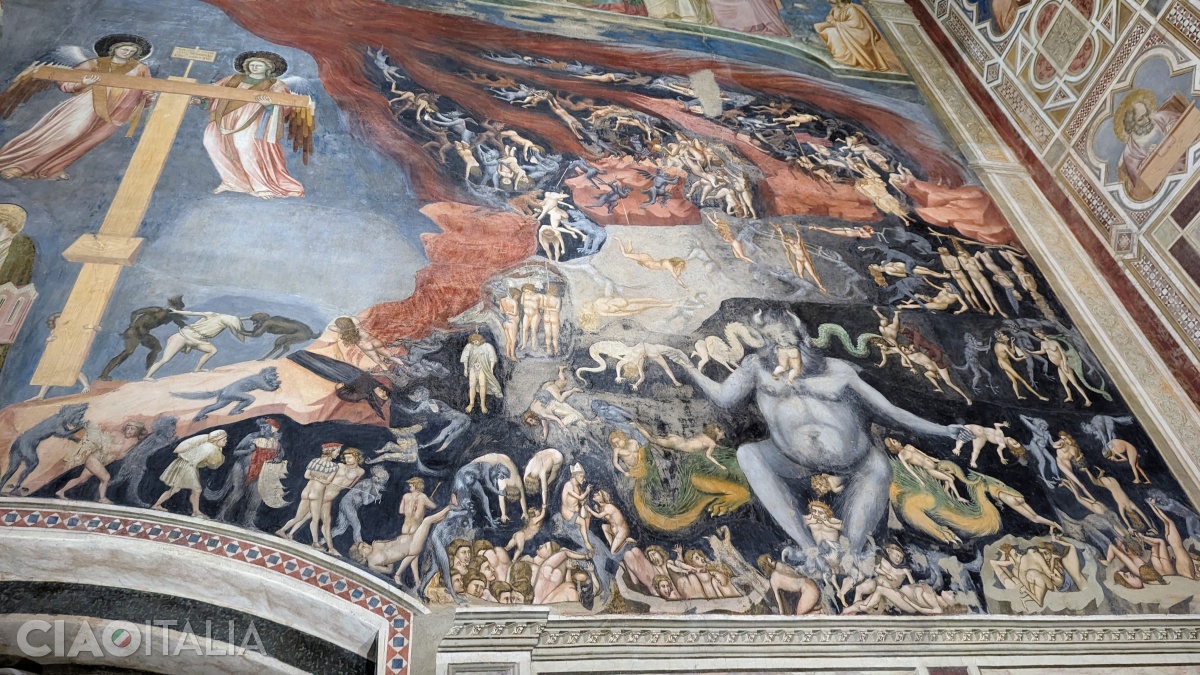
To the left, the righteous are portrayed in Paradise. At the very bottom, graves are seen opening as the dead return to life, awakened by the call of angelic trumpets.
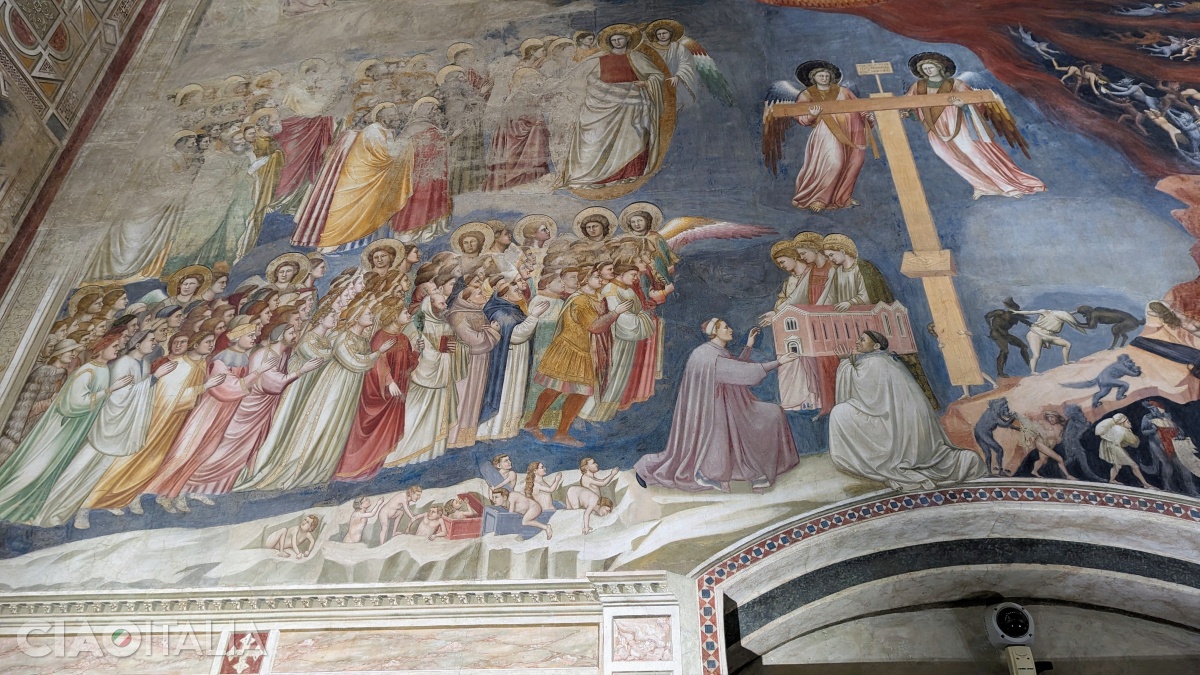
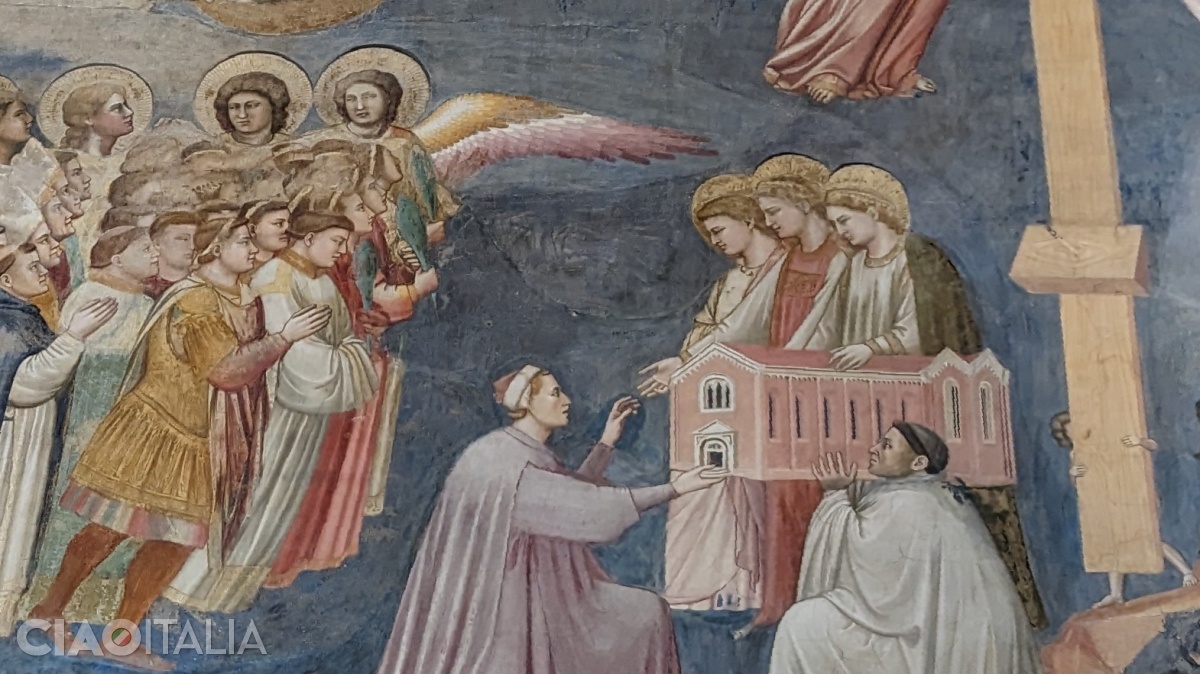
Above the former entrance door, you can spot Enrico Scrovegni himself, the man who commissioned the frescoes. He is depicted in the act of offering a model of the chapel to the Virgin Mary, who reaches out her hand to him. To Mary's right stands Saint John, and to her left is Saint Catherine - the two saints to whom the altars in the central area of the church are dedicated. The man dressed in white who is helping to support the model of the chapel is most likely Altegrado de' Cattanei, the archpriest of the cathedral and a close friend of Scrovegni.
The Vices and Virtues
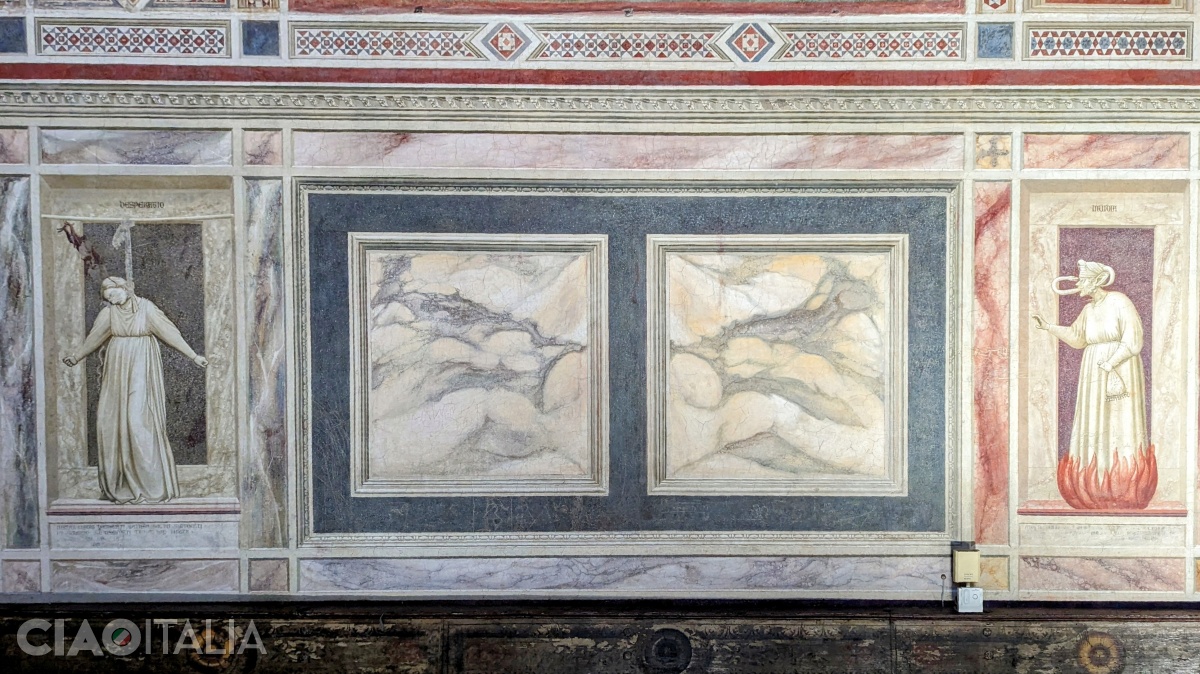
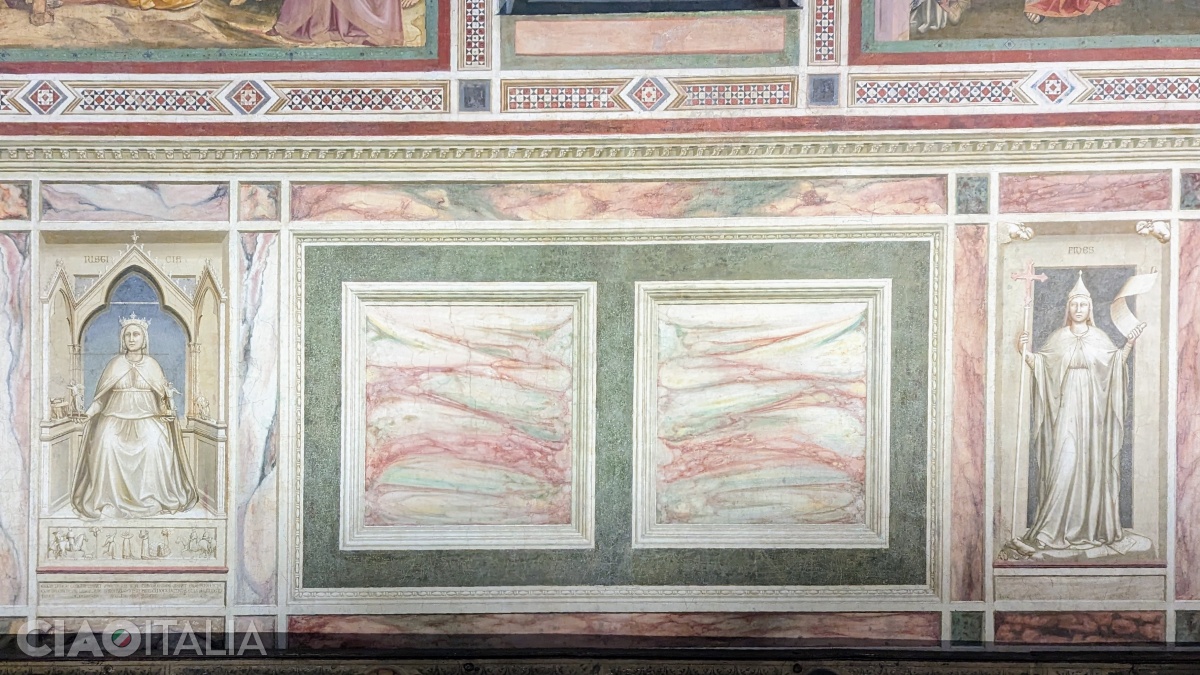
In the lower register of the two side walls, there are 14 monochrome paintings representing allegories of the Vices and Virtues. These alternate with painted panels designed to imitate the texture of marble.
On the left wall, leading towards Paradise, the Virtues unfold, and to the right, leading to Hell, are the Vices. Above each allegory, its name is written in Latin. The Virtues are Prudence, Fortitude, Temperance, Justice, Faith, Charity, and Hope. Opposite them are the Vices: Folly, Inconstancy, Anger, Injustice, Idolatry, Envy, and Despair.
The Vault
The vault is striking for its intense blue starry sky background, which was achieved using azurite.
Two larger medallions depict Jesus and the Virgin Mary. Each of these is surrounded by four smaller medallions, which together portray the seven great prophets of the Old Testament and John the Baptist.
The Altar
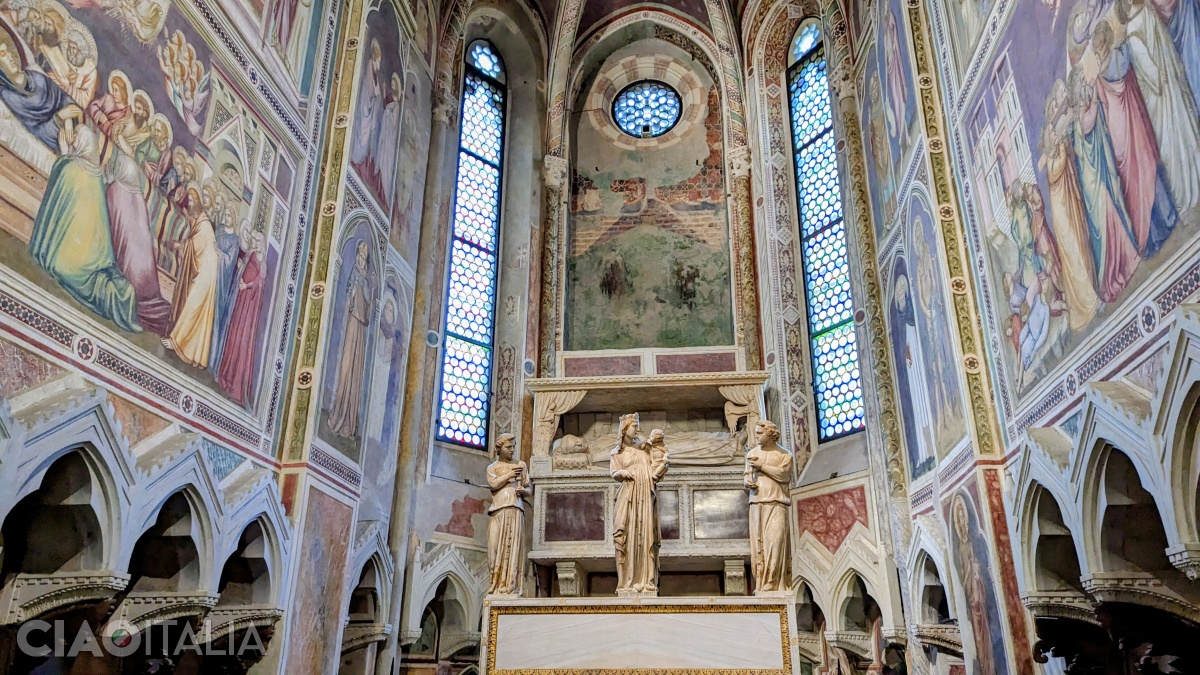
The three statues on the altar dedicated to the Virgin Mary were sculpted in 1305 by the renowned Tuscan sculptor Giovanni Pisano - the same master who worked on famous cathedrals and churches in Siena, Pisa, and Pistoia.
In the apse, you can also find the marble funerary monument of Enrico Scrovegni