17 Things to See in Padua
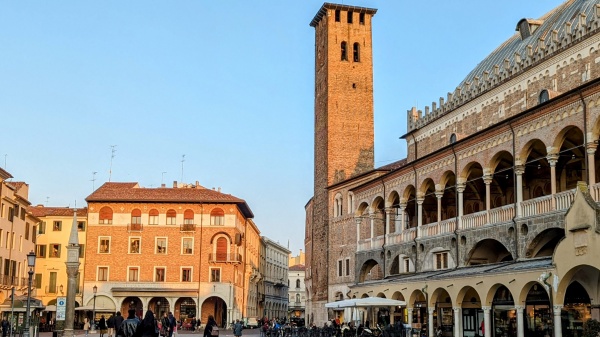
Located in the Veneto region, Padua (Padova) is a lesser-known Italian city that often remains in the shadow of famous destinations like Venice or Verona. However, this does not make it any less charming. There is no shortage of sights to see, and many of Padua's attractions hold prestigious spots in global rankings, being listed as UNESCO World Heritage sites. A local saying compares the beauty of Padua to that of Venice: Venezia la bella, Padova sua sorella ("Venice is beautiful, and Padua is its sister"). While Padua might not quite reach the level of Venice's artistic wealth, it is a beautiful city with significant history and culture, offering plenty of places worth visiting.
Once upon a time, Padua was nicknamed "The City of the Three WITHOUTS: the meadow without grass, the saint without a name, and the café without doors". The meadow without grass was the Prato della Valle square, the saint without a name was St. Anthony, and the café without doors was none other than the famous historical Pedrocchi Café (you can read more details about these in the list of tourist attractions below). As time passed, these three "withouts" largely disappeared. Today, you will find that Prato della Valle actually has a large grassy area in its center, the Saint certainly has a name, and the doors at Caffè Pedrocchi are very much present.
How Much Time Do You Need to Visit Padua?
To visit Padua at a leisurely pace, you will need 3-4 days. However, you can see the most important sights in a single day with a bit of planning and less time for relaxation.
If you only have one day in Padua, we recommend visiting Scrovegni Chapel, the Basilica of St. Anthony, Palazzo della Ragione, and Prato della Valle. Be sure to also stop for a delicious mint coffee at Café Pedrocchi or a spritz in Piazza delle Erbe.
You can easily discover Padua's main landmarks and their stories through a guided walking tour. Some guided tours even include a break at Caffè Pedrocchi or a bar in Piazza delle Erbe.
How to Visit the City?
Padua's historic center isn't so large that you'll need to use public transport, but it is spread out enough that you should expect a 15-20 minute walk between the main clusters of tourist attractions.
Much like Bologna or Turin, Padua is a city of colonnaded galleries. There are approximately 25 km of porticos, allowing you to stroll at your leisure even if the weather turns rainy.
The main tourist attractions in Padua can be grouped into several key areas:
- North-East (midway between the train station and city center): The Scrovegni Chapel, the Eremitani Church, and the Eremitani Museums. (Note: Walking from the station to the city center takes about 15-20 minutes).
- City Center: The University, Caffè Pedrocchi, Palazzo della Ragione, Piazza delle Erbe, Piazza della Frutta, Piazza dei Signori, the Baptistery of the Cathedral, and Reggia Carrarese.
- South-East: The Basilica of St. Anthony and its museums, the Oratory of San Giorgio, the Botanical Garden, Prato della Valle, and the Church of Santa Giustina.
- South-West: The Oratory of San Michele and the La Specola Astronomical Observatory.
To get a general overview of the city, you can also start your visit with a Hop-On Hop-Off tour of Padua.
Things to See in Padua
We begin our list of Padua's tourist attractions with a piece of advice: if you are spending several days in the city and plan on visiting multiple sites, it may be more cost-effective to purchase the Padova Urbs Picta Card. This card includes admission to the 8 fourteenth-century fresco sites (added to the UNESCO World Heritage list in 2021), as well as the use of local public transport.
The UNESCO World Heritage sites in Padua are the Scrovegni Chapel, the Eremitani Church, Palazzo della Ragione, the Baptistery of the Cathedral, Reggia Carrarese, the Basilica of St. Anthony, the Oratory of San Giorgio, the Oratory of San Michele, and the Botanical Garden. The first eight of these are grouped under the 14th-century fresco cycle. These were painted during a period of great artistic and cultural development in the city by renowned painters such as Giotto, Giusto de' Menabuoi, Guariento di Arpo, Altichiero da Zevio, or Jacopo da Verona.
1. Scrovegni Chapel
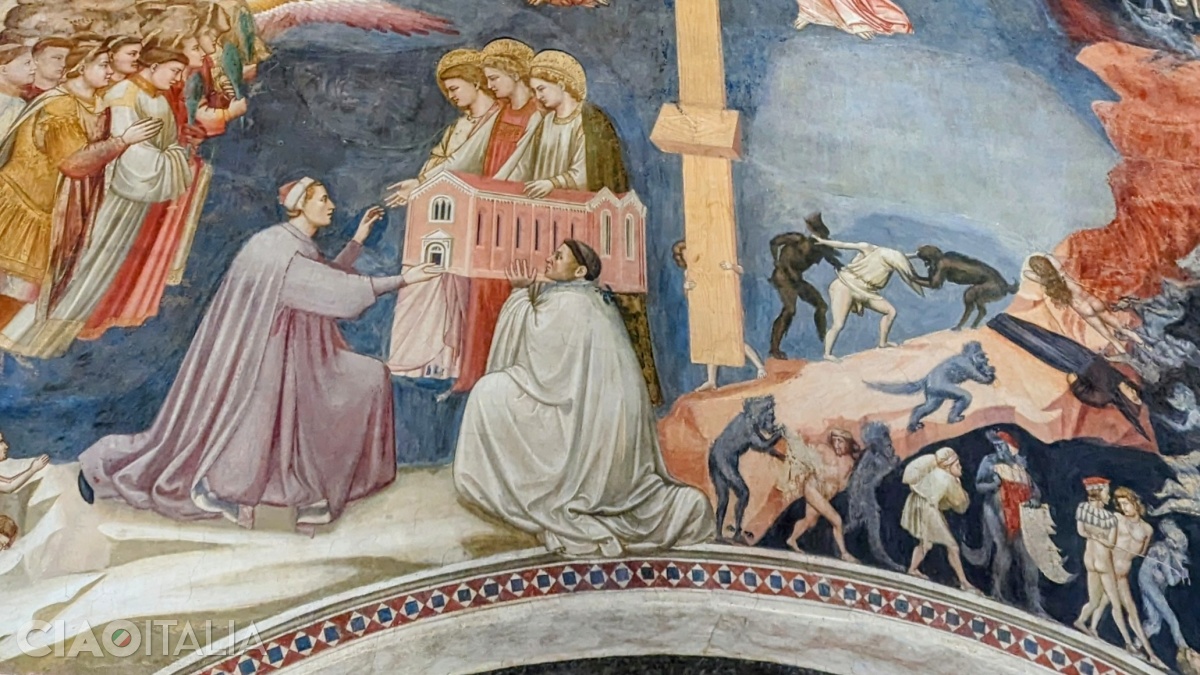
The Scrovegni Chapel (Cappella degli Scrovegni) is the most important tourist attraction in Padua and is considered the second most important chapel in Italy, surpassed only by the Sistine Chapel in the Vatican Museums.
Inside, the chapel preserves the magnificent frescoes of Giotto, painted at the beginning of the 14th century. If you only have one day in Padua and time to visit just one or two sites, we highly recommend making this your top priority.
Giotto's vibrant paintings anticipate the use of perspective, which would only fully emerge during the Renaissance, and they depict human emotions with remarkable tenderness and detail. Notably, these frescoes feature the first representation of a kiss in Italian art.
Scrovegni Chapel
Opening Hours:
March 25 - November 3, 2026 and December 27 - January 6, 2027:
- Monday-Sunday: 09:00-22:00
- January 1, 2027: closed
Last entry is at 9:20 PM.
January 2 - March 24, 2026 and November 4 - December 24, 2026:
- Monday-Sunday: 9:00 AM - 7:00 PM
- December 25 and December 26, 2026: closed
Last entry is at 6:45 PM.
Entry is permitted in groups of maximum 25 people, every 15 minutes. We recommend making an online reservation.
Ticket Prices:
- Monday: €12 (includes access to the Eremitani Civic Museums)
- Tuesday-Sunday: €16 (includes access to the Eremitani Civic Museums and Zuckermann Palace)
- Evening ticket (Giotto sotto le stelle): €10 (does not include museum entry)
2. Chiesa degli Eremitani
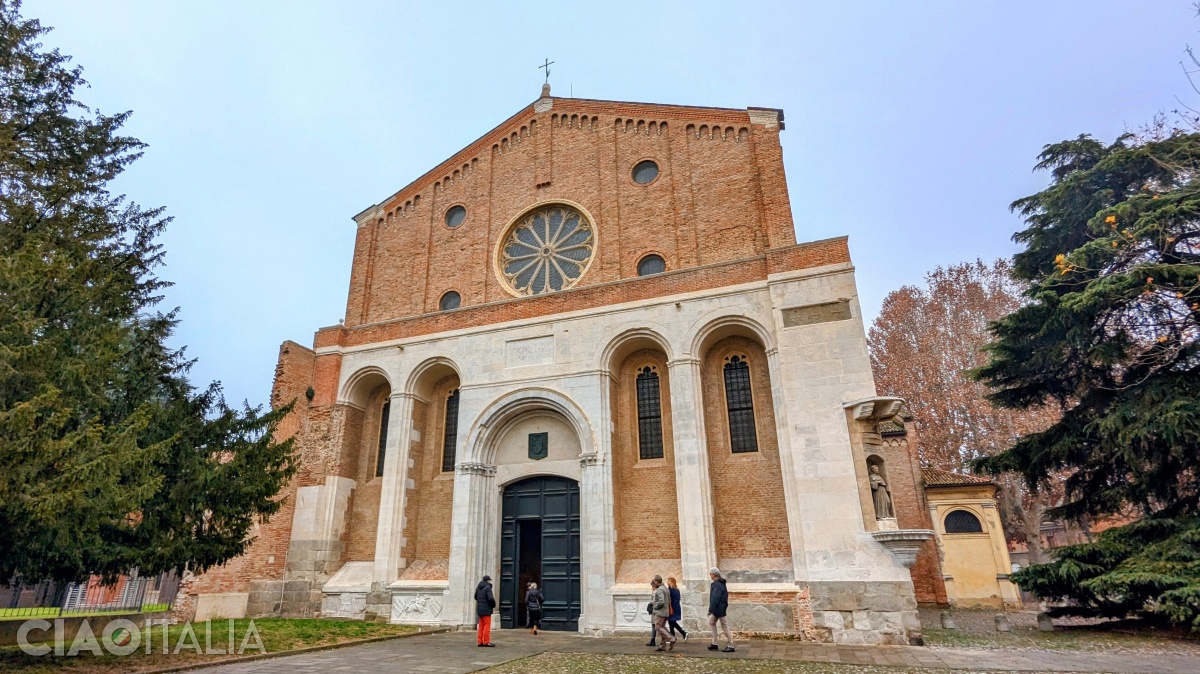
Located right next to the Scrovegni Chapel, the Church of the Eremitani (Chiesa degli Eremitani) is dedicated to Saints Philip and James. Dating back to the 13th century, it was once part of a larger monastic complex; today, those monastery buildings house the Eremitani Civic Museums.
Like other landmarks in the city, the church has been designated a UNESCO World Heritage site thanks to its 14th-century frescoes. These were painted by masters such as Guariento, Giusto de' Menabuoi, and Altichiero, whose names are synonymous with Padua's most important artistic treasures. In the past, the church was adorned with even more paintings, many of which were tragically lost during the bombings of World War II.
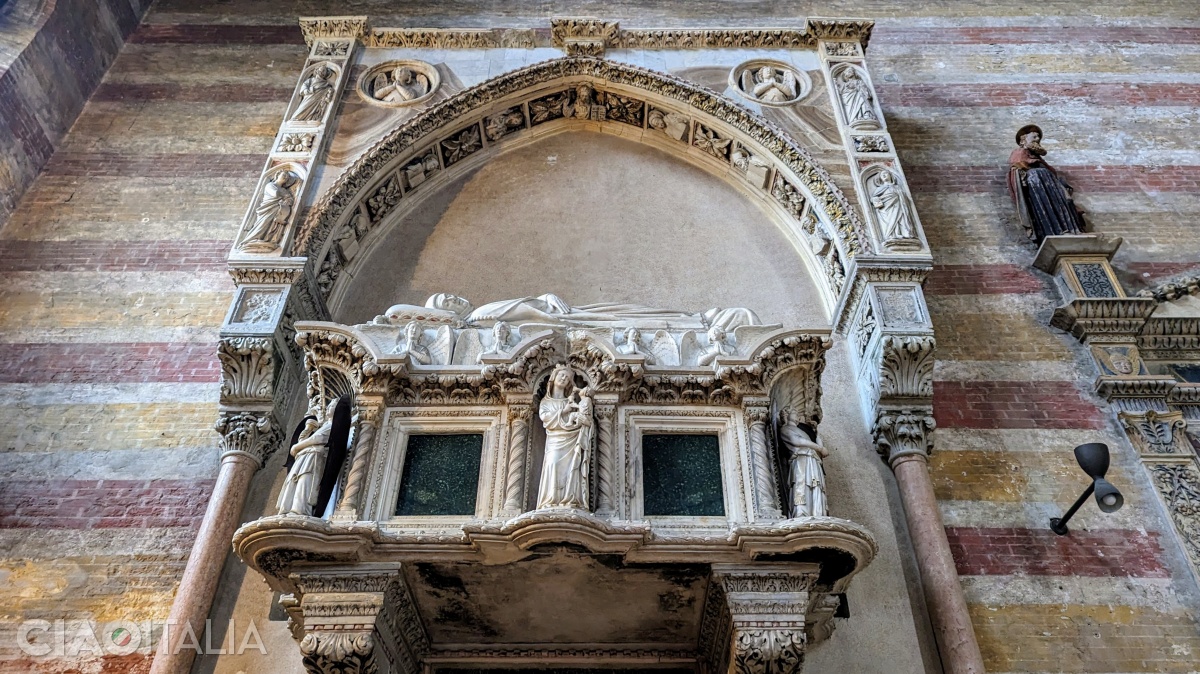
Right at the entrance are two tombs belonging to members of the Carrara family, the rulers of the city during that era. The tomb on the left, belonging to Jacopo II da Carrara, bears an epitaph written by the famous poet Petrarch, who was a close friend of Jacopo.
The first chapel on the right side (Cappella Cortellieri) preserves only traces of the frescoes created by Giusto de' Menabuoi in 1370, depicting St. Augustine, the virtues, and the liberal arts.
The second chapel (Cappella di Sant'Antonio) also features only remnants of the paintings illustrating scenes from the lives of the saints, executed in 1338 by Guariento, another famous Paduan painter. Today, only a few figures of female saints remain on the entrance arch, along with several other fragments on the chapel walls.
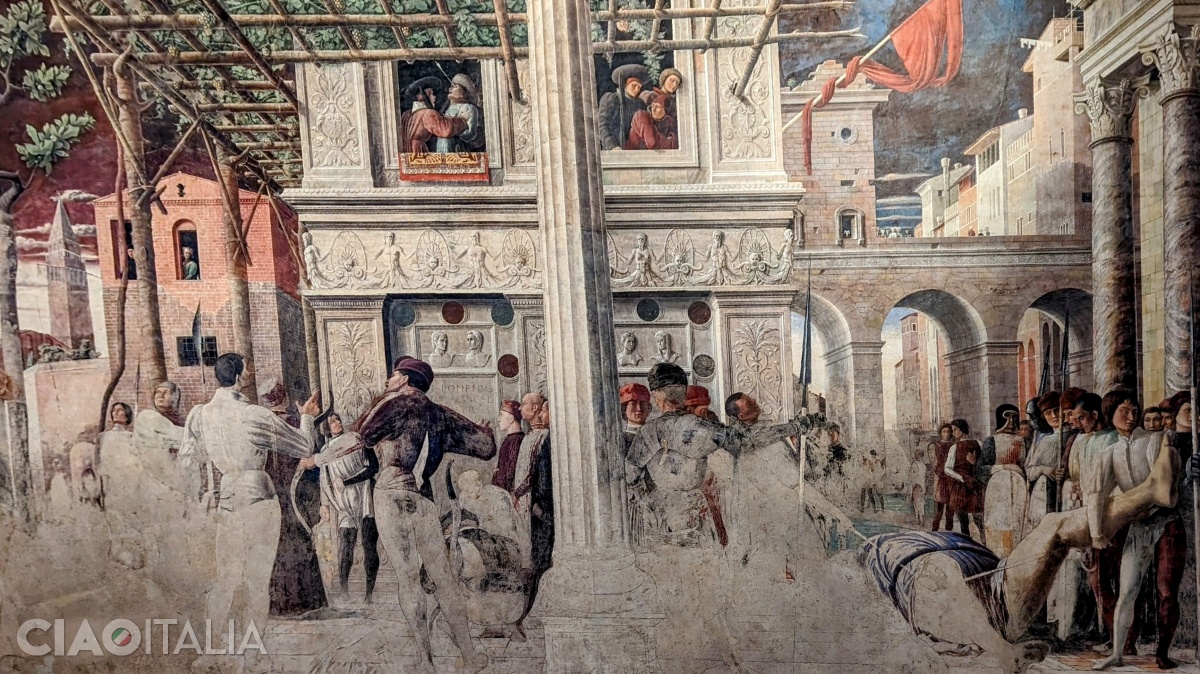
The chapel located in the corner to the right of the altar is the Ovetari Chapel (Cappella Ovetari). The 1944 bombing nearly destroyed it entirely; however, several frescoes depicting scenes from the lives of Saints Christopher, Philip, and James were preserved. What was lost has been reconstructed using computer technology, so today you can easily visualize its original appearance.
The chapel is particularly significant because it houses two frescoes by Andrea Mantegna, a preeminent representative of the 15th-century Renaissance, who worked here in his youth when he was only 17 years old. You can admire these scenes by looking at the lower part of the chapel's right-hand wall.
Right next to it, immediately to the right of the altar, lies the Dotto Chapel (Cappella Dotto). The bombings destroyed this one as well, so today only traces of the 14th-century frescoes painted by Altichiero can be seen.
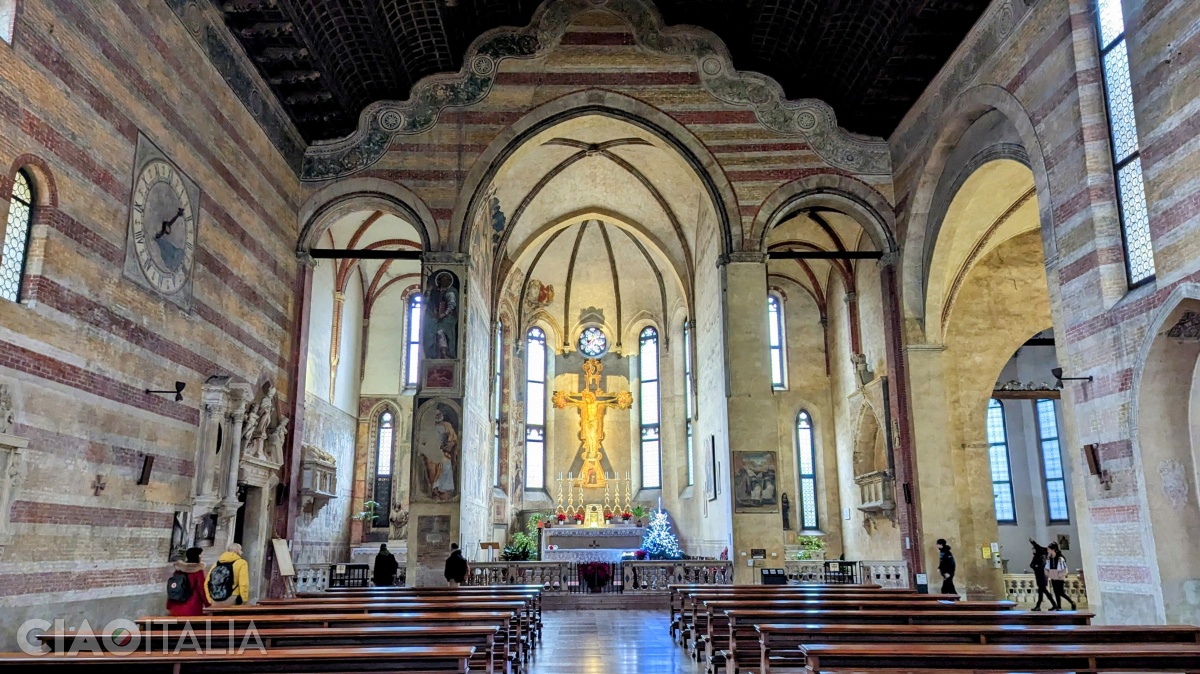
The most significant chapel is located in the apse of the altar, known as the Major Chapel (Cappella Maggiore). On its left wall is a 14th-century cycle of paintings by Guariento. The frescoes depict scenes from the lives of Saints Augustine, Philip, and James, while the base features monochrome allegories of the "Planets" and the "Ages of Man", inspired by Giotto's allegories of the Vices and Virtues in the Scrovegni Chapel.
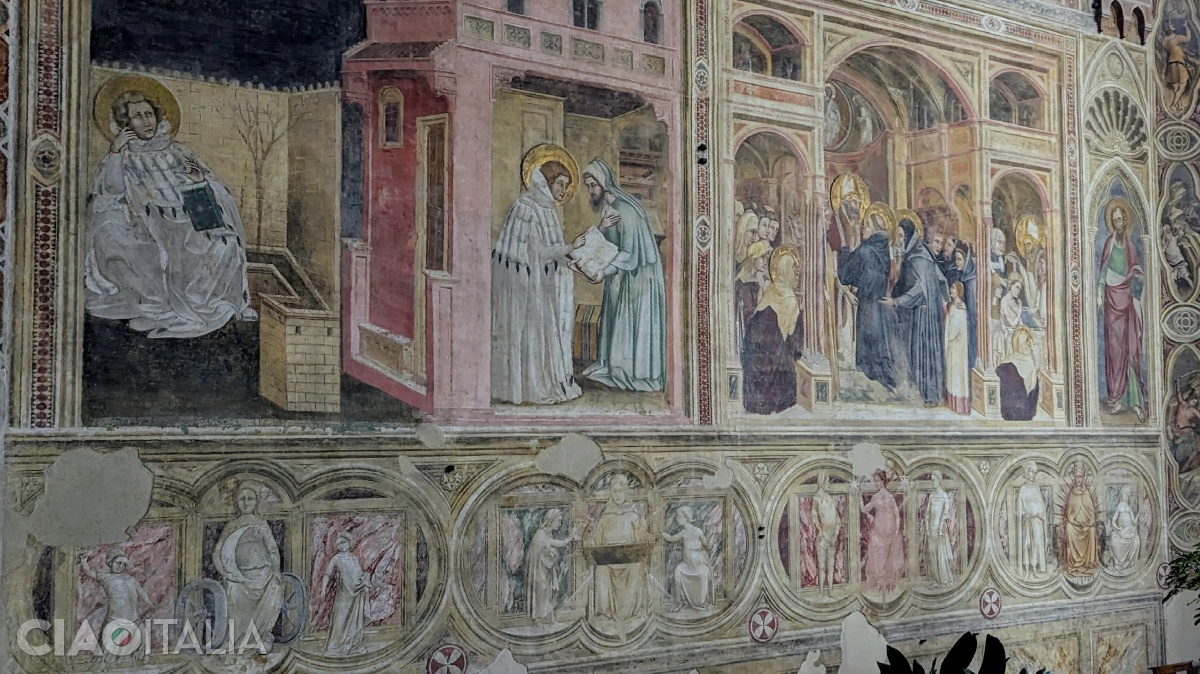
The chapel located to the left of the altar is the Sanguinacci Chapel, dedicated to Saints Cosmas and Damian. The scene at the bottom of the right-hand wall, depicting the Virgin enthroned alongside saints and a nobleman, was most likely created by Menabuoi. The 14th-century sarcophagus, crafted by the sculptor Jacobello, belongs to Ilario Sanguinacci, who commissioned the chapel.
The Church of the Eremitani also possesses a unique architectural feature: its wooden ceiling, which is built in the shape of a ship's hull, similar to the Church of Santo Stefano in Venice or the Church of San Francesco in Treviso.
Chiesa degli Eremitani
Opening Hours:
Winter:
- Monday-Friday: 7:30 AM - 12:30 PM, 3:30 PM - 7:00 PM
- Saturday-Sunday: 9:00 AM - 12:30 PM, 4:00 PM - 7:00 PM
Summer:
- Monday-Friday: 9:00 AM - 12:30 PM, 3:30 PM - 7:00 PM
- Saturday-Sunday: 10:00 Am - 1:00 PM, 4:30 PM - 8:00 PM
Ticket Prices:
- Entry is free.
- To light up the frescoes in the Cappella Ovetari, coins must be inserted into the machine.
3. University of Padua
The University is another must-see landmark in Padua. Founded in 1222 by a group of students who left Bologna in search of greater academic freedom, it is the second oldest university in Italy and one of the oldest in the world.
The heart of the university is Palazzo del Bo, which takes its name from the sign of an old inn that once stood in the area, near the butchers' street (Palazzo del Bo translates to "The Palace of the Ox").
Among the spaces you can visit inside are the Aula Magna, where Galileo Galilei once lectured, the Sala dei Quaranta ("Hall of the Forty"), the Anatomical Theatre, and the Aula di Medicina.
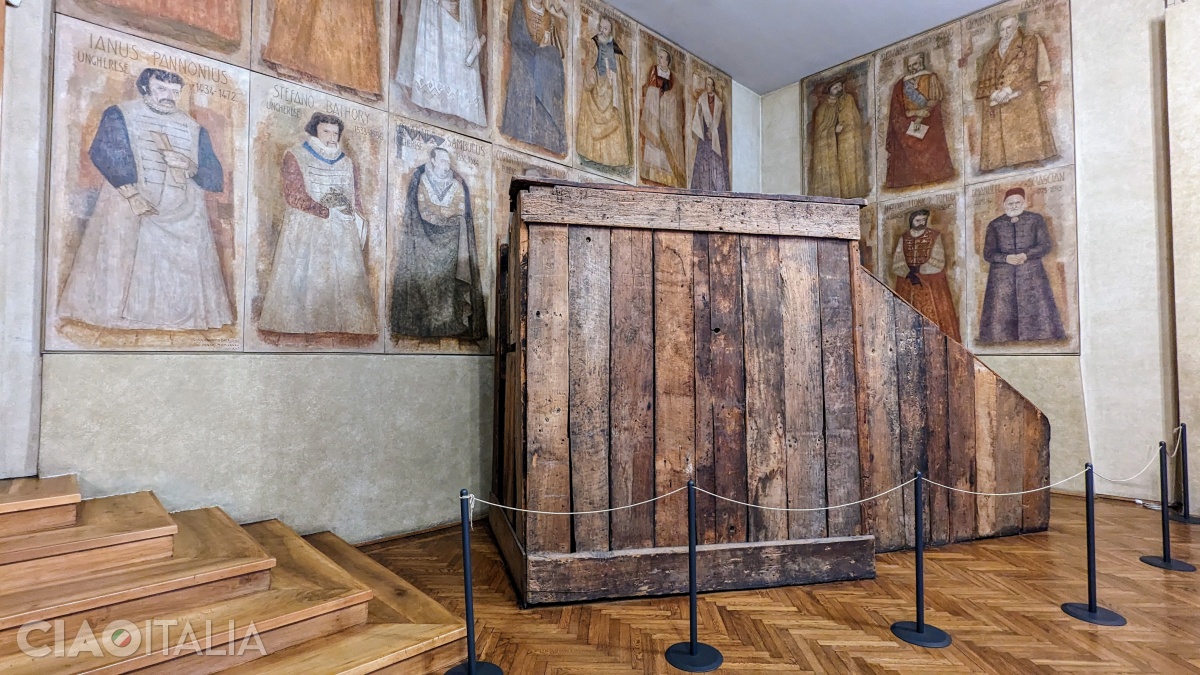
The Sala dei Quaranta ("Hall of the Forty") takes its name from the portraits painted on its walls in 1942. These represent 40 scholars from various European countries who studied at the University of Padua. In the same hall, you can see the wooden desk from which Galileo Galilei taught between 1592 and 1610, which was kept in the Aula Magna for a long time.
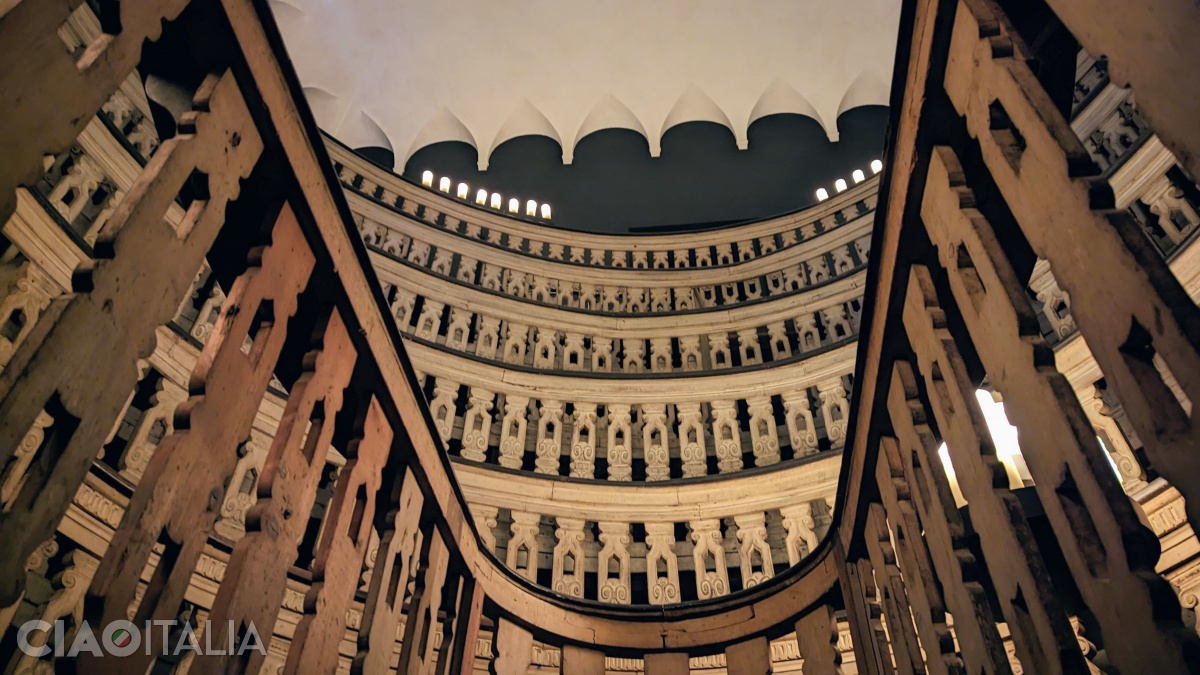
Built of wood in 1595, the Anatomical Theatre was the first permanent structure of its kind in the world. The dissection table was located at the bottom, while above it, arranged across six tiers, were the galleries where over 200 students could observe anatomy lessons and autopsies.
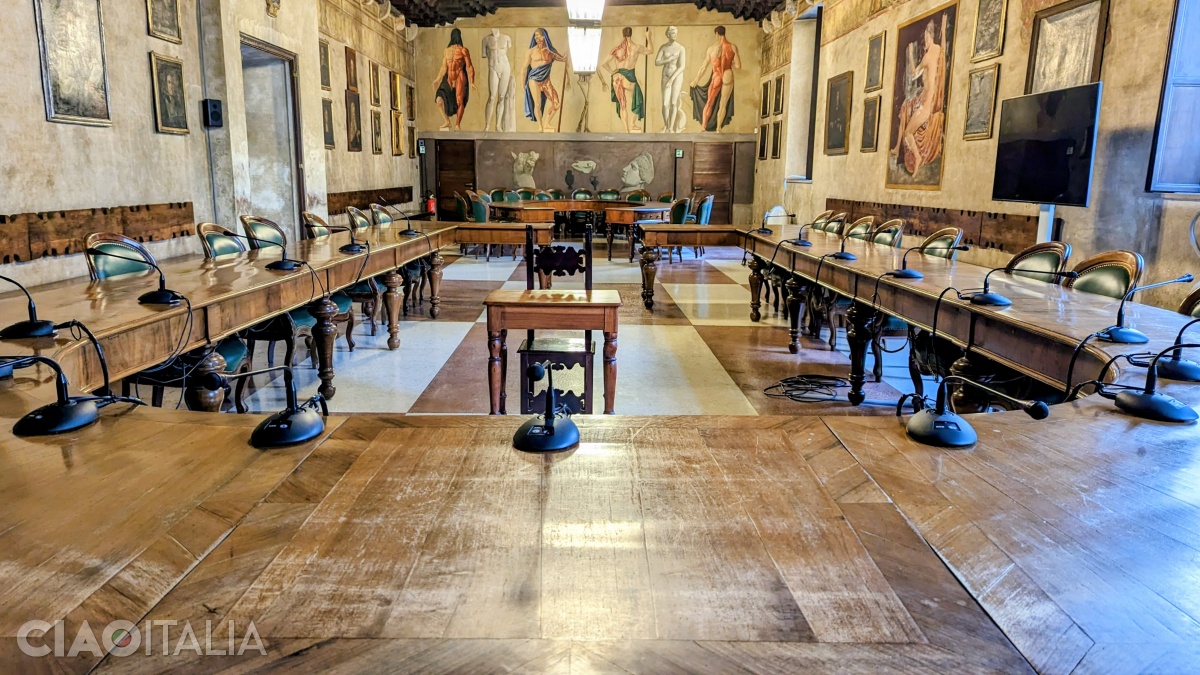
Formerly used for theoretical medicine lectures, the Aula di Medicina is one of the oldest rooms in Palazzo del Bo. It still features its original wooden coffered ceiling and medieval frescoes. Today, it serves as the prestigious space where students defend their doctoral theses.
University of Padua
Opening Hours:
Monday to Friday:
- Guided tours in English and Italian between 10:30 AM and 5:30 PM
Saturday and Sunday:
- Guided tours in English and Italian between 9:30 AM and 5:30 PM
- Self-guided visit between 10:00 AM and 6:00 PM.
Visits are not available on December 24, 25, 31, and January 1.
Ticket Prices:
Monday to Friday:
- Palazzo del Bo guided tour: €8
Saturday and Sunday:
- Guided tour Palazzo del Bo e il '900 di Gio Ponti: €15
- Self-guided visit: €10
4. Caffè Pedrocchi
Right next to the University and City Hall lies the famous historic Caffè Pedrocchi. Its story begins in the 19th century, when Antonio Pedrocchi decided to construct a new building to relocate the café he had inherited from his father. The edifice, built in the Neoclassical style, was inaugurated in 1831 and expanded in 1836 with a new wing in the Neogothic style.
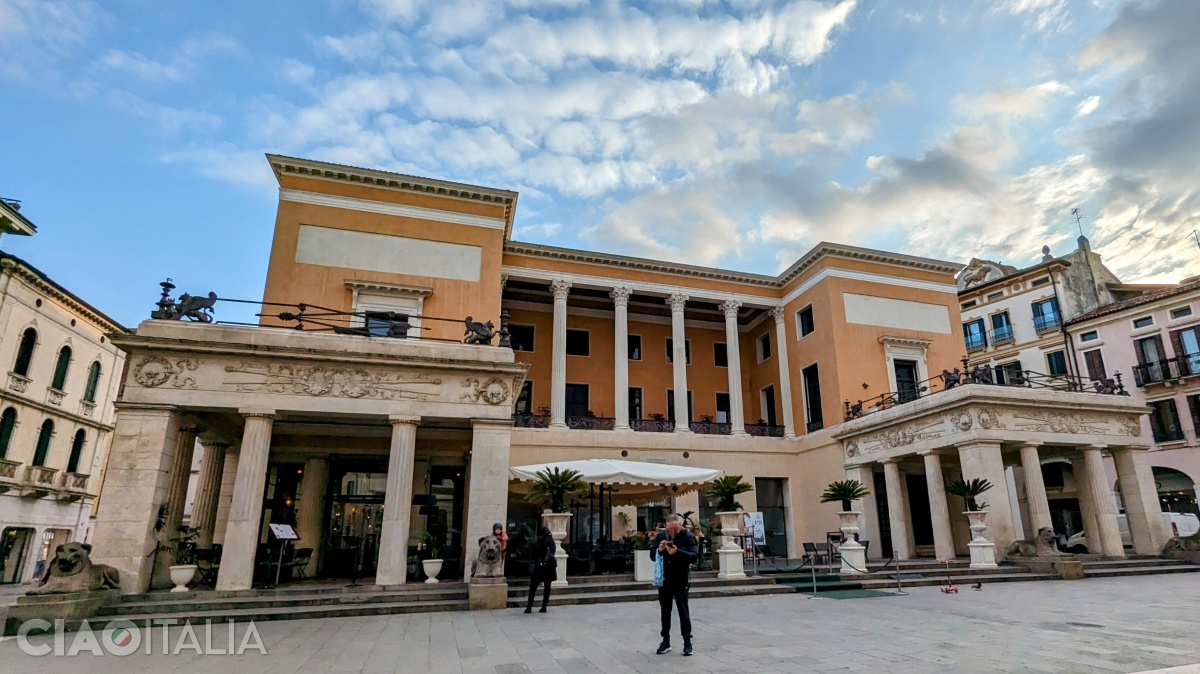
Until 1916, the café was open day and night, which is why it was nicknamed the "Café without doors" (the explanation for the first "without" in the city's famous moniker). It was only then, during World War I, that the café began closing in the evening due to the risk that its bright lights might attract Austrian bombings.
The establishment served as a meeting place for intellectuals, artists, politicians, professors, and students; it was even one of the favorite spots of Stendhal, who mentions the café in his novel "The Charterhouse of Parma".
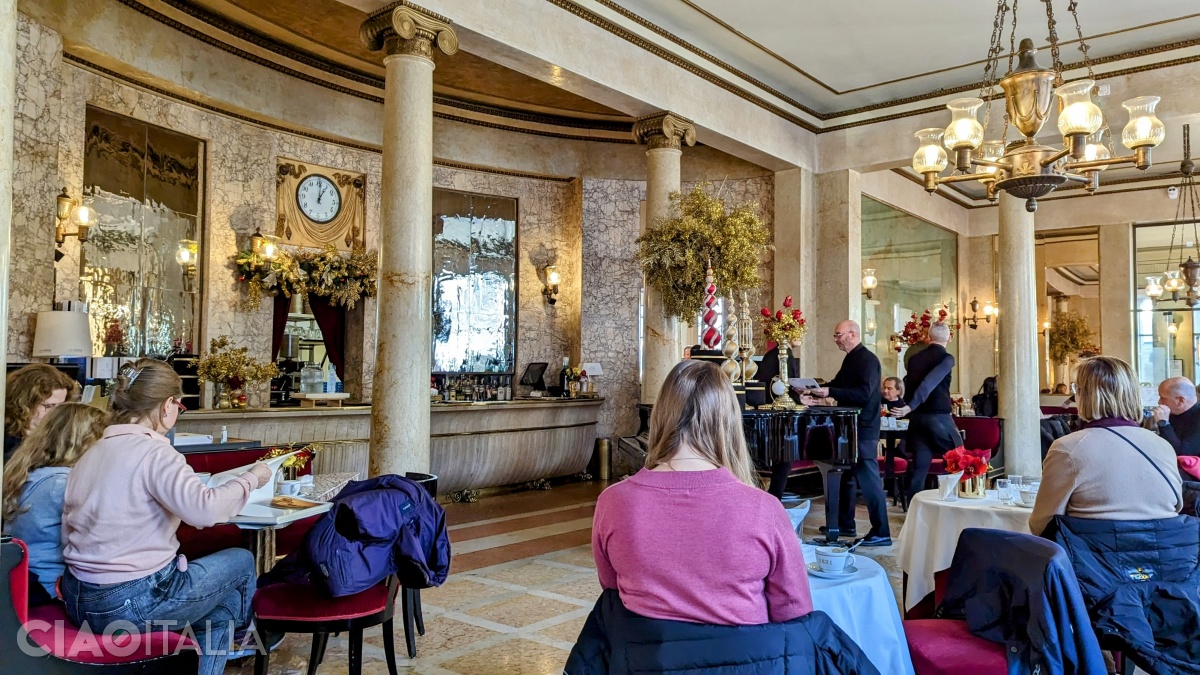
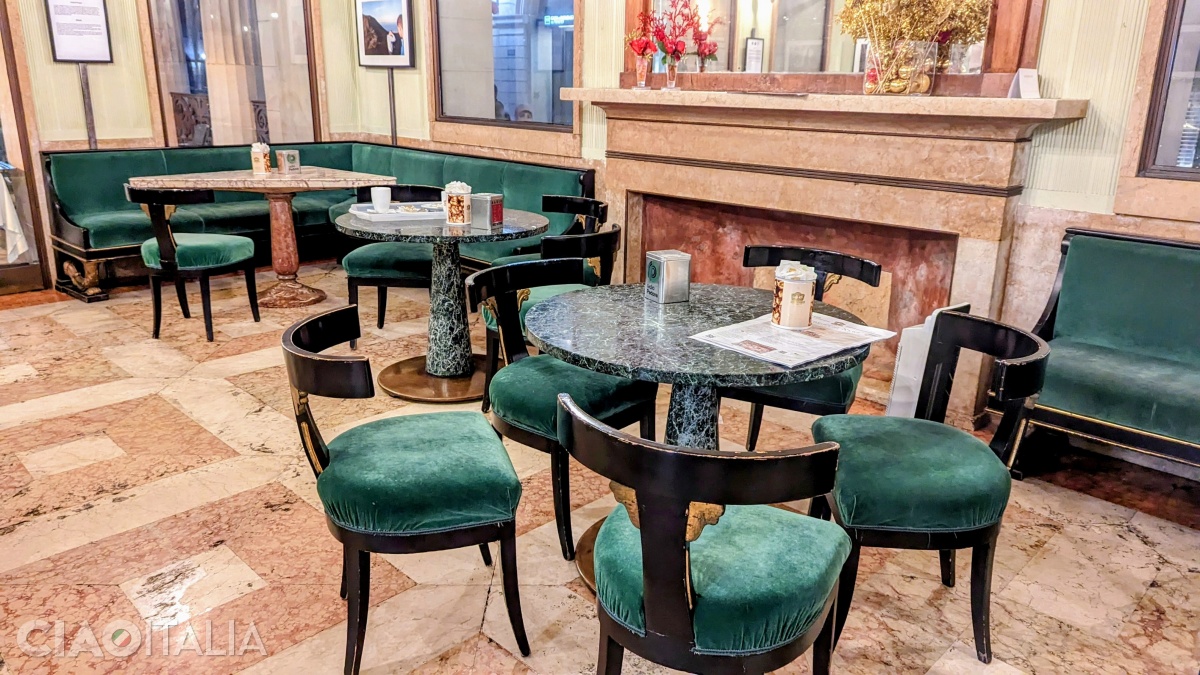
The four rooms on the ground floor are named after the colors of their upholstery: the White Room, the Red Room, the Yellow Room, and the Green Room. It is said that three of these - green, white, and red - represent the colors of the Italian flag. The Yellow Room was also known as the Stock Exchange Room, as it was where merchants met to set commodity prices. In the Red Room, you can find the original marble counter, which features bronze decorations in the shape of lion paws at its base. The White Room, located near the exit toward the University, still bears a mark on the wall left by an Austrian bullet during the Revolution of 1848.
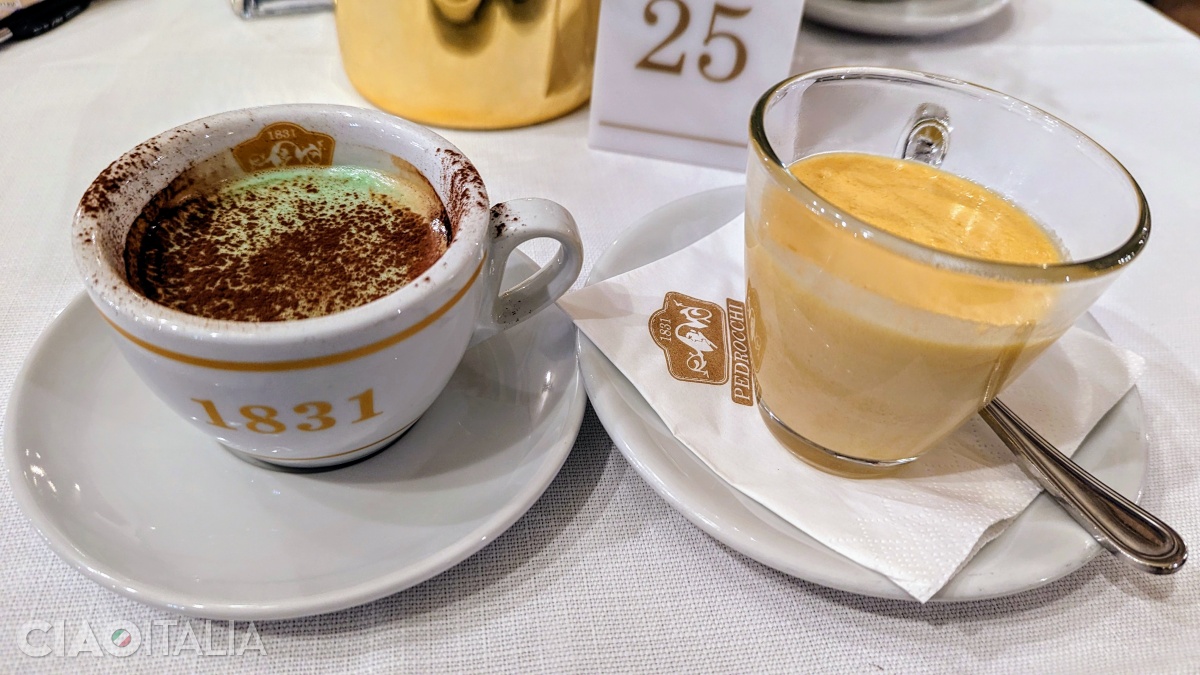
So, take a break from sightseeing in Padua and try the café's specialties: the famous Pedrocchi coffee with mint cream or the Stendhal zabaione (zabaione is a traditional Italian dessert made from egg yolks and sweet wine). Don't miss the Pedrocchi cake either, featuring chocolate, coffee, and - of course - mint cream. If you want to discover more about Padua's gastronomy, check out the article "What to Eat and Drink in Padua".
5. Statue of "Old Padua"
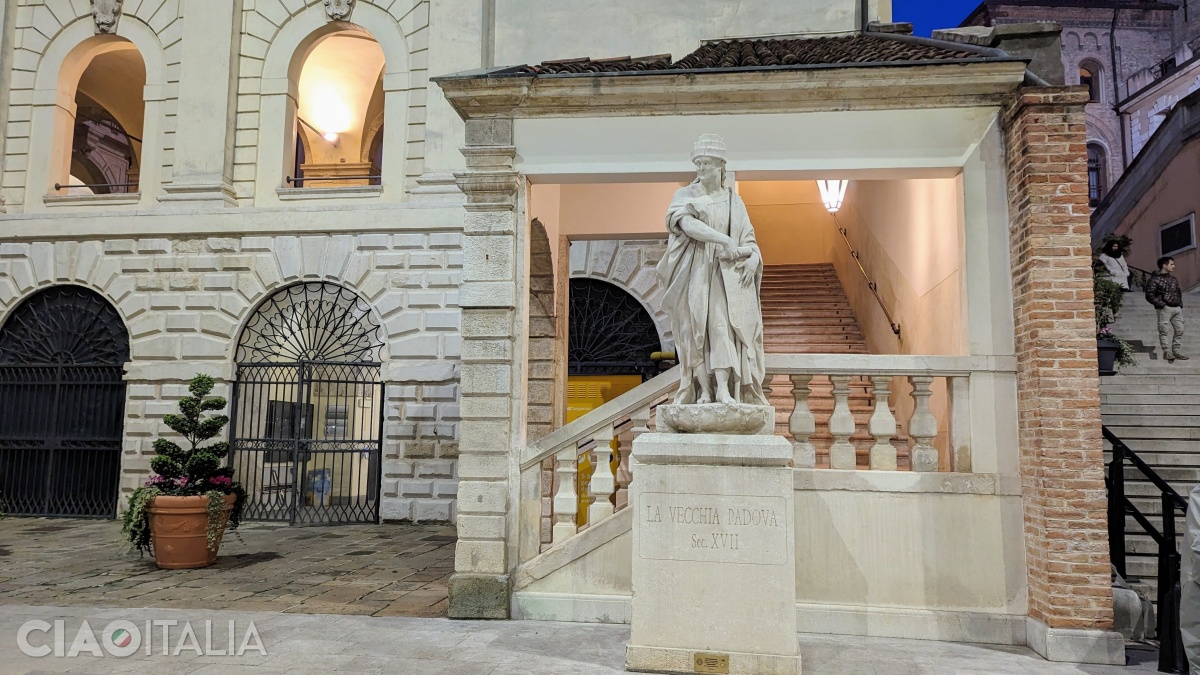
Right across from Palazzo del Bo, the historic core of the University of Padua, stands Palazzo Moroni, which today serves as the City Hall. In its inner courtyard, a stone statue sculpted by Giovan Battista Albanese in the 17th century symbolizes the city of Padua.
Curiously enough, the statue depicts an elderly woman. This is because the ancient Roman city of Patavium is the oldest in the Veneto region. According to legend, Padua was founded in 1185 BC by Antenor, the advisor to King Priam, who fled Troy and arrived here on the banks of the Brenta River.
The statue wears a crown that rises across three levels, representing the three rings of walls that defended the city throughout its history: those from the 13th century, those built during the Carrara family's rule in the 14th century, and the Renaissance walls constructed during the rule of Venice in the 16th century.
6. Palazzo della Ragione
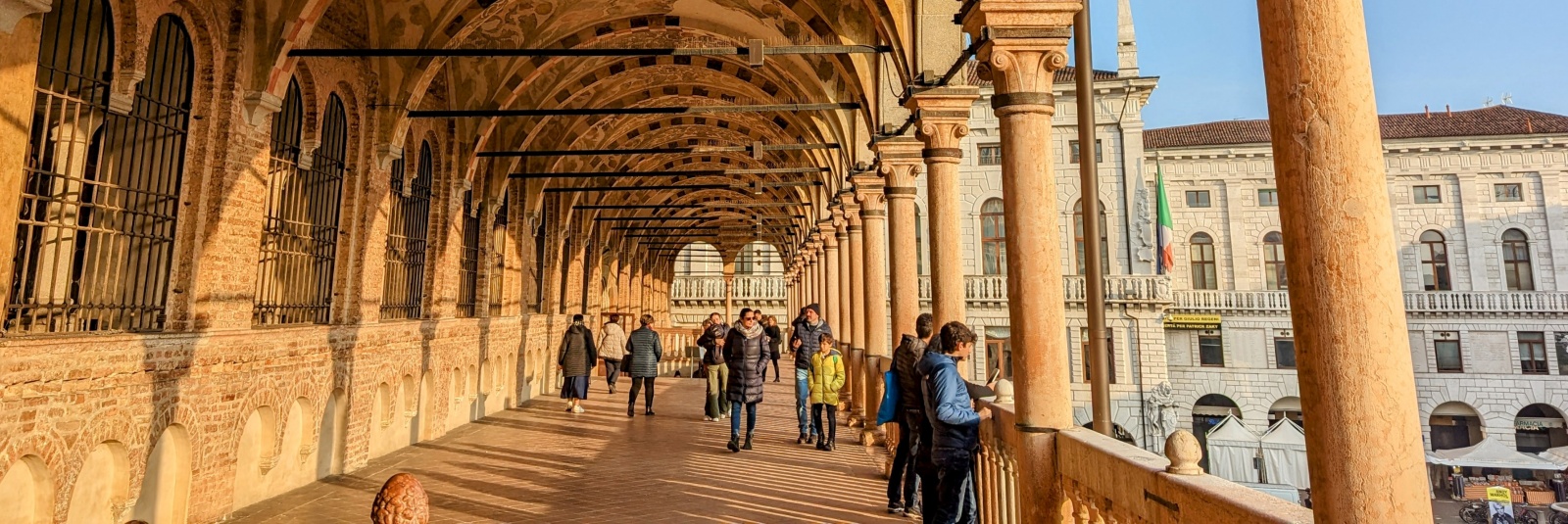
Palazzo della Ragione (Palace of Justice) is one of the largest medieval buildings in Europe and is the only one among the eight UNESCO World Heritage sites in the city that does not feature religious-themed frescoes.
The palace was built at the beginning of the 14th century atop an existing structure. Its architect was the monk Fra Giovanni degli Eremitani, who was also responsible for the Church of the Eremitani. Until 1797, it served as the city's courthouse, which is how the palace earned its name. It was also commonly referred to as "the Salon" (il Salone) because it essentially consists of a single, enormous hall.
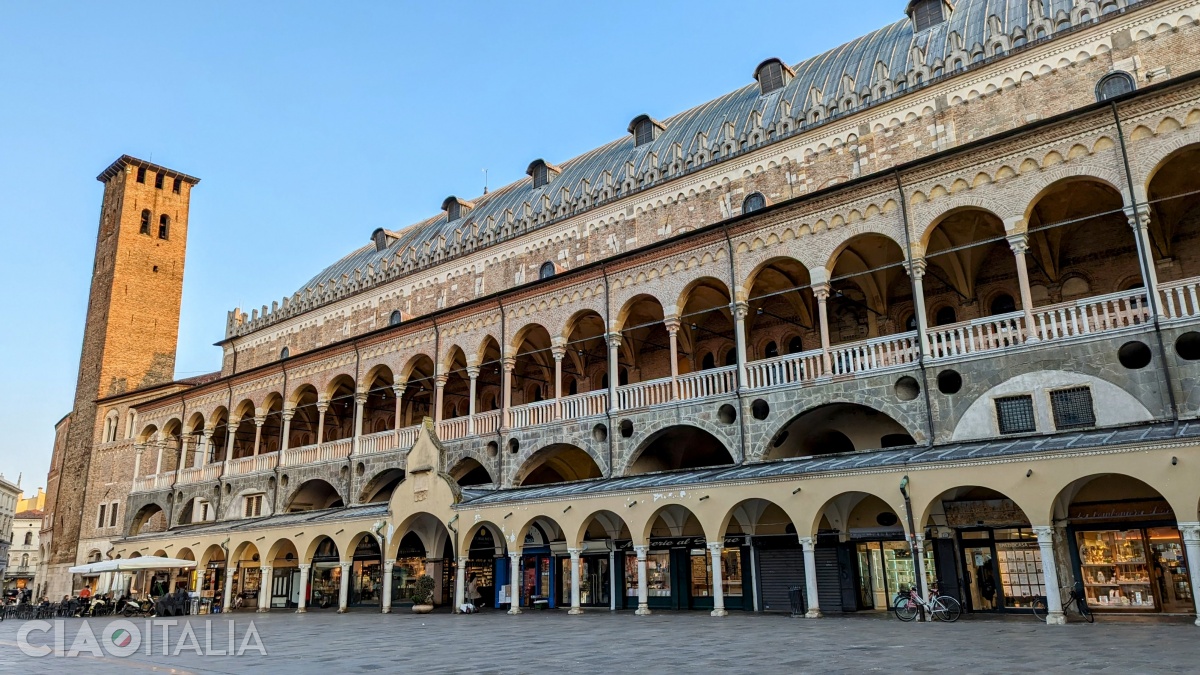
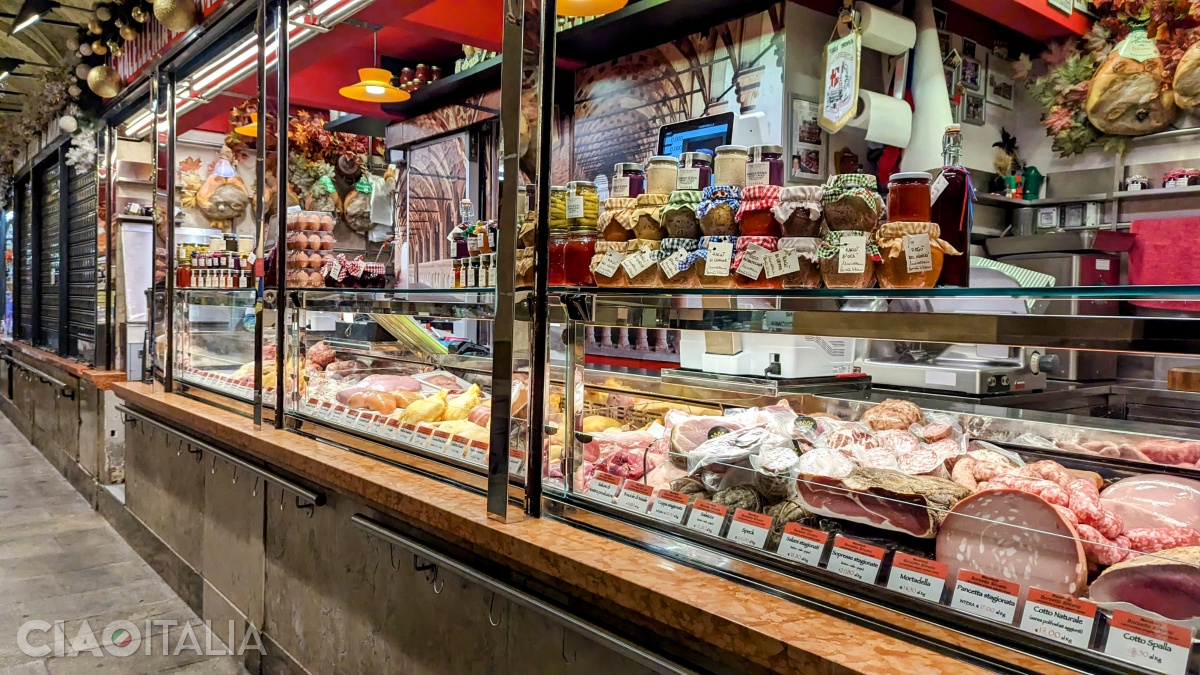
On the ground floor of the palace, there are two vaulted corridors that the locals call Sotto al Salone ("Under the Hall"). Together with the squares surrounding the palace, they form one of the oldest shopping centers in Europe. Even today, these two corridors house small shops filled with all kinds of local delicacies.
Climbing the stairs that lead you into the superb loggia and from there into the hall, you will find yourself in an immense space, 80 meters long, featuring a wooden ceiling and walls covered with over three hundred frescoes - forming one of the largest pictorial cycles in the world.
The local authorities originally entrusted Giotto with decorating the palace, but his frescoes perished in the fire of 1420, which also destroyed the loggias and the wooden roof. Consequently, the palace was repainted in the 15th century, strictly adhering to the original decorative scheme.
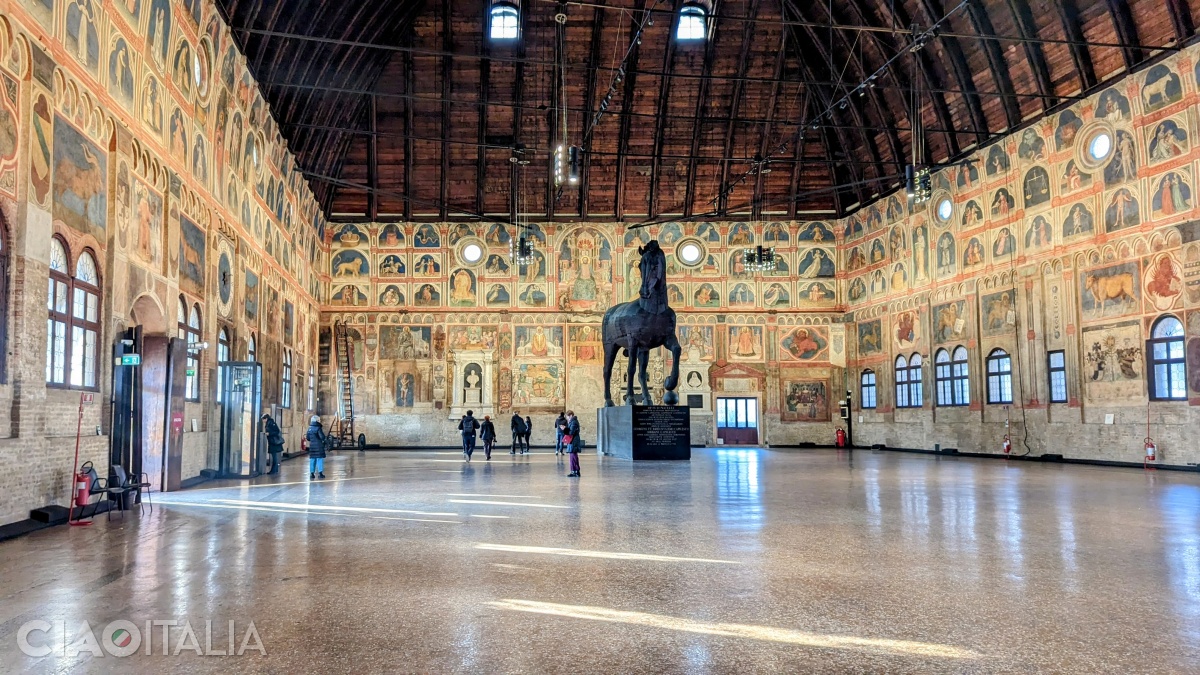
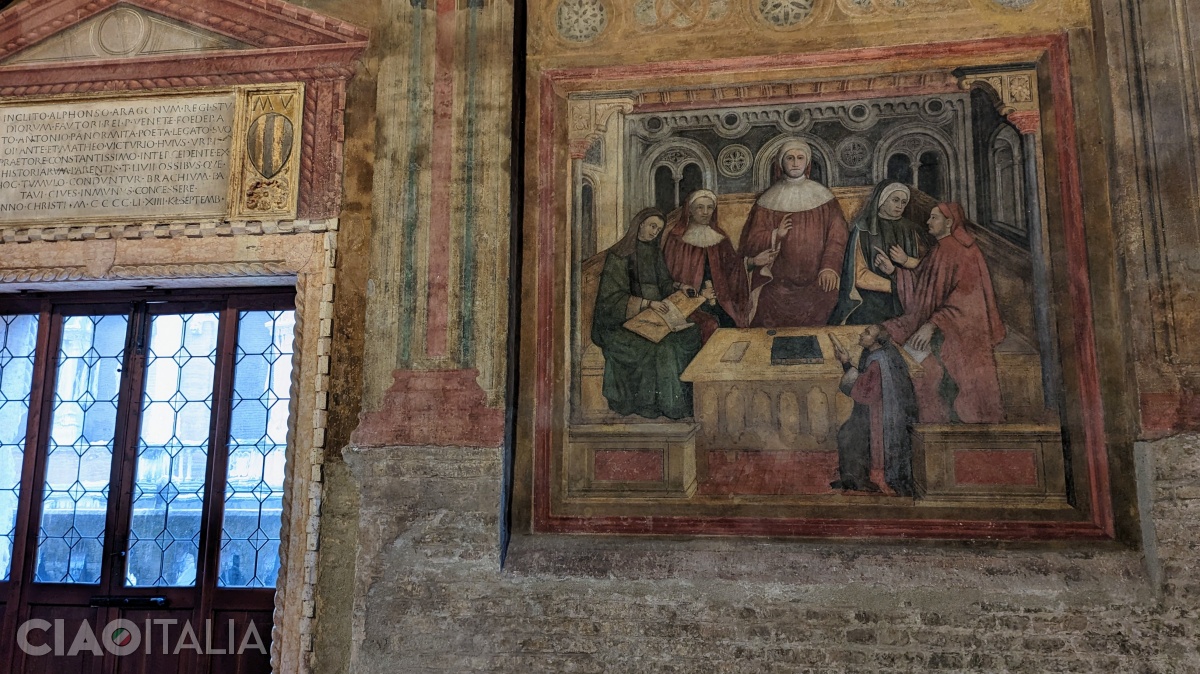
The frescoes illustrate the influence of the planets on human relationships and the psyche, following the theories of the mathematician and astrologer Pietro d'Abano. You can find his portrait, painted by Jacopo da Verona, on the wall to the left of the entrance.
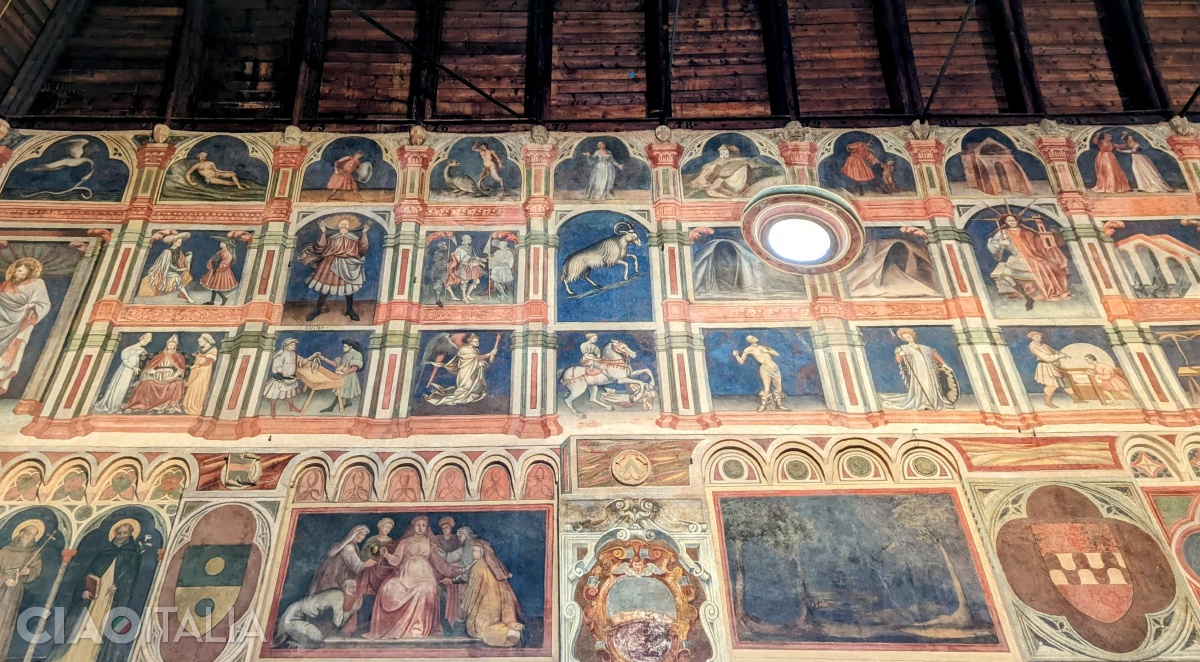
In the twelve sections representing the months of the year, the cycle depicts the constellations and the character traits of those born in that month, the personification of the month itself, the figure of the patron apostle, the influence of the zodiac sign on people, and the specific activities typical of that period.
Have some fun trying to identify the zodiac signs and their characteristics. A helpful hint: the representations begin right on the right-hand side of the wall where you enter, starting with the month of March - look for the sign of Aries!
In the hall, you will also notice an immense wooden statue of a horse, created in the 15th century for a Paduan nobleman on the occasion of a tournament.
In the opposite corner lies the Pietra del Vituperio ("The Stone of Shame"), a large block of black porphyry with an intriguing story. During the Middle Ages, this was where insolvent debtors were publicly humiliated. The culprit was forced to strip in the presence of dozens of people, remaining only in their shirt and undergarments. They then had to strike the stone three times with their backside while repeating the formula Cedo bonis ("I give up my assets") and, finally, leave the city. If they happened to return to Padua without the creditors' consent, they had to repeat this humiliating ritual - with the added punishment of having three buckets of water dumped over them.
A stone used for the same purpose can also be found in Florence, embedded in the floor of the Loggia del Mercato.
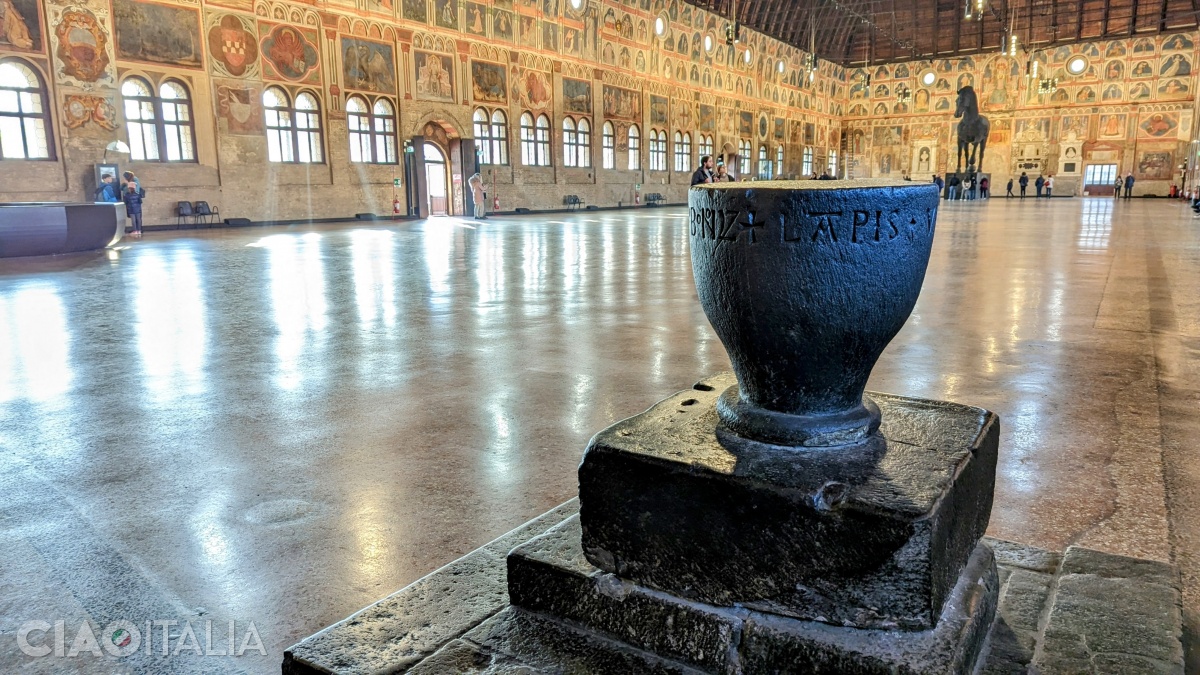
Palazzo della Ragione
Opening Hours:
- Monda: Closed
- Tuesday-Sunday: 9:00 AM - 7:00 PM
- December 25 and 26, January 1, and May 1: Closed
Last entry is 40 minutes before closing
Ticket Prices:
- Adult: €8
- Over 65: €6
- 6-17 years: €3
- Children under 6: free
7. Piazza delle Erbe and Piazza della Frutta
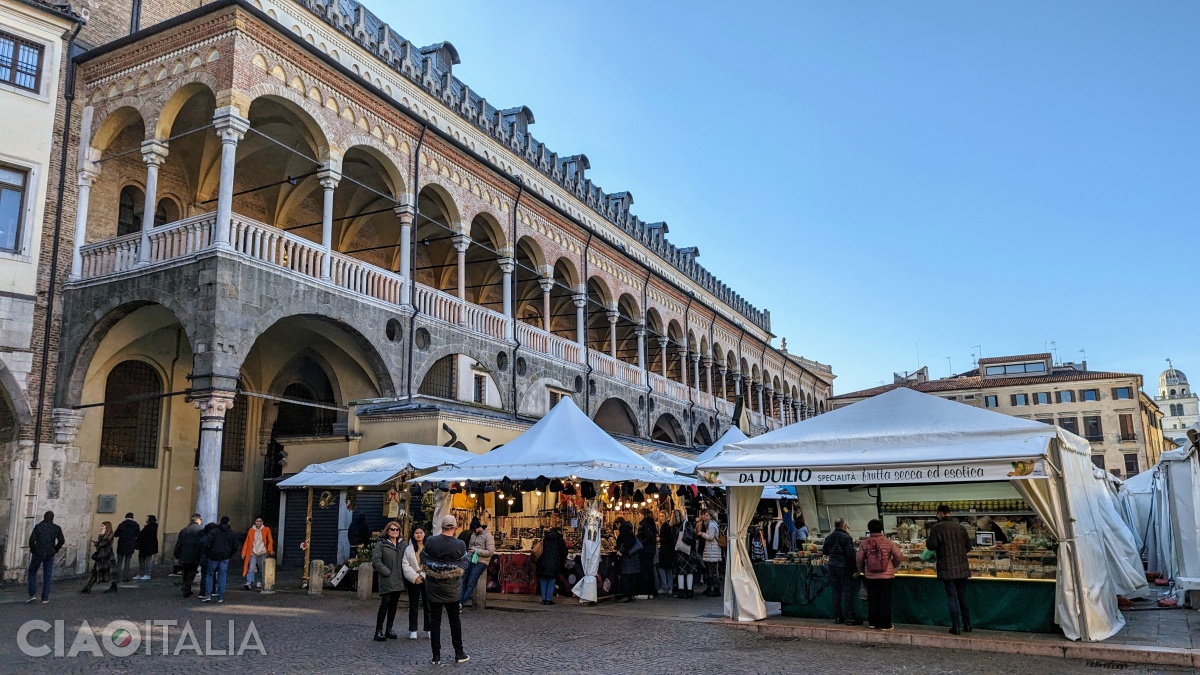
The two historical squares flanking Palazzo della Ragione on either side have always constituted the city's commercial heart - a fact reflected in their names: Piazza delle Erbe means "Square of Herbs, Greens", and Piazza della Frutta means "Fruit Square".
Over time, Piazza delle Erbe was also known as the "Grain Market" or the "Wine Market", and the stairs leading up to Palazzo della Ragione were called the Scala delle Erbe ("Stairs of Herbs"), as vendors would line them with their goods.
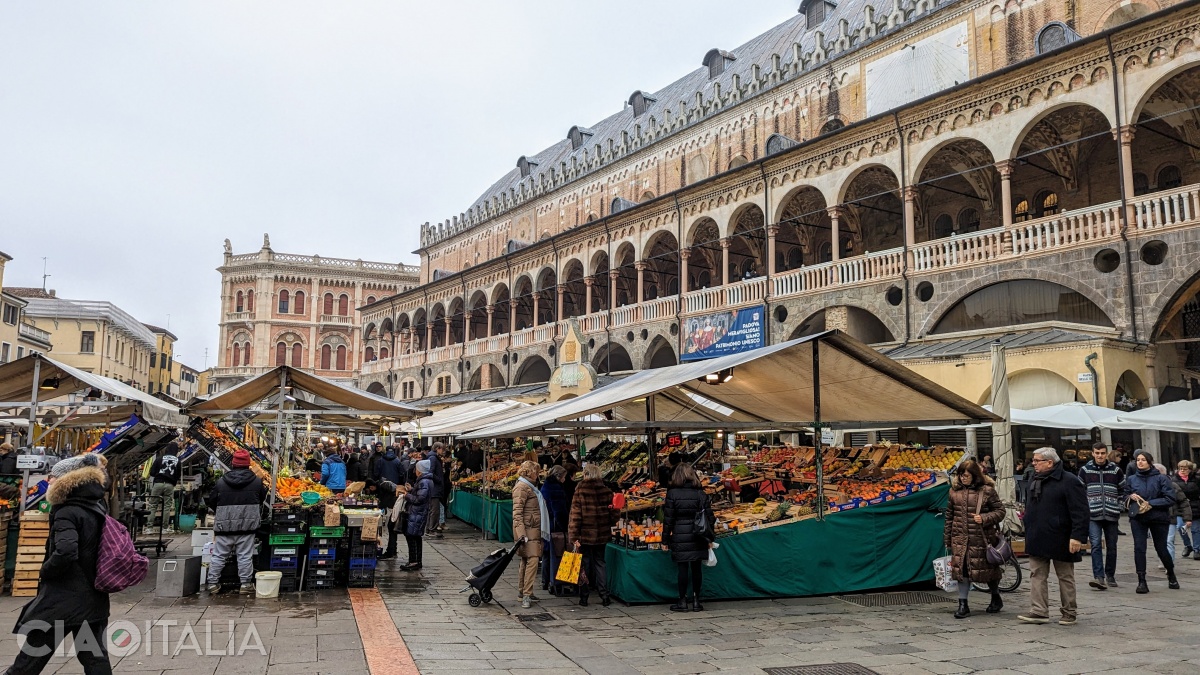
Today, in Piazza delle Erbe, you will still find stalls overflowing with fruits and vegetables, while Piazza della Frutta now mostly hosts stalls selling... clothes.
Piazza delle Erbe, home to countless bars, is the go-to spot where Paduans stop for a spritz and a chat.
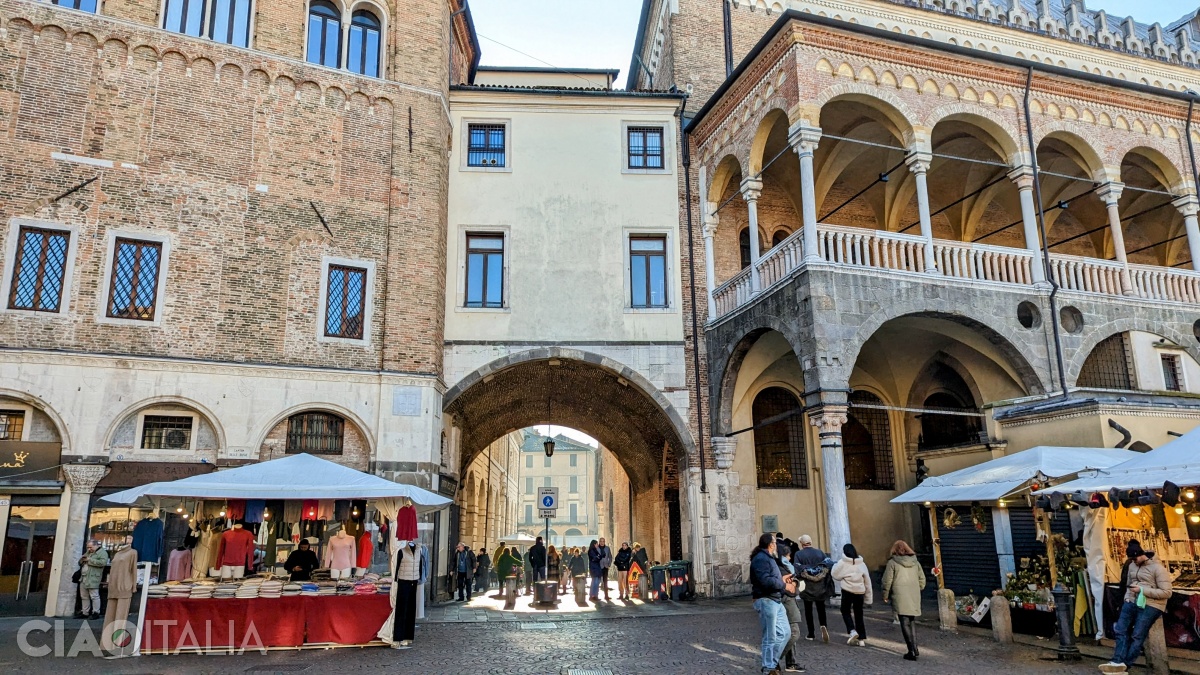
The connection between the two squares is made through a vaulted passage called Volto della Corda ("The Vault of the Rope"). This was where debtors or those who tried to cheat their customers were whipped across the back with a rope. The ropes were left hanging from rings fixed into the wall as a grim warning.
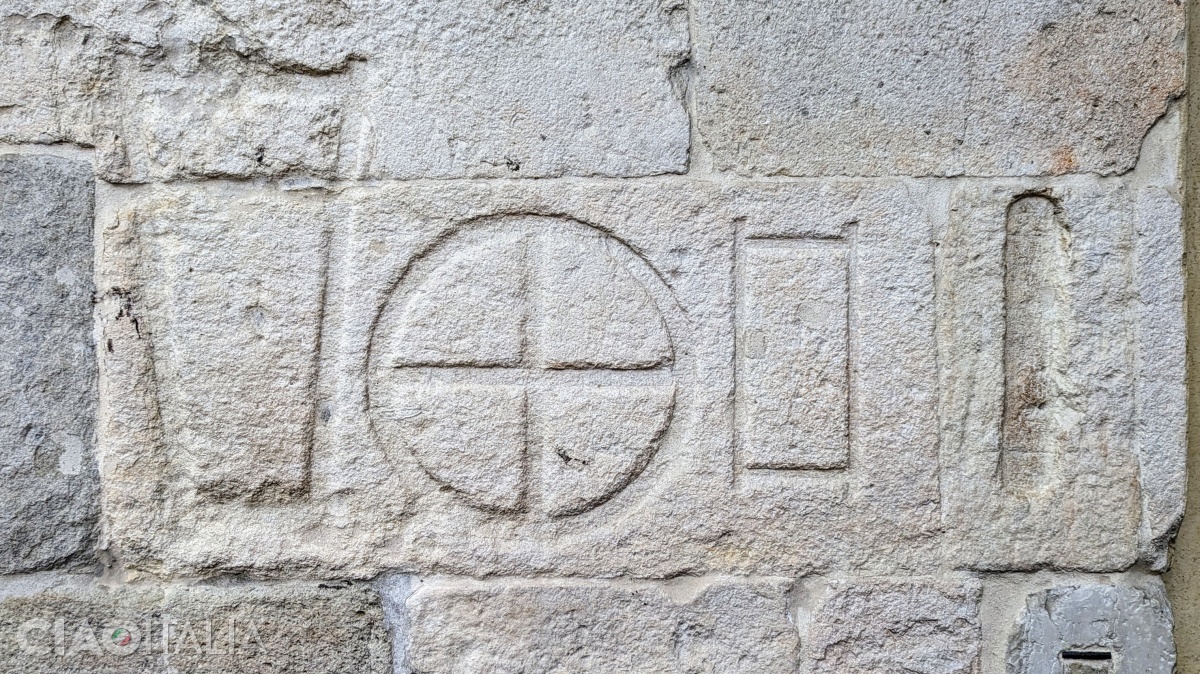
The corner facing Piazza della Frutta was known as Canton delle busie, which translates to "The Corner of Lies" - this was the spot where merchants conducted their negotiations. Even today, you can see the standard units of measurement carved into the wall, which were intended to prevent vendors from deceiving their customers.
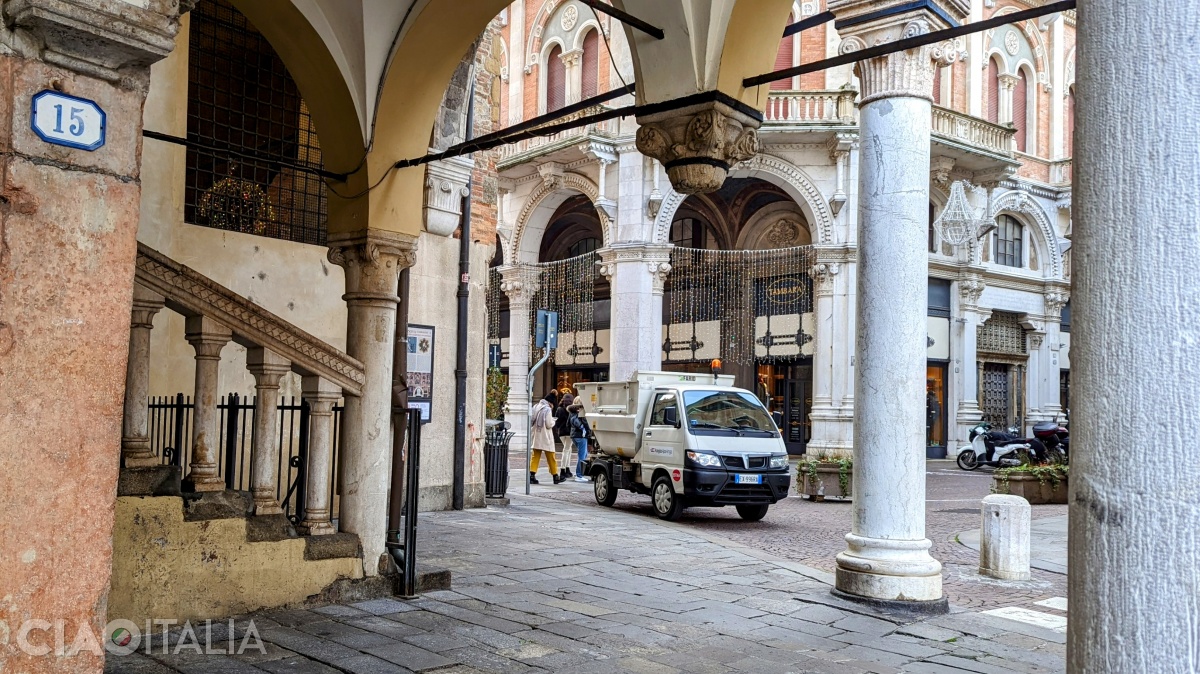
A curiosity: if you head towards the opposite end of Piazza della Frutta, beneath the columns supporting Palazzo della Ragione, you will notice that toward Via Oberdan, one of the columns is missing - only the capital remains. A local legend claims that one night, the column was stolen by the inhabitants of Vicenza. A more practical explanation is that it was removed to allow goods in that area to be transported more easily.
8. Piazza dei Signori
The elegant Piazza dei Signori ("Nobles' Square"), nestled in the middle of a web of medieval streets, is the heart of the city - the place where wealthy Paduans used to go for their strolls. It is no coincidence that it was located right next to the palace (Reggia) of the ruling Carrara family, a palace of which very little remains today.
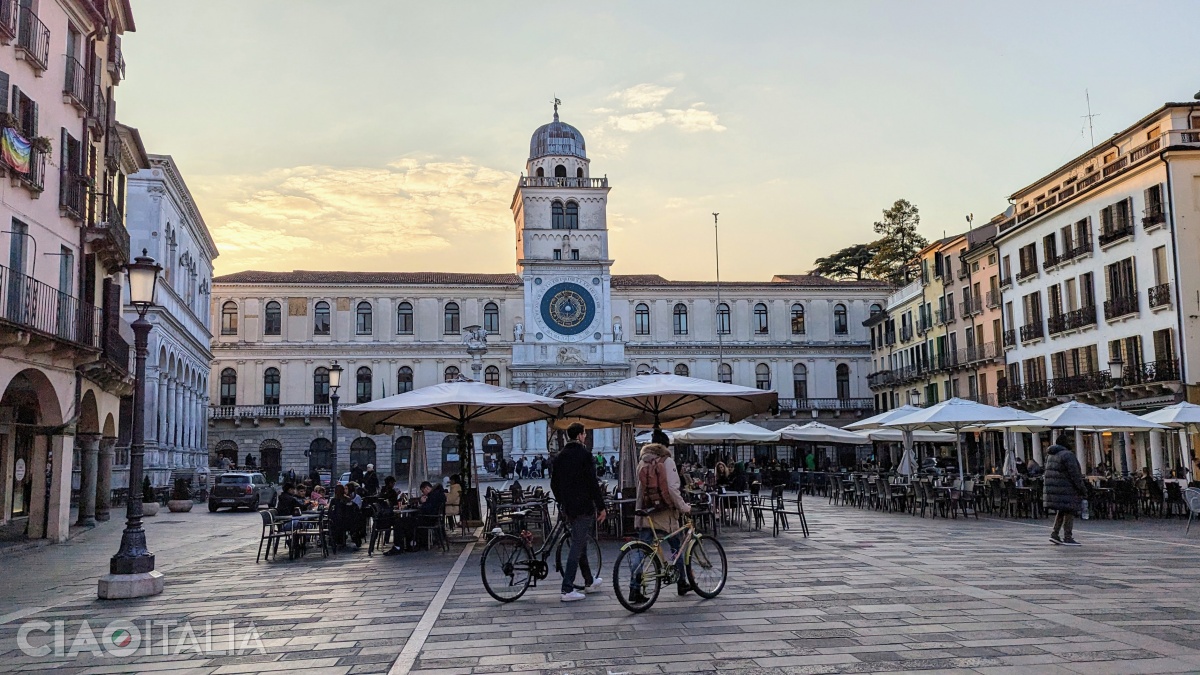
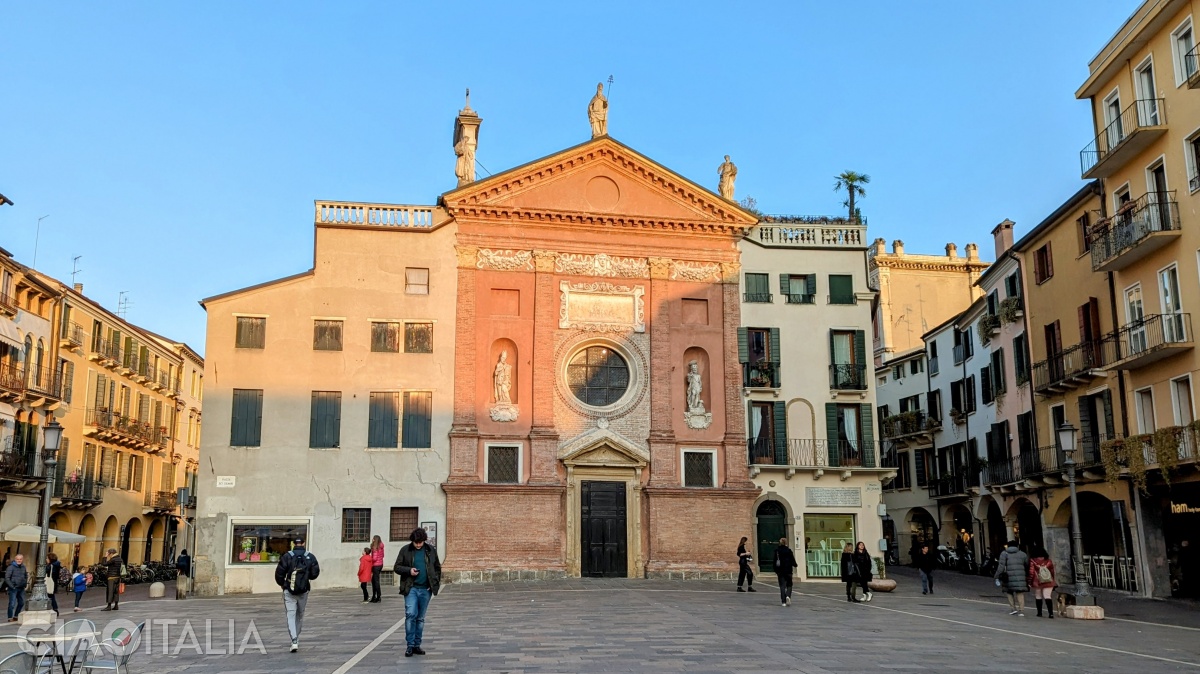
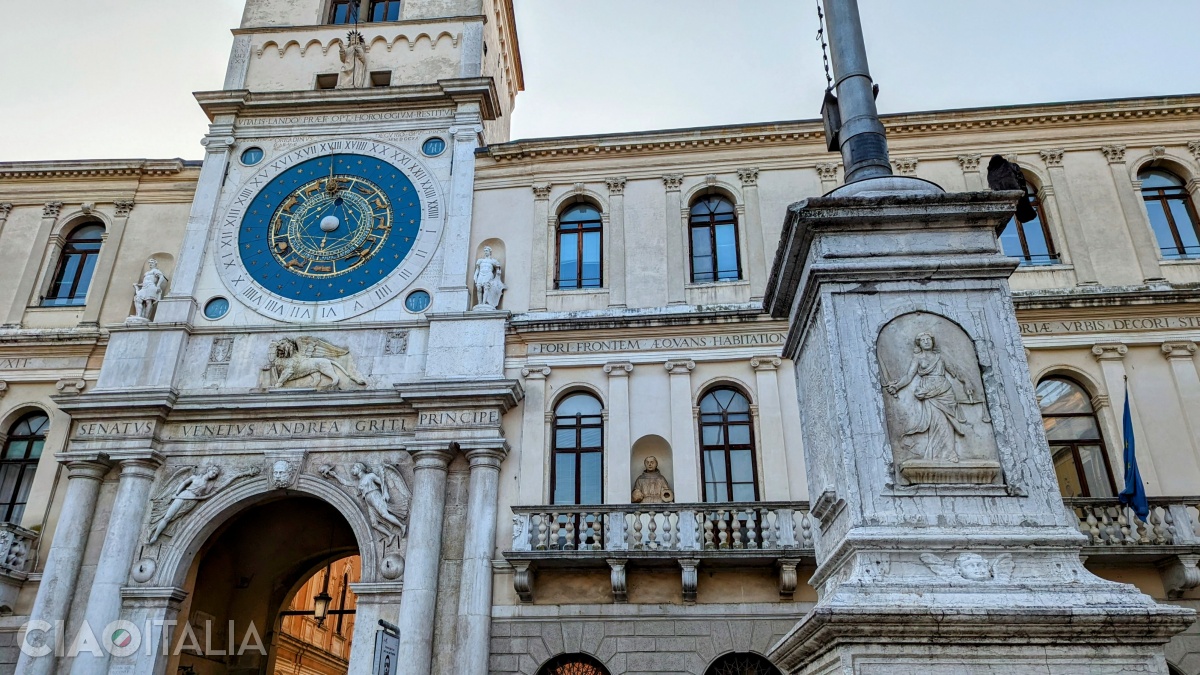
Surrounded by bars and elegant shops, the square is bordered by the San Clemente Church on one side and the beautiful Palazzo del Capitanio on the other, dominated by the Torre del Orologio (Clock Tower). The clock is one of the oldest functioning astronomical clocks in Europe, indicating not only the hours but also the months, zodiac signs, lunar phases, and the movement of the planets. You can find similar 24-hour dial clocks in other Italian cities - a famous example being the one on the Clock Tower in Venice.
If you look closely at the clock, you will notice that the sign of Libra is missing, while the sign of Scorpio occupies two spaces. According to urban legends, Libra is missing because the craftsman who worked on the clock had not been paid or, according to another theory, to symbolize the lack of justice in the city. In fact, the truth is that Jacopo Dondi, who created the clock in 1344, was inspired by the Greek astronomical system, in which Libra had not yet been defined as an autonomous constellation but was instead considered part of the Scorpio constellation.
However, Libra can be found on the marble base of the column to the right of the palace, situated across from the column featuring the Venetian Lion.
In the gray pavement of the square, on the side toward Via Nazario Sauro, you can also spot a circle made of white Istrian stone. This marks the spot where a fountain used for the supply of drinking water once stood.
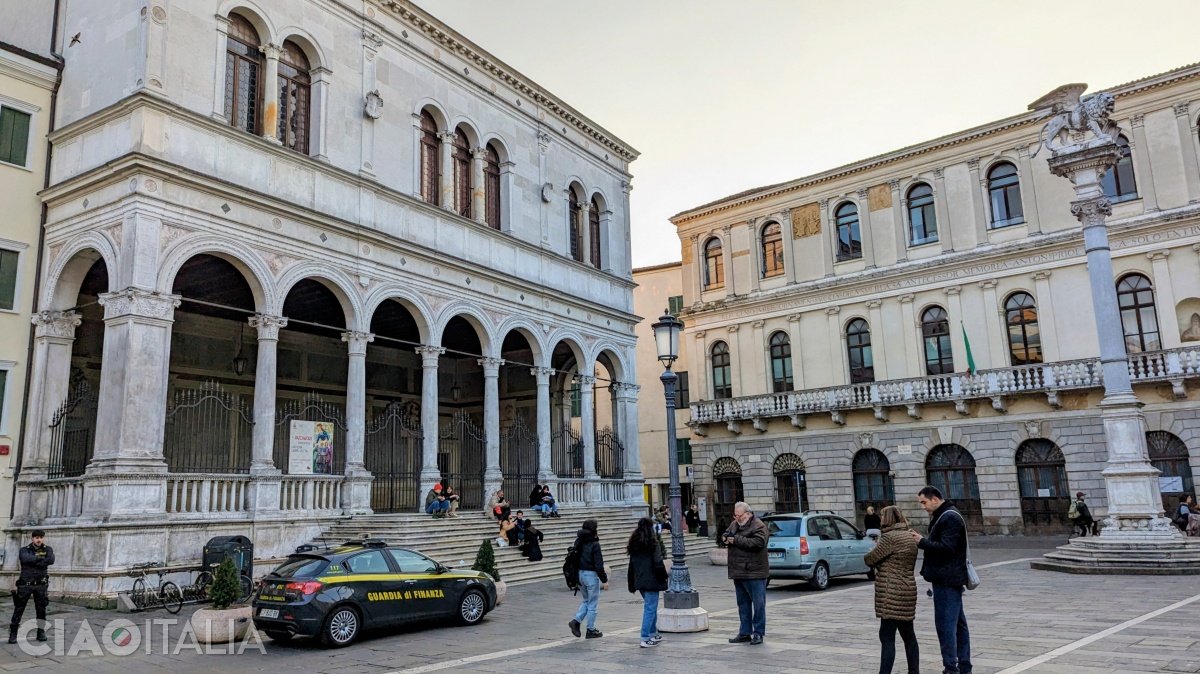
To the left of the Palazzo del Capitanio stands a beautiful 16th-century building called the Loggia del Consiglio (Council Loggia).
9. The Baptistery of the Cathedral
The Duomo (Cathedral) of Padua, dedicated to the Blessed Virgin, was built starting in the 16th century, based on a project by Michelangelo.
Most likely, the interior of the Cathedral will not particularly impress you; however, the Baptistery of St. John the Baptist, located to its right, is a UNESCO World Heritage site and is well worth a visit. Decorated with frescoes in the 14th century by Giusto de' Menabuoi, this was the place where the city's inhabitants were baptized.
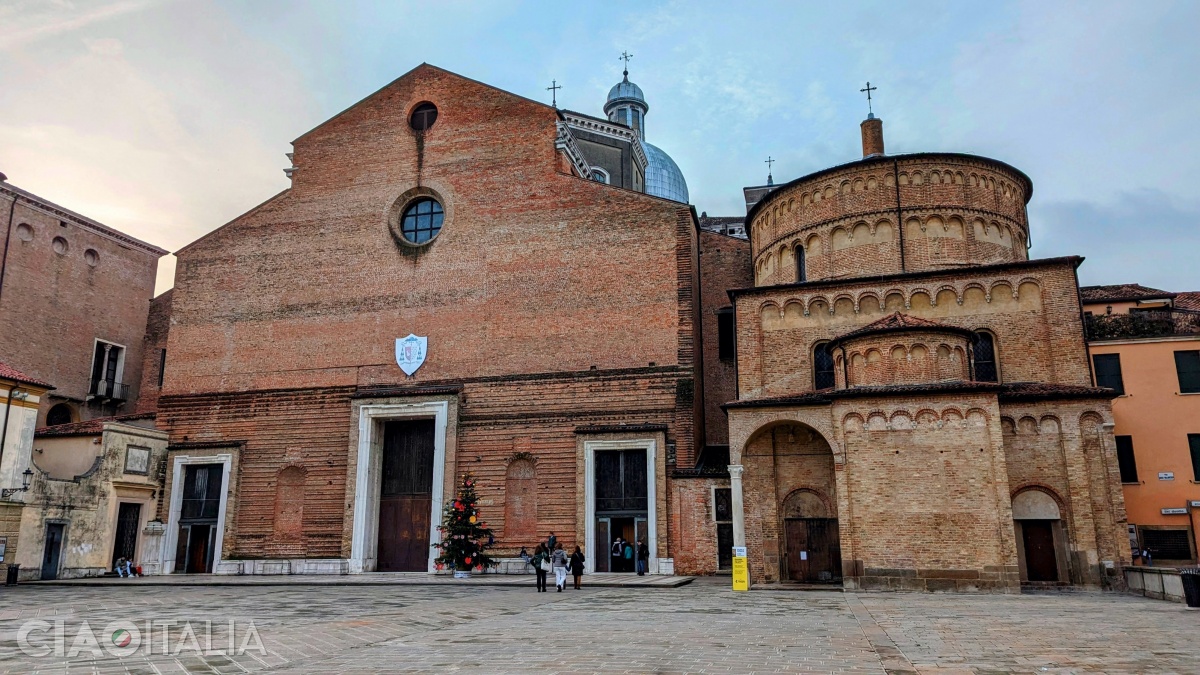
As with the Scrovegni Chapel, tickets are purchased for specific time slots, and it is advisable to book them online. You can also buy them from the ticket office located in the Diocesan Museum (the building to the left of the Cathedral), but you risk finding no availability for your preferred time.
The Baptistery building dates back to the end of the 13th century and was located right next to the palace of the ruling Carrara family. This was the reason why Fina Buzzaccarini, the wife of the city's ruler, wished to transform it into her family's mausoleum. Consequently, she commissioned a tomb within the chapel and ordered the interior to be decorated with frescoes. The tomb of Fina and her husband was located directly above the entrance door until 1405, when it was destroyed by the Venetians who conquered the city.
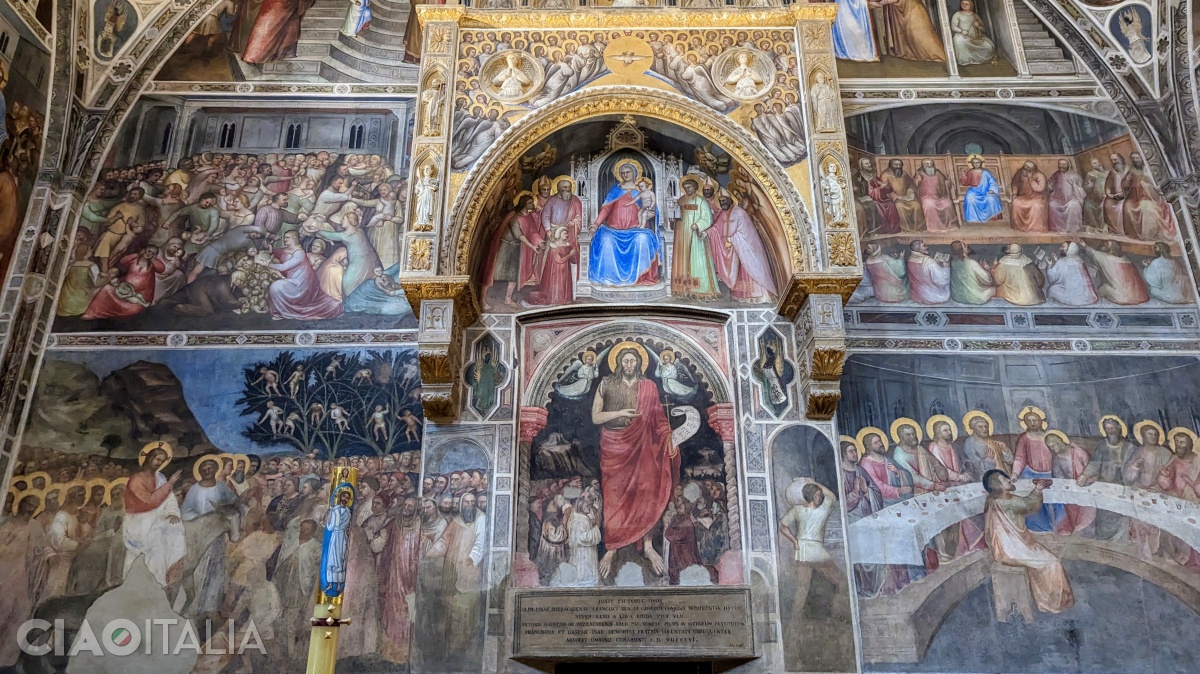
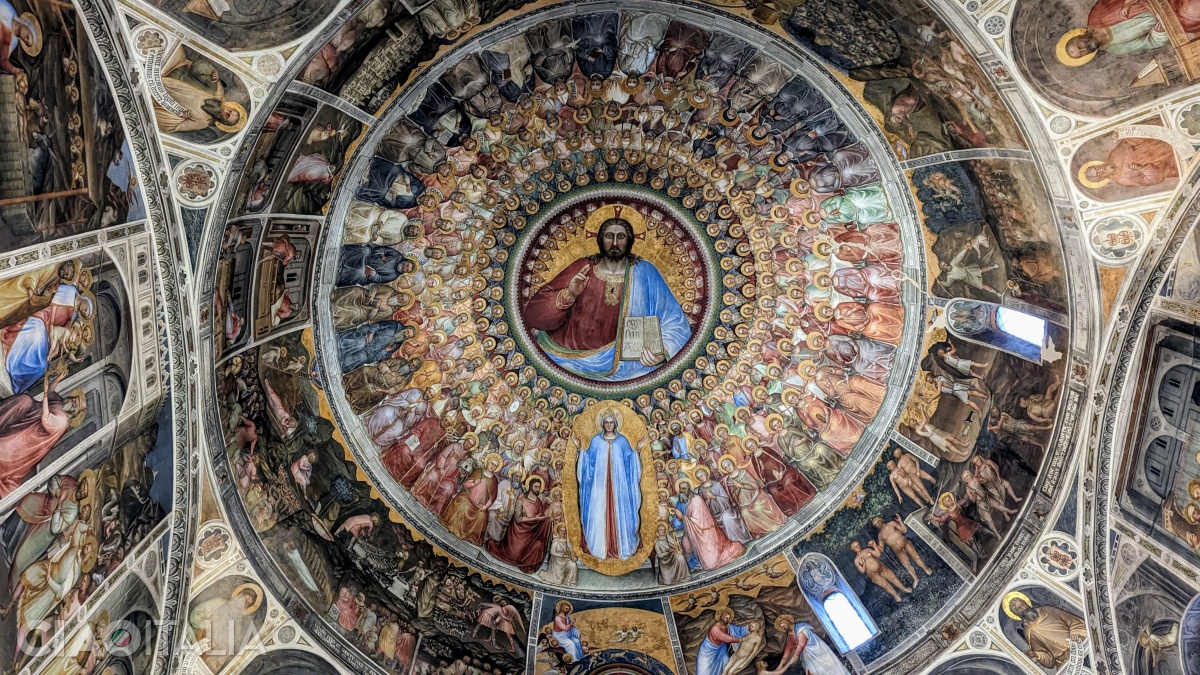
Giusto de' Menabuoi created this cycle of paintings between 1375 and 1376. The frescoes, which are remarkably well-preserved, cover the entire surface of the walls and the vault. They are bound to surprise you with their vibrant colors and wealth of detail - many of which capture glimpses of daily life in Padua during that era.
Book Ticket for the Baptistery
The Baptistery of Padua
Opening Hours:
- Monday: 2:00 PM - 5:30 PM (entries every 30 minutes)
- Tuesday-Thursday: 10:00 AM - 5:30 PM (entries every 30 minutes, except 1:30 PM)
- Friday-Sunday: 10:00 AM - 5:30 PM (entries every 30 minutes, except 11:30 AM, 1:30 PM, and 3:30 PM)
Ticket Prices:
Baptistery (with audio guide) and Diocesan Museum:
- Adult: €15
10. Reggia Carrarese
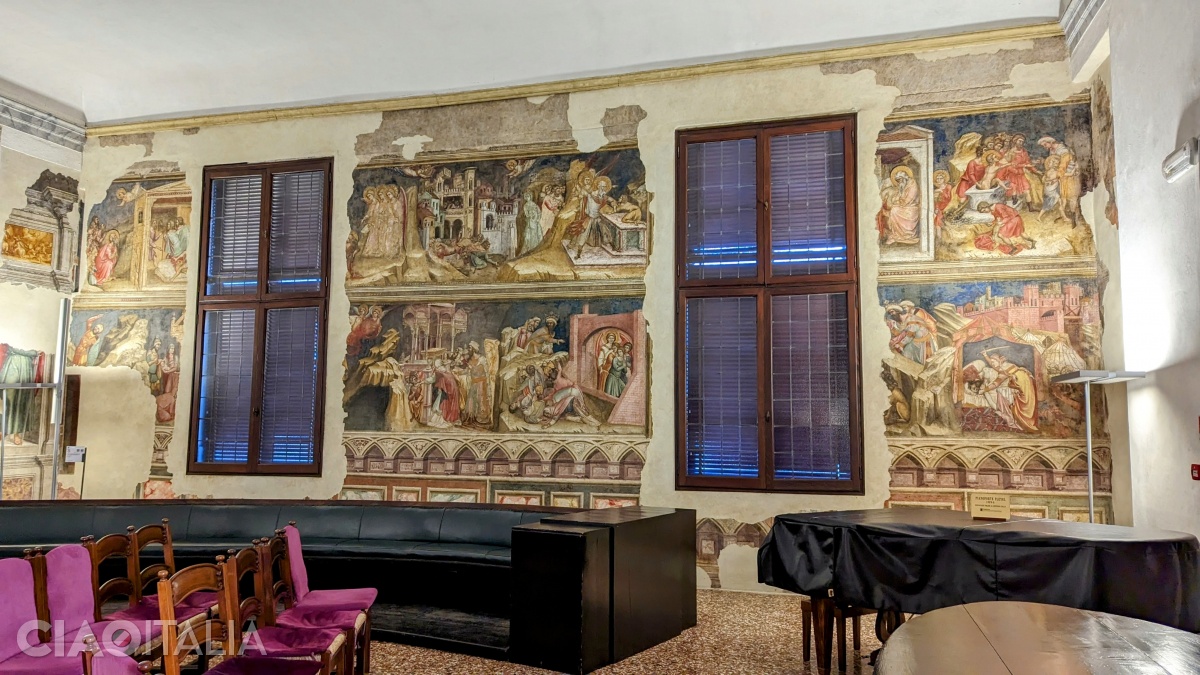
The Carrara Palace Chapel (Reggia Carrarese) is another of the eight sites that earned Padua its place on the UNESCO World Heritage list. However, due to the transformations it underwent over the centuries, only a few frescoes remain today. Of the original palace, only a portion survives, which currently houses the Galilean Academy of Sciences, Letters, and Arts.
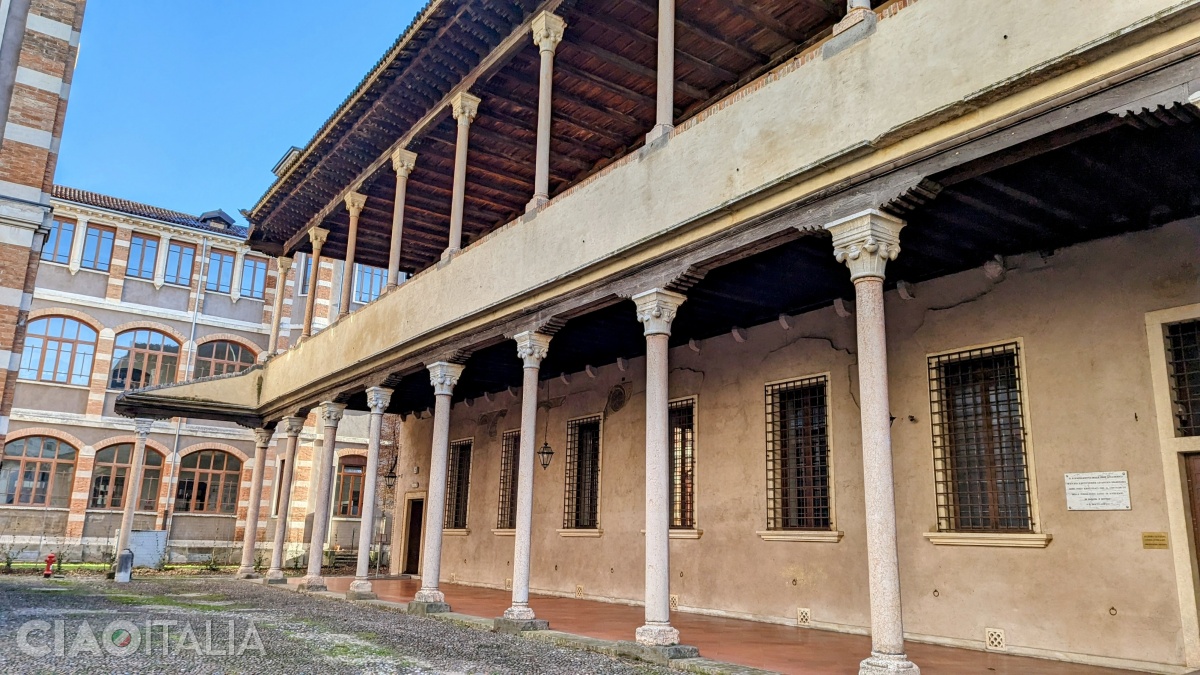
The chapel is located on the first floor and was painted by Guariento di Arpo around the mid-14th century. The frescoes depict scenes from the Old Testament, but the landscapes and characters are deeply inspired by the courtly life of Padua at that time.
Reggia Carrarese
Opening Hours:
- Monday: Closed
- Tuesday-Sunday: 10:00 AM - 12:30 PM (guided visits, usually in Italian, every 30 minutes; last entry at 12:00 PM)
Ticket Prices:
- The visit is free.
- Donations are recommended at the end of the visit.
11. The Basilica of St. Anthony
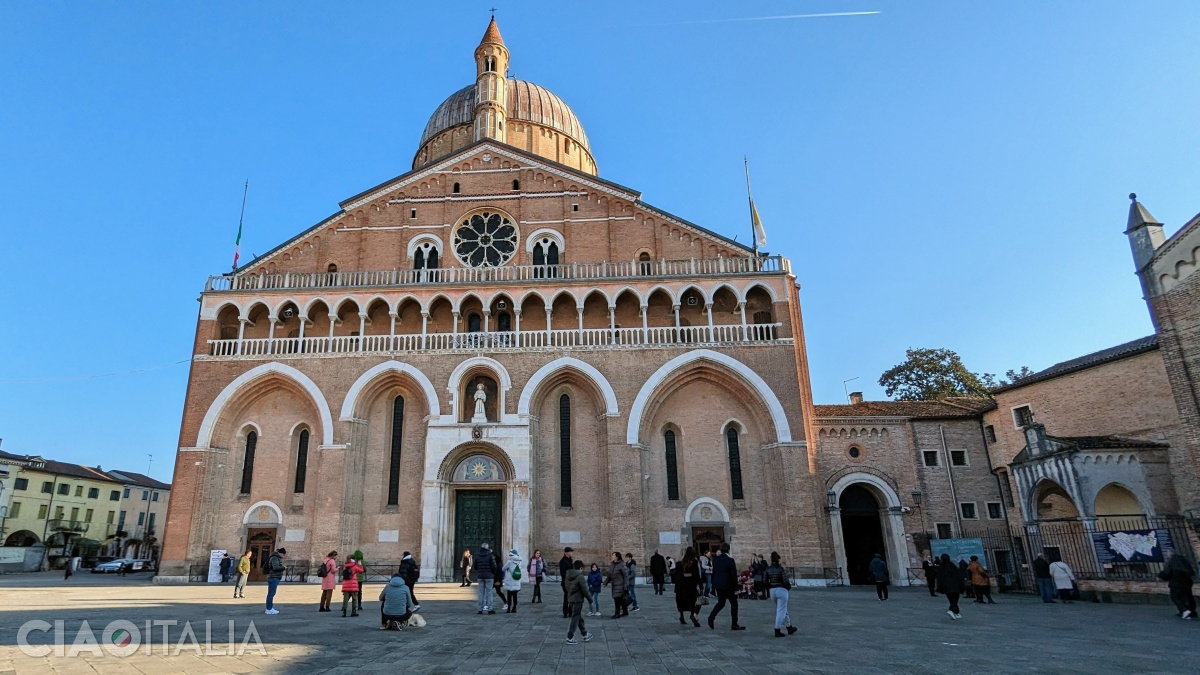
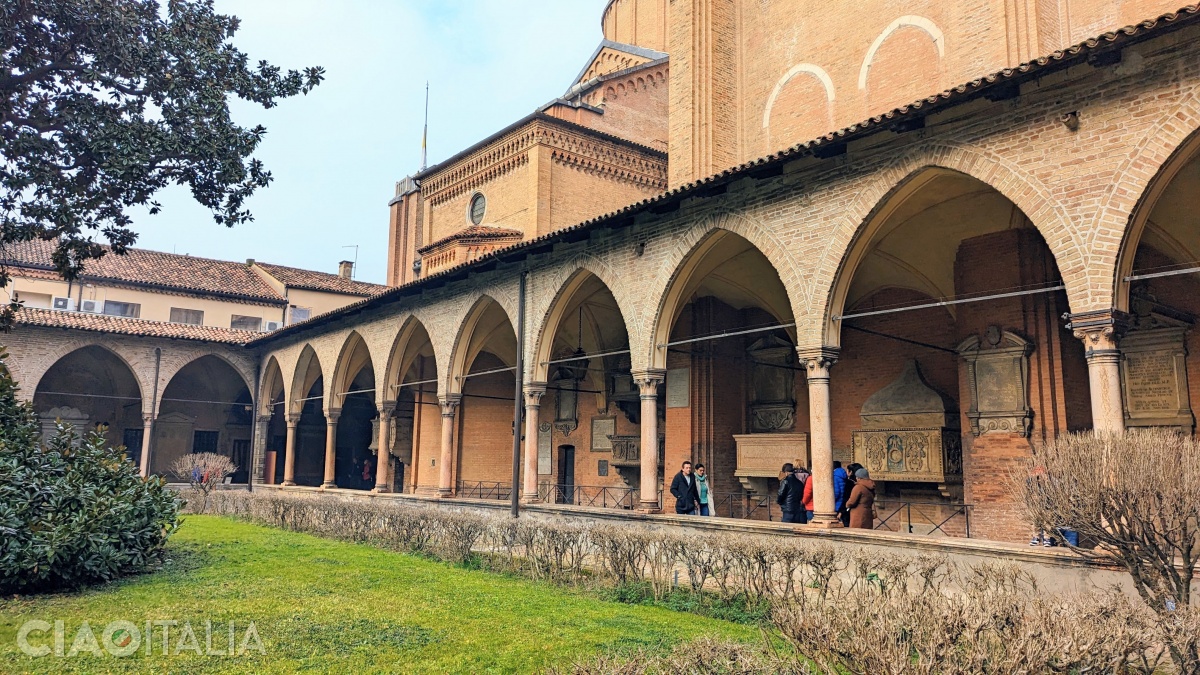
The Basilica of Saint Anthony (Basilica di Sant'Antonio) is one of the most visited landmarks in Padua. It ranks among the largest churches in the world and attracts an impressive number of pilgrims, especially on June 13th - the saint's feast day.
Construction of the basilica began in 1232, just one year after Saint Anthony's death, and its architecture was heavily influenced by that of St. Mark's Basilica in Venice.
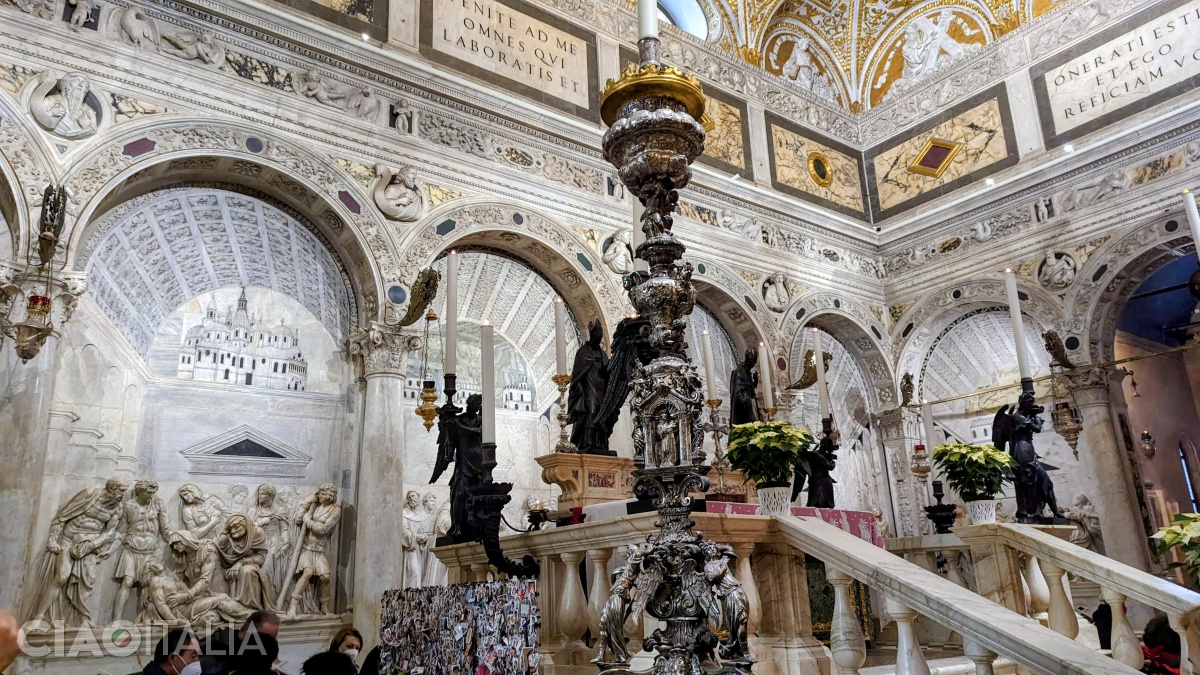
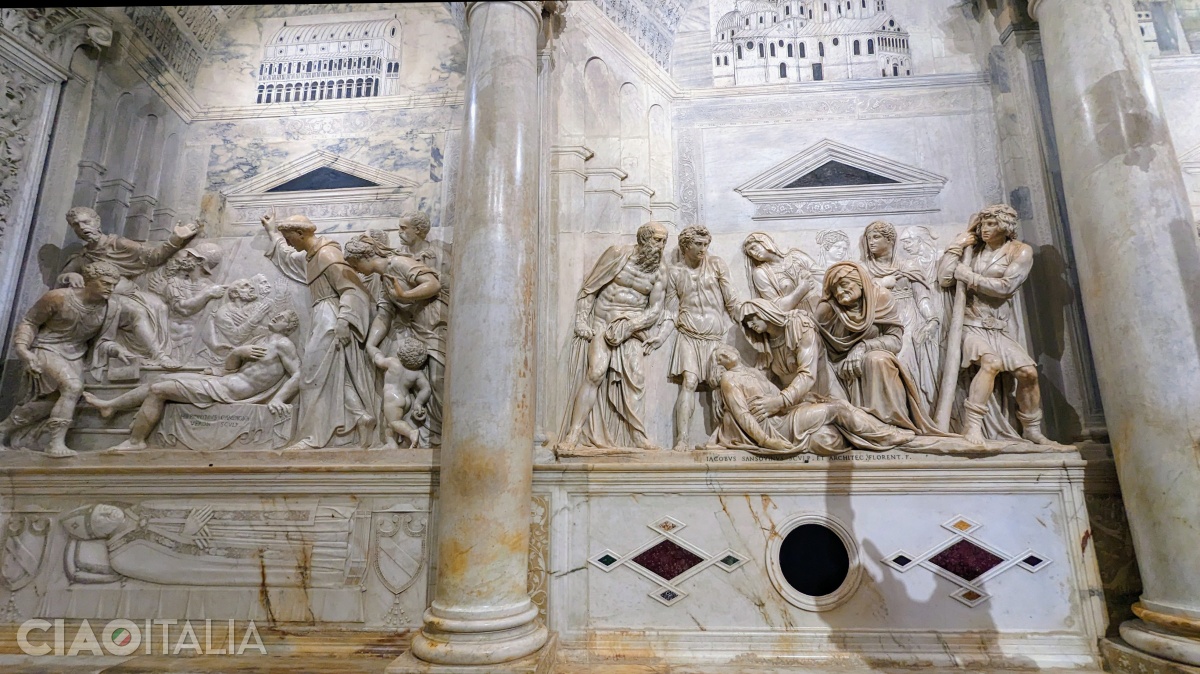
The most important chapel is the first one on the left as you enter, which houses the tomb of the saint. During the Renaissance, the Cappella del Santo was adorned with nine bas-reliefs sculpted by important artists of the era, depicting miracles from the life of St. Anthony.
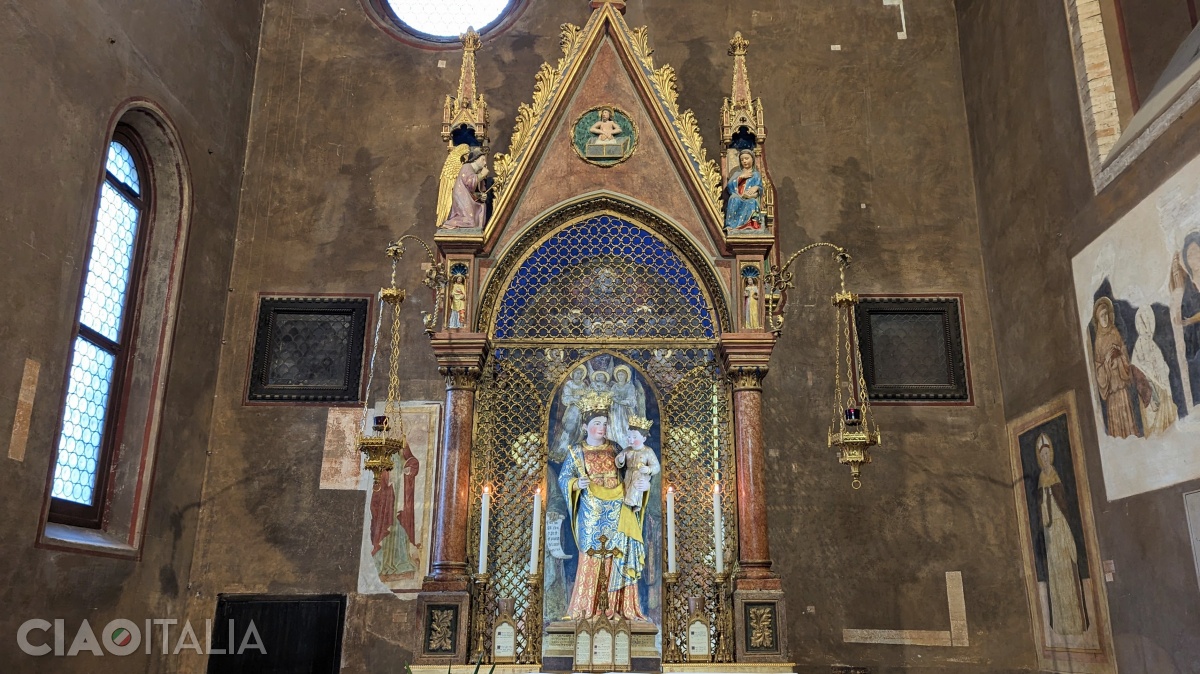
Moving further along, the Chapel of the Dark Madonna (Madonna Mora) is all that remains of the small 13th-century church where St. Anthony used to pray. The statue on the altar was created by a French sculptor in the 14th century, and recent discoveries have revealed that the frescoes behind it were actually painted by Giotto himself.
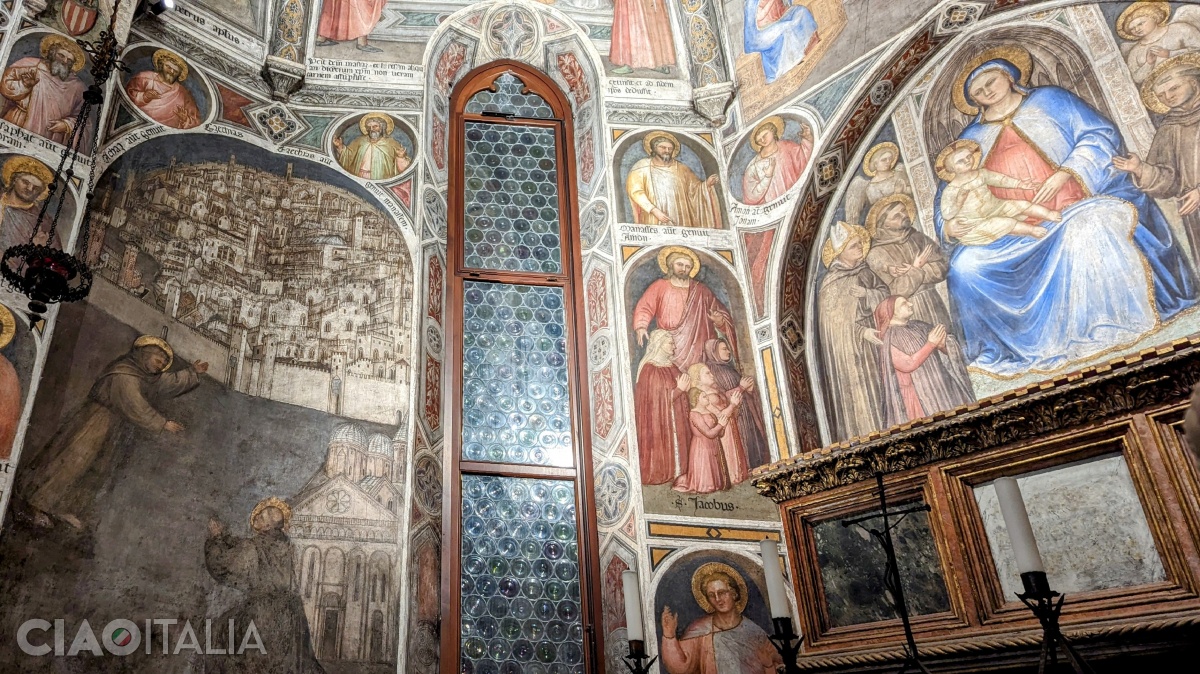
To the left of it, in the Cappella del Beato Luca ("Chapel of the Blessed Luke"), painted by Giusto de' Menabuoi in 1382, you can see a historical depiction of Padua. If you look closely, you might recognize the distinct silhouette of the Palazzo della Ragione.
Other works of art can be seen in the Chapel of the Relics (Cappella delle Reliquie), designed in the Baroque style at the end of the 17th century, and in the Chapel of St. James, located to the right of the entrance. The high altar is adorned with bas-reliefs and statues created by Donatello, the famous sculptor from Florence. It will be much easier to admire if you avoid visiting the church during religious services.
Basilica of Saint Anthony
Opening Hours:
Basilica of St. Anthony:
- Summer (Daylight Saving Time): Monday-Sunday, 6:15 AM - 7:25 PM
- Winter (Standard Time): Monday-Friday 6:15 AM - 6:45 PM, Saturday-Sunday 6:15 AM - 7:25 PM
Antonian Museum, Museum of Popular Devotion, Oratory of San Giorgio, and Scuola del Santo:
- Monday: Closed
- Tuesday-Sunday: 9:00 AM - 1:00 PM and 2:00 PM - 6:00 PM
- December 25 and January 1: Closed
Ticket Prices:
Basilica of St. Anthony:
- Access is free.
Antonian Museum, Museum of Popular Devotion, Oratory of San Giorgio, and Scuola del Santo:
- Adult: €10
- Students: €7
- Children under 6: Free
- Familiy ticket: €20
12. Oratory of San Giorgio and Scuola del Santo
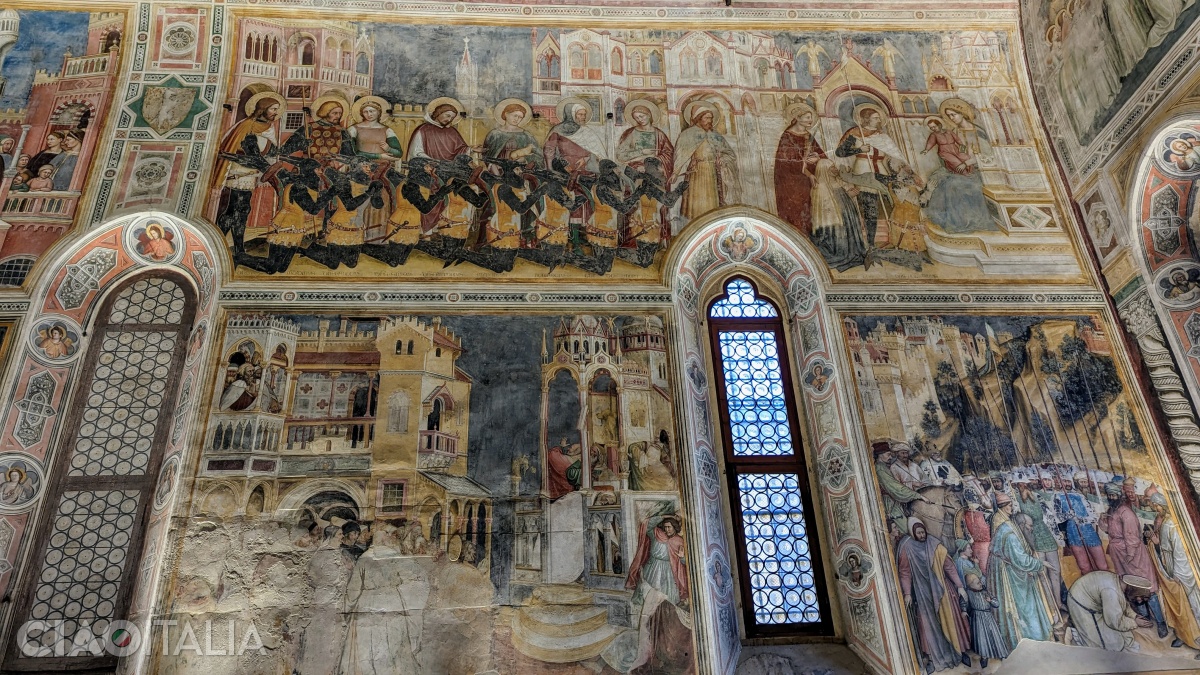
The Oratory of St. George (Oratorio di San Giorgio) is a small church located in Piazza del Santo, just to the right of the Basilica of Saint Anthony. It is yet another of Padua's landmarks inscribed on the UNESCO World Heritage list, thanks to the frescoes painted by Altichiero da Zevio and Jacopo da Verona during the second half of the 14th century.
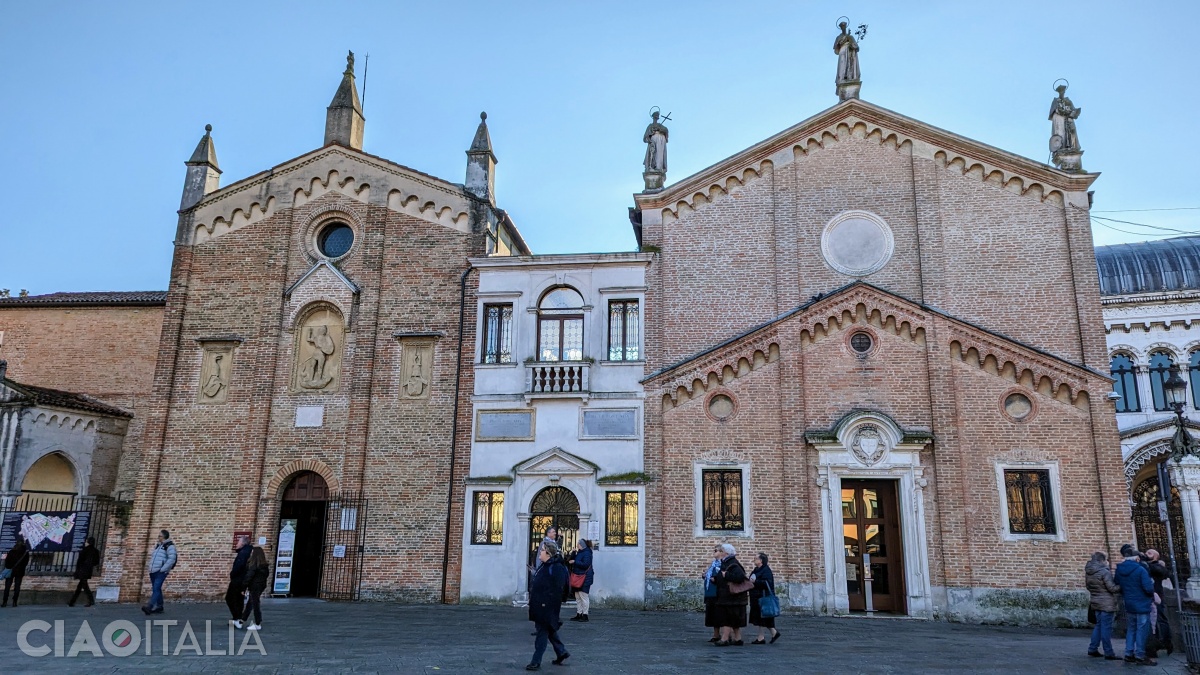
The paintings depict scenes from the life of Saint George (on the left wall) and the lives of Saints Catherine and Lucy (on the right wall). These three were the patron saints of the Lupi di Soragna family, who commissioned the construction. The tomb of Duke Raimondino de' Lupi is located inside the church.
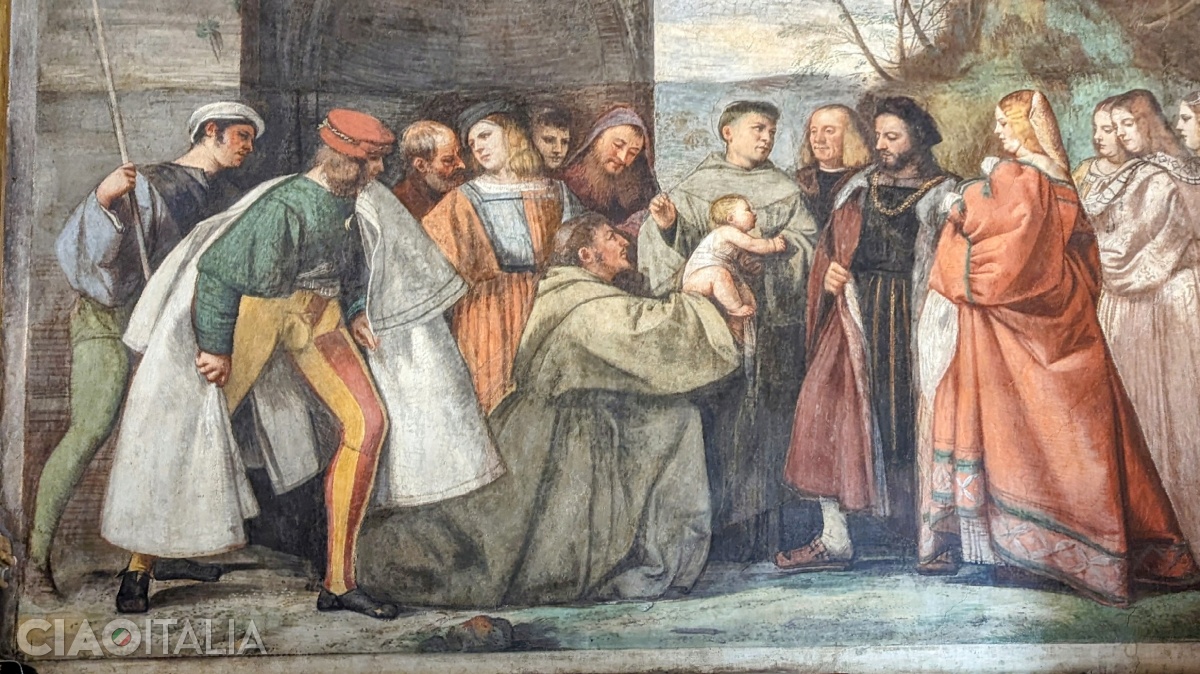
In the adjacent building, called the Scuola del Santo (the "School of the Saint"), you will find the headquarters of the Confraternity of Saint Anthony, which was founded as far back as the 13th century. The current building was constructed between the 15th and 17th centuries, and among the paintings decorating the upstairs hall are three early works by Titian.
Oratory of San Giorgio and Scuola del Santo
Opening Hours:
- Monday: Closed
- Tuesday-Sunday: 9:00 AM - 1:00 PM, 2:00 PM - 6:00 PM
- December 25 and January 1: Closed
Ticket Prices:
Combined ticket for Oratory, Scuola del Santo, Antonian Museum, and Museum of Popular Devotion:
- Adult: €10
- Students: €7
- Children under 6: Free
- Familiy ticket: €20
Entry is free on the second Sunday of May and on October 4.
13. Botanical Garden of Padua
The Botanical Garden of Padua is the oldest in the world, having been created in 1545 as part of the city's university, which is why it is inscribed as a UNESCO World Heritage site. It played a crucial role in the study of medicinal plants, as well as in the introduction of many exotic plants to Europe.
The old garden, circular in shape, was surrounded by high walls - which are preserved to this day - intended to limit the theft of medicinal plants, which were considered precious at the time.
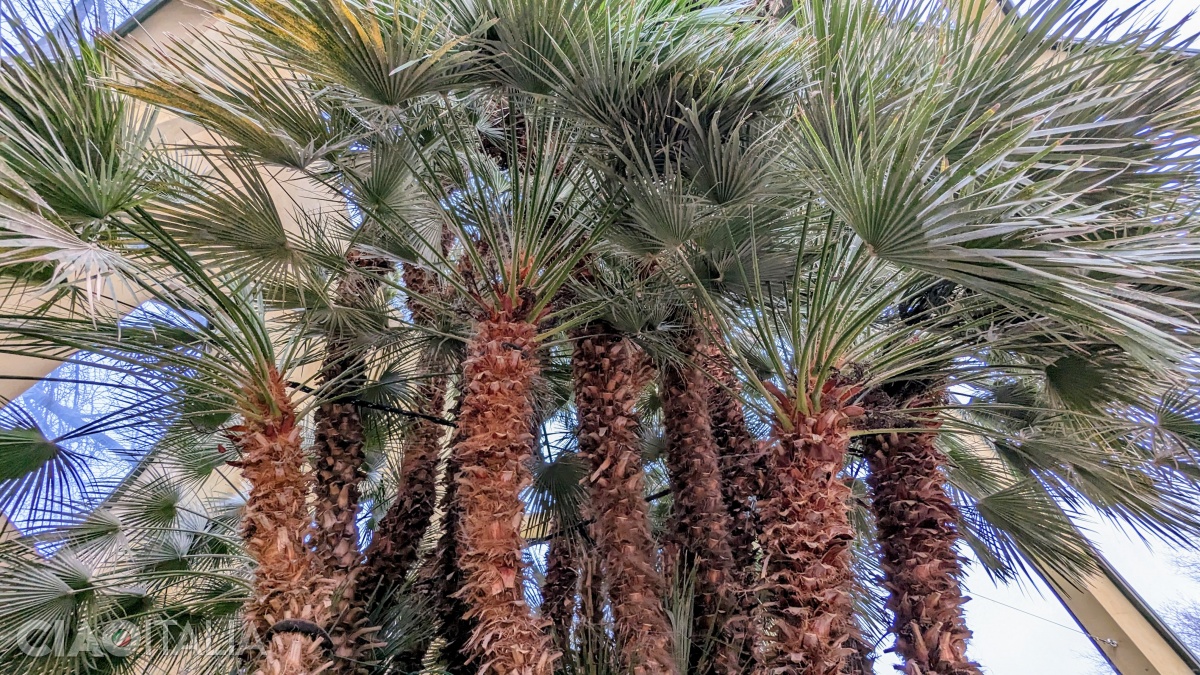
The oldest plant kept in the Botanical Garden is called the "St. Peter's Palm" (Chamaerops humilis) and dates back to 1585. It is also known as "Goethe's Palm", named after the German writer who admired it in 1786 during his journey through Italy.
Botanical Garden of Padua
Opening Hours:
- March 29 - September 30, 2026: Tuesday–Sunday, 10:00 AM - 7:00 PM
- October 1 - October 24, 2026: Tuesday-Sunday, 10:00 AM - 6:00 PM
- October 25 - December 7, 2026: Tuesday-Sunday, 10:00 AM - 5:00 PM
Last entry is 45 minutes before closing.
Ticket Prices:
- Adult: €10
- Over 65: €8
- 13-25 years: €8
- One child under 12 accompanied by a paying adult: Free
- 2 adults and maximum 3 children under 18: €25
14. Piazza Prato della Valle
Prato della Valle, located near the Basilica of St. Anthony, is a truly unique square. The people of Padua are deeply attached to it, and you'll often find them out for a stroll, walking their dogs, or riding their bikes here.
First of all, its sheer size is striking - at over 88,000 square meters, it is one of the largest squares in Europe. Some locals will even tell you it's the second largest on the continent, surpassed only by Red Square in Moscow.
Secondly, its layout is quite extraordinary. Have you ever seen another square that features a park at its center, surrounded by a water canal lined with statues?
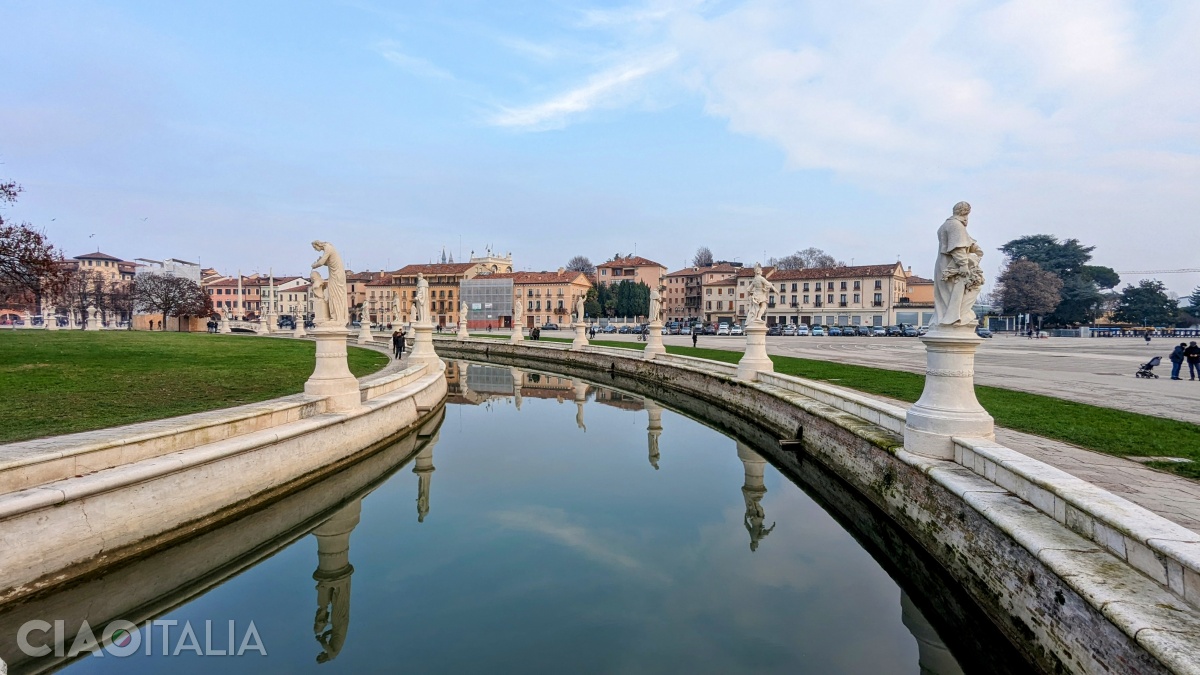
In Roman times, this area was the Campo di Marte, featuring a Roman theater and a venue for horse racing. Later, the site deteriorated into a swampy, unhealthy marshland. In 1775, the Venetian nobleman Andrea Memmo (as Padua was then under the rule of Venice) came up with the idea to create a new urban space here to host fairs and gatherings. An oval-shaped garden was designed - now known as Isola Memmia - surrounded by a canal approximately 1.5 km long, crossed by four bridges.
The canal is lined on both sides by a double row of 78 statues representing important figures in the city';s history, such as Galileo Galilei, the poet Petrarch, the sculptor Antonio Canova (did you know the Treviso airport is named after this famous sculptor?), the painter Andrea Mantegna, or Antenor, the mythical founder of the city.
The first statue was erected in 1775 and depicted the philosopher Cicero, but it was removed and replaced by Antenor. According to the rules, statues had to have a connection to the city's history (which Cicero lacked) and could not represent saints or living persons.
If you look closely, you'll notice some statues are missing. Originally there were 88, but several (depicting Venetian Doges) were removed by Napoleon's army after they occupied the city in 1797.
Since there isn't a single statue depicting a woman, the people of Padua petitioned the authorities for one, though it remains without a result. One proposal was for Lucrezia Corner Piscopia, the first woman in the world to graduate from a university - the University of Padua.
Prato della Valle means "meadow of the valley", but long ago, the place had no grass at all. This was the reason for the third "without" in the nickname "The City of the Three Withouts": "the meadow without grass".
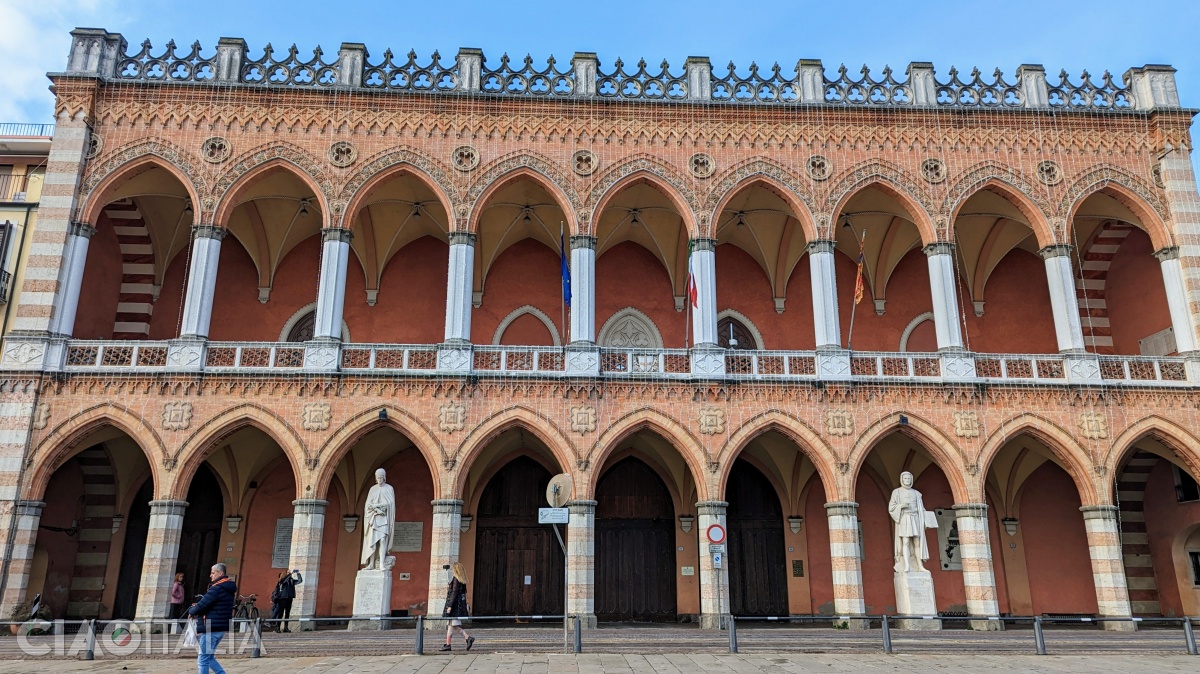
Next to the square, across the tram lines, you might notice a beautiful building with a colonnaded facade. This is Loggia Amulea, and in front of it stand the statues of Dante Alighieri and Giotto. These two Italian icons actually met right here in Padua!
15. Basilica of Santa Giustina
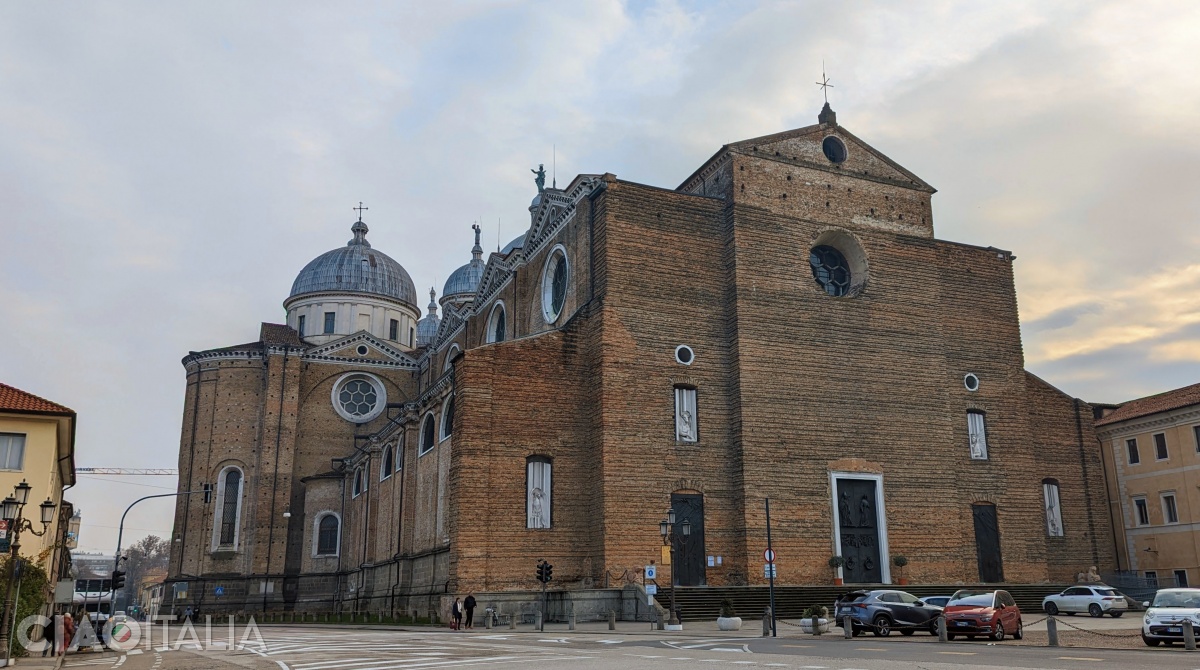
Right next to Prato della Valle lies the Basilica of Santa Giustina. Founded in the 5th century, likely on the ruins of an ancient temple, it is the oldest place of worship in the city.
The current structure dates from the period between 1532 and 1579. The brick facade was intended to be covered in marble but, due to the enormous costs, it was never finished.
Inside, you can find paintings by Veronese and Sebastiano Ricci, the relics of Saint Justina and Saint Luke the Evangelist, as well as the tomb of Elena Lucrezia Corner.
Basilica of Santa Giustina
Opening Hours:
- Monday-Sunday: 7:30 AM - 12:00 PM, 3:00 PM - 7:55 PM
Ticket Prices:
- Free
16. Oratory of San Michele
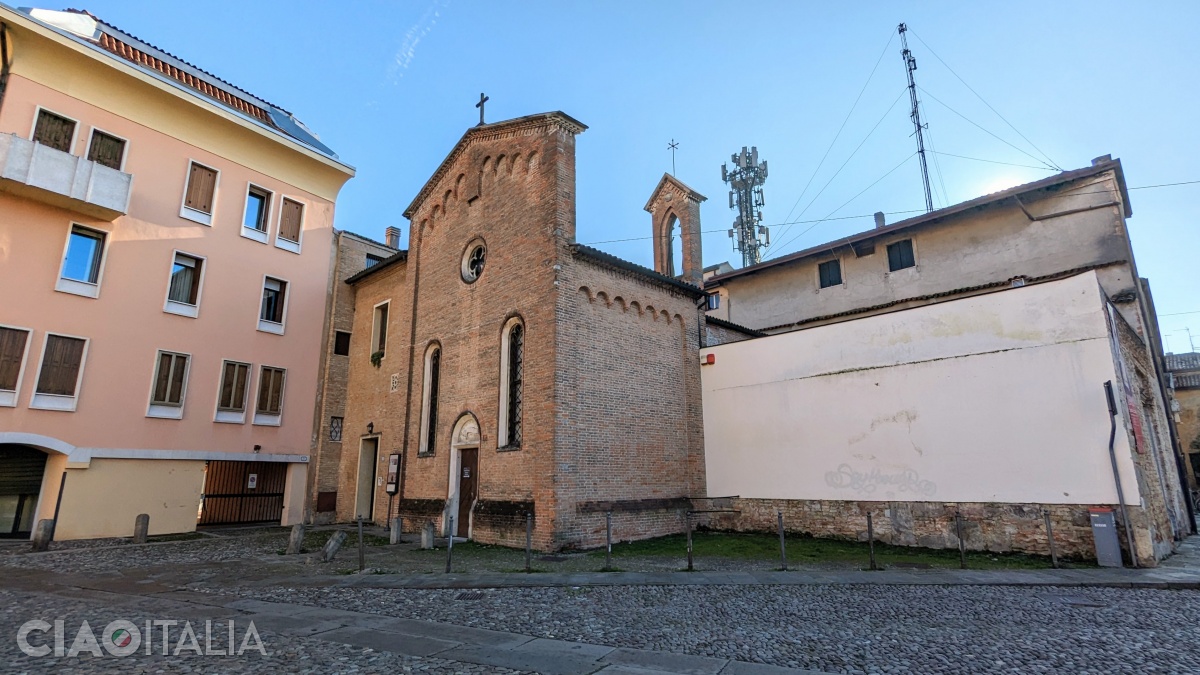
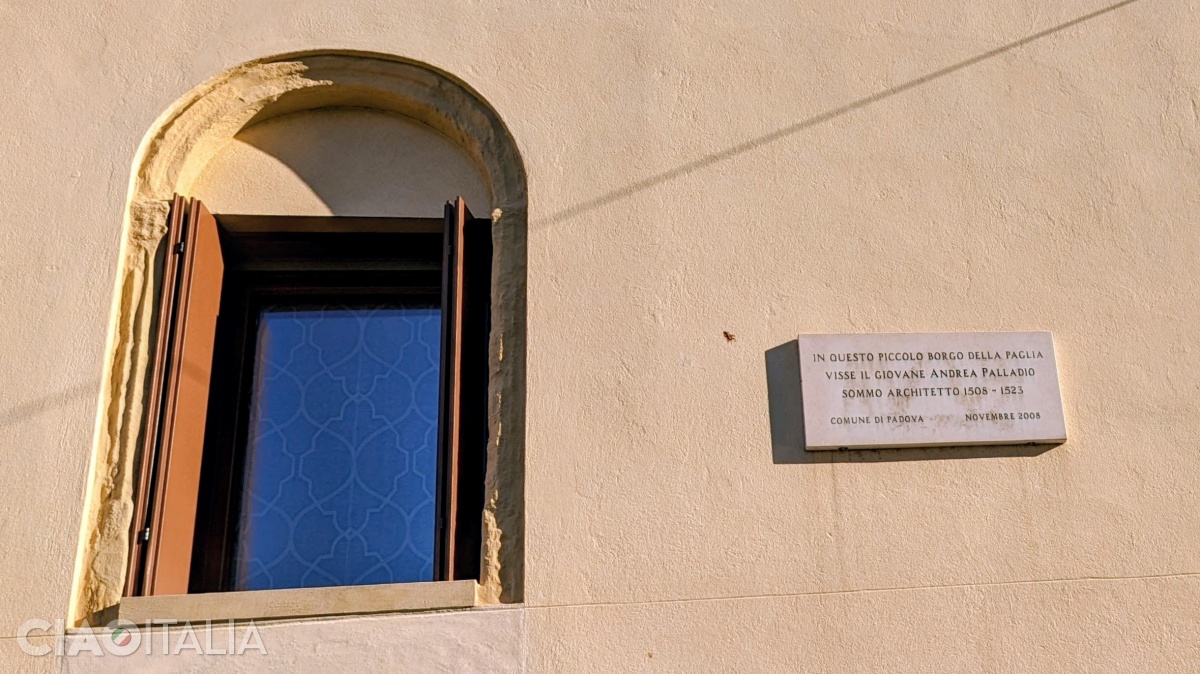
The Oratory of San Michele (also inscribed on the UNESCO World Heritage list, alongside Padua's other 14th-century fresco cycles) is located near the old astronomical observatory, the Specola. The small structure standing today is all that remains of the Church of the Holy Archangels, where the famous architect Andrea Palladio, who was born nearby, was baptized.
Inside, the inscription on the plaque next to the figure of Saint Michael specifies the construction date (1397) and mentions the names of both the founder - Pietro Bartolomeo de' Bovi (the head of the Carrara family mint) - and the painter, Jacopo da Verona.
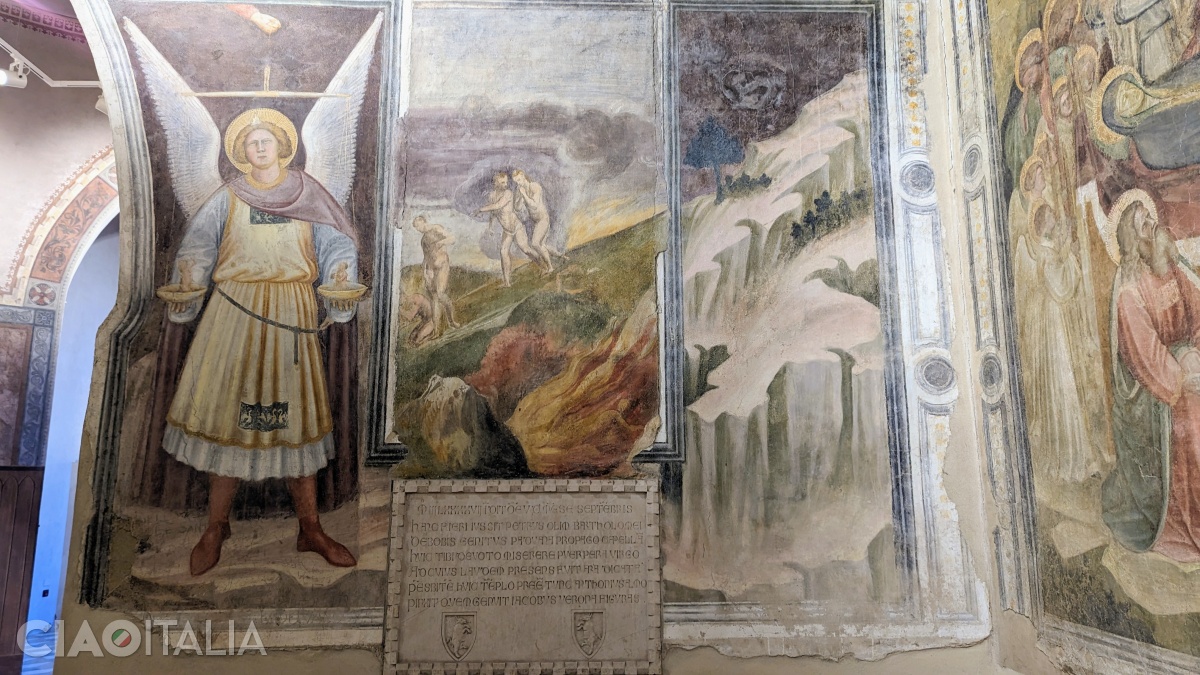
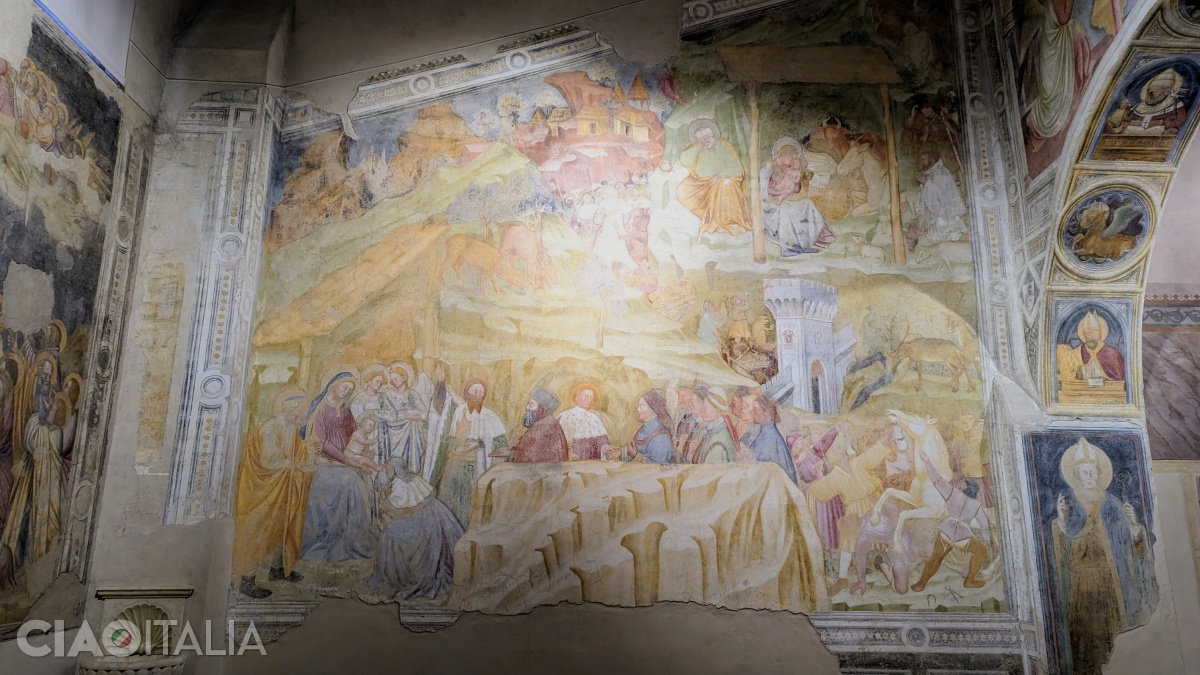
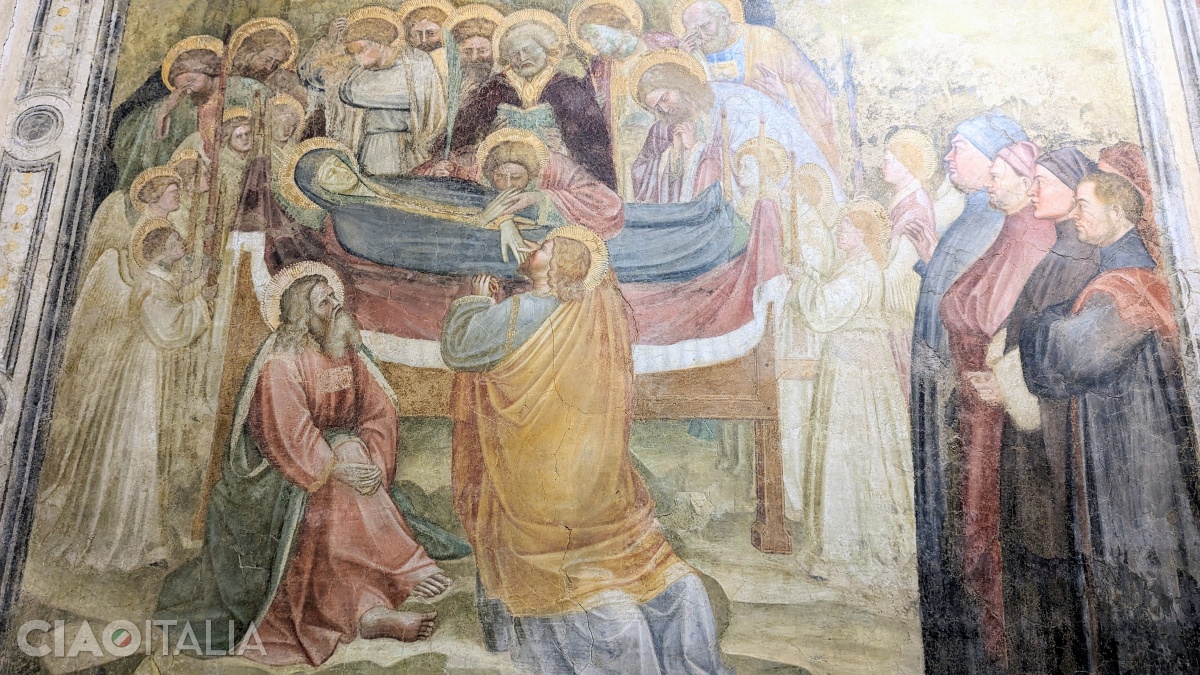
The frescoes depict images from the Life of the Virgin Mary and are grouped into several main scenes: the "Annunciation", the "Nativity", the "Adoration of the Magi", the "Ascension", "Pentecost", the "Dormition of the Virgin", and "St. Michael".
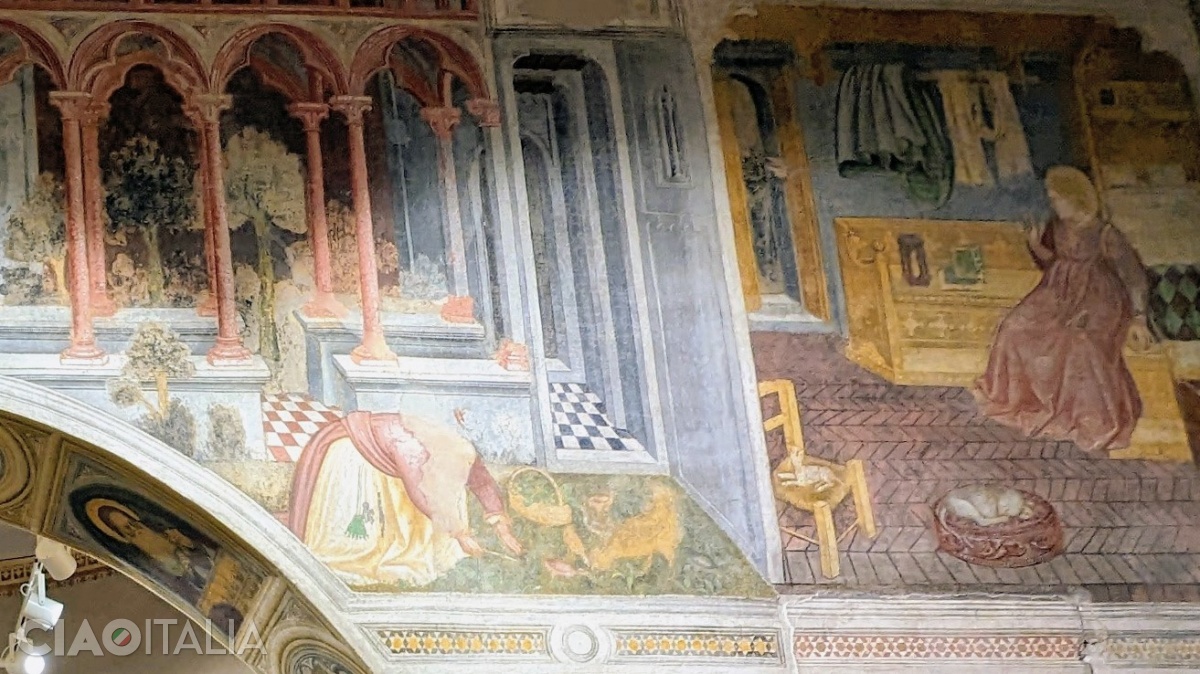
If you look closely at these paintings, you will notice that the biblical scenes contain vivid details from daily life in the 14th century - home interiors, chairs, chests, and even domestic animals.
For example, in the "Annunciation" scene above the archway, between the Archangel Gabriel (left) and the Virgin Mary (right, depicted in a very domestic setting), a scene is inserted showing a maid busy with household chores. This is also believed to be the first historical image of the famous Paduan chicken (see also the article about food of Padua).
On the inner side of the arch, you can see busts of the Evangelists and Doctors of the Church.
In the scenes of the "Adoration of the Magi" and the "Dormition of the Virgin", historical figures appear, such as the rulers of the Carrara family (Francesco the Elder and Francesco II the Younger), the poet Petrarch, and Pietro Bovi, the man who commissioned the construction of the chapel.
Oratory of San Michele
Opening Hours:
October 1 - March 31:
- Monday: Closed
- Tuesday-Friday: 10:00 AM - 1:00 PM
- Saturday-Sunday: 10:00 AM - 1:00 PM, 3:00 PM - 6:00 PM
- December 25th, 26th and January 1st: Closed
April 1 - September 30:
- Monday: Closed
- Tuesday-Friday: 10:00 AM - 1:00 PM
- Saturday-Sunday: 10:00 AM - 1:00 PM, 4:00 PM - 7:00 PM
- May 1st: Closed
Ticket Prices:
- Adult: €4
- Over 65: €3.5
- 6-17 years: €3.5
- Children under 6: Free
17. La Specola Astronomical Observatory
The Astronomical Observatory of Padua, known as La Specola, was established in 1777 inside the Torlonga tower of the ancient medieval castle. It has often been claimed that Galileo Galilei made his astronomical discoveries here; however, the reality is that Galileo had already left Padua in 1610, over 150 years before the observatory was founded.
The observatory can only be visited through guided tours in Italian, and the visit involves climbing approximately 200 steps.
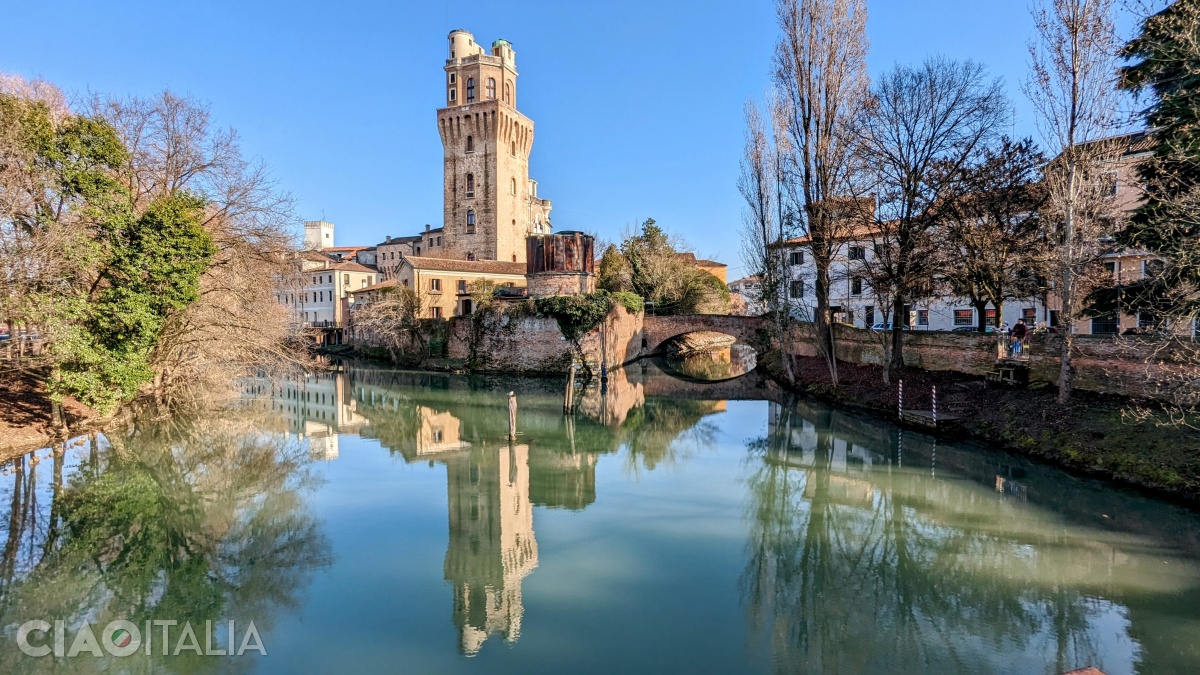
La Specola Astronomical Observatory
Opening Hours:
October-April:
- Saturday and Sunday at 4:00 PM
- In October, tours also take place on Wednesday or Friday at 8:30 PM.
- Closed on December 24th, 25th, 26th and January 1st
May-September:
- Saturday and Sunday at 6:00 PM
- Wednesday or Friday at 8:30 PM
- Closed on May 1st and June 13th
Ticket Prices:
Day tour:
- Adult: €8
- Over 65: €5
- Children under 14: €5
- Family ticket (2 adults and 3 children under 14): €20
Evening tour:
- Adult: €10