10 Things to Do in Treviso
Not many people stop to visit the sights in Treviso, preferring instead to head straight from the nearby Sant'Angelo Airport to the more famous destinations of the Veneto region, such as Venice, Verona, Padua, Lake Garda, and Gardaland Park, or the alpine villages and ski resorts of the Dolomite Mountains. Nevertheless, Treviso boasts a beautiful medieval center, historic buildings whose walls still bear traces of ancient frescoes, a network of romantic canals shaded by willows, and an authentic Italian atmosphere. And there is something else worth mentioning (and tasting): the world-famous and delicious tiramisù was invented in a restaurant in Treviso, and the popular prosecco sparkling wine is produced in the hills north of the city, especially in Conegliano and Valdobbiadene.
Treviso's main attractions are concentrated within the historic city center, and half a day is plenty of time to explore them all.
1. Piazza dei Signori
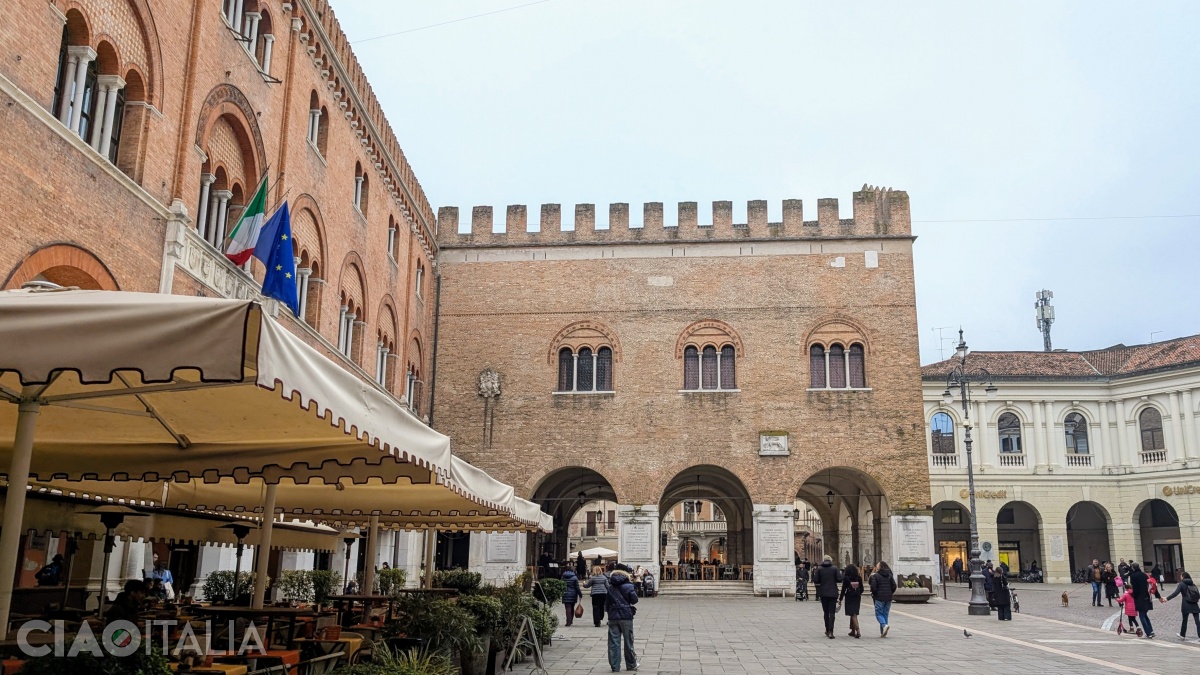
The elegant Piazza dei Signori marks the very center of Treviso. It is lined with historic buildings, as well as charming bars and cafes - the perfect spots to relax with an aperitivo while watching the passersby.
Since the Roman era, when the city was known as Tarvisium, this square has served as the primary meeting place for its inhabitants.
In Piazza dei Signori, you can find the main administrative buildings: Palazzo del Podestà with the Civic Tower, Palazzo dei Trecento, and Palazzo Pretorio. Here and there, bas-reliefs representing the Lion of Saint Mark with the open Gospel stand as testimony to the four centuries of rule by the Venetian Republic.
2. Palazzo del Podestà and Torre Civica
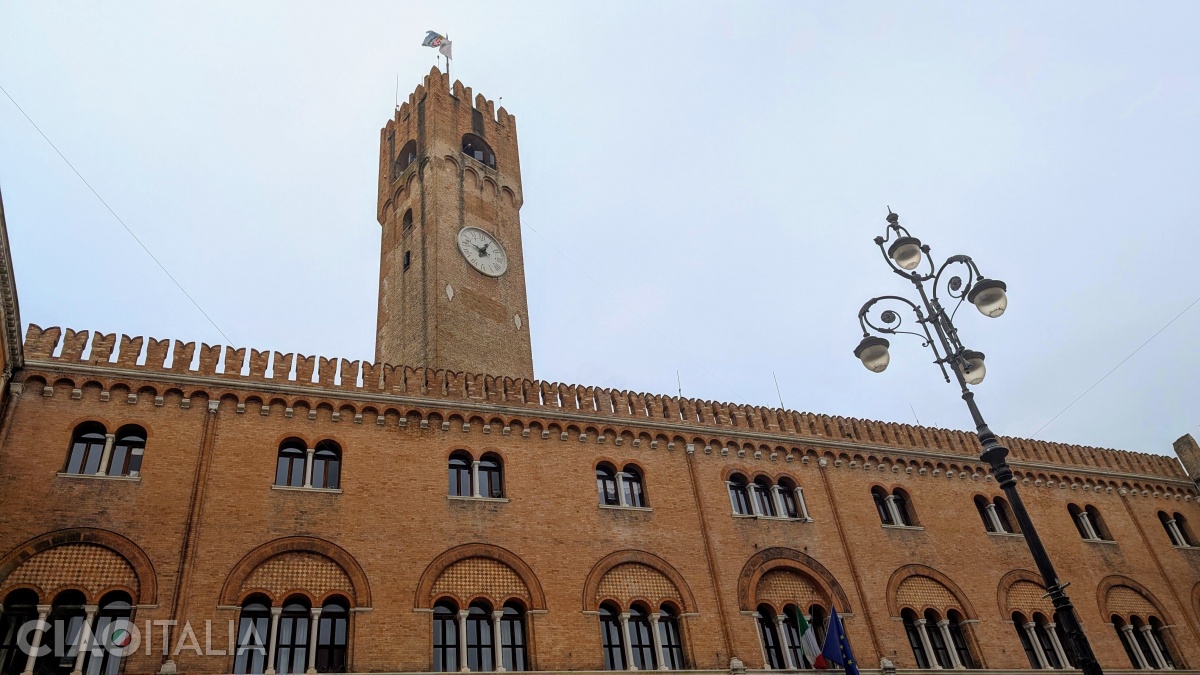
Palazzo del Podestà is the most important building in Piazza dei Signori. In the past, it was the residence of the governor (podestà). According to the law, the governor could not be from Treviso or nearby towns, so he did not have his own home in the city.
The building was originally constructed in the 13th century using brick, though it has undergone several renovations over the centuries. Today, it serves as the headquarters of the Prefecture.
Rising from behind, the Torre Civica ("Civic Tower") is the symbol of the city and dominates the square from a height of 48 m. The tower was built in 1218 and was incorporated into the Palazzo del Podestà about 50 years later, during an expansion of the palace.
Every year on April 7th at 1:00 PM, the tower bells toll to commemorate the Good Friday bombing of 1944, a tragic event that destroyed nearly half of the city.
3. Palazzo dei Trecento
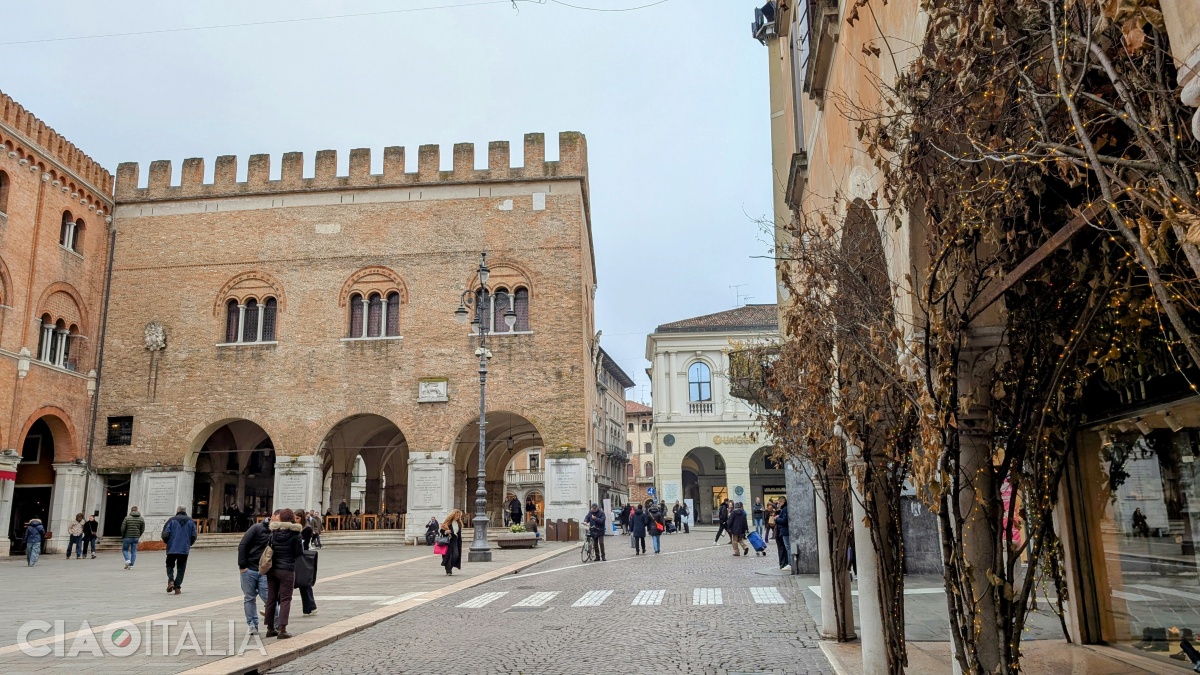
Next to Palazzo del Podestà, to the right, is Palazzo dei Trecento. The name translates to "Palace of the Three Hundred", referring to the 300 members of the Great Council whose meetings took place in this building.
The palace was built at the beginning of the 13th century, and the loggia on the ground floor dates back to the 16th century. Following the bombing on April 7, 1944, the building suffered such severe damage that its demolition was proposed. Ultimately, it was restored and partially reconstructed.
Palazzo dei Trecento, decorated with frescoes from the 13th to 16th centuries, still hosts City Council meetings today, and temporary exhibitions are organized in its halls.
4. Loggia dei Cavalieri
Two minutes from Piazza dei Signori, on Via Martiri della Libertà, stands an elegant structure with arches supported by columns, where traces of frescoes can still be seen on the walls. This is the Loggia dei Cavalieri ("Loggia of the Knights"), one of the most important historical sites in Treviso. It was built in 1277, likely on the site where the Roman forum stood in antiquity. The building was intended for nobles, serving as a place for meetings, conversations, and social games.
5. City Walls, Gates, and Canals
Since the Roman period, Treviso has been protected by defensive walls. The ones you see today surrounding the historic center were built in 1509 to fortify the city in preparation for impending war. One of the best things to do in Treviso is to take a stroll along the paths atop these walls - the experience is somewhat reminiscent of the famous city walls in Lucca, Tuscany.
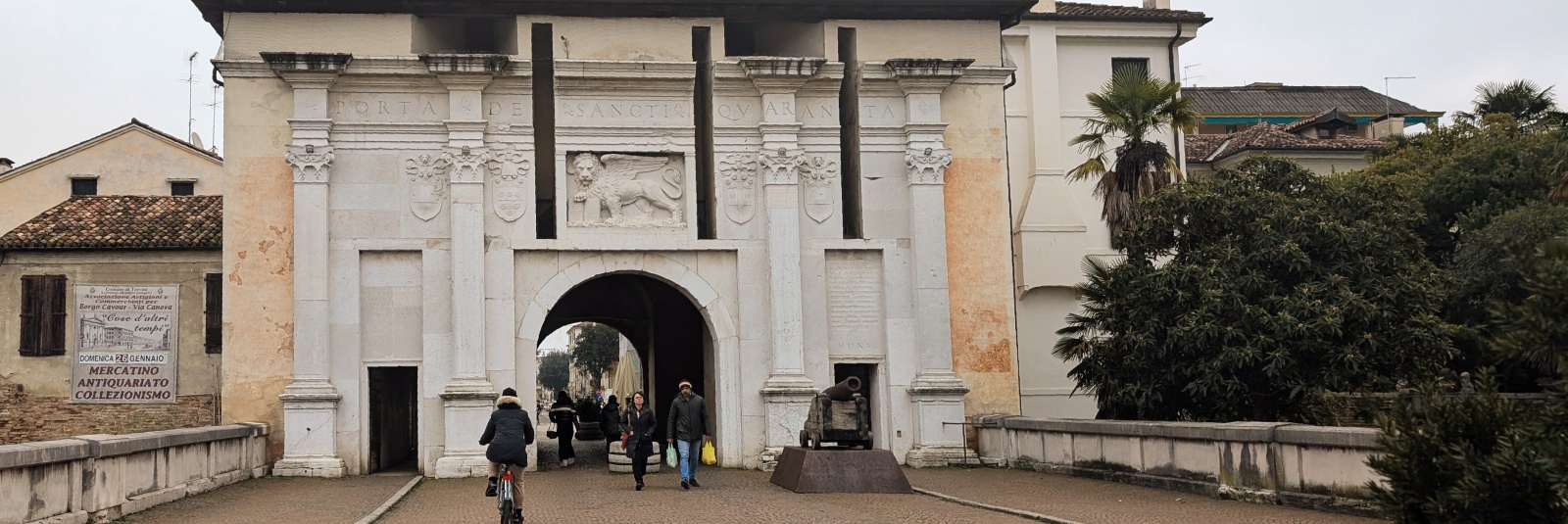
The walls are punctuated by three main gates: Porta San Tomaso, Porta Santi Quaranta, and Porta Altinia.
Located in the northern section of the walls, Porta San Tomaso is the largest and most ornate of the three. Built in 1518, its design is inspired by the majestic triumphal arches of ancient Rome. A statue of Saint Paul stands atop the structure, while the iconic Lion of Saint Mark looks down from the facade above the main entrance.
Situated to the west, Porta Santi Quaranta was erected in 1516. Its name honors the Forty Martyrs - Christian soldiers who, during the 4th-century reign of Emperor Licinius, were martyred by fire for refusing to worship idols. Like its northern counterpart, this gate also features the winged lion, the unmistakable symbol of Venetian power.
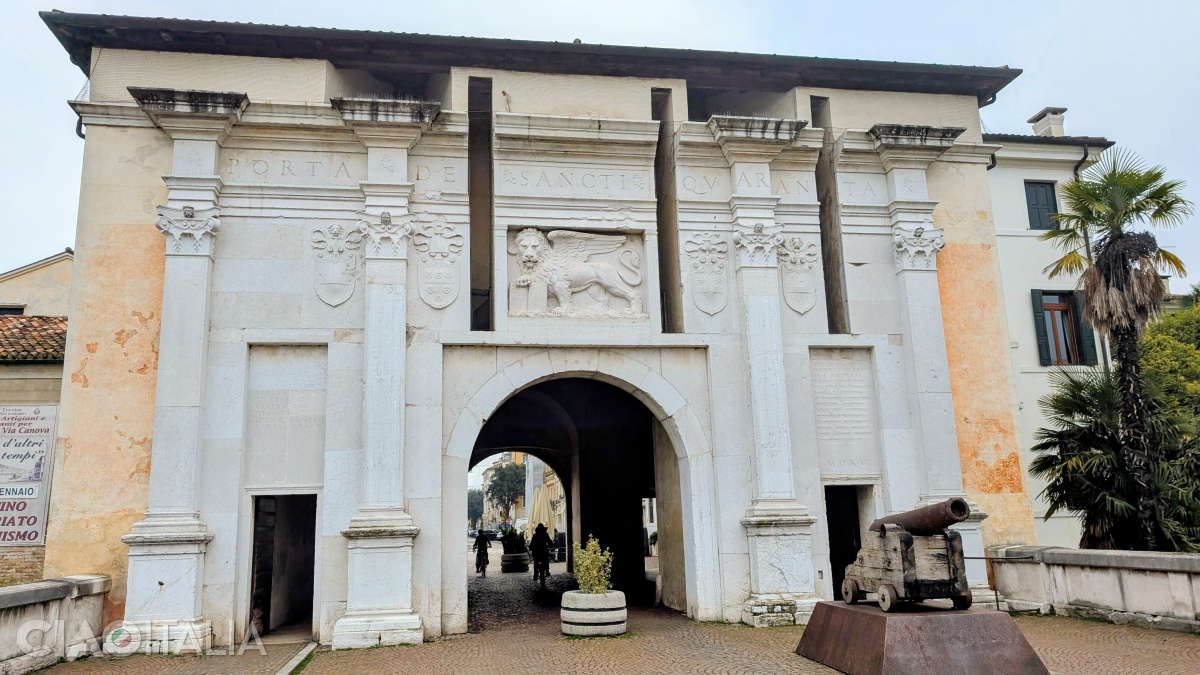
Opening toward the south, Porta Altinia was built in 1514 to provide access for those traveling from Mestre and Venice. It is significantly less decorated than the other two gates, primarily because it served as a functional bastion for a period of time.
In addition to the defensive walls, a network of canals diverted from the Botteniga River completes the city's historical defense system. Other smaller canals - known by locals as cagnani - crisscross the historic center, earning Treviso the nickname "Little Venice". While some might find the comparison a bit of an exaggeration, the canals remain one of the city's most captivating features.
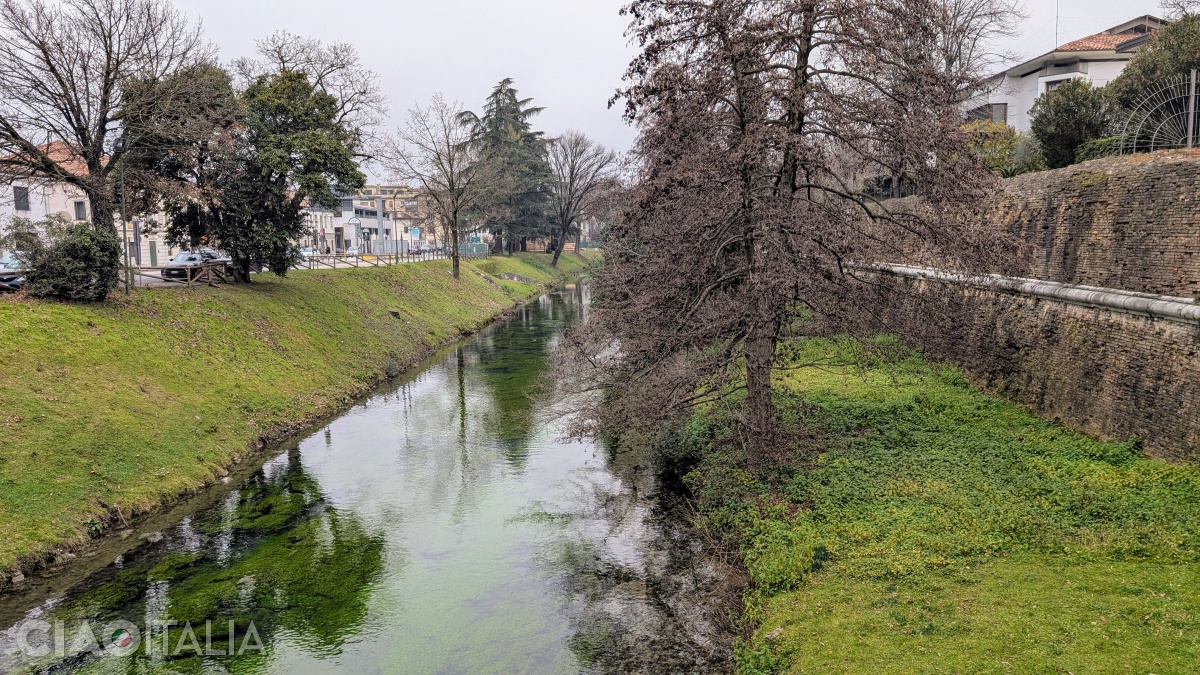
The most beautiful is the Canale dei Buranelli (also called Cagnan Medio), whose romantic landscapes are probably some of the most photographed in the city. Its name comes from several merchants from Burano Island who, in the 16th century, had their homes and warehouses nearby. Until the WWII period, washerwomen used to come to wash clothes in the canal's waters.
On another canal - Cagnan Grande - lies the Isola della Pescheria, connected to the bank by two bridges. In the morning, the fish market (pescheria) is held here. The island was created in 1856 during the Austrian rule by joining three small natural islands. The idea for its creation was born from the need to move the fish market - which had been held near Piazza dei Signori until then - for hygiene and sanitation reasons. At the entrance to the island, you can admire an old water mill that is still functional.
Between the Buranelli canal and the Cagnan Grande canal lies Casa dei Carraresi, a historic palace built in the 13th century. Today it hosts art exhibitions as well as a restaurant.
6. Via Calmaggiore and Fontana delle Tette
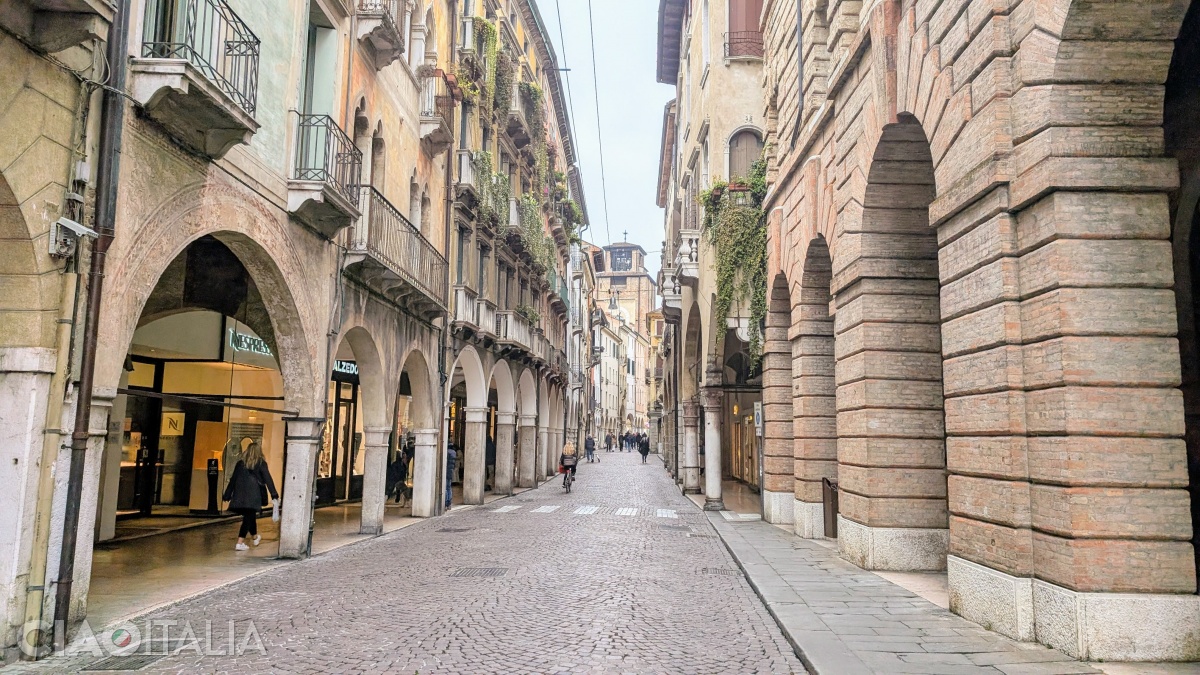
Dating back to the Roman era, Via Calmaggiore is the main shopping street in Treviso. It connects Piazza dei Signori and Piazza Duomo, thus linking the political and religious centers of the city. The street is lined with elegant porticos housing diverse shops, historical buildings, and cozy restaurants or small trattorias.
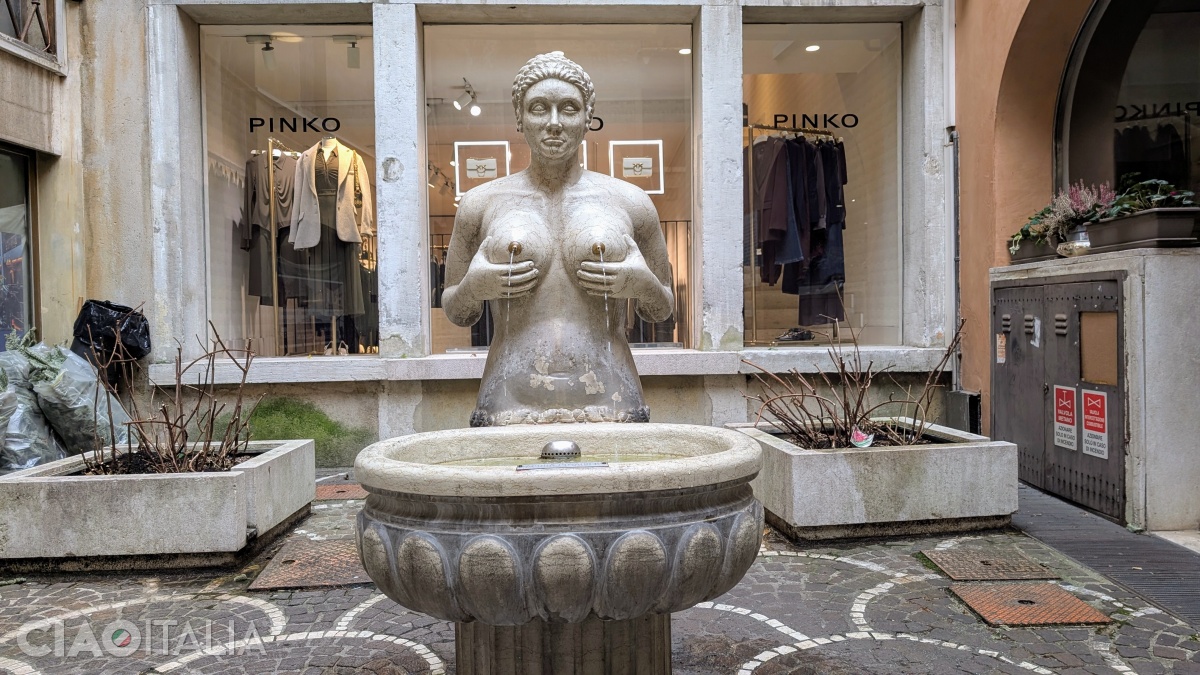
From Via Calmaggiore, passing through the Galleria della Strada Romana, you will reach the courtyard of Palazzo Zignoli. Here lies one of the city's most famous landmarks: Fontana delle Tette ("Fountain of the Breasts"), which is decorated with the bust of a woman from whose breasts water flows. This particular statue, created by Peruvian sculptor Miguel Miranda, was placed here to replace the original 1559 version (which is now preserved in the Palazzo dei Trecento).
The original fountain was built following a long period of drought as a symbol of fertility. It is the source of one of Treviso's most unusual traditions: whenever a new mayor was elected, the fountain would flow with red wine from one breast and white wine from the other. For three full days, citizens were allowed to drink for free! This celebration continued until the fall of the Venetian Republic in 1797.
7. Treviso Cathedral (Duomo)
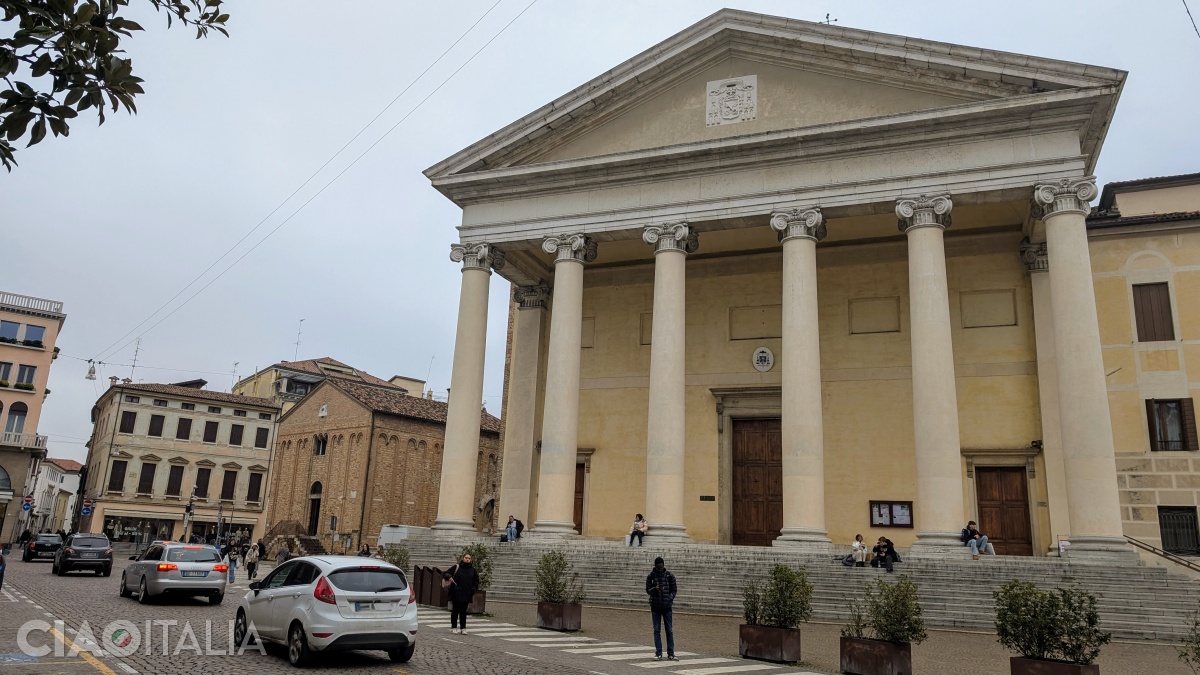
The Duomo (Cathedral of St. Peter) is another thing to see in Treviso. You will find it at one end of Via Calmaggiore, presiding over the square that bears its name: Piazza Duomo.
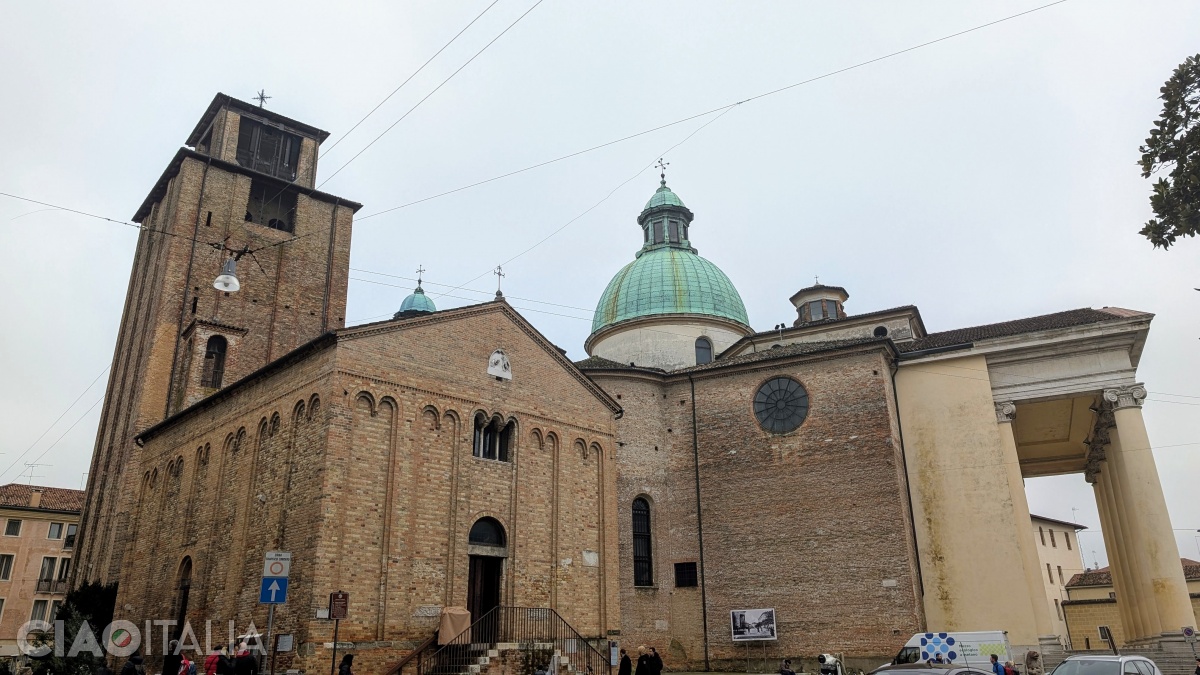
The first church was built here in the 6th century on a site formerly occupied by an ancient theater and temple (remnants of which can still be seen in the crypt). A Romanesque cathedral was constructed in the 11th century, but after being nearly destroyed in the mid-18th century, it was rebuilt in the Neoclassical style. The reconstruction lasted from 1759 to 1836, resulting in the imposing facade we see today, characterized by its Ionic columns and the look of a classical Greek temple.
On the exterior wall of the apse, you'll find a curious bas-relief that seems a bit out of place in such a religious setting. It depicts a dancing girl with the inscription In ecclesiasticum above her. The relief dates back to the Roman era, and the figure is actually a Bacchante - a follower of the god Bacchus, whose cult was celebrated with wild dances and ceremonies. Its exact origin is unknown, though the most credible theory is that it belonged to a funerary monument from a nearby Roman necropolis. The inscription was likely added during the Middle Ages. Some researchers believe the Bacchante was placed there as a symbol of celebration and fertility - a "good omen" for the city of Treviso.
Inside the Duomo, it is worth visiting the Malchiostro Chapel, located next to the sacristy, where the church's most important artworks are found. The altarpiece was created by Titian in 1520 and represents the "Annunciation". The walls and dome were painted by Pordenone, also in the 16th century, immediately after his return from Rome. Some art historians claim his frescoes were influenced by Michelangelo's paintings in the Sistine Chapel in the Vatican. At the entrance to the chapel are two paintings by Paris Bordone: "Adoration of the Magi" and the "St. Lawrence Altar".
The smaller church to the left of the Duomo is the Baptistery of St. John.
Treviso Cathedral
Opening Hours:
- Monday-Saturday: 7:15 AM - 12:00 PM, 3:30 PM - 6:30 PM
- Sunday: 8:00 AM - 1:00 PM, 3:30 PM - 8:00 PM
Ticket Prices:
- free entry
8. San Nicolò Church
Contrary to what many expect, it is the Church of San Nicolò (St. Nicholas), not the Duomo, that stands as the largest church in the city. You'll find it about a 10-minute walk from Piazza dei Signori, situated near the banks of the Sile River.
The church was built in 1282 in the Gothic style by Dominican monks. It has been restored several times, most notably after sustaining heavy damage during the 1944 bombings.
Inside, the columns are adorned with significant 14th-century frescoes of saints by Tomaso da Modena. In the right nave, you'll find a massive fresco of Saint Christopher, and in the central area, the 15th-century funeral monument of Senator Agostino Onigo.
The most fascinating part, however, is found in the Chapter House (Sala Capitolare) of the adjacent seminary. In 1352, Tomaso da Modena painted portraits of 40 Dominican monks. These were rendered in a strikingly realistic style that broke with the stiff artistic conventions of the era, suggesting the painter used the actual monks as his models.
Among them, one portrait stands out: that of Hugh of Saint-Cher, the first Dominican to be named a cardinal in 1244. He is depicted while writing, wearing a cardinal's hat and, on his nose, a pair of eyeglasses, also rendered in detail. This is the first representation of spectacles in a painting, and it is unknown whether Hugh (or the model) actually wore them or if the artist simply imagined them.
Nearby, another cardinal - Nicolò di Rouen - is depicted reading a book with the help of a magnifying lens. This, too, is considered the first time such an instrument was ever shown in art.
San Nicolò Church
Opening Hours:
- Monday-Friday: 8:30 AM - 12:00 PM, 4:30 PM - 6:00 PM
- Saturday-Sunday: 8:30 AM - 12:00 PM, 4:30 PM - 7:00 PM
Ticket Prices:
- free entry
9. Santa Caterina Museum Complex
The former Gothic monastery of Santa Caterina currently houses the main headquarters of the Civic Museums of Treviso. You can see here an archaeological collection, the valuable fresco cycle "The Life of Saint Ursula" created by Tomaso da Modena in the mid-14th century, and the art gallery with works from the 14th to 18th centuries.
Santa Caterina Museum
Opening Hours:
- Monday: Closed
- Tuesday-Sunday: 10:00 AM - 6:00 PM
Ticket Prices:
- Adult: €7
- Over 65: €5
- Students: €5
- Children under 6: free
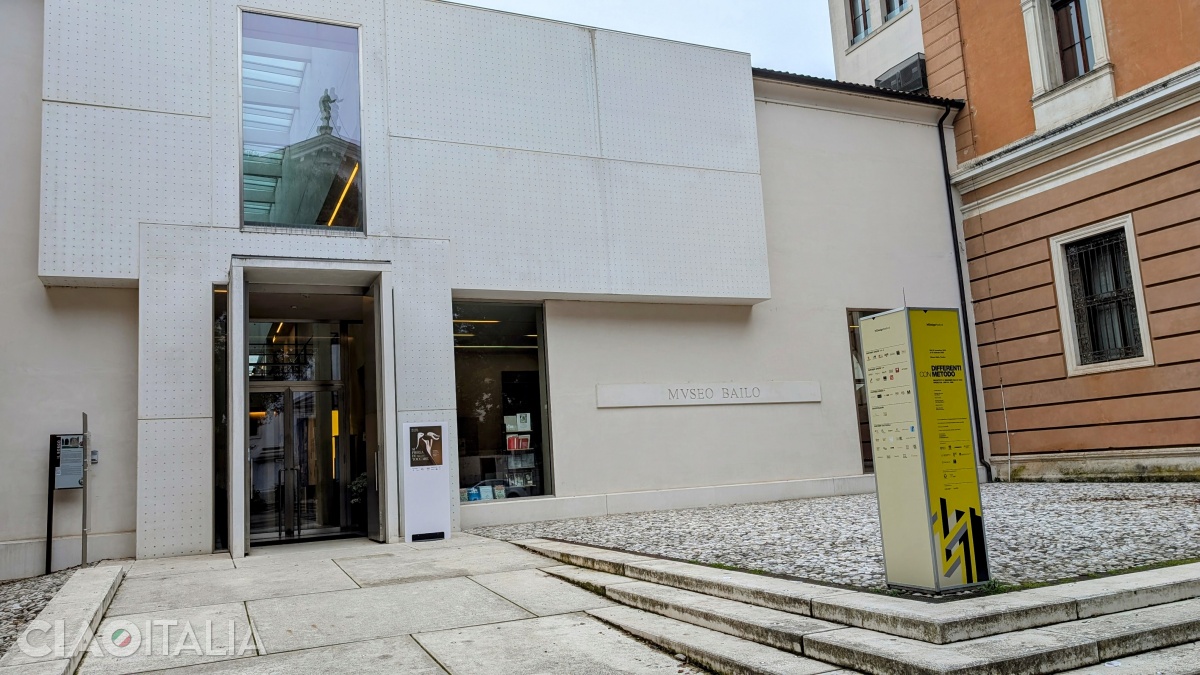
Part of the Civic Museums of Treviso are also the Luigi Bailo Museum (with a collection of 20th-century modern art) and the Ca' Da Noal-Casa Robegan-Casa Karwath complex - three medieval houses with frescoed facades where exhibitions are organized.
10. San Francesco Church
Just five minutes away from Porta San Tomaso, you will find another tourist attraction in Treviso: the Church of San Francesco. It was built in the 13th century by Franciscan monks in a style reflecting the transition from Romanesque to Gothic.
Inside, the striking wooden ceiling is shaped like the hull of a ship (an architectural feature also found in Venice's Santo Stefano Church and Padua's Church of the Eremitani).
The interior features several 14th-century frescoes attributed to Marco Veneziano (above the entrance portal) as well as Tomaso da Modena and his students. While several important paintings by Alvise Vivarini and Vittore Carpaccio originated here, they are now housed in the Accademia Galleries in Venice.
The church also houses the tombs of Dante's son (Pietro Alighieri) and the daughter of the poet Petrarch (Francesca Petrarca).
San Francesco Church
Opening Hours:
- Monday-Sunday: 6:45 AM - 12:00 PM, 3:00 PM - 6:30 PM
Ticket Prices:
- free