The Basilica of Saint Anthony of Padua
The Basilica of Saint Anthony (Basilica di Sant'Antonio) is one of the most visited sights in Padua. Saint Anthony of Padua, whose relics are kept in the church, is the patron saint of the city and is among the most beloved saints of the Catholic world. Residents call him simply il Santo ("the Saint"), and a multitude of streets, shops, pastry shops, and restaurants in the city bear the name Del Santo ("of the Saint"). This explains the second "without" in Padua's nickname, "The City of the Three WITHOUTS - the meadow without grass, the saint without a name, and the café without doors".
The Basilica of Saint Anthony of Padua is part of a larger complex that also includes the Antonian Museum and the Museum of Popular Devotion, the Oratory of St. George (Oratorio San Giorgio), and the School of the Saint (Scuola del Santo).
Opening Hours
St. Anthony's Basilica
Winter (Standard Time)
- Monday-Friday: 6:15 AM - 6:45 PM
- Saturday-Sunday: 6:15 AM - 7:25 PM
Summer (Daylight Saving Time)
- Monday-Sunday: 6:15 AM - 7:25 PM
Antonian Museum, Museum of Popular Devotion, Oratorio San Giorgio, and Scuola del Santo:
- Monday: Closed
- Tuesday-Sunday: 9:00 AM - 1:00 PM, 2:00 PM - 6:00 PM
- December 25 and January 1: Closed
Tickets
Access to the Basilica of St. Anthony of Padua is free.
Tickets for the Antonian Museum and the Museum of Popular Devotion, Oratorio San Giorgio, and Scuola del Santo (combined ticket) have the following prices:
- Adult: €10
- Students: €7
- Children under 6: Free
- Family ticket: €20
Entry to the museum complex is free on the second Sunday of May and on October 4.
Visiting the Basilica of Saint Anthony of Padua
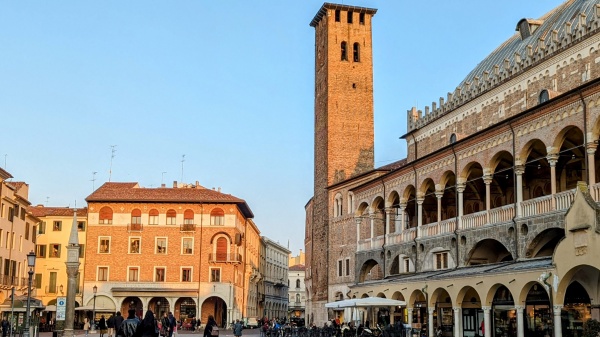
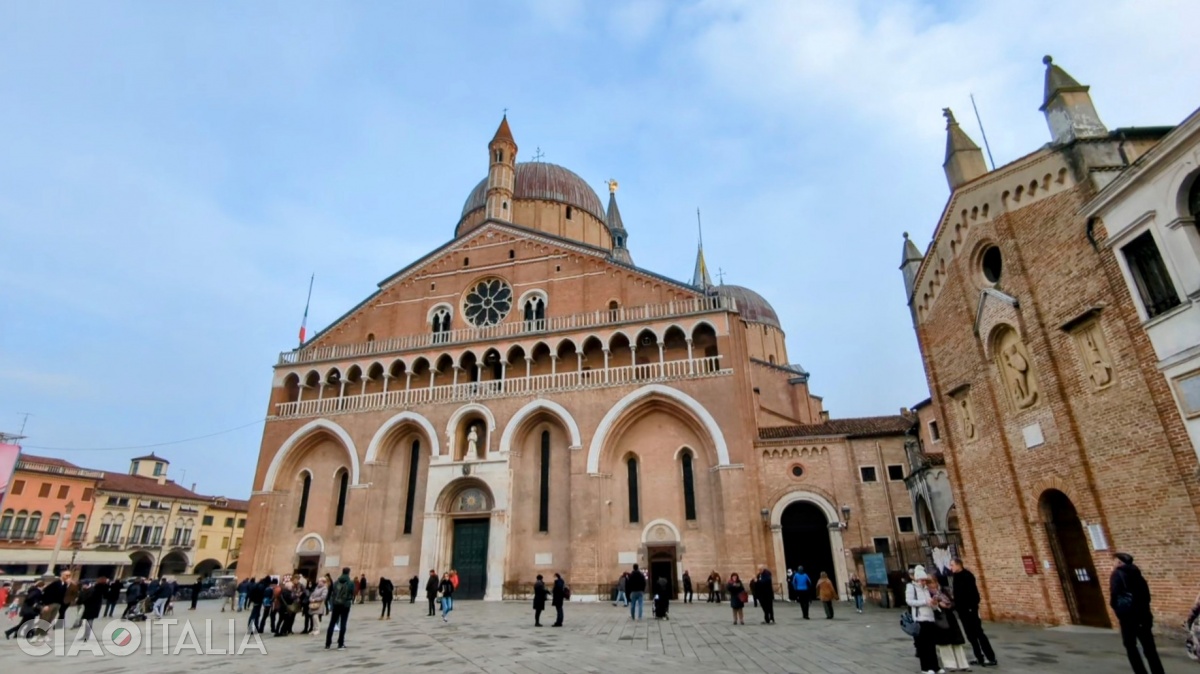
St. Anthony's Basilica is situated in Piazza del Santo, which was laid out on the site of an ancient cemetery.
Before entering the church, take a look at the equestrian statue in front. It represents the Venetian condottiero Erasmo da Narni, known as Gattamelata, and was created by the famous sculptor Donatello of Florence. The sculpture was cast in bronze in 1453 and constituted an impressive technical achievement for that era - it was the first full-size equestrian statue of the Italian Renaissance, serving as a model for many subsequent sculptures.
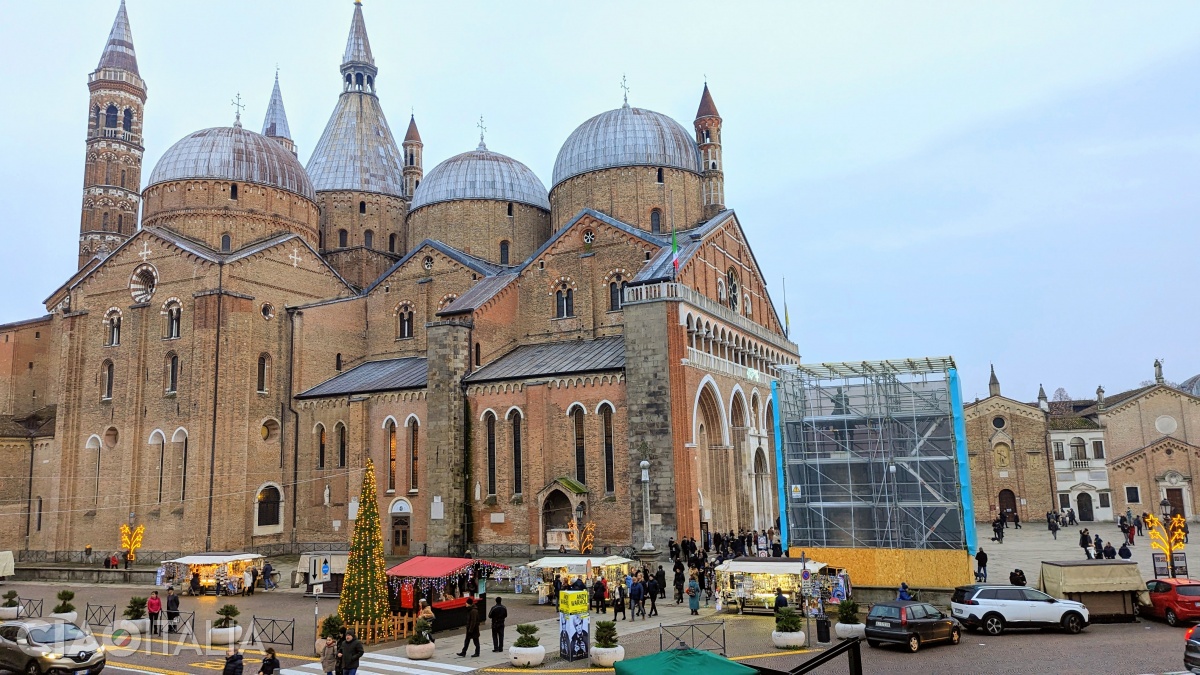
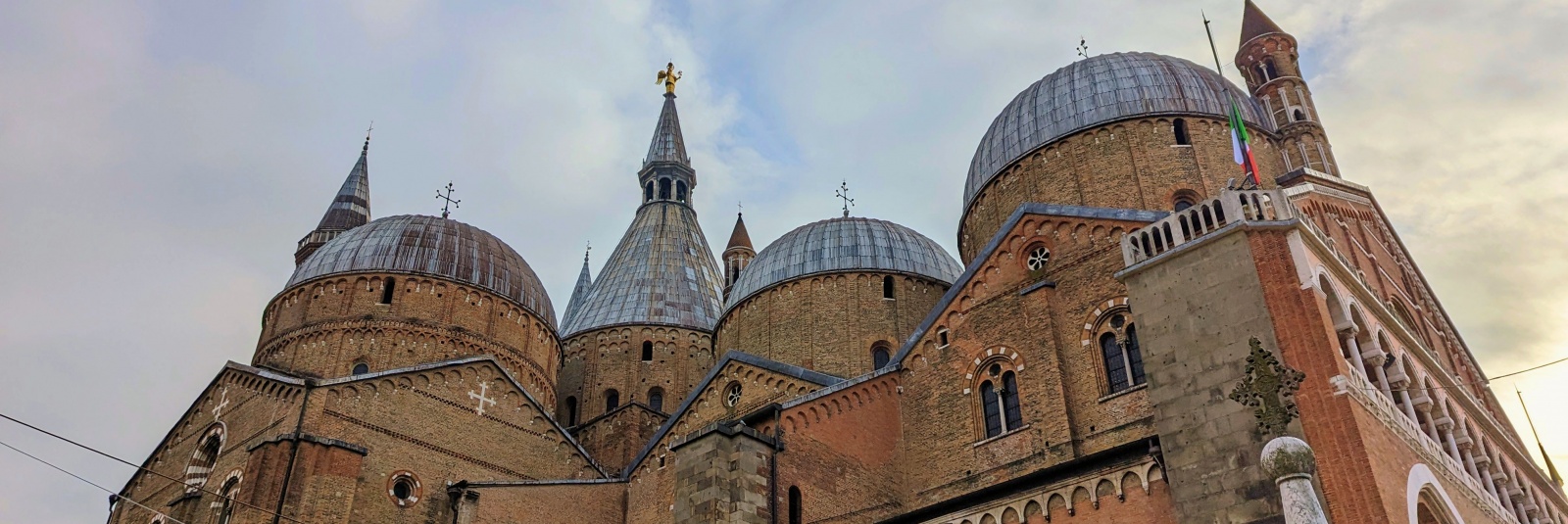
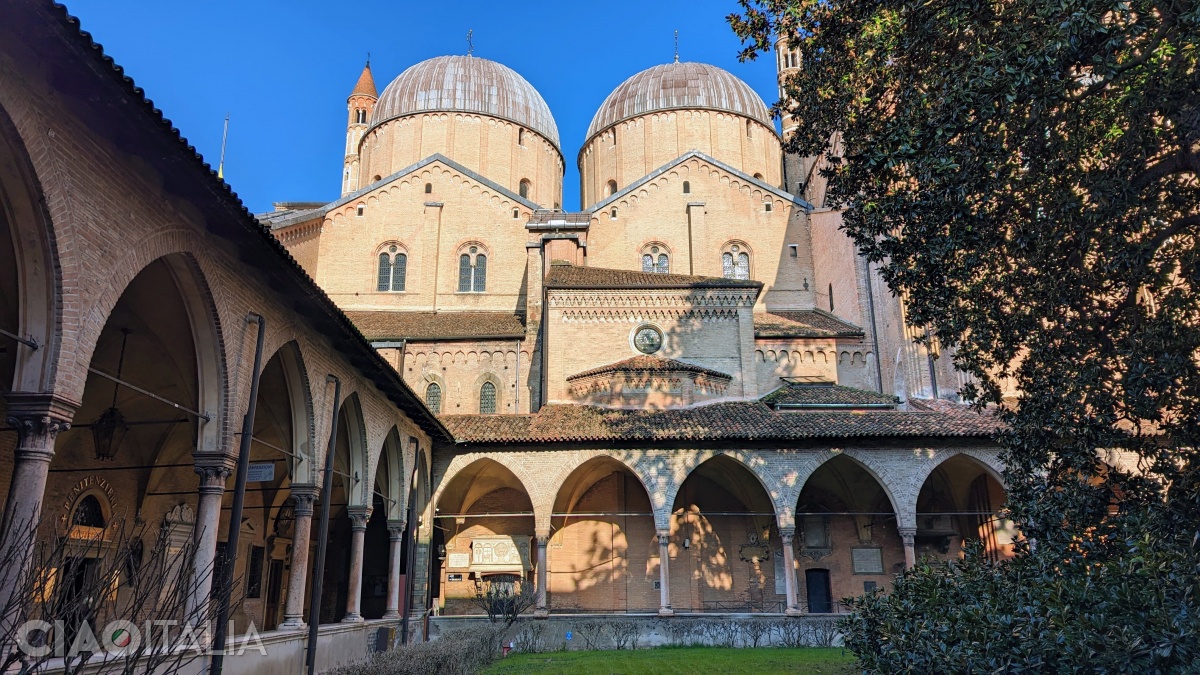
The construction of St. Anthony's Basilica began in 1232, one year after the death of the saint (who was born in Lisbon but died in 1231 in Padua). Its architecture - a blend of Byzantine domes and slender towers reminiscent of oriental minarets - was heavily influenced by that of St. Mark's Basilica in Venice.
Chapel of St. Anthony
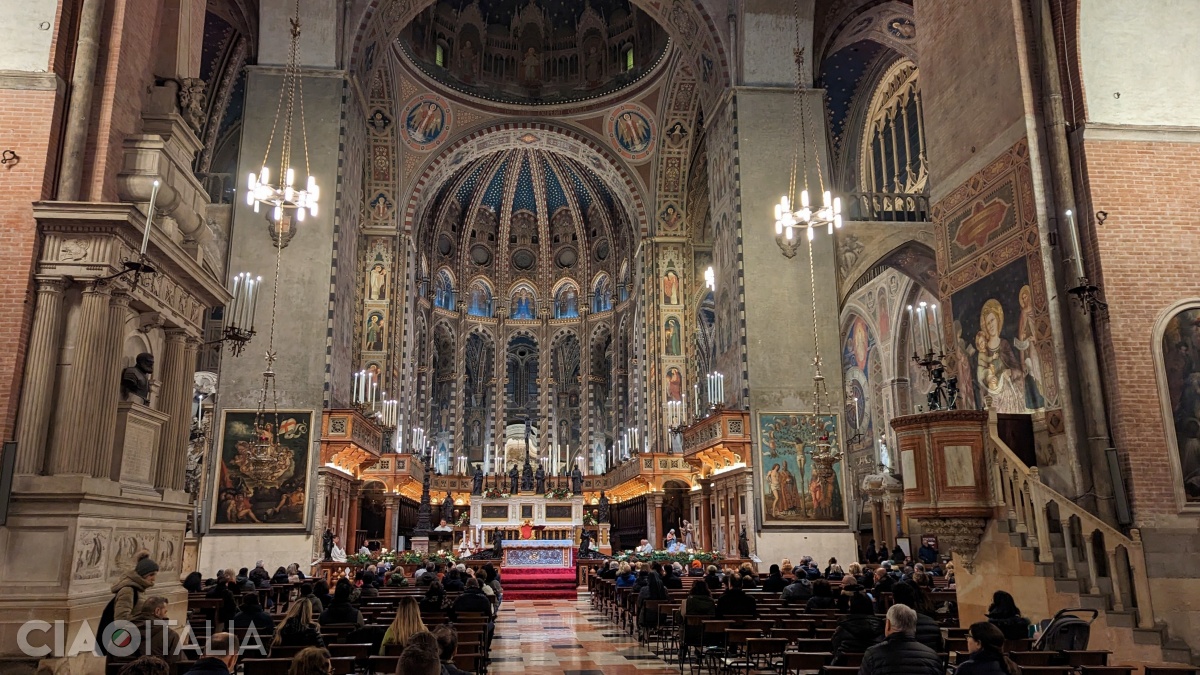
As you enter, on the left side, you will find the Cappella del Santo ("Chapel of the Saint"), which houses the relics of Saint Anthony. They are considered miraculous and attract an impressive number of pilgrims every year. The saint's imposing funerary monument (arca), crafted in green marble, is always covered with votive offerings left by the faithful. It was created in 1594, and the silver chandeliers date back to the 17th century.
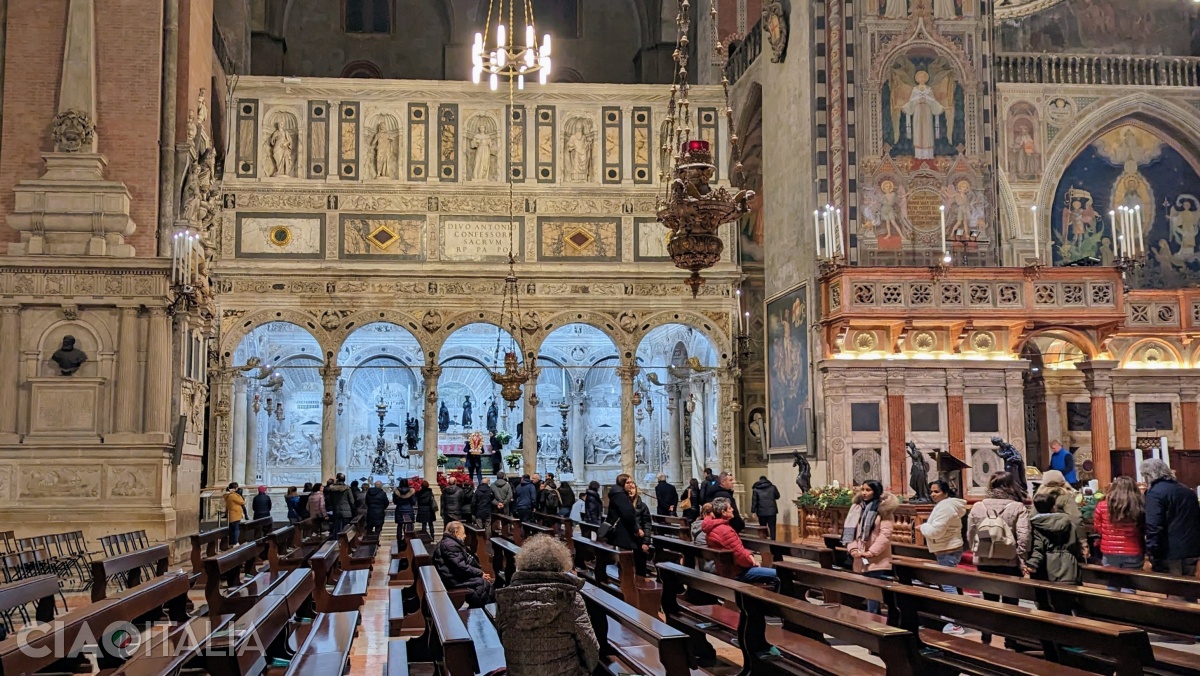
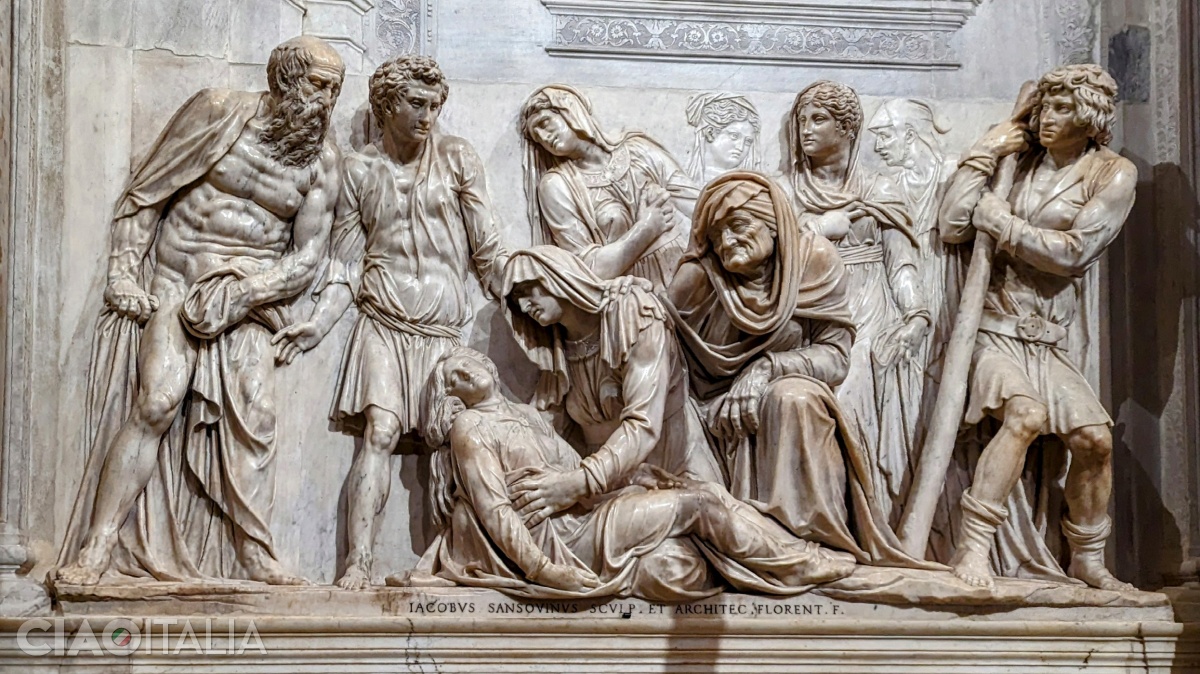
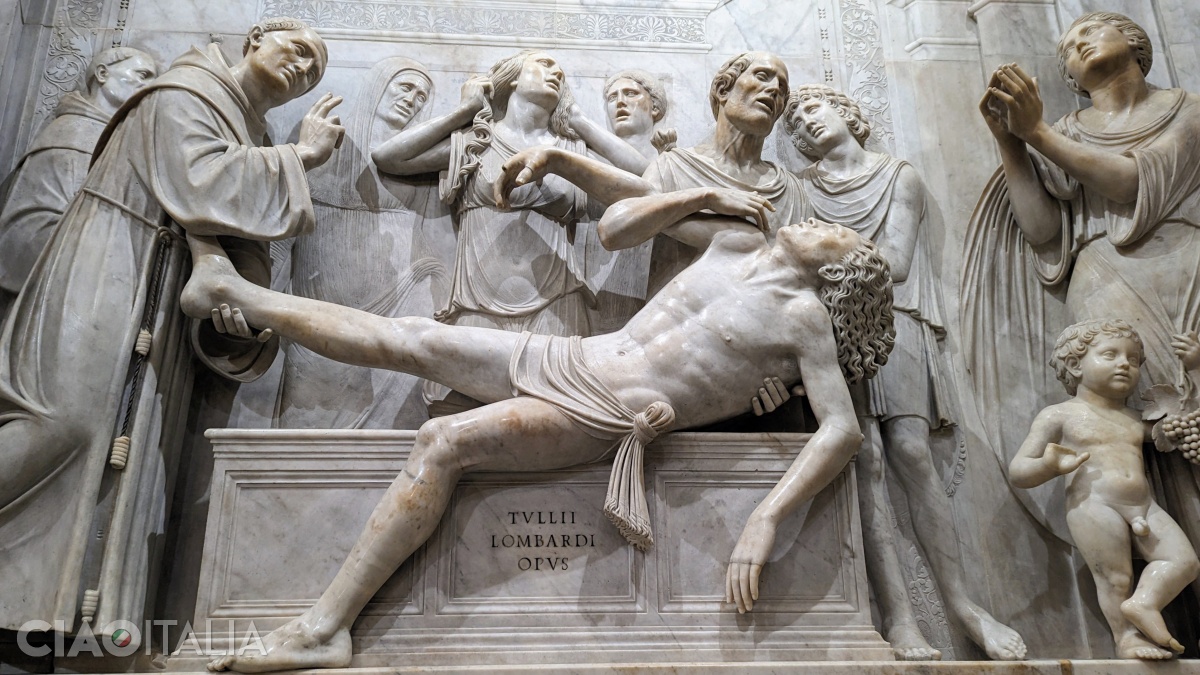
In the years 1505-1507, the chapel was decorated with nine marble bas-reliefs worked by Tullio and Antonio Lombardo and Jacopo Sansovino, as well as other sculptors of the era, many of whom were also active in Venice. Each bas-relief illustrates a scene from the life of the saint. Thus, from left to right, they unfold as: "The Investiture of St. Anthony", "The Jealous Husband Stabs His Wife", "St. Anthony Resuscitates a Young Man", "The Resurrection of a Drowned Girl", "St. Anthony Resuscitates a Drowned Child", "The Miracle of the Usurer's Heart", "The Miracle of the Healed Foot", "The Glass Thrown to the Ground that Remained Intact", and "A Newborn Proves His Mother's Honor".
Every year on June 13 (the date he died), it is the Feast of Saint Anthony, and the city transforms into a major pilgrimage site.
Chapel of the Madonna Mora
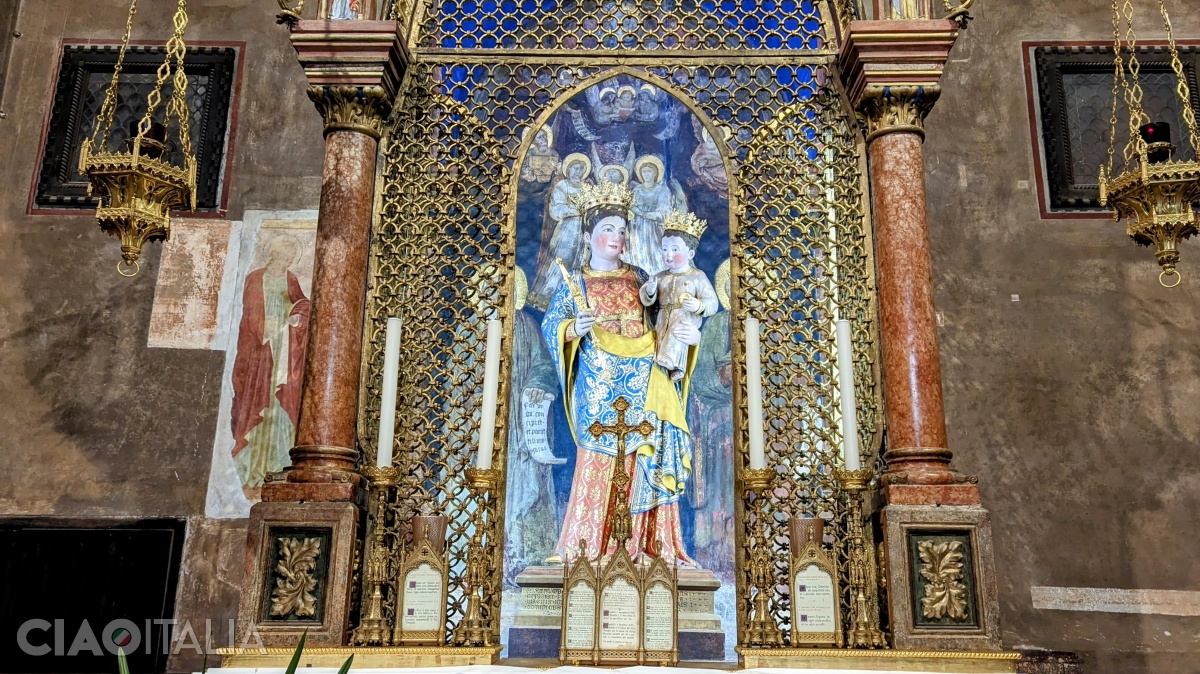
Moving further to the right, you will reach the Chapel of the Madonna Mora. This is what remains of the old small church of Santa Maria Mater Domini, where St. Anthony prayed and officiated Mass. The saint was buried in this spot in 1231, and his bones remained here until 1263.
The statue of the Virgin and Child on the Gothic altar is the work of a French sculptor and dates from the end of the 14th century.
According to recent discoveries, the painting behind the statue was created by Giotto before he worked on the frescoes in the Scrovegni Chapel.
Chapel of Blessed Luke
Don't forget to take a look at the chapel on the left side, which bears the name of "Blessed Luke" (Beato Luca), a disciple of St. Anthony who is buried here.
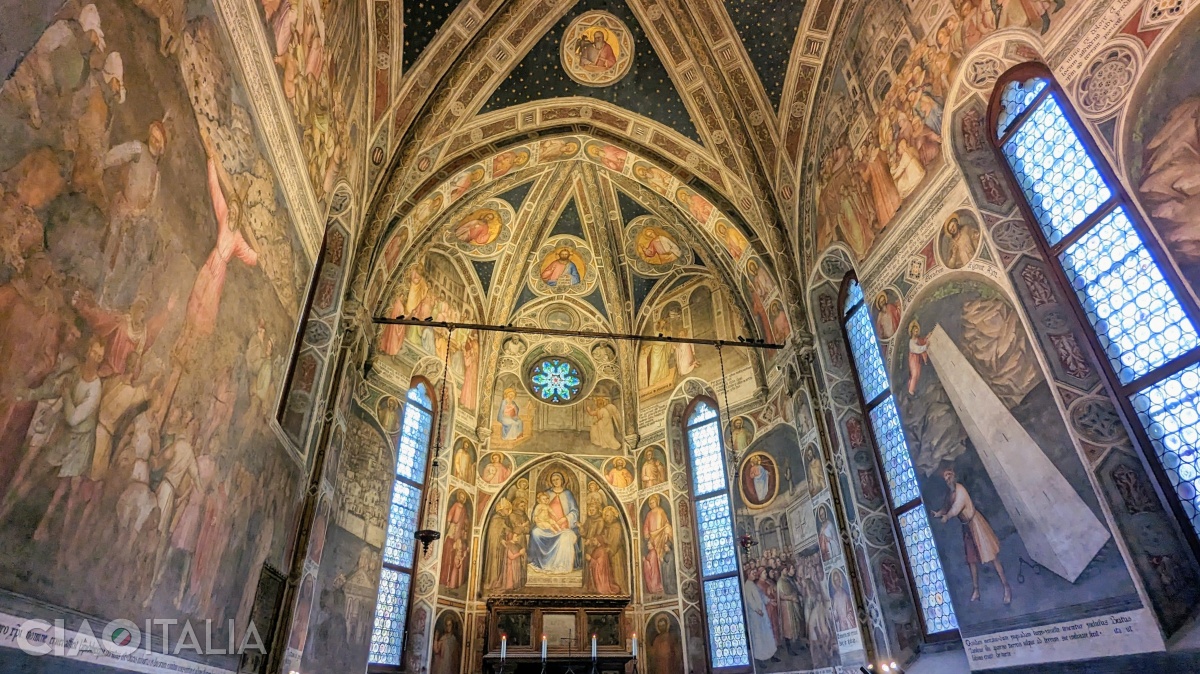
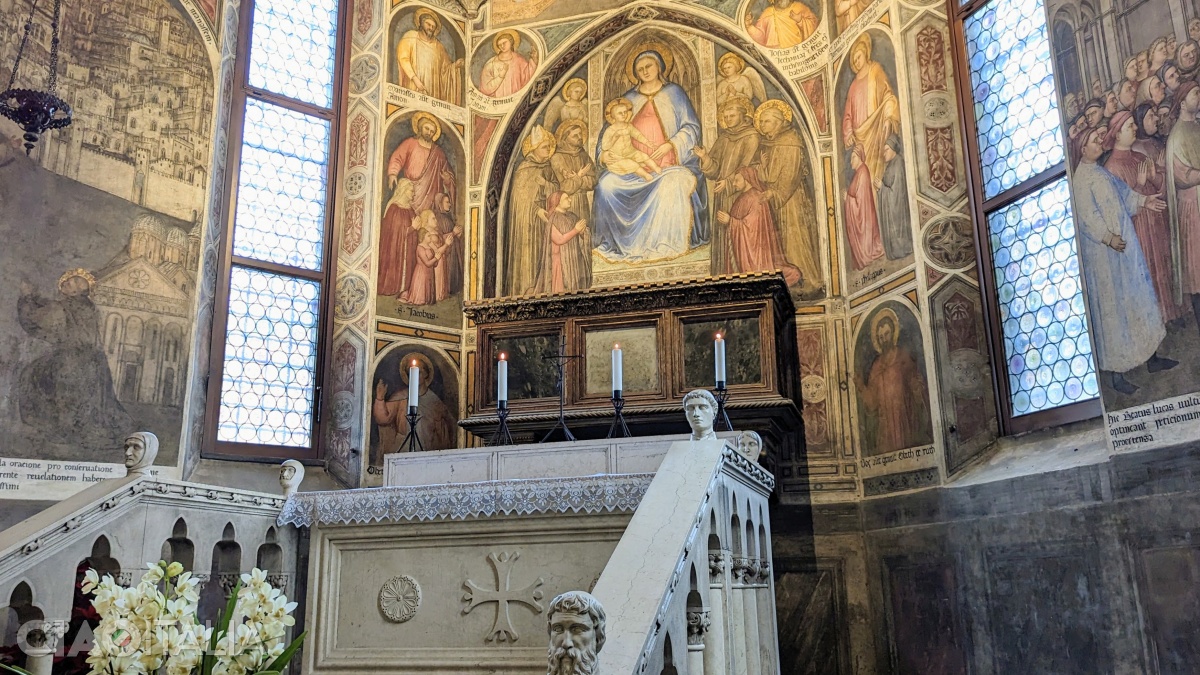
The altar dates from the 13th century, and the frescoes were created by Giusto de' Menabuoi in 1382. In the center, the Virgin Mary is represented among Franciscan saints.
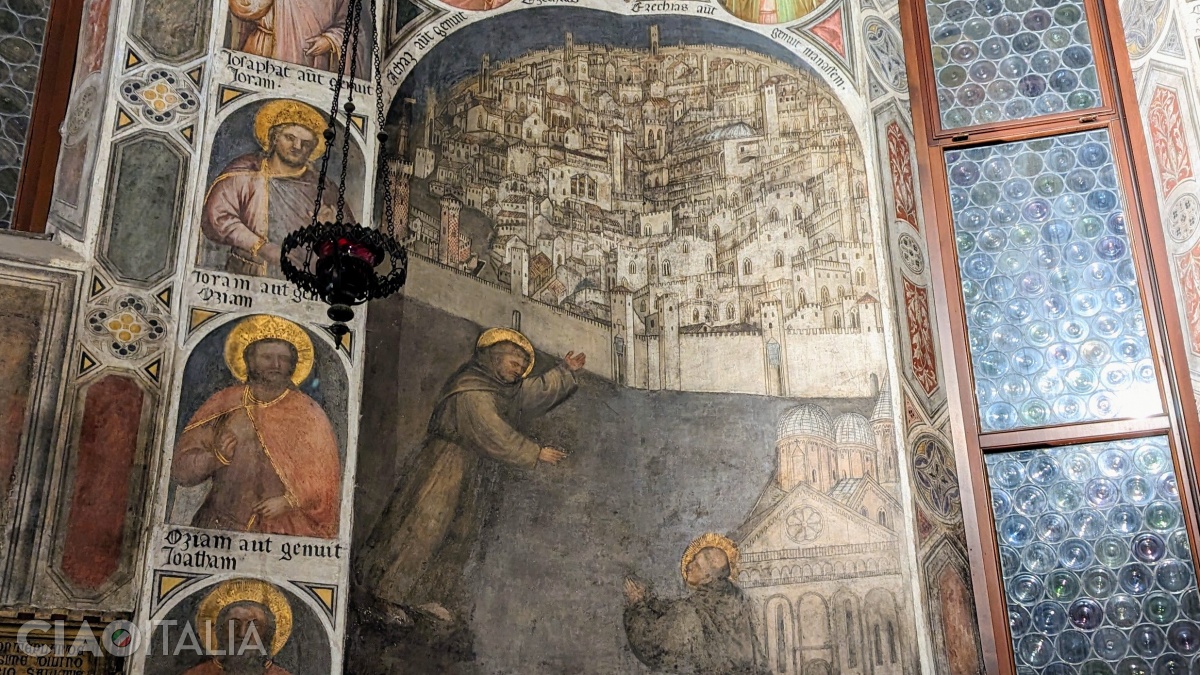
If you look to the left of the altar, you will see an image of the city of Padua as it looked at that time. Towards the center of the fresco, you will recognize Palazzo della Ragione.
Chapel of Relics
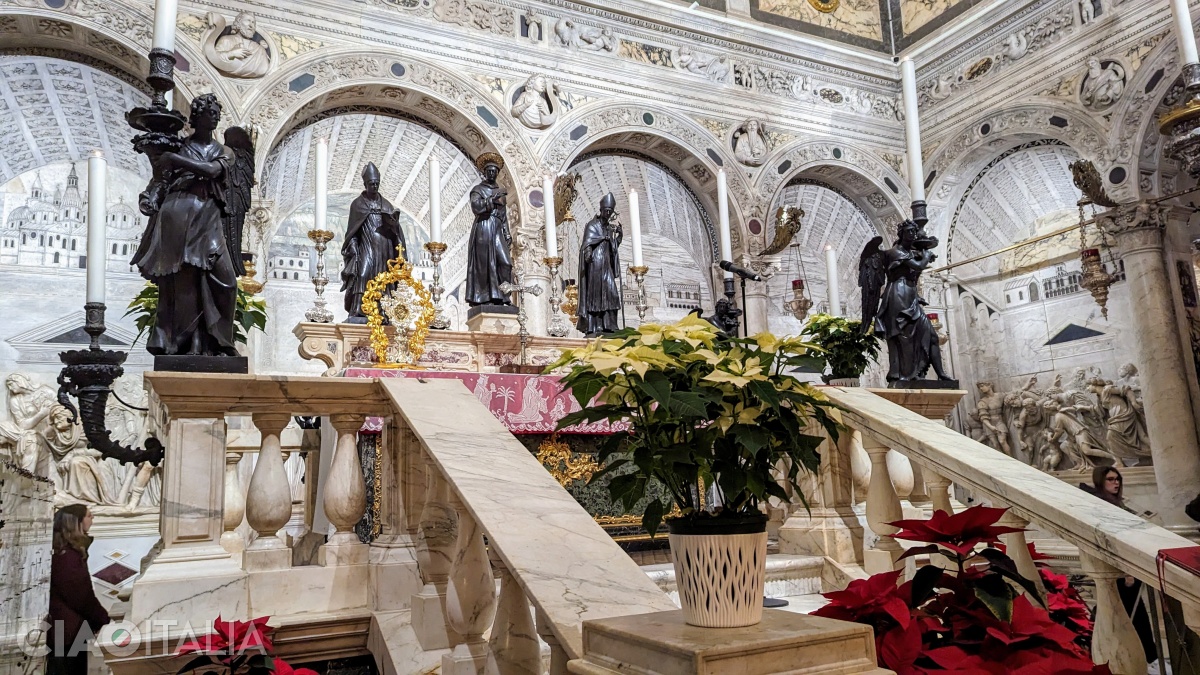
The next important chapel is the Cappella delle reliquie ("Chapel of Relics"), also called the Cappella del Tesoro ("Chapel of the Treasure"). It was built in Baroque style towards the end of the 17th century. The statues depict, from left to right, St. Francis of Assisi, Faith, Humility, Penitence, Charity, and St. Bonaventure. Above the central niche is the statue of Saint Anthony in Glory.
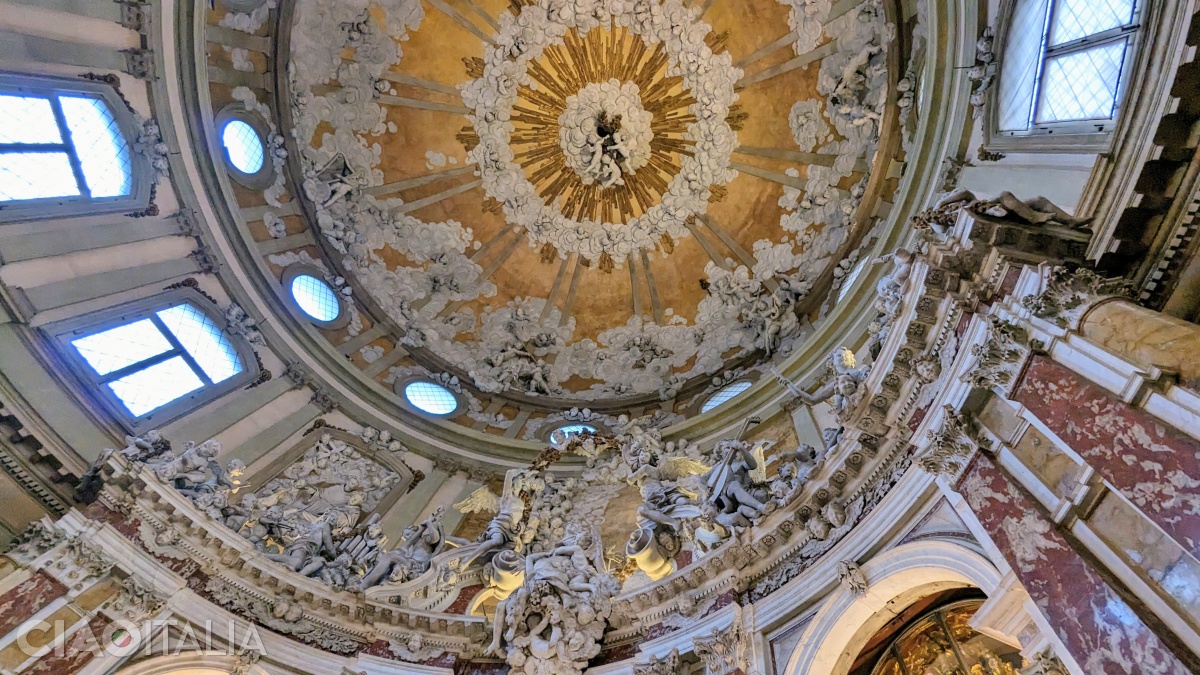
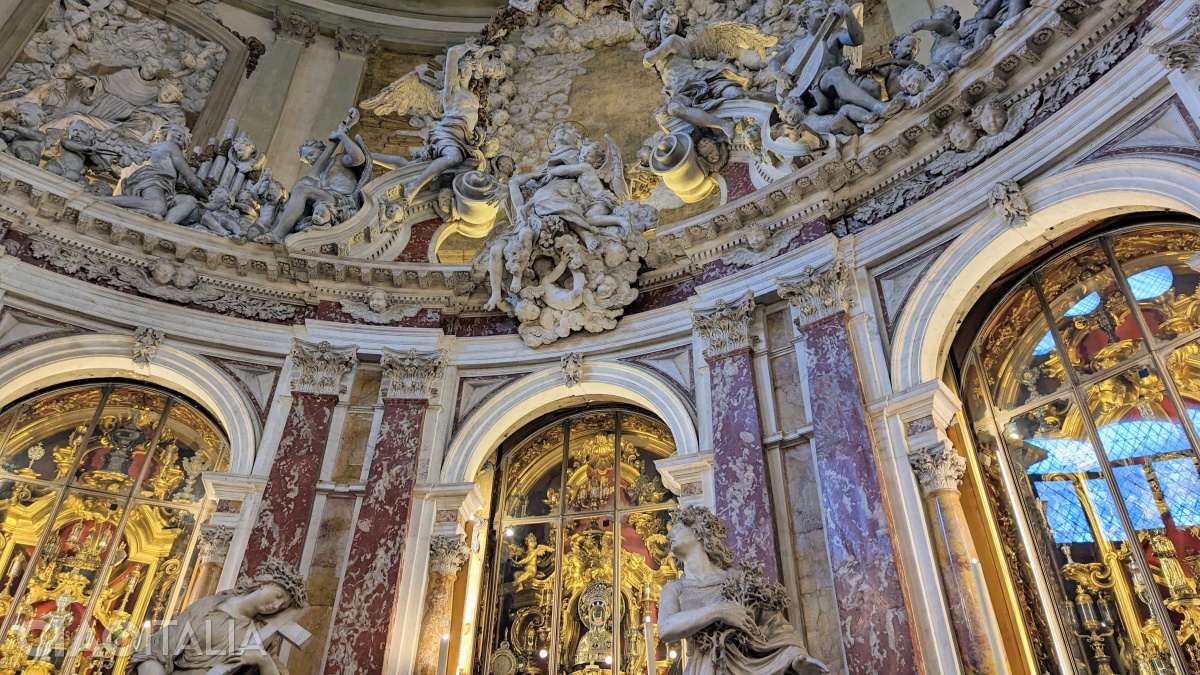
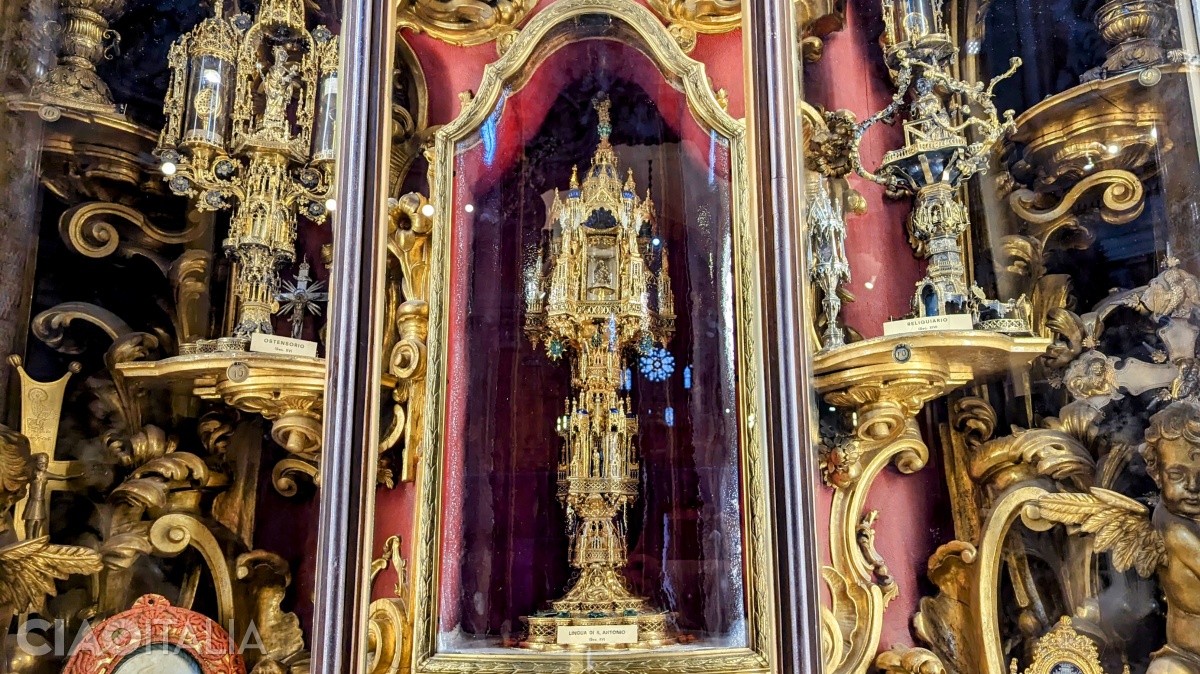
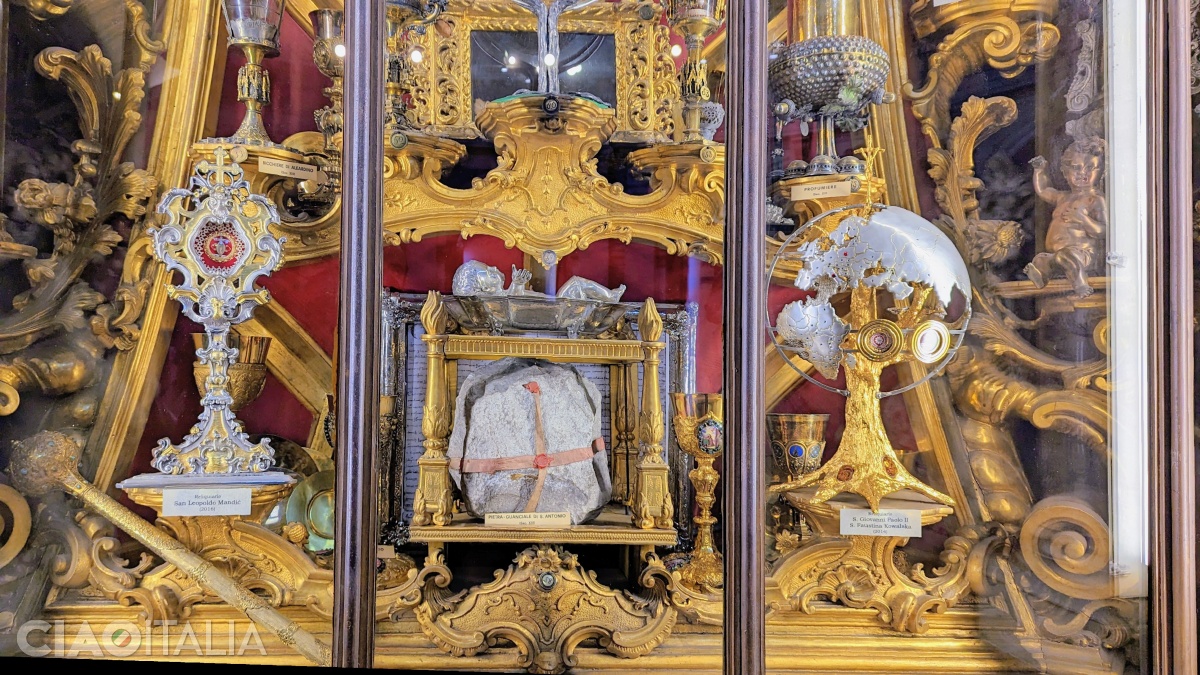
The chapel houses a strange collection of relics, including the tongue, jawbone, and vocal apparatus of St. Anthony, preserved in reliquaries crafted in the 14th and 15th centuries, which are works of art in themselves. A modern reliquary contains several fragments of the relics of St. John Paul II.
In this chapel, you can also find the coffin in which St. Anthony's body was initially placed, as well as what remains of his monastic habit.
The Main Altar
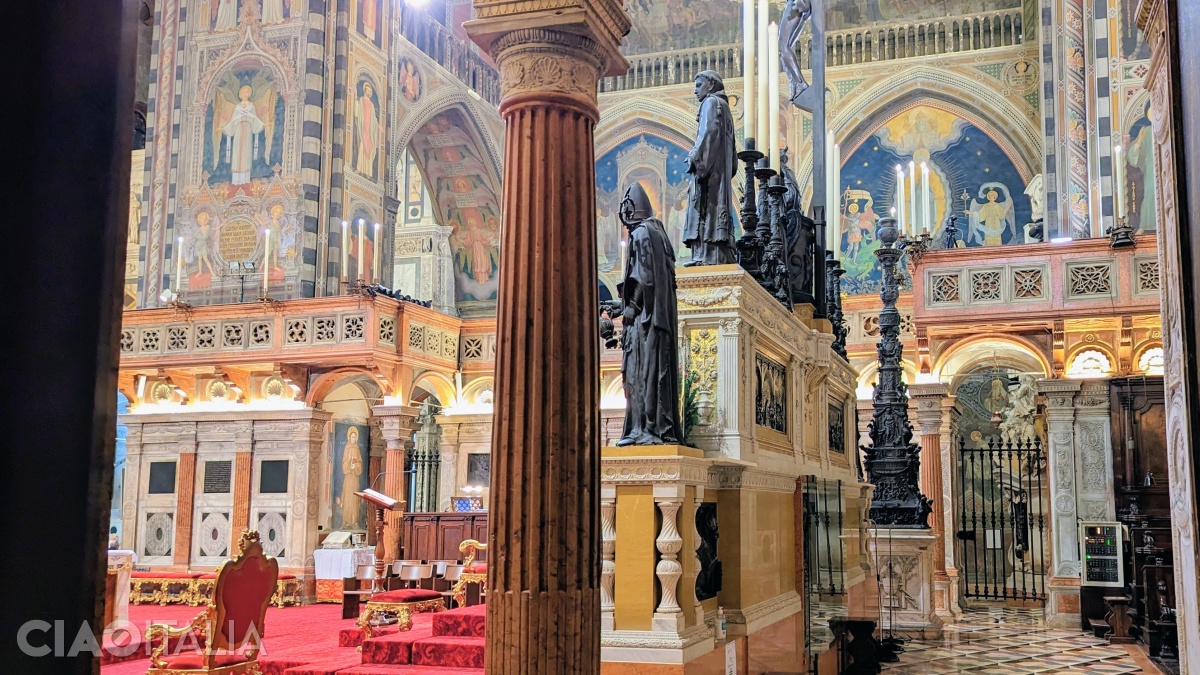
The main altar is adorned with bronze bas-reliefs and statues created by Donatello in the 15th century.
In the center is the Virgin and Child, and above is Jesus on the cross. The statues on the left depict Saints Francis, Justina, and Louis of Anjou, while to the right are Saints Anthony, Daniel, and Prosdocimus, the first bishop of Padua.
The bronze candelabrum to the left of the altar was created by Andrea Briosco (il Riccio) in 1515 and is considered the most beautiful in the world.
Chapel of St. Francis
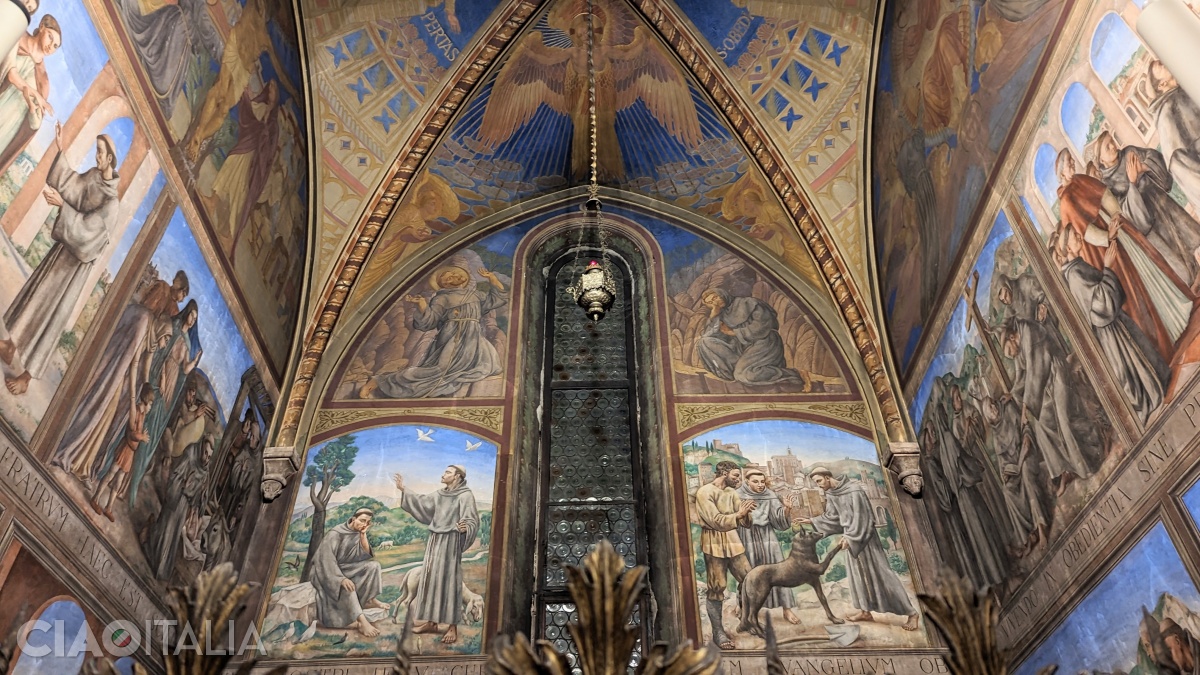
The frescoes in the chapel dedicated to Saint Francis are of a more recent date. The original 17th-century frescoes were lost, and the chapel was repainted in the first half of the 20th century with scenes from the life of St. Francis.
The Sacristy
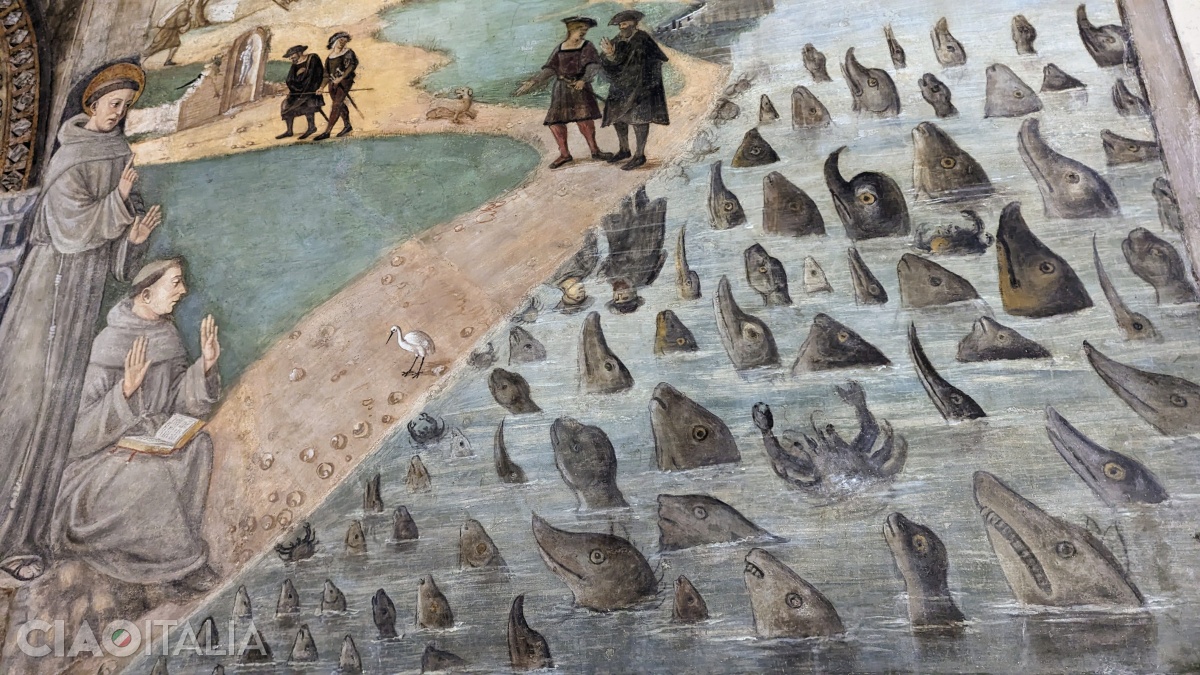
On one of the walls of the sacristy are two frescoes dating from 1518: "St. Anthony Preaching to the Fish" and "The Miracle of the Glass".
Chapel of St. James
Right across from the Chapel of St. Anthony, in the right nave of the church, is the Chapel of St. James (San Giacomo), built in 1372 and decorated in Gothic style. The frescoes, painted by Altichiero da Zevio in collaboration with the painter Jacopo Avanzi from Bologna, depict scenes from the life of St. James.
The central wall is dominated by the large fresco of the "Crucifixion", which is divided into three parts by red marble columns supporting the arches.
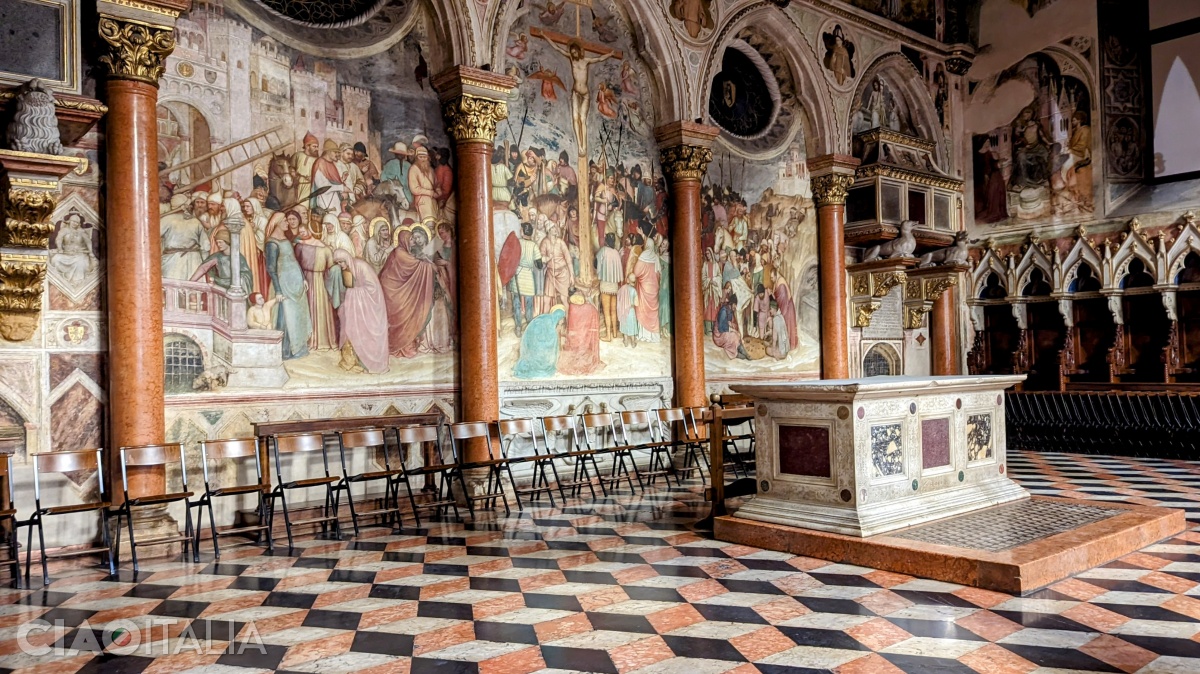
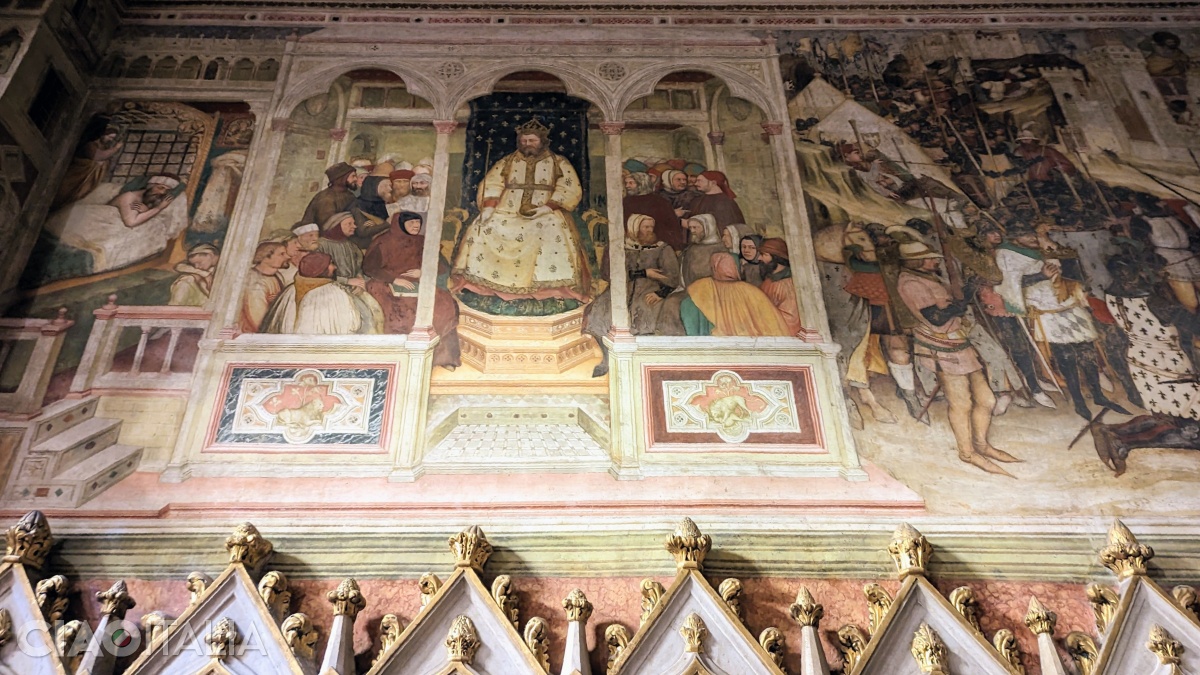
On the left wall, three episodes are present illustrating "The Dream of King Ramiro", "The Council of Charlemagne", and "The Battle of Clavijo". The characters are inspired by real-life figures: Charlemagne has the features of King Louis I of Hungary (an ally of Padua's rulers), and among the characters at his court, the poet Francesco Petrarca or Bonifacio Lupi, who commissioned the chapel's construction, can be recognized.
Above the chapel is the organ with 4,189 pipes, dating from 1929.
Antonian Museum and Museum of Popular Devotion
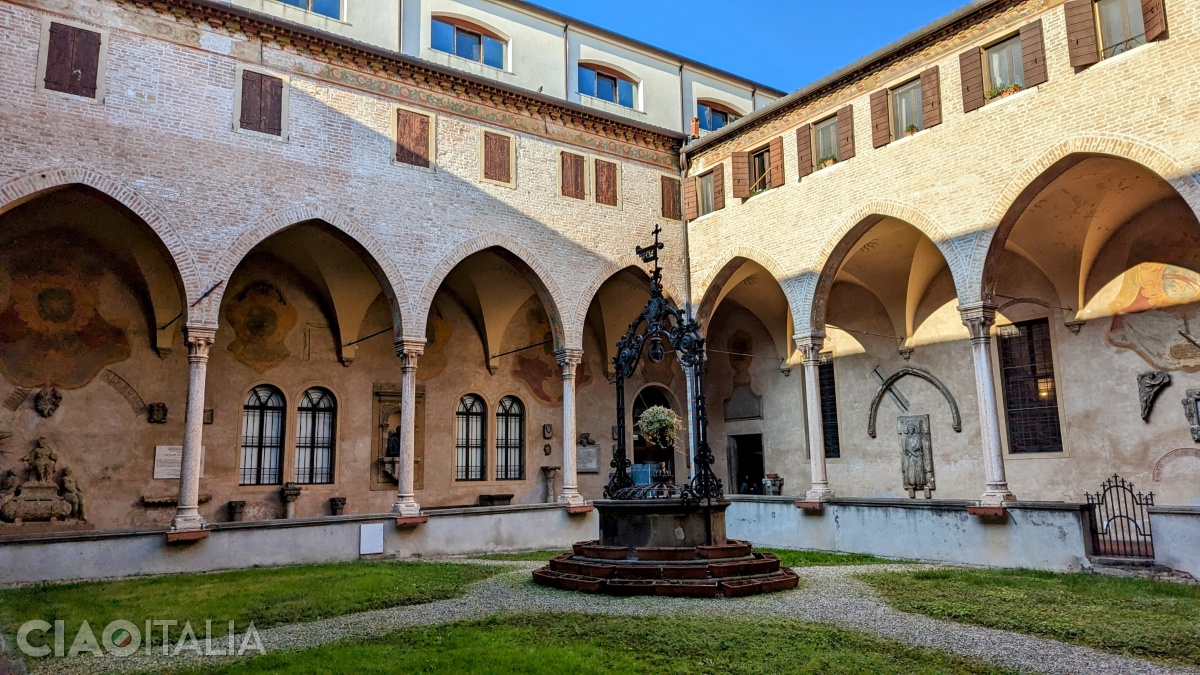
After seeing the basilica, you can continue your visit through the cloisters of the Franciscan monastery (the inner courtyards) or through its museums.
In the Antonian Museum (Museo Antoniano), you can see original works of art created over the centuries for the Basilica of Saint Anthony in Padua.
The Museum of Popular Devotion displays objects donated by the faithful as a sign of gratitude for prayers answered by the saint.
Oratory of San Giorgio
The same ticket used to visit the museums within the monastery complex is also valid for visiting the Oratorio di San Giorgio and the Scuola del Santo - the two similar small brick churches located in the square to the right of St. Anthony's Basilica.
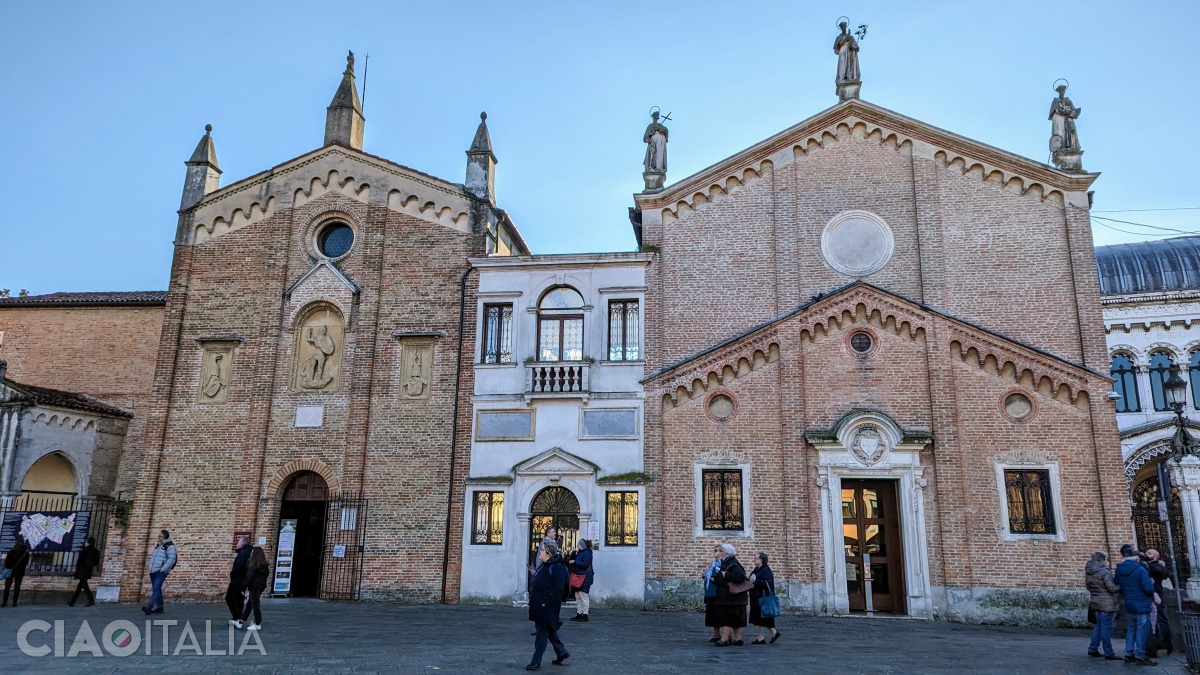
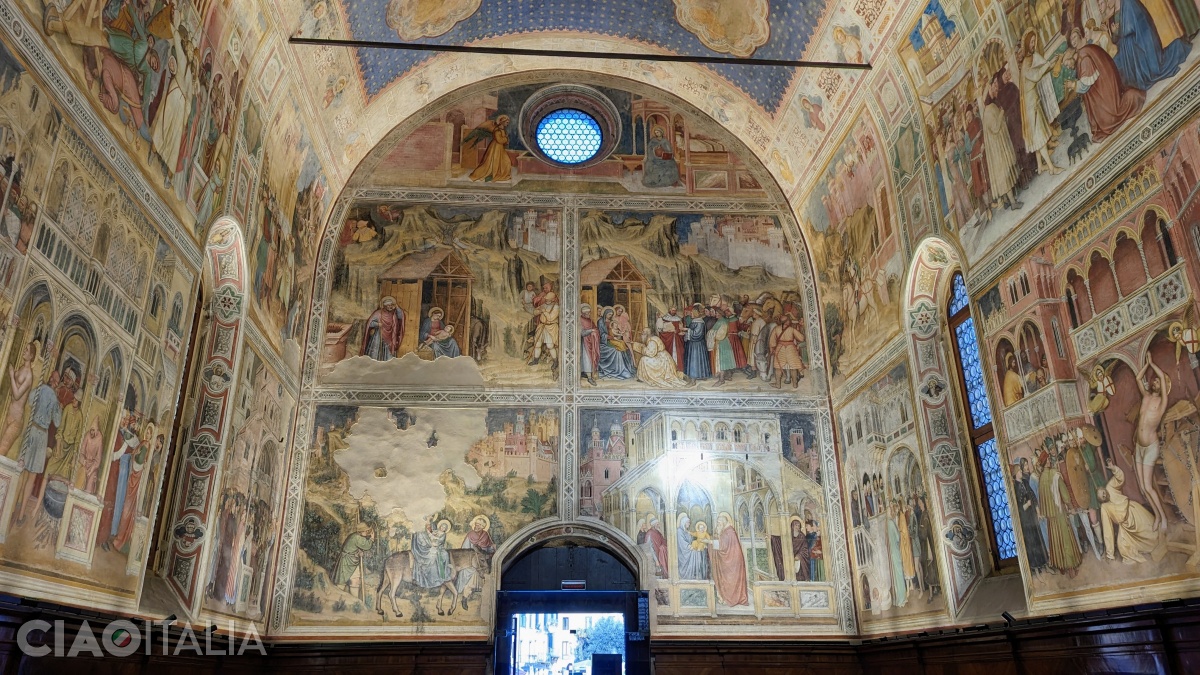
The Saint George Oratory (Oratorio di San Giorgio) is a UNESCO World Heritage site, renowned for its frescoes painted between 1379 and 1384 by Altichiero da Zevio and Jacopo da Verona (the latter also being the author of the fresco cycle in the Oratory of San Michele).
The small church was built in 1377 by order of Marquis Raimondino dei Lupi di Soragna to serve as a funerary chapel for his family.
On the exterior, above the door, you can admire three bas-reliefs: St. George slaying the dragon, flanked on the left and right by the Lupi di Soragna family coats of arms.
The walls of the chapel are decorated with 22 large frescoes. As you enter, the wall behind you depicts: "The Annunciation" (to the right and left of the small round window), "The Adoration of the Shepherds" and "The Adoration of the Magi" (in the central register), "The Flight into Egypt" (bottom left), and "The Presentation of Jesus at the Temple" (bottom right).
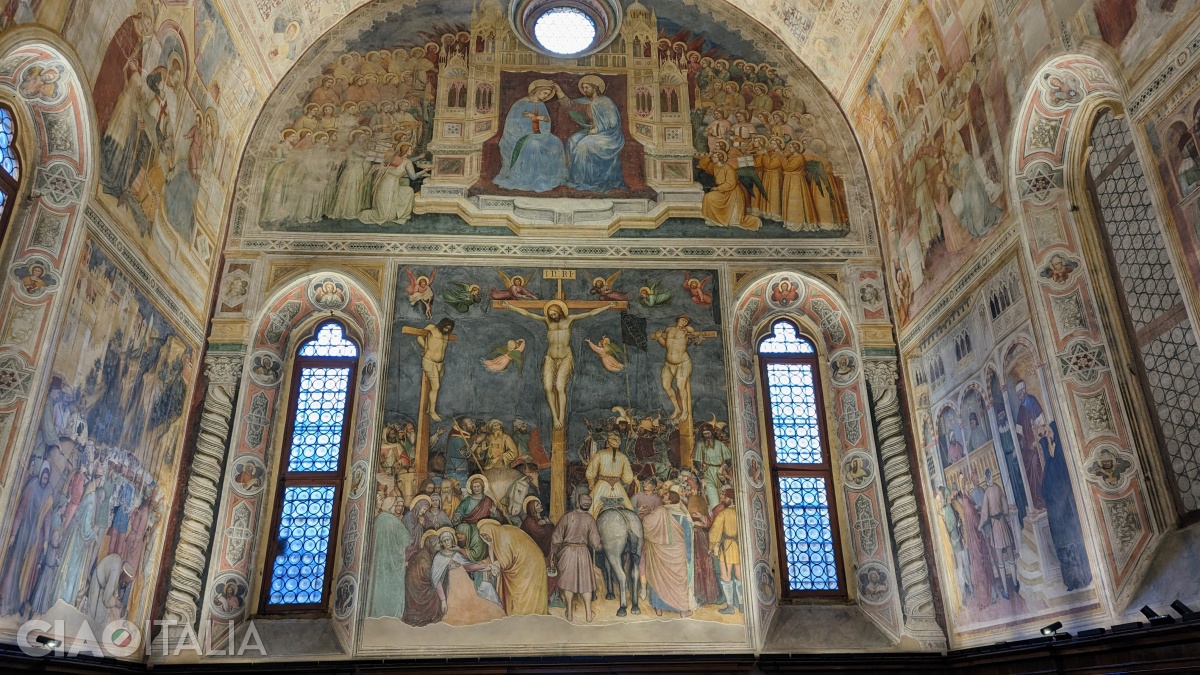
On the wall opposite the entrance is the "Crucifixion", and above it is the "Coronation of the Virgin".
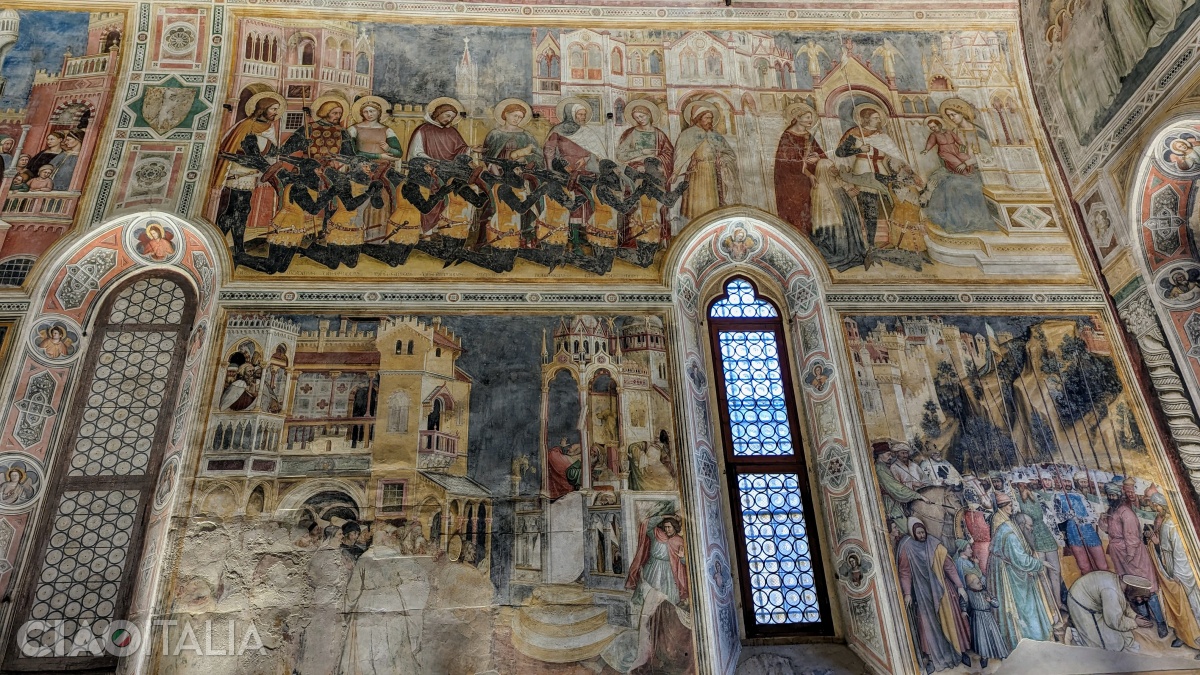
The wall to the left of the altar is decorated with scenes from the life of Saint George, the saint who gives the chapel its name. At the top is one of the most beautiful frescoes in the church: Raimondino dei Lupi, accompanied by St. George and St. Lucy, is shown kneeling with his wife before the Virgin and Child. Behind him stands a long line of relatives - parents, brothers, and nephews - each positioned next to their patron saint.
The Marquis's sarcophagus is also located on this left side.
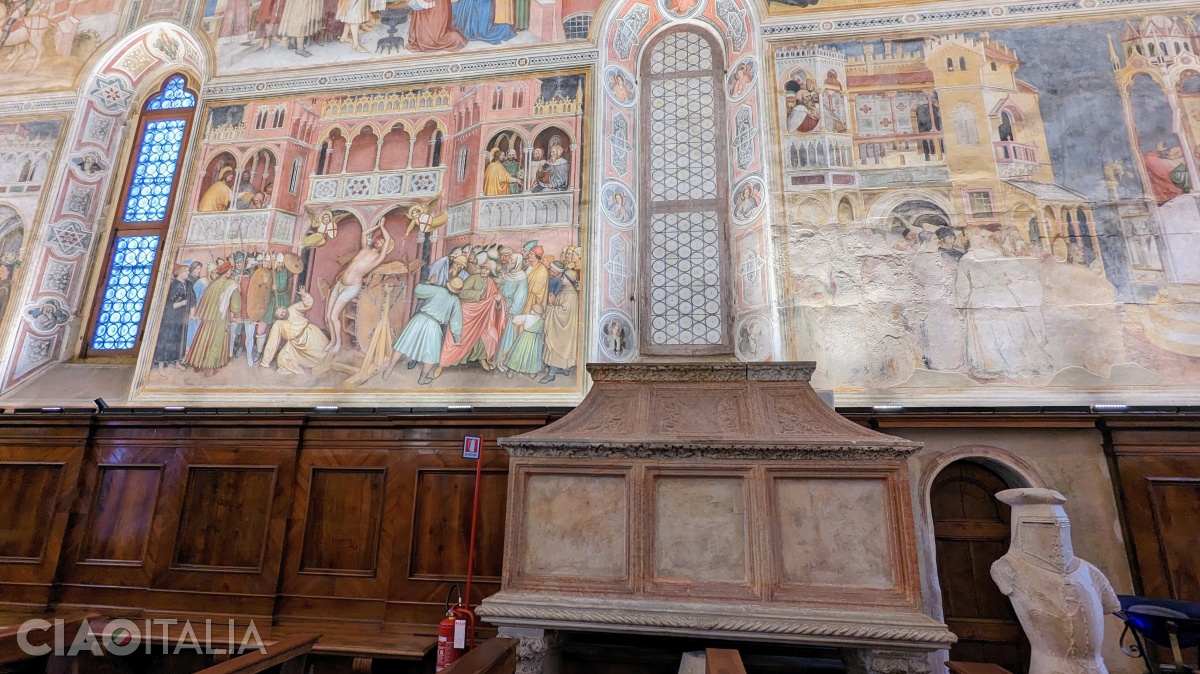
The wall on the right depicts scenes from the lives of Saint Catherine of Alexandria (in the upper section) and Saint Lucy (in the lower register). Along with Saint George, these were the patron saints of the Lupi family.
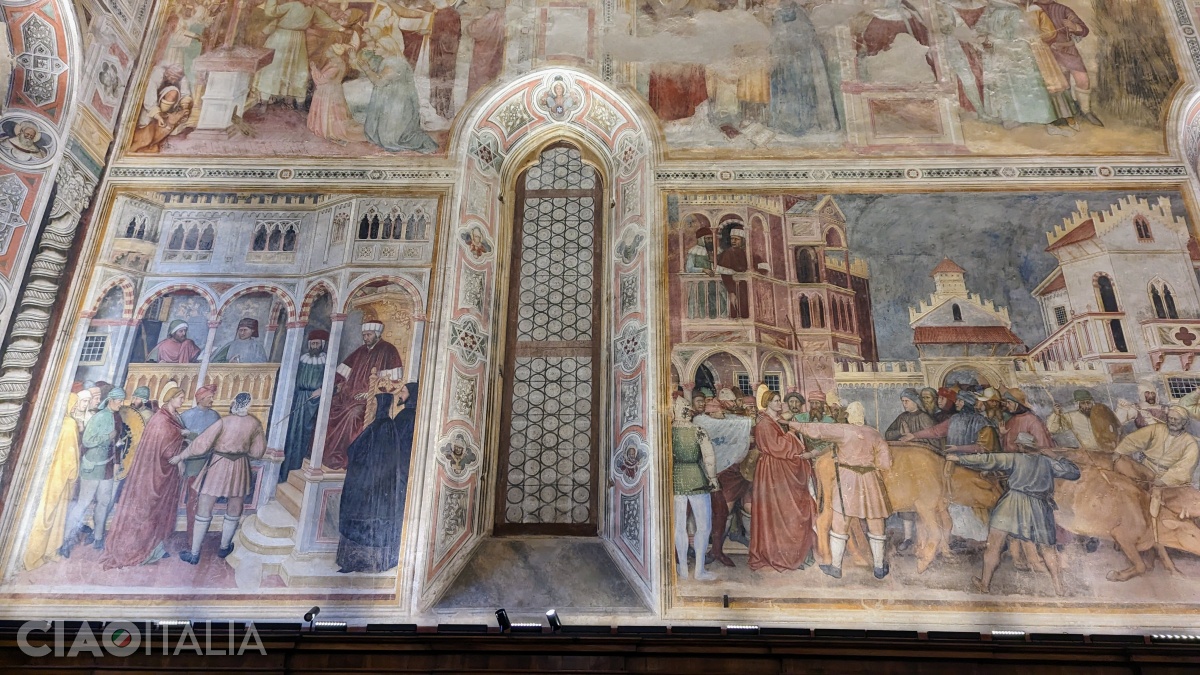
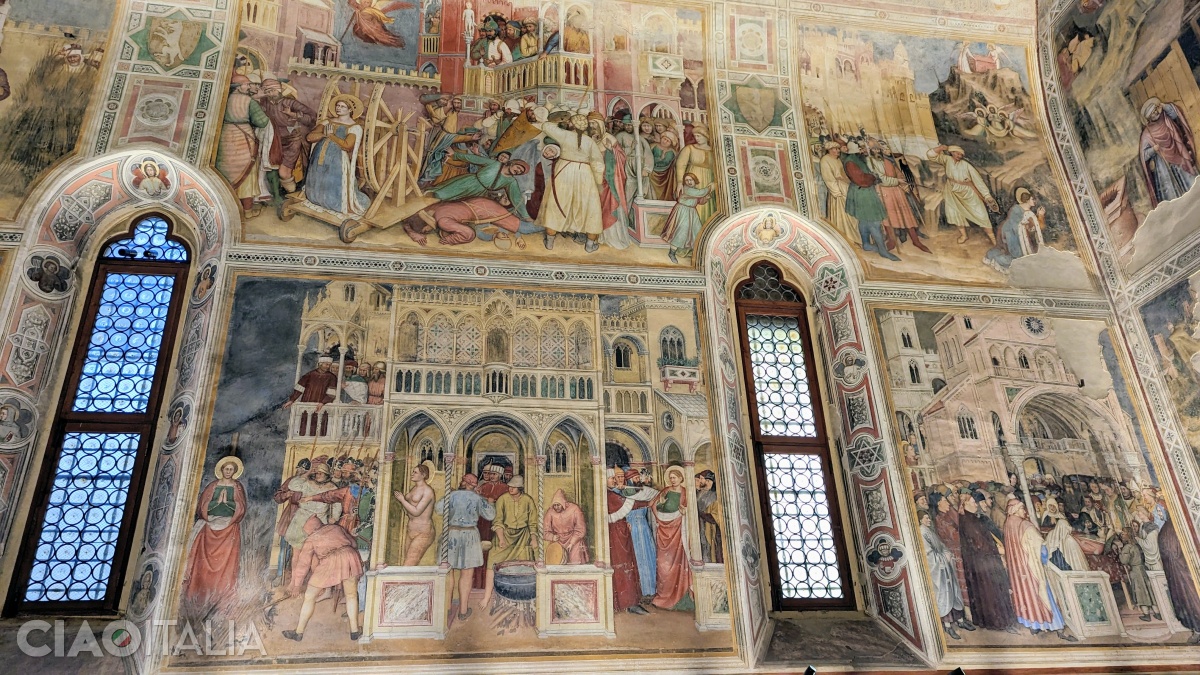
The vault, which recalls Giotto's in the Scrovegni Chapel, is decorated with a starry sky and medallions of saints.
Scuola del Santo
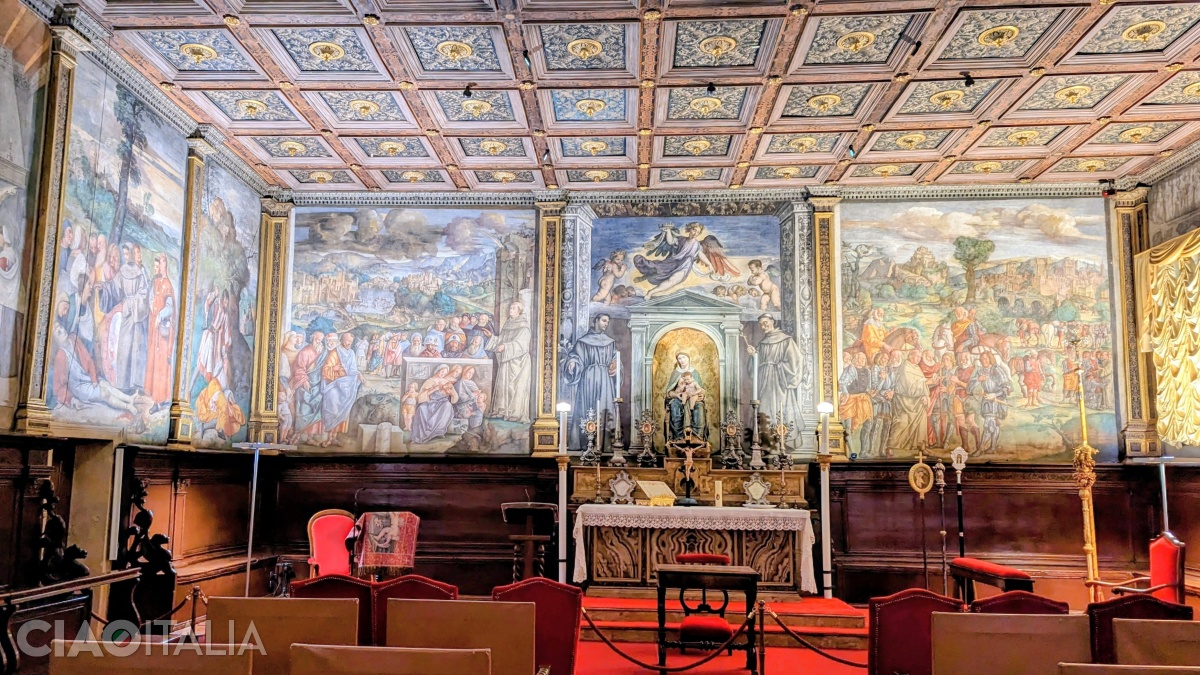
The building adjacent to the Oratory of San Giorgio is the Scuola del Santo ("School of the Saint"), also called la Scoletta ("the Little School"). This is the headquarters of the Archconfraternity of St. Anthony, founded in 1232, immediately after the death of the saint.
The building was constructed between 1427-1431, and in 1504, the upper floor was added.
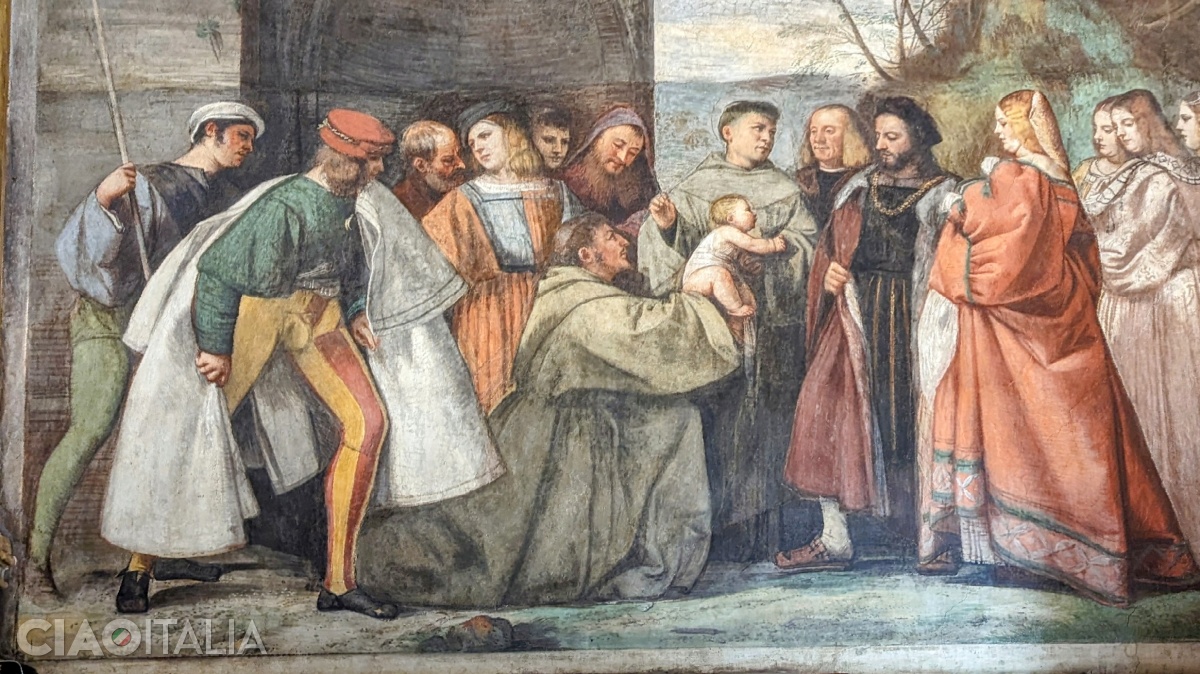
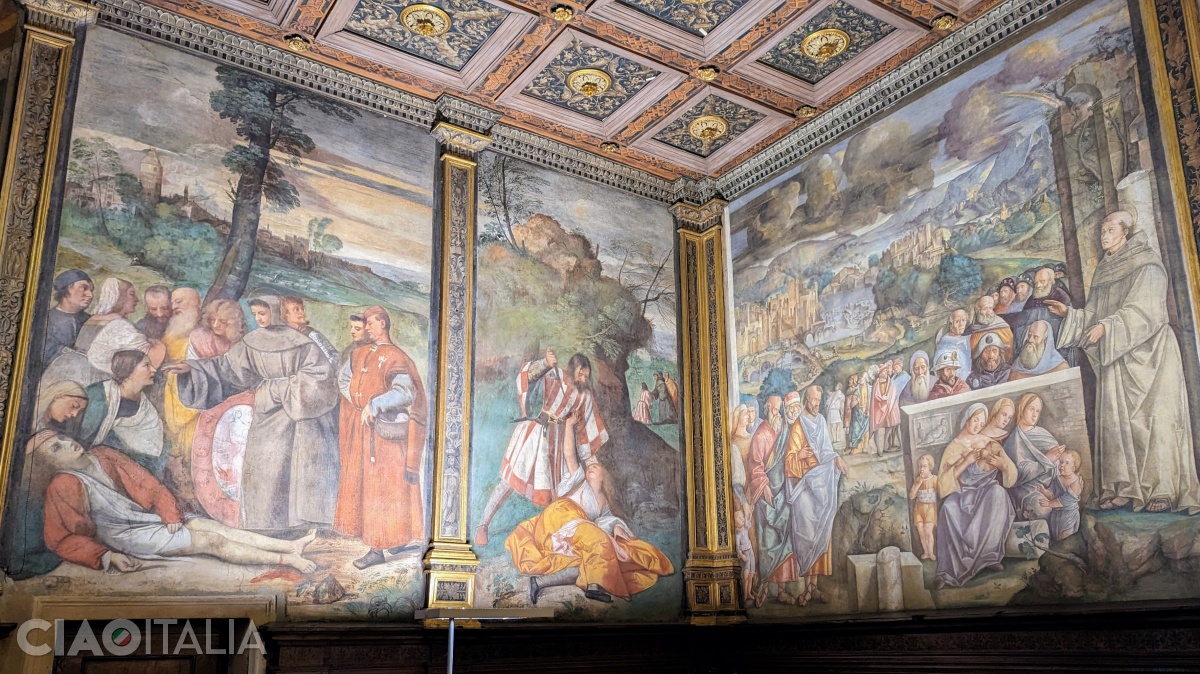
In the first half of the 16th century, the room on the first floor was decorated with 18 paintings representing the life and miracles of St. Anthony. Three of these paintings were created by Titian: "St. Anthony Makes a Newborn Speak to His Father to Prove the Mother's Honor", "A Woman Stabbed by Her Jealous Husband is Miraculously Healed by St. Anthony", and "St. Anthony Restores a Young Man's Foot".