Santa Maria delle Grazie Church in Milan
The Santa Maria delle Grazie Church is primarily known for "The Last Supper" painting, located in the former monks' dining hall, which is now transformed into the Cenacolo Vinciano Museum. Da Vinci's masterpiece aside, the church is very beautiful and worth a visit on its own, being one of the tourist attractions in Milan. Since 1980, it has been part of the UNESCO World Heritage.
Tickets for Santa Maria delle Grazie Church
Entrance to the Santa Maria delle Grazie Church is free - no tickets are required (see also the article about what you can visit for free in Milan). Keep in mind that clothing must be appropriate - shoulders should be covered, and short skirts, caps, or shorts are not allowed.
On the other hand, the Cenacolo Vinciano Museum, which houses Da Vinci's "The Last Supper", is a state museum with separate management, and you will need to purchase tickets online to visit it.
Opening Hours
Tourists can visit the Santa Maria delle Grazie Church during the following hours:
- Monday to Saturday: 9:00 AM - 12:20 PM, 3:00 PM - 5:50 PM
- Sunday: 3:00 PM - 5:50 PM
A Bit of History
Santa Maria delle Grazie is one of the 11 Dominican monastic communities in Italy.
Its story begins around the year 1460 when Gaspare Vimercati, commander of Francesco Sforza's armies, donated a plot of land to the Dominican order. This land contained a small chapel with an icon of the Virgin Mary, known as Maria delle Grazie. It was decided that a church and a monastery would be built on that site. Construction began in 1463, with architect Guiniforte Solari (who was also supervising the construction of the Milan Cathedral at the time) and was completed in 1482.
Ten years later, Ludovico Sforza, nicknamed Il Moro, the Duke of Milan, decided to renovate the complex, intending to turn it into a mausoleum for his family. To achieve this, he hired two renowned artists of the time who were part of his court: Leonardo da Vinci was tasked with painting the refectory (the convent's dining hall), and architect Donato Bramante was commissioned to modify the building, adapting its Gothic forms to the new Renaissance trends.
In the following centuries, between 1558 and 1775, the Santa Maria delle Grazie monastery became the seat of the Inquisition Tribunal. In 1799, during Napoleon's occupation, it was converted into a barracks, and several artworks were sent to France.
The complex returned to the possession of the Dominican monks only in 1924, following several restoration works. Additional restoration efforts took place after the Anglo-American bombings in 1943, which destroyed parts of the church and convent.
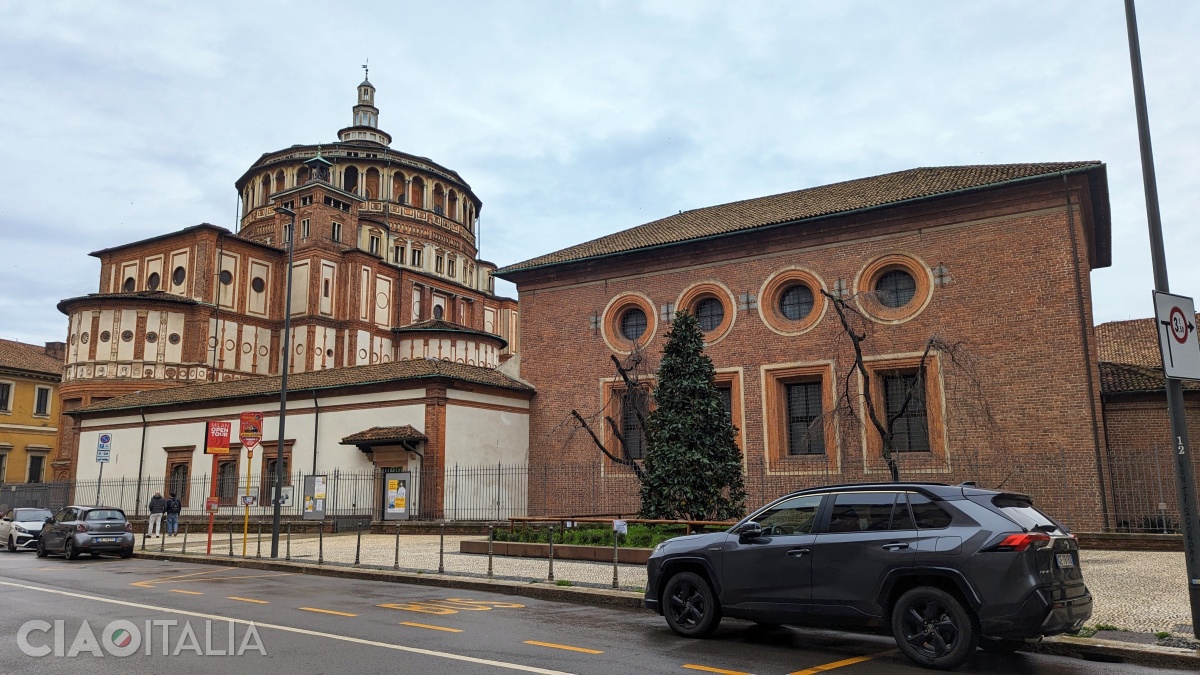
Visiting the Santa Maria delle Grazie Church
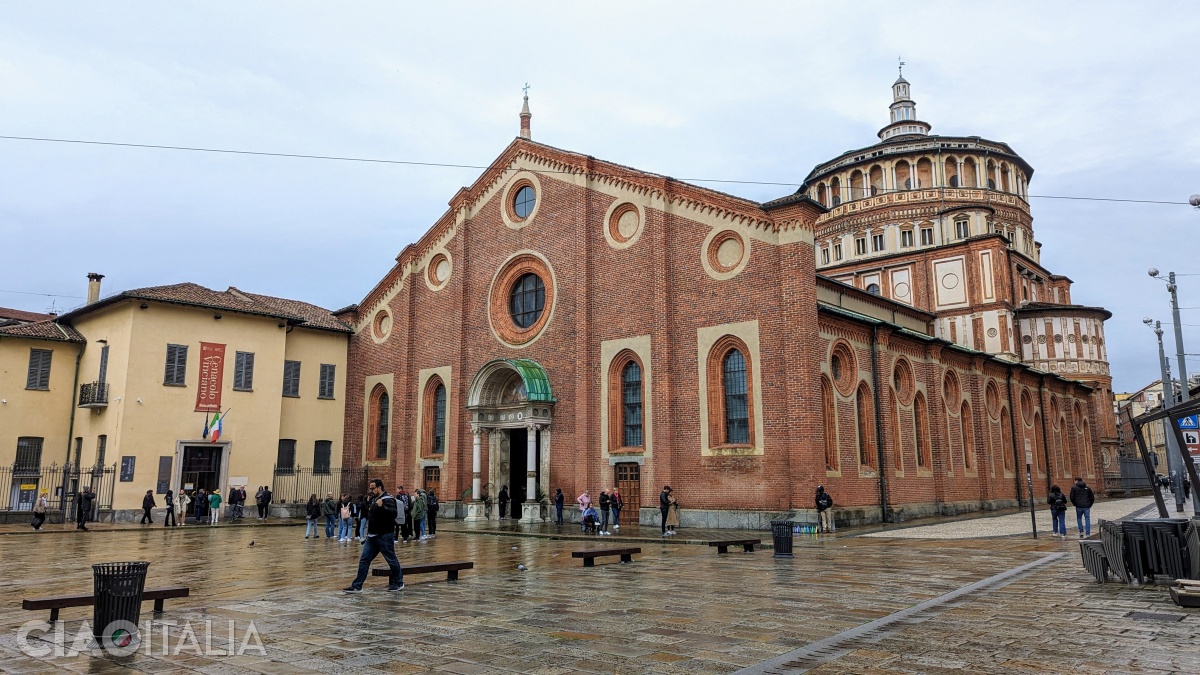
Before entering the church, take a moment to observe the façade. It is austere, built of brick in the style typical of the Lombardy region.
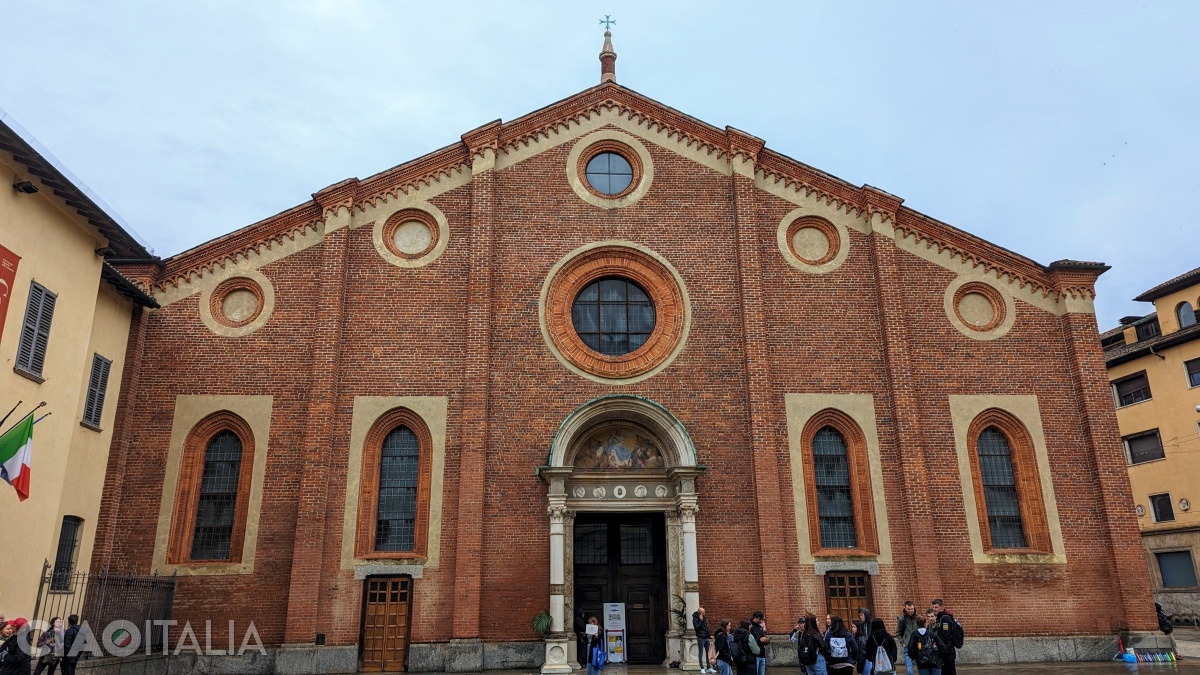
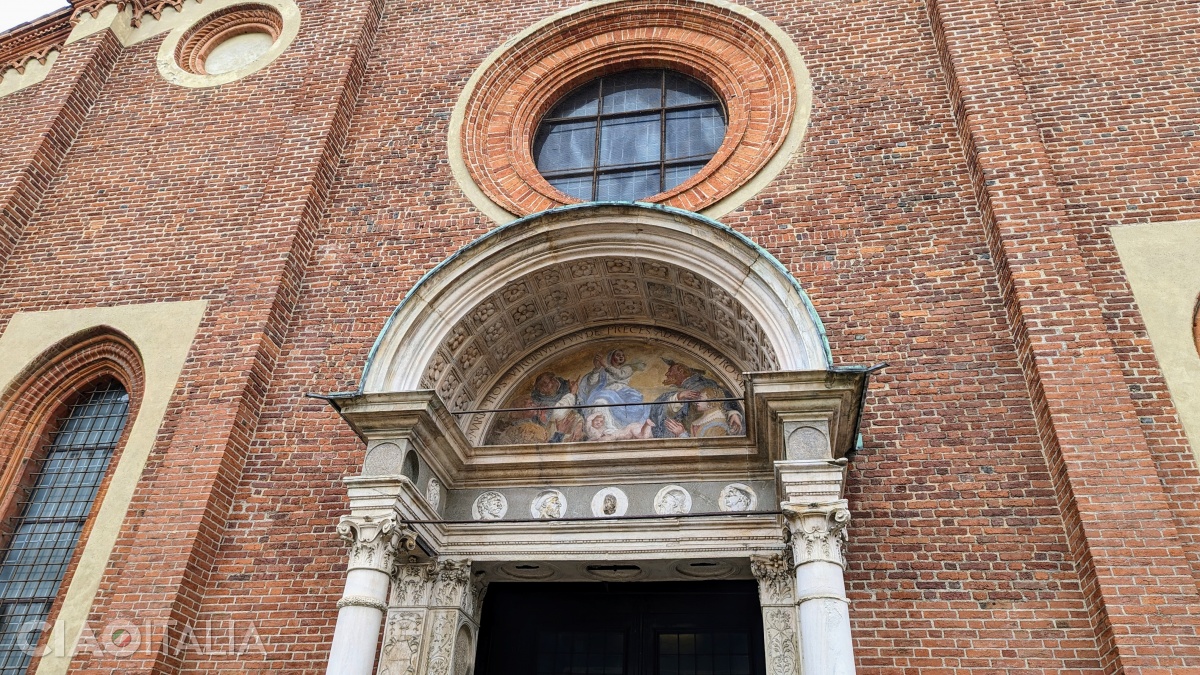
The elegant entrance portal, made of white marble, was the first alteration commissioned by Ludovico Sforza. The entablature above the two columns is decorated with five medallions depicting human figures. In the lunette above, there is an 18th-century fresco.
The interior of the church is divided into three naves, separated by granite columns with Corinthian capitals.
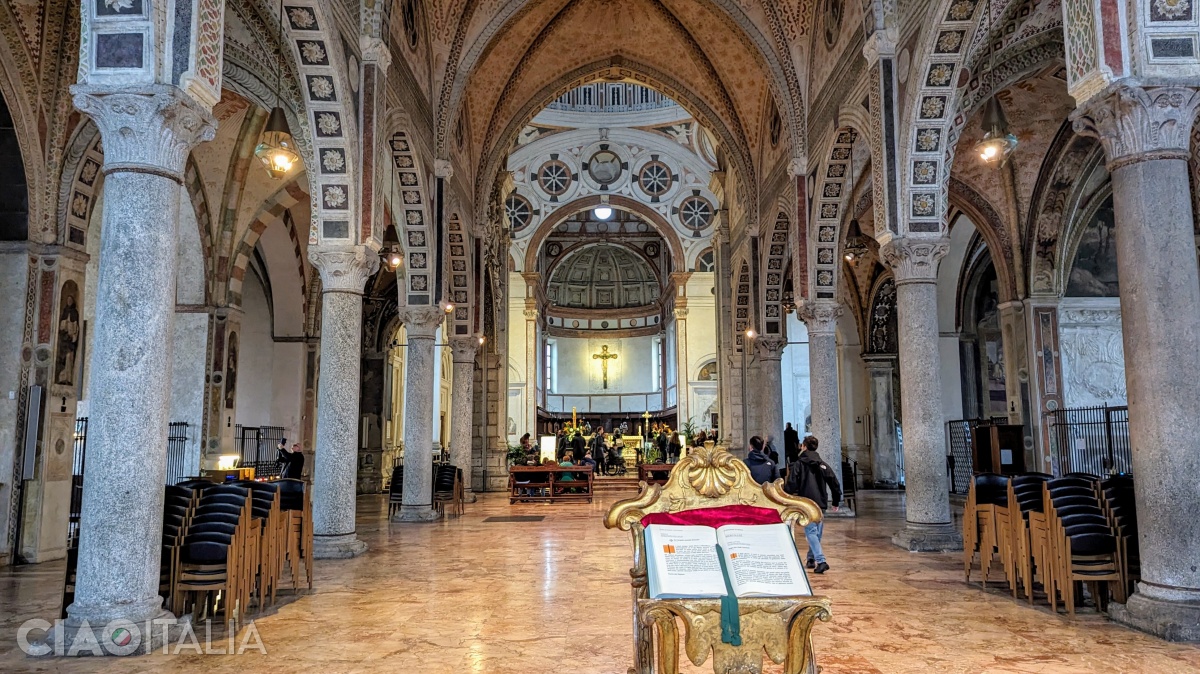
The vaults are decorated with the sun with rays, one of the most common Milanese emblems.
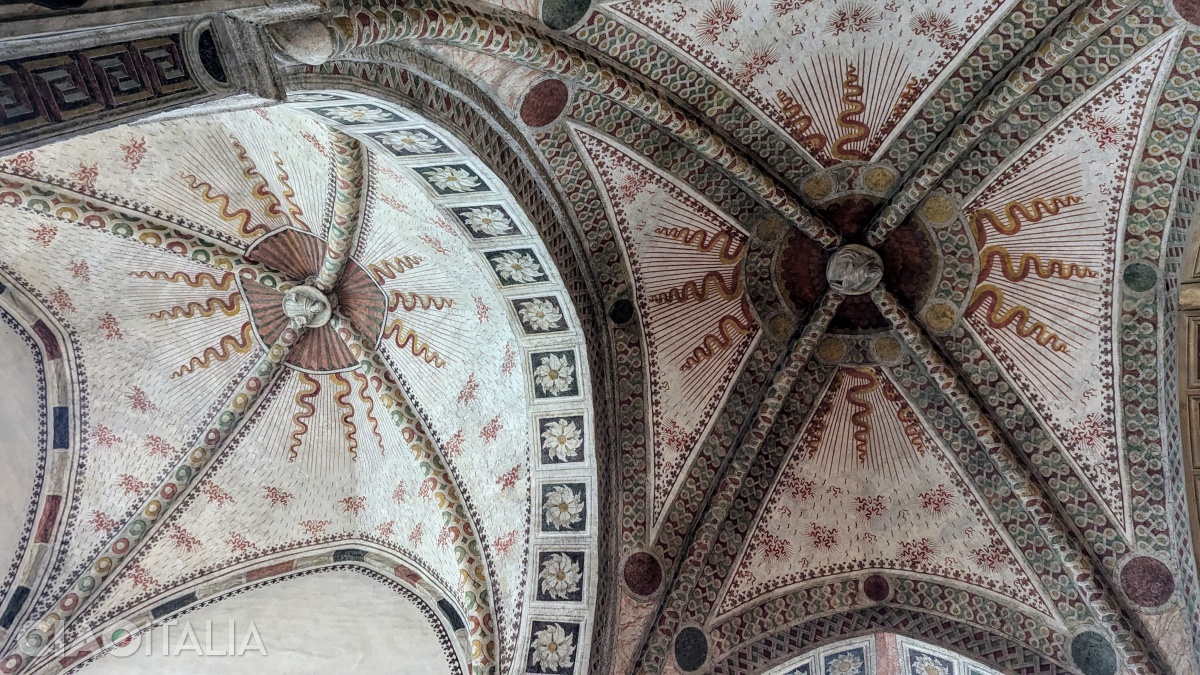
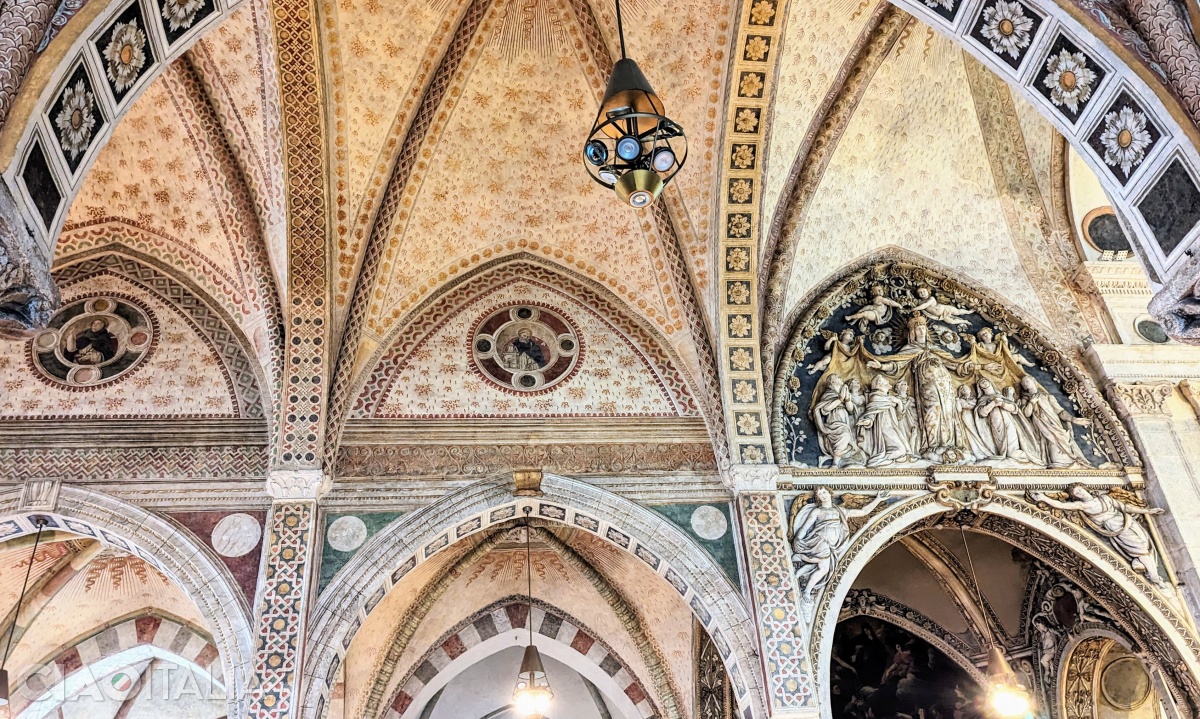
On the sides, there are several chapels that were historically used by prominent Milanese families as places of prayer and burial. The decorations adorning them were created by notable artists of the era at the expense of these families. On some of the pilasters framing the chapels, a few portraits of Dominican monks are still preserved.
The frescoes in the first chapel on the left, dedicated to Saint Catherine, were created in the 15th century by Montorfano (whose painting, "The Crucifixion", can be admired in the refectory if you visit The Last Supper). The bronze crucifix and the "Ecce Homo" terracotta statue are the works of Francesco Messina.

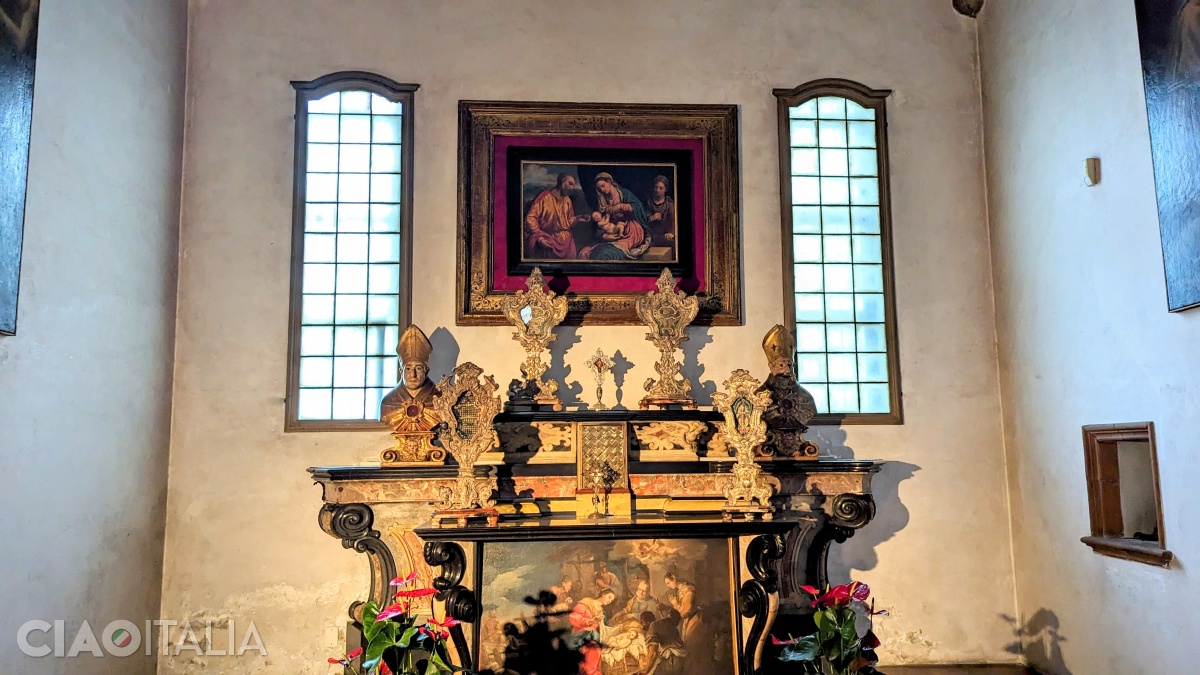
The sixth chapel on the left is dedicated to Saint Joseph. The altarpiece depicts the Holy Family with Saint Catherine of Alexandria and was painted by Paris Bordone, a disciple of Titian.
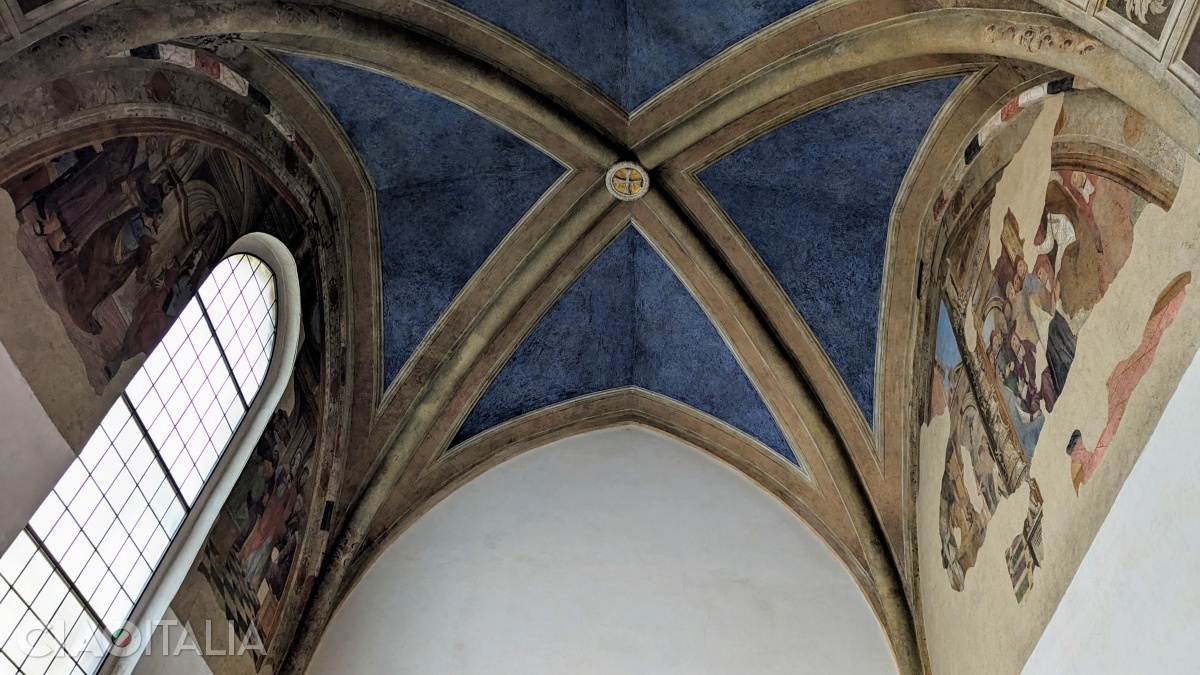
The fourth chapel on the right is the Chapel of the Holy Crown. Where the painting "The Descent from the Cross" by Tommaso Donini (17th century) now stands, there once hung Titian's "Crowning with Thorns", which was taken to the Louvre by Napoleon. The frescoes on the vault and walls were painted in 1542 by Gaudenzio Ferrari and depict scenes from the Passion of Christ: the "Crucifixion" on the left and the "Flagellation" and "Ecce Homo" on the right.
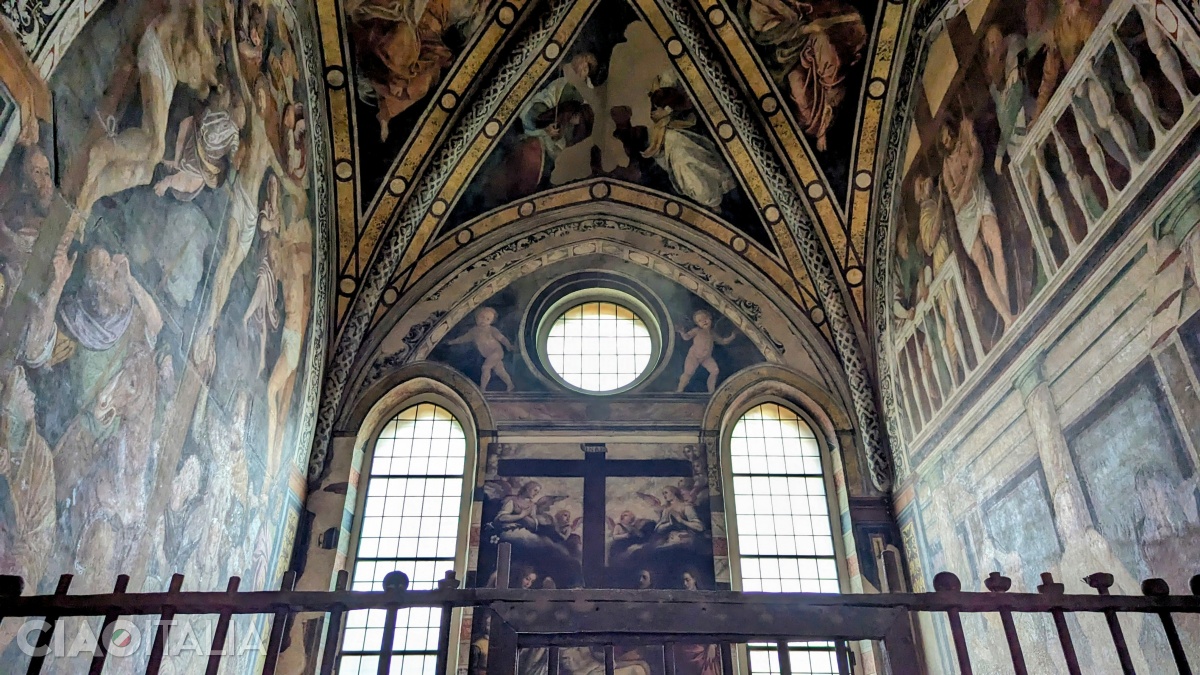
The last chapel on the left (Cappella del Rosario) is the original chapel around which the construction of the monastery began.
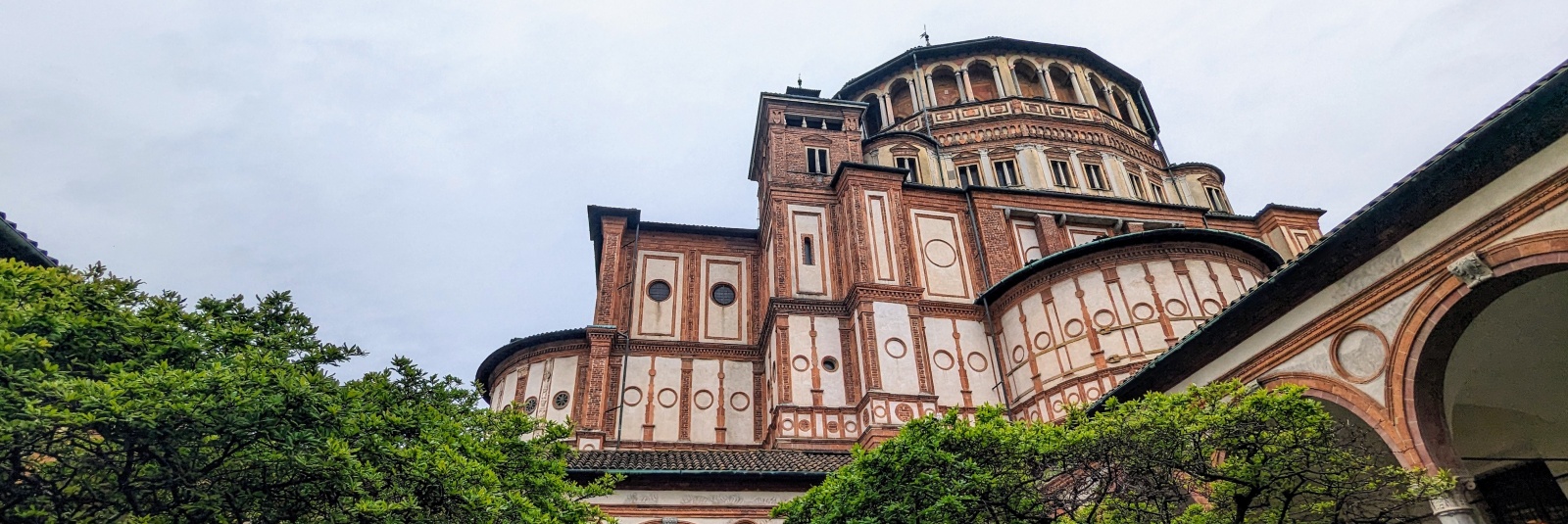
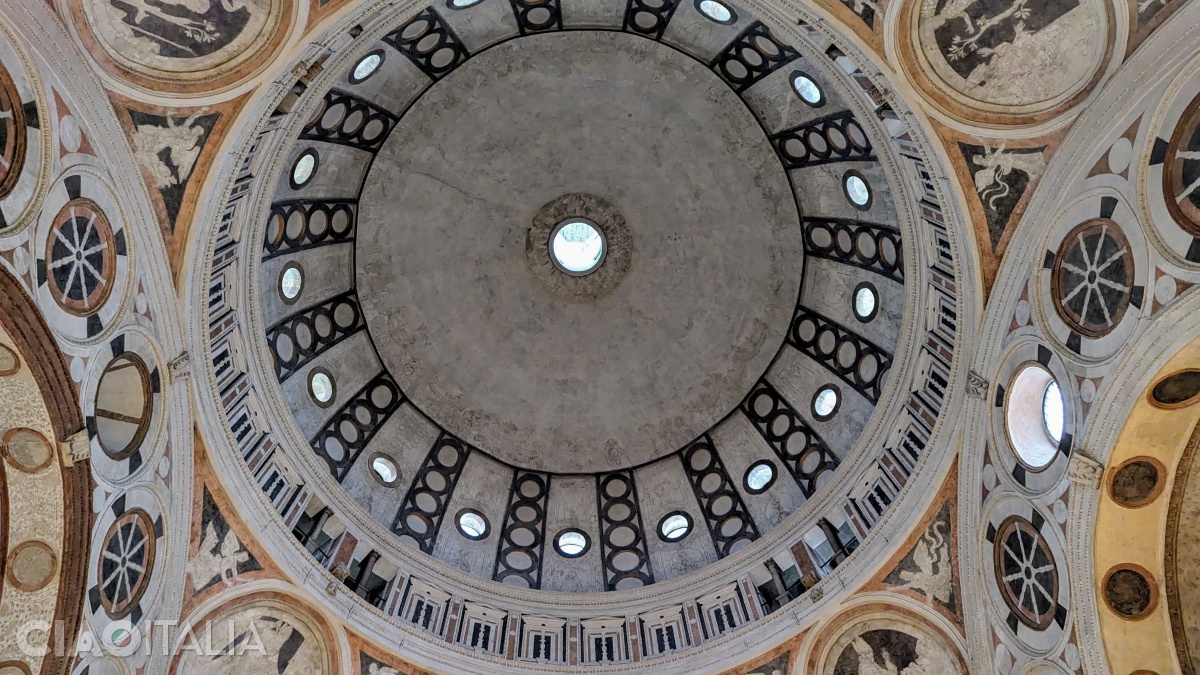
The last part of the church, elevated and featuring an imposing dome, is called the "tribune" and is considered one of the most important Renaissance achievements in northern Italy. This section was built by Bramante at the end of the 15th century, inspired by the Old Sacristy (Sagrestia Vecchia), designed by Brunelleschi for the Church of San Lorenzo in Florence. This was intended to be the burial site of Ludovico Sforza. However, the duke died in exile in France, and the funerary monument that was meant to cover his tomb and that of his wife, Beatrice d'Este, is in the Certosa di Pavia complex (which you can visit in the outskirts of Milan).
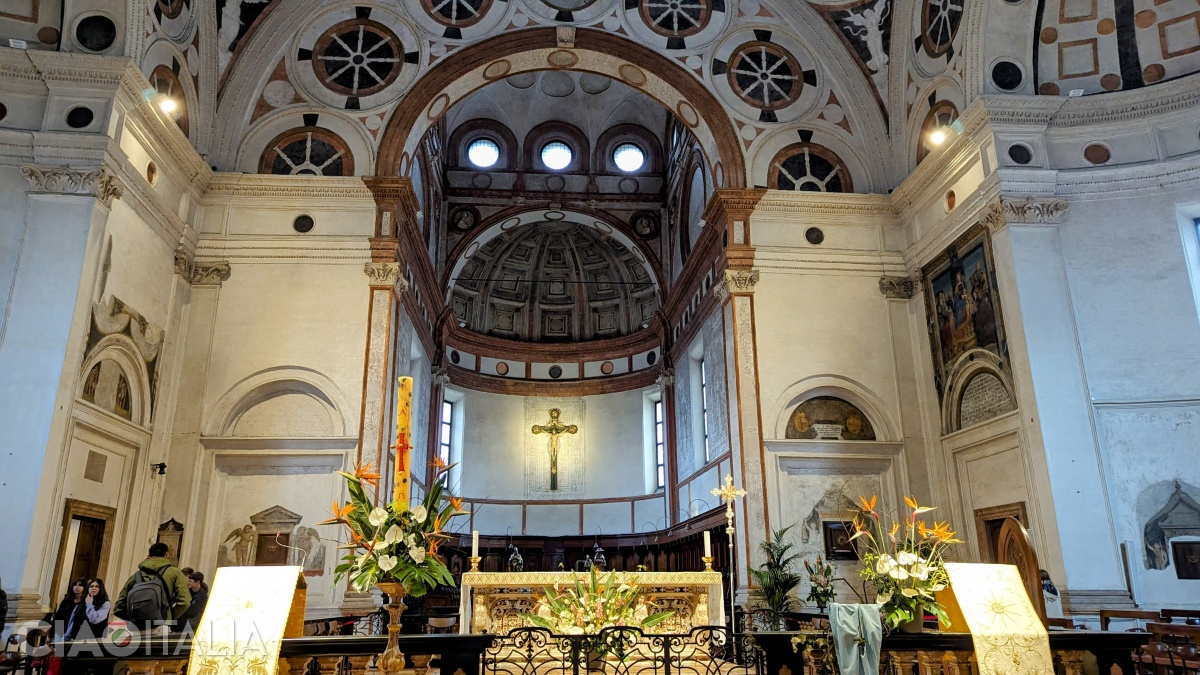
Beatrice died very young in 1497, at just 22 years old, during childbirth. Milanese legends claim that Ludovico, heartbroken, built a secret passage connecting the Sforza Castle to the Santa Maria delle Grazie Church, to visit his beloved wife’s tomb more easily. Besides the legend, there is no evidence of this tunnel's existence, and the city’s development has made it impossible for historians and archaeologists to investigate further.
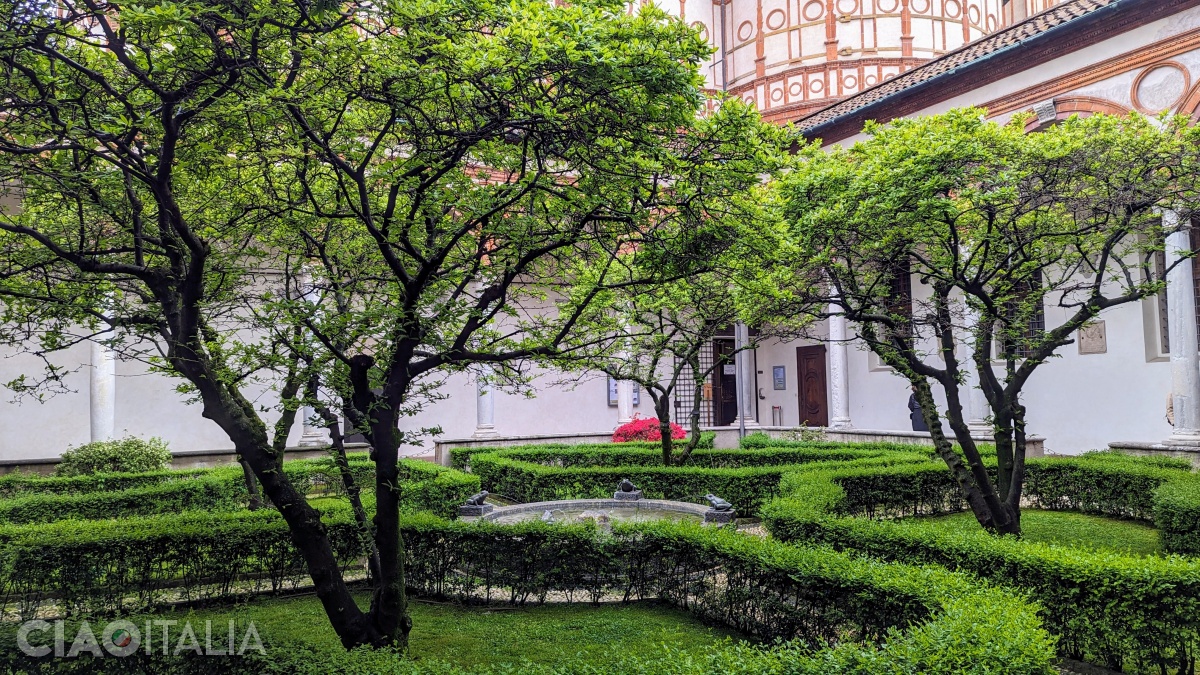
From the "tribune", you can exit into the small cloister of the monastery, also designed by Bramante. It is nicknamed the "Cloister of Frogs" (Chiostro delle Rane) due to the fountain in the center, adorned with four bronze frogs from whose mouths water flows. In spring, when everything is green and blooming, the cloister becomes a small oasis.
If you exit the complex from here, you will reach Via Caradosso, which offers a beautiful view of the exterior of the "tribune", decorated at the base with coats of arms of the Sforza family and, higher up, with medallions of saints alternating with floral motifs.