Visit "The Last Supper" in Milan
"The Last Supper" (Il Cenacolo Vinciano) is Leonardo da Vinci's most famous painting and one of the most renowned artworks in the world. Consequently, it is also one of the most visited (but also most difficult to visit) tourist attractions in Milan. Since 1980, it has been part of the UNESCO World Heritage List, along with the monastic complex where it is located.
Where is "The Last Supper" Located?
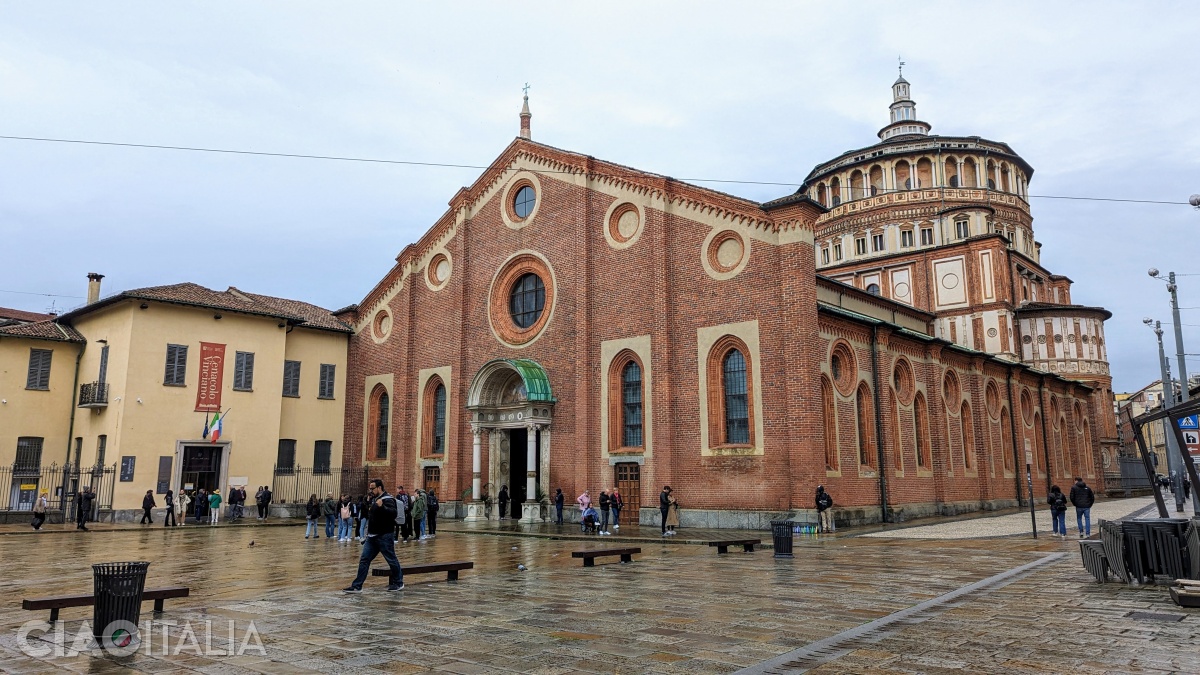
"The Last Supper" is situated in the refectory of the former Santa Maria delle Grazie monastery in Milan, painted on a wall. The refectory, which used to be the dining hall of the Dominican monks, now serves as the Cenacolo Vinciano Museum.
Since the 14th century, the dining halls of monasteries (especially in the Tuscany area, where Leonardo came from) were called cenacolo (from the word cena, meaning "dinner"). From the 16th century onwards, the term cenacolo also began to be used to refer to paintings depicting "The Last Supper", which commonly adorned the walls of refectories.
The address of the Cenacolo Vinciano Museum is Piazza Santa Maria delle Grazie No. 2. To get there, you can use Milan's public transport:
- Metro line 1 (red) - Cadorna or Conciliazione station, or line 2 (green) - Cadorna station
- Tram number 16 (Monte Velino - San Siro Stadium) - Santa Maria delle Grazie stop
- Buses 50 and 169 - Via Boccaccio stop
Ticket Prices
The ticket prices for "The Last Supper" in Milan are as follows:
- Adult: €15
- 18-25: €2
- Under 18: Free
On certain days, guided tours are available at 09:30, 11:30, 12:30, 15:00, 17:00, and 17:00, with an additional cost of €10 on top of the ticket price. The guided tour lasts 45 minutes (15 minutes in the refectory and 30 minutes outside).
How can you get tickets for "The Last Supper"?
"The Last Supper" is a precious and fragile painting that requires special maintenance conditions, including air quality control and environmental parameters. Therefore, visitor access is limited (recently, the allowed number has increased from 35 to 40 people within the same time slot) and is subject to certain rules.
You can buy tickets either from the accredited website or from experience websites like Tiqets, GetYourGuide, Musement, or Viator (where entrance tickets are included as part of guided tours).
Tickets from the Official Website
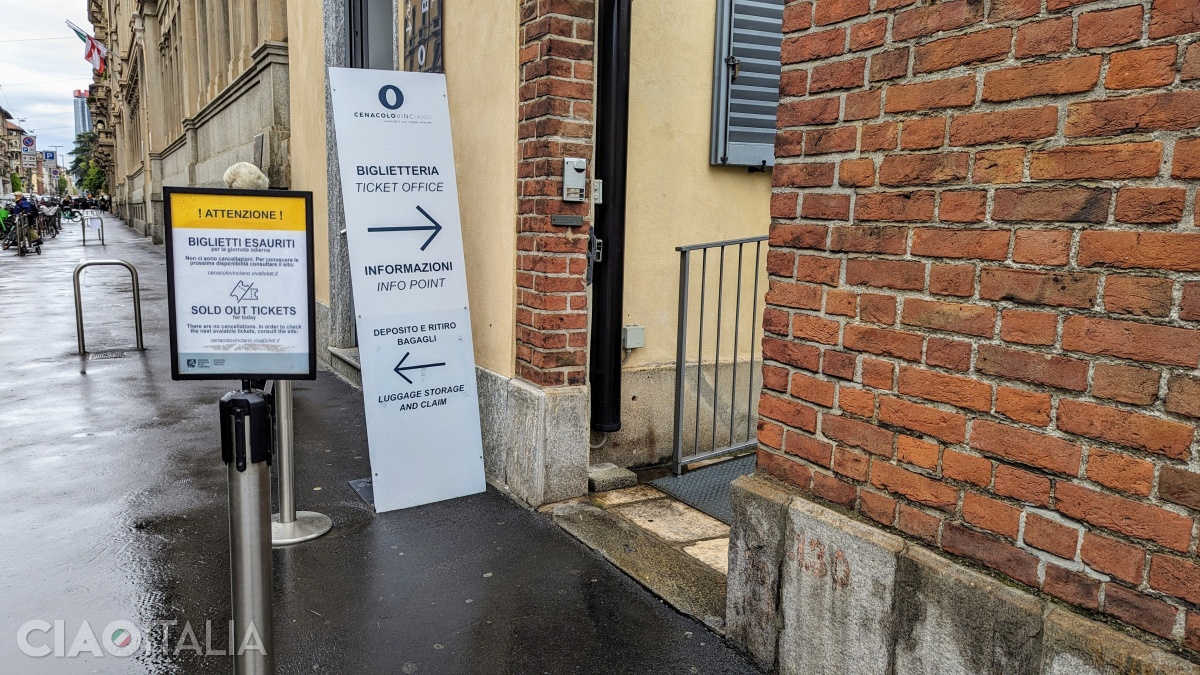
The cheapest option is to book tickets for "The Last Supper" directly on the accredited website. Unfortunately, due to the high demand, these tickets sell out quickly.
All ticket categories must be reserved online (even the free ones).
Tickets are released for sale as follows:
- In September, reservations can be made for November, December, and January.
- In December, reservations can be made for February, March, and April.
- In March, reservations can be made for May, June, and July.
- In June, reservations can be made for August, September, and October.
Every Wednesday at 12:00 PM, additional tickets are released for sale for the following week.
You can buy a maximum of 5 tickets online, twice a year.
Attention! Check the dates on your tickets. Once purchased, you won't be able to change the date and time of entry. You will only be able to change the name, up to 24 hours before the visit date. Tickets are non-refundable.
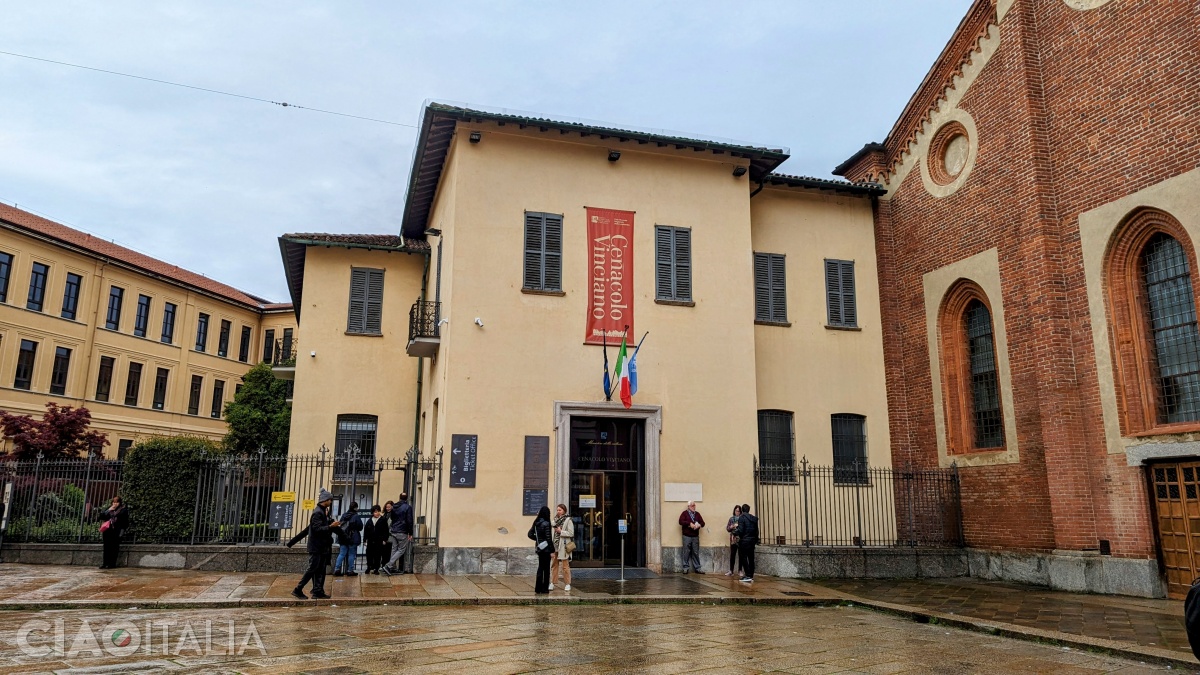
Approximately 30 minutes before your scheduled time, you will have to present your reservation and ID at the ticket office (located about 10 meters to the left of the museum). Late arrival may lead to the cancellation of your visit.
Tickets on Experience Websites
A second option is to book tickets for "The Last Supper" from experience websites (Tiqets, GetYourGuide, Musement, or Viator). The prices are higher (starting from €60 per person), but they usually include a guided tour.
In some cases, this guided tour also includes visits to other attractions, such as the Duomo or Sforza Castle.
Free Entry Days
On the first Sunday of every month, entry to "The Last Supper" is free, but even in this case, tickets must be reserved online (see also the article about what you can see for free in Milan). These tickets go on sale the Wednesday before at 12:00 PM, and it is not possible to modify the names afterward.
On free entry days, group access is not allowed, and no guided tours are organized.
Tips for the Visit
To ensure a smooth visit to "The Last Supper", keep the following tips in mind:
- Arrive at least 30 minutes before your visit time at the ticket office, located to the left of the museum. This is where you will collect your entry ticket based on your reservation, proof of payment, and any supporting documents if you have a free ticket. If you do not arrive 30 minutes prior, you risk losing your entrance (and the money paid for the ticket).
- Don't forget your ID! Tickets are personalized, so you will need to show it at the ticket office.
- Avoid bringing large luggage! Entry with large bags is not allowed, and the number of available spots in the museum’s cloakroom is limited.
- Food and drinks are not allowed inside the museum.
- Download the museum's official app before your visit for Android or iOS.
- The time you can spend inside the room where "The Last Supper" is located is limited to 15 minutes.
Visiting Hours
"The Last Supper" in Milan can be visited according to the following schedule:
- Monday: closed
- Tuesday-Sunday: 08:15 AM - 7:00 PM
- December 25: closed
- January 1: closed
The last entry is at 6:45 PM
The ticket office hours are 8:00 AM - 6:45 PM.
Visiting “The Last Supper”
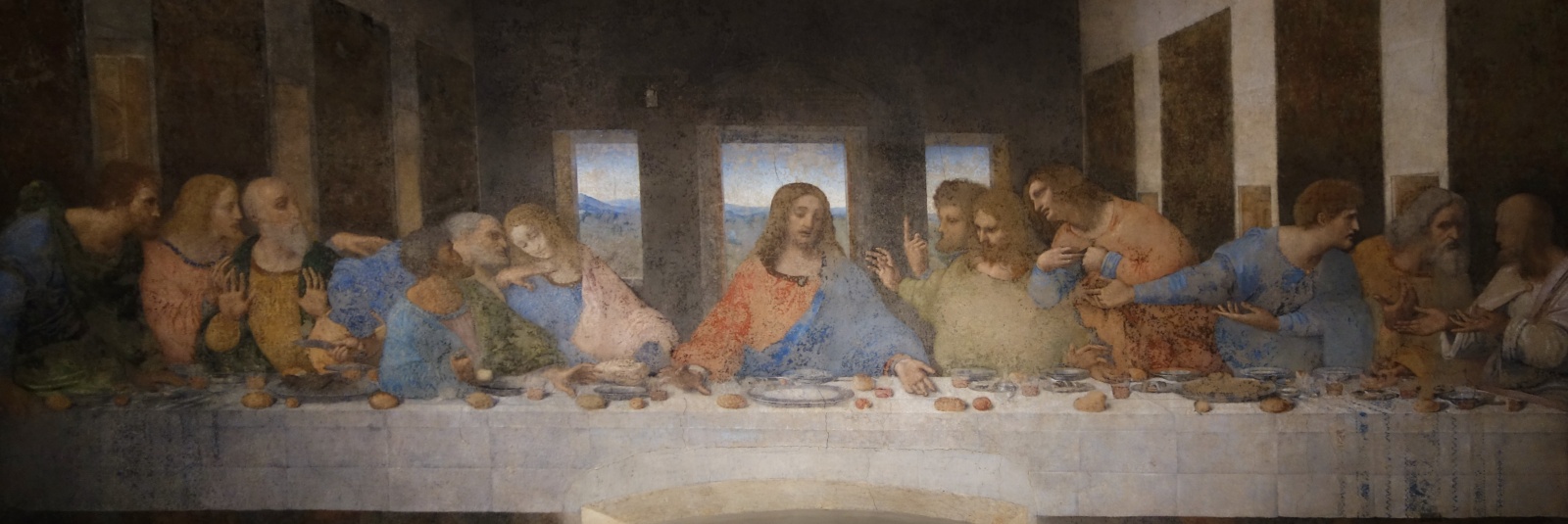
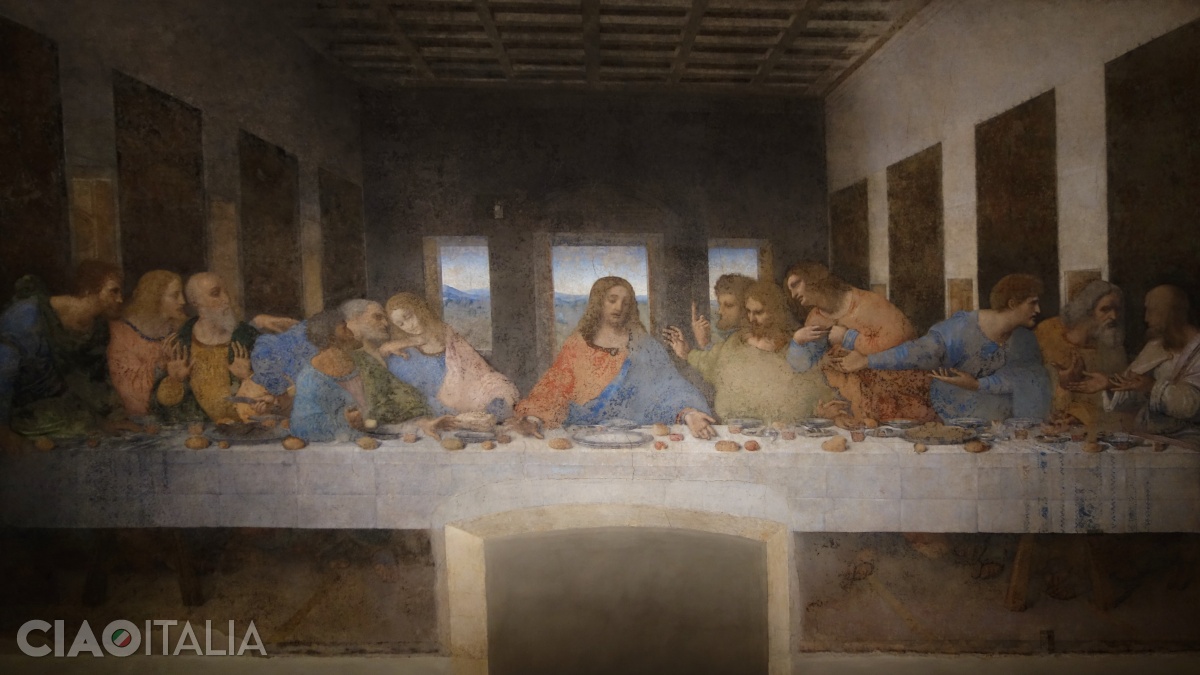
"The Last Supper" occupies the entire north wall of the refectory of the former Santa Maria delle Grazie monastery, stretching nearly 9 meters in length and about 5 meters in width.
The painting was commissioned from Leonardo da Vinci by Ludovico Sforza. The Duke of Milan wanted to turn the Dominican monastery into a mausoleum for his family. Having come from Florence (you can see some of his paintings at the Uffizi Gallery), Leonardo had already been at the Duke's court for several years and was one of the most sought-after artists of the time - the perfect choice to decorate the monastery's refectory.
Leonardo worked on "The Last Supper" for more than 4 years, from 1494 to 1498. He did not use the traditional fresco technique, with pigments fixed in wet plaster, but rather painted a secco, on dry plaster, using a technique that kept the pigments on the surface of the wall. This approach allowed him to work more slowly and make changes to the painting, but, later, it also caused numerous problems. The painting was affected by moisture, dust, and candle smoke and began to deteriorate just a few years after its completion.
"The Last Supper" has gone through all sorts of ordeals. As early as the 18th century, it underwent several restoration attempts, some more successful than others. It is said that at one point, the monks either washed or whitewashed it. During Napoleon's invasion, the troops stationed in the monastery used the wall for target practice, and in 1943, during the bombings of World War II, it came dangerously close to destruction when the vault and one wall of the refectory collapsed. Several restoration campaigns followed, spanning several decades and accompanied by careful environmental monitoring to ensure that the painting could be exhibited to the public.
Before Leonardo, in all paintings depicting "The Last Supper", Jesus and the apostles were shown sitting on one side of the table, while Judas was on the opposite side, with his back to the viewer, marked as the traitor. Leonardo chose to represent all the characters on the same side of the table, capturing the dramatic moment when Jesus announces that one of the apostles will betray him, and depicting the mixed emotions and feelings on each character's face.
The scene takes place in a room with a coffered ceiling and walls decorated with tapestries. The three windows at the back reveal a hilly landscape. On the long table, covered with a white cloth, there are plates with fish, bread rolls, and glasses of red wine.
Jesus occupies a central position, while the 12 apostles are depicted on either side of him, arranged in groups of three. From left to right, we see:
- Bartholomew, James the Younger, and Andrew, raising their palms;
- Judas, holding the money bag, and Peter, with a knife in hand, leaning toward John, who is next to Jesus;
- James, with open arms, Thomas, raising his index finger, and Philip, standing with his hands on his chest;
- Matthew, with his face turned, but his arms directed toward Jesus, and Jude Thaddeus, conversing with Simon the Zealot.
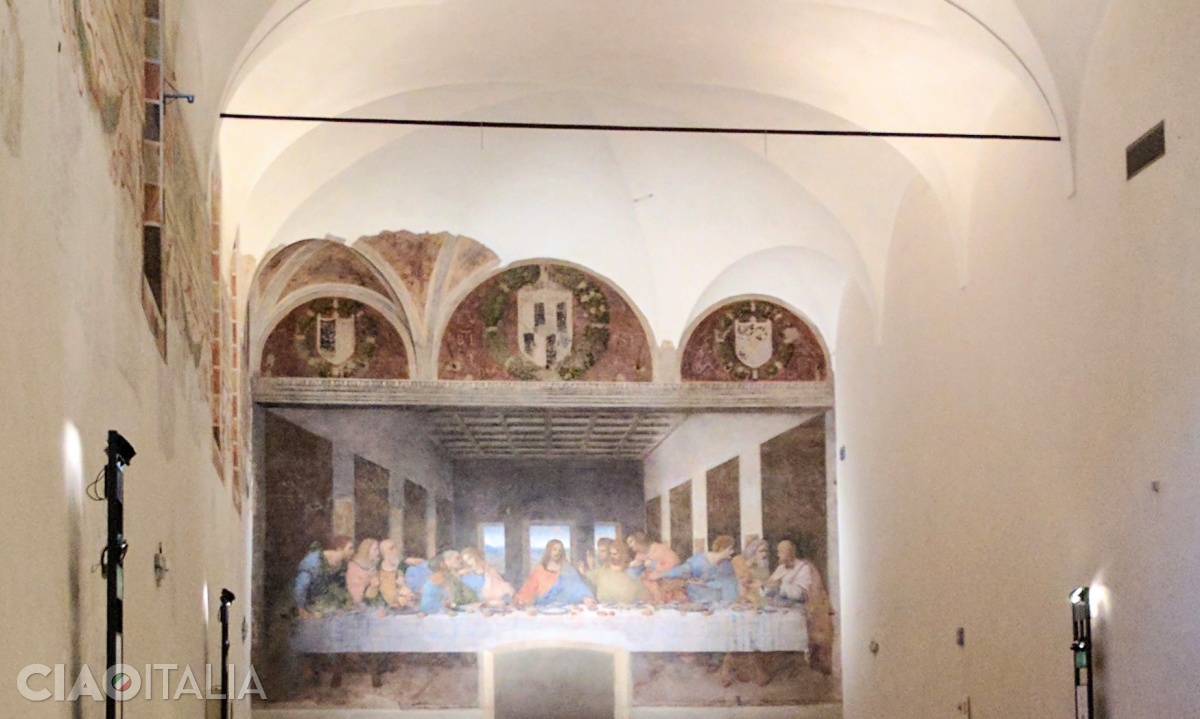
The three lunettes above the painting were also created by Leonardo da Vinci. The central lunette features the coat of arms of Ludovico Maria Sforza and his wife, Beatrice d'Este, while the side lunettes display the heraldic symbols of their sons.
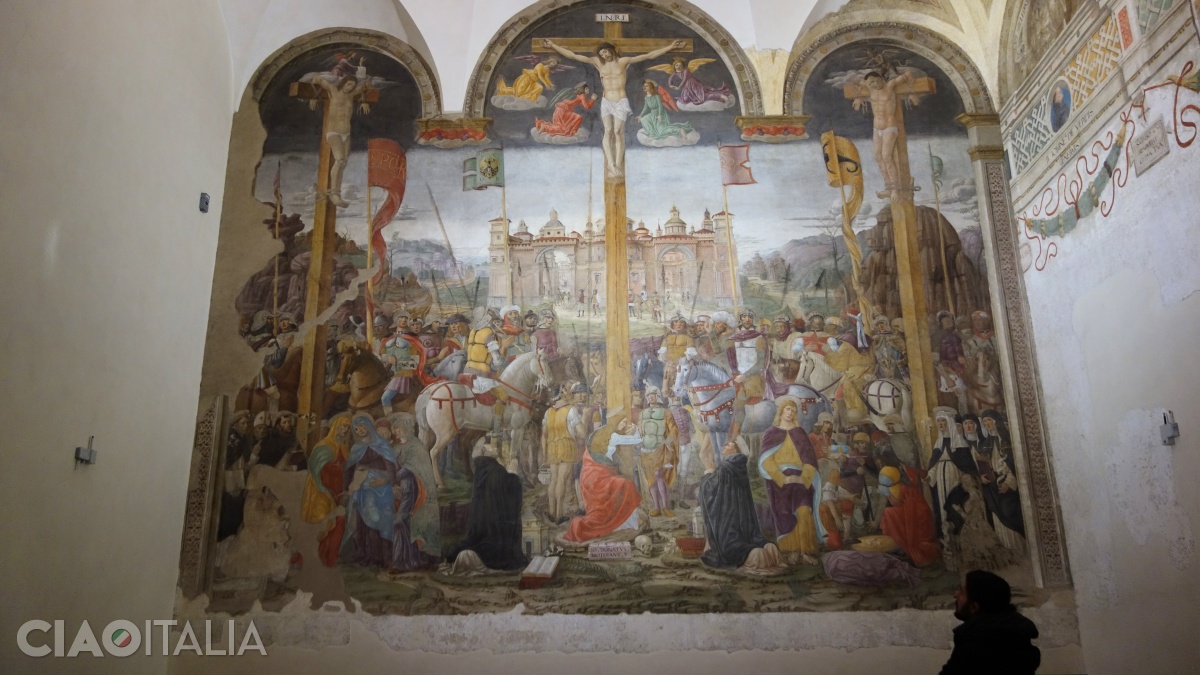
On the opposite wall - the south wall - is the "Crucifixion", painted by Giovanni Donato Montorfano, a painter from Lombardy. The stone block at the base of the cross bears his name and the year 1495. Since it was made using the traditional technique, this work has withstood the passage of time much better.
At the bottom of the fresco, Leonardo painted the portraits of Ludovico Sforza and his eldest son, Ercole Massimiliano, on the left, and his wife, Beatrice d'Este, with their son Francesco, on the right. These portraits are no longer preserved today.
Curiosities about “The Last Supper”
Like any famous work of art, "The Last Supper" is surrounded by curiosities:
- "The Last Supper" is likely the painting that has undergone the most restorations over time. The latest restoration took over 22 years (from 1977 to 1999).
- To paint the table at which Jesus and the apostles are seated, Leonardo used as a model the very table used by the monks in the monastery's refectory.
- According to some theories, the hand holding the knife might not belong to the apostle Peter but to Judas. However, the numerous restorations the painting has undergone make this difficult to verify.
- It is said that Judas Thaddeus (the penultimate apostle on the right) might be Leonardo da Vinci himself.
- None of the characters in the painting have halos because they are depicted while still alive.
- All the faces are illuminated, except that of Judas, which remains in shadow.
- The way Leonardo da Vinci chose to portray the apostle John is highly controversial. The character has such feminine features that some have argued it might be Mary Magdalene rather than John. Traditionally, however, the apostle has also appeared in older medieval and Renaissance paintings with youthful, beardless features.
- If you look at the lower part of the painting, you will notice that the feet of the characters can still be seen under the table - except for those of Jesus. In 1652, the Dominican monks decided to enlarge the entrance connecting the dining room with the kitchens, cutting through the wall and destroying that part of the fresco where the feet of Christ were painted, now replaced by a door.
- In the early 17th century, when it was believed that the original painting would be irretrievably lost, Cardinal Federico Borromeo ordered a copy to be made. Today, this copy is housed in the Ambrosiana Gallery (which you can also visit with combined tickets that include also the Milan Cathedral).
- In 1726, "The Last Supper" was "restored" by a so-called specialist who promised the monks a miraculous potion that would restore the painting’s original brilliance. The result was not only disappointing, but the next painter hired to restore it caused even more damage.
- In 1796, during the French occupation, one of Napoleon's generals turned the dining room into a stable.