Visit Massimo Bellini Theatre in Catania
The Teatro Massimo Vincenzo Bellini is one of the main tourist attractions in Catania and could easily stand alongside other renowned Italian theatres, such as La Fenice in Venice, San Carlo in Naples, or La Scala in Milan.
Ticket Prices
The theatre can be visited with guided tours, which last about 45 minutes and are held in English and Italian. Accompanied by the guide, you will get to see the stage, one of the boxes (if you're lucky, it will be the royal box), and the beautiful foyer on the upper floor.
The price for a guided tour is:
- Adult: €6.5
- Over 65: €4.5
- Children under 18: €4.5
Tickets can be purchased directly from the theatre's box office.
Visiting Hours
The Massimo Bellini Theatre can be visited from Tuesday to Saturday.
Guided visits take place at 09:00, 10:00, 11:00, and 12:00.
Please note: Due to maintenance work, visits are temporarily suspended starting from May 10, 2026.
A Visit to the Teatro Massimo Bellini
The idea of having a public theatre in Catania emerged as early as the 1700s, when the city was in the full fervour of reconstruction following the devastating earthquake of 1693.
The construction, enthusiastically started in 1812, was repeatedly hampered by issues such as a lack of funds, bankruptcy, and a cholera epidemic. As a result, the Teatro Massimo was inaugurated only in 1890. The first opera performed on the new theatre's stage was Vincenzo Bellini's Norma (which Maria Callas would also perform in Catania in 1950).
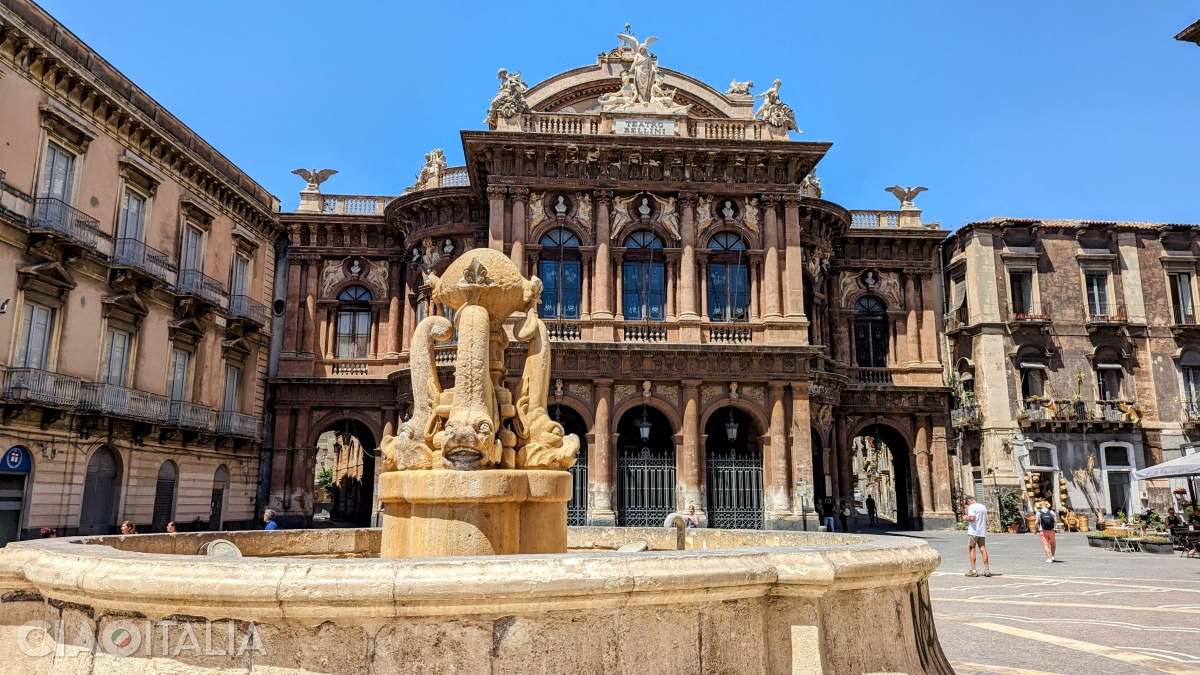
The architect who designed the building was Carlo Sada from Milan. As Italy had only recently unified and disagreements between the South and the North were prevalent, the inhabitants of Catania did not welcome him with open arms. Furthermore, when the theatre was inaugurated, he was actually forced to buy a ticket to attend the performance.
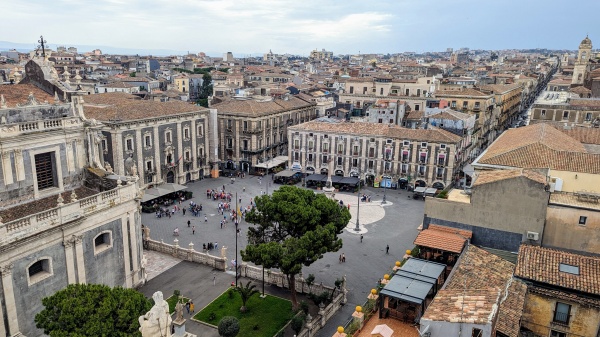
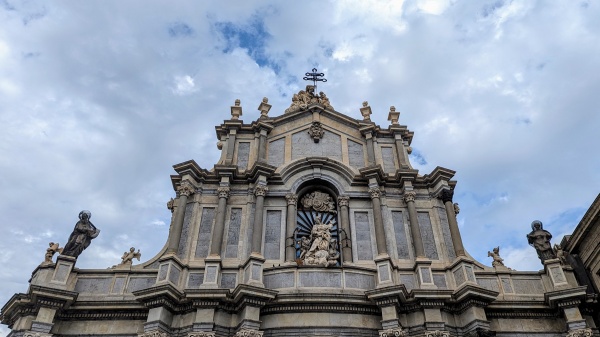
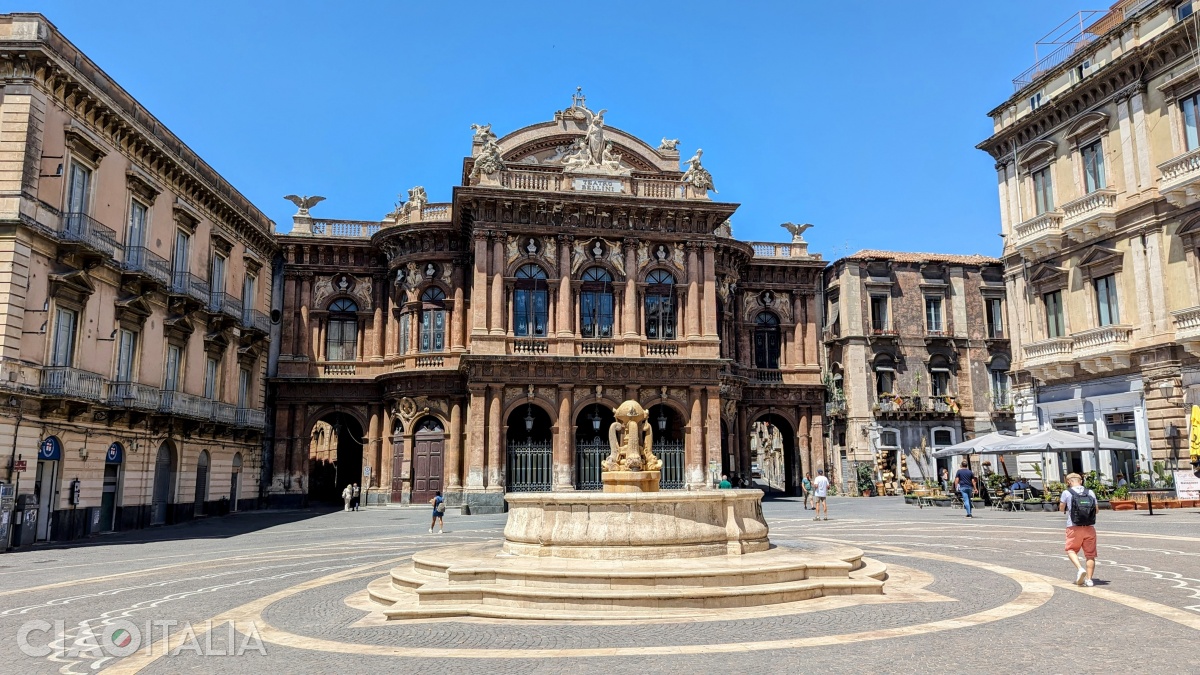
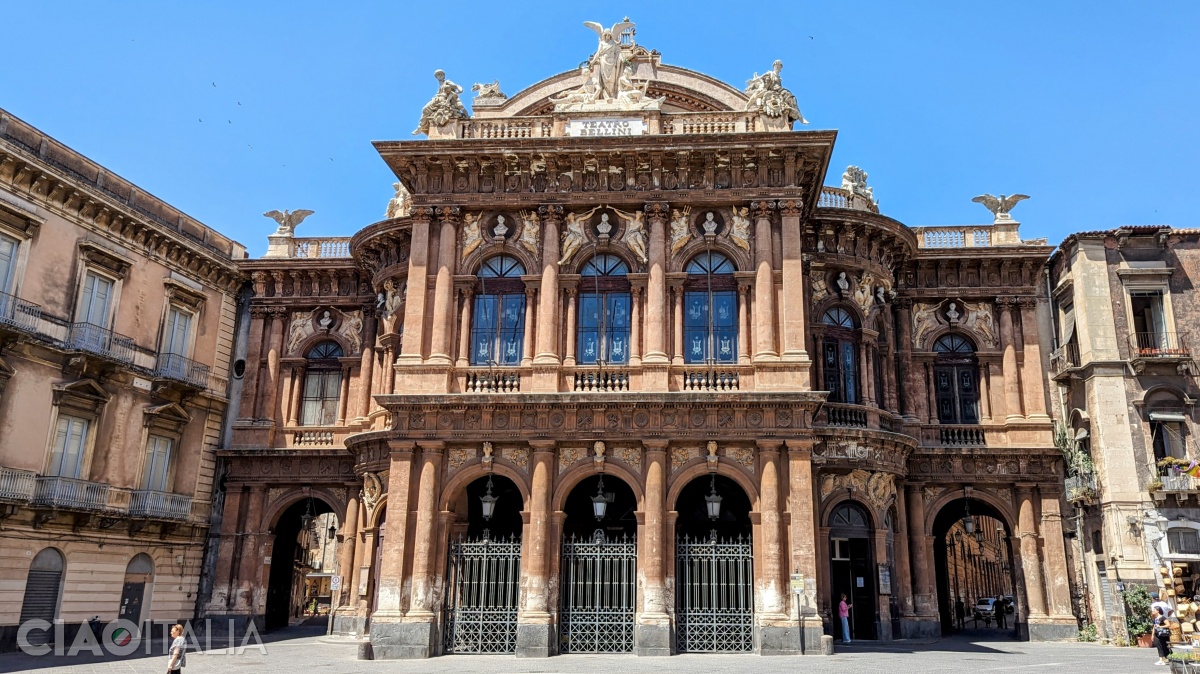
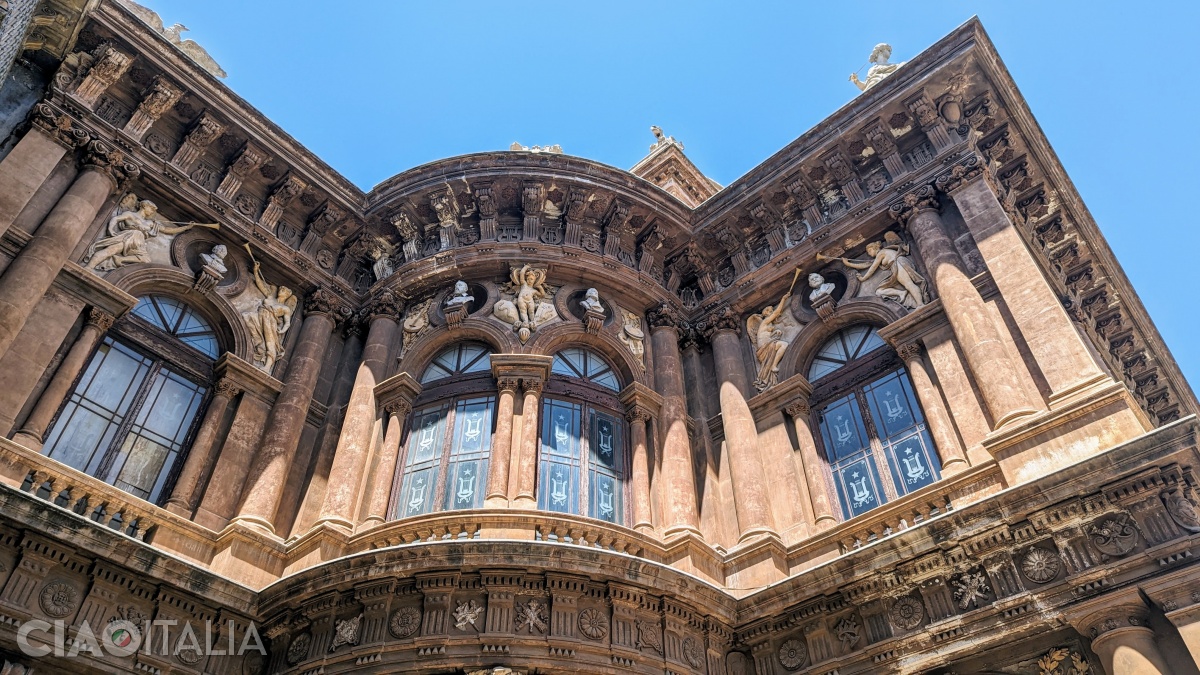
The façade, in an eclectic style, is adorned with statues and busts of great Italian composers. Through its lateral wings, it joins with the other buildings, forming a unified complex and thus enclosing Piazza Vincenzo Bellini.
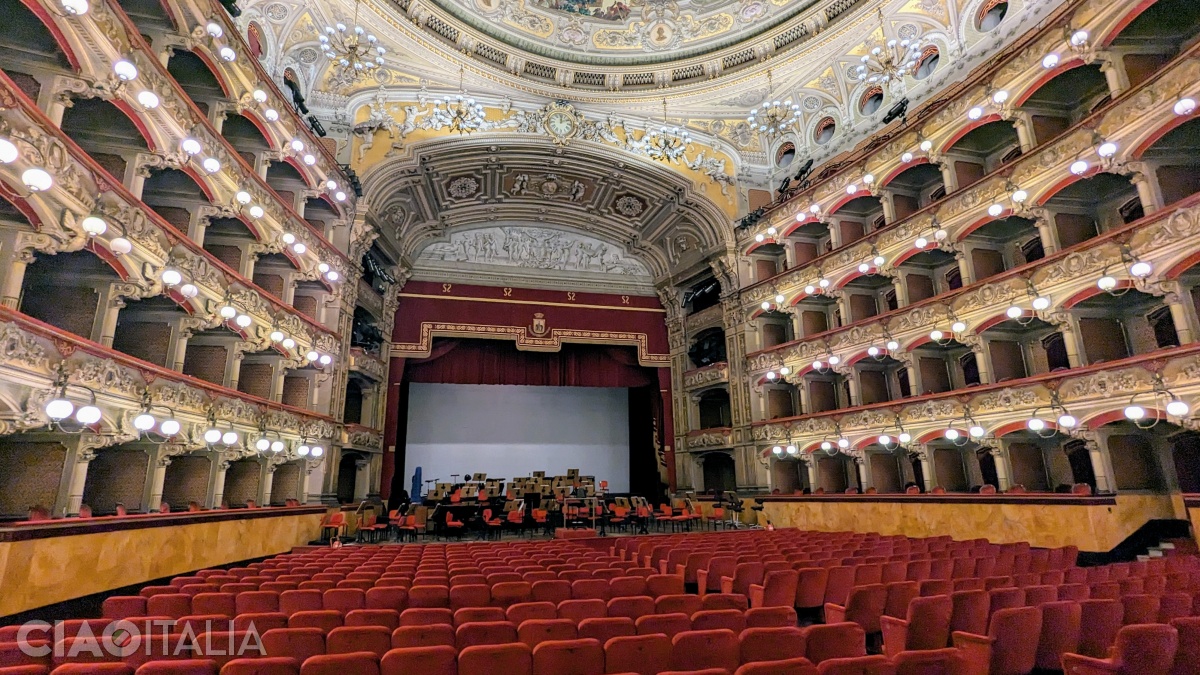
The hall, beautiful and elegant, can accommodate up to 1200 people. It is said that its excellent acoustics are due not only to its horseshoe shape but also to the fact that the River Amenano flows underneath it.
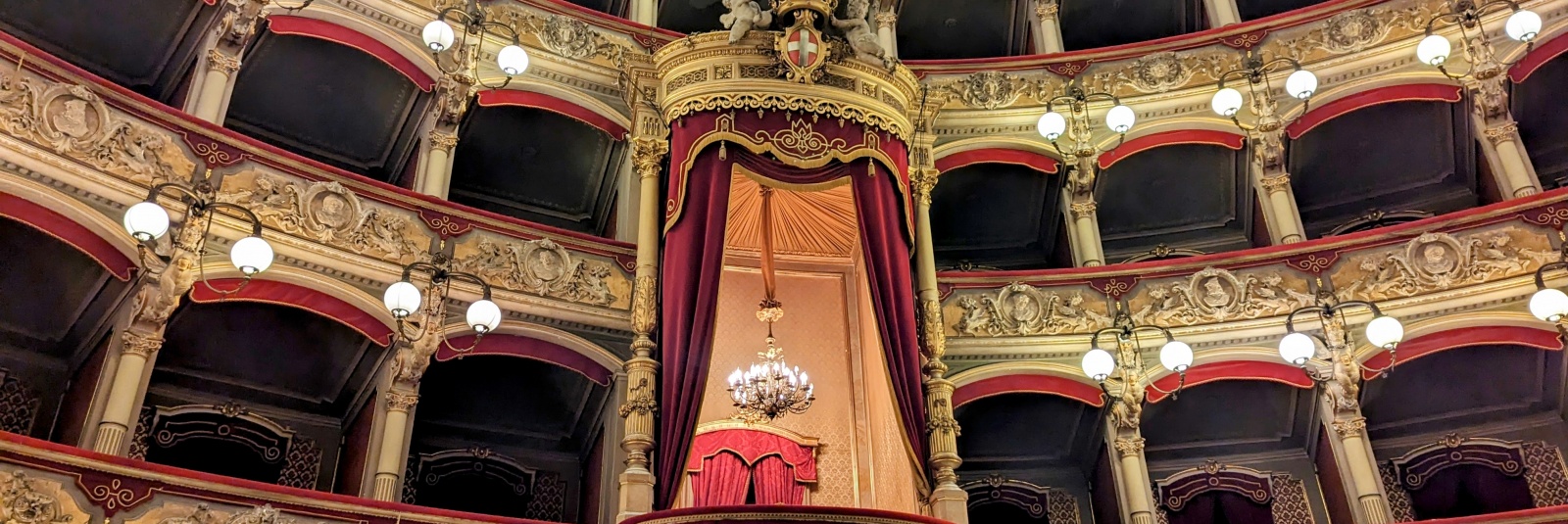
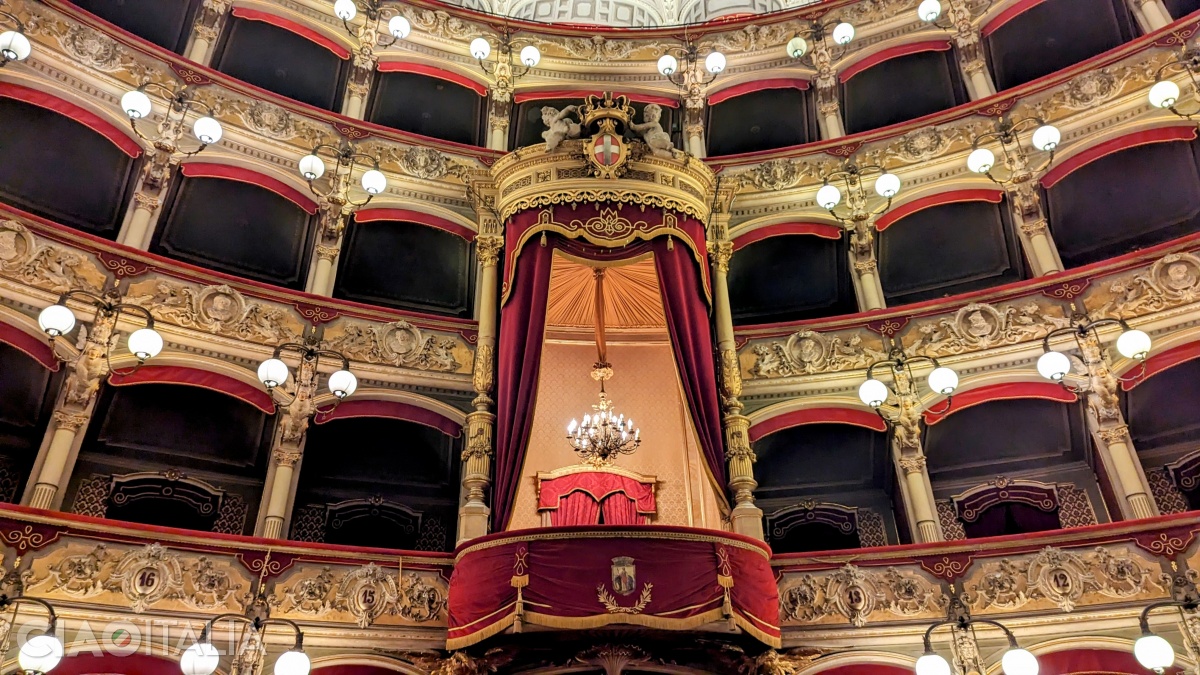
The 113 boxes are arranged on four levels. In the past, seats were allocated according to noble rank - the more important you were, the closer you sat to the king. The richly decorated royal box is in the middle, directly opposite the stage.
Up in the gallery sat the common people (for the theatre was for everyone) who, paradoxically, actually benefited from the best acoustics.
The round windows with small curtains, above the gallery, were intended for widows. Being in mourning and not wearing jewellery, etiquette did not allow them to show themselves to the king.

In the six longer boxes, located on either side of the stage - where various equipment is installed today - unmarried girls used to sit. This way, they could be seen up close by the performers who could become future suitors.
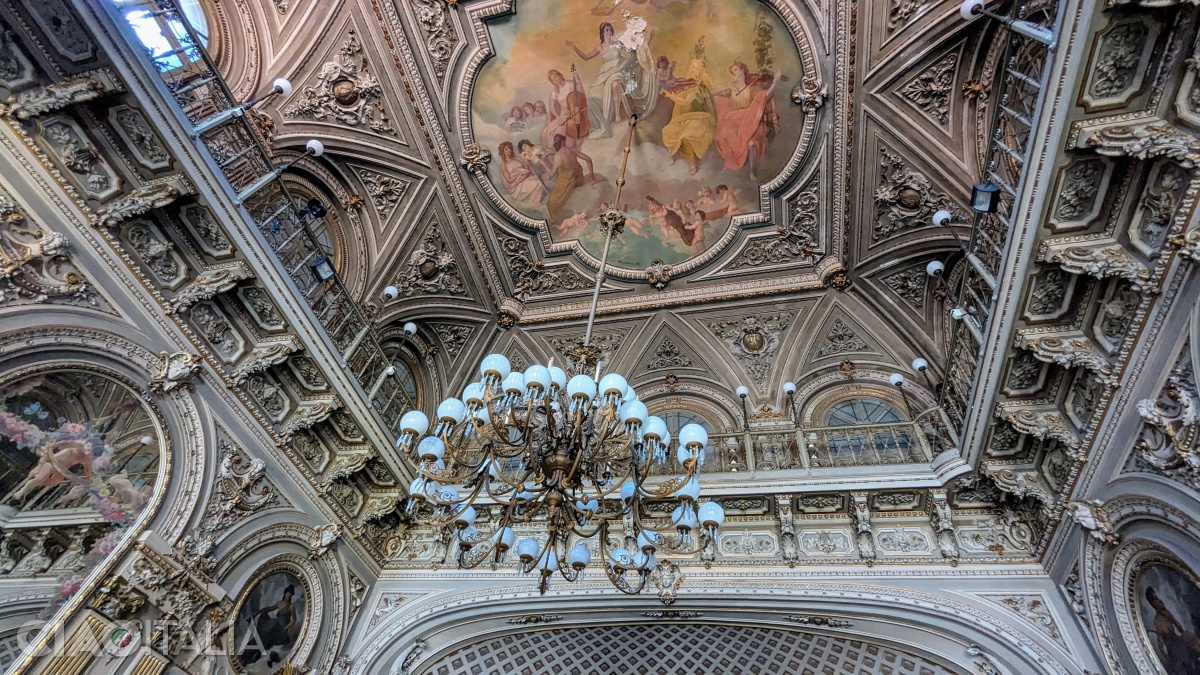
The hall's ceiling is adorned with frescoes. In the center, the "Apotheosis of Bellini" is painted; the semi-circles represent his main operas (Norma - from which the name of one of the most famous dishes of Sicilian gastronomy, pasta alla norma, is derived - La sonnambula, I Puritani, and Il Pirata); and the smaller circles feature allegories of the seasons.

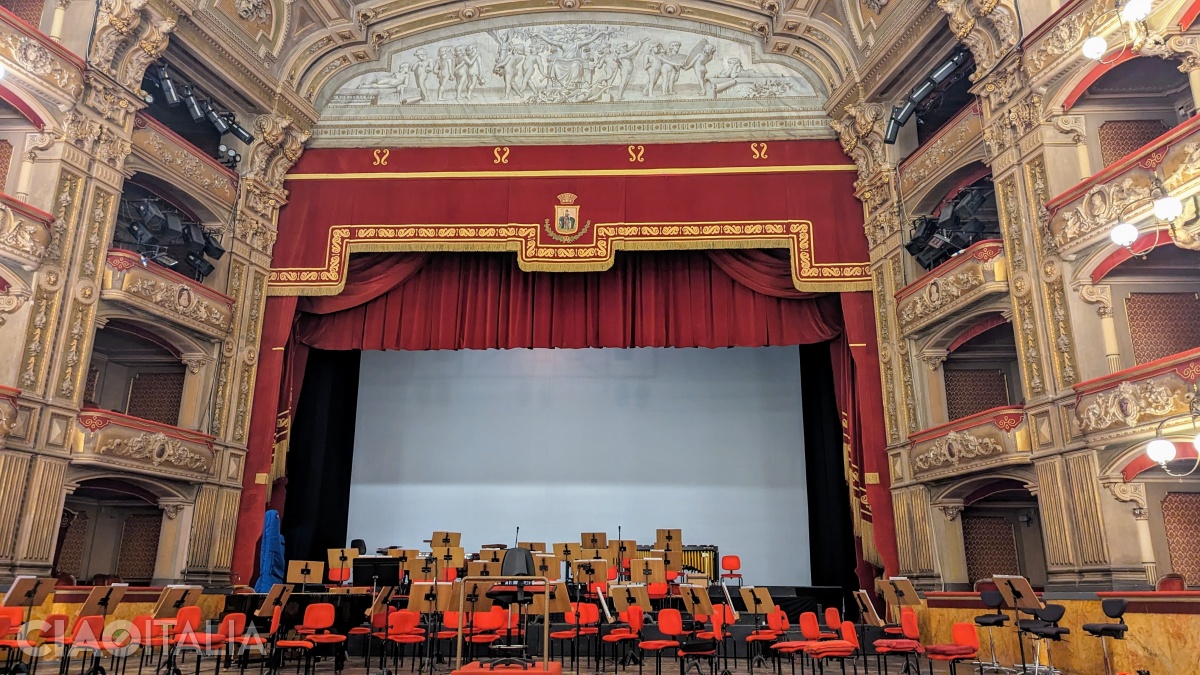
On either side of the clock above the stage, six angels symbolize day and night.
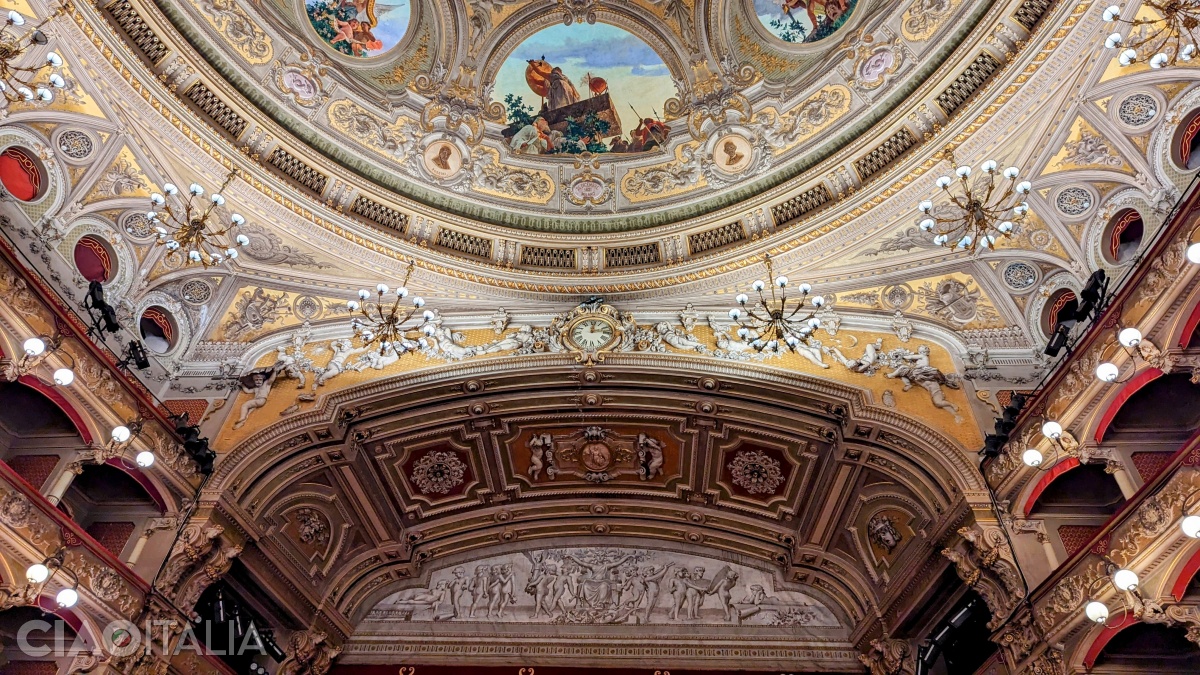
The historic curtain was painted by Giuseppe Sciuti. He chose to represent a legendary episode, undocumented by any historical source, but whose idea excited the people of Catania: "The Triumph of the Catanese over the Libyans".
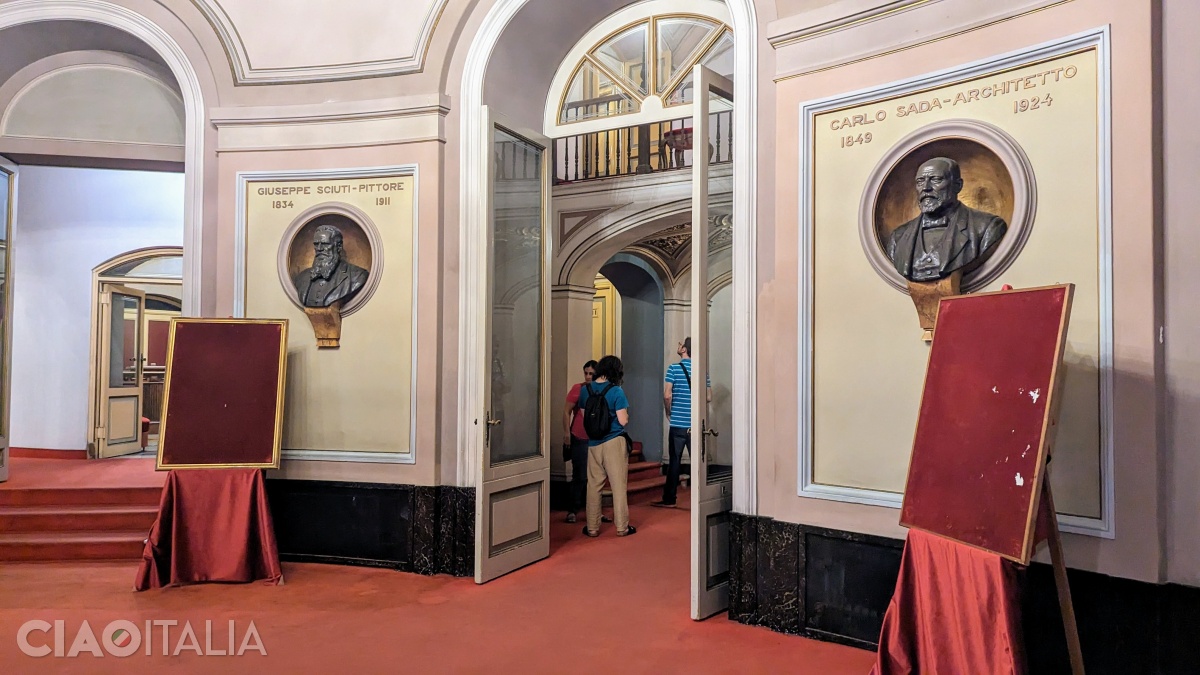
Unlike other well-known Italian theatres, where the foyer is on the ground floor, at the Massimo Bellini Theatre, it is located upstairs. This solution was preferred by the architect because the ground floor space was insufficient for an imposing hall. The foyer, splendidly decorated with marble and stucco, is so elegant that it often elicits shouts of admiration from visitors. In front of the ample windows overlooking the piazza is the bronze statue of the composer Vincenzo Bellini.
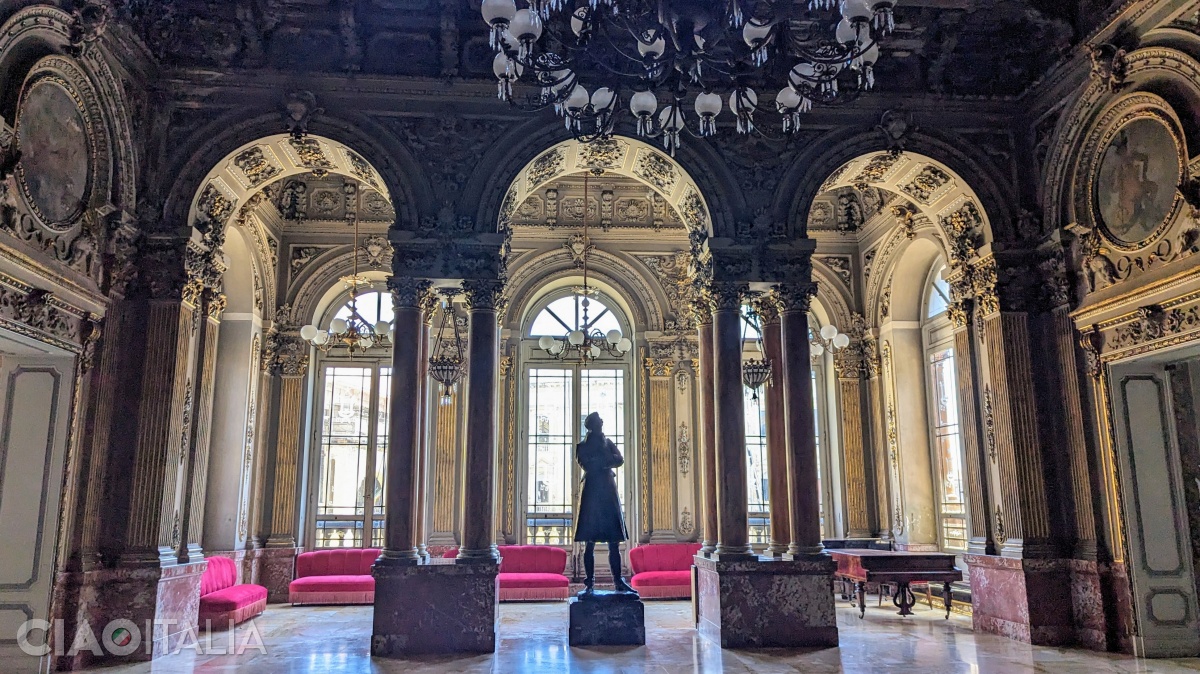
The nobles gathered in the foyer during the intermissions to enjoy refreshments and drinks. The common people also had access but stood in the corridor above, watching from above as the nobility enjoyed themselves.