The Most Interesting Bridges in Venice
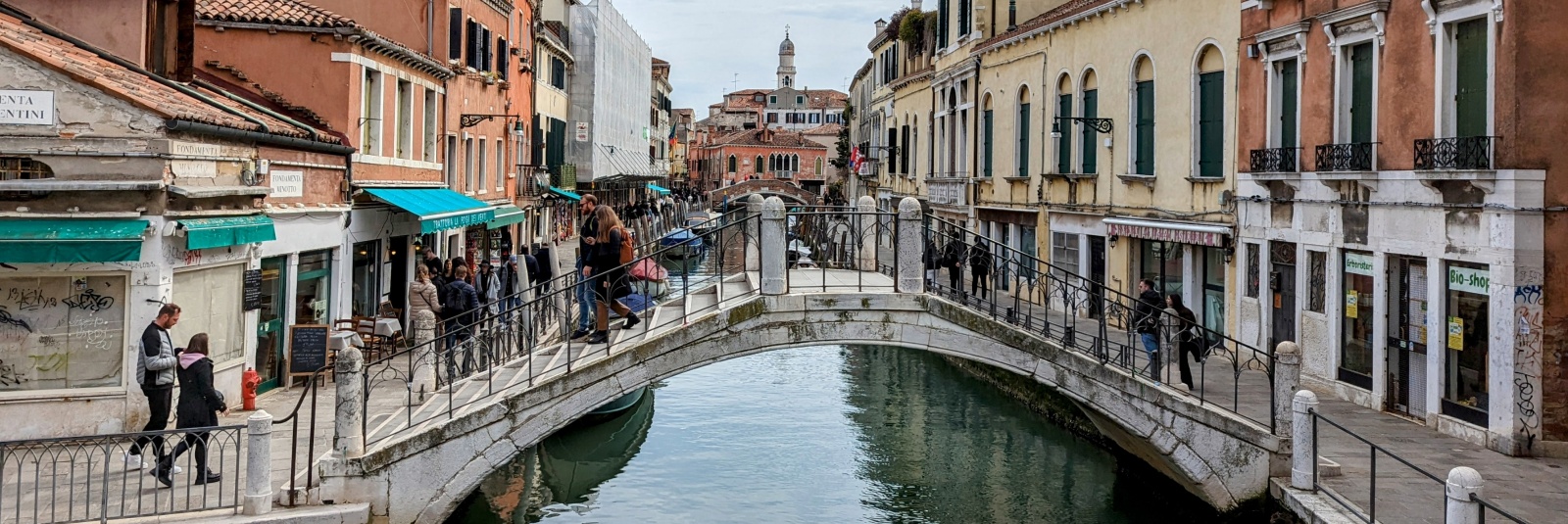
There are over 400 bridges in Venice - some famous, others little known, some simple, others decorated, some with history, legends, or special stories. We have created a presentation here of the most interesting bridges. Some of them can be found on the list of things to see in Venice, while others can be added, especially if you are interested in stepping away from mass tourism.
Bridges Over the Grand Canal
Although the Grand Canal is almost 4 km long, it is crossed by only four bridges: Ponte della Costituzione, Ponte degli Scalzi, Ponte di Rialto, and Ponte dell'Accademia.
Ponte della Costituzione
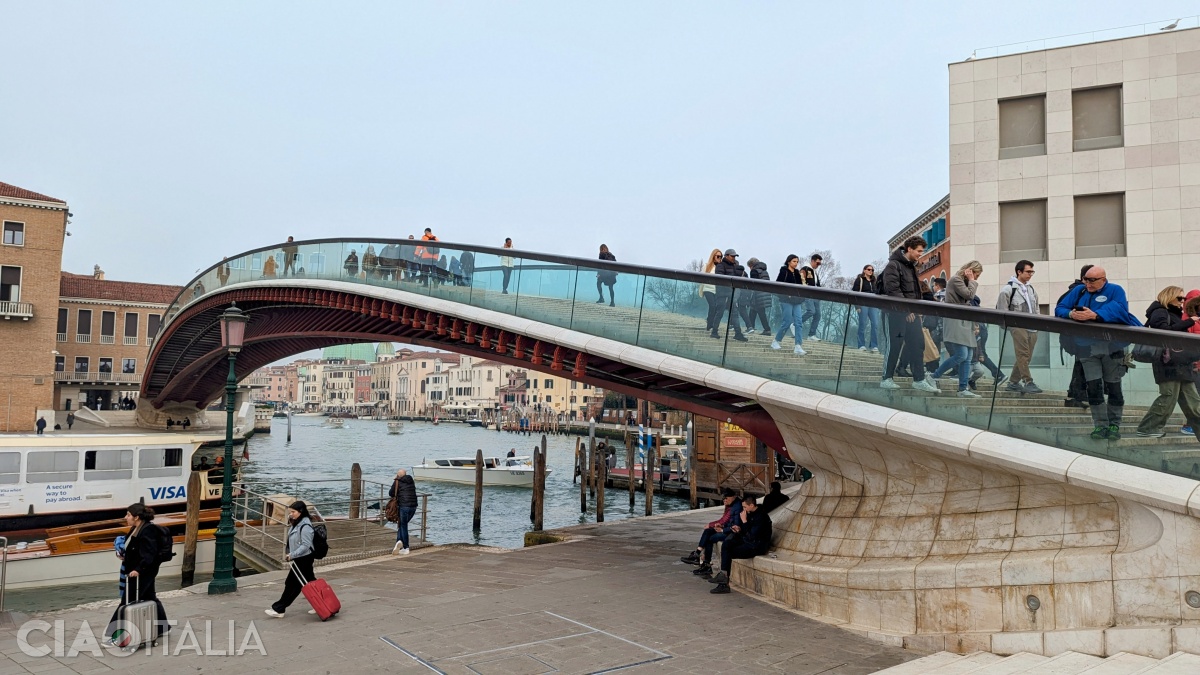
Ponte della Costituzione ("The Constitution Bridge") is located right where the Grand Canal begins, near the Santa Lucia train station and Piazzale Roma, connecting the Cannaregio district with the Santa Croce district.
It is also called Ponte di Calatrava ("Calatrava's Bridge") by Venetians, after the famous Spanish architect who built it.
Ponte della Costituzione is the last bridge raised over the Grand Canal and the only one dating from the contemporary period. The bridge was built between 2003 and 2008 (coinciding with the 60th anniversary of the Italian Constitution), using steel, glass, and Istrian stone (a stone used throughout history for the construction of many buildings in Venice). The bridge was not without critics and controversies, due to the costs and the long construction time (it went from an initially estimated 1.5 years to 6 years), as well as the slippery glass tiles, which were ultimately replaced with stone steps.
Ponte degli Scalzi
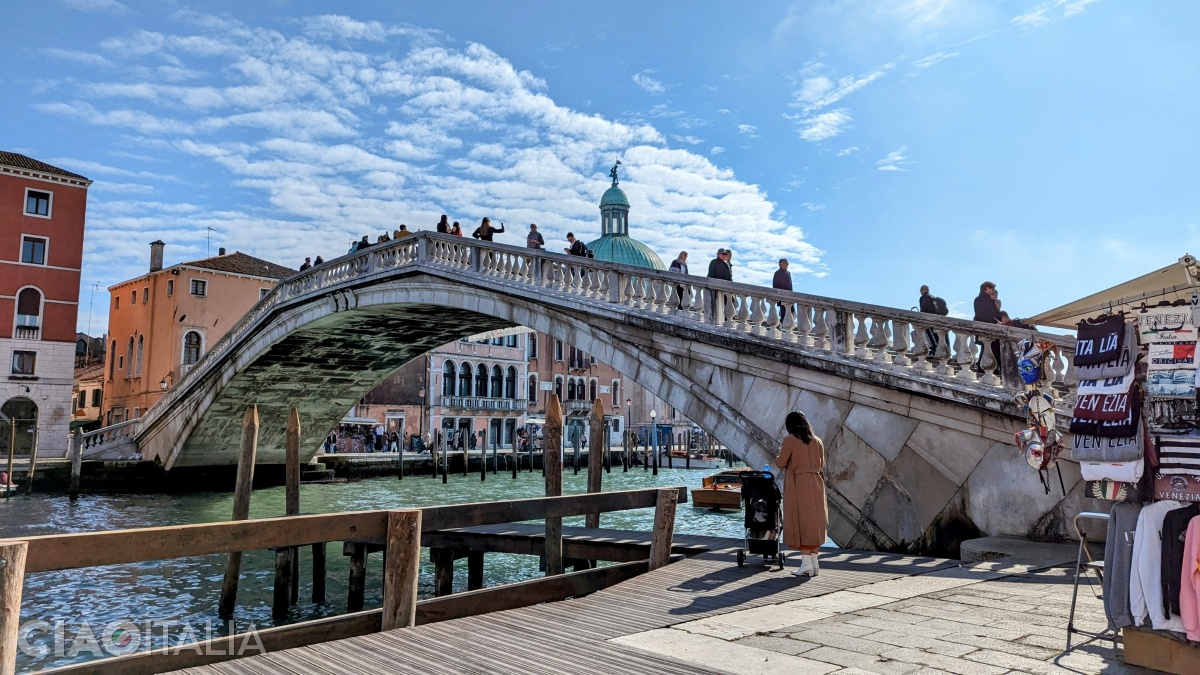
Ponte degli Scalzi ("The Bridge of the Barefoot") is usually the first bridge you see when exiting the Santa Lucia train station. Venetians also call it Ponte della Stazione or Ponte della Ferrovia ("The Railway Bridge").
The first bridge was designed in 1858 (it was the third built over the Grand Canal at that time), during the Habsburg domination, by an English engineer, to provide access to the recently built train station. Since it did not allow the passage of boats due to its low height and, being made of cast iron in an industrial style, did not fit the style of the surrounding buildings, the decision was made to rebuild it. It was reconstructed in 1934, from Istrian stone, with a single arch, so that ships could pass underneath it.
It takes the name Ponte degli Scalzi from the Church of Santa Maria di Nazareth, located at one end, which belonged for several centuries to the monastic order of the Discalced (Barefoot) Carmelites, also being known as Chiesa degli Scalzi.
Ponte di Rialto
There is no bridge more famous and crowded in Venice than Rialto, which is also the oldest bridge built over the Grand Canal. Initially, it was a pontoon bridge in the late 12th century, later replaced by a wooden bridge called Quartarolo, named after the coin you had to pay to cross it.
The bridge you see today was built at the end of the 16th century, out of stone, by the architect Antonio da Ponte. If you want to learn about its legends, check out the article The Rialto Bridge in Venice and Its Story.

Ponte dell'Accademia
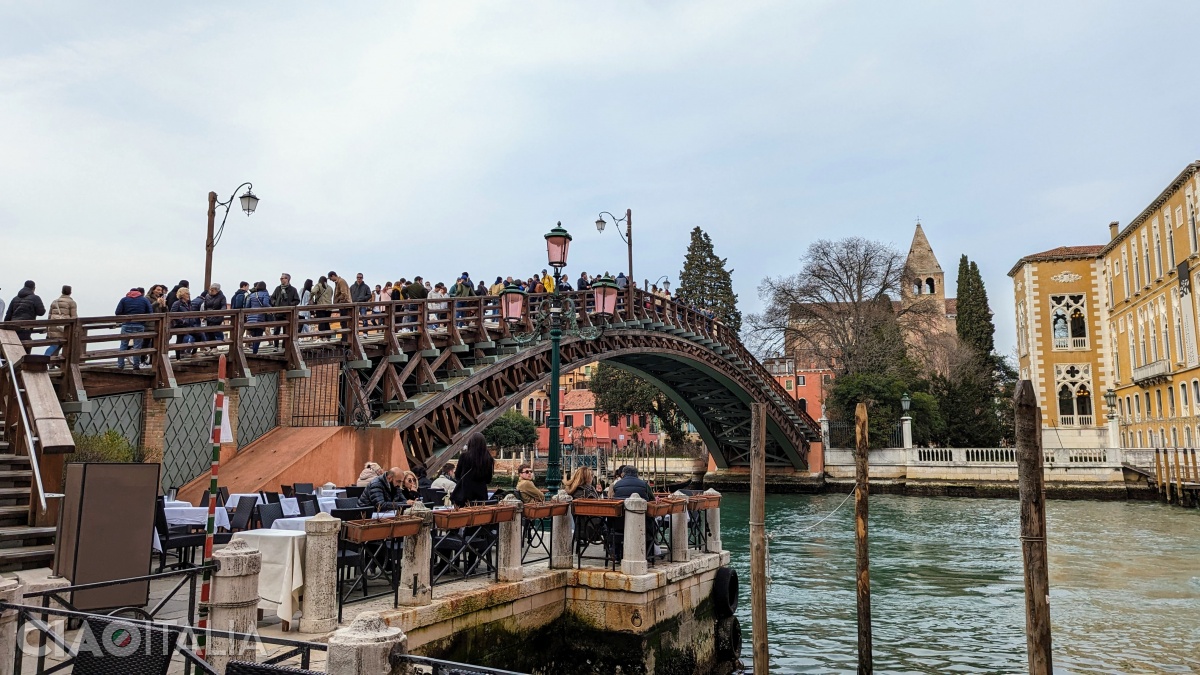
Ponte dell'Accademia ("The Academy Bridge") was, chronologically, the second bridge built over the Grand Canal. In terms of location, it is the last bridge you will encounter before the end of the canal towards the San Marco Basin.
The bridge connects two important institutions in Venice: the Accademia Galleries (from which it takes its name) in the Dorsoduro district, and the Venetian Institute of Science, Literature and Art (Istituto Veneto di Scienze, Lettere ed Arti) in the San Marco district.
The Academy Bridge was built in 1854, out of iron, by the English engineer Neville (the same one who, 4 years later, would also build Ponte degli Scalzi). Initially, the bridge bore the name Ponte della Carità, after the complex comprising the monastery, church, and Scuola Grande della Carità, where the Galleries of the Academy would later be installed.
Structural problems and a stylistic mismatch made it necessary, in this case as well, to replace the bridge. Between December 1932 and January 1933, in just 37 days, engineer Eugenio Miozzi created a temporary wooden construction. This temporary bridge proved so stable that it was never replaced. Venetians still use the expression provvisorio come il Ponte dell'Accademia ("temporary like the Academy Bridge") to ironically refer to a situation that has become permanent.
When it was inaugurated, the Academy Bridge was the largest wooden arch bridge in Europe. Over time, however, maintenance or replacement of wooden elements was required, and in 1986 metal arches were inserted to better support the entire structure. The last restoration of the bridge took place in 2018.
Connection to the Mainland: Ponte della Libertà
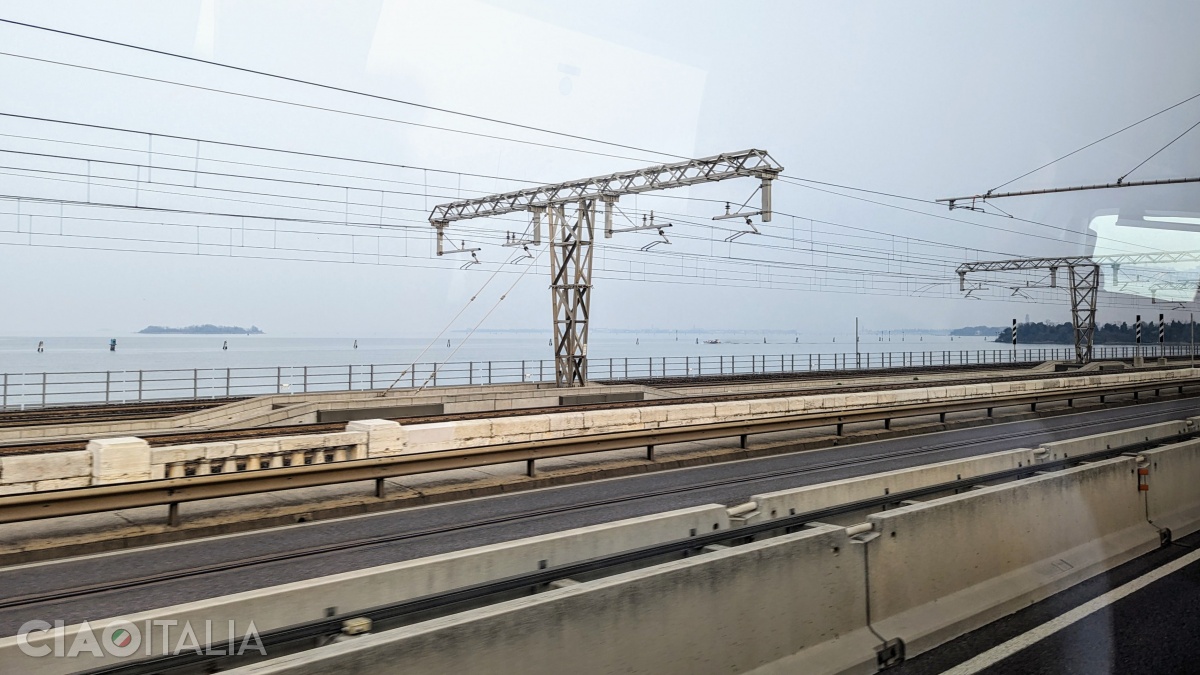
Ponte della Libertà represents the road and rail link of Venice with the mainland. Nearly 4 km long, the bridge is considered one of the most beautiful streets in Europe.
Until around the mid-1800s, the only way to reach Venice was by water. The first bridge to connect it with the mainland (Mestre and Marghera) was a railway bridge built in 1846, along with the station. Its construction required 75,000 piles driven in the lagoon.
In 1933, a road bridge built by Eugenio Miozzi was added to the railway bridge. At that moment, it was the longest bridge in the world, and it remains the longest bridge in Italy today. The initial name of Ponte Littorio ("Fascist Bridge") was changed after World War II to Ponte della Libertà ("Bridge of Liberty").
The railway bridge ends at the Santa Lucia station, and the road bridge at Piazzale Roma, which is also the furthest point road transport can reach in Venice.
You can also cross the bridge by bicycle, thanks to special lanes, but don't forget that bicycles are prohibited in the center of Venice (see also the article about transport in Venice).
Other Bridges to See in Venice
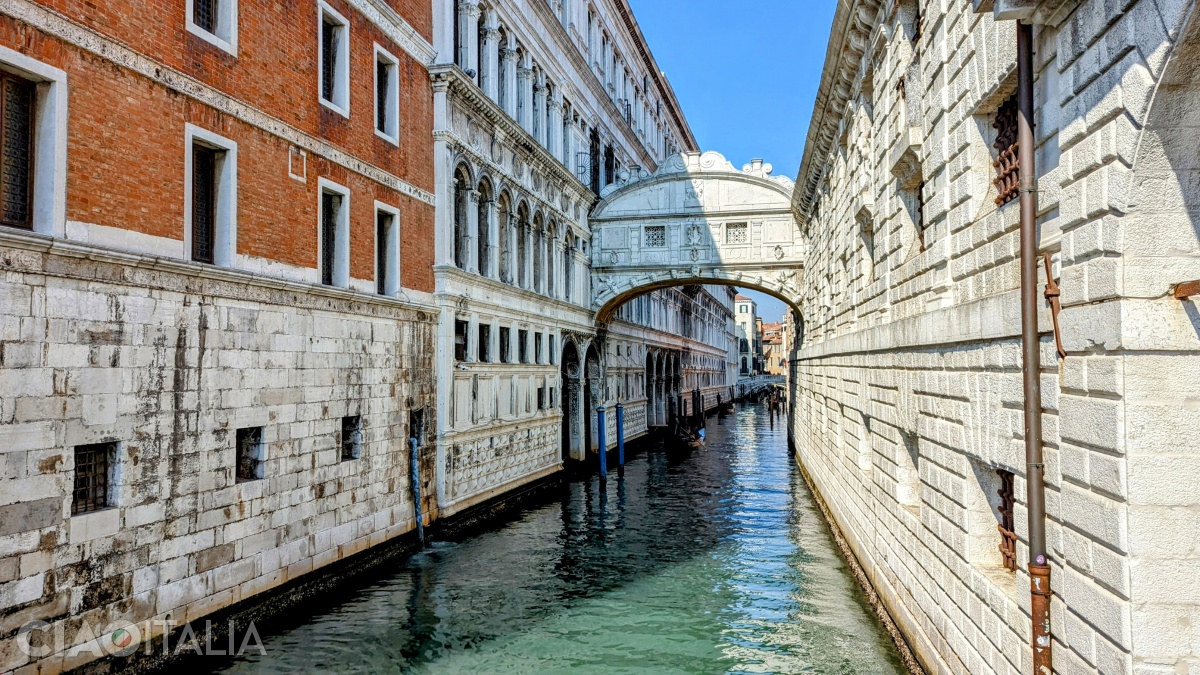
Ponte dei Sospiri
Ponte dei Sospiri (the Bridge of Sighs) is another bridge in Venice known by everyone. The covered bridge was built at the end of the 17th century to ensure the connection between the courtrooms in the Doge's Palace and the building where the prisons were located.
The bridge can be seen from the inside during a visit to the Doge's Palace.
Although the "sighs" in the name actually refer to the sighs of the condemned seeing the outside world for the last time through the small windows, the bridge has become the subject of romantic legends. Thus, it is said that those who kiss while passing under it in a gondola at sunset will be eternally in love with each other.
Ponte delle Guglie
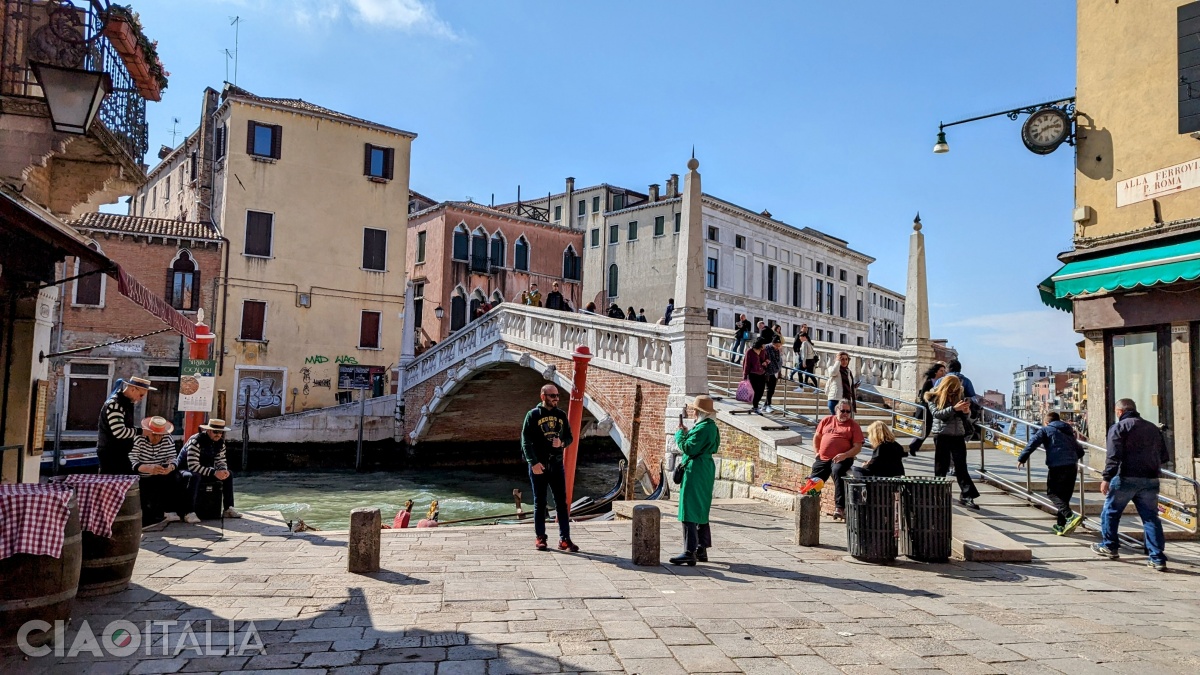
Ponte delle Guglie ("The Bridge of Spires", named after the four obelisks at the ends) or Ponte di Cannaregio is one of the oldest larger bridges in Venice. It is situated in the Cannaregio district, over the canal of the same name, shortly before it ends in the Grand Canal.
The bridge was first built of wood in 1285, and in 1580 it was replaced by the current stone bridge. The coat of arms of Doge Pasquale da Ponte is represented in the center of the bridge's arcades, and several decorative masks are carved on the sides.
Ponte Chiodo
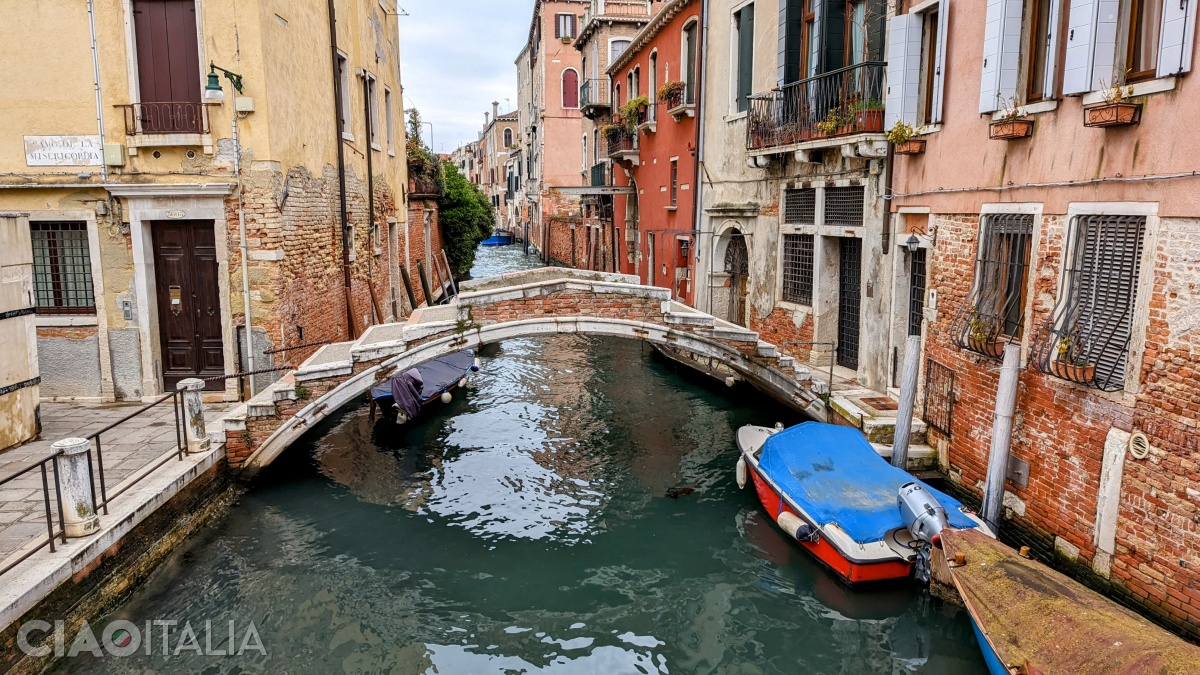
Ponte Chiodo ("The Nail Bridge"), also located in the Cannaregio district, over Rio di San Felice, is one of the oldest bridges in Venice. You can tell this by the fact that it lacks railings. Once upon a time, all bridges in Venice were like this - without parapets. Railings only started being added around 1800.
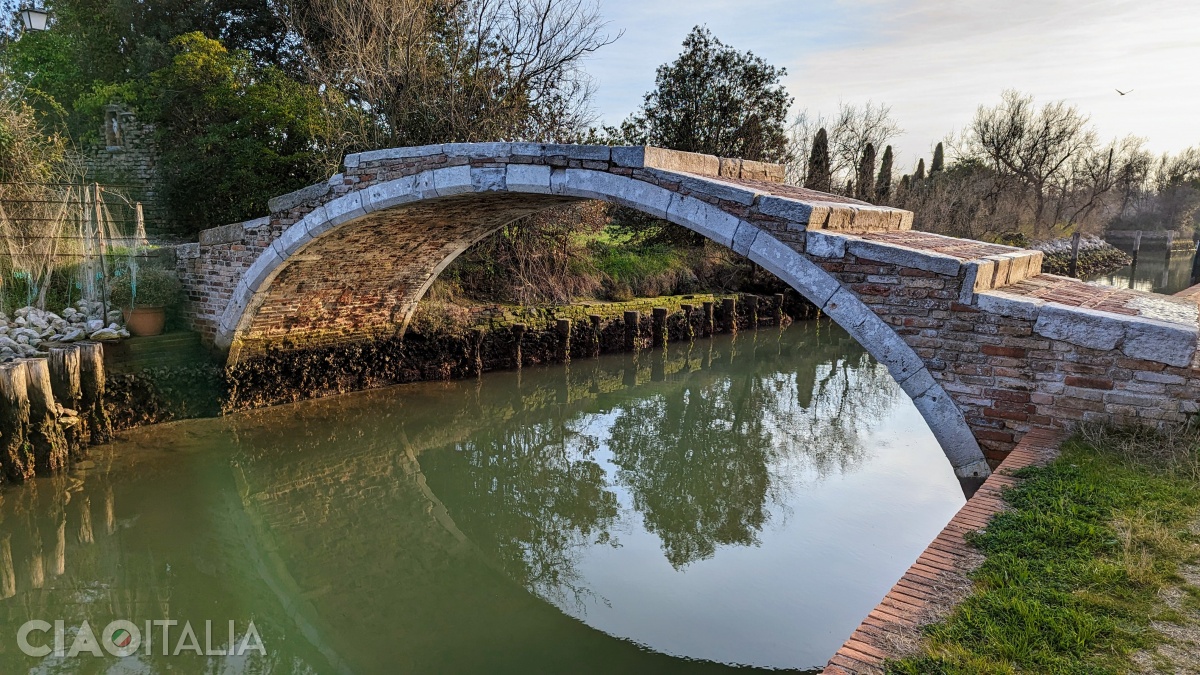
Only two bridges of this kind have survived - one is Ponte Chiodo in Venice, the other is Ponte del Diavolo on the island of Torcello (see below).
Chiodo is the name of the noble Venetian family who once owned the bridge and whose homes it led to.
Ponte dei Pugni
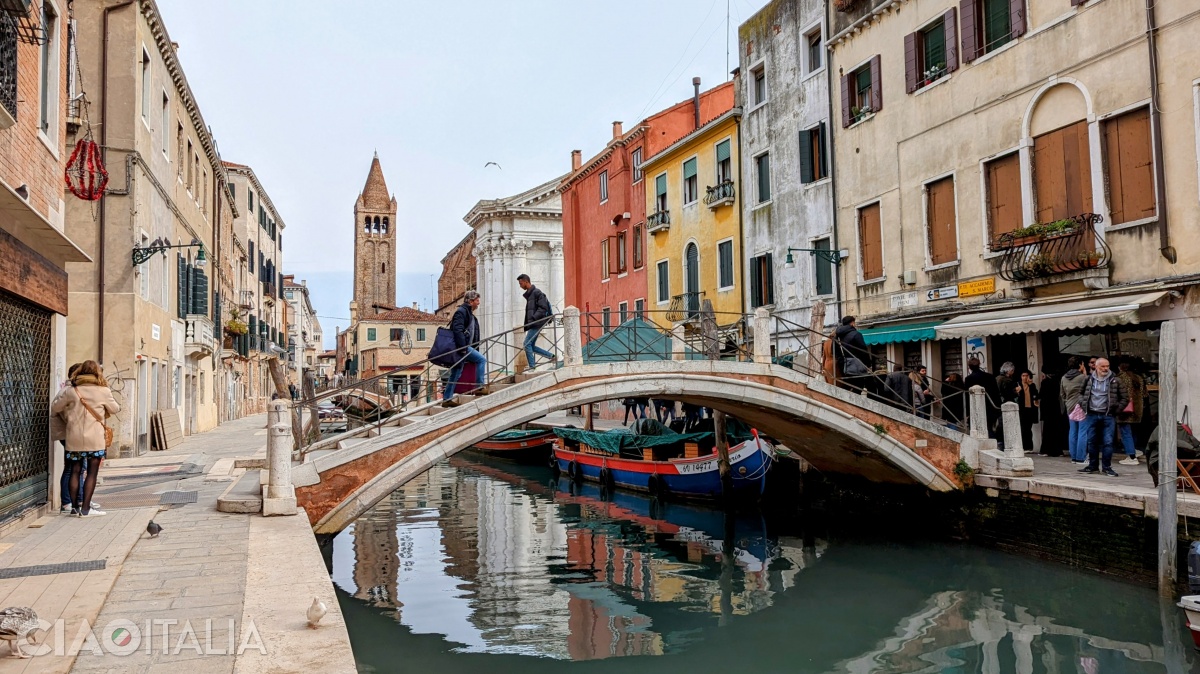
Ponte dei Pugni ("Bridge of Fists"), located in the Dorsoduro district near the Leonardo da Vinci Exhibition in the San Barnaba Church, is another bridge with an interesting story. Its name is associated with the ancient Venetian tradition of fistfighting.
In the city, there were two rival factions: the Castellani, who lived in the east in the Castello district and were mostly workers at the Arsenal, and the Nicolotti, who lived in the west and were primarily fishermen. During the cold season, from September until Christmas, representatives from these groups organized battles on the bridges.
The opponents would advance in an attack formation, and the goal was to push forward as far as possible. Since the bridges had no railings at the time, the adversaries - after several blows (despite the name pugni, all types of strikes were permitted) - would end up in the freezing waters of the canals. The winning team was the one that managed to remain on the bridge.
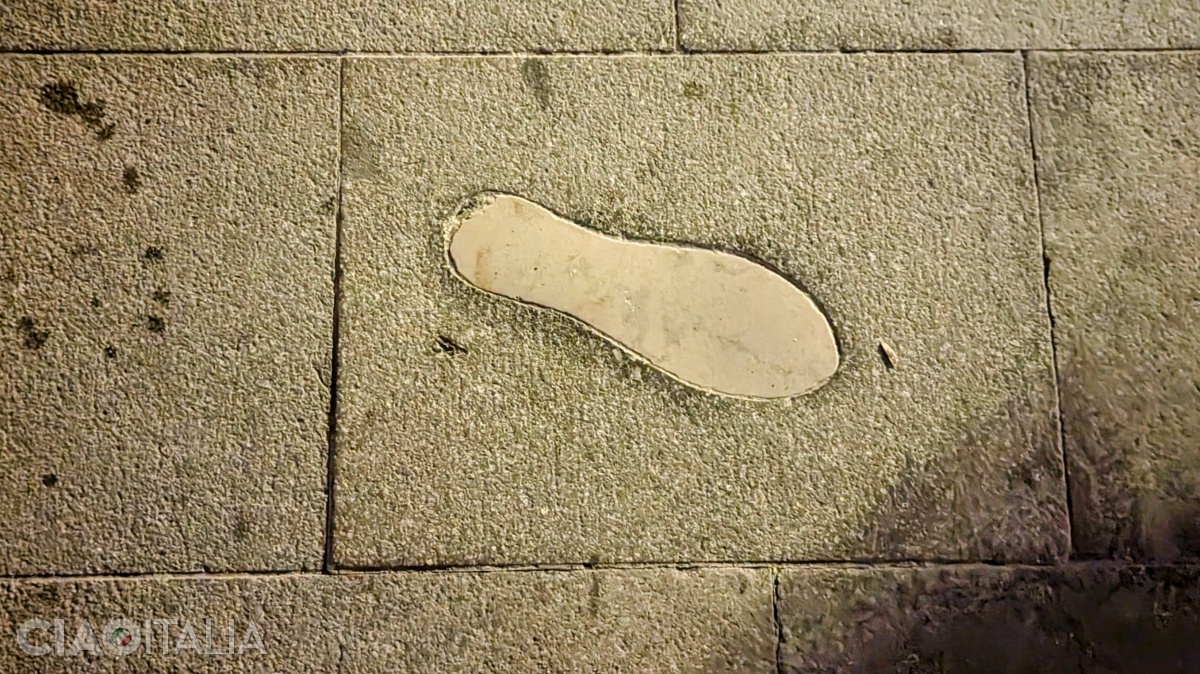
The bridge where these confrontations took place most often was Ponte dei Pugni, whose original name was actually Ponte di Santa Barbara. To this day, four footprints made of white Istrian stone are still preserved in the four corners of the bridge's summit, marking the starting positions of the combatants. You can find four similar marks on the Ponte di Santa Fosca as well.
This tradition, also known as the "War of the Fists" (Guerra dei Pugni), came to an end in 1705. The fights were banned after a brawl escalated from fists to knives, resulting in several deaths. It is said that the people were so caught up in the fight that no one paid attention to a fire that had broken out nearby. Ultimately, the priest from San Barnaba Church was called, and, holding a crucifix aloft, he finally managed to put an end to the fierce battle.
Ponte della Paglia
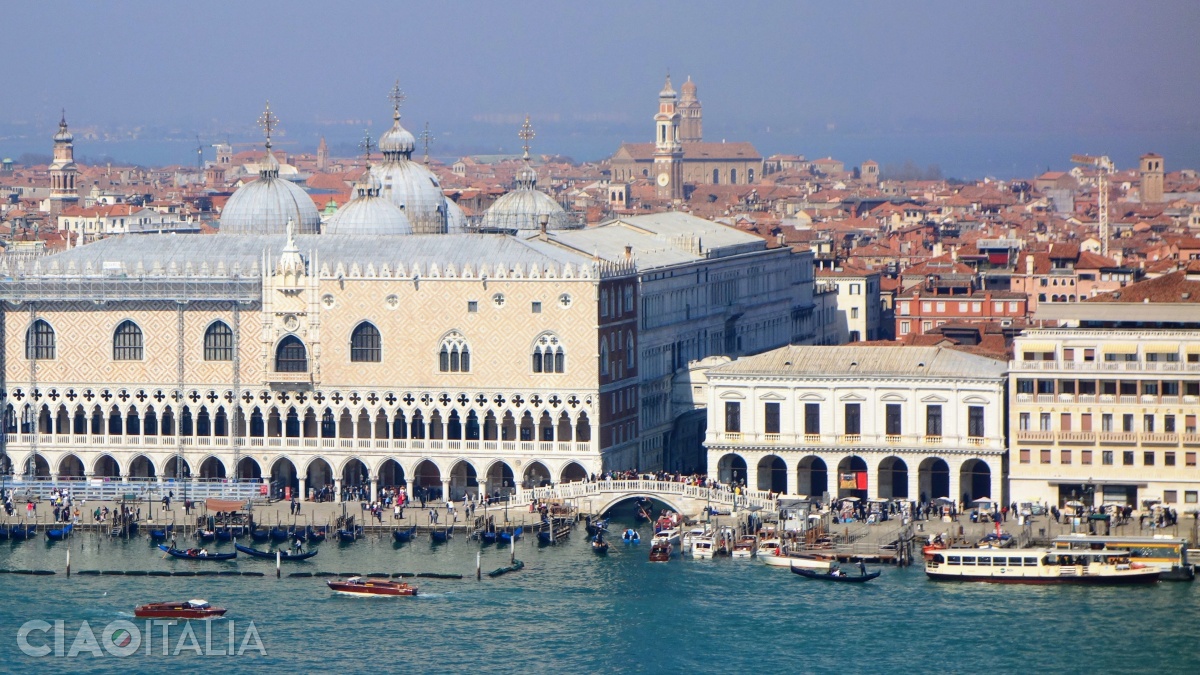
Ponte della Paglia ("Bridge of Straw") connects St. Mark’s Square to Riva degli Schiavoni, spanning the Rio di Palazzo canal. It is one of the most crossed and crowded bridges in Venice, largely because it offers spectacular views of the Bridge of Sighs, as well as Punta della Dogana and the Church of Santa Maria della Salute on the opposite side.
The first bridge at this location was built of wood around the year 1100. Its name stems from the fact that, in the past, boats would load and unload straw (paglia) and hay nearby. In 1360, the bridge was rebuilt using Istrian stone, and it was later restored and widened in the mid-19th century. In the past, two wooden sentry boxes stood at its base - one near the prison building and the other near the Doge's Palace. From there, sentinels controlled pedestrian traffic on the bridge and oversaw trade, collecting state taxes for the unloading of straw. The bodies of drowned individuals were also laid out near these booths so they could be identified.
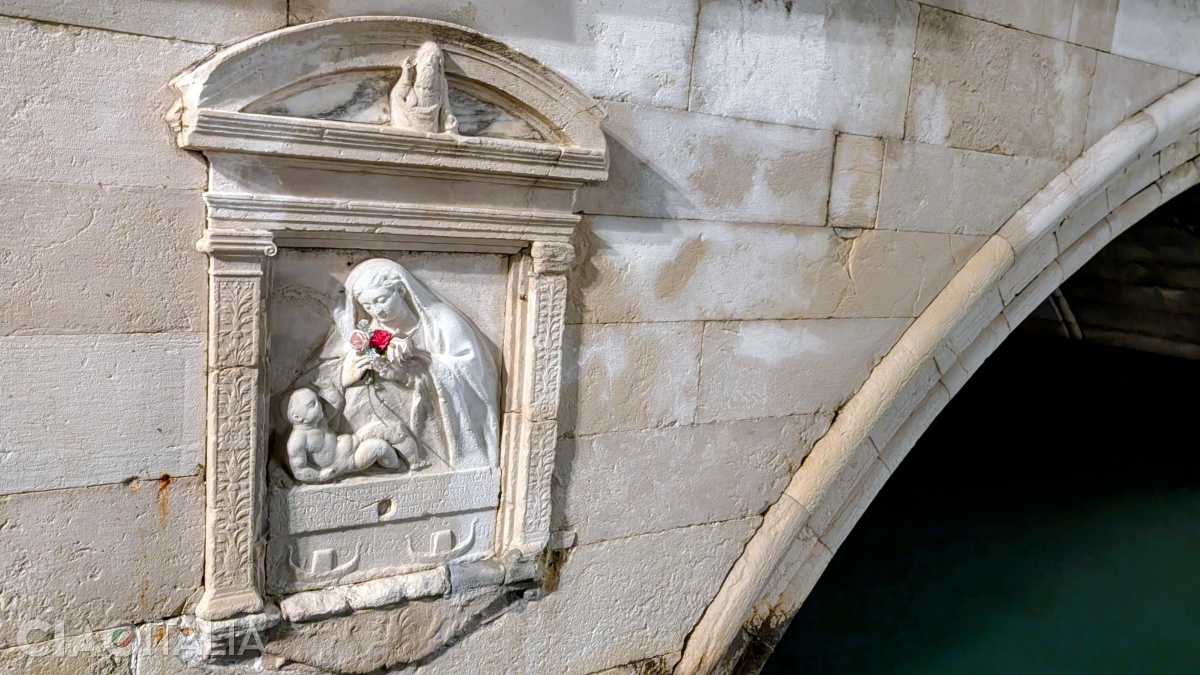
On the outer arch of the bridge, facing Piazzetta San Marco, there is a small altar made of Istrian stone that once belonged to the gondoliers' guild. This bas-relief dates back to 1583 and depicts the Virgin and Child. Above them, in a small arched tympanum, God appears with his right hand raised in a gesture of blessing. The lower section features two gondolas equipped with cabins (felze). Traditionally, a gondola station was located near the bridge.
Riva degli Schiavoni, which begins at Ponte della Paglia and continues toward the Castello district, is Venice's most beautiful promenade and a perfect spot to watch the sunset. It takes its name from the historical fact that ships from Dalmatia - known at the time as Slavonia or Schiavonia - would dock there.
Ponte dei Tre Archi
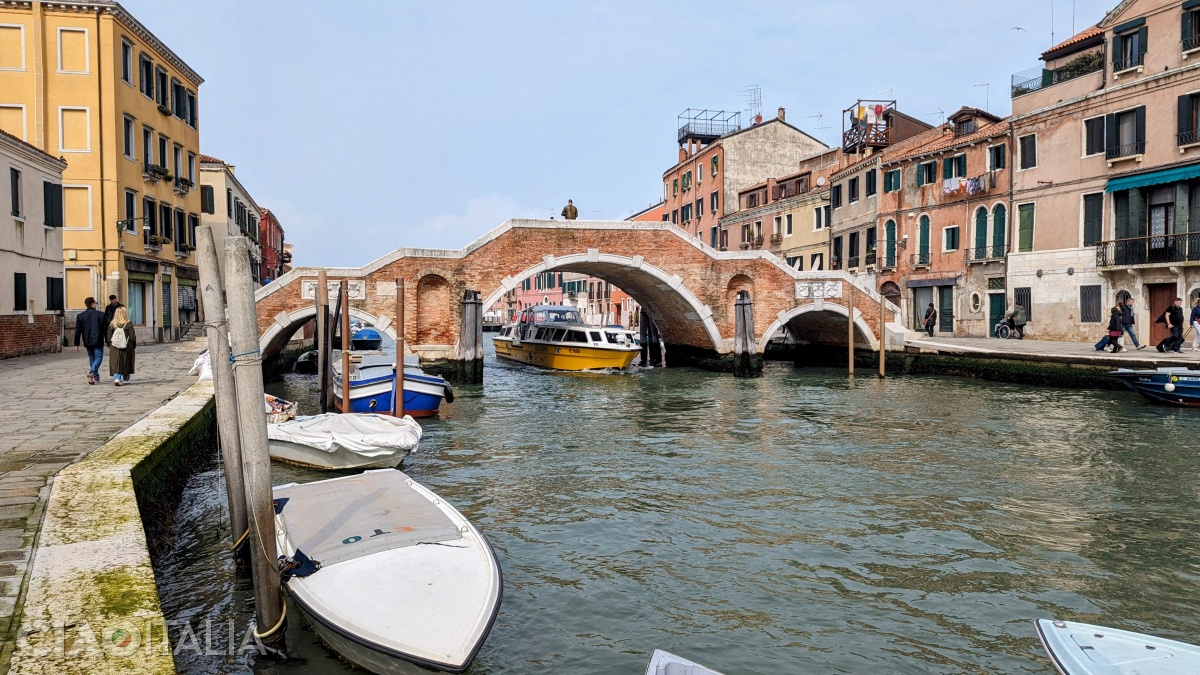
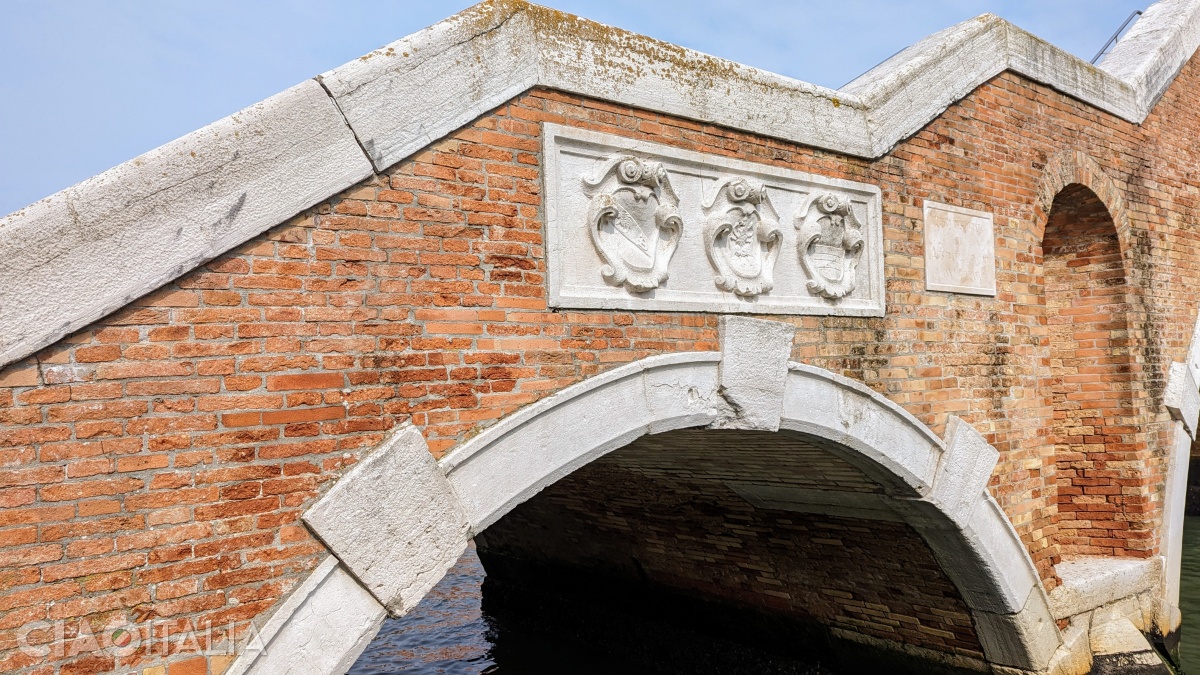
Ponte dei Tre Archi ("The Bridge of the Three Arches") is located on the Cannaregio canal and, as its name suggests, is the only bridge in Venice that still retains the three-arch shape.
The initial bridge was made of wood and was called Ponte di San Giobbe. It was rebuilt in stone, in its current form, in 1688 and restored in the years 1794 and 1980, as shown by the inscriptions placed on the sides.
Ponte delle Tette
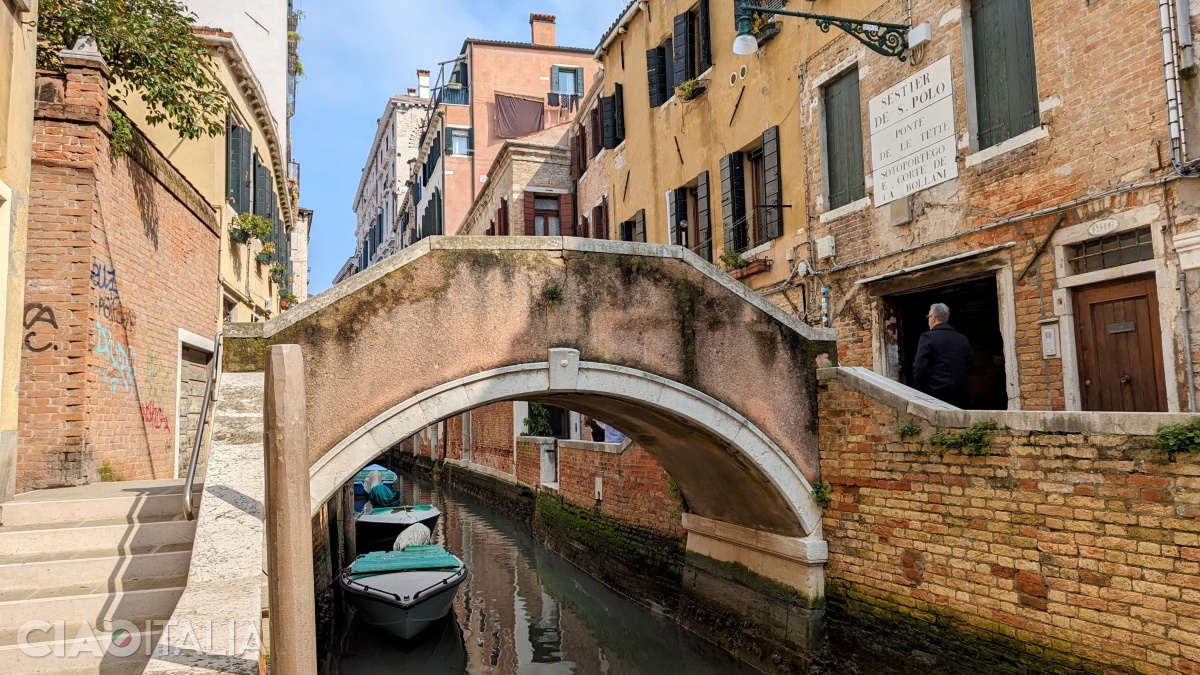
Ponte delle Tette ("The Bridge of Breasts") connects the San Polo and Santa Croce districts. It owes this rather "special" name to the fact that numerous brothels were once located in the area; from their balconies, prostitutes used to display their breasts to attract customers.
In the 16th century, Venice was home to over 11,000 prostitutes. It appears the Venetian government actually encouraged this practice to divert men from homosexuality, which was widespread at the time and considered a far more serious sin.
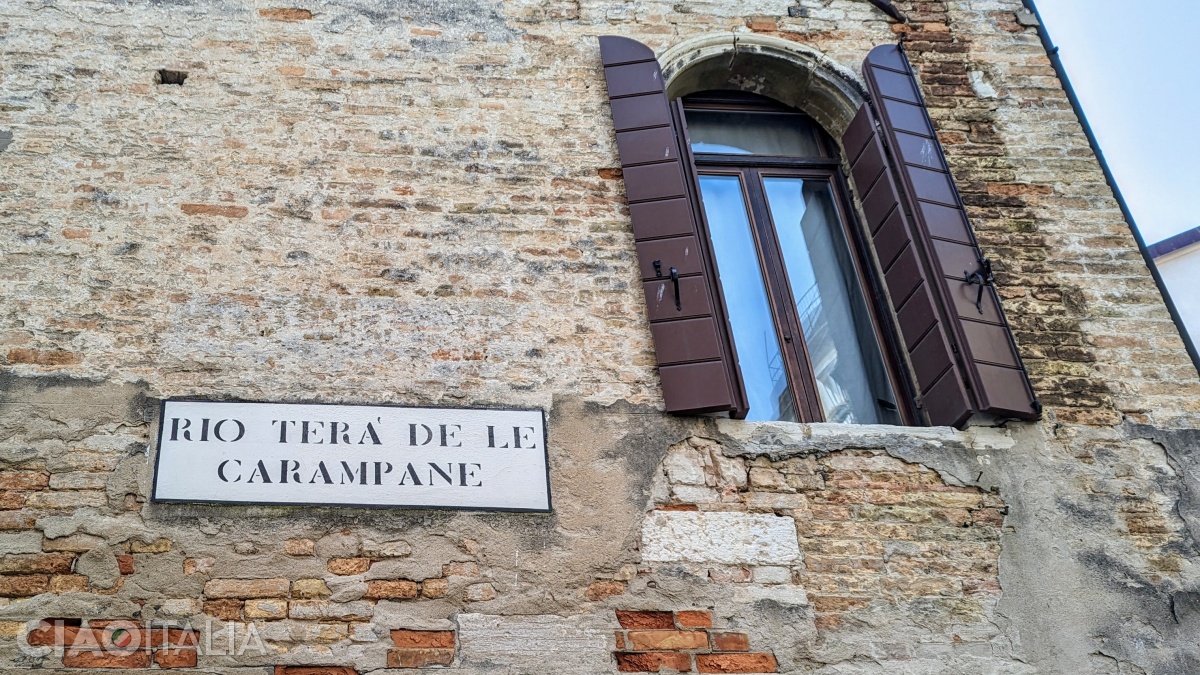
Nearby lies the small street Rio terà delle Carampane. This was once the site of Casa Rampani (known as Ca' Rampani in Venetian), a shelter for elderly and impoverished prostitutes. Since then, the word carampana has come to describe an old, unkempt woman. The name is still preserved today by the restaurant Trattoria Antiche Carampane.
Ponte di Lovo
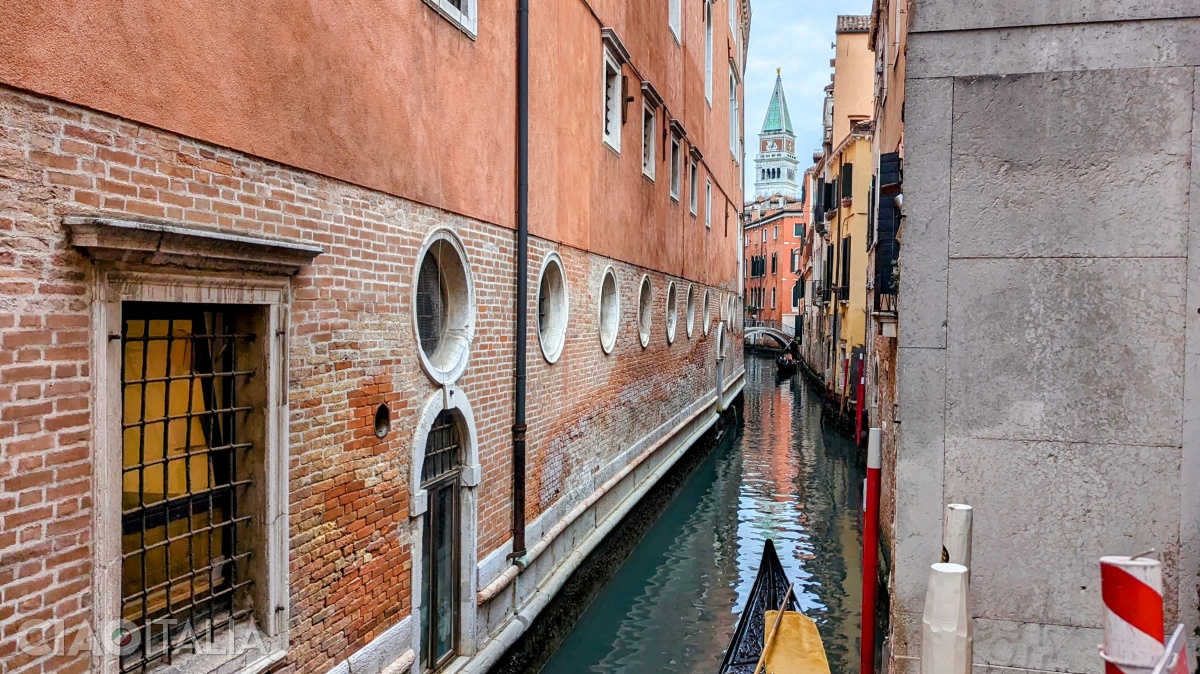
The small Ponte di Lovo (named after the Lovo family) was built over Rio di San Salvador and is located near Rialto. Why is it so special? Because it is said to be one of the few places inside Venice (that is not at a high altitude) from where you can photograph the St. Mark's Campanile.
Ponte di San Canzian
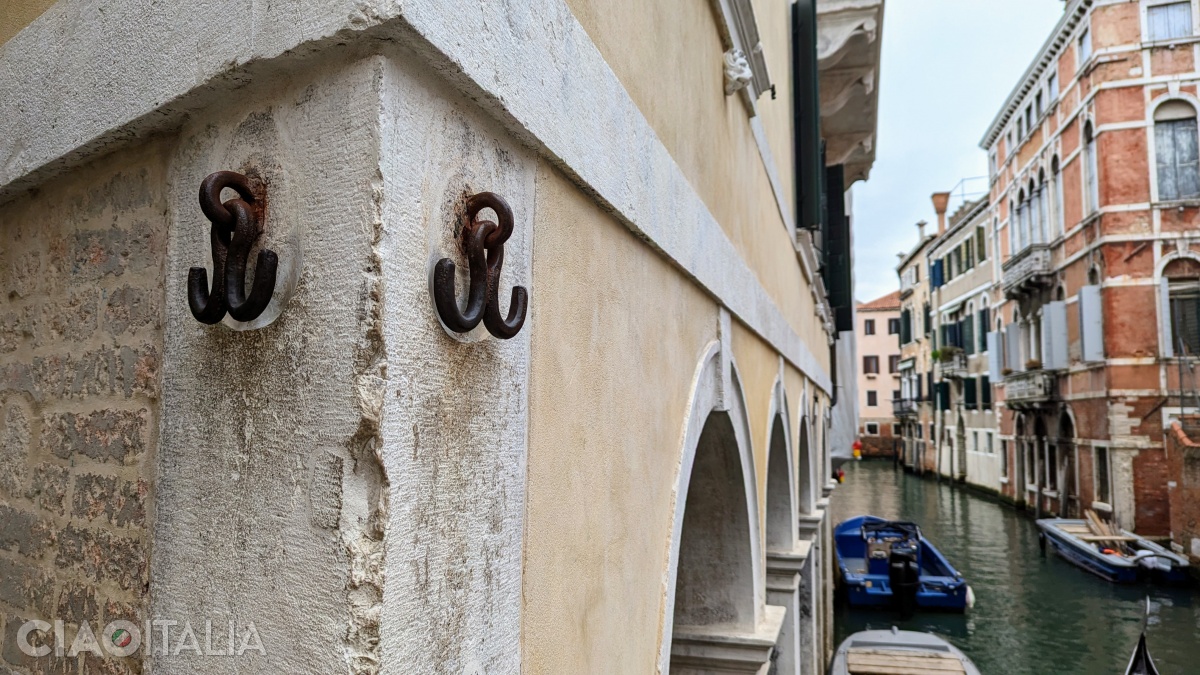
Ponte di San Canzian ("The Bridge of St. Canzian") is located in the Cannaregio district, in front of the church dedicated to the saint of the same name. On a wall of the house next to the bridge, there are two hooks that resemble anchors and have a macabre story. In the past, two quarters of the bodies of people condemned to death were hung from these hooks. The other two quarters hung from two other hooks, now gone, located elsewhere in the city. According to tradition, those condemned to death were cut into four, the four parts being hung, in plain sight, on hooks facing different directions: towards Mestre, Padua, Chioggia, and Lido. The severed head of the executed person had, instead, the "honor" of being exposed in St. Mark's Square, on the pietra del bando, a fragment of a column located in a corner of St. Mark's Basilica.
A Venetian superstition says that it brings good luck to touch the two hooks near the San Canzian Bridge - the fact that you can do this means that you are still whole...
Bridges on the Islands
Ponte del Diavolo
Ponte del Diavolo ("The Devil's Bridge") is located on the island of Torcello. It is the second bridge without railings that still exists in the entire Venetian lagoon and one of the oldest, built in the 15th century.
If you want to find out the legend behind the name, see the article about what you can visit in Torcello.
Ponte Tre Ponti
Ponte Tre Ponti ("The Three Bridges Bridge") is located in Burano. It is a wooden bridge that connects three small islands (hence the name) and from where the colored houses can be seen beautifully.